Van Holten's · 196g
Read the full guide
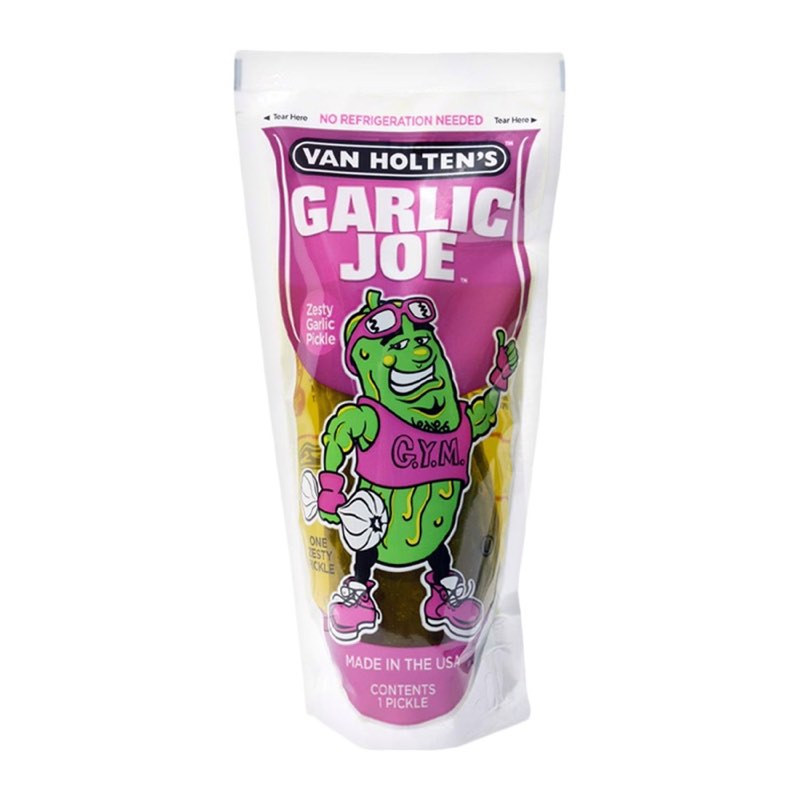
Van Holten's - Garlic Joe Zesty Garlic Pickle
£1.49
✔ In stock — ready to ship
Fresh stock
Free over £20
Same-day dispatch
Secure checkout
There is a particular point in an evening — usually about forty minutes into a bowl of sweets — when everybody goes quiet and stops reaching. Nobody is full. The bowl is still half-full. What has happened is that the palate has given up. Sweet after sweet after sweet flattens your ability to taste any of them, and the fastest way out of that is not another sweet. It is something loudly, unapologetically savoury.
That is the occasion the Van Holten's Garlic Joe Zesty Garlic Pickle is for. At £1.49 for 196g it is a single savoury interruption in the middle of a sweet table, and it does more for the second half of the evening than another bag of anything sugared would. Put it out halfway through rather than at the start. The point of it is the break, and a break only works if there was something to break from.
The full guide to Van Holten's - Garlic Joe Zesty Garlic Pickle
5,294 words on how it eats, who it suits, how to serve it and what to put beside it.
The moments a pickle earns its place
The second occasion is the film night with a group that has seen everything and is bored of the usual spread. A pickle on a table of sweets is a conversation. Somebody will pick it up, read it twice, and ask what on earth it is doing there. That reaction is worth £1.49 on its own, and it is the honest reason a lot of these leave the shop.
The third is the dare, the forfeit, the game. Any group activity that needs a mild penalty has traditionally used something sour, and sour is fine but it is also thoroughly expected by now — everybody has done the sour sweet face for a camera. A whole savoury pickle in the middle of a sweet party is a genuinely funnier piece of theatre because it is so far outside what the table has led everyone to expect.
The fourth is the least dramatic and probably the most common: somebody in the house simply likes pickles, has always liked pickles, and is quietly delighted to find one on an order that was otherwise all sweets. That person exists in most families. This is for them.
What this is, and what it is doing on a sweet shop
Let us be straightforward about it, because pretending otherwise would be silly. We sell sweets. Hundreds of them. This is not a sweet. It is a Van Holten's pickle, 196g, £1.49, one size, and it lives on the small snacks shelf — a deliberately tiny corner of the site that currently holds three things and is not trying to be a grocery department.
So why stock it at all? Because a sweet shop that only sells sweet things is a worse sweet shop. Every good confectionery counter that has ever existed has carried a handful of savoury oddities, and it is not an accident or a stock error. It is because the people who buy sweets are people, and people want contrast. The bag of crisps by the till of the old sweet shop was not competing with the jars. It was completing them.
The name tells you the two things this one is going for: garlic, and zest. We are not going to tell you any more than that, and you should be suspicious of any shop that does. We do not hold verified recipe information for this line, so we will not describe what is in it, how it was prepared or what it was kept in. All of that is printed on the manufacturer's own pack, which is the only thing worth relying on, and you should read it when your order arrives.
What we can tell you with confidence is what it does on a table, how it behaves next to the things around it, who tends to enjoy it, and where it sits among the other savoury things we carry. That is the useful half anyway.
The honest first impression
It is heavy. That is the first genuine surprise for anyone used to our usual stock. Almost everything on a sweet shelf is light for its size — a 70g bag of beans takes up a lot of room and weighs nothing; a bag of foam sweets is mostly air. At 196g this is one of the heaviest single items in its price bracket anywhere on the site, and it feels like it when you pick it up. There is a satisfying density to it that a confectionery pack simply does not have.
It is also a single item rather than a quantity of small items, which changes the psychology of eating it completely. A bag of sweets is a hundred small decisions. This is one decision, made once, and then committed to. You cannot have a little bit of it and put the rest back the way you can with a bag. That makes it a sharing item by nature, or a full commitment by one person, and it is worth knowing which of those you are buying before you open it.
And it is loud. Not in the sense that we are going to describe a flavour we cannot verify, but in the simple structural sense that a savoury item sitting among sweet ones announces itself the moment the pack is open. Nobody in the room will be unaware that it has arrived. Plan accordingly: this is not an item to open quietly at the back of a cinema.
Who actually buys this
Four distinct groups, and they want very different things from it.
The committed pickle enthusiast. This person needs no explanation and no persuasion. They saw a pickle, they scrolled no further, they were always going to add it. If that is you, the useful information is simply the price and the weight — £1.49, 196g, in stock, one size — and the fact that the rest of the range sits a click away.
The contrast buyer. This is the person building a spread who understands that a table of eight sweet things is worse than a table of seven sweet things and one savoury one. They are not necessarily a pickle devotee. They are buying a function.
The novelty buyer. They want the reaction. They are putting together something for a party, a video, a secret Santa, a hamper with a joke in it. The pickle is the punchline and the sweets are the setup.
The homesick or curious buyer. Somebody who has come across a pickle sold this way before and cannot easily find one, or somebody who has seen it somewhere and wondered. At £1.49 the cost of satisfying that curiosity is about the same as a small bag of sweets, which is a reasonable price for settling a question.
Snap, give and the architecture of a bite
Texture is the whole reason this product exists on a table of confectionery, so it deserves a proper section rather than a passing mention.
Think about what your mouth actually does with a sweet. A gummy compresses and springs back. A foam sweet collapses almost without resistance. A chew resists steadily and evenly for a long time. A shelled bean cracks once and then turns chewy. A hard boiled sweet does not yield at all and has to be dissolved rather than eaten. Those five behaviours cover very nearly the entire confectionery shelf, and here is the thing they all have in common: not one of them breaks. Nothing on a sweet counter shatters, splits or fractures. Everything on it either yields or refuses.
That is a real and rarely noticed gap in the texture range of a sweet table, and a savoury item is the standard way of filling it. It is the reason crisps and confectionery have sat next to each other at every corner-shop till in the country for as long as anybody can remember, and it is the reason a savoury item on a sweet board changes the whole board rather than just adding to it.
Why texture fatigue is real and sets in faster than flavour fatigue
Most people assume that when they get bored of a bowl of sweets it is because they are bored of the flavours. Usually it is not. Run the experiment yourself: put out three different fruit gums and you will find that after the first handful your mouth stops distinguishing between them. Now put out one gum, one foam and one hard sweet, and all three stay distinct to the bottom of the bowl. The variable that keeps a spread interesting is not flavour range, it is texture range, and it holds up every time.
Once you know that, a lot of confectionery buying gets easier. You stop buying five things that eat the same way and start buying three things that eat differently. And you start seeing why one savoury item, positioned halfway through the evening, resets a table that four more sweet items would not.
The texture map of our shelves
It is worth laying out where everything sits, because it makes building a spread almost mechanical.
- Yields instantly, springs back — gummies and jellies, the biggest group by far on the loose sweets shelf.
- Collapses with no resistance — foam and marshmallow lines.
- Resists steadily, for a long time — chews and toffees.
- Cracks once, then chews — shelled beans and anything panned.
- Refuses entirely, must be dissolved — boiled sweets and rock.
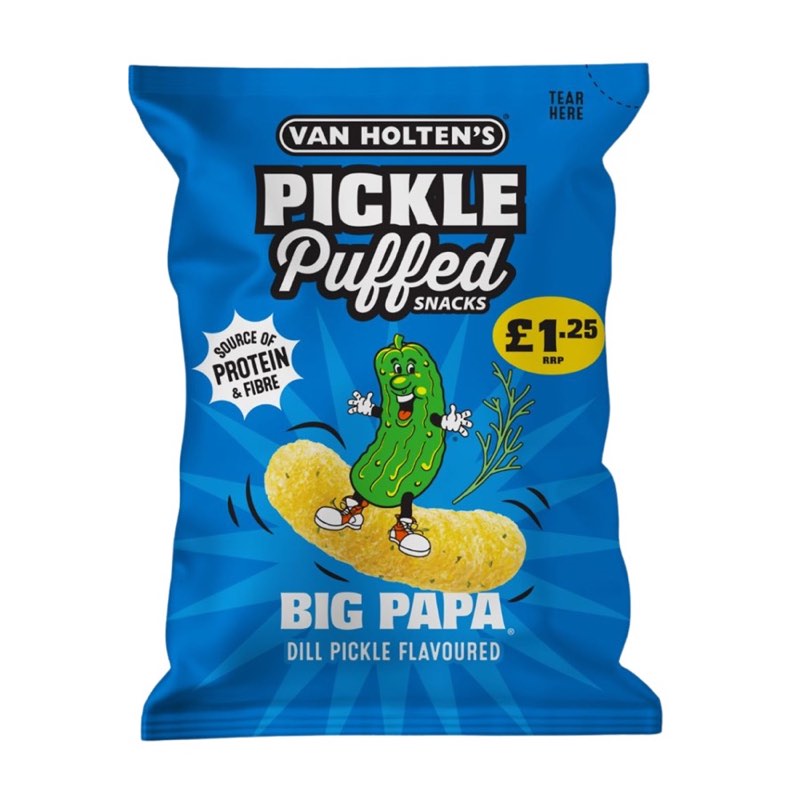
- Puffs and disappears — the puffed snack bags, including the Big Papa Pickle & Dill Puffed Snack Bag at £1.25, which is airy and gone almost before you have registered it.
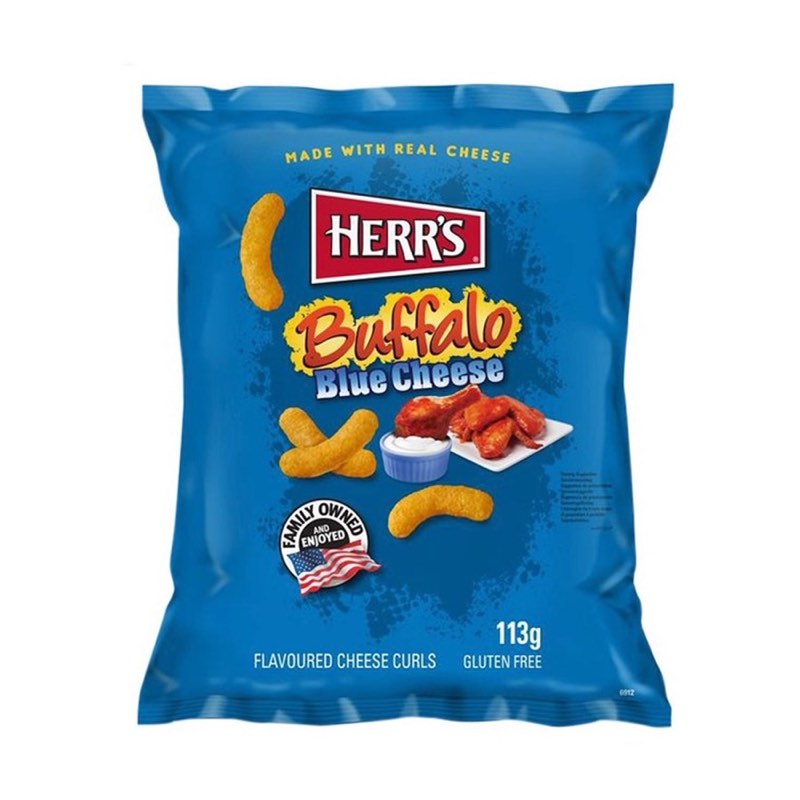
- Crisp, dense, holds its shape against a cheese-curl bite — Herr's Buffalo Blue Cheese Curls 113g at £3.79 and their stablemates.
- Breaks rather than yields — which on this site is essentially this one item and very little else.
Look at that list and the case for a savoury oddity makes itself. It is not there to compete with the sweets. It occupies a slot nothing else on the shelf can fill.
What temperature does to any texture
Texture in almost every food is temperature-dependent, and confectionery is an extreme case of it. Chews go from pliable to nearly solid across a twenty-degree swing. Gummies get rubbery when cold and slack when warm. Chocolate has a working range of a few degrees either side of a room and misbehaves outside it. It is genuinely worth thinking about the temperature of a spread, not just its contents — a bowl that has been sitting in the sun on a garden table is a materially different bowl from the one you put out an hour earlier.
For the savoury item on the table, the practical version of this advice is simple: follow the storage instructions printed on the pack, serve it at whatever temperature those instructions point you to, and do not improvise. We are not going to guess at storage conditions for a food we did not make. The manufacturer has printed them for a reason and they are more reliable than anything we could tell you.
Why one big item beats several small ones for contrast
There is a structural reason a single large savoury item works better on a sweet table than a scattering of small savoury ones. Small items get absorbed into the general grazing — people take one without registering the change, and the contrast never really lands. A single substantial item has to be dealt with deliberately: someone has to open it, portion it and hand it round. That act of ceremony is what makes the contrast register. It becomes a moment in the evening rather than another thing in a bowl.
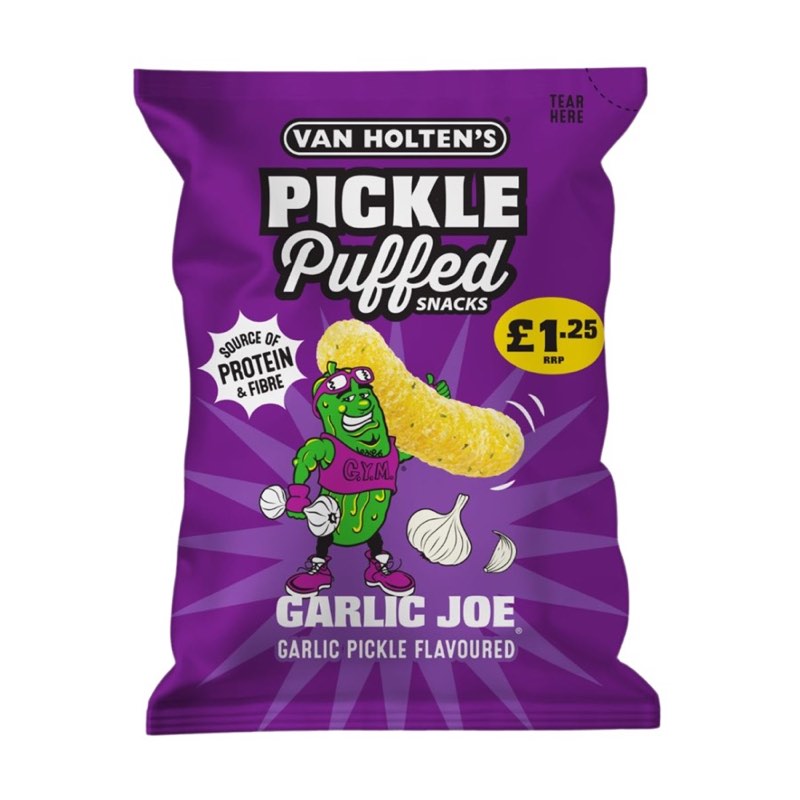
If you would rather have the savoury note scattered instead of concentrated, that is what the puffed bags are for, and the Garlic Joe puffed snack bag at £1.25 takes the same flavour idea as this one and turns it into something you can put in a bowl and graze from. Different tool, same job.
The one strange thing next to the till
Every real sweet shop in this country has had one. A jar of something nobody can identify. A savoury item in a corner of the counter that makes no sense next to the rock and the fudge. A tray of something imported that the shopkeeper bought once on a whim and now has to keep buying because three regulars have become attached to it. This is a genuine and long-standing feature of British confectionery retail, not an accident, and it is worth understanding because it explains exactly why this product exists here.
The economics of it are counterintuitive. The strange item is almost never the item that makes the money. It is the item that makes the shop memorable. You do not tell anybody about the shop with the good sherbet lemons, because every shop has good sherbet lemons. You tell people about the shop that had the weird thing. A range with an oddity in it feels curated by a person; a range without one feels assembled by a spreadsheet.
The seaside version: novelty is the product
Go to any promenade sweet shop in Britain and the pattern repeats with the volume turned all the way up. Rock the size of a forearm. Sweets shaped like things that should not be sweets. A whole wall of things whose entire commercial proposition is that somebody will photograph them, laugh, and buy them anyway. Novelty confectionery is not a modern internet invention; the British seaside has been running that business for well over a century and has got extremely good at it.
A whole savoury pickle on a sweet counter belongs squarely to that tradition. It is bought partly to be eaten and partly to be shown to somebody. There is nothing wrong with that — an enormous proportion of all confectionery is bought for reasons that have very little to do with hunger, and the trade has always known it.
The dare, the forfeit and the sweet shop as a game
Sweet shops have always sold games as much as sweets. The unmarked flavour you have to guess. The sour thing you dare each other over. The mixed bag with one bad one in it. Confectionery is one of the few foods where difficulty and unpleasantness are deliberately sold as features, and it works because the stakes are trivially low and the reaction is genuinely funny.
The savoury oddity fits that game perfectly, and it has one advantage over a sour sweet: it is not painful. Nobody is actually suffering. The joke is entirely in the surprise and the incongruity, which makes it a better-natured dare than the extreme sours — and, frankly, a better one to hand to somebody at a family gathering where you would rather not make a small child cry.
Why a shop with a savoury corner is a better sweet shop
It is a question of trust, in the end. A shop that sells you only the thing you came in for is a vending machine. A shop that also has a small savoury corner, and a retro shelf, and one or two things that clearly nobody planned, is a shop with a point of view. You can see the whole of that point of view laid out across every product we carry, and it will be obvious within a minute of browsing that the savoury corner is small on purpose. Three items. Not a department. Just enough that the shop has an edge to it.
Garlic and zest as a flavour idea
Since the name is the only flavour information we hold for this line, that is what we will work with, and there is more to say about it than you might expect.
Garlic is one of a small number of flavour ideas that people hold genuinely polarised opinions about, and — importantly — it is one that divides along a different line from the ones confectionery usually divides along. Sweet counters split people by sweetness tolerance, sour tolerance and liquorice opinion. Garlic splits a completely different way. The consequence is practical: if you are buying for a group, do not assume that the person who likes everything on the sweet table will like this, and do not assume that the person who likes nothing will not. It is an independent variable.
Zest, as a descriptor, points at brightness and lift rather than heat or weight. In flavour terms that means this is meant to sit at the sharp, awake end of savoury rather than the rich, heavy, slow end. That matters for where you place it in an evening: bright savoury things work as interruptions and resets, whereas rich savoury things work as anchors. Use this as an interruption.
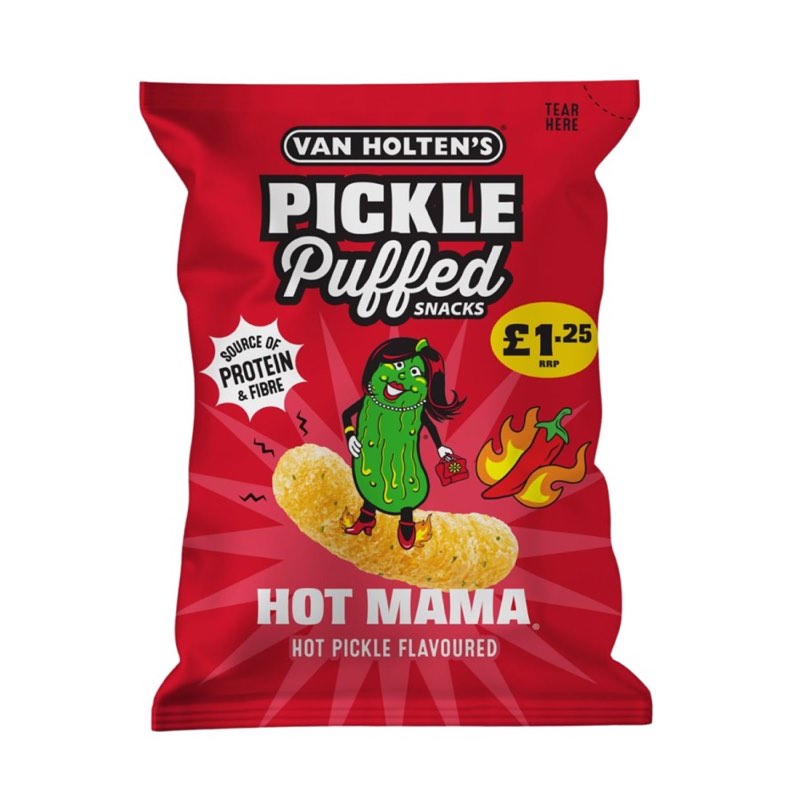
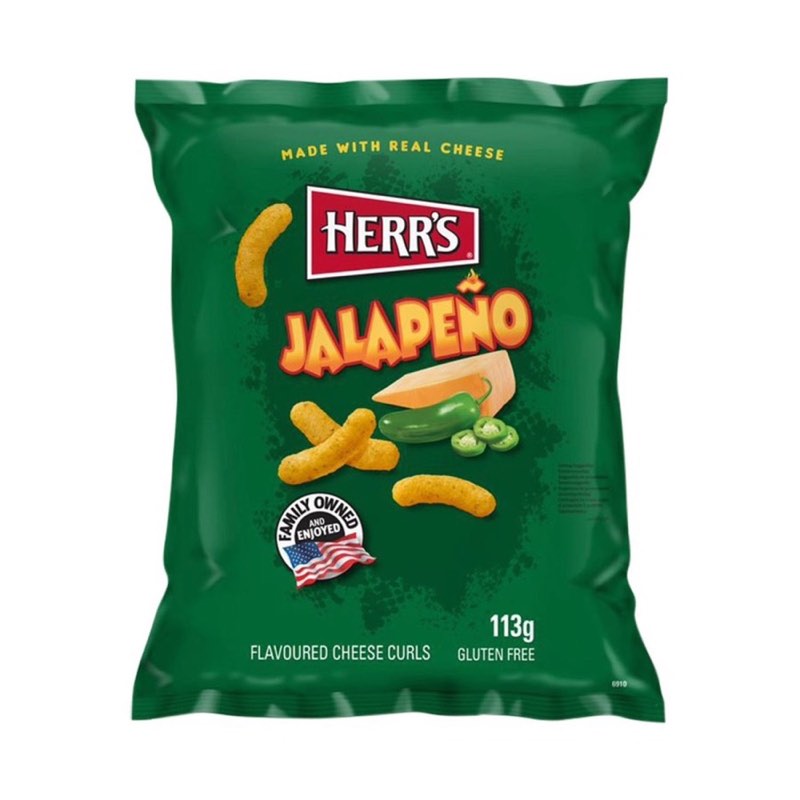
Where it sits against its own stablemates is the useful comparison. The range runs a garlic idea, a dill idea and a hot idea, and those are three genuinely different propositions rather than three flavours of the same thing. If heat is what you are after rather than brightness, the Hot Mama Hot Pickle Puffed Snack Bag at £1.25 is the one pointed in that direction. If you want savoury with a bit of dairy weight behind it instead, Herr's Jalapeno Cheese Curls at £3.79 take the heat idea somewhere else entirely.
Building a spread with one savoury item in it
Here is a board that works, built around the principle that contrast is structural rather than decorative.
Start with the bulk. Two thirds of any good spread should be easy, familiar, grazeable confectionery that people can eat without thinking. Build that from a ready-made pick and mix if you want it done for you, or pull it together yourself by weight if you would rather choose every component.
Add a texture outlier from the sweet side. Something that eats differently from everything else in the bulk — a hard sweet if the bulk is soft, a soft one if the bulk is chewy. This is the cheapest improvement you can make to any spread.
Add the savoury interruption. One item, opened halfway through, portioned and passed around rather than left in a bowl from the start. That is this one's job, and holding it back until the middle of the evening roughly doubles its effect.
Add a crunchy savoury to graze on. The interruption is an event; the grazing savoury is background. Those buffalo-flavoured curls at 113g are the obvious candidate, and they sit in a bowl happily for a whole evening in a way a single large item does not.
Finish with something rich. A spread with nothing from the candy and chocolate section in it feels unfinished to most people, and chocolate is the natural last thing of the night. Keep it cool until you put it out.
That is a five-part spread where every part does a different job, and the whole thing can be assembled for less than most people spend on a single takeaway.
Parties, hampers and the well-placed joke
For a hamper, the savoury item is the piece that stops the hamper looking like a bulk order. A box of nothing but sweets reads as generous but generic. The same box with one savoury oddity in it reads as chosen by a person who knows the recipient. If you are assembling a gift for somebody with a sense of humour, this is a genuinely good £1.49 to spend.
For secret Santa and similar budget-capped gifting, it has an unusual property: it is cheap, it is substantial at 196g, and it is funny. Most items achieve at most two of those three. You can build an entire small gift around one pickle and a handful of sweets and come in well under any sensible budget cap while still handing over something that gets a reaction.
For a children's party, use judgement. Some children find a savoury pickle on a sweet table the best thing that has ever happened; others will be genuinely appalled. Both reactions are entertaining, but if you are catering rather than entertaining, keep it on the adults' end of the table.
For an adult gathering, it is a good opener to a conversation about the shop itself, which is how a surprising number of people find their way into browsing the several hundred loose lines we carry in the first place. The oddity gets the attention and the range keeps it.
£1.49 for 196g, and what that means next to a sweet shelf
Value on a sweet shop is nearly always measured in pence per gram, and by that measure this is an outlier. At £1.49 for 196g you are paying well under a penny per gram, which is a fraction of what almost any bagged confectionery line costs by weight. A small branded sweet bag will typically run at three to four times that rate.
| Item | Price | Weight | What you are really paying for |
|---|---|---|---|
| This pickle | £1.49 | 196g | One substantial savoury item, shared or committed to |
| A puffed snack bag from the same range | £1.25 | Bagged snack | The same flavour idea, grazeable, for a bowl |
| A cheese curl bag | £3.79 | 113g | Savoury grazing for a whole evening |
But pence per gram is slightly the wrong lens here, because you are not buying this to fill people up. You are buying a single effect: one savoury moment in an evening otherwise made of sweets. The honest way to price that is against what else £1.49 buys you on this site, which is roughly half a small bag of branded sweets. On that comparison it is very easy to justify.
The other piece of value arithmetic worth doing: because it is one item rather than a quantity, it does not scale. Buying one for a group of ten is not the same as buying a 500g bag for a group of ten. If you want everybody to have a proper go at it, buy more than one, and work on the basis that a group of six needs at least two if it is going to be more than a taste each.
Keeping it properly
This is the section where a lot of shops start improvising, and we are not going to. The storage conditions for this product are printed on the manufacturer's pack, they are specific to how it was made and packed, and they are the instructions to follow. Read them when the order arrives, before you put it anywhere.
What we will say is general and applies to anything savoury sharing a cupboard with confectionery. Keep strong-smelling items away from anything that absorbs aromas — chocolate in particular picks up smells from its surroundings very readily, so do not store the two touching each other in a warm cupboard. And once any single-serving item is opened it stops being a store-cupboard item and starts being a fridge-or-finish-it item, so plan to open it at the point you intend to eat it rather than well in advance.
If you want an item with a simpler storage life for the same flavour idea — something you can buy now and forget about in a cupboard until a party in three weeks — a sealed snack bag is the more forgiving format, and that is a genuine practical reason to choose one over the other rather than a preference.
Choosing between the three in the range
There is one size of this product, at one price, so the only real decision is which of the family you want and in which format. Set out plainly:
- Want a bright, garlic-led savoury and want it as a single substantial item — this is the one you are already looking at, £1.49 for 196g.
- Want the same garlic idea but grazeable, in a bag, for a bowl — the puffed version of the garlic line at £1.25 is the direct translation.
- Want dill rather than garlic — the Big Papa dill puffed bag is the alternative flavour idea in the range, also £1.25.
- Want heat in the mix — the Hot Mama bag is the one that takes it in that direction.
- Want savoury but not pickle at all — the cheese curls are the other savoury family we carry, and the jalapeno curls are the sharper of the two directions they come in.
The general rule: buy the single item when you want an event, buy a bag when you want background. Most spreads benefit from one of each, and at these prices you can have both for under three pounds.
Where it sits on the site
This lives on our three-item savoury corner and nowhere else, which is the fastest way to see the whole savoury range in one go. It is deliberately small. We are not trying to be a snack shop, and if you came here for crisps at scale you will be disappointed by the depth — though you will find the two cheese curl lines worth knowing about, including the buffalo blue cheese ones, which are the most emphatically flavoured thing on that shelf.
The neighbouring shelves are all sweet, which is the point of the contrast. The pick and mix shelf is where most orders start. The chocolate side of the shop is where most of them finish. And the full catalogue is worth a browse if you have arrived here by accident, because arriving at a pickle on a sweet shop is usually a sign that somebody is exploring rather than shopping from a list — and exploring is what the rest of the range is for.
If you are building an order around contrast rather than around a single craving, work backwards: pick your savoury item first, then choose sweets that eat differently from each other, then add one thing you have never tried. That is a better-constructed basket than ten variations on the same gummy, and it costs the same.
Questions people ask before they add this to an order
Is this actually a sweet?
No, and we would rather say so plainly than dress it up. It is a savoury item on a shelf full of confectionery, it sits in our small snacks section rather than anywhere in the sweet range, and it is bought for contrast, curiosity or because somebody simply likes pickles. If you are ordering it expecting anything sugared you will be surprised. If you are ordering it as the odd one out on a sweet table, that is precisely the job it does.
What is in it?
We do not hold verified ingredient information for this line, so we are not going to tell you — and you should treat any shop that guesses at this with suspicion. The manufacturer's own pack carries the full ingredient statement, and that is the authoritative source for the batch you receive. Please read it on arrival, before anybody eats anything, particularly if there are allergies in your household.
How big is it?
196g, which for a single item rather than a bag of small pieces is substantial — noticeably heavier in the hand than almost anything else you can buy here at this price. It is a sharing size or a full commitment for one person, not a nibble. If you are planning it into a party for several people, assume one will stretch to a taste each for a small group and buy accordingly for anything larger.
Is it spicy?
The name points at garlic and zest rather than heat, so it is not positioned as the hot one in the family. If heat is what you are actually after, the range has a line named for exactly that, and picking it is a more reliable route to what you want than hoping this one will get there. As always, the pack is the place to confirm anything specific about what you have been sent.
Can I put it on a sweet table with children around?
You can, and the reactions are usually the entertainment. Sweets are a treat and everything on a table like this should be treated as one. Small hard sweets and whole gummies are a choking risk for young children, so supervise what is being eaten and portion a large single item properly rather than handing it over whole. And if anybody at the table has allergies, check the manufacturer's packaging on the items you have bought before eating.
Why is it so cheap compared with the sweets?
Because you are comparing two very different things. Confectionery of the kind we mostly sell is made in small pieces, packed in small quantities and sold by brand, and all three of those push the price per gram up. A single substantial savoury item priced at £1.49 works out at well under a penny a gram, which looks dramatic on a spreadsheet but simply reflects a different category, a different format and a different kind of production. It does not mean the sweets are overpriced or that this is somehow a bargain version of anything.
Does it need to go in the fridge?
Follow the storage instructions printed on the pack. We are not going to improvise storage advice for a food we did not manufacture, because getting that wrong is the sort of mistake that actually matters. The general principle that applies to everything in an order like this: read the pack before you shelve it, keep strongly aromatic items away from chocolate, and once something single-serving is open, treat it as open.
Will it make everything else in my parcel taste of it?
Sealed items travel together perfectly well, and nothing in a parcel is open in transit. Once you are home, use a little sense: chocolate in particular takes on surrounding aromas over time, so do not store the two pressed together in a warm cupboard for a fortnight. Put savoury with savoury, keep chocolate somewhere cool and separate, and there is nothing to worry about.
What do I serve with it?
The most useful answer is a contrast board: mostly sweet, one savoury, and at least three different textures across the whole thing. If you want a second savoury note to graze on rather than a second event, the jalapeno cheese curl bag does that job and has a sibling in a different flavour direction. If you want the same flavour idea in a format you can put in a bowl, the puffed bags from the same range are the direct translation at £1.25.
Is this a novelty or do people genuinely eat these?
Both, and there is no contradiction. A large slice of the sweet trade has always run on things bought for the reaction they get, and there is nothing dishonourable about that. Equally, plenty of people simply like pickles and are pleased to find one. The two audiences buy the same item for completely different reasons and both are well served by it. You do not have to decide which one you are before adding it to the basket.
Can I order this on its own?
You can order it however you like, though at £1.49 it is an odd thing to post by itself and most people add it to a sweet order rather than buying it alone. If you are building an order around it, the sensible approach is to treat it as the contrast item and choose the rest for texture variety rather than flavour variety — one soft thing, one chewy thing, one hard thing, and then this.
Will you stock more savoury things?
The savoury corner is small by design. We are a sweet shop that keeps a few savoury oddities because a range with an edge to it is a better range, not a snack retailer with a sweet section. Three lines is about right for that. If you want depth in savoury you will do better elsewhere; if you want one good savoury thing to put in the middle of a sweet spread, that is exactly what this corner is for.
In short
A savoury oddity on a sweet shop, priced at £1.49 for 196g, stocked deliberately and not by accident. It is here because a table of nothing but sweets gets dull faster than people expect, and because the single most effective thing you can add to such a table is something that is not a sweet at all. Buy it for the contrast, for the reaction, or simply because you like pickles and had not expected to find one here. Read the pack when it arrives, serve it halfway through rather than at the start, and let it do the one job nothing else on these shelves can.
More from Van Holten's
More snacks sweets
Where this sits
Van Holten's - Garlic Joe Zesty Garlic Pickle appears on these shelves. Browse them, or jump to something nearby.
You might also like