3D · 126g
Read the full guide
Doughbrik’s Extra Cheesy Wavers Crisps 126g
£4.99
✔ In stock — ready to ship
Fresh stock
Free over £20
Same-day dispatch
Secure checkout
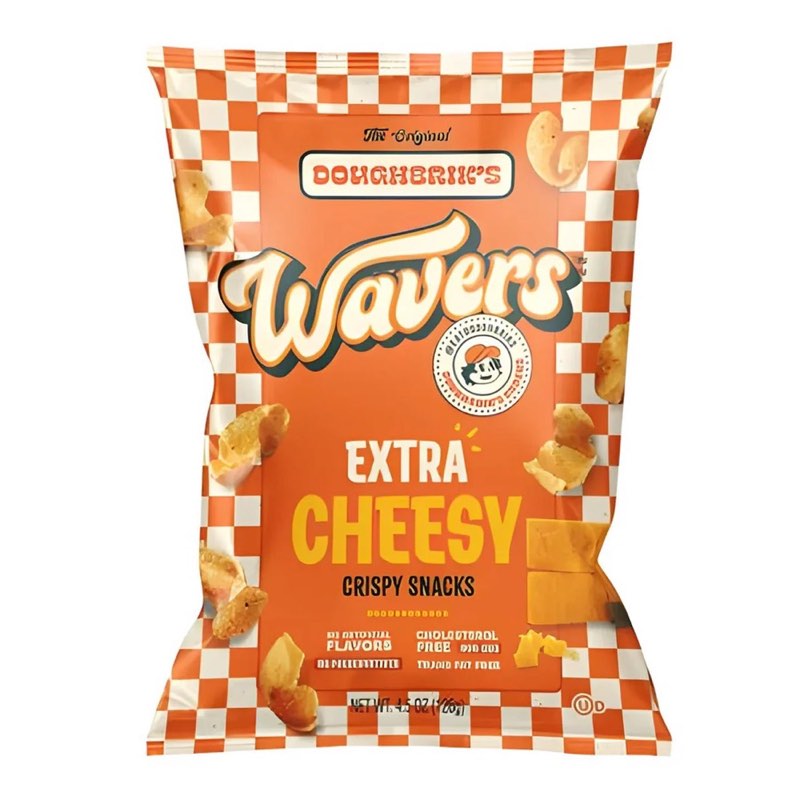
The first thing you notice about Doughbrik's Extra Cheesy Wavers Crisps is that they do not lie flat. The name tells you the form — a waver is a wave — and the pieces come out of the bag with a genuine three-dimensional curl to them, ridged along their length and rising and falling across their width. Tip a handful onto a plate and they do not settle into a stack the way a flat crisp does. They interlock, prop each other up, and sit in a loose tangle with air running all through it.
That shape is the whole product, and it is worth looking at one properly before you eat it. Hold a single piece up and you can see the section: it is not a uniform sheet but a formed thing with peaks and troughs, thicker where the wave turns and thinner along the runs. The wave gives it rigidity — you can press quite hard on the flat of one before it gives, far harder than you could on a plain crisp — and then when it does give, it does not bend. It goes all at once.
The full guide to Doughbrik’s Extra Cheesy Wavers Crisps 126g
5,127 words on how it eats, who it suits, how to serve it and what to put beside it.
Open the bag: what a waver actually looks and sounds like
Size in the hand is generous. These are not one-mouthful crisps in the way a small ridged round is. Each piece is a two-bite object for most people, or a one-bite object if you are committed, and the difference matters because a bigger piece means a bigger event when it breaks. There is a satisfying disproportion between how little a single crisp weighs and how much noise it makes on the way down.
The colour is mixed rather than uniform. This is a multi-coloured line, and across a bagful you get variation piece to piece — some darker, some paler, some with the shading concentrated in the troughs of the wave where the surface catches. In a bowl that variation reads as depth rather than as inconsistency, and it is one of the reasons these look better tipped out than they do left in the bag.
Now the eating, which is the reason anyone buys a crisp with a shape like this. Put one in and there is a brief moment of resistance — a genuine pause where the arch of the wave holds against your teeth — and then it fractures. Not crumbles: fractures. The whole piece goes at once and breaks into large fragments rather than dust, and those fragments then break again as you chew. You get two distinct crunches out of a single crisp, which a flat crisp cannot give you, and it is entirely a function of the shape.
The sound is loud. There is no polite way to eat these and anybody who tells you otherwise has not tried. Arched, rigid, air-filled shapes are the loudest thing in the entire snack category, because the collapse releases in one go rather than progressively. In a room with music on it is fine. In a quiet cinema it would be a public event.
The cheesy note arrives immediately — before the crunch has finished, in fact, because the surface carries it and the surface reaches your tongue first. It is a forward, savoury, salty-rich note that announces itself rather than creeping up, and it sits high and bright rather than deep and aged. The word on the bag is extra and the flavour is pitched to live up to it: this is the emphatic end of the cheesy spectrum, not the subtle end.
Then, importantly, it goes. The flavour peaks fast, holds through the chew, and clears reasonably quickly afterwards rather than coating the mouth and staying there. That fast clearance is what makes a bag of these disappear — a savoury note that lingers heavily tells you to stop, and one that clears does not. The ridges also do something worth mentioning here: the troughs hold flavour more densely than the peaks, so the intensity varies slightly within a single piece as you work across it. Eat one slowly and you can feel the flavour come in waves, which is a better joke than the brand probably intended.
The finish is dry and clean-ish. There is a light residue on the fingers, as there is with any strongly seasoned crisp, and it is the kind you notice when you go to pick up a phone. Not the worst offender in the category by a distance, but not a nothing either. More on the practical consequences of that later.
Building a flavour that everybody recognises instantly
There is a genuinely interesting problem sitting behind a bag like this, and it is worth spending some time on because it applies to almost everything in a sweet shop as well as everything in a crisp aisle. The problem is this: how do you build a flavour that a person identifies correctly, immediately, without being told, and without ever having tasted this exact product before?
Recognition is not the same as accuracy
The instinctive answer is "make it taste like the real thing", and that answer is wrong, or at least badly incomplete. Flavour recognition in snacks and confectionery does not work by fidelity. It works by signature — a small number of characteristic notes that the brain has learned to treat as a label. Get those few notes right and people will name the flavour confidently. Get the full complexity right but miss the signature notes and people will taste something pleasant that they cannot name, which is commercially useless.
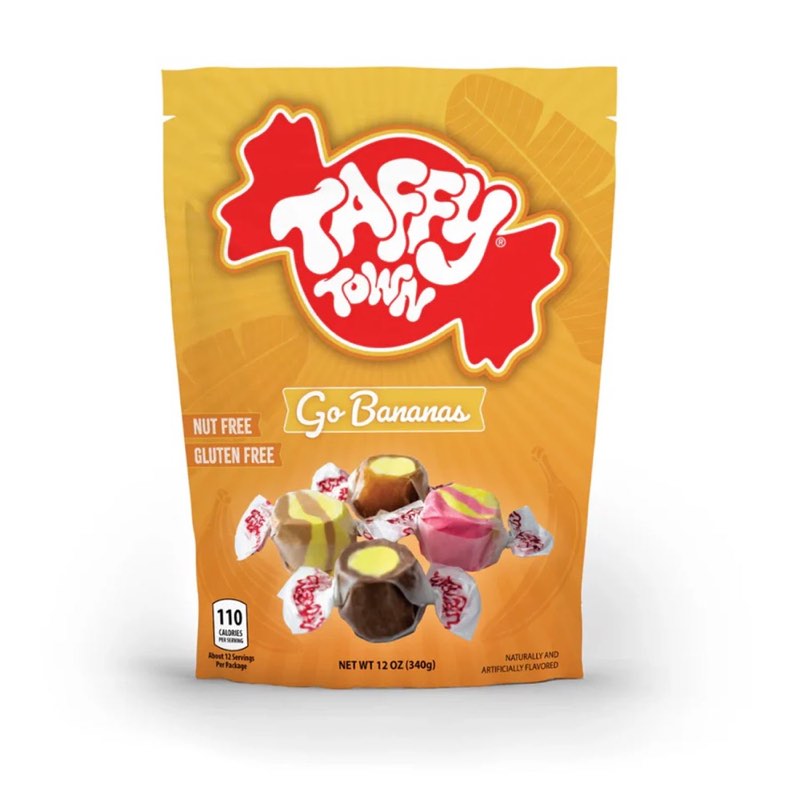
You can prove this to yourself with almost any sweet on the site. A banana sweet does not taste like a banana. It tastes like the specific volatile signature that British confectionery agreed, a very long time ago, stands for banana — and everybody in the country reads it correctly, including people who dislike actual bananas. Go Bananas, the 340g banana taffy, works on exactly that principle: nobody eats it and wonders what flavour it is meant to be.
Savoury flavours face the same problem with harder constraints, because savoury signatures are less abstract. A fruit note can be a stylised cartoon of a fruit and everybody accepts it. A cheesy note that is a cartoon of cheese registers as wrong far more easily, because people have a much more precise internal reference for savoury food than for sweets. The room for stylisation is narrower.
Top note, body, and what the shape does to both
Flavour on a crisp is built in layers that arrive at different times, and the shape of the crisp changes how those layers land. The top note is what hits in the first half-second, carried on the surface and reaching you almost before you have bitten. The body is what you get through the chew, released as the structure breaks and the fragments move around the mouth. The finish is what remains after you swallow.
On a flat, thin crisp, those three phases compress into something close to a single event — everything happens at once and is over quickly. On a thick, arched, ridged piece they separate out, because the structure takes longer to break down and the fragments are bigger. That is why a heavily formed crisp can carry a bigger flavour without becoming exhausting: the intensity is spread across a longer event rather than dumped all at once.
It also means the same seasoning tastes different on different shapes, which sounds implausible until you have compared two crisps side by side and found it obviously true. The ridged, deep-troughed shape here holds seasoning unevenly by design, and uneven is good — a perfectly even coating reads as flat and processed, while variation reads as character. Every bite is slightly different from the last one, and that is what keeps you going back into the bag.
Why "extra" is doing real work on the front of the bag
A word like extra in a product name is not only marketing. It is an instruction to your palate, and it genuinely changes what you taste. Expectation is one of the strongest inputs into flavour perception — told that something is intense, people reliably report it as more intense than the identical thing presented without the claim. Confectioners and snack makers know this perfectly well, and the naming is part of the recipe.
What it means practically is that a product with a superlative in the name has to clear a higher bar. Call something "cheesy" and a moderate note is fine. Call it "extra cheesy" and a moderate note is a failure, because you have primed the eater to expect more and then not delivered it. The naming raises the stakes. This one is pitched to meet the promise it makes, which is why the note comes forward fast and sits loud rather than subtle.
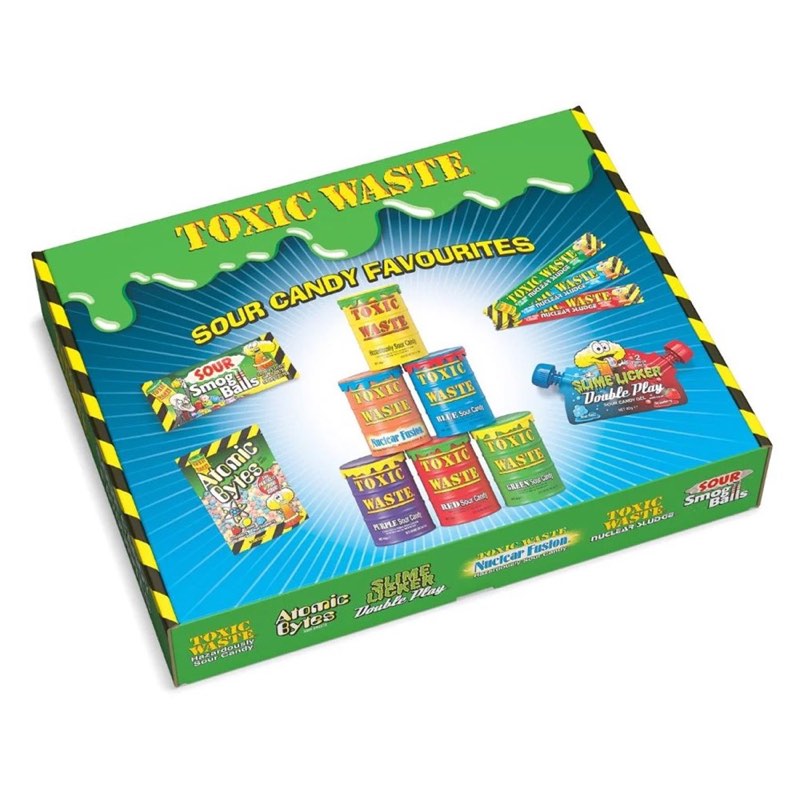
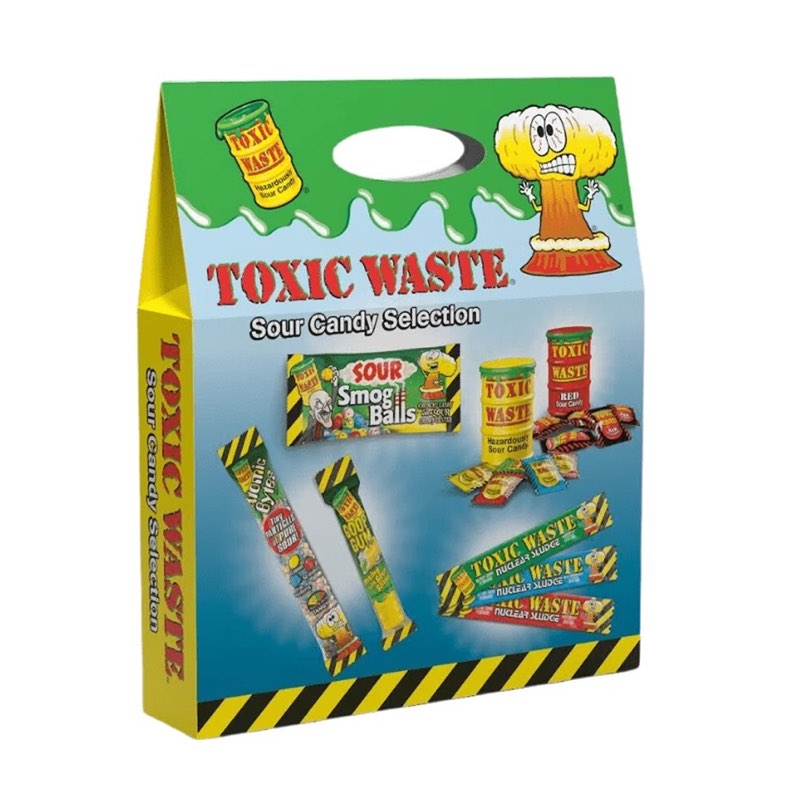
The same principle runs right through the shop in both directions. Cry Baby sour wax bottles, four in a pack for £2.99, announce their intensity in the brand name and then have to live up to it. The Toxic Waste Christmas selection box at £7.99 does the same on a larger scale. At the opposite end, a name like Berries and Cream, in the smaller 99g taffy bag, promises softness and roundness, and a sharp, acidic version of that flavour would read as a mistake even if it were objectively delicious. Names set the target the flavour has to hit.
The two-flavour problem
One more piece of craft worth noting, because it is what separates a good savoury snack from a one-note one. A single dominant note gets boring fast — the palate adapts to a constant stimulus within a surprisingly small number of mouthfuls, and after that you are eating texture with a memory of flavour attached. The fix is contrast inside the product: a second note that the first one keeps bumping against.
That is why so many successful savoury flavours are compounds rather than singles, and it is why the other two in this range go looking for tension deliberately — the Hot Honey wavers set sweetness against heat, and the Late Night Pizza wavers assemble several savoury notes into one composite. This one takes the other route: commit hard to a single register and let the shape supply the variation instead. Both approaches work. They just need you to eat them differently, and this is the one that rewards a bowl and a conversation rather than close attention.
Which era of the sweet counter this belongs to
Walk into a British sweet shop now and you are looking at three shops layered on top of each other, from three different periods, all trading at once. Knowing which layer a product comes from tells you a great deal about why it exists, who it is aimed at and how to enjoy it.
The jar layer
The oldest layer is the counter tradition: loose sweets in jars, sold by weight, most of them decades old as formats and many of them older than that. Boiled sweets, firm jellies, toffees, rock. These were never advertised and never needed to be. They survive because they are genuinely good at what they do and because the format — open display, weighed out, chosen by eye — sells them without any help.
Our version of that layer is the retro shelf and the loose lines that sit alongside it, and Buchanan's Edinburgh Rock at £3.49 for a 150g carton is about as pure an example as we stock — a format that has changed very little and does not need to. The Kingsway counter lines are the same layer in bulk. If you grew up with a sweet shop with a scoop in it, this is the shop you remember.
The bagged-brand layer
The middle layer is the one most people under fifty actually grew up with: branded, bagged, nationally advertised confectionery bought from a newsagent or a supermarket rather than a sweet shop. This layer standardised the market enormously. It produced formats that are consistent everywhere, recognisable at ten paces, and reliable to the point of being unremarkable.
That is not a criticism. Reliability is the whole value proposition, and this layer includes some of the best-engineered confectionery ever made. Our Haribo shelf is the definitive example, and Sweetzone's bagged range covers the same territory at accessible prices. A £1.25 bag of Vimto Jazzies sits here too — a branded flavour crossed onto a traditional format, which is the middle layer's favourite trick.
The layer this belongs to
The newest layer is the one a bag like this comes from, and it has a set of characteristics that are easy to list once you have noticed them. Products in it are discovered through screens rather than shelves. They are formats and flavours that would not have been considered mainstream a decade ago. They cross categories freely — savoury snacks sold from a sweet shop, sweets that behave like snacks, drinks sitting next to confectionery. And they are bought in single bags at a mid price rather than by weight, because the purchase is a trial rather than a restock.
That last point is the important one. In the jar era you bought a quarter of something you already liked. In this era you buy one bag of something you have seen and want to find out about, and if it is good you buy it again. The entire product design follows from that: a single generous size, a distinctive shape, a flavour named to be unmistakable, and packaging built to be recognised in a photograph. The 3D shelf and its twenty-two lines is more or less an exhibit of this layer — taffies, popcorn, freeze dried fruit and three savoury crisps all filed under one heading, which would have made no sense at all in either of the older layers.
The crossover into drinks is the clearest sign of the change. A sweet shop stocking a 473ml Monster Strawberry Lemonade alongside its sweets is doing something the jar-era shop would not have recognised as its business, and something the supermarket-era shop would have split across three aisles. The current logic is simply that these things all get consumed in the same hour by the same person, so they may as well be sold together.
What gets lost and what gets gained
It is worth being honest about the trade. The jar layer had range and character that nothing since has matched, and it was cheap because it was unbranded. The bagged layer had consistency and quality control the jar layer could not dream of. This newest layer has novelty and speed, and its weakness is that novelty ages — a product bought because it is new has a harder job the second time, when it has to be good rather than interesting.
The test for anything from this layer, then, is whether you would buy it again after the novelty has worn off. A strongly formed, heavily seasoned crisp that makes a lot of noise passes that test more easily than most, because the thing it does well is not a gimmick. Crunch does not get old. It is the oldest pleasure in the entire snack category and it survives every change of era intact.
Who it suits
The obvious audience is anyone who buys crisps by texture rather than by flavour — the people who reach past the thin ones for whatever is thickest, ridgiest and most structural. If you are that person, the wave form is the selling point and the flavour is a bonus.
The second audience is the household that has given up trying to make one bowl please everybody and now puts out three. A strongly savoury, loud, single-register crisp is the anchor of a snack table, and it works precisely because it is uncomplicated. Nobody has to decide whether they like it.
The third is anyone who has landed here from a screen, having seen the shape, and wants to know whether it is as good as it looks. Honest answer: the shape genuinely delivers on texture, and the flavour is loud rather than sophisticated. If you were hoping for a nuanced, aged, complicated savoury note, adjust down. If you were hoping for a crisp that makes a noise and tastes emphatically of what it says, adjust up.
It suits children, with the standard sensible caveats — these are a treat rather than a food, and we would always say check the manufacturer's packaging when your order arrives, before anybody eats anything, particularly if there are allergies in the house. What it is not is a subtle thing to serve with drinks to people you want to impress. It is a bowl-on-the-floor, film-on, nobody-looking snack, and it is very good at that.
What to put next to it
The rule for a snack table is that you need three things and they must be genuinely different: something savoury and loud, something sweet and slow, and something sharp that resets the mouth. This bag is the first of those, comprehensively. The other two slots are where people go wrong by picking two versions of the same idea.
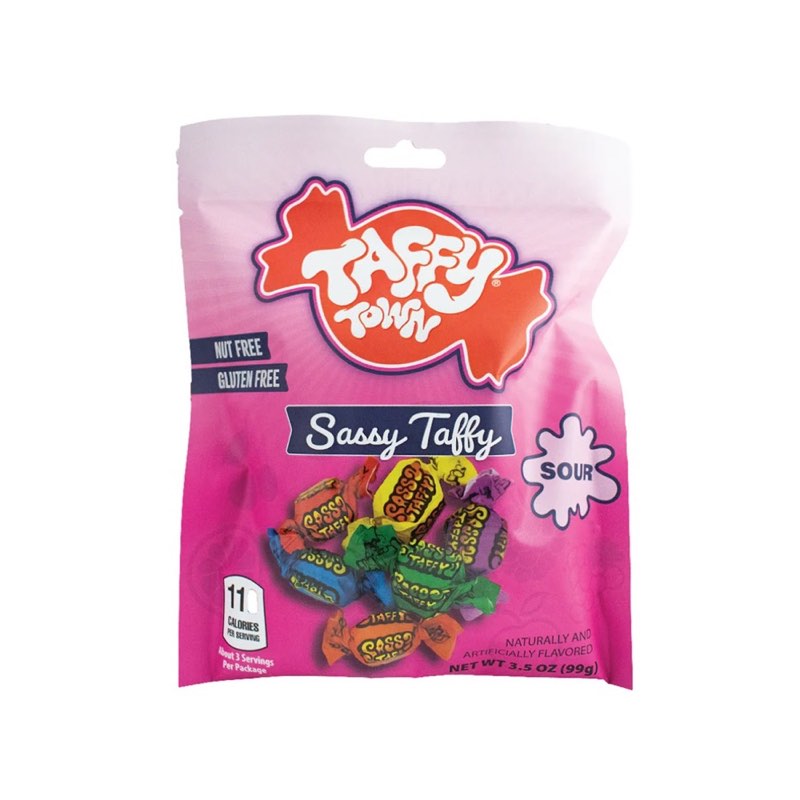
For the sweet and slow slot, a chew is the right answer, because a chew takes time and a table full of fast food is a table that empties in twenty minutes. Taffy Town Sassy Taffy at £7.49 is the most generous option at 340g, and being individually wrapped it survives sitting out in a bowl for hours in a way an unwrapped sweet does not. Taffy Town's candy corn is the same weight and price with a softer, gentler register if the room includes children.
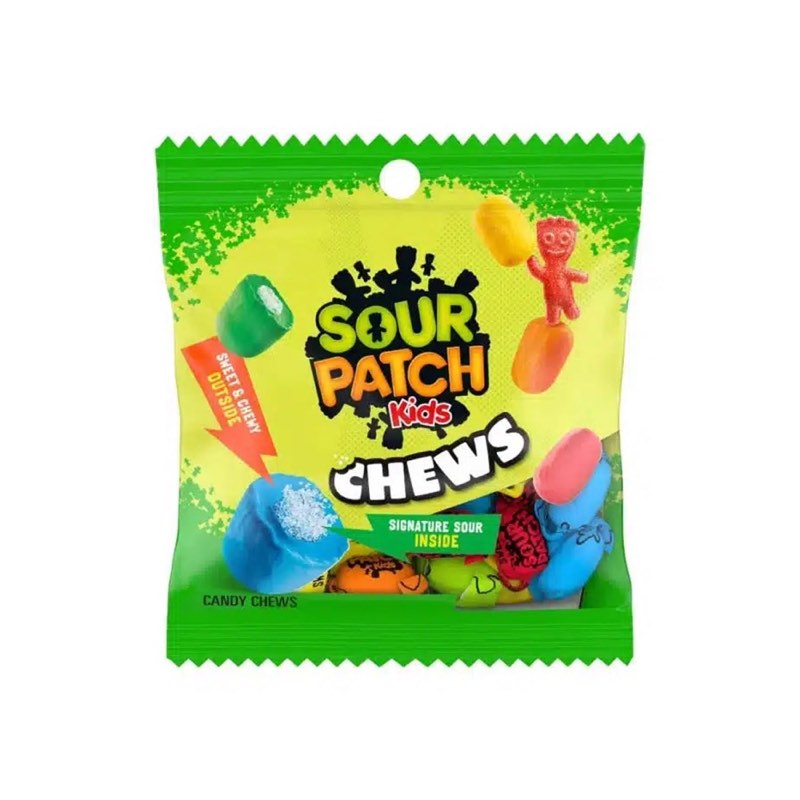
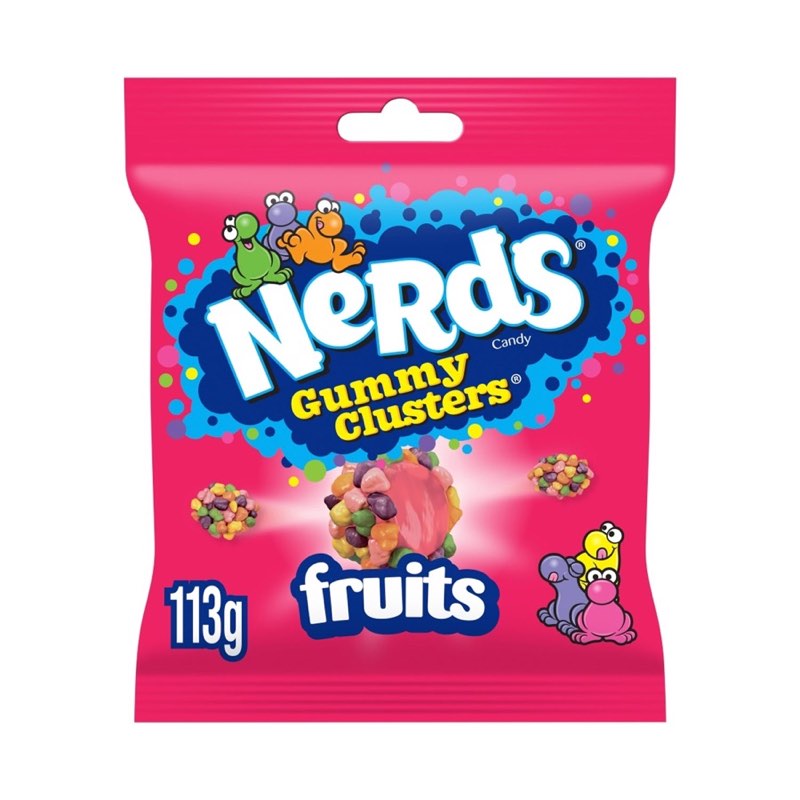
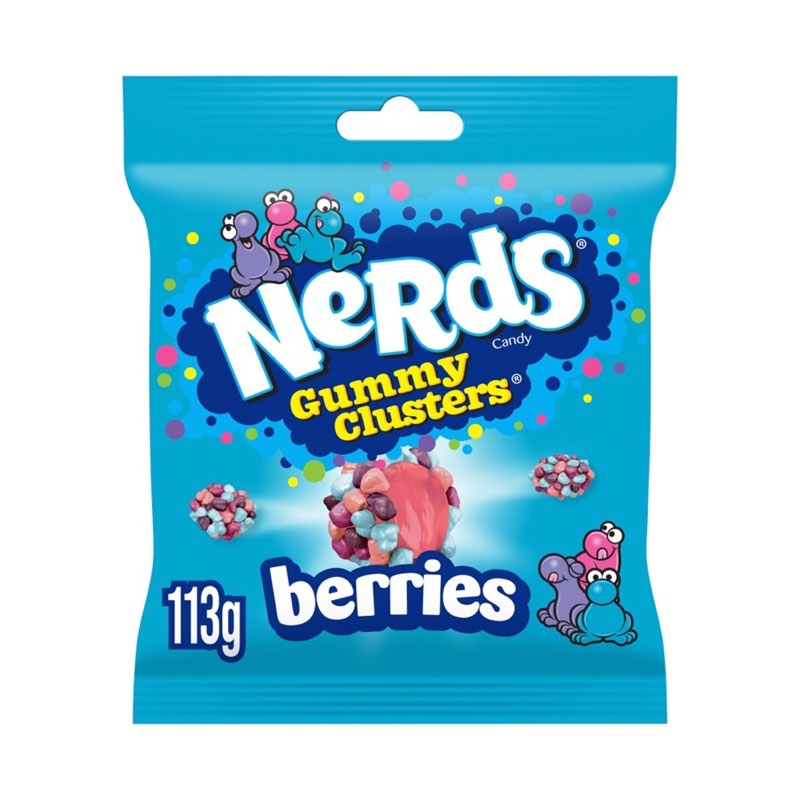
For the sharp reset, sour is the answer and it should be a small quantity, because sour is a punctuation mark rather than a paragraph. A 60g bag of Sour Patch Kids Chews at £2.79 is exactly the right size for one bowl. For a room that likes texture as much as sharpness, Nerds Gummy Clusters in the berries mix put a crunchy shell over a soft centre at £2.49, and the plain fruit version of the same clusters does the same job if the berry note is too dark for the room.
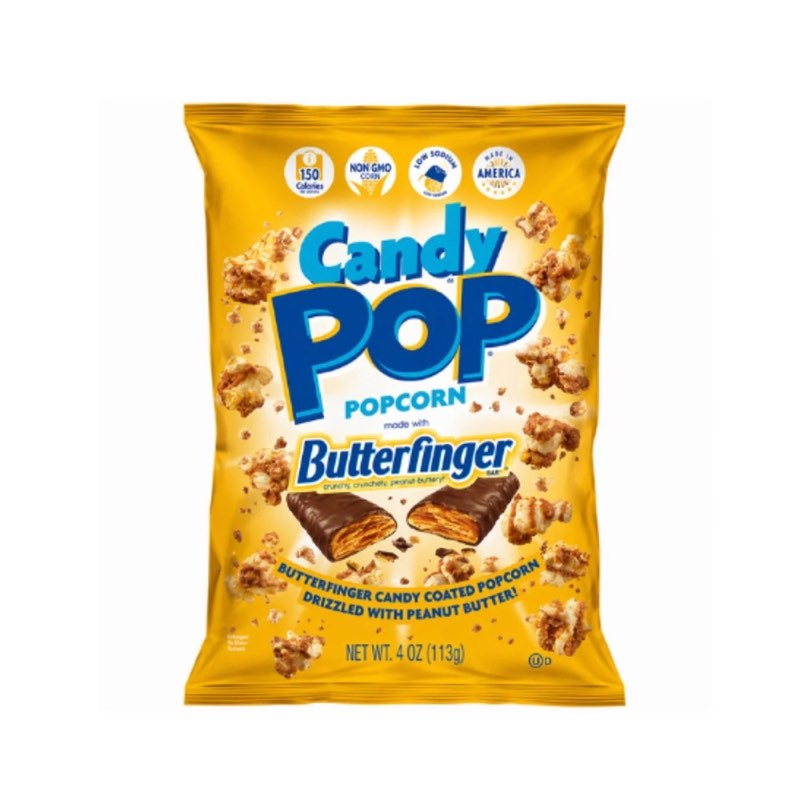
If you want a fourth bowl, make it another crunchy thing with a different character rather than a second savoury. Candy Pop Butterfinger Popcorn, 113g for £4.49, is the best bridge we stock — popcorn is structurally similar enough to sit comfortably next to a crisp, and sweet enough to be a different experience. Bolci's freeze dried dark chocolate strawberry at £4.49 goes further in the same direction: crunchy, fruity, and a texture nobody at the table will have had that week.
And if what you actually want is a sweet bowl rather than a mixed one, the jelly and gummy shelf will fill it, though be warned that a bowl of jellies next to a bowl of these will go second every time. Loud savoury beats quiet sweet in a room of people who are half-watching something else.
When to reach for a bag
Film nights, obviously, with the caveat about volume — these are loud and that is fine at home and less fine anywhere with an audience. Gaming sessions, where the shape helps: a big, rigid piece is easier to eat one-handed without looking than a thin one that shatters in your fingers.
Parties, as one bowl among several, and specifically as the bowl you put out first. Savoury goes before sweet at almost every gathering — people arrive hungry rather than in the mood for sugar, and a table that leads with sweet things sits untouched for the first half hour. Lead with this, bring the sweet bowls out later, and the whole evening paces better.
Christmas and gatherings generally, where the useful property is that it is not chocolate. By late December every surface in the country has chocolate on it, and a loud savoury bowl is a relief. If you are building a box or a hamper for someone, one savoury item among the sweets does more for the overall impression than another sweet would.
And the ordinary use, which is most of them: a bag opened on a Tuesday because you wanted something to crunch. There is no occasion required. The single-bag format exists precisely for that.
126g for £4.99, and what that means in practice
Straight arithmetic first. £4.99 for 126g is £3.96 per 100g. That is the number to carry around when you are comparing, and it puts this in the mid-to-upper range for a bagged snack of this size.
| Unit | Cost | What it gets you |
|---|---|---|
| The bag, 126g | £4.99 | One bowl for three or four, or one person across a few sittings |
| Per 100g | £3.96 | The figure for cross-shopping |
| A 30g handful | £1.19 | Roughly four handfuls in the bag |
| Per person at a table of six | £0.83 | If this is one bowl of four or five |
The honest comparison within our own range is the popcorn, which is £4.49 for 113g and works out at £3.97 per 100g — within a penny of this. That is a useful thing to know, because it means choosing between them is purely a question of which texture and register you want, not which is better value. They are the same money for the same quantity of crunch.
Against the sweets, this looks expensive per gram, and it is. A 250g loose bag at £5.49 is £2.20 per 100g. But per-gram comparisons between savoury snacks and confectionery are close to meaningless, because nobody eats 250g of crisps in the way they eat 250g of jellies over a fortnight. A crisp bag is an occasion, and the right unit is cost per bowl. At £4.99 for a bowl that serves three or four people once, this is about a pound a head, which is a perfectly ordinary rate for a snack.
Volume is the other correction, and it is a big one with a formed crisp. Because the pieces are arched and interlock rather than stacking, 126g of these fills substantially more bowl than 126g of a flat crisp would. If what you need is a full-looking bowl — and at a party, that is exactly what you need — you are getting more visible snack per pound than the weight suggests. Tip the whole bag into a wide, shallow bowl rather than a deep one and this advantage is at its most obvious.
For portioning at a gathering, work on 25 to 30g a head of any single savoury line when there are three or more bowls out. That makes one bag right for four to five people as one component of a spread. If this is the only savoury thing on the table, double it — savoury runs out first, always, and the bowl that runs out is the one people remember wanting more of.
For one person eating over several evenings, the bag is about four sittings, which brings the cost per sitting to £1.25. Whether that is good value is a personal question, but it is worth measuring it that way rather than by the headline price, because £4.99 sounds like a lot for a bag and £1.25 sounds like very little for an evening.
Keeping the crunch
Everything about this product is structural, which means storage is not a minor footnote — it is the difference between the thing you bought and a disappointing version of it. A crisp that has gone soft has lost the only quality that mattered.
The enemy is humid air, and British kitchens are full of it. Seal the bag properly after opening; if it will not reseal, clip it, or better, decant into an airtight tub. A rolled-over bag with a peg on it is adequate for a day and not much more. An open bag left on the side overnight will be noticeably duller by the morning.
Keep it away from the kettle and the hob, which are the two humidity sources in most kitchens, and out of direct sunlight, which will dull a multi-coloured line's appearance before it affects anything else. Do not refrigerate — a fridge is damp, and the condensation when you bring a cold bag into a warm room does more damage in ten minutes than a week in a cupboard would.
Physical protection matters too, which is not something you have to think about with most sweets. A formed, arched crisp is strong along one axis and fragile along the others; a bag of these at the bottom of a shopping bag under a bottle arrives as fragments. They still taste the same, but you have lost the two-stage crunch that you were paying for. Carry the bag on top.
One size only
This comes as a single 126g bag at £4.99 and there is no larger format to step up to. For a crisp, that is the right call — a bigger bag of something that depends entirely on crispness is a bigger bag of something going stale, and 126g is comfortably a bowl.
If you need more, buy more bags rather than wanting a bigger one. Two sealed bags stay perfect; one large opened bag does not. And if you want variety rather than volume, buying one of each of the three in this range costs £14.97 and gives you three genuinely different flavour approaches across the same texture, which is a better party table than three bags of the same thing.
Where it sits on the site
We file this in two places only, which is unusual and tells you something. It is on the 3D shelf, alongside the taffies, the popcorn, the freeze dried fruit and its two sibling crisp flavours. And it is on our crunchy shelf, which is the smallest category we run at ten lines, and easily the most useful if texture is how you shop.
The reason it appears on so few shelves is that our flavour categories are built for confectionery and a savoury crisp does not fit any of them. There is no cheese shelf, and we are not going to invent one for three products. If you are looking for this kind of thing, the crunchy shelf is the route, and it is worth a browse in full because ten lines is small enough to read end to end in a minute.
From here, the sensible directions are: sideways to the other two wavers if you want the same texture with a different flavour approach, sideways to the popcorn if you want crunch with a sweet register, or off into the full shop if you came for crisps and have remembered you also want sweets. Most people do.
Things people ask
Are these crisps or are they a sweet?
They are crisps, sold from a sweet shop, and that combination is increasingly normal rather than odd. We stock them because they get eaten in the same hour, at the same table, by the same people as everything else here. Treat them as the savoury bowl on a table where the other bowls are sweets, and they make perfect sense.
How strong is the flavour?
Strong, and deliberately so — the name sets the expectation and the product is pitched to meet it. The note is forward, salty-rich and immediate rather than slow or aged. It arrives before the crunch has finished and clears reasonably quickly afterwards. If you find most savoury crisps under-seasoned, this will suit you. If you prefer a gentle background flavour, it will not.
How big are the individual crisps?
Larger than a standard ridged round. Most pieces are a two-bite object, with a pronounced wave and deep ridges. The size is part of why they are so loud — a bigger arch collapsing releases more at once. It also means they hold up to dipping and to being eaten one-handed, which smaller and thinner crisps do not.
Are they very messy?
There is a light seasoning residue on the fingers, as with any strongly flavoured crisp, and it is the sort you notice when you pick up a phone or a controller. They are not among the worst in the category, mostly because the pieces are big enough to hold by one end. Put a bowl and a cloth out at a party and nobody will think twice about it.
Is there a bigger bag?
No — 126g at £4.99 is the only size. For a crisp that is sensible, since a larger bag mostly means more of it going soft after opening. If you need more, buy more bags; two sealed bags keep far better than one big opened one, and you can spread the opening out across an evening.
How many people does one bag serve?
Three or four as one bowl among several, or four to five if there is a full spread out. If it is the only savoury thing on the table, buy two — savoury always runs out before sweet, at every gathering, without exception. For one person it is roughly four sittings, at about £1.25 a time.
How does it compare to the other two flavours?
Same shape, same size, same price, three different flavour strategies. This one commits to a single strong savoury register and lets the shape provide the variation. The pizza version builds a composite from several savoury notes. The hot honey version sets sweetness against heat. If you are buying for a table, buy more than one — three bowls of the same texture with three different flavours is a better spread than three bowls of the same thing.
Will they arrive whole?
Mostly, yes — the arched form is considerably stronger than a flat crisp and stands up to normal handling. Some breakage in any bag of crisps is unavoidable and always has been. Where you can help is after delivery: carry the bag on top rather than under bottles, and do not leave it at the bottom of a cupboard with tins on it.
What should I check about allergies?
Check the manufacturer's packaging on arrival, before anybody eats anything. That is the only source with the full and current information, and it is what we would tell you about any product on the site. We do not publish ingredient detail for our lines because we do not hold verified data for them, and we would rather say that plainly than guess at it.
Do they go with a drink?
A strongly savoury crisp wants something cold and sharp alongside it rather than something creamy, which is why crisps and fizzy drinks have always gone together. If you are stocking a table, adding a drink to the order is a reasonable move and we carry a few. What you do not want next to it is anything that competes on richness.
Can I put them out in a bowl in advance?
Half an hour before people arrive is fine. Two hours is not — an open bowl in a normal kitchen picks up enough moisture to take the edge off, and the edge is the whole point. Open and tip at the last sensible moment, and if you are refilling through an evening, refill from a sealed bag rather than filling one enormous bowl at the start.
To sum up
A big, arched, deeply ridged crisp that breaks in two stages and makes a proper noise doing it, carrying a forward, emphatic savoury note that arrives fast and clears cleanly. £4.99 for 126g, one size, and structurally the best argument in our small crunchy range. Buy it as the first bowl on a snack table, the anchor of a film night, or the savoury relief in a box of sweets. Just do not try to eat it quietly.
More from 3D
More crunchy sweets
Where this sits
Doughbrik’s Extra Cheesy Wavers Crisps 126g appears on these shelves. Browse them, or jump to something nearby.
You might also like