Home / Loose Sweets / Nerds Gummy Clusters Fruit Flavour Bag 113g

Nerds · 113g
Read the full guide
Nerds Gummy Clusters Fruit Flavour Bag 113g
£2.49
✔ In stock — ready to ship
Fresh stock
Free over £20
Same-day dispatch
Secure checkout
The first thing to say about Nerds Gummy Clusters is that they do not look like a sweet so much as a small piece of terrain. Tip a few out of the 113 g bag and into your palm and you get irregular, bobbled, knobbly lumps — nothing smooth, nothing moulded to a neat shape, no clean edges anywhere. Each one is a soft centre with a dense crust of tiny pieces packed all over it, and because those tiny pieces sit at every angle, the surface catches the light in a hundred different directions at once.
The colour is the other immediate thing. Our listing records these as Multi Coloured and that undersells the effect, because the colour is not applied in blocks the way it is on most sweets. It is stippled. Every cluster carries several colours at once in tiny specks, which means no two are identical and the bag as a whole reads as a kind of confetti rather than as a set of matching pieces. If you have ever emptied a bag of sweets into a bowl and thought it looked flat, this is the opposite problem solved: a bowl of these looks busy from across a room.
The full guide to Nerds Gummy Clusters Fruit Flavour Bag 113g
5,802 words on how it eats, who it suits, how to serve it and what to put beside it.
Opening the bag: what a multi-coloured cluster looks like up close
In the hand, a single cluster is a small mouthful rather than a bite — roughly the size of a large grape or a broad thumb-tip, though they vary, because the whole point of a cluster is that it has not been pressed into a uniform mould. Some come out noticeably bigger than others. Some are almost round and some are lopsided. That variation is a feature and it is worth knowing about before you pour, because it means portioning by count is unreliable here in a way it is not with, say, a moulded jelly.
Pick one up and it does not feel like a gummy. The outside is dry and slightly abrasive against the fingertips — the sensation is closer to handling a piece of gravel-coated chocolate than a bare jelly sweet. Nothing sticks to your hand. Nothing leaves that faint film that bare gummies leave. This is genuinely useful, and it is the reason these travel well in a bowl at a party when an unprotected jelly would be a slowly congealing mass by hour two.
Squeeze one gently between finger and thumb and you feel the two-part construction immediately: a firm, crisp resistance from the outside, and then a definite give underneath it. It is a sweet you can feel the architecture of before you have eaten any of it, which is not true of most confectionery and is a small part of the appeal.
The aroma, when you open the bag, is a general fruit brightness rather than one identifiable fruit. Our listing gives the flavour simply as Fruit, and that is the right level of precision — these are built around a fruit character in the broad sense rather than around a single named fruit you would be able to name blind.
Two textures, and the order they arrive in
The eating experience has a definite sequence and it is worth walking through it slowly, because the sequence is the product.
Stage one is the crunch. The moment your teeth close, the outer crust gives way — not with one clean snap, but as a scatter of many tiny fractures happening almost simultaneously. It is a noisy, granular, slightly gritty collapse rather than the single crack of a hard-boiled sweet. Our listing tags this line as both Crunchy and Gummy, and the crunchy half of that description is doing real work here — the first half-second of eating one of these is genuinely a crunchy experience, with no chew in it at all.
Stage two is the transition, and it lasts about a second. The crust has gone, the fragments are loose in your mouth, and your teeth are now meeting something completely different underneath. There is a brief moment where you have both textures at once: dissolving grit and springy centre, occupying the same bite. This is the moment the whole thing is engineered around and it is the reason people who like these tend to like them a great deal rather than mildly.
Stage three is the chew, and it is a proper one. The centre is a springy, resilient gummy that pushes back for several chews before it yields, and it holds together rather than dissolving straight away. This is the long part of the experience — the crunch is over in a heartbeat and the chew carries on for a good while afterwards, which means the overall impression a cluster leaves is a chewy one even though the first sensation was the opposite.
Stage four is the tail. As the centre breaks down, the last of the crust fragments are still dissolving, so the fruit note is arriving from two sources at slightly different rates. The surface fragments release fast and sharp. The centre releases slowly and rounder. The result is a flavour that seems to brighten, dip and then brighten again over the course of one sweet, which is a considerably more interesting curve than most confectionery manages.
The practical upshot is pace. These are slow sweets in a fast-looking format. They are small enough that your hand wants to take three or four at once, but each one occupies your mouth for long enough that you cannot actually eat them at the rate your hand suggests. A bag of these lasts noticeably longer than a bag of something purely crunchy at the same weight — which matters for a film, and matters even more for a car journey.
What £2.49 for 113 grams actually buys you
Here is the arithmetic, done properly, because people ask and because the answer is more interesting than it sounds.
The bag is 113 g at £2.49. That is £2.20 per 100 g, or just over £22 a kilo. Hold that number in your head for the rest of this section, because everything else is a comparison against it.
Per handful. A relaxed adult handful of pieces this size is somewhere around 25 to 30 g, which makes the bag about four handfuls. Call it 55p to 62p a handful. That is the number that actually matters when you are sitting on a sofa with a bowl, because handfuls are how sweets are really consumed — nobody counts pieces, everybody reaches. Four handfuls is roughly an evening for one person who is not being greedy, or two good sittings, or a share between two with a bit of resentment at the end.
Per piece. Because clusters are irregular, piece counts vary bag to bag and we are not going to quote you a number our listing does not hold. What you can reason about is the rough scale: at the size these come in, you are somewhere in the region of pennies per cluster, which puts each one in the category of a small, cheap individual pleasure rather than a portion. That is a useful framing for the person trying to have one or two rather than the whole bag.
Per guest. This is where the maths turns unforgiving, and it is the calculation most people skip. Spread 113 g across eight people and each gets about 14 g — four or five clusters. That is a taste, not a portion, and a bowl containing one bag of these on a table of eight will be empty inside ten minutes with several people never having got to it at all. Across four people it is 28 g each, which is one decent handful apiece and just about reads as a share. Across two it is generous.
So the honest guidance is: one bag serves two, stretches to three, and does not serve a party. If you want these on a table for a group, buy multiple bags and accept the cost, or buy them as the interesting item alongside something bought in bulk.
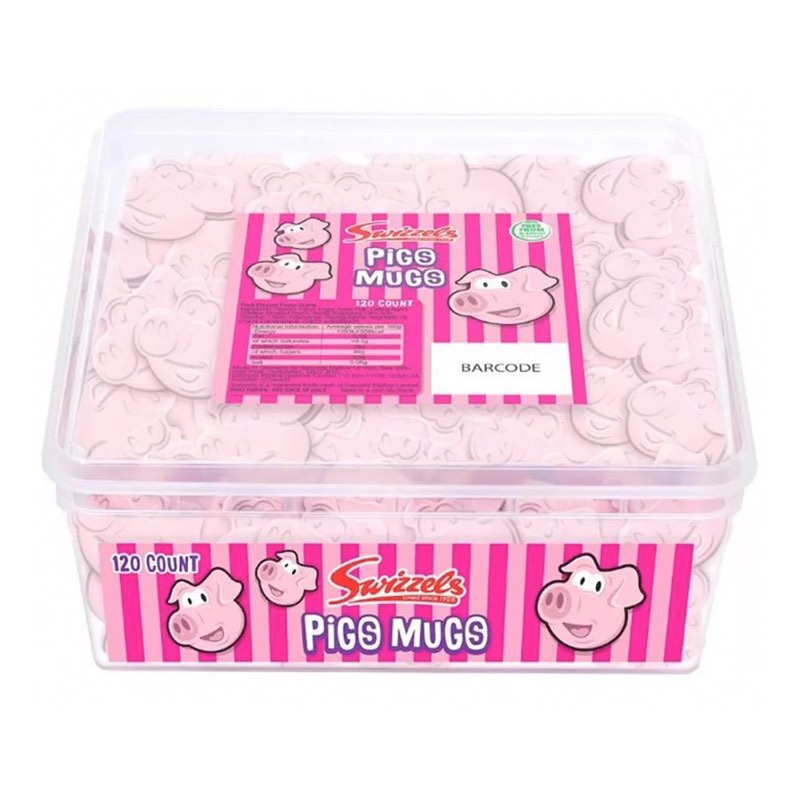
Now the comparison, because £2.20 per 100 g needs context. The cheapest way to buy sweets is almost always by weight in a large format. A tub like the Swizzels Pigs Mugs Tub at £8.99 for 576 g works out at about £1.56 per 100 g — roughly thirty per cent cheaper per gram than this bag, for four and a half times the volume. That is what a bulk format looks like, and if your only criterion is grams per pound, the tub wins and it is not close.
But compare in the other direction and this bag looks entirely reasonable. Barnett's Mega Sour Fruits at £3.99 for 104 g comes out at about £3.84 per 100 g — over seventy per cent more per gram than these clusters. The Jelly Belly Bubble Tea bag at £1.09 is the cheapest thing in this neighbourhood by absolute price, but at 28 g it is about £3.89 per 100 g, which is the small-bag premium in its purest form: you pay more per gram for the privilege of buying very little. And Bolci Freeze Dried Dark Chocolate Strawberry at £4.49 for 80 g lands around £5.61 per 100 g, which is where the specialist end of the shelf sits.
Line those up and this bag is in the middle of the small-format field and towards the cheaper end of it. It is not a bulk buy and it does not pretend to be. It is priced where a branded, structurally complicated, single-serve-plus bag ought to be priced.
The number people should actually use. Cost per gram is the wrong metric for most purchases, and cost per occasion is the right one. If you want sweets for one evening for two people and you do not want a half-finished tub reproaching you from the cupboard on Thursday, £2.49 buys exactly that, precisely, with no waste. A tub at £8.99 is better value per gram and worse value per occasion, because you have spent three and a half times as much and acquired a storage problem. Meanwhile, if you are filling a table for twenty, the logic inverts completely and the tub is obviously right.
The place where small bags genuinely lose is repeat buying. If these become a weekly habit, four bags a month is £9.96, and at that point you are spending tub money on bag quantities. That is the signal to look at what we sell by weight instead and buy the volume properly — the same rule applies across almost every line we carry.
A sensible budget frame. For a film night for four, a reasonable total is eight to twelve pounds: one bulk item at five to nine pounds as the base, and one or two small structured bags like this at £2.49 as the interesting thing people talk about. Buying four small bags instead of one tub and one bag costs about the same and gives you less of everything. Buy one thing for volume and one thing for interest; that ratio holds at almost every budget.
The engineering behind the crunch and the chew
A sweet with two textures in one piece is a much harder object to make than it looks, and understanding why makes you appreciate the format more — and, more usefully, tells you exactly how to look after it.
The core problem is moisture migration. A chewy centre is, by definition, a damp thing; a crunchy exterior is, by definition, a dry thing. Put damp and dry in direct contact and physics does what physics does: moisture moves from the wet side to the dry side until both are the same. Left to itself, a gummy with a crunchy shell would become a gummy with a soft, slightly grainy shell — and then just a slightly odd gummy. Every product in this category is a fight against that process, and that fight is the whole of the engineering.
There are only a few ways to win it. You can make the barrier between the two layers effectively impermeable, so the moisture has nowhere to go. You can make the outer layer thick enough that even as the innermost part of it softens, the outer part stays crisp. You can dry the centre to the point where there is less moisture available to migrate — but that costs you the chew, which is the thing you were trying to protect. Or you can accept a finite shelf life and seal the product so well that it is eaten before the process finishes. In practice, real products use a combination, and the balance chosen is what makes one brand's version different from another's.
This has a direct consequence you can act on. Once the bag is open, the clock speeds up. Sealed, the pack is a controlled environment and the internal balance is stable. Open, the crust is now also exchanging moisture with your kitchen air, and in a humid British kitchen in November that is a losing battle. A bag left open on a counter for three days will not be inedible, but the crunch will be measurably duller, and the crunch is most of what you paid for.
The second piece of engineering is particle size on the crust, and it is why these crunch the way they do. A single hard shell over a soft centre — the classic sugar-panned sweet — gives you one big fracture event: a clean crack, and then it is over. A crust made of many tiny pieces gives you dozens of tiny fracture events happening in a cascade. Your ear and your jaw both register that as a longer, louder, more textural crunch, even though the total amount of hard material might be identical. This is a well-understood principle across food generally, and it is the reason a scatter of small crisp pieces reads as far crunchier than one solid crisp piece of the same weight.
The third is surface area and flavour delivery. A knobbly, irregular surface has dramatically more area than a smooth one of the same volume. More area means more contact with the tongue in the first instant, which is why the flavour on a clustered sweet hits so hard at the front — it is not that the flavour is stronger, it is that more of it reaches you at once. This is also why the flavour seems to dip slightly in the middle of eating one: the fast, high-area surface delivery is finished, and you are now waiting for the slower centre.
The fourth is the mechanics of chew itself. A springy centre is a structure that stores energy when you compress it and gives some back. That is what "bouncy" means in a sweet. Chewing one is a repeated cycle of compression and partial recovery, and it takes a number of cycles before the structure breaks down enough to swallow. More cycles means a longer eating experience per piece, which means a bag lasts longer, which is a genuine value consideration that never shows up in a price-per-gram comparison. A springy sweet at £2.20 per 100 g can easily occupy your mouth for longer than a soft one at £1.50.
The fifth, and the one that decides whether a two-texture sweet is pleasant or annoying, is the hardness gap. If the crust is much too hard relative to the centre, it shatters into sharp fragments that sit uncomfortably against the soft part and you spend the rest of the bite dealing with debris. If it is too soft, the two layers merge into one indistinct texture and the whole exercise was pointless. The window where both layers read as themselves and neither fights the other is narrow. When a clustered sweet is good, it is because that window has been hit.
Why any of this matters to you as a shopper. Three practical conclusions. First, buy these to eat rather than to store — they are at their best nearest to opening, and time is more hostile to them than it is to a plain gummy. Second, keep them sealed and keep them dry; humidity is the enemy, not warmth. Third, when you are building a mix, do not put a clustered sweet in a jar with soft loose sweets and expect the crunch to survive — the soft ones will give up their moisture to the crunchy ones, and both will be worse in a week. Structured sweets want their own container.
It is also worth knowing that this architecture is what makes clusters such good company for textures that have no structure at all. Something soft and yielding like BUBS Banana & Caramel Foam Sweets at £7.50 is at the opposite end of the mechanical scale — all give, no resistance — and the two together on one table cover a range that neither covers alone.
Fruit as a flavour family, and where these sit in it
Fruit is the biggest flavour family we stock — our fruit flavour shelf runs to 161 lines — and it is also the least precise, because "fruit" covers everything from a single sharp lemon note to a general sweet brightness that resembles no particular fruit at all. This product is listed under the general heading, and that is the honest description: it is a fruit character rather than a specific fruit.
That generality is a real advantage on a shared table. Specific fruit flavours are polarising in a way general ones are not — there are people who will not touch anything banana, people who pick out every black one, people with a firm and lifelong opinion about aniseed. A generalised fruit sweet has far fewer people refusing it, which makes it a reliable choice when you do not know your audience.
Within the family, the useful distinctions are sharpness, depth and directness. Sharpness is the acid dimension, and it runs from barely present to genuinely eye-watering. If you want the far end of it, the Mega Sour Fruits bags are exactly that — a deliberate assault rather than a flavour, and a useful thing to have one small bowl of on a table for the people who want it. Depth is how much is going on behind the initial hit; a deep fruit flavour has a second and third note under the first. Directness is how quickly it announces itself.
Clusters are high on directness by construction — the surface delivery sees to that — and moderate on sharpness. That places them usefully between the sour end and the soft, round, traditional end. If you want the traditional end for contrast, Taveners Fruit Pastilles at £5.49 and Barratt Jelly Babies at £5.49 are both squarely there, and both sit in the same price bracket as one another so you can take your pick on shape and chew rather than on cost. Barratt Fruit Salad Chews, also at £5.49, bring a longer, more laborious chew than either, and long chews are the right answer whenever you want something to last.
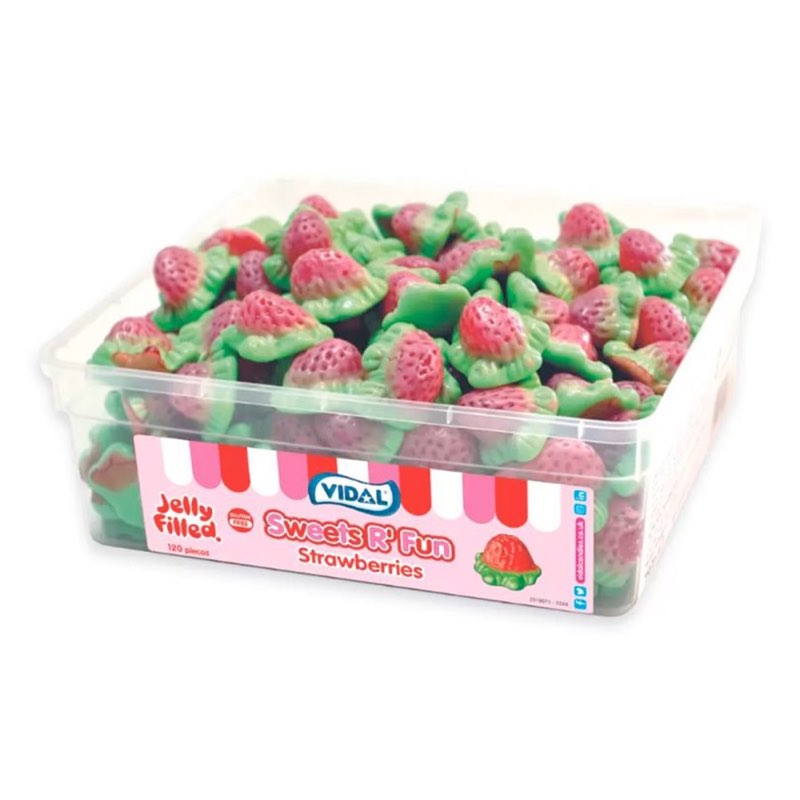
There is one more fruit sub-family worth mentioning, which is fruit combined with something else entirely. Vidal Jelly Filled Strawberries at £7.99 put a filling inside a fruit shape, which is a different structural idea to a crust on the outside and eats completely differently — soft giving way to softer, rather than hard giving way to soft. Having one of each on a table is a genuinely interesting comparison and people notice it.
Who buys these and when
The most natural buyer is somebody who finds plain gummies boring. That is a real and common position: after two or three pieces, an unstructured chewy sweet stops surprising you, and the rest of the bag is repetition. A two-texture sweet keeps something happening in every piece, and for people who eat sweets attentively rather than absent-mindedly, that difference is the whole reason to choose one bag over another.
The second natural buyer is the person picking something for a group where they do not know the preferences. As noted, a general fruit flavour offends almost nobody, and the format is novel enough to be commented on. If you want one bag on a table that people will pick up and ask about, a knobbly multi-coloured lump does that work better than a conventional shape.
The third is the teenager-and-up crowd, and here the texture is the reason rather than the flavour. Loud, granular, crunchy foods are disproportionately popular with younger eaters, and clusters deliver on that without being a crisp.
It also suits anybody who wants their sweets to last. The chew makes a 113 g bag go further in time than its weight suggests, which is a real consideration on a long journey or through a two-hour film.
Who it suits less well: anybody buying for volume, for the reasons set out above — this is a small format at a mid price and scaling it up is expensive. Anybody who dislikes irregularity, because these are genuinely inconsistent in size and some people find that irritating in a way they cannot quite explain. And anybody who wants a clean, single, pure flavour experience, because a two-stage delivery is by definition not clean.
On the general point that applies to everything on the shelf: sweets are a treat rather than everyday food. Whole gummies and small hard sweets are a choking risk for young children, so keep small ones supervised and sitting down while they eat. And if anyone in the household has an allergy, read the manufacturer's own packaging when the order arrives, before anything is opened — that is the authoritative source and the only one we would send you to.
Building a bowl, a jar or a mix around them
The principle worth holding onto is that clusters are a feature item, not a base item. They are structurally interesting, moderately priced and small in quantity — which is exactly the profile of a thing you put on top of something else, not the thing you build the pile from.
For the base, buy by weight or buy a tub. The Haribo Giant Dummies tub at £8.99 is a proper base purchase: a large shared format, a familiar brand, and a shape people recognise from across the room. Put that in the big bowl and put the clusters in a small one next to it, and you have a table that costs eleven and a half pounds and reads as considered rather than thrown together.
For the soft contrast, something without structure is the right call — a foam or a filled jelly, where the whole pleasure is give rather than resistance. For the sharp contrast, go acid, and keep the quantity small; the sour bowl is always the one still half-full at the end of the night, and that is fine, because its job is to exist rather than to be finished.
For the shape-and-recognition slot, traditional forms do work that novel forms cannot. Jelly babies and pastilles are instantly legible; people know what they are getting and reach for them without thinking. A table needs some of that, or it feels like homework.
If you would rather compose the whole thing yourself by weight instead of buying a set of packets, our pick and mix is the route, and it is nearly always cheaper for a given total weight than assembling the same thing from small bags. The trick is to use it for the base and the bulk, then add one or two structured packets like this on top for the things a scoop cannot give you.
A worked mix for a family film night, four people, around twelve pounds: a tub as the base; one bag of clusters at £2.49 as the texture feature; and a small sharp bag for the reset. Three items, four textures, and nothing on the table that duplicates anything else. If you want to add a fourth, make it something from the retro shelf — older shapes and formats sit oddly well next to very modern ones, and the contrast is part of the fun rather than a clash.
Occasions where a structured sweet earns its place
Film nights. The crunch is the caveat here and it cuts both ways. In a quiet room during a tense scene, a loud sweet is antisocial — that is simply true, and anybody who has sat near someone eating something crisp during a whispered dialogue scene knows it. But the long chew means the crunch happens once per piece and then you are quiet for a while, which is a far better ratio than a bag of crisps. Open before the film starts, not twenty minutes in.
Car journeys. Very good indeed. No stickiness on the fingers, no melting to worry about, and the chew makes a bag last. The only real caution is the crust fragments, which do end up in the footwell — decant into a tub with a lid rather than passing an open bag around, and the problem largely disappears.
Parties and buffets. Use them as a feature bowl rather than a main bowl, for the per-guest reasons above. One bag across eight people is a taste. Put them somewhere people have to walk to, and they will be treated as the interesting thing rather than grabbed indiscriminately in the first ten minutes.
Gifts and hampers. A £2.49 bag is a good filler item in a box that also has something substantial in it, and the visual busyness of multi-coloured clusters photographs and displays far better than a plain sweet. For a box with a theme, the wider candy and chocolate range gives you the heavier items to build around.
Sharing at a desk. Honest warning: these are quiet-office hostile. The crunch carries. A bag in an open-plan room will be noticed. If that matters, save them for home.
Keeping the crunch alive
Everything in the engineering section points at one storage rule: keep them sealed and keep them dry.
Before opening, a cool, dry, dark cupboard is ideal. Away from the kettle, away from the hob, away from a sunny windowsill. Heat does not ruin a gummy cluster the way it ruins chocolate, but warmth speeds up every internal process including the moisture migration that softens the crust, so cool is genuinely better rather than merely tidy.
Do not use the fridge. It is a frequent instinct and it is the wrong one for this product. Fridges are damp environments, and a cold bag brought out into a warm kitchen gathers condensation on everything inside it, which is the fastest possible way to turn a crunchy crust into a sticky one. Room temperature and dry beats cold and damp every time here.
After opening, transfer to an airtight container if you are not finishing the bag within a day or two. Press the air out, seal it properly, and keep it away from anything soft and moist. This last point is the one people get wrong: a jar with clusters and soft loose sweets sharing the same air is a jar in which the soft sweets are slowly donating moisture to the crunchy ones. Both come out worse. Structured sweets want their own container, always.
Keep strongly scented things well away, in the cupboard and in the tub. Dry, porous surfaces pick up surrounding smells far more readily than people expect, and there is nothing to be done once it has happened.
Go by the date on the manufacturer's packaging for the formal shelf life. For the practical one, the answer is texture: when the crunch has gone, the product has lost most of what distinguished it, whatever the date says.
This bag or the berries bag?
There is a real choice to make here, and it is a clean one. This line is the general fruit version. The other is the Nerds Gummy Clusters Berries bag, also 113 g and also £2.49 — identical weight, identical price, identical format, with the flavour focus shifted towards berries rather than fruit in the general sense.
Because the price and weight match exactly, this is purely a flavour preference and there is no value angle to weigh at all. That is unusually simple, and it means you can decide on taste alone: take the general fruit bag if you are buying for a group or for someone whose preferences you do not know, since the broader flavour offends fewer people; take the berries bag if you or the recipient specifically lean towards berry notes, which tend to read a little deeper and a little less sharp than a mixed fruit profile.
If you are buying for a table and you want both, buying one of each is an unusually good move. Same format, same price, two flavour registers — people will compare them side by side, which turns two bags of sweets into a small event. That works far better than buying two of the same.
Neither comes in a larger format on our shelves. Both are listed in one size only, at £2.49, and this one is currently in stock. So if you want volume of this specific thing, the answer is more bags rather than a bigger bag, with the linear cost that implies.
Where this sits in the shop
This product appears on four shelves, which is more than most lines and tells you something about it. It is in the main loose sweets section, our biggest at 356 lines. It is on the gummy shelf, a much tighter 17 lines, because of the centre. It is also on the crunchy shelf, tighter still at 10 lines, because of the crust. Very few products appear on both of those at once, and if you are specifically hunting for two-texture sweets, cross-referencing those two short shelves is the fastest way to find them. And it sits in the fruit flavour category with its 161 neighbours.
Above those, the hubs give you the wider views. Everything we stock is the full catalogue and the right place to start if you are browsing without a target. The combined jelly and gummy hub is broader than the gummy shelf alone and picks up formats that sit adjacent to it. Candy and chocolate together narrows the catalogue to the confectionery side. And retro formats are where to go when you want the opposite of a modern engineered sweet.
A browsing tip worth having: when you know the texture you want, start from the type shelves; when you know the taste you want, start from the flavour shelves. Most people search by flavour when they actually mean texture, which is why they browse for longer than they intended.
Questions shoppers ask
Are they crunchy or chewy?
Both, in sequence. Our listing tags this line as crunchy and gummy, and that is accurate — you get a distinctly crunchy first half-second as the outer crust gives way, then a properly springy chew from the centre that lasts considerably longer. The overall impression is of a chewy sweet with a crunchy event at the start of each piece.
How many are in a bag?
We do not publish a piece count and we will not estimate one, because clusters are deliberately irregular and the count genuinely varies from bag to bag. What is fixed is the weight: 113 g at £2.49. For planning purposes, think in handfuls rather than pieces — that is about four adult handfuls.
What flavour are they?
Our listing records the flavour simply as fruit, and the colour as multi coloured. That is the right level of precision — these carry a general fruit brightness rather than a single identifiable fruit. If you want a narrower flavour focus, the berries version of the same format is the alternative to look at.
Do they go soft?
Once the bag is open, yes, gradually — the crunchy crust and the moist centre are in a slow exchange, and open air speeds it up. Sealed properly in an airtight container they hold their texture well for a good while. Left open on a counter in a humid kitchen, the crunch dulls noticeably within a few days.
Can I put them in the fridge?
Better not to. Fridges are damp, and a cold bag brought back into a warm room collects condensation inside, which is precisely what softens a crunchy coating. Cool, dry and dark in a cupboard is the right storage, and room temperature with low humidity beats cold and damp for this format every time.
Are they good value?
They work out at about £2.20 per 100 g, which puts them in the middle of the small-bag field and cheaper per gram than several neighbours in the same size bracket. They are not a bulk buy — a large tub is roughly thirty per cent cheaper per gram. Judge them on cost per occasion rather than cost per gram and they are very reasonable for an evening for two.
How many bags for a party of twenty?
More than you want to spend. Twenty people at even a modest 50 g a head is a kilo, which is about nine bags and over twenty-two pounds. The sensible approach is to buy your volume by weight or in a tub, and use one or two bags of these as the feature item rather than the base.
What is in them?
We do not publish ingredient information for this line and we will not guess. The manufacturer's own packaging carries the full ingredient and allergen detail, and that is the source to use. If anyone in the household has an allergy, check that packaging when the order arrives, before anything is opened.
Are they messy?
Less than most. The dry crust means nothing sticks to fingers, which is a real advantage over bare jelly sweets in a bowl or in a car. The one mess to plan for is loose crust fragments, which do collect in the bottom of a bowl and in car footwells — a tub with a lid solves it.
Will they survive being posted or taken on holiday?
Reasonably well, with one caveat. Heat is not the enemy here the way it is with chocolate, so a warm journey is not a disaster. Humidity is the enemy, so keep them sealed and do not open the bag until you need it. Once opened in a hot, humid climate, eat them fairly promptly.
Is there a larger bag?
Not of this line. It is listed in one size only — 113 g at £2.49 — and it is in stock. Buying more means buying more bags at the same price each, with no volume saving, so if you need real quantity, comparing against what we sell by weight is worth doing first.
Which should I pick, this one or the berries?
They are the same weight and the same price, so it is purely a flavour decision with no value trade-off. Take this general fruit bag when buying for a group or for someone whose preferences you do not know; take the berries bag when berry notes are specifically wanted. Buying one of each makes a good side-by-side on a shared table.
To sum up
A 113 g bag at £2.49 that earns its place through structure rather than flavour. The crunch-then-chew sequence gives every piece a small arc of its own, the dry crust keeps fingers and bowls clean in a way plain jellies never manage, and the springy centre makes a modest weight last longer than the number suggests. Treat it as the interesting item on a table rather than the base of one, keep it sealed and dry so the crust survives, and check the manufacturer's packaging on arrival if allergies are a consideration in your house.
More gummy sweets
More fruit sweets


More loose sweets sweets
Where this sits
Nerds Gummy Clusters Fruit Flavour Bag 113g appears on these shelves. Browse them, or jump to something nearby.
You might also like