Home / Loose Sweets / Barnett's Mega Sour Fruits Candy Bags 104g
Barnett's · 104g
Read the full guide
Barnett's Mega Sour Fruits Candy Bags 104g
£3.99
✔ In stock — ready to ship
Fresh stock
Free over £20
Same-day dispatch
Secure checkout
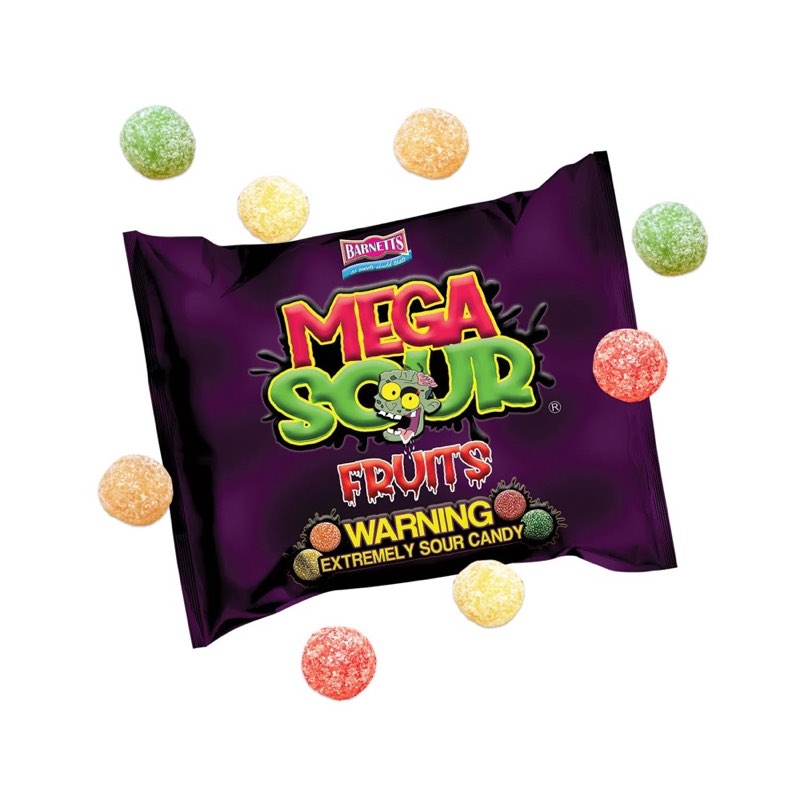
Tip a few out of the bag and the first thing you notice is that they are smaller than you expected. These are not showy sweets. Each one is a compact little disc-ish lump, dusty-looking rather than glossy, sitting somewhere between a gobstopper and a boiled fruit drop in size — the sort of thing you can hold four or five of in a cupped palm without them crowding each other. The dullness of the surface is the tell. A plain boiled sweet catches the light; these do not, because they carry a coating, and that coating is the whole point of the product.
The Barnett's Mega Sour Fruits Candy Bags 104g is a mixed bag, so what comes out is a spread of colours rather than one. You get an assortment across the fruit range, which means the handful you pour is never quite the same twice, and the piece you happen to pick up first decides what the next thirty seconds taste like. That is a different proposition from a single-flavour bag, and it changes how people eat them — more sorting, more swapping, more "you have that one, I'll have this one" than you get with any one-note sweet.
The full guide to Barnett's Mega Sour Fruits Candy Bags 104g
6,780 words on how it eats, who it suits, how to serve it and what to put beside it.
The first one, and what it does to your face
Then you put one in. The first beat is pure coating: an immediate, wide, flat sourness that arrives before any fruit does, spreading across the sides of your tongue and down the back of your jaw. This is the bit people film each other doing. Your eyes narrow, your cheeks pull in, and for a few seconds there is no flavour to speak of at all — just a sharp, ringing sensation that occupies the whole mouth. If you have never had a sweet from the strong end of the sour shelf before, this is the moment you find out whether you enjoy the feeling or merely tolerate it. Plenty of people discover they enjoy it.
The second beat is the fizz. As the coating dissolves it goes slightly effervescent against the tongue, a prickle rather than a foam, and that is where the fizzy shelf claim on this line comes from. It is brief — ten, fifteen seconds — and it runs underneath the sourness rather than replacing it, so the two sensations overlap and then hand over. If you keep the sweet still and resist the urge to crunch, you can feel the prickle move around the sweet as different parts of the surface give way.
The third beat is where the fruit actually turns up, and it is worth waiting for. Once the outer layer has gone you are left with the body of the sweet, and the body is a straightforward hard fruit drop: rounded, sweet, recognisably whichever fruit you happened to pick, and much gentler than the opening. This is the payoff structure that makes the strong-sour category work. The sour part is an event; the sweet part is the reward for sitting through it. Eaten in that order it reads as a little narrative rather than just an assault, which is why people who say they dislike sour sweets often turn out to mean they dislike sour sweets that never resolve.
The fourth beat is the long tail. What is left is a proper boiled sweet, and boiled sweets take their time. Left alone it will sit in your cheek and slowly erode for several minutes, getting thinner and rounder and progressively sweeter as it goes. Some people crunch through at this point; most do not, because by then the interesting part is over and the sweet has become a quiet background thing you can forget about while you carry on with what you were doing. The whole arc, opening to nothing, is comfortably longer than any chew or gummy will give you.
The sound and the feel in the hand
These make a very particular noise in the bag — a dry, granular rattle rather than the softer shuffle of jellies — because the coating means the pieces are not sticking to each other. That dryness is genuinely useful. You can pour them, you can count them, you can tip them from hand to hand, and you can get them out of a pocket without a scene. It is also why they survive being carried about better than most things we sell by the bag, which matters more than it sounds when you are choosing sweets for a journey.
The coating does transfer, though. Handle a few and your fingertips pick up a fine powder, and if you then touch your lips you will get a small echo of the opening hit without having eaten anything. Anyone who has ever emptied the last dust out of a bag into their palm knows exactly what that is like. It is part of the format, not a fault, but it does mean these are a sit-down-and-eat sweet rather than a keep-them-in-a-bowl-by-the-good-sofa sweet.
Where this lands on the sour-to-sweet scale, and how to build around it
Almost every decision a sweet shop makes comes down to placing things on one line running from gentle to punishing, and then helping people find their own spot on it. It is the most useful single idea on the shop floor, and it is worth setting out properly, because once you can see the scale you can stop guessing and start choosing.
The five rungs, in plain terms
At the bottom of the scale is fruit-sweet: things that taste of fruit and nothing else, with no acid edge at all. A jelly baby, a fruit chew, a soft fruit drop. Nothing here makes you react; it is pure flavour and texture. One rung up is tangy, where there is a faint brightness that lifts the fruit without ever tipping into a reaction — the level most mainstream fruit sweets live at, and the level most adults think of as "normal".
The middle rung is proper fizzy, where there is a deliberate coating you can feel on the tongue, the mouth waters, and the experience is noticeably different from the sweet underneath. Something like Haribo Tangfastics Fizzy Jelly Sweets Tub 400g at £3.99 for a 400 g tub is the reference point most people have for this rung — enough of a kick to be a distinct thing, not enough to make anyone pull a face.
The fourth rung is where this bag sits: strong sour, where the coating is the headline rather than a seasoning, the reaction is involuntary, and the sweet is designed so that the sourness peaks early and then gives way. Above that sits the fifth rung, challenge sour, which is a different product category dressed in the same clothes — sweets bought mostly so that people can dare each other, where finishing one is the event and flavour is almost beside the point. A small format like the Toxic Waste Green Drum at £1.99 for 42 g is sold in that spirit, in a tiny tub, in tiny quantities, for exactly that reason.
The reason it matters that this bag is on the fourth rung and not the fifth is that the fourth rung is still a sweet. You can eat several. You would not eat several of the fifth rung, and the makers do not expect you to — that is why those come in drums of forty-odd grams and these come in a bag of 104 g. When you are choosing, that quantity difference is a better signal of intended intensity than any word on the front of the pack.
Reading the scale on a shelf full of unfamiliar names
Three signals do most of the work. The first is format: a coated hard sweet almost always sits higher on the scale than a coated jelly, because the coating on a hard sweet has nowhere soft to hide and hits the tongue undiluted. The second is portion size, as above — the smaller the unit the maker sells, the more intense the thing inside tends to be. The third is naming: a maker who uses a fruit word alone is aiming low on the scale, a maker who uses a fizz or tang word is aiming at the middle, and a maker who uses a word like "mega" is telling you, quite honestly, which rung they have built for.
Where the three signals disagree, trust the format. A belt or a lace is a wide, flat surface and carries a lot of coating relative to its mass, which is why belts can surprise people — Vidal Rainbow Belts at £5.49 come across as a soft, friendly, multicoloured thing until you realise how much surface area you have just put in your mouth at once. A ring or a chip has less surface per bite. A small hard sour like this one has a high coating-to-sweet ratio in the first few seconds and then a very low one afterwards, which is exactly why the arc is so steep.
Building a spread that covers the scale instead of one point on it
The mistake people make when they buy sour sweets for a group is to buy at one intensity, usually the highest, because that is the one that looked exciting online. What you end up with is a bowl three people raid and everyone else avoids. The fix is to buy across at least three rungs and let people self-select, and the good news is that this costs no more than buying one thing in bulk.
A workable three-rung spread built around this bag looks like this. Put the fruit bag in as the high point. Put something from the middle rung next to it with volume behind it — Sweetzone Fizzy Rings Tub 800g at £7.99 gives you 800 g of fizzy rings, which is enough that nobody is rationing, and rings are an easy shape for people to take repeatedly. Then anchor the low end with something with no acid edge at all, so there is somewhere for the sour-averse to go. Across those three you have covered the room, and the high point stays exciting precisely because it is not the only option.
If you want a four-rung version, add a fizzy-savoury-shaped novelty in the middle: Kingsway Fizzy Chips at £5.49 do that job, because the chip shape reads as a snack rather than a sweet and people take them almost absent-mindedly between the bigger hits. That absent-minded tier is genuinely useful at a long event. Not everything on the table should demand a decision.
Ordering within a sitting
One more piece of the same idea, and it is the one most people never think about: order matters within a single sitting, not just across a table. Sour resets your palate hard. Anything gentle eaten immediately after a strong sour will taste of almost nothing, because the coating has flattened your sense of sweetness for a minute or two. So if you are putting out several things, put the gentle ones first in the run, or give people a gap.
The practical version of that rule at home: if you are opening this bag during a film, open it early, not late, and follow it with something with real body rather than something delicate. A cola-flavoured sweet has enough of its own character to survive the reset — BUBS Cool Cola Skulls at £7.50 are a good second act for exactly that reason. Something quiet and fruity eaten straight after is wasted, and you will blame the second sweet when the fault was the running order.
Which sweet counter this belongs to
Every sweet carries a decade with it, whether the maker intended that or not, and a big part of why people buy what they buy is that they are buying a room they remember. It is worth being specific about which room this one belongs to, because it is not the room most people assume.
The jar era, and what it was not
The oldest counter in British sweet memory is the jar wall: rows of glass, a scoop, a brass scale, paper bags folded at the corner. That counter was overwhelmingly a boiled counter. Pear drops, rhubarb and custard, acid drops, mint imperials, aniseed balls — hard sweets that lasted, sold by the quarter, chosen by pointing. What it was not was a sour counter in the modern sense. There was sharpness in it, certainly, but sharpness as a flavour note, not as a physical event. Nobody pulled a face at the counter.
The format of this bag descends directly from that wall. It is a boiled sweet. It behaves like a boiled sweet once the first act is over, it lasts like a boiled sweet, and it is sold loose in the same way the jar wall sold things. If you strip the coating off in your imagination, what you have left would have sat in a glass jar in 1975 without anybody blinking. That heritage is real and it is worth knowing, because it explains why these outlast every modern sour gummy in the mouth by a wide margin. You can see the same lineage on our boiled sweets shelf, which is one of the smaller shelves in the shop and holds the things that are built to last rather than to be chewed.
The 1990s, when the coating arrived
The thing that is genuinely of its era here is the outside, not the inside. The idea of a sweet whose selling point is a reaction — where the packaging is a warning, where the name is a boast, where part of the fun is watching somebody else eat one — belongs to the 1990s and early 2000s playground, and to nowhere else. That was the moment sweets started competing on intensity rather than on flavour, and the moment children started buying sweets to perform with as much as to eat.
Anyone who was at a British secondary school in that window will recognise the whole ritual: the bag passed along a row, the dare, the refusal, the person who insisted they could not taste anything, the collective decision about who had to go next. This is a sweet with a social script attached to it, and the script has survived intact into the era of filming each other, which is why the category has never really gone away. Names in this corner of the shop still speak that language — McAdam's England Football Chopped Rock Pouch 150g at £1.99 comes from a different tradition entirely, the seaside rock stall, and the contrast between those two voices on one shelf is basically a map of forty years of British sweet retail.
Two generations, one bag
What makes this line unusually good for a mixed-age gathering is that it is legible to both. Someone in their sixties looking at these sees a fruit drop and knows exactly how long it will last and how it will end. Someone in their teens sees the coating and knows exactly what the first five seconds will do. They are both right, and they are both describing the same sweet — they are just reading different halves of it.
That is a rarer property than it sounds. Most sweets that are exciting to a fourteen-year-old are illegible to a grandparent, and most sweets a grandparent recognises hold no interest for a fourteen-year-old. If you are buying for a family room with a forty-year spread of ages in it, sweets that carry two eras at once are worth more than their price suggests, and this bag carries two very clearly. The rest of the retro shelf is built on the same principle, though most things there are pure memory rather than memory with a modern coating on top.
The mixed bag as an older idea than the single flavour
There is a further piece of history in the fact that this is a mixed bag rather than one flavour. Sorting a mixed bag is one of the oldest games in British sweet-eating: the counting out, the trading, the private ranking that everybody has and nobody agrees on, the one colour that gets left until last and then eaten grudgingly. Single-flavour bags are the newer, more adult idea — you buy them when you already know what you like and you have stopped wanting the lottery.
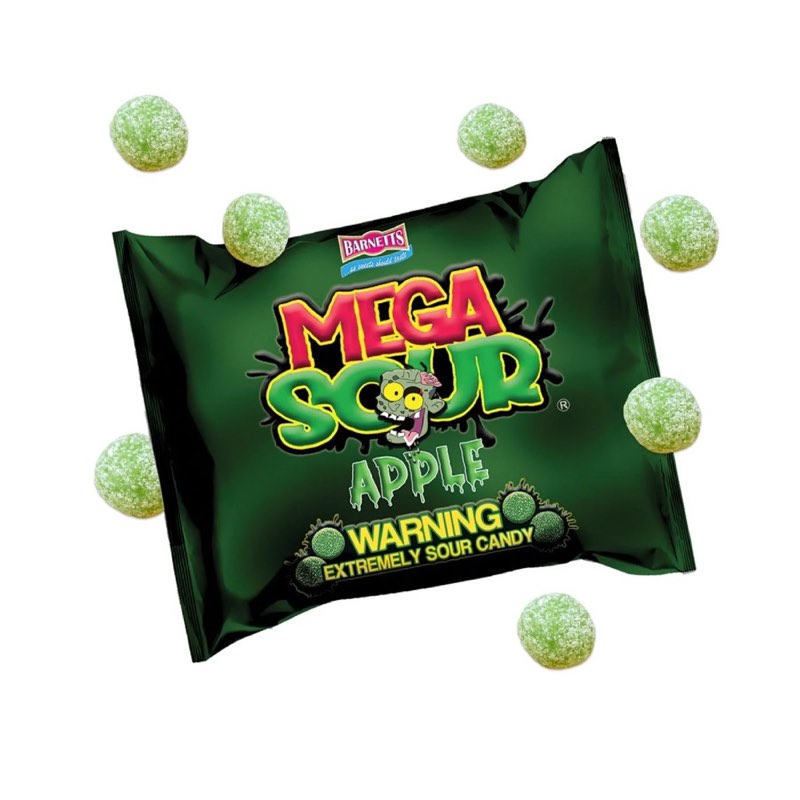
So the choice between this bag and its siblings is partly a choice between two different pleasures. The mixed bag gives you variety and the sorting game. The single-flavour apple bag at the same £3.99 gives you certainty and no bad picks. Which of those is worth more depends entirely on whether you enjoy the gamble, and there is no correct answer — households genuinely split down the middle on it.
The fruit mix, and what to expect from an assortment
The flavour here is listed simply as fruit, and in a mixed sour that description is doing honest work. An assortment is not a set of precisely drawn individual fruits the way a box of fruit pastilles tries to be; it is a spread of bright, recognisable fruit characters chosen to be clearly different from one another so that the sorting game works. Expect the differences to be obvious rather than subtle, and expect them to show up in the second half of each sweet rather than the first, because the coating levels the opening for all of them.
That levelling is the single most useful thing to understand about a mixed sour. For the first several seconds, every piece in the bag tastes roughly the same, because you are tasting the outside. The flavours only separate once the coating has gone. A lot of people report that they cannot tell the colours apart, and then discover that they can perfectly well — they were just giving up during the part where nobody could. Hold on past the opening and the mix becomes a mix.
This also affects how you rank them. Your favourite in a bag of mixed sours is rarely your favourite fruit in general, because what you are ranking is the second half of a two-part experience, arriving on a palate that has just been reset. Sharper fruits tend to feel muted in that position and rounder, sweeter ones tend to feel bigger than they would on their own. It is a genuinely different tasting context, and it is why people who love a particular fruit in a soft sweet sometimes find it unremarkable here — and why the opposite happens too.
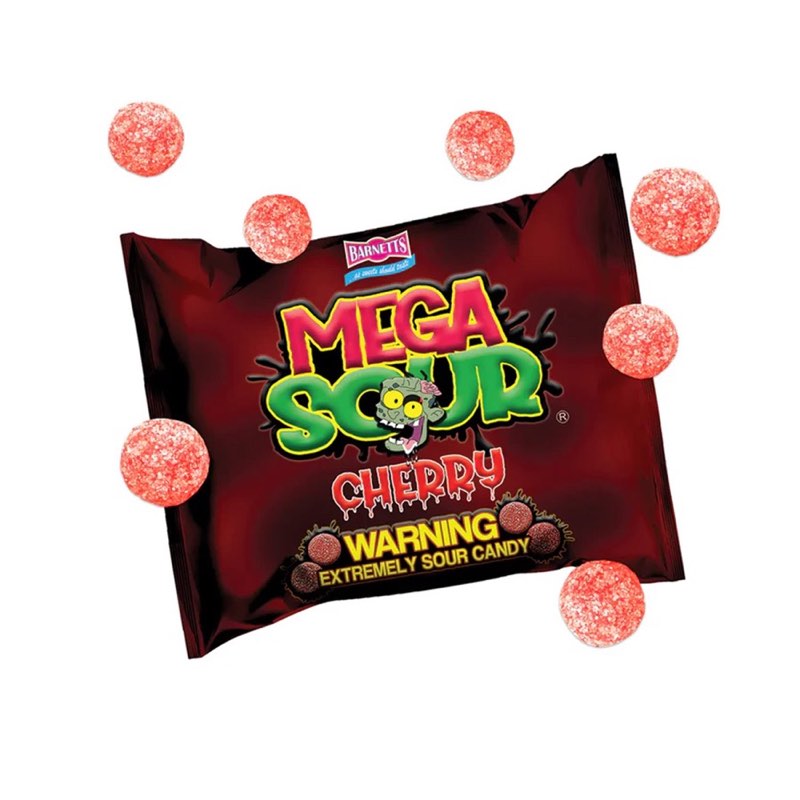
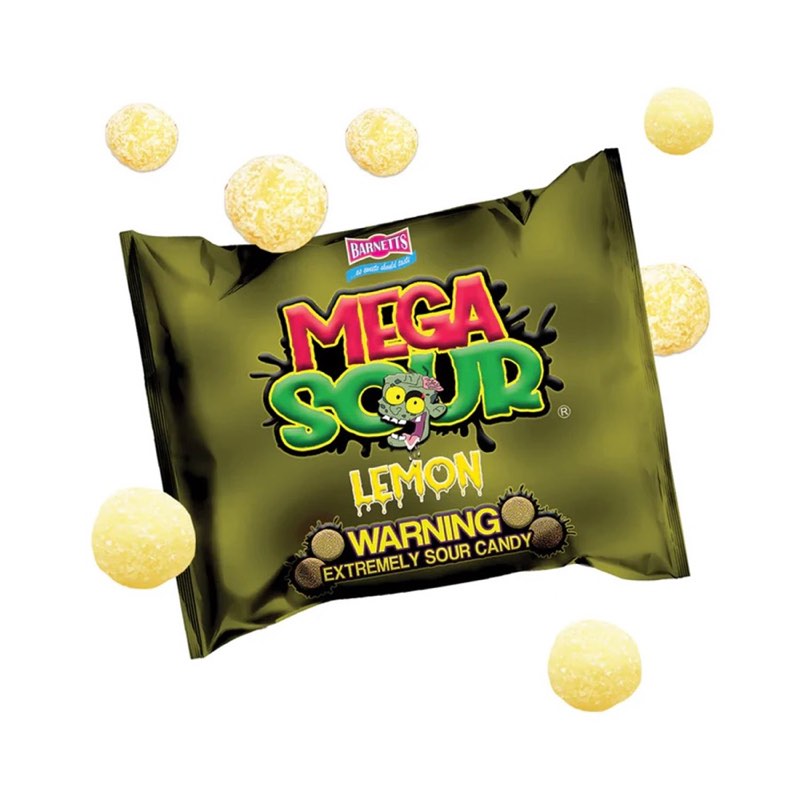
If the mix leaves you wanting one specific character all the way through, the single-flavour route is the fix and Barnett's have built for it. Barnett's Mega Sour Cherry Candy Bag 104g gives you a dark, rounded fruit note under the coating; the lemon bag at the same £3.99 gives you the sharpest of the set, where the flavour underneath pulls in the same direction as the coating rather than contrasting with it; and the green apple bag sits between the two. All three are the same 104 g at the same price, which makes swapping between them a pure question of taste rather than of budget.
Who should reach for this, and when
The clearest use is as a bag for one person to carry and eat slowly over a week. At 104 g of long-lasting hard sweets, that is what the format is built for: a few in a pocket, a few in a desk drawer, a few in a glovebox. These do not melt, they do not stick together, they do not need a bowl, and they last long enough in the mouth that two or three constitute a proper sit-down rather than a nibble.
The second clear use is as a shared dare in a group that already enjoys the genre. Teenagers, students, an office with a competitive streak, a group of friends who have all seen the same videos. Here the bag is a social object and the mixed flavours help, because the lottery gives the game a second dimension — not just who can take it, but who got the good one.
The third use is as the sharp corner of a larger spread, which is covered in detail further down. In that role you are not expecting anyone to eat many; you are expecting the bag to give a table an edge it otherwise would not have, and 104 g goes further than you would think when it is doing that job.
Who should skip it. Anyone who dislikes the physical sensation of sourness rather than the flavour of it — that is not a taste you talk yourself into, and there is a whole shop of alternatives. Anyone buying for very young children, for the straightforward reason that small hard sweets are a choking risk for the very young and need adult supervision; something soft is a better choice for that age. And anyone who wants sweets they can eat quickly, because the entire design of a boiled sweet is the opposite of quick.
Building a pick and mix around a sharp little sweet
These are a loose line, and loose lines exist to be combined. But a strong sour is not a neutral component, and a bag built without thinking about it usually ends up unbalanced in one of two directions — either the sour dominates everything or it gets buried and you wonder why you bothered.
The ratio
Treat a strong sour as a tenth of the bag, not a quarter. In a 500 g mix, 50 g of these is plenty — that is a proper scattering, enough that you hit one every handful or so, and little enough that the rest of the mix survives the palate reset. Go to 100 g in 500 g and the bag becomes a sour bag with other things in it, which is fine if that is what you wanted but is not usually what people mean by a mix.
The practical problem of coating transfer
Here is the thing nobody tells you until it has happened: coated sours shed, and in a closed bag the shed coating goes on everything else. Soft sweets pick it up most, because they are tacky; hard and dry ones pick up least. After a few days in a mixed bag you will find that your marshmallows, your foam sweets and anything sugar-dusted have all acquired a faint sour edge they did not have when you bought them.
Whether that is a problem or a feature depends on the mix. If you are building a bright, fizzy, everything-is-sharp bag, it is a feature and it homogenises pleasantly. If you have put anything delicate in — a milk-flavoured sweet, a creamy chew, anything where the pleasure is in the softness of the flavour — it is a real problem and the delicate thing will lose. The straightforward fix is to keep the sours in their own bag and add them to the bowl separately, which takes ten seconds and preserves both.
What genuinely goes with it
Sweets that pair well with a strong sour fall into two camps. The first is things that share the register and build a coherent fizzy bag: rings, chips, belts, anything coated. The second — and this is the more interesting camp — is things with enough character to stand up after the reset without being delicate: cola, liquorice-adjacent flavours, strong caramel notes, anything dark or savoury-leaning.
Soft chews sit slightly awkwardly next to hard sours, because the textures fight and because chews are the classic victim of coating transfer, but they do work if you keep them separate until serving. Chupa Chups Soft & Chewy Fruity Flavour Mini Tubes at £1.49 for 130 g are a neat way to do this, because they arrive in their own small tubes and therefore stay isolated by design — you get the textural contrast in the bowl without the flavour bleed in the bag.
For a mix aimed at children with a wide range of tolerances, the useful trick is to include something that is pure spectacle rather than pure flavour, so there is a non-sour way to be excited. Candy Realms Halloween Pumpkin Light Pop 11g at £1.49 does that job for a seasonal table, and the Fuji Candy DIY Handmade Ramen Kit Box at £2.99 for 20 g does it for a rainy afternoon, since it is an activity as much as a sweet. Neither competes with the sours; they occupy a different axis entirely, and a table that offers two axes keeps more people interested for longer.
You can build all of this by hand from Loose Sweets, or start from a ready-made base in Pick & Mix and add the sharp corner yourself, which is usually faster and lands in much the same place.
Parties, film nights, hampers and seasonal tables
For a children's party, the honest advice is that a bag like this is a side attraction rather than the main event. Put it out in a small dish, separate from the main bowls, and let the ones who want it find it. Do not build a party bag around it — you will get complaints from at least a third of them, and small hard sweets need supervising with the youngest guests anyway.
For a teenage party it flips completely and becomes the centrepiece, because at that age the reaction is the entertainment. Two or three bags on a table among a group of fifteen will generate more activity than any other sweet you can put down, and they will last a surprisingly long time because nobody eats them continuously. If you want to lean into it, put out a couple of the small challenge formats alongside and let the room organise itself.
For film nights, these have a specific and unusual advantage: they are quiet. No crackling wrappers, no crunching, no bag rustle if you decant them into a dish first. A hard sweet that sits in the cheek for five minutes is the most cinema-friendly sweet there is, and 104 g will comfortably get two people through a long film without a refill.
For gifting and hampers, this works as an accent rather than a gift on its own. A single 104 g bag at £3.99 is a small thing to give, but it is a very good small thing to put into something bigger, because it adds a spike of personality to a box that might otherwise be uniformly soft and sweet. In a birthday hamper for a teenager, a sour bag tucked in among the chocolate is the item that gets mentioned. Browse Candy & Chocolate for the base of a box like that and use this as the thing that makes it feel chosen rather than assembled.
For seasonal tables — Halloween especially — strong sours are close to essential, because the whole aesthetic of the season is about mild, consensual unpleasantness, and a sweet that makes you pull a face is exactly on theme. Bonfire night works too, for the same reason and because these travel well in a coat pocket in the cold. Christmas is the one occasion where a bag like this genuinely does not fit, unless it is going into a stocking as a joke item, which it does rather well.
What £3.99 buys and how long 104 grams lasts
At £3.99 for 104 g you are paying £3.84 per 100 g, which is a premium unit price on our loose sweets counter — plenty of standard loose lines sit nearer £5.49 for a considerably larger bag. That gap is worth looking at honestly rather than glossing over, because it changes what you should buy this for.
What you are paying for is intensity per gram and duration per sweet, not weight. A strong sour is not a volume purchase and nobody sits down to a bowl of them. The relevant comparison is not against a family bag of jellies but against the other small, high-impact formats — and against those it looks entirely reasonable. A 42 g sour drum at £1.99 works out at £4.74 per 100 g, so this bag is materially cheaper per gram than the small challenge tubs while giving you more than twice the quantity in one go.
On portions, think in tens of grams rather than fifties. A comfortable sitting is two or three sweets, which is somewhere around 15 to 20 g, so a bag gives you roughly five to seven proper sittings — a week or so for one person eating them the way they are meant to be eaten, or a single evening for three or four people passing it round. If you are pacing it as a daily treat, one or two a day makes the bag last a fortnight, which is a reasonable way to think about the £3.99.
| How you are using it | Rough portion | Sittings from 104 g | Cost per sitting |
|---|---|---|---|
| One person, pacing it | 15 g | About 7 | Around 57p |
| One person, a proper sit-down | 25 g | About 4 | Around £1.00 |
| Sharp corner of a 500 g mix | 50 g | 2 mixes | Around £2.00 per mix |
| Passed round a group of four | Whole bag | 1 evening | Around £1.00 a head |
One more piece of arithmetic that changes the decision for some people. If you are buying several flavours rather than several of one, you are still at £3.99 a bag across the line, so a four-bag set covering the mixed bag and all three single flavours comes to £15.96 for 416 g. That is a tasting flight rather than a stock-up, and it is a genuinely nice way to settle an argument in a household about which one is best — everyone gets a vote and nobody has to share.
Keeping them in good condition
Hard coated sweets have one enemy and it is moisture. Damp air softens the coating first, and once the coating has gone tacky the pieces begin to stick to one another and the dry rattle turns into a single lump. The sweets inside are unharmed, but the opening beat — the whole reason you bought them — is blunted.
So: fold the bag over tightly and clip it, or tip them into a jar with a proper lid. Keep them out of the kitchen's steamy corner, away from the kettle and the hob, and out of direct sun on a windowsill. A cupboard is better than a worktop. Do not refrigerate them; a fridge is a damp place and taking cold sweets into a warm room is the fastest way to get condensation onto the surface, which is precisely what you are trying to avoid.
If they do clump, they are still perfectly good — a firm knock against the worktop usually separates them, and the taste is unchanged even where the coating has redistributed. What you cannot undo is a coating that has properly dissolved into a sticky film, so the sensible move is simply to not let it get that far. Stored properly in a sealed jar in a cool cupboard, these hold their character for a long time, which is another advantage the boiled format has over anything soft.
For travel, they are close to ideal. No melting, no crushing, no leaking, and the bag is small enough to go in a glovebox or a rucksack pocket without being noticed. Decant into a small tin if you want them to survive being sat on.
Sizes, variants and stock
This line comes in one size only: the 104 g bag at £3.99, and it is in stock. There is no larger pouch and no tub, so there is no per-gram saving to chase by buying bigger — the only way to scale up is to buy more bags, and the price is linear when you do.
That simplicity is worth noting because it removes the usual "should I size up?" question entirely. If you want more, buy more bags. If you want variety at the same intensity, buy across the flavours instead of buying more of one. And if you want volume at a lower per-gram price, you are looking for a different product — a large fizzy tub rather than a small sour bag — and the shop has those.
There is no colour listed for this line in our data, which is what you would expect from an assortment: a mixed bag has no single colour to state. If you want a specific colour on a table for a themed event, the single-flavour bags are the route, and the apple one is the one with a colour actually recorded against it.
Finding your way around from here
This product sits on five shelves, and each one leads somewhere slightly different. Everything we tag as sour runs to 49 lines and spans the whole intensity range described above, so it is the right shelf if you are calibrating rather than repeat-buying. The fizzy shelf holds 41 lines and leans more towards the middle rungs — coated jellies, rings, belts — and is the better shelf if you want the prickle without the face-pulling.
The boiled shelf is the smallest of the three at 30 lines and is the one to browse if what you actually liked here was the long, slow second half rather than the opening. The fruit flavour shelf is by far the biggest at 161 lines and covers everything from soft jellies to hard drops, so treat it as a starting point rather than a shortlist. And the loose sweets counter at 356 lines is the parent shelf for all of it — the whole scoop-and-bag half of the shop in one place.
If you would rather browse the lot, the full shop lists everything we carry in one place. From there, jelly and gummy sweets is the natural next stop for anyone who liked the sour idea but wants it in a softer body, and our pick and mix builder is where to go if you have decided the answer is a bit of several things rather than a lot of one. Brand-hunters can go sideways instead: the other Barnett's bags are all one click apart and all priced identically.
Questions we get asked about these
How sour is "mega sour", really?
Strong enough that most first-timers react visibly, and not strong enough to be a challenge product. The sourness is concentrated in the first five to fifteen seconds, comes from the coating rather than the body, and then fades to leave an ordinary sweet fruit drop behind. If you have eaten coated fizzy jellies happily and found them mild, this is a clear step up. If the idea of an involuntary face-pull does not appeal, this is not the bag for you, and the fizzy shelf is a better place to start.
Which flavours are in the mixed bag?
It is listed as a fruit assortment, and the mix is what arrives in the bag on the day rather than a fixed set we can promise in advance. What we can tell you is that it is a multi-flavour bag rather than a single one, so you will get a spread of different fruit characters, and that the differences show up in the second half of each sweet once the coating has gone. If you need certainty about which flavour you are getting, buy a single-flavour bag instead — cherry, lemon and apple are all available at the same price.
Is this the same sweet as the apple bag with extra colours?
They share a family and a format — same maker, same 104 g bag, same £3.99, same coated-hard-sweet construction — but they are a different proposition to eat. The apple bag is one note, all the way through, so you know exactly what the second half will be every time. The mixed bag varies piece to piece and brings the sorting-and-swapping game with it. People tend to have a firm preference in one direction or the other rather than finding them interchangeable.
Can I crunch them or should I let them dissolve?
Either, and they give you different things. Letting one dissolve gives you the full arc — sour, fizz, fruit, long sweet tail — over several minutes, and that is what the format is designed around. Crunching through after the coating has gone shortens it to about a minute and gives you a burst of the fruit body all at once. Crunching straight away, before the coating has dissolved, is the most intense option and is what people do for a dare. Most regular eaters let them go for a minute and then crunch.
How many are in a bag?
We list these by weight rather than by count, at 104 g, because the number of pieces varies from bag to bag with the size of the individual sweets. As a rough planning figure, treat a comfortable sitting as 15 to 25 g and expect the bag to give you somewhere around five to seven of those. If you need an exact count for party bags, weigh out your portions rather than counting, which is how we would do it on the counter.
Will they make everything else in my pick and mix taste sour?
Over time, yes, to a degree. The coating sheds in the bag and settles on whatever is in there with it, and soft or tacky sweets pick it up most. Over a few hours it is barely noticeable; over a few days it is. If your mix contains anything delicate or creamy, keep the sours in a separate bag and combine them in the bowl at serving time. If your mix is all bright and fizzy anyway, it makes no practical difference and you can ignore this entirely.
Are they suitable for young children?
Sweets of any kind are a treat rather than everyday food, and small hard sweets like these are a choking risk for young children, so they should only be given with an adult watching. Beyond that, the strength of the sourness means most small children simply will not enjoy them — the reaction that older children find funny is not funny at five. For younger ages, something soft and mild from the fruit shelf is a much better buy.
If I have an allergy, what should I do?
Check the manufacturer's packaging when your order arrives and read it before anyone eats anything. We do not publish ingredient or allergen information for this line on this page, and the pack itself is the authoritative source. If the packaging does not tell you what you need to know, do not take a chance on it.
Do they last, or do they go off quickly?
Hard sweets are among the most durable things we sell, and the practical limit is usually the condition of the coating rather than the sweet. Kept sealed in a cool, dry cupboard they hold their snap and their dryness for a long time. Kept open in a humid kitchen they will go tacky and clump within weeks — still edible, but with a softened opening. Always check the date printed on the manufacturer's pack, and store them sealed once opened.
What should I buy alongside them for a mixed-age gathering?
Cover three intensities and two textures. Keep this bag as the sharp point, add a large fizzy tub as the middle ground so there is volume behind the sharp stuff, and add something with no acid edge at all for the people who want none of it. Then add one soft format for textural contrast and one novelty item so there is a reason to be excited that has nothing to do with sourness. Five items, one table, and everybody in the room has somewhere to go.
Is there a bigger bag?
No — this line is one size, 104 g, at £3.99, and there is no tub or larger pouch to step up to. If you need volume, buying multiple bags is the only route and the price does not taper, so it is worth asking whether you want more of this specifically or simply more sweets. For pure volume at a better per-gram price, a large fizzy tub is the sensible alternative and will feed a room for a fraction of the unit cost.
Which one should I buy first if I am new to sour sweets?
This one. The mixed bag is the right entry point precisely because it is variable — you find out which flavour characters you like under a sour coating without committing to one, and the mix keeps the experience interesting while you are still deciding whether you enjoy the sensation at all. If you finish it and find yourself picking out one colour first every time, that tells you which single-flavour bag to buy next, which is a far more reliable guide than guessing from the names.
In short
A small bag of hard sours with a steep front end and a long, gentle finish, in a mix of fruit flavours so no two handfuls are quite alike. It is a sweet with two halves that belong to two different eras — a jar-wall boiled drop wearing a 1990s playground coating — and that double identity is exactly why it works in a room with a wide spread of ages in it. At £3.99 for 104 g it is a considered small purchase rather than a stock-up, best used as one person's week of pocket sweets or as the sharp corner of a much bigger spread. Buy the mixed bag to find out what you like, then go single-flavour once you know.
More from Barnett's
More sour sweets
More fruit sweets


Where this sits
Barnett's Mega Sour Fruits Candy Bags 104g appears on these shelves. Browse them, or jump to something nearby.
You might also like