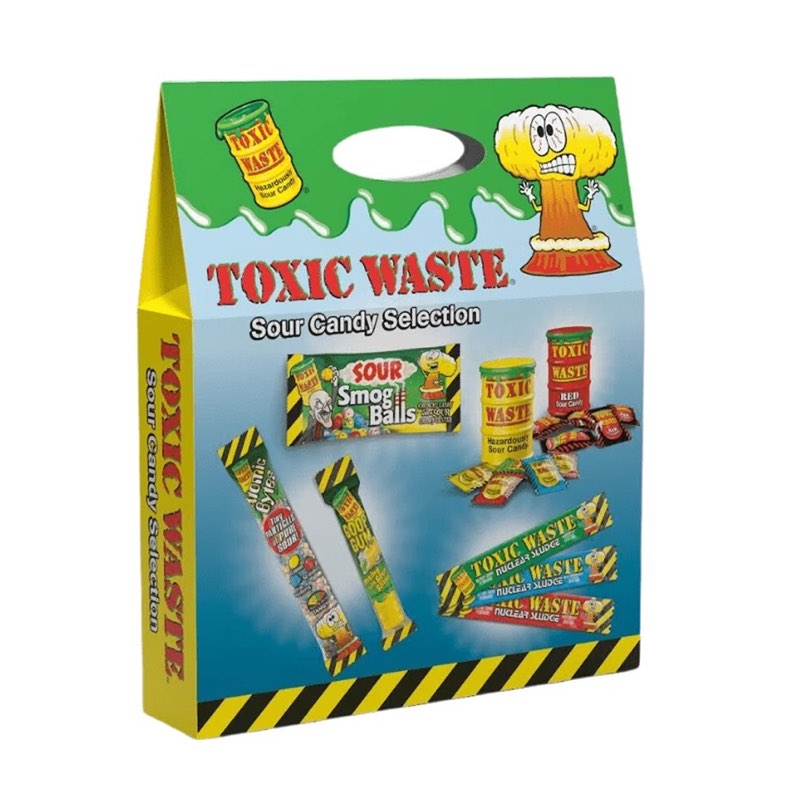
Home / Loose Sweets / Toxic Waste Large Sour Candy Gift Box 460g
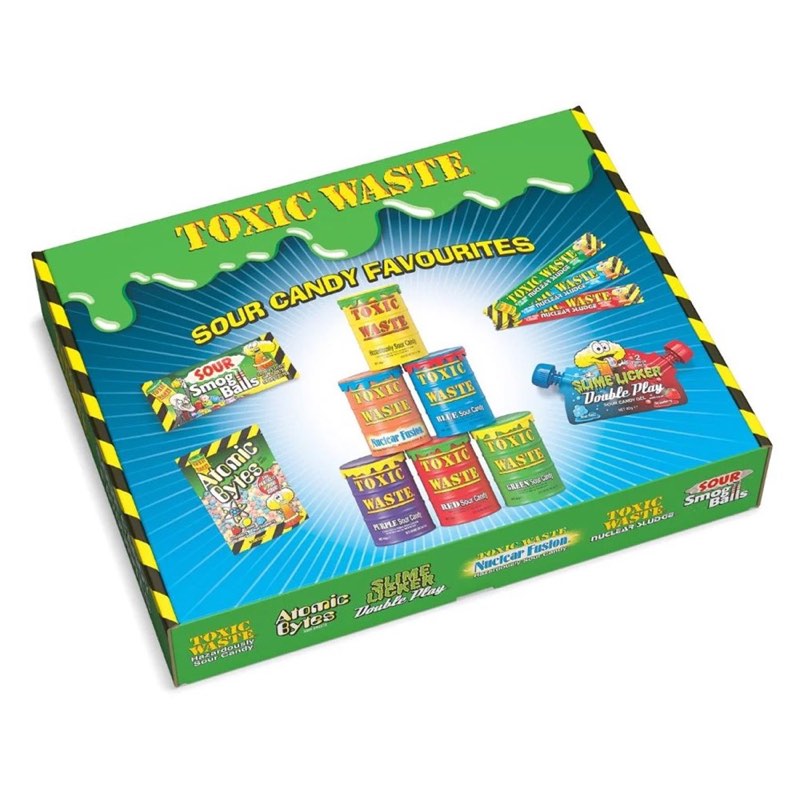
Toxic Waste · 460g
Read the full guide
Toxic Waste Large Sour Candy Gift Box 460g
£14.99
✔ In stock — ready to ship
Fresh stock
Free over £20
Same-day dispatch
Secure checkout
Lift the lid on the Toxic Waste Large Sour Candy Gift Box and the first thing you register is colour. The listing describes it as multi coloured, and that is not marketing shorthand for two shades of orange — it reads as a spread across the visible spectrum, the kind of assortment that looks busy and deliberate at the same time. There is a particular pleasure in a box you have to look into rather than glance at. Your eye goes across it once quickly, then a second time more slowly, picking out what you want to start with.
The box carries 460 g, which is a weight worth holding in your head because it changes how the thing behaves on a table. It is heavier than a bag and heavier than a single tub. Picked up two-handed it has a reassuring density to it, and set down in the middle of a sofa table it stays put rather than sliding about. That matters more than it sounds: a box that stays where you put it becomes the centre of the evening, and a light bag that gets picked up and carried off by whoever is nearest does not.
The full guide to Toxic Waste Large Sour Candy Gift Box 460g
5,796 words on how it eats, who it suits, how to serve it and what to put beside it.
The first thirty seconds with the box open
We file this one under two sweet types — crunchy and sour — and those two words tell you almost everything about how the first piece will go. Crunchy means there is structure to break. There is a moment of resistance, then a give, then a shattering, and that shattering is what carries the sourness out across your tongue all at once rather than letting it leak out slowly. It is a fast, front-loaded eating experience, not a slow-melting one. If you have only ever eaten soft sour gummies, the difference is genuinely noticeable in the first second.
The sourness itself is the point of the exercise, and it announces itself immediately rather than building. That first bright hit is sharp enough to make most people's face do something involuntary — a small wince, a squint, a laugh at whoever else is eating one at the same time. It is theatre as much as flavour, and everybody eating out of the box knows it. Then it settles. Within a few seconds the edge has come off, the sweetness underneath becomes audible, and you are left with a clean finish rather than a lingering sour coating on the roof of your mouth.
That arc — sharp arrival, rapid softening, clean finish — is what separates a sour sweet you can eat several of from a sour sweet that defeats you after one. This one sits in the former camp for most adults and the latter camp for a fair number of children, which is exactly why it ends up being a shared box rather than a solo one. The pacing is built in. You take one, you make a face, you wait, you go again. You cannot rush it, and the box lasts longer for that reason.
Weight, hand-feel and the way the box empties
There is a practical rhythm to how a 460 g box gets eaten that is worth describing, because it is different from a bag. A bag collapses as it empties and the remaining sweets pile into a corner; you end up tipping it towards the light to see what is left. A box keeps its shape. The level drops evenly, you can always see the whole assortment, and — this is the part people notice without articulating it — you keep being able to choose. Choice is most of the fun with a multi-coloured assortment, and a format that preserves choice right down to the last third is doing something a bag cannot.
Size in the hand varies across a mixed box by definition, and we do not publish a piece count for this one, so do not plan around an exact number. What you can plan around is the weight. At 460 g you are working with something that comfortably serves a room rather than a person. Set it down open and it will feed four to six people across an evening without anyone rationing. Keep it for yourself and it is a slow, weeks-long box that you dip into and close again.
One honest note on presentation, because it affects what people buy this for: it is sold as a gift box, and it behaves like one. It arrives as a self-contained object you can hand over without wrapping anything further, and it has enough physical presence to look like a real present rather than a stocking filler. That is a genuinely different purchase from a pouch of sweets, and it is reflected in the £14.99 price.
Who this is actually for
The obvious answer is sour fans, but that is too broad to be useful. More precisely, this suits the person who has already worked out that they like the sour category and now wants a format with some variety in it rather than another single-flavour bag. If somebody in your house has been steadily working through small sour bags one at a time, this is the natural next step up, and it is a more interesting one than simply buying the same bag in a larger size.
It also suits the household that entertains. A box of assorted sours is an unusually good social object because it generates conversation without requiring any. People compare reactions. Somebody claims a particular colour is worse than the others and somebody else disputes it. Teenagers dare each other. It is the confectionery equivalent of putting something slightly odd on the table and letting the room deal with it.
Where it suits less well is the young-children end of things. Sharp sour sweets are not many small children's favourite thing, and small hard sweets are a choking risk for young children in any case, so keep these to older kids with an adult nearby and treat the box as a supervised item rather than a help-yourself one. That is not a warning about this particular product so much as a general rule about the whole crunchy-sour shelf, and it is worth saying plainly once.
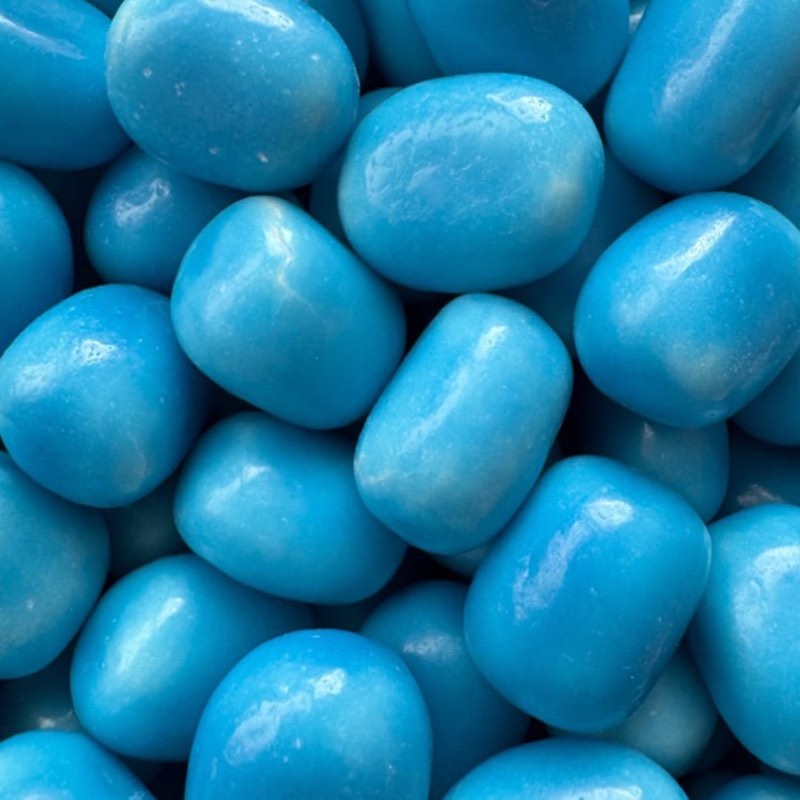
If you want a softer entry point for the same household, the gentler sour formats are better first steps — Maoam Sour Blue Raspberry Pinballs at £5.49 are chewy rather than crunchy and much easier going, and Park Lane Sour Blackcurrant Rings, also £5.49, are a ring-shaped jelly with the sourness dialled well down from anything with Toxic Waste on the front. Either makes a sensible companion purchase if you are buying for a mixed-age group and do not want the whole table on the same setting.
Pacing a sour box across a film or a long session at the controller
Most confectionery gets eaten in a hurry. A sour box does not, and that is precisely why it earns its place next to a screen. Think about what you actually want from a snack during a two-hour film: you want it to last, you do not want to be reaching constantly, you do not want to be chewing through dialogue, and you absolutely do not want to be wiping your hands on the sofa every four minutes. A crunchy sour assortment does surprisingly well against all four of those.
Start with pacing. The sourness self-limits. Nobody eats eight of these in a row, because the second and third pieces arrive while your mouth is still recovering from the first, and the natural response is to wait. That built-in delay is doing the same job that portioning a bowl would do, except you do not have to think about it. A 460 g box put out at the start of a film is still a box with sweets in it at the end of the film, which is more than can be said for most things you could have put out instead.
Then mess. This is where the crunchy format genuinely beats its rivals for screen-time snacking. There is nothing to melt. Your fingers do not end up tacky in the way they do with chocolate, and you are not pulling strands of anything off your hands between scenes. Some sour sweets carry a loose coating that can dust a controller or a keyboard, so if you are gaming rather than just watching, the sensible move is the same one you would use for crisps: tip a portion into a small bowl, keep the box shut and off to the side, and go to the bowl rather than into the box with the hand you are playing with. It takes ten seconds and saves you cleaning between the keys later.
Noise is the third factor and the one people forget until it annoys them. A crunchy sweet is audible. In a cinema that is a problem; on your own sofa it is not, but it does mean a box of these is a better fit for an action film, a comedy, a sports night or a multiplayer session with voice chat than for a quiet drama where everyone is straining to hear. Match the snack to the volume of the room. It sounds fussy written down and it is entirely obvious in practice.
Shareability is where the format really pays off. A passed box with an assortment in it creates a small, repeatable ritual: it goes round, everybody takes one, everybody reacts, it goes round again. With a single-flavour bag that ritual dies after the first pass because there is nothing left to choose. With a multi-coloured box there is always a next decision to make, and the box keeps circulating for that reason alone. If you want that circulation to run all evening, the trick is to give the room two contrasting things rather than one. Put this box at one end of the table and something calm at the other — Nerds Gummy Clusters at £2.49 are the obvious counterweight, crunchy on the outside and soft inside without the sour edge — and people will move between the two all night.
For a longer gaming session, the planning unit is time rather than weight. A three-hour session with four people wants roughly a small bowl refilled twice, which is well within what this box holds while leaving plenty for the next night. If you want a second bowl with a different job, a theatre-style carton works well because it is designed to be held in one hand — Mike & Ike Mega Mix Sour Theatre Box 120g at £2.25 is built for exactly that, chewy where this box is crunchy, and it stands upright next to a mouse without taking up any real estate.
One last screen-side observation. Drinks and sour sweets interact, and not always well. Anything acidic alongside a sour sweet doubles up on the same sensation and the result is a bit much; water, milk or something plain resets your mouth far better and means the fourth piece tastes as sharp as the first. If you are pouring for a film night, that is the single most useful thing to know about serving these.
Which sweet counter this box belongs to
Every generation gets a sour sweet that defines what "too sour" means to them, and the definition keeps moving. If you grew up with a sherbet fountain and a bag of lemon bonbons, sour meant a fizzing, powdery tickle that was really a texture as much as a taste. It was gentle by modern standards, and it was sold loose from a jar by somebody with a metal scoop. That is one era of counter, and a lot of people's entire mental model of British sweets is still shaped by it.
Then came the fizzy-and-coated era, where the sourness moved onto the outside of the sweet as a crust. Sour belts, fizzy bottles, cola cubes with a dusting on them. The sensation became sharper and faster, but it was still a coating on a fundamentally familiar sweet underneath. You can still buy that whole generation of sweet very easily — the Kingsway Fizzy Bubblegum Bottles at £5.49 are precisely that shape of memory, and the wider Kingsway shelf is where a lot of people go looking when they are trying to reconstruct a particular childhood.
The Toxic Waste era is the one after that, and it changed the terms of the deal. The sourness stopped being a garnish and became the whole proposition. The packaging stopped pretending to be about fruit and started being about the challenge. The sweet became a thing you dared somebody to eat, and that reframing is what put the brand in school bags rather than in sweet jars. Anyone who was a teenager during that shift recognises the name on sight, and a lot of them are now the ones buying the boxes.
What makes a gift box of this brand interesting is that it collapses those eras into one purchase. The box format and the multi-coloured assortment are straight out of the old counter tradition — variety, presentation, something to pick through. The contents belong to the modern challenge generation. It is a genuinely nostalgic object in a way that a single drum is not, because a drum is just the sweet and a box is the ceremony around the sweet. That combination is why these land well as presents for people in their twenties and thirties: it is a familiar name in an unfamiliar, grown-up-looking format.
The generational point cuts both ways at the table, too. Older family members raised on the gentle end of the sour spectrum often find modern sours genuinely startling, and the entertainment value of watching that happen is a large part of why boxes like this get opened at Christmas. If you want to hedge, put something from the older tradition out alongside it. Buchanan's Edinburgh Rock Carton 150g at £3.49 is about as far from a modern sour as a sweet can get, soft and powdery and very much from the metal-scoop era, and having both on the table makes the contrast the entertainment rather than a problem.
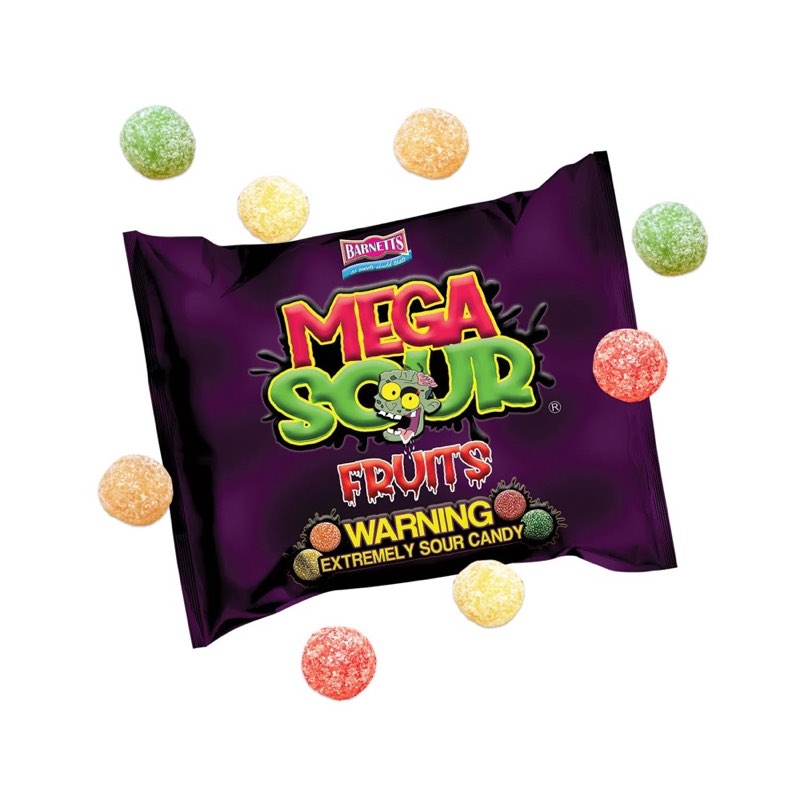
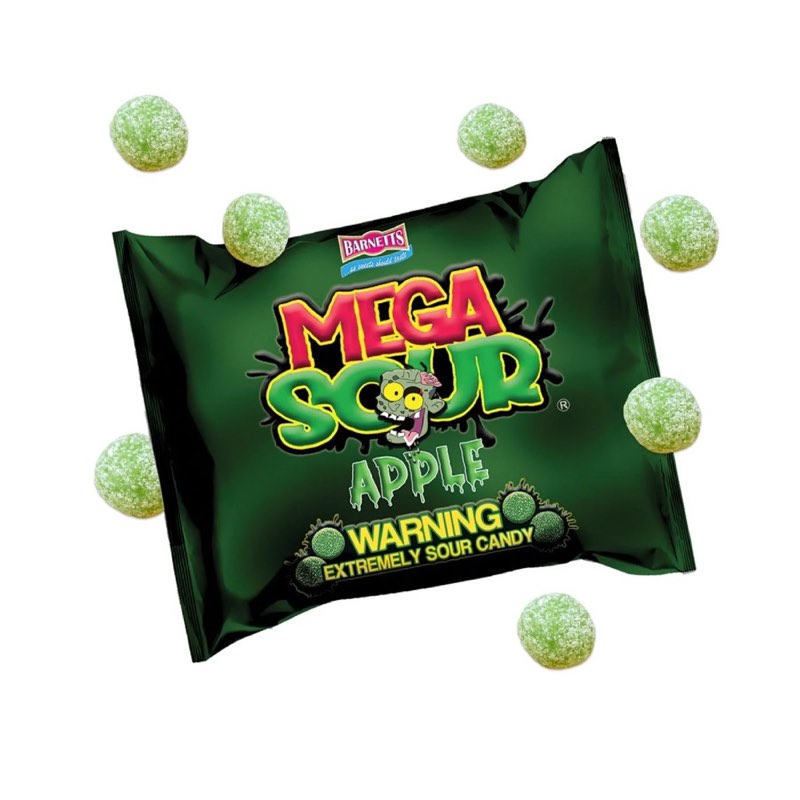
There is also a middle generation of sour that is worth knowing about if you are mapping this out for somebody. The mega-sour bagged sweets of the 1990s and 2000s sit between the coated fizzies and the modern challenge sours — properly sharp, but in a plain bag with no theatre around them. Barnett's Mega Sour Apple Candy Bags 104g at £3.99 is that generation almost exactly, and buying one alongside this box gives you a two-step history lesson for under twenty pounds.
People often ask which era was actually the sourest, and the honest answer is that the modern ones are, comfortably, but the old ones felt sourer at the time because nothing had prepared anybody for them. Memory is calibrated to what you knew, which is why a sweet you remember as unbearable can taste mild when you go back to it as an adult. If you have been meaning to test that theory, a mixed order from the sour sweets shelf is the cheapest way to do it.
What we can and cannot tell you about the flavours
Worth being straight about this: we do not hold a per-piece flavour breakdown for this box, so you will not find one on this page. What the listing gives us is the colour description — multi coloured — and the two sweet types, crunchy and sour. We would rather tell you that plainly than guess at a list of fruits and be wrong. When the box arrives, the manufacturer's packaging is the authority on what is inside it, and that is the thing to read, particularly if anyone in your house needs to check for allergens before eating.
What we can talk about usefully is the sour family as a whole and where a crunchy sour sits inside it, because that is genuinely the thing that determines whether you will enjoy this. Sour sweets split broadly into four behaviours. There are coated sours, where a loose powder sits on the outside and hits instantly then vanishes. There are baked-in sours, where the sharpness runs through the whole sweet and stays with you for as long as you are chewing. There are shell sours, where a hard outer layer carries the sharpness and a softer centre underneath resolves it. And there are the chew sours, where the sourness is folded into a long, slow chew and arrives in waves.
A crunchy sour is usually the third of those or a hybrid of the first and third, which is why the arc feels so front-loaded. Everything happens in the first second and a half, and then the sweet gets on with being a sweet. If you know you prefer the long, rolling sourness of a chew, this format will feel abrupt to you and you would probably be happier with the chew end of the shelf. If you find long sourness tiring and just want the jolt, this is exactly the right shape of sweet.
Colour, as a final note, is a poor predictor of flavour in any assorted sour box and always has been. Most people build a personal theory about which colour is worst within about ten pieces, and most of those theories do not survive a blind test. Enjoy having the theory anyway — arguing about it is half the reason the box works at a table.
Building a mix around a sour box
A 460 g box is big enough to anchor a spread rather than just join one, and the job of everything else on the table is to give people somewhere to go between sour pieces. Think of it as three roles to fill: a reset, a contrast and a texture.
The reset is something plain and sweet that clears your palate. Milk chocolate does this well, and so do soft, non-acidic jellies. The contrast is something with a different shape of intensity — bubblegum, liquorice, cola — so that the interest comes from a change of direction rather than a change of degree. The texture is whatever is not crunchy: a chew, a foam, a marshmallow, anything that asks your mouth to do a different job. Fill those three roles and you have a spread that people will graze at for hours rather than a table of things that all taste like a competition.
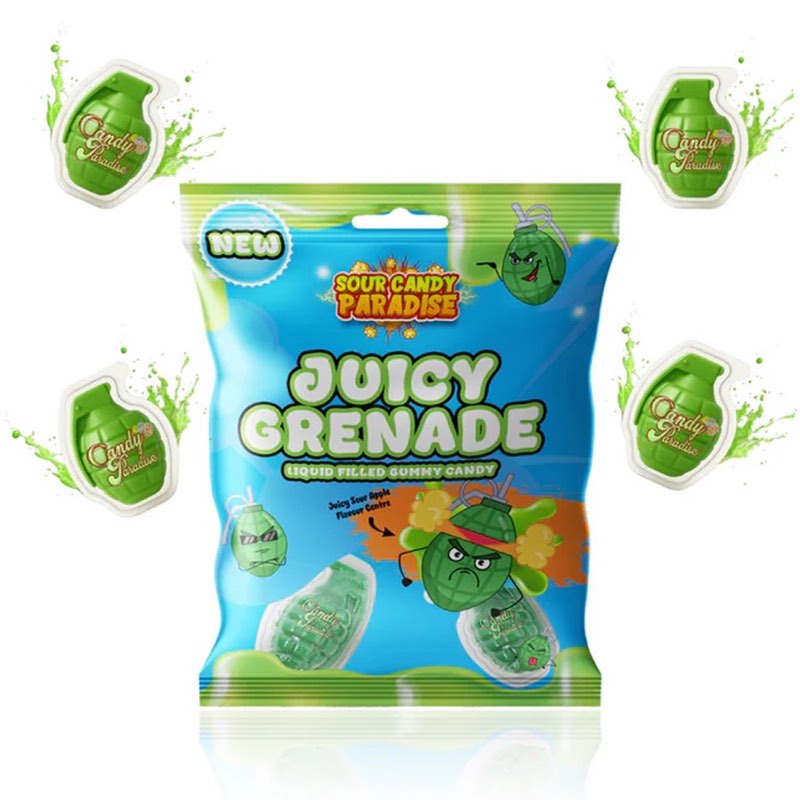
For the contrast slot, BUBS Cool Cola Skulls at £7.50 are a strong pick because cola sits at a completely different angle to fruit sourness and resets your interest without resetting your palate. For something with a bit of showmanship that is not another sour, Candy Paradise Juicy Grenade Gummies at £1.39 bring the novelty shape without the sharpness, which is a useful combination when you have a mixed-age group and want the younger end to have something to be excited about.
If you are building this as a proper counter spread rather than a bowl or two, the sensible place to start is our pick and mix section, where you can choose the supporting cast by weight instead of committing to a full bag of each. Building a 1 kg mix around a single anchor box is a much cheaper way to get variety on a table than buying six bags, and it means you can tune the ratio of sour to sweet to whatever your household actually eats.
One combination genuinely worth trying: pair the box with something that requires an activity. A kit that people have to make gives the table a second thing to do, and it slows the whole spread down in a good way. The Fuji Candy DIY Handmade Ramen Kit Box at £2.99 is a novelty build rather than a bowl of sweets, and putting one next to a sour box turns a snack table into something closer to an event, particularly with children old enough to do the making themselves.
Presents, hampers and the seasonal table
The reason this is a gift box and not a bag is that it is designed to be handed over, and it is worth thinking about what that means for the occasions it suits. At £14.99 it sits in a very specific and very useful price band: expensive enough to be a real present, cheap enough that you can give one to several people without it becoming an event. That is the secret-Santa, teacher-thank-you, birthday-of-a-teenager-you-do-not-know-well band, and there are not many things that fill it as confidently as a big box of sweets with a recognisable name on the lid.
For a hamper, it works as the anchor item — the thing that gives the basket its height and its theme — with smaller, cheaper pieces filling in around it. A hamper built around a sour box reads as a coherent idea rather than a random assortment, which is what separates a good hamper from a bag of shopping in a basket. Add two or three of the small single-flavour items and one soft, gentle thing to break the theme, and you are done.
Seasonally, it is an easy Christmas item and an easy end-of-term item, and it survives being left out on a table for a day or two in a way that chocolate in a warm room does not. If you specifically want the seasonal version of the same idea, the Toxic Waste Christmas Selection Pack Carry Gift Box 295g at £7.99 is the smaller, carry-handle format built for exactly that slot, and at roughly half the price it is the better choice when you are buying several.
For a party rather than a present, the box is best deployed as a station rather than passed round. Put it somewhere with a bit of space, put a bowl next to it, and let people serve themselves — that keeps hands out of the box, keeps the sweets dry, and lets you see at a glance how fast it is going. A party of ten will not empty 460 g of sour sweets in an evening, which is the right side of the line to be on when you are catering.
What £14.99 buys, and how to make it last
The arithmetic is simple and worth doing. £14.99 for 460 g works out at roughly £3.26 per 100 g. That places it in the premium band for sweets by weight, which is what you would expect from a gift-boxed assortment rather than a loose bag — you are paying for the box, the presentation and the variety as well as the contents. Judged purely as a kilo of sour sweets it is not the cheapest route, and we would rather say so than pretend otherwise. Judged as a present, £14.99 is a very competitive price for something that looks like it cost more.
| Portion size | Portions in the box | What that looks like in practice |
|---|---|---|
| 25 g | About 18 | A small after-dinner treat for one person, most days for a fortnight and a half |
| 40 g | About 11 | A generous single serving; eleven evenings of dipping in for one household |
| 50 g | About 9 | A counter-style paper-bag portion; a film night for four with some left over |
| 75 g | About 6 | Party bowls; six refills of a small bowl across an afternoon |
The 50 g line is the one to plan around for entertaining, because that is roughly what a person takes from a shared bowl across an evening when the sweet is sour enough to pace them. Fifty grams a head means this box comfortably covers a group of nine, or a group of four or five twice over. For a children's party, drop to 25 g a head — partly because it is plenty, and partly because sour sweets are one of the few categories where children genuinely stop before adults do.
If you want to stretch it further, the counter trick is dilution rather than rationing. Tip 100 g of this into a bowl and add 200 g of something plain and soft from the loose sweets range, and you have a 300 g bowl that still reads as a sour bowl because the sour pieces dominate the impression. People take what they fancy, the sharp pieces get found and eaten, and the box lasts three times as long as it would on its own. It is not a swindle — it is how sweet counters have always made assorted bowls feel bigger than they are.
Keeping it in good condition after the first opening
Sour sweets have one enemy and it is moisture. The sharpness on a crunchy sour is carried on or near the surface, and damp air pulls it about — the coating goes tacky, pieces start to cling to each other, and the crisp break that makes the format enjoyable softens into something duller. None of that makes the sweets unpleasant, but it does flatten the thing you paid for.
So the rules are short. Keep the box closed when you are not eating from it. Keep it somewhere cool, dark and dry — a cupboard, not a windowsill, and not next to the kettle or the hob where steam goes. If you have opened an inner bag or wrapper inside the box, either reseal it or move those pieces into an airtight tub or a food bag with the air pressed out. An old sweet jar with a decent lid is ideal and looks better on a shelf than the box does after a fortnight.
Do not refrigerate them. The fridge is damp, and taking a cold sweet out into a warm room pulls condensation straight onto the surface, which is the exact thing you are trying to avoid. Do not freeze them either — crunchy sweets and freezing are a poor match, and there is nothing to gain. Room temperature in a dry cupboard, lid on, is the whole method.
If you are buying ahead for Christmas or for a party in a few weeks, keep the box sealed until the day and store it flat rather than on its edge so the contents stay distributed. And once it is open, the honest advice is to eat it within a few weeks rather than treating it as a store-cupboard item for the year — not for safety reasons, but because the texture is at its best early and slowly gets less interesting.
One size here, and the smaller formats around it
This box comes in a single size — one size at £14.99 — so there is no larger-or-smaller decision to make on this page. What there is instead is a decision about format, because the same brand sits on our shelves in a very different shape at a very different price, and the right answer depends entirely on what you are buying for.
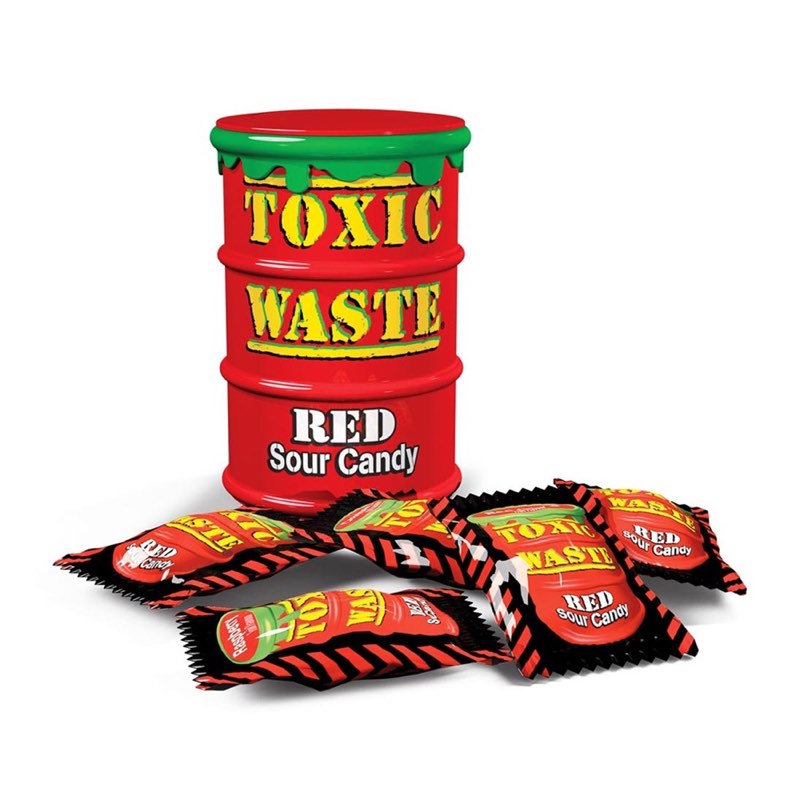
The 42 g drums are the single-format end of the range. They are pocket-sized, they are £1.99 each, and each one is a single line rather than an assortment. If you are buying for one person who already knows what they like, or you want to try the brand before committing to a box, a drum is the low-risk route. The Green Drum at £1.99 and the Toxic Waste Yellow Drum 42g are the two people most often reach for first, while the Red Drum and the Purple Drum 42g round the set out at the same price. For anyone who wants to work through the lot, the Nuclear Fusion Drum completes the line-up.
Here is the practical way to choose. Buying for yourself, or testing the water: take a drum. Buying for a household to share across a fortnight: take the box. Buying a present: take the box, because a £1.99 drum does not look like a present no matter how much the recipient likes it. Buying several presents at once: consider the Christmas carry box instead, which is built for that job. And buying for a party where you want quantity and do not care about presentation: a handful of drums plus a kilo from the pick and mix will go further per pound than any gift format.
If you want to see the whole brand in one place before deciding, the full Toxic Waste range lists every line we carry, which is the fastest way to compare formats and prices side by side.
Where this sits on the site
This box lives on four shelves, and each one is a different way of arriving at it. It is part of the whole shop in the broadest sense, but more usefully it appears under everything we file as crunchy, which is a small and specific shelf and a good one to browse if texture is what you shop by. It also sits on the sour shelf, which is where most people find it, and on the brand shelf if you came looking for the name.
The neighbouring shelves are worth knowing about because they catch the things this box does not do. Candy and chocolate is where you go for the reset items — the plain, sweet things that balance a sour spread. Our loose sweets shelf is the biggest single collection on the site and the place to build volume cheaply. And if you are shopping by maker rather than by type, Haribo is the obvious next stop for soft jellies to sit alongside the crunchy sours here.
A small navigation tip: if you know roughly what you want but not exactly, shelf-browsing beats searching. The type shelves are narrow enough to read in one go, and seeing twenty crunchy things next to each other tells you more about what you fancy than a search box does.
Questions we get asked about this box
How sour is it, really?
Sour enough to get a reaction from most adults on the first piece, and sour enough that most people pause before the second. It is at the sharper end of what we stock rather than the gentle end. The sensation is front-loaded — it peaks almost immediately and then fades over a few seconds rather than sitting on your tongue. If you have eaten modern challenge-style sours before, you will know the register. If your reference point is a fizzy bottle or a sherbet sweet, expect a noticeable step up.
What flavours are in the box?
We do not publish a flavour breakdown for this line, so we will not guess at one. The listing tells us it is multi coloured and that the sweets are crunchy and sour, and that is what we can stand behind. The manufacturer's packaging is the authority on what is inside, and it is worth a read when the box arrives — especially if anyone eating from it needs to check the label first.
How many pieces are in the box?
We do not hold a piece count for this one. What we can tell you is the weight — 460 g — which is the more useful number for planning anyway. On 50 g servings that is about nine generous portions; on 25 g servings it is about eighteen small ones. Plan by weight and you will not be caught out.
Is £14.99 good value?
It depends what you are buying it for. Per 100 g it works out at about £3.26, which is premium for sweets — you are paying for the gift box, the presentation and the assortment as well as the weight. As a present in the fifteen-pound bracket it is strong value, because it looks and feels like a considered gift. As a way of buying a kilo of sour sweets for a party, a couple of bags from the loose shelf will stretch further.
Is it suitable for children?
Older children who already enjoy sour sweets, yes, with an adult about. Sweets are a treat rather than everyday food, and small hard sweets and whole gummies are a choking risk for young children, so keep these supervised and away from the very young. Plenty of younger children simply do not enjoy sourness at this level, which is worth knowing before you buy it as a present for one.
Will it arrive in one piece, or do I need to wrap it?
It is a gift box and it is designed to be given as it is — that is the point of the format over a bag. Most people hand it over unwrapped or add nothing more than a ribbon. If it is travelling in a hamper, pack it flat and put softer items around it rather than on top.
How long will it keep once I have opened it?
Treat it as a few weeks rather than a few months once opened, and keep it closed in a cool, dry cupboard between sittings. That is a quality judgement rather than a safety one — the crunch and the sharpness are best early, and damp air is what dulls them. Always check the date printed on the manufacturer's packaging, which is the only one that counts.
Can I put it in a pick and mix bag?
This particular item is sold as a sealed box rather than by weight, so it is not part of the by-the-weight range. You can absolutely build a mix separately and serve the two together, which is what most people do — a bowl of loose sweets alongside the box gives you variety at a lower price per 100 g. Start from the pick and mix pages to put that together.
What should I serve with it at a party?
Something plain and something chewy. A plain sweet resets people's mouths between sour pieces, and a chew gives them a different texture to move to. Avoid putting two sour items side by side as the only options — guests will try both and then stop, because there is nowhere for their palate to rest. Water rather than fizzy or acidic drinks also makes a bigger difference than people expect.
I like the brand but want something cheaper — what should I get?
The 42 g drums at £1.99 are the low-commitment way in, and there are several to choose between. For a seasonal gift at about half the price of this box, the Christmas carry box is the direct alternative. And if you just want sour sweets rather than this brand specifically, the sour shelf has plenty at the £3 to £6 mark that will scratch the same itch for less.
Does it need to be kept in the fridge?
No, and it is better if it is not. Fridges are damp, and condensation forming on a cold sweet as it warms up is the fastest way to lose the crisp texture. A cupboard away from heat and steam is all it needs.
Is it in stock?
Yes — it is listed as in stock at the time of writing, in the single 460 g size at £14.99. Stock on gift formats moves quickly in the run-up to Christmas, so if you are planning ahead for December it is worth ordering earlier than you think you need to.
The short version
A 460 g gift-boxed assortment of crunchy sour sweets at £14.99, built to be opened in company rather than eaten alone. It is sharp on arrival and clean on the finish, it paces the people eating it without anyone having to think about portions, and it holds its shape and its variety right down to the last third — which is exactly what you want from something that has to sit on a table all evening and keep being interesting. Buy it as a present, buy it for a film night, or buy it because somebody in your house has been working through small sour bags and has earned the upgrade.
More from Toxic Waste
More sour sweets
More loose sweets sweets


Where this sits
Toxic Waste Large Sour Candy Gift Box 460g appears on these shelves. Browse them, or jump to something nearby.
You might also like