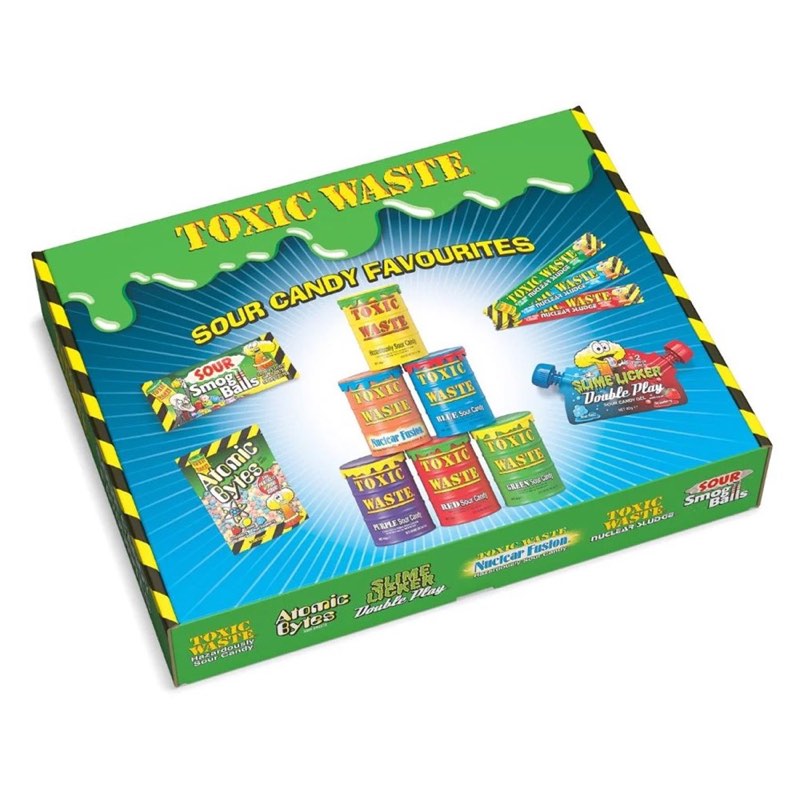
Home / Loose Sweets / Toxic Waste Nuclear Fusion Drum 42g
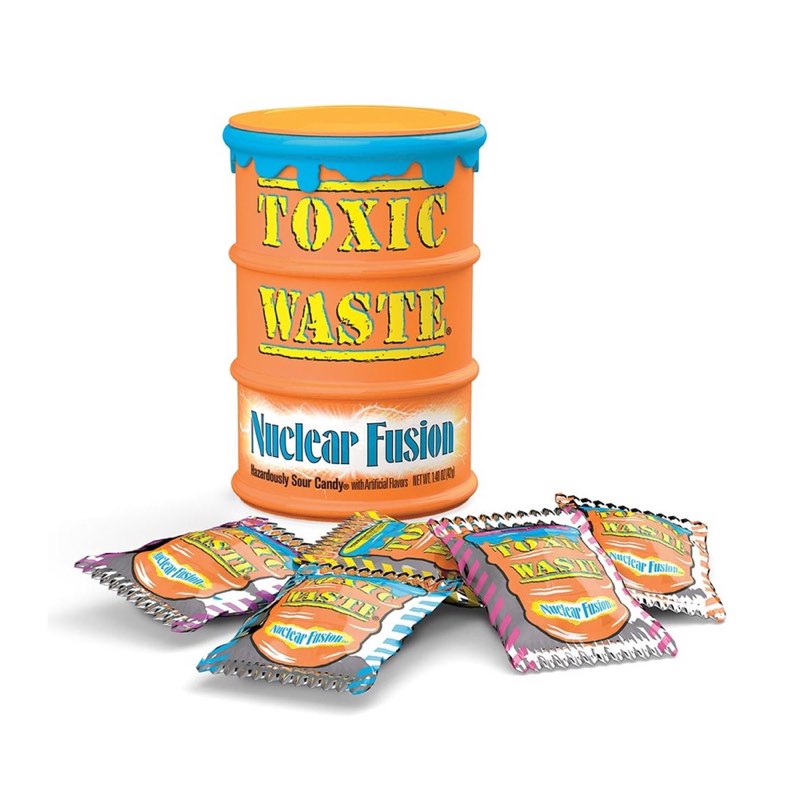
Toxic Waste · 42g
Read the full guide
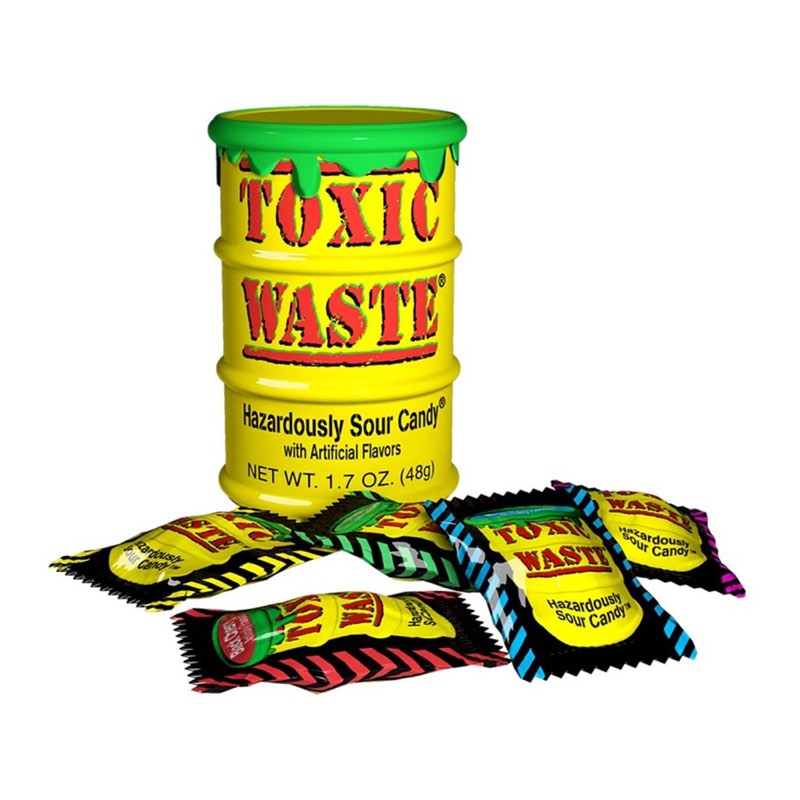
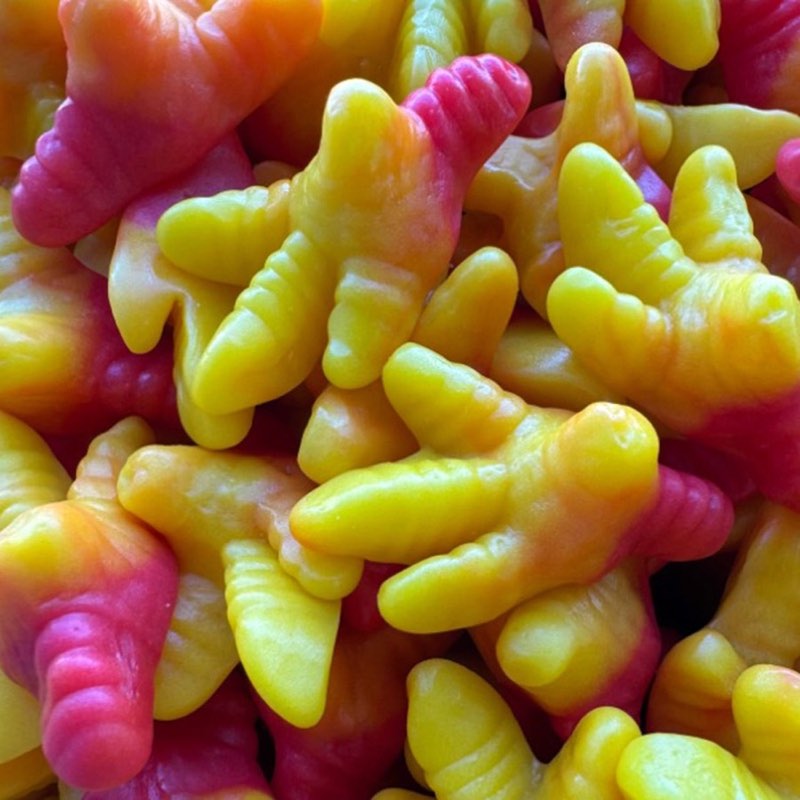
Toxic Waste Nuclear Fusion Drum 42g
£1.99
✔ In stock — ready to ship
Fresh stock
Free over £20
Same-day dispatch
Secure checkout
Almost nobody buys a 42 g drum as the whole purchase. It goes into something — a jar on a sideboard, a cone in a party bag, a bowl on a table, a tray at a stall. So the useful place to start is not "what is it like?" but "what is it for, and what has to be around it to make it work?"
Here is how we would actually assemble a jar with a Nuclear Fusion drum in it, from the bottom up.
The full guide to Toxic Waste Nuclear Fusion Drum 42g
4,974 words on how it eats, who it suits, how to serve it and what to put beside it.
Building the jar this goes in
- The bottom third: bulk that nobody has to think about. Soft, mild, eaten by everyone. This is the part of the jar that gets emptied and the part that should cost least per gram. The 800 g tub of Sweetzone Fizzy Rings at £7.99 is our default here — it is the cheapest sensible per-gram option on this part of the site and it has a light fizz to it, so the jar has a bit of lift before you add anything sharp.
- The middle third: format contrast. Something that is not a soft ring. A chew, a chip, a mini. Kingsway Fizzy Chips at £5.49 do this job at a sensible rate, and BUBS Cool Fruity Pear Minis at £7.50 bring a single clear fruit into a jar that would otherwise be a general fruit blur.
- The top: the small intense thing, visible. This is where the drum goes, and the word to hold on to is visible. Tipped into the bottom of a jar it is wasted; the pieces vanish into the bulk and the only person who finds one is whoever is still eating at eleven o'clock. Sitting on top, it is a feature.
- One thing with a shape, for the eye. The Candy Realms pumpkin light pop at £1.49 is the cheapest way to get a silhouette into a jar, and at 11 g it takes up almost no weight while doing a disproportionate amount of work.
The proportions. For a kilo of finished mix, one drum is around four per cent of the weight. That is the right level for a general audience: frequent enough to be encountered, rare enough that nobody feels ambushed. Two drums takes you to eight per cent, which is a mix aimed at people who came for sharpness. Three is a themed jar and should be labelled as such.
The one rule. Do not bury it. Everything else about this product follows from the fact that a small, hard, intensely sour sweet is an event, and events need to be seen coming.
A drum with a name instead of a colour
Most of this range is identified by colour. This one is identified by a name, and that changes how it gets chosen off a shelf. A colour is an instruction — you know whether you want the red one. A name is a proposition, and it asks you to be curious rather than loyal.
What you are buying is the same underlying object: 42 g of small, hard sweets in a lidded drum for £1.99, listed as boiled and sour in type and as fruit in flavour. The drum is pocket-sized, it rattles, and it is built to be carried around and passed to people. Nothing about the format is trying to be sophisticated, and that is the correct decision for what it is.
We do not list a colour for this one, which is worth knowing if you are the sort of person who plans a table around a palette — more on that further down, because it genuinely affects how you should use it. What we can tell you is what is consistent across the format: an intensely sour outer layer over a sweet fruit body, in a size that lasts.
The three phases, and where most people stop
A piece from this drum is not one experience. It is three, and they run in order.
Phase one: the coating. Four or five seconds in, the sour layer dissolves and the effect is immediate and physical. It is not a taste you consider; it is a thing that happens to your face. The jaw tightens, the eyes narrow, and there is a strong urge to do something about it. It is genuinely intense — this is the sharp end of what is sold on the high street rather than a fizzy tingle — and it holds for ten seconds or so before it starts to fade.
Phase two: the handover. The best part, and the least discussed. As the acid comes off, the fruit underneath rises up to meet you, and because your mouth has just been through phase one, that fruit reads far sweeter and more vivid than it would on its own. A moderately sweet body tastes remarkable after ten seconds of sharpness. The contrast is doing work that no amount of extra sugar could do.
Phase three: the long part. Now it is an ordinary hard boiled sweet, and it behaves like one — dissolving slowly, holding a steady fruit note, running for a couple of minutes if you leave it alone. This phase is where most of the actual eating time lives and where almost nobody is paying attention, because by then the drama is over.
Where people stop. Somewhere in phase one, usually. Most first-timers crunch within five seconds, which is an understandable reflex and skips the two phases that make the sweet worth the money. Our advice is to ride out the first one properly at least once, so you know what the product actually is. After that, crunch whenever you like — a thinned hard sweet breaks into fragments that give a brief second wave of flavour, and plenty of experienced eaters crunch on purpose.
Afterwards. Your mouth feels stripped clean, in a way that makes the next thing you eat taste unusually good. Eat several in a row and a strong sour coating can leave your tongue feeling tender — that is what extreme sour sweets do, and the fix is to slow down. It is also why one drum lasts most people longer than 42 g of anything soft would.
How much of a bowl should be able to bite back
This is the practical question behind the whole sour category, and it is almost never asked directly. Not "do I like sour sweets?" but "what proportion of what I am putting out should be capable of making somebody pull a face?"
The answer depends entirely on the room, and getting it wrong in either direction is a real cost. Too little and the table is bland and everyone drifts off it after a handful. Too much and half the room stops eating from it and the sweets go back in the cupboard.
Our working figures, based on what actually gets finished:
- A party for under-eights: zero to two per cent. Soft and sweet is the whole brief. If you want an edge, use fizz rather than sour — it reads as fun instead of as a challenge.
- A party for eight to twelve year olds: five to ten per cent, and visible. At this age the intense thing is the item they remember about the party. It should be findable, not hidden.
- Teenagers: fifteen per cent and they will ask for more. This is the core audience for the entire sour category and the group most likely to treat a tin as a group activity rather than as food.
- A mixed-age family table: four or five per cent, kept in a separate small dish rather than stirred through. Separation is the trick. It lets people opt in without fishing and stops anyone getting a surprise they did not want.
- An office or a stall: about ten per cent. Adults take one sour sweet as a talking point and then go back to the mild bowl, which is exactly the behaviour you want from a tray that has to last all day.
The sweet end of the same spectrum matters just as much. A sharp item only works if there is somewhere gentle to go afterwards. Stockley's Chocolate Flavoured Limes at £5.49 are the classic counterweight — a hard sweet with a rich, soft middle and not a trace of aggression. A bowl containing both is a bowl that never excludes anybody.
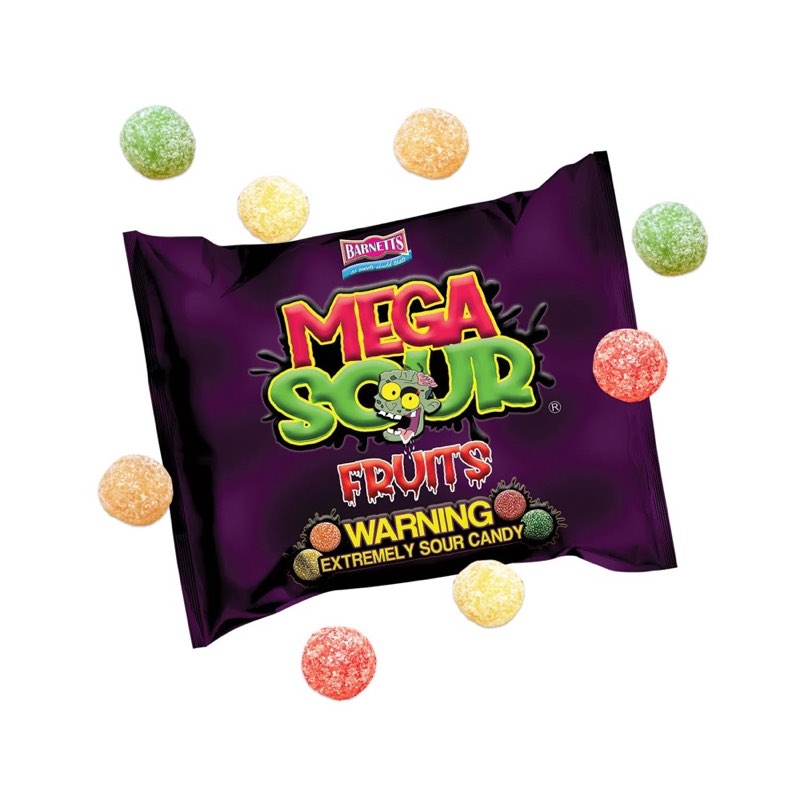
Stepping stones, if you want a gradient rather than a cliff. The gap between a mild jelly and this drum is enormous, and you can fill it. The Mike & Ike sour theatre box, 120 g for £2.25 is a chewy, forgiving kind of sour and a good middle rung. Park Lane Sour Blackcurrant Rings at £5.49 are sharper and still comfortably sociable. Barnett's Mega Sour Fruits, 104 g for £3.99 sit up at the serious end with this one, and in a bag rather than a tin, which makes them the better buy if sour is a habit rather than an experiment.
What not to do. Do not make sourness the theme of a table for a general audience. A sour-only spread sounds fun when you are planning it and produces a room full of people eating crisps. The sharp thing works because of what surrounds it; take away the surroundings and it stops being a highlight and becomes a hurdle.
Where to place it in a run of flavours
If you are laying out several things rather than filling one jar, the order people encounter them in matters more than most hosts realise.
Put the mild bulk nearest the entrance to the room, the shaped and novelty items in the middle, and the intense tin at the far end. People graze in the direction they are walking, and by the time they reach the sharp end they have already had something sweet, which is exactly the right preparation. Put the sour tin first and a proportion of the room decides the whole table is not for them.
The same logic works on a single table: bulk in the biggest bowl, the drum in the smallest dish, everything else in between, and the small dish placed where somebody has to reach slightly for it. A small effort to reach is a decision, and a sour sweet ought to be a decision.
How it looks on a table
The presentation side of this product is better than people expect, and it starts with the drum rather than the sweets.
The tin is a prop. A small lidded drum reads as a container of something serious — a paint tin, a chemical pot, a thing with a warning on it. That is the entire visual joke of the format and it works at a glance from across a room. Three or four drums stacked on a table do more for the look of a spread than three or four bags ever will, because they have height, they have edges, and they cast a shadow. Bags slump. Tins stand.
Use them unopened as part of the display. This is the trick most people miss. You do not have to empty everything you buy. Two open drums for eating and two sealed ones stood up beside the bowls gives you a table with structure at no extra cost — and the sealed ones go back in the cupboard afterwards.
Group tins in odd numbers. Three drums together look deliberate; two look like leftovers; four look like stock. It is a small thing and it is the difference between a table that looks arranged and a table that looks unpacked.
Height is what a sweet table usually lacks. Bowls are flat and sweets are small, so almost every home spread ends up as one low plane. Stand the drums on a cake stand, a stack of books under a cloth, or an upturned bowl, and the whole arrangement gains a second level. This costs nothing and does more than any amount of extra confectionery.
A note about colour, and an honest one. We do not list a colour for this drum. If you are building a table to a specific palette — a party with a scheme, a christening, a themed window — do not plan around a sweet whose colour you have not seen. Open one first, then decide where it goes. If you need a colour you can rely on before the parcel arrives, the colour-named drums are the safer route: the green drum, the red drum, the purple drum and the yellow drum are all the same 42 g at the same £1.99, and the colour is on the label.
Photographing a sweet table without making it look cheap
A fair number of the tables we help people build end up on a phone camera, so a few things that genuinely help.
Daylight, always. Overhead kitchen lighting turns sweets grey and makes hard sweets look dusty. A window on one side is worth more than any filter. If the party is in the evening, take the photograph in the afternoon while the table is still tidy.
Shoot from a low angle if you want the tins to matter. The flat overhead shot is the default and it flattens exactly the thing that makes drums interesting, which is that they are upright objects. Come down to table height and the tins become architecture.
Fill jars to the shoulder, not to the brim. An overfilled jar has no shape. Leaving a couple of centimetres of clear glass at the top is what makes a jar read as styled rather than as storage.
Clear glass beats anything else. If you are decanting, a plain jar with no pattern shows the layers you built. The layered jar described at the top of this page only exists if somebody can see through the glass.
One dominant item, not five equal ones. Tables photograph best when there is a clear hierarchy: one big thing, a couple of medium things, several small things. A row of equally sized bowls photographs like a canteen.
Leave one thing open. An open drum with a couple of pieces spilled beside it tells the viewer what is inside without you having to say so, and it stops the shot looking like a shelf in a shop. The same trick works with a boxed item — the Fuji Candy DIY ramen kit at £2.99 is the most photogenic small box near this one precisely because it is designed to be opened out and assembled.
Who ends up buying this one
The curious. Somebody who has had the colour-coded drums and wants to know what the named one is about. This is the single biggest group for this particular line, and £1.99 is exactly the right price for curiosity.
The host. Buying three or four small intense things to season a big mild spread, and buying on format rather than on flavour.
The gift-adder. Wants a funny, sealed, two-pound item to put on top of a bigger present. A named drum is a better joke than a coloured one here, because the recipient has to open it to find out.
The stall-holder and the fundraiser. Anything that stands up, stacks, sells for two pounds and does not need refrigerating is a friend to a school fair. Tins are the easiest thing in the shop to display on a trestle table.
The person who likes the ritual. Sour sweets are social objects. Some people buy them purely for the ten minutes of passing one round and watching, and there is nothing wrong with that — it is a legitimate use of two pounds.
Not for: very young children, anyone who wants weight for their money, or anyone building a table to a strict colour scheme on trust. All three are better served elsewhere, and the last one is easily fixed by opening the drum before you plan.
Fruit, when you cannot name the fruit
We list the flavour family as fruit and we do not go further, because we do not hold verified per-flavour data for each line in this range and inventing something specific would only mislead anyone buying to match a preference. The manufacturer prints the flavour on the drum and it is obvious the moment it arrives.
That is less of a handicap than it sounds, for a reason worth understanding: in a sour sweet, the specific fruit matters less than it would anywhere else. The first ten seconds are dominated by acid, not by fruit character, and by the time the fruit has the stage to itself your palate has been comprehensively rearranged. Two sour sweets with quite different fruit notes are far more similar to each other than two mild jellies with the same difference would be. The sourness is the flavour, in the sense that it is what you are choosing.
Where the fruit does matter is in the tail — the note left behind after the piece has gone. That is what determines whether you want another immediately, and it is the part that varies most across the 161-line fruit shelf. If you want a fruit you can rely on rather than one you discover, buy something named: a bag built entirely around pear tells you exactly what you are getting, and blackcurrant rings do the same at the sharper end.
If you want to go the other way and see how a hard sweet behaves with no ambush at all, a 150 g pouch of chopped rock at £1.99 is the same money for three and a half times the weight, and it is the straight traditional version of the same underlying format. Having both on a table is a genuinely interesting comparison and costs four pounds.
Occasions that suit a named tin
Halloween. The best match this format has. The tin looks the part without any decorating, the sourness suits the evening, and a bowl of drums plus a handful of pumpkin light pops is a table finished in about ninety seconds.
Bonfire night and outdoor events. A sealed tin in a coat pocket survives a field in November. Nothing melts, nothing sticks, and a hard sweet that lasts a couple of minutes is well suited to standing about in the cold.
School fairs and fundraising stalls. Two pounds, stacks neatly, sells itself to anyone aged nine and up. Buy a dozen and put three on the front of the table standing upright.
Christmas stockings. Small, rigid, rattles, cheap. If you want a larger version of the same idea under the tree, the 295 g Christmas carry box at £7.99 is the seasonal format and the best rate per gram in the brand range.
Gifting as a joke with a bigger present. Sealed, postable, and unexplained until it is opened. For a present that can stand up on its own, the 460 g gift box at £14.99 is the one with enough weight to be the main event.
A long car journey. Two minutes a piece, no mess, and the tin does not spill when it goes in a door pocket. The only caveat is the obvious one about handing an intensely sour sweet to somebody who is driving.
The value question, answered plainly
£1.99 for 42 g is about £4.74 per 100 g. That is expensive by weight and we are not going to dress it up. Here is the comparison that matters, using things you can buy on the same visit:
| Item | Weight | Price | Roughly per 100 g |
|---|---|---|---|
| This drum | 42 g | £1.99 | £4.74 |
| Christmas carry box | 295 g | £7.99 | £2.71 |
| Large sour gift box | 460 g | £14.99 | £3.26 |
| Mega sour fruits bag | 104 g | £3.99 | £3.84 |
| Fizzy rings tub | 800 g | £7.99 | £1.00 |
So the drum is the worst rate on that table and the cheapest ticket price on it. Both facts are true and they are not in conflict, because you are not buying grams. You are buying a sealed, standable, pocketable unit at a price that requires no thought, in a quantity that suits something you would not want a kilo of.
When the drum is the right buy: trying it, gifting it, seasoning a bowl, filling a party bag, stocking a stall, or keeping one in a coat. When it is not: feeding a household that has decided it likes sour sweets. At that point you are paying the small-unit premium every week, and a 460 g box saves you roughly a third per gram.
How long it lasts. Each piece runs a couple of minutes if you suck it, so one drum is a long session for one person and about ten minutes for a table of five. As four per cent of a party bowl, it outlasts the party.
Storage, and the one mistake that ruins them
The mistake: decanting into a mixed jar. A sour coating is a dusted surface and it transfers. Tip a drum into a jar with soft sweets and within days the coating has migrated onto everything else, the jellies have an edge nobody asked for, and the sour pieces have lost the layer you bought them for. If you want them in a display jar, give them a jar of their own. If you want them in a mix eaten the same evening, no problem at all.
Keep the lid on. The drum is the best container these will ever have. It is rigid, it is sealed and it keeps moisture out.
Damp is the real enemy. Dusted surfaces draw moisture from the air, and an open drum in a steamy kitchen will go from powdery to tacky in about a week. Cupboard, not windowsill; away from the kettle and the sink.
Heat is a minor concern. Hard sweets do not melt at household temperatures, unlike anything on the candy and chocolate shelf, which is why a tin is the sensible thing to post in July.
Flavour fades slowly when open. The most volatile part of any fruit note escapes into the air, so a drum left open for a month will taste vaguer than a sealed one. Nothing dramatic, but the lid is free.
Go by the printed date. The manufacturer's own packaging carries the date and that is the figure to use, not anything on this page.
If you are buying more than one
Six lines in this range sit alongside each other, and there is a sensible order to work through them.
Start with two drums, not one. Same spend as buying two of the same thing, and you find out whether the differences between them matter to you. Pairing this named one with a colour-coded drum is the most informative four pounds you can spend in this part of the shop.
Move to a box when the habit is established. The large box for year-round supply, the Christmas carry box if the timing suits, since it is the best rate in the range. Both are assortments rather than single choices, which is a plus if you are feeding a group and a minus if you have a firm preference.
Buy drums for anything that involves distribution. Party bags, stockings, prizes, stalls, posting. A box cannot be divided neatly; a drum is already a unit.
See the whole range in one place on the brand's eight-line shelf, which is the quickest way to compare formats and prices side by side without hunting.
The route to everything else
This drum sits on five shelves, and each one leads somewhere different.
The sour shelf, 49 lines, is the right place to go if intensity is the thing you are shopping for. The boiled sweets shelf, 30 lines, is the opposite journey — it puts this tin among the traditional hard sweets it is technically a member of, which is a useful reminder that under the coating this is a very old kind of product. The fruit flavour listing is the biggest shelf we have. Loose Sweets is where the bulk of the site lives, at 356 lines. And the Toxic Waste shelf collects the range.
Beyond those, pick and mix is where the jar described at the top of this page gets assembled, the full shop is the unfiltered view for browsing, and two brand shelves are worth knowing for the softer parts of a mix: Kingsway for fizzy and traditional lines, and Haribo for the soft, mild base that almost every good bowl is built on.
Straight answers to common questions
What does "Nuclear Fusion" actually mean here?
It is the name of this drum in the range, and it is how you tell it apart from the colour-coded ones on the shelf. We do not read anything further into it than that, and we are not going to guess at what the manufacturer intended. What we can confirm is the format: 42 g of hard, sour fruit sweets in a lidded drum at £1.99, the same size and price as the other drums.
What colour is it?
We do not list a colour for this one, which is exactly why we have said so plainly rather than describing something we have not verified. If the colour matters — a themed table, a matched party — either open one before you plan around it, or choose one of the colour-named drums instead, which are the same weight and price.
How sour is it compared with a fizzy sweet?
Not comparable. A fizzy sweet gives you a tingle and a light lift; this gives you a sharp peak that makes your jaw tighten for ten seconds. If fizzy is a five, this is at the top of the scale that is sold on the high street. The sourness fades and a sweet fruit body takes over, so it is an event with an end rather than a state that persists.
Can eating a lot of them hurt?
A strong sour coating can leave your tongue feeling tender if you get through a lot of them in one sitting. That is a normal feature of extreme sour sweets rather than a fault in this line, and spacing them out is the whole answer. We are a sweet shop and not qualified to say anything beyond that, so anyone with a concern should ask somebody who is.
Are they all right for children?
They are small hard sweets, and small hard sweets are a choking risk for young children, so supervision matters and the very young are better off with something soft. For older children the limiting factor is taste rather than anything else — the eight-to-twelve bracket tends to love them and treat a tin as an event. Sweets are a treat whatever the age.
How many pieces will I get?
We sell by weight rather than count and we do not publish a piece number. It is 42 g of small hard sweets. Because each piece lasts a couple of minutes if you do not crunch it, a drum goes further than the same weight of anything soft.
What is in it and are there allergens?
We do not publish ingredients or allergen information for this line, because we do not hold verified data for it and guessing about food is not something we will do. The manufacturer's own packaging carries the full declaration and it arrives with the product. Anyone with an allergy or an intolerance should read it before eating anything from the drum.
Is it the same as the coloured drums?
It is the same format, weight and price, listed under the same types and the same fruit family, and named differently on the shelf. Any further difference between the lines is a matter for the manufacturer's packaging rather than for us. In practice people who try two develop a preference quickly, which is the argument for buying a pair rather than committing.
Is it worth buying the big box instead?
If you already know you like this sort of thing, yes — the rate per gram is around a third better and you stop paying the small-unit premium. If this is your first one, no: two pounds is the right size of bet. Most people should buy two drums now and a box later.
Can I put it in a pick and mix?
Yes, at around four per cent of the total weight, and keep it visible rather than stirred through. The one thing to avoid is leaving it mixed with soft sweets for days, because the sour coating transfers and both items end up worse for it. For a bowl eaten the same evening, mix away.
Does it post well?
Very well. It is sealed, rigid, light and not heat-sensitive the way chocolate is, so it goes in a padded envelope and arrives as it left. That combination is why a £1.99 drum is such a common addition to a parcel.
What should I put with it for a party?
A big mild base, one format contrast, and one shape. In practice: a large tub of fizzy rings as the bulk, fizzy chips for a different bite, and the drum on top where people can see it. Add a sour chewy box if you want a middle rung between mild and sharp.
Will it still be available later?
It is in stock as this is written. Sour lines sell in bursts — quiet for weeks, then a rush before Halloween and again in December — so if you need a specific number for a fixed date, order sooner rather than later. If this one is unavailable, the other drums are the same price, weight and format.
Worth knowing before you buy
A £1.99, 42 g drum of hard sour sweets that is bought for what it does to a table as much as for what it does to your mouth. The sourness is real and brief; the fruit underneath runs for a couple of minutes and tastes better for what came before it. It is expensive per gram and cheap per decision, it stands up and stacks where bags slump, it posts perfectly, and it earns its place as roughly four per cent of a bowl rather than as the bowl itself. Buy one to find out, two if you want to compare, and a box once you know the answer.
More from Toxic Waste
More sour sweets
More fruit sweets
Where this sits
Toxic Waste Nuclear Fusion Drum 42g appears on these shelves. Browse them, or jump to something nearby.
You might also like