Home / Loose Sweets / Crazy Candy Factory Bone Breaker 25g
Crazy Candy · 25g
Read the full guide
Crazy Candy Factory Bone Breaker 25g
£1.00
✔ In stock — ready to ship
Fresh stock
Free over £20
Same-day dispatch
Secure checkout
Twenty-five grams is a specific kind of weight. It is not a bag you share out and it is not a bar you snap in half on the walk home. It is the amount of sweet that disappears into a coat pocket without making a shape in the fabric, that sits in a closed fist with room to spare, that goes into a party bag or a lunchbox and is genuinely forgotten about until the moment it is wanted. Pick one up and the first honest reaction is usually how little there is of it — followed, about a minute later, by the realisation that this is exactly the right quantity for what it does.
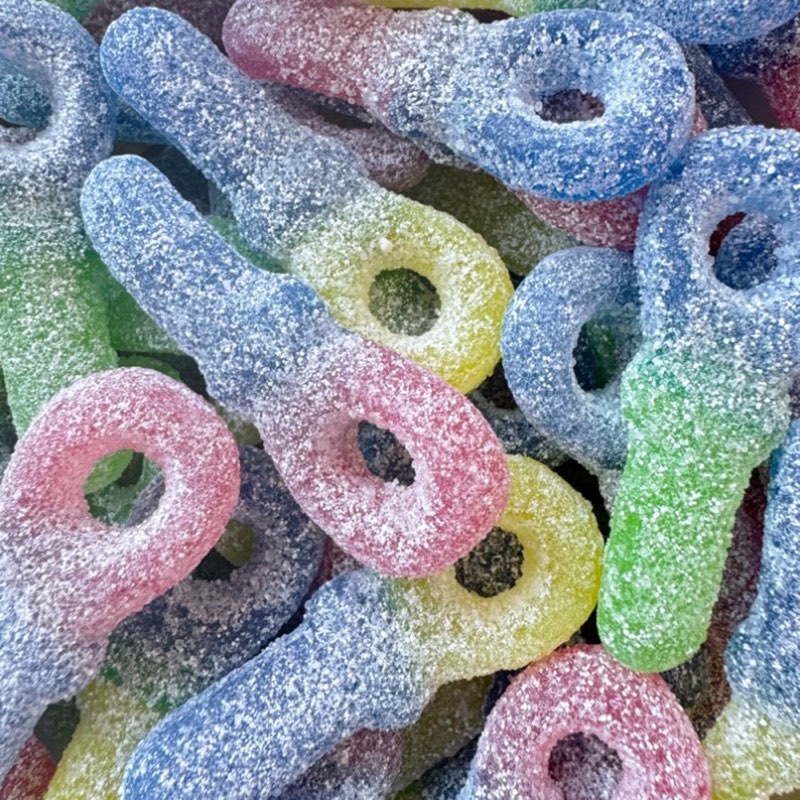
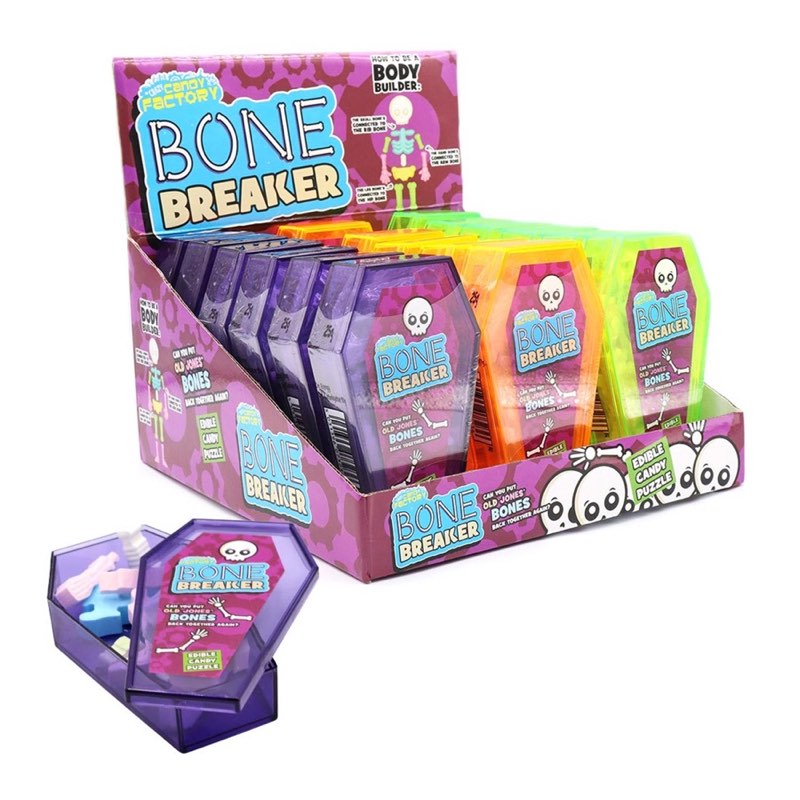
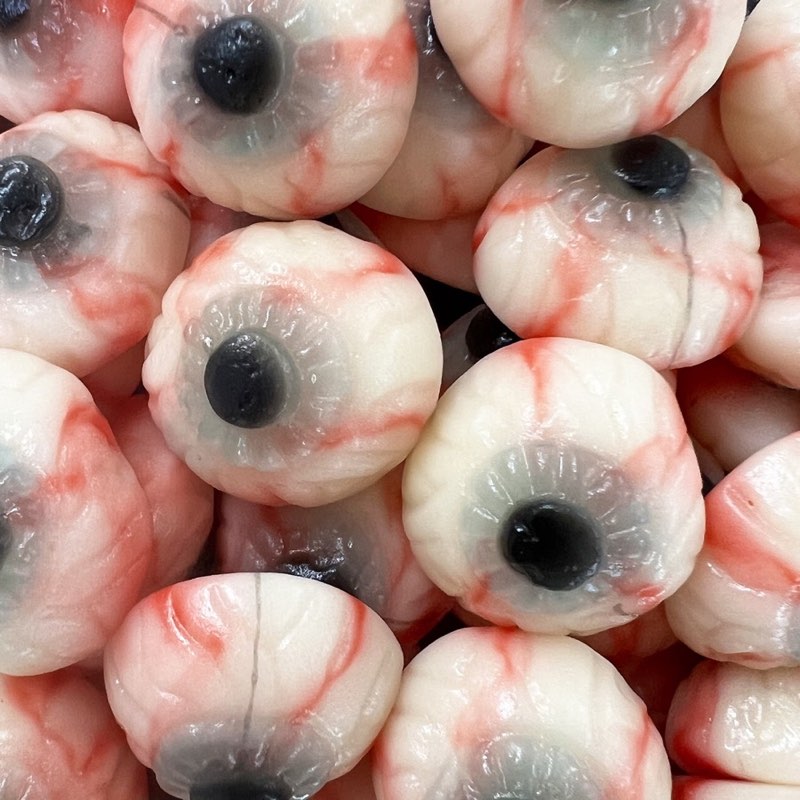
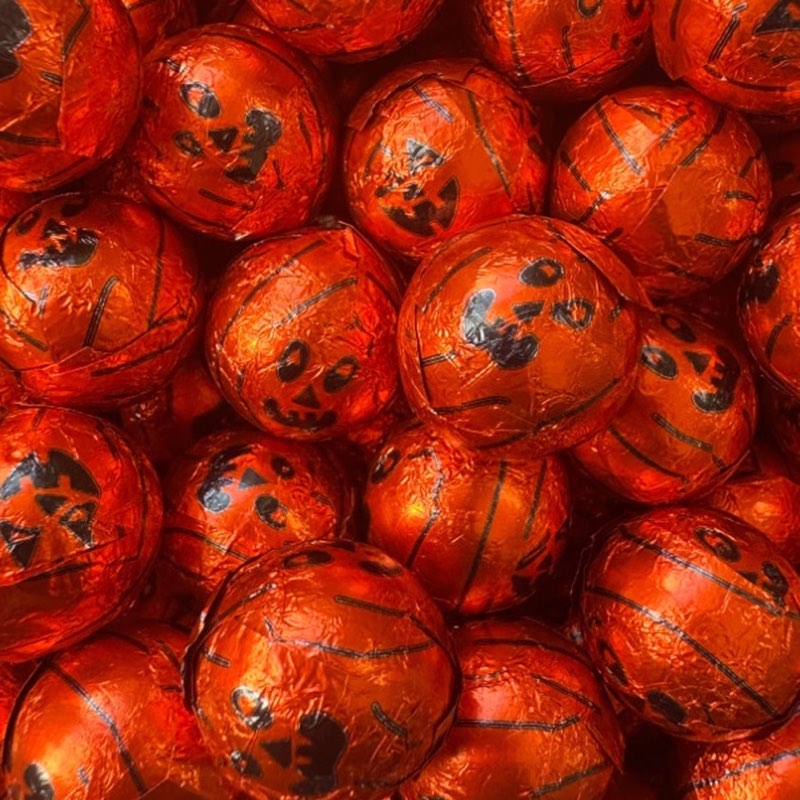
The Crazy Candy Factory Bone Breaker is a pound. One pound, one size, twenty-five grams, and a name doing an enormous amount of work before you have even opened it. Bone Breaker is not a flavour description and it is not a size description. It is a promise about what the eating is going to feel like. The two photographs on this listing are your reference for what it actually looks like — shape, colour, format, the lot. We would rather point you at the pictures than paint you a picture in words that turns out to be slightly wrong when the parcel lands.
The full guide to Crazy Candy Factory Bone Breaker 25g
5,979 words on how it eats, who it suits, how to serve it and what to put beside it.
The first thirty seconds with a Bone Breaker
What the product data does tell us is that it is multi coloured and that the flavour is filed as fruit. Those two facts describe a familiar and well-loved corner of the sweet shop: the bright, unapologetic, primary-coloured end, where a sweet is allowed to look like a sweet rather than pretending to be a dessert. Multi coloured here does not mean a subtle gradient. It means contrast — the sort of arrangement that reads clearly from across a table, photographs well in a party bowl, and can be identified by a seven-year-old at forty paces.
For scale, the honest comparison is a quarter of the Chupa Chups Mini Candy Sushi Tray, a 100g tray at £2.99 that we stock a few clicks away. Holding those two side by side calibrates expectations fast: one is a centrepiece you put down on a table, the other is something you carry. Neither is better. They answer different questions, and a good shop keeps both because the questions come up on different days.
How it eats, from first contact to the last of it
A sweet this size has a short arc, and short arcs are worth paying attention to, because everything has to land quickly or it does not land at all. With a 780g tub you can afford a slow build — the fifth one tastes different from the first because your palate has adjusted, and the format assumes an hour of grazing. With 25g there is no fifth one in that sense. The experience is front-loaded by design, and the sweets that succeed at this weight put their strongest card down immediately.
Expect an arrival rather than an approach. Fruit flavourings in this part of the market are built to register in the first second — bright, high, slightly sharp at the top, the sort of note that makes the sides of your tongue sit up before the sweetness properly arrives behind it. That sequencing matters more than people realise. Sweetness alone is flat and gets boring fast; it is the acid edge arriving first that makes the sugar behind it read as fruit rather than simply as sweet. When a fruit sweet tastes like a sweet rather than like fruit, the usual reason is that the two arrived in the wrong order, and your brain gave up trying to match it to anything it had eaten off a tree.
The middle of the eat is where texture does its work, and a product called Bone Breaker is making a specific pitch there. The short version, expanded further down, is that physical resistance controls the pace of flavour. Something that yields immediately hands you everything at once and is over. Something that resists — something the jaw has to work at, or wait out while it gives up ground slowly — stretches the same quantity of flavour across a much longer stretch of time. Twenty-five grams of a sweet that resists can comfortably outlast a hundred grams of a sweet that does not. That is not a marketing point; it is physics and patience.
The fade is the part nobody writes about and everybody notices. A good fruit sweet leaves the mouth reasonably clean, the top note lingering half a minute and then stepping back. A less good one leaves a coating that makes the next thing you eat or drink taste wrong. If sweets are sitting alongside savoury food, or there is a drink involved, the fade decides whether they sit politely next to everything else or steamroller it. Bright fruit generally behaves. It is the heavy, creamy, caramel-leaning flavours that take over a palate for a while, which is why something like the BUBS Banana & Caramel Foam Sweets at £7.50 works better as the last thing on a table than the first.
Who this is actually for
About five distinct people buy a £1, 25g sweet, and they buy it for completely different reasons.
The party-bag filler is not shopping for themselves at all. They need ten or twelve or twenty of something, at a predictable cost per head, and it has to look like a proper item rather than a make-weight. A round £1 with a name children repeat out loud is close to ideal, because the cost per bag is instantly calculable and the recipient actually reacts to it.
The basket-topper came for something substantial — a tub, a mixed box, a bulk order — and is adding a couple of small novelties on the way past. This is genuinely the smartest way to explore a sweet shop. You are not committing £7.99 to a flavour you have never had; you are committing a pound. If it is a hit you know what to buy in quantity, and if it is not, you have lost the price of a bag of crisps.
The novelty buyer is here because the name is silly and they want to see what it is. That is not a lesser motivation — a very large share of confectionery has always been bought for exactly this reason, and the pleasure is partly in the sweet and partly in the small absurdity of the thing existing. If that is you, look also at the Crazy Candy Factory Zombie Brain at £1.49, the only other line we carry from the same maker and clearly aimed at the same sense of humour.
The parent or grandparent doing the small-treat routine — the Friday thing, the end-of-term thing, the sat-quietly-through-a-long-appointment thing — is buying the format as much as the sweet. Twenty-five grams is a complete treat that starts and ends. It does not need portioning, does not need putting away half-finished, and does not turn into a negotiation about how much more is allowed. Sweets are a treat rather than everyday food, and a format with a natural end built in makes that easier to hold to.
The mix builder is assembling a spread from a dozen lines and using small single items as the colour and texture variation across the bowl. That is the most interesting use and it has its own section below. If you are none of the five and simply fancied a sweet, that is fine too — our Loose Sweets shelf, 356 lines and counting, exists for exactly that.
The maths of a pound: what 25g actually costs you
This is the part most sweet shops would rather you did not work out. We think it is better done in public, because understanding where a price sits on the curve makes you a better buyer of everything on the site, not just of this line.
Cost per gram, honestly
£1.00 divided by 25g is 4p per gram — £4.00 per 100g, or £40.00 per kilogram. There is no dressing that up: on a pure weight basis this is one of the more expensive ways to buy sweets here. That is not a flaw in the product, it is a structural fact about small formats. Packaging, handling and shelf space cost roughly the same whether there are 25 grams inside or 250, so the smaller the unit, the higher the share of the price that is not sweet.
Here is how that compares against the other weighted lines nearby, worked from the prices and weights on their own pages:
| Line | Price | Weight | Per 100g |
|---|---|---|---|
| Candy Realms Tutti Frutti Tubes Tub | £7.99 | 780g | £1.02 |
| Chupa Chups Soft & Chewy Fruity Mini Tubes | £1.49 | 130g | £1.15 |
| Crazy Jo Peelablezz Jumbo Banana Gummy | £2.99 | 136g | £2.20 |
| Chupa Chups Mini Candy Sushi Tray | £2.99 | 100g | £2.99 |
| Barnett's Mega Sour Fruits Candy Bags | £3.99 | 104g | £3.84 |
| Crazy Candy Factory Bone Breaker | £1.00 | 25g | £4.00 |
| Candy Realms Halloween Pumpkin Light Pop | £1.49 | 11g | £13.55 |
Read that from the top and the pattern is obvious: weight buys efficiency. The 780g Candy Realms Tutti Frutti Tubes tub at £7.99 works out at a shade over a penny a gram, roughly a quarter of what you pay per gram here. Read it from the bottom and a different pattern appears: the Candy Realms Halloween Pumpkin Light Pop at £1.49 for 11g is £13.55 per 100g, and nobody buying it cares, because they are not buying grams. They are buying a novelty with a light in it. The Bone Breaker sits between those two worlds, which is exactly why it is useful.
The number that actually matters: cost per occasion
Per-gram pricing is the right lens when you are stocking a bowl that has to last a weekend. It is the wrong lens when you are buying one complete treat for one person on one afternoon. For that job the only figure that matters is the total, and the total is £1.00.
Turn it round. To hand one distinct, self-contained item to each of ten children, the small format costs £10.00 and takes four seconds to work out. Getting the same result from the bulk tub means buying £7.99 of tub, finding ten containers, dividing 780g into portions of 78g, and doing it by hand. You have saved about two pounds, spent twenty minutes, and every child has received a scoop rather than a thing. Sometimes that trade is worth it. Often it is not.
Four worked baskets
- The £12.50 party-bag run — ten bags at £1.25 each. Ten Bone Breakers at £1.00 gives ten headline items for £10.00. Add one pack of Drumstick Chew Bars in a ten-pack at £2.50 — 25p a bar — and every bag gets a second item. No leftovers, no dividing, no scales.
- The £9.99 film-night table. One tutti frutti tub at £7.99 gives 780g of grazing base; two Bone Breakers at £2.00 give two people something individual to open. That is 830g for £9.99, or £1.20 per 100g across the whole table.
- The £24.46 spread for a dozen. The 780g tub (£7.99), Barnett's Mega Sour Fruits Candy Bags at £3.99 for 104g for the sharp corner, a Crazy Jo Peelablezz Jumbo Banana Gummy at £2.99 for 136g as the centrepiece oddity, Chupa Chups Soft & Chewy Fruity Flavour Mini Tubes at £1.49 for 130g, and eight Bone Breakers at £8.00. That is £24.46 for 1,350g — about 112g and £2.04 a head across twelve people.
- The £2.49 low-stakes experiment. One Bone Breaker plus the Zombie Brain at £1.49. Two lines from the same maker, under two pounds fifty, and by the end of the week you know whether this is a house that suits your taste before ordering anything in quantity.
Per guest, and when small beats bulk
If you are catering rather than snacking, the planning figure you pick matters more than the prices do. Choose a round number and scale it: at 100g a head, twenty guests need two kilograms, which at the tub's £1.02 per 100g is about £20.40 of base. At 50g a head — more realistic when there is other food out — the same twenty need a kilogram and about £10.20. Neither is a rule. They are arithmetic you adjust once you have watched one party and seen what actually got eaten.
The role of a £1 single in that plan is not to supply weight. It is to supply events. One per guest, set at each place or handed out at a particular moment, costs £1 a head on top of the bowl and gives everyone something with their name on it. On a £30 budget for twenty, spending £20 on bulk and £10 on singles is a sensible split; spending all £30 on singles would give you 750g and cost four times as much per gram.
There is one scenario where 4p a gram beats a penny a gram outright, and it is the one where you would not have finished the big one. A 780g tub that goes stale after 300g have been eaten has cost £2.66 per 100g actually enjoyed, not £1.02. A £1 item that gets entirely eaten costs exactly what it says. Waste is the hidden multiplier on every bulk price, and the smaller the household, the harder it bites. If it is one or two of you and sweets are occasional, buying small repeatedly can work out cheaper in practice — with variety thrown in, because every pound goes somewhere different on the Fruit flavour shelf rather than into the same tub for a month.
Texture engineering: why "Bone Breaker" is a texture promise, not a flavour one
Flavour gets the attention and texture does the work. Almost every argument about a sweet — whether it is any good, whether it is worth the money, whether you want another — turns out on inspection to be an argument about texture. Once you can read texture, you can predict how nearly any line will behave before you open it.
The four families, and what each does to time
Snap is resistance that holds and then fails all at once. Nothing happens, nothing happens, then everything happens. Snap is dramatic and social — it makes a sound, other people hear it, and it turns eating into a small event. It also holds flavour behind a wall until the wall goes, so the flavour arrives as a burst rather than a build. Lines that lead with snap are the ones children get most excited about, because the drama is the point.
Chew is resistance that never quite fails. It gives, recovers, gives again, and the jaw does real work for a long time. Chew is the great flavour-stretcher: the same quantity of flavouring, released slowly against active jaw movement and rising mouth temperature, lasts several times longer than it would in something that dissolves. It is also the most physically involving texture, which is why chews are the classic choice for long journeys and long films. The Barratt Fruit Salad Chews at £5.49 are the textbook example, and chew bars are the same principle in bar form.
Fizz is not really a texture — it is a sensation, a mild tingle on the surface of the tongue that reads as sharpness and lift. Fizz is why sour lines feel active rather than merely flavoured. It resets the palate between mouthfuls, which is exactly why a sour element earns its place in a mixed bowl: it stops everything blurring into one note by the twentieth sweet.
Melt is surrender. The sweet gives up its structure gradually and mostly passively, and the flavour arrives as a slow wash. Melt is the gentlest and most nostalgic of the four — it is what foam sweets do, and it is why foam textures feel old-fashioned even when the flavour is modern.
Where a Bone Breaker is pointing
We cannot tell you which family this particular line lands in, because we are not going to assert something about a product we have not verified. What we can say is what the name signals and why it matters. Bone Breaker sets up resistance. It suggests something you have to get through rather than something that gets out of the way, and every design decision behind a sweet named like that will pull towards the mouth doing some work. The photographs on this page tell you more than any adjective we could offer, and the manufacturer's own packaging, which arrives with the item, is the definitive word on what is inside it.
The reason to think about it is that resistance and quantity trade off against each other, and that is the single most useful thing to understand about small formats. If a sweet resists, 25g is not a small amount — it is a properly long sit, because the limiting factor is jaw time rather than volume. If a sweet melts away, 25g is over in two minutes and a tub would serve you better. Look at the format a maker has chosen and you can usually reason backwards to the texture they were aiming at: small, single, novelty-named items tend to live at the resistant end, because that is where a little goes a long way. Nobody sells 25g of something that vanishes instantly.
What follows from texture
- It sets the pace of a party. A bowl of fast-melting sweets empties in fifteen minutes and then people want more. A bowl with real chew in it paces itself, because each sweet occupies its eater for a while.
- It is what makes a mix feel designed. Five flavours of the same texture taste like one thing with variations. Three flavours across three textures taste like a proper selection — contrast in the mouth registers far more strongly than contrast on the tongue.
- It drives how sweets survive storage. Firm sweets are the most sensitive to damp air, because moisture changes the feel long before it changes the taste. Soft ones mind warmth and pressure more.
- It determines what suits a small child. Anything small and hard, and any whole gummy, is a choking risk for young children, so supervise them and match the format to the age.
The practical upshot is simple: shop for texture first and flavour second. Pick your spread of resistant, chewy, sharp and soft, then choose flavours within each. You will end up with a better bowl than you get by picking six fruit flavours you like and discovering they all behave identically. The 356 lines filed under loose sweets cover all four families comfortably.
What "fruit" covers, and how to use it
The flavour here is listed simply as fruit, and that word is doing something specific. It does not mean one fruit. It means the composite — the bright, mixed, slightly abstract fruit register that exists mainly in sweets and is none the worse for it. Nobody has eaten a piece of actual fruit that tasted like a fruit sweet, and that is fine, because the target was never accuracy. It was recognisability. You taste it and you know the category immediately, even if you could not name the fruit under oath.
Within that register, sweets cluster around a handful of poles. The red-berry pole reads as strawberry or raspberry and is the friendliest and most universally liked. The citrus pole — orange, lemon, lime — brings the acid and does most of the work of making a sweet feel refreshing rather than heavy. The tropical pole, all pineapple and mango and passionfruit, is the loudest and the most divisive. And the orchard pole, apple and pear, is the quiet one people underrate until they notice it is the flavour they keep going back to.
A multi-coloured fruit sweet usually reaches across several of those at once, which is the point: variation inside a single item, so the second one is not identical to the first. If you find you have a strong preference, the site lets you follow it — the 161 fruit-flavoured lines sit on one shelf, and if you are a red-berry person specifically, the Strawberry flavour shelf narrows it to the single note rather than the composite.
It is worth saying what fruit does on a table full of other things: it is the safe middle. Creamy and caramel flavours divide a room, sour divides it harder, liquorice hardest of all. Bright fruit is the flavour almost nobody objects to, which makes it the right base layer whenever you do not know your audience — a school event, an office thing, a mixed-age family gathering. Build the middle out of fruit, then add the sharp and the strange round the edges for the people who want them.
Building a mix around a single pound item
A good pick-and-mix is not a pile of sweets. It is a composition with a job to do, and there are really only four slots to fill.
The base is the bulk of the weight and needs to be crowd-safe, moreish and cheap per gram. A large tub is right: at just over a penny a gram, the bulk tutti frutti tub does this better than anything near its price and leaves your remaining budget free for more interesting things. If you would rather your base were softer and more traditional, Barratt Jelly Babies at £5.49 are the classic answer and nobody has ever been disappointed to find them in a bowl.
The sharp corner does more for the overall experience than any other single addition, because it resets the palate and stops the sweetness flattening out. The mega sour fruits bags at £3.99 are built for it. Keep them slightly apart on the table rather than stirred through, so people choose them deliberately instead of being ambushed.
The chew slows the whole table down and makes a spread last. The fruit salad chews are the obvious pick for a fruit-led mix, and a ten-pack of chew bars does the same job in a format you can hand out individually.
The talking point is where a £1 novelty earns its place. Every mix needs an item or two that are there to be noticed, picked up, commented on and then eaten — something that gives the table a subject. A Bone Breaker does that for a pound. So does its £1.49 stablemate from the same maker. So, for different reasons, does the jumbo banana gummy at £2.99, which is 136g of one large sweet and therefore a centrepiece rather than an ingredient.
Four slots, fillable for about £20. If you would rather start from a ready-made shelf than assemble it yourself, our Pick & Mix section is set up for exactly this, and the full sweet shop is there when you want to browse without a plan. One composition note that is easy to miss: leave small singles in their own packaging until the moment you want them. A mix looks better and lasts better if the novelties are produced rather than pre-emptied into a bowl, where they lose their identity among a hundred anonymous pieces. A pound spent on something with a name on it is largely a pound spent on the moment of producing it.
Occasions this actually suits
Children's parties are the clearest use. One item per bag, a flat cost per head, no weighing and no dividing. The £12.50 combination above covers ten bags with a headline item and a chew bar each, and it scales linearly — twenty bags is £25.00 of singles and £5.00 of chew bars.
Film nights want weight on the table for grazing plus one or two individual items, so nobody has to reach into a shared bowl all evening. A tub and a couple of singles is the standard arrangement and comes in under a tenner.
Hampers and gift boxes are where small items do their quiet work. Six different £1 lines cost £6.00 and add six distinct shapes, colours and names to a box — far more visual interest than another £6.00 of the same large bag. Mix formats deliberately: a tub, a couple of bags, then four or five singles scattered through the gaps.
Halloween and seasonal tables need no persuading by a product called Bone Breaker, and it has obvious company — the pumpkin light pop at £1.49 is explicitly seasonal, and the same maker's zombie-themed novelty sits in the same territory. Three themed items at around £1 to £1.50 each cover a table for under a fiver, which is roughly what most people want to spend on a night that is mostly about the decorations.
Stocking fillers and advent-style runs work on the same arithmetic: twenty-four small items at a pound each is £24.00, and the guesswork disappears. Vary it so it is not the same line twenty-four times — the Candy & Chocolate shelf and the loose sweets shelf between them have more than enough range to keep a month interesting.
Reward jars and end-of-term handouts need a repeatable, identical, clearly-bounded treat, and a fixed-price single is far easier to administer than anything you have to portion. The cost per event is exactly £1.00 and you never have to make a judgement call about how much counts as a portion.
Keeping it in good condition
Storage for a 25g item is mostly a non-problem, because it rarely survives long enough for storage to become a question. If you have bought ten for a party in a fortnight, though, three things matter.
Keep them cool and out of direct light. A windowsill in a warm room is the worst place in the house for sweets and the most common place people leave them. A cupboard away from the oven and the radiator is all that is needed — nothing refrigerated, which brings its own condensation problems when the item comes back out.
Keep them dry and sealed. Damp air is the enemy of anything with a firm surface, and once a surface has gone tacky it does not come back. Leave items in their own packaging until you want them, and if something is opened and unfinished, an airtight tub beats a folded-over pack in a drawer every time.
Keep them away from strong smells, and from each other. Sweets pick up odours from spices, coffee and cleaning products with surprising enthusiasm, and if you are storing a mixed order loose, keep sharp lines away from soft ones rather than pressed together in one bag for a week. Finally, always check the manufacturer's own packaging when it arrives — for best-before information and for any allergen details — before anyone eats anything. That pack is the authoritative source, and anyone in the household with allergies should read it rather than rely on a website listing.
One size, and what that settles
There is a single option on this line: one size, £1.00, 25g. No larger bag, no multipack, no variety box. That makes the decision straightforward — nothing to compare within the listing, so the only real question is how many.
One, if you are curious. Two, if you are curious and somebody else in the house will want to know what it was like. Ten, if you are filling party bags, because ten is where the arithmetic goes round and the cost per bag is exactly a pound. Twenty-four for an advent-style run. Above that, you should probably be looking at bulk formats for the base of the order and keeping singles for the moments that need a distinct item. It is in stock as things stand; if you are buying for a dated event, order with a few days in hand and add a couple of spares beyond your headcount. Spares cost a pound each, and being one short at a party costs considerably more in goodwill.
Where this sits on the site
This line is filed in two places, and both reward a browse rather than a click-through. It sits on the loose sweets counter, the largest shelf we run at 356 lines and the natural home for anything sold as an individual item or a small bag rather than a boxed product. That is where most pick-and-mix building happens, and if you have half an hour and no fixed plan it is the most rewarding place on the site to wander.
It also sits with everything we file as fruit, which runs to 161 lines and covers the whole range from single-note boiled sweets through chews and gummies to tubs and trays. Because that shelf is organised by flavour rather than format, it is the right one to use when you know what you want to taste but not what shape you want it in.
From there the nearby shelves fan out logically. Single-note strawberry lines are one level narrower if the composite fruit register is not quite it. The pick-and-mix shelf is where to go when you are assembling rather than buying a single item. The sweets and chocolate aisle is the right turn when you want something richer alongside the fruit. And if no category quite fits, browse everything we stock and filter down from the top.
A navigation tip worth having: the fastest way to find companions for any product is to shop the same flavour shelf in a different format. If you like what fruit does here, the fruity mini tubes at £1.49 for 130g give you the same family with five times the weight, and the 100g sushi-style tray at £2.99 gives it to you as something you put down on a table rather than carry in a pocket.
Questions we get asked about small-format singles
What exactly am I getting for £1.00?
One Crazy Candy Factory Bone Breaker, 25g, in one size, described in our product data as multi coloured with a fruit flavour. That is the whole of what we can tell you with confidence, and we would rather give it to you plainly than dress it up. The two photographs on this page show the product itself, and the manufacturer's own packaging arrives with it carrying the full detail. If you want to know what it is like before committing to several, buy one — that is exactly what a pound-priced single is for.
How does the price compare per 100g?
£1.00 for 25g works out at £4.00 per 100g, or £40.00 per kilogram. That is towards the expensive end of the shop by weight, which is normal for small formats, because packaging and handling costs are spread across fewer grams. For comparison, the 780g tutti frutti tub at £7.99 is £1.02 per 100g and the 130g fruity mini tubes at £1.49 are £1.15 per 100g. If weight is your priority, buy bulk. If a complete, self-contained item is your priority, buy this.
Is it in stock, and can I order several?
Yes, it is showing in stock, and there is no reason not to order several — it is £1.00 each with one size available. Buyers filling party bags commonly take ten or twelve at a time. If you are ordering for a specific date, give yourself a few days of margin and add a couple of spares beyond your headcount; at a pound each, the insurance is cheap and the alternative is rationing at the door.
Is there a bigger bag or a multipack?
Not on this line. The listing carries one size only, at £1.00 for 25g. If you want weight rather than individual items, the sensible move is a bulk format as your base with singles for the moments that need a distinct thing. Among the fruit lines nearby, the 780g tub at just over a penny a gram is the best value per gram we carry, and it pairs well with a handful of pound novelties on top.
What does "fruit" mean — which fruits?
Our data lists the flavour as fruit without naming individual fruits, so we will not guess. In confectionery generally, "fruit" describes the mixed, bright fruit register rather than one named variety, and multi-coloured products usually vary across several notes within it. If you want a specific single flavour rather than a composite, the strawberry shelf narrows things right down, and the wider fruit shelf lets you filter across 161 lines by format.
Is it suitable for children?
Sweets are a treat rather than everyday food, and how they are served matters as much as what they are. Small hard sweets and whole gummies are a choking risk for young children, so they should be supervised while eating and the format should suit the age. The single-item size helps in one practical respect: it is a bounded treat with a natural end, which makes it easier to keep a treat a treat.
I have allergies — what can you tell me?
We do not hold verified ingredient or allergen data for this line, so we will not state anything about what is or is not in it. Please check the manufacturer's packaging that arrives with the product, before eating it, and do not rely on any website listing for that information. If the allergy is serious and the packaging is not clear enough, do not take the risk — contact the manufacturer directly and wait for an answer.
Can I add it to a pick and mix?
Yes, and it is a good candidate for what we would call the talking-point slot — the item in a mix that gets noticed and commented on rather than simply eaten. Our advice is to leave singles in their own packaging rather than emptying them into a shared bowl, so they keep their identity. A workable mix is a bulk base, a sour corner, something properly chewy, and one or two novelties on top.
How should I store it if I am buying ahead?
Cool, dry, dark and sealed. A cupboard away from the oven and the radiator is fine; a sunny windowsill is the worst spot in the house. Leave items in their own packaging until you want them, keep sharp lines away from soft ones if you are storing a mixed order loose, and keep sweets away from strong-smelling things like coffee and spices, which they pick up readily. Check the best-before date on the pack when it arrives.
How many should I buy for twenty people?
If you want one individual item each, twenty is £20.00 and 500g in total. That is rarely the best way to spend £20 on twenty guests, though — you will usually do better with a bulk base plus a smaller number of singles. A common split is £7.99 on the 780g tub, £3.99 on a sour line and £8.00 on eight singles for the people most likely to appreciate a named item: £19.98, and around 1,084g on the table.
What is the difference between this and the Zombie Brain?
The two things we can state from our own data are the price and the name: this one is £1.00 at 25g, and the Zombie Brain is £1.49. They come from the same maker and are clearly aimed at the same audience and the same sense of humour. Beyond that, the Zombie Brain's own page carries its own photographs and its own details, and that is the right place to look rather than taking our word for it here.
Does a £1 sweet actually work as a gift?
On its own, rarely. As one of six or eight small items in a hamper, box or stocking, very well — small formats are what make a gift box look generously filled without pushing the total up, and six different £1 lines add far more visual interest than £6.00 more of the same big bag. The trick is to vary shapes, names and colours rather than repeating one line, which is where a large loose-sweets shelf earns its keep.
The short version
A pound, twenty-five grams, one size, fruit flavour, multi coloured, and a name that tells you it intends to put up a fight. Per gram it is not the cheapest way to buy sweets and it is not trying to be — £4.00 per 100g buys a complete, self-contained, individually handed-over treat rather than a scoop out of a bowl, and plenty of jobs want exactly that. Party bags, hampers, seasonal tables, low-risk experiments and the small Friday ritual all need a single item at a fixed price far more than they need bulk.
Build around it sensibly: a bulk base for weight, something sharp to keep the palate awake, something chewy to slow the table down, and a couple of named singles to give people a subject. That is a spread for about twenty pounds and it will do more work than thirty pounds of the same thing repeated. Check the packaging when it arrives, keep it cool and dry until you want it, supervise the youngest eaters, and enjoy it for what it is — a treat, at a price that makes it easy to say yes to.
More fruit sweets
More loose sweets sweets
Where this sits
Crazy Candy Factory Bone Breaker 25g appears on these shelves. Browse them, or jump to something nearby.
You might also like