
Home / Loose Sweets / Kingsway Witches Heads
Kingsway · 250g
Read the full guide
Kingsway Witches Heads
£5.49
✔ In stock — ready to ship
Fresh stock
Free over £20
Same-day dispatch
Secure checkout
Anyone who builds their own mixes regularly ends up thinking about sweets differently from anyone who buys them one bag at a time. You stop asking "is this nice?" and start asking "what job does this do in a bag of twenty other things?" It is a more interesting question, and Kingsway Witches Heads have an unusually clear answer to it. They are a large, single-coloured, figurative jelly, and that combination makes them one of the most useful anchor pieces you can drop into a mix.
Take the size first. Most pick-and-mix components are small — beans, rings, bottles, cubes, little bears. A bag made entirely of small things is uniform to look at and slightly monotonous to eat, because every handful is the same handful. A large piece breaks that up. It sits visibly on top of everything else, it takes two or three bites rather than one, and it gives the person eating a moment of deliberate choice rather than automatic grazing. In a 1 kg bag, thirty or forty large pieces do more for the character of the mix than three hundred small ones.
The full guide to Kingsway Witches Heads
5,244 words on how it eats, who it suits, how to serve it and what to put beside it.
What a witch's head does to a bag of mixed sweets
Then the colour. These are listed simply as red, and a solid single colour behaves very differently in a bag from a multicoloured assortment. Multicoloured components scatter and blend into visual noise — put three different assorted lines in one bag and you get confetti. A block of one strong colour reads as a deliberate element. It is the difference between a bag that looks thrown together and one that looks composed. If you are making up bags to give away, that visual coherence is most of what people react to before they have tasted anything.
Third, and most importantly for a builder: jelly is the neutral base of the whole pick-and-mix world. Everything else in a mix is a departure from jelly. Sours are jellies with something added. Fizzy sweets are jellies with a coating. Chews, foams, chocolates and hard-boiled sweets are all doing something jelly does not. That means a plain fruit jelly is not the boring component — it is the floor. Without enough of it, a mix turns into a series of stunts and people stop eating after six pieces. With enough of it, all the stunts land, because there is something to come back to between them.
So the builder's summary is: large, red, jelly, figurative. That is an anchor, not a garnish. Anchors go in at 20 to 30 per cent of the bag, and everything else gets arranged around them.
Ratios, partners and the mistakes people make
A good 1 kg mix has four or five components and a clear hierarchy. A bad one has twelve components in equal amounts and tastes of nothing in particular. Here is the structure that works, using these as the anchor.
- 250 g anchor — the large figurative jelly. This is your visual centre and your baseline flavour.
- 300 g of small soft — beans, rings, bears, slices. This is the volume that keeps the bag feeling generous.
- 200 g of a texture departure — a chew, a foam, a marshmallow, a chocolate. Something that asks the mouth to do a different job.
- 150 g of sharp — a sour or a fizzy. Enough to punctuate, not enough to dominate.
- 100 g of novelty — the thing people pick out and comment on.
The commonest mistake is over-weighting the sharp component. Sour sweets are exciting to buy and tiring to eat in volume; 150 g in a kilo is plenty, and going to 400 g will mean the bag stalls half-finished. The second commonest mistake is having two anchors — two large figurative shapes in the same bag — which produces a mix that looks like it could not decide what it was.
For the small-soft volume slot, strawberry and fruit shapes sit beautifully alongside these because they share the flavour family without repeating the format. Vidal Strawberry Slices at £5.49 are flat where these are moulded, so the bag gets shape variety without a colour clash, and Haribo Friendship Rings 480g at £8.99 bring a ring format that lets the larger pieces show through rather than hiding them.
For the sharp slot, stay in the same fruit family and change only the intensity. Dulce Plus Sour Strawberry Rings at £5.49 do exactly that — a recognisable strawberry note with the sourness turned up — so the bag reads as one coherent idea with a sharp edge rather than as two unrelated bags poured together. If you would rather move the sharp component away from strawberry, Kingsway Black & Raspberry Berries at £5.49 give you a darker berry direction from the same maker, which is a cleaner contrast than jumping to citrus.
For the texture departure, the useful thing is to go somewhere a jelly cannot follow. Fini Mini Mochis Bag at £1.35 has a completely different bite to anything else on this list and costs almost nothing to include, and Shades by Niko The Originals Bag at £1.99 is another cheap way to add a format that is not a moulded jelly. Both are small enough not to compete with the anchor for attention.
For the novelty slot — the pieces people pick out and hold up — you want one item and one only. Jelly Belly 20 Assorted Flavour Mix Jelly Beans Bag 70g at £2.40 is the guessing-game option, and the Fuji Candy DIY Handmade Ferris Wheel Kit Box at £2.99 is the option that gives the table something to actually do rather than just eat.
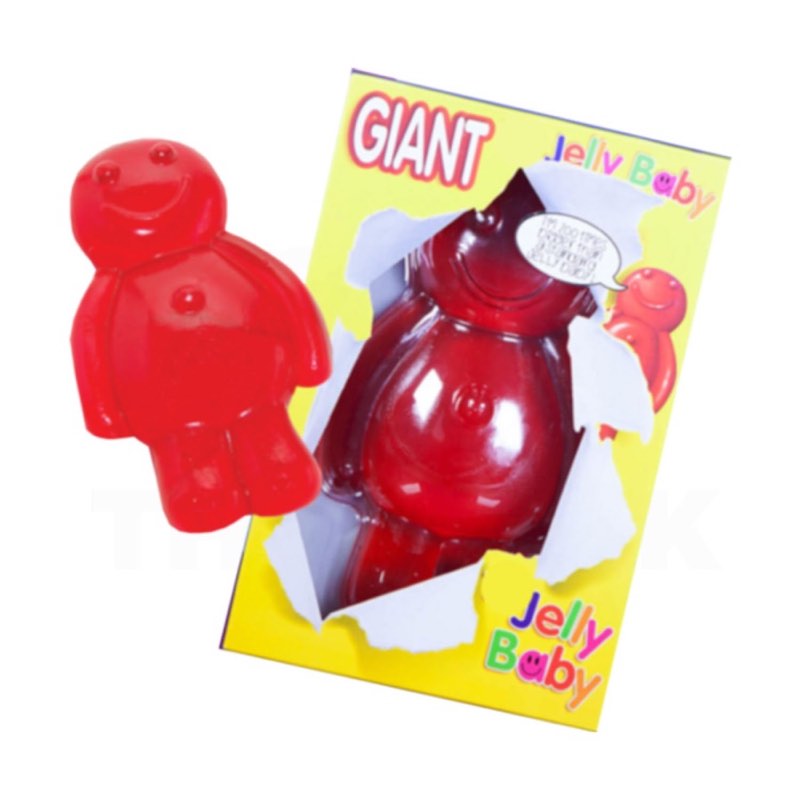
One thing to avoid pairing with these: another very large jelly. Giant Jelly Baby Box 800g at £11.99 is a wonderful item and a direct competitor for the same slot — two oversized figurative jellies in one bag and neither has any impact. Pick whichever suits the occasion and let the other one have its own bag.
A last builder's note on practicalities. Jellies stick to each other, particularly large ones with a lot of flat surface area, and they stick more in a warm room. When you are filling a bag by hand, put the large pieces in first and the small pieces after, so the small ones fall into the gaps and keep the big ones apart. If you are making bags a week ahead, keep them somewhere cool and do not stack them under anything heavy, or you will be prising a solid red brick out of a bag on the day. You can build any of this from our pick and mix pages, choosing by weight rather than committing to a full bag of each line.
The sweet in the hand
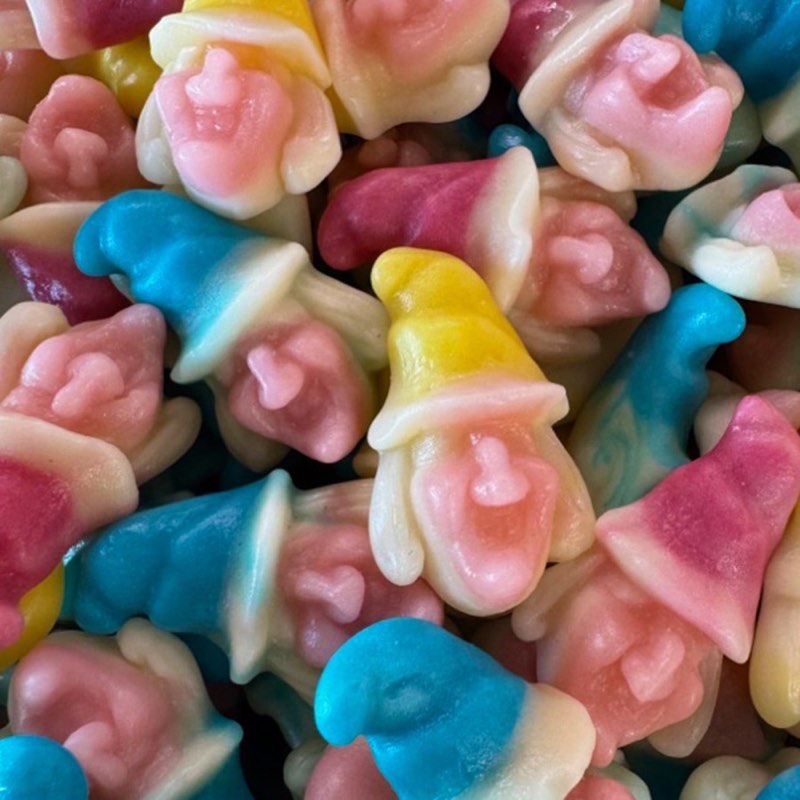
Having spent all that time on what they do in a bag, it is worth describing what they actually are. A witch's head is a moulded jelly with a face in it — a profile with a nose, a chin and a hat, the shape of the thing being the whole point. The mould is deep enough that the features read clearly rather than being a vague suggestion, which is not true of every novelty shape on the market and is the main thing that separates a good one from a lazy one.
Solid red throughout, with no second colour and no coating. That plainness works in the shape's favour: a single colour lets the moulding do the work, and the ridges and hollows of the face catch the light and give the piece depth. A two-tone version of the same shape would look busier and read less clearly. This is one of those cases where the simpler option is genuinely the better-designed one.
In the hand they have the slight tack that all uncoated jellies have — enough that a piece will sit on your palm rather than roll off it, not enough to leave anything behind on your fingers. The give is firm rather than soft. Press one and it resists, then dents, then springs back. That firmness is what lets the shape survive being tipped into a bowl, carried to a party and picked over for an hour without the faces going smooth.
The bite, and how the flavour moves
A large jelly is a multi-bite sweet and it eats in stages, which is a different experience from anything you can finish in one. The first bite goes through the thickest part and takes the most work; that initial chew is where the texture does its talking. It is springy and elastic rather than yielding — you are working against the sweet rather than dissolving it, and there is a satisfaction in that which softer jellies simply do not offer.
The flavour is listed as fruit and strawberry, and it arrives in that order. What you get first is the general red-fruit impression — sweet, rounded, immediately recognisable as the flavour that red jelly sweets have always had. Then, a second or two in as the chewing releases more of it, the strawberry note comes forward and gives the whole thing a clearer identity. By the third or fourth chew you are firmly in strawberry territory, and it stays there until you swallow.
The finish is short and clean, which matters more than it sounds. A jelly that leaves a heavy coating behind limits how many you can eat and what you can eat next to it. This one clears, which is exactly what you want from the base component of a mixed bag — it does not colonise your palate, so the sour piece or the chocolate piece that follows it gets a fair hearing.
For a sense of where this sits within the strawberry family, it is at the straightforward, confectionery-strawberry end rather than the fresh-fruit end. If you want to taste the range, BUBS Wild Strawberry & Pomegranate Ovals at £7.50 pull the same broad flavour in a rather different direction, and the strawberry shelf collects the whole spread in one place if you want to compare properly.
The collector's view: seasonal moulds and why people chase them
There is a whole category of confectionery buyer who is not primarily buying something to eat. They are buying a shape. This sounds odd until you notice how many people photograph a bowl of novelty sweets before anyone touches it, or buy two bags of a seasonal line so that one can stay unopened on a shelf. Novelty moulds have a collector logic to them, and it is worth understanding if you are the sort of person who ends up with six Halloween shapes in a cupboard by mid-October.
The first thing that drives it is availability windows. Seasonal shapes appear, sell through, and go. A witch, a ghost, a pumpkin, a set of fangs — these are not lines that sit on a shelf all year round in the way a bag of fruit jellies does. That creates a mild urgency around them every autumn, and it is a real constraint rather than a manufactured one: when a seasonal shape is gone for the year, it is gone for the year, and the answer is to buy in September rather than in November.
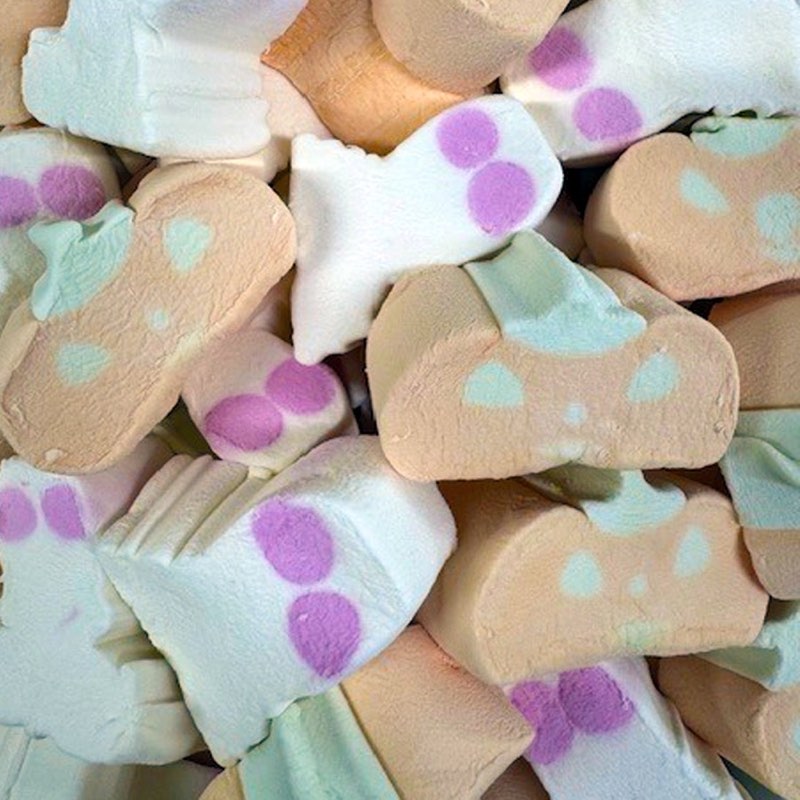
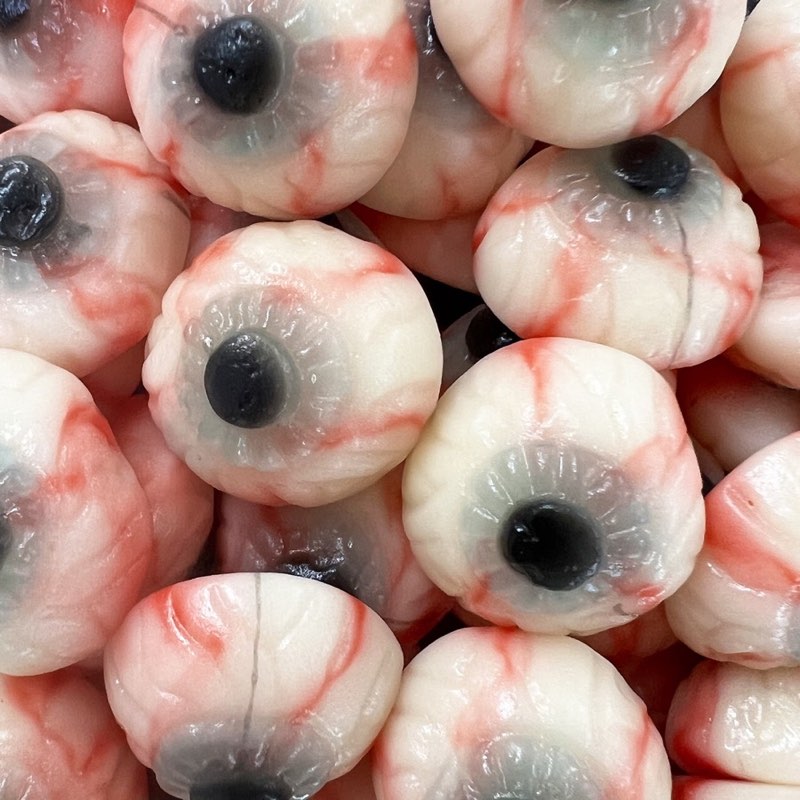
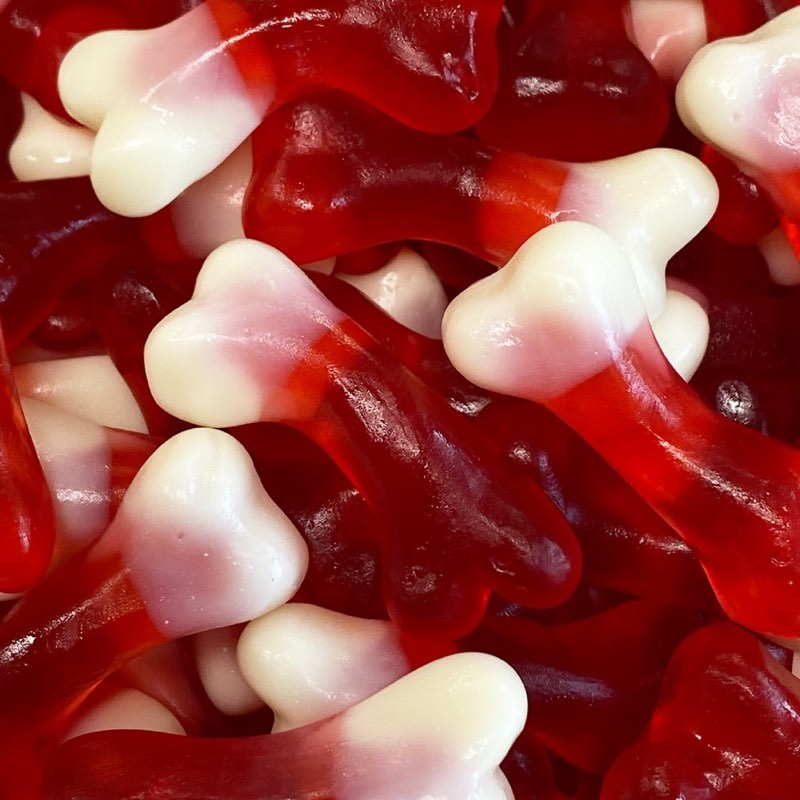
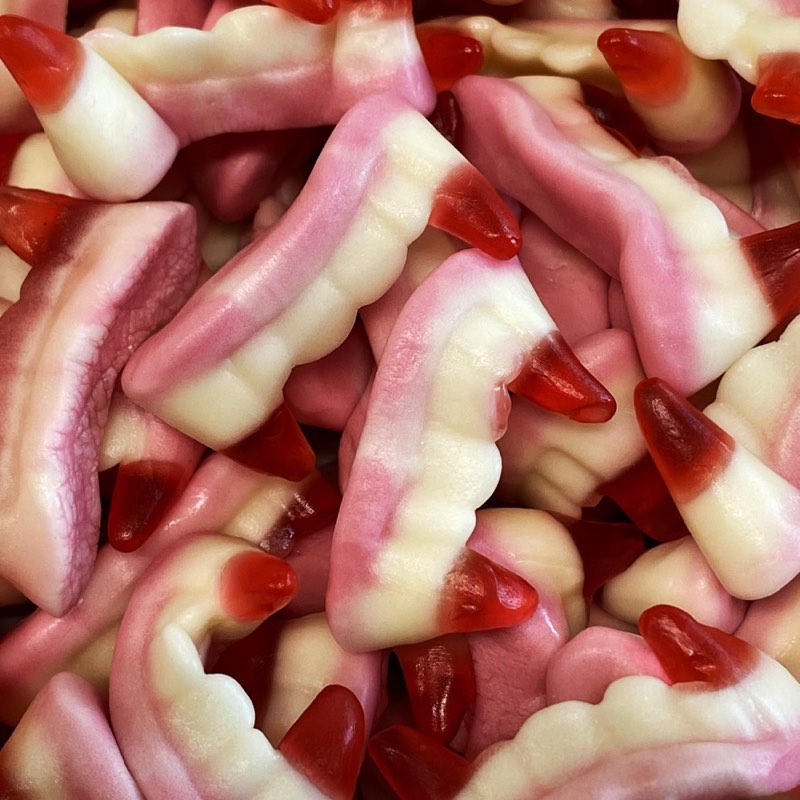
The second is the set instinct. Novelty moulds rarely arrive alone. They come as families — a cast of characters from the same maker, at the same price, built to sit together on a table. That is a powerful thing for a certain kind of shopper, because it turns a single purchase into an incomplete collection, and an incomplete collection is a thing people finish. Here the cast is unusually coherent, and all of it sits at the same £5.49 entry price as these do: Kingsway Jelly Eyeballs are the obvious companion piece, Kingsway Gummy Bones bring a completely different silhouette to the table, and Kingsway Mini Teeth Fangs are the small-format member of the family. Add Pumpkin & Ghost Marshmallows, also £5.49, and you have a spread where every bowl is a different shape and the whole table reads as one idea.
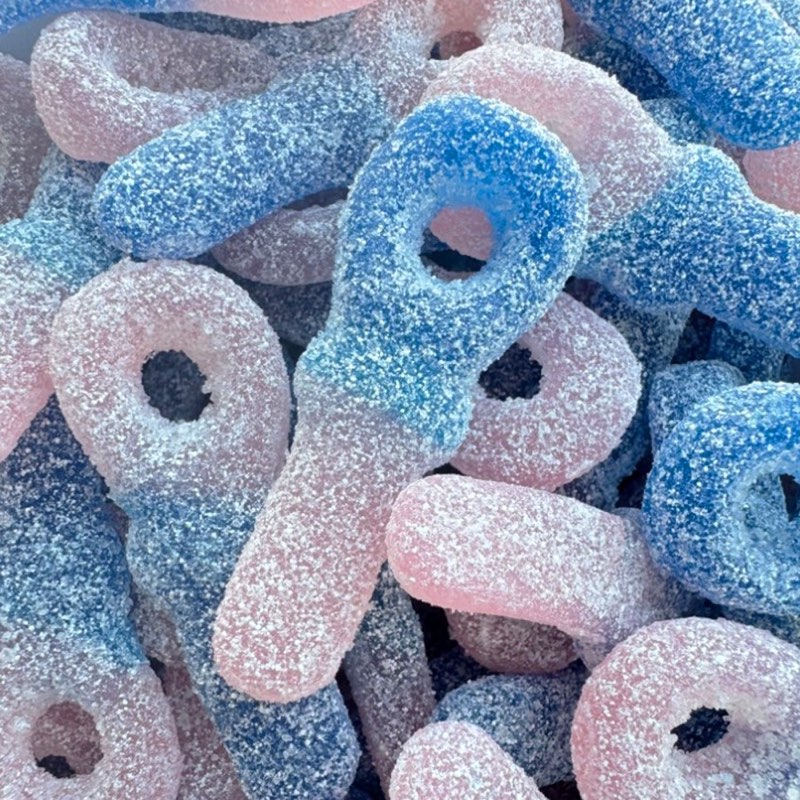
The third driver is format novelty rather than shape novelty — the sweets that are unusual in what they do rather than what they look like. That is its own collecting lane and a fun one. Kingsway Vegan Fizzy Tongue Painting Dummies at £5.49 and Kingsway Vegan Fizzy Bubblegum Tongue Painting Dummies, the same price, are both from the same maker and are collected for what they do rather than what they are shaped like. If you are assembling a table meant to entertain rather than simply feed people, one format-novelty item earns its place alongside three shape-novelty ones.
What collectors learn quickly is that shape quality varies enormously and is worth paying attention to. A well-cut mould has depth, undercuts and features that survive being handled. A poor one produces a blob with a suggestion of a face that reads as nothing from more than a foot away. The test is simple: look at a photograph of the piece and ask whether you could identify what it is meant to be if nobody told you. It is the same instinct that separates a good moulded chocolate from a lump, and it is why some novelty lines get bought every year and others get bought once.
There is also a small, slightly melancholy truth in this hobby: sweets are not collectibles in any lasting sense. They have dates on them, they dry out, and a bag kept unopened for three years is a bag of disappointing jellies rather than an investment. The collecting here is about the season and the table, not about the shelf. The right way to do it is to buy the set, use the set, photograph it if you like, and buy it again next year — which is, conveniently, also the only way that ends with anybody eating anything.
If you want to see what else is in the family before committing, the full Kingsway range is the place to start, and it is one of the larger single-brand shelves we carry.
Who these suit
The straightforward answer is anybody who likes a firm fruit jelly and enjoys a sweet with a bit of character to it. That covers a lot of ground, and it is one of the reasons novelty shapes sell so well: there is nothing challenging about the eating, so the only question is whether you like the joke.
More specifically, they suit people catering for children old enough to enjoy something mildly ghoulish, which in practice means from about five upwards. A witch's head is exactly the right level of spooky — recognisably a Halloween thing, not actually frightening. Very young children are a different matter, and worth a plain word: sweets are a treat rather than everyday food, and whole gummies are a choking risk for small children, so keep these to older kids with an adult around and cut or avoid for the very young.
They also suit the person hosting rather than the person snacking. A single large jelly is not really a desk sweet or a handbag sweet — it is a bowl sweet, and it is at its best in company where the shape gets noticed. If you want something for one person to work through quietly, a small-format bag is a better buy than a bag of these.
And they suit anyone building a themed table on a budget, which is the largest group of all. At £5.49 for a bowl's worth, a table of four different Halloween shapes costs under twenty-five pounds and looks like a great deal more effort than it took.
Halloween, and the rest of the autumn
The obvious occasion needs the least explanation. A bowl of red witches' heads on a table at the end of October does the decorating for you, and it does it better than a bowl of orange-wrapped anything, because the shape is the thing people react to rather than the colour of a wrapper.
For a party, the trick is to serve shapes in separate bowls rather than mixed together. A mixed bowl of novelty shapes turns into a jumble where nothing is identifiable; four bowls, each with one shape in it, reads as a spread. It costs nothing extra and it is the single biggest difference between a table that looks planned and one that looks emptied out of bags.
For trick-or-treating, the format matters. Large individual pieces are easy to hand out by the piece rather than by the scoop, which makes rationing simple and stops you running out at eight o'clock. Two pieces per caller from a 1 kg bag goes a long way. If you would rather hand out sealed items, that is a different purchase, but for a bowl by the door, large shapes are the practical choice.
Beyond Halloween, the shape carries through the autumn without looking out of place — bonfire nights, school fairs, half-term parties. It does start to look odd in December, which is worth bearing in mind if you are tempted by the 2 kg and only have one event. Seasonal shapes sell all season and then stop, and the same applies in your cupboard.
They also work perfectly well as a plain red fruit jelly at any time of year for anyone who does not care about the theme, and plenty of people buy them exactly that way. If you want more of that sort of thing across the calendar, the jelly sweets shelf is where to look, and candy and chocolate covers the wider category if you are filling a table rather than a bowl.
The price ladder, and where the value sits
Five sizes, from a single bowl up to a catering quantity. The useful thing about this particular ladder is that it steps down steadily rather than jumping about, so there is no trap in it — you simply pay less per 100 g the more you buy.
| Size | Price | Per 100 g | Cost of the extra sweets over the size below |
|---|---|---|---|
| 250 g | £5.49 | £2.20 | — |
| 500 g | £9.99 | £2.00 | £4.50 for the extra 250 g |
| 750 g | £12.99 | £1.73 | £3.00 for the extra 250 g |
| 1 kg | £16.49 | £1.65 | £3.50 for the extra 250 g |
| 2 kg | £28.99 | £1.45 | £12.50 for the extra kilo |
The best single step in the range is 500 g to 750 g: three pounds for another quarter kilo, and the unit price drops by 27p per 100 g. That is where the curve bends hardest. After that it flattens — the 1 kg is a modest improvement on the 750 g, and the 2 kg is a genuine bulk price but a real commitment at nearly thirty pounds.
Read as a whole, the ladder tells you that the 250 g is priced as a taster and everything above 500 g is priced as a proper purchase. If you have had these before and know you like them, there is very little reason to buy the smallest bag again; the 750 g costs less than two and a half of them and gives you three times as much.
Turning the weight into servings
Because these are large pieces, the portion sizes that work for small sweets are misleading here. A 25 g portion of tiny jellies is a good handful; 25 g of large moulded shapes is a couple of pieces. Plan in slightly bigger units.
| Size | 50 g servings | 75 g servings | What it comfortably covers |
|---|---|---|---|
| 250 g | 5 | 3 | One bowl for a small gathering, or a fortnight of treats at home |
| 500 g | 10 | 6 | A family party, or two bowls on a themed table |
| 750 g | 15 | 10 | A children's party of a dozen with some in reserve |
| 1 kg | 20 | 13 | A full trick-or-treat bowl for the evening |
| 2 kg | 40 | 26 | A school event, a stall, or a season of party bags |
For a themed party, 75 g a head is the honest figure when these are one of three or four bowls — people take a couple, move on to the next bowl, and come back. If these are the only sweet on the table, budget 100 g a head and expect the bowl to need one refill.
For party bags, 40 g to 50 g per bag is a good unit for large shapes because three or four pieces looks generous in a small bag in a way that the same weight of tiny jellies does not. On that basis the 750 g makes roughly fifteen to eighteen bags for £12.99, which is well under a pound a bag.
And for the doorstep on the night, work backwards from how many callers you usually get. Two large pieces each, at roughly 50 g per four pieces, means a kilo covers around forty callers comfortably. Most households will never need the 2 kg for that job alone.
Putting them to work beyond the bowl
A large moulded jelly is one of the few sweets that is genuinely useful as a component in something else, and this is where the size stops being a novelty and starts being practical. A small jelly disappears into whatever you put it on. A big one stays legible from across a room, which is exactly what you need when a sweet is doing a decorating job rather than a snacking one.
The most obvious use is on top of a cake. One piece per slice, pressed lightly into the icing while it is still soft, turns a plain traybake into a themed one in about ninety seconds and with no skill required at all. The red reads clearly against white, chocolate-brown or orange icing, and because the pieces are firm they will sit where you put them instead of slumping into the surface overnight. If you are making something the day before, add them on the morning rather than the night before — icing draws moisture out of a jelly and softens the edges of the shape.
The same logic applies to cupcakes, where one piece is the whole decoration, and to a tray of small bakes where a single shape per portion does more visually than any amount of sprinkling. It is worth saying plainly that this is a decorating trick rather than a baking one: the sweet goes on afterwards, not into the mix, because a moulded shape that has been through an oven is no longer a moulded shape.
Skewers are the other genuinely good use, and they are a quiet favourite for parties. Thread three or four pieces onto a wooden skewer, alternating with something of a contrasting colour or texture, stand the skewers upright in a jar or a block, and you have a centrepiece that costs a few pounds and doubles as the serving method. Guests take a whole skewer rather than digging in a bowl, which means fewer hands in the sweets and a table that still looks arranged an hour in.
They also work set into a made jelly or a trifle-style pudding as a surprise layer, sitting on the surface of a set dessert, or simply standing upright in a glass of something as a garnish. The rule across all of these is the same: put them on late and keep them dry. Anything wet will soften a jelly's surface within an hour or two, which does no harm at all but will blur the face you bought them for.
One last party-planning point. If you are using them decoratively as well as serving them, buy a size up from what the eating alone would suggest. Decoration is surprisingly hungry — twenty cupcakes is twenty pieces before anybody has eaten one — and running out halfway through icing a tray is a worse problem than having a bowl left over.
Keeping jellies in good order
Jelly sweets are more robust than chocolate and more delicate than hard sweets, and they fail in one specific way: they stick and they dry. Both are entirely preventable.
Sticking happens with warmth and pressure. A big bag of large uncoated jellies left in a warm room, or with something on top of it, will fuse into a single mass. It is still perfectly good — you can separate it with a little patience — but it is a nuisance and it wrecks the shapes. Keep bags flat, keep them cool, and do not stack anything on them. If you have bought the 2 kg, split it into two or three sealed tubs on arrival rather than working through one enormous open bag.
Drying happens with air. An open bag left rolled over rather than sealed will give you jellies with a slightly tough skin within a fortnight. Some people genuinely prefer that — a firmer, chewier piece — and if you are one of them, leaving a handful out overnight on a plate is a deliberate technique rather than a mistake. But for most purposes you want them sealed: an airtight tub, or the bag with the air pressed out and a clip on it.
Cool, dark and dry is the whole instruction. Not the fridge, which is damp and makes jellies weep; not a windowsill, which cycles between warm and cold all day; not next to the hob. A cupboard is right. And whatever the storage, the date on the manufacturer's packaging is the one that counts, so keep the bag even if you decant into a jar — and if anyone eating from the bowl needs to check for allergens, that packaging is what to read, not this page.
Finding these and what sits near them
These sit on five shelves, which is more than most items and reflects how many different ways people arrive at a novelty jelly. The broadest is our loose sweets shelf, the largest collection on the site. Then there is the jelly type shelf for anyone shopping by texture, and two flavour shelves — everything we file under fruit flavours, which is one of the biggest flavour groupings we have, and the narrower strawberry grouping for people who know exactly what they are after.
If you are shopping by maker, the Kingsway shelf is worth browsing properly rather than searching, because the seasonal shapes are easier to spot visually than by name. The other brand shelf to know for this kind of mix-building is the Haribo range, which is where most people go for the small-format volume that fills out a bag around an anchor like this.
And if you would rather see everything at once and narrow down from there, the whole shop is the starting point, while the loose sweets aisle is the better first stop specifically for anything you are buying by the kilo.
Common questions
What do they taste like?
Fruit first, then strawberry. The initial impression is the broad red-fruit note that fruit jellies have always had, and the strawberry character comes forward a second or two into the chew as more of the flavour is released. The finish is short and clean rather than lingering, which is part of why they work so well as the base component in a mixed bag — they do not get in the way of whatever you eat next.
How big is each piece?
We do not publish an individual piece size or a count per bag, so we will not put a number on it. What we can say is that they are a large, multi-bite moulded jelly rather than a small one-bite sweet, which is why we suggest planning in 50 g and 75 g servings rather than the 25 g portions that suit smaller lines.
Which size should I buy?
The 250 g at £5.49 is a taster or a single bowl. The best step in the range is 500 g to 750 g — three pounds for another quarter kilo, and the unit price drops to £1.73 per 100 g — so the 750 g at £12.99 is the sensible choice for a party or a themed table. The 2 kg at £28.99 is the true bulk price at £1.45 per 100 g and is for events, stalls and party bags rather than households.
Are they very sour?
No. These are a plain fruit jelly with no sour coating and no fizz — the interest is in the shape and the texture rather than in any sharpness. If you want a sour element on the same table, buy it separately and keep it to a smaller share of the bag, because sour pieces set the tone for everything around them.
Are they suitable for children?
For older children, yes, and the shape is pitched at exactly the right level — spooky enough to be fun, not actually frightening. Sweets are a treat rather than everyday food, and whole gummies are a choking risk for young children, so these want an adult nearby and are not a good idea for the very youngest. If anyone eating them has an allergy, check the manufacturer's packaging when the bag arrives.
Can I mix them with other sweets?
That is arguably what they are best at. They work as the anchor in a mixed bag at roughly a quarter of the total weight, with smaller soft sweets making up the volume around them and one sharp and one novelty item for punctuation. The only pairing to avoid is another oversized figurative jelly, since two large shapes in one bag cancel each other out.
Do they stick together?
They can, if they get warm or if something is stacked on the bag — uncoated jellies with flat surfaces are the most prone to it. Keep bags flat, cool and unweighted, and split a large bag into sealed tubs rather than leaving two kilos in one open bag. If a batch does fuse, a bit of patience separates it and nothing is spoiled.
Are they only a Halloween product?
The shape obviously belongs to Halloween and the autumn, and that is when most people buy them. But they are a straightforward red fruit jelly underneath, so there is no reason not to eat them in March, and plenty of people do. Just be aware that seasonal shapes sell through in the run-up to the end of October, so buy ahead if you need a particular size for a date.
How many will I need for trick-or-treaters?
Plan two large pieces per caller. On that basis a kilo covers roughly forty callers, which is more than most doorsteps see in an evening. Large individual pieces are easier to hand out by the piece than small sweets are by the scoop, so rationing is simple and you are less likely to run out early.
What else is in the same range?
There is a whole family of seasonal shapes from the same maker sitting at the same £5.49 entry price — eyeballs, bones and fangs among them, plus a marshmallow format for a different texture. Buying three or four and serving each in its own bowl is the cheapest way to make a themed table look properly put together.
How long do they keep once opened?
Sealed properly and kept cool and dry, they will stay in good condition for a good while; left open to the air, they develop a firmer skin within a couple of weeks. Some people prefer them that way. The date printed on the manufacturer's packaging is the authority, so keep the bag even if you decant them into a jar.
Are they in stock?
Yes, listed as in stock across all five sizes at the time of writing. As with anything seasonal, the larger sizes are the first to go in October, so if you are catering for a date it is worth ordering earlier than feels necessary.
To sum up
A large, solid red, firmly moulded fruit and strawberry jelly, from £5.49 for 250 g up to £28.99 for 2 kg. Bought on its own it is a good-natured seasonal sweet with a shape worth the price of admission. Bought as part of a mix, it is something more useful than that — the anchor that gives a bag its colour, its scale and its baseline flavour, and the piece everything else gets arranged around. Buy the 750 g, put it in a bowl of its own next to three other shapes, and let the table do the rest.
More from Kingsway
More jelly sweets
More fruit sweets

Where this sits
Kingsway Witches Heads appears on these shelves. Browse them, or jump to something nearby.
You might also like