Home / Loose Sweets / Jelly Belly 20 Assorted Flavour Mix Jelly Beans Bag 70g
Jelly Belly · 70g
Read the full guide
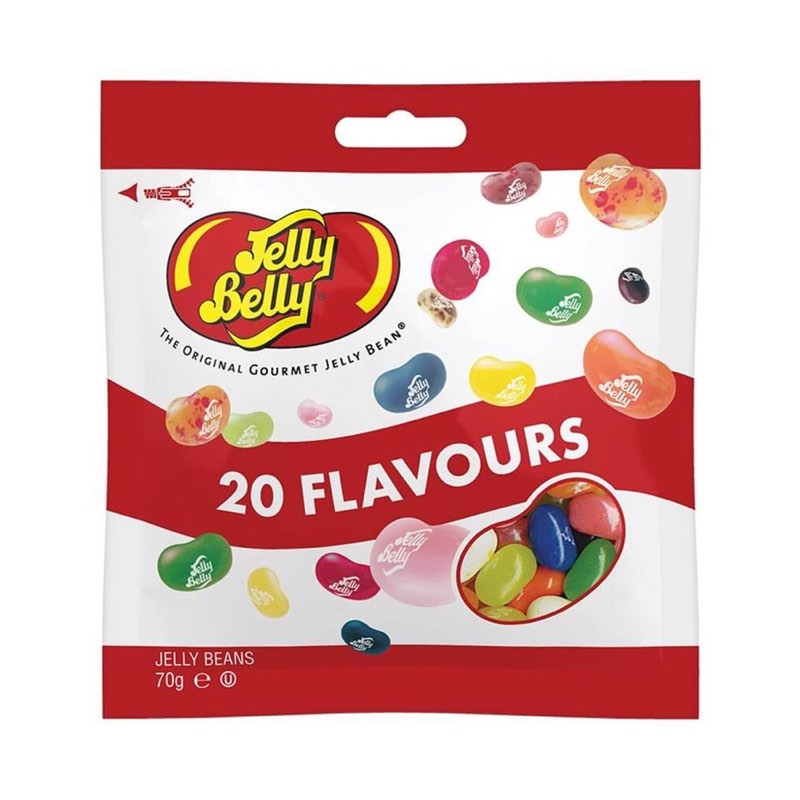
Jelly Belly 20 Assorted Flavour Mix Jelly Beans Bag 70g
£2.40
✔ In stock — ready to ship
Fresh stock
Free over £20
Same-day dispatch
Secure checkout
Small bags get overlooked because the price per 100 g never flatters them, and that is a mistake. There are a dozen jobs that a 70 g bag does better than any tub, box or kilo pouch could, and the Jelly Belly 20 Assorted Flavour Mix Jelly Beans Bag at £2.40 is built for most of them. Before we talk about how it eats or how it looks, it is worth being clear about when it is the correct purchase — because if you get that right, everything else follows.
The one-person treat. Seventy grams is a sitting. Not a cupboard, not a week, not a party — a sitting. If you want sweets tonight and you do not want to be negotiating with a half-empty bag on Thursday, this is the size that matches the intention. The absence of leftovers is a feature, and a surprising number of people buy small bags specifically for that reason rather than in spite of it.
The full guide to Jelly Belly 20 Assorted Flavour Mix Jelly Beans Bag 70g
6,370 words on how it eats, who it suits, how to serve it and what to put beside it.
The occasions a 70 g bag is exactly the right size for
The tasting. A twenty-flavour assortment is a fundamentally different proposition to a single-flavour bag, and it turns eating into a small activity. Tip a handful out, work through them one at a time, and try to name what you are eating. That works as a game for two people on a sofa and it works as a genuinely entertaining twenty minutes for a group. You cannot do that with a bag of one thing.
Party favours and place settings. Beans are small, dense and multi-coloured, which makes them the single most useful confectionery for decorative jobs. A 70 g bag divides into several little favour bags, tubes or boxes, and because each one is a handful of tiny colourful pieces rather than one large sweet, it looks generous at almost any quantity. For a table of ten, two or three bags of assorted beans will dress every place setting.
Lunchboxes and desk drawers. A small bag survives being carried, does not melt in the way chocolate does, and can be portioned out over a working week without any drama. Seventy grams across five days is a small daily treat rather than a daily event, which is generally the more sustainable arrangement.
Travel. Train journeys, car journeys, flights, waiting rooms. Beans are quiet, they do not leave residue on your fingers, they do not crumb, and a flat bag slides into a pocket or a bag without taking up space. Of all the reasons small-format confectionery persists, portability is the most durable.
Adding a colour note to a bigger spread. If you are already buying weight for a party, a small bag of assorted beans is what you add on top for visual interest rather than for volume. Scattered across a board or used to fill the gaps between bigger items, 70 g goes a remarkably long way as decoration even though it would barely register as a snack.
Stocking fillers and advent bags. Right price, right size, right shape. If you are building a homemade countdown, a small bag divided across several days is a more sensible filler than several large items, and at £2.40 it will not distort a budget.
Testing the water. If you have not bought beans before, or not this particular assortment, £2.40 is the cost of finding out. That is considerably more sensible than committing to a large format on a guess, and if it lands well, the Jelly Belly shelf has eight lines to move on to.
What it is not for: feeding a crowd. Seventy grams is one or two people, and if your headcount is in double figures you should be on the loose sweets counter, where three hundred and fifty-six lines are sold by weight and the economics change completely. Buying ten small bags to reach 700 g is the most expensive route to that weight there is.
What you are actually buying
A 70 g bag, at £2.40, in one size, currently in stock. Our listing records it as multi coloured and the product name tells you the important structural fact: it is a twenty-flavour assorted mix rather than a single flavour. The flavour tags we hold against it are blue raspberry, lime, strawberry, watermelon and a general fruit tag.
Those five tags are not the full list of twenty and we are not going to pretend otherwise. They are the notes our listing records, and they tell you the direction of the mix — bright, fruit-led, with a couple of the sharper modern flavours in it — rather than its complete contents. The manufacturer's own packaging is where the definitive detail lives, along with everything you would need to know if there is an allergy in the household, and that is worth reading when the bag arrives rather than relying on any product page, ours included.
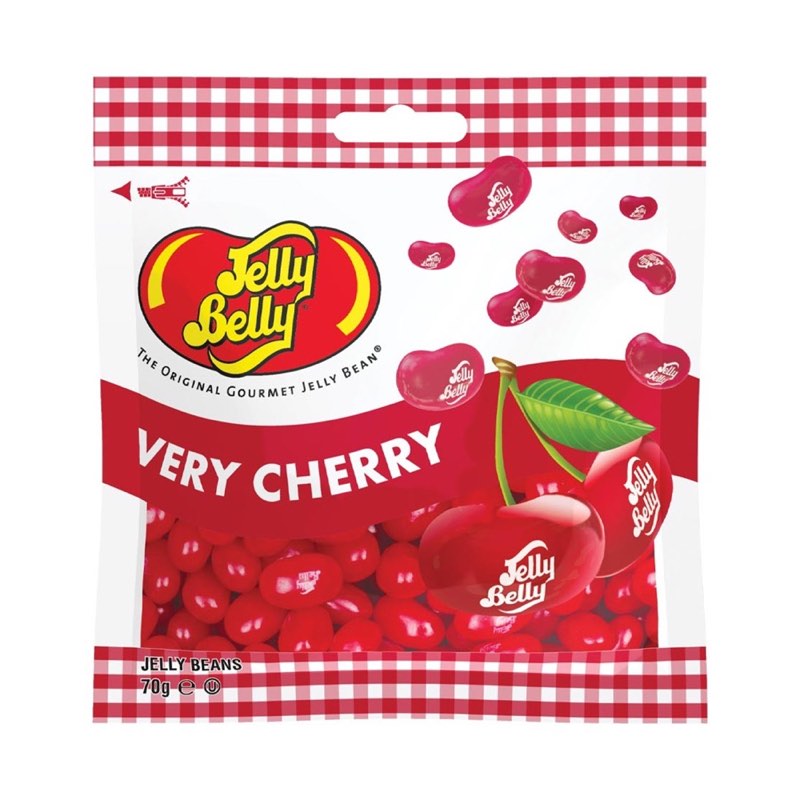
The twenty-flavour structure has a practical consequence that is worth thinking through before you buy. Divide 70 g by twenty and, on a perfectly even split, each flavour accounts for around 3.5 g of the bag. That is a very small share. It means this bag is a survey rather than a supply: you get a taste of everything and a quantity of nothing. If what you actually want is a proper amount of one specific flavour, an assortment is the wrong product and a single-flavour bag is the right one — the Very Cherry bag at £2.40 is the same size and the same price and gives you all of one thing instead.
In the hand and in the mouth
Beans are the smallest format in mainstream confectionery and that smallness governs everything about how they eat. A bean sits in the palm as one of many rather than as an object in its own right; you do not hold a bean the way you hold a bar. This changes the psychology of eating entirely. With larger sweets there is a decision each time — do I have another one? With beans, the decision happens once, when you tip some into your hand, and then the handful gets eaten without further thought.
The surface is smooth and hard, with a faint gloss, and the shell gives a small click against the teeth before it breaks. That first click is a real part of the appeal and it is the thing beans have that soft jellies do not. After the shell there is a denser, chewier centre that takes a few seconds to work through — much longer, relative to the size of the sweet, than you would expect from looking at it.
Flavour arrives in two stages because of that structure. The first impression comes quickly and is mostly sweetness and top notes. The fruit character proper turns up a beat later, during the chew, and holds for the few seconds it takes to finish. Then it clears fairly cleanly, which is the reason you can eat several different flavours in a row without ending up with a muddle in your mouth. That clean handover is the technical reason multi-flavour bean assortments work at all — try the same trick with strongly perfumed sweets and the third one tastes of the first two.
There are two ways to eat them and they give genuinely different experiences. One at a time is the slow way: you notice each flavour, the twenty-flavour assortment does what it was designed to do, and a small bag lasts a surprisingly long time. By the handful is the fast way: the flavours combine into a general fruit sweetness, individual identities disappear, and you are eating a texture rather than a flavour. Neither is wrong, but if you paid for a twenty-flavour mix and then ate it by the handful, you bought the wrong bag — a handful of assorted beans tastes broadly like a handful of any assorted beans.
The blend question is the interesting one. Because the flavours are distinct and the shells are thin, two beans eaten together genuinely produce a third flavour rather than just tasting of both. This is the basis of every bean-combining game anyone has ever played, and it is the single best reason to buy an assortment over a single flavour. It costs nothing to try and it turns a bag of sweets into something you can be actively curious about.
Colour: the bean as a unit of design
Here is the thing that makes beans unique among sweets, and it has nothing to do with taste. A bean is the closest confectionery comes to a pixel. It is small, it is uniform in size and shape, it is opaque and saturated, and it comes in twenty colours. That combination means you can do things with beans that you cannot do with any other sweet — you can make pictures, gradients, patterns and precise colour arrangements, because the unit is small enough that the individual piece stops mattering and only the mass of colour reads.
Start with the simplest and most effective technique: sorting. Tip the bag out onto a plain tray and separate by colour. It takes a couple of minutes and it transforms what you are looking at. Twenty colours mixed together read as speckle — attractive but undifferentiated, the visual equivalent of white noise. The same beans grouped into blocks of colour read as design. Every decorative use of beans starts here, and if you only take one idea from this section, take this one.
Once sorted, the question becomes arrangement, and there are three that always work.
The gradient. Lay the colours out in spectrum order — reds into oranges into yellows into greens into blues into purples — in a line or a curve. A gradient is the single most satisfying thing you can build from small multi-coloured objects, because the eye follows it. In a long narrow vessel, in a line down the middle of a table, or as a band across the top of a cake, a bean gradient looks deliberate in a way that takes no skill at all to achieve. The only rule is that adjacent colours must actually be adjacent on the spectrum; one colour out of order breaks the whole effect and the eye finds it immediately.
The two-colour scheme. Pick two colours from the twenty that match the occasion — a team's colours, a wedding palette, a birthday theme — and discard or set aside the rest for eating. Two colours used together in quantity look far more expensive and considered than twenty colours mixed. This is the trick behind every well-dressed event table you have ever seen: the discipline is in what you leave out. A single 70 g bag will not give you much of any two colours, so if you are doing this seriously, buy two or three bags and pool them.
The confetti scatter. The opposite approach, and the right one for informal occasions. Scatter mixed beans across a board, down the centre of a table between plates, or over the top of a dessert. Scattering wants randomness, so resist the urge to space them evenly — clusters and gaps look natural, an even grid looks like a spreadsheet. Scattering is also the most efficient use of a small bag, because 70 g covers a lot of surface when the pieces are not touching.
Beyond arrangement, there is vessel choice, and beans have a specific requirement here that larger sweets do not. Because the pieces are tiny, they need a small vessel to look full. Put 70 g of beans in a normal sweet jar and you will have a disappointing layer at the bottom. Put the same 70 g into a small glass, a test tube, a shot glass, a tiny lidded jar or a clear tube favour, and it looks abundant. The general rule with small confectionery is: shrink the container until the sweets overflow it. Several small full vessels always beat one large half-empty one.
Clear containers are essential. The entire value of beans as decoration is their colour, and an opaque bowl hides it. Glass, clear acrylic, cellophane bags, clear tubes — anything you can see through. If you are using a paper bag for favours, choose one with a window.
Layering is where beans genuinely outperform every other sweet. Because the pieces are small and uniform, layers in a clear vessel come out crisp and flat rather than lumpy. Larger sweets create a ragged boundary between layers; beans create something close to a clean line. Fill in even bands, tap the vessel gently on the table between layers to settle them, and you get a striped result that looks professionally done. Three to five bands in a small vessel is the right number.
On photography: beans are glossy, and gloss means reflections. A single overhead ceiling light will put a hard white dot on every bean and the picture will look harsh. Diffuse side light from a window is the answer, and if the sun is direct, hang a thin white cloth or a sheet of paper between the window and the table to soften it. The softer the light, the more the colour reads and the less the shine distracts.
Shoot beans from directly overhead. This is the one confectionery format where the overhead shot is almost always correct, because what you are photographing is a pattern on a flat plane, and any other angle introduces perspective that distorts your careful arrangement. Get the camera parallel to the surface, keep the arrangement simple, leave plenty of empty space around it, and use a plain background — white, pale wood, or a single flat colour taken from the beans themselves.
Finally, scale honestly. Seventy grams is a decorative quantity, not a display quantity. It will dress a cake, fill four or five small favour tubes, scatter down a table runner, or fill one small jar properly. It will not fill a sweet jar, build a large gradient or dress a whole dessert table. Know which job you are doing before you buy, and if it is the bigger job, buy several bags or add weight from elsewhere in the shop.
Blue raspberry, lime, watermelon, strawberry and the fruit middle
The five flavour notes on our listing for this bag each behave differently, and knowing what they do helps you predict whether the mix will suit the person you are buying for.
Blue raspberry is the most modern of the five and the most divisive. It is a confectionery flavour rather than a fruit flavour — nobody has eaten a blue raspberry — and it works as a bright, slightly synthetic, instantly recognisable note that younger palates tend to love and some older ones find artificial. Its real job in a mix is chromatic: it supplies the blue, and blue is the rarest colour in natural food, which is exactly why it reads as fun. It is a small family here, with eight lines on the blue raspberry shelf.
Lime is the sharpest of the five and the most useful for balance. Where the berries are round and sweet, lime brings a citrus edge that cuts through and resets the palate. In a twenty-flavour mix it functions as punctuation. Our lime shelf is the smallest flavour family we have at six lines, so if the citrus note is the one you are chasing, browsing the lime shelf end to end takes about a minute. Worth knowing that lime also pairs unusually well with chocolate, which is what Stockley's Chocolate Flavoured Limes at £5.49 is built on — an old-fashioned combination that surprises people who have never tried it.
Watermelon is the light one. It is subtle rather than intense, with a fresh, slightly green character behind the sweetness, and it is the flavour people most often fail to identify in a blind tasting because it does not announce itself. In a mix it acts as a palate cleanser between the more assertive flavours. There are eight lines on the watermelon shelf.
Strawberry is the anchor. It is the most universally liked flavour in confectionery, soft and rounded and entirely unthreatening, and in any assortment it is the one that reassures people who are not sure about the rest. Seventy-eight lines carry the tag, and the strawberry shelf is where to go if it is the note you want in quantity rather than as one twentieth of a bag. If you want it sharper rather than softer, the sour strawberry rings at £5.49 take the same flavour family somewhere entirely different, and the BUBS wild strawberry and pomegranate ovals at £7.50 pair it with a deeper, more aromatic partner.
The general fruit tag covers the broad orchard-and-berry middle that the remaining flavours occupy, and it is our largest family at a hundred and sixty-one lines. The fruit shelf is effectively the main thoroughfare of the shop. If you like this bag, that is the shelf to wander along.
One practical observation about tasting a twenty-flavour mix. People are far worse at identifying flavours by taste alone than they think, and much of what we call flavour recognition is actually colour recognition — we see red, expect strawberry, and then taste strawberry. If you want to test that, have somebody hand you beans with your eyes shut. The hit rate drops dramatically, and the resulting argument is most of the entertainment. It costs nothing and it is the best party trick a £2.40 bag has ever supported.
Film nights, long sessions and the small-bag model
Beans have an unusual set of properties for a snack, and once you notice them you start reaching for them in specific situations rather than generally.
The first is silence. They have no packet crunch once the bag is open, no wrapper per piece, and the eating itself is close to noiseless. If you have ever sat in a quiet room during a tense scene, aware that everything you own makes a sound, you will appreciate this. Crisps are hopeless. Individually wrapped sweets are worse, because the wrapper noise arrives at exactly the wrong moments. Beans are the quietest thing you can eat in company.
The second is no residue. Nothing comes off on your fingers — no powder, no sugar coating, no chocolate, nothing that transfers to a controller, a keyboard, a phone screen or a pale sofa. For anyone who games, this is the deciding property. A snack that requires you to wipe your hands before touching an input device is a snack you will not eat during a session, and most sweets fail this test. Beans pass it completely.
The third is one-handed operation. Tip some into a small dish, and you can eat from it with two fingers while the other hand stays busy. No unwrapping, no tearing, no two-handed anything. This is why a small bowl of beans next to a keyboard works where almost nothing else does.
Now the pacing question, which is where a 70 g bag needs a bit of management. Beans are small and easy, which means they disappear fast if they are in an open bowl in front of one person. Seventy grams in a bowl during an absorbing film will be gone before the first act break, and you will not remember eating most of it. There are two solutions.
Solution one: the small dish. Do not put the bag on the table. Put twenty or thirty grams in a small dish and leave the bag in the kitchen. When the dish is empty, you have to get up to refill it, and that small friction does more for pacing than any amount of willpower. This is the single most effective snack-management technique there is and it works with everything, not just beans.
Solution two: the one-at-a-time rule. Eat them singly and actually pay attention to each one. This sounds precious and it is not — with a twenty-flavour assortment it is simply getting what you paid for, and it slows the bag down to the point where 70 g genuinely lasts a feature film between two people.
For a group, the small-bag model beats the shared-bowl model for beans specifically. A bowl of tiny sweets being picked at by six people is a hygiene proposition that not everybody is comfortable with, and it also concentrates the eating on whoever is sitting nearest. Several small bags, one each, solves both problems. At £2.40 a bag that is an affordable way to run a film night for four, and everyone gets their own twenty-flavour assortment to work through at their own pace.
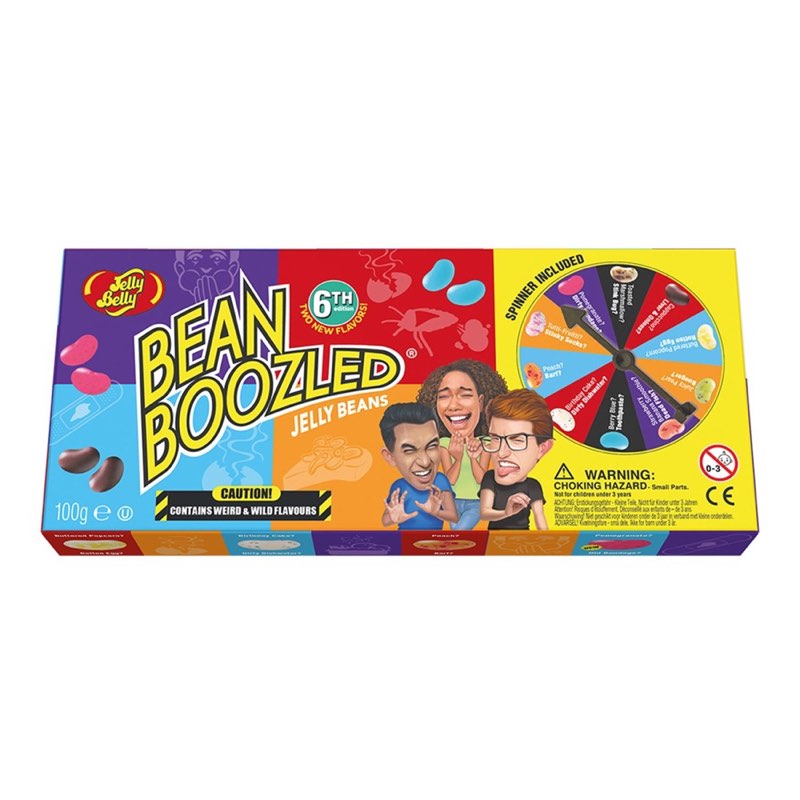
Beans also work as a game mechanic, which is something almost no other snack can claim. Assign flavours to events on screen. Draw one blind per round and guess it. Combine two and name the result. For a long session — a boxset binge, a rainy afternoon, a train journey with children — turning the food into a small recurring activity does more for the mood of the room than the food itself does. This is territory the brand leans into hard with the Bean Boozled box at £2.99, which pairs look-alike beans with wildly different flavours and makes the guessing the entire point, and with the Bean Boozled Spinner at £11.99, which adds a physical spinner and turns it into a proper table game for a group.
For a long session you also want a second texture, because one texture for three hours gets monotonous no matter how good it is. Something soft alongside something hard is the standard pairing. A £1.35 bag of Fini Mini Mochis is the cheapest way to add a completely different mouthfeel, and the Millions freeze-dried Berrylicious pouch at £2.49 brings a light, crisp texture that is about as far from a dense chewy bean as sweets get.
And the mess caveat, since it is the one thing beans are bad at: they roll. Spill a bag on a carpeted floor in a dark room and you will be finding beans for a week. Use a dish with sides, keep it on a hard surface rather than balanced on a cushion, and do not hand the open bag to a child on a sofa unless you are relaxed about the consequences.
Who should buy this bag
The curious eater, first. If the appeal of a sweet is partly the puzzle of it — what is this one, can I guess it, what happens if I combine these two — then a twenty-flavour assortment is built for you and a single-flavour bag never will be. This is the bag for people who read the label.
The decorator, second. Anyone dressing a table, filling favour tubes, topping a cake or scattering colour across a board. Beans are the most useful decorative confectionery there is, and at £2.40 a bag you can buy the exact colours you need by buying assortments and sorting.
The portion-controlled, third. Seventy grams is a small, contained, finite amount, and for a lot of people that is precisely the point. There is no open kilo tub involved and no daily negotiation with a half-empty bag.
The gift-adder, fourth. A small bright bag is the ideal thing to tuck into a card, a hamper gap, a stocking or a gift bag alongside something else. It is too small to be a present on its own and exactly right as the thing that makes a present feel finished.
The gamer and the film watcher, fifth, for all the silence-and-no-residue reasons above.
Who should look elsewhere: anyone feeding more than two people, anyone who wants one flavour in quantity, and anyone who wants a soft chew rather than a hard shell. For a crowd, weight is the answer — a 480 g bag of Haribo Friendship Rings at £8.99 puts nearly seven times the weight on the table for under four times the money, and the £6.99 Skittles occupies similar small-and-colourful territory in a larger quantity. For soft rather than hard, almost anything on the Haribo shelf will suit you better.
Building a spread around a small bag
A 70 g bag cannot carry a table on its own, but it is one of the best supporting items you can buy, and the trick is to be clear about what it contributes: colour, small scale, hard texture, and variety of flavour. Build around the gaps.
- Volume. Something big and cheap so the table does not run dry. The 1100 g bag of Sweet Zone Fizzy Rainbow Pencils at £11.49 is the most weight-per-pound option in this neighbourhood and brings a long, dramatic shape that no other format offers.
- Soft texture. Beans are hard-shelled; you want something yielding alongside. Kingsway Garden Fruits at £5.49 sits in traditional counter-sweet territory and reads as a grown-up addition to a bright table.
- A sour corner. One vessel only. The sour strawberry rings keep the flavour family consistent while raising the intensity, which is a neater trick than introducing a completely unrelated sour line.
- An activity. The Fuji Candy DIY Handmade Ferris Wheel Kit at £2.99 gives children something to do at a table rather than just something to eat, which is worth a great deal at hour two of a party.
- A chocolate note. Sugar confectionery and chocolate confectionery satisfy different cravings and a table with only one feels incomplete. The Candy & Chocolate shelf is where to go for that, and it is a useful corner of the shop generally if American-format boxes and bars are your thing.
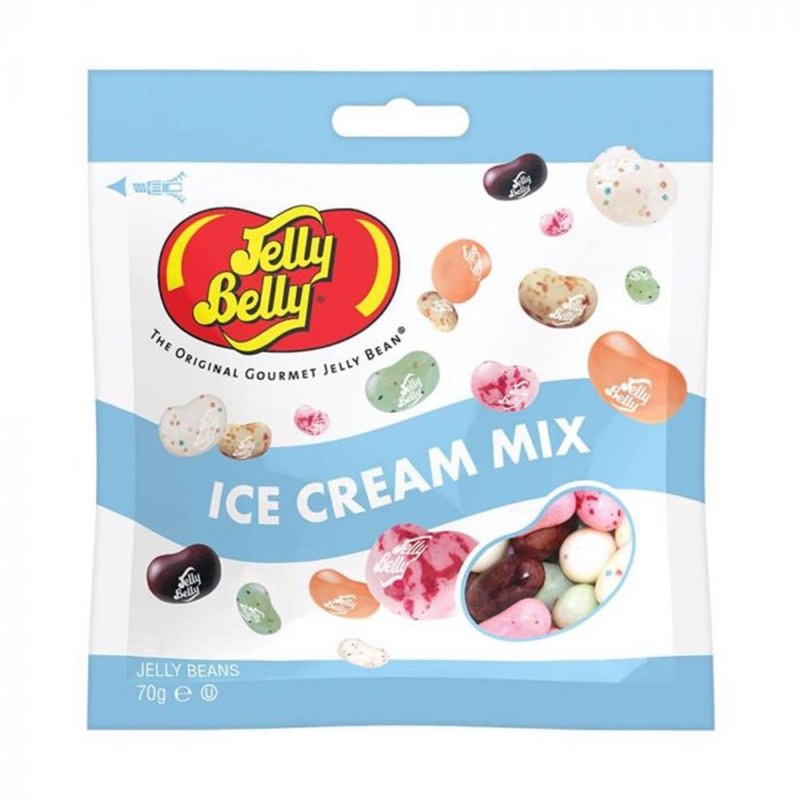
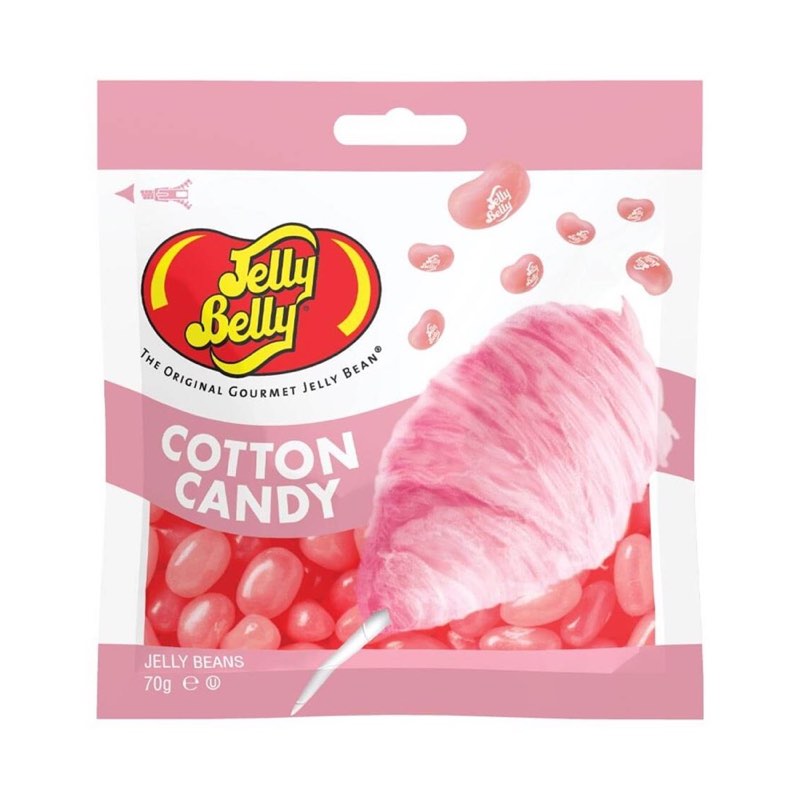
Within the brand itself, the assortment pairs neatly with the single-flavour bags because they do opposite jobs. Put this bag out for variety and a single-flavour bag out for people who know what they want. The Cotton Candy bag at £2.40 and the Ice Cream Mix at the same £2.40 both take the format somewhere other than fruit, which makes them better companions than another fruit assortment would be. The American Classics bag, also £2.40 is the closest sibling to this one in character. Four bags at £2.40 each gives you a proper bean table for under a tenner — and that is genuinely a better party offering than one £9.60 item would be, because the variety is the entertainment.
If you would rather have the mixing done for you across brands and formats, the pick and mix pouches are exactly that, at fixed weights and fixed prices. And the Kingsway shelf is worth a look if traditional British counter sweets are the contrast you want against something as modern as a twenty-flavour bean mix.
What £2.40 buys
Seventy grams for £2.40 works out at £3.43 per 100 g. Let us be honest about that: it is not a bulk price, and nobody should buy this bag expecting one. Small-format confectionery carries a premium, and what you are paying for is the small format itself — portability, portion control, no leftovers, and the ability to buy four different things for the price of one large one.
| Use | Portion | What the bag gives you |
|---|---|---|
| One person, one sitting | 70 g | The whole bag, once |
| Two on a sofa | 35 g each | One shared evening |
| Daily treat | 15 g | Roughly a working week |
| Favour tubes | 15 g | Four or five filled tubes |
| Table scatter | — | A runner down a table of eight |
The comparison that actually matters is not against a kilo tub — it is against the other things you could buy for £2.40. At this price you are choosing between a small bag of something interesting and roughly half of something ordinary. Given that a twenty-flavour assortment provides more distinct experiences per gram than almost anything else in the shop, the assortment holds up well on that comparison even though it loses badly on price per 100 g.
The flat-pricing across the brand's 70 g bags is worth exploiting. Several of the single-flavour bags sit at the same £2.40, which means choosing between them is purely a matter of taste rather than budget. Buy two different ones rather than two of the same and you have doubled the interest for the same money.
And if what you want is weight, say so to yourself and go and buy weight. The loose sweets counter and the larger bags exist for that. There is nothing wrong with buying a small bag; there is something wrong with buying eight small bags when one large one would have done.
Keeping a small bag right
Beans store better than most confectionery because the hard shell protects the centre, but the same three rules apply: cool, dry, dark. A cupboard is ideal. A windowsill in summer is the worst place in the house, and a car glovebox in August is a close second.
Once the bag is open, the shell will slowly soften if it is left exposed to humid air, and beans that have gone soft lose the click that is half their appeal. Roll the bag down and clip it, or better, decant into a small airtight jar. Because the quantity is small, a jam jar does the job perfectly and looks considerably better on a shelf than a folded bag.
Do not refrigerate. Cold beans brought into a warm room collect condensation on the shell, which is precisely the damp you are trying to avoid. If the house is genuinely too warm, a cool cupboard on a north-facing wall beats a fridge every time.
If you are sorting beans by colour for a decorative job, do it with clean dry hands on a clean dry tray, and store the sorted colours in separate small containers rather than putting them back together. Sorting twice is nobody's idea of a good afternoon.
The usual sensible points, which apply across everything we sell: sweets are a treat rather than everyday food, small hard sweets and whole gummies are a choking risk for young children and should be eaten with an adult present, and anyone with an allergy in the household should read the manufacturer's packaging when the bag arrives, before eating anything from it.
One size, and the rest of the range
This bag is listed in a single size — 70 g at £2.40 — so there is no variant decision to make here. The decision is between this bag and its siblings, and that is a decision about contents rather than quantity.
The honest framing is: do you want variety or do you want a flavour? If variety, this assortment or the American Classics bag are your two options and they differ in character rather than in structure. If you want a specific flavour in quantity, the single-flavour bags at the same price are the better buy, and Very Cherry, Cotton Candy and Ice Cream Mix each take the format somewhere different.
If you want the game rather than the sweets, that is a third category entirely and the Bean Boozled line is where to look — the 45 g box at £2.99 for a small version, or the spinner at £11.99 if you want a proper group activity that will outlast the beans in it.
And if you want quantity, you are in the wrong part of the shop and should be buying by weight.
Where to find it and what is near it
The bag sits on several shelves depending on how you shop. By brand, the eight-line Jelly Belly shelf is the tightest and fastest to browse. By flavour, it appears under fruit, strawberry, blue raspberry, lime and watermelon, and the smaller of those shelves are often the more rewarding to browse because you can see the whole family at once.
By format, the loose sweets section is the biggest part of the shop and the place to go when a small bag is not enough. And if you would rather not navigate by category at all, the complete product list is there to scroll.
The nearest neighbours in character are the other small colourful formats. If you like the idea of small pieces in many colours but want more of them, the Skittles listing at £6.99 is the obvious step up in quantity. If you want the same colour impact in a soft chew rather than a hard shell, the Haribo Friendship Rings at £8.99 give you 480 g of it.
Questions we get asked about this bag
How many flavours are in it?
Twenty, as the name says. Our listing holds five flavour tags against it — blue raspberry, lime, strawberry, watermelon and a general fruit tag — which tell you the direction of the mix rather than the full twenty. We would rather say that plainly than invent a list. The manufacturer's own packaging carries the definitive detail, and it is worth reading when the bag arrives.
Will I get an even amount of each flavour?
Assortments are mixed by weight, not counted out flavour by flavour, so expect variation. On a perfectly even split, twenty flavours across 70 g would be about 3.5 g each, which is a very small share — so this bag is a survey of twenty flavours rather than a supply of any one of them. If you want a proper quantity of a particular flavour, a single-flavour bag at the same £2.40 is the right purchase.
Is 70 g enough for two people?
For an evening, yes, if you eat them one at a time and pay attention to each one — which is what a twenty-flavour mix rewards anyway. Eaten by the handful from an open bag, 70 g will not last a film. The reliable trick is to decant twenty or thirty grams into a small dish and leave the rest in the kitchen; having to get up to refill does more for pacing than good intentions do.
Are they sour?
No, this sits on the sweet side rather than the sour side, with the lime note providing the sharpest edge in the mix. If you want genuine pucker on the table, add one sour item alongside rather than expecting it from the beans — sour strawberry rings at £5.49 are the natural pairing because they extend a flavour family this bag already contains, rather than introducing something unrelated.
Can I use them to decorate a cake?
They are one of the best sweets for it, because the pieces are small, uniform and saturated in colour. Sort by colour first — that one step does more than anything else — and then either build a gradient around the top edge or press a two-colour scheme into the icing. Seventy grams will comfortably dress a single cake. Apply them shortly before serving rather than the day before, so the shells stay crisp against the icing.
What is the best way to taste twenty flavours properly?
One at a time, with a pause between each, and ideally with your eyes shut while somebody hands them to you. A lot of what people think is taste recognition is actually colour recognition — see red, expect strawberry, taste strawberry — and removing the visual cue makes the whole thing far harder and considerably funnier. Try combining two as well; because the flavours are distinct and the shells thin, two together genuinely produce a third flavour rather than just tasting of both.
Are they good for gaming?
Unusually good. Nothing comes off on your fingers, so controllers and keyboards stay clean, there is no wrapper per piece, and you can eat from a small dish one-handed without looking away from the screen. They are also close to silent, which matters more than people expect in a shared room. The one weakness is that they roll, so use a dish with sides and keep it on a hard surface rather than balanced on a cushion.
How do I make 70 g look like a lot?
Shrink the container. Beans look sparse in a normal sweet jar and abundant in a shot glass, a test tube, a small lidded jar or a clear favour tube. Use clear vessels so the colour does the work, fill them to overflowing rather than to two-thirds, and use several small ones rather than one large one. Sorting by colour before you fill makes an even bigger difference than the vessel does.
Is this good value?
At £3.43 per 100 g, not by weight — small bags never are, and if you need quantity you should be buying loose by weight instead. What you are paying for is the format: portability, a finite portion, no leftovers, and the ability to buy four different things for the price of one big one. Several bags in the brand's range sit at the same £2.40, so buying variety costs you nothing extra over buying more of the same.
How should I store them once opened?
Airtight, cool, dry and dark. The hard shell softens if it sits in humid air, and a softened shell loses the click that is half the appeal. A small jam jar is perfect for this quantity and looks better on a shelf than a folded bag. Do not use the fridge — moving them from cold to a warm room causes condensation on the shell, which is exactly the damp you are trying to keep away from them.
What is the difference between this and the Bean Boozled box?
Purpose. This bag is an assortment designed to be enjoyed, with twenty fruit-leaning flavours and no unpleasant surprises. The Bean Boozled box at £2.99 is a game built on look-alike pairs where the guessing is the entire point, and the spinner version at £11.99 turns that into a table activity for a group. Buy this one to eat; buy those to play with. They work well together on the same table, because the ordinary beans are the relief between rounds.
Is it in stock?
Yes — currently listed as in stock in its single 70 g size at £2.40. Stock positions change, so the product page itself is the live answer rather than this description. If you need it for a specific date, particularly if you are buying several bags for favours or a table, order with a few days of margin rather than leaving it to the last minute.
The short version
Seventy grams, £2.40, one size, in stock, twenty flavours with blue raspberry, lime, strawberry, watermelon and a broad fruit middle among them. It is a survey rather than a supply: a taste of everything and a quantity of nothing, which is exactly right if you want variety and exactly wrong if you want one flavour by the handful. Eat them one at a time and the bag lasts and the assortment earns its keep; eat them by the handful and you have bought an expensive generic sweet. Sort them by colour before any decorative job, shrink the container so the quantity looks generous, keep them airtight and cool once open, and read the manufacturer's packaging on arrival before anyone with an allergy eats from the bag.
More from Jelly Belly
More fruit sweets


More loose sweets sweets


Where this sits
Jelly Belly 20 Assorted Flavour Mix Jelly Beans Bag 70g appears on these shelves. Browse them, or jump to something nearby.
You might also like