Home / Loose Sweets / Jelly Belly Cotton Candy Jelly Beans Bag 70g
Jelly Belly · 70g
Read the full guide
Jelly Belly Cotton Candy Jelly Beans Bag 70g
£2.40
✔ In stock — ready to ship
Fresh stock
Free over £20
Same-day dispatch
Secure checkout
Most sweet buying is not for a birthday. It is for a train journey, a Friday night in, a long meeting that needs surviving, a pocket on the way to the park. The Jelly Belly Cotton Candy Jelly Beans Bag 70g is built for exactly that scale of occasion. It is a 70g bag at £2.40, one size, one flavour idea, pink the whole way through, and it is finished in an evening between two people without anybody feeling they have overdone it.
That matters more than it sounds. A great deal of confectionery is sold in formats that are too big for the moment they are actually wanted for. You buy a tub because the tub looks like value, and then the tub sits open on a counter for three weeks going quietly stale while everyone walks past it. A 70g bag has no such fate. It gets opened, shared, and finished, and the memory of it is the sweets rather than the guilt of the half-empty tub. If you have ever wanted something for a specific afternoon rather than for a vague future of snacking, this is the shape that fits.
The full guide to Jelly Belly Cotton Candy Jelly Beans Bag 70g
6,572 words on how it eats, who it suits, how to serve it and what to put beside it.
The bag you reach for when the occasion is small
It also travels. A small bag goes into a coat pocket, a glovebox, a backpack side pocket, a handbag, a lunchbox, a desk drawer. Beans do not melt onto things the way chocolate does in a warm car, and they do not crush into dust the way a thin wafer does under a set of keys. You can throw this in with the rest of your things and get it out four hours later in roughly the state you put it in. That resilience is a real feature of the format and it is why beans have survived in pockets for as long as they have.
Occasions this one actually suits
The obvious one is the cinema, or the sofa version of the cinema. Beans are quiet. There is no rustle of individual wrappers, no snap that carries three rows back, no crunching that makes the person next to you sigh. You tip a few into a palm, you eat them slowly, and the film carries on. For a shared film night we would put this alongside something with a different texture entirely so the bowl has contrast — the soft, aerated chew of BUBS Banana & Caramel Foam Sweets at £7.50 works well against a firm little bean, because your mouth registers the difference immediately and neither one gets boring.
The second occasion is the long journey. Car, coach, train, plane, the school run that turns into a queue. Small beans are the ideal journey sweet because they can be rationed. A bag of five large gums is gone in five decisions. A bag of small beans is a hundred small decisions, and that is exactly what a bored passenger needs. You can make 70g last from one junction to the next in a way you simply cannot with a chocolate bar.
The third is the desk. There is a whole category of sweet buying that exists purely to break up an afternoon, and the requirements are specific: it must be small, it must not smell, it must not leave your fingers in a state that ruins a keyboard, and it must be easy to stop eating. A pink bean on a desk is about as well-behaved as confectionery gets on all four counts.
The fourth is gifting at the smallest scale — the thing you hand someone rather than wrap. A £2.40 bag is a plausible stocking filler, a plausible party bag item, a plausible thank-you to a neighbour who took a parcel in. It is not a present in the sense of being an event, but it is a gesture, and there is a whole layer of social life that runs on gestures. You will find plenty more at that price point across our full sweet shop if you are assembling a handful of them.
What is actually in the bag
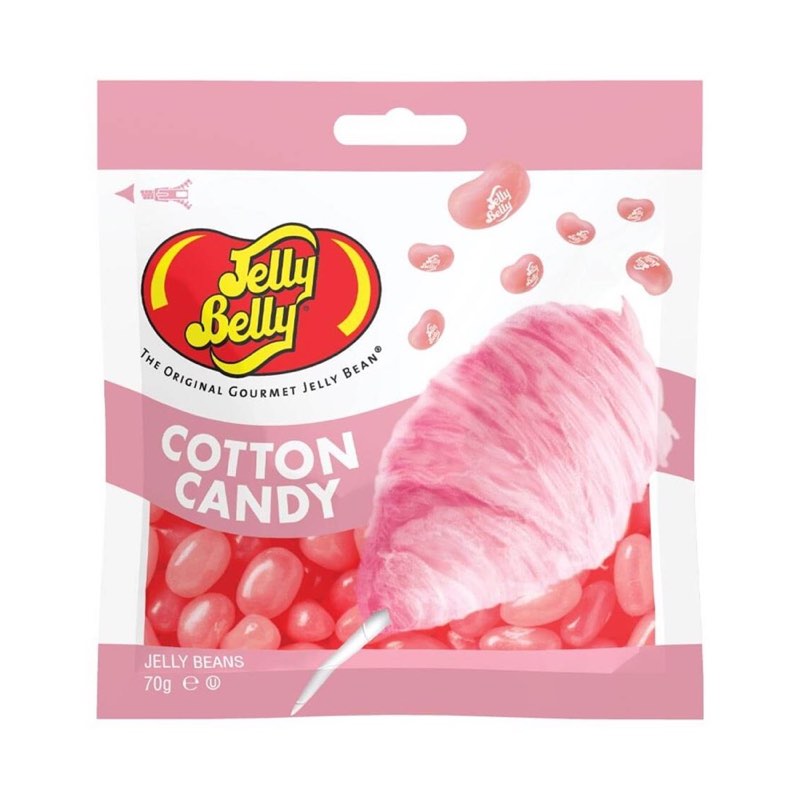
You get a 70g bag of small jelly beans in pink. The listing gives the colour as pink, and the flavour idea is right there in the name: cotton candy, which is what most people in Britain would call candyfloss. That is the whole proposition, and there is something restful about a bag that only asks you to like one thing. There is no sorting, no picking around the ones you do not want, no negotiation with the other person over who gets the last of the good ones. Everything in the bag is the same, so everything in the bag is the good one.
Physically these are the small bean size rather than the fat gum size. They sit in a palm in the dozens rather than the handful. Individually a bean of this scale is roughly the size of the tip of a little finger, which is precisely why the format encourages slow eating — each unit is small enough that eating one does not feel like a decision, so you make the decision fifty times instead of five. That is either a virtue or a hazard depending on how strong-willed you are feeling.
The colour is worth a word of its own. Pink is doing a job here, and it is doing it before you taste anything. Candyfloss is a pink idea in almost everybody's head — the fairground, the pier, the cone of spun pink held at arm's length by a small child who has already got it in their hair. A pink bean sets that expectation up before it reaches your tongue and then the flavour confirms it. This is a very old trick and it works every time.
How it eats, from first bite to finish
Start with the sound. A shelled bean makes a small dry click against your teeth before anything else happens, and that click is the first thing that tells you what kind of sweet you are holding. It is the difference between a bean and a gum. A gum gives immediately and silently. A bean resists for a fraction of a second, gives with a small snap, and then turns into something else entirely.
Then the structure. There is an outer casing and there is an interior, and they behave differently in your mouth. The casing is thin and brittle and goes first. The interior is dense and chewy and stays for some time afterwards, which is the reason a single small bean occupies your attention for longer than its size suggests it should. If you suck a bean rather than biting it, the casing dissolves slowly and evenly and leaves you with a smooth chewy core that is noticeably more elastic than it felt at the start. Both are legitimate ways to eat them and most people alternate without noticing.
The flavour arrives in two stages because of that structure. The first thing you get is a quick, bright, slightly perfumed sweetness that reads immediately as candyfloss — airy, high, more aroma than weight. The second stage comes as you chew, and it is rounder and lasts longer, settling into the back of the mouth rather than the front. The fade is clean. This is not a sweet that sits on your palate for ten minutes afterwards, which is another reason it works as a film or journey sweet: you can eat several over an hour without your mouth feeling coated.
Eat them in ones and you get the full two-stage experience. Eat them in fives and something different happens — the casings all go at once, giving a brief burst of intensity, and then you have a single larger mass of chew to work through. Children work this out within about ninety seconds of being handed a bag and will usually do it on purpose. It is not the intended way to eat a bean but it is a perfectly good one.
Who this is for
It is for the person who likes sweet without complication. There is no sour edge here, no heat, no bitterness, no sharp fruit acid. If your idea of a good sweet is the one that tastes the most like the fairground you remember, this is aimed squarely at you. Conversely, if you are someone who only really enjoys confectionery when it fights back a bit, this will read as too gentle, and you would be better served by a genuinely punishing bag like Barnett's Mega Sour Apple Candy Bags 104g at £3.99, which is a different sport altogether, or by working your way through the sharper end of the loose range until you find your level.
It is for people feeding a mixed group where you cannot predict tastes. Candyfloss is one of the least divisive flavour ideas in confectionery. Almost nobody actively dislikes it, which is not true of liquorice, aniseed, or anything with a strong sour component. If you are putting out a bowl for an unknown crowd, unobjectionable is a genuine strategic advantage.
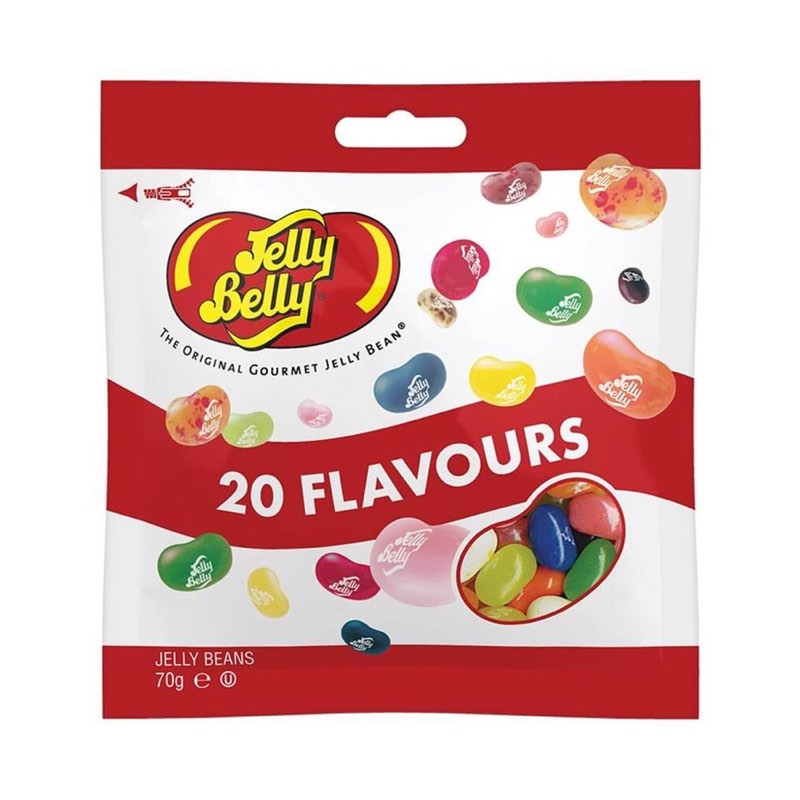
It is for anybody who wants a single-flavour bag rather than an assortment. Assortments are fun but they create work — there is always a flavour somebody is picking out and leaving behind, and the bag ends up with a sad residue of the unloved ones. If you have ever finished an assorted bag and found four of the same colour left in the bottom, you already know why a single-flavour bag has its place. That said, if you would rather have the variety, the same 70g format and the same £2.40 exists as a twenty-flavour assorted mix, and the choice between them is genuinely just a question of temperament.
And it is for the pocket-money buyer. At £2.40 this sits in the range a child can reach on their own, and there is something worth preserving about the transaction where somebody small chooses their own sweets, hands over their own money, and carries the bag out themselves. A lot of our smaller formats exist for exactly that reason.
Built, not moulded: why the bite of a bean is engineered
Here is the thing most people never think about. A jelly bean is not one thing that has been shaped. It is at least two distinct structures that have been assembled, and almost every quality difference you can taste between a good bean and a poor one comes down to how those structures relate to each other.
Consider what the outer casing has to do. It has to be hard enough to give that click and that snap, but thin enough that it disappears in a second or two rather than grinding away in your mouth. It has to be smooth, because a rough casing feels cheap on the tongue immediately. It has to be even, because a bean with a thick patch and a thin patch breaks unpredictably and the eating experience becomes random. And it has to be tough enough to survive a bag being sat on in a rucksack, because a casing that cracks in transit turns the whole bag into a clump. Those requirements pull against each other. Thin and smooth fights hard and tough. Getting all four at once is the actual skill.
Now consider the interior. Its job is to be chewy without being sticky — and that distinction is the single biggest dividing line in the whole jelly category. Sticky means it clings to your molars and you spend the next two minutes prospecting with your tongue. Chewy means it compresses, springs, yields and then clears. A well-made bean interior has what you might call short chew: it gives easily for the first few bites and then breaks down and goes, rather than turning into an indestructible wad. Short chew is why you can eat a lot of small beans in a row. Long, gluey chew is why you cannot.
Why the ratio is the whole argument
The proportion of casing to interior decides what kind of sweet you are eating. Weight the casing heavily and you get something closer to a dragée — a lot of click, a brief centre, over quickly. Weight the interior heavily and the casing becomes a formality and you are essentially eating a small gum with a thin skin. The bean sits in the middle by design, and it sits there because the middle is where the two-stage flavour release happens. You want enough casing to make a distinct first event, and enough interior to carry a second, slower one.
This is also why bean size is not a neutral decision. A small bean has a higher surface-to-volume ratio, which means proportionally more casing per bite, which means the snap is more prominent and the whole thing resolves faster. Scale a bean up and you get progressively more centre and less event. That is why the small bean format has stayed the standard for a century of confectionery and why larger beans tend to feel like a different product rather than a bigger version of the same one.
Shape is a texture decision too
A bean is not round, and that is not an accident. The elongated, slightly flattened form does two useful things. First, it means the bean has a natural axis, so it tends to sit lengthways between your teeth and break along a predictable line — which is why the snap feels consistent rather than random. Second, it lets a lot of beans pack together tightly without the whole mass locking solid the way perfect spheres do. Tip a bag of beans into a bowl and they settle and flow. Tip a bag of hard spheres into a bowl and they lock, roll and escape onto the floor. If you have ever chased an aniseed ball across a carpet you know exactly which behaviour you prefer.
Heat, cold and the chew you actually get
Texture in chewy confectionery is temperature-dependent in a way most shoppers never think about but always notice. A bean that has been in a cold coat pocket is measurably firmer — the snap is sharper, the chew is more resistant, and the flavour reads slightly muted because cold dulls the palate. The same bean left in a warm room for an hour is softer, the casing gives more readily, and the flavour seems more forward. Neither is wrong, but they are genuinely different eating experiences from the same bag.
If you want the cleanest version of the snap, eat them at room temperature or just below. If you want maximum flavour, let them warm a little in your hand first. And if a bag has been somewhere warm for a long stretch — a car in summer, a windowsill, a radiator shelf — expect the beans to have softened and possibly stuck together slightly. They are not ruined; they have just moved along the texture spectrum. Giving the bag a firm squeeze to separate them usually sorts it out.
Why texture matters more than flavour in a mix
When you put several different sweets in one bowl, your palate stops noticing small flavour differences surprisingly quickly but never stops noticing texture differences. This is the single most useful thing to understand if you build pick and mix bags. Three different fruit gums in a bag read as one thing after the first handful. A gum, a bean and a foam read as three things for the whole bag. It is texture, not flavour, that keeps a mixed bag interesting to the bottom — and a firm, shelled bean is one of the most useful texture contributions you can make to a bag, precisely because almost nothing else on a sweet counter does that particular click-then-chew.
The counter, the jar and the paper bag
British sweet buying has a specific physical culture, and anybody who grew up near a decent sweet shop can reconstruct it instantly. Glass jars in a row, at a height that means an adult reaches and a child looks up. A scoop. A set of scales with a needle. A paper bag with a crease at the top. A queue that moves slowly because choosing is the point and everybody is allowed their time. A total announced out loud. The smell of the room, which is not any one sweet but all of them at once.
The seaside version of this is the same culture with the volume turned up. Sweet shops on a promenade are brighter, louder and more committed to spectacle — bigger jars, more of them, rock in the window, a fudge counter, and candyfloss being spun in the open where you can watch it happen. The candyfloss machine is the theatre. A cone of it is enormous, weighs nothing, and is gone in four minutes, and no child in the history of the British seaside has ever regretted buying one.
A candyfloss bean is that whole scene reduced to something you can carry. It takes the flavour of the pier and puts it in a format that survives a pocket and a journey home. That translation is worth appreciating for what it is: candyfloss itself is famously impossible to keep. It collapses in humidity, it will not sit in a bag, and it cannot be posted, carried or saved. Turning it into a bean is the only way the flavour gets to exist outside the two hours you spend on a promenade.
Where a bagged bean sits next to a jar
Our counter has two halves and they serve different needs. The jars are for building — you take a bit of this and a bit of that and you make something that is yours. You will find the whole of that half through the loose sweets shelf, which currently runs to hundreds of lines. The bagged half is for deciding — you want one known thing, you want it now, you do not want to assemble anything.
A 70g bag belongs firmly in the deciding half, and the classic British sweet shop has always had both. The jar wall gets the attention, but the rack by the till — small bags, single flavours, pocket prices — is what most of the day's transactions actually come from. The old corner shop understood this perfectly: the impressive display sells the shop, and the rack by the door sells the sweets.
The corner shop's habit of stocking one of everything
There is a particular sort of shop, and every town still has one, where the sweet selection makes no commercial sense whatsoever. One bag of each of forty things. A jar of something nobody has asked for in years sitting next to a brand-new arrival. Retro chews beside fashionable sours. The logic is not range planning, it is that the shopkeeper knows that somebody, eventually, will come in specifically for the strange one and be delighted it is there.
We have deliberately kept some of that. It is why Barratt Black Jack Chews at £5.49 sit on the same site as brand-new lines, why Briquette at £5.49 is still on the shelf for the people who have been asking after it for years, and why Bristow's Traditional Salted Caramel Bon Bons live a few clicks from the newest arrivals. Range is not just choice. It is the promise that the thing you half-remember is probably still here somewhere.
Why small bags survived everything
Confectionery formats come and go, but the small single-flavour bag has outlasted almost all of them. It survived the shift to supermarkets, the shift to multipacks, the shift online, and it is still the single most common way a sweet gets bought in this country. The reason is that it maps exactly onto how people actually want to buy: one decision, one price, one flavour, one sitting. Anything bigger is a commitment, and most sweet buying is not a commitment, it is a whim. The 70g bag is a whim-sized object, and that is the entire secret of its longevity.
Candyfloss as a flavour family
Candyfloss is an unusual flavour idea because it is not a fruit, a nut, a spice or a botanical. It does not refer to anything you could pick. It refers to a manufactured experience — the fairground, the pier, the spun cone — and that is why it reads as nostalgic to almost everybody regardless of age. You are not tasting a thing, you are tasting a memory of a place.
In sensory terms it lands as high, light, slightly floral sweetness with a faint warm note underneath. It is a top-note flavour, meaning most of what you perceive arrives in the first second and comes through your nose as much as your tongue. That is why it works so well in a small format: it does not need a long dwell time to deliver, and it does not benefit from one.
Because it is airy and unchallenging, candyfloss pairs in one of two directions. Either you go with it — put it next to other soft, sweet, pastel ideas and let the whole bowl read as one gentle thing — or you go against it, and place it next to something sharp, sour, salty or dark so the contrast makes both sides more interesting. In our experience of building bags, going against it is more rewarding. A pink bean next to something genuinely sour is a better bag than a pink bean next to three other gentle pinks.
Worth knowing: candyfloss and bubblegum are cousins but not twins. Both are high, sweet, non-fruit flavour ideas with a strong nostalgic pull, and they can read similarly in a blind mouthful. If you already know you like one, you will very probably get on with the other. If you have decided you dislike bubblegum flavour, try candyfloss anyway before writing it off — the warm fairground quality of candyfloss is distinct enough that plenty of people hold opposite opinions of the two.
Building a pick and mix around a pink bean
A good mixed bag needs four things: a base, a contrast, a texture outlier and a treat. Once you think in those four roles, building a bag stops being random and starts being a bit like cooking.
The base is the thing you eat most of — reliable, moreish, not too intense. This bean does that job well, and so does anything in the classic gum family. Your base should be around half the bag. If you want a second base with a different mouthfeel, Barratt Jelly Babies at £5.49 are the obvious companion, because a soft dusted jelly and a firm shelled bean sit at opposite ends of the chew scale while both being easy to eat by the handful.
The contrast is the thing that resets your palate. Sour is the most effective reset there is, which is why Candy Paradise Juicy Grenade Gummies at £1.39 make a useful addition — they are green, sour, apple, and about as far from a gentle pink bean as you can get while still being a sweet. A quarter of the bag is plenty; contrast works by being outnumbered.
The texture outlier is the one that surprises you when you get to it. That might be the aerated give of a foam sweet, the dense crumble of Buchanan's Butter Tablet Carton 150g at £3.49, or the soft marshmallow bounce of Bulgari Pumpkin Mallows. You only need a few. Their job is to break the rhythm.
The treat is the small quantity of something that costs more or feels more special, so that finding one in the bag is an event. Chocolate works well here — a few Cadbury Dairy Milk Christmas Little Robins from the 77g bag at £2.49 scattered through a mix give you a proper find every so often, though bear in mind chocolate and a warm room do not get along, so keep those bags cool and assembled close to eating.
If you would rather not build it yourself, the whole ready-made side of this lives on our pick and mix shelf, where the assembling has already been done for you at several sizes.
Parties, hampers and seasonal tables
For a children's party, small bags do something a big bowl cannot: they end arguments. One bag each, identical contents, no negotiation about who got more of the good colour. A single-flavour pink bean bag is particularly good for this because there is no good colour — they are all the same, so fairness is built into the product. If you are laying out a table rather than handing out bags, put beans in the shallowest bowl you have; deep bowls hide most of what is in them and the bottom layer never gets eaten.
For a hamper, a 70g bag is a filler rather than a centrepiece, and fillers are what make a hamper look generous. The trick is variety of shape: a bag, a box, a tub and a bar look like a hamper, whereas four bags look like a shop order. Mix formats deliberately. Something in a rigid box does a lot of visual work — the Bean Boozled 45g box at £2.99 is a good example of a small item that sits up properly among soft packets rather than slumping.
For a seasonal table — Christmas, Easter, a birthday buffet — pink is a useful colour to have in the spread because most seasonal confectionery skews red, green, gold or brown. A pale pink bowl lifts the whole table visually and is worth including for that reason alone, even before anybody eats any. Our candy and chocolate section is the place to fill in the rest of the table around it.
For a film night, the arithmetic is simple: one 70g bag per two people if you have other things out, one each if this is the only thing. Anything less and somebody is quietly counting.
What £2.40 for 70g actually buys you
Price per gram is the only honest way to compare across formats, and it is worth doing occasionally because sweet pricing is unintuitive. This bag works out at a shade under three and a half pence per gram at £2.40 for 70g. That is the normal range for a small branded bagged line, and you are paying partly for the format: small bags cost proportionally more to pack and ship than large ones, which is why a tub is nearly always cheaper per gram than a bag of the same thing.
| What you are buying | Price | Best for |
|---|---|---|
| This 70g bag | £2.40 | One or two people, one sitting |
| A second 70g bag in another flavour | £2.40 | Giving people a choice |
| A larger loose-sweet bag from the jars | Varies by weight | Bowls, parties, building a mix |
So the value question is really a format question. If you want this particular flavour, for a specific occasion, in a portable pack, £2.40 is what that costs and it is a fair price for it. If what you actually want is a lot of sweets for a bowl, you will do better by weight buying loose, and you should. The two are not competing; they are answers to different questions.
One genuinely useful habit: buy two small bags of different things rather than one bigger bag of one thing, when the occasion involves more than one person. The variety is worth more to a group than the extra weight is. This applies to almost all confectionery buying and almost nobody does it.
Keeping them in good order at home
Beans are forgiving, which is part of their appeal, but there are three things that will spoil them and all three are easy to avoid.
Heat is the first. A warm environment softens the chew and can make beans tack together. They are still perfectly good, but the crisp snap you bought them for goes. Keep the bag out of direct sun and off anything that gets warm — the top of a fridge is warmer than people assume, and so is a shelf above a radiator.
Air is the second. Once a bag is open the beans start to dry very slowly at the surface, and dried-out beans go from snap to hard. Roll the top of the bag down and clip it, or tip the lot into a small jar with a lid. If you are keeping them more than a few days, a sealed container beats a folded bag every time.
Damp is the third and the worst. Humidity is the enemy of anything with a hard casing — it makes the surface tacky and, given long enough, turns a bag of separate beans into one bean. Do not store them next to the kettle, and do not put them in the fridge, where condensation forms on them every time you take them in and out. A cool cupboard is the right answer.
Follow the storage guidance and date printed on the pack itself, which will always be more specific to the product than any general advice we can give you here.
One size, and how it compares to its siblings
This line comes in one size only: the 70g bag at £2.40. There is no larger pouch and no smaller sample of this particular flavour, so the size decision is made for you. What you can decide is which 70g bag you buy, because the same format runs across several flavour ideas at the same price, and that makes for a genuinely easy comparison.
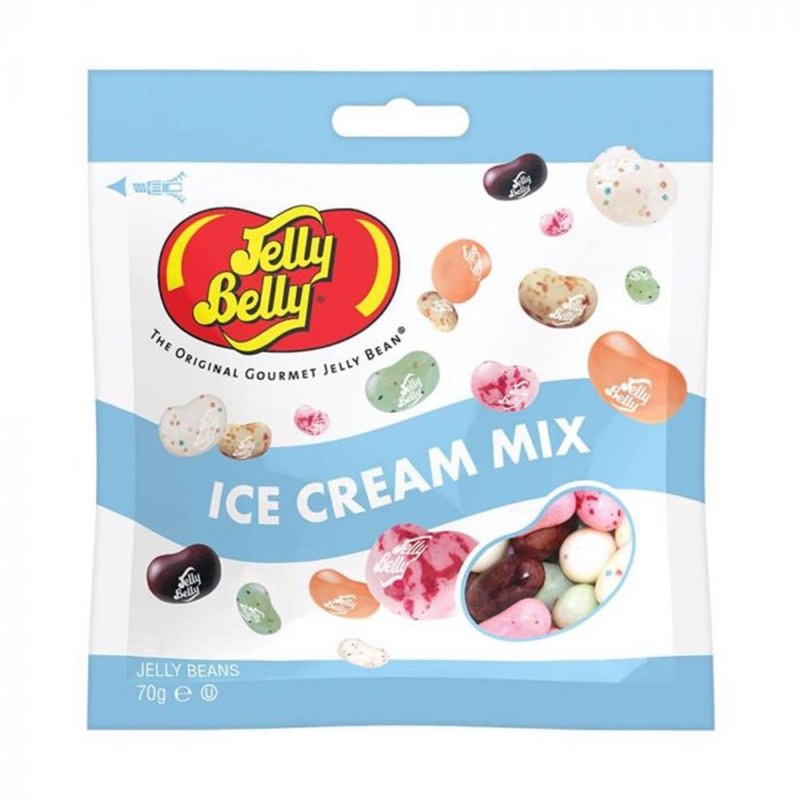
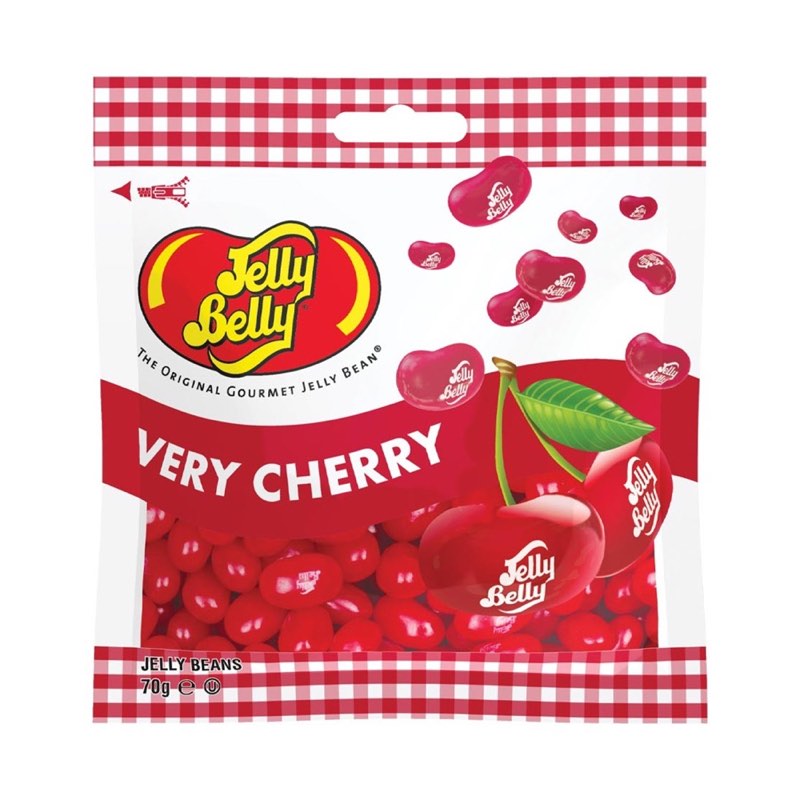
If you want another single dessert-flavoured idea rather than a fairground one, the Ice Cream Mix 70g bag at £2.40 is the direct like-for-like swap — same size, same price, a set of flavours that sit in the same soft, sweet, nostalgic register rather than a fruit one. If you want the sharpest possible contrast to a pink bean while staying in the same size and price, the Very Cherry 70g bag at £2.40 gives you a single dark fruit flavour instead, and two bags side by side make an excellent two-flavour bowl for about a fiver.
If you want a spread of flavours rather than one, the American Classics 70g bag at £2.40 is the other assorted option at the same price, and it is the one to pick when you are buying for a group with unknown preferences rather than for yourself.
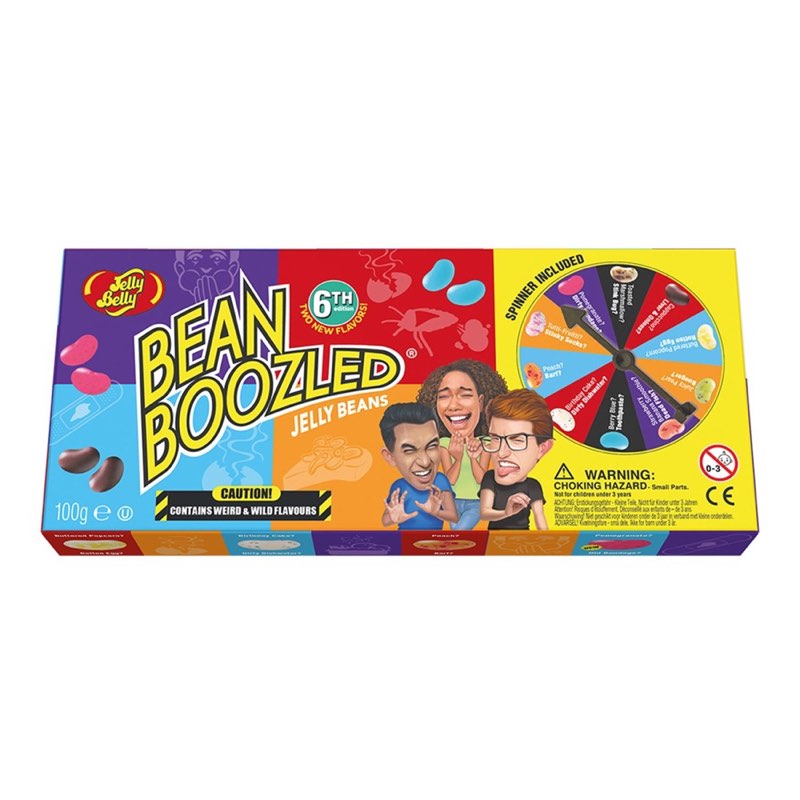
And if you want the bean as a game rather than as a snack, the Bean Boozled range exists for precisely that. The Bean Boozled Spinner at £11.99 is the full party version with the spinner built in, and it is bought for the table it will be played on rather than for the eating. It is the most expensive thing in the range by a distance and it is the only one that is really a toy as much as a bag of sweets. Buying it for a quiet evening in would be a category error; buying it for a group of teenagers who like daring each other is exactly right.
Choosing between all of them in one line
- Want one gentle, nostalgic flavour and nothing to think about — this bag.
- Want one dark fruit flavour instead — Very Cherry.
- Want soft dessert flavours — Ice Cream Mix.
- Want maximum variety for a group — the twenty-flavour assortment or American Classics.
- Want a game rather than a snack — Bean Boozled, box or spinner.
Where this sits on the site
This bag lives on two shelves. The first is the Jelly Belly brand shelf, which is the fastest route to the rest of the range if you already know you want a bean and are only deciding which one. The second is the much larger loose and bagged sweet section, which you can browse in full through every sweet we stock if you have not decided anything yet and want to look around properly.
The nearby shelves are worth knowing about because they are where most people actually end up. The Haribo shelf is the obvious neighbour for anybody shopping by brand rather than by flavour, and it is the busiest gum section we have. The Kingsway shelf is where the traditional jar sweets live, and it is the right place to go if this bag has put you in mind of an old-fashioned sweet counter rather than a modern bagged line. And the loose sweets section, at several hundred lines, is where you go when you want to build rather than choose.
If you are working through the site by texture rather than by brand, the useful move is to pick one firm item, one soft item and one hard item and see how they read together. Something like the soft dusted jelly babies against this bean against a hard boiled sweet is the fastest education in confectionery texture anybody can give themselves for under a tenner.
Questions we get asked
Is this the same as candyfloss?
It is the same flavour idea in a completely different format. Actual candyfloss is spun, weighs almost nothing, collapses the moment it meets moisture and has to be eaten within minutes. This is a small firm bean that you can carry in a pocket for a week. What they share is the flavour register — that light, high, unmistakably fairground sweetness. If you are buying this expecting the texture of a candyfloss cone, you will be surprised. If you are buying it for the taste of one in a form that survives a handbag, it does exactly that.
How many beans are in a 70g bag?
We do not count them and the number will vary bag to bag, because beans are packed by weight rather than by count and individual beans differ slightly in size. What we can tell you is that 70g of small beans is a lot of individual pieces — comfortably enough to share between two people over a film, or to ration across a long car journey. If you need an exact count for party bags or a game, weigh out a small portion and count that, then multiply; it is the only reliable method.
Are they very sweet?
Yes, in the sense that this is a confection built around a sweet flavour idea with no sour, salty or bitter counterpoint. Candyfloss as a flavour has no edge to it by design. If you find some sweets cloying, you will probably want to eat these in smaller runs or put them in a mix alongside something sharp rather than eating a bag straight through. If you like straightforwardly sweet things, this is one of the most straightforwardly sweet things on the shelf.
Can children eat these?
Sweets are a treat and should be eaten as one. Small hard sweets and whole gummies are a choking risk for young children, so keep them supervised while eating and use your judgement about age. Beyond that, if anybody eating them has allergies, please check the manufacturer's packaging when the order arrives and before anybody eats anything — the pack carries the authoritative information for the batch you have received, and it is the only thing we would ever ask you to rely on for that.
Will they melt in the post or in a warm car?
They will not melt the way chocolate does, which is one of the practical advantages of the format. In sustained heat they can soften and tack together, and a bag that has been through a hot delivery van may arrive with the beans clumped. Squeezing the sealed bag firmly a few times separates them again in almost every case. If you are ordering in summer and the parcel is going to sit somewhere warm, bring it inside and let it cool before you open it.
What is the difference between a jelly bean and a jelly sweet?
Structure. A jelly bean has a distinct hard outer casing over a chewy interior, so you get a snap and then a chew. A jelly sweet is a single consistent texture the whole way through, so it gives immediately and stays soft. That difference changes how long a piece lasts in your mouth, how the flavour arrives, and how well the sweet holds up in a mixed bag. Beans stay separate and firm in a bowl; softer jellies tend to settle together, especially in a warm room.
Is this suitable for a vegetarian or vegan diet?
We hold no supplier diet information for this line, so we cannot tell you either way and we will not guess. The pack itself carries the manufacturer's own statement and that is the thing to go by. If a specific diet requirement is the deciding factor in your order, check the packaging on arrival before eating, and treat any unlabelled assumption as unsafe. We would rather tell you we do not know than tell you something we cannot stand behind.
Is a bag like this good value compared with buying loose?
Loose is almost always better value per gram, and bagged is almost always better for a specific occasion. At £2.40 for 70g you are paying for the pack, the portability and the certainty of one flavour. If the job is to fill a bowl for eight people, buy by weight from the jars. If the job is one flavour in a pocket for a journey, the bag is the right tool and the difference in pence per gram is not worth thinking about for one sitting.
Do beans go stale?
Not quickly, but they do change. Left open to the air they dry at the surface and the pleasant snap turns into a harder, blunter resistance. Left somewhere humid they go tacky and stick together. Left somewhere warm they soften and the casing loses its crispness. None of that happens in a few days in a sealed bag in a cupboard, which is why the format travels so well. Keep them cool, dry and closed and they will be in good order for a long time — and always defer to the date on the pack.
What should I buy alongside it for a proper spread?
Get three textures and one wildcard. Take this as your firm shelled item, add something soft and chewy, add something that genuinely resists — a hard sweet or a dense tablet — and then add one thing nobody expects. Sour works brilliantly as the wildcard because it resets the palate and makes everything you eat afterwards taste new again. If you want the lazy version, take one item from each of our main shelves and you will have accidentally built a balanced bowl.
Is this the right thing to buy as a gift?
On its own it is a gesture rather than a gift — the right size for a stocking, a party bag, a lunchbox surprise or a small thank you. As part of something larger it is very useful, because small single-flavour bags give a hamper or a gift box variety of shape and colour without much cost. If you want a single item that reads as a present by itself, look at the larger tubs and boxes instead; if you want six small things that add up to a present, this is exactly the right kind of component.
Do you restock this if it sells out?
It is in stock as things stand, and this is a core line rather than a seasonal one, so it is the sort of thing we carry continuously rather than in one-off runs. If you are planning around a date — a party, a school event, a hamper you need to post — the sensible move is to order a little earlier than you strictly need to, because that removes the question entirely. Sweet shops and last-minute planning have never been natural allies.
The short version
A 70g bag of pink beans at £2.40 that tastes of the pier. It is small on purpose, portable on purpose, and single-flavour on purpose, and all three of those decisions make it better at the job it is actually bought for than a larger, mixed, fancier alternative would be. Take it on a journey, put it on a desk, drop it into a party bag, or use it as the firm, snappy component in a mixed bowl where everything else is soft. It does one thing, it does it without complication, and it asks nothing of you except that you like sweet things.
More from Jelly Belly
More loose sweets sweets

Where this sits
Jelly Belly Cotton Candy Jelly Beans Bag 70g appears on these shelves. Browse them, or jump to something nearby.
You might also like