Home / Loose Sweets / Buchanan's Butter Tablet Carton 150g
Buchanan's · 150g
Read the full guide
Buchanan's Butter Tablet Carton 150g
£3.49
✔ In stock — ready to ship
Fresh stock
Free over £20
Same-day dispatch
Secure checkout
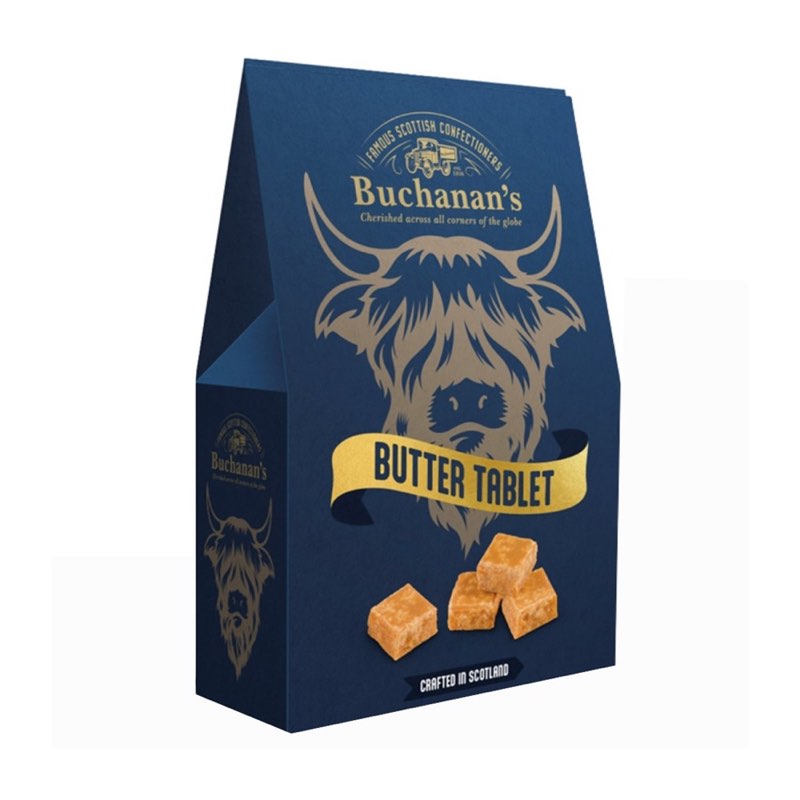
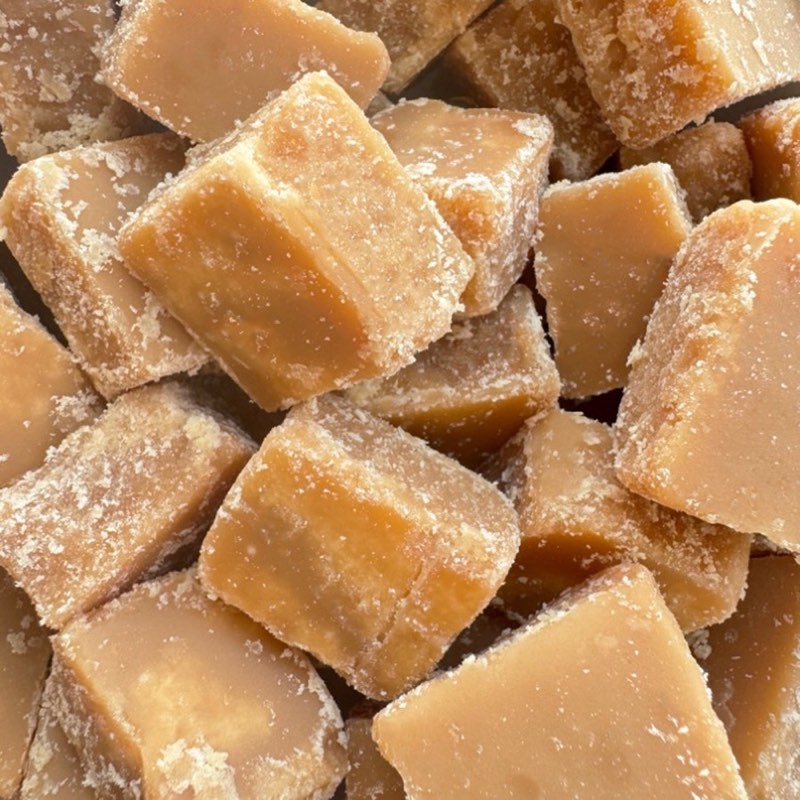
Break a piece of butter tablet off and the sound tells you most of what you need to know. It does not bend, it does not stretch, and it does not give way slowly the way a soft caramel does. It snaps — a short, dry, clean break with a slightly dusty edge where the fracture runs. Pick up the two halves and you will see a matt, opaque face rather than a glossy one, with a fine grain running through it that catches the light unevenly.
That grain is the entire character of the sweet. Tablet is set firm and fine-grained rather than smooth and plastic, and the result is something that behaves in a way no other confection quite copies. It is harder than fudge to the finger. It is softer than toffee to the tooth. And it is far quicker to disappear than either of them once it is in your mouth.
The full guide to Buchanan's Butter Tablet Carton 150g
5,177 words on how it eats, who it suits, how to serve it and what to put beside it.
The first piece: what butter tablet does in the mouth
The first ten seconds
You bite, and instead of the long chew a toffee would demand, the piece collapses almost immediately into a paste. This surprises people the first time. You brace for work and the work never arrives. Within a few seconds there is nothing left to chew — the grain has gone soft, the whole piece has turned to a warm smoothness against the roof of the mouth, and the butterscotch note has arrived all at once rather than in stages.
That immediacy is the trade. A boiled sweet gives you twenty minutes at a low level. Tablet gives you about forty seconds at a high one. It is a concentrated sweet, and it is meant to be eaten in small pieces precisely because of that.
The middle: where the butterscotch sits
Butterscotch is the flavour listed for this line, and in tablet it does something particular. It is not the sharp edge of a burnt caramel, and it is not the flat sweetness of plain fudge. It sits in between — warm, rounded, a little toasted at the back of it, and broad rather than pointed. There is no citrus lift, no sour edge, nothing to cut against it. It goes in one direction only, and it goes there firmly.
The grain matters here too. Because tablet breaks down into a paste rather than a chew, the flavour is released across the whole tongue at once instead of being squeezed out gradually. That is why a small piece of tablet tastes stronger than a much larger piece of fudge would. Density of experience, not density of material.
The finish
The finish is short and clean, which is the quality that makes tablet a good end-of-meal sweet rather than a mid-afternoon one. A toffee will sit on your teeth and keep talking for five minutes after you have finished it. Tablet clears. The warmth fades out over perhaps half a minute and leaves the mouth ready for a cup of tea rather than fighting one.
There is a sweetness that builds if you have several pieces in a row — this is a rich sweet and it does not pretend otherwise. Two pieces is a portion. Four is a decision. Six and you will want something sharp, which is exactly the subject we come to below.
How it looks and how it sits in the hand
Pieces come from the 150g carton as irregular rectangles and squares, pale and opaque, with the slightly powdery surface that the grain gives. The faces are flat where the slab was cut and rough where the pieces have knocked against each other on the way to you — a certain amount of crumb in the bottom of the carton is normal and is not a fault. Sweep it into a teaspoon and put it on porridge or a scoop of ice cream rather than throwing it away.
In the hand the pieces are firm and dry. They do not stick to fingers in a cool room, they do not mark a tablecloth, and they sit perfectly well in an open bowl for the length of an evening. That is unusual among rich sweets and it is one of the practical reasons tablet gets put out on a tray when a soft caramel would not be.
The carton itself
This comes as a 150g carton at £3.49, in one size, and it is in stock. The carton format is worth a moment, because it is not incidental. A boxed slab-sweet is something you put down on a table rather than something you hold. It stacks, it posts, it stands up in a hamper, and it survives a coat pocket in a way a paper bag does not.
It also means the sweet arrives as pieces already broken, so there is no sawing at a slab with a knife and no shards flying across a worktop. Open, tip a few into a dish, close, put the rest in a cupboard. For a sweet this rich, that portion control is doing you a favour.
One thing the carton does not do is reseal like a zip bag. Once opened, treat it as an open box and get the pieces into something airtight if you are not going to finish it within a week — there is more on storing further down.
Where this lands on the sour-and-sweet spectrum
Every sweet in the shop can be placed somewhere on a single line running from face-pulling sour at one end to deep, unrelieved sweet at the other. It is the most useful map we know for building a spread, and butter tablet sits at one extreme of it — which makes it a very easy thing to build around, once you know where it is.
The five positions on the line
Aggressively sour. Sweets that lead with acid and make people react. The reaction is the product. Nobody eats these steadily; they eat one, make a face, and pass the bag on.
Sharp. Fruit with a genuine acid edge that lifts rather than attacks. These are the sweets people can actually keep eating, and they are the natural partners for anything rich.
Balanced. Fruit sweets where sweetness leads and acid supports. Most jellies and most fruit chews live here. They are the neutral middle of any table.
Rich-sweet. Caramel, toffee, chocolate, fudge. No acid at all; the interest comes from depth and from the toasted end of the flavour range.
Pure sweet. Tablet sits here, at the far end. There is nothing in it pulling the other way. It is unrelieved, and it is unapologetic about being unrelieved.
Why the far end needs a partner
Put six rich-sweet items on a table and people will eat two things and stop. Not because the sweets are bad but because the palate has nowhere to go. Sweetness without contrast saturates fast, and the plate stops being interesting well before it stops being full.
The fix is not to make the table less sweet. It is to put something at the other end of the line so people can bounce between the two. One piece of tablet, one sour thing, back to the tablet — and suddenly the tablet tastes new again. This is the single most useful thing to know about serving rich confectionery, and almost nobody does it.
What to put at the other end
The most direct contrast we stock is Barnett's Mega Sour Apple Candy Bags 104g at £3.99. Apple sour against warm butterscotch is about as far apart as two sweets on one table can get, and the reset is immediate. Keep them in separate bowls rather than mixed, because a sour coating will transfer onto anything it touches.
For a gentler version of the same trick, Candy Paradise Juicy Grenade Gummies at £1.39 are the cheapest way to get a fruit note onto a table that is otherwise all caramel and toffee. They sit nearer the balanced middle of the line, so they lift without picking a fight.
And for something at the balanced position that everybody will eat, Barratt Jelly Babies at £5.49 are the safe middle. Soft, fruit-led, familiar — the thing people pick up between the two extremes without thinking about it.
Staying at the rich end deliberately
Sometimes you do not want contrast. A late-evening tray with coffee, a hamper, a box for somebody who only likes one kind of sweet — those want depth rather than range, and in that case you cluster at the rich end on purpose and just keep the portions small.
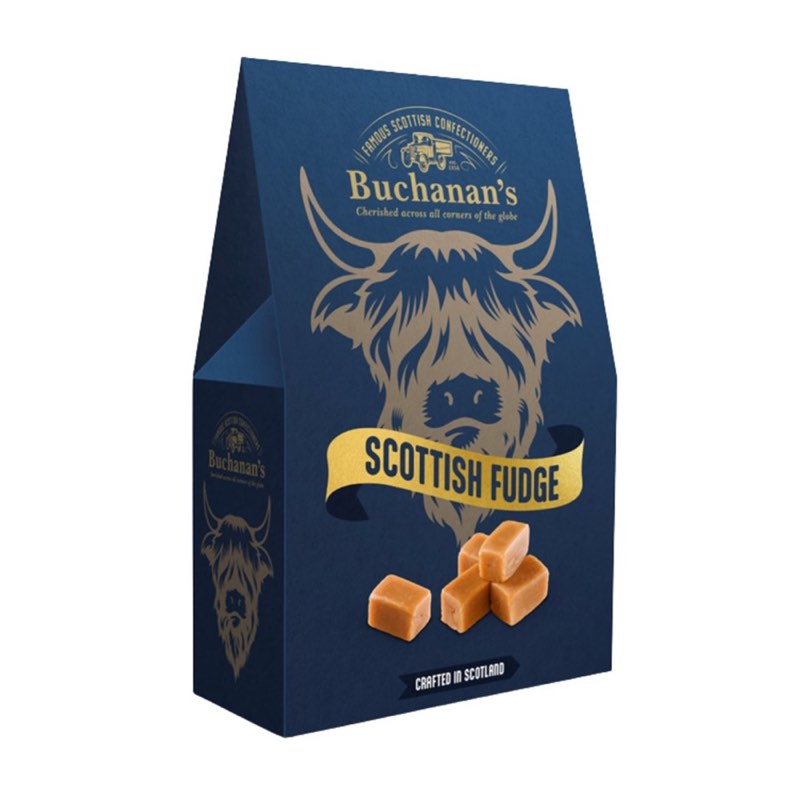
That is where the rest of the Buchanan's cartons earn their place. Buchanan's Highland Toffee Carton 150g at the same £3.49 gives you the long chew that tablet deliberately does not, so the two together cover both speeds of the same flavour register. Buchanan's Scottish Fudge Carton 150g, also £3.49, is the smooth, yielding version — softer to bite and slower to break down than tablet, and the natural third point of the triangle.
Round it out with Bristows Vanilla Fudge at £5.49 if you want a vanilla-led rather than butterscotch-led note in the same soft register, and you have a rich-end tray that still has internal variety: firm and grainy, smooth and soft, long and chewy, and vanilla against butterscotch.
The sour-first rule for children's tables
One last practical point. If children are eating, put the sour things out and the rich things away until later. Sour sweets are an event and they will be gone regardless. Rich sweets are what people drift back to once the excitement has worn off, and putting a carton of tablet out at the start of a party simply means it goes in the first four minutes without anybody tasting it properly. Hold it back. It will be appreciated more at six o'clock than at two.
Which sweet counter this belongs to
Sweets are one of the few things people can date by taste. Hand somebody a sweet they have not eaten since they were nine and you get a very particular pause — a half-second where they are somewhere else entirely. Tablet does this to people more reliably than almost anything else on the shelf, and it is worth thinking about why.
The slab-and-scales counter
The oldest register in the shop is the counter where things came as slabs, blocks and wheels, and were cut, snapped or weighed in front of you. Tablet belongs to that world entirely. It is a slab sweet. It is made in a tray, set, and broken up — and the pieces are irregular because that is what breaking produces, not because anybody designed them to look homely.
Everything else about that era follows from the format: paper bags, a set of scales, sweets that did not come with a character on the front, and prices in units that no longer exist. If a sweet in front of you is an irregular piece of something that was once a bigger piece of something, you are looking at that counter. You can browse most of what survives of it on the retro shelf.
The tin-on-the-sideboard generation
The next layer up is the sweet that lived in a tin rather than in a pocket. Tablet is firmly a sideboard sweet. It is too rich for a school break and too fragile for a coat, and it is exactly the right thing for a tray brought out when somebody visits.
Sweets in this register share a set of properties. They keep well in a closed container. They do not need refrigerating. They are rich enough that one or two is a serving, so a tin lasts weeks rather than an evening. And they are offered rather than grabbed — somebody holds out the tin and you take one. That social ritual is as much a part of the memory as the taste.
The corner-shop chew counter
Then comes the era most people actually mean when they say "sweets I grew up with": individually wrapped chews bought with pocket money, one or two at a time, from a box on a counter at child height. Barratt Black Jack Chews at £5.49 are the archetype — a strong, unmistakable flavour in a cheap, fast format, bought loose and eaten immediately.
That counter and the tablet counter are two different worlds even though they overlapped in time. One is a sweet bought by a child with their own money. The other is a sweet handed to a child by an adult. The memories attached to them feel completely different, and both are worth having on a table when three generations are in the same room.
The multipack and the licensed character
The most recent layer is the one built around the pre-packed bag, the seasonal tie-in and the character on the front. Cadbury Dairy Milk Christmas Little Robins Chocolate Bag 77g at £2.49 is a clean example — a shaped, seasonal, sharing-bag chocolate that exists for a specific few weeks of the year. So is Bulgari Pumpkin Mallows at £5.49, where the mallow format has been given a seasonal shape.
Nothing wrong with any of it. But it is a different kind of memory — of a particular Christmas or a particular Halloween, rather than of a whole childhood. Seasonal sweets are dated by the year. Slab sweets are dated by the decade.
Why nostalgia is not the same as being old-fashioned
The trap with nostalgia sweets is to treat them as museum pieces — bought for the memory, eaten out of duty, not actually very good. Tablet does not have that problem, and this is the important distinction. It survives because the eating experience is genuinely distinct, not because anybody is being sentimental. There is no modern format that does what a grainy, quick-collapsing slab sweet does. If there were, tablet would have quietly disappeared like most things do.
So buy it for the memory if you like, but serve it to somebody who has never had it and watch what happens. The reaction of a person meeting tablet for the first time is not nostalgia. It is surprise at the texture, which is the far more interesting response.
Building a table across the generations
If you are catering for a room with grandparents, parents and children in it, cover all four counters rather than picking one. A carton of tablet and Buchanan's Edinburgh Rock Carton 150g at £3.49 for the slab era. Briquette at £5.49 and a bag of chews for the corner shop. Jelly babies for the balanced middle that everybody eats. A seasonal chocolate bag for the youngest. Nobody has to eat anybody else's sweets, and everybody has something to say about at least one bowl.
Butterscotch, and the family it belongs to
Butterscotch is the listed flavour here, and it is the anchor of a whole family of warm, toasted, non-fruit flavours that most people file together without thinking about it: butterscotch, caramel, toffee, fudge, treacle, and the darker end of vanilla. They are not the same thing, but they are neighbours, and they follow shared rules.
The first rule is that the family has no acid. Nothing in it lifts or cuts. That is why these flavours pair so well with something bitter — tea, coffee, dark chocolate — and so poorly with anything already sweet. Serve butterscotch with a sweet drink and both taste worse.
The second rule is that texture does more work in this family than flavour does. A butterscotch boiled sweet, a butterscotch fudge and a butterscotch tablet can taste broadly similar and be completely different eating experiences. That is why we would encourage anyone who likes this carton to try the same register in another texture rather than hunting for a different flavour. The fudge carton at the same £3.49 is the obvious next step; the toffee carton is the long-chew end of the same idea.
The third rule is that the family takes salt and takes dairy, which is why so many desserts built on it are served with cream, and why crumbled tablet on ice cream works so much better than crumbled fruit sweets would.
Where it gets interesting is at the family's edges, where a warm note is set against a fruit one. BUBS Banana & Caramel Foam Sweets at £7.50 put caramel against banana in a light foam, which is a genuinely different proposition from either flavour on its own and a good bridge between the rich end of a table and the fruit end.
And if you want the same slab-sweet texture from another maker to compare directly, Ross's Of Edinburgh Scottish Tablet at £5.49 is the other tablet we stock. Buying both and tasting them side by side is the quickest way to work out what you actually like about the style — the grain, the sweetness, the speed of the collapse, or all three.
Building a spread around a carton
A 150g carton is enough for a tray but not enough for a party, so the question is usually what joins it rather than how far it stretches.
The after-dinner tray
Four or five pieces of tablet, a small pile of something sharp, and nothing else. This is the arrangement that works best with coffee, and the restraint is the point — a crowded tray at the end of a meal does not get eaten. If you want a second rich option for variety, make it a different texture rather than a different flavour: a soft fudge next to a firm tablet reads as two things, where two firm sweets read as one.
The hamper build
Cartons are the backbone of a hamper because they stack and they hold their shape. Two or three of the Buchanan's 150g cartons at £3.49 each gives you a tidy block of the rich end for around a tenner, and then you build the rest of the hamper outward from that with bags. Put the cartons at the bottom and the bags on top, or you will arrive with crushed bags and intact boxes.
The pick-and-mix around it
If you are scooping a mixed bag from the pick and mix to sit alongside, aim for range rather than quantity: one sour, one soft jelly, one chew, one chocolate. That is four textures plus the tablet, which is more than enough variety for any table and considerably better than five variations on a jelly. Everything on the loose sweets shelf can be mixed this way, and there are 356 lines to choose from.
Cooking with the crumb
The pieces that arrive broken, and the dust in the bottom of the carton, are not waste. Crumbled over vanilla ice cream, stirred into warm porridge, scattered on a cheesecake or pressed into the top of a traybake, tablet crumb does a job that no shop-bought topping quite matches, because it softens rather than staying gritty. Use a teaspoon, not a handful.
Occasions and who to give it to
As a small gift. A 150g carton at £3.49 is close to the perfect price point for a thank-you — substantial enough not to look like an afterthought, cheap enough to give without ceremony. It needs no wrapping to look presentable.
Christmas tables and hampers. Rich sweets belong to cold months, and a boxed slab sweet sits on a Christmas table better than almost anything in a bag. Pair with a seasonal chocolate from the candy and chocolate section for the younger end of the table.
Visitors and the tin. This is the classic use. Decant into a tin, keep it on the sideboard, offer it when somebody calls in. A carton handled this way lasts a fortnight easily.
Care packages and parcels. Boxed, firm and not remotely melty, tablet posts far better than chocolate and far better than anything soft. Tape the carton closed before it goes in the parcel.
Sharing with somebody who has never tried it. Genuinely one of the better uses. Do not explain it first. Hand over a piece and let the texture do the talking.
An evening in. Two pieces with a cup of tea while something is on. It is an unglamorous use and it is probably the most common one.
Not, honestly, a children's party. Too rich, too quick, and completely wasted on a room full of children who will swallow it without noticing. Send them to the jelly and gummy aisle instead and keep the carton for yourself.
Portions, price and what you actually get
The arithmetic is straightforward. £3.49 for 150g works out at £2.33 per 100g. Across the Buchanan's range every carton is the same 150g at the same £3.49, so the choice between them is purely about which sweet you want, with no price trade-off to weigh up — which is unusually simple, and worth appreciating.
For portioning, think in small pieces. Tablet is rich enough that most people find two pieces a serving and three generous. At roughly ten pieces to a 150g carton, that is about 35p a piece and five decent servings, or two people getting through it over a week with tea.
- One carton, one person, in the evening: comfortably a week to ten days.
- One carton on an after-dinner tray for four: gone in a sitting, with everyone having had two or three pieces.
- Three cartons for a hamper or a Christmas sideboard: £10.47 for 450g of the rich end, covering tablet, fudge and toffee.
- One carton as a gift: £3.49, no wrapping needed, nobody thinks you were stingy.
Set against the wider shelf, £2.33 per 100g is good value for a boxed sweet. The 104g sour bags work out at £3.84 per 100g and the 77g Christmas chocolate bag at £3.23, so the carton is doing well on weight while also being the item on the table that people slow down for. Just remember that this is a sweet you eat less of per sitting, so the per-gram figure flatters it slightly — a carton lasts a long time because it is rich, not because it is large.
Keeping it in good condition
Tablet is a dry, firm sweet and it keeps well, but it has two enemies: warmth and damp air. Warmth softens the pieces and lets them fuse into a single mass in the carton. Damp makes the surface tacky and dulls the clean snap that is half the point of the sweet.
So: a cool, dry cupboard, out of direct sun, away from the hob and the kettle. Not the fridge — the cold is not the problem, the humidity is, and a piece brought out of a fridge into a warm room will sweat. Not a windowsill. Not a car in summer.
Once the carton is open, the best thing you can do is move what you are not eating into an airtight tub or a sealed bag. A tin with a tight lid is ideal and is what tablet has always lived in. Keep it away from strongly scented things in the same cupboard, because rich sweets pick up smells more readily than people expect.
If pieces do fuse together, a firm tap with the handle of a knife on a board will separate them along the original break lines nine times out of ten. And always check the best-before date printed on the carton when it arrives, and store accordingly.
Choosing between the Buchanan's cartons
There is one size of this product — a 150g carton at £3.49 — so the only real decision is which of the range to put in the basket alongside it. All four cartons are the same weight and the same price, which makes the comparison unusually clean:
| Carton | Price | Weight | Choose it for |
|---|---|---|---|
| Butter Tablet | £3.49 | 150g | The firm snap and the grain that collapses fast; butterscotch, unrelieved |
| Scottish Fudge | £3.49 | 150g | Softer to bite, slower to break down, the smooth end of the same register |
| Highland Toffee | £3.49 | 150g | The long chew — the opposite of tablet's quick collapse |
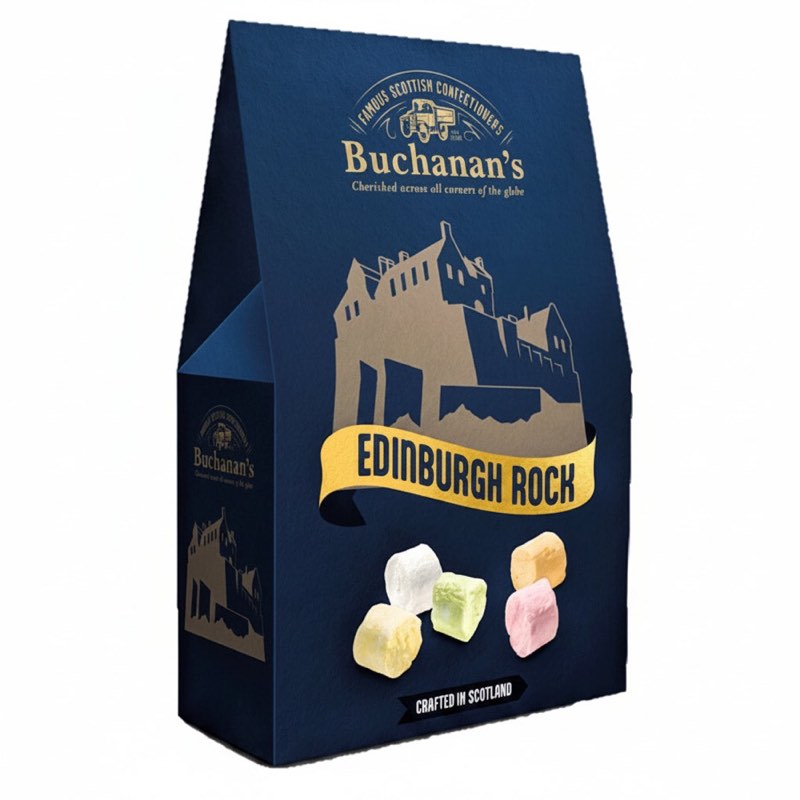
| Edinburgh Rock | £3.49 | 150g | A different texture entirely from the other three; the outlier of the set |
If you are buying one, buy the one whose texture you want, because the flavours in this register are closer to one another than the textures are. If you are buying for a tray or a gift, two cartons that eat differently will always look more generous than two that eat the same. Tablet plus the Edinburgh Rock version is the widest spread available inside the range; tablet plus fudge is the most complementary.
Where to find it and what is next to it
On the site this sits on two shelves. It is part of the weigh-out and loose sweets section, the largest on the site at 356 lines, and it is one of only four items on the fudge shelf — which makes that shelf the fastest way to see the whole soft-and-rich category in one screen rather than scrolling.
From there, the hubs take you sideways. Browse everything we stock if you want the full picture. Retro sweets is the natural neighbour for anybody who came to tablet through memory rather than through flavour. Candy and chocolate covers the rest of the rich end. Jelly and gummy is where to go for the soft, fruit-led contrast that any tablet-led table needs, and the pick-and-mix shelf lets you assemble that contrast in one scoop.
A note on how to browse this part of the shop: the type shelves are more useful than the flavour shelves for rich confectionery, because within this register texture is the real variable. If you liked tablet, filter by type and try the neighbours. If you liked butterscotch specifically, you will find it turns up across half a dozen different textures, and you may well discover you liked the grain more than you liked the flavour.
Common questions
What is the difference between tablet and fudge?
Texture, almost entirely. Fudge is smooth and yielding — it gives under a finger and chews. Tablet is firm and fine-grained — it snaps cleanly, feels harder in the hand, and then collapses into a paste in the mouth far faster than fudge does. People who find fudge too soft or too long-lasting usually prefer tablet immediately. People who like a chew usually prefer fudge.
Is it hard work to chew?
No, and this is the thing that surprises first-timers. Despite snapping like a hard sweet, it breaks down almost as soon as it is warm, so there is very little chewing involved. If you want something that genuinely demands a long chew, the Highland Toffee carton is the one to reach for instead — same range, same price, completely different effort.
How many pieces are in a 150g carton?
Pieces are cut and broken rather than moulded, so the count varies — expect roughly ten pieces of a size most people would call a portion, plus some smaller fragments and crumb. If you need an exact number of identical pieces for a table, buy two cartons and pick from both rather than relying on one.
Is the crumb at the bottom a fault?
Not at all. A slab sweet that has been broken into pieces and then transported will always produce some crumb, and a carton without any would be unusual. Use it on ice cream or porridge, or stir it into whipped cream. Throwing it out is the only mistake available here.
Can I use it in baking?
Yes, and it is one of the better uses for a carton. It softens rather than staying gritty, so it works crumbled over a cheesecake, pressed into the top of a traybake, folded through ice cream, or melted gently into a sauce. Start with less than you think — it is a concentrated sweet and it takes over quickly.
Does it need to go in the fridge?
No, and we would advise against it. A cool dry cupboard is right. Fridges are damp, and a cold piece brought into a warm room will sweat at the surface and lose its clean snap. An airtight tin in a cupboard is the ideal home once the carton is open.
What drink goes with it?
Something without sugar in it. Tea and black coffee are the obvious answers and the right ones, because a bitter drink gives the sweetness somewhere to push against. Anything already sweet — a fizzy drink, a milkshake, a sweetened coffee — will make both the drink and the sweet taste worse. Water works perfectly well too.
Is it suitable for children?
Sweets are a treat rather than everyday food, and small hard sweets and whole gummies are a choking risk for young children, so keep little ones supervised while they eat. Tablet is firm in the hand and best given in small pieces. Beyond that it is a matter of judgement — most people find it too rich for children to appreciate, and a fruit sweet is usually the better call for a young palate.
Somebody in the house has an allergy. What should I check?
Read the manufacturer's own packaging on the carton when your order arrives, before anybody eats anything. The printed pack is the authoritative source and always takes precedence over anything written online, including this page.
How long will an open carton last?
Kept airtight, cool and dry, longer than most people expect — this is a keeping sweet rather than a fresh one. The limit is the best-before date printed on the carton, so check that first. In practice, the thing that shortens the life of an open carton is not staleness but everybody in the house knowing where it is.
Will it melt if I post it?
Far less readily than chocolate. It is firm, dry and boxed, which makes it one of the better sweets to put in a parcel. In genuinely hot weather pieces can soften and fuse into a block, but they will not leak or ruin what is packed around them, and a tap with a knife handle usually separates them again.
Why does it taste sweeter than a bigger piece of fudge?
Because of how fast it breaks down. Fudge holds together and releases its flavour gradually while you chew, so the intensity is spread over a longer time. Tablet collapses almost at once and delivers everything across the whole tongue in a few seconds. Same amount of sweet, much shorter window, so it registers as stronger. It is also why smaller pieces are the right way to eat it — cutting the portion in half does not halve the experience.
Can I serve it straight from the carton?
You can, and plenty of people do, but it presents far better tipped into a shallow dish or a tin. The pieces are irregular and pale, and they look generous piled up and slightly apologetic lying flat in a box. A shallow bowl also stops people rummaging, which matters when the pieces at the bottom are the ones that have picked up most of the crumb.
What should I buy alongside it for a party?
Something sour and something soft. A sour apple bag gives the table its opposite end and makes the tablet taste better by contrast, and a soft fruit jelly covers the people who want neither extreme. Put the rich sweets out late rather than early, or they will disappear before anybody tastes them.
To sum up
A 150g carton of firm, fine-grained, butterscotch-flavoured tablet for £3.49 — a sweet that snaps like something hard and then disappears like something soft, which is a combination nothing else on the shelf quite manages. Rich enough that two pieces is a serving, dry enough to leave in an open bowl all evening, and sturdy enough to post. Put something sour next to it, keep it in a tin, and it will outlast most of what else is in the cupboard.
More from Buchanan's

More fudge sweets
More loose sweets sweets



Where this sits
Buchanan's Butter Tablet Carton 150g appears on these shelves. Browse them, or jump to something nearby.
You might also like