Home / Loose Sweets / Candy Paradise Juicy Grenade Gummies
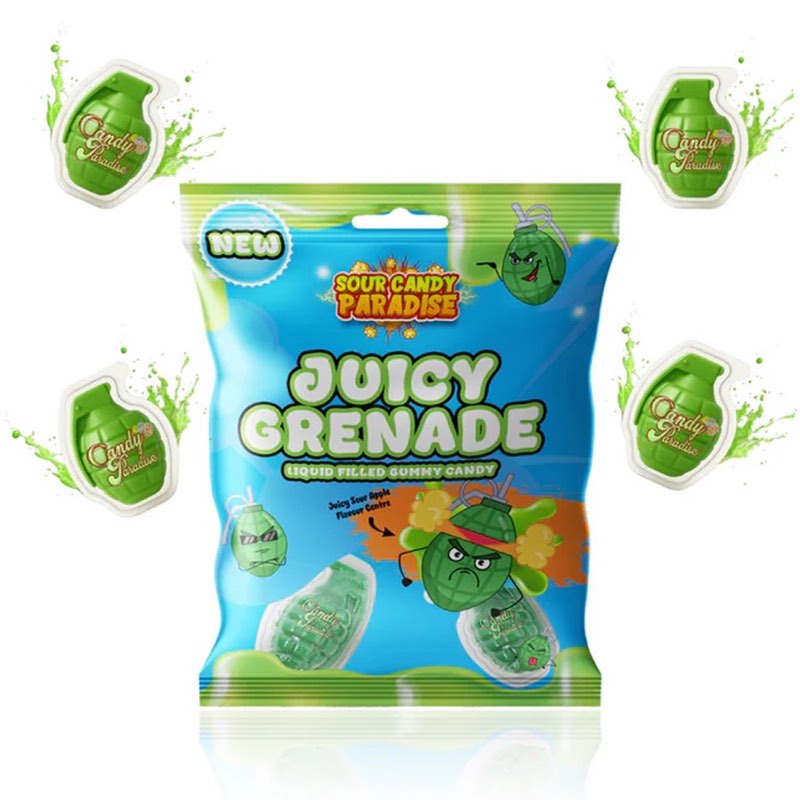
Candy Paradise · 72g
Read the full guide
Candy Paradise Juicy Grenade Gummies
£1.39
✔ In stock — ready to ship
Fresh stock
Free over £20
Same-day dispatch
Secure checkout
Most sweets give you one event. A sour gummy gives you three, and they arrive in a fixed order that never varies. Knowing the order is most of what there is to know about eating them well.
The first event is dry contact. Before anything happens in terms of flavour, there is a fraction of a second where the outside of the sweet meets your tongue and reads as slightly rough rather than slick — the textural signature that tells your brain, ahead of any taste at all, that this is going to be a sour one. People who eat a lot of these can identify a sour sweet by touch alone in a dark room. That is not a party trick, it is just familiarity with a very consistent signal.
The full guide to Candy Paradise Juicy Grenade Gummies
5,258 words on how it eats, who it suits, how to serve it and what to put beside it.
The first ten seconds
The second event is the sour hit, and it arrives fast. Within a second or two of that first contact the sharpness is fully present, and it is present at the sides of the tongue and along the jaw rather than at the tip. That is where sourness registers, and it is why a good sour sweet feels like it is happening at the edges of your mouth rather than in the middle of it. It peaks quickly, holds for a few seconds, and then begins to recede — and the receding is the important part, because that is when the sweet underneath is revealed.
The third event is the apple. Once the sharp edge has moved off, what is left is a green apple flavour and a gummy chew, and the two of them run together for as long as you keep chewing. This is the part that decides whether you want a second one. A sour sweet with nothing underneath the sour is just an ordeal. A sour sweet with a proper flavour waiting behind it is a sweet worth buying again.
The Candy Paradise Juicy Grenade Gummies run that full three-stage sequence, and at £1.39 for a 72g bag it is an unusually cheap way to get all three.
The chew, and how long it lasts
Texture in a gummy is really a question of two variables: how much it resists when you first bite, and how long it stays coherent afterwards. These sit in the chunky rather than the delicate end of the gummy range — a grenade shape is by definition a solid lump rather than a thin ribbon or a flat disc, and a solid lump eats differently from everything else in the category.
What you get from that is duration. A belt or a ribbon is thin, so it gives immediately and is gone in a few chews. A chunky shaped gummy has depth to it, so the first bite compresses rather than severs, and the whole piece takes a while to work through. That is worth understanding before you buy, because it changes what the bag is good for. Seventy-two grams of thin belts would be gone in three minutes. Seventy-two grams of chunky pieces lasts considerably longer, because each individual piece occupies your mouth for longer.
The chew itself sits in the springy rather than the sticky camp. It compresses under a molar, pushes back, and breaks down into smaller pieces rather than turning into one wad that sticks to your teeth. That distinction — springy versus gluey — is the single biggest quality difference across the whole gummy category, and it is what separates a bag you finish from a bag you abandon halfway through.
There is also the matter of what a shape does psychologically. The name tells you what it is going for, and a distinctly shaped sweet is eaten differently from a plain one. People look at them before eating them. They hold them up. They pick a favourite out of the bag. None of that changes the taste in any measurable way, but it absolutely changes the experience, and shaped sweets have been earning their keep on that basis for as long as sweets have been made.
What is actually in the bag
Straightforwardly: a 72g bag, £1.39, one size, green, apple, and sitting in both our gummy and our sour categories at once. There are no variants to choose between and no larger format of this particular line, so the only decision is whether you want it.
The colour is worth a line. Green is the universal shorthand for sharp apple across the whole of confectionery, as opposed to the reds and pinks that signal soft, sweet, orchard-type apple. That is a convention rather than a rule, but it is a remarkably consistent one, and it means you can read what kind of apple flavour a sweet is aiming at from across a shop before you have picked it up. A green apple sweet is promising you sharp. This one is green.
Beyond that we will not speculate. We do not hold verified recipe, nutrition or diet information for this line, so we will not tell you what is in it or what it is suitable for. The manufacturer's pack carries all of that and it is the thing to read when your order arrives, particularly if anybody in your house has allergies.
Where this lands on the sour spectrum
"Sour" on a sweet shop covers an enormous range, from a faint tang that a child would not even notice to products whose entire commercial proposition is that they are unpleasant. Treating all of it as one category is the single most common mistake people make when buying sour sweets, and it leads to a lot of disappointment in both directions — the person who wanted a gentle tang getting something punishing, and the person who wanted a challenge getting something that barely registers.
It helps to think of it as five rungs.
The five rungs of sour
- A trace. Just enough acidity to keep a fruit flavour from being flat. You would not describe the sweet as sour if asked; you would just say the flavour was bright. Most ordinary fruit gums live here.
- Noticeably sour, comfortably eaten. You register the sharpness clearly, it makes the first bite more interesting, and you can eat a whole bag in one sitting without any difficulty at all. This is the commercially enormous middle of the market.
- Properly sour. The first few seconds are a genuine sensation and you pace yourself slightly. Children pull a face and then immediately have another. You would not eat a large bag in one run.
- Challenging. The sourness is the point of the product rather than a feature of it. Eating several in a row is a deliberate act. These are bought by people who specifically seek them out.
- Endurance. Sold as a test. The eating is secondary to the daring.
Most shoppers want rung two or three and think they want rung four until they have tried one. This one sits comfortably in the middle of the range — a proper sour sweet, with the sharpness clearly present and doing real work, but with a flavour underneath it rather than a punishment. It is the rung at which a bag actually gets finished.
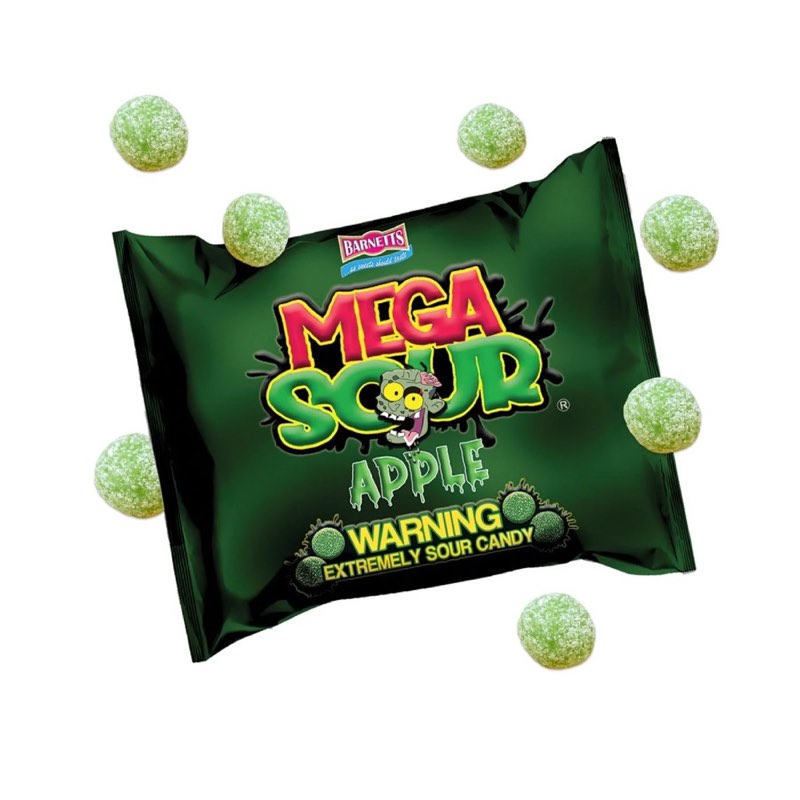
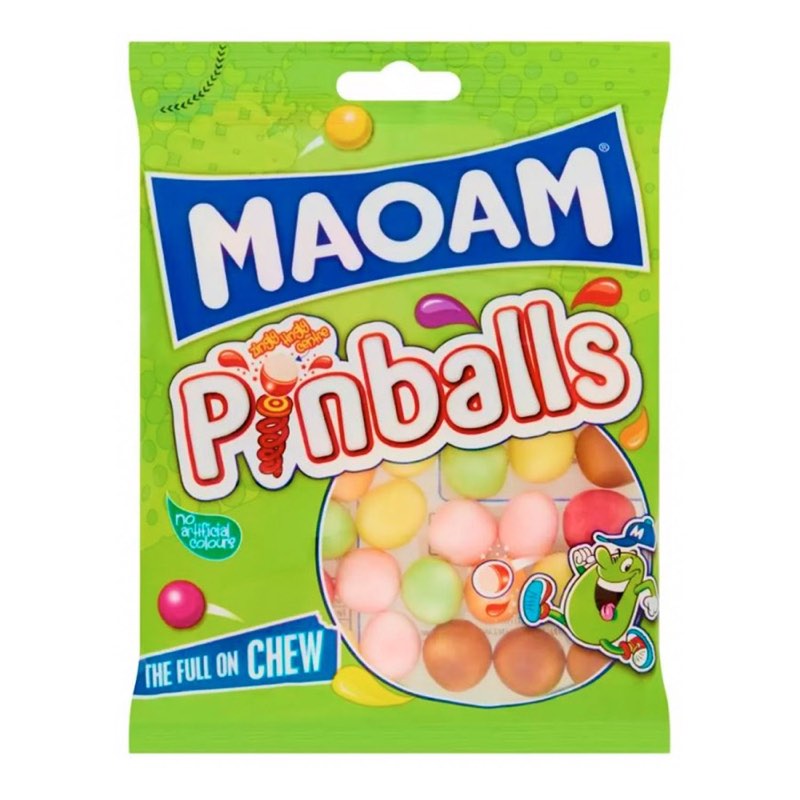
If you want to go further up, we stock the higher rungs and they are honest about what they are. Barnett's Mega Sour Apple Candy Bags 104g at £3.99 take the same apple flavour idea several rungs higher, and are the direct comparison if you have tried this one and want more of a fight from the same fruit. Maoam Sour Blue Raspberry Pinballs at £5.49 take the sour idea into a different fruit and a completely different chew at the same time.
Why sour is the most useful thing in a mixed bag
Here is the practical argument for always having something sour in a spread, regardless of whether sour is your favourite thing.
Palates fatigue. Eat six sweet things in a row and the seventh tastes of noticeably less than the first did, not because it is worse but because your ability to register it has dulled. This happens faster than most people realise — usually within the first ten minutes of a bowl. Something sharp interrupts that. Eat one sour sweet in the middle of a run of sweet ones and the next sweet one you eat tastes closer to how the first one did.
That is why a bag containing ten percent sour is better than a bag containing none, even for people who claim not to like sour. They are not eating the sour ones for their own sake. They are eating them to make everything else work properly again. If you build pick and mix bags regularly, this one principle will improve them more than any other single change.
Building along the spectrum rather than across it
A more interesting way to build a bag than "some sour, some not" is to deliberately span several rungs, so the bag has a range of intensities in it and you can choose your level as you go. A good three-rung bag might use a straightforward gum as rung one, this as rung three, and something genuinely aggressive as rung four. You get to decide, sweet by sweet, how much you can face.
For the mild end of such a bag, the softest possible contrast is the best one, and Barratt Milk Bottle Gums Dusty at £5.49 are about as far from sour as the shelf gets. For the top end, the mega sour lines do the job. The result is a bag that stays interesting for its whole length rather than one that is uniformly one thing.
Sour and shape: why chunky sours behave differently
One more thing the spectrum does not capture on its own: the same level of sourness feels different depending on the shape it arrives in. A thin, flat sweet has a lot of surface area for its size, so all of the sharpness hits at once and then it is over. A chunky piece has proportionally less surface, so the sour registers a little more gradually and the flavour underneath comes through sooner relative to the peak. That makes chunky sours the more forgiving format for anybody easing into the category, and thin sour belts the more intense one at the same nominal strength. If you have ever found belts harsher than you expected, that is why. Vidal Apple Belts at £5.49 are the belt-format version of the same fruit, and they are a genuinely different eating experience rather than a different packet of the same thing.
Which sweet counter this belongs to
Sweets carry era in a way very few foods do. Show someone a sweet they have not eaten since they were eleven and you get an immediate, specific reaction — not just recognition but the room it was bought in, the shop, the coins. That response is worth taking seriously, because it is a large part of why people buy confectionery at all once they are grown up.
Different parts of a sweet counter belong to different eras, and the divide is less about the individual products than about the whole style of buying that surrounded them.
The jar-and-scoop counter
The oldest layer is the wall of glass jars: traditional boiled sweets, mints, chews sold by the quarter, a scoop and a set of scales. That world has its own vocabulary and its own products, and we keep a good deal of it alive on the retro shelf, which is where anybody chasing a specific memory should probably start. It is a counter built around weight and choice rather than around packaging.
The pocket-money rack
The next layer is the small bagged and boxed lines, priced to be bought by a child with their own money, sitting in a rack near the door rather than behind the counter. The defining feature of this layer is independence: it is the first shopping most people ever do without an adult making the decision.
A 72g bag at £1.39 sits squarely in that tradition. It is priced so that it is a reachable, self-contained purchase rather than something you ask for. So is the Jelly Belly Bubble Tea Bag 28g at £1.09, which is about as low as a branded bag goes, and the Mike & Ike Mega Mix Sour Theatre Box 120g at £2.25, which belongs to the cinema-box variant of the same idea.
The sour rack
The most recent major layer is the sour section, and it changed sweet shops in a way that is easy to underestimate. It introduced the idea that a sweet could be difficult on purpose, that eating one could be a dare, and that children would seek out an experience rather than just a flavour. That shift is why a sweet counter today has an entire wall that a counter of a few decades ago did not, and it is why we keep a dedicated sour shelf running to nearly fifty lines rather than treating sour as a footnote on the gummy shelf.
A green apple sour gummy is a very characteristic product of that layer — shaped, branded, sharp, cheap, and sold on the promise of a reaction as much as a taste.
The novelty and kit layer
The newest layer is the one where the sweet is an activity. Things you assemble, decorate, build or play with before eating. the Fuji Candy DIY Handmade Ramen Kit Box 20g at £2.99 is the clearest example we carry — a sweet whose selling point is the making rather than the eating. Twenty years ago that shelf did not exist in most British shops. Now it is one of the fastest-moving parts of a counter.
Why nostalgia is really about format
Here is the part people get wrong about sweet nostalgia. It is very rarely the flavour that carries the memory — flavours drift over decades and most people could not identify their childhood favourite in a blind test. What carries the memory is format: the shape of the bag, the way it opened, how much it cost, how many you got, where it sat in the shop, how it felt in a pocket on the walk home.
That is why a cheap bag of shaped gummies at £1.39 will be a nostalgia object for somebody in twenty years, even though nothing about it is old now. Format is what sticks. And it is why we stock across the whole range of formats — bags, boxes, tubs, belts, jars and kits — rather than concentrating on whichever one is currently fashionable. Browse the whole catalogue and you will see four distinct eras of sweet shop sitting side by side on one set of shelves.
Green apple as a flavour family
Apple splits into two quite separate flavour families in confectionery and they are not interchangeable.
The green family is sharp, bright, high and slightly astringent — the flavour idea of biting into a hard green apple. It pairs naturally with sourness because both live at the same bright end of the palate, which is why green apple is far and away the most common flavour on any sour shelf. It is a top note. It arrives fast and it does not linger heavily.
The red or orchard family is rounder, softer, warmer and sweeter, closer to apple as a pudding than apple as a fruit. It sits well next to caramel, toffee and spice ideas, and it makes a poor partner for aggressive sourness because the two pull in opposite directions.
This one is in the green family, which is what both the colour and the sour classification tell you. If apple is your flavour, it is worth knowing that we carry ten different apple lines and that they are spread across both families, so picking by flavour name alone will not reliably get you what you want. Pick by colour and category as well.
Within the green family, the useful comparisons on our shelves are these. Kingsway Sour Apples at £5.49 are the traditional jar-counter version of the idea — a different era of sweet, a different texture, the same fruit. The mega sour bags are the high-intensity version. And the belts are the same flavour in a format that delivers it all at once. Between them you can taste the same fruit idea through four completely different lenses, which is a genuinely interesting thing to do for under twenty pounds.
Building a mix around it
A 72g bag is small enough to be a component rather than a whole spread, which is exactly what makes it useful. Here is how to use it properly.
As the sharp corner of a four-part bag. Take a soft base, a chewy middle, something rich, and put this in as the tenth of the bag that wakes everything else up. This is the highest-value use of a cheap sour bag and the one we would recommend to most people. The base is easiest built from the loose sweets range, which runs to several hundred lines and is priced by weight.
As half of a two-note apple bag. Pair it with a soft apple line and let the bag run between sharp and gentle versions of the same fruit. This is a more sophisticated bag than it sounds and it is very easy to assemble.
As the sour entry in a sour flight. Three or four sour lines at ascending intensities, eaten in order, is a genuinely entertaining thing to put in front of a group. Start here, go up through the blue raspberry pinballs, and finish on a mega sour. Everybody will have an opinion by the end and most of them will be loud.
As contrast in a gummy-heavy bag. If you have built something from the gummy shelf and it is all reading as one thing — which, with seventeen lines to choose from, is easy to do — adding a sour piece is the quickest fix. Texture and sharpness together break up the monotony far more effectively than another flavour would.
As the small thing in a big-format order. If the rest of your basket is tubs and large bags, a £1.39 bag is a cheap way to add a flavour you would not commit to at scale. Something like the Haribo Giant Dummies Tub at £8.99 is a serious quantity of one idea; a small sour bag alongside it costs almost nothing and stops the order being monolithic.
If you would rather have the building done for you, the pick and mix shelf has ready-assembled bags at several sizes and takes the decisions away entirely.
Parties, film nights and gifts
For a children's party, small identical bags are the format that prevents arguments, and a sour bag is a reliable source of entertainment on top of that. The one caution is obvious: sour sweets produce strong reactions and not every child enjoys the experience, so it is worth having something gentle available as well rather than making sour the only option on the table.
For a film night, sour works best early and sweet works best late. Put the sharp things out at the start while everybody is still paying attention to what they are eating, and bring out anything from the chocolate section in the last third when people are settled and grazing rather than tasting. This is a small thing that noticeably improves an evening and costs nothing to do.
For a gift, £1.39 is stocking-filler and party-bag territory rather than a present in itself. Its real gifting use is as one of several small things — a handful of cheap bags with genuinely different personalities reads as much more thoughtful than one larger bag of a single thing, and costs about the same. Mix formats deliberately: a bag, a box, a belt and a tub look like a considered gift, while four bags look like a shop order.
For an office or a household bowl, the honest advice is that this is not the right tool. Sour sweets in a communal bowl get eaten by the two people who like sour and ignored by everybody else. Communal bowls want rung one or two, not rung three.
£1.39 for 72g
This works out at just under two pence per gram, which puts it at the genuinely cheap end of the bagged confectionery shelf. For comparison, small branded bags commonly sit at three to four pence per gram, and the premium sour lines rather higher again.
| Format | Price | Best use |
|---|---|---|
| This 72g bag | £1.39 | One person, one sitting, or the sharp tenth of a mixed bag |
| A larger sour bag | £3.99 and up | When sour is the main event rather than the accent |
| Loose by weight | By the bag you build | Filling a bowl, building a spread, spanning several intensities |
The more useful framing is portioning. Seventy-two grams of chunky sour gummies is a comfortable single-person sitting, or a decent share between two. It is not enough for a bowl and it is not meant to be. If you are catering for a group and sour is a feature of the table rather than a curiosity, buy by weight instead — the economics are significantly better above about 200g and you get to choose the intensities yourself.
One habit worth adopting: when a bag is this cheap, buy one you have not tried alongside whatever you already know you want. The downside of a £1.39 mistake is nothing at all, and the upside is finding a line you will buy for years. Almost nobody does this and almost everybody would benefit from it.
Keeping them in good condition
Gummies are hardy but they have two specific weaknesses and it is worth knowing both.
The first is warmth. A gummy left somewhere warm goes slack, loses its spring, and — if pieces are touching, which in a bag they always are — starts to fuse into a single mass. It is still perfectly edible but the individual pieces stop being individual, and with a shaped sweet you have lost part of what you bought. Keep the bag somewhere cool and out of direct sun, and do not leave it in a car in summer.
The second is air, which matters more for sour sweets than for any other kind. The sharpness on a sour sweet lives at the surface, and an open bag left out will lose its edge noticeably within a day or two — the sweet is not spoiled, it has just become a much milder sweet than the one you bought. If you are not finishing a bag in one go, seal it properly. Roll the top down and clip it, or tip the contents into a lidded jar.
Do not refrigerate. Fridges are humid, and every time a bag comes out of one, moisture condenses on the surface of the sweets, which is exactly the wrong thing to do to a sour coating. A cool, dry cupboard is the right home. And as always, follow the date and storage guidance printed on the pack itself, which is specific to what you have been sent in a way that general advice cannot be.
One size, and what to buy instead if you want more
This comes in a single size — the 72g bag at £1.39 — so there is no format decision to make within the line itself. What there is, is a clear set of next steps depending on what you want more of.
- Want the same flavour, much more intense — the mega sour apple bags at £3.99 are a significant step up the spectrum and stay with the same fruit.
- Want the same flavour, traditional format — the Kingsway sour apples are the jar-counter version of the idea.
- Want the same flavour, faster delivery — apple belts give you everything at once instead of over a long chew.
- Want sour but a different fruit — BUBS Cool Cola Skulls at £7.50 take the shaped-sour idea into cola rather than fruit, with a completely different texture behind it.
- Want a bigger quantity of shaped gummies without the sourness — the giant dummies tub is the volume option for anybody who wants the shape and the chew without the sharp edge.
The genuinely useful thing about a cheap bag is that it lets you find out which of those directions you actually want before spending five or eight pounds finding out.
Where it sits on the site
This one is filed under four different shelves, which is unusual and tells you something about it. It sits on the gummy category for its texture, on the sour category for its intensity, on the apple flavour shelf for its fruit, and on the main loose and bagged sweet section for everything else. If you are shopping by any one of those four things, this will turn up.
The neighbouring shelves are worth knowing. The broader jelly and gummy shelf is the natural next stop if texture is what you are shopping for rather than flavour, and it is wider than the gummy category alone. The retro section is the place to go if reading about sweet counter eras has put you in mind of something specific from years ago. And the candy and chocolate area is where most baskets end up eventually, because almost nobody finishes an order without adding something rich to balance everything sharp.
If you are browsing without a plan, the most efficient route through a shop like this one is by category rather than by brand. Pick a texture, pick an intensity, pick a flavour family, and look at what sits at the intersection. That is how you find the lines you would never have searched for by name — and those are usually the ones worth finding.
Questions worth answering before you buy
How sour is it, really?
Properly sour, but not punishing. On a five-rung scale where one is a faint tang and five is sold as an endurance test, this sits around three: the sharpness is unmistakable and is the point of the sweet, but there is a real apple flavour underneath it and a bag can be finished comfortably in one sitting. If you have eaten mega sour lines and found them manageable, this will feel gentle. If your sour experience is limited to ordinary fruit gums, it will feel like a proper step up.
Will children like them?
Many children love sour sweets specifically because of the reaction, and a shaped sour gummy is very much aimed at that audience. That said, reactions vary a lot and some children genuinely dislike the sensation, so it is worth having something milder on the table too. Sweets are a treat and should be treated as one. Small hard sweets and whole gummies are a choking risk for young children, so supervise them while they are eating.
What does it taste of apart from sour?
Green apple — the sharp, bright, high version of apple rather than the soft orchard version, which is what both the green colour and the sour classification signal. Once the initial sharpness recedes, the apple is what carries the rest of the chew. That is the whole flavour proposition and there is nothing complicated about it, which for a bag at this price is exactly right.
How many pieces are in a 72g bag?
We do not count them, and the number varies because sweets are packed by weight rather than by piece and individual pieces differ slightly. Chunky shaped gummies are heavier per piece than small ones, so expect fewer, larger sweets than you would get from the same weight of little gums — but each one lasts longer in the mouth, so the eating time works out surprisingly similar.
Are these suitable for vegetarians or vegans?
We hold no supplier diet information for this line, so we cannot tell you and we will not guess. The manufacturer's pack carries its own statement and that is the only thing to rely on. If a diet requirement is the deciding factor in your order, check the packaging on arrival before anybody eats anything, and do not assume anything that is not printed there.
Why is it so much cheaper than the other sour lines?
Mostly format and quantity rather than anything else. This is a small bag at 72g, while most of the lines it sits beside on the sour shelf are larger bags or premium branded formats at two or three times the weight. Price per gram is the honest comparison, and on that basis this is at the cheap end but not dramatically out of line with the rest of the category. It is a small bag at a small-bag price.
Do sour sweets lose their sourness?
Yes, and faster than people expect. The sharp element on a sour sweet sits on the outside, and an open bag left in the air will noticeably mellow within a day or two. The sweet is not spoiled — it has simply become a much milder version of itself. Seal the bag properly, or tip the contents into a lidded container, and it will hold its edge far longer. Warmth and humidity both accelerate the process.
Can I use these in a pick and mix?
They are ideal for it, and in our view a sour component improves almost any mixed bag regardless of whether sour is your preference. The reason is palate fatigue: something sharp partway through a run of sweet things makes everything after it taste properly again. A tenth of the bag is enough. Any more and the sour stops being a reset and starts being the whole experience.
What is the difference between these and a sour belt?
Surface area, mostly, and it matters more than it sounds. A belt is thin and flat, so all of its sourness reaches your tongue at once and the whole thing is over in a few seconds. A chunky piece releases more gradually and the flavour underneath emerges sooner relative to the peak. At the same nominal strength, belts feel harsher and chunky pieces feel rounder. Neither is better; they are different experiences and worth trying side by side.
Will they melt or stick together in transit?
Gummies do not melt the way chocolate does, but sustained warmth makes them slack and can fuse the pieces into a mass, particularly with shaped sweets where the pieces have flat faces that meet. If a bag arrives warm, let it cool fully before opening and squeeze it gently to separate the pieces. Most of the time that completely resolves it. Ordering in a heatwave is the main risk and it applies across the whole gummy category.
What should I buy with it?
Something soft, something rich, and one thing you have never heard of. The soft item gives your mouth a break, the rich item finishes an evening properly, and the unfamiliar one is how you find new favourites. At these prices the whole experiment costs less than a round of drinks, and a basket built that way is far more interesting than four variations on the same gummy.
Is this a good first sour sweet for someone new to them?
It is a sensible starting point, yes. It is cheap enough that an unsuccessful experiment costs almost nothing, sour enough to be a real experience rather than a hint, and chunky enough that the sharpness arrives a little more gradually than it would from a thin format. If you get on with it, the higher rungs are a click away. If you do not, you have spent £1.39 finding out something useful about your own palate.
To sum up
A 72g bag of green apple sour gummies at £1.39, sitting at the honest middle of the sour spectrum — sharp enough to be the reason you bought them, not so sharp that the bag goes unfinished. Use it on its own as a cheap, well-made sour sweet, or use it properly as the sharp tenth of a mixed bag where its real value is making everything around it taste like itself again. Shaped, green, chunky, and priced so that trying it costs you nothing to speak of.
More sour sweets
More apple sweets
More loose sweets sweets


Where this sits
Candy Paradise Juicy Grenade Gummies appears on these shelves. Browse them, or jump to something nearby.
You might also like