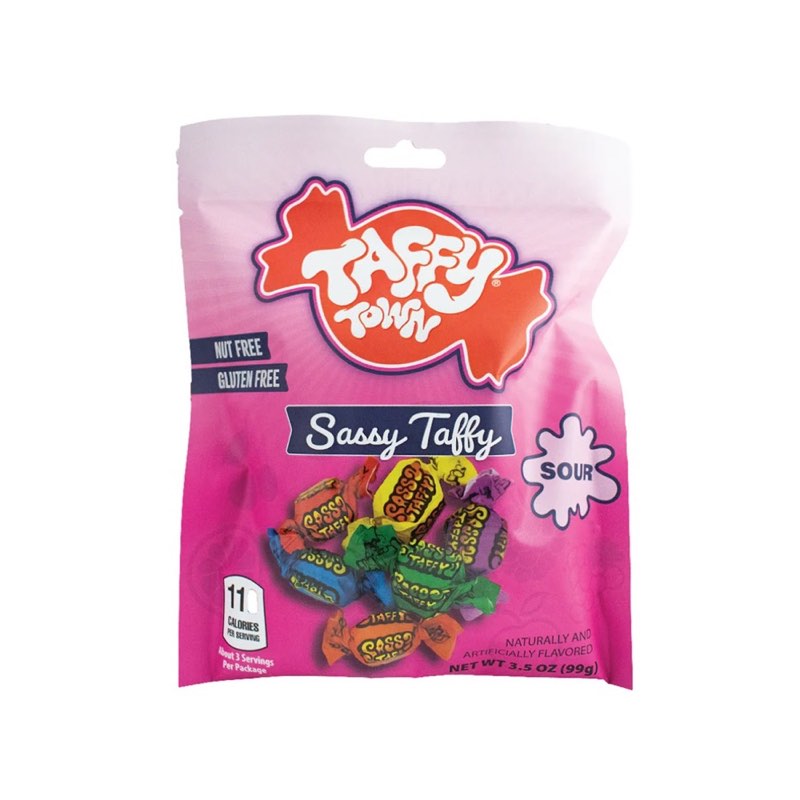
3D · 340g
Read the full guide
Taffy Town Sassy Taffy 340g
£7.49
✔ In stock — ready to ship
Fresh stock
Free over £20
Same-day dispatch
Secure checkout
Most sweets are one idea. This is seven — apple, cherry, grape, lemon, orange, raspberry and a general fruit note running underneath them — in 340g for £7.49. That changes how you should use it, because a single pack with seven flavours in it is not a component in a mix so much as a mix in its own right. The question is not what to add to it but what it still needs.
The answer, almost always, is three things: something that is not fruit, something that is not chewy, and something sharp. Get those three and you have a bowl that works for a room full of people with different tastes. Miss them and you have a lot of pleasant, similar, fruity chewing.
The full guide to Taffy Town Sassy Taffy 340g
5,453 words on how it eats, who it suits, how to serve it and what to put beside it.
Building a bowl around a seven-flavour chew
Start with the texture gap, because it is the widest one. Every piece in this pack is a chew — dense, slow, cohesive, the kind of sweet that occupies your jaw for a while. A bowl made only of chews is hard work and people stop after two. What it wants beside it is something that yields quickly. Haribo gold bears at £5.49 are the most reliable answer in the shop: soft, small, quick to eat, and universally recognised, which matters more than people admit when you are feeding a mixed group. For something firmer with a completely different mouthfeel, the apple bon bons at £5.49 bring a dusted, slow-dissolving sweet that you suck rather than chew, and the apple note ties back into the pack neatly enough to feel deliberate.
Next, the sharpness gap. Seven fruit flavours is a lot of range but it is all in one register — sweet, bright, friendly. Nothing in it makes you pull a face, and a spread benefits enormously from something that does. A 100g bag of sour mini jelly babies at £1.00 is the cheapest way to add that, and at a pound it is worth putting two in. If you would rather the sharp element be a talking point rather than a background note, the Bean Boozled box at £2.99 for 45g turns the bowl into a game with rules, which changes the whole evening.
Third, the not-fruit gap. This is the one people forget. A table of fruit flavours, however varied, still reads as one flavour family, and the palate stops distinguishing after a while. Bring in something from a different world entirely: drumstick lollies at £5.49 sit in the creamy, milky register that fruit sweets never touch, and being on a stick they also solve the sticky-fingers problem at a party. For a savoury break in a sweet spread — an underrated move at any adult gathering — the extra cheesy wavers crisps at £4.99 for 126g or the late night pizza version at the same price reset everyone's palate and mean the sweets get eaten over three hours rather than twenty minutes.
For a build that stays entirely within the chew family but adds variety of format, Maoam pinballs at £1.99 for 140g are the obvious neighbour — individually wrapped, so they travel and portion differently, and a smaller, rounder shape against a larger one. Barratt's fruit salad chews at £5.49 take the same idea in a much more traditional direction. Having two or three chews of different sizes and shapes in one bowl is far better than having one chew in quantity.
If the bowl is for children specifically, keep it soft, keep it colourful and keep the pieces countable. If it is for an adult evening, push the contrast harder — sharp, savoury, and something that nobody expects. And if you would rather not assemble any of this from packs at all, the chewy sweets shelf runs to seventy-eight lines and is the right place to browse for partners by texture rather than by brand.
One last building note. Because this pack contains seven flavours, it will always look more generous in a bowl than a single-flavour sweet of the same weight. Colour variety reads as quantity. If you are filling a clear jar or a display dish for a table, a multi-coloured chew does visual work that a uniform sweet cannot, and you can get away with putting less out.
What comes out of the bag
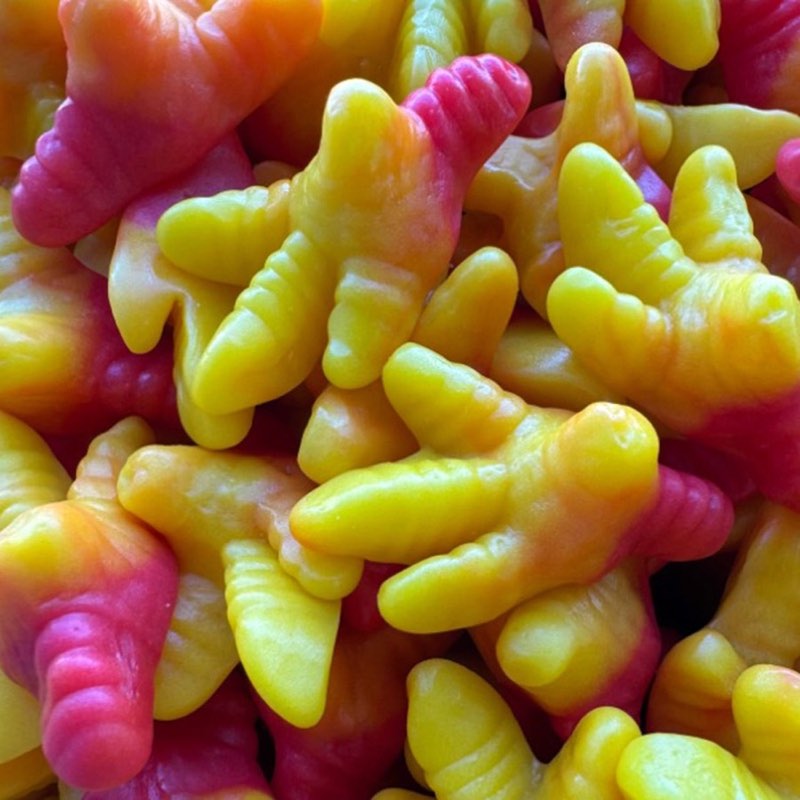
Multi-coloured, individually recognisable, and immediately readable by flavour — that is the first impression. You can tell what you are picking up before you eat it, which sounds trivial and is actually the entire user interface of a multi-flavour pack. People pick their favourite first, and they cannot do that if everything looks the same.
The weight is 340g, which is a useful middle size: more than a share bag, considerably less than a party tub, and about the amount that a household gets through over a couple of weeks without it becoming a project. It is a pack you finish rather than a pack you store indefinitely.
In the hand, each piece has the density that separates a chew from a jelly. There is no bounce and no give-and-rebound — press one and it stays pressed. That firmness is temperature-sensitive in a way jellies are not: straight from a cold room they are noticeably stiffer, and after ten minutes in a warm hand they go pliable. Both states are enjoyable and they are quite different sweets.
The pack sits on our retro shelf among eighty-nine lines, which is the right home for it. Taffy is one of the oldest forms of confectionery there is, and a pack of it in seven fruit flavours is a modern presentation of a very old idea. Nothing about it is trying to be new, which is precisely why it works as well in a hamper as it does in a party bowl.
The long chew, and what your jaw is actually doing
A chew is the slowest sweet in the shop and it asks the most of you, so it is worth knowing what the experience is before you buy 340g of it.
The first thing that happens is nothing much. A chew straight from the pack resists — your teeth press and it presses back, and for a second or two you are not getting through it. Then it yields, all at once, and from that point on you are working rather than tasting. This initial resistance is why chews are the sweets that children take seriously; you cannot eat one absent-mindedly.
The second phase is the long one. The piece warms, softens and becomes pliable, and it moves from being a solid object to being something that changes shape with every press. This is where a chew is at its best, and it is a texture that no other confectionery category provides. A jelly is finished by now. A foam sweet is long gone. A chew is still going.
The flavour follows the same curve, and this is the key thing about a fruit chew: it does not release all at once, it releases as you work. The first few seconds are muted, the middle is where the flavour is fullest, and then it tails off gradually while the texture continues. That mismatch — flavour ending before the chewing does — is a genuine characteristic of the format and it is why people tend to reach for the next piece before they have quite finished the last one.
Chews also stick, and it is only honest to say so. They will find the grooves in your back teeth and stay there for a while. That is not a defect of any particular chew; it is what the texture does, and it is worth bearing in mind before you hand them out in a car or put them in a bowl at a formal occasion. It is also why a chew makes a poor last-thing-before-a-meeting sweet and an excellent long-journey one.
Temperature is the one lever you have, and it matters more here than in most categories. Cold, these are firm, slow and long-lasting — you will get several minutes out of a piece. Warm, they are soft, quick and much more immediately flavoured. On a hot day a pack left in the sun will go from one state to the other and the pieces may want to settle against each other, so keep them somewhere cool if you want the firmer version.
Seven flavours, and how they sit against each other
A multi-flavour pack lives or dies on whether the flavours are genuinely distinct or just seven versions of sweet. These are spread across the fruit spectrum sensibly, with a clear split between the bright, sharp end and the round, soft end.
Lemon is the sharpest thing in the pack and does the most work. It is the flavour that stops the whole assortment reading as sugary, and in a chew format it lasts particularly well because the citrus note survives the long middle phase better than the softer fruits do. Our lemon shelf is a tight twelve lines, which is roughly the size it always is — lemon is a fixture rather than a fashion.
Orange is lemon's rounder relative: still citrus, still bright, but with a sweeter middle and much less of an edge. It is the safest of the sharp flavours and usually the one that goes first with younger children. Twelve fewer lines than lemon, at nine, on the orange listing.
Apple is the green note, and green is doing something specific in any assortment: it signals sharp before you have tasted it. In practice apple in confectionery is more crisp than sour — a clean, slightly tart flavour that cuts through the heavier fruits. Our ten apple lines cover the range from mild to genuinely puckering.
Cherry is the most grown-up flavour here. It has a rounded stone-fruit depth underneath the bright red opening that the other fruits lack, and it is the one adults reach for. There are twenty-one cherry lines in the shop, which makes it one of the better-served single flavours.
Raspberry is sharper and narrower than cherry — a high, vivid note without much behind it, which is exactly why it works so well in a mixed pack where something else is providing the depth. Sixteen raspberry lines here, mostly in the brighter formats.
Grape is the interesting one, because it is genuinely uncommon. Our grape shelf holds just four lines against a hundred and sixty-one on the broad fruit listing — it is one of the rarest flavours we carry. It reads deep, slightly floral and a little jammy, quite unlike anything else in this assortment, and it is usually the flavour people either seek out or hand to somebody else. Its presence is a real point in this pack's favour if grape is your thing, because there are not many other places to find it.
The balance across the seven is sensible: two citrus, one green, two red, one deep, and a general fruit note tying them together. Nobody gets a bag full of a flavour they hate, and everyone gets at least two they actively want. That is the whole design brief of a multi-flavour pack and this one meets it.
What 340g actually buys you, worked out properly
At £7.49 for 340g, this comes to about £2.20 per 100g. On its own that number means nothing, so here is where it sits against the things you might buy instead.
| Product | Price | Weight | Per 100g |
|---|---|---|---|
| Sassy Taffy | £7.49 | 340g | £2.20 |
| Taffy Town Go Bananas | £7.49 | 340g | £2.20 |
| Taffy Town Lemonade Stand | £2.99 | 99g | £3.02 |
| Maoam Pinballs bag | £1.99 | 140g | £1.42 |
| Millions mini jelly babies sour mix | £1.00 | 100g | £1.00 |
| Sweetzone orange & lemon slices tub | £7.99 | 800g | £1.00 |
| Candy Pop Butterfinger popcorn | £4.49 | 113g | £3.97 |
| Sour Patch Kids chews | £2.79 | 60g | £4.65 |
| Bean Boozled box | £2.99 | 45g | £6.64 |
Read that table and a clear pattern emerges, and it is the most useful thing on this page. There are three tiers of sweet buying, and they are not really competing with each other.
The bottom tier, around £1.00 to £1.50 per 100g, is bulk and volume buying — the big tubs and the cheap bags. An 800g tub of orange and lemon slices at £7.99 costs almost exactly the same as this pack and gives you well over twice the weight. If your requirement is "fill a bowl for twenty people", that is the correct purchase and this is not.
The top tier, from about £4 to £7 per 100g, is speciality and novelty buying: small packs of something unusual, bought for what they are rather than for how much of them you get. Nobody buys a 45g box to feed a party.
This sits in the middle tier, and the middle tier is where multi-flavour packs live. You are paying roughly double the bulk rate and getting seven flavours in one pack, in a sealed retail bag, in a size that suits a household. Put another way: £7.49 across seven flavours is about £1.07 a flavour, and there is no other way to get seven distinct fruit flavours into a house for that money without buying seven bags.
The portioning maths, which is what most people actually need:
- At a generous 30g handful, 340g gives you about 11 servings, at roughly 66p each.
- At a more typical 20g, about 17 servings at around 44p.
- At 15g in a favour bag, where the sweets are one element among several, about 22 bags at roughly 33p of sweets each.
- At a 10g taster — a couple of pieces on a dessert plate, or a small scoop in a hamper jar — about 34 portions at around 22p.
The per-guest figure is the one worth internalising. Forty-four pence a head is not a meaningful cost at any gathering, and that is true even at this middle-tier rate. The mistake people make is comparing sweets against other sweets when the real comparison is against everything else on the table. Sweets are almost always the cheapest thing at a party and the thing people remember.
Two more value points specific to this pack. First, chews are slow, and slow sweets go further than fast ones — a bowl of chews lasts noticeably longer than a bowl of small soft sweets of the same weight, because the rate of consumption is capped by how long each piece takes. Second, multi-flavour packs have a low waste rate. There is no single flavour here that a whole household will refuse, so the pack gets finished, and a finished pack at £2.20 per 100g is better value than a half-eaten one at £1.00.
If you want the same rate in a different flavour direction, the Go Bananas pack at the identical £7.49 for 340g is the single-theme alternative from the same range, and the 99g Lemonade Stand pack at £2.99 is the small size to try before committing — at £3.02 per 100g it costs more per gram, which is exactly what a try-before-you-buy pack always does.
Giving it away: hampers, post, teachers and care parcels
A sealed, branded, multi-coloured, multi-flavour pack is one of the most quietly useful gift objects there is, and it is worth thinking about why — because the reasons are not obvious and they explain when it works and when it does not.
The first reason is that it is sealed. This matters more than anything else about gifting sweets. A loose bag weighed out from a jar is a wonderful thing to buy for yourself and a slightly awkward thing to give, because the recipient cannot see where it came from and has no packaging to read. A retail pack solves both problems at once. It looks like a present, and — the point that actually matters — it carries the manufacturer's own packaging, so anyone with an allergy in the receiving household can read it for themselves before eating. Never give sweets to someone whose household you do not know without the pack going with them.
The second reason is that seven flavours hedge your ignorance. Gifting is mostly a problem of incomplete information: you rarely know what somebody's favourite is. A single-flavour gift is a bet. A seven-flavour pack is not — there is essentially no chance that a recipient dislikes all of them, and a good chance that at least two are things they actively like. If you are buying for somebody you do not know well, variety is not a nice extra; it is the correct strategy.
The third is that chews travel. This is a real and underrated advantage for anything going into the post or into a bag. Chews do not shatter like a hard sweet, they do not crush like anything brittle, and they do not have the specific fragility of coated or dusted sweets that arrive looking like they have had an argument. In warm weather they can soften and settle against each other, so a summer parcel wants to avoid the hottest week if possible, but structurally a chew is about as postable as confectionery gets — considerably more so than chocolate.
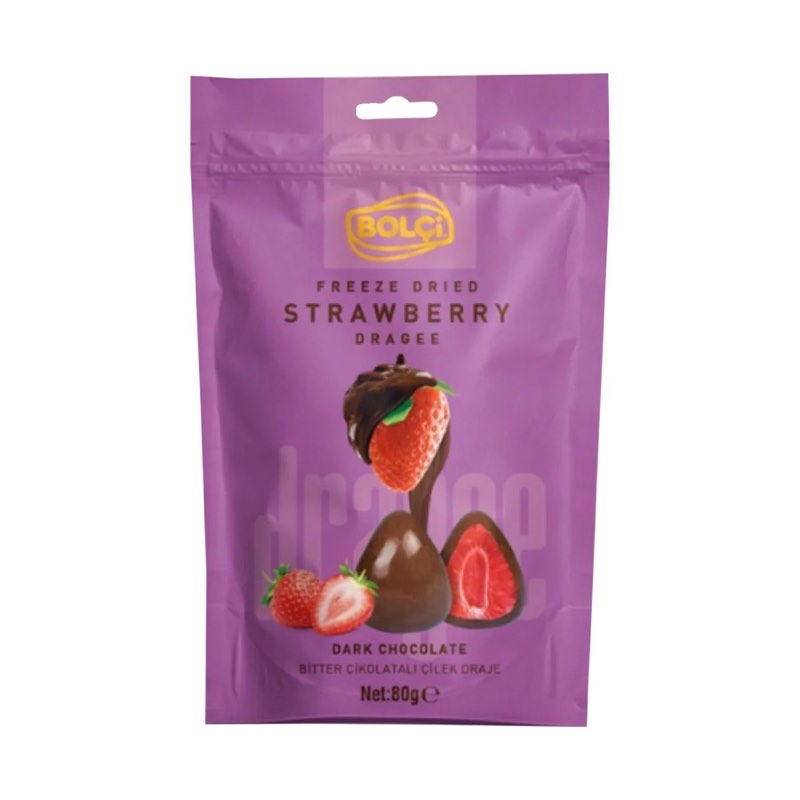
For hampers, this is a middle-layer item rather than the headline. A good hamper has a centrepiece, some middle items with colour and recognisability, and small fillers. A multi-coloured pack does the middle-layer job beautifully because it adds visual interest without competing with whatever the main gift is. Pair it with something from a completely different category to make the hamper look considered rather than assembled from one shelf — the freeze dried dark chocolate strawberry at £4.49 for 80g is a good foil, being small, dark and grown-up where the taffy is bright and playful.
For letterbox gifts, the principle is simple and the practice requires a tape measure. A flat, light, non-perishable, sealed item is the right sort of thing to send; whether any given pack clears any given letterbox depends entirely on the letterbox and on how the pack has settled, so measure rather than assume, and do not promise anybody that something will land on the mat. What you can rely on is that sweets are among the few gifts that survive being posted without refrigeration, special packaging or a delivery slot.
For teacher gifts and end-of-term presents, sealed and shareable is exactly the brief. The unwritten rules are that it should not be expensive enough to be awkward, should not be personal enough to be presumptuous, and should ideally be something that can be put in a staff room and shared. A mid-sized pack of recognisable sweets fits all three. Do not give loose sweets in this context; the sealed pack is the whole point.
For care parcels — students, people in hospital, someone having a rough month — the calculation is different again. Here you want familiarity rather than novelty, because a care parcel is about comfort and not about surprise. A long-established sweet in a bright pack does that job. It also helps that a chew lasts: a parcel of things that disappear in one evening is less comforting than a parcel that is still there on Thursday. If you are building one, add something savoury to break up the sugar and something with a bit of ceremony to it.
For children's gifts and prizes, multi-flavour packs are the fairest thing you can hand out, because every pack is identical and nobody can compare and find theirs wanting. That is worth more at a children's event than the contents.
Two things not to do. Do not decant a gift pack into a jar and give that without the packaging — it looks nicer and it removes the recipient's ability to check what they are eating. And do not post chocolate and chews in the same parcel in summer, because one of them will lose and it will not be the chews. If you want to explore giftable formats more broadly, the 3D range runs to twenty-two lines and spans sweets, popcorn and savoury snacks, which makes it an unusually efficient single shelf to build a mixed parcel from.
Who buys a pack like this
Households with mixed tastes, first. If there are four people in the house and four different favourite flavours, a single-flavour pack is always going to disappoint three of them. Seven flavours means everyone finds something, and the pack actually gets finished.
Gift buyers, second, for all the reasons above. A sealed multi-flavour pack is the default safe answer to "I need to give somebody sweets and I do not know what they like".
Chew people, third, and they are a distinct constituency. Some people want the long jaw-work sweet and find everything else insubstantial. If that is you, a 340g pack of nothing but chews in seven flavours is straightforwardly the product you are looking for, and the wider jelly and gummy section is where to look when you want the softer alternative for everyone else in the house.
Party and event buyers, fourth, though with the caveat from the value section: if you are feeding twenty people, buy bulk for the volume and use a pack like this for the colour and variety on top. It is a garnish at that scale, not the base.
And grape hunters. It sounds like a joke and it is not — grape is genuinely hard to find, and a pack that includes it is worth knowing about if that is the flavour you go looking for.
Occasions that suit a bright, slow sweet
Film nights and long evenings are the natural fit, because the slow chew paces itself against a long sitting far better than anything you can eat forty of. Put a bowl out at the start and it will still have something in it at the end.
Car journeys and travel work well too, with the standard warning about sticky fingers and the back seat. Wrapped alternatives are tidier if the journey is long and the upholstery is pale. Chews are a poor choice immediately before anything that involves talking to people.
Children's parties want this as the colour element rather than the volume element. Multi-coloured pieces make a table look generous, and the seven flavours mean no child is stuck with something they will not eat. As with all confectionery, sweets are a treat, whole sweets are a choking hazard for young children, and small children should be supervised while eating.
Office and staff-room bowls suit a chew particularly well, because a slow sweet means people take one rather than a handful, and a bowl lasts a week instead of a morning.
Seasonal tables benefit from the colour. A spread that is otherwise all reds, golds and browns is lifted immediately by something multi-coloured, and a bowl of bright chews is one of the cheapest ways to add that.
And for the simplest occasion of all — a mid-week evening when somebody wants something sweet — a 340g pack in the cupboard is about the right quantity to have on hand. Big enough to share, small enough not to become furniture.
Keeping chews in the state you want them
Chews have one main enemy and it is heat. Warmth makes them soft, and soft pieces stored together will settle against one another and take some separating. This is not spoilage and they remain perfectly good, but a block of taffy is less pleasant to serve than a bag of individual pieces. Keep the pack somewhere cool — a cupboard, not a windowsill, and not the shelf above the oven.
Seal it properly after opening. Chews are less vulnerable to drying out than aerated sweets, but air will still firm the exposed surfaces over time and you will end up with pieces that take more work than they should. A clip is adequate; an airtight container is better.
Avoid damp. A humid cupboard — next to a kettle, near a tumble dryer vent, in a steamy kitchen — will make the surfaces tacky, and tacky chews stick to each other far more readily than dry ones.
If pieces have fused, a short spell somewhere cool will firm them enough to come apart cleanly. Do not try to separate warm, soft chews by force; chill them first and they will part along the joins.
A tip for parties: if you want the firmer, longer-lasting chew, put the pack somewhere cool an hour before serving. If you want the softer, more immediately flavoured version, leave it at room temperature. It is the same sweet and it is a noticeably different experience, and you can choose.
Check the manufacturer's packaging on arrival for storage guidance and anything else you need before eating — particularly if there is an allergy in the household. The pack is always the authority; nothing on this listing replaces it.
One size, and the rest of the range
This is listed in a single option: 340g at £7.49. There is no larger or smaller version of this particular assortment, so the choice is a straightforward yes or no rather than a comparison — you are either buying this pack or you are buying something else.
If the size feels like a lot for a first purchase, the smaller Lemonade Stand pack from the same range is the sensible way in at 99g, though as noted it costs more per gram. If the size feels small for what you need, the honest answer is that this is not a party-volume product and you should build the volume from a bulk line and use this for variety.
Within the same range there is the banana-themed pack at the same weight and price if you want a single-theme assortment rather than a spread of fruits, and the Butterfinger popcorn at £4.49 for 113g if you want something from a completely different category for a mixed order. The Sour Patch Kids chews at £2.79 for 60g are the sharp counterpart within the same brand shelf — a chew in a much smaller pack with the sourness this assortment deliberately does not have.
Stock is available at the time of writing.
Finding related things on the site
This listing sits on more shelves than most, because a seven-flavour pack qualifies for every flavour it contains. The six individual fruit shelves are linked in the flavour section above, and the broad fruit listing sits behind all of them.
By texture, the chewy section is the direct neighbour and the largest relevant shelf. By tradition, the retro collection is where this sits historically. By brand, the 3D shelf holds twenty-two mixed lines, and the other maker shelves worth knowing are Kingsway, Haribo and Sweetzone, which between them cover most of the classic loose and bulk confectionery we carry.
The full catalogue is the place to start if you would rather browse than filter, and the mini mochis in berry flavours at £1.35 is worth a look if you want something small, cheap and texturally unlike anything else on this page to round out an order.
A practical navigation tip for multi-flavour packs: if you liked one particular flavour out of the seven, go to that flavour's shelf rather than searching for the brand. That is how you find the single-flavour version of the thing you actually liked, which is usually what people want after finishing an assortment.
Questions worth answering before you order
How many flavours are in the pack?
Seven: apple, cherry, grape, lemon, orange, raspberry and a general fruit note running through the assortment. They are spread sensibly across the range rather than clustered — two citrus, one green, two red and one deep — so the pack does not read as seven versions of the same thing. We do not publish the proportions of each, as they are not something we can state reliably.
What does it work out at per 100g?
About £2.20, at £7.49 for 340g. That puts it in the middle tier of sweet buying: roughly double what a bulk tub costs per gram, and well under half what a small speciality pack costs. You are paying for seven flavours in a sealed retail pack rather than for volume, which is a perfectly sensible thing to pay for as long as you know that is the trade.
Is it good value for a party?
For colour and variety, yes. For raw volume, no — buy a bulk tub for that and use this on top. At a 20g serving, 340g covers about seventeen people at around 44p of sweets each, which is not a significant cost at any gathering; but if you are filling a table for thirty, the per-gram rate starts to matter and the big tubs are the right call.
How long does a chew last compared with other sweets?
Noticeably longer in the mouth, which means a bowl of them goes further than a bowl of small soft sweets of the same weight. A chew resists first, then softens and stays pliable, and the whole process occupies your jaw for a while. That is the format's main practical advantage at a long occasion, and its main disadvantage immediately before you need to speak to anyone.
Will they stick to my teeth?
Some, yes — that is what a chew does, and it is true of every chew rather than anything particular to this one. It is worth knowing before you put a bowl out at a formal occasion or hand them round in a car. Chilling the pack before serving makes the pieces firmer and slightly less inclined to cling.
Do they melt or go sticky in warm weather?
They soften rather than melt, and softened pieces stored together will settle against each other and need separating. Keep the pack somewhere cool and it stays as firm individual pieces. If it has gone soft, put it somewhere cool for a while and the pieces will come apart cleanly rather than tearing.
Are these a good thing to post?
Structurally, yes — chews do not shatter, crush or crumble the way brittle, coated or dusted sweets do, and they do not need refrigeration. Heat is the only real consideration, so avoid sending them in the hottest stretch of summer if you can. Send the pack sealed rather than decanting it, so the recipient has the manufacturer's packaging to read before eating.
Is this suitable as a gift for someone whose tastes I do not know?
It is one of the better answers to exactly that problem. Seven flavours means the odds of a recipient disliking all of them are very low, and a sealed retail pack looks like a present and carries its own packaging. That last point is the important one — always pass sweets on in their own pack so the person receiving them can check it themselves.
Is there a bigger or smaller size?
Not of this exact assortment — it is listed in one size, 340g at £7.49. The smaller pack in the same range at 99g is the way to test the format for less money, and the same-sized banana-themed pack is the alternative if you would rather have one theme than seven flavours.
What should I put with it in a bowl?
Three things it does not provide: something that is not chewy, something that is not fruit, and something sharp. Gold bears cover the first, drumstick lollies or a savoury snack cover the second, and a sour bag covers the third. With those alongside it you have a spread that works for a mixed room rather than for one kind of palate.
Which flavour is hardest to find elsewhere?
Grape, by a distance. We carry only four grape lines in the entire shop against a hundred and sixty-one across the broader fruit category, so a multi-flavour pack that includes it is a genuinely useful way to get hold of the flavour. If grape is the one you are after, this pack and the grape shelf are the two places to look.
Can I use these for baking or decorating?
People do use bright chews as decoration on cakes and traybakes, and the colour holds up well because there is no coating to run. Be aware that they soften considerably with any warmth, so add them to something cooled rather than something fresh out of the oven, and press them in rather than resting them on top.
The short of it
Seven fruit flavours, 340g, £7.49 — about £2.20 per 100g, or around 44p a head at a sensible party serving. It sits in the middle of the market: more per gram than a bulk tub, far less than a novelty pack, and it buys you variety rather than volume. The chew format means it is slow, which makes a bowl last, and it means it sticks, which makes it a poor choice ten minutes before a meeting.
Use it as the colour and variety layer in a spread rather than the base. Give it away with the packaging on, because seven flavours hedge a recipient's unknown tastes and a sealed pack lets them read what they are eating. Keep it cool, seal it after opening, and if you find you like one of the seven in particular, go to that flavour's shelf and buy the single-flavour version — which is, in the end, what multi-flavour packs are for.
More from 3D
More retro sweets
More fruit sweets
Where this sits
Taffy Town Sassy Taffy 340g appears on these shelves. Browse them, or jump to something nearby.
You might also like