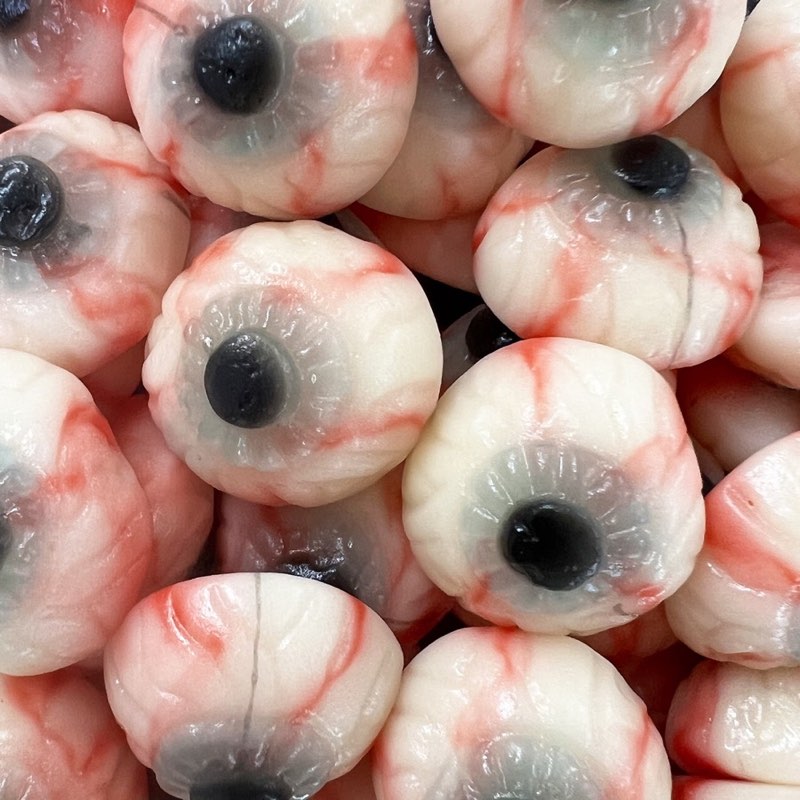
3D · 99g
Read the full guide
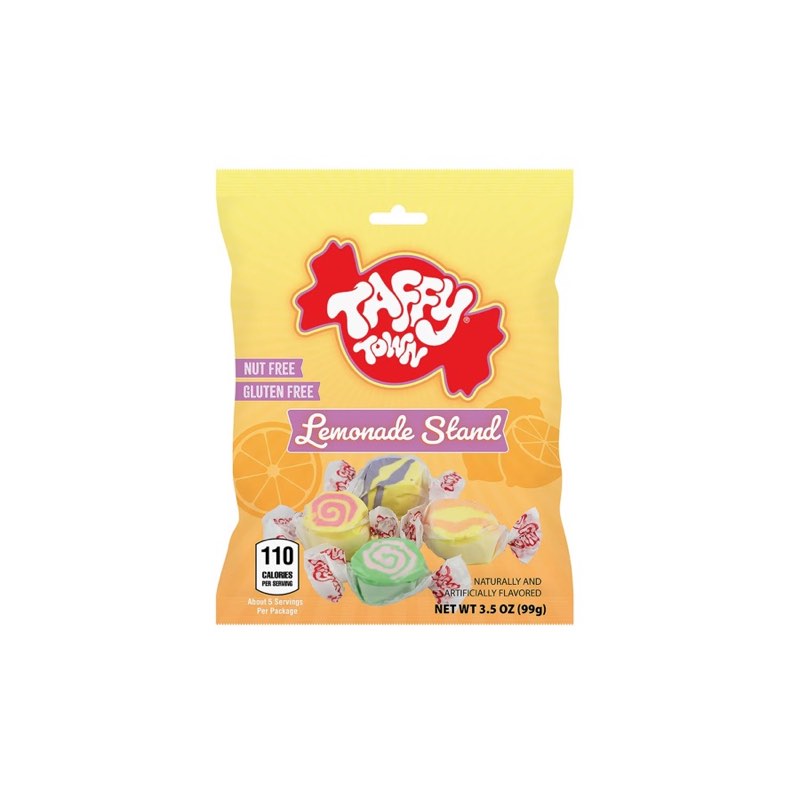
Taffy Town Lemonade Stand 99g
£2.99
✔ In stock — ready to ship
Fresh stock
Free over £20
Same-day dispatch
Secure checkout
Start with the number that decides most baskets. This is a 99g bag at £2.99, which works out at £3.02 per 100g. That is not the cheapest way to buy a chewy sweet and it is not pretending to be. It is worth understanding exactly what you are paying the premium for, because once you can see it the decision gets easy.
The comparison to make is with the larger bags sitting near it on the same shelf. Taffy Town Sassy Taffy 340g is £7.49, which is £2.20 per 100g. Taffy Town Go Bananas 340g is the same £7.49 and the same £2.20. So a 340g bag is running roughly 27% cheaper per gram than this one. On pure arithmetic, the big bag wins every time.
The full guide to Taffy Town Lemonade Stand 99g
5,087 words on how it eats, who it suits, how to serve it and what to put beside it.
Gram for gram: what £2.99 is actually buying
Except that pure arithmetic is not what most people are doing when they put a 99g bag in a basket. Here is the other side of it, laid out honestly:
| What you want | The 99g at £2.99 | A 340g bag at £7.49 |
|---|---|---|
| Cost per 100g | £3.02 | £2.20 |
| Cash out of your pocket today | £2.99 | £7.49 |
| Trying a flavour you do not know | Low risk | £7.49 of regret if you dislike it |
| Fitting into a party bag or a stocking | Goes straight in | Has to be decanted |
| Number of named mixes for a tenner | Three, with change | One, and you are over |
| Finishing it before it goes soft | Days | Weeks or months |
That last row is the one nobody puts on a spreadsheet and the one that costs people the most money. A chew is at its best when the bag has been open for a short time. Buy 340g of something you eat twice a month and the back half of the bag is not the sweet you paid for. Buy 99g and you finish it while it is right. The cheaper per-gram option is only cheaper if you actually eat all of it in good condition.
In portion terms, 99g is about four decent adult helpings at roughly 25g each, or six smaller ones alongside other things on a table. That puts a single serving somewhere around 75p — which is a reasonable price for a sweet that takes real time to eat. Chews are slow. Measured in minutes rather than grams, 99g of a dense chew outlasts 99g of almost anything else on the counter, and that is the honest defence of the price per 100g.
For a party bag, one 99g bag split between three or four bags is about right if there is anything else going in with them. If the bag is going in whole as the main item, it reads as a proper gift rather than a token, and at £2.99 a head that is a defensible party-bag budget for most people.
The first handful
Tip some into a bowl and the colour is the first thing that lands. Our listing records this one as multi-coloured, and that spread does something a single-colour sweet cannot: your eye keeps finding edges, so a small quantity reads as a lot. Ninety-nine grams in a small dish looks considerably more generous than 99g of anything uniform, which is a genuine practical advantage when you are dressing a table on a budget.
In the hand, these are proper chews — the type is listed as chewy and nothing else, which tells you the whole eating experience up front. There is no shell to crack, no coating to dissolve, no powder to get on your fingers. You get a piece, you put it in your mouth, and everything that happens after that happens slowly.
That slowness is the defining feature. The first few seconds are firm; a chew straight from a cool cupboard puts up genuine resistance and you are aware of working. Then it warms, softens, and starts to give. Somewhere around the fifth or sixth chew the texture changes character completely and becomes pliable and smooth. The flavour follows that curve rather than arriving all at once — it builds, plateaus, and stays put for a long while after you would expect it to have finished.
The flavours listed are fruit and lemon, and the lemon is the part that shapes the experience. A lemon note in a chew behaves differently from a lemon note in a hard sweet or a fizzy one. In a boiled sweet, lemon is sharp and immediate and thins out over ten minutes. In a chew it arrives gradually, and because the chew holds it against your tongue rather than washing over it, the tartness reads rounder and less pointed. It is closer to the memory of a cold drink on a hot day than to biting a lemon, which is presumably the idea behind the name.
The finish is clean for a chew, which is not something that can be said of every sweet in this family. It does not leave a coating on the teeth the way a toffee does, and it does not leave the mouth dry. What it does leave is a lingering fruit impression that sits there for a minute or two after the chew itself is gone — a long tail, and part of why a small bag feels like more than it weighs.
Temperature matters more here than on almost any other format. Cold chews are hard work and release flavour slowly. Warm chews are soft, stretchy and give everything up quickly. Room temperature is where the balance sits, and if a bag has been in a cold cupboard it is worth letting it sit out for twenty minutes before you judge it.
Lemon, lemonade and the fruit shelf
Lemon is one of the smallest flavour shelves we run — our lemon shelf holds twelve lines against the 161 on the fruit shelf. That imbalance says something true about confectionery: lemon is a supporting flavour far more often than a lead. It turns up as the sharp corner of a mixed assortment, the one in the tube nobody fights over, the palate-cleanser between the reds. Products that put lemon at the front are comparatively rare, and the ones that do usually lean on a specific idea rather than the raw fruit.
Lemonade is that idea, and it is worth separating it from lemon proper. Lemon on its own is astringent and one-directional. Lemonade is lemon that has been softened and rounded until it reads as refreshing rather than sharp — the difference between a slice and a glass. It carries associations that raw lemon does not: summer, cold drinks, a jug on a table, a trestle at the end of somebody's drive. A sweet aiming at that register is not trying to taste of citrus so much as trying to taste of a particular kind of afternoon.
Against the broader fruit shelf, a lemon-forward chew fills a gap most people do not notice until it is filled. Nearly every fruit assortment in the shop is weighted towards the red-and-orange end: strawberry, cherry, raspberry, orange. That is where the volume is, because that is what sells. The consequence is that a bowl assembled without thought tastes like a single long red note by the third handful. One genuinely yellow-tasting line cuts through that, and does more for a mixed bowl than a fourth red one ever will.
If you want to see the contrast for yourself, Taveners Fruit Pastilles at £5.49 give you the fruit spectrum in a firm, chewy gum with a dusted surface — a completely different delivery from a soft chew, and a useful demonstration of how much the format changes the fruit. Barratt Fruit Salad Chews, also £5.49, sit closer in texture but land in a different part of the fruit map entirely, and a bowl with both in it has genuine range rather than the illusion of it.
Editions, seasons and the pleasure of a named mix
There is a particular kind of sweet shopper who does not really buy sweets. They buy releases. They know which shapes come back in September and disappear in November, which formats turn up once and never again, and which named mixes are a permanent part of a range as against a run that exists for a season and then does not. If that sounds like an eccentric way to shop, consider that it is exactly how people buy trainers, records and beer, and confectionery is no less prone to it.
The first thing worth understanding is what a named mix actually is. A product called something like a lemonade stand is not a flavour. It is a curated set — a group of flavours chosen to sit together under a theme, which is a different proposition from a bag of one thing. The person who assembled it made editorial decisions: what goes in, what is deliberately left out, what proportion each gets. You are buying somebody's judgement about which notes belong next to each other, and that judgement is the value. This is why named mixes command loyalty in a way that single flavours rarely do. Nobody has a favourite bag of lemon. Plenty of people have a favourite assortment.
The second thing is that assortments rotate in a way that single lines do not. A manufacturer can keep a plain flavour in production indefinitely because demand is flat and predictable. A themed mix is tied to an idea, and ideas have seasons. Summer themes appear in spring and vanish by autumn. Halloween shapes occupy a six-week window. Christmas assortments arrive in October and are gone by January, and what comes back the following year is frequently not identical — a flavour has been swapped, a colour changed, a proportion adjusted. Collectors track this closely, and the ones who have been doing it a while will tell you that the version you remember is rarely the version currently on sale.
The third thing, and the one that drives the most buying behaviour, is that availability in confectionery is genuinely unpredictable from the shopper's side. A line can disappear from a range with no announcement. There is no back catalogue, no reissue, no way to get hold of last year's mix once the stock has gone. This produces a completely rational habit: when a collector sees something specific that they like, they buy it, because the alternative is finding out in eight months that they cannot. It is not hoarding. It is the only sensible response to a market with no archive.
The fourth thing is that small formats suit collecting far better than large ones. A 99g bag at £2.99 is an entry ticket. You can buy four different named mixes for the price of one large bag of a single thing, and end up with a shelf of variety instead of a cupboard of one flavour. Collectors almost always prefer breadth over depth, and the small bag is what makes breadth affordable. It is also what makes the failures cheap — buy something odd, dislike it, and you are out £2.99 and a lesson rather than most of a tenner.
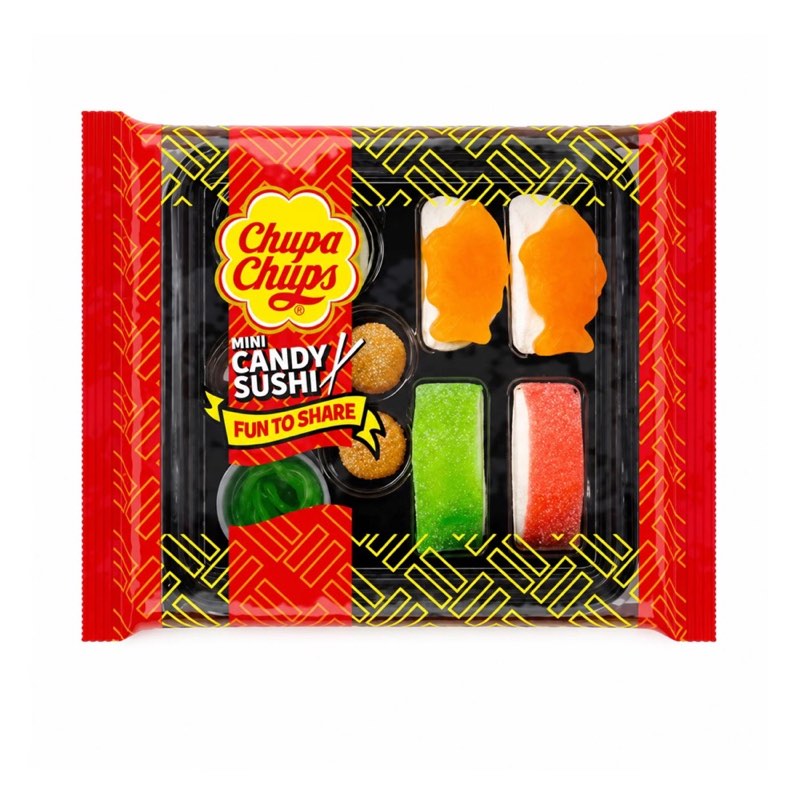
The fifth thing is the novelty end of the shelf, which is a distinct sub-hobby. Some sweets are bought for the flavour and some are bought for the thing itself: the shape, the packaging, the gimmick, the fact that it exists at all. Jelly Belly Bean Boozled Jelly Beans in a 45g box at £2.99 is the clearest case on our shelves — a product whose entire proposition is a game rather than a taste, and which is bought almost exclusively by people who want to inflict it on somebody. Chupa Chups Mini Candy Sushi Tray 100g, also £2.99, works on the same principle: the presentation is the product, and the flavour is along for the ride. Neither of those is a lesser kind of sweet. They are simply sold on a different axis.
The sixth and last thing is a practical note for anybody who has started noticing that they shop this way. Keep a list. Not a serious one — a note on a phone is plenty. Write down what you bought, roughly when, and one line on whether it was worth repeating. Six months later, when you are standing in front of a shelf trying to remember whether the lemon one was the good one, that note is worth more than any amount of recollection. The people who are genuinely good at this all keep some version of it, and every single one of them started keeping it after failing to remember something they wished they had.
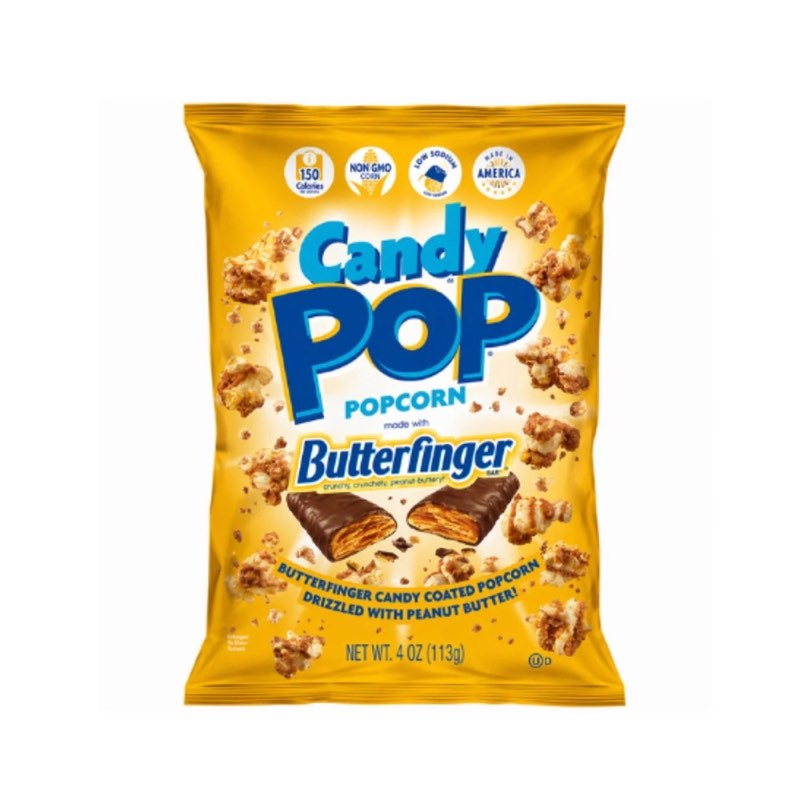
Across the rest of our 3D shelf — twenty-two lines — there is a fair amount of this sort of thing: formats that exist because somebody had an idea rather than because a category needed filling. Candy Pop Butterfinger Popcorn 113g at £4.49 is a crossover product that should not work and does. Bolci Freeze Dried Dark Chocolate Strawberry 80g at £4.49 takes a technique from one part of the food world and applies it somewhere unexpected. And Doughbrik's Extra Cheesy Wavers Crisps 126g at £4.99 is on that shelf as a reminder that the savoury end of a mixed order exists and that somebody at a party will be grateful for it.
Who this bag suits
The 99g bag has a specific shopper and it is not the person catering an event. It is, in rough order of frequency:
- The taster. Somebody who wants to know what a named mix is like before committing to a big bag. £2.99 is the price of finding out.
- The one-person household. Nobody living alone needs 340g of anything chewy. A small bag finishes while it is still at its best.
- The party-bag filler. A bag this size goes into a party bag whole, or splits neatly across three or four.
- The desk or glovebox buyer. Chews are the classic long-journey and long-afternoon sweet, and 99g fits in places 340g does not.
- The mixer. Somebody buying five small bags to build one big bowl, which is covered properly in the next section.
One thing worth flagging: our supplier lists this line as gluten free. We pass that tag on exactly as it is given to us and we do not extend it into any other claim. Everything carrying it sits together on our gluten-free tagged shelf — fifty-four lines — which is a useful starting point if you are shopping with that in mind for somebody else. As with anything we sell, check the manufacturer's packaging when your order arrives before anybody eats anything.
How a small bag of chews behaves in a big bowl
Anybody who has built a serious pick-and-mix knows that the hard part is not choosing nice sweets. It is choosing sweets that do different jobs. A bowl of eight lines that all eat the same way is worse than a bowl of four that do not. A 99g bag of chews is one of the most useful small purchases you can make towards that, and it is worth being precise about the role it fills.
It is the brake. Every mixed bowl has a speed, and it is set by what people reach for most. Soft jellies and foams disappear in minutes. A dense chew takes a minute or more per piece, and the person eating one is committed for that minute. Adding chews to a fast bowl slows the whole thing down measurably — which is what you want for a film, a long journey or an afternoon that needs to be filled, and precisely what you do not want for a buffet table that should be cleared by nine.
It brings a texture nothing else does. Most loose counters are dominated by two textures: the gummy bounce and the hard crunch. A chew is neither. It is the only common format where the sweet changes state in your mouth — firm at first, pliable later — and that transition is genuinely interesting in a way that a consistent texture is not. One chewy line in a bowl of eight gives the whole bowl a dimension it otherwise lacks.
It is a light contributor by volume. This is the practical reason to buy 99g rather than 340g for mixing. Chews are eaten slowly, which means people take fewer of them. A mixed bowl needs proportionally less chew than it needs jelly, so 99g goes further in a mix than the weight suggests. Buying 340g for a mixed bowl usually means 240g sitting in a cupboard afterwards.
It does not bully its neighbours. A fruit-and-lemon chew transfers almost nothing to the sweets around it in a sealed container. That cannot be said of mint, aniseed or anything heavily perfumed, which will take over a mixed jar within a week. This is a safe line to put in with anything.
Where it does cause trouble. Chews soften in warmth and will lean into each other and into softer neighbours. In a warm room, a mixed bowl with chews in it can end up with a sticky patch at the bottom. The fix is to keep chews slightly towards the top of the bowl rather than buried, and not to mix them into a sealed jar that is going to sit in a car.
Building the rest of the bowl. Four roles need filling and chews cover one of them. For the soft-and-fast role, Kingsway Dolly Mixture at £5.49 is the traditional answer and gives you small, varied, quick pieces that keep a bowl moving. For the bouncy gummy role, Haribo Friendship Rings at £5.49 bring a clean ring shape that sits well against irregular chews. For the sharp one, Mike & Ike Mega Mix Sour Theatre Box 120g at £2.25 is the cheapest way into the sour end of a mix and comes in a box that can go straight into a party bag if you change your mind about mixing it.
Another chew, deliberately different. If you want two chewy lines rather than one, make them contrast. Maoam Pinballs Bag 140g at £1.99 give you a chew with a shell around it, which is a different eating event entirely, and at that price they are the cheapest volume in this part of the shop. Drumstick Chew Bars in a 10 pack at £2.50 arrive as individual bars, which is useful when part of the mix is going into separate bags.
Scaling up. If the bowl is large and you need volume cheaply, Candy Realms Tutti Frutti Tubes Tub 780g at £7.99 is the obvious base layer — 780g for under eight pounds makes it the cheapest per gram of anything discussed here, and it lets you spend the rest of the budget on smaller, more interesting bags like this one.
Proportions. For a 1kg mixed jar, something like 15% chews, 30% soft jelly, 25% gummy, 15% sour and 15% novelty works reliably. Chews are the one to under-do rather than over-do. Fifteen per cent of a jar is plenty, which is another way of saying that one 99g bag is close to the right quantity for a full kilo of mix.
The jelly and gummy shelf is where most of the soft component of any mix comes from, and it is the sensible place to start once you have your chewy line sorted. Work outwards from there: one soft, one bouncy, one sharp, and the chews last, since they are the part you need least of.
Occasions that suit a small bright bag
The 99g size determines the occasions more than the flavour does. This is not a centrepiece and it does not want to be one. It is a component, a filler, a small gift and a personal treat, and it does all four well.
Party bags. The single best use. One bag per child reads as generous, needs no decanting, no bagging up the night before, and no arithmetic. At £2.99 a head it is defensible for most party budgets, and the multi-coloured contents look like more than they are.
Stockings and advent-style small gifts. Small, flat enough, bright, and cheap enough that it can be one of several things rather than the whole present.
Long journeys. Chews are the classic car sweet for a straightforward reason: they take time, they are quiet, and they do not shed crumbs into a seat. Ninety-nine grams is roughly the right amount for a family on a three-hour drive, which is to say it will not last the whole way and nobody will be sad about that.
Summer tables. A lemonade-themed bag belongs on a garden table in July in a way it does not belong at Christmas. If you are dressing a summer party, fete or barbecue, this is the right seasonal register and the colours suit the setting.
Where it does not fit. It is the wrong buy for a large party, because you would need eight bags and would be paying 37% over the per-gram rate of a big bag to get there. It is the wrong buy as a standalone present for an adult, because £2.99 of anything is a token rather than a gift. And it is the wrong thing to post on its own, since the postage will cost more than the sweets.
Keeping a chew at its best
Chews have one enemy and it is warmth. Everything else is secondary.
A warm chew softens, and soft chews lean into each other. Left in a hot car or on a sunny shelf, the pieces in a bag will press together and need separating. Nothing is spoiled — twenty minutes somewhere cool firms them up and they come apart — but it is an avoidable nuisance, and repeated warm-and-cool cycles leave a bag looking tired even when the sweets themselves are fine.
Air is the second issue, and it works in the opposite direction. A chew left open to dry air over weeks hardens at the surface, and a hardened chew is genuinely worse: the first few chews are all work and no reward. This is the failure mode that affects big bags rather than small ones, which is one more argument for 99g over 340g if you are a slow eater.
So: keep the bag sealed, keep it somewhere cool and out of direct sun, and do not put it in the fridge. The cold is harmless but the humidity is not ideal, and a chew straight from a fridge is hard work for the first minute. A cupboard away from the oven is all that is needed.
Do not store chews in a sealed jar with mint, aniseed or anything strongly scented. Those transfer through the air inside a container and a fruit chew will pick up the character within a week. Keep the fruit family together and the strong stuff on its own.
If you are decanting into a bowl for a party, put the chews out last and towards the surface. Buried at the bottom of a warm bowl for three hours, they will weld into a layer. Sitting on top, they stay separate and get eaten.
One size, and the alternatives if you want more
This line comes in one size only: 99g at £2.99. There is no larger bag of this particular mix on our shelves, so if you have decided you want a lot of it, the answer is multiple bags rather than a bigger one — which at £3.02 per 100g stays consistent however many you buy, with no volume break to chase.
If what you actually want is a large quantity of chews and the specific mix matters less, the 340g bags are where to go. The two on our chewy sweets shelf from the same maker both run £7.49 for 340g, at £2.20 per 100g, which is a meaningful saving if you will get through them. The trade-off is the one set out at the top of this page: a big bag is only cheaper if you finish it in good condition.
The other approach, and the one we would generally suggest, is to buy this alongside two or three other small bags rather than scaling up on one. Three different 99g bags at £2.99 come to £8.97 — roughly the price of one 340g bag — and give you three distinct things to put in a bowl instead of one. For anything other than straightforward volume catering, that is the better nine pounds.
Where to go from here on the site
This product is filed in a few places at once. The texture puts it on the chewy shelf. The flavours put it on both the fruit and lemon shelves. The supplier tag puts it with the gluten-free listed lines, and the maker's other products sit together on the 3D shelf.
Beyond that, the useful doors are these. The whole range is the widest view if you are browsing rather than hunting. The retro shelf is where to go if what you actually want is the old sweet-counter end of the shop, which is a different mood entirely from a modern named mix. For shopping by maker, the Kingsway range covers a great deal of the traditional loose counter, the Haribo range covers most of what people mean by gummy, and the Sweetzone range is where a lot of the bright, modern, party-facing lines live.
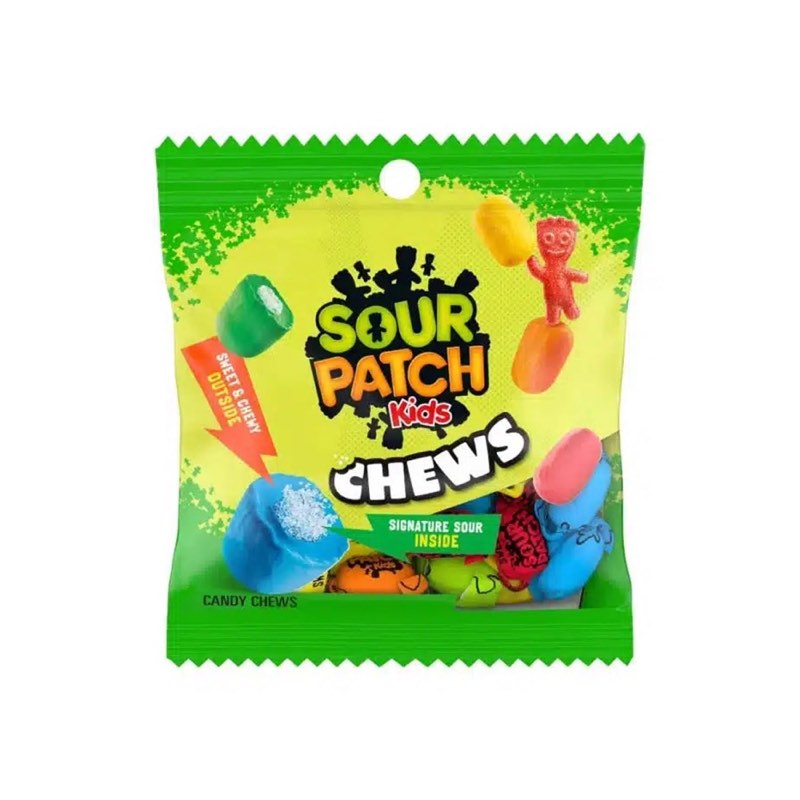
If you came here looking for something similar but softer, Sour Patch Kids Chews 60g at £2.79 are the nearest thing on the site in both size and price, with a sour coating over the chew rather than a plain one — a genuinely different proposition at almost the same money, and worth a look before you decide.
Questions people ask about this one
Which flavours are in the mix?
Our listing records this line under fruit and lemon and gives the colour as multi-coloured. We are not going to guess beyond what we hold, so we will not list individual flavours for you. What we can say honestly is that it eats as a lemon-led fruit chew with several colours in the bag. If the exact line-up matters, the manufacturer's packaging is the place to check when your order arrives.
Is 99g enough for a party?
No, not on its own. Ninety-nine grams is about four adult helpings or six children's portions alongside other things. For a party, either buy several bags or use a 340g bag as your volume and keep this as one of the interesting small additions. As a single item in a party bag, though, one 99g bag per child is genuinely generous.
Why is it more expensive per gram than the big bags?
Because small packs cost more to fill, pack and ship per gram than large ones. At £3.02 per 100g against £2.20 for a 340g bag, you are paying roughly 37% more per gram for the convenience of a small size. Whether that is worth it depends on whether you would actually finish 340g while it was still at its best.
How long does a chew take to eat?
Longer than almost anything else of the same weight. A single piece occupies a minute or more if you let it, and the flavour carries on after the chew has gone. That is the practical answer to the price question — measured in minutes rather than grams, this is not an expensive sweet.
Will they stick to my teeth?
Chews are chews, and any dense chewy sweet will press into the surface of a tooth while you are eating it. This one finishes cleaner than a toffee does and does not leave a coating behind. If you have crowns, bridgework or anything loose, chewy sweets are the category to be careful with generally, and that is true of every chew on the shelf rather than this one in particular.
Is it gluten free?
Our supplier lists this line as gluten free, and we pass that on exactly as given. We do not extend it into any further claim. If it matters for medical reasons, check the manufacturer's packaging on the bag when it arrives before anybody eats anything.
Do they melt or go sticky in warm weather?
They soften rather than melt, and softened chews press together in the bag. It is a handling nuisance rather than a problem with the sweet — a short spell somewhere cool firms them up and they separate cleanly. Keep the bag out of direct sun and away from a warm appliance and it will not come up.
Is this suitable for young children?
Sweets are a treat rather than everyday food, and chewy sweets eaten in a hurry are worth supervising. Small hard sweets and whole gummies are a choking risk for young children. For smaller children, splitting pieces rather than handing over a whole one is the sensible approach, and if there are allergies in the household, check the manufacturer's packaging when your order arrives.
Can I buy a bigger bag of this exact mix?
Not currently. This one is listed in a single 99g size at £2.99. If you want a larger quantity of the same thing, the answer is more bags. If you want a larger quantity of chews and are flexible about which mix, the 340g bags on the chewy shelf are the better-value route.
What goes with it in a mixed bowl?
Something soft and fast, something bouncy, and something sour. Chews are the slow component and should be the smallest proportion — around 15% of a mixed jar is plenty, which makes one 99g bag roughly the right amount for a full kilo of mix. Doubling up on chews makes a bowl hard work.
Does lemon work in a mixed bowl, or will it get ignored?
It works, and it is usually the thing a bowl is missing. Most assortments are heavily weighted towards the red end and taste like one long note by the third handful. A yellow-tasting line resets the palate between handfuls and makes everything else read more clearly. It is the same principle as a sharp thing on a cheese board.
Is it worth buying three different small bags instead of one big one?
For most purposes, yes. Three 99g bags at £2.99 come to £8.97, about the price of a single 340g bag, and give you three genuinely different things for a bowl rather than a lot of one. The exception is straightforward volume catering, where the big bag wins on price and you do not need the variety.
To sum up
A 99g bag of multi-coloured lemon-and-fruit chews at £2.99, which is £3.02 per 100g and openly more per gram than the big bags sitting next to it. What you get for the difference is a size you will finish while it is right, a bag that goes straight into a party bag without decanting, and a cheap way to try a named mix rather than committing most of a tenner to one. Our supplier lists it as gluten free. Buy it as one of three small bags rather than on its own, keep it out of the sun, and put it in a bowl with something soft and something sharp.
More from 3D

More chewy sweets


More fruit sweets

Where this sits
Taffy Town Lemonade Stand 99g appears on these shelves. Browse them, or jump to something nearby.
You might also like