Home / Loose Sweets / Mike & Ike Mega Mix Sour Theatre Box 120g
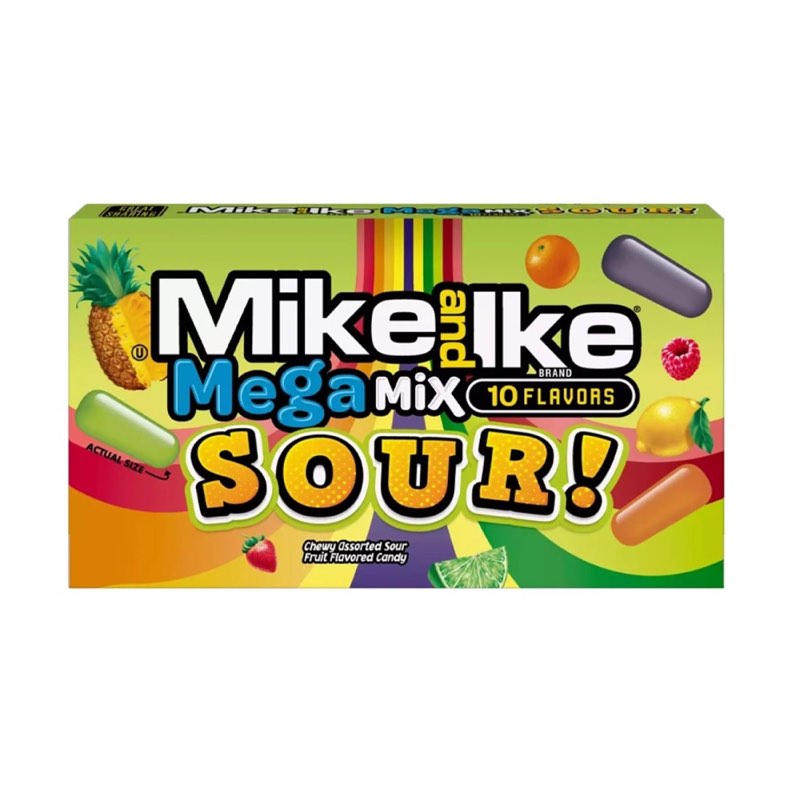
Mike & Ike · 120g
Read the full guide
Mike & Ike Mega Mix Sour Theatre Box 120g
£2.25
✔ In stock — ready to ship
Fresh stock
Free over £20
Same-day dispatch
Secure checkout
Ask anyone who fills a pick-and-mix bag properly and they will tell you the same thing: the order you pick in matters less than the balance you end up with. A bag of ten scoops is not ten separate decisions. It is one decision made ten times, and every scoop changes what the next one should be. The Mike & Ike Mega Mix Sour Theatre Box 120g is one of the most useful things you can put into that thinking, because it is doing two jobs at once — it is a chew and it is a sour — and it is boxed, which means it can travel in a mixed bag without becoming part of it.
Start with the slot it fills. Most mixed bags end up chew-heavy, because chews are the sweets people recognise, and chew-heavy bags get boring about two thirds of the way down. What saves them is a sharp element. Put a sour chew in and it works as punctuation: you eat three soft things, hit a sharp one, and the soft things taste like themselves again. Without it, the whole bag flattens out into one long sweetness and you stop noticing individual sweets somewhere around the halfway mark.
The full guide to Mike & Ike Mega Mix Sour Theatre Box 120g
5,325 words on how it eats, who it suits, how to serve it and what to put beside it.
Building a bag around a sour chew
Here is a build that works, using this box as the sharp element. One scoop of a plain jelly for the base — Haribo Gold Bears at £5.49 are the obvious choice because everybody will eat them and they hold their shape in a bag. One scoop of a proper chew with resistance, such as Barratt Fruit Salad Chews at £5.49, to give the jaw something to do. One fizzy shape for texture — Kingsway Fizzy Meerkats at £5.49 bring a dusted surface and a recognisable silhouette. Then this box as the sour, kept in its box rather than tipped in. That is a bag with four distinct actions in it, which is about the maximum most people can actually track while eating.
If you want a fifth, make it something creamy or fizzy-soft rather than another fruit chew. Swizzels Refresher Chews at £5.49 do that — they read as a different kind of sharp from a sour coating, more prickle than pucker, so the two do not cancel each other out. Two kinds of sharpness in one bag is fine as long as they are different kinds. Two of the same is a waste of a scoop.
The 120g box at £2.25 is what makes this practical. It is small enough to sit alongside a weighed bag without dominating the order, and cheap enough that you are not agonising over whether it earns its place. If you are building for two people, one box is plenty as the sharp note. For a group, buy two and put them at opposite ends of whatever you are serving from, because a sour that has to be passed the length of a table gets requested less than one within reach.
How a boxed sour behaves next to everything else in the bag
This is the part most people learn by getting it wrong, so it is worth setting out properly. Sweets do not sit politely next to one another in a bag. They transfer. They crush. They stick. A mix that looked well judged on the counter can arrive home as a single fused object, and which sweet caused the problem is usually predictable in advance.
The transfer problem. Anything with a loose coating sheds it. Sour-coated and dusted sweets carry their sharpness on the outside, and the outside is exactly the bit that comes off against other sweets in a bag. Put a loose sour in with a plain jelly and within an hour the jelly is faintly sour too. Sometimes that is pleasant. More often it means the plain sweet you bought for the person who does not like sour is now unacceptable to them. The boxed format here sidesteps the whole issue: the sour stays in its own cardboard until you want it, and nothing else in the order picks it up.
The crush problem. Weight sits at the bottom of a bag. Soft chews at the bottom of a heavy mix arrive compressed into a slab, and the pieces on the very bottom will have taken the shape of whatever was above them. A box is rigid, so it protects what is inside it and it does not press on anything else the way a dense tub of hard sweets would. If you are ordering a mixed selection that includes anything delicate, boxed items are the ones you want carrying the structure.
The sticking problem. Bare chews left together in warm conditions weld. It is the single most common complaint about any mixed bag in summer, and the fix is always separation rather than refrigeration. Again, the box does this for free.
Ratio. The temptation with a sour element is to under-buy it, on the theory that not everyone likes sour. In practice, sour is the thing people go back to, and a bag with too little of it runs out of its best part first. The rule of thumb that works: sour should be about one part in five of a mixed selection, and it should be the part you can top up separately. A 120g box is close to exactly one fifth of a decent-sized mixed order, which is a tidy coincidence but a genuinely useful one.
Sequencing. Within a session, sour works better early and late than in the middle. Early, it wakes the palate up. Late, it cuts through everything that has come before. In the middle, when the palate is already busy, it is the sweet people skip. If you are laying out bowls rather than filling a bag, put the sour box where somebody has to reach for it deliberately — sour is a decision sweet, not a grazing sweet.
Mixing sour with sour. There is a ceiling here, and it is lower than people think. Two sour lines in one bag is fine if they differ in strength; three is a bag nobody finishes. If you want a step up in intensity alongside this box, the right move is one small, strong item at the sharp end — Barnett's Mega Sour Fruits Candy Bags 104g at £3.99 serve as the extreme, with this box as the everyday sour underneath it. That gives you a ladder rather than a wall, and people can pick their rung.
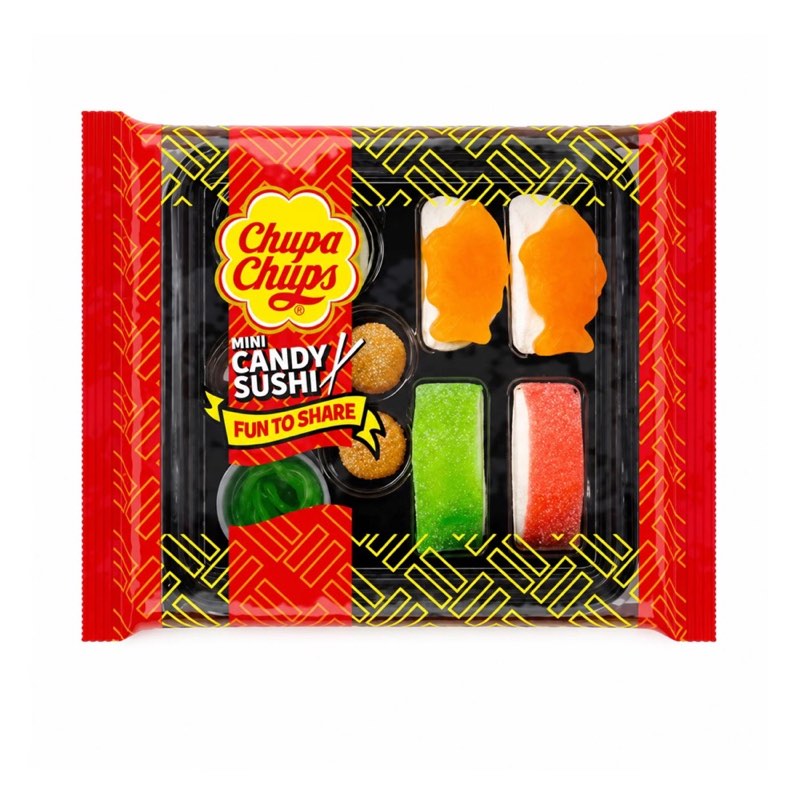
The novelty slot. One last builder's note. Every good mixed order benefits from one item that is bought to be looked at rather than eaten in quantity. A Chupa Chups Mini Candy Sushi Tray 100g at £2.99 or a Fuji Candy DIY Handmade Ramen Kit Box 20g at £2.99 both do that, and both are boxed like this one, so they stack rather than squash. The novelty item gets the conversation going and the sour box keeps the eating honest. Between them they cover most of what a mixed order is actually for.
Opening the box
A theatre box is a specific object and it is part of the appeal. Rigid card, a flat rectangular footprint, the shape that sits upright in a cup holder or flat in a coat pocket without complaining. It opens at one end and it closes again, which sounds trivial until you compare it with a bag that you cannot reseal and end up folding over twice and losing down the side of a seat.
Tip a few out and you get small chews — short, rounded, capsule-shaped pieces of a size that suits being eaten several at a time rather than one at a time. They are listed as multi-coloured and that is what you get: a spread of bright colours in the same handful rather than a single shade. The surface carries the sour element, so they look matte and lightly dusted rather than glossy, and that dusting is the visual cue that tells you before you taste anything that this is the sour box rather than a plain one.
In the hand they are dry enough to pour into a palm without residue, and small enough that a palmful is genuinely a portion rather than one sweet. This is what makes the format a pouring sweet rather than a picking sweet — you tip, you do not reach in. That matters for sharing, since a box passed round gets poured into hands and a bag passed round gets fingers in it, and one of those is considerably more welcome in company than the other.
The box holds 120g, which fills it properly. Give it a shake and it sounds full. There is no rattle of a half-empty container, which is a small thing that nonetheless does a lot for how a cheap box feels when you hand it to somebody.
The sour arrives before the fruit
Put two or three in at once — that is how this sweet is designed to be eaten — and the sequence runs like this.
First, the outside. Sourness lands almost immediately, at the sides of the tongue, and it is a clean sharp rather than a slow one. It is firmly in the pleasant range: enough to make you notice, not enough to stop a conversation. If you have worked your way through the serious end of the sour shelf you will find this friendly. If sour usually puts you off, this is a reasonable place to test whether it is the sourness you dislike or the extremity of it.
Second, the chew begins. These are proper chews — not jellies that give up immediately, but pieces with enough body that your jaw registers them. The first two or three chews are resistant, then they soften and become pliable, and somewhere in there the sour coating has fully dissolved and handed over to the sweet inside.
Third, the fruit. Once the sharp edge is gone what is left is a rounded, bright fruit sweetness that lasts through the rest of the chew. Because this is a mixed box, the exact character shifts depending on which colours you happened to tip out, so a mouthful of three is usually a small blend rather than a single note. That is the argument for eating several at once rather than one at a time: you get a combination that changes each handful, which is more interesting than the same piece repeated.
The finish is where a chew differs from everything else. It stays with you. A hard sweet is gone when it is gone; a chew leaves a trace of flavour for a minute or two afterwards, and a sour chew leaves a faint brightness on the tongue as well. Some people love that and some find it makes water taste odd for a moment. Either way it is worth knowing if you are pairing sweets with a drink — go with something plain rather than something you want to taste properly.
Who this box is for
It suits the sour-curious more than the sour-obsessed. Someone who wants a sharp note as part of a sweet, rather than an endurance test, will get on with it. Someone chasing the strongest thing in the shop will find it mild and should look further along the sour shelf. Both of those are useful to know before buying, because sour is the category where expectations are most often mismatched.
It suits people who eat sweets while doing something else. The box format, the pour-don't-reach habit and the lack of any wrapper mean it works at a desk, on a train, in a cinema, in a passenger seat. Nothing needs unwrapping, nothing needs binning until the box is empty, and the box shuts.
It suits anyone buying at the £2.25 level for a specific purpose rather than a general restock — a small gift, a stocking filler, a thing to put in a lunchbox on a Friday, one item in a build. Its size is its argument: big enough to be a real box, small enough to buy several and not think about it.
It suits mixed groups where one person likes sour and the others do not, because a box keeps the sour contained. Pour out a bowl of something neutral from the loose sweets counter for the table and let the sour box stay with the person who wants it. That is a much better outcome than one shared bowl where everybody picks round the sharp ones.
It suits less well anyone who wants a sweet to last a long time, and anyone who dislikes the lingering quality of a chew. If you want clean-finishing, the harder formats are the answer. And it is not the box for somebody with dental work that objects to chewy sweets, which is a personal judgement rather than advice we can give.
Small boxes travel: hampers, letterboxes and parcels
The second life of a theatre box is as a gift component, and it is unusually good at it for reasons that are all about shape.
Hampers. The hard part of a hamper is not choosing the contents, it is packing them so the box does not look like a pile. Rigid rectangles are what give a hamper structure — they stand up, they stack, they can be laid flat to make a base or stood upright as a back row, and they stop softer items collapsing into the gaps. Two or three theatre boxes set upright along the back of a hamper do more for the look than a considerably more expensive item lying flat at the bottom where nobody sees it. The variety within the Mike & Ike range makes this easy: a row of the same box shape in different colours reads as deliberate, which is precisely the effect you want.
Letterbox treats. A flat box is the format that fits through a door. If you are posting a small pick-me-up rather than a parcel that needs signing for, the low profile of a theatre box is the whole reason it works, and a couple of them alongside something flat and light makes a sensible letterbox package. The rigid card also means it arrives looking like a gift rather than like something that has been sat on in transit, which is the most common failure of posting sweets.
Teacher gifts and thank-yous. The awkwardness of the end-of-term gift is the price bracket — too cheap looks like nothing, too expensive looks like a statement. A few boxes at £2.25 each, presented together, land neatly in the middle: clearly chosen, clearly not extravagant, and useful in a staff room where things get shared. If you want to make it feel considered rather than generic, make the selection tell a small story — one sour, one original, one tropical — so it reads as a set rather than three of whatever was nearest.
Care parcels. Students, people working away, someone in hospital for a stretch, a friend having a bad month. The requirements for this kind of parcel are practical: nothing that melts easily, nothing that needs cutlery or a plate, nothing that has to be eaten all at once, and a mix of things so there is something to choose from. A resealable box scores on every one of those. Add one or two things that are more about surprise than about eating — a Jelly Belly Bean Boozled Jelly Beans Box 45g at £2.99 is the classic, because it is a game as much as a sweet and it gives the recipient something to inflict on whoever is nearby.
Advent-style and countdown gifts. If you are making up a numbered set of small daily gifts, flat boxes are the workhorses. They fill a slot reliably, they look substantial in a bag or a pocket, and at this price you can use several across a countdown without the total getting out of hand. Mix them with weighed items from pick and mix so the run of days has some variety in format as well as flavour.
Stocking fillers and party bags. The same logic at smaller scale. A theatre box is the right size to be the main item in a party bag for an older child, and the sour angle gives it a bit of daring that a plain sweet does not have, which older children care about a great deal more than adults expect.
A note on presentation. If you are giving these, do not over-wrap them. The box is already a box. Ribbon round three of them, or a stack in a paper bag with the top folded, is better than burying an inexpensive box in expensive packaging, which only draws attention to the gap.
Fruit, and what sour does to it
The pack lists the flavour simply as fruit, and in a mixed box that means a spread rather than a single note. Worth understanding, though, is what the sour treatment does to a fruit flavour, because it is not just the same sweet with sharpness added.
Sourness changes the perceived order of a flavour. On a plain fruit chew, sweetness arrives first and the fruit character sits inside it. On a soured one, the sharp note arrives first and the fruit follows, which makes the fruit read as fresher and more defined than it does in the plain version. It is the same reason a squeeze of lemon makes fruit taste more like itself. You are not tasting more fruit; you are tasting it in a different order, with the palate primed.
The other effect is on pace. Sour slows people down. A plain fruit chew disappears in handfuls; a sour one gets eaten more deliberately, because each mouthful has a small event in it. For a box you want to last more than one sitting, that is a feature.
Pairing: sour fruit sits well next to plain fruit and badly next to anything creamy or chocolate-based. The sharpness makes cream taste flat and makes chocolate taste dull, so on a mixed table keep the sour end and the chocolate end apart. Within the fruit family it is much more flexible. Something soft and fruity in a completely different format works well as a counterweight — BUBS Cool Fruity Pear Minis at £7.50 give you a gentler pear-leaning fruit note in a soft format, and the contrast between soft-gentle and chewy-sharp is more interesting than two sweets in the middle of the range. For volume in the fruit family, a big tub like Candy Realms Tutti Frutti Tubes Tub 780g at £7.99 is the bulk option that keeps the bowls full while the sour box stays the thing people ask for by name.
If you want to explore further in this direction, the whole fruit flavour shelf runs to well over a hundred and fifty lines, so it pays to narrow by texture as well — deciding you want fruit and chewy rather than just fruit cuts the list to something you can actually read.
Cinemas, journeys and the desk drawer
The theatre box has an obvious home and it is worth saying plainly: this is the shape sweets take when they are meant to be eaten in the dark. Quiet to open compared with a crackly bag, easy to pour without looking, no wrapper to unwrap during a quiet scene, and a footprint that fits in a cup holder. If you are the person who brings sweets to a film, this is the format that does not annoy anybody.
Journeys are the other natural fit. The box survives a bag, the chews do not melt into a single mass the way bare soft sweets can, and the resealable end means you can have a few and put it away. For a long drive, sour has the useful property of being something to pay attention to, which is more than can be said for a bag of plain sweets an hour into a motorway.
The desk drawer is the underrated one. A box lives in a drawer for weeks without deteriorating in the way an opened bag does, and a sour chew at four in the afternoon does a better job of interrupting a dull stretch than something sweet and soft, which tends to send you looking for another one immediately.
Film nights at home, sleepovers and games nights all work too, with one caveat covered above — keep the sour box separate rather than tipping it into the communal bowl, because sour coating transfers and the person who does not like it will notice.
120g at £2.25, and what that means in practice
Per box, you have 120g for £2.25. That puts it in the impulse bracket while being meaningfully more substantial than a single-serve bag, and the difference matters: this is a box you can share, or a box that lasts one person across several sittings, rather than one that is finished before the trailers.
Practically, 120g of small chews is a generous share for two people at a film, or four or five smaller handfuls if you are rationing it through a week at a desk. As an element in a larger spread it covers the sour slot for a group of six to eight, given that sour is a taste-and-move-on sweet rather than a grazing one.
Compared with buying sour by weight, the box costs a little more per hundred grams than the big shared tubs and gives you something the tubs cannot: containment and portability. You are paying for the cardboard, and in this case the cardboard is doing real work — protecting the contents, keeping the sour coating off everything else in the order, standing up in a hamper, and going through a letterbox. If none of that matters to you, buy weighed. If any of it does, the box is the cheaper answer overall.
The multi-buy logic is straightforward at this price. Because every box across the range sits at £2.25, you can build a set of four for nine pounds and have four genuinely different things rather than four of one. That is the most efficient way to buy this brand, and it is what most people end up doing once they have tried one.
One size only is listed for this line, so there is no large-versus-small decision to make on the box itself. The decision worth making is which box in the range, and that is covered next.
Keeping the chew right
Chews have two enemies: heat and air. Heat softens them and lets them stick to each other; air dries the surface and makes them tougher than they should be. The box protects against both reasonably well as long as you close it, which is the bit people skip.
Close the flap properly after each go. If the box has been open and re-opened a lot, tip what is left into a small airtight tub — a sour coating in particular dulls when it sits in open air, and dulling the coating takes away the thing you bought it for. Keep it somewhere cool and dry: a cupboard, a drawer, a shelf away from the kettle and the window. Not the fridge; cold makes chews hard and fridges are damp, and damp is what turns a crisp sour dusting into a tacky one.
If the box has been somewhere warm — a car in summer, a bag in the sun — give it half an hour somewhere cool before opening it, and give it a gentle shake once it has firmed up so any pieces that have touched separate cleanly. Do not try to prise warm chews apart; wait until they are cool and they will come away without tearing.
For a box being posted or put into a hamper that will sit for a few weeks, keep it sealed and out of direct light, and check the date on the manufacturer's packaging when it arrives so you know what window you are working with. That packaging is the authority on dates and storage for the particular box you receive; everything here is general good practice for boxed chews.
Which box in the range
We stock several boxes from this brand, all at £2.25, and the differences are worth spelling out because at the same price the only question is which one suits.
The closest comparison is Mike & Ike Mega Mix Theatre Box 120g, which is the same mixed idea without the sour treatment. If you are buying for someone who likes variety but does not want sharpness, that is the box. If you are buying for a table and want both, buy the pair — the direct comparison between a plain mix and the same mix soured is the most instructive side-by-side in the range, and it gives people something to have an opinion about.
Mike & Ike Sour Watermelon Theatre Box 120g is the other sour option, and the difference is mixed versus single. A single-flavour box is more predictable and more satisfying if you know what you like; a mixed box is more interesting because the handful changes. For a gift where you do not know the recipient's preferences, mixed is the safer bet.
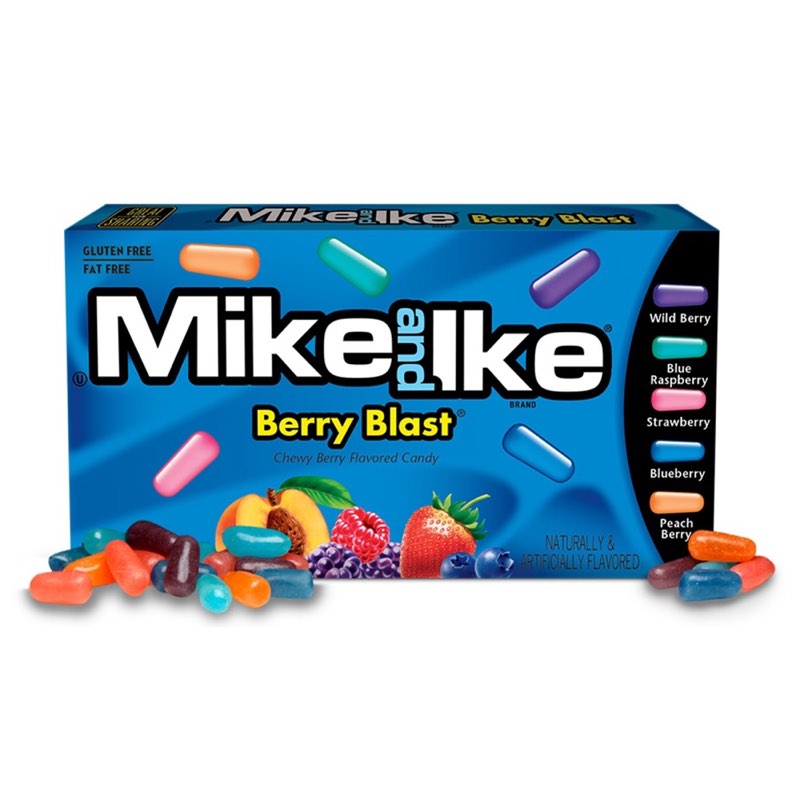
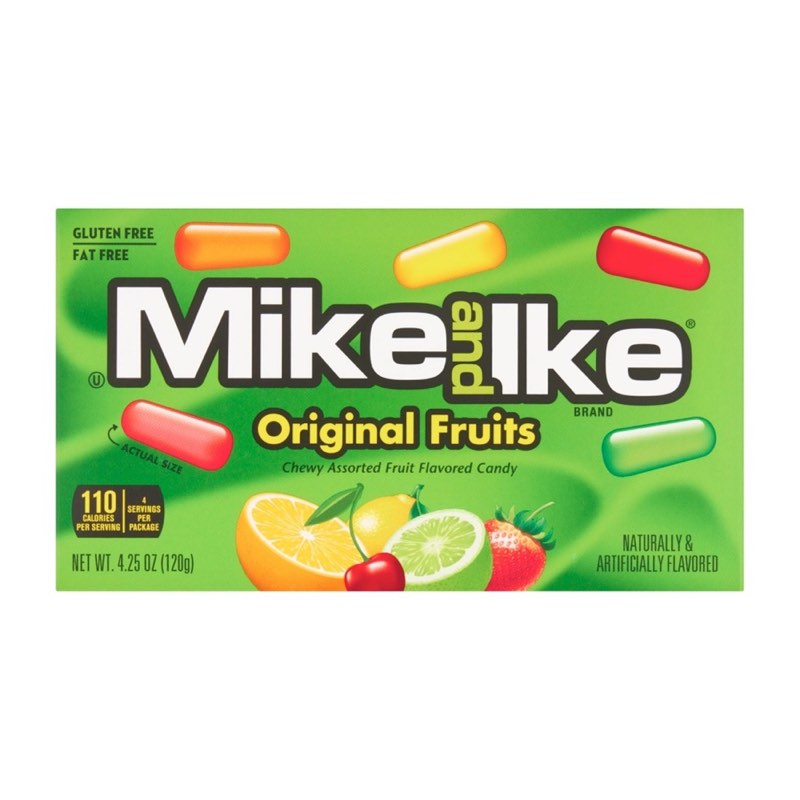
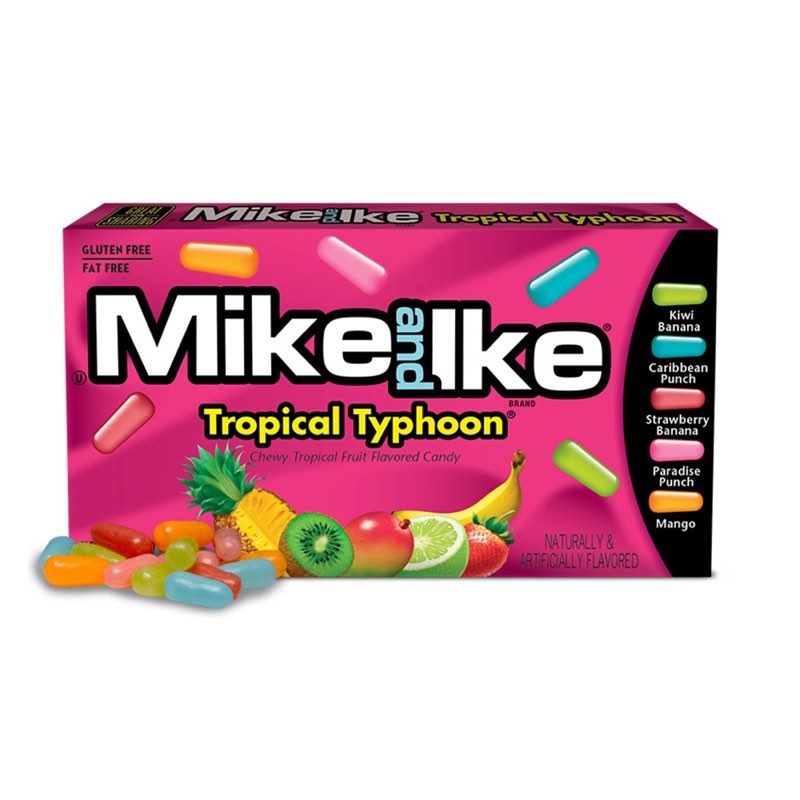
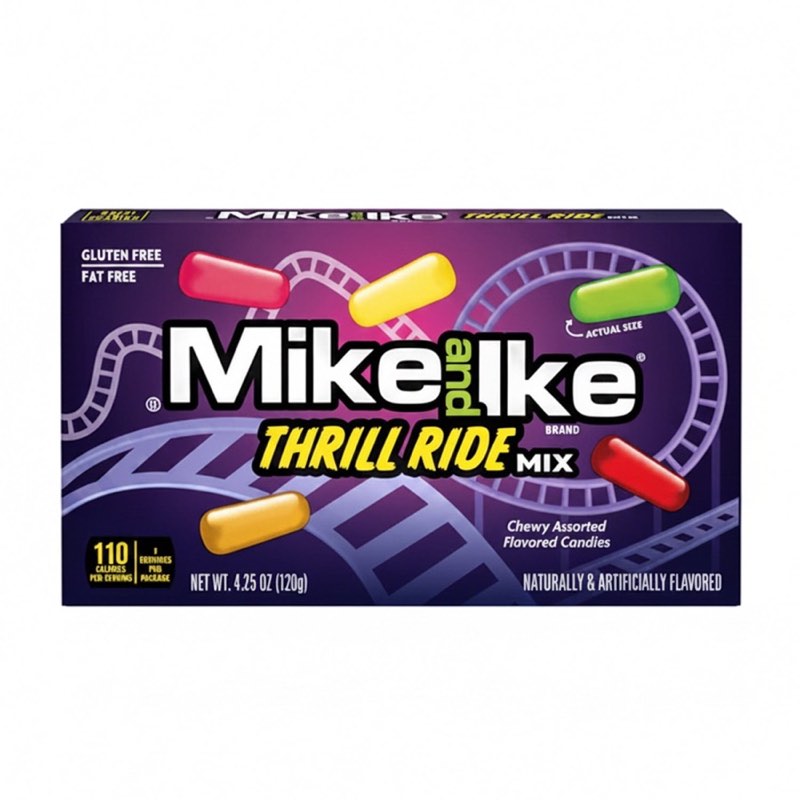
Mike & Ike Original Fruits Theatre Box 120g is the straightforward one, the box to buy for somebody who says they do not like anything unusual. Mike & Ike Berry Blast Theatre Box 120g narrows to the berry end, which is the friendliest corner of the fruit family and a good choice for younger eaters. Mike & Ike Tropical Typhoon Theatre Box 141g goes the other way, towards brighter, more perfumed fruit that stands out on a table where everything else is berry and citrus. And Mike & Ike Thrill Ride Mix Theatre Box 120g is the other mixed box, for when you want variety in a second box without repeating this one.
If you would rather see them all together before choosing, the full Mike & Ike shelf lists everything we carry from the range in one place, which is the quickest way to plan a set of three or four.
Finding it, and what sits nearby
On the site this box files under two type shelves at once. It is on the chewy sweets shelf, which is a large and well-populated list and the right place to browse if texture is what you are shopping by. It is also on the sour shelf, which is smaller and more focused, and much the better starting point if sharpness is the point rather than a bonus. Between those two lists you will find most of what behaves like this box.
It also appears on the fruit shelf and on the loose sweets listing, and it sits in the brand shelf alongside its siblings. If you are browsing broadly rather than hunting, the whole shop is the full catalogue, and the hub shelves are the quicker routes: the loose-sweets shelves for everything sold by weight and by bag, the sweets and chocolate hub when you are building a hamper and need the bigger items, and the mix-your-own pages when the answer is a little of several things.
Two brand shelves are worth knowing about while you are here, because they cover a lot of what people pair with a sour chew. The Kingsway shelf is where the fizzy shapes live, and the Haribo shelf covers the familiar jelly formats that make the neutral base of most mixed bags. Between a sour box, a fizzy shape and a plain jelly you have the three-part structure that almost every good mixed order turns out to have.
Questions shoppers ask
How sour is it, really?
Noticeable but comfortable. The sharpness arrives first, sits at the sides of the tongue, and gives way to the fruit within a couple of chews. It will not make anyone pull a face for a photograph. If you want the extreme end, look at the dedicated strong-sour bags instead — this is the everyday sour that people can eat a box of rather than a dare.
Is this the same as the plain Mega Mix box?
Same mixed idea, same 120g, same £2.25, with the sour treatment on this one. Buying both is a reasonable way to cover a table, since the plain box suits anyone who does not want sharpness and the two together make an obvious comparison. There is no size difference between them to weigh up.
Will the sour coating get on everything else in my order?
Not from this one, because it arrives in a closed box. That is one of the practical arguments for a boxed sour over a loose one: coated sweets shed against their neighbours in a shared bag, and a rigid box keeps its contents to itself. It also means the box protects softer items rather than crushing them.
How many does a box hold?
It holds 120g, and the pieces are small, so you are pouring rather than picking. As a rough guide it is a comfortable share for two at a film, or several separate handfuls for one person over a few days. We would rather give you the weight than guess at a piece count.
What can you tell me about what is in them?
Only what the pack tells us: it is a fruit-flavoured, multi-coloured line listed as chewy and sour. We do not hold verified ingredient information for this box, so we will not guess at what it does or does not contain. The manufacturer's packaging that arrives with your order is the place to check.
I need to avoid an allergen — is this suitable?
We cannot say. We have no verified allergen data for this line, and we will never tell you something is free from anything on the basis of assumption. If you have an allergy or intolerance, read the manufacturer's packaging on arrival before anyone eats any of it, and treat that pack as the only source worth trusting on the question.
Is it suitable for children?
Sweets are a treat rather than a food, and small sweets are a choking risk for young children, so little ones should be supervised while eating them. Beyond that, sourness is a matter of taste rather than suitability — some children love a sharp sweet and some genuinely do not, and the only way to find out is a piece or two rather than a whole box.
Does it work as a gift on its own?
On its own it is a small gesture rather than a present, which is a real and useful category — a desk drop, a thank-you, something in a card. As a proper gift it wants company: three or four boxes from the range presented together look considered, cost under a tenner, and give the recipient a choice rather than a single flavour they may or may not like.
Will it survive the post?
Better than most sweets. The rigid box protects the contents and keeps its shape, and the flat profile suits a letterbox parcel. In hot weather chews can soften and press together; a spell somewhere cool sorts that out, and they come apart cleanly once firm again. Avoid leaving the parcel in direct sun or a hot car.
What should I put with it in a pick-and-mix bag?
Aim for four different actions rather than four flavours you like. A plain jelly as the base, a proper chew for resistance, a fizzy shape for texture and this box as the sharp note is a build that stays interesting to the bottom of the bag. Add a creamy or novelty item only if you have the room — five distinct things is about the limit most people track.
Does the box reseal?
The flap closes, which is enough for a day or two in a bag or a drawer. If you are keeping it open for longer, tipping the rest into an airtight tub keeps the sour coating crisp — coatings dull in open air faster than the chews themselves go stale, and the coating is the whole point of this box.
Is sour worth buying if only one person in the house likes it?
Yes, and the box format is exactly why. A loose sour has to go in the shared bowl or not be bought at all; a box lives with the person who wants it while everyone else eats something plain from the same order. It is the least contentious way to have sour in a house that is split on the subject.
To sum up
A small, boxed, fruit-chew sour that earns its place through behaviour as much as flavour: it keeps its sharpness to itself, it stands up in a hamper, it goes through a letterbox, it pours cleanly in a dark cinema, and at £2.25 for 120g it is cheap enough to buy alongside three of its siblings without thinking hard about it. Buy one as the sharp note in a mixed order, or buy four across the range and let people choose.
More from Mike & Ike
More chewy sweets


More fruit sweets
Where this sits
Mike & Ike Mega Mix Sour Theatre Box 120g appears on these shelves. Browse them, or jump to something nearby.
You might also like