Home / Candy & Chocolate / Mike & Ike Berry Blast Theatre Box 120g
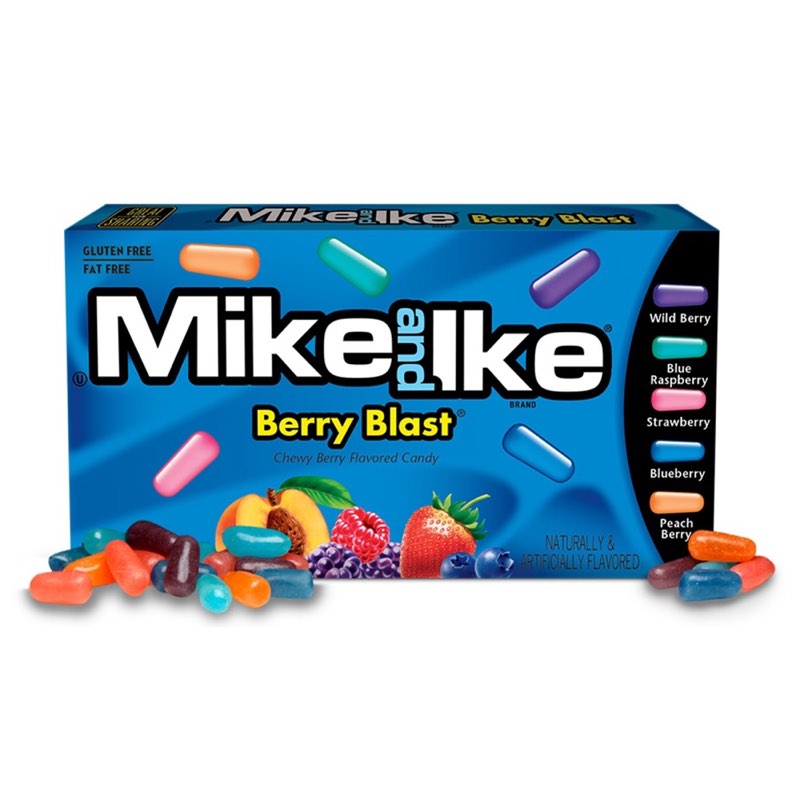
Mike & Ike · 141g
Read the full guide
Mike & Ike Berry Blast Theatre Box 120g
£2.25
✔ In stock — ready to ship
Fresh stock
Free over £20
Same-day dispatch
Secure checkout
Start with the arithmetic, because this is a product where the arithmetic is the argument. The Mike & Ike Berry Blast Theatre Box is £2.25 and weighs 141g. That works out at a shade under 1.6p per gram, which puts it in the bracket where you stop thinking of a sweet as a considered purchase and start thinking of it as something you add to the basket without checking the total. It is roughly the price of a takeaway coffee's cheapest add-on, and it lasts considerably longer.
The number that matters more than the price-per-gram, though, is the price-per-occasion. A 141g carton is not a single-serving item unless you are determined to make it one. Split four ways it gives everybody a proper handful rather than a polite few. Split six ways — which is what tends to happen when a box goes round a sofa — it still gives everybody enough to have a second go at it. So you are looking at somewhere between 40p and 60p a head for a shared treat that arrives ready to pass along. Very little else on the shelf does that at this price.
The full guide to Mike & Ike Berry Blast Theatre Box 120g
5,940 words on how it eats, who it suits, how to serve it and what to put beside it.
What £2.25 actually buys you
There is a second kind of value in the format itself. The theatre box is a flat-backed carton designed to stand up, be held in one hand, and be tipped rather than rummaged in. You do not need a bowl. You do not need scissors. You do not need to find a clip for the top afterwards, because the carton closes back on itself well enough to survive an evening. When you are buying for a situation rather than for a craving — a car journey, a cinema trip, a long wait at an airport gate — a carton that behaves itself is worth more than an extra twenty grams in a bag that spills.
Working out how many to buy
The mistake people make with cartons at this price is buying one when they needed four. A single 141g box disappears fast in company, and the sensation of it running out is more noticeable than with a big bag, because a carton empties all at once — you tip, nothing comes, and that is the end of it. Some rough rules that hold up in practice:
- One box — one or two people, one sitting. A film, a train, an afternoon at a desk.
- Two boxes — a small family evening, or one box now and one kept back for the week.
- Four to six boxes — a children's party table, a classroom treat, a cinema-themed night where everyone gets their own carton and nobody has to share.
- Eight or more — party bags, a raffle table, a stall, or the sort of office drawer that everybody knows about by Wednesday.
At £2.25 a box, giving everyone their own carton is a genuinely affordable piece of party theatre, and it solves the serving problem at the same time. Six children with six boxes is six fewer things you have to portion out. If you want to build that idea into something bigger, the pick and mix shelf is where the same logic scales up to jars and pouches.
Where it sits against the rest of the basket
Put £2.25 next to what else it would buy you here and the picture sharpens. Maoam Pinballs at £1.99 come in at a similar weight for slightly less, in a bag rather than a carton. The Airheads 6 Bar Theatre Box at £2.49 is the same carton idea at a lower weight and a slightly higher price, because you are buying six individually wrapped bars rather than loose pieces. Nerds Grape & Strawberry undercuts everything at £1.49 in a much smaller format. And at the other end, a jar of aniseed balls at £16.99 is a different kind of purchase altogether — a thing you put on a shelf and work through for weeks.
None of those is better or worse. They are answers to different questions. The theatre box answers the question what do I take with me, and it answers it for pocket money.
Opening the carton
The first thing you do with a theatre box is the thing everyone does: you push the flap with a thumb, tip it slightly, and shake a few into your palm. That motion is designed in. The carton has a perforated opening that lifts rather than tears, so the lid stays attached and folds back down. It is a small piece of engineering that has been doing the same job in the dark at the back of cinemas for generations, and it still works better than most resealable alternatives, because it needs no dexterity and makes almost no noise.
What lands in your hand is a set of small, uniform, brightly finished pieces — the kind that sit flat on a palm and can be counted at a glance. The specific colours and the exact flavour line-up for the Berry Blast box are printed on the carton itself, and the photograph on this page shows you what to expect; we would rather point you at the box than describe a palette we cannot verify for every production run. What is consistent is the size and the shape language: small, regular, designed to be eaten in numbers rather than one at a time.
That uniformity is the whole point of this format. Sweets that come in a consistent size are sweets you can pace. You know roughly what five feels like. You know that a small handful is a portion and a big one is a decision. Compare that with something like Charms Fluffy Stuff Cotton Candy, where the product is essentially one continuous mass and portioning is a matter of tearing, or with Reese's Dipped Pretzels at £5.29, which are a considered purchase rather than something you pace by the handful. Berry Blast is a counting sweet. That changes how you eat it.
The name on the box
"Berry Blast" tells you where on the fruit spectrum this box is aiming. It is a berry-themed line rather than a citrus or tropical one, which sets an expectation of the darker, rounder, jammier end of fruit flavouring rather than the sharp, peel-forward end. Within the wider full Mike & Ike range that matters, because the brand's boxes are principally distinguished by which corner of the fruit world they occupy — tropical here, original fruits there, sour somewhere else again. The exact flavours in any given box are listed on the packaging, and that is where you should look if someone in the house has a strong opinion about a particular fruit.
What "blast" signals is intensity of flavouring rather than heat or sourness. It is a marketing word, and we will treat it as one: read it as "these are flavoured firmly, not delicately", and set your expectations accordingly. If your household prefers gentle, the boxes at the original end of the range will suit better than the ones with a superlative in the name.
How it eats, and how to eat it properly
There is a right way to eat a theatre box and a wrong way, and almost everybody does it the wrong way first. The wrong way is to pour a third of the carton into a cupped hand and eat it as a single mouthful. You get a wall of sweetness, your palate shuts down after four seconds, and the remaining two-thirds taste of less and less. People then conclude the sweet is one-note, when what actually happened is that they overwhelmed themselves.
The right way is to take them in twos and threes, and to let a gap open between rounds. Small sweets like these are built to be tasted in sequence. Take two. Let them go. Notice where the flavour sits on the tongue and how long it stays after you have swallowed. Then take two more. Done that way, a 141g carton gives you an evening rather than ten minutes, and the flavour keeps registering right to the last piece.
Size in the hand
Each piece is small enough that three or four sit comfortably in a closed fist and you can feel them move against each other. They are firm enough to rattle in the box — which is its own signal, because you can tell how much is left by sound alone, and anybody who has held a theatre box in the dark knows exactly what half-full sounds like. That rattle is also why a carton is a poor choice for a quiet room and a fine choice for a car.
The scale suits smaller hands well, and it is part of why this format has always worked for children. A child can hold the box, tip it, and manage their own portion without an adult standing over them. That said — and this is worth saying plainly — small sweets are a choking risk for very young children, so keep the box for those who can manage it, and supervise anybody you are unsure about. Sweets are a treat, and that is all they need to be.
How the flavour arrives and goes
Flavour in a small sweet has a shape to it. It starts on the outside, arrives quickly, peaks while you are working through the piece, and then falls away over ten or fifteen seconds afterwards. What differs between products is how steep each part of that curve is. A box with a superlative in its name tends to have a steep front — the flavour announces itself immediately — and the interesting question is what is left at the back end once that first rush is over.
The practical consequence is that these are excellent sweets for punctuating something. They work while you are watching, reading, driving or waiting, because each piece resolves itself in under a minute and does not demand your attention on the way out. They are less suited to being the centre of the occasion. If you want a sweet that you sit down and pay attention to, you want something slower and bigger — Milk Duds at £2.99, for instance, or Junior Mints at £2.59, both of which are sold on the strength of one idea rather than a spread of flavours. Berry Blast is a background sweet in the best sense: it is company, not an event.
Who this is for
The honest answer is: anyone who wants a decent amount of fruit-flavoured sweets in a container that survives a coat pocket. But there are a few groups it fits so precisely that it is worth naming them.
The cinema-at-home household. Theatre boxes exist because of cinemas, and they still behave best in front of a screen. One box each, lights down, nobody negotiating over a shared bowl. It is a low-effort way to make a Tuesday film feel like an outing.
Parents buying for a car. A carton does not spill if it goes over. The contents do not melt onto upholstery the way chocolate does on a warm day. And because you can hear the box, you know from the driver's seat roughly how much has gone. For long journeys, buying two or three boxes and rationing them by motorway junction is an old trick that still works.
People buying for a desk drawer or a staff room. At £2.25 you can keep a small stock without anyone auditing it. A carton stands up in a drawer, takes up less space than a bag, and does not go stale in an afternoon once opened.
Party planners who want individual portions. Anything that removes the serving step is worth paying a small premium for, and cartons are the cheapest way to hand every child their own sweets without weighing anything out.
People assembling a hamper or a parcel. Boxes stack. Bags do not. A layer of theatre boxes across the bottom of a hamper gives you a flat base to build on, which is a practical reason confectioners have been putting cartons in gift boxes for as long as there have been gift boxes.
Who should look elsewhere
If you want something to linger over, this is not it — try the Jelly Belly American Classics Jelly Beans at £2.40, where the pleasure is in identifying one flavour at a time from a mixed bag. If you want maximum sourness, the berry-themed box is the wrong end of the range and you should go straight to the sour boxes further down this page. And if what you actually want is volume for a crowd rather than portions for individuals, a carton is an expensive way to buy weight; a pouch or a jar from our loose sweets will serve you far better per kilo.
Colour, presentation, and why a carton styles a table better than it should
Sweets are one of the few things people buy as much for how they look as for how they taste, and a berry-themed line is squarely in the part of the colour wheel that decorators reach for. Deep pinks, reds and purples are the colours of celebration tables, of Valentine's displays, of christening spreads and of anything trying to look warm rather than clinical. You do not have to be styling anything to benefit from that — a box of brightly finished sweets simply looks better on a coffee table than a foil wrapper does.
If you are actually styling something, though, there is craft here worth knowing, and it applies whether you are laying out a birthday table, filling jars for a window, or photographing a spread for a business.
Filling a jar so it reads from across the room
A jar of sweets works visually on two axes: silhouette and colour density. Small uniform pieces like these fill a jar with almost no air gaps, which means the colour reads as a solid block rather than as a scatter. That is exactly what you want at the back of a display — solid blocks of colour carry across a room, scattered ones do not. Large or irregular sweets do the opposite: they create shadows and gaps, so they read best up close where you can see the individual shapes.
The practical rule for a sweet table is therefore: small and uniform at the back, big and characterful at the front. Theatre-box sweets, jelly beans and similar small pieces are your colour blocks. Larger pieces — belts, foam shapes, wrapped bars — go at the front where their shape does the work. If you are building that kind of display properly, the range on our Candy & Chocolate shelf gives you both halves of the equation in one place.
Three colours, not seven
The most common mistake on a home sweet table is using every colour available. It reads as noise. Displays that look professional almost always run a restricted palette: two dominant colours and one accent, repeated across several different sweets and several different containers. A berry box belongs to the warm half of that scheme — it will sit happily alongside pinks, reds, purples and creams, and it will fight with anything aggressively green or blue placed directly next to it.
So if you are pairing, pair within the temperature. Warm with warm. If you want a cool contrast, give it its own container and its own space rather than mixing them in the same bowl, where the eye reads the mixture as brown from more than a metre away. This is the single most useful thing to know about arranging sweets, and almost nobody is told it.
How it photographs
For anyone shooting a table — a party you want to remember, a cake business's social feed, a school fair poster — small glossy sweets are forgiving subjects, with two caveats.
- Light from the side, not the front. Front-on light bounces straight back off a glossy finish and blows out the colour into a white patch. Light raking across from one side picks out the roundness of each piece and keeps the colour saturated.
- Get lower than you think. Shot from directly above, a bowl of small sweets is a flat disc of colour. Dropped to about thirty degrees, the pieces at the back stack up behind the pieces at the front and the bowl gains depth.
- Use the carton. This is the trick people miss. A tipped-over theatre box with a few pieces spilling from the opening gives a photograph something no bowl can: a diagonal line, a brand mark, and an implied action. Prop stylists have been tipping cartons over for decades because it turns a still life into a moment.
The same logic makes a carton useful as a riser. Boxes stack flat and take weight, so two or three of them under a cloth give you the raised tier that makes a table look designed rather than laid out. You can buy the cheapest thing on the shelf for that job — but if the boxes are going to be opened afterwards anyway, you may as well have them be something people want.
Contrast on a spread
A table made entirely of small shiny pieces gets monotonous. Break it up with texture. A cloud of spun cotton candy from Charms is matte and weightless against all that gloss. A tall sweet jar of aniseed balls gives you a dark, matte sphere and a completely different silhouette. Wrapped items add foil and paper into a spread of unwrapped pieces. Three textures across a table is the target; more than four starts to look like a jumble sale.
Where this sits on the sour-to-sweet line
Every fruit sweet in the shop can be placed somewhere on a line that runs from purely sweet at one end to aggressively sour at the other, and knowing where a product sits is the most useful buying information there is — more useful than the flavour name, because sourness is what most disagreements in a household are actually about.
The line has roughly five stations:
- Purely sweet. No acidity to speak of. Fudges, toffees, milk-bottle-style sweets, most chocolate-coated things.
- Fruit-sweet. Fruit-flavoured with just enough tartness to stop it being cloying. This is where most mainstream fruit sweets live, and it is the largest station by far.
- Tangy. A definite lift on the first bite that fades quickly. Noticeable but not challenging.
- Sour. Deliberately sharp, usually announced on the packaging, a proper pucker on the first few seconds.
- Extreme sour. Sold on the strength of the reaction it produces. Sourness is the product, and the fruit flavour is almost incidental.
A berry-themed box with no sour claim on the front belongs in the second station. That is not a criticism — station two is where you go when you want a sweet that everybody in a mixed group will eat, which is precisely why it is the biggest category in the shop. The whole of the brand's own shelf here is organised around exactly this distinction, with the plain fruit boxes at one end and the ones with "sour" on the front at the other.
Building a range across the line
The best sweet tables and the best pick-and-mix bags cover at least three stations, because eating along the line is more interesting than eating at one point on it. A practical build looks like this:
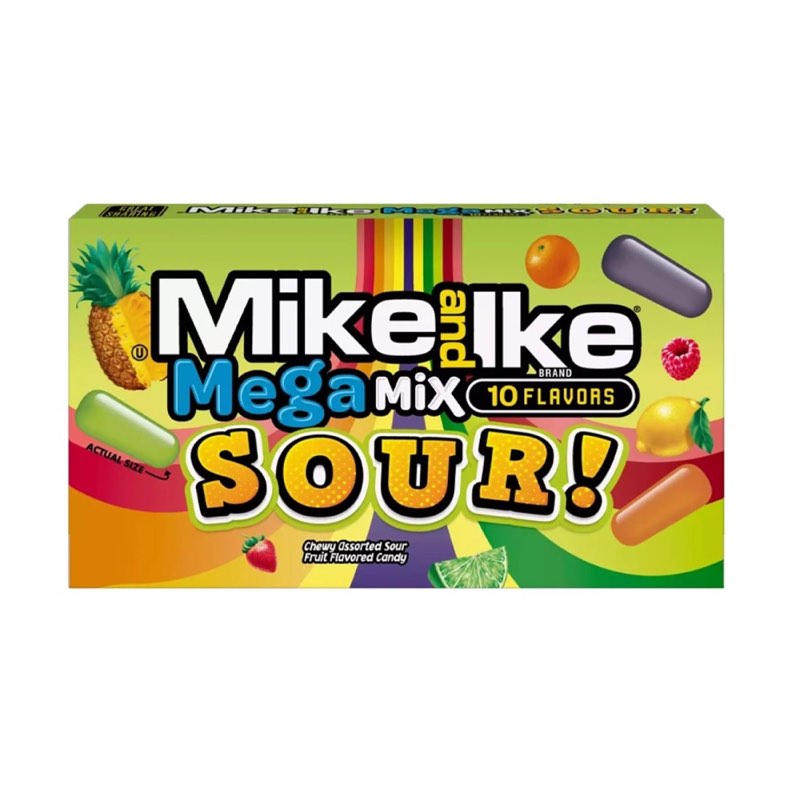
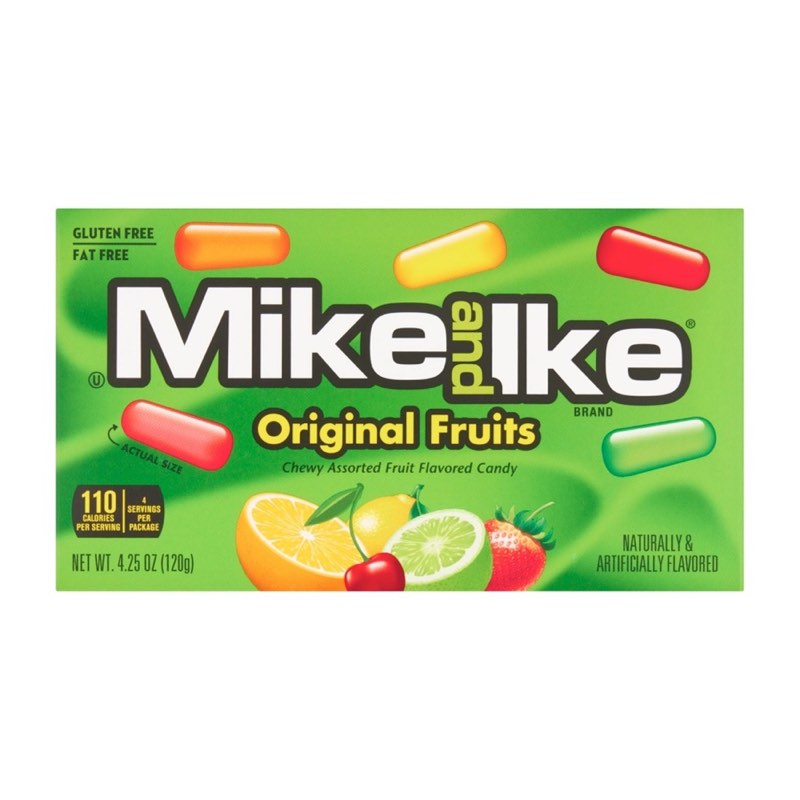
Start with your sweet anchor — something rich that nobody finds difficult. Milk Duds at £2.99 do that job, and so do Junior Mints at £2.59, which add a cool edge without adding acidity. Put your fruit-sweet middle next: this box, or the Mike & Ike Original Fruits Theatre Box at the same £2.25. Then add one genuinely sour item so there is somewhere to travel to — the Mike & Ike Mega Mix Sour Theatre Box is the obvious partner at matching price, and the Mike & Ike Sour Watermelon Theatre Box takes the same idea into a single flavour.
If you want to go past sour into the territory where the sourness is the entertainment, that is what a Seriously Giant Vimto Spray at £1.89 is for — a liquid at the far end of the line that works as a dare more than a snack. Having one of those on a children's table is worth the £1.89 for the faces alone.
Palate order matters
Sourness resets the palate; sweetness saturates it. So the order you eat in changes what you taste. If you go sour first and sweet second, the sweet things taste sweeter and flatter. If you go sweet first and sour second, the sour hits harder than it otherwise would. And if you alternate, you can keep tasting for far longer than if you stay at one station — which is the entire reason pick-and-mix exists as a format rather than as a novelty.
For a shared bowl, that suggests keeping the sour items in a separate container rather than mixing them through. Mixed in, they ambush people. Kept separate, they become a choice, and everyone eats more happily. The same principle is worth applying when you are filling several pouches from our build-your-own pick and mix for different people at once.
Notes on the berry family
Berry is a broad church, and sweets that call themselves berry can be pulling in several different directions at once. It is worth understanding the family, because it explains why two products with the same word on the front can taste so unlike each other.
At the red end you get the bright, high-pitched berry notes — the ones that read as fresh and slightly tart, and that people usually describe as "summery". They sit high in the nose and clear off quickly. At the dark end you get the deeper, rounder, more jam-like notes, which read as richer and stay longer on the palate. Between them sits the blue-raspberry register, which does not correspond to anything you can pick off a bush and is entirely a confectionery invention, and none the worse for it: several generations have grown up reading that particular flavour as its own thing rather than as an imitation of anything.
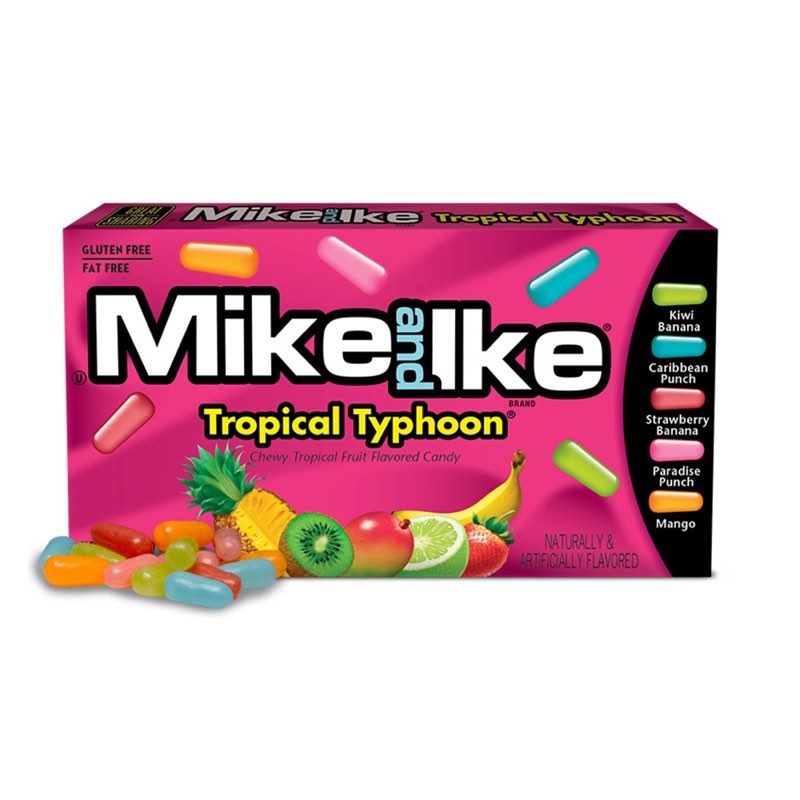
A box built around berry will usually place several of these registers side by side so that eating a handful gives you a small journey rather than one repeated note. That is the design intention behind any multi-flavour box, and it is why it rewards eating a few at a time rather than by the fistful. If you want the fullest version of that experience, the Mega Mix box at £2.25 widens the range beyond the berry corner, while Mike & Ike Tropical Typhoon Theatre Box takes the same format in the opposite direction, into the warm, heavy, tropical register.
Pairing berry with other flavours
Berry sits comfortably next to a surprising number of things. It goes well with cream and dairy notes, which is why a berry box works so nicely on a table that also has chocolate on it. It goes well with mint, which provides a cool contrast rather than a competing sweetness. It clashes, mildly, with strong liquorice and aniseed — not unpleasantly, but they are loud neighbours and are better given their own bowl. And it flattens next to anything heavily citrus, because the citrus wins and the berry ends up tasting like background.
Practical upshots: put berry next to chocolate-coated items on a spread, not next to lemon or lime. Keep the aniseed at the far end of the table. And if you are making up bags for several people, a berry-plus-mint bag is a more interesting combination than a berry-plus-orange one, even though the second looks better.
Building a mix around this box
A theatre box is an unusual starting point for a pick-and-mix, because it is not loose. But it works well as the spine of a bigger assembly — the thing that sets the theme while the loose sweets fill in around it.
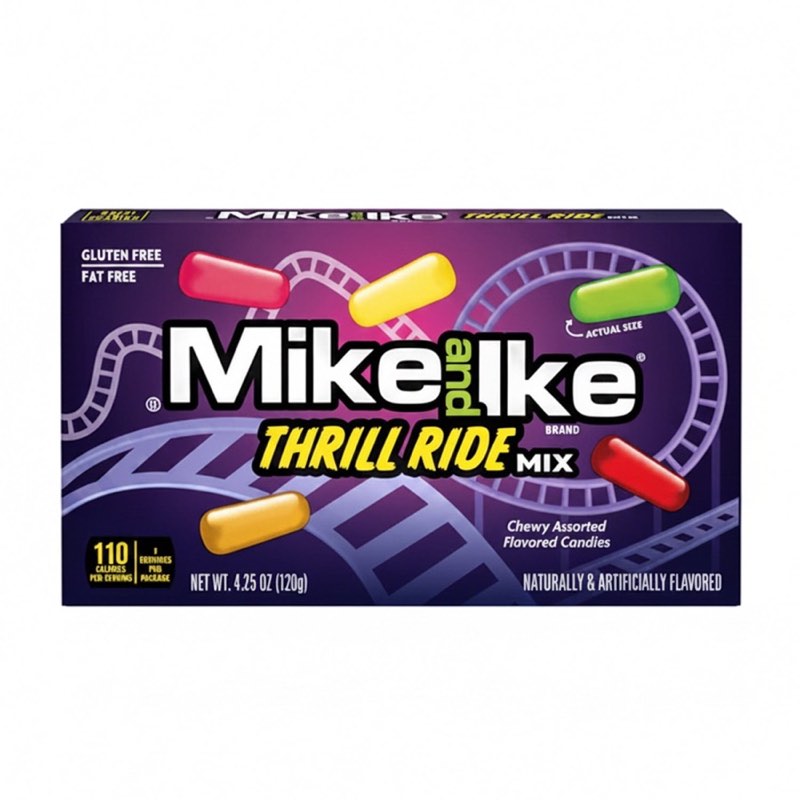
Here is a build that holds together. Take the berry box as your fruit centre. Add a second carton for contrast from the same family of formats — the Mike & Ike Thrill Ride Mix Theatre Box keeps the price at £2.25 and gives you a different mix in the same shape, so the two stack neatly and cost £4.50 together. Then add weight from the loose side of the shop, which is where the value lives once you are buying for more than two people.
For a four-person film night, something like this works:
- Two theatre boxes, one berry and one from a different corner of the range, so there is a choice on the table.
- One chocolate-based item, because a table of pure fruit gets tiring by the second hour.
- One sour item, kept in its own bowl, as the palate reset.
- One novelty — something that makes people react. It does not have to be big or expensive; it has to be unexpected.
That comes to a table with four different things happening on it for roughly the price of two cinema tickets' worth of pick-and-mix at the counter, and you get to keep the leftovers. If you want to scale the same structure up, start from every sweet we stock and work down by category rather than browsing at random — it is much faster.
A note on mixing cartons into loose sweets
You can tip a theatre box into a bowl of loose sweets, and plenty of people do. Be aware of what it does: small uniform pieces sink through a mixed bowl and end up at the bottom, so within ten minutes they have vanished from the surface and everybody thinks they have run out. If you want them to be seen, either keep them in their own bowl or tip them in last, on top, and do not stir.
Occasions this box was made for
Film nights. The obvious one, and still the best. A carton each, handed out as the titles start, with nobody having to lean across anybody. It is the format's home ground.
Journeys. Cars, trains, coaches, ferries, airport lounges. The carton is robust, does not leak, and can be rationed. For the school run or the motorway, keeping a couple in the glovebox is a small act of foresight that pays off on the day somebody is having a hard time.
Children's parties. As a table item, as a party-bag filler, or as the prize on a game. At £2.25 you can buy a dozen without wincing, and a carton in a party bag looks substantially more generous than a handful of loose sweets in a plastic pouch, because it is a recognisable object rather than a scoop.
Classroom and club treats. End of term, end of season, last session before the holidays. Individual cartons avoid the serving problem entirely, and there is no bowl to bring home.
Hampers and parcels. Boxes are the structural element of a good hamper. Put the cartons in first as a flat base, build the softer and odder-shaped items on top, and the whole thing travels better. A carton also survives a postal journey far better than a bag does, which matters if you are sending a parcel to a student, a relative or someone working away.
Stocking fillers and advent-style countdowns. The shape suits a stocking and the price suits buying several. If you are putting together a countdown of small treats, cartons at this price point are among the easiest things to buy in quantity, and you can vary the box so that no two days repeat.
Stalls, fairs and fundraisers. A carton has a visible price point, stacks on a table, and does not need weighing or bagging. If you have ever run a school fair sweet stall, you will know that anything which removes the scales from the equation is worth its margin.
Keeping it in good condition
Sweets in a carton want three things: cool, dry and dark. Get those right and a box keeps perfectly well for the life printed on the pack.
Cool. Warmth softens sweets and makes them stick to each other. A cupboard away from the oven, the boiler and the sunny windowsill is all that is needed. Do not leave a box on a car dashboard in summer, and do not store it above a radiator.
Dry. Moisture is the real enemy. Damp makes surfaces tacky and turns a free-flowing box into a clump. Kitchens are humid places, so a cupboard in a hallway or a cool room is a better home for a stash than the one above the kettle.
Dark. Light fades colours over time. It will not harm anything, but a box kept on a sunlit shelf for months will not look as good when you open it. If you are buying ahead for a party, keep the boxes in a closed cupboard until the day.
Once opened. Fold the lid back down and press it flat. If the box is going to sit for more than a day or two, put the whole carton inside a sealed food bag or a tub — it stops the contents drying out and stops the box absorbing the smell of whatever else is in the cupboard. Do not decant into the fridge; the cold does little for flavour and the moisture when it comes back to room temperature does real harm to the surface of most sweets.
Always check the manufacturer's packaging when your order arrives, particularly if anyone in the household has an allergy. The pack is the authority on what is in the product, and you should read it before eating rather than relying on any description, ours included.
Choosing between the boxes in this range
This box comes in one size at £2.25, so the real choice is not which size but which box. The range here is unusually easy to navigate because the names do the work, and because the price is flat across most of it — which means you can choose entirely on taste rather than on budget.
| If you want | Go to | Price |
|---|---|---|
| The berry corner, firmly flavoured | This box | £2.25 |
| The straightforward, everybody-eats-it option | Original Fruits | £2.25 |
| Warm, heavy, tropical flavours | Tropical Typhoon | £2.25 |
| The widest spread of flavours in one box | Mega Mix | £2.25 |
| A wide spread with sourness added | Mega Mix Sour | £2.25 |
| Sour concentrated into a single flavour | Sour Watermelon | £2.25 |
| Something different again in the same format | Thrill Ride Mix | £2.25 |
Because everything in that table is the same price, the sensible move for a household that has not tried the range is to buy three boxes from different corners of it and find out what people actually reach for. At £6.75 for three, that is a cheap piece of research, and you will know for every future occasion.
Finding your way around from here
This box lives on two shelves. The brand shelf gathers every Mike & Ike line we carry, which is the fastest route if you already know you like the format and are just deciding which box. The broader candy and chocolate aisle is where it sits alongside the other cartons, bags and bars, and that is the better shelf to browse if you are assembling a mixed order rather than repeating a favourite.
From there the shop opens out. The loose sweets section is where the weight and the value live, and where you go when you are buying for a crowd rather than for a pocket. The pouches and jars you fill yourself are one step further on, for when you want to choose every component. And if you are browsing by brand, everything we carry from Haribo and the Kingsway range are two of the deepest sections on the site — useful when you want a lot of one style of sweet and would rather not assemble it piece by piece.
Questions we get asked
How much is in a box?
141g, at £2.25. That is a shared-size carton rather than a single portion: comfortable for two people over a film, and enough to go round four or five if you are passing it along. We do not count the individual pieces, because the count varies slightly from box to box with the fill weight, and we would rather give you the figure we can stand behind than one we cannot.
Is this the same as the other Mike & Ike boxes?
Same format, different contents. Every box in the range uses the same carton at the same £2.25, and the difference between them is which part of the fruit spectrum they cover and whether sourness is part of the pitch. Berry Blast is the berry-themed one and makes no sour claim on the front. The boxes with "sour" in the name are the ones to choose if that is what you are after.
What is actually in it?
The full ingredient list, the nutrition information and the allergen declaration are printed on the carton by the manufacturer, and that is the only source we will point you to. We do not publish ingredient or allergen information for individual lines, because we cannot verify it for every batch, and on a food product a confident guess is worse than no answer. Please read the pack when it arrives, before anyone eats anything.
Is it suitable for someone with an allergy?
Check the manufacturer's packaging on arrival. If the information you need is not on the pack, or you are not certain, do not take the risk. We cannot advise on individual dietary needs and we will not guess at one.
Can young children have these?
Small sweets are a choking hazard for young children, so they should be supervised, and very young children are better off without them altogether. Sweets are a treat and should be treated as one. Beyond that, it is a judgement for the adult in the room, who knows the child.
Will it survive the post?
The carton is one of the more robust formats we sell. It does not leak, it does not burst, and it does not need a clip. If you are sending sweets to someone, boxes travel considerably better than bags, and they stack flat in a parcel, which usually means you can fit more in.
How long does it keep?
Go by the date printed on the pack. Stored cool, dry and out of direct sunlight, an unopened carton is happy in a cupboard for as long as that date allows. Once opened, fold the lid down and use it within a few weeks; if it is going to sit longer than that, drop the whole box into a sealed tub or food bag.
How many should I buy for a party?
For individual portions, one box per guest, which at £2.25 each makes the maths easy. For a shared table where the cartons are being tipped into bowls, one box per two or three guests is enough if there are other sweets out as well. For party bags, one carton per bag looks generous and removes the need to weigh anything.
Does it work in a pick-and-mix?
Yes, with one caveat: small uniform pieces sink in a mixed bowl. Tip them in last and leave them on top, or give them their own container. If you want loose sweets that are designed to be mixed and weighed, the pick-and-mix pouches and jars are the better starting point.
Is there a bigger size?
Not of this box — it comes in one size at one price. If you need more, the cheapest route is simply more boxes, and if you need real volume the loose sweets shelves will give you far more weight for your money than any carton can.
Is it in stock?
It is in stock as this page describes it. Stock moves, so the buy box on this page is always the authority rather than the copy.
In short
A 141g carton at £2.25 that does one job extremely well: it puts a decent quantity of firmly flavoured, berry-themed fruit sweets into a container you can carry, pass around, ration and close again. It is not the cheapest way to buy weight and it is not the sweet you sit down and study. It is the one you take with you — to the sofa, the car, the party table or the parcel — and it has been doing that job in that shape for a very long time because the shape is right. Buy one to try it, or buy four and find out who in the house is a berry person.
More from Mike & Ike
More candy & chocolate sweets


Where this sits
Mike & Ike Berry Blast Theatre Box 120g appears on these shelves. Browse them, or jump to something nearby.
You might also like