
Home / Candy & Chocolate / Airheads 6 Bar Theatre Box 93.6g

Airheads · 94g
Read the full guide
Airheads 6 Bar Theatre Box 93.6g
£2.49
✔ In stock — ready to ship
Fresh stock
Free over £20
Same-day dispatch
Secure checkout
Start with the box rather than the bowl. A lot of people come to the Airheads 6 Bar Theatre Box already knowing they want more than one thing on the table, and the useful question is not "what else shall I add?" but "what job is this box doing, and what job is still unfilled?" Six wrapped bars at £2.49 is a very particular kind of contribution to a spread. It is a slow item. It is a quiet item. It is an item people take one of and then walk away with, rather than standing over a bowl and grazing. Understanding that shapes everything you put next to it.
A spread that works usually has four jobs covered. There is the grazing item, the thing in the open bowl that people take small handfuls of without thinking. There is the slow item, the thing that occupies one person for several minutes. There is the sharp item, the one that resets the palate when everything starts tasting the same. And there is the volume item, the cheap bulk that stops the good stuff running out in twenty minutes. This box is squarely the slow item. Each bar is individually wrapped, which means taking one is a small decision rather than an automatic reach, and it stays in play for a while once unwrapped. That is a genuinely useful role, but it is only one of four, and a table built entirely from wrapped bars feels oddly formal.
The full guide to Airheads 6 Bar Theatre Box 93.6g
6,438 words on how it eats, who it suits, how to serve it and what to put beside it.
Building a mix around a six-bar box
For the grazing job, something small and loose works best. Maoam Pinballs in the 140 g bag are a good pairing precisely because they sit at the opposite end of the effort scale — £1.99, pour them straight into a bowl, and people take three at a time without breaking conversation. Nerds Grape & Strawberry at £1.49 does the same job in a smaller, sharper way; tiny pieces disappear at a completely different rhythm to a wrapped bar, which is exactly why the two do not compete for the same moment. If you would rather the grazing item be something you weigh out yourself, our Pick & Mix shelf exists for that, and lets you decide the ratio rather than accepting whatever a bag gives you.
For the sharp item — the reset — the Seriously Giant Vimto Spray at £1.89 is the cheapest way to put a jolt on the table without committing to a whole second bowl. It is a novelty as much as a sweet, and it earns its place by being handed round and passed on. For a more conventional sharp note, the Jelly Belly American Classics bag at £2.40 gives you a small bag of beans in the same price bracket as this box, which makes for a tidy two-item pairing if you are keeping the whole thing under a fiver.
The volume job is where people usually over-spend or under-buy. If you want real bulk, the sensible move is weight, not more boxes. Our loose sweets counter is set up for exactly that, and buying a kilo of one thing to anchor a table is nearly always better value than buying six different small packets. A jar-sized purchase like the Aniseed Balls Sweet Jar at £16.99 is a different order of commitment, but it is worth knowing it exists if you are stocking a shelf rather than laying out an evening — it is the kind of thing you buy once and then draw on for months.
The fourth and most overlooked job is the chocolate note. Sugar sweets and chocolate sweets do not compete; they cover different cravings, and a table that has only one of them will feel like it is missing something without anyone being able to say what. Milk Duds at £2.99 and Junior Mints at £2.59 both come from the same American cinema-counter tradition as a theatre box and sit naturally alongside it. If you want the chocolate note to be the centrepiece rather than the supporting act, Reese's Dipped Pretzels at £5.29 is the most substantial thing in this price neighbourhood, and the salt in a pretzel does the palate-resetting job that a sour sweet would otherwise have to do.
Put those together and a good four-item table around this box costs under a tenner: the box itself at £2.49 as the slow item, a bag of pinballs at £1.99 for grazing, a bag of beans at £2.40 for sharpness, and a box of mints or duds around £2.59 to £2.99 for the chocolate note. Nine and a half pounds, four textures, four rhythms, and nothing duplicated. That is a better-built spread than three times the money spent on three variations of the same idea.
What actually arrives, and what we can tell you about it
Let us be straight about the listing before anything else, because it saves you a question later. This is a theatre box containing six bars with a total declared weight of 93.6 g. It comes in one size, at £2.49, and it is in stock. Our listing for this line does not break out which individual bars are in the box, and we are not going to guess on your behalf — so what follows is about the format, the experience and how to use it, rather than a promise about exactly which bars you will unwrap. If the specific mix matters to you, the manufacturer's own packaging is the thing to read when it arrives, and that is also where the ingredient and allergen information lives.
That honesty is not a hedge; it is genuinely how a lot of theatre boxes work. The format was built for a foyer counter where you buy fast, in the dark, on the way to a seat, and the whole design logic is "one box, one price, sorted." The appeal was never a curated flavour list. It was the fact that you could hold the entire evening's sweets in one hand, it fitted in a coat pocket, and you did not have to make six separate decisions about it.
The box itself is the tall, flat-fronted carton that the category is named after — the shape that stands up on a shelf and shows its face rather than lying down. It is designed to be seen from three feet away under bad lighting, which is why boxes in this format tend towards high-contrast, high-saturation printing. Inside, the bars are individually wrapped, which is the single most important practical fact about this purchase: it means the box does not have to be finished once opened, it means you can hand one to somebody without handing over the whole thing, and it means the contents survive being carried around in a bag far better than anything loose would.
Size, weight and the feel of it in the hand
Do the arithmetic and each bar is roughly 15.6 g — 93.6 g across six. That is a genuinely useful number, because 15 g is about the weight of a small chocolate bar's worth of sweet, and it tells you the scale of what you are holding before it arrives. These are not miniatures. They are not full-size confectionery bars either. They sit in the middle: a flat, slim bar long enough to hold at one end and eat from the other, rather than something you post into your mouth whole.
The whole box at 93.6 g is light. Lighter than a phone. That matters more than it sounds, because it determines where this product goes. It goes in a coat pocket. It goes in a glovebox. It goes in the side pocket of a rucksack on a walk. It goes in a bag for a train journey without you noticing the weight. A 500 g tub of anything does not do that, however much better its price per 100 g looks on paper. You are partly buying portability here, and portability is a real feature even though it never appears on a nutrition panel.
The wrapper is the other physical thing worth mentioning, because it sets the pace. An individually wrapped bar has a small ritual attached: pick it up, find the seam, open it, and only then start. That one-second delay changes how the box is eaten. Loose sweets in a bowl get taken absent-mindedly during a film and are gone before the first act break. Wrapped bars get taken deliberately, one at a time, and a six-bar box can genuinely last a whole evening between two people. If you have ever wondered why a small box of wrapped sweets feels like it goes further than a bigger bag of loose ones, that is why — and it is the central reason this format survived the move from cinema foyers to home sofas.
There is a trade-off in the wrappers, too. Six wrappers is six pieces of litter, and in a dark room they end up on the floor. If you are laying this out for guests, put a small bowl or saucer down for the wrappers before anyone starts. It sounds fussy. It is the difference between a tidy coffee table at the end of the night and a ten-minute hunt under the sofa cushions.
Who this box suits
The clearest fit is the person buying for one evening rather than for a cupboard. If you want sweets for tonight and you do not want a half-finished bag sitting around reproaching you on Thursday, a six-bar box at £2.49 is almost perfectly sized. Six is enough for two people to have three each, or three people to have two each, and then it is done. There is no leftover management problem.
It suits people who share reluctantly, too, and that is not a criticism. Some sweets are hostile to sharing because the good bits run out — the pick-and-mix tub where everybody goes for the same shape, the bag of assorted where one flavour is universally preferred. Wrapped bars sidestep all of that. Everyone gets a whole one. Nobody is rationing. If you have ever had to referee a bowl of sweets between two children, you will recognise immediately why "one each, wrapped, identical in size" is a more peaceful arrangement.
It suits lunchboxes and bags for the same structural reason. One bar is a self-contained portion that does not need repackaging, does not need a clip, and does not leak. Six bars is a week of them with one spare. At 41.5p a bar that is a cheaper daily treat than almost anything you would buy individually at a counter, and you are not opening a big bag every morning.
It suits the person testing the waters on a brand. If you have not bought from this range before and you are not sure it is for you, £2.49 is a low-risk way to find out. If it lands well, the obvious next step up is the Airheads Bites Paradise Blends 170 g bag at £2.99 — a different format entirely, loose pieces rather than wrapped bars, nearly double the weight for fifty pence more, and the natural choice once you know you like the range and want a bowl rather than a box.
Who it does not suit: anyone catering for a crowd. Six wrapped bars will not stretch across a party, and buying eight boxes to get there is the wrong way to spend £20. For numbers, go to weight — the full range of what we stock has bulk options in every direction, and a single kilo bought loose will feed a room in a way that forty-eight wrapped bars at a much higher unit price never quite does.
Snack architecture for a film night: pacing, mess and the politics of sharing
Here is the thing nobody tells you about sweets and films: the sweets have a running time too, and if it does not match the film's, the evening goes wrong in small ways. Most people put everything out at the start, everyone eats at the fastest rate the food allows, and by forty minutes in the bowls are empty and there is still an hour and a quarter to go. The second half of the film is then noticeably less enjoyable than the first, and nobody consciously connects the two things.
Pacing is a design problem and it has real solutions. The first is texture-gating. Some sweets are physically impossible to eat quickly — anything you have to unwrap, anything that takes a while to work through, anything that comes in a single piece rather than a handful. Those are your long-burn items, and they should be the ones that stay available all the way through. A six-bar box is a long-burn item by construction. The unwrapping is a gate, the bar size is a gate, and the fact that there are exactly six of them is a natural rationing system that nobody has to enforce out loud.
The second solution is staging. Do not put everything out at once. Put the grazing bowl out at the start, when people are settling and talking and nobody is paying attention to the screen anyway — that is when fast, mindless eating is actually appropriate. Hold the wrapped items back. Bring them out at the natural lull, which in most films is somewhere between forty and sixty minutes in, when the setup is done and the middle act is grinding. That is the moment a room gets restless, and a box being opened and passed along is a small event that re-focuses everyone without needing to pause anything.
The third is the mess budget. Every sweet has one, and you should spend it deliberately. Loose powder-coated sweets have a high mess budget: the coating comes off on fingers, fingers go on the sofa, and if there are children involved the arms of the chairs are a write-off. Chocolate has the highest mess budget of all in a warm room. Wrapped bars have close to the lowest, which is exactly why they became the cinema standard in the first place — a venue that has to clean a room between showings has a strong commercial interest in food that does not get ground into upholstery. You are inheriting that engineering. If you are watching something on a light-coloured sofa, or in a room where somebody will be annoyed about crumbs, weight your selection towards the wrapped end and keep the messier items in one bowl on a hard surface that you can wipe.
Gaming has a related but distinct problem: one hand is occupied. This rules out a surprising amount of confectionery. Anything that needs two hands to open is out during play, which means the unwrapping has to happen between rounds, not during them. The practical move is to unwrap two or three bars in advance and leave them on a plate — you lose a little of the natural pacing but you gain the ability to eat without putting a controller down. Anything that leaves residue on fingers is also out, for obvious reasons involving thumbsticks and keyboards; this is where Charms Fluffy Stuff Cotton Candy at £2.49 is emphatically a sofa-only item rather than a controller item, however good it is on the sofa.
Multiplayer sessions have an etiquette dimension too. A shared bowl in a gaming session gets fought over, because people reach for it at different moments depending on what is happening on screen, and the person who dies first eats the most. Wrapped, countable items are a fairer system: four people, six bars, one each with two in reserve, and the reserve becomes a prize or a peace offering. It is a small thing and it genuinely reduces friction.
Finally, the rewatch factor. If you are putting on something everybody has seen — the comfort film, the annual Christmas watch, the series you have on in the background — the food is doing more of the work than usual, and it should be a little more interesting. Add a novelty. If it is a first watch of something you actually care about, the food should be invisible: quiet, low-mess, low-decision. A theatre box works in both modes, which is more than most things on a snack table can say.
Styling it: jars, stacks and how a wrapped bar photographs
Wrapped confectionery is a different styling problem to loose confectionery, and most people who try to make it look good on a table approach it the wrong way. Loose sweets are a texture: you pour them, they find their own shape, they read as a mass of colour, and the styling job is mostly about choosing the right container and not over-filling it. Wrapped bars are an architecture. They have edges, they have a defined length, they stack, and a pile of them looks either deliberate or like a mess, with very little in between.
The first principle is direction. A heap of wrapped bars tipped into a bowl looks chaotic because the eye cannot find a repeating line. The same bars stood upright in a tall straight-sided glass, all facing the same way, look considered — you have turned a pile into a pattern. This is the single highest-return styling move for anything wrapped: stand it up and align it. Use a straight-sided vessel rather than a curved one, because curves distort the alignment and undo the effect.
The second principle is fill level. A jar filled to the brim reads as abundance; a jar filled halfway reads as leftovers. But a jar that is completely packed also loses the individual shapes, because there is no shadow between items. The sweet spot for wrapped items is around four-fifths full, packed tightly enough that they hold each other upright but loose enough that you can see where one ends and the next begins. For a six-bar box you will not fill a jar, so pick a vessel that six bars genuinely fills — a small tumbler, a narrow vase, a jam jar — rather than putting six bars in a two-litre sweet jar where they will look forlorn at the bottom.
The third principle is height variation, and it is the one that separates a table that looks styled from one that looks like shopping laid out. Every table needs three heights: something flat on the surface, something at mid-height, and something raised. Wrapped bars are naturally good at the raised tier because they stand up. Put them in a vessel on a cake stand, or on a stack of two books under a cloth, and let the loose sweets in bowls occupy the flat tier. The eye travels up and down, the table has depth, and it reads as intentional even if you spent four minutes on it.
The fourth is repetition versus variety, which is where most home tables go wrong. The instinct is to put out one of everything — eight different sweets, eight different packets, eight different colourways. The result is visual noise. Professional-looking tables do the opposite: they repeat. Three identical small glasses of the same thing, spaced evenly, will always look better than three different things in three different containers. If you are laying out a longer table, buy two of something and split it across two vessels at either end rather than buying two different things. It costs the same and looks twice as considered.
On photographing it: the enemy is overhead room lighting, which flattens everything and puts a shine on every wrapper. Wrapped confectionery is reflective, and reflective things need directional light. Move the table next to a window and shoot with the light coming across the arrangement from one side rather than from behind you. You will get a shadow on the far side of each bar, and that shadow is what gives the picture shape. If you are shooting at night, a single lamp moved to one side beats the ceiling light every time.
Angle matters too, and it depends on the shape. Flat things — loose sweets spread on a board, a scattering of beans — photograph best from directly overhead, because the pattern is the subject. Tall things photograph badly from overhead, because you lose all the height you worked for and just see the tops. For a vessel of standing bars, drop the camera to about forty-five degrees, or even lower, so the verticals read as verticals. If you have both on the table, take two photographs rather than trying to find one angle that serves both.
And a word on backgrounds. Busy patterned tablecloths fight with confectionery, because sweets are already doing the pattern job. Plain is better: a plain cloth, a plain board, a plain worktop. If you want interest in the background, get it from texture rather than print — a linen cloth, a wooden board, a slate — so that the sweets remain the only busy thing in the frame. This is the whole trick, and it applies whether you are staging a birthday table, filling a jar for a shelf, or just making a Friday night look like slightly more of an occasion than it is.
Flavour: how to think about a box we do not list a flavour for
Since our listing does not name the flavours in this box, the honest and useful thing is to talk about how to handle an assortment rather than to invent a flavour list. There is a real skill to this and it applies to every mixed box you will ever buy.
First, the ordering question. With an assortment, there is always a temptation to find your favourite and eat all of those first. This is a mistake if there is more than one sitting involved, because you spend the rest of the box in descending order of enjoyment and finish on the one you like least. The better approach with a six-piece box is to take them in the order they come and let the variety do its work — the contrast between one and the next is part of what you are buying, and eating them in preference order deliberately destroys that contrast.
Second, the trading question. If you are sharing a box between people with different preferences, say so early. The single most efficient thing you can do with an assortment among friends is establish who likes what in the first minute, because after that every subsequent choice is easy and nobody ends up politely eating something they do not enjoy. It sounds absurdly formal written down. In practice it takes one sentence and it makes the box go further.
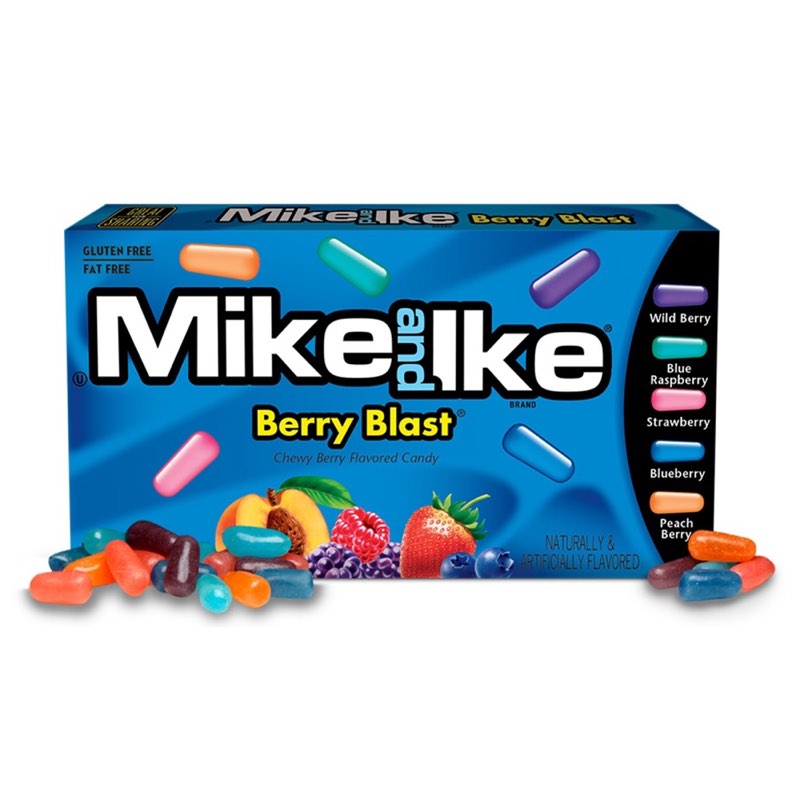
Third, the pairing question. If you want to guarantee a particular flavour family is on the table regardless of what the box contains, buy it separately in a form where it is named. That is what our flavour shelves are for. If you know the person you are buying for wants fruit and nothing else, put a named fruit line alongside rather than hoping. The Mike & Ike Berry Blast theatre box at £2.25 is the obvious companion here — same format, same shelf, same price bracket, and its name tells you what you are getting in a way that an assortment cannot.
Fourth, and most practically: check the packaging when it arrives. The manufacturer's own box carries the full information about what is inside it, and if you have any allergy in the household that is the only thing you should be relying on — not a product page, not a blog, not a memory of the last box you bought. We say this on every page and we mean it every time.
Occasions this earns a place at
Cinema trips are the obvious one and the reason the format exists. Buying sweets at a venue is famously expensive; bringing a box that costs £2.49 is the well-worn alternative, and a flat 93.6 g box is about as pocketable as confectionery gets. Whether a given venue minds is between you and the venue.
Party bags are the second strong fit, and this is where the six-count really earns its keep. Six bags, one bar each, no weighing, no dividing, no arguments about whether one bag got more. If you are filling ten or twelve bags you will need two boxes, and the cost per bag is still under 45p for the sweet element. Pair it with something small and bright — the 140 g bag of pinballs divides neatly across the same number of bags for another few pence each — and you have two items per bag for under a pound.
Advent and countdown arrangements are a slightly underrated use. If you are building one of those homemade paper-bag calendars, wrapped items are the only sensible filler, because they can sit in a bag for a fortnight without anyone worrying about them. Six bars covers six days of a twelve-day count with a second item alternating.
Travel is the fourth. Long car journeys, train journeys, flights, ferry crossings: all of them reward food that is individually portioned, low-mess and light. A box in the door pocket of a car is a different proposition to an open bag that ends up in the footwell. The same logic makes this a reasonable thing to keep in a desk drawer at work.
Hampers and gift baskets are where it works as a filler rather than a centrepiece. In a hamper you want a range of sizes — one or two big items, several medium, and a handful of small ones to fill the gaps and make the basket look full. A theatre box is a good medium item because it is rectangular, which stacks; round tins and bags are much harder to pack tidily. Build around it with contrasting shapes from our Candy & Chocolate shelf, where the twenty-six lines are mostly American-format boxes and bags that share the same stacking logic.
Stocking fillers, finally. It is the right price, the right size, and the right shape for the toe of a stocking. If you are buying several, buy a mix of formats rather than several of the same thing — the point of a stocking is that each item is a small surprise, and three identical boxes rather defeats it.
What £2.49 actually buys
Let us put the numbers down plainly, because value in confectionery is mostly arithmetic that shops would rather you did not do.
| Measure | Figure |
|---|---|
| Price | £2.49 |
| Declared weight | 93.6 g |
| Bars in the box | 6 |
| Weight per bar | about 15.6 g |
| Cost per bar | about 41.5p |
| Price per 100 g | about £2.66 |
Two of those numbers tell you different stories and it is worth being clear about which one applies to you. £2.66 per 100 g is the number to use if you are comparing against loose sweets bought by weight, and by that measure a theatre box is not cheap — bought by the kilo from a counter, most things cost considerably less per 100 g than this. 41.5p per bar is the number to use if you are comparing against buying a single item at a till, and by that measure it is very good indeed, because almost nothing at a counter sells for 41p.
Which number is the right one depends entirely on what you are replacing. If you are replacing a bowl of sweets at a party, you are in weight territory and you should be buying from the loose sweets range, where a kilo does the work of ten boxes at a fraction of the unit cost. If you are replacing a daily single-item treat — the thing bought on the way home, the thing in a lunchbox — you are in unit territory and six wrapped bars for £2.49 is a straightforwardly sensible way to buy.
On portioning: one bar is a portion. That is the whole point of the format and you do not need to think about it further. If you are dividing the box between people, six divides cleanly by one, two, three and six, which covers most household sizes. It does not divide by four or five, which is worth knowing before you hand it round a table of four and have to decide what happens to the last two.
Against the immediate neighbours: the Mike & Ike theatre box is £2.25, Junior Mints £2.59, the Milk Duds box £2.99, and the 170 g Bites bag from the same brand £2.99. That whole cluster sits between £2.25 and £2.99, which means you can pick between them on format and preference rather than on price — a genuinely rare situation in a shop, and a good reason to buy two different things rather than agonising over one.
Keeping it in good condition
Storage for wrapped confectionery is simple and mostly about temperature and light. Keep the box somewhere cool, dry and out of direct sunlight. A cupboard is ideal. A windowsill is the worst place in any house, because it combines heat with direct light, and a sunny windowsill in July will do more damage in an afternoon than a cupboard will in a month.
Do not put it in the fridge unless you have a specific reason to. Fridges are humid, and moving something from a cold fridge into a warm room causes condensation on the surface, which is the one thing you genuinely want to avoid with sugar confectionery. The exception is a genuinely hot spell in a house with no cool room, where a fridge is the lesser evil — in which case keep the box sealed, take out what you want, and put the rest straight back rather than letting the whole thing cycle between temperatures repeatedly.
The car is the other trap. A glovebox is a fine place for a box of wrapped sweets in February and a terrible one in August; a parked car in summer gets far hotter than most people assume. If you keep sweets in the car, rotate them seasonally and do not leave a box in there across a heatwave.
Once the outer box is opened, the individual wrappers do the work, so there is no urgency to finish it. That is the practical advantage of this format over a resealable bag: you are not relying on a clip or a fold to hold. Keep the outer carton, though, rather than turfing loose bars into a drawer, because the carton stops them getting bent and keeps them together.
And the standard sensible caveats, which apply to everything we sell: sweets are a treat rather than a food group, small hard sweets and whole gummies are a choking risk for young children and should be eaten under supervision, and anyone in the house with an allergy should read the manufacturer's packaging on arrival before eating anything.
One size, and why there is no decision to make
This line is listed in a single size — one box, £2.49 — so there is no variant decision to agonise over. That is worth saying explicitly, because a lot of product pages bury the fact that there is only one option and leave people hunting for a bigger box that does not exist.
If you want more than one box's worth, the question is not "is there a bigger box" but "what shape should the extra quantity take". Two boxes gives you twelve wrapped portions, which is the right answer for party bags or a lunchbox fortnight. A move sideways into the Bites bag at 170 g gives you a bowl item instead — loose pieces rather than wrapped bars, which is a genuinely different product experience rather than just more of the same. And if what you actually want is bulk, the honest answer is that bulk lives on the weight side of the shop rather than in the box formats at all.
Where to find it, and what sits beside it
On this site the box lives on the Candy & Chocolate shelf, which is our home for American-format boxes, bars and novelty lines and currently runs to twenty-six products. It is the shelf to browse if the theatre-box format is what appeals to you, because most of the other boxes in the same shape are there.
From there the three most useful onward moves are: the loose sweets counter if you want quantity by weight rather than by packet; the pick and mix bags if you want to choose the contents yourself rather than accept a fixed assortment; and the full catalogue if you would rather scan everything at once and let something catch your eye. Those three cover almost every reason somebody leaves a product page without buying, which is why they are worth knowing about.
If you came here because you were looking for cinema-counter sweets specifically, the tight cluster to look at is the Junior Mints box, Milk Duds, the Mike & Ike box and this one. All four are boxed, all four are in the same narrow price band, and between them they cover mint-and-chocolate, caramel-and-chocolate, fruit and assorted. Buy two and you have covered the table properly.
Questions we get asked
How many bars are in the box?
Six, and the box carries a declared total weight of 93.6 g. That works out at roughly 15.6 g a bar, which is why we describe them as slim bars rather than miniatures. Six is a useful number for household sharing — it divides cleanly between one, two, three or six people — though it is worth knowing in advance that it does not divide neatly among four or five, so decide what happens to the spares before you hand it round.
Which flavours come in it?
Our listing for this line does not break out the individual bars, and we would rather tell you that plainly than guess. The box is sold as a fixed assortment at one price, and the manufacturer's own packaging is the thing to check when it arrives if the specific mix matters to you. If you want a guaranteed flavour direction on the table, the practical move is to buy a named line alongside it — the Mike & Ike berry box at £2.25 is the closest match in format and price.
Is this a good size for a party bag?
Yes, and it is one of the better uses for it. Six wrapped bars is six bags with one item each, no weighing, no dividing and nothing that can leak or squash. At 41.5p a bar it is a reasonable per-bag cost for the sweet element, and because the bars are wrapped you can fill the bags a day or two ahead without anything going soft or sticking together. For bigger numbers, buy two boxes rather than trying to split bars.
Will it survive a day in a bag or a rucksack?
Better than most things, because every bar is individually wrapped and the outer carton gives them some protection from being bent. Keep the carton rather than tipping loose bars into a bag pocket. The thing to avoid is heat: a bag left in the sun or a glovebox on a hot day is hard on any confectionery, and a cool cupboard is always the better home between outings.
Is there a bigger box?
Not of this exact line — it is listed in one size only, at £2.49. If you want more, you have three options: buy two boxes for twelve wrapped portions, move sideways to the 170 g Bites bag at £2.99 for a loose bowl item instead of wrapped bars, or go to the loose sweets side of the shop and buy by weight, which is where genuine bulk value lives.
How does the price compare to buying loose sweets?
Honestly? By weight it is not the cheap option — £2.49 for 93.6 g is about £2.66 per 100 g, and buying by the kilo from our loose counter beats that comfortably. But per item it is very good, at around 41.5p a bar, which is less than you would pay for almost anything sold singly at a till. Use the per-100 g figure if you are filling bowls for a crowd, and the per-bar figure if you are buying single daily treats.
Is it suitable for a cinema trip?
That is exactly the format it was designed around — flat, light at 93.6 g, pocketable, individually wrapped and quiet to open, which is more than can be said for a crisp packet. Whether a particular venue is happy for you to bring your own is a matter for that venue's own policy, so check if you are unsure. At home it does the same job on a sofa with much less negotiation.
Can I put these in a sweet jar for a table display?
You can, but pick the vessel to suit the quantity. Six bars will look lost in a large sweet jar. A small straight-sided tumbler or a narrow jar that six bars genuinely fills, with the bars stood upright and all facing the same way, looks far more deliberate than a handful lying at the bottom of something big. If you are dressing a longer table, buy two boxes and split them between two matching vessels at either end rather than half-filling one large one.
What goes well with it on a snack table?
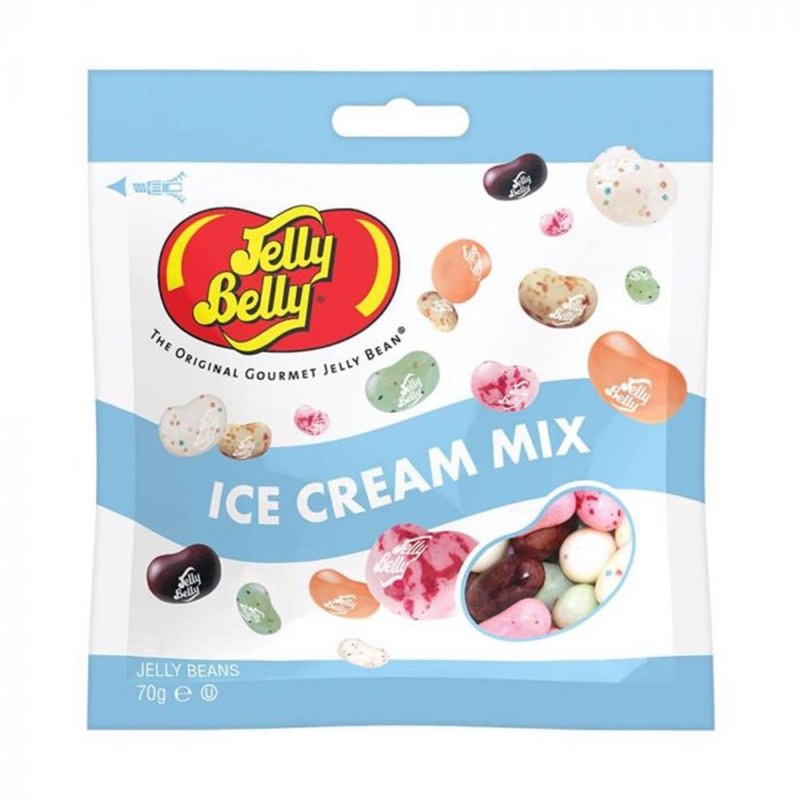
Something loose for grazing, something sharp for contrast, and something chocolate. A 140 g bag of pinballs at £1.99 covers grazing, a 70 g bag of beans at £2.40 covers sharpness, and a box of mints at £2.59 covers chocolate. That whole table, including this box, comes in under a tenner and gives you four distinct textures and four different eating rhythms rather than four versions of the same idea.
How should I store it once it is open?
Cool, dry, dark and in its own carton. Because the bars are individually wrapped, there is no rush to finish the box once you have opened it and no need for a clip or a resealable bag. Avoid windowsills, avoid a hot car, and avoid the fridge unless the house is genuinely too warm — moving confectionery between a cold fridge and a warm room encourages condensation on the surface, which is the one thing worth designing around.
Is it in stock right now?
Yes — this line is currently listed as in stock in its single size at £2.49. Stock positions do change, so the product page itself is always the authority rather than this description. If you are buying for a fixed date such as a birthday or a party, order with a few days in hand rather than relying on a last-minute dispatch.
Where do I find similar things on the site?
The Candy & Chocolate shelf is the direct home for this format and currently lists twenty-six products, mostly American-style boxes and bags. From there, the loose sweets counter is where to go for quantity by weight, and the pick and mix bags are where to go if you would rather choose every component yourself instead of buying a fixed assortment. If you are just browsing, the full shop listing is the fastest way to see everything in one place.
The short version
Six individually wrapped bars, 93.6 g in total, £2.49, one size, in stock. It is a slow, low-mess, well-paced item that suits an evening in front of something rather than a bowl on a party table, and it divides into six honest portions without anyone having to referee. Buy it for the format — pocketable, shareable, no leftovers problem — and build the rest of the table around it with something loose, something sharp and something chocolate. If the mix lands well and you want a bowl next time rather than a box, the 170 g Bites bag at £2.99 is the natural step across. And when it arrives, read the manufacturer's packaging before anyone with an allergy eats anything.
More candy & chocolate sweets
Where this sits
Airheads 6 Bar Theatre Box 93.6g appears on these shelves. Browse them, or jump to something nearby.
You might also like