Home / Candy & Chocolate / Jelly Belly Bean Boozled Spinner
Jelly Belly · 100g
Read the full guide
Jelly Belly Bean Boozled Spinner
£11.99
✔ In stock — ready to ship
Fresh stock
Free over £20
Same-day dispatch
Secure checkout
This is not a product you buy because you are hungry. Nobody reaches for a £11.99, 100 g item because they want 100 g of sweets — the shelf is full of cheaper ways to do that, and we will go through the numbers properly further down. You buy a spinner because you want something to happen in a room. That is the honest description of what is on this page, and every useful thing we can tell you follows from it.
So: who is it for?
The full guide to Jelly Belly Bean Boozled Spinner
5,159 words on how it eats, who it suits, how to serve it and what to put beside it.
Who actually buys a spinner
The person buying a present for someone hard to buy for
Teenagers, mostly, and the sort of adult who has everything and wants nothing. The great advantage of a game format is that it does not require the recipient to already like anything in particular. It is not a bet on their taste; it is a bet on them being willing to sit at a table with other people for twenty minutes. At £11.99 it also lands at a recognisable gift price — enough to be a present in its own right, not so much that it needs an occasion to justify it.
The host who needs an icebreaker that is not a quiz
There is a specific problem at gatherings where the guests do not all know each other, and the usual solutions are worse than the problem. A spinner solves it sideways. It is a shared activity with no skill involved, no winner to resent, no rules to explain twice, and a natural end point when the box runs out. It puts everyone at the same table doing the same thing, which is all an icebreaker has to do.
Families with children old enough to be in on the joke
The format needs a certain age to work. Too young and a dare is just an unpleasant surprise; old enough and the anticipation is the entire fun. Roughly speaking, this is a product for children who enjoy being slightly tricked and can laugh at themselves afterwards, plus every adult in the room who is prepared to take a turn rather than supervise from the side. A game where the grown-ups refuse to play is not much of a game.
People buying for a camera
It would be coy not to say it: a spinner is a filming format. It is designed to produce reactions, and reactions are the thing that gets recorded. If that is why you are buying, the practical advice is to buy two — one for the take that works and one for the take that does not — and to sit everybody on the same side of the table.
Who it is not for
Anybody who just wants jelly beans. Genuinely, if the appeal is the sweets rather than the game, you are overpaying by a wide margin and you would be happier with the 20 Assorted Flavour Mix bag, 70 g for £2.40, which is the same brand at a fraction of the cost per gram. It is also not for a room where somebody will feel pressured into eating something they do not want to eat. The format only works if declining a turn is completely fine, and it is the host's job to make that clear before the first spin, not after.
What is on the table
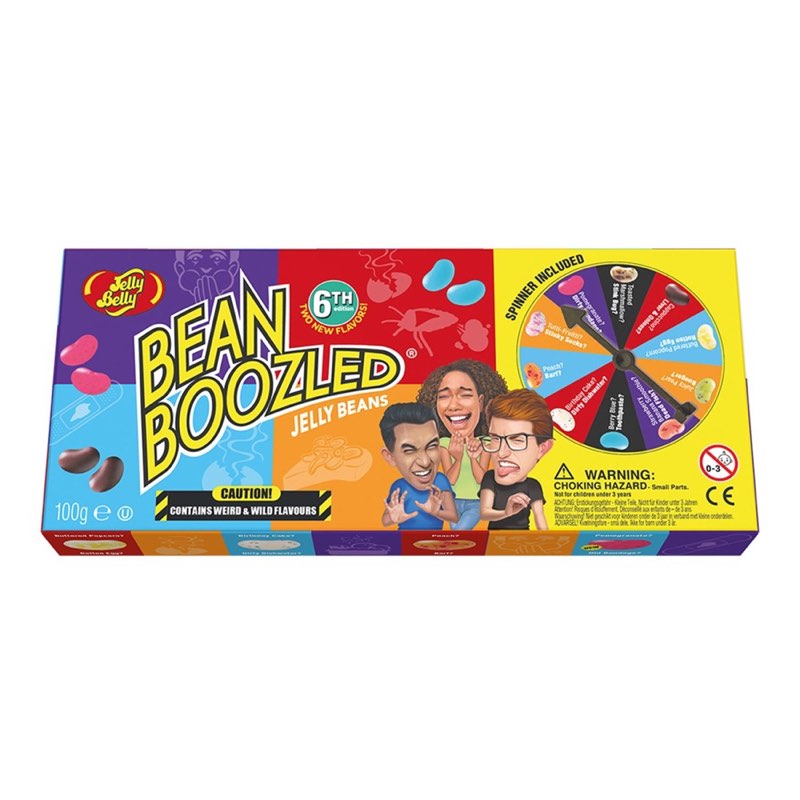
Jelly Belly Bean Boozled Spinner, 100 g, one size, £11.99, in stock, and recorded on the listing as multi-coloured with the flavour noted simply as fruit and the sweet type as chewy. There is one photograph on the listing and it is worth looking at, because a spinner is a product where the physical proportions decide whether it works on a particular table.
The name tells you the format: there is a spinner, and the promise in the word "boozled" is that you will not know what you are getting until it is too late. That is the mechanic, and it is the reason the item costs what it costs — you are paying for a device and a premise, and the sweets come along with it.
What we are not going to do is print a list of which beans are inside or what each one is supposed to taste like. We do not hold verified detail for that, and a page that guesses at it is worse than a page that admits it. The manufacturer's packaging that arrives with your order is the authority on what is in the box, and anybody with an allergy should read it before anybody eats anything. That is the only responsible answer, and we would rather give it plainly than dress it up.
How a single bean eats
Set the game aside for a moment and consider the sweet on its own terms, because texture is where the whole thing lives.
A bean of this class is a small, dense, deliberately weighty little object. It is heavier in the hand than its size suggests, which is your first clue that it is a chew rather than a gum or a jelly. Rolled between finger and thumb it has almost no give — the surface is smooth and firm, with none of the slight tack you get from a soft gummy.
The first bite is the moment the product declares itself. There is a brief, clean resistance and then a yield; the bean does not shatter and it does not squash, it gives way in a single decisive break. That is what "chewy" means when it is done properly, and it is a much narrower target than the word suggests.
After that it becomes work in the nicest sense. A chew of this density takes ten to twenty seconds of proper attention, and flavour arrives across that whole window rather than in a single hit at the front. The listing records the flavour family as fruit, which in a bean of this kind means a fairly bright, defined character that establishes itself early rather than building slowly. The finish is the interesting part: chews hold on. The flavour of the last one is still faintly present when the next one goes in, which is a real consideration when you are eating several in a row and a very deliberate part of how a guessing game works.
Engineering a chew: why texture is the real product here
It is easy to think of confectionery as a flavour business with some shapes attached. It is not. Texture is the primary variable, flavour is the secondary one, and a sweet with the wrong texture cannot be saved by any amount of flavour. In a game format this is more true than usual, because texture controls time — and time is what a game is made of.
The four textures, and what each one does to the clock
Hard. A sweet that dissolves rather than breaks. It occupies five to fifteen minutes and cannot be hurried. Flavour arrives slowly and leaves slowly. Taveners American Hard Gums at £5.49 sit at the firm end of this world — a long, slow, deliberate eat that makes a bag last.
Chewy. Ten to thirty seconds of active work. Flavour is delivered across the chew rather than at the start. This is the zone this product is in, and it is the zone most game formats choose.
Soft and gelatinous. A few seconds, yielding immediately, with flavour arriving almost instantly and fading almost as fast. Haribo Gold Bears at £5.49 are the reference point that everybody in the country already has calibrated in their head.
Fizzing or dissolving surfaces. A coating that does something on contact before the sweet underneath has started. This is an effect applied to a texture, not a texture in itself, and it front-loads the whole experience. The Cry Baby sour mini drink wax bottles, a four pack at £2.99 are about as front-loaded as confectionery gets.
Why a game needs a chew specifically
Now put those four against the requirements of a spinner, and the choice stops looking arbitrary.
A hard sweet is hopeless for a guessing game. Five minutes of slow dissolve means the turn never ends, the table waits, and by the time anybody can report on it the moment has gone. Worse, a hard sweet can be quietly removed. Half the tension of a dare is that it is irreversible once it is in.
A soft jelly is nearly as bad, for the opposite reason. It is over in two seconds. There is no window in which the person's face can do anything interesting, and the flavour is gone before the table has finished looking at them.
A chew is the only texture that gives you a proper window — long enough that a reaction can develop and be watched, short enough that the turn does not stall. Ten to twenty seconds is almost exactly the right length for a shared moment at a table. That is not an accident of manufacturing; it is the format choosing its texture.
Density, and why the small ones are the hardest to make
Small, dense sweets are technically harder to get right than large soft ones, and the reason is water. Texture in confectionery is largely a question of how much moisture is left in the finished piece and how evenly it is distributed. Too much and the piece is soft, sticky and prone to clumping; too little and it goes brittle and dusty. A small piece has a high surface area relative to its volume, which means it loses moisture from the outside much faster than a large one — so keeping the middle and the edge at the same consistency is a genuinely fiddly problem.
This is why the small, dense end of the shelf tends to be dominated by specialists. Maoam Pinballs, 140 g for £1.99 are a good illustration of the same discipline in a different shape — a compact piece with a firm, consistent chew right through rather than a soft centre and a dry edge.
Setting time is why good chews cost more
The other half of the texture problem is time. A chew's structure develops after forming, not during it, and that development cannot be rushed without showing up in the bite. Pieces that have been allowed to set properly break cleanly and chew evenly; pieces that have been hurried are either slightly soft in the middle or tough at the edge, and you can feel the difference in the first second.
Setting time costs money — it is warehouse space, stock sitting still, and capital not yet earning. That cost lands in the price of everything on the chewy shelf, and it is part of why an unhurried chew is rarely the cheapest thing in the aisle. Drumstick Chew Bars, ten for £2.50 are a good demonstration that it can be done at scale and at a sensible price, and that the result is a distinctly different eat from a soft jelly.
Surface finish: the part your fingers judge first
Before anything is tasted, it is touched, and the surface of a sweet does more work than it gets credit for. A smooth, dry, faintly slick finish signals firmness and stops pieces welding to each other in a container. A matte or dusted finish signals softness. A sticky surface signals — fairly or not — that something has been too warm at some point.
For a game, the surface matters for an additional reason: pieces are being picked up individually, by several people, from a shared container, over a period of time. A finish that resists fingers is not a luxury there, it is a requirement. Nothing kills a shared format faster than everybody having tacky hands by the fourth turn.
What warmth does to all of this
Temperature moves a chew along the texture axis in real time. Cool, a chew is firmer, breaks more cleanly, releases flavour more slowly, and lasts longer in the mouth. Warm, the same piece is softer, yields immediately, gives up its flavour faster and finishes sooner.
That matters practically. A box that has sat in a warm room all afternoon will play differently from one that has been in a cool cupboard — softer, faster, less of a window. If the game is the point, keep the box somewhere cool until you start. Ten minutes of thought there is worth more than any amount of setup.
Why texture beats flavour in a guessing format
Here is the part that is genuinely counter-intuitive. In a format built on not knowing what you are eating, the pieces have to be texturally identical or the game does not work. If one piece were noticeably softer than another, you would know before you tasted it, and the whole premise would collapse. So consistency — which is a manufacturing virtue nobody normally notices — is the load-bearing element of the entire product. It is the only case in confectionery where uniformity of texture is more commercially important than the flavour itself.
The money: what £11.99 for 100 g really means
Let us be direct, because the number deserves it. At £11.99 for 100 g, this costs £11.99 per 100 g. That is, by a distance, the highest price per gram on any shelf it sits near. Pretending otherwise would be insulting.
| Item | Weight | Price | Per 100 g |
|---|---|---|---|
| This spinner | 100 g | £11.99 | £11.99 |
| Bean Boozled Jelly Beans Box | 45 g | £2.99 | £6.64 |
| Jelly Belly single-flavour bags | 70 g | £2.40 | £3.43 |
| Chupa Chups Mini Candy Sushi Tray | 100 g | £2.99 | £2.99 |
| Mike & Ike Mega Mix Sour Theatre Box | 120 g | £2.25 | £1.88 |
| Maoam Pinballs Bag | 140 g | £1.99 | £1.42 |
| Candy Realms Tutti Frutti Tubes Tub | 780 g | £7.99 | £1.02 |
What you are actually paying for
Read that table as a price list for sweets and this product looks absurd. Read it as a price list for objects and it looks ordinary, because six of those seven rows are bags of sweets and one of them is a device. The 780 g tub of tutti frutti tubes at £7.99 is the extreme case: less money for nearly eight times the weight. If weight is what you want, that is the correct purchase and this one is not.
The right way to think about a game format is to split the price in two. Take the 45 g box at £2.99 as the rough market rate for the sweets themselves, scale it to 100 g, and you get somewhere around £6.64 of sweets. The remaining £5.35 or so is the spinner, the presentation and the premise. Whether that is good value depends entirely on whether you were going to use it.
Cost per occasion, not cost per gram
Here is the comparison that actually settles it. £11.99 is roughly the price of two cinema tickets' worth of pick-and-mix, or one bottle of something for a dinner party, or a takeaway starter. As a twenty-minute activity for four to six people, it is about £2 a head. Nobody thinks £2 a head is an outrageous price for twenty minutes of a party working properly.
The failure mode is buying it and not playing it. A spinner that sits in a cupboard is £11.99 of nothing at all, and that is a far more common outcome than people expect when they buy on impulse. Buy it with a specific evening in mind and it is good value. Buy it because it looks fun and it very often is not.
Per handful and per guest
100 g of small dense beans is not a large quantity by volume — these are heavy for their size, so the piece count is lower than the same weight of something airy. Across four players taking turns, that is a sustained round rather than an all-evening supply. Across ten people it is one turn each and not much more.
The practical implication is the single most useful piece of advice on this page: a spinner is the activity, not the catering. If there are more than about six people, buy something to eat alongside it, or half the room will be watching rather than eating. A Mike & Ike Mega Mix Sour Theatre Box, 120 g for £2.25 costs under a fiftieth of the per-gram price and keeps the spectators occupied.
Buying two, and when that makes sense
At twelve pounds each, two is a real decision. It is worth it for a large group where one round will not go round, for filming where you want a second attempt, or for a party where the game is running in two places at once. It is not worth it for a household of four, where one will outlast the novelty comfortably.
The cheaper way in
If you want to find out whether your household enjoys this kind of thing before spending twelve pounds on it, the 45 g Bean Boozled box at £2.99 is the obvious test. It is the same idea at a quarter of the outlay, without the spinner. Play it once, see whether the room enjoys it, and buy the full format afterwards if they do. That is the sensible order, and almost nobody does it.
What "fruit" means here, and what it does not
The flavour recorded against this product is simply fruit, which is a broad heading and worth unpacking a little. In confectionery, fruit covers at least three distinct registers, and a mix leaning on one of them tastes completely different from a mix leaning on another.
There is bright fruit — sharp, immediate, high-toned, the citrus-and-berry end that hits fast. There is soft fruit — rounder, sweeter, creamier, the kind that leans towards dessert. And there is deep fruit — the jammy, cooked, darker end that tastes of preserve rather than of picking.
Our fruit flavour shelf runs to 161 lines, which is the biggest single flavour category we keep, and browsing it is the fastest way to work out which register you actually prefer. Barratt Fruit Salad Chews at £5.49 are a good anchor for the deep end, and Kingsway Assorted Fruit Chews, also £5.49 cover the middle ground in the same chewy texture family as this product.
What we will not do is tell you which specific fruits appear in this box, because we do not hold that. If that is the deciding factor for you, read the packaging when it arrives.
Building a table around a game
A spinner is a centrepiece in the literal sense — it goes in the middle and everything else arranges itself around it. Three things are worth having alongside.
Something plain, in volume. Not everyone will take a turn, and the people who do will want something ordinary afterwards. This is the single most important item on the table and the one people forget. A £5.49 bag of Gold Bears is the safest possible choice: universally liked, texturally unchallenging, and nobody has to be brave about it.
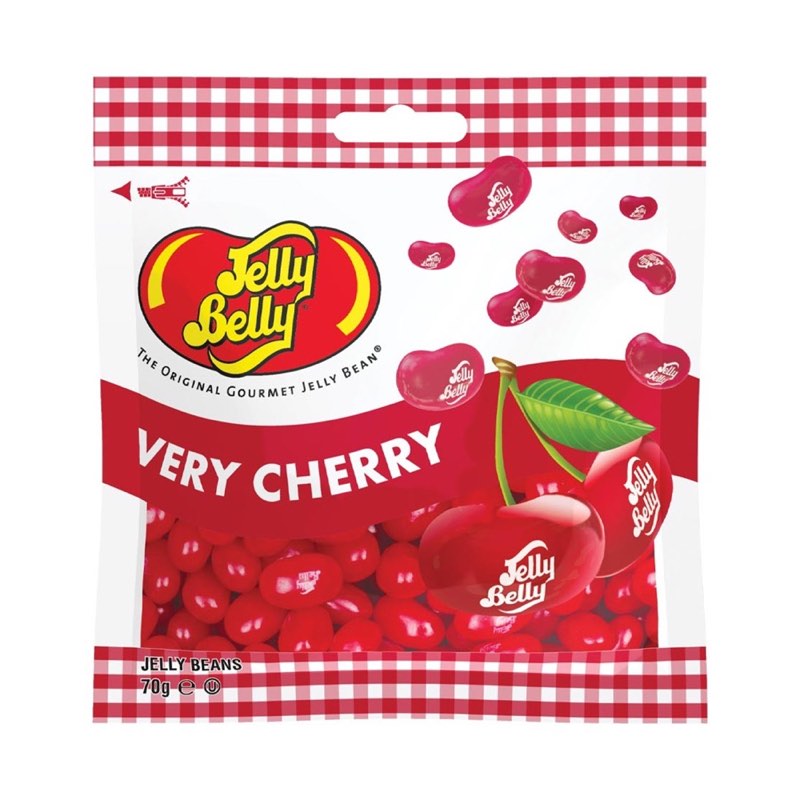
Something familiar from the same brand. There is a neat move available here — putting straightforward Jelly Belly beans next to the game, so that the same shape appears in both a safe and an unsafe form. The Very Cherry bag, 70 g at £2.40 or the Cotton Candy bag at the same £2.40 do this well, and at that price you can put out two or three flavours without thinking about it. The Ice Cream Mix at £2.40 is the softest-toned of them and the easiest landing after a turn.
A glass of water, per person. Not a sweet, but the most useful thing on the table. It is not a cure for anything, it just resets the palate between turns so that the fourth spin is as interesting as the first.
Beyond those, the useful principle is texture contrast. A table of nothing but chews is monotonous however varied the flavours; put a hard gum and a soft jelly on it and the whole spread feels wider. If you want an ordered spread rather than a pile of bags, build a selection by weight from the pick and mix range and put it out in bowls — it costs a good deal less per gram than the branded bags and lets you set the texture balance deliberately.
Evenings this actually improves
Family game nights. The best single use. It slots between board games as a palate cleanser of sorts, takes five minutes, and involves the people who are losing at everything else.
Teenage birthdays. The format is well calibrated for an age group that is too old for party games and too young for the evening to run itself. It gives fifteen-year-olds a licence to be silly without anyone having to organise anything.
Christmas, after the meal. The point in the day when everyone is full, nobody wants more food, and the room is looking for something to do that does not involve standing up. A game where the stakes are a single small sweet is well suited to that particular hour.
As a stocking or secret-gift item. At £11.99 it is comfortably inside most present budgets and it is visibly a proper thing rather than a filler.
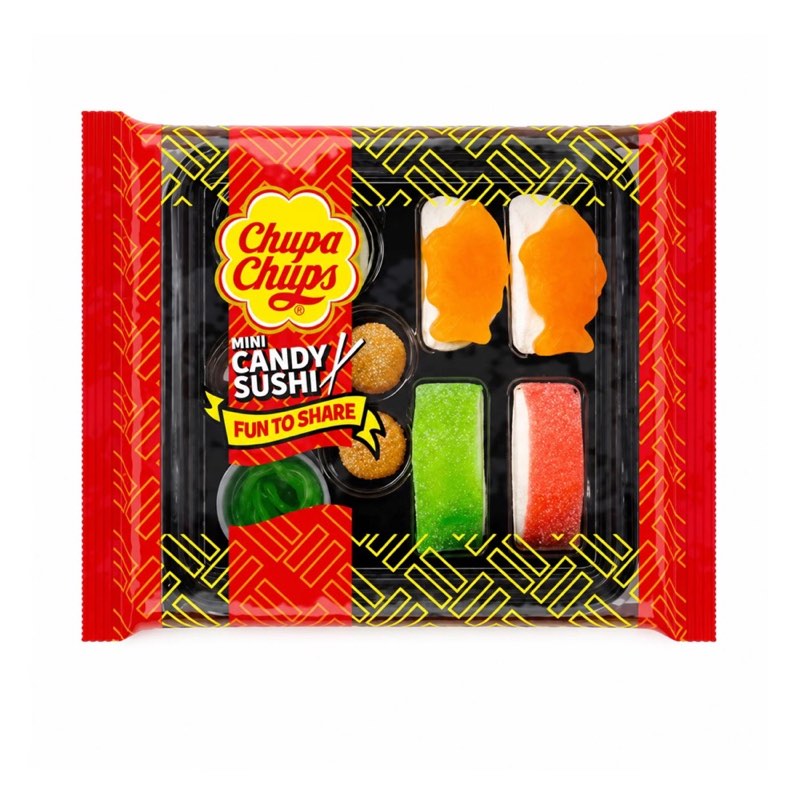
Where it will not work. A formal gathering, a room with small children who will not understand the joke, or any group where somebody has a dietary restriction and would end up excluded from the game. That last one deserves thought before you open it rather than after: a format built on not knowing what you are eating is a poor fit for anybody who needs to know what they are eating. If that is your room, pick a different kind of centrepiece — the Chupa Chups Mini Candy Sushi Tray, 100 g for £2.99 gives you the same novelty-on-a-table effect without the guessing.
Keeping it playable
Cool, dry, dark, and sealed. The same rules as any chew, with one addition that is specific to this format: keep the box closed between sessions, because the game depends on the pieces being identical, and pieces that have been open to the air for a week are not identical to pieces that have not.
Warmth is the main risk. A chew left somewhere warm softens, and softened pieces can stick to each other — which, in a format where picking one piece cleanly is part of the mechanic, is a genuine problem rather than a cosmetic one. Keep it out of direct sunlight and away from radiators, and do not leave it in a car.
Do not refrigerate it. Cold, damp air and the condensation that follows when it comes back out will do more harm to the surface finish than a steady room temperature ever would. A cupboard is right; a fridge is not.
If you are buying ahead for an occasion, that is entirely sensible at this price — just check the dates on the manufacturer's packaging when it arrives so you know your window, and store it flat rather than under a pile of heavier things.
One size, and the box beside it
There is one version of the spinner: one size, £11.99, in stock. So the real choice is not which size but which format, and there are two genuine options on our shelves.
- The spinner at £11.99. The full format with the device. Buy it if the game is the point, if it is a gift, or if you want the thing to have presence on a table.
- The 45 g box at £2.99. The same idea in a fraction of the packaging, at £6.64 per 100 g instead of £11.99. Buy it to test the concept, to put in a stocking, or to have the game without the object.
A reasonable strategy, if you are buying for Christmas or a birthday and are not certain, is to get the small box first, play it once, and then commit. The other reasonable strategy is to buy the spinner as the gift and a couple of straightforward Jelly Belly bags from the brand's eight lines alongside it, so the recipient has something to eat as well as something to play with. The American Classics bag at £2.40 is a good companion for that, and keeps the whole present inside fifteen pounds.
Finding your way from here
This sits on the candy and chocolate shelf, which is where the boxed, branded and novelty formats live — the right place to browse if you are shopping for an object rather than for a weight. Its brand page, the Jelly Belly listing, gathers the whole range in one place and is the fastest way to compare the game formats against the plain bags.
If you came for the texture rather than the brand, our chewy shelf runs to 78 lines and is the most useful page on the site for anybody who has worked out that chew is what they actually like. If you came for the flavour, the fruit category is the larger net. Two neighbouring brand pages are worth knowing about as well: the Haribo listings for the soft-jelly end of the spectrum, and the Kingsway range for traditional bagged lines bought by weight.
For building a spread by weight rather than by box, the loose sweets section is where the individual lines are listed with their own prices, and the pick-and-mix pouches and jars are the containers to put them in. When you would rather see everything at once than filter, the full shop lists the lot.
Questions people ask before they buy the spinner
What exactly do I get for £11.99?
100 g of sweets and the spinner format, in one size, in stock. The listing records the sweets as chewy, multi-coloured and fruit-flavoured. It is a game product rather than a quantity product, and the price reflects the device and the premise as much as the contents.
Which beans are in it, and what do they taste like?
We do not hold a verified flavour-by-flavour breakdown for this line, so we are not going to print one and risk being wrong about something somebody is about to put in their mouth. The manufacturer's packaging that arrives with the order is the place to look, and it is worth reading before you start rather than mid-game.
Is it good value compared with the smaller box?
Strictly on sweets, no — the 45 g box works out at £6.64 per 100 g against £11.99 here. The spinner's extra cost buys the device and the presentation. If you want the game object, the premium is the product; if you want the game idea, the box is the better buy and always will be.
How many people can play with one?
Four to six comfortably for a proper round. Up to ten works for one turn each and not much more. Above that, either buy two or accept that most of the room is watching — and if they are watching, put something else on the table for them to eat.
What age is it suitable for?
It suits children old enough to enjoy being tricked and to laugh about it afterwards, which in practice is somewhere around school age and upwards. Younger than that and a surprise flavour is just unpleasant. As with all sweets, it is a treat rather than a food — and small hard sweets and whole gummies are a choking risk for young children, so anyone little at the table needs supervising.
Is it suitable for vegetarians, or for anyone with allergies?
We do not hold supplier dietary information for this line, so we make no claim either way. Check the manufacturer's packaging on arrival before eating. And be aware of the format's particular issue: a game built on not knowing what you have picked is a poor fit for anyone who needs to know, so if there is a restriction in the room, choose a different centrepiece rather than working around it.
Can I use the sweets for something other than the game?
Of course, though it is a costly way to buy 100 g of beans. If you want Jelly Belly to eat rather than to play with, the 20-flavour assorted bag at £2.40 gives you a wide range at £3.43 per 100 g, which is less than a third of the per-gram cost here.
How long does a round take?
Fifteen to twenty-five minutes for a table of four or five, which is about right — long enough to be an event, short enough that it does not outstay its welcome. The chew itself occupies ten to twenty seconds per turn, and the rest is the talking, which is really the point.
Does it work as a gift on its own?
Yes. It is comfortably at a proper-present price and it is visibly a thing rather than a packet. It gifts better with something plain alongside it, though, so the recipient has something safe to eat afterwards — a £2.40 Very Cherry bag or similar adds very little to the cost and a lot to the present.
Will it melt or go sticky?
Kept cool, dry and out of sunlight, no. Left somewhere warm, a chew softens and softened pieces can stick together, which matters here more than usual because picking a single piece cleanly is part of how the game works. Do not put it in the fridge to solve that — a cool cupboard is the right answer.
What should I put on the table alongside it?
Something plain and in volume, so that people have somewhere to land after a turn, plus water. Soft jellies are the reliable choice for the first job. If you want a larger, cheaper volume item to keep a bigger group going, a 780 g tub at £7.99 is about as much sweet-per-pound as we sell.
Is there a bigger version?
Not of the spinner — this is one size. Scaling up means buying two, or adding straightforward bags around it. Most groups find one spinner and a couple of ordinary bags is a better spread than two spinners, because the second one rarely gets opened on the same night.
What if nobody in my house wants to play?
It happens, and it is the main risk with the format. Test it cheaply first with the 45 g box before spending twelve pounds, or buy a straightforward chewy item instead — assorted fruit chews at £5.49 give you the same texture family with no dares attached, and they will get eaten.
To sum up
£11.99 for 100 g is the most expensive per-gram item on any shelf near it, and that is fine as long as you know what you are buying: a twenty-minute activity for a table of four to six, at about £2 a head, that happens to be made of sweets. The chew is the right texture for the job — long enough to watch a reaction, short enough to keep the turn moving — and the whole thing works or fails on whether you actually get it out of the cupboard. If you want the idea more than the object, the £2.99 box does most of it for a quarter of the money. If you want the sweets and none of the game, a £1.99 bag of Pinballs will give you nearly ten times the weight per pound and no surprises at all.
More from Jelly Belly
More chewy sweets

More fruit sweets
Where this sits
Jelly Belly Bean Boozled Spinner appears on these shelves. Browse them, or jump to something nearby.
You might also like