Home / Loose Sweets / Jelly Belly Very Cherry Jelly Beans Bag 70g
Jelly Belly · 70g
Read the full guide
Jelly Belly Very Cherry Jelly Beans Bag 70g
£2.40
✔ In stock — ready to ship
Fresh stock
Free over £20
Same-day dispatch
Secure checkout
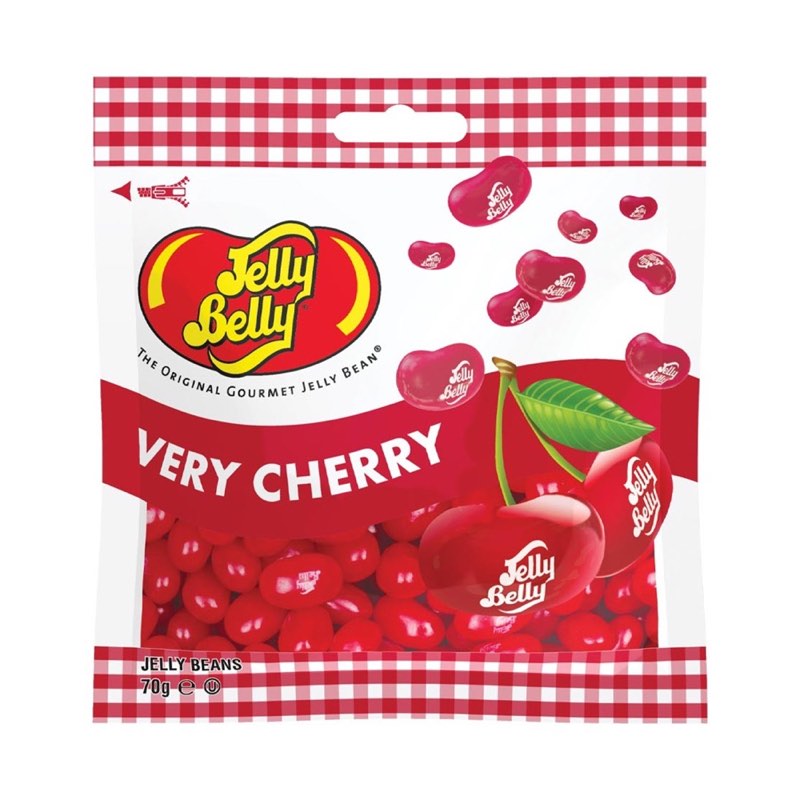
Tip a few into your palm and the first thing you register is how small they are. A jelly bean is a deceptively little object — smaller than you remember, lighter than it looks, and sized so that three or four sit comfortably in a cupped hand without feeling like a portion. They are red, uniformly so, and the surface has a faint sheen to it rather than a hard glassy shine. Roll them between your fingers and they click against each other with a small dry sound. Nothing about the first handful suggests anything dramatic, which is exactly why the first bite catches people out.
Pick one up and press it lightly. There is resistance, but not the kind you get from a hard sweet. The outside holds firm under your fingertip and then gives very slightly, which tells you before you have eaten anything that this is a two-part object — something firmer on the outside, something softer within. That structure is the whole design of a jelly bean and it is worth noticing on your fingers first, because once it is in your mouth everything happens too quickly to analyse.
The full guide to Jelly Belly Very Cherry Jelly Beans Bag 70g
6,290 words on how it eats, who it suits, how to serve it and what to put beside it.
The first bean out of the bag
Now bite one, straight through, rather than sucking it. The bite is the moment the sweet is built around. There is a short, crisp resistance right at the start — a thin, brittle give as the outside fractures — and then your teeth drop into something completely different: soft, dense, elastic, with real body to it. The transition takes perhaps a tenth of a second, but it is the entire experience in miniature. A sweet that were only shell would be a boiled sweet. A sweet that were only centre would be a gummy. The bean is the thing that is both, in sequence, on every single bite.
The cherry comes through immediately and at full volume. This is not a subtle sweet and it is not trying to be. The moment the outside breaks, the flavour arrives — bright, sweet, deeply cherry, with a rounded quality rather than a sharp one. There is a slight tartness sitting underneath it that stops the whole thing from being flat, but it sits well back and it never takes over. If you have eaten sour cherry sweets you will notice the difference straight away: this is the sweet, ripe, dark end of the cherry register rather than the sharp end.
The chew is short and pleasant. Three or four movements of the jaw and it is essentially gone — there is none of the long working you get from a toffee or a chew bar. The centre is dense enough to feel like something, elastic enough to resist a little, and then it breaks down cleanly without leaving anything stuck to your teeth. That clean finish is one of the quiet reasons jelly beans get eaten in the quantities they do: nothing lingers unpleasantly, so there is never a moment where you think you have had enough.
What lingers instead is the flavour, and it lingers well. Half a minute after the bean has gone the cherry is still there, sitting on the back of your tongue, gradually fading rather than stopping. This is the part that makes you reach for another one, and it is also the reason a 70g bag empties faster than a 70g bag of almost anything else.
Eat them a handful at a time and the experience changes. Four or five at once turns the bite from a crisp fracture into a general crunch, and the individual bean structure gets lost in the mass. The flavour is bigger, which some people prefer, but you lose the thing that makes the sweet interesting. Our honest advice is to eat them one or two at a time at least for the first half of the bag, and save the handful approach for when you are not paying attention.
One more sensory note that people often miss: the aroma. Open the bag and hold it under your nose before you eat anything. Cherry carries strongly as a smell, and a good third of what you experience as flavour when you eat one is actually arriving through your nose. It is why these taste noticeably duller if you eat them with a blocked nose, and why they taste so vivid in a cold room where you have just come in from outside.
What is in the bag
This is a 70g bag of Jelly Belly Very Cherry jelly beans at £2.40. One flavour, cherry, right through — this is not an assortment, and that matters more than it sounds. Every bean in the bag is doing the same job, which makes it a completely different proposition from a mixed bag where every bean is a small surprise.
Seventy grams is a genuinely small bag. It sits in a coat pocket without bulging, it fits in a glovebox, and it will not survive a long car journey with two people in it. That is by design: this is a single-serving or two-person format, priced and sized as something you pick up rather than something you plan. If you are catering for a table or filling a hamper, you want several of these rather than one, or you want to look at the by-weight lines instead.
We list the colour as red and the type as chewy, which is a fair description of where these sit. They are chewier than a soft gummy and softer than anything you would call hard, and the two-part structure means they behave a little differently from either. Beyond that, the packaging that arrives with your order is the place to read anything specific about the product itself.
Who buys single-flavour beans
There are two distinct kinds of shopper for a bag like this, and they want almost opposite things from it.
The first is somebody who already knows they love cherry and is tired of picking. Anybody who has eaten a mixed bag of beans knows the routine: you tip some out, you eat the ones you like, and a little pile of the ones you do not accumulates at the side. A single-flavour bag removes that entirely. Every bean is one you want. For a committed cherry person this is not a minor convenience, it is the whole reason the format exists, and it makes £2.40 look like a bargain compared with buying a mixed bag and throwing a third of it away.
The second is somebody building something — a mix, a table, a themed bag, a party favour — who needs a reliable block of one flavour and one colour. A single-flavour bag is a component rather than a product. If you are assembling a red-themed sweet table, or a bag where you control exactly what goes in, a 70g block of uniform red beans is far more useful than an assortment, however good the assortment is.
It also suits anybody who wants a small treat rather than a large one. Seventy grams is a modest amount, and at £2.40 it is the kind of purchase you make without a conversation about it. If you have ever wanted something sweet but not a whole big bag, this is the size that answers the question honestly. Compare it with the Candy Realms Tutti Frutti Tubes Tub 780g at £7.99 — an excellent thing, but 780g is a household commitment and this is an afternoon.
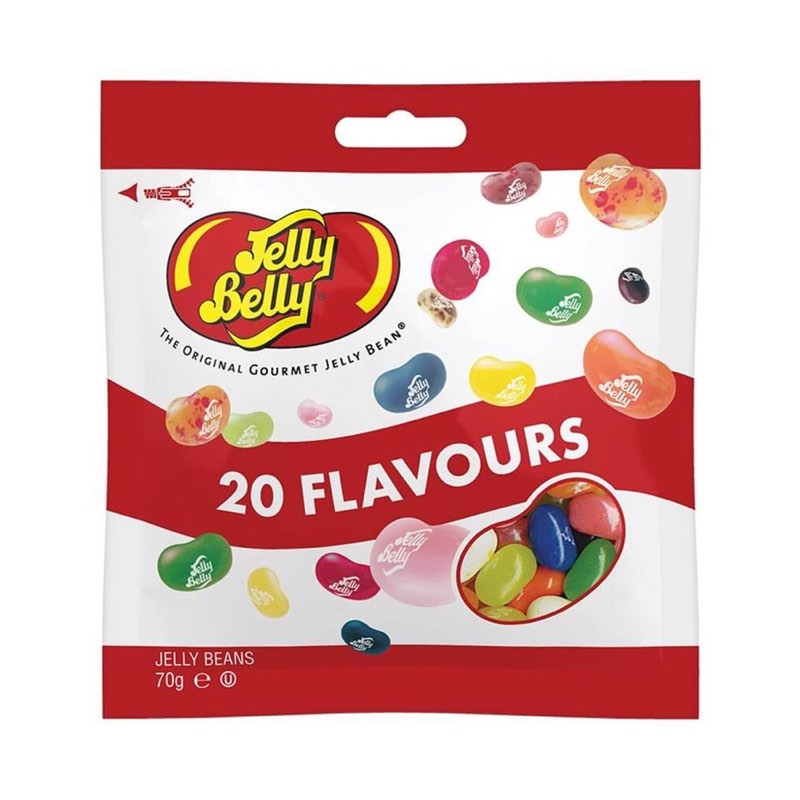
Who it suits less well: anybody feeding a group. Seventy grams does not go round a room, and at £3.43 per 100g the by-weight lines in our loose sweets department will feed a crowd for much less. And anybody who actively wants variety is better served by a mixed bag — the Jelly Belly 20 Assorted Flavour Mix Jelly Beans Bag 70g costs the same £2.40 and does the opposite job.
Piers, counters and the small bag you eat while walking
There is a whole category of sweet-buying in this country that has nothing to do with planning, and the small bag is its native format. It is the thing you buy on the way somewhere. It is the purchase you make at a till because it is next to the till. It is the bag that gets opened before you have left the shop and finished before you have got to wherever you were going. Jelly beans in a 70g bag belong to that world completely, and understanding it explains most of what is good about this product.
Think about a pier, or a promenade, or any stretch of seafront with shops facing the water. The sweet shops on those streets are built around a very specific kind of buying: you are walking, you have a bit of money, and you want something in your hand for the next twenty minutes. Everything about the offer is shaped by that. The bags are small because you are carrying them. The sweets inside are small because you are eating them with your fingers while looking at something else. They do not melt, they do not need a wrapper each, and you can put the bag in a pocket half-finished and come back to it.
A jelly bean is close to a perfect example of the type. It is dry to the touch, so it does not leave your hands sticky in a way that matters when you are holding a rail or a lead or somebody's hand. It is small enough that one is a reasonable amount to eat. It is dense enough that 70g feels like something. And it is robust — beans survive being carried around in a pocket in a way that a soft gummy does not.
The corner shop version of the same culture works slightly differently but rewards the same qualities. Sweets at a corner shop are an impulse and a habit rather than an occasion. They are bought in small amounts, often, by people who are in the shop for something else. The price point matters enormously there — £2.40 is an easy number, the kind you hand over without doing arithmetic, which is exactly why the small bag format sits at that level across the whole trade.
What is genuinely interesting about this culture is how much it shapes the sweets themselves. A sweet designed to be bought in a small bag on the move has to survive handling, has to be eaten without cutlery or napkins, has to work in any weather, and has to be satisfying in a small quantity. Those constraints produce a very particular kind of confectionery: small, dry-surfaced, intensely flavoured, structurally robust. Beans, bon bons, chews and boiled sweets all pass. Anything soft, sticky or delicate does not, which is why you see far less of it on a seafront.
You can see the same principles at work across the small-format lines we carry. The Drumstick Chew Bars (10 Pack) at £2.50 sit at almost exactly the same price point and solve the same problem in a different way — individually wrapped, so you can hand them out and keep the rest. The Fini Mini Mochis Berries Bag at £1.35 is the cheapest impulse bag in this group, and small-format sweets at that price are the backbone of the pocket-money end of any sweet shop.
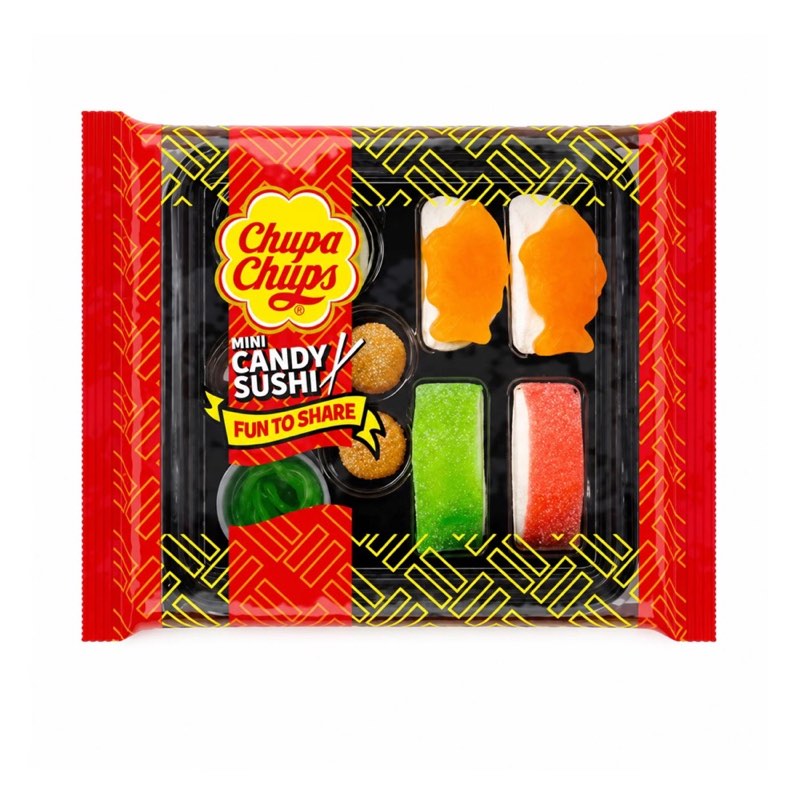
The Chupa Chups Mini Candy Sushi Tray 100g at £2.99 belongs to a slightly different strand of the same culture — the novelty presentation that makes somebody pick it up to look at it. Seaside shops have always traded in that as much as in the sweets themselves, and a tray that looks like something else is a very old idea in a new wrapper.
Where the small-bag culture and the by-weight culture meet is the pick and mix, which is the seaside sweet shop's other great institution. Instead of buying one small bag of one thing, you build a small bag of many things, and the pleasure is in the choosing as much as in the eating. Our pick and mix section works on exactly that principle, and a single-flavour bag like this is an unusually useful thing to have alongside it — it lets you add a controlled amount of one specific flavour to a bag you have otherwise assembled by eye.
The last thing worth saying about this culture is that it is not nostalgic. It is still exactly how most sweets get bought. The small bag by the till, the handful eaten walking, the purchase made because it was there and it was two pounds forty — that is not a memory of how things used to be, it is Tuesday. This product is built for it.
The engineering of the bite
Texture in confectionery is not an accident, and a jelly bean is one of the clearest demonstrations of that anywhere on our shelves. What you experience when you bite one is the result of specific design decisions about structure, and it is worth pulling apart, because once you understand what is happening you will notice it in everything else you eat.
The fundamental design is two-part: a firm outer layer and a soft inner body. Almost nothing else in confectionery does this in quite the same way. A gummy is one texture all the way through. A boiled sweet is one texture all the way through. A chocolate-covered thing has two layers but the outer one melts rather than fractures. The bean's outside breaks — it fails suddenly under pressure rather than deforming — and that sudden failure is what makes the bite feel crisp.
Why does that matter? Because contrast within a single mouthful is the most reliable way to make a small amount of food interesting. Your palate registers change far more strongly than it registers steady state. A bean of uniform texture at the same size would be forgettable. The same mass arranged as firm-then-soft gives you two sensations where there was one, and the whole thing feels substantially bigger than it is. That is the single most important thing the design achieves, and it is why a bean satisfies at a size where a gummy of the same weight would not.
The second design decision is size, and it is more deliberate than it looks. A bean is sized so that one is a mouthful but not a demanding one. Make it bigger and the crisp outer fracture becomes a proper crunch and the soft centre becomes a chew you have to work at — you would have made something closer to a chocolate-covered sweet. Make it smaller and the two layers get too thin to distinguish, and you lose the contrast entirely. The size that is used is roughly the smallest at which a human mouth can still clearly perceive two distinct textures in sequence, which is a rather elegant place to land.
The third is the shape. A bean is not a sphere and not a cube, and that irregularity does real work. An oval with slightly different thicknesses across it means that the outer layer gives way unevenly — it fractures at the thin end first and resists at the thick end — so the bite has a tiny sequence to it rather than a single event. Perfectly spherical sweets tend to feel more uniform and less interesting for exactly this reason. It also means beans do not roll far when you drop them, which sounds trivial and is not, given where they get eaten.
The fourth is surface. The outside of a bean is dry to the touch, not tacky, and that governs a lot of how the product behaves in the real world. Dry-surfaced sweets do not clump together in a bag, do not stick to your fingers, and can be handled repeatedly without deteriorating. Compare a bean with a soft, tacky-surfaced sweet that has been in a warm pocket for an hour and you will appreciate the difference immediately. This is a texture property with practical consequences, and it is the main reason beans travel as well as they do.
Flavour timing is the fifth piece, and it is closely tied to texture. Because the outer layer breaks before the centre does, the flavour does not arrive gradually — it arrives the instant the shell gives. That produces a very distinct spike at the start of the eating experience, which is completely different from the slow build you get from a toffee like the Buchanan's Highland Toffee Carton 150g at £3.49, where the flavour works its way out over minutes. Neither is better; they are different instruments. But it explains why beans are eaten quickly and toffee is eaten slowly, and why you need both on a table.
Now compare across the shelf and the point sharpens. The Kingsway Cherry Bon Bons at £5.49 solve the same problem — how do you make a small sweet interesting — with a completely different structure: a powdered outside that dissolves rather than fractures, over a chewy body. The result is a soft start rather than a crisp one. The Haribo Cherry Cola line at £5.49 is a single-texture design where all the interest comes from flavour and shape rather than from layers. And Barratt Black Jack Chews at £5.49 go the other way entirely, making the chew itself the event by extending it in time rather than layering it.
The most extreme textural contrast in this group is the £1.35 mini mochis, where the whole point is a yielding outer that does not fracture at all. Eating one of those immediately after a bean is the fastest way to understand what fracture actually contributes, and it costs you very little to run the experiment.
There is one final texture variable that is entirely in your hands: temperature. Cold beans have a harder outer layer and a firmer centre, and the crisp fracture is more pronounced. Warm beans soften, the fracture becomes a squash, and the whole thing eats more like a gummy. Neither is wrong, but if you have ever had a bag that seemed disappointingly soft, it had probably been somewhere warm. Ten minutes somewhere cool brings the structure back.
Cherry, and its many versions
Cherry is one of the most-used flavours in confectionery and one of the least uniform. Two cherry sweets can taste so different from each other that you would not immediately connect them, and it is worth knowing where on that range a given product sits before you buy.
The broad map runs from dark and sweet at one end to bright and sharp at the other. At the dark end you get a deep, rounded, almost syrupy cherry, the kind that feels rich and sits low on the palate. At the bright end you get something sharper and more acidic, closer to the smell of a fresh cherry than to a cooked one. Most cherry sweets sit somewhere between and lean one way or the other.
Very Cherry sits towards the sweet, rounded end. It is a full, generous cherry with only a trace of tartness underneath, and it does not surprise you. That makes it very easy to eat in quantity and very well suited to anybody who finds sharp fruit sweets hard work. It is the cherry flavour that most people mean when they say they like cherry sweets.
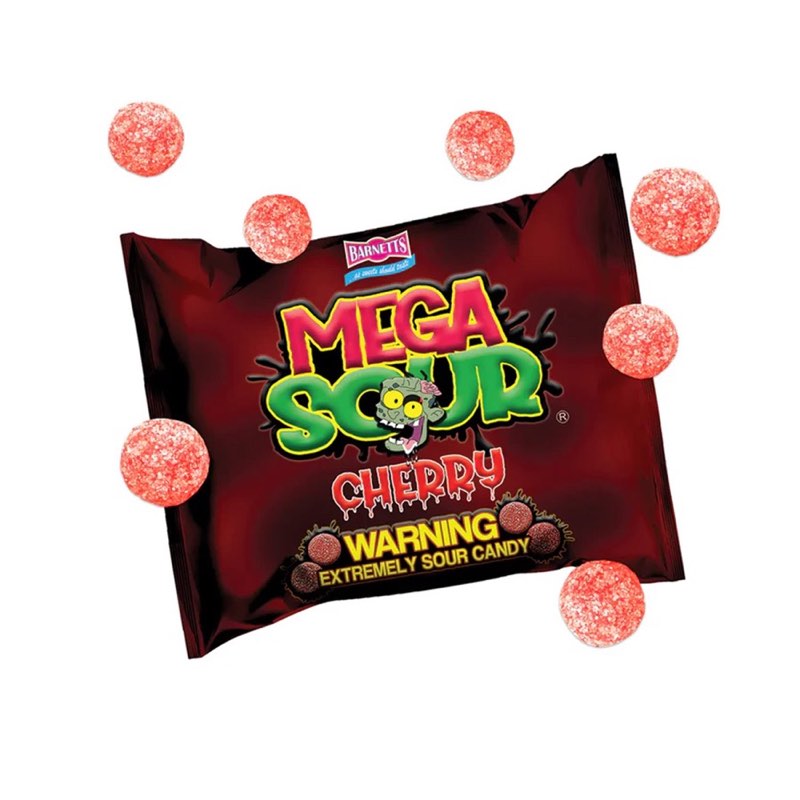
If you want the other end of the map, the Barnett's Mega Sour Cherry Candy Bag 104g at £3.99 is where to go. That is the same fruit taken in completely the opposite direction, with the acid brought right to the front. Trying the two in the same sitting is genuinely instructive, and having both on a table gives you far more range than two sweets normally do.
In the middle, cherry blended with something else is its own category. The cherry cola line at £5.49 pairs the fruit with a cola note, which pulls it somewhere different again — cola brings a slightly spiced, darker edge that changes how the cherry reads. And the cherry bon bons at £5.49 put the same flavour family into a chewy body with a powdered outside, so the flavour arrives more slowly and feels softer.
If cherry is your flavour rather than a passing interest, our twenty-one cherry lines are worth working through properly. It is one of the larger flavour shelves on the site and it spans the full range from sweet to punishingly sour.
Putting a bag together around them
A single-flavour bag is one of the most useful things you can own when you are building a mix, precisely because it gives you control. Everything else you put in a bag arrives with its own assumptions; 70g of one flavour in one colour is a raw material.
The simplest use is as the accent. Scatter these through a larger mixed bag and they become the recurring note — every sixth or seventh sweet is a burst of cherry, which gives the bag a through-line rather than making it a random assortment. Seventy grams goes a surprisingly long way in this role, easily accenting 500g of other things.
The second use is colour. If you are building a themed bag — for a birthday, a seasonal table, a colour-matched party — uniform red beans are one of the very few components you can rely on to be exactly the colour you expect. Most sweets come in mixed colours, and a bag of uniformly red anything is unusually valuable when the look matters.
The third is texture contrast, and this is where the bean's design earns its place. In a bag otherwise built from soft chews and gummies, the crisp fracture of a bean is the only thing that breaks up the texture. Put 70g of these into a bag built around gummies from the seventy-eight chewy lines we stock and the bag stops being monotonous immediately.
For the bulk of a mixed bag, work from the build-your-own pages and weigh out the things that fill space cheaply. A good ratio is roughly 70g of beans to 400–500g of everything else — enough that they show up regularly, not so much that the bag becomes a cherry bag.
Specific companions worth considering. The Bristow's Traditional Salted Caramel Bon Bons at £5.49 bring a rich, salted-caramel register that sits a very long way from bright cherry, which is exactly what you want — contrast, not harmony. The 780g tutti frutti tub at £7.99 is the cheapest way to add serious volume to a bag if you are building for a crowd. And a ten-pack of chew bars at £2.50 gives you something individually wrapped to hand out separately, which is useful when children are involved.
One combination to avoid: do not build a bag entirely out of fruit-flavoured, brightly coloured sweets. It looks wonderful and tastes like one thing after five minutes. Every good mixed bag needs at least one item from the rich, non-fruit end of the shop, which is what the toffees, bon bons and caramels are for.
Parties, films, journeys and small gifts
The 70g size makes this a very specific tool, and knowing its limits is half of using it well.
For parties, one bag is not enough for a table and was never meant to be. Where it works brilliantly is as an individual thing: one bag per party bag, one per place setting, one per child. At £2.40 that is a reasonable per-head cost for something that looks like a proper item rather than a handful of loose sweets, and the single flavour means you are not handing somebody a bag where they only like half of it.
For film nights, the small size is an advantage rather than a limitation. A large bag of sweets during a film gets eaten absent-mindedly and you are halfway through before the opening credits finish. Seventy grams lasts the first act, which for most people is about the right amount of sweet during a two-hour film. If you want more than that, buy two different Jelly Belly bags rather than one larger one and you get variety as well as volume.
For journeys, these are close to ideal. The dry surface means no sticky fingers in a car, the small beans mean you can eat them one-handed without looking, and 70g is about the right amount to make a journey feel like an occasion without anybody feeling sick at the other end. The bag survives a glovebox, a rucksack pocket or a coat, which is not true of everything.
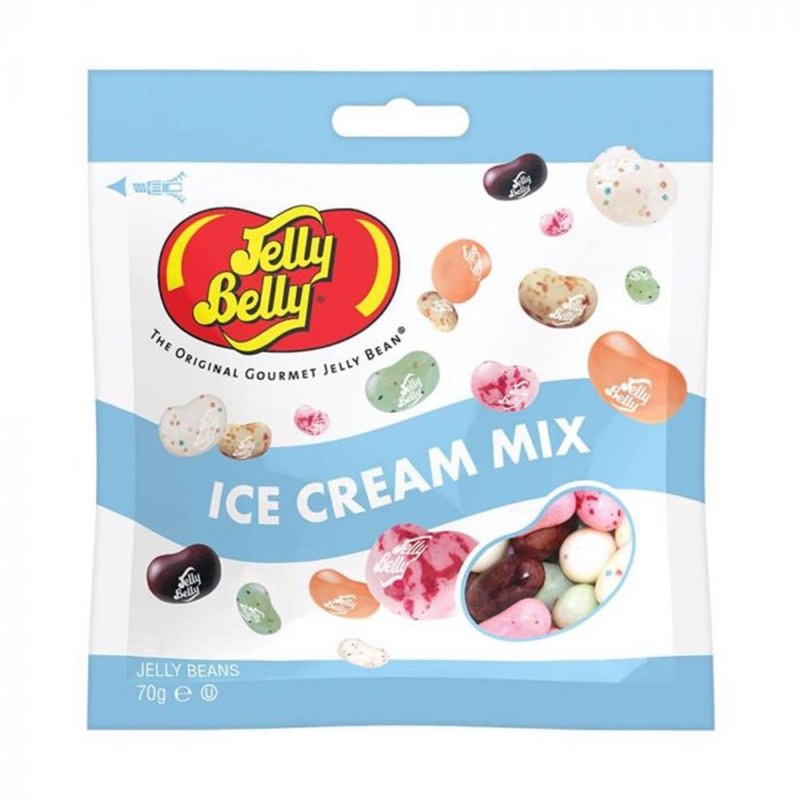
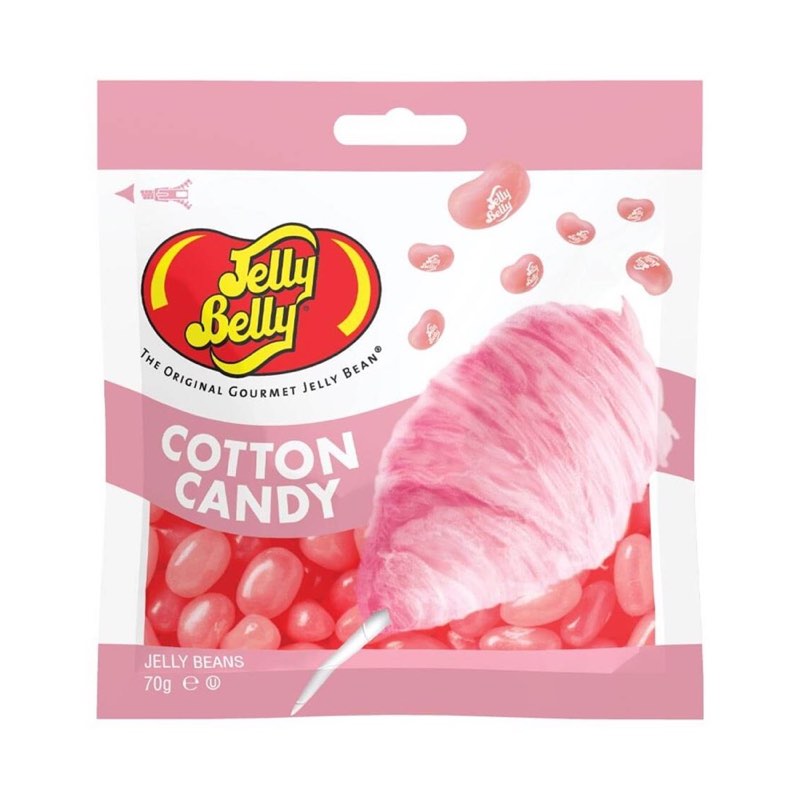
For gifting, a single 70g bag is too small to give on its own, but three or four of them together is a genuinely good present and comes in under a tenner. A set of different Jelly Belly bags — this one, the cotton candy bag, the ice cream mix at the same price and an assortment — is a better present than one large bag of anything, because the variety is visible before it is opened.
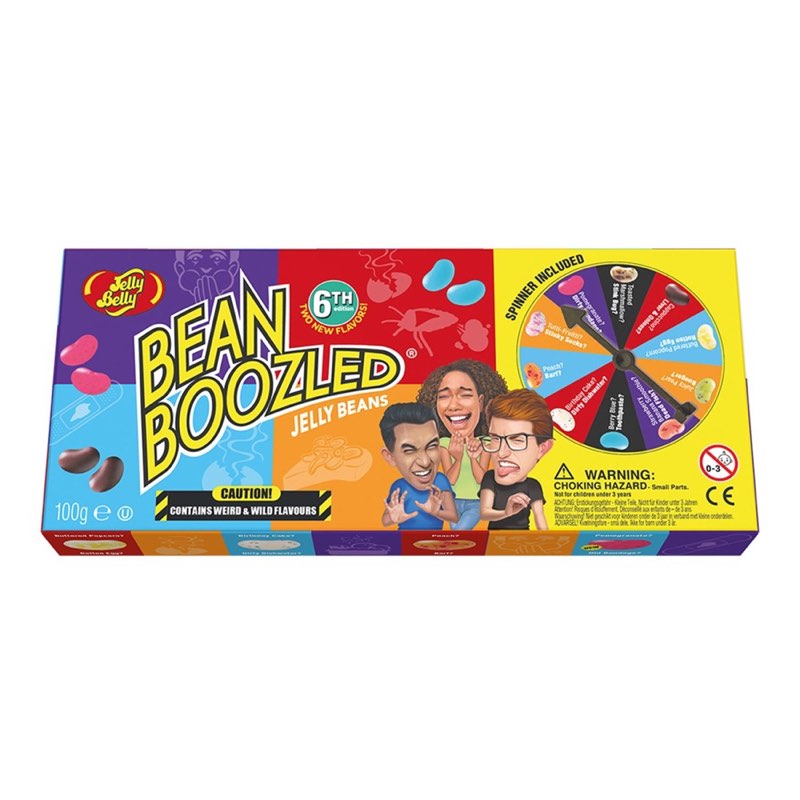
For a games night or anything with a bit of theatre to it, the brand has a more dramatic option. The 45g Bean Boozled box at £2.99 and the Jelly Belly Bean Boozled Spinner at £11.99 are built to be played with rather than simply eaten, and a bag of straightforwardly nice cherry beans is a very sensible thing to have on the table next to them for anybody who has had enough of the game.
The price, honestly
Two pounds forty for 70g works out at about £3.43 per 100g, and there is no point pretending that is cheap. It is one of the higher per-gram prices on the site, and it sits well above the by-weight lines, where you can fill a bag for considerably less.
What you are paying for is format and specificity. You are buying one flavour, in a sealed small bag, in a portion size that suits a single person. Those are real things and they cost money to provide. If per-gram value is your priority, the honest advice is to go to the sweets sold by weight and build a bag — you will get three or four times as much for your money. If what you want is exactly 70g of cherry beans without a pile of other flavours you did not ask for, this is the only way to get it, and £2.40 is a fair price for that.
On portioning: 70g is roughly two generous handfuls, or four to six small servings if you are being disciplined. One person eating them attentively will get an afternoon out of a bag. One person eating them absent-mindedly in front of a television will get about twenty minutes. Two people sharing will finish it in a sitting.
The brand's own pricing is consistent and easy to work with. The 70g bags all sit at £2.40, which means mixing flavours costs you nothing extra — four different bags is £9.60 regardless of which four you choose. The 45g box format at £2.99 is the exception and is priced as a novelty rather than by weight, which is reasonable given what it is for.
Where these genuinely compete on value is against other small-format impulse bags rather than against loose sweets. Against the 100g candy sushi tray at £2.99 or a ten-pack of chew bars at £2.50, £2.40 for 70g is right in the normal range for what that part of the shelf costs.
Looking after them
Jelly beans are among the easiest things in the shop to keep, but they are not indestructible and two things will degrade them.
Heat is the main one. Warm beans soften, the outer layer loses its crispness, and if they get warm enough they will stick to each other in the bag. A clump of fused beans is still perfectly edible — you break them apart and carry on — but the crisp bite that makes the sweet worth buying is diminished. Keep them in a cupboard rather than on a windowsill and this does not happen.
Air is the other. Once the bag is open, the beans will slowly dry and harden if they are left exposed, and the centre loses its softness first. This takes weeks rather than days, so it is only an issue if you are a slow eater, but the fix is trivial: fold the bag over and clip it, or tip them into a small lidded tub. A tub is better, because it also stops them scattering.
The fridge is unnecessary and slightly counterproductive. Beans go very hard when chilled, and taking them in and out creates surface moisture that makes them tacky, which is the one texture problem they do not otherwise have. If your house is hot, use the coolest cupboard rather than the fridge.
If you have bought several flavours, keep them in separate containers rather than tipping them together. Strongly flavoured sweets do transfer aroma to each other over time, and a cherry bean stored loose against a very different flavour for a month will not taste quite as clean as it should.
And keep them away from anything damp. Beans are dry-surfaced and that is a large part of why they behave so well; in a humid cupboard the surface goes slightly tacky and they begin to stick together. A dry cupboard, a closed container, and they will be fine for as long as you are likely to keep them.
Which Jelly Belly bag should you buy?
All the 70g bags are £2.40, so this is purely a question of what you want rather than of budget.
| Bag | Weight | Price | Choose it when |
|---|---|---|---|
| Very Cherry (this one) | 70g | £2.40 | You want one flavour and no picking |
| 20 Assorted Flavour Mix | 70g | £2.40 | You want range and do not mind the misses |
| Ice Cream Mix | 70g | £2.40 | You want a themed assortment rather than a single note |
| Cotton Candy | 70g | £2.40 | You want another single-flavour bag to pair with this |
| American Classics | 70g | £2.40 | You want an assortment with a defined theme |
| Bean Boozled Box | 45g | £2.99 | You want a game rather than a snack |
The single-flavour versus assortment decision is the real one. Take the single flavour if you know what you like, if you are building something where you control the components, or if you find the picking-out-the-bad-ones routine annoying. Take an assortment if the variety is the point and you enjoy not knowing what is coming.
The best of both is to buy two: this bag and the twenty-flavour assortment, also £2.40. You get a reliable bag you will finish and a variable one to graze through, for £4.80 the pair. If you would rather two single flavours, the cotton candy option is the furthest from cherry of the single-note bags and makes the better contrast.
For a themed assortment that is not simply everything at once, the American Classics assortment narrows the range down to a set that hangs together, which some people much prefer to a completely open mix. And the whole of the eight Jelly Belly lines we carry can be seen on one page if you would rather compare them all at once.
Where it lives on the site
This product sits on four different shelves, which is more than most things we sell, and each one leads somewhere useful.
The Jelly Belly brand page holds all eight lines together and is the quickest way to compare the bags. The cherry flavour shelf gathers twenty-one products from across every brand and format we stock, which is the place to go if it is the flavour rather than the brand you are chasing. The chewy category is one of the biggest type shelves on the site with seventy-eight lines, and it is where you go for texture rather than flavour. And the main loose sweets pages hold the broadest selection at 356 lines.
Beyond those, the full catalogue shows everything in one view, the mix-your-own pages are where you build a bag component by component, and the candy and chocolate department covers the bars and bagged chocolate lines if you want something richer alongside.
Two brand shelves are worth knowing about if you are shopping by maker rather than by flavour. The Kingsway range is where the cherry bon bons and their siblings live, and the Haribo shelf collects that brand's lines including the cherry cola. Both are useful if you find a flavour you like and want to see what else the same maker does with it.
Common questions
Are all the beans in this bag the same flavour?
Yes. This is a single-flavour bag — every bean in it is Very Cherry, and they are all red. That is the main reason to choose it over a mixed bag. There is no picking through to find the ones you want and no small pile of rejects at the end. If you would rather have variety, the twenty-flavour mix is the same 70g and the same £2.40.
How sweet are they, and is there any sourness?
They sit at the sweet, rounded end of the cherry range rather than the sharp end. There is a trace of tartness underneath that stops the flavour from being flat, but it sits well back and nobody would describe these as sour. If you want cherry taken in the opposite direction, the 104g sour cherry bag at £3.99 is the one to try.
How many beans are in a 70g bag?
We do not count them and the number will vary from bag to bag, since beans differ slightly in size. As a practical guide, 70g is roughly two generous handfuls, or four to six small servings if you are pacing yourself. One person will get an afternoon out of a bag eaten attentively, or about twenty minutes eaten in front of a television.
Is £2.40 good value?
Per gram, no — it works out at about £3.43 per 100g, which is well above the by-weight lines. What you are paying for is the small sealed format and the single flavour. If value per gram matters most, build a bag from the loose range instead. If you specifically want 70g of one flavour without picking through an assortment, this is the way to get it and the price is normal for that part of the shelf.
Why do mine taste less strong than usual?
Two likely reasons. The first is temperature — warm beans lose the crisp outer bite and the flavour reads as duller, so try them from a cool cupboard. The second is your nose: a large part of what you experience as cherry arrives through smell rather than taste, so if you have a cold or a blocked nose, they will taste noticeably flatter than usual. That is not a fault with the bag.
Do they melt or stick together?
Not under normal conditions. The surface is dry rather than tacky, which is one of the reasons they travel and store so well. In real heat they will soften and can stick to one another in the bag; that is easily fixed by breaking them apart and moving them somewhere cooler. They do not melt in the way chocolate does, which makes them a much better choice for a warm car.
Can children eat these?
Sweets are a treat rather than everyday food, and small sweets need care with young children in particular — small hard sweets and whole gummies are a choking risk and children should always be supervised while eating them. Beans are small, round and firm, so hand them out a few at a time to older children rather than giving a whole bag to a very young one, and stay in the room.
How should I check allergens?
Read the manufacturer's packaging when your order arrives, before anybody eats anything. We do not publish ingredient or allergen details for this line on the site, so the pack itself is the only thing you should rely on. If what it says does not match what you need, please do not eat it and contact us instead and we will put it right.
Will they work in a pick and mix?
Very well, and they are one of the more useful things you can add. Because they are a single flavour and a single colour, they let you control exactly what goes into a bag rather than adding another unpredictable element. A good ratio is 70g of beans to about 400 to 500g of everything else from the build-your-own section, which puts a cherry bean roughly every sixth or seventh sweet.
How do they compare to a gummy sweet?
The main difference is structure. A gummy is one texture all the way through, so the bite is uniform and the chew is longer. A bean has a firm outer layer that fractures crisply and a soft centre underneath, so you get two sensations in sequence from a much smaller sweet. That contrast is why a bean feels more substantial than its size suggests. If you want the opposite experience for comparison, the berry mochis at £1.35 have a yielding outer that does not fracture at all.
What goes well with them on a table?
Something rich and something sharp. For the rich end, the salted caramel bon bons at £5.49 or the £3.49 toffee carton give you the non-fruit counterweight that every fruit-heavy table needs. For a sharp element, a small dish of sour cherry resets the palate. And for volume at low cost, the tutti frutti tub fills a table for £7.99.
Are these the same as the Bean Boozled ones?
No, and the difference is deliberate. This bag is straightforward — every bean is cherry and every bean is nice. The Bean Boozled box at £2.99 for 45g and the Bean Boozled Spinner at £11.99 are built around a game rather than around eating pleasantly. Plenty of people buy both and keep a bag of these next to the game for anybody who wants out.
To sum up
Seventy grams of single-flavour cherry jelly beans for £2.40, red throughout, with the crisp-then-soft bite that makes a bean feel bigger than it is. It is a small, specific product that does one job very well: it gives you exactly the flavour you wanted with nothing to pick out. Buy it if you already know cherry is your flavour, if you are building a mix and need a component you can control, or if you want a modest treat rather than a large one. Keep it cool and closed, eat them one or two at a time rather than by the handful, and put something rich next to them if they are going on a table.
More from Jelly Belly
More chewy sweets
More cherry sweets
Where this sits
Jelly Belly Very Cherry Jelly Beans Bag 70g appears on these shelves. Browse them, or jump to something nearby.
You might also like