Home / Candy & Chocolate / Warheads Wedgies Theatre Box (99g)
Warheads · 99g
Read the full guide
Warheads Wedgies Theatre Box (99g)
£2.59
✔ In stock — ready to ship
Fresh stock
Free over £20
Same-day dispatch
Secure checkout
There is a particular kind of sweet shopper who does not want a bag. Bags are for grazing, for pouring into a bowl, for leaving open on a coffee table and forgetting about. A carton is a different proposition. The Warheads Wedgies Theatre Box is 99 g at £2.59, and the format tells you most of what you need to know about who it suits: it is for somebody who wants a defined amount of sour, in a container that closes, that travels upright in a coat pocket or a bag, and that does not need decanting into anything before it becomes useful.
The clearest fit is the person buying for themselves for a specific sitting. A train journey, a two-hour film, a long afternoon of work where a sharp interruption every twenty minutes is genuinely welcome. A theatre box holds enough to last that sitting and not much more, which is the whole point. You are not buying a supply. You are buying an occasion's worth, and when it is gone the decision has been made for you.
The full guide to Warheads Wedgies Theatre Box (99g)
6,630 words on how it eats, who it suits, how to serve it and what to put beside it.
Who this box is really for
The second fit is the parent or the organiser buying several identical things. Cartons stack. They sit flat in a party bag without the corners of a pouch catching on everything else, they do not burst if something heavy lands on them, and — because each one is a self-contained portion — handing out six boxes is a great deal less fraught than trying to divide one big bag six ways in front of six children who are all counting. If you are putting together take-home bags or filling a row of seats at a sleepover, the carton format is doing real logistical work for you.
The third fit is the sour enthusiast running a comparison. People who like sour sweets almost never like just one. They like the category, and they want to know how this one sits against the others: how quickly the sourness arrives, how long it stays, whether the fruit underneath it survives the sour or gets buried. A 99 g box at £2.59 is a sensible unit for that kind of tasting, cheap enough to buy three of and compare without much thought about the total. If that is you, it is worth browsing the whole Sour shelf rather than buying one thing at a time — there are forty-nine lines sitting on it, and the interesting differences only become visible when you have two or three open at once.
Who it is less suited to: anyone buying volume. If you need to fill a large jar, or you are catering for a crowd, a carton is the wrong shape of purchase and you will end up buying eight of them at a worse effective price than a loose weight would have given you. For that job, start at the Loose Sweets end of the shop, where you are buying by weight and the maths works in your favour. It is also not the right choice for someone who does not actually enjoy sour. Sour is not a garnish on this product. It is the product. Somebody who finds sharpness unpleasant will not be won round by the fruit flavours underneath it, and there is no gentle way in.
Sweets are a treat, not a staple, and that is worth saying plainly on a page like this. Small hard sweets and whole gummies are a choking risk for young children and should be eaten with an adult nearby. If anyone eating them has an allergy, check the manufacturer's packaging when the box arrives before anybody opens it — the pack in your hand is the authority on that, not any description on a website.
What happens in the first thirty seconds
Open the carton and the first thing you notice is the sound. Cartons rattle in a way pouches do not, and the rattle tells you something about the pieces before you have seen them — how loose they are, roughly how big, whether they are sticking to each other. A box that thuds rather than rattles has been warm at some point. A box that rattles high and fast is holding smaller pieces than you expected. It is a genuinely useful half-second of information and most people take it in without noticing they have.
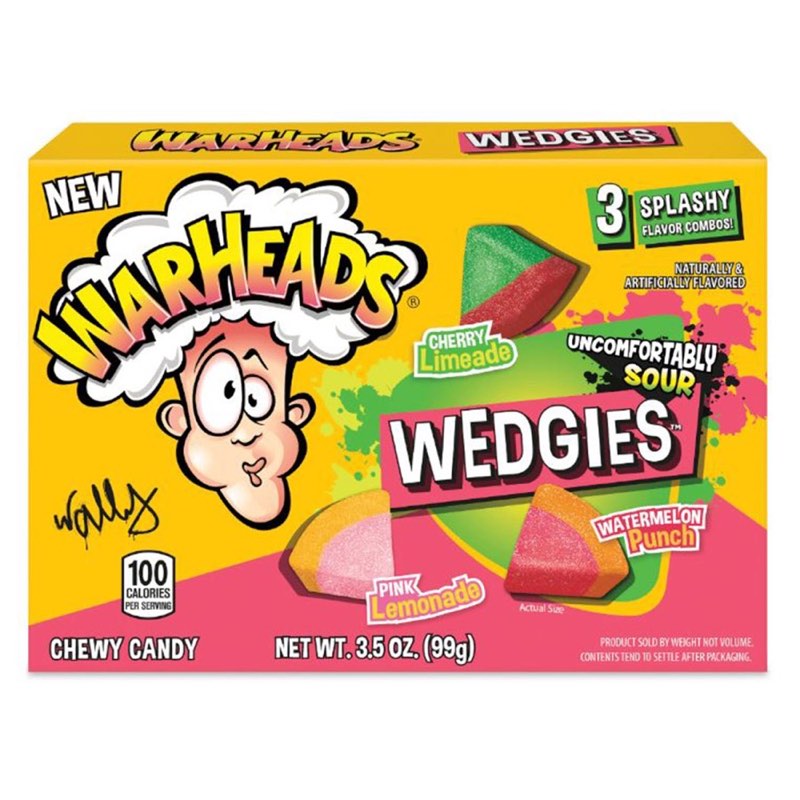
Then the pour. Theatre boxes are designed to be poured from, not reached into, and the sensible way to eat them is to tip a few into a cupped hand rather than fish about with fingers. The name points at a wedge shape, and wedges behave differently in the hand to spheres or cubes — they sit flat against each other, they have edges, and they give you a point of contact against the tongue rather than a smooth curve. That edge matters more than it sounds, because on a sour sweet the outside is where the action is, and a shape with edges and flat faces presents a lot of outside very quickly.
The sourness arrives first and it arrives fast. There is no build. The sensation is immediate and it is concentrated along the sides of the tongue, towards the back — a pulling, tightening feeling that has more in common with a physical sensation than with a taste. For the first few seconds that is the entire experience. Your face does what it does. People who eat a lot of sour sweets stop making the face; people who do not, never quite do.
The second phase is the more interesting one and it is where the quality of a sour sweet is actually decided. As the initial sharpness recedes — and it recedes faster than it feels like it is going to — what is left is the fruit flavour underneath, and whether that fruit flavour is any good is the difference between a sour sweet you finish and one you abandon. Here you get cherry and watermelon, two flavours that behave very differently once the sour has cleared, which is the real reason a two-flavour box is more interesting than a single-flavour one.
The third phase is the chew, and it is longer than you would guess from the size of the piece. The texture firms up as you work it, and the flavour flattens out into something simpler and sweeter. By the end you are eating something quite different from what you put in your mouth thirty seconds earlier. That arc — sharp, fruity, sweet — is the reason people eat these in ones and twos rather than by the handful. A handful collapses the arc into a single blunt event. One at a time, you get the whole shape of it.
The aftermath is worth mentioning because it catches people out. Sour sweets leave the mouth feeling scoured, and everything you eat or drink for the next few minutes tastes odd against that. Water tastes sweet. Tea tastes strange. This is normal, it passes quickly, and it is the main practical reason not to put a sour box on a table next to anything delicate you actually want people to taste properly.
Staging a sour box so it looks like something
Sweets are a visual purchase long before they are a flavour purchase, and anyone who has set up a table for a party knows the gap between a spread that looks considered and one that looks like shopping that has been put down. The difference is almost never the money spent. It is massing, contrast and height, and a small carton like this one can be used well or badly in all three.
Start with massing. A single 99 g box on a large table reads as an afterthought no matter what is in it. The fix is repetition: three or four identical cartons stood upright in a row, or a shallow bowl with two boxes poured into it so the pieces mound rather than scatter. Loose sweets spread thin across a wide dish look like there are fewer of them than there are. The same quantity heaped into a narrow dish looks generous. That is not a trick, exactly — it is just how the eye reads volume, and it costs nothing to use.
Contrast is the second lever, and this is where a two-flavour box earns its keep. Two flavours means two visual families on the table rather than one, and the interest comes from how you handle them. Keeping them separate — two small dishes side by side — reads as deliberate and lets people choose. Mixing them reads as abundant and casual. Neither is wrong, but mixing works better when the two things you are mixing are clearly distinct from each other, and separating works better when they are similar. Look at what is actually in your box before you decide, rather than deciding in advance.
Height is the one most people forget. A table where everything sits at the same level is flat to look at, however much is on it. You fix that with a cake stand, an upturned bowl under a cloth, or simply by standing cartons on end behind the open dishes. Sweet tables in shop windows almost always use tiered stands for exactly this reason, and a domestic table borrows the trick easily.
Jars, and why the shape matters more than the size
Filling a jar from small cartons is a thing people do, and it works, but the jar you choose decides how good it looks far more than the sweets do. A straight-sided cylinder shows you a wall of sweets and a flat top — clean, orderly, slightly clinical. A jar that bulges in the middle and narrows at the neck shows you a swelling mass that looks fuller than it is, which is why classic sweet jars are shaped the way they are. If you are filling from cartons, the bulging jar is the better buy, because it flatters a smaller quantity.
Fill level matters as much as jar shape. A jar filled to the very top looks packed but hides the sweets against the lid; a jar filled to about four-fifths shows you the mound and reads as generous and still in use. A jar filled halfway looks like it is running out, regardless of how much is actually in there. If you have only one box and a big jar, use a smaller jar. This is the single most common mistake on a sweet table and it is entirely free to avoid.
Layering is the other jar technique and it takes a little patience. Pouring one flavour in, letting it settle, then pouring the second gives you visible bands through the glass, and the bands look far more considered than a mixed jar does. The catch is that layers only survive if nobody disturbs them, so this is a technique for a jar people take from with a scoop from the top, not one that gets tipped or shaken. If you want layers that will survive a party, use a wider jar and fewer, thicker bands.
Photographing sweets without a studio
If you are putting a table together for a birthday, a shop counter or anything that will end up on a phone camera, three adjustments will do almost all the work. First, get the light from the side rather than from behind you. Sweets have a surface — glossy, dusty, faceted — and side light is what reveals it. Straight-on light flattens everything into a blank field of colour. A window at ninety degrees to the table is the best light source most homes have.
Second, shoot from lower than feels natural. Phone photos of tables are almost always taken from standing height, looking down, which turns a carefully built arrangement of heights into a flat pattern of circles. Crouching to table height brings back the stacking you worked to create and puts the mounded dishes in front of each other rather than beside each other.
Third, leave something in the frame at a known size — a hand, a small glass, the carton itself standing at the back. Sweets photograph without scale otherwise, and a picture with no scale in it is oddly hard to read. The carton is useful here precisely because it is a familiar object; a viewer recognises a small box and calibrates everything else against it without thinking about it.
The background is the fourth thing and it is the one to fix if you only fix one. A plain surface — a wooden board, a single-colour cloth, a sheet of card — instantly improves a sweet photograph, because sweets are busy and the eye needs somewhere to rest. Patterned tablecloths fight with the product every time.
How a flavour gets built to be recognised
Here is the thing that confuses people about fruit-flavoured sweets: nobody is actually trying to reproduce the fruit. If you set out to make a sweet taste exactly like a fresh cherry, you would produce something most people would not identify as cherry at all, because a real cherry is quiet, changeable and full of things that have nothing to do with the impression we hold in our heads. A confectioner is building the impression, not the fruit — and the impression is a much more specific target than the fruit ever was.
The impression works in layers, and you can feel the layers separate if you slow down and pay attention. There is a top note, the part that arrives immediately and does the identifying. It is bright, it is volatile, and it is mostly what you smell rather than what you taste — which is why a blocked nose flattens a fruit sweet into generic sweetness. Then there is the body, the part that sits in the middle of the experience and gives the flavour weight. And there is a tail, the part left behind after you have swallowed, which is what determines whether you want another one.
Where sweets diverge from fruit most sharply is that the top note is exaggerated and the body is simplified. A real fruit has an enormous, messy body — dozens of impressions overlapping, changing as it ripens, different from one fruit to the next. A sweet cannot afford that, because a sweet has to taste the same in every piece and has to be identifiable in under a second by somebody who is not concentrating. So the top note is pushed forward until it is unmistakable, and the body is pared back to whatever supports it. That is why sweet flavours are recognisable at a distance and fruit flavours are not.
Why the sweet version never tastes like the fruit
There is a second reason, and it is the more interesting one: we do not actually compare fruit sweets to fruit. We compare them to other fruit sweets. A child who tastes a cherry sweet has usually met the sweet version long before they have met a good cherry, and the sweet version becomes the reference point. The fruit then reads as the odd one — quieter than expected, less obviously itself. By adulthood that reference point is set, and "cherry flavour" has become a distinct idea with its own identity that happens to share a name with a fruit.
This is why the confectioner's job is closer to caricature than to portraiture. A caricature works by finding the two or three features that identify a face and pushing them until nothing else is needed. Flavour works the same way. You find the two or three impressions that make people say "cherry", you push them, and you drop everything else — not because it would taste bad, but because it would blur the identification. Sweets that try to be subtle about fruit usually end up tasting of nothing in particular.
You can test this on yourself cheaply. Take any fruit sweet, eat it with your nose pinched shut, and pay attention to what remains. What remains is sweetness, sourness and texture — the structural parts. Release your nose and the identity floods back. That split between structure and identity is exactly the split a confectioner works with, and it explains why two sweets with completely different flavour names can feel almost identical in the mouth while tasting nothing alike.
What sourness does to the rest of the flavour
Sourness is not just another flavour sitting alongside the fruit. It changes how everything else is perceived, and that is why sour sweets are constructed differently from their non-sour equivalents. The most obvious effect is on sweetness: a sharp note makes the sweetness underneath read as less cloying and more defined, which is why an intensely sweet sweet with a sour edge can be eaten in quantities that the same sweet without the edge could not.
The second effect is on pace. Sourness is fast. It registers almost instantly and it fades within seconds, which means it front-loads the experience and then hands over to whatever is behind it. That creates the two-stage structure you get here — an opening that is almost entirely sensation, and a second half that is almost entirely flavour. A confectioner building a sour line has to design both halves and the handover between them. If the fruit behind the sourness is too quiet, the sweet feels like it ends abruptly and leaves nothing.
The third effect is on saliva, and it is the practical one. Sourness makes the mouth water, which thins and spreads whatever is in there and speeds up how quickly flavour is carried around. It is one of the reasons sour sweets feel more intense than their flavour alone would suggest, and it is also why sour sweets make you want a drink. A table with sour sweets on it needs more drinks than a table with soft sweets on it. Plan accordingly.
There is a fourth effect that is less often noticed: sourness resets the palate. After several rich or sweet things in a row, everything starts tasting the same, and a sharp sweet clears that. This is the real argument for putting a sour item on a mixed table rather than a second soft one. It is not there to be eaten in bulk. It is there to make everything else taste like itself again, which is why the Candy & Chocolate shelf and the sour lines sit so naturally next to each other on a spread.
Cherry and watermelon as flavour families
These two flavours are an unusually well-matched pair and it is worth understanding why, because it changes how you eat the box and what you put next to it.
Cherry is the deep one. As a sweet flavour it sits low and round, with a slightly perfumed, almost almond-adjacent edge that separates it from the other red fruits. It is a flavour that holds up well against sourness, because the body underneath is substantial enough to still be there when the sharpness clears. Cherry is also the more divisive of the two: people who like it tend to like it very much, and people who do not usually describe it as medicinal, which is a fair description of what happens when the perfumed edge is pushed too far forward. If it is a flavour you follow rather than tolerate, the cherry shelf collects twenty-one lines in one place and is a better starting point than searching brand by brand.
Watermelon is the opposite in almost every respect. It is high, light and green-edged, with a fresh quality that reads as cooling even though nothing about it is actually cold. Watermelon as a sweet flavour is one of the most heavily constructed of all the common fruit notes — the real fruit is famously mild and watery, so almost everything that makes a watermelon sweet identifiable has been built rather than borrowed. That is why watermelon sweets from different makers vary so much more than, say, strawberry ones do. There is no strong shared reference to anchor them. Our watermelon selection is a small shelf — eight lines — which is about right for a flavour that is a specialist's pick rather than a default.
Together they work because they occupy different heights. Cherry sits underneath, watermelon sits on top, and alternating between them gives you contrast rather than repetition. A box of two similar red fruits would blur into one after four or five pieces; these two do not. If you are the sort of person who sorts the box before eating it, the sensible approach is not to eat all of one then all of the other, but to alternate — the second flavour always tastes brighter immediately after the first.
Building a table around it
A carton this size is a component, not a centrepiece, and the useful question is what jobs are still unfilled once it is on the table. A good mixed spread generally covers four: something sharp, something soft, something chewy and something in bulk. This box covers sharp comprehensively and covers nothing else, so everything you add should be doing one of the other three.
For the soft job, the Fini Mini Mochis Berries Bag at £1.35 is the cheapest sensible answer and the texture contrast is dramatic — a yielding, cushioned bite immediately after something sharp and firm is one of the more satisfying sequences you can build on a sweet table. Charms Fluffy Stuff Cotton Candy in the 71 g bag at £2.49 goes even further in that direction, since it effectively dissolves rather than being chewed at all, and putting it next to a sour carton gives people the two most extreme textures in the shop side by side.
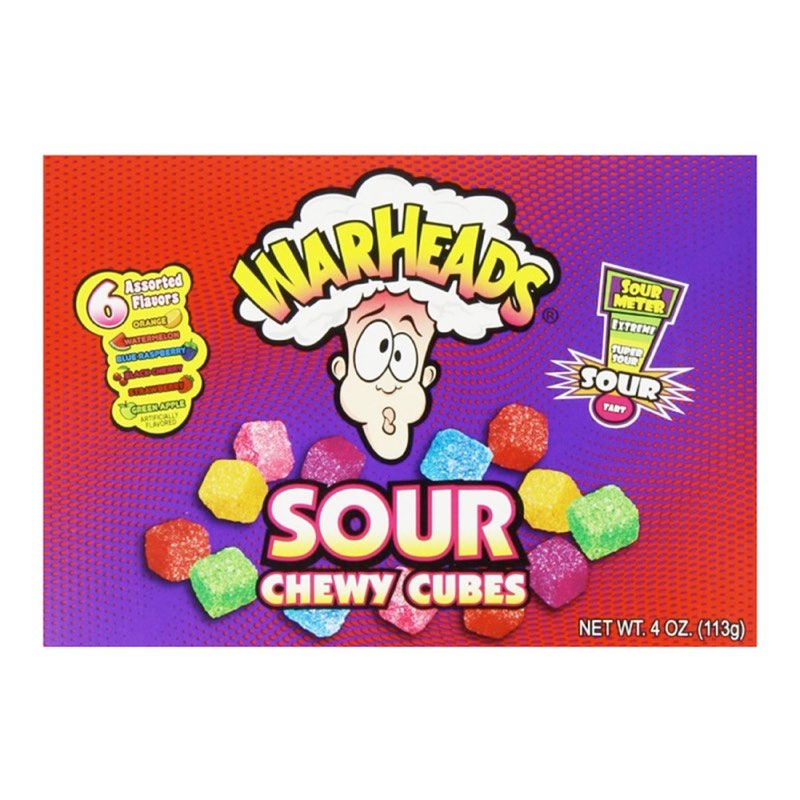
For chewy, Maoam Pinballs in the 140 g bag at £1.99 is the obvious pick — a long, working chew that occupies somebody for a while, which balances a sour sweet that is over in under a minute. the Warheads Sour Chewy Cubes at £2.49 do the same job while staying inside the same brand, if you would rather the whole table reads as one thing.
For bulk, the honest answer is that cartons are not how you buy volume. Our Pick & Mix range exists precisely for this, and letting people weigh out their own is both cheaper per head and considerably more fun than putting out another five boxes. If you want the bulk item to be its own event rather than a background filler, the Aniseed Balls Sweet Jar at £16.99 is a large, long-lasting, deeply traditional counterpoint to a modern sour box, and the two together tell a nice story about how differently sweets have been made to work over the years.
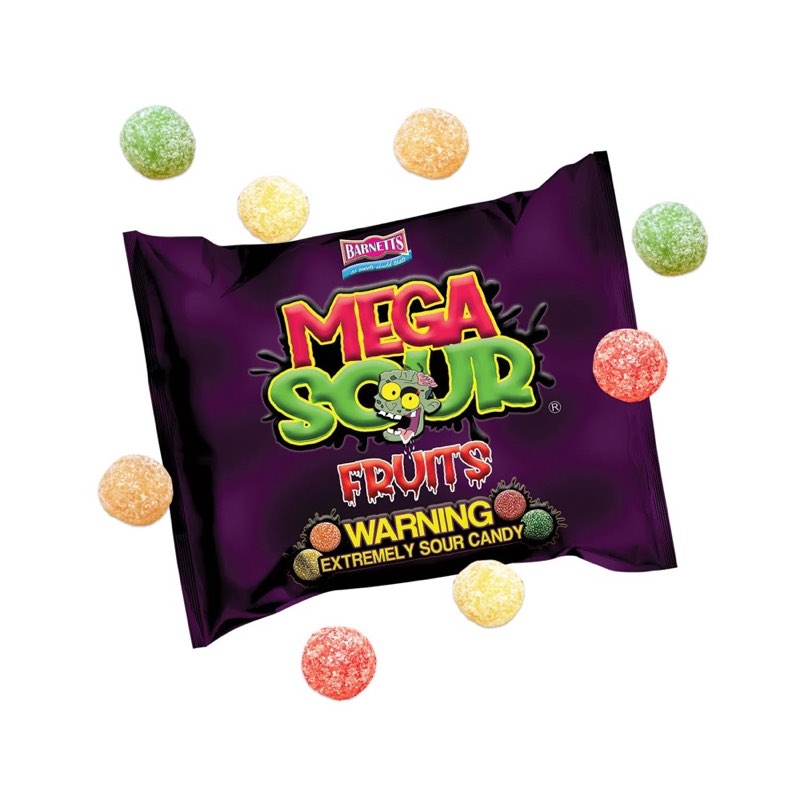
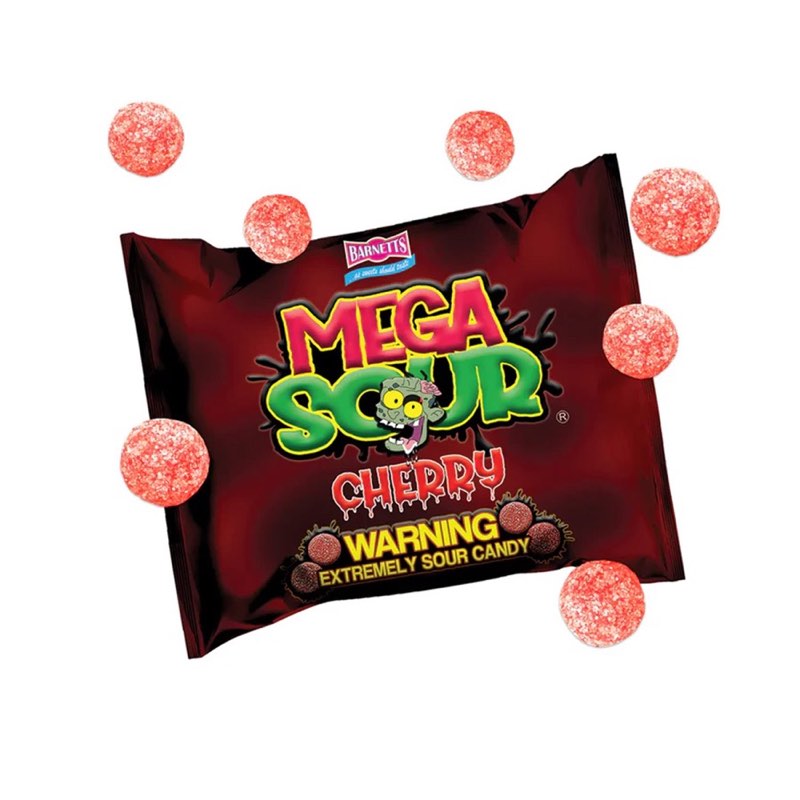
If you want to go deeper into sour rather than balancing away from it, the natural neighbours are Barnett's Mega Sour Cherry Candy Bag 104g at £3.99, which shares the cherry flavour and lets you compare two makers' versions of the same note directly, and BUBS Cool Cola Skulls at £7.50, which brings cola into the mix and takes the table somewhere other than fruit. Candy Paradise Juicy Grenade Gummies at £1.39 are the cheapest way to add a second shape to a sour bowl without adding much to the bill.
Two more worth knowing about. Kingsway Fizzy Cherry Cola Bottles at £5.49 bridge both directions at once — cherry from this box, cola from elsewhere, fizzy rather than sour — and they are a good single addition if you only want to buy one more thing. And the Fuji Candy DIY Handmade Ramen Kit at £2.99 is a novelty rather than a flavour, which is exactly what a children's table needs somewhere in the middle of it: something that occupies hands rather than just mouths.
Occasions that suit a small sour carton
Cinema and long journeys. The name gives it away, and the format is genuinely well suited. A carton opens quietly, closes again, does not spill in a bag, and holds about the right amount for a two-hour sitting. The sour edge has a practical advantage here too: it is a sweet that gives you something to pay attention to, which is why it works on journeys where the alternative is eating out of boredom.
Party bags and take-homes. One box per child, no counting, no dividing, no arguments. Cartons sit flat, survive being squashed, and look like a proper item rather than a handful of things in a bag. At £2.59 each they are a mid-range component of a take-home bag rather than the cheap filler, so they work best as the one "real" item alongside smaller bits.
Dares and games. Sour sweets have a social life that other sweets do not. They get handed round, they get filmed, they get used as forfeits. That is a legitimate use and it is a large part of why sour lines sell, but it is also the use that goes wrong most often — the impulse is always to eat several at once, and several at once is considerably less pleasant than one. If a sour box is going into a game, it is worth setting the rule that it is one at a time.
Hampers and gifts. A single carton is too small to be a gift on its own but it is an excellent hamper component, because it adds a recognisable brand and a bright bit of packaging to a box that might otherwise be all loose bags and jars. In a hamper you are buying visual variety as much as flavour variety, and a carton is a different shape to everything else in there.
Seasonal tables. Sour lines are perennial rather than seasonal, which makes them useful for the parts of the year that have no obvious sweet identity. Halloween and Christmas have their own ranges; a birthday in February does not, and this is exactly the kind of thing that fills that gap without looking out of place.
The desk drawer. Worth mentioning because it is probably the most common real use and the one nobody plans. A closed carton in a drawer stays fresh in a way an open bag does not, and it rations itself. If you are buying one thing to keep at work, the format matters more than the flavour.
Price, weight and how far 99 g actually goes
At £2.59 for 99 g, you are paying a little over £26 a kilo. That is the honest number, and by the standards of loose sweets bought by weight it is not cheap. It is not meant to be. You are buying a sealed carton, a fixed portion and a brand, and every one of those costs something. The comparison that matters is not against bulk, it is against other cartons and other single-sitting purchases, and at £2.59 this sits in the ordinary middle of that bracket.
What 99 g actually looks like in use depends entirely on the piece size, but for a sweet eaten one at a time over a sitting, a carton of this size is comfortably a film's worth for one person, an interval's worth for two, or a small handful each for four or five people if it is going into a bowl among other things. As party provision for a group it is one component of several, never the whole offer.
If you are working to a budget across several items, the useful discipline is to decide what each pound is buying. Volume is bought by weight, from the main shop listing where you can sort through everything at once, or by the kilo through pick and mix. Interest is bought in small units — a carton here, a novelty there — because interest comes from variety rather than quantity, and four small different things beat one large same thing on almost any table. This box is an interest purchase. Judging it by cost per kilo is judging it against a job it is not doing.
One more piece of value maths worth doing. Sour sweets are self-limiting in a way that soft ones are not — very few people eat a whole carton of sour in one go, and most stop well before the end. That means a 99 g box lasts longer in practice than 99 g of something mild, and if you are buying for a household rather than an event, that stretches the value further than the headline figures suggest.
Keeping it in good condition
Sour sweets are the fussiest thing in the shop to store, and it is worth knowing why. The sharp coating on the outside is the part that attracts moisture from the air, and once it has, it stops being a dry coating and becomes a sticky one. The sweet is still perfectly good, but the experience changes — the sourness arrives more slowly and less sharply, and the pieces start gluing themselves to each other.
So: keep it closed, keep it cool, keep it away from steam. A cupboard away from the kettle and the hob is better than a shelf above either. A carton on a sunny windowsill is the worst place in the house, because warmth softens the pieces and light does the packaging no favours. If you have bought several, leave the spares sealed and only open one at a time. There is no advantage to opening them all and a real cost to it.
Do not refrigerate them and definitely do not freeze them. Cold storage is the instinct people have for anything that might go sticky, and it backfires: the temperature change pulls moisture onto the surface when you take them out, which is precisely the thing you were trying to avoid. Room temperature and dry beats cold and damp every time.
If a carton has been open a while, the fix for stuck-together pieces is not to force them apart but to leave them somewhere properly dry for a day, ideally in a sealed tub with the lid on. That will not restore the original coating but it stops things getting worse. For a table that has been out for a few hours, the practical approach is to put out less at a time and top up from the closed carton rather than emptying the whole thing into a bowl at the start of the evening. Sour sweets sitting in open air lose their edge fastest of anything on the table.
One size, and what that saves you
This line comes in one size only — the 99 g carton at £2.59 — and there is no larger bag or smaller pack to weigh up. That is genuinely simpler, and it removes the most common source of hesitation on a product page, which is trying to work out whether the bigger one is better value and whether you will actually get through it.
The decision that remains is how many. The rule of thumb that works: one carton per person for a sitting, one per child for a party bag, two or three if it is going into a shared bowl alongside other things, and more than four only if you are specifically stocking up rather than catering an event. Buying in multiples is where cartons become reasonable value, because you are spreading a fixed quantity across a fixed number of people rather than trying to make one box do a job it is too small for.
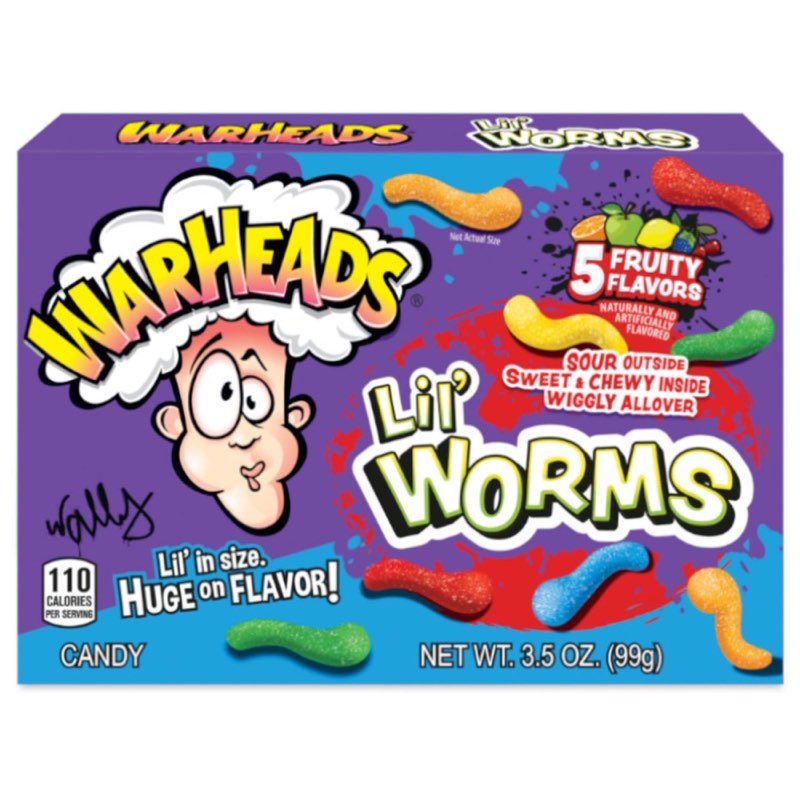
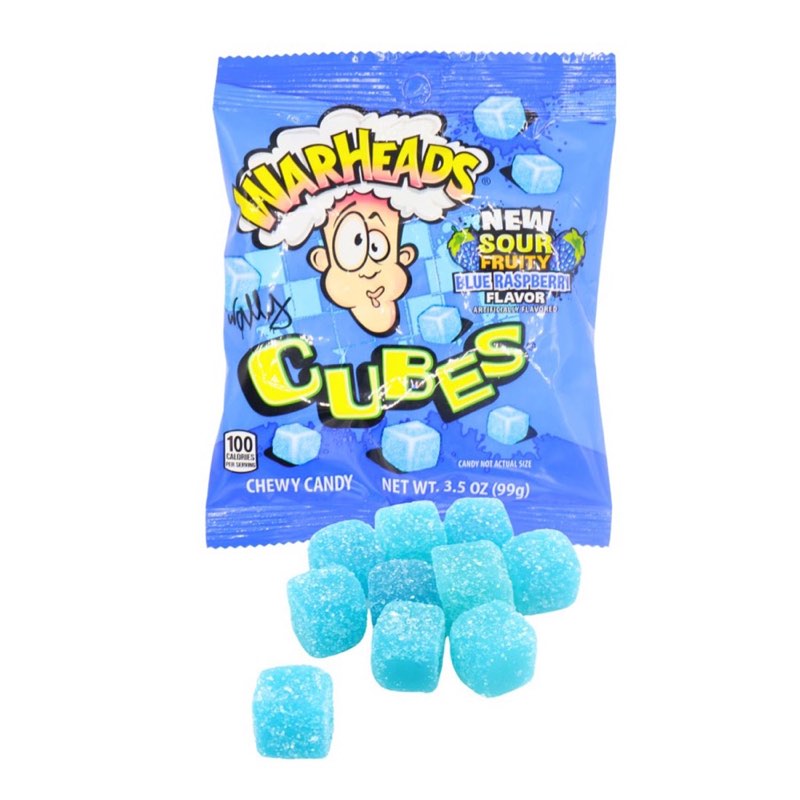
If what you actually want is more of the same flavour family in a different format, the brand gives you options. The Warheads Lil Worms Theatre Box at £2.20 is the same carton format at a slightly lower price with a different shape of sweet, which makes it the natural second box if you want two cartons that feel related but not identical. The blue raspberry cubes in a 99 g bag are the same weight in a pouch rather than a carton, and worth knowing about specifically because the pouch is the better format for pouring into a bowl while the carton is the better one for carrying about. Same weight, different jobs.
Stock is worth a sentence. This line is in stock at the time of writing. Sour lines move unpredictably — they are driven as much by whatever is going round online as by season — so if you are planning around a date some weeks off, buying when you see it is more reliable than assuming it will be there later.
Where to find it on the site
This box sits on four shelves, and each of them is a different way of arriving at it. It is on the Candy & Chocolate category, which collects twenty-six lines and is where most of the branded American and European cartons live. It is on the sour shelf, which at forty-nine lines is one of the larger type shelves in the shop and the right place to browse if sourness is the thing you are shopping for rather than a particular flavour. And it appears on both flavour shelves, cherry and watermelon, because a two-flavour product legitimately belongs on both.
The flavour shelves are the most useful ones for people who know what they like. If you always come back to cherry, that shelf will show you cherry across every format we carry — hard, chewy, fizzy, jarred — which is a far better way to discover something new than scrolling a brand page. The watermelon shelf is smaller and, because it is smaller, it is worth reading all the way down rather than skimming.
Nearby shelves that are worth knowing about: the Jelly & Gummy shelf is where you go for the soft-textured counterpart to anything sharp, and it is the most common second stop for people who start in sour. The Retro shelf goes in the opposite direction, towards the traditional British sweets that predate the whole sour category, which makes it the interesting contrast rather than the obvious complement. Our full range of sour sweets is the one to bookmark if this is your category rather than a one-off purchase.
For the broadest browse, everything we stock is listed in one place and can be filtered down from there, and the loose sweets section is the right entry point if you have decided you want weight rather than packaging. Building your own bag remains the single best way to buy for a group, because it lets you cover all four table jobs from one order rather than buying four different packets and hoping the proportions work out.
Questions we get asked
How sour is it, really?
It is a proper sour sweet rather than a mildly tangy one — the sharpness is the main event, not a finishing touch, and it arrives immediately rather than building. If you enjoy sour sweets generally, this will read as firmly within the category. If you have only ever had lightly fizzy or tangy sweets, expect a noticeable step up. The sensation fades within a few seconds and the fruit flavour underneath takes over, so it is intense rather than prolonged.
What flavours are in the box?
Cherry and watermelon. Both are in every box; this is not a line where you get one flavour or the other depending on which one you pick up. How the two are split within the carton is down to the packer rather than anything guaranteed, so treat the proportions as a pleasant surprise rather than something to plan around.
Is it suitable for young children?
That is a judgement for whoever is buying. Sweets are a treat rather than an everyday food, and small hard sweets and whole gummies are a choking hazard for young children, so they should be eaten with an adult present. Separately, very sour sweets are simply unpleasant for a lot of small children, and it is worth knowing that before you put a box in a party bag for a group of four-year-olds. If anybody in the group has an allergy, check the manufacturer's packaging on the box itself before opening.
How much is in the box?
99 g, at £2.59. That works out at a little over £26 per kilo, which is the normal sort of figure for a sealed branded carton rather than for loose sweets bought by weight. If you want volume for the money, buying loose or by pick and mix will always beat cartons.
Is there a bigger size?
Not of this line — it comes in one size only. If you want more, you buy more boxes. If you want the same brand in a different format, the sour chewy cubes and the blue raspberry cubes bag are both stocked, and the Lil Worms box is the same carton format in a different shape of sweet.
Can I use it for a pick and mix?
Yes, and it works well in one. Cartons pour cleanly into a bowl, which is not true of everything, and a sharp item is usually the thing missing from a homemade mix. A six-bar Airheads box at £2.49 is the other carton worth adding alongside it, since wrapped bars slow a bowl down where loose pieces speed it up. If you are building a mix from scratch rather than buying one, the pick and mix section lets you do the bulk of it by weight and then add a carton like this as the sharp element on top.
How long will it keep?
Check the date on the pack itself, which is the only reliable answer. Practically, an unopened carton kept cool and dry will hold its condition for a good while; an opened one will lose its sharp edge within days if it is left open in a humid room. Keeping the carton closed between servings makes more difference than anything else you can do.
Will it melt in the post?
This is a firmer, drier sort of sweet rather than a chocolate one, so it is a great deal more robust in warm weather than anything cocoa-based. The risk in heat is softening and sticking together rather than melting, and it is easily reversed by letting the box cool down before opening. In summer, the carton format helps — it protects the pieces from being squashed while they are warm.
What goes well with it on a party table?
Something soft and something chewy, because this covers sharp and nothing else. Mochi, cotton candy or marshmallow on the soft side; pinballs or chews on the chewy side; and something in bulk underneath the whole thing so the good items are not gone in twenty minutes. Avoid stacking three sour items next to each other — they compete rather than complement, and people stop being able to tell them apart.
Why do sour sweets make you want a drink?
Because sourness makes the mouth water and then leaves it feeling scoured once the sensation passes. It is a completely normal response and it passes in a couple of minutes. The practical implication is that a table with sour sweets on it gets through noticeably more drinks than one without, which is worth knowing if you are the one buying both.
Is this the same thing as the hard sour balls?
No. This is a chewy-format sour sweet in a theatre box, not a hard-boiled one, and the two eat very differently. Hard sour sweets deliver a long, slow, sustained sharpness because the coating dissolves gradually; a chewy format delivers a short, front-loaded burst and then moves on to flavour. If you specifically want the long version, look on the sour shelf rather than assuming any sour line will do it.
Do I need to buy more than one?
For one person and one sitting, no. For anything involving a group, yes — a single 99 g carton spread across a party is a garnish rather than a contribution. The rough guide is one box per person for a proper share, or two to three boxes poured into a bowl if this is one of four or five things on a table.
The short version
A 99 g carton at £2.59 with cherry and watermelon, built around a sharp opening and a fruit finish, in a format that closes, travels and rations itself. It is a single-sitting purchase and a party-bag purchase rather than a bulk one, and on a mixed table its real job is to reset everybody's palate so the rest of the spread keeps tasting like itself. Buy one for a film. Buy six for a party. Buy three if you want to taste it properly against the rest of the sour shelf, which is the only way anyone ever settles the question of which sour sweet is actually their favourite.
More from Warheads
More sour sweets
More cherry sweets
Where this sits
Warheads Wedgies Theatre Box (99g) appears on these shelves. Browse them, or jump to something nearby.
You might also like