Home / Candy & Chocolate / Warheads Sour Chewy Cubes
Warheads
Read the full guide
Warheads Sour Chewy Cubes
£2.49
✔ In stock — ready to ship
Fresh stock
Free over £20
Same-day dispatch
Secure checkout
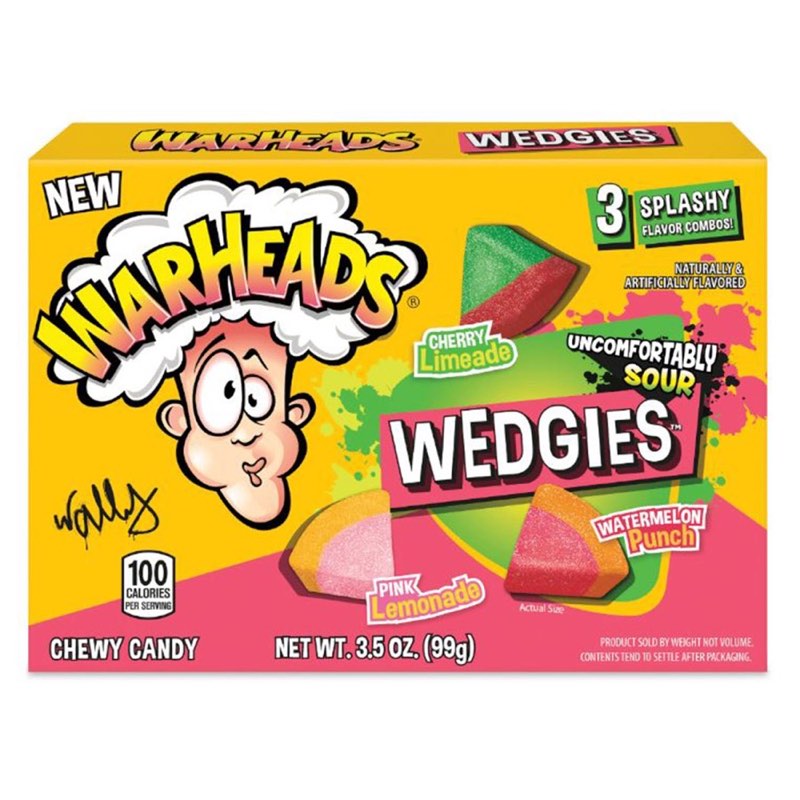
Pick one out and the first thing that registers is the shape. A cube is an unusual thing to hand somebody as a sweet. Most confectionery is rounded off somewhere — a bean, a bear, a pillow, a worm — because rounded shapes tumble well and feel friendly between finger and thumb. A cube does not tumble. It sits. It has corners that catch the light and flat faces that sit flush against each other, and when you pour a few into a palm they stack rather than roll, which is a small thing until you have poured them and noticed it.
Held up, a cube reads as solid in a way that a gummy shape does not. There is no thin edge, no tapering tail, no bit that will give way first. Every face is the same and every dimension is roughly the same, so the piece is dense all the way through, and your hand tells you that before your teeth do. Squeeze one between finger and thumb and it gives slightly and then stops, which is the tell for a chew rather than a jelly. A jelly keeps compressing until it deforms. A chew resists, holds its shape under moderate pressure, and only surrenders when you commit.
The full guide to Warheads Sour Chewy Cubes
6,566 words on how it eats, who it suits, how to serve it and what to put beside it.
The first cube, and what your mouth does with it
Size in the hand is modest and honest. These are eating-sized — one to a mouth, not half a mouthful, not a jaw-stretcher. That matters more than it sounds. A sweet that is too big becomes a project; you end up parking it in a cheek and waiting. A sweet that is too small vanishes before the flavour has arrived. A cube in this bracket is a single decisive bite that then turns into a chew, and that is the most repeatable size there is, which is why you will reach into the bag again without noticing you have done it.
The first few seconds
Put one in and the sourness comes first. Not gradually — immediately, and with intent. This is a Warheads product, and sourness arriving before anything else is the entire proposition of the name. What you get in the first second or two is a bright, sharp, puckering hit across the sides of the tongue, the sensation that makes people pull a face and then grin. It is a physical reaction as much as a taste. The jaw tightens, the eyes narrow slightly, saliva floods in. Anyone who has watched a child eat a sour sweet has seen the whole sequence play out in about three seconds.
Then it turns. The sharpness peaks early and drops away faster than you expect, and underneath it there is a sweeter, rounder flavour that had been there all along and was simply being shouted over. This is the shape of every good sour sweet: a spike, then a plateau. The spike is what you buy it for and the plateau is what makes it eatable more than once. A sour sweet that stayed at peak intensity for the whole chew would be a dare rather than a treat, and you would eat one and put the bag down.
The chew itself runs longer than a jelly and shorter than a toffee. Somewhere in the region of fifteen to twenty-five seconds of genuine work before the piece has broken down enough to swallow, depending on how enthusiastically you go at it. Through that window the flavour keeps releasing, because a chew breaks down progressively rather than dissolving all at once — you are opening up new surface with every compression, and every new surface brings more flavour to the tongue. That is why a chew feels like it lasts and a hard sweet feels like it waits.
The finish is clean. When you have swallowed, the mouth resets within twenty or thirty seconds. There is a faint tingle across the tongue for a moment, which is normal after anything sharp, and then nothing. No film, no coating, no lingering sweetness sitting on the back of the teeth. That clean reset is precisely why a bag of sour chews empties quicker than a bar of chocolate of similar cost. Chocolate insists you finish experiencing it before the next piece. A sour chew lets you go again straight away, and most people do.
Eating them one at a time versus by the handful
There are two entirely different ways to eat these and they produce different products. One at a time, with a gap, and you get the full sequence every time: shape, sour spike, turn, chew, clean finish. The face-pulling stays funny. Pour a handful in at once and the sour hit compounds — three cubes at once is not three times as sour, it is more like five times, because the tongue does not get a chance to recover between them, and the chew becomes one large mass that takes twice as long to work through.
Neither approach is wrong, but they suit different situations. One at a time is the film-night rhythm and the desk rhythm. By the handful is the playground dare and the "can you do it" moment at a party, and the reason sour sweets get passed round tables when nobody is passing round the fudge. If you are buying these for a group of teenagers, assume the handful method. If you are buying them for yourself to ration through a long afternoon, the single-cube method will make a bag last considerably further than you would guess.
What you are actually buying
Warheads Sour Chewy Cubes at £2.49, in stock, in the single size we list. There is no large-and-small decision to make here and no multipack tier to weigh up — one bag, one price, and the only question is how many you want. That simplicity is worth something when you are building a basket, because it is one fewer thing to compare. You can decide on quantity purely by how many mouths you are feeding rather than by working out which size unit is the better buy.
We do not publish a weight for this line, so we are not going to guess one at you. If you need an exact figure for portioning a party or working out how many bags fill a bowl, the pack itself carries the declaration and you will have it in your hands. What we can tell you honestly is that this sits in the bracket of a hand-held bag rather than a sharing tub — the sort of thing that goes in a coat pocket, a lunchbox, a glovebox or a party bag, not the sort of thing you decant into a serving dish on its own.
It lives on the Candy & Chocolate shelf, which is where most of our American-style bagged and boxed sweets sit, and it is a natural companion to almost everything around it because sour is the flavour note that the rest of that shelf mostly does not have.
Who these are for, and when to reach for them
The obvious answer is anybody who likes sour, but that is not a useful answer because "likes sour" covers two quite different shoppers. The first is the sour specialist — usually, though not always, somebody under twenty — who actively seeks the spike, compares brands on intensity, and treats a genuinely sharp sweet as the point of the exercise. For that shopper these are a staple rather than a novelty, and the sensible buy is two or three bags rather than one, because one will not survive the week.
The second is the contrast shopper, who does not especially want a mouthful of sourness on its own but wants something sharp in the mix to stop everything else tasting the same. This shopper buys one bag and uses it as a seasoning across a bowl of other things. It is a completely different purchase, and it is the one we would push harder, because a small quantity of something sharp changes an entire spread in a way that adding another sweet sweet never does.
Then there are the situational buys. Long car journeys, where the chew gives people something to do with their jaws and the sourness keeps a driver awake in the way a boiled sweet does not. Revision sessions and late shifts, where the sharp hit is a punctuation mark between tasks. Cinema trips, where a bag that does not rustle catastrophically and does not melt on a warm seat is worth more than a bag of something more elegant. And party bags, where a sour item is reliably the one that gets opened first.
Who these are not for: anybody who wants something gentle. If you are putting together a tray for a grandparent's birthday or a bowl for a christening, the sharp end of the range is not where to start — that is what the softer, rounder, more traditional end of the shop is for, and the Loose Sweets shelf will serve you far better. Sour is a specific request. Buy it when somebody has made it.
The pick-and-mix builder's view: what a sour cube does to the bag around it
This is the section that matters most if you are buying more than one thing. Sweets are almost never eaten in isolation — they are eaten out of a bowl, a bag or a tub alongside four or five other sweets, and the interesting question is not "is this good" but "what does this do to everything next to it". A sour chew is one of the most powerful single components you can put in a mix, and it is also the easiest to get wrong, because a little transforms a bag and a lot ruins it.
Start with the ratio. In a mixed bag, sour items want to be somewhere between a tenth and a fifth of the total by count. Below a tenth and they disappear — somebody gets one in the first handful, enjoys it, and then never meets another. Above a fifth and the bag stops being a mix and becomes a sour bag with some other things in it, because the tongue stays in a heightened state and everything sweet that follows a sour piece tastes flatter than it actually is. That palate-resetting effect is real and it works in both directions, which is exactly what makes ratio the whole game.
The direction that works in your favour is this: a sour piece resets the palate, and the sweet piece that comes two or three pieces later tastes brighter than it would have on its own. Sweetness fatigues fast. Ten pieces into a bag of uniformly sweet sweets and you are tasting texture more than flavour. Drop a sour cube in at piece four and piece five arrives on a clean tongue. You are not adding sourness to the bag so much as buying back the flavour of everything else in it, and that is why experienced mixers always include something sharp even when they do not particularly like sour sweets themselves.
Pairings that earn their place
The best partner for a sour chew is something that goes the other way on texture as well as flavour. A second chew next to a chew gives you a monotonous bag — same jaw work, same duration, same shape of experience. Put Airheads 6 Bar Theatre Box 93.6g alongside these and you have gone from cube to flat bar but you are still in chew territory, which works if you want a whole bag of pulling and stretching, but it is not a mix so much as a theme.
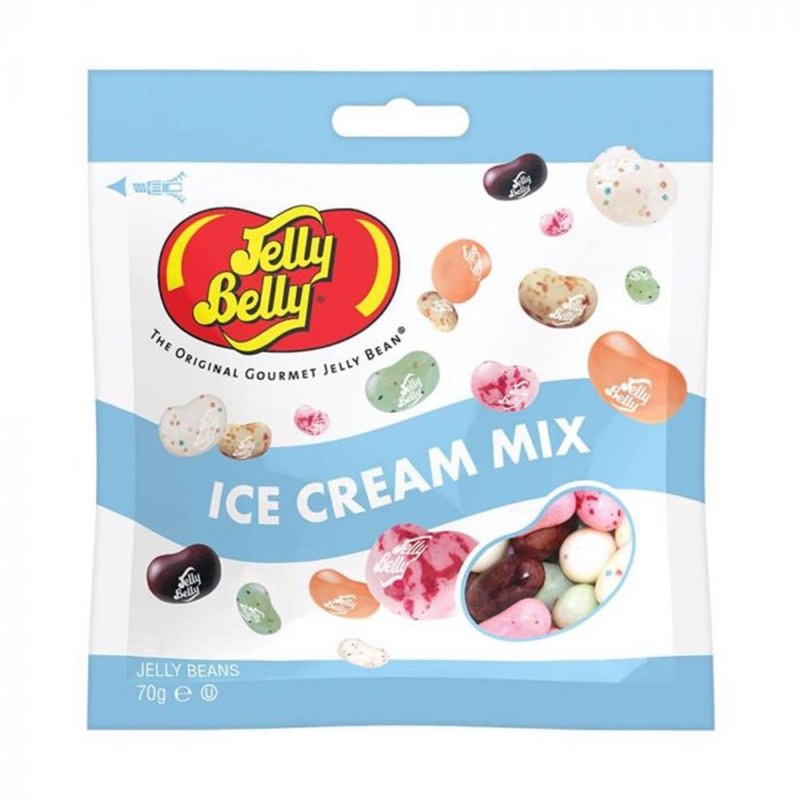
Better to reach for something that shatters or dissolves. Nerds Grape & Strawberry at £1.49 is the cheapest and most effective contrast on the shelf: tiny, crunchy, gone in seconds, and the complete opposite of a twenty-second chew. A handful of Nerds between two cubes gives your jaw a rest and keeps the bag moving. Jelly Belly American Classics Jelly Beans Bag 70g does a similar job at a different price point — a bean has a shell that breaks and then a centre that chews, so it bridges between the crunchy and chewy ends of your bag rather than sitting at one extreme.
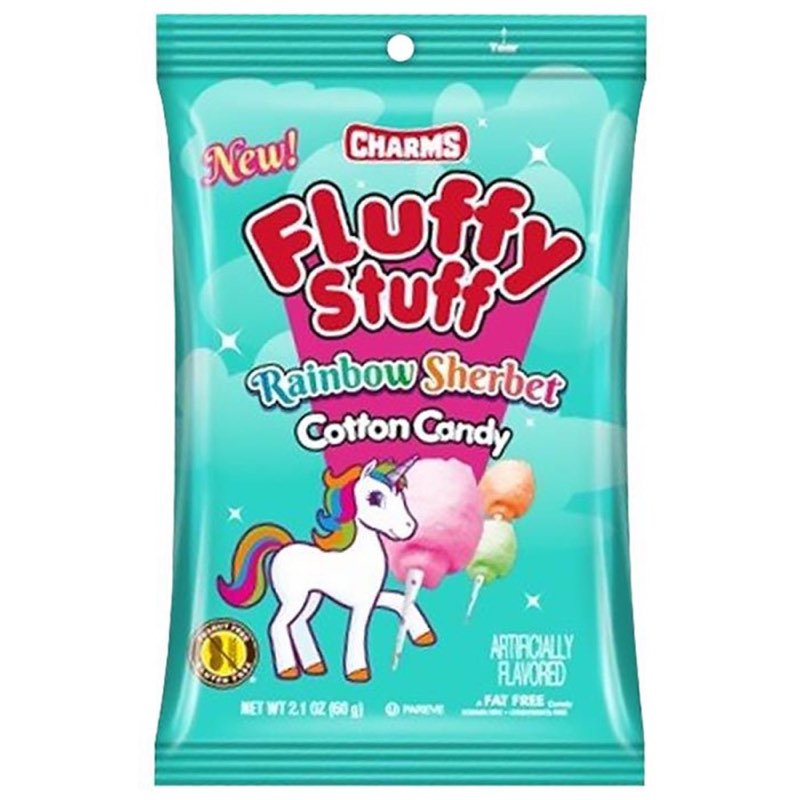
At the far end of the contrast scale, Charms Fluffy Stuff Cotton Candy 71g is the most dramatic thing you can put next to a sour cube. One is dense and takes twenty seconds of work; the other collapses to nothing the moment it meets a wet tongue. Alternating between them is genuinely entertaining for about six pieces, and it is a brilliant trick for a children's party table where the point is the reaction rather than the refinement. Keep the cotton candy in its own bowl, though — it does not share a bag well with anything, and it will fuse to whatever it touches.
For a grown-up bowl, the pairing that works best is chocolate on the other side of the table rather than in the same handful. Milk Duds at £2.99 and Reese's Dipped Pretzels 120g at £5.29 both leave a coating, and a coated tongue is the one situation where a sour hit is unpleasant rather than fun — the sharpness cuts through the fat in a way that reads as harsh. Serve both, but serve them in separate dishes and let people choose their moment. The pretzels in particular are a salt-and-chocolate item, and salt plus sour in the same mouthful is a combination almost nobody enjoys.
Mint is the other thing to keep apart. Junior Mints are excellent and they belong on the same table, but mint recalibrates the mouth so thoroughly that anything sharp eaten within a minute or two of one tastes wrong. The same is true in reverse of the Aniseed Balls Sweet Jar — aniseed is a long, slow, dominant flavour, and a sweet you are going to be tasting for five minutes is not a mixer, it is a solo act. Both are worth having out. Neither wants to be in the same bag as a cube.
Three worked mixes
Here is how we would actually build three different bowls around this bag, using things you can add to the same order.
- The sour bowl, for a teenage crowd. These cubes as the base, Warheads Blue Raspberry Cubes Bag 99g for a second sour note in a single flavour direction, and Warheads Lil Worms Theatre Box for a change of shape and a softer, longer piece. Three sour items, three different formats, one clear theme. Add a non-sour item purely as a rest stop or people will tap out at twenty pieces.
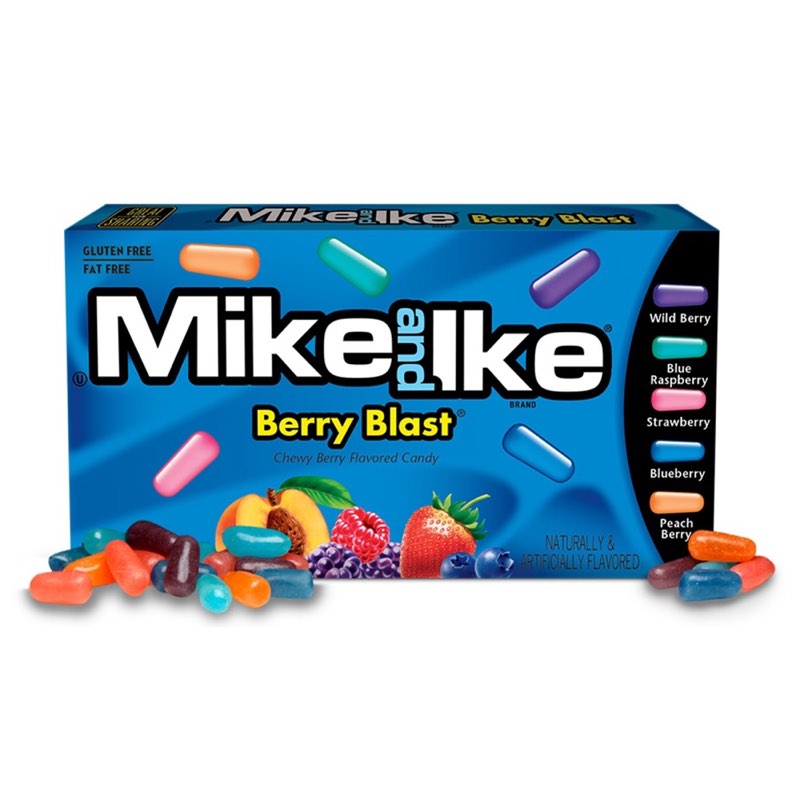
- The balanced film bowl, for a mixed-age room. One bag of these as the sharp corner, Maoam Pinballs Bag 140g at £1.99 as the soft-chew majority, and Mike & Ike Berry Blast Theatre Box 120g as the fruity, easy-going middle. That gives you roughly one sharp piece for every five or six mild ones, which is about right for a room where not everybody has volunteered for sour.
- The texture bowl, for people who like to talk about what they are eating. These for the dense chew, Warheads Wedgies Theatre Box (99g) for a second take on sour in a different piece, and the crunch of Nerds or the shell-and-centre of a jelly bean for the break. This is the bowl to build if you enjoy noticing what a sweet is doing rather than just eating it.
One practical note on mixing. Sour items and non-sour items should ideally be bagged separately until serving. Anything sharp on the outside of a sweet will transfer if it sits pressed against a neighbour for a week, and while that is harmless it does mean your mild sweets stop being mild. If you are making up party bags several days ahead, keep the sharp components in their own small bag inside the bigger one. You can find the full range to build from across Pick & Mix and our full sweet shop.
How a chew is engineered, and why a cube changes it
Texture is the part of confectionery that people notice least and judge most. Ask somebody why they prefer one sweet to another and they will tell you about flavour. Watch which bag empties first at a party and it will almost always be the one with the best mouthfeel. A chew is a specific and demanding piece of engineering, and it is worth understanding what is being aimed for, because it explains why two sweets that taste similar can feel completely different to eat.
The target for a chew is a controlled resistance curve. When you bite down, the piece should push back for a defined moment, then yield in one go rather than crumbling, then stay coherent as a single mass for the whole chew rather than breaking into fragments. Every one of those stages is a separate problem. Too little initial resistance and the sweet reads as soft and slightly unpleasant — people describe it as "claggy". Too much and it becomes hard work, the jaw tires, and the piece ends up parked in a cheek. Too little coherence and it shatters into bits that stick in your molars.
Geometry is the lever that is easiest to overlook, and a cube is a deliberate geometric decision. Consider what actually happens when a tooth meets a shape. On a sphere, contact starts at a single point and the load spreads outward as the sweet compresses — resistance builds gradually, which is why a round sweet feels soft at first. On a flat-faced cube, a molar lands on an entire face at once. The load is distributed across a large area from the very first instant, so the piece resists properly, holds, and then gives all at once when you push past its limit. That is the satisfying, definite snap-into-chew that a cube gives you and a ball does not.
The corners do something too. Eight corners on a cube means eight points of concentrated stress, and those are where the piece begins to deform once you start working it. A cube collapses inward from its edges toward its centre, which is a tidy and predictable process, and it means the sweet stays as one mass rather than splitting. Compare that with a long thin shape — a worm, a lace, a bar — which has a natural line of weakness along its length and tends to be bitten through rather than compressed. Both are perfectly good ways to eat a sweet, but they are not the same experience, and if you have ever wondered why you prefer one format to another without being able to say why, this is usually the reason.
Density, duration and the twenty-second rule
Duration is the other axis, and it is largely a function of density and volume rather than anything mysterious. A dense piece has more material per unit of surface area, so it takes more compressions to break down, so it lasts longer. That is the entire mechanism. A cube is about the densest arrangement you can make of a given volume of chew, because a cube has the smallest surface area of any common sweet shape relative to what is inside it — far less exposed area than a worm or a bar of the same mass.
That has two consequences worth knowing. The first is that flavour arrives more slowly and lasts longer with a cube than with a thin shape, because less of the piece is in contact with your tongue at the start and more of it is held in reserve. A flat bar puts almost all of itself against your palate immediately and gives you everything up front. A cube doles it out as you open up the interior. The second consequence is that a cube resists air, because the same low surface area that slows flavour release also slows drying. A bag of cubes left slightly open will stay in decent condition longer than a bag of thin shapes will, which is a genuine practical advantage.
Temperature changes all of it, and this is the single most useful thing to know about chews. A chew is dramatically firmer cold and dramatically softer warm, and the difference is not subtle — it is the difference between a twenty-second chew and a ten-second one. Straight out of a cold car in January, these will be hard work for the first few seconds. Left on a sunny windowsill, they will feel slack and the cubes may start to lose their corners and press together. Room temperature is not a compromise here, it is genuinely where the product is designed to perform, and if you have a bag that has been somewhere cold, five minutes in a warm hand fixes it entirely.
What sourness does to the texture experience
There is an interaction between the sharp opening and the chew that is specific to this kind of sweet, and it is the reason sour chews are so much more popular than either sour hard sweets or plain chews on their own. Sharpness triggers salivation — that is a reflex, not an opinion — and saliva is what breaks down a chew. So a sour sweet effectively speeds up its own consumption. The mouth floods, the piece softens faster than it otherwise would, and the chew goes from resistant to manageable in the same few seconds that the sharpness is fading.
The result is a sweet where the two experiences hand off to each other neatly. The sourness is at its peak while the chew is at its most resistant, so the first few seconds are intense on two fronts at once. Then both relax together, and you finish on a soft, sweeter, easier note. That arc — hard and sharp, then soft and sweet — is why these work as a repeatable snack rather than a one-off stunt, and it is a genuinely clever piece of design that almost nobody consciously notices while they are eating.
It also explains the handful effect described earlier. Three cubes at once means three times the material to break down but far more than three times the salivation, so the mass softens quickly and the sourness lands all at once against a tongue with nowhere to hide. That is the whole dare, and it is why sour sweets and group eating go together.
Notes on the sour flavour family
We do not list individual flavours for this line, so you will find out what is in the bag when you open it, and the packaging is the authority on that rather than anything we could sensibly tell you. What we can talk about usefully is the family, because sour as a category behaves in fairly consistent ways whatever specific fruit direction a bag happens to take.
Sour flavours split roughly into two camps. There is bright, high-pitched sourness — the kind associated with lighter, sharper fruit directions, which hits fast, sits at the front and sides of the tongue, and clears almost immediately. And there is deeper, rounder sourness, associated with darker fruit directions, which comes on slightly slower, sits further back, and takes longer to fade. Most mixed sour bags contain some of each, and the variety is what makes a bag interesting across twenty pieces rather than just two.
Sourness also changes how you perceive sweetness in the same piece, and the effect is larger than people expect. A sweet with a sharp opening will read as less sugary overall than an identically sweet piece without one, because the tongue is busy and the contrast makes the sweet phase feel moderate by comparison. That is why sour sweets tend to appeal to adults who say they have grown out of sweets — what they have usually grown out of is unrelieved sweetness, and the sharp end of the range gives them a way back in.
If you are buying with a specific flavour direction in mind rather than a mix, the blue raspberry cubes in a 99g bag are the single-direction option in the same shape and at the same £2.49. That is a useful comparison to have available, because eating a mixed bag and a single-flavour bag side by side is the quickest way to work out whether you actually like variety or whether you have simply been putting up with it.
Parties, film nights, gifts and seasonal tables
A bag of sour cubes earns its place at very different events for very different reasons, and thinking about the event first will tell you how many to buy better than any other method.
Children's parties. Sour is the item children talk about. It is the one that produces a reaction, gets filmed, gets dared, and gets remembered. Put these out in a small bowl rather than a large one, because a small bowl that needs refilling reads as generous and a large bowl that stays half full reads as ignored. Keep them away from the youngest end of the guest list. Small firm sweets are a choking risk for young children and should always be eaten sitting down and supervised.
Film nights. The virtue here is that a chew is quiet. There is no crunch, no crackle, no bag-rustle every thirty seconds once it is decanted. Put these in a bowl alongside the 140g bag of Pinballs at £1.99 and you have a silent, long-lasting spread that will get through a two-hour film without anybody having to get up. Add something crunchy only if you are watching something with dialogue you do not mind missing.
Gifts and hampers. A single bag is not a gift, but a themed set is. Three or four sour items together in a box, ideally spanning shapes and intensities, makes a genuinely good present for a teenager, and it costs less than almost anything else you could wrap. Pair these with the Lil Worms box at £2.20 and the Wedgies carton at £2.59 and you have a three-item Warheads set under eight pounds that looks considered rather than cheap.
Halloween. Sour is the natural Halloween register — the sharp, slightly aggressive end of the shelf suits the night better than fudge does. Cubes are also a sensible shape for handing out because they do not roll off a doorstep tray and they survive being in a coat pocket for an hour.
Desk and travel. This is the quiet everyday use and probably the most common one. A bag that sits in a drawer, does not melt, does not crumble, and gives you a definite ten seconds of something at four in the afternoon. For the same job on a longer journey, the Mike & Ike berry carton is the milder alternative when you do not want to pull a face in front of colleagues.
Christmas tables. Sour does not belong in the middle of a Christmas spread, which runs to chocolate, fudge and nuts, but it belongs at the edge of one. By the fourth day of rich food a sharp sweet is the thing people actually want, and a bag of these tucked behind a £2.59 box of Junior Mints will get raided more than anything on the main tray.
Working out how many bags you need at £2.49
Since we do not publish a weight for this line, the useful arithmetic here is per-person and per-occasion rather than per-gram, which is arguably the more honest way to think about it anyway — nobody has ever decided how much to buy by dividing pence by grams.
Start from the single-eater case. One bag at £2.49 kept for yourself and eaten a few at a time will comfortably cover a working week of mid-afternoon breaks. That is around 50p a day for something you actively look forward to, which is cheaper than any hot drink you could buy to mark the same moment in the day. Eaten in one sitting in front of a film it is a single evening's treat at the price of a third of a cinema ticket's worth of anything.
Now the sharing cases, which are where the decision usually sits:
| Situation | Bags | Spend | What it gets you |
|---|---|---|---|
| One person, rationed over a week | 1 | £2.49 | A few cubes a day, bag stays fresh if resealed |
| Two people, one film | 1 | £2.49 | Enough to share without either party counting |
| Family of four, one evening | 2 | £4.98 | A proper handful each rather than a polite few |
| Sour corner of a party bowl (8–10 guests) | 2 | £4.98 | Roughly the right sharp proportion of a mixed spread |
| Party bags, ten children | 3 | £7.47 | A few cubes each as the standout item in each bag |
| Three-item Warheads gift set | 1 of each | £7.28 | This bag plus the £2.20 worms and the £2.59 Wedgies |
The mistake to avoid is buying one bag for a group. Sour items disappear faster than any other category on a shared table because they get eaten for the reaction as much as the taste, and people take two at a time to compare. If you are catering for more than three people and you want the sour option still to exist an hour in, buy two. It is £2.49, which is a small price for not running out of the thing everybody came for.
The other way to think about value is what a bag does to the rest of your order. Added to a spread of milder sweets, one bag at £2.49 measurably improves everything else on the table by giving the palate somewhere to reset. Spending a couple of pounds to make a fifteen-pound spread taste better across a whole evening is a straightforwardly good trade, which is why we would rather sell you one of these and three of something else than four of something else.
Keeping them in good condition
Chews are among the more forgiving sweets to store, but they have two specific enemies and both are easy to avoid.
The first is warmth. A chew softens as it warms, and a warm bag of cubes will lose its corners, press together and start behaving as one lump rather than many pieces. This is cosmetic rather than serious — a lump prised apart still eats fine — but it takes away half the pleasure, which is the definite individual bite. Keep the bag out of direct sunlight, off radiators and windowsills, and out of a car in summer. A kitchen cupboard is ideal. A fridge is not necessary and is mildly counterproductive, because chilled chews are noticeably harder work and the flavour is muted until they come back up to room temperature.
The second is air. Once opened, a bag left open will dry at the surface, and dried chews develop a slightly tough skin that changes the first moment of the bite. The cube shape helps here more than most formats do, because there is relatively little exposed surface, but the fix is simple regardless: fold the bag over twice and clip it, or decant into a small airtight tub or jar. If you are decanting several kinds of sweet into jars for a display, keep the sharp items in their own jar rather than mixing, for the transfer reason covered earlier.
Humidity is the third factor and mostly matters in kitchens. Do not store an open bag next to a kettle or above a hob. Steam will make the surface tacky and the pieces will stick to each other far faster than they would in a dry cupboard.
Always check the date on the pack when it arrives and store to whatever the manufacturer's packaging says. And if anybody eating these has allergies, check the manufacturer's packaging on arrival before eating — the pack in your hand is the authority on that, not this page.
One size, and what that saves you
We list this in a single size at £2.49 and that is the whole range. There is no sharing pouch, no multipack, no tub. In practice this makes the buying decision cleaner than it is for most lines, because your only variable is quantity, and quantity is something you can judge from the table above rather than from comparing unit prices.
If you want more sour in a different format rather than more of the same bag, the Warheads range gives you three genuinely different answers. the sour worms in a theatre box at £2.20 are the cheapest of the set and give you a long, thin, softer piece that is bitten through rather than compressed — a completely different chew from a cube. the Wedgies box at £2.59 is the carton option, which matters if you want something that stands on a table or survives a bag without a clip. And the single-flavour blue raspberry bag is the same cube format at the same price in one flavour direction.
Between the cubes and the cartons, the practical difference is packaging behaviour rather than the sweets. A bag folds down small and fits a pocket; a carton stands up, pours neatly and closes back on itself. For a desk drawer, buy the bag. For a car door pocket or a cinema seat, buy the carton. For a party bowl it makes no difference because you are decanting anyway.
Where to find this and what sits near it
This sits on everything else filed under Candy & Chocolate, which is our shelf for bagged and boxed American-style confectionery — the sours, the chews, the beans, the boxed chocolates and the novelty formats. If you came here looking for one specific thing, that shelf is worth ten minutes of scrolling, because it is where the genuinely unusual items on the site end up.
From there, four routes are worth knowing. Browse everything we stock if you want the whole catalogue in one place and you are in the mood to be surprised. Loose sweets sold by weight is the traditional end of the shop — the jars, the scoops, the things your grandparents would recognise — and is the right shelf when you want soft and mild rather than sharp. Our pick-and-mix range is where to go if the mixing section above appealed and you want to build a bowl properly. And the Candy & Chocolate aisle is where you will find the immediate neighbours listed below.
Among those neighbours, the ones most worth a look alongside a bag of sour cubes are the six-bar Airheads carton for a flat-bar take on chew, a £1.49 box of Nerds for the cheapest crunch on the shelf, the American Classics beans at £2.40 for shell-and-centre variety, the 71g bag of Fluffy Stuff for pure theatre, the £2.99 box of Milk Duds and the dipped pretzels at £5.29 for the chocolate side of a table, and a £16.99 jar of aniseed balls if you want one properly old-fashioned item to anchor a display.
Questions we get asked
How sour are these, really?
Sharp enough to get a reaction from somebody who is not expecting it, and sharp enough that most people pull a face on the first one. The intensity peaks in the first second or two and then drops away quickly, so it is a spike rather than a sustained burn. If you eat sour sweets regularly you will find these comfortable and enjoyable rather than challenging. If you never eat them, start with one, not a handful, and let the first one finish before you decide.
Are they hard work to chew?
At room temperature, no — a firm first bite followed by fifteen to twenty-five seconds of easy chewing. Cold makes a real difference, though. Straight from a cold room or a car in winter they will be noticeably stiffer for the first few seconds. Warming a couple in your hand for a minute or two brings them back to where they are meant to be. If you have dental work you are careful about, chews are generally kinder than hard sweets, but take them one at a time rather than several at once.
Can I have a weight for the bag?
We do not publish one for this line, so we would rather say that plainly than give you a number we cannot stand behind. The declared weight is printed on the pack and will be in your hands when it arrives. If you need an exact figure for catering, buy one first and measure it, then scale — that is the only reliable method.
What flavours are in the bag?
We do not list the individual flavours for this line on the site. The packaging tells you what is in it. What we can say is that it is a sour range, and the sour section above covers how the family behaves generally. If you want a single known direction rather than a mix, the blue raspberry cubes are the same format and price in one flavour.
Will they melt in the post?
They will not melt in the way chocolate does, but they can soften and press together in genuinely hot weather, and a softened bag of cubes can arrive as a partial block. It still eats perfectly well — leave it somewhere cool for an hour and prise the pieces apart. If you are ordering in a heatwave for something that has to look perfect on arrival, a chew is a safer bet than chocolate but a hard sweet or a bean is safer still.
How many should I buy for a party?
Two bags for eight to ten people if these are the sour corner of a bigger mixed spread. Three if the guests are teenagers, or if the sour item is the headline rather than an accent. One bag for a group is the classic under-buy, because sour sweets get eaten for the reaction and disappear faster than anything else on the table.
Do these go with chocolate?
On the same table, yes. In the same mouthful, no. Chocolate leaves a coating on the tongue and palate, and a sharp sweet eaten through that coating reads as harsh rather than bright. Serve both, in separate bowls, and let people take a minute between the two. The same applies to anything salted.
Are they suitable for young children?
Sweets are a treat rather than a food, and small firm pieces are a choking risk for young children — they should be eaten sitting down and with an adult present. Beyond that, sourness itself is a matter of preference rather than suitability, and plenty of children love it while plenty find it unpleasant. If you are unsure, try one in front of them before putting a bowl out.
How long will an opened bag keep?
Longer than you would guess if you close it properly, because the cube shape exposes relatively little surface to the air. Fold the bag twice and clip it, or decant into a small airtight tub, and store in a cool dry cupboard away from sunlight and steam. Always store to the manufacturer's instructions on the pack and check the date when it arrives.
What is the best thing to buy alongside these?
Something with a different texture rather than a different flavour. A crunchy item like Nerds, or a shell-and-centre item like jelly beans, gives your jaw a break and stops a bowl becoming monotonous. If you want a second sour item instead, the Warheads worms are the best contrast because they are a longer, softer, differently shaped piece rather than more of the same.
Is this the same as the American version?
We only describe what we list, and we would not want to make a claim about how any version compares to any other when we have no way of verifying it for you. What we can tell you is the brand, the format, the price and how it eats — everything else is on the pack.
In short
A firm, definite, square little sweet that opens sharp and finishes sweet, at £2.49 for a bag you can put in a pocket. On its own it is a reliable afternoon treat for anybody who actively likes sour. In a mixed bowl it is more than that — it is the piece that resets the palate and makes everything around it taste like itself again, which is a job nothing else on the shelf does as cheaply. Buy one if you are curious, two if you are sharing, and put something crunchy next to it.
More from Warheads
More candy & chocolate sweets
Where this sits
Warheads Sour Chewy Cubes appears on these shelves. Browse them, or jump to something nearby.
You might also like