Home / Candy & Chocolate / Junior Mints
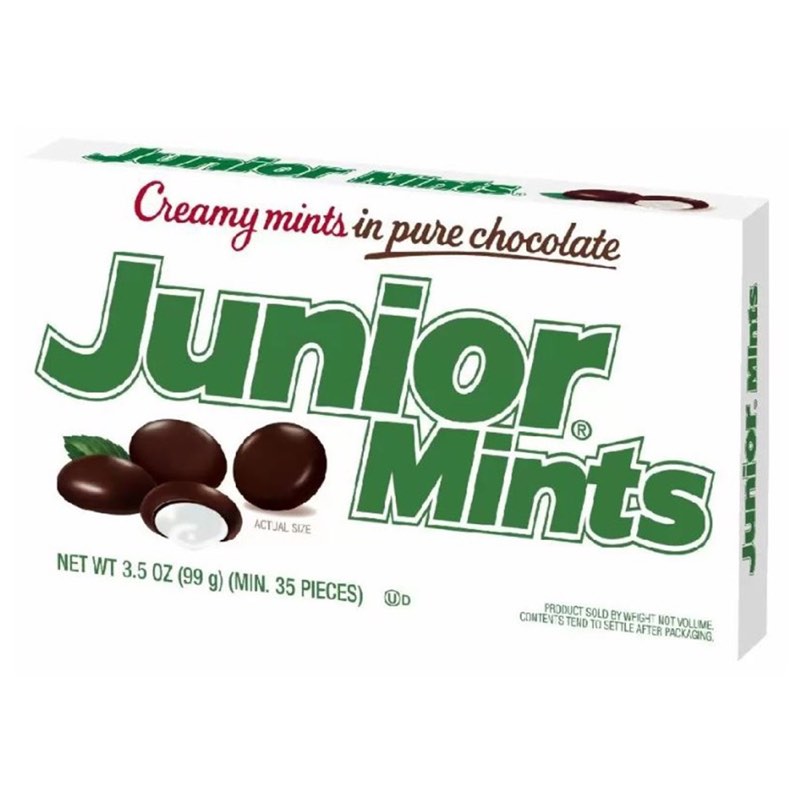
Junior Mints · 99g
Read the full guide
Junior Mints
£2.59
✔ In stock — ready to ship
Fresh stock
Free over £20
Same-day dispatch
Secure checkout
Start with the problem rather than the product. You are filling a bag, a bowl or a jar. You have chosen the things everyone likes — something soft, something chewy, something in a wrapper — and when you look at what you have assembled, it is perfectly good and slightly monotonous. Every piece is warm, sweet and roughly the same temperature in the mouth. Nothing in the bag argues with anything else.
Junior Mints are what you add when you want one thing in there that does not agree with the rest. A chocolate-covered mint is the only sweet in most people's repertoire that reads as cool. It is sweet, obviously, but the mint arrives with a sensation rather than a taste, and that sensation resets your mouth. Eat one after four soft chews and the fifth chew tastes like the first one did. That is the whole function, and at £2.59 for 99 g it is a cheap way to buy it.
The full guide to Junior Mints
5,387 words on how it eats, who it suits, how to serve it and what to put beside it.
Where a mint belongs in a bag of everything else
Here is how we would actually build around them, in the order we would put things in the bag.
- Bulk first, and make it cheap. Somewhere between half and two thirds of the weight should be the thing people eat without deciding to. Chocolate Ice Cups at £5.49 for a full kilo are the obvious candidate here — a kilo is more bulk than most households need in one go, which means one bag of them will underpin three or four separate mixes across a month.
- Then one thing with a shape. People pick with their eyes before their hands. The drumstick-shaped Miskets box at £1.99 does this job for almost nothing, and so do the animal-shaped Hannah's Animals at £5.49 if you want the shapes to carry the whole table rather than just decorate it.
- Then the interruption. This is where Junior Mints go. You do not need many. Ten or fifteen pieces scattered through a large bowl is enough to change how the whole bowl eats, because the effect of a mint carries forward into whatever you eat next.
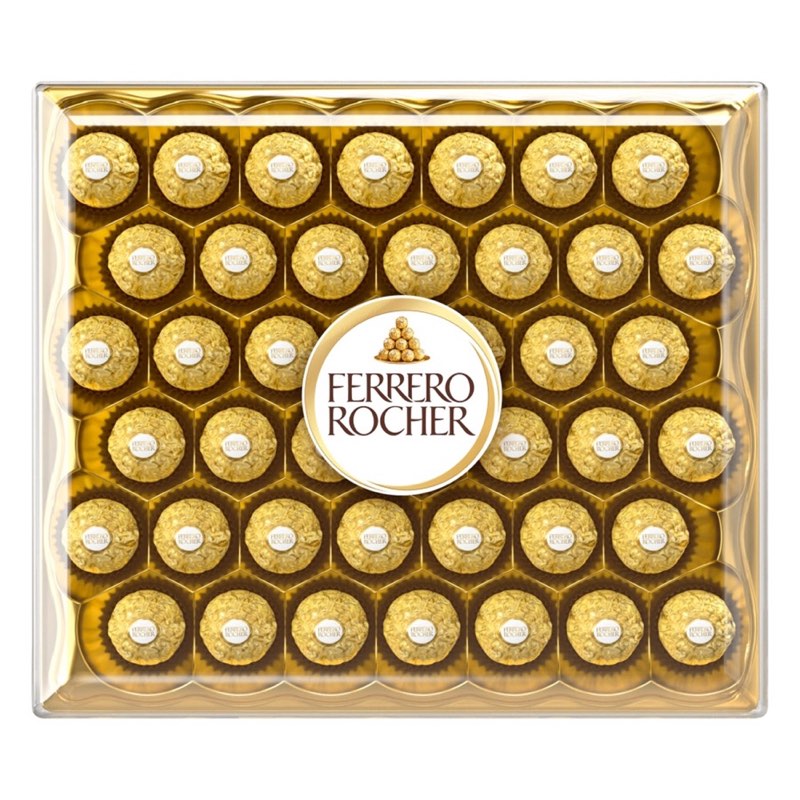
- Then one expensive thing, visible on top. Two or three Ferrero Rocher pralines from the 525 g, 42-piece box sitting on the surface will make a £12 spread look like a £30 one. The box is £23.99, so you are borrowing from it rather than buying it for this alone.
That is the build. The rest of this page is about why the third step works, what else it is good for, and how to buy it sensibly.
The pack, and what 99 g looks like
Ninety-nine grams is an awkward, useful number. It is too much for one person in one sitting unless that person has decided to have a day of it. It is not enough to fill a sweet jar, and it was never meant to. It is roughly the amount you would put out for four people alongside coffee, or the amount that will sit in a desk drawer and get picked at across a fortnight, or precisely the amount that fits in a gift bag without dominating it.
The pieces themselves are bite-sized — small enough that eating one is not a decision you have to justify, and small enough that three or four go down before you have registered the count. That size is the point of the product rather than an accident of it. A mint the size of a chocolate bar would be a different thing entirely, and you would eat one and stop. These are built for repetition.
Physically, this is a neat, contained format: a single sealed pack, nothing loose, nothing that will leak into the rest of a basket. That matters more than it sounds, because it is what makes this product useful in all the secondary roles we cover further down — the hamper filler, the letterbox parcel, the thing you add to an order to round it out.
How it eats, from first bite to the end of the aftertaste
There are three distinct stages, and they happen in a fixed order every time.
The shell. The outside is chocolate and it behaves like chocolate — it gives under the teeth rather than shattering, and if you have been holding the piece it will already have begun to soften slightly at the fingertips. The first flavour you get is straightforwardly chocolate, and for about a second that is all there is. Some people never get past this stage because they bite straight through; if you want to notice the structure, let the first one sit on your tongue for a moment before you commit.
The centre. Then the middle gives way, and it gives way much more easily than the shell did. The texture change is the most satisfying part of the whole sweet: firm outside, soft and yielding inside, with the soft part arriving all at once rather than gradually. The mint comes with it, and it comes quickly — not as a background note that builds, but as a step change.
The finish. This is the stage that makes the product useful. Chocolate fades fast; mint does not. Thirty seconds after you have swallowed, the chocolate is gone and there is still a cool, clean note sitting on the roof of your mouth. That lingering tail is why one of these changes the taste of the next thing you eat, and it is why a single mint at the end of a meal feels like a full stop rather than another course.
Eaten in quantity the effect compounds — the cool note stacks up and the mouth ends up feeling scrubbed. Some people love this and will empty half a pack in an evening. Others find that four is exactly right and the fifth is one too many. Neither is wrong; it is worth knowing which you are before you decide how many packs to buy.
The builder's arithmetic: making a mix that stays interesting
We sell an enormous amount of pick and mix, and the difference between a mix that gets finished and a mix that gets abandoned half-full is almost never the quality of the sweets in it. It is the structure. A badly built mix is a pile of good things that all do the same job. A well-built one is a small system where each part does something the others cannot.
The useful way to think about it is not by flavour but by what happens in your mouth and for how long. Every sweet occupies a position on two axes: how long it takes to eat, and how much it demands of you while you are eating it. A soft jelly is short and undemanding. A hard boiled sweet is long and undemanding — you park it and get on with your life. A chewy toffee is long and demanding, because you cannot really talk while it is happening. A chocolate mint is short and moderately demanding: it asks for about fifteen seconds of attention and then repays you with a finish that lasts far longer than the eating did.
The ratio that works. After a lot of trial and error, the proportions we come back to are roughly 60 per cent bulk, 25 per cent texture contrast, 10 per cent interruption and 5 per cent showpiece. Junior Mints are in that 10 per cent. Scale it how you like: for a kilo mix, that is 100 g of mints, which is almost exactly one pack. The arithmetic is not a coincidence — 99 g is a sensibly chosen unit for exactly this use.
Why you should not overdo it. Mint is the single most polarising flavour in confectionery. Not the strongest, not the sourest — the most polarising. There are adults who will eat anything you put in front of them and will still put a mint back. If mint is 10 per cent of your mix, the people who dislike it eat around it and never mention it. If it is 40 per cent, you have made a mint bowl, and a third of the room will quietly stop eating from it. This is the single most common mistake we see people make with a strong flavour, and it is entirely avoidable.
Position within the bowl matters too. If you are laying out a spread rather than filling a bag, keep the mints together in one visible area rather than distributing them evenly. People who want them can find them; people who do not can avoid them without fishing. A bowl where every handful is a lottery is a bowl people take smaller handfuls from.
What pairs badly. Mint does not sit well next to anything with its own strong aromatic claim. Put it beside aniseed, or beside a heavy cream-and-fruit flavour, and the two do not blend so much as take turns. The Lindor Strawberries & Cream truffles at £8.29 for 200 g are a good example of something best kept to a different part of the table — both are excellent, both are chocolate, and eaten back to back each makes the other taste slightly muddled.
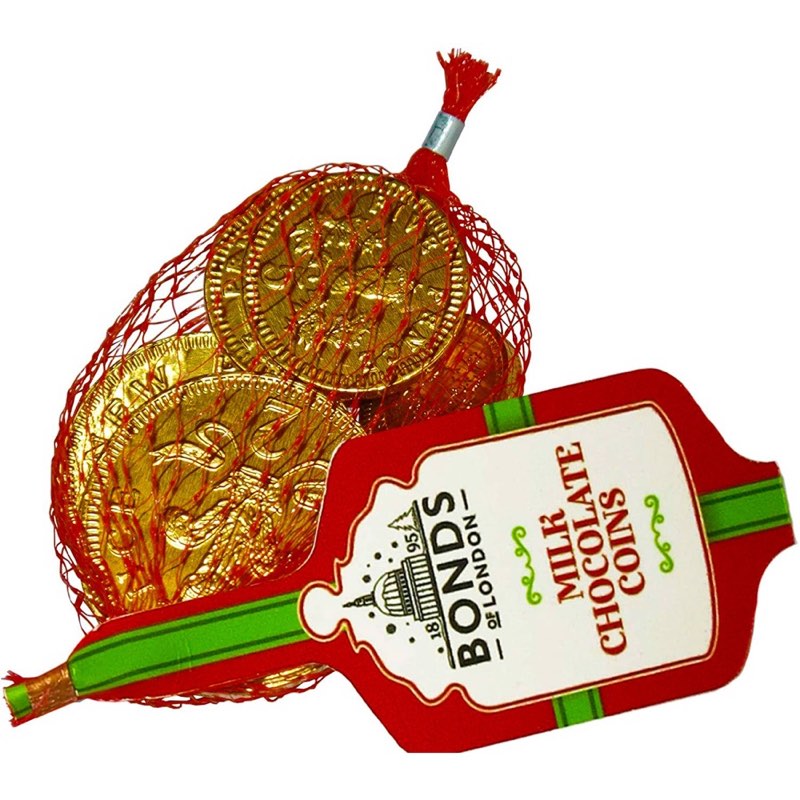
What pairs well. Plain, unfussy chocolate. The whole chocolate-flavoured range is your safe ground here, because chocolate-on-chocolate never clashes — it just varies in intensity. Bond's Milk Chocolate Coins at £1.00 are as plain as it gets and cost less than a coffee, and the Glisten Chocolate Mini Eggs at £7.99 give you the same register in a shape that reads as an occasion. Both work as the mild ground against which the mint stands out.
The test. If you want to know whether a mix is built properly before you commit to it, make a small version — a handful of each component in a bowl — and eat six pieces at random. If all six felt similar, you have a bulk problem. If two of them were unpleasant surprises, your interruption layer is too big. Adjust and scale up. It takes five minutes and it is the difference between a jar that empties and a jar that goes stale.
Who buys these, and when
Four groups, fairly distinct.
The after-dinner buyer. Somebody who wants one small thing at the end of a meal and does not want pudding. This is the oldest use for a chocolate mint and it survives because nothing else does the job as neatly — it is small, it is finished in twenty seconds, and the finish signals that eating is over.
The cinema-and-sofa buyer. Small pieces eaten steadily over ninety minutes without looking at them. A 99 g pack is well judged for two people through a film, and it does not require unwrapping in a quiet room.
The mix builder. Covered above. Buys one pack per kilo of mix and treats it as a component rather than a product.
The gifter. Buys two or three and distributes them — one into a hamper, one into an envelope, one into a desk drawer at work. We have given this its own section further down, because it is a bigger part of what this product is used for than most people expect.
Who it is not for: anyone buying for a room of small children, where mint is the least reliable crowd-pleaser on the shelf, and anyone who wants volume for their money. Ninety-nine grams is not a volume purchase and does not pretend to be. If bulk is the requirement, start in loose sweets and come back for the mints afterwards.
Chocolate and mint as a flavour family
The pack lists two flavours, chocolate and mint, and the interesting thing is that they are not equals. Chocolate here is the carrier and mint is the signal. You could describe a great many sweets as chocolate-flavoured; almost none of them would be mistaken for this one, because the mint is doing all the identifying work.
Mint occupies a strange position in British sweet-eating. It is one of a small handful of flavours — along with aniseed and liquorice — that adults reliably like more than children do. Most flavour preferences soften with age. Mint runs the other way: the people most likely to keep a pack of chocolate mints somewhere are the ones who would not have touched them at eight. Our mint flavour shelf is deliberately small, four lines at the time of writing, because it serves a defined group very well rather than serving everybody adequately.
The other thing worth knowing about mint is that it is a sensation flavour. Most of what you taste in a sweet is happening on the tongue. A good part of what you notice in a mint is happening as a cool feeling across the whole mouth, and it continues after the taste itself has gone. That is the mechanism behind everything we have said about mints as a reset button in a mix, and it is also why mint pairs so naturally with chocolate: chocolate is warm, round and slow, and mint is cool, sharp and fast. One covers what the other lacks.
If you want to place this within the wider chocolate category rather than the mint one, the chocolate sweets shelf is the broader view — thirty-eight lines, from single-figure impulse buys up to full gift boxes. It is worth a scroll before you check out, because chocolate is the one type where the price-per-gram spread across the shelf is enormous and the cheapest option is very often the right one for bulk.
Small, sealed and postable: the gifting case
This is the second half of what Junior Mints are for, and in our experience it is underrated. A 99 g sealed pack at £2.59 has a particular set of properties that make it unusually good at being given rather than eaten.
It is the right price for a gift that is not an event. There is a category of present that has no name: the thing you hand over at the end of term, or leave on a colleague's desk, or add to an envelope. It has to be nice enough to be worth giving and cheap enough that nobody feels obliged to reciprocate. Two pounds fifty-nine is almost exactly the middle of that band. Five pounds starts to feel like a gesture with weight behind it; fifty pence feels like a joke. This sits where you want it.
It travels flat and it travels sealed. A pack like this goes in a padded envelope with room to spare and arrives in the state it left in. Nothing to decant, nothing to re-wrap, no risk of a jar arriving in pieces. If you are sending sweets to a student, to somebody in hospital, or to a relative you will not see this month, the sealed-unit format removes every practical objection at once.
It is legible. This is the thing people miss about gifting sweets. The recipient should be able to tell what they have been given in under a second, without reading a label. A pack of chocolate mints is instantly readable — everyone knows what a chocolate mint is, everyone has an opinion about them, and the opinion is usually favourable. Compare that with a bag of something unfamiliar, which is a more generous gift and a less comfortable one to receive.
Hamper work. In a hamper this is a filler rather than a centrepiece, and hampers need fillers badly. The usual mistake is to build a hamper entirely out of headline items, which produces something expensive, top-heavy and strangely unsatisfying to unpack. A good hamper has one or two things that make you stop and a dozen small things that make the unpacking last. Put the Meiji Chocorooms 40 g box at £1.69 next to the mints as a second small item — the two are close in price, different in format, and between them they fill space that would otherwise need tissue paper. Then put something with real presence at the bottom: the milk chocolate sprouts at £6.99 if the hamper is a Christmas one, or a kilo item if it is a general-purpose thank-you.
Multiples. The other gifting use is the one where you buy six and hand them out. End of term, a team at work, a coach, a group of neighbours. The requirement here is not generosity per unit, it is consistency: everyone gets exactly the same thing, so nobody is comparing. Sealed identical packs are the only easy way to do that. If you want a two-item version that still costs under a fiver a head, pair each pack with a pound's worth of chocolate coins and you have something that looks considered for £3.59.
What we would not do. We would not build a whole gift out of mints alone unless you are certain of the recipient. As a component of a gift they are ideal, precisely because the recipient who does not care for mint still has the rest of the parcel. As the entire gift, you are making a bet on the one flavour in confectionery that people most reliably have strong feelings about. If you are buying for somebody whose tastes you do not know, the candy and chocolate selection has safer single-item gifts, and the mints can come along as the second thing in the bag.
Occasions where a pack earns its place
The dinner that has gone on long enough. Put the pack out with coffee, open, without ceremony. It signals the end of the meal more politely than standing up does.
Film night. Small pieces, no wrappers, no crunch loud enough to annoy anybody. If you want a second thing on the table, choose by noise: something soft rather than something that shatters.
The car. A pack in the door pocket is a long-standing habit for a reason — mints do not create litter beyond the pack itself and there is nothing sticky involved. Bear in mind the storage note below if the car sits in the sun.
Christmas. Chocolate mints have a firm place on a Christmas table, usually in a bowl alongside things that are much richer. That is the right context for them: they are the palate reset in a room full of heavy food. Alongside, the sprout-shaped chocolates do the comedy and the mints do the work. If you are building a festive table properly, the retro shelf is where the rest of that bowl usually comes from, because the sweets people want at Christmas are overwhelmingly the ones they remember.
Easter and spring tables. The mini eggs at £7.99 take the lead and the mints go around the edge. Same principle as Christmas: one seasonal shape, one flavour that cuts through.
Parties for adults. Sweets at an adult party get eaten late, after everything else, and what people want at that point is small and clean rather than large and sweet. One pack distributed into two small bowls at opposite ends of a room will disappear faster than one big bowl in the middle.
Care parcels and desk drawers. Covered above in the gifting section, but worth repeating as an occasion in its own right: this is a product that survives being forgotten about for a few weeks, which is more than can be said for most of what we sell.
Portioning, and what £2.59 actually buys
Let us do the arithmetic honestly, because it cuts both ways.
Ninety-nine grams at £2.59 works out at about £2.62 per 100 g. Against the rest of the chocolate shelf that is a genuinely reasonable rate — better than most boxed chocolate, and far better than anything in the truffle bracket. Against bulk, it loses: the kilo of ice cups at £5.49 comes in at around 55p per 100 g, which is less than a quarter of the rate. That is the trade you are making, and it is the same trade you make every time you buy a small sealed pack instead of a large bag.
What the money actually buys you here is portion control and portability. A kilo bag in the cupboard is cheaper per gram and will be eaten at whatever speed the household eats at. A 99 g pack is a defined amount that you can put in a bag, give away, or finish in an evening without having made a dent in anything larger.
Some rough portioning, for planning:
- One person, after dinner: two or three pieces. A pack lasts a couple of weeks at this rate.
- Two people, one film: most of a pack, comfortably.
- A dinner for six, offered with coffee: one pack is right. Two is over-catering.
- As 10 per cent of a mix: one pack per kilo of finished mix.
- Party bags: a pack splits into about six to eight small handfuls, so one pack covers a table of six children with a little spare — though see the note on mint and children above before you build a whole party around it.
If you find you are buying a pack every week, that is the signal to switch strategy: buy in a larger format from the wider chocolate range for home consumption and keep the small packs for the jobs only a small sealed pack can do. Paying the small-pack premium on your everyday eating is the most common way people overspend on sweets, and it is easy to fix.
Keeping them in good condition
Chocolate is the sensitive part of this product and everything about storage follows from that.
Keep them cool and out of direct light. A cupboard is better than a windowsill, and a windowsill in June is the worst place in the house. Chocolate that has been warm and then cooled again may look dull or streaky on the surface. That is a cosmetic change in the chocolate rather than a sign that anything is wrong, but it is not what you want to hand over as a gift, so keep gift stock somewhere stable.
Do not refrigerate as a matter of course. A fridge is a cold, damp place and chocolate does not love damp. If your house is genuinely hot then a fridge is better than a melted pack, but bring it back up to room temperature before you eat it — cold mutes chocolate badly and you will not taste half of what you paid for.
Once opened, close it properly. The mint note is volatile, which is a technical way of saying it goes off into the air. An open pack left on a counter for a fortnight will be noticeably flatter than a closed one. Fold the pack over and clip it, or tip what is left into a small airtight tub.
Store mints away from anything that will take the flavour on. This is the storage rule people learn the hard way. Mint transfers. Keep an open pack in a sealed tin with a bag of soft fruit sweets and in a fortnight the fruit sweets taste faintly of mint. If you are storing several open bags together — which is normal if you buy from the pick and mix range regularly — give the mints their own container.
Rotation. Eat the oldest pack first. Obvious, and routinely ignored by anyone who keeps a sweet drawer. Always check the date printed on the manufacturer's own packaging when it arrives, and use that rather than anything on this page.
One size, and why that is a relief
There is a single option here: one size, 99 g, £2.59. No small bag, no sharing tub, no multipack. That simplifies the decision to a single question — how many packs?
Our rule of thumb is that one pack is a purchase, two is a household supply for a month, and three or more means you are either building a mix or giving them away, in which case round up rather than down. The cost of over-ordering by one pack is £2.59 and the pack keeps. The cost of under-ordering is another delivery.
If you want a bigger chocolate format in the same basket, that decision happens elsewhere on the site rather than on this page. The natural step up in weight is the kilo tub of ice cups; the natural step up in occasion is the 42-piece Ferrero Rocher box at £23.99, which is a different kind of purchase altogether — a present rather than a supply. Both sit on the same shelves as this pack, so it is easy to compare them side by side before you commit.
Finding your way from this page
Junior Mints sit at the junction of two shelves, which is worth knowing if you are browsing rather than buying one specific thing.
By type, they are chocolate, so they appear in the chocolate type listing with everything else built on a chocolate base — thirty-eight lines covering coins, shapes, boxes and bulk. By flavour, they appear twice: on the chocolate flavour listing, which is a slightly different set of thirty-two lines, and on the much smaller four-line mint listing, which is the fastest route to anything else mint-led that we hold. They also sit in Candy & Chocolate, the twenty-six-line shelf that mixes chocolate lines with sugar confectionery for people shopping by mood rather than by category.
From there, the useful neighbours depend on what you came for. If you want the same register at a lower price, chocolate coins at a pound are the cheapest thing on the shelf. If you want shapes for a table, look at the chocolate sprouts and the mini eggs, both at seasonal prices around the £7 to £8 mark. If you want something for a chewier mouthful, Chewing Nuts at £7.99 is the long-standing name on that shelf. If you want a small novelty at impulse price, the £1.99 Miskets box and the £1.69 Chocorooms box are the two cheapest boxed items nearby.
Stepping further out: the full shop is the everything view if you would rather browse than filter, the loose sweets counter is where the bulk lives, the jelly and gummy shelf is where most people go for the soft base layer of a mix, and the retro listing is where you go when you are trying to find something half-remembered rather than something specific. If you are assembling rather than buying a single item, the pick and mix section is the place to start and this page is the place to come back to for the 10 per cent that makes the rest work.
Questions we are asked about this one
How strong is the mint?
Strong enough to be unmistakably the point of the sweet, and not so strong that it is a challenge. It arrives as a distinct cool step when the centre gives way, rather than building slowly, and it outlasts the chocolate by some margin. If you find most mints too mild to bother with, this is on the assertive side of the middle. If you actively avoid mint, nothing here will convert you — the flavour is front and centre and it is meant to be.
Are these a good choice for children?
Less reliably than you might hope. Mint is one of the few flavours where adult and child preferences diverge sharply, and a bowl of chocolate mints at a children's party tends to be the bowl still full at the end. As a small part of a larger mix they are fine, because the children who dislike them simply eat around them. As the main event for a young crowd, choose something from the soft jellies and gummies instead. As with all sweets, these are a treat rather than a staple, and small sweets should be supervised with young children because of the choking risk.
How many pieces are in a pack?
We do not publish a piece count, because we go by weight rather than by count and the number in a pack can vary. What we can tell you is the weight — 99 g — and that the pieces are small enough that a pack comfortably serves several people. If you are catering to an exact number, plan by weight: the portioning section above gives our working figures.
What is in them, and could I react to anything?
We do not publish an ingredients list or allergen information for this line, because we do not hold verified data for it and getting that wrong is not a risk worth taking with food. The manufacturer's own packaging carries the full ingredient and allergen declaration, and it arrives with the product. If you or anyone you are buying for has an allergy or an intolerance, read that packaging before eating anything from the pack.
Will they melt in the post?
Chocolate is heat-sensitive, so in a hot spell there is always some risk with any chocolate line, and that risk is about the weather rather than about this particular product. In normal UK conditions a sealed pack travels perfectly well. If you are posting one on yourself as a gift in mid-summer, keep the onward journey short and do not leave the parcel sitting in a car or a porch in the sun.
Is £2.59 good value?
For a small sealed pack of chocolate, yes — it works out at roughly £2.62 per 100 g, which sits well below most boxed chocolate and miles below anything in the truffle bracket. Against bulk it loses badly, as all small packs do; the kilo option is about a quarter of the rate per gram. Buy the pack when you want a defined portion or something to give; buy bulk when you want cupboard supply.
Can I put them in a pick and mix with soft sweets?
Yes, and they are one of the better things you can add to a soft mix, because the texture and the cool finish break up the sameness. Two practical notes: keep them to around a tenth of the total weight, and if the mix is going to sit around for more than a few days, be aware that mint transfers to other sweets stored in the same closed container. For a bowl eaten the same evening, neither is a concern.
Do they go stale once opened?
They do not go stale in the way a boiled sweet or a biscuit does, but the mint note fades if the pack is left open, because it is a volatile flavour that escapes into the air. Close the pack properly or decant into something airtight and you will keep the character for as long as the date on the packaging allows.
What should I buy alongside them?
It depends what you are building. For a mix, a cheap bulk base — the kilo tub is the obvious one. For a gift parcel, a second small sealed item of a different format, such as the small Chocorooms box. For a table with a seasonal theme, the chocolate sprouts at Christmas or a bag of egg-shaped chocolates in spring. For something with a contrasting texture on the same shelf, Hannah's Animals at £5.49.
Is there a larger pack?
Not of this line — there is one size, 99 g at £2.59, and that is the whole range. If you need more, the practical answer is more packs, which also keeps the sealed-unit advantage for gifting. If what you actually need is bulk chocolate rather than bulk mints, the chocolate flavour shelf has considerably larger formats at much lower rates per gram.
Are they suitable for a vegetarian or vegan diet?
We hold no dietary information from our supplier for this line, so we do not make a claim either way — and we would rather say that plainly than guess. The manufacturer's packaging is the authority and it comes with the pack. If a confirmed dietary suitability is essential for your purchase, please check the packaging on arrival before eating.
How long will a pack last me?
Honestly, at the rate most people eat them: one evening if you are sharing during a film, a fortnight if you are having two after dinner, and about four minutes if you have decided the pack is yours and nobody is watching. The 99 g size is deliberately in the middle of that range — enough to share properly, not so much that it becomes a cupboard fixture you stop noticing.
In short
A small, sealed, sensibly priced pack of chocolate mints that does two jobs unusually well: it resets your mouth in the middle of a mixed bowl, and it makes a perfectly judged small gift. At £2.59 for 99 g it is not the cheapest chocolate per gram on the site and it is not trying to be — it is the right unit for a defined portion, a party bag, a hamper corner or a desk drawer. Buy one to try, two if you like mint, and more than that if you are giving them away. When the pack is open, keep it closed between sittings and keep it away from anything else you would rather did not taste of mint.
More chocolate sweets
More chocolate sweets
More candy & chocolate sweets
Where this sits
Junior Mints appears on these shelves. Browse them, or jump to something nearby.
You might also like