Home / Loose Sweets / Chocolate Ice Cups 1kg
Appletons · 250g
Read the full guide
Chocolate Ice Cups 1kg
£5.49
✔ In stock — ready to ship
Fresh stock
Free over £20
Same-day dispatch
Secure checkout
There is a particular kind of hour that chocolate ice cups were made for, and it is not a celebration. It is four o'clock on a grey Tuesday, the kettle is on, and somebody wants one small sweet thing rather than a slice of anything. It is the hour after a long walk when the coats are still steaming on the radiator. It is the last twenty minutes of a car journey when the driver needs bribing. These are small, brown, self-contained chocolates, and the reason people keep a bag in the house is that they slot neatly into the gaps in a day where a proper pudding would be too much and nothing at all would be a bit bleak.
The second occasion is the shared bowl. Put a handful of these into a shallow dish on a coffee table and they behave themselves in a way that a lot of chocolate does not. They do not need cutting, unwrapping, or apologising for. Nobody has to make a decision about which end to start at. Guests take one, then take another twenty minutes later, and the bowl empties at a civilised pace rather than being demolished in one raid. If you have ever put out a big bar and watched it vanish in ninety seconds, you will understand why a bowl of individual pieces is the more sociable choice.
The full guide to Chocolate Ice Cups 1kg
6,536 words on how it eats, who it suits, how to serve it and what to put beside it.
The afternoons these actually get opened
Then there is the after-dinner slot, which is where a cup shape earns its keep. A lot of people do not want a dessert after a full meal but do want something to mark the end of it, usually alongside coffee. One or two of these on a saucer does that job. The format is small enough that it reads as a full stop rather than a second course, and because it is chocolate rather than something sharp or fizzy, it does not fight whatever you have just eaten. We sell a good deal of this sort of thing to people who host regularly and have learned that the end of the meal needs marking somehow.
Christmas, birthdays and the long school holidays all pull these off the shelf too, but in a supporting role rather than a starring one. They are a filler in the best sense: the thing that goes into the bottom of a hamper, the handful that tops up a gift jar that looks slightly under-packed, the sweet that bulks out a table of bowls so that the expensive centrepiece is not doing all the work. If you are putting together a spread, the brown, unfussy, reliable item is the one that stops everything else looking like a sugar rush. For a table with more colour in it, our loose sweets shelf runs to 356 lines and is where most of the rest of a spread comes from.
Finally, the practical one. Office tins, staffroom cupboards, church halls, committee meetings, village fêtes, the back of a market stall — anywhere that needs a quantity of one thing that a lot of different people will all eat without comment. Chocolate is the lowest-friction sweet in a mixed crowd. Nobody pulls a face at it, nobody has to be talked into trying it, and it does not need explaining to anyone who did not grow up in this country. That is why the larger sizes on this listing get bought as often as the small one.
What you are actually holding
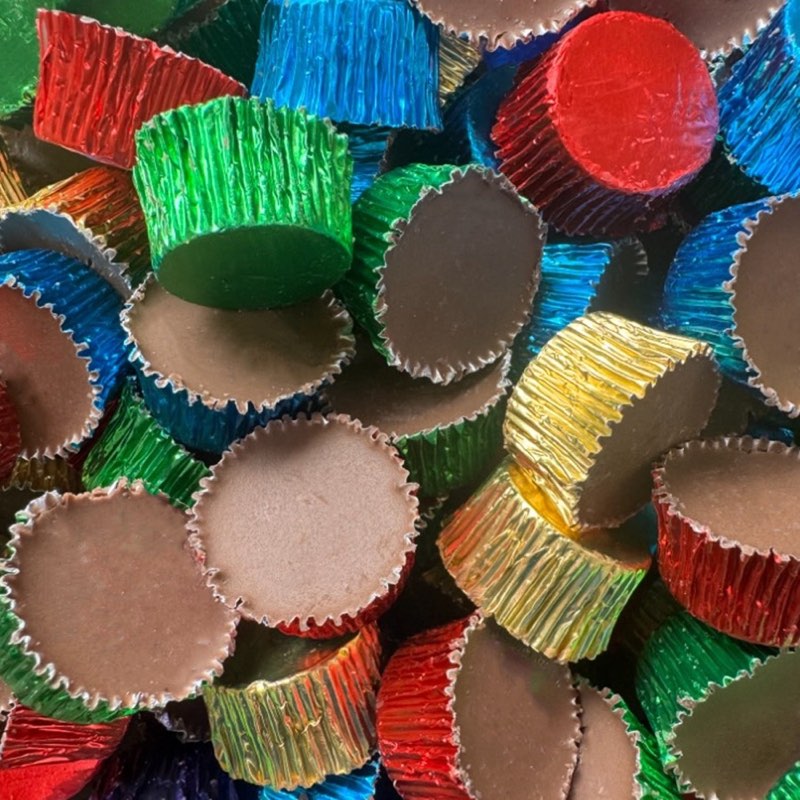
Open the bag and you get small moulded cups in a plain, deep brown — the pack lists the colour simply as brown and that is exactly right, there is no decoration, no colouring, no printed detail to look at. They sit in the hand like a pile of buttons with sides. Each one is a single mouthful for an adult and roughly a mouthful and a half for a child, which is the size confectioners have settled on for a reason: it is small enough that having one does not feel like a commitment, and large enough that you notice you have had it.
The surface finish is worth a second of attention when you first tip some out. Chocolate in this format is moulded rather than cut or enrobed, so the outside face takes its shine straight from the mould and the top edge of the cup is the rough side. That gives you two quite different surfaces on the same sweet: a smooth flank and a slightly open rim. It sounds like a triviality, and in terms of flavour it is, but it is the reason the pieces do not stick together in the bag the way a flat, all-over-smooth chocolate does. A bag of these poured out stays a pile of separate pieces.
Weight in the hand is the other early impression. Because of the cup geometry, each piece is lighter than a solid chocolate of the same outside dimensions — there is less material for the same footprint. In practice that means a 250 g bag looks like more sweets than a 250 g bag of anything solid, and a bowl of them looks generous at a lower weight. If you are catering by eye rather than by scales, that is useful to know, and it is worth remembering when you compare this against something like our milk chocolate sprouts at £6.99, which are solid pieces and therefore sit heavier for the same apparent volume.
Appletons put these up as a straightforward loose line rather than a boxed or individually wrapped one, which shapes how you use them. There is no packaging theatre, no tray, no crinkle. What you get is a quantity of sweets in a bag, and the presentation is up to you. That suits the bowl-on-the-table use above, and it suits pick-and-mix building, and it is the reason these are cheaper per piece than anything that arrives in a box with a lid.
How it eats, from the first second to the last
The first thing that happens is nothing much, and that is by design. Chocolate at room temperature is a solid, and a moulded cup is a reasonably thick one, so the first half-second in the mouth is simply a firm object sitting there. Bite into it and the piece gives all at once rather than crumbling gradually — the walls of a cup are a shape that fails cleanly under pressure. You get a short, quiet break rather than a snap you can hear.
Then the temperature does the work. Once the piece is in pieces, the surface area roughly doubles and the whole thing starts to soften towards the temperature of your mouth. This is the stretch where the flavour actually arrives — chocolate is almost mute while it is solid and becomes loud as it goes liquid, which is why chocolate eaten straight from the fridge tastes so much flatter than chocolate eaten from a warm pocket. The arrival is gradual and rounded rather than sudden. There is no spike.
The chocolate note itself sits in the middle of the range: sweet rather than bitter, with the cocoa character present but not the point. Underneath it, and slightly behind it in time, is the hazelnut — a warmer, rounder, slightly toasted note that fills in the back of the flavour where plain chocolate would be empty. Hazelnut and chocolate is one of the oldest pairings in European confectionery precisely because the nut occupies a frequency the chocolate does not. The two flavours do not take turns; the hazelnut comes up under the chocolate and holds it up.
The finish is long and soft. Chocolate coats, which is a real, physical thing rather than a tasting note — a film stays on the tongue and palate after you have swallowed, and it keeps releasing flavour for thirty seconds or more. That is why one of these is often enough and why they are a poor choice as a palate cleanser. If you want the next thing you eat to taste of itself, eat these last. It is also why they sit so well with black coffee, which cuts that film cleanly, and why they are a slightly awkward companion to strongly flavoured fruit sweets eaten at the same moment.
The one genuine variable is temperature, and you have more control over it than you think. Straight from a cold room these are firmer, the break is sharper, and the flavour takes longer to arrive but is cleaner when it does. Warmed in a pocket or on a sunny table they go softer, the break becomes a squash, and the flavour arrives immediately but reads sweeter and blurrier. Neither is wrong. If you are serving them to people who like their chocolate to have a bit of resistance, keep the bowl away from the radiator.
The engineering behind a cup: why the shape is the recipe
It is tempting to think of a chocolate as a flavour that happens to have been poured into a shape, but in this category the shape is doing at least half the work. A cup is one of the oldest moulded forms in the trade, and it exists because of some very specific physics about how chocolate behaves when it is warm, when it cools, and when it meets a tooth.
Start with the wall. A moulded cup has walls that are thin relative to its overall size, and thin chocolate behaves completely differently from thick chocolate in the mouth. Thickness controls how long the solid phase lasts. A thick block sits there being a block, and you experience it mostly as texture before you experience it as flavour. A thin wall passes through that solid phase quickly and gets to the flavour-releasing melt sooner. Cup walls are the compromise: thick enough that the piece holds its shape in a warm room and in a bag being posted around the country, thin enough that it is not hard work to eat.
Then the rim. Everything with an open top has an edge, and an edge is a stress concentrator — it is where a break will start when you apply pressure. That is not a fault, it is the mechanism. When you bite a cup, the failure begins at the thinnest part of the wall and runs down and around, which is why the piece comes apart in a few clean sections rather than shattering into grit. Compare that with a flat disc of the same material, which has no preferred failure line and tends to crack unpredictably, or with a solid figure, which resists and then gives all at once with more force than you intended. The cup is the most forgiving of the three to eat one-handed.
The mould surface matters too. Chocolate takes its finish from whatever it was set against, so the smooth outer face you see is a direct print of a polished mould. That surface is not just cosmetic: a tight, glassy surface is slower to pick up scuffs, slower to bloom in a warm cupboard, and less inclined to stick to its neighbours in a bag. The slightly duller open face of the cup — the side that was in contact with nothing but air while it set — is where any marking tends to show first. If you ever see a bag where the pieces look pale on one side only, that is the air side, and it is a cosmetic thing rather than a sign of anything wrong.
Cooling speed is the hidden variable behind all chocolate texture. Chocolate that is brought down to setting temperature in a controlled way sets hard, shiny and with a decisive break. Chocolate that is cooled too fast or too slow sets softer, duller and greasier on the finger. This is why the same chocolate, in the same shape, can feel like a different product in summer than in winter if it has been through a warm delivery van and re-set in your kitchen. It is also the single best argument for storing chocolate somewhere steady rather than somewhere cold, which we come back to below.
The final piece of the engineering is portion architecture, which is a pompous way of saying that the maker has decided how big one mouthful is and you cannot argue with it. Solid pieces let the eater decide — you can nibble a corner off a bar. A small moulded cup does not offer that option: one piece is one unit, and the eating rhythm is therefore set by the mould, not by the person. That is why formats like this work so well in bowls and jars where you want people to self-limit, and why a bar is the wrong thing to put on a table if you want it to last the afternoon.
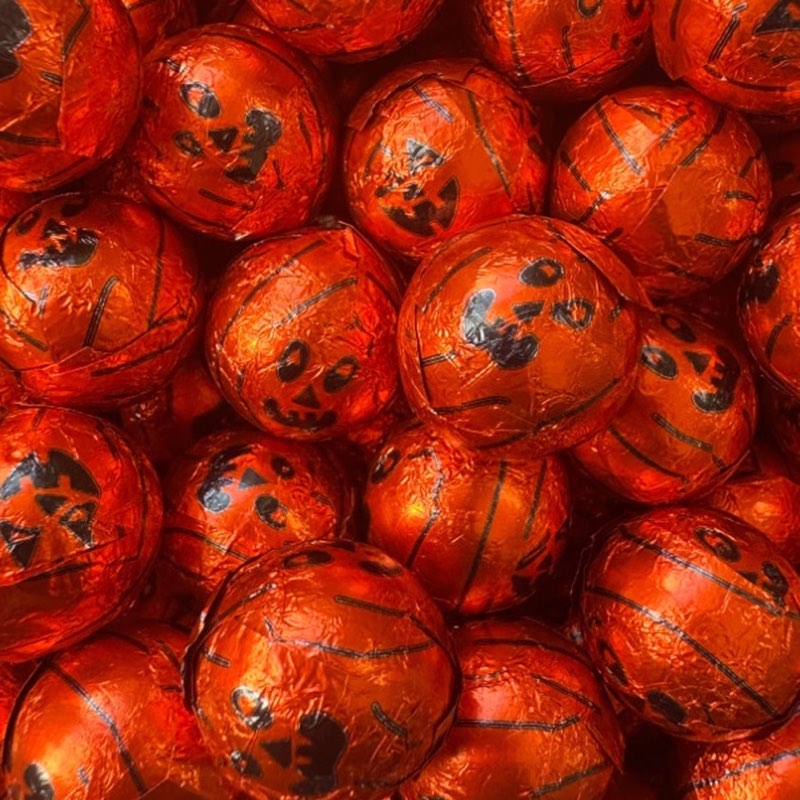
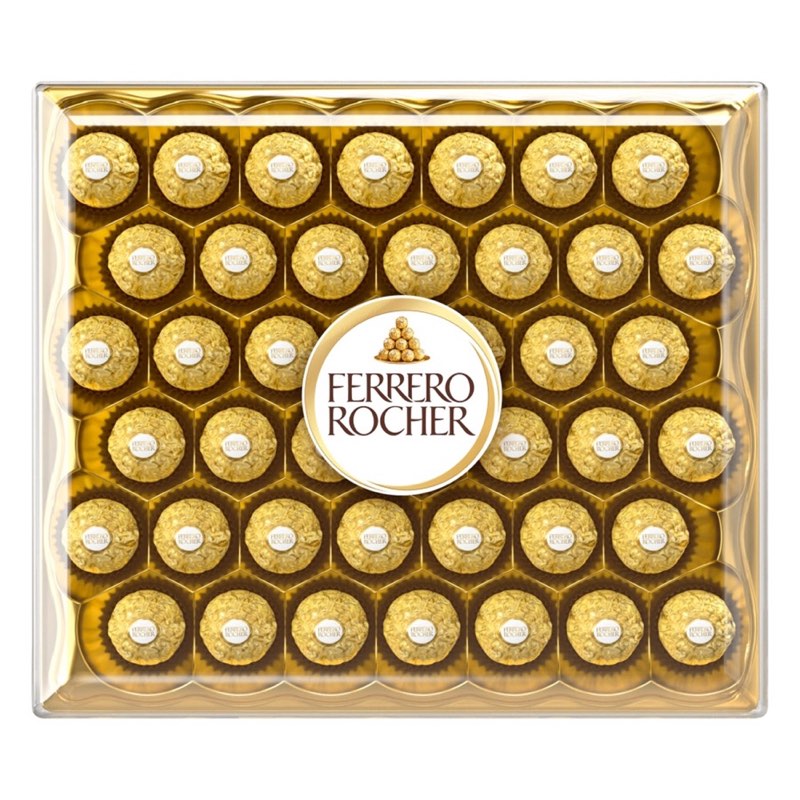
You can see the same logic at work across the chocolate lines we carry, in different directions. A hollow moulded figure like our milk chocolate pumpkins at £6.49 is chasing presentation over eating comfort. A dense shelled praline such as the 42-piece Ferrero Rocher box at £23.99 is built around a layered break where several textures fail in sequence. A soft-centred truffle like Lindor strawberries and cream at £8.29 is built to collapse rather than break. All four are chocolate; none of them eats remotely the same, and the difference is almost entirely architecture.
Where a plain brown chocolate sits in the British sweet shop
Walk into any independent sweet shop in this country — the sort with jars on shelves behind the counter and scales that have been there longer than the staff — and you will find a section that nobody photographs. It is the brown section. Chocolate pieces, chocolate-covered things, fudge-adjacent things, nutty things. It never gets the window display, which goes to whatever is brightest and most sour that year, and it is invariably the section that keeps the shop trading in February.
That is the tradition these belong to. British sweet retail has always run on two engines. The first is novelty: the fizzing, staining, tongue-colouring items that children spend their own money on, which change every few years and which the shop has to keep up with. The second is the standing order — the lines that adults buy quietly, in quantity, all year round, without ever getting excited about them. Chocolate ice cups are firmly in the second camp. Nobody has ever queued for them. They simply never stop selling.
The seaside shops made this distinction visible because they had to survive on a short season and a long winter. In July the front of the shop is rock, candy floss, enormous lollies and anything that photographs well against a pier. By October the same shop is running on boxes of chocolate for the Christmas trade and bags of loose sweets for locals. The stock at the back of the shop does not change much from decade to decade, and that steadiness is what pays the rent when the visitors have gone home.
The corner shop version of the same story is the paper bag on the counter. Before the multipack took over, most sweets in Britain were sold loose, weighed out, and handed over in a small paper bag — which is why so much of our vocabulary for sweets is still about weight rather than pieces. A quarter of this, two ounces of that. The modern equivalent is the pouch and the tub, and the modern equivalent of the weighing-out ritual is building a mix yourself, which you can still do on our pick and mix pages. The mechanism has changed; the pleasure has not.
Chocolate occupied a slightly odd position in that world. It was always the expensive end of the loose counter, because chocolate costs more to make than boiled sugar, and it was always the thing that needed looking after in summer while everything else on the shelf was indifferent to the weather. Shopkeepers historically kept chocolate away from the window for exactly that reason. If you have ever wondered why the jars nearest the door tend to hold hard sweets and the chocolate lives in the back, that is why — it is not merchandising, it is thermal management.
There is also a specifically British habit of eating chocolate as a sweet rather than as a dessert. In a good deal of Europe, small chocolates are an after-dinner item, served formally, with a certain amount of ceremony. Here they go in the same bowl as everything else, get taken by the handful, and turn up at children's parties next to the fizzy laces without anyone finding that strange. That informality is why loose chocolate lines like this one sell in kilo quantities to households rather than only to caterers.
The other thing the traditional shop understood is that brown things need company. A counter of nothing but chocolate is heavy going; a counter of nothing but bright fruit sweets is exhausting. The classic layout alternates the two, and the classic pick-and-mix bag does the same thing in miniature. That is the practical lesson worth taking from a hundred years of sweet-shop practice, and it is what the next section is about. If you want to see the whole chocolate end of our own counter in one place, it lives on the chocolate shelf, which currently runs to 38 lines.
Chocolate and hazelnut as a flavour family
Chocolate is the base note of the entire confectionery world, and the thing to understand about it is that it is a low-frequency flavour. It sits underneath other things rather than beside them. That is why it works as a coating, why it works as the last thing in a meal, and why a bowl of it never feels as noisy as a bowl of citrus sweets even though it may be sweeter. When you are planning a mixed spread, treat chocolate as the bass line: you need it, you want it constant, and you do not want it to be the loudest thing in the room.
Within that, milk-style chocolate flavour is the friendliest register — rounder, sweeter, less demanding than anything darker, and by a distance the easiest to serve to a crowd where you do not know anyone's preferences. It is also the most forgiving alongside other sweets: it will sit next to a fruit chew without either one seeming wrong, which is not true of more bitter chocolate, which tends to make fruit sweets taste artificial by comparison.
Hazelnut is the classic partner, and the reason is structural rather than sentimental. Roasted nut flavour brings a savoury, slightly toasted edge that gives chocolate something to push against. Without it, sweet chocolate can read as one-note, especially in small pieces where there is not enough time for complexity to develop. With it, there is a second thing happening in the back of the mouth, arriving just behind the chocolate and hanging around slightly longer. If you have ever wondered why nut-and-chocolate combinations dominate the European sweet counter, that is the mechanism.
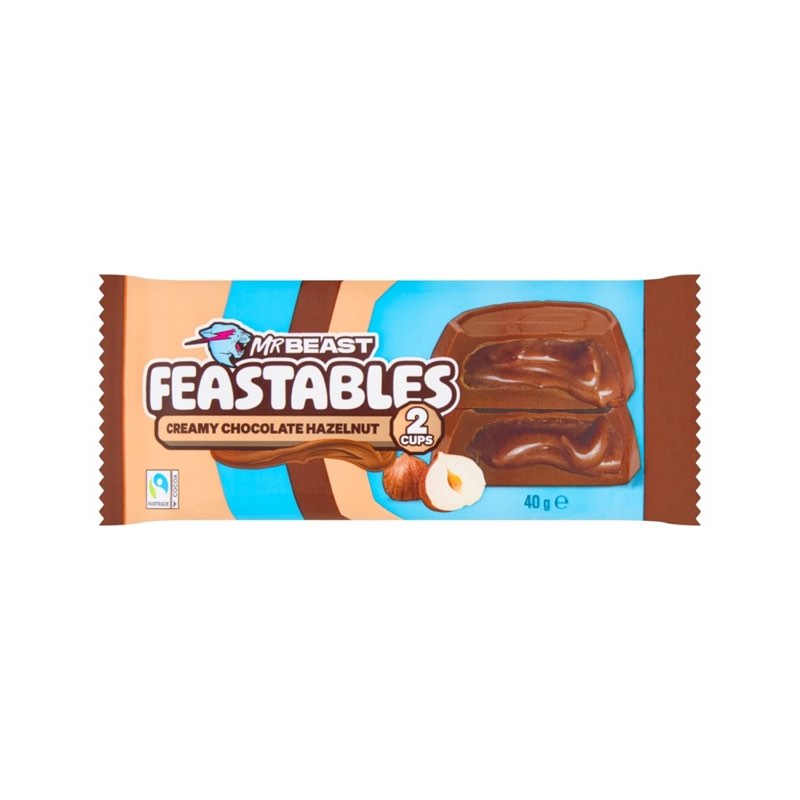
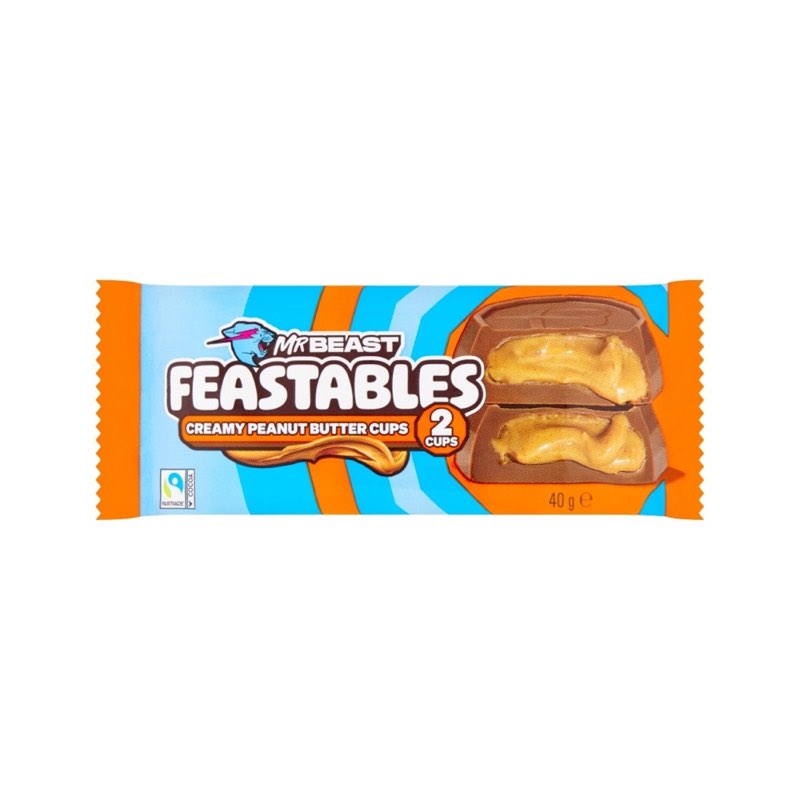
Hazelnut is also a short shelf in our own range — we currently list only three things under the hazelnut flavour tag, which makes it one of the easiest categories to work your way through. If you like the combination here, the most directly comparable thing we carry is the two-cup Feastables chocolate hazelnut pack at £1.99, which is the same flavour pairing in the same broad shape at a single-serving scale and price, and is the cheapest way to find out whether the combination suits you before you commit to a kilo of anything.
For the wider picture, everything we tag as chocolate-flavoured comes to 32 lines and includes plenty that is not conventional chocolate confectionery at all — which is the useful thing about browsing by flavour rather than by type. It puts biscuit formats, novelty formats and straight chocolate side by side, and that is a better way to build a varied bowl than working down a single category.
One last note on flavour pairing at the table. Chocolate and hazelnut both have long finishes, so they dominate whatever follows them. If you are putting out several things at once, keep something clean and sharp in reach — a fruit sweet, something citrus — so that people can reset. This is genuinely why traditional boxes alternate soft, nutty and fruity rather than grouping them.
Building a mix with these in it
If you are assembling a pick-and-mix bag, a party bowl or a gift jar, chocolate pieces are the anchor rather than the headline. The rule of thumb that works for most people is roughly a quarter to a third chocolate by weight, with the rest split between something chewy, something sharp and something with a bit of crunch. Go much above a third and the whole bag starts to feel heavy after a few pieces; go much below a quarter and it feels like a children's party rather than something you would put out for adults.
For the crunch slot alongside these, Chewing Nuts at £7.99 are the traditional choice and stay in the same chocolate-and-nut register while bringing a completely different resistance — a chew that has to be worked at rather than a piece that gives at once. That contrast of effort is what stops a mostly-chocolate bag becoming monotonous, and it is the single easiest upgrade to a plain chocolate bowl.
For a sharper counterpoint you want something that is not chocolate at all. Our jelly and gummy shelves are the obvious place to go, because fruit gums and jellies do the job that a sorbet does between courses: they cut through the film that chocolate leaves and reset the palate so that the next chocolate tastes like the first one did. A handful of those in the bag is worth more to the eating experience than another handful of chocolate.
For visual variety, and this matters more than people expect, add something small and bright. A bag of nothing but brown pieces looks like a bag of rubble, however good it tastes. Chocolate mini eggs at £7.99 solve this neatly by staying in the chocolate family while bringing a shelled, coloured outside, so the bag reads as mixed without the flavour moving anywhere. Similarly, Hannah's Animals at £5.49 come in at the same price as the base bag here and add shape interest to a bowl that would otherwise be all one silhouette.
If you are building for children specifically, the novelty slot is worth filling with something that has a bit of theatre to it. Meiji Chocorooms at £1.69 are the cheapest way to do that here — a small box, a distinct shape, and low enough in price that you can put one at each place setting without the total getting silly. the Miskets drumstick box at £1.99 does a similar job at a similar scale for a party bag.
Seasonal spreads have their own logic. Around Christmas and Easter, moulded seasonal shapes carry the table and plain pieces like these fill the gaps between them — the moulded pumpkins, the mini eggs, anything with a shape that signals the time of year. The mistake people make is buying only the seasonal shapes, which are more expensive per gram because you are paying for the mould and the presentation. Buy one or two shaped lines for the look and bulk out the rest with a plain loose line. The table looks the same and costs noticeably less.
A last practical point on building. Mix in the bowl, not in the bag, if you can. Sweets of different hardness in a sealed bag will find each other over a week, and the softest thing in there will take on the character of whatever it is pressed against. Keep the components separate in storage and combine them when you serve. This is the one piece of pick-and-mix advice that most people learn the hard way.
Who should buy these, and who should buy something else
These suit you if you want a reliable, unshowy chocolate in quantity. Households with children who want a sweet after tea. People who keep a tin at work. Anyone catering a room full of people whose preferences they do not know. Anyone building bags, jars or hampers who needs a good-value chocolate component that will not fight the rest of the contents. And anyone who simply likes the chocolate-and-hazelnut register and would rather buy it by the bag than by the box.
They suit you less if what you actually want is a centrepiece. If the chocolate is the gift rather than part of it, a boxed item with a lid and a tray does a job a bag cannot, and the Ferrero Rocher box linked above exists for exactly that. Equally, if you want the chocolate experience to be about a soft or liquid centre, the Lindor strawberries and cream truffles will get you there and a moulded cup will not. And if you are buying a single small treat for yourself today rather than stocking up, the small Feastables pack at £1.99 is the sensible spend.
There is also a straightforward question of scale. The smallest size on this listing is a bag, not a handful. If you genuinely want two chocolates, buy two chocolates. This range starts at a quantity that assumes you have somewhere to put the rest of it.
Prices, portions and what the size ladder is really doing
The price shown at the top of this page, £5.49, is the entry size — a 250 g bag. From there the listing steps up through five sizes, and the interesting thing is not the headline prices but the rate at which the per-gram cost falls.
| Size | Price | Per 100 g | What the step up costs you |
|---|---|---|---|
| 250 g | £5.49 | £2.20 | — |
| 500 g | £9.99 | £2.00 | +250 g for £4.50 |
| 750 g | £12.99 | £1.73 | +250 g for £3.00 |
| 1 kg | £16.49 | £1.65 | +250 g for £3.50 |
| 2 kg | £28.99 | £1.45 | +1 kg for £12.50 |
Read the right-hand column rather than the left and the shape of the ladder becomes clear. The cheapest single step in the whole range is 500 g to 750 g, where another quarter-kilo costs three pounds flat. That is the sweet spot, and it is why the middle sizes are the ones most households end up on. The 250 g to 500 g step is the most expensive of the small jumps at £4.50, so if you are hesitating between the first two sizes, the honest answer is that the second one is not much of a bargain — but the third one is.
The 2 kg is a different kind of decision. At £1.45 per 100 g it is a third cheaper per gram than the entry bag, but two kilos of chocolate is a catering quantity and needs a reason behind it: a fête, a stall, a wedding table, a school event, a year's worth of gift jars made in one afternoon. Do not buy it because the maths is good. Buy it because you have somewhere for it to go.
Turning weight into portions is the part that actually helps with planning. Think in 25 g and 50 g servings. Twenty-five grams is a small after-dinner handful — two or three pieces, the sort of thing that goes on a saucer next to a coffee. Fifty grams is a party portion, the amount one guest takes across an afternoon if chocolate is one bowl among several. On that basis the 250 g bag is ten small servings or five party portions; the 1 kg is forty small servings or twenty party portions; the 2 kg is eighty and forty respectively.
For catering, the rule most people arrive at is 50 g of any one sweet per head when there are four or more things on the table, and 100 g per head when there are only one or two. Chocolate specifically tends to go slightly slower than fruit sweets across an afternoon, because it is richer and people self-limit, so if chocolate is your fourth bowl of four you can budget nearer 35 g a head and not run out.
Against the rest of our chocolate shelf, this sits at the value end. Several of the comparable lines are priced by the bag at £6.49 to £7.99 for their standard size, and premium boxed chocolate runs much higher — the Ferrero box is £23.99. That is not a criticism of the expensive end; it is the reason a range like this exists. Buy the boxed chocolate for the gift and the loose chocolate for the bowl, and the total bill is a great deal more sensible than buying boxed for both.
Storing chocolate so it still eats properly in a month
Chocolate is the most storage-sensitive thing we sell, and almost all of the trouble people have with it comes from one mistake: putting it in the fridge. A cold fridge is a damp fridge, and when you take chocolate out of it, moisture condenses on the surface. That moisture does real damage to the finish and the texture, and the pale, grainy look people call bloom is often the result. Cold chocolate also tastes muted, because flavour needs the melt to happen and a chilled piece takes longer to get there.
What chocolate wants is somewhere cool, dry, dark and — above all — steady. A cupboard on an internal wall, away from the oven, the kettle, the boiler and any window that gets direct sun, is better than any fridge. Steady is the operative word: chocolate that goes through repeated warm-and-cool cycles will set and re-set slightly differently each time, and after a few rounds it develops a duller surface and a softer, slightly greasy break. It is perfectly fine to eat; it is just no longer at its best.
Air and smell are the other two enemies. Fat picks up odours, which is why chocolate stored next to coffee, spices or anything strongly perfumed will start to taste faintly of its neighbours. Decant the bag into a tin or a lidded jar, keep it closed, and keep it away from the spice rack. A clip on the top of the original bag is fine for a week but not for a month.
If you are storing one of the bigger sizes, split it. Take out what you expect to use in the next fortnight and keep the rest sealed and untouched, rather than opening and reclosing a two-kilo bag forty times. Every opening is a fresh dose of warm, humid room air. This is the single most effective thing you can do to make a large bag still taste like the first handful when you get to the bottom of it.
Summer needs a different plan. In a hot spell, a cupboard on a south-facing wall can easily go well past the point where chocolate softens, and there is no fixing a bag that has melted and re-set as a single block. The best answer is the coolest interior room in the house — a hallway cupboard, a north-facing shelf, the bottom of a wardrobe. If you genuinely have nowhere cool, buy the smaller size in July and the big one in November.
Choosing your size
Buy the 250 g if you are trying these for the first time, if you want a single bowl for one evening, or if the weather is against you. It is the low-commitment option and it is the right one more often than the maths suggests.
Buy the 500 g or 750 g if these are becoming a household fixture. The 750 g in particular is where the per-gram price stops falling steeply, so it is the best-value size that a normal kitchen can actually get through at a sensible pace. For most families this is the one to have on the shelf.
Buy the 1 kg if you are building gift jars, filling hampers, running a regular office tin, or catering a single medium-sized event — twenty party portions is a birthday, a christening tea or a small office gathering with room to spare.
Buy the 2 kg only with a plan. It is the cheapest chocolate per gram on this page by a distance, and it is the correct answer for stalls, fêtes, big weddings and anyone making up dozens of bags at once. It is the wrong answer for a household that is going to open it in March and still be looking at it in August.
Finding your way around the rest of the shop
This product lives on four shelves, and each one leads somewhere different. The broadest is our loose counter, 356 lines deep, which is where everything sold by the bag rather than in branded packaging sits — the natural home for anyone shopping by quantity rather than by name. If you shop by sweet type instead, our 38-line chocolate selection narrows that down to a browsable number over a cup of tea.
Flavour shelves work differently again and are the ones most people overlook. The chocolate flavour tag and the three-line hazelnut tag both cut across types, so they will show you a boxed item next to a loose one next to a novelty. If you know what you want it to taste like but not what form you want it in, start there.
From the top level, the full range is the place to browse when you have no particular target, and our candy and chocolate hub is the better starting point when you know you are buying sweets rather than building a mix. For nostalgia shopping, the retro shelf collects the lines that have been in British sweet shops longest, which overlaps heavily with the corner-shop tradition described above.
And if you would rather assemble your own bag than buy a single line, building a bag yourself is the way to do it — it is also, incidentally, the best way to try several chocolate lines at once before committing to a kilo of any of them.
Questions we get asked about these
How many pieces are in a bag?
We do not give a piece count, because loose chocolate is sold by weight and the number in any given bag varies slightly with how the pieces settle and with natural variation in moulding. Weight is the number to plan with, not pieces. As a rough working figure for portioning, treat 25 g as a small individual serving and 50 g as a party portion, and you will not go far wrong when you are working out how much to order.
Which size should I get for a children's party?
Work on 50 g a head if chocolate is one of three or four things on the table, or 100 g a head if it is the only sweet you are putting out. Twenty children with a mixed table is therefore comfortably covered by the 1 kg. If you are also making up take-home bags, add another 25 g per bag to your total and round up — it is always the take-home bags that run short.
Will they melt in the post?
Chocolate is sensitive to heat, and in a warm spell it can soften in transit. If a bag arrives soft, leave it somewhere cool and steady — not the fridge — and let it firm up on its own before opening. It may set with a duller surface than it had when it left us, which is cosmetic. In high summer, ordering a smaller size more often is the more reliable approach than a single large one.
Can I use these in baking or on a cake?
You can use them as a decoration on top of a finished cake or pressed into buttercream, and the cup shape sits well on a flat iced surface. We would not suggest them for melting down, because moulded confectionery is not designed to be re-tempered and will usually set dull and soft if you try. For topping, add them after the cake has cooled completely, or they will slump.
What is the difference between the sizes apart from the weight?
Nothing except the quantity and the price per gram. Every size on this listing is the same sweet in a different amount, from 250 g at £5.49 up to 2 kg at £28.99. The only reason to choose one over another is how much you need and how quickly you will get through it — the per-100 g column in the table above is the whole decision.
Are these suitable for a vegetarian or vegan guest?
We do not hold verified dietary information for this line, so we cannot tell you either way, and we would rather say that plainly than guess. Anyone with a dietary requirement or an allergy should check the manufacturer's packaging on arrival before eating. That is the only reliable source, and it is the one we would use ourselves.
Are they safe for young children?
Sweets are a treat rather than a food, and small pieces of any kind are a choking risk for young children, so they should be supervised while eating. Beyond that, anyone with an allergy in the household should check the manufacturer's packaging when the order arrives, before anything is opened or shared out. If you are serving to a group of children you do not know, put the packaging somewhere a parent can read it.
How long will an unopened bag keep?
Go by the date on the packaging rather than by any general rule, since that is the only figure that applies to the bag you actually have. What you can control is the conditions: kept cool, dry, dark and steady, and sealed between servings, chocolate holds its texture and finish far longer than it does in a warm kitchen. Split large bags and keep the bulk of it sealed, as described in the storage section above.
Do these work in a sweet jar or dispenser?
In a jar, yes — the shape pours cleanly and does not bridge or jam the way very flat or very sticky sweets do. In a gravity dispenser we would be more cautious, because chocolate softens against warm plastic and can smear the inside of the chute. If you are filling jars for a table or a gift, these behave well and look tidy against lighter-coloured sweets rather than against other brown ones.
What goes with them on a table?
Something sharp and something chewy, in that order of importance. A fruit gum or jelly resets the palate between chocolates, and a chew gives the jaw something different to do. Colour helps too, since an all-brown table looks flat however good it tastes. The mix-building section above sets out proportions, and the linked shelves will give you options at every price point.
Can I order a mix of sizes?
Yes — each size is selected on this page, so add the one you want, then come back and add another if you need a second. People buying for an event quite often take one large size for the bowls and one small size to keep back for topping up, which is a sensible way to do it, because the top-up bag stays sealed until it is needed.
Is this the same as a chocolate cup you would buy in a box?
Format-wise it is the loose equivalent: the same broad shape, bought by weight in a bag rather than presented in a tray with a lid. What you give up is the presentation and what you gain is a much lower price per gram and the freedom to combine it with whatever else you want. For gifting, a boxed item does a job this cannot; for bowls, jars and mixes, this is the more sensible purchase.
In short
A plain, well-shaped brown chocolate in a chocolate-and-hazelnut register, sold by weight from 250 g at £5.49 up to 2 kg at £28.99, with the best value sitting in the middle of that ladder. It is not the most exciting thing on the shelf and it was never trying to be. It is the one you put in the bowl, the jar, the hamper and the tin, and the one that is still doing its job in February when the novelties have all been eaten.
More chocolate sweets
More chocolate sweets
More loose sweets sweets



Where this sits
Chocolate Ice Cups 1kg appears on these shelves. Browse them, or jump to something nearby.
You might also like