loose sweets
Read the full guide
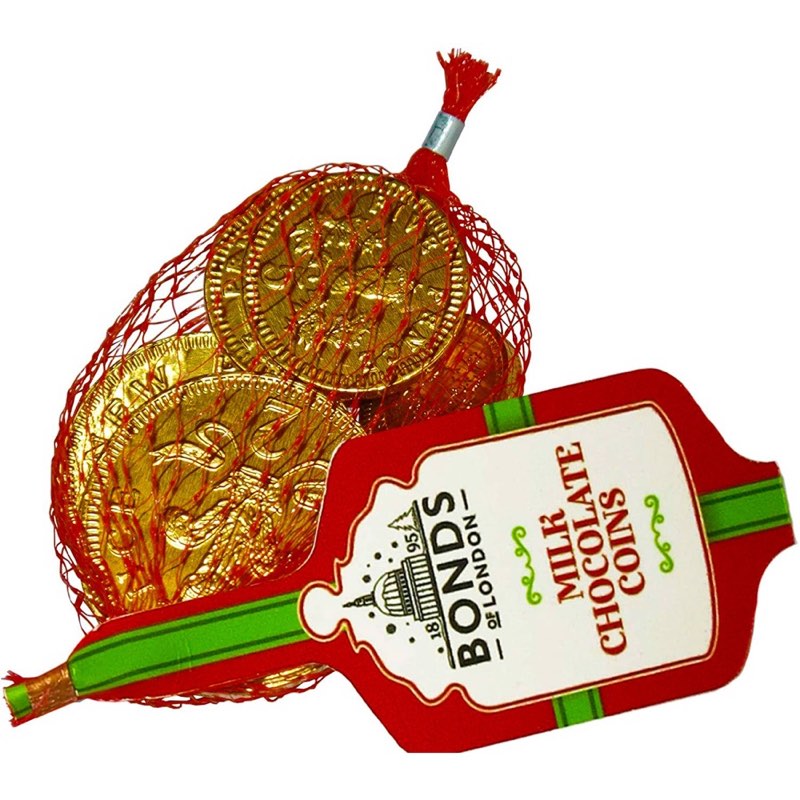
Bond's Milk Chocolate Coins
£1.00
✔ In stock — ready to ship
Fresh stock
Free over £20
Same-day dispatch
Secure checkout
There is a recognisable set of people who reach for Bond's Milk Chocolate Coins, and they are not all buying the same product even though they are all buying the same thing. Working out which of them you are is the fastest way to know whether this is the right pound to spend.
The first and largest group is the party-bag filler. If you are putting together bags for a children's party, a school event, a class, a christening or a village fête, you need items that are cheap, instantly recognisable, and unambiguously a treat. Coins clear all three bars at £1.00 a unit. They also do something most party-bag items do not: they read as slightly special rather than as the cheap thing that was put in to make up the numbers, because a coin is a shape with a story attached to it rather than just a chocolate.
The full guide to Bond's Milk Chocolate Coins
5,134 words on how it eats, who it suits, how to serve it and what to put beside it.
Who ends up buying a pound's worth of coins
The second group is the stocking and advent buyer. Coins have been doing service in Christmas stockings for as long as most people can remember, and at a pound they are one of the few things you can put in every stocking in the house without the total mattering. For the same reason they turn up in advent-style countdowns and in the little pile of small things people give at the end of a term or the end of a year.
The third group is the themed-table buyer, and this is where coins are genuinely hard to substitute. If you are running a pirate party, a treasure hunt, a casino night, a talk-like-a-pirate school day or anything with a prize or a hoard in it, a chocolate coin is simultaneously the decoration, the prop and the food. Nothing else at the price does three jobs at once. Scatter them across a table and the table is themed; hide them round a garden and you have an activity; pile them in a bowl and they are the reward.
The fourth group is the hamper and parcel builder, who is buying coins as one small component of something larger. That is a substantial enough use that it gets its own section further down this page, because there is real craft in it and most people get the proportions wrong.
And the fifth group is simply someone who wants a pound of chocolate. No occasion, no plan. A pound is the price of nothing much, and a small, familiar milk chocolate treat at that price is one of the easier purchases on the site to justify. There is nothing wrong with being that buyer and this page is not going to try to talk you into a bigger one.
Who it is probably not for: anyone shopping for a single, serious, grown-up chocolate gift. That is a different purchase and we stock it — Ferrero Rocher Milk Chocolate Pralines 42 Pieces 525g at £23.99 or Lindt Lindor Strawberries & Cream Truffles 200g at £8.29 are both aimed at exactly that shopper. Coins are not competing with those and would look thin if you tried to make them.
The coin as a chocolate format
Strip away the theme and what you have is a thin disc of milk chocolate, and the disc shape is doing more than it gets credit for. A disc has a very high surface area relative to its volume, which changes the eating experience in a specific and predictable way: it warms fast, it softens fast, and it releases its flavour almost immediately rather than over a slow chew. A thick chunk of chocolate is a slow event. A coin is a quick one.
That thinness is also why coins suit crowds. A chunk of chocolate commits you to a proper portion; a coin is an amount you can take, eat and be finished with in under a minute, which is precisely what people want from something on a table they are walking past. It is the chocolate equivalent of a single sweet rather than a bar, and the fact that it is priced and shaped like currency makes the taking feel even more casual.
The shape has one more practical property worth naming: coins stack and they lie flat. That sounds trivial until you have tried to arrange a hamper or a party bag around something spherical. Flat things pack. They fill the base of a bag without lumps, they sit under a ribbon without distorting it, and they can be laid in a line along a table in a way that round chocolates simply will not stay in.
We do not publish a weight for this line and we are not going to estimate one, so if the exact quantity matters to your planning, the product images on the listing are the honest guide and your own eyes are a better judge than any number we invented would be. What we can tell you with confidence is the format, the flavour family and the price, and those three things are usually what the decision actually turns on at a pound.
Eating one
A coin goes soft at the edges almost as soon as it is in your hand, which is the first thing you notice and the thing that dictates everything else about how it is eaten. Hold one for thirty seconds while you are talking to someone and it will have begun to give. This is not a flaw; it is what happens to a thin piece of milk chocolate at body temperature, and it is the reason coins are handed out and eaten rather than carried around.
Snapped rather than bitten, a coin breaks cleanly if it is properly cool and bends if it is not — which is a useful and slightly satisfying way to tell whether the ones you have put out have been sitting in a warm room too long. Bitten, it gives immediately and then melts rather than needing to be chewed, so the whole experience is over in a handful of seconds.
The flavour is the straightforward milk chocolate register: sweet, soft-edged, mild, with none of the bitterness or length that a darker chocolate brings. It arrives at once rather than building, sits briefly, and fades without much of a finish. That is exactly what you want in a party or crowd context, where nothing should linger long enough to interfere with the next thing somebody eats, and it is exactly why people who are after a long, complex chocolate experience should be buying something else.
Because the melt is quick and the flavour is mild, coins are also one of the easier chocolates to eat several of without it feeling like a decision. That is worth knowing both as an advantage — they suit a table where people are grazing — and as a caution, if you are putting out a bowl in front of children and want it to last more than ten minutes.
Coins in a hamper, a parcel or a gift bag
Almost everything good about this product comes into focus when you are assembling a gift rather than buying a snack, so this is the part of the page worth reading properly if you are building something.
Hampers: coins are the packing, not the present
The universal mistake in home-built hampers is spending the whole budget on impressive items and ending up with a basket that has gaps in it, tissue paper showing through, and everything sliding about when it is carried. A good hamper needs three tiers: one item that sets the structure, two or three that fill the body, and a handful of small flat things that pack the voids. Coins are the best void-packers we sell, because they are flat, cheap, and instantly readable as a treat rather than as filler.
For the structural item, something like the Haribo International Hamper at £44.99 is a hamper in its own right if you want to start from a finished thing and build outwards, while Create Your Own Pick & Mix Platter at £24.99 gives you a large centrepiece you get to specify yourself. For the middle tier, Chocolate Ice Cups 1kg at £5.49 gives you a lot of chocolate for the money and fills a genuine amount of basket. Then two or three pounds of coins go into the corners and the whole thing stops rattling.
The proportion we would suggest is roughly one pound of small flat items for every ten pounds of hamper. Below that the basket looks sparse; much above it and you have bought a bag of coins with a hamper around it.
Letterbox treats: the format is made for it
This is where the flat shape pays off most directly. A thin, flat, inexpensive chocolate is one of the few sweets that genuinely posts well — it does not need a box to protect it from crushing the way a praline does, and it does not take up the depth that a bag of gummies does. Two or three pounds' worth of coins in a padded envelope alongside a couple of other slim items makes a properly nice thing to receive and costs very little to send.
Pair them with something small and boxed for contrast and the parcel feels considered rather than scraped together. Meiji Chocorooms Chocolate Biscuits Box 40g at £1.69 and Miskets Chicken Drumstick Box 50g at £1.99 are both small, flat-ish, cheap and odd enough to raise a smile, which is the right register for a posted treat. Three small items with different shapes beats one larger item nearly every time in an envelope.
One seasonal caution and it is the obvious one: chocolate posted in a hot week is chocolate that may arrive softened. If the weather is against you, send the non-chocolate items and save the coins for a cooler month.
Teacher gifts and end-of-term giving
Coins have an unusual advantage in teacher giving that has nothing to do with taste: they are obviously shareable and obviously unfussy. A single small gift to a teacher can be an awkward thing for them to accept and an awkward thing to get home. A handful of coins tucked into a card, or a few pounds' worth in a bag with a ribbon, sidesteps all of that — it can go on the staff-room table, it can be handed round, and nobody has to have a conversation about it.
If you want to go further than a small gesture, the Best Teacher Ever Pick & Mix Sweet Mega Jar at £25.99 is the properly generous version of the same idea and is designed for exactly this occasion. Where a jar like that is the gift from a whole class collection, a pound of coins is the right scale for an individual family adding something of their own on top. Knowing which of those two you are doing saves a lot of second-guessing.
Care parcels
Parcels sent to students, to people who have moved away, or to a friend having a rough stretch work on a simple principle: the number of separate small pleasures matters more than the total spend. Five cheap things land better than one expensive thing, because each one is its own moment of opening.
Coins belong in that parcel as the familiar, comforting item — the thing that needs no explanation and asks nothing of the recipient. Around them, put things with more character: Junior Mints at £2.59, Hannah's Animals at £5.49, or Haribo Fun-Size Treat Box at £5.99 if you want a single item that is already divided into small portions and therefore keeps giving over a fortnight rather than an evening.
Celebration gifts where a theme is fixed
Some gifts have their colour scheme decided for them, and coins are one of the few chocolates that fit into any scheme because the shape is the theme rather than the decoration. That makes them a safe addition to a themed gift built around something like the Baby Shower 'It's a girl' Pick & Mix Sweet Mega Jar or the 'It's a boy' mega jar, both at £25.99 — the jar carries the theme, and the coins add chocolate to a gift that is otherwise all sugar sweets without fighting the colour scheme the jar has established.
What a pound buys, and why we will not quote you a price per gram
Most value sections on a sweet site turn into per-100 g arithmetic, and on most products that is genuinely the most useful thing you can be told. On this one we cannot do it honestly, because we do not hold a published weight for this line. We are not going to estimate one and present it as a fact, and we are certainly not going to build a table of made-up per-gram figures on top of an estimate. So here is the value case done the way it can actually be done: per unit, per person, and per job.
The per-unit case is the simple one. At £1.00 this is the cheapest chocolate decision on the site, and at a pound the question is rarely whether it is good value per gram — it is whether you want one, two or twenty. Most of the uses on this page are multiple-unit uses, which is the honest framing.
| What you are doing | Units | Spend |
|---|---|---|
| Something chocolate in one child's party bag | 1 | £1.00 |
| A class party, twenty bags | 20 | £20.00 |
| Packing the corners of a £40 hamper | 3 to 4 | £3.00 to £4.00 |
| Stockings across a household of four | 4 | £4.00 |
| A themed table or treasure hunt | 5 to 10 | £5.00 to £10.00 |
| A letterbox parcel, alongside other items | 2 to 3 | £2.00 to £3.00 |
Per person, and how far a pound stretches at a table
The useful planning discipline with coins is to think in pieces per guest rather than in grams per guest, because that is how they get eaten and how they get handed out. Two or three coins each is a normal, generous share at a party where there is other food on the table. One each is the right number if a coin is the token in a game or the prize at the end of a hunt. Five each is the number you end up at if the bowl is left out unsupervised in front of children, which is a planning fact rather than a criticism.
Work backwards from that. If you know you want three each for twenty children, you know roughly how much coin you need to buy, and you can check that against what a pound's worth looks like on the listing before you commit. That is a more reliable method than any per-gram number would give you, because a coin is eaten as a discrete object, not as a portion of a bag.
Where the pound sits against the rest of the chocolate shelf
Setting it against neighbours puts the price in perspective. Chewing Nuts at £7.99 and Glisten Chocolate Mini Eggs at £7.99 are sharing-bag purchases — you buy one and it serves a table. Milk Chocolate Sprouts at £6.99 is the same kind of buy with a seasonal joke attached. Against those, a pound of coins is not a substitute; it is an addition. The bags do the feeding, the coins do the theme and the party bags.
Put the other way round: if you have £8 to spend on chocolate for a table, a kilo of chocolate ice cups for £5.49 plus two or three pounds of coins gives you more useful coverage than any single £8 item, because you end up with bulk and with small handable units at the same time. That combination — one bulk item plus several pound units — is the single most reliable way to spend a small chocolate budget well.
The honest limit of the value case
A pound is a pound, and there is a point at which buying twenty of something to solve a catering problem is the wrong answer and a bulk bag is the right one. If you need chocolate for a crowd and the coin shape is not doing any work for you — no theme, no bags, no hunt — then buy by the bag and not by the coin. The coin premium, whatever it works out at, is paid for the format, and there is no point paying it if the format is irrelevant to what you are doing.
Milk chocolate as a flavour to build around
Milk chocolate is listed as both the flavour and the sweet type here, and that doubling is a fair description of what it is: the flavour is the format. There are 38 lines on our chocolate shelf and 32 under everything we list under the chocolate flavour, and the two lists overlap without being identical, which is worth knowing if you are browsing for something specific.
The thing to understand about milk chocolate on a mixed table is that it is a base, not an accent. It is mild, sweet and familiar, so it does not compete with anything and it makes sharper things taste sharper by sitting next to them. That is the opposite of how a strong dark chocolate or a sour sweet behaves, and it is why a table with milk chocolate on it can carry much bolder things elsewhere without becoming exhausting.
Within milk chocolate, the meaningful distinction for a shopper is between plain and filled. A coin is plain: chocolate and nothing else going on, quick to eat, easy to like. The Lindor strawberries and cream truffles are the filled end of the same family, where a soft centre changes the pace completely and the eating takes ten seconds rather than three. A good chocolate spread has both, because one is for grazing and the other is for sitting down.
The third position is chocolate-plus-texture, where the chocolate is a coating rather than the whole sweet. the £5.49 bag of Hannah's animals and the chewing nuts both live there. Those give you something to bite through before the chocolate arrives, which is a different experience again, and they are the ones to add if a chocolate table is starting to feel one-note.
Building a table or a mix around them
Coins are rarely the whole plan, so it is worth saying what they go with. On a mixed sweet table, the rule is that chocolate and sugar sweets should be in separate bowls and roughly equal in quantity — people gravitate to one or the other and a table that is ninety per cent one thing leaves half the room picking at the same bowl all afternoon.
For the sugar-sweet half, the routes worth browsing are the jelly and gummy aisle for the soft and bouncy end, chewy sweets for things that last longer in the mouth, and retro sweets if the table needs to work for every age group in a family at once. Any two of those plus a bowl of coins is a table.
If you want the flavour side of the shop rather than the texture side, fruit flavours is the broadest counterweight to a chocolate bowl, and strawberry is the narrower version of the same idea if you want the table to have a colour theme running through it. Strawberry and milk chocolate side by side is one of the reliably good pairings on a mixed table, and it takes no cleverness to assemble.
For a themed hunt or a game, the practical build is coins as the currency and one larger item as the prize. A £5.99 treat box works well as the prize because it is already divided into portions, so the winner can share it and the game does not end in a sulk. Scatter the £7.99 mini eggs alongside the coins if the hunt is at Easter and you want two findable shapes rather than one.
Occasions where coins are the obvious answer
Christmas is the headline one. Coins in stockings, coins in a bowl on the side, coins in the bottom of a hamper — the format has been part of the British Christmas table for as long as most people can remember, and at a pound they are one of the very few Christmas purchases that does not need thinking about. If you want to run the joke further, £6.99 chocolate sprouts in a bowl next to a pile of coins is a Christmas table that has clearly had some thought put into it.
Children's parties, especially themed ones, are the second. Pirates, treasure, kings and queens, banks and shops, anything involving a hoard — a coin is the prop that you can also eat, which means one purchase covers the decoration and the party bag.
Treasure hunts and garden games follow from the same property. Coins hide well because they are flat and can be slipped under and behind things, and they survive being found, unlike anything soft. Keep them out of direct sun and they will be fine for the length of a hunt.
Class and club events — end of term, sports day, a reading challenge, a fundraiser — use coins as small rewards. They are the right size for a token, which is not true of most chocolate, and the low unit price means a teacher or a volunteer can hand out a lot of them without the cost becoming a problem.
Casino and games nights for adults are the underrated one. Coins as the chips is a good joke that improves the evening, and unlike real chips they disappear as the night goes on, which is its own kind of scoring system.
Keeping chocolate in good condition
Chocolate wants cool, dry, dark and steady, and of those four the one that matters most is steady. It is not really heat that ruins chocolate at home — it is repeated warming and cooling, which is what happens when a bag lives on a sunny windowsill or in a bag that goes in and out of a car. Pick a cupboard away from the oven and the radiator, put it there, and leave it there.
Do not refrigerate it if you can avoid it. A fridge is cold enough to firm chocolate up but also damp enough to cause problems when it comes back out, and the texture of a thin disc suffers more than a thick bar would. If you genuinely have no cool cupboard in a heatwave, the fridge is better than a warm shelf — but bring it back to room temperature properly, and leave it wrapped while it does, rather than unwrapping cold chocolate into a warm room.
Keep chocolate away from anything strongly aromatic in the same cupboard. It is one of the more absorbent things in a food cupboard and will take on the character of whatever it is stored beside over a few weeks. If you keep a sweet cupboard stocked from across the full shop, the sensible arrangement is chocolate in its own sealed container, sugar sweets in another.
Finally, the timing point that matters for parties: put coins out at the last minute rather than in the morning. A thin chocolate left in a warm room for several hours will go soft and will have lost its snap by the time anybody gets to it. Everything else on a sweet table can be laid out early. This is the one that should be the last thing you do before the door opens.
One size, and how many to order
There is one version of this line: one size at £1.00, and it shows as in stock. So the decision is entirely about quantity, and the table further up this page is the practical answer to that.
The general shape of the advice is: buy one if you are curious, buy three or four if you are building a hamper or filling stockings, and buy one per bag plus a few spare if you are catering a party. The spares matter more than people expect — party-bag counts always drift upwards in the last two days, and a pound is a cheap insurance policy against having to make another order.
If you are ordering for something big enough that twenty units feels absurd, that is the signal to switch strategy: buy a bulk chocolate line for the volume and a handful of coins for the theme, rather than trying to make coins do a job that a sharing bag does better and cheaper. The £7.99 bag of chewing nuts or a kilo tub is the right tool for volume.
Where to find it and what to look at next
This line sits on the two chocolate shelves, which is a little confusing at first glance because they share a name. One is organised by type — that is the 38 chocolate lines we stock, the physical category of chocolate products. The other is organised by flavour, which pulls in 32 lines where chocolate is the flavour profile. If you are browsing for a chocolate gift, start with the type shelf. If you are building a flavour-balanced mixed table, start with the flavour one.
Beyond the shelves, the fastest route to something different is simply browsing everything on the site, which is how most people find the lines they were not looking for. And if you came here because you are assembling a gift rather than buying a snack, the pick-and-mix jars and platters are worth a look before you commit to building one yourself — the build-your-own platter in particular does the presentation work for you.
Among the nearby products, the shortest useful guide is by job. A £2.59 box of mints for something small and sharp against the chocolate. The £1.69 Chocorooms box for a small novelty that posts well. The Miskets drumstick box for the same at £1.99 with more of a joke to it. And the mini eggs or the ice cups when you need actual volume rather than another small unit.
Questions shoppers ask
How many coins do I get for a pound?
We do not publish a weight or a piece count for this line, so we are not going to give you a figure we cannot stand behind. The product images on the listing are the honest guide. If an exact count is critical to your planning — one per child in a class of thirty, say — order one first and count it, then order the rest with confidence.
Are they wrapped individually?
We do not hold packaging detail for this line in our product data, so we will not describe it. The listing images are the best answer to that question and they are on the same page as this description.
Are they suitable for vegetarians or vegans?
Our supplier has not given us a diet listing for this line, so we do not state one. We only publish a diet tag where the supplier has provided it. If it matters to you, check the manufacturer's packaging when your order arrives, before anyone eats any of it.
I have an allergy. Where do I check?
On the manufacturer's packaging, on arrival, before eating anything. We do not list ingredient or allergen information for this line on the website and we will not summarise it, because the packaging that comes with your order is the only version of that information we would want anyone relying on.
Are they safe for young children?
Sweets are a treat and should be treated as one. Small hard sweets and whole gummies are a choking risk for young children and children should be supervised while eating them. For a very young child, breaking a coin rather than handing it over whole is the sensible approach.
Will they melt in the post?
They can, in warm weather — that is true of any chocolate, and a thin disc is more vulnerable than a thick bar because it warms through faster. In cool months they travel very well and the flat shape means they do not need a box to protect them. In a hot spell, send something that is not chocolate and save the coins for later in the year.
Can I put them in the freezer?
We would not. Freezing and thawing chocolate causes texture problems on the way back out, and a thin disc shows it more than a thick piece does. A cool, dry cupboard away from the oven and out of direct sun is all chocolate actually needs, and steadiness matters more than coldness.
Are they a Christmas-only product?
Coins are strongly associated with Christmas, but nothing about the format restricts them to it — pirate parties, treasure hunts, casino nights and class rewards all use them year round. It shows as in stock at the time of writing, and the product page is the live answer on availability.
How many should I buy for a party?
Work in coins per guest rather than in weight. Two or three each is a generous share when there is other food out; one each is right when a coin is a game token or a prize. Once you know your number per head, check it against what a pound's worth looks like on the listing and multiply. Buy a couple of spares — party-bag numbers always go up at the last minute.
Do they work in a pick-and-mix bag?
Less well than you would hope, and it is worth knowing why. Chocolate and sugar sweets stored together in a sealed bag for days are not ideal neighbours, and a thin coin can soften against warmer, denser sweets. Keep them as their own bowl on a table rather than mixing them in, or add them at the last moment. If you want chocolate inside a mix, a coated sweet holds up far better than a plain disc.
Is there a bigger pack?
Not of this line — there is one size at £1.00 and scaling up means ordering more units. If you want genuine chocolate volume, the ice cups, the mini eggs and the chewing nuts are all sized for a table rather than a pocket, and they will cost you less per person than twenty separate pound units would.
What goes best alongside them?
Something sharp or fruity, in its own bowl. Milk chocolate is mild and it makes bolder flavours taste bolder by sitting next to them, so a fruit or strawberry-led bowl beside a chocolate one is the easiest good decision on a mixed table. If you would rather stay in chocolate, pair plain coins with something filled or something coated so the table has more than one pace of eating in it.
To sum up
A pound of chocolate coins is a format purchase, not a quantity purchase. Buy it when the coin shape is doing a job — a party bag, a stocking, a treasure hunt, the corner of a hamper, a token at the end of a term — and it is one of the most useful pounds you can spend on the site. Buy it when you simply need a lot of chocolate for a crowd and you are paying for a shape you are not using; a sharing bag will serve you better. Keep them cool, steady and out of the sun, put them out last rather than first, and think in coins per person rather than grams per person, because that is how they are actually eaten.
More chocolate sweets
More chocolate sweets
Where this sits
Bond's Milk Chocolate Coins appears on these shelves. Browse them, or jump to something nearby.
You might also like