Home / Loose Sweets / Cadbury Dairy Milk Christmas Little Robins Chocolate Bag 77g
Dairy Milk · 100g
Read the full guide
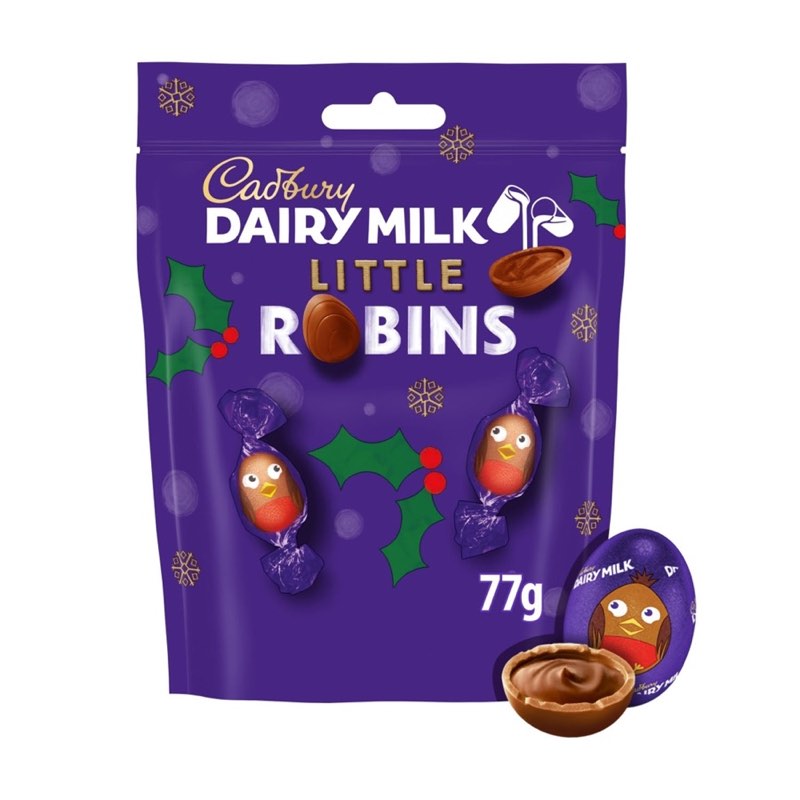
Cadbury Dairy Milk Christmas Little Robins Chocolate Bag 77g
£2.49
✔ In stock — ready to ship
Fresh stock
Free over £20
Same-day dispatch
Secure checkout
There is a whole class of December purchase that exists below the level of the proper present, and it is by far the most useful part of the sweet shop at that time of year. Not the gift. The filler, the topper, the thing that goes on the plate, the thing that goes in the jar, the thing tucked into a card envelope so it arrives with a bit of weight. Cadbury Dairy Milk Christmas Little Robins Chocolate Bag 77g at £2.49 is squarely in that category, and understanding that is the difference between buying one and buying six.
The first shopper this suits is the one assembling stockings. A stocking needs volume and it needs variety, and it very rarely needs another large item. What it wants is four or five small things that each look like a small thing rather than a fragment of something bigger. A sealed bag of shaped Christmas chocolates does that job perfectly: it has its own front, its own identity, and it sits in the toe of a stocking without needing to be explained.
The full guide to Cadbury Dairy Milk Christmas Little Robins Chocolate Bag 77g
5,966 words on how it eats, who it suits, how to serve it and what to put beside it.
Who a £2.49 bag of Christmas robins is really for
The second is the host who is dressing a table. There is a specific point in December when you realise the table looks bare between the crackers and the glasses, and you need something festive, edible and cheap enough to scatter rather than ration. A £2.49 bag of small chocolate shapes is the cheapest table dressing that anybody will actually eat, and unlike foliage or candles it does not have to be packed away afterwards.
The third is anyone filling a jar. Small shaped chocolates are jar-filling currency — they stack unevenly, which is exactly what you want in glass, because uneven stacking reads as abundance while neat stacking reads as packaging. We will come back to the jar at length, because it is the single best use of this bag and the one most people never think of.
The fourth, and the least glamorous, is the person who needs eight identical small gifts for people they like but do not know well. Neighbours, the post round, the office, the class teacher, the person who takes the parcels in. A small branded festive bag is legible instantly as a seasonal thank-you, costs less than a card and a stamp, and requires no wrapping to look finished.
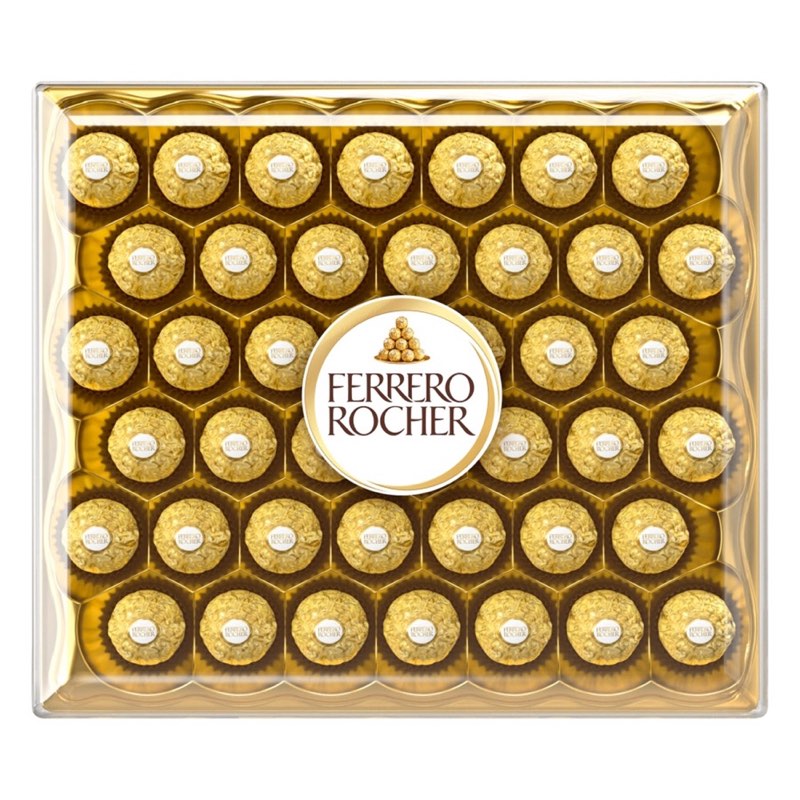
Who it does not suit: the shopper who needs one thing to carry a whole occasion. At 77 g this is a small bag. It is an ingredient in a December, not the whole of one. If you want a single item that anchors a table on its own, you want something in the size bracket of the Ferrero Rocher Milk Chocolate Pralines 42 Pieces 525g at £23.99, and this bag becomes the thing you scatter around it rather than the thing you build on.
Small shapes, and what they are actually for
A bag of small moulded chocolate figures is a different product from a bar, even when the chocolate in it is the same. The bar is a portion; you break it and you eat a defined amount. The bag is a supply; you take one, and the decision resets each time. That difference drives everything about how the two get used.
Shapes matter more than people admit. A small chocolate figure is doing three jobs at once. It signals the occasion before anyone tastes anything — a robin says December in a way that a square of chocolate never will. It sets the portion, because a shaped piece has a natural unit and you take one whole thing rather than deciding how much. And it gives you something to place, which is the property that makes shaped chocolate so useful for table dressing and so useless for eating alone in front of the television.
Small figures also change the pace of eating. A thin moulded piece has a lot of surface area for its weight, which means it starts melting the moment it is in your mouth and is gone in seconds. There is no long chew, no slow dissolve, no working through layers. That is not a flaw; it is why children eat them happily and why adults take three without noticing. It does mean that a bag like this empties faster than its weight suggests, and it is the reason people who buy one bag in early December are usually back for more.
Dairy Milk is the brand on the front, and it is worth saying what that means for the buying decision rather than reciting anything about the company. It means the chocolate in the bag is in the sweet, mild, milk-forward register that essentially nobody in a British household refuses. When you are buying for a room of people whose preferences you do not know — a class, an office, an extended family — that broad acceptability is the entire point. You are not trying to impress anybody. You are trying not to have to ask.
How it eats
The flavour arrives immediately and softly. Milk chocolate in the Dairy Milk register leads with sweetness and dairy roundness rather than with cocoa bitterness, so there is no sharp edge at the front and nothing that needs getting used to. If you have grown up with it, the taste is closer to a memory than to a flavour: you are not evaluating it, you are recognising it.
The melt is the defining characteristic here, more than the taste. Small moulded shapes are thin, and thin chocolate goes from solid to liquid across the tongue in a couple of seconds rather than being worked through. The result is a quick, warm, coating sensation that fills the mouth and then fades almost as fast as it arrived. You get the whole experience in about four seconds, which is precisely why one is never the number anyone eats.
In the hand, the pieces warm quickly. Small chocolate figures held for more than half a minute will start to soften at the fingertips, which is worth knowing if you are arranging them on a table by hand or letting small children carry them around. Handle them briefly, place them, and leave them alone; the fewer times a piece is picked up and put down the better it will look by the time it gets eaten.
The finish is short and clean. That is a design property rather than an accident, and it has a practical consequence: short-finish chocolate invites repetition in a way that a long, rich finish does not. A bowl of small shapes gets grazed steadily all evening. A box of heavy chocolates gets visited twice. If you want something that keeps getting picked at through a long afternoon, small is the right format, and if you want something that makes people stop after one, small is exactly the wrong one.
Colour, staging and the photograph: getting the most out of a small bag
This is where a cheap seasonal bag earns far more than £2.49 of value, and it is worth taking seriously. A small bag of festive chocolate is, in practical terms, a styling material. Here is how to use it as one.
The first principle is contrast, not coordination. The most common mistake on a Christmas table is matching everything. Red napkins, red crackers, red candles, red sweets — and the eye has nothing to catch on, so the whole table reads as one flat surface. What makes a table photograph well is a small number of high-contrast points scattered across a calmer background. Small chocolate figures are ideal for that job precisely because they are small: they are punctuation, not paragraphs. Scatter a dozen across a neutral runner and the table gains depth. Pile forty in the middle and you have made a heap.
The second principle is height. Flat tables photograph badly and look institutional in person. You need three levels: the table surface, something at mid-height, and something raised. Small chocolates are the only element you can distribute across all three without buying anything extra. A few on the cloth, a few in a shallow dish, a few in a footed glass or on a cake stand, and the same £2.49 bag is doing the work of three separate decorations. If you are shooting the table for anything — a card, a family message, a shop listing of your own — this is the trick that makes the picture look composed rather than snapped.
The third principle is odd numbers and loose grouping. Anyone who has styled anything will tell you the same thing: groups of three and five read as arrangement, groups of two and four read as accident. When you scatter small chocolates, work in threes. Three at the base of a candle, three beside each place setting, five in the dip of a serving board. It takes no longer than scattering randomly and looks considerably more deliberate.
The jar is the highest-value use of a small bag, and it is worth its own paragraph. A glass jar of festive chocolates on a sideboard does more visual work per pound than anything else you can buy in December. The reason is that glass multiplies: the outer layer of chocolates against the glass is all anyone sees, and the inside of the jar can be as empty as you like. A tall narrow jar filled with a single 77 g bag looks like a jar of sweets. The same bag in a bowl looks like a small pile. If you are buying this bag to make a room feel festive rather than to feed anyone, buy a narrow jar and not a wide one — it is the single biggest multiplier available.
Two further jar notes. First, layer rather than mix if you are combining lines. Distinct horizontal bands of two or three different sweets read as intentional and photograph beautifully; the same sweets stirred together read as leftovers. Second, do not fill to the brim. A jar filled to about four-fifths with the lid on looks styled; a jar filled to the lid looks like storage. You will use less and it will look better.
Light is the part people skip. Chocolate is a reflective surface, and how it looks is almost entirely about what is bouncing off it. Under a hard overhead kitchen light, chocolate goes dull and flat and reads as brown. Beside a window in daylight, or under a warm lamp at table height, the same pieces catch highlights along their edges and read as glossy. If you are taking a photograph, put the table near a window and turn the overhead light off entirely — it is counterintuitive and it works every time. If you are just laying a table for people, a low warm light source does the same favour.
Background matters more than the chocolate does. Dark chocolate shapes disappear against dark wood and against anything busy. They come alive against pale linen, against white china, against a light wooden board, against frost-coloured paper. If your table is dark, put the chocolates on something pale rather than directly on the surface — a white saucer, a folded napkin, a slice of parchment. This costs nothing and doubles the visual presence of a cheap bag of sweets.
Scale your scatter to your surface. A 77 g bag of small shapes will comfortably dress a table of six to eight if you are scattering in threes, or fill one narrow jar, or top eight individual plated puddings. It will not do two of those things at once. Decide what job the bag is doing before you open it, because the most common failure mode here is opening one bag, spreading it thin across three different ideas, and ending up with none of them looking finished. If you want the table, the jar and the plates, buy three bags. At £2.49 each that is still the cheapest decorating decision in the room.
Plating, specifically. A single small chocolate figure on the side of a plated dessert does something out of proportion to its cost. It converts a bought pudding into a served one. Put it on the plate rather than on the pudding — resting against the edge of a slice of cake, or on the saucer beside a coffee cup — so it reads as an accompaniment rather than as a decoration that has fallen off. This is the oldest trick in restaurant service and it works exactly as well at a kitchen table.
If you are building a display for something other than dinner — a stall, a school fair, a shop window, a charity table — the rule changes. Displays need mass, not punctuation. There, a small bag is the wrong tool and you want something with volume behind it: a kilo of chocolate cups for £5.49 will cover more surface than twelve of these bags and cost less than four of them. Use the small festive bags as the top layer of a display and the bulk lines underneath, where nobody can see them. That is how the professionals do it and there is no reason not to do it at home.
Building a flavour people recognise in under a second
Every sweet in the shop has to solve the same problem: it has a very short window in which to tell you what it is. Not what it is made of — what it is. Strawberry, cola, chocolate, mint, lemon. The confectioner has about a second and a half of your attention, and the craft of building a recognisable note is the craft of winning that second and a half.
The counterintuitive part is that a sweet almost never succeeds by being accurate. Accuracy is the enemy of recognisability. A real strawberry has dozens of aromatic components, varies wildly between one fruit and the next, and is quiet — it takes several seconds of chewing to give up its character. None of that survives contact with a confectionery format. So instead of copying the fruit, the confectioner copies the idea of the fruit: the two or three notes that everyone agrees on, pushed forward, with everything ambiguous removed. The result is a sweet that tastes nothing like the fruit and that every person in a room will name correctly with their eyes shut.
That simplification is what makes flavour families possible at all. Because everyone has the same shorthand for "strawberry", a whole shelf of unrelated products can use it and be understood. You can see the size of that shared vocabulary on everything strawberry in our range, where the same three-note idea is carried by chews, gums, chocolates and hard sweets that have almost nothing else in common.
The second lever is speed of release, which is controlled by texture and is far more powerful than most people realise. Flavour has to get out of the sweet and onto the palate, and how fast that happens changes what the flavour seems to be. The same flavour design delivered in a hard boiled sweet releases in a slow trickle over several minutes and reads as mild and sustained. Delivered in a soft chew it arrives all at once and reads as intense and sugary. Delivered in a thin chocolate shape, as here, it arrives in a rush and vanishes, which reads as light. Nothing about the flavour changed. The delivery vehicle rewrote it.
This is why a confectioner chooses the texture before finalising the flavour, and why experienced shoppers learn to buy by format as much as by taste. If you want something to last, you want hard. If you want something to hit, you want soft and chewy. If you want something to be taken repeatedly without anyone noticing how many they have had, you want small and fast-melting.
The third lever is sweetness against sharpness, which is the dial that decides how "fruity" something reads. Push sweetness up and a fruit note collapses into generic sugar. Push sharpness up and the same note reads as sour — a different product category with a different audience. The narrow band between them is where fruit sweets live, and it is why a small adjustment can move a sweet from "strawberry" to "sour strawberry" without changing the flavour design at all. Browse the fruit flavour shelf and you can more or less arrange what you find along that single axis.
The fourth lever is the eye, and it is the most powerful of all. Colour primes the palate before anything is tasted, and in blind tests people identify flavours far less reliably when the visual cue is removed or contradicted. Shape works the same way more slowly. A bottle shape, an animal shape, a bird shape at Christmas — each sets an expectation that the tongue then confirms. That is why shaped confectionery is not merely decorative: the shape is part of the flavour experience, because it tells the brain what to expect half a second before the flavour arrives to agree with it.
Which brings the argument back to chocolate. Chocolate is the one flavour family where recognisability is not a design problem, because it is not imitating anything — it is the thing. That is why it can be shaped into anything at all without confusing anybody. A chocolate robin, a chocolate egg, a chocolate coin and a chocolate bear all taste of the same family and rely entirely on shape for their identity. You can see the whole spread of that idea across Candy & Chocolate, where the shape is doing the storytelling and the flavour is doing the reassuring.
Milk chocolate as a working material
The pack lists one flavour for this bag, and it is chocolate. Because that is the broadest category we stock, it is worth being specific about which part of it this occupies and what that means for how you use it.
The milk end of the chocolate family is mild, sweet and dairy-led. Its defining commercial property is near-universal acceptance: it is the only flavour in the shop you can put in front of a mixed group of adults and children with essentially no risk of anybody declining. Everything else — liquorice, aniseed, sour fruit, mint, coffee — has a constituency that dislikes it. Milk chocolate does not, and that is precisely why it dominates the seasonal shelf.
Its second property is that it is a carrier. Chocolate coats, encloses and holds other things, which is why so much of the shop is chocolate-around-something rather than chocolate alone. Dals Chocolate Covered Bears at £7.49 are a straightforward demonstration: a soft sweet inside, chocolate outside, and the chocolate doing the work of making it read as a treat rather than a snack. The same logic runs through Meiji Chocorooms Chocolate Biscuits Box 40g at £1.69, where a crisp centre changes the whole eating experience without changing the flavour family.
Its third property — and the one that matters most for a December table — is that it is visually warm. Chocolate photographs as brown, and brown is the colour that makes a winter table look like a winter table rather than a dinner party. Set against pale ceramics and whatever greenery is around, chocolate shapes do more for the atmosphere of a room than their price suggests. You can extend that palette without leaving the family: Glisten Chocolate Mini Eggs at £7.99 bring a shell and a shine into the mix, and Luxury Milk Chocolate Foiled Mini Eggs 250g at £8.99 bring metallic reflection, which is the one thing plain chocolate cannot do on its own.
Where milk chocolate needs help is contrast. A table of nothing but milk chocolate is monotonous by the second round, because every item is asking the palate for the same thing. One sharp, fruit-led item somewhere on the table resets everyone and makes the chocolate taste better when they come back to it. That is not a matter of taste; it is how the palate works.
What to put around it
A 77 g bag is an accent, so the question is always what it is accenting. Four builds we would suggest, depending on what you are doing.
The stocking. Four or five small items beat one medium one every time, because a stocking is unpacked in sequence and each thing needs to be its own moment. This bag, a small novelty box, something chewy and something fizzy will fill a stocking better than a single larger item at the same total cost. Keep at least one of the items in a different flavour family from the others.
The grazing table. Here the bag is punctuation and you need a body. Hannah's Animals at £5.49 give you volume and a shape story that sits happily alongside small festive figures, and Chewing Nuts at £7.99 give you the long-chew element that stops a table of fast-melting chocolate from feeling one-note. Add one fruit item and the table is done.
The dessert course. One small chocolate per plate, a small dish of something richer in the middle, and coffee. Lindt Lindor Strawberries & Cream Truffles 200g at £8.29 are the obvious partner because they are the textural opposite — a soft, slow, coating chocolate against a thin, fast-melting one — and because the strawberry note provides exactly the contrast that a table of plain milk chocolate lacks.
The cheap crowd-pleaser box for children. If you need eight or ten identical small gifts for children rather than adults, pair this bag with something at a similar price so the set costs little and still looks like two things. Crown Corn Cho Chocolate Flavoured Corn Snack 66g at £1.99 works well for this: it is in the same chocolate register, it is a completely different format, and the two together come in under a fiver a head.
If you would rather assemble the supporting cast by weight than by packet, our Pick & Mix counter lets you take a hundred grams of several things instead of a full bag of one, which is usually the better move when you are building variety rather than volume.
When to reach for it
Advent and the early-December drip. Small bags of festive chocolate are what get eaten between the first of December and the week that matters. Buying one bag at a time through the month costs less and produces less waste than buying a large box early and watching it disappear before the twentieth.
Christmas Eve and the plate by the fire. The single most traditional use of small chocolate shapes in a British house, and the one they are best at. A plate with a few pieces on it, left out at night, needs to look right rather than to be substantial. This is the cheapest way to get that image exactly right.
The office desk drop. A small sealed festive bag left on a colleague's desk is a well-calibrated gesture: warm, cheap, and impossible to read as an overstep. It is the gift equivalent of holding a door.
Card envelopes and posted parcels. Small and flat enough to go in with a card without turning the whole thing into a parcel. Worth checking postage weight before you commit to twenty of them, but for one or two it is a good way to make a card arrive as something.
Table places for a large sit-down. One per setting, on the plate or beside the glass. At £2.49 a bag, dressing a table of eight this way is a rounding error in the cost of the meal and is the detail people mention.
The post-Christmas jar. Slightly unromantic, but true: a jar of small chocolates on a kitchen counter is what carries a household through the flat week between Christmas and New Year, when nobody wants to cook and everybody wants something small.
What you get for £2.49
The bag is 77 g for £2.49, which comes out at roughly £3.23 per 100 g. That is the honest number and it deserves a plain reading rather than a defence.
| What you are buying it for | How far one bag goes | Bags to buy |
|---|---|---|
| Dressing a dinner table in threes | A table of six to eight | 1 |
| Filling one narrow glass jar | One jar, four-fifths full | 1 |
| One piece per plated dessert | Around eight plates | 1 |
| Stocking filler | One stocking | 1 per stocking |
| Small gifts for neighbours or an office | One person each | 1 per person |
| A grazing table for twenty | Nowhere near enough alone | 2–3 plus a bulk line |
Read that against the per-100 g figure and the picture is clear. As a way of buying chocolate by weight, this is not the cheapest thing in the shop and does not pretend to be — loose sweets by weight will always beat a small seasonal bag on pure cost per kilo, and if your only goal is to fill a large bowl for the lowest possible outlay, that is where to go. What you are paying the difference for here is format: a sealed bag, a seasonal identity, a shape that says December, and a unit small enough that you can buy eight of them without thinking about it.
The gifting arithmetic is where it looks best. Ten small festive gifts for £24.90 is less than most people spend on a single present, and every recipient gets something recognisable that needs no wrapping. Compare that with buying one large box and trying to divide it: the moment you split a box you lose the packaging that made it a gift, and you need bags, ribbon and an hour at the kitchen table to get it back.
The table-dressing arithmetic is the other strong case. Two bags at £4.98 will dress a table, fill a jar and put a piece on every plate at a dinner for eight. There is no other decorative purchase at that price that also gets eaten.
Keeping it in good shape until December
The main risk with seasonal chocolate is not that it will spoil; it is that it will stop looking like a gift. Small moulded shapes are thin, and thin chocolate shows every bit of mishandling.
Cool, dark, steady. A cupboard away from the oven, the radiator and the window. Chocolate that has warmed and re-set can develop a pale, dusty-looking bloom on the surface — a cosmetic change in how the chocolate has set rather than a sign of anything wrong — but on a small shaped piece it obscures the detail of the moulding, which is the entire point of buying shapes.
Not the fridge, if you can help it. The problem is the temperature swing rather than the cold. Chilled chocolate brought into a warm kitchen collects condensation, and when that dries the surface goes dull. If your house is genuinely warm, a cool cupboard still beats a fridge; if you must chill it, take it out well before you intend to use it.
Away from strong smells. Chocolate takes on the smell of whatever it lives next to with remarkable enthusiasm. Coffee, spices, scented candles and cleaning products are the usual culprits. Over a few weeks in a shared cupboard this is a real effect, not a theoretical one.
Flat, and near the top. Small shapes crack and crumble under weight. If the bag spends three weeks at the bottom of a shopping crate you will open it onto a pile of fragments, which is fine for eating and useless for dressing a table. Store it flat, on top of heavier things, and do not let it get bent.
Buy it close to when you will use it. Seasonal lines are cheap enough that stockpiling in October has no financial upside and several practical downsides. Buy in the fortnight before you need it and the condition problem mostly disappears on its own.
Sizes and choices
This listing is sold in a single option: one size, 77 g, £2.49, currently showing as in stock. There is no larger bag or multi-pack to trade up to on this line, so the only real question is how many bags you need — and the table above is the fastest way to answer it.
If the format suits but you need more weight behind it, the sensible route is not to buy ten of these; it is to buy two or three for the visible, seasonal, shaped element and to add a bulk chocolate line underneath for the volume. The 250g foiled egg bag at £8.99 is a good example of a companion that adds three times the weight and a metallic finish for under four times the price of one small bag, and it is the sort of pairing that makes a display look considered rather than repetitive.
Where to find it and what sits nearby
On the site this bag appears on the chocolate flavour shelf, which gathers everything that tastes of chocolate irrespective of format, and alongside our counter and loose lines on our Loose Sweets shelf, which is the largest single section we run and the right starting point if you are buying by weight rather than by packet.
From there the hubs do the narrowing. The wider chocolate aisle is where to go if format matters more than flavour — boxes, bags, novelties and bars in one place. A build-your-own bag is the right tool when you want six things in small amounts. And if you want to see the whole thing rather than a filtered slice of it, the full shop lists everything we stock in one place.
A practical browsing tip for December specifically: decide first whether you are buying weight or identity. If you need weight, start from the loose shelves and work up. If you need identity — things that look like the season and can be handed over as they are — start from the small seasonal bags and add weight underneath. Most people do it the other way round, buy one large item, and then find themselves short of small ones. If you are not sure which you need, browse the whole range and notice which listings you are imagining on a table rather than in a bowl. Those are the identity items.
Questions worth asking before you buy
How many bags do I need for a dinner table?
One 77 g bag will dress a table for six to eight if you scatter in groups of three around the settings, or put one piece on each plate. If you want to do both — scatter across the table and put a piece on every plate — buy two. The most common mistake is buying one bag, trying to spread it across the table, a jar and the plates, and ending up with all three looking thin. Decide on the job first, then buy for it.
Will one bag fill a sweet jar?
It depends entirely on the jar. In a tall narrow jar, one bag looks like a full jar of sweets, because only the outer layer against the glass is visible. In a wide jar or a bowl, the same bag looks like a small pile. If you are buying with a jar in mind, choose the narrowest jar you have and fill it to around four-fifths rather than to the lid — that is the proportion that reads as styled rather than as storage.
Is this good value compared with buying chocolate by weight?
Not on pure cost per kilo, and we would not claim otherwise. At £2.49 for 77 g you are at roughly £3.23 per 100 g, and loose chocolate bought by weight will beat that comfortably. What the extra buys is format: a sealed seasonal bag that can be handed to someone as it is, a shape that carries the occasion, and a small enough unit that you can buy eight of them for different people without hesitating.
Can I use it for small gifts rather than for eating at home?
That is arguably its best use. A small festive bag reads immediately as a seasonal thank-you, needs no wrapping to look finished, and costs less than a card and a stamp. It works particularly well for the tier of people you like but do not know well — neighbours, colleagues, the person who takes your parcels in. Ten of them comes to £24.90, which is less than most single presents and covers a whole list.
How should I store it if I am buying early?
Cool, dark and steady, away from radiators, windows and the oven, and away from anything strongly scented, because chocolate takes on surrounding smells readily. Keep the bag flat and near the top of a cupboard rather than under heavy shopping, since thin moulded shapes crack under weight. Honestly, though, the simplest answer is to buy it in the fortnight before you need it and skip the storage problem altogether.
Should I keep it in the fridge?
Generally no. The damage usually happens on the way out rather than on the way in: chocolate taken from a fridge into a warm room collects condensation, and as that dries the surface can go dull and lose the crispness of the moulded detail. A cool cupboard is better in almost every British house. If you do refrigerate it because your home is very warm, bring it out well in advance of serving.
What goes well alongside it on a table?
Something with volume, something with a chew, and something sharp. Small fast-melting chocolate is punctuation rather than substance, so it needs a bulk line underneath it, a long-chew sweet to vary the pace, and one fruit-led item to reset the palate between rounds. A table of nothing but milk chocolate gets monotonous by the second visit, which is a texture and contrast problem rather than a quality one.
Is it suitable for children?
Sweets are a treat rather than everyday food. Small hard sweets and whole gummies are a choking risk for young children and should be eaten with an adult present. If anyone in the household has an allergy, check the manufacturer's own packaging when the bag arrives and before anything is eaten — the printed pack is the authority on what is in the product, and a shop description is not a substitute for it.
Why does it seem to disappear so fast?
Because of how small moulded chocolate eats rather than how much of it there is. Thin shapes have a lot of surface area for their weight, so they melt in a couple of seconds and leave a short, clean finish — and a short finish invites another one. People graze steadily on small chocolate in a way they never do with a heavy boxed chocolate, which has a long finish that makes you stop. Buy for grazing, not for rationing.
Does it photograph well for a card or a table shot?
Yes, with two adjustments. Turn the overhead light off and work beside a window or under a low warm lamp, because chocolate is reflective and hard top light flattens it into a dull brown. And put the pieces on something pale — white china, light linen, a wooden board — rather than directly on a dark table, where they vanish. Group in threes and fives rather than lines, and give the shot some height by raising a few pieces on a stand or dish.
Is it in stock, and how late can I leave it?
The line is currently showing as in stock. Seasonal listings do move quickly in the weeks before Christmas, so if you need a specific number — one per stocking, one per colleague, two per table — it is worth ordering with a few days in hand rather than at the last moment. If you are buying several, check the listing again just before you finalise your count rather than assuming the quantity will still be sitting there.
To sum up
Judge this bag by the job it does rather than by its weight. As chocolate by the kilo it is unremarkable and it does not claim otherwise. As a December tool — the thing that dresses a table, fills a jar, tops a plate, finishes a stocking and gets handed to ten people who will be pleased with it — it is one of the most useful £2.49 purchases in the shop. Decide what the bag is for before you open it, buy one for each job rather than trying to stretch one across three, and put it somewhere pale and softly lit where it can be seen. Do that and a small bag of chocolate does considerably more work than its price suggests.
More chocolate sweets
More loose sweets sweets


Where this sits
Cadbury Dairy Milk Christmas Little Robins Chocolate Bag 77g appears on these shelves. Browse them, or jump to something nearby.
You might also like