Home / Loose Sweets / Bulgari Pumpkin Mallows
Bulgari · 250g
Read the full guide
Bulgari Pumpkin Mallows
£5.49
✔ In stock — ready to ship
Fresh stock
Free over £20
Same-day dispatch
Secure checkout
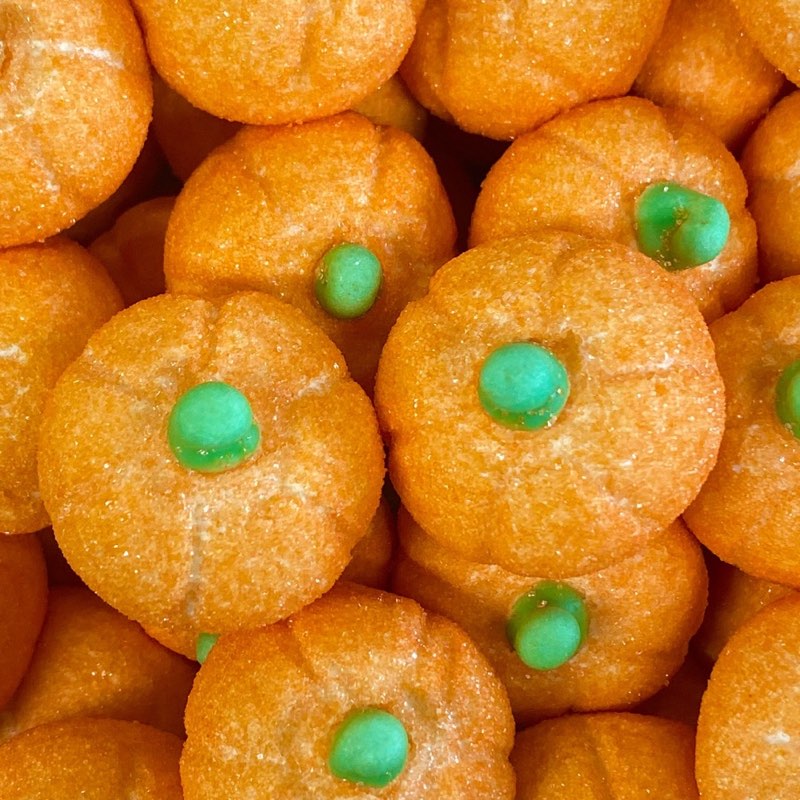
Pick one up and the first thing you notice is that it barely weighs anything. A pumpkin mallow sits in the palm with the particular lightness that only aerated confectionery has — it has size without heft, so your hand expects more than it gets and the brain registers that mismatch as a small pleasure before you have even tasted it. It is roughly a comfortable mouthful, moulded into a squat pumpkin with the ribbing running top to bottom and a small stalk at the crown. The orange is flat rather than glossy, a soft matte finish rather than a glazed one, and it takes the light gently instead of shining under it.
Press it gently between finger and thumb and it gives, then comes most of the way back. That spring is the whole character of the sweet. Squeeze harder and it compresses to a fraction of its size; release and it recovers slowly, in a second or so, rather than snapping back. Marshmallow made well does exactly this, and it is the clearest test you can run before eating. A mallow that stays dented has gone tired. A mallow that refuses to dent at all has dried out. One that yields and returns is in good condition, and that is how these should arrive.
The full guide to Bulgari Pumpkin Mallows
6,151 words on how it eats, who it suits, how to serve it and what to put beside it.
The first one out of the bag
The bite is where the format earns its place. There is no resistance at the surface — no shell, no crust, nothing to break through — so the teeth simply sink, and that absence of a barrier is unusual across the whole of the sweet counter. Almost everything else you might reach for fights back a little: a gum has to be worked, a hard boiling has to be waited out, a chew has to be pulled apart. This does none of that. It collapses. The structure that felt springy in the hand turns out to be mostly air held in a soft web, and the moment you close your teeth that web folds and the air goes.
Then the texture changes again, and this is the part people forget between one bag and the next. What was light becomes dense. The collapsed mallow gathers into a small, warm, slightly clinging mass that coats the roof of the mouth and the back of the teeth, and it stays there for a few seconds longer than you would expect. That second stage is why a single piece feels more substantial than its weight suggests, and why two or three is usually enough in a sitting. The sweetness is broad rather than sharp — it arrives everywhere at once instead of hitting one part of the tongue — and the vanilla listed for this line comes through in that clinging stage rather than at the front.
The finish is clean and fairly quick. Marshmallow does not leave much behind: no sour tingle, no oily residue, no lingering bitterness at the back. Within half a minute the mouth is more or less neutral again, which is one of the reasons these work alongside other sweets rather than shouting over them. You can eat a pumpkin mallow, wait a moment, and taste the next thing properly. Very few sweets in a mixed bowl are polite enough to do that.
Eaten cold from a cupboard on a winter afternoon they are firmer and the collapse takes marginally longer. Left in a warm room they soften, the spring goes slack, and the second stage arrives almost immediately. Neither is wrong — some people specifically prefer a slightly warm mallow for exactly that reason — but it is worth knowing that the same sweet behaves differently at different temperatures, and that you have some control over which version you get.
Who ends up reaching for these
The honest answer is: people who do not actually want a challenge. There is an entire wing of the sweet counter built around difficulty — sourness you have to endure, chews that make your jaw ache, boilings that take ten minutes to get through — and it has loud fans. This is the opposite proposition. A pumpkin mallow asks nothing of you. It is soft, it is mild, it is over in three seconds, and that makes it the sweet you hand to the person who says they do not really like sweets.
That makes it unusually good across a wide age range. Very young children can manage the texture in a way they cannot manage a hard sweet, older relatives who are careful about their teeth can eat one without negotiating it, and everyone in between finds it uncontroversial. When you are catering for a mixed room — a family gathering, a classroom, a ward visit, an office where you do not know anybody's preferences — the mild soft option is the one that runs out first, not because it is anyone's favourite but because it is nobody's problem. That said, whole soft sweets are still a choking risk for small children and should be eaten sitting down and supervised, and any sweet is a treat rather than a snack.
There is also a specific seasonal reader for this one. A pumpkin-shaped mallow is unambiguous about when it is for. It turns up in October and it does a job that no generic sweet can do: it makes a table look deliberate without anybody having to decorate anything. If you are the person who ends up running the autumn half-term gathering, the school fair stall, the harvest supper, or the first cold-weather film night of the year, this is the line that does the thematic work for you while you get on with everything else.
And there is the baking and styling reader — the one buying these not to eat straight from the bag but to put on top of something. Marshmallow's structure makes it useful in ways a gum or a chew simply is not. It sits on a cake without rolling off, it holds a shape on a cupcake, it can be pressed into buttercream, it floats on a hot drink and softens from the bottom up. If you have arrived here with a tray bake in mind rather than a bowl, you are in the right place, and the orange makes the decision for you about what season that bake belongs to.
How a sweet note gets built in the first place
It is worth understanding what confectioners are actually doing when they aim a sweet at a flavour, because it explains a great deal about why some lines taste the way you remember and others do not. Flavour in confectionery is not one thing arriving; it is a sequence, and the trade thinks about it in layers. There is what you get in the first half-second, what settles in underneath it, and what is still there when the sweet has gone. Get the sequence right and a sweet reads as a clear, single, recognisable thing. Get it wrong and it reads as vaguely sweet with something going on, which is the fate of most forgettable confectionery.
The opening layer is the volatile one — the part that reaches you fastest, often before the sweet has properly dissolved, sometimes through the nose as much as the tongue. It is bright and it does not last. Its job is recognition: it tells you within a moment what family you are in. The middle layer is slower and rounder, and it is what carries the body of the flavour through the chew or the dissolve. The base is the one that hangs around at the end and decides what impression you are left with. Confectioners balance these deliberately, and the balance shifts depending on format, because the format controls how long the sweet is in the mouth and therefore how much time each layer gets.
This is exactly why the same flavour direction tastes different in different sweets, and why you cannot judge a flavour family by one encounter with it. A hard boiling is in your mouth for many minutes, so it can afford a slow, quiet build and a long base. A chew is worked for a minute or two and needs its flavour to survive mechanical effort. A fizzy sweet front-loads everything, because the sour coating on the surface dominates the opening and the flavour has to find a gap afterwards. A marshmallow has the shortest window of all — three or four seconds from bite to swallow — which means there is no room for a slow build. Everything has to be present almost at once.
Vanilla is well suited to that constraint, and it is not a coincidence that so much marshmallow across the whole counter runs in this direction. Vanilla is perceived as a broad, warm, enveloping note rather than a pointed one. It does not need a long runway to establish itself, it reads as smooth rather than sharp, and crucially it does not compete with texture. A bright citrus note in a marshmallow would feel wrong — thin and acidic against something soft and airy — because we expect sharpness to come with structure. Warmth and softness belong together. The flavour direction and the format are doing the same job.
Then there is the part of flavour that has nothing to do with the tongue at all. Colour does an enormous amount of the work in confectionery, and it does it before you taste anything. Shown something orange, most people's expectations narrow before the first bite, and whatever they then taste gets interpreted through that frame. This is not a trick so much as a fact about perception — we taste what we are prepared to taste, and the preparation happens through the eyes. A sweet counter is a room full of colour precisely because colour is the fastest flavour communication available.
Shape works the same way, one layer up. A moulded form tells you a story about the sweet before it reaches you — what season it belongs to, what occasion it is for, whether it is meant to be funny or pretty or seasonal. A pumpkin shape carries an entire set of associations: autumn, dark afternoons, a particular end-of-October evening, orange light. None of that is flavour in any technical sense, and all of it changes the eating experience. Confectioners have understood this for a very long time, which is why the mould catalogue behind any sweet counter is as much a catalogue of occasions as of shapes.
Texture completes the picture, because texture controls the pace at which flavour is released and therefore how intense it seems. A dense sweet releases slowly and tastes milder than its formulation suggests. An aerated one releases everything at once and can taste stronger than it is. Marshmallow, being mostly air, delivers its whole flavour in a rush and then stops — which is why the impression is of a clean, round sweetness that finishes rather than lingers. If you have ever wondered why a mallow tastes simple next to a boiled sweet of similar sweetness, that is your answer. It is not simpler. It just has less time.
Once you can see those four levers — sequence, colour, shape, texture — the counter stops looking like a random wall of bright things and starts looking like a set of deliberate decisions. You can pick up almost anything on the loose sweets counter and work out what its maker was aiming at and which lever they pulled hardest. It is a good habit for building a mix, too, because it tells you which sweets will fight each other and which will sit happily in the same bowl.
Where vanilla actually sits on the counter
Vanilla has a strange position in confectionery. It is simultaneously the most common flavour direction in the building and the one nobody names as a favourite. Ask a room what sweets they like and you will hear fruit, sour, cola, liquorice, chocolate. You will almost never hear vanilla. And yet it is everywhere, quietly underpinning far more of the counter than anyone gives it credit for, because it does a job that the louder flavours cannot.
What it does is round things off. Vanilla reads as creamy, warm and slightly milky, and it sits low and broad rather than pointed and high. That makes it the natural partner to anything soft — mallows, fudges, creams, anything with a dairy association — and it makes it the reliable neutral in a mixed bowl. Where a strong fruit or a liquorice will dominate whatever it sits next to, vanilla holds its ground without picking a fight. It is the sweet-counter equivalent of a plain shirt.
If you want to taste the direction properly across several formats, the site gives you an easy route. Our vanilla-flavoured lines run to fifteen products, and running two or three of them alongside each other is genuinely instructive. Put a mallow next to Bristows Vanilla Fudge at £5.49 and you get the same flavour direction delivered at opposite ends of the texture range — one dissolving in seconds, the other dense and slow, and the fudge consequently tasting far deeper for no reason other than time in the mouth.
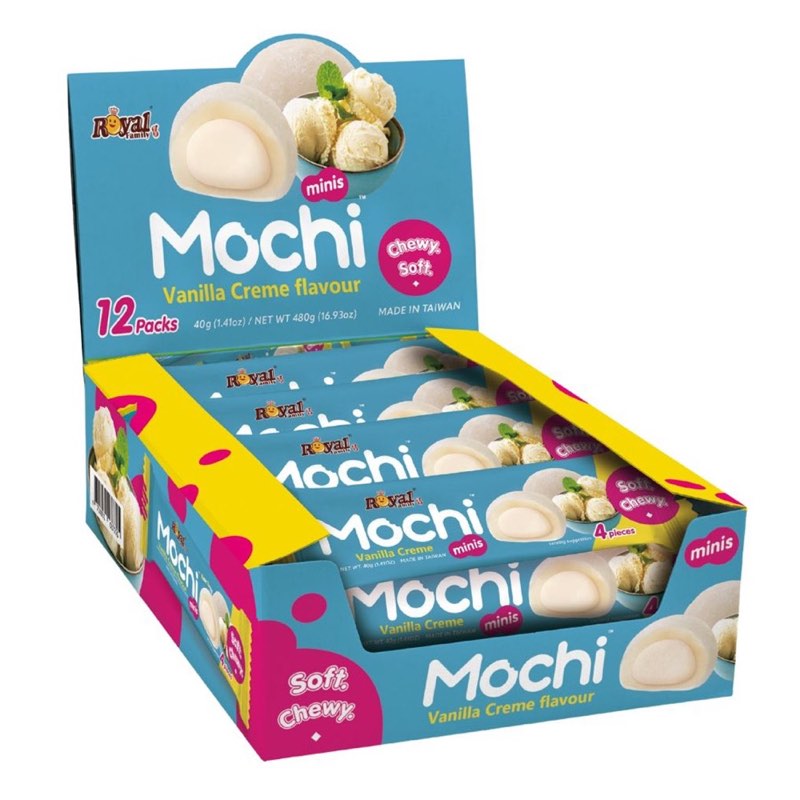
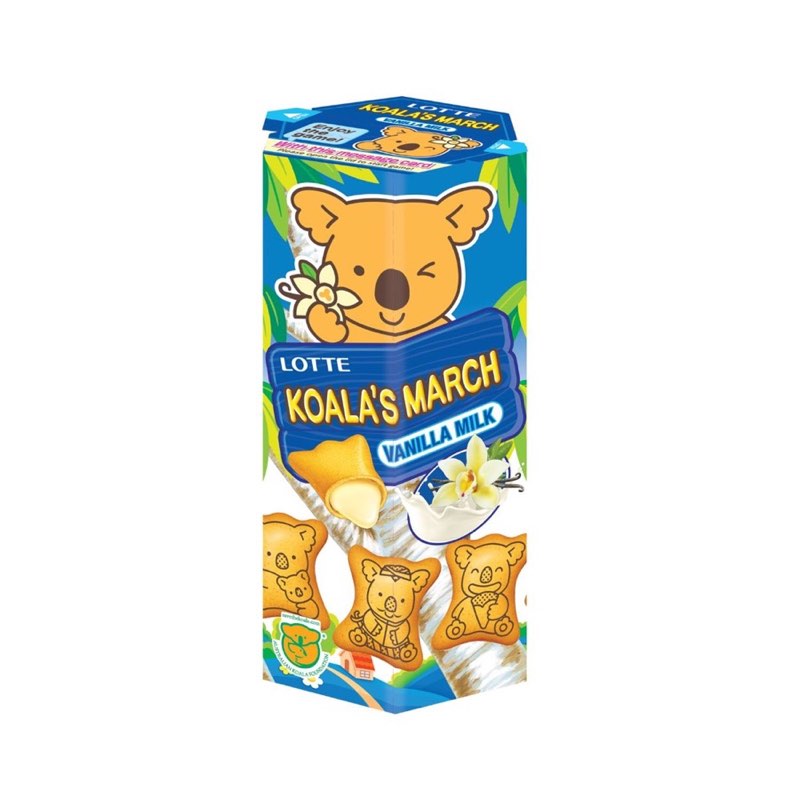
Go further out and the comparison gets more interesting still. Lotte Koala's March Vanilla Biscuits at £1.29 put the direction inside a biscuit, where crispness changes the whole reading, and Meiji Yan Yan Vanilla Dip at £1.99 separates the components so you control the ratio yourself as you dip. Royal Family Mochi Minis in vanilla crème, also £1.99, wraps it in a soft chewy skin that stretches the release out over a much longer window. Four products, one flavour family, four completely different experiences of it — and the small pack sizes mean you can do the whole comparison for under a fiver.
The practical upshot for mixing is simple. Vanilla is your base layer. Build the mix around it and put your loud flavours on top, rather than the other way round, and you will end up with a bowl people keep returning to instead of one they try once.
The counter this belongs to, and the one it remembers
Every sweet carries a period in it somewhere — not a date, but a feeling about what kind of shop it comes from. Some lines are unmistakably modern: engineered sourness, bright resealable packaging, flavour names that read like cocktails. Others are unmistakably older in their instincts, even when the bag they arrive in is new. A soft orange mallow moulded into a pumpkin belongs firmly to the second group, and it is worth saying why, because it explains who reaches for it and the particular warmth with which they do.
The older counter was a weighing counter. Sweets lived in jars or in open trays, they were bought by the quarter, and the transaction had a rhythm to it: point, wait, watch the scale, watch the paper bag get twisted at the corners, carry it home. Nothing was sealed, nothing had a flavour description on it, and you learned what things tasted like by being handed one. Choice was narrow and repetition was the point — you had your sweet, and you had it every week, and the memory that forms around that kind of repetition is much stickier than the memory of anything you tried once.
Mallows sat comfortably in that world because they suited being handled. They were soft enough to be a treat for a small child, big enough that one felt like a proper purchase, cheap enough to be the thing you got when you did not have much, and forgiving enough that they survived a pocket. They were also, crucially, mild. The old counter had far fewer loud flavours than the modern one, and a great deal of what sold was gentle: creams, fudges, mallows, milk-flavoured gums, soft pastel things. What tastes unremarkable now was the mainstream then.
Then the counter changed shape. Scooped bins replaced jars, sealed bags replaced paper, and the flavour arms race began in earnest. Sourness arrived and kept escalating. Formats got more elaborate. Multipacks put everything behind film. And a whole generation grew up with a counter where the loudest thing on the shelf was the default rather than the extreme, which is why younger shoppers often find a plain mallow underwhelming on first meeting and then come back to it later, usually after a decade of increasingly aggressive sour.
What is genuinely interesting is that the old instincts never actually went away — they went seasonal. The mild, soft, shaped, mould-cast sweet survived by attaching itself to occasions, and autumn is its strongest season. A pumpkin mallow is the old counter's logic wearing a modern costume: uncomplicated flavour, satisfying format, shape doing the storytelling, bought in quantity for a table rather than singly for a pocket. The shopping has changed completely and the sweet has barely changed at all.
That is also why these cross generations so easily at a family gathering. Hand one to somebody who grew up on the weighing counter and you are handing them something familiar in every respect except the shape. Hand one to a child raised on sour and you are handing them something novel — genuinely novel, because gentle has become the unusual option. Both ends of the room get something out of it, which is not true of many sweets. If you enjoy chasing that thread further, the retro shelf is where the older counter is most concentrated, and Barratt Black Jack Chews at £5.49 are about as direct a line back to it as we stock.
Building a bowl around a mild sweet
A mix is not a pile of favourites. A mix is a structure, and the most common mistake is loading it entirely with loud things, which produces a bowl that is exhausting after four sweets and abandoned after six. What you actually want is contrast with a floor under it — one or two sweets doing something dramatic, and a reliable mild base underneath that resets the palate and keeps people eating. Pumpkin mallows are a base sweet. Build downward from them.
The first thing to add is texture contrast in the same soft family, because soft-on-soft is more interesting than it sounds when the shapes differ. Haribo Chamallows in pink and white at £1.99 are the obvious partner — a different mallow in a different colourway at a small pack size, so it costs almost nothing to add a second note to the bowl. Kingsway Mini Mallow Cables at £5.49 take the same material and change its geometry entirely: a cable has to be bitten through or pulled, which turns a three-second sweet into a slower one. Two mallows, three formats, and the bowl already has range.
Next, add a sweet that eats slowly. Anything dense does this job, and it matters because a bowl full of things that vanish in seconds gets emptied without anybody noticing they ate it. A fudge or a firm chew forces a pause. Then add the loud one — and here is where you want a genuine jolt rather than a mild fruit, because the whole point of the mild base is that it can carry something sharp. Barnett's Mega Sour Apple Candy Bags at £3.99 are a proper spike, and the mallow next to them is not a supporting act but the thing that makes the sour survivable across a whole evening.
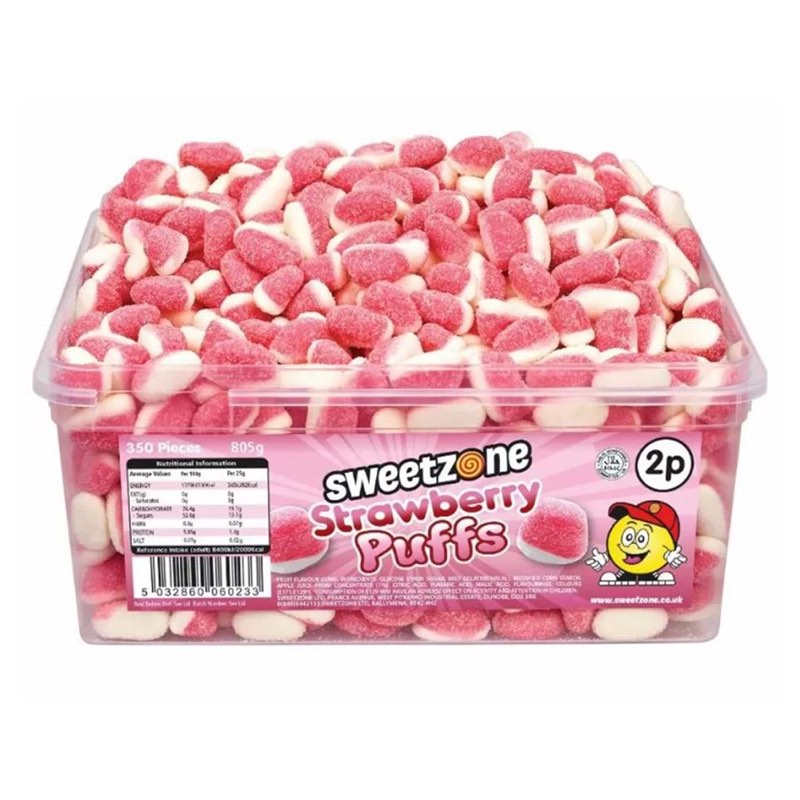
Finally, think about the visual. A bowl is looked at long before it is eaten from, and colour blocks read better than colour confetti. Orange, pink and white together is a genuinely handsome autumn palette, and adding Sweetzone Strawberry Puffs at £7.99 for 805 g gives you a large volume of pale pink for a modest per-gram cost, which is exactly what you want from a filler. Hannah's Animals at £5.49 bring shape variety into the same soft register, and shapes are what make children pick things out of a bowl rather than just taking a handful.
If you would rather have all of this decided for you, the pick and mix section does the assembly work and arrives ready to tip out. If you would rather build it yourself and want to see the full range of what is available by weight, the full loose range runs to 356 lines, which is more than enough to make something nobody has seen before.
Autumn tables, film nights and the tins you give away
The seasonal use is the obvious one and it is worth being specific about it, because "good for Halloween" is not advice. A pumpkin mallow's real strength on an October table is that it is the one sweet that does not need a bowl to make sense. Scatter a handful down the middle of a table between plates and candles and it reads as deliberate decoration. Do that with mixed gums and it reads as mess. Shape plus a single flat colour is what makes the difference, and it means you can decorate and cater in one purchase.
For a party with children, mild sweets are worth more than their share of the table. Children eat far more at an event than they would at home, they eat fast, and the sour and fizzy lines that seem exciting in the first ten minutes produce a bowl of half-eaten sweets by the end. Soft mallows get finished. Put them at child height and put the loud things further up the table, and you will waste less of everything. Whole soft sweets should still be eaten sitting down, with an adult nearby for the smallest guests.
Film nights are a genuinely good use and an underrated one. Sweets you eat in the dark have to be quiet, easy to find by touch and impossible to make a mess with, which immediately rules out anything dusted with sour powder, anything that needs unwrapping and anything sticky enough to reach the sofa. A mallow is silent, dry to the touch, and identifiable in a bowl without looking. Add one contrasting sweet for interest — a chew works well because it lasts through a long scene — and you have a sensible bowl rather than a distracting one.
For baking, these are a straightforward decorating component: press into icing on a tray bake, sit on cupcakes, or arrange on top of a cake in a ring. The flat matte orange photographs well against chocolate-coloured icing in particular, and the shape means nobody has to ask what season the cake is for. Dropped into a hot drink they soften from the bottom up over a minute or two, which is a small pleasure worth knowing about on a cold afternoon.
Gifting is where the larger sizes start to make sense. A jar of these with the lid tied is a decent, cheap, genuinely nice thing to hand over at a seasonal visit, and the colour does the wrapping for you. For a hamper, mix them with something that has a different price signal — a small imported pack or two reads as considered in a way that bulk sweets alone do not, and the wider candy and chocolate range is the place to find those. For a stall or a fête, buy the large size, split into paper bags at home, and price per bag rather than per weight.
What £5.49 gets you, and when to go bigger
The standard bag is 250 g for £5.49, which is £2.20 per 100 g. That is your entry point and it is the right first purchase if you have not had this line before. Because mallows are light for their volume, though, that 250 g looks like considerably more sweets than 250 g of anything dense — this is the one format where the bag genuinely surprises people when they open it, and it is worth factoring in before you over-order.
| Size | Price | Price per 100 g | Cost of the step up |
|---|---|---|---|
| 250 g | £5.49 | £2.20 | — |
| 500 g | £9.99 | £2.00 | +250 g for £4.50 |
| 750 g | £12.99 | £1.73 | +250 g for £3.00 |
| 1 kg | £16.49 | £1.65 | +250 g for £3.50 |
| 2 kg | £28.99 | £1.45 | +1 kg for £12.50 |
The shape of that table is unusual and worth reading properly, because the best-value step is not the first one. Going from 250 g to 500 g costs £4.50 for the extra quarter kilo, barely less than the original bag. The genuinely good step is 500 g to 750 g: another £3.00 buys the same amount again, and that is where the per-100 g price drops hardest, from £2.00 to £1.73. If you are buying for an event rather than a cupboard, 750 g at £12.99 is the size that rewards you most per pound spent.
Above that the curve flattens in the usual way. The kilo at £16.49 is sensible for a decent-sized party and the 2 kg at £28.99 is a catering quantity — forty 50 g portions — which is a stall, a school fair, a large family event or a long season of Friday nights, not a household purchase. At £1.45 per 100 g it is a third less per gram than the small bag, but only if you actually use it, and mallows do not improve with age.
For portioning, the useful units are 25 g and 50 g. Twenty-five grams is a small after-dinner handful; fifty is a proper paper-bag serving. The 250 g bag is ten small portions or five generous ones. The 750 g is fifteen generous servings, which covers a decent children's party with these as one of three or four bowls. If mallows are the only sweet on the table, budget 50 g a head; if they are one of several, 25 g a head is plenty, because people graze across the spread rather than emptying one bowl.
One more comparison worth making before you choose a size. A great many loose lines here sit at the same £5.49 for 250 g, so within the loose range these are priced squarely in the middle — neither a budget filler nor a premium item. That means you should not be using them as your cheap bulk, and you should not be treating them as the special thing either. They are the reliable middle of a mix, and the sizing decision should follow the number of people, not the ambition of the table.
Keeping them in good condition
Marshmallow is one of the few sweets where storage genuinely changes the product in a week rather than a year, so this section is worth more attention than it usually gets. The enemy is air, and specifically the exchange of moisture with the air around it. Left open, a mallow gradually gives up moisture and firms, the spring goes, and the bite loses the soft collapse that is the entire point. That is not spoilage — it is still perfectly fine — but it is a different and worse sweet.
So: seal it, and seal it properly. A clip on a folded bag is fine, an airtight tub is better, and pressing the air out before you close it is better again. Keep it somewhere cool and dry and out of direct light. A cupboard away from the oven and the kettle is ideal; a windowsill is the worst place in the house. Heat is the other problem, because a warm mallow softens, loses its structure and starts to stick to its neighbours, and once pieces have fused they do not come apart cleanly.
Do not refrigerate them as a default. The fridge is a drying environment and it firms mallows in a way most people do not enjoy, though if your house is genuinely hot it is the lesser of two evils and they recover reasonably well after twenty minutes at room temperature. Do not freeze them at all — the texture does not survive it.
If you have bought one of the larger sizes, split it on arrival. Decant what you will get through in the next week or two into a tub for daily use and keep the rest sealed and untouched. Repeatedly opening one big bag is what ruins bulk mallow: every opening lets damp or dry air in, and the bag at the bottom ends up in worse condition than the one at the top. Splitting also stops the whole quantity sitting warm on a party table for six hours.
On a table, put out what you expect to be eaten within the hour and refill rather than filling one enormous bowl at the start. The pieces at the bottom of a deep bowl compress under the weight above them, and on a warm evening they will have started to stick together by the time anyone reaches them. Shallow bowls, refilled, always look better and always eat better.
Choosing your size
If this is your first bag, take the 250 g at £5.49 and nothing larger. Mallow is a texture people are surprisingly decided about — there is very little middle ground between liking it and finding it cloying — and finding out at 2 kg is an expensive way to learn.
If you already know you like them and you are buying for a household through autumn, 500 g at £9.99 is the sensible standing quantity. It will last several weeks in a sealed tub without deteriorating and it covers a couple of film nights and a bake.
If you are catering a single event, skip to 750 g at £12.99. That is the best-value step in the range and it covers fifteen generous servings, which is most children's parties and most family gatherings when these are one bowl among several.
The 1 kg at £16.49 is for a big party or for somebody who is going to be decorating a run of cakes through a season. The 2 kg at £28.99 is a trade quantity — a stall, a fête, a school event — and it needs a plan and somewhere cool and airtight to live. At forty 50 g portions it is excellent value per gram and a poor purchase if half of it is still in the cupboard at Christmas.
Finding your way around from here
This line sits on three shelves and each one leads somewhere different. The marshmallow shelf is the narrowest of them at five products, which makes it quick to read through in a couple of minutes and the fastest way to see every soft aerated option we carry side by side. The vanilla shelf is broader and cuts across formats entirely. And the loose sweets shelf is the big one — the weighed-out, bought-by-the-bag heart of the shop.
If you are browsing rather than buying something specific, everything we stock in one place is the widest view, and it is worth an occasional scroll because the range moves. For structured browsing, jellies and gummies is where you go for the chewy contrast that makes a mallow bowl work, and the sweets and chocolate aisle is where the packaged and imported lines live if you are assembling a hamper rather than a mix.
For a ready-made assortment, our pick and mix jars and pouches remove the decisions. For the older end of the counter, the retro lines collect what the weighing-counter generation actually grew up with. And if you want everything available by weight in one long list, browse the loose shelf in full and work across it by texture rather than by brand — it is a far better way to build a mix than shopping by name.
Questions we get asked
What flavour are they, given the pumpkin shape?
Vanilla. The pumpkin is the shape and the orange is the colour, but the flavour listed for this line is vanilla — so expect a soft, round, creamy-sweet direction rather than anything savoury or spiced. This catches people out occasionally because the shape suggests autumn baking and the flavour does not follow it. In practice it is the better choice: vanilla is mild enough to sit in a mixed bowl without dominating, and it works as a cake topper against almost any icing.
How big is each piece?
They are moulded pumpkins at roughly a comfortable single mouthful — bigger than a standard jelly sweet, smaller than something you would need two bites for. Because marshmallow is aerated, they feel much lighter in the hand than their size suggests, which is why a 250 g bag looks like a lot more sweets than 250 g of gums would. For small children, one is a portion, and whole soft sweets should be eaten sitting down with an adult present.
Is 250 g enough for a party?
It depends whether they are the only sweet on the table. If these are one bowl among three or four, budget around 25 g a head — so 250 g covers about ten people comfortably. If they are the centrepiece, budget 50 g a head and 250 g covers five. For most children's parties the 750 g at £12.99 is the size that actually fits, and it happens to be the best-value step in the range as well.
Which size is the best value?
The 750 g at £12.99, which works out at £1.73 per 100 g. The jump from 250 g to 500 g costs £4.50 and barely moves the unit price, but the next £3.00 buys another 250 g and drops it properly. Above that the curve flattens — the kilo is £1.65 per 100 g and the 2 kg is £1.45 — so the larger sizes are only better value if you genuinely get through them before the texture goes off.
Will they go hard if I leave the bag open?
Yes, and faster than you would expect. Marshmallow exchanges moisture with the air around it, so an open bag firms up over days rather than months and loses the soft collapse that makes it worth eating. Clip the bag or decant into an airtight tub, press the air out, and keep it cool, dry and away from direct light. Sealed and stored properly the texture holds for a good while; left open on a counter it will not.
Can I put them in the fridge?
Better not to as a rule. A fridge is a drying environment and it firms mallows up, which most people do not enjoy. A cool cupboard is the right home. The exception is a genuinely hot house, where the fridge beats the alternative of pieces softening and fusing together — in that case take them out twenty minutes before serving and they come back to themselves. Freezing is not worth attempting; the texture does not recover.
Do they work on top of a cake?
They do, and it is one of the main reasons people buy them. Marshmallow holds its shape, sits on buttercream without rolling off, and presses into soft icing securely enough to survive being carried. The flat matte orange reads well against dark icing in particular, and the shape tells everybody what season the cake belongs to without you having to do anything else. Add them shortly before serving rather than the night before, so they stay soft.
Are they suitable for vegetarians or vegans?
We do not hold supplier diet information for this line, so we cannot tell you either way — and we would rather say that than guess. If diet suitability matters to you, check the manufacturer's packaging when the order arrives before anyone eats any. If you need something we do have confirmed information on, it is worth filtering by the diet shelves on the site instead, where the products carry the tags their suppliers have given us.
What should I put with them in a mix?
One thing slow, one thing loud, one thing that fills volume. A dense chew or fudge stops the bowl vanishing in minutes, something genuinely sour gives the mix a peak, and a large cheap pack of something pale gives you bulk and a colour block. Mallows are your base layer, not your headline — build the mix with them underneath and the loud flavours on top, and people keep coming back to the bowl.
Do they melt in a hot drink?
They soften rather than dissolve. Dropped into something hot they warm from the bottom up over a minute or two, going slack and slightly sticky while the top stays more or less intact, and then gradually give way. It is a pleasant thing to do on a cold afternoon and the orange looks good doing it. One or two is plenty in a standard mug — more than that and you end up with a very sweet drink and a lot of texture.
How long will an unopened bag keep?
Check the date on the packaging when it arrives, since that is the only figure we would stand behind. What we can tell you from handling them is that condition, not age, is what you will notice first: a sealed bag kept somewhere cool and dry holds its spring for a long time, while a bag left warm or open loses it quickly regardless of what the date says. If you buy one of the larger sizes, split it on arrival and keep the bulk sealed.
In short
A pumpkin mallow is a sweet that asks nothing of you: no resistance at the bite, no sharpness, no long chew, just a soft collapse, a short warm vanilla sweetness and a clean finish. That mildness is the point. It makes these the sweet that suits everybody in a mixed room, the base layer that lets a bowl carry something loud on top of it, and the one line that decorates an autumn table and feeds it in the same purchase. Take the 250 g at £5.49 to find out whether the texture is for you, step to 750 g at £12.99 when you are catering, keep the bag sealed and cool, and put something sharp in the bowl beside it.
More marshmallow sweets
More vanilla sweets
More loose sweets sweets



Where this sits
Bulgari Pumpkin Mallows appears on these shelves. Browse them, or jump to something nearby.
You might also like