Home / Candy & Chocolate / Airheads Bites Paradise Blends 170g

Airheads · 170g
Read the full guide
Airheads Bites Paradise Blends 170g
£2.99
✔ In stock — ready to ship
Fresh stock
Free over £20
Same-day dispatch
Secure checkout
There is a particular kind of evening that a sharing bag is built for, and it is worth naming it before we talk about anything else. It is the evening where nobody has planned anything. Someone suggests a film at half past seven, two more people arrive, the kitchen table has a laptop on it and nobody is going to cook. What that evening needs is one bag that can be opened, tipped into something, and left alone. Not a box that has to be portioned. Not a jar that needs a scoop. A bag of small pieces at £2.99 that goes on the table and stays there until it is gone.
Airheads Bites Paradise Blends in the 170 g bag is squarely that. The format tells you what it is for before you have tasted a single piece — bite-sized pieces rather than a bar, loose in a bag rather than wrapped individually, and enough of them that four people can dip in without anyone doing the mental arithmetic of whether they have had more than their share. That last point matters more than it sounds. Wrapped sweets make people count. Loose pieces in a shared bowl make people relax.
The full guide to Airheads Bites Paradise Blends 170g
6,225 words on how it eats, who it suits, how to serve it and what to put beside it.
The nights a 170 g bag actually earns its place
The other occasions it suits follow the same logic. It works on a car journey, because there is no wrapper litter to collect and no melting to worry about in the way chocolate makes you worry. It works for a desk drawer at work, where the bag can be rolled shut and opened again over several days. It works on a picnic blanket, tipped into a tub so the wind does not take the bag. It works in a lunchbox, decanted into a small pot, as the Friday thing rather than the everyday thing. And it works as one component of a bigger spread, which is where it is at its most useful, and which we will come back to at length further down.
Where it works less well is worth saying too, because a shop that only tells you when something is right is not being much help. It is not a gift on its own — a single bag does not look like a present, however good it tastes, and if you want a gift you want weight and a container, which is why something like the Aniseed Balls Sweet Jar at £16.99 exists in a different part of the range entirely. It is not a one-person-one-sitting treat either; 170 g is a lot for one person in one go, and most people will find it becomes a two- or three-visit bag. And it is not the right answer for a sit-down dinner where you want something with a bit of ceremony at the end. Different job, different product.
What you are opening
A 170 g bag of small bites from Airheads, sold at £2.99, in one size only. There is no big or small decision to make here and no multipack variant to weigh up — what you see on this page is what arrives. It is in stock as we write this, and the listing is kept live rather than left up as a memorial to something we ran out of in the spring.
The first impression of any bites-format bag is weight in the hand before it is anything else. A 170 g bag has a satisfying heft to it — enough that it does not feel like a token, not so much that it is unwieldy on a table. Open it and the pieces move as a mass rather than as individuals, the way small loose sweets do, and that shifting sound is honestly half the pleasure of the format. Tip some into a bowl and you get a heap rather than an arrangement. That is the point. Nobody displays bites. You pour them.
We do not list the individual flavours in this bag, and we are not going to guess at them for the sake of filling a paragraph. The name is the name, and the definitive line-up, along with everything else printed on the pack, will be on the bag itself when it arrives. What we can talk about usefully is the format, how a bag like this eats, what it does on a table, and how to put a mix together around it — which is the useful stuff anyway, because you can read a flavour list yourself in three seconds and you cannot read how something behaves at a party.
How it eats, from the first piece to the last
A bite-format sweet is a specific eating experience and it is not the same as a bar, even where the two share a name. The whole piece goes in at once. There is no tearing, no biting a length off, no holding the rest of it in your hand while you chew. That single fact changes the pacing completely: you go from nothing to full flavour immediately, with no ramp, and the piece then has to carry you for however long the chew lasts.
What that means in practice is that bites are a faster, more repetitive rhythm than bars. You take one, it arrives, it fades, and your hand is already moving back towards the bowl. Three or four in a row is normal and nobody thinks twice about it. The flavour of a small chewy piece reaches its peak early — the first two or three chews are the loudest it will ever be — and then settles into a longer, quieter tail while the piece works down. By the time you swallow, you are usually at about a third of the intensity you started with, which is exactly why the hand goes back. The sweet has left you wanting the opening again.
Size in the mouth matters as well. Something you can hold in one cheek while you talk is a different social object to something that silences you for a minute. Bites let you keep a conversation going, which is why they suit films, card games, long drives and standing-up parties far better than they suit sitting quietly with a cup of tea. If you want the quiet-with-a-cup-of-tea sweet, that is a mint or a hard boiled sweet and we stock plenty of both.
The last thing to say about how it eats is the bottom of the bag. Every loose-sweet bag has a last handful that is slightly different to the first — smaller pieces, the odd broken one, whatever fine material has settled. It is not a flaw, it is physics, and it happens to every bag of small pieces that has been in a box on a shelf. Some people save it deliberately and tip the last of it into a yoghurt or over ice cream. Others tip it straight into their mouth from the corner of the bag, which is the traditional method and we are not going to pretend otherwise.
Who this one suits
It suits the sharer. If you buy sweets to put in the middle of a table rather than to eat alone, this is a format built for you, and the price makes it easy to buy two and not think about it. It suits people who prefer chew to crunch, which is a genuine dividing line in sweets and the one people most consistently know their own answer to. It suits the shopper who wants one bag to do a job rather than a curated selection — sometimes you are not building anything, you just want sweets on the table by eight o'clock.
It also suits people buying for a mixed group where you cannot poll everyone in advance. Small chewy pieces are close to the least controversial thing you can put out. They do not divide a room the way aniseed does, or liquorice, or anything genuinely sour. If you are catering for nine-year-olds and their parents simultaneously, a bag of bites and a bowl of something crunchy will cover more people than anything clever you could do instead.
Who it suits less: anyone who specifically wants chocolate, in which case walk over to the Candy & Chocolate shelf and look at the boxed lines instead — Milk Duds, at the same £2.99 as this bag, is the obvious swap if you want the chewy rhythm with chocolate involved. Anyone who wants the hit of something genuinely sharp will find a chewy bite too rounded on its own, and should put something with more edge next to it. And anyone buying for someone with dietary requirements should not rely on this page at all — we hold no verified dietary information for this line, so check the manufacturer's packaging when it arrives, before anyone eats anything.
A short course in how chew gets engineered
Texture is the part of confectionery that people notice least and care about most. Ask someone why they like a sweet and they will tell you the flavour. Watch which sweets disappear from a bowl first and you will find the answer is texture nearly every time. There is a reason that the same flavour, delivered as a hard sweet, a chew and a foam, produces three completely different levels of enthusiasm from the same person. Understanding a little of how those textures are built makes you a much better buyer of sweets, and it explains why a bites format is a deliberate piece of design rather than just a bar cut into chunks.
Start with the basic divide. Every sweet texture sits somewhere on a line between two extremes: rigid and glassy at one end, soft and yielding at the other. At the rigid end, the material is essentially a solid with no give — it resists, resists, resists, and then fails suddenly. That failure is what we experience as a snap or a shatter, and the pleasure of it is the surprise of a sudden change of state in the mouth. At the soft end, the material has no failure point in the same way; it deforms continuously under pressure and keeps deforming. That is chew. The teeth press, the material gives, the material springs back a little, and the process repeats. One texture is an event. The other is a process.
What sits between them is where most of the interesting work happens. A short chew gives up quickly and disappears in four or five presses. A long chew resists for twenty. A springy texture pushes back against the teeth and returns to shape between bites; a plastic one stays where you put it. Confectioners control these properties with a handful of levers: how much moisture is held in the finished piece, how that moisture is distributed, whether the internal structure is ordered and crystalline or disordered and glassy, how much air has been beaten into the mass, and the temperature the piece is at when you eat it. Get those levers right and the same flavour can be made to last five seconds or ninety.
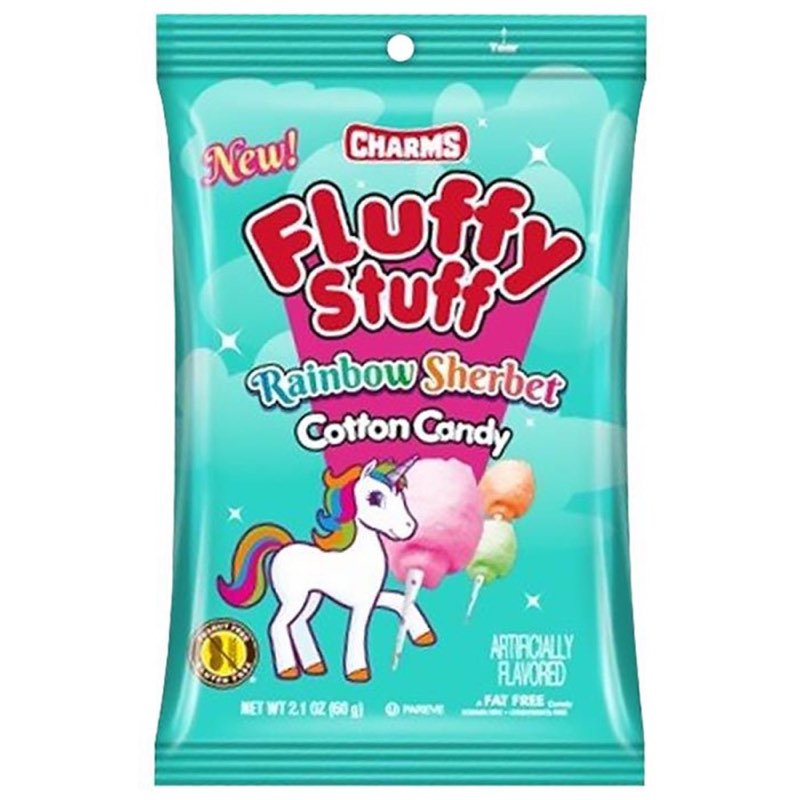
Aeration is the most dramatic of them. Beat air into a confectionery mass and the texture changes out of all recognition — it becomes lighter, it melts faster because there is less material per mouthful to work through, and it carries flavour to the tongue much more quickly because the structure collapses so readily. Push aeration to its limit and you end up somewhere near spun sugar, where there is almost nothing there at all and the whole thing vanishes on contact. You can taste exactly that end of the spectrum in Charms Fluffy Stuff Cotton Candy 71g, which at £2.49 is a useful thing to put alongside a chewy bag precisely because it demonstrates the opposite principle: maximum air, minimum resistance, gone before you have decided what you think about it.
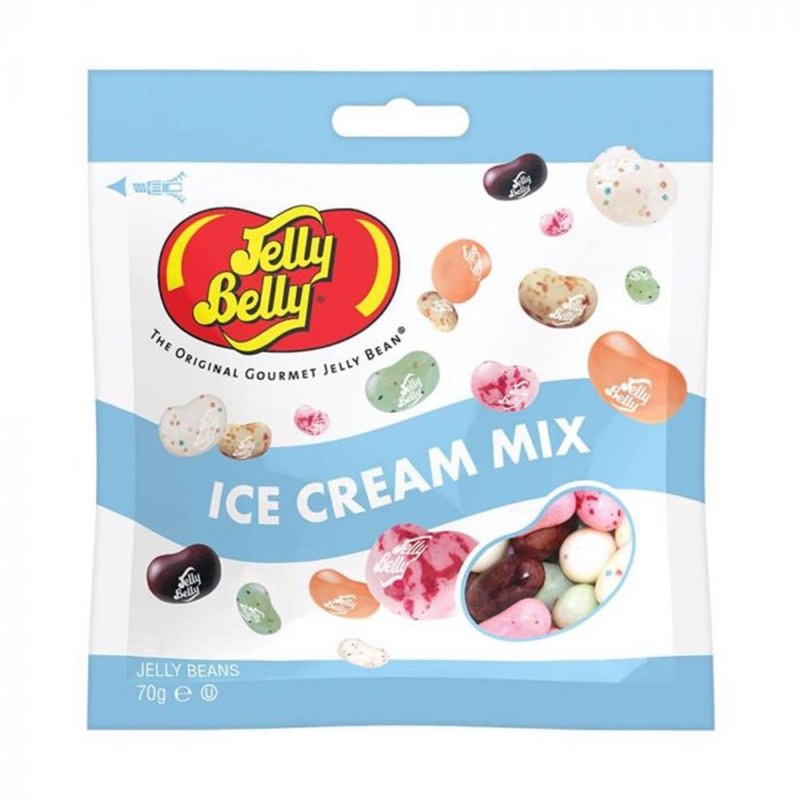
At the other extreme sits the panned sweet — a small hard centre built up in layers by tumbling it in a rotating pan until it wears a hard shell. Panning is one of the oldest techniques in the trade and one of the most useful, because it produces a sweet that survives handling, keeps its shape in a jar for months, and gives you two textures in one piece: the shell that fails suddenly, then whatever is underneath. Jelly Belly American Classics Jelly Beans Bag 70g at £2.40 is a panned format, and it is a good illustration of how a thin outer layer completely changes the eating experience of the soft material inside. A bean without a shell is a completely different sweet.
Now bring that back to a bites format. The engineering problem with a small chewy piece is that you have removed the two things a bar relies on — length and surface area. A bar gets to deliver its flavour gradually because you eat it in stages over a minute or two. A small piece has one shot. So the texture has to be tuned differently: firm enough to survive being loose in a bag with hundreds of its neighbours, soft enough to give up its flavour in the first few chews, and finished on the outside so the pieces do not weld themselves into a single lump on a warm day. That last requirement is genuinely hard, and it is the reason small chewy pieces are nearly always given a surface treatment of some kind. A chew that sticks to itself in the bag is a failed product, no matter how good it tastes.
Piece size is a design decision too, not an accident. There is an optimum size for a sweet you want people to eat several of in a row: big enough to register as a proper mouthful, small enough that taking three does not feel like a commitment. Get it wrong in one direction and people take one and stop. Get it wrong in the other and the bag is empty in four minutes. The bites format sits close to the middle of that range, which is why bags of small pieces are the default choice for sharing across the whole trade, from the cheapest bag on a corner-shop rack to the most expensive counter in a department store.
Temperature is the lever most people never think about, and it is the one you control. Every chewy sweet is firmer cold and softer warm, and the difference is not subtle. A bag that has been in a cold car is a genuinely different product to the same bag that has sat in a warm kitchen — longer chew, slower flavour release, more work for your jaw. Neither is wrong, but if a bag ever seems stiffer or softer than you expected, the room is usually the reason rather than the sweet. The practical upshot: if you want the pieces at their most yielding, take them out of a cold cupboard twenty minutes before people arrive.
Corner shops, seaside racks and the shelf a bag like this belongs on
British sweet buying has always happened in two quite different places, and the difference explains a lot about why a bag like this one exists in the shape it does.
The first place is the corner shop. The defining feature of the corner-shop sweet is that it is bought on impulse, with loose change, on the way to somewhere else. That constraint has shaped the entire category. It has to be visible from the door, because the customer is not browsing. It has to be priced at a number you can decide on without thinking — the whole reason sweets cluster at particular price points is that those are the prices people say yes to without doing sums. It has to survive being on a rack in a warm shop with the sun on the window. And it has to be immediately identifiable from three feet away, because the entire decision takes about four seconds. Everything about the loud graphics and the bright bag is a solution to that four-second problem, not a failure of taste.
The second place is the seaside sweet shop, and it runs on completely opposite principles. Nobody is in a hurry. The whole point is the browsing. You walk in because it smells of sugar and because there are jars from floor to ceiling, and you stand there for ten minutes deciding between things you will not remember by Tuesday. The seaside shop sells weight, not units — a scoop, a bag, a number on a scale. It sells nostalgia hard, because half its customers are adults buying the sweet they had as a child in the same town twenty years earlier. And it sells variety above all, because the pleasure is in the choosing. That is the tradition our Pick & Mix range sits in, and the reason we sell Loose Sweets by weight at all — the format is doing something the packet format cannot, which is to let you build your own bag.
For a long stretch of the twentieth century those two worlds barely overlapped. The corner shop sold branded packets; the sweet shop sold loose sweets out of jars. What has happened since, and what you can see in our range if you scroll through it, is that the two have thoroughly mixed. The modern British sweet shelf is a genuine jumble — branded bags next to jars, chewy imports next to traditional boiled sweets, theatre boxes next to scoops. Junior Mints at £2.59 and a £16.99 jar of aniseed balls are about as far apart as two sweets can be in tradition and format, and they sit on the same digital shelf here because the way people actually shop has stopped respecting the old boundaries.
A bites bag belongs to both worlds at once, which is the interesting thing about it. In its format it is pure corner shop: a sealed bag, a fixed price, a brand you recognise on sight, a product designed to be picked up in four seconds. In its use it is pure sweet shop: loose pieces, poured into a bowl, shared out, mixed with whatever else is on the table. That hybrid is exactly what most people want now. You get the convenience and consistency of a packet with the shareability of something scooped.
The other thing the seaside tradition gets right, and which is worth stealing for your own kitchen table, is the importance of the container. Sweets in their bag are a purchase. Sweets in a bowl are hospitality. It takes five seconds to tip a bag into something and it completely changes how people behave around it — they take less per visit, they come back more often, and they talk to each other while they do it instead of holding the bag possessively. Every good sweet shop understood that a hundred years ago. It still works.
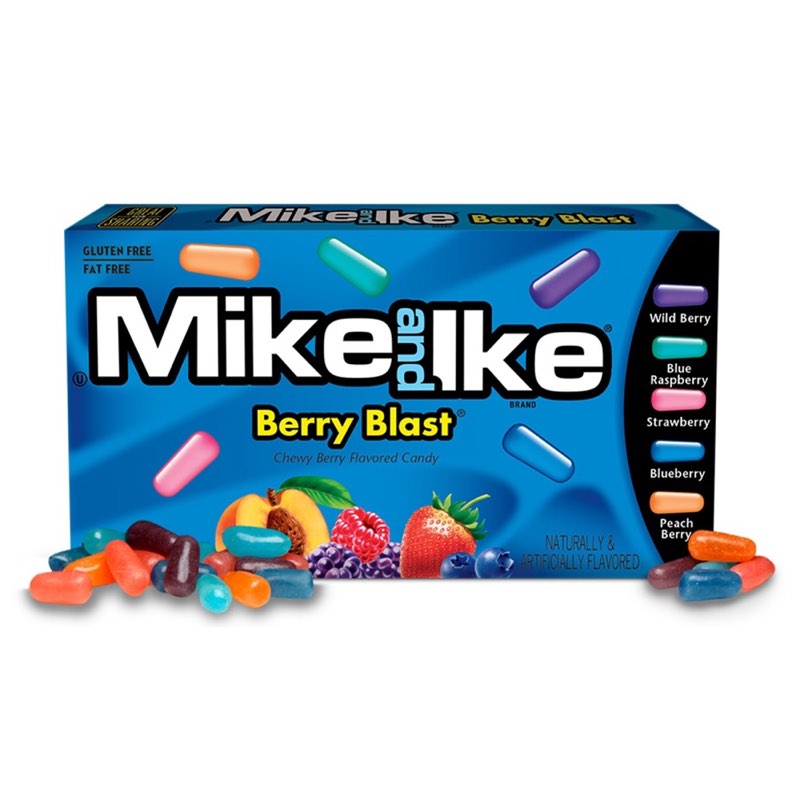
There is a third strand worth mentioning, which is the cinema kiosk — the reason the theatre-box format exists at all, with its tall thin card box designed to sit in a cupholder and be eaten in the dark by feel. Mike & Ike Berry Blast Theatre Box 120g at £2.25 and the Airheads 6 Bar Theatre Box 93.6g at £2.49 are both built to that brief. If your evening genuinely is a film, that shape has advantages a bag does not — it stands up, it does not rustle as much, and you can find it in the dark without looking.
On flavour, and how to think about it here
We list what we can verify, and for this line we do not hold a verified flavour breakdown, so you will not find one on this page. That is a deliberate choice rather than an oversight. We would rather tell you nothing than tell you something that turns out to be wrong about food. The bag itself carries the definitive information and it will be in your hands soon enough.
What is worth doing instead is thinking in flavour families, because that is how you build a good table even when you do not know every detail in advance. Most sweet flavours fall into a handful of groups. There are the bright fruit flavours, which are sharp, high, and fade fast. There are the deeper fruit flavours — the darker berries and stone fruits — which are rounder and hang about longer. There are the cream and caramel flavours, which are low, slow and filling. There are the mints, which are cold and have the useful property of resetting your palate completely. And there are the botanicals — aniseed, liquorice, herbal boiled sweets — which are the most polarising things in any shop and the most rewarding when they land.
The principle for building a spread is straightforward: take two families that do not overlap, not three that do. A bowl of chewy fruit pieces plus a bowl of something creamy or minty gives everyone somewhere to go. A bowl of chewy fruit pieces plus two more bowls of fruit-flavoured things gives everyone a mild sense that it all tastes the same, even if each item is excellent on its own. This is the single most common mistake people make when buying for a party, and it costs nothing to avoid.
That is why we keep pointing towards the contrast items rather than the similar ones. If this bag is your fruit-chew contribution, the useful next purchase is the Milk Duds box for the caramel-and-chocolate family, or the cold, clean reset of a mint, or something with genuine sharpness to wake everybody up. Three bags from the same family is a spread with one note in it.
Building a bowl, a platter or a mix around it
A good sweet table has four jobs to fill, and if you cover all four with three or four purchases you will have done better than most people manage with ten.
- The grazing item. Small, loose, endlessly repeatable, in the biggest bowl. This bag is exactly that, and so is Maoam Pinballs Bag 140g at £1.99, which is the cheapest way in our range to double the volume of grazing material on a table.
- The sharp item. Something that cuts through when everything starts tasting the same. Nerds Grape & Strawberry at £1.49 does this in tiny, intense pieces, and Seriously Giant Vimto Spray at £1.89 does it in an entirely different way — a liquid novelty that resets the mouth and, more usefully at a children's party, gives people something to do rather than just something to eat.
- The rich item. The thing people take one of and feel satisfied. Reese's Dipped Pretzels 120g at £5.29 is the most substantial option in this cluster, and the salt-and-sweet contrast does more work on a table than another sweet thing ever will.
- The slow item. Something wrapped or boxed that occupies one person for a few minutes. the six-bar theatre box fills that role from the same brand, and boxed formats generally hold their shape better on a crowded table than open bowls do.
Beyond the four jobs, a couple of practical notes on assembly. Use more bowls than you think you need, and make them shallow rather than deep — a deep bowl means the bottom third is never eaten, because people do not like reaching. Keep the sharp item slightly away from the rest, because sharp sweets leave a trace on people's fingers and it finds its way into everything else. And hold one bag back, unopened, in a cupboard. A table that gets restocked at nine o'clock is a much better party than a table that was enormous at seven and empty at half past eight.
If you would rather build the whole thing by weight and hand-pick every component, that is what the pick and mix jars are for, and it is a genuinely different shopping experience — you are choosing sweet by sweet instead of bag by bag. For anything in between, browse our full sweet shelves and work by format: one thing to graze on, one thing to chew slowly, one thing that surprises people.
Parties, film nights, gifting and the hamper question
For a children's party, a 170 g bag of small chewy pieces is a workhorse rather than a centrepiece. Buy two, put one out and keep one back. Decant into several small bowls spread around the room rather than one big bowl in the middle; children queue at a single bowl and lose interest, but they will circle four small ones happily. Supervise the youngest ones, keep whole sweets away from very small children, and remember that small hard sweets and whole gummies are a choking risk for under-fives — that is worth saying plainly rather than burying in small print.
For a film night with adults, the format wins on quietness. A bag tipped into a bowl before the film starts makes no noise for the next two hours, which is more than can be said for anything individually wrapped. Put the bowl within reach of everyone, not on a side table that requires someone to stand up in the middle of a scene.
For gifting, this bag is a component, not a present. It works inside a hamper, in a birthday box alongside other things, in a stocking, or as one layer of a larger sweet parcel. What it needs is company and a container. A useful hamper formula: one big chocolate item, two or three bags of chewy and sour things, one jar or tub with visual impact, and one novelty. the £16.99 jar of aniseed balls is the kind of thing that anchors a hamper visually because a jar reads as a gift in a way a bag never does, and it also covers the traditional-sweets end for an older recipient.
For seasonal tables — Christmas, Easter, Halloween, a birthday buffet — think about what the table already has too much of. Most seasonal tables are drowning in chocolate by the second day. A bag of fruit-chew bites is the thing that gets eaten when people cannot face another chocolate, which is precisely why it is worth having one in the cupboard rather than a fourth box of chocolates.
For a road trip or a long train journey, decant into a resealable tub before you leave. Bags spill, tubs do not, and a tub can be passed between the front and the back seat without anyone taking their eyes off anything important.
What 170 g actually buys you
At £2.99 for 170 g, you are paying a shade under £1.76 per 100 g. That is a mid-range price for a branded sharing bag and it is worth understanding what the number means in practice rather than in the abstract.
Think of 170 g in portions. As a generous single serving of about 40 g — a decent handful — the bag gives you four servings, which makes it roughly 75p a go. As a modest 25 g portion in a lunchbox pot, it gives you closer to seven, which is about 43p each. Shared between four people in one sitting, it is a proper contribution to an evening for three quarters of a pound a head. Shared between eight at a party, it is a nice-to-have rather than the main event, and you should buy two.
Against the rest of the shelf, the comparison is instructive. the £1.99 Maoam bag is cheaper in absolute terms and lighter at 140 g. that 70 g bag of jelly beans at £2.40 costs more per gram by a wide margin, which is what you expect from a smaller, more specialised bag — you are paying for the variety inside it rather than the weight. the dipped pretzels at £5.29 sit at the premium end entirely, and are priced as the treat rather than the volume. If your goal is the most sweets on the table for the least money, bags in this weight range are the efficient choice and small specialist bags are not; if your goal is something interesting to talk about, the reverse is true. Most good tables have one of each.
The other value point is waste, which people never factor in and should. A bag that gets half eaten and then goes stale in the cupboard cost you twice what the label said. Buying a size your household will actually finish within a week or two is the single biggest saving available in sweet buying, and it is why we would rather sell you two small bags a fortnight apart than one enormous one that ends up in the bin.
Keeping it in good condition
Chewy sweets are more sensitive to their surroundings than almost anything else in a sweet cupboard, and the two things that matter are heat and air.
Heat is the bigger one. Warmth softens chewy pieces, and softened pieces in a bag find each other and stick. Once that happens there is no fully undoing it, though a couple of hours somewhere cool will firm things up enough to separate them with your fingers. The practical rules are simple: keep the bag out of direct sunlight, keep it off the top of anything that generates heat, and do not leave it in a parked car in summer. A kitchen cupboard away from the oven and the kettle is perfect.
Air is the slower problem. Once opened, a bag of chewy sweets begins to dry at the edges, and a dried chew gets tougher and less generous with its flavour. Roll the top of the bag over tightly and clip it, or tip the contents into an airtight tub. A tub is better in every respect except that it takes thirty seconds of effort, and for a bag you expect to eat over a week or more it is worth the thirty seconds.
Do not refrigerate them as a matter of routine. The cold makes them very firm, and more importantly a fridge is a damp environment — sweets brought out of a fridge into a warm room gather condensation on their surface, which is the fastest way to make loose pieces tacky. Cool and dry beats cold and damp every time. A freezer is a different matter and some people genuinely like frozen chews, but treat it as a deliberate choice rather than storage.
Best-before information, storage instructions and everything else the manufacturer prints are on the pack. If anyone eating from the bag has an allergy, check that packaging before opening rather than after — we hold no verified allergen data for this line and we will not pretend otherwise.
Sizes, and whether there is a decision to make
There is not, on this listing. Airheads Bites Paradise Blends is sold here in a single 170 g size at £2.99, with no alternative weights or multipacks to compare. The only real decision is how many bags you need, and the honest guidance is: one for a household of two or three to work through over a week, two for anything involving more than four people, three if it is a children's party and you want a bag in reserve.
If you want the same brand in a different shape rather than a different size, that is where the theatre box comes in — the same brand’s wrapped-bar box at £2.49 gives you six individually wrapped bars instead of loose bites, which is a completely different eating rhythm for a similar outlay. Bars are slow, countable and portable; bites are fast, shared and poured. Buy the box if the sweets are going in bags or pockets and need to stay separate. Buy the bag if they are going in a bowl.
Where this sits on the site
You will find this bag on the the wider Candy & Chocolate aisle, which is where our branded bags, boxes and bars live — 26 lines on that shelf at the time of writing, and the right place to browse if you are shopping by brand or by packet rather than by weight.
The two neighbouring shelves are worth knowing about because they work differently. sweets sold loose by weight is where the jars and scooped lines sit, and it is the shelf for anyone who wants traditional British sweets or who is filling a tub rather than buying a packet. the Pick & Mix shelf is where you build a bag yourself from a list of fillings, which suits parties, gifts and anybody with a strong opinion about exactly which sweets they want. Between those three shelves you can cover almost any sweet-buying occasion, and if you would rather not navigate by category at all, everything we stock in one place is one click away and sorts by whatever you find most useful.
A few specific neighbours on those shelves that come up repeatedly alongside this bag: a box of Junior Mints for the mint-and-chocolate family, the 71 g tub of Fluffy Stuff for the air-light novelty end, the giant Vimto spray at £1.89 for children's parties, and the Mike & Ike berry box for cinema-shaped occasions.
Questions we get asked
How many people does one bag feed?
As a rough working number, four people sharing over an evening will finish a 170 g bag comfortably and not feel short-changed. Six will finish it quickly and want something else. For a party of eight or more, treat one bag as a contribution to the table rather than the main item and buy at least two, ideally alongside something from a different flavour family so the table is not all one note.
Is it too much for one person?
For most people, yes, in one sitting — 170 g is a lot of small pieces. It is a much better bag if you treat it as something to open, roll shut and come back to over several days. If you know you will not stop once the bag is open, decant a portion into a small pot and put the rest away before you start. That trick works far better than willpower.
Will it arrive stuck together?
Loose chewy sweets can soften and cling in warm conditions, which is a property of the format rather than a defect. If a bag has had a warm journey, a couple of hours somewhere cool usually firms the pieces up enough that they separate with a gentle squeeze. If anything arrives in a genuinely poor state rather than just slightly clingy, contact us and we will sort it out.
What flavours are in it?
We do not hold a verified flavour breakdown for this line, so we do not list one here rather than guessing. The definitive information is printed on the bag itself. We would rather give you an honest gap than a confident answer that turns out to be wrong about something you are going to eat.
Is it suitable for any particular diet?
We have no supplier dietary information recorded for this product, so we cannot tell you it is suitable for any specific diet and we are not going to imply it. Please read the manufacturer's packaging when your order arrives, before anyone eats from the bag, and treat the pack as the only reliable source on that question.
Can children eat these?
Sweets are a treat rather than a food, and portioning them for children is sensible. More importantly, small hard sweets and whole gummy pieces are a choking risk for young children, so keep them away from under-fives and supervise older children eating them. Anyone with an allergy in the household should check the manufacturer's packaging before the bag is opened.
What goes best with it on a table?
Something from a different family. Caramel or chocolate is the most reliable contrast, which is why Milk Duds, also £2.99 comes up so often as a companion. A mint works for the same reason from the opposite direction. Adding a second bag of fruit-chew pieces is the one thing we would talk you out of, because it makes a bigger table rather than a more interesting one.
How long will it keep once opened?
Kept cool, dry and properly sealed, an opened bag stays in good condition for a couple of weeks without any real change in how it eats. Beyond that the pieces gradually stiffen at the edges as they lose moisture to the air. An airtight tub buys you considerably longer than a rolled-over bag. The best-before date on the pack is the authority on the unopened bag.
Is there a bigger size or a multipack?
Not on this listing — it is sold in one size, the 170 g bag at £2.99. If you need more, the straightforward route is more bags. If you want more variety instead of more of the same, building a bag on the our build-your-own pick and mix range shelf gets you a wider spread of sweets for the same sort of outlay.
Do you stock other Airheads lines?
Yes — the six-bar theatre box at £2.49 is the other Airheads listing we carry, and it is a genuinely different product rather than a repackaging: wrapped bars eaten one at a time, versus loose bites poured into a bowl. Plenty of people buy both and use them for different occasions.
Is it in stock right now?
Yes, at the time of writing this listing is in stock and available to order in its single 170 g size. Stock positions on branded lines can move quickly, so the live availability shown on this page is always more current than anything written in a description. If it does go out of stock, it is worth checking the the rest of Candy & Chocolate for something in the same format while you wait.
The short version
A 170 g bag of bite-sized chewy pieces at £2.99, sold in one size, built for the middle of a table rather than for one person in an armchair. It does the grazing job better than almost anything at the price, it keeps a room talking rather than silencing it, and it pairs best with something from a completely different flavour family. Tip it into a bowl, keep it cool and sealed between sittings, check the pack on arrival if allergies are a concern in your house, and buy the second bag now rather than wishing you had at nine o'clock.
More candy & chocolate sweets
Where this sits
Airheads Bites Paradise Blends 170g appears on these shelves. Browse them, or jump to something nearby.
You might also like