
Home / Loose Sweets / Kingsway Wine Gums
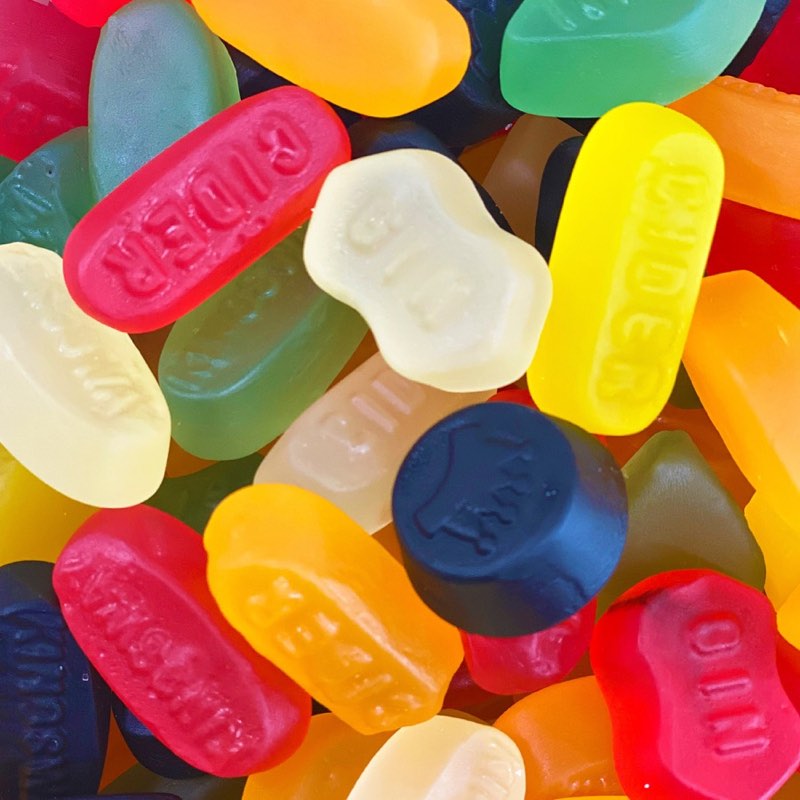
Kingsway · 250g
Read the full guide
Kingsway Wine Gums
£5.49
✔ In stock — ready to ship
Fresh stock
Free over £20
Same-day dispatch
Secure checkout
Kingsway Wine Gums start at £5.49 for 250g and run up to £28.99 for 2kg, and because this is a loose sweet sold by weight rather than in a sealed pack, the arithmetic is unusually clear. You are not paying for a box, a wrapper or a novelty format. You are paying for gums, and the more you buy at once the less each gum costs.
Here is the whole range set out plainly, with the working shown:
The full guide to Kingsway Wine Gums
5,953 words on how it eats, who it suits, how to serve it and what to put beside it.
Five weights, and what each one costs you per hundred grams
| Weight | Price | Per 100g | Roughly |
|---|---|---|---|
| 250g | £5.49 | £2.20 | A generous bag for one household, a week |
| 500g | £9.99 | £2.00 | Fills a small sweet jar |
| 750g | £12.99 | £1.73 | A decent bowl for a gathering |
| 1kg | £16.49 | £1.65 | A party-sized bowl or a full jar |
| 2kg | £28.99 | £1.45 | Sweet cart, wedding table, big event |
Read the third column and the shape of the offer is obvious. Going from 250g to 500g saves you 20p on every hundred grams. Going all the way to 2kg cuts the unit price by roughly a third against the smallest bag. In cash terms: two separate 250g bags cost £10.98, while a single 500g comes in at £9.99. If you were going to buy twice, buy once and buy bigger.
That said, the biggest bag is not automatically the right bag. Loose sweets are at their best in the first weeks after opening, and 2kg of anything is a long commitment for one household. The honest guidance is this: buy the size that matches the occasion rather than the size with the best headline rate. A 2kg bag bought for a party and finished in an afternoon is excellent value. The same bag bought optimistically for a kitchen cupboard, and still half full at Easter, is not.
What each size actually does
- 250g at £5.49 — the trial size and the household size. Enough to find out whether this is your sweet, enough to keep a tin topped up for a fortnight, not enough for guests.
- 500g at £9.99 — the sensible default for most people. It fills a small display jar properly, which matters because a half-full jar looks sad and a full one looks like a shop.
- 750g at £12.99 — the awkward middle size that is actually very useful. It is the right amount for a bowl at a gathering of a dozen or so, where 500g would run out and 1kg would leave you with leftovers.
- 1kg at £16.49 — party weight. One bowl, generously filled, with enough spare to refill it once.
- 2kg at £28.99 — event weight. This is the sweet-cart, wedding-favour, school-fete size, and at £1.45 per hundred grams it is the cheapest way to put gums in front of a crowd.
Cost per head, honestly
A useful planning figure for a mixed sweet table is 50g to 80g of any one line per person across an event — people take a small handful, come back once or twice, and that is it. At the 2kg rate, 60g a head works out at around 87p per person. At the 250g rate, the same 60g is about £1.32. Neither is expensive. But across a hundred guests that is a difference of forty-odd pounds, which is a real number, and it is the reason we list the bigger weights at all.
If you are buying for a crowd and want to compare across the shop properly, the whole of the Loose Sweets section works the same way — 356 lines, all sold by weight, all with the same step-down pricing. Comparing per-100g rates across that shelf is the single most useful thing a party buyer can do before placing an order.
What you are actually buying
A wine gum is a firm gum. That is the defining characteristic and it is what separates the style from everything softer around it. Where a bear or a worm gives way in one bite, a wine gum resists. It has a density to it, a proper chew, and it takes a few seconds of work before it starts to yield. That firmness is not a flaw to be apologised for — it is the entire appeal, and it is why wine gums have outlasted a hundred fashionable formats that came and went.
Our pack for this line lists it as Multi Coloured, with the flavour given simply as Fruit, and classifies it across three of our sweet-type shelves at once: Chewy, Jelly & Gummy and Retro. That triple listing is a fair description of where the sweet sits. It has the bite of a chew, the body of a gum, and the standing of something that has been a sweet-shop fixture for as long as most shoppers can remember.
A note on the name, because it comes up. "Wine gums" is a traditional trade name for this style of firm fruit gum, and a product name is not a statement about what is inside it. We do not hold a verified ingredient list for this line, so we do not publish one, and we are not going to make claims — in either direction — about what the name implies. The manufacturer's packaging is the authoritative source and it will be with you when the order arrives.
What our supplier does tell us, and what we are therefore happy to pass on with attribution, is that our supplier lists this line as dairy free and gluten free. Those are their tags, not our testing, and we have not upgraded them into anything they do not say. If either matters to you for a health reason, read the manufacturer's packaging on arrival before eating, as you should with every product in the shop.
How they eat, from first bite to last
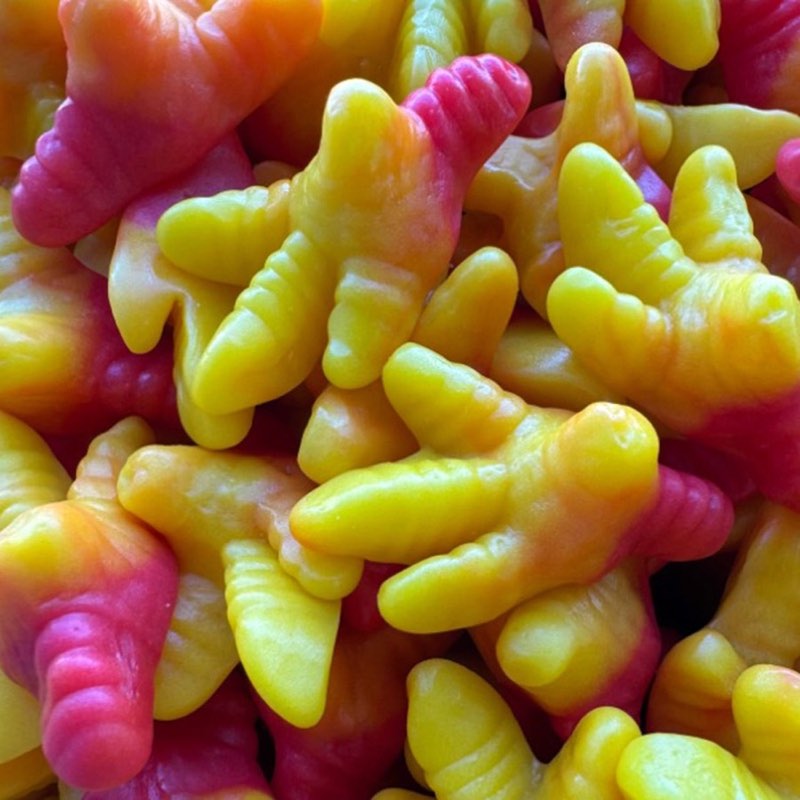
Pick one up and the first thing you notice is that it does not squash. There is a slight give under the fingers and then nothing — the gum holds its shape. Multi-coloured means a bowl of them reads as a scatter rather than a block, and because the pieces are small and uniform they stack and scoop neatly rather than clumping into a single lump the way softer sweets do.
The first bite is resistance. You have to commit. A wine gum is not a sweet you can eat absent-mindedly in one motion; it asks for two or three proper chews before it breaks down, and during those chews almost nothing happens flavour-wise. This is the bit that impatient eaters complain about, and it is also the bit that makes the rest work.
Then the flavour arrives, and it arrives all at once. Once the gum breaks, the fruit note floods out — clean, bright, unmistakably in the fruit family rather than anything creamy or caramelised. Our pack lists the flavour simply as Fruit and gives no per-colour breakdown, so we are not going to tell you which colour is which; half the pleasure of a multi-coloured bowl is working that out yourself, and people are surprisingly firm in their opinions about it.
The chew is long. This is the practical fact that governs everything else about how you use this sweet. One wine gum occupies you for a good while, which means a bowl of them lasts far longer than a bowl of anything soft. On a party table that is a genuine advantage: the gums are still there at the end of the night when the soft sweets went in the first hour.
The finish is clean. When the gum is gone it is gone — no coating left on the teeth, no lingering film, nothing that interferes with the next thing you eat or drink. That makes them an unusually good sweet to have alongside a cup of tea or a glass of something, because they do not fight with what is in the glass.
Temperature matters more here than with most sweets. Cold gums are seriously firm and the chew becomes hard work. Room temperature is right. If a bag has been in a cold porch, give it an hour inside before you serve it and it will behave completely differently.
Who buys wine gums, and why
The wine gum buyer is a specific and loyal creature. The largest group by far is the grown-up sweet eater — somebody who has been eating these since childhood and has never needed to change. Wine gums are one of a small handful of sweets that adults buy for themselves without framing it as a treat for the children. They are the sweet in the car door, the sweet in the office drawer, the sweet in the handbag for a long journey.
The second group is the household that wants one sweet that everybody tolerates. You will not find a family where everyone loves the same soft gummy, but wine gums are broadly inoffensive: no strong sour element, no novelty, nothing that divides a room. When you need one bowl that will do for a mixed-age group, this is a safer bet than almost anything else on the shelf.
The third group is the person buying for somebody older. Traditional sweets travel well as gifts precisely because they are familiar, and a jar of wine gums is a more thoughtful present than its price suggests. Our retro sweets shelf — 89 lines — exists largely for this purpose, and wine gums are one of its anchors.
The fourth group is the event buyer, and they are the reason the 2kg exists. Sweet carts, wedding favours, christening tables, school fairs, office Christmas spreads. For these, wine gums are the reliable component that fills space and keeps.
Who should skip them? Anyone who wants a sweet that dissolves fast, anyone who wants sour, and anyone eating while doing something else that needs their jaw. If you want soft and quick, Haribo Friendship Rings at £5.49 are the same price and a completely different texture experience. If you want fast and fizzing, look at the fizzy end of the Kingsway range instead.
Running a sweet table: weight, scoops, jars and timing
Buying loose sweets for an event is a different discipline from buying boxes, and the mistakes are different too. With boxes you can count units. With loose sweets you are estimating volume, and almost everybody estimates it wrong the first time. Here is what we have learned from filling these orders.
Weight per head, by event type
The single question we get asked most is "how much do I need?" The honest answer depends on what else is on the table, but these working figures will not let you down:
- Sweets as a side-show (a proper meal is being served, sweets are one small table): 40–50g per head of total sweets, spread across four or five lines.
- Sweets as the main event (a sweet cart, a children's party, an evening buffet): 100–150g per head total.
- Take-home favours (guests fill a bag to take away): 80–120g per bag, and count on every guest taking one whether they eat sweets or not.
Then divide by the number of lines. If wine gums are one of five things on a 100-guest cart at 120g a head, that is 12kg of total sweets and roughly 2.4kg of gums — so two of the 2kg bags, with a comfortable margin. If they are one of eight lines, one 2kg bag is about right.
Jars, bowls and what actually fits
People buy sweets and then discover their jar holds half what they thought. A rough guide for firm gums of this size: a standard 1-litre sweet jar takes somewhere around 700–800g, a large display jar of the kind you see on carts takes 1.5–2kg, and a family-sized serving bowl takes about 500g before it looks piled rather than filled.
The aesthetic point is worth making plainly: a jar filled to 60% looks like the party is over. A jar filled to 90% looks abundant. If your jar is bigger than your budget, use a smaller jar. Nobody counts the grams; they read the fill level.
Scoops, tongs and the honesty problem
How you let people serve themselves changes consumption by a startling amount. Tongs slow everyone down and roughly halve intake. A scoop speeds things up and encourages generous portions. Bare hands in a communal bowl is fast, cheap and unpopular with anybody who thinks about it for a second.
For a cart, use scoops and accept the higher consumption — that is the point of a cart. For a long evening event where you want the table to survive until midnight, use tongs. For a children's party, pre-portion into bags before anyone arrives, because a scoop in the hands of a seven-year-old is not a portioning instrument.
What runs out first, and where gums sit in that order
On a mixed table there is a reliable order of depletion. Anything sour goes first, because it is a novelty and people want to try it. Anything chocolate goes second. Soft, quick-eating gummies go third and go fast. Firm gums like these go fourth, steadily, all night. Mints and aniseed go last.
That fourth position is a feature, not a weakness. The lines that empty first leave a gap in the middle of your table; the lines that empty steadily are what stop it looking picked over at ten o'clock. When we advise somebody building a cart, we tell them to put roughly a third of their total weight into slow, firm, long-chewing lines for exactly this reason. Wine gums, Taveners Fruit Pastilles at £5.49 and Barratt Jelly Love Hearts at the same price all do this job and all sit at the same entry price, so you can build that whole tier without doing any sums.
Timing the table
Put out two-thirds and hold back a third. Refill at the point where the jars are at about half, not when they are empty. A refilled jar reads as generosity; a scraped jar reads as the end of the evening, and guests respond to that signal without knowing they are reading it.
For a wedding, the sweet cart should open after the meal and not before, or you will have a cart of empty jars at nine o'clock when people actually want it. For a children's party, open it at the end and use it as the thing that sends everybody home. For an office spread, put it out at eleven and top it up at three.
The mistakes we see most
- Too many lines, too little of each. Eight jars at 250g each looks meaner than four jars at 500g. Depth beats variety on a display.
- All soft, no firm. The table empties in an hour and then looks abandoned.
- Buying small sizes repeatedly. Four 250g bags cost £21.96 against £16.49 for a single kilo of the same sweet.
- No labels. On a mixed cart, people hesitate over anything they cannot identify. A handwritten card in front of each jar increases how much gets eaten, which is presumably what you wanted.
- Forgetting bags. If guests are meant to take sweets home, the bags need to be there from the start or half of them will have gone before anyone thinks of it.
The sour-to-sweet spectrum, and where a wine gum lands
Every sweet on our shelves can be placed somewhere on a line that runs from face-pulling sour at one end to pure, unchallenged sweetness at the other. Understanding that line is the most useful thing you can learn if you are building a mix, because a good spread covers the spectrum rather than clustering at one point on it.
The five zones
Zone one — aggressive sour. The sweets that make people react. High impact, self-limiting, nobody eats many. On a table these are theatre rather than volume.
Zone two — sharp. A definite tang, but a pleasure rather than a dare. Sweets here have real staying power because the sharpness keeps the palate interested. Sweetzone Sour Twin Cherries Tub 800g at £7.99 sits here, and a tub that size is a good way to cover the whole sour requirement of a table in one purchase.
Zone three — balanced fruit. This is where wine gums live, and it is the largest and most useful zone on the spectrum. Sweets here read as fruit, have enough acidity to stop them being cloying, and can be eaten continuously without the palate giving up. They are the backbone of any mix.
Zone four — sweet fruit. Softer, rounder, less acidity, more straightforwardly sugary in character. Maoam Stripes at £5.49 lean this way, as do most filled and creamy jellies — Vidal Jelly Filled Strawberries Tub at £7.99 is the filled example in this cluster.
Zone five — pure sweet. No fruit acidity to speak of. Marshmallows, fudges, creamy chews. Comforting, and the zone that tires a palate fastest. Pumpkin & Ghost Marshmallows at £5.49 are the mallow option in the Kingsway range we stock.
Why zone three is where you should start
If you are building a mix and can only pick one line to build around, pick something from the middle. A table anchored in zone three works because both ends have somewhere to return to. Guests who tried the sour thing need somewhere to land; guests who have had two marshmallows need something that cuts through. The middle does both jobs at once.
Anchoring at either end fails. An all-sour table exhausts people in twenty minutes. An all-sweet table is pleasant for ten minutes and then sickly. The middle is where a table gets its stamina, and a firm, long-chewing, clean-finishing fruit gum is about the most stamina-ish sweet there is.
Building outwards in both directions
The practical method is simple. Start with your zone-three anchor. Add one item from zone two for the sharp end and one from zone four or five for the soft end. Then, only if the table is big enough to justify it, add a single zone-one item as a talking point.
A worked example for a party of twenty, all in loose weights: 1kg of wine gums as the anchor, a tub of the sour cherries for zone two, Kingsway Dolly Mixture at £5.49 for a soft, varied zone-four scatter, and Skittles at £6.99 for a bright crunchy contrast that sits across zones two and three at once. Four lines, a proper spread, and the whole thing built on one anchor.
The sharpness illusion
One thing worth knowing: perceived sourness is relative, not absolute. The same sweet tastes markedly sharper after something creamy and markedly milder after something sour. This means the order you arrange a table in changes how everything on it tastes. Put your zone-three anchor immediately after the zone-five items and it will read as refreshingly tangy. Put it immediately after zone one and it will read as mild and sweet. Same sweet, different experience, and you control it entirely through layout.
Texture as the second axis
Sour-to-sweet is one axis; fast-to-slow is the other, and a genuinely good mix varies both. You want something that dissolves, something that crunches, something that chews briefly and something that chews for a long time. Wine gums occupy the far slow end. Drumstick Chew Bars (10 Pack) at £2.50 are the cheapest way in this cluster to add a different chew entirely — bars rather than pieces, and a ten-pack is easy to distribute. Between a firm gum and a soft bar you have most of the texture range covered.
Fruit, as a flavour family
Our pack lists the flavour for this line as simply Fruit, with no per-colour breakdown, and we have not invented one. What is worth saying is what the fruit family means on a sweet table, because it is by far the biggest category we stock — 161 lines currently sit on the Fruit shelf.
Fruit sweets work because they are legible. A shopper reaching into a bowl of multi-coloured gums is making an instant prediction about what each colour will taste like, and that prediction is part of the enjoyment. People have colour loyalties. People trade. People announce which one they dislike and take it anyway. None of that happens with a bowl of one-flavour sweets, and it is the reason multi-coloured mixes are so much better at parties than single-flavour lines, even when the single flavour is objectively nicer.
Fruit sweets are also the most forgiving thing to serve to a mixed group. There is no strong minority position on fruit the way there is on aniseed, liquorice or mint. Nobody is offended by a fruit gum. If you are buying for people you do not know well — an office, a club, a school fair — fruit is the safe pick every single time.
Within the fruit family, this line sits on the firm side. Softer members of the same family include most bears and rings; harder members include pastilles and traditional gums. If you want a direct comparison, the pastilles at £5.49 are the closest neighbour on both texture and price, and buying both is the easiest way to work out which style your household actually prefers.
What the supplier tells us about diet
We are careful about this and we would rather be dull than wrong. Our supplier lists this line as dairy free and gluten free. That is the extent of what we have been told and the extent of what we will say. We have not extended those tags into anything else — not vegetarian, not vegan, not anything about allergens beyond the two tags we were given.
If you are shopping on those tags specifically, we keep shelves for them: Gluten Free currently lists 54 lines and Dairy Free lists 51, all populated the same way, from supplier tags rather than from our own assessment. They are a starting point for a shortlist, not a substitute for reading a label.
And the standing advice, which applies to everything we sell: sweets are a treat rather than a food, small hard sweets and whole gummies are a choking risk for young children and small children should be supervised while eating them, and customers with allergies should check the manufacturer's packaging on arrival before eating anything.
Building a pick and mix around a bag of gums
Loose sweets exist to be combined, and a 250g or 500g bag of gums is a natural starting point for a bigger mix. Three ways to build.
The crowd-pleaser mix
Nothing challenging, everything recognisable, suitable for any age. Gums as the anchor, a bag of dolly mixture for its soft variety, the jelly love hearts for shape interest, and the friendship rings at £5.49 for a soft ring format. Four lines at £5.49 each, £21.96 for a kilo of properly varied mix, and not one item on it that anyone will refuse.
The grown-up mix
Firmer, cleaner, less sugary in character. Gums, fruit pastilles, and Aniseed Balls Sweet Jar at £16.99 as the anchor purchase — a jar at that price is a keeper for the kitchen rather than a consumable, and aniseed is the traditional counterweight to a fruit-heavy bowl.
The seasonal mix
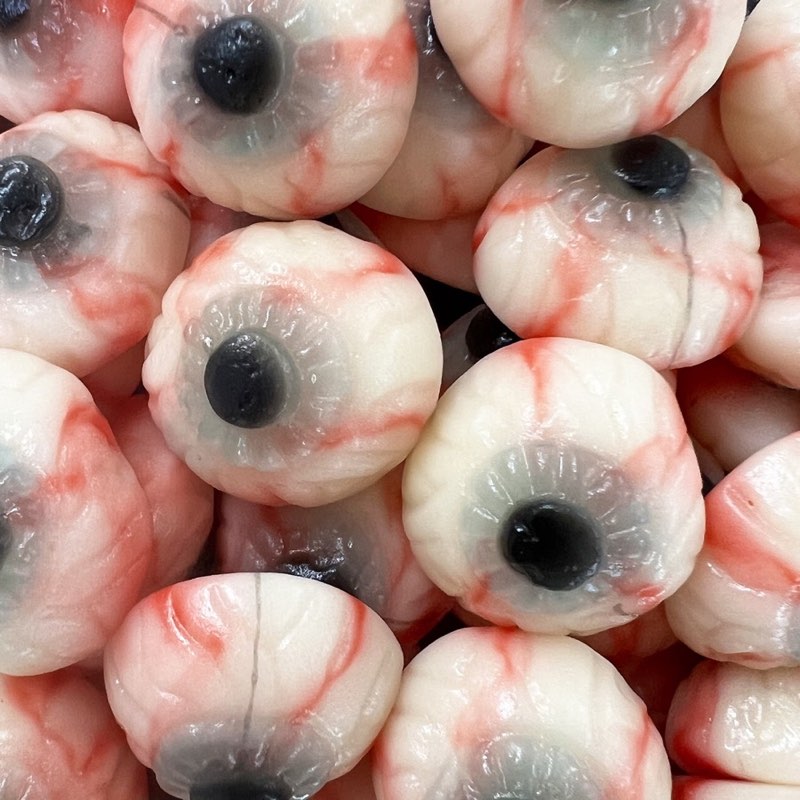
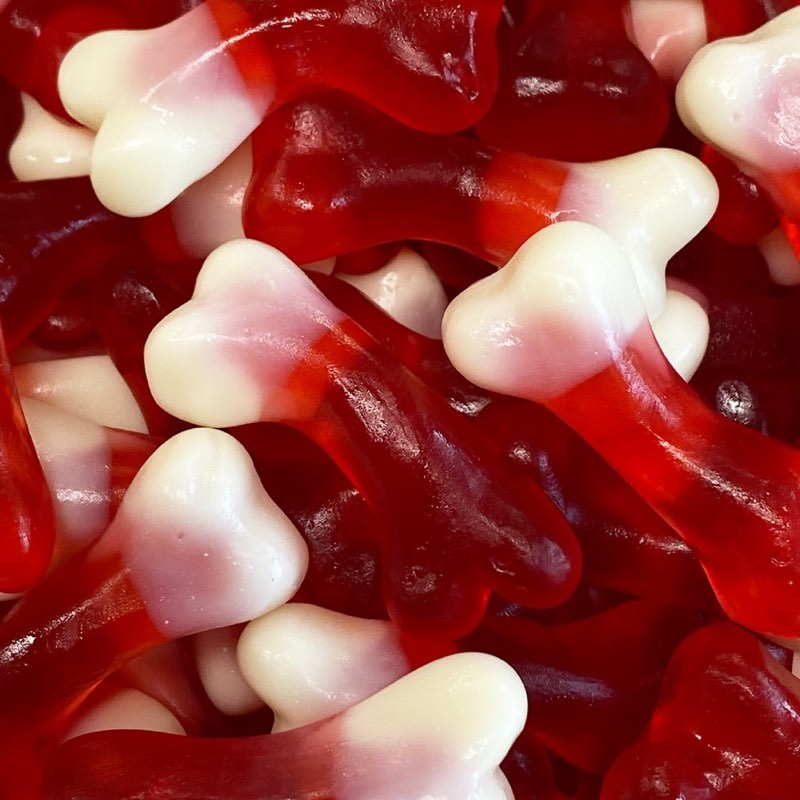
The Kingsway range we carry leans heavily novelty and seasonal, which makes it easy to build a themed table on a single brand. Kingsway Witches Heads, Kingsway Jelly Eyeballs and Kingsway Gummy Bones are all £5.49 and all obviously pointed at one time of year. Add the gums as the ordinary, sane thing in the middle of all that and the table has somewhere for the adults to go.
The fizzy corner
If you want something with a bit more going on, the two tongue-painting lines in the same brand and at the same £5.49 are the ones to look at: Kingsway Vegan Fizzy Tongue Painting Dummies and the bubblegum version of the same dummies. They are a completely different proposition from a firm gum — fast, fizzy, and aimed at children rather than adults — which is exactly why they work next to it rather than competing with it.
If you would rather have the choosing done by the handful, go straight to Pick & Mix and build there. And if you want to see the Kingsway range in one place, the Kingsway shelf runs to 75 lines.
Occasions this suits
Weddings and sweet carts
This is where the 2kg earns its keep. A wedding cart needs three things from each jar: it must look good, it must last the evening, and it must suit every age from four to eighty-four. Firm multi-coloured fruit gums do all three. Put them in a tall jar where the colours show, and they will still be there when the dancing stops.
Christmas and family gatherings
A bowl of gums on a coffee table is one of the most-used things in a house over Christmas, precisely because it is not rich. Everything else on offer at Christmas is chocolate, cream or pastry; a clean fruit gum is the thing people reach for when they cannot face another mince pie.
Long journeys
Firm gums are the best car sweet there is. They do not melt on a dashboard, they do not crumble into the seat, they do not leave anything on fingers that will then be on the steering wheel, and one keeps the driver occupied for a useful length of time. Buy 250g, decant into a tin, keep it in the door.
Gifts and hampers
A 500g bag decanted into a good jar is a proper present for the price of a pub round. For a hamper, pair the gums with something from the 89 retro lines and something chocolate, and you have three formats and three textures for well under twenty pounds.
Fetes, fairs and fundraising
The 2kg at £1.45 per hundred grams is the reason school fairs buy loose. At that rate you can fill a hundred small bags and still make a margin on a pound a bag. Wine gums are ideal for this because they weigh well, bag cleanly and do not stick together in a warm hall.
Office and shared spaces
Firm gums last in a communal bowl in a way that soft sweets do not — partly because they take longer to eat, and partly because the people who raid bowls tend to raid chocolate first. A kilo will see a small office through a month.
Keeping loose sweets well
Loose sweets arrive without their own retail packaging, which means the container you put them in is doing all the protective work. This matters more than it does with a sealed box, and getting it right is the difference between a bag that is still good in two months and one that has gone tacky in three weeks.
Airtight is the main thing. A jar with a proper seal, a good tin, or a resealable bag with the air pressed out. Gums exposed to open air stiffen at the surface — they do not spoil, but the pleasant firm chew becomes a genuinely hard one, and the pieces on top go first.
Cool and dark is the second thing. A cupboard, not a windowsill. Sunlight fades colour on a multi-coloured mix within days and the top layer of a display jar will bleach unevenly if it sits in a bright room. If the jar is meant to be looked at, accept that you are trading condition for display and buy a size you will get through.
Do not refrigerate. Firm gums go rock hard when cold, and the condensation as they warm back up makes the surfaces tacky. If your kitchen runs warm, an airtight tin in the coolest cupboard beats the fridge every time.
Keep them away from strongly scented sweets. This is the storage point people never think of: aniseed, mint and liquorice will transfer their character to anything stored in the same sealed container within a few days. If you are decanting a mix, keep the aromatic items in their own jar.
Check the date on the paperwork or packaging that comes with the order and go by that. As a rule, buy the size you will use in a few weeks rather than the size with the best rate, unless you have somewhere genuinely cool, dark and airtight to keep the rest.
Choosing your weight
All five weights are the same sweet — there is no difference in the product between the 250g and the 2kg, only in how much of it arrives. So the decision is purely about use and storage.
- Never had them before? 250g at £5.49. It is the most expensive per gram and that is fine; it is a small amount of money to find out.
- Household staple, one or two people? 500g at £9.99. Decant half into a tin, seal the rest.
- Gathering of ten to fifteen? 750g at £12.99, which is the size most people overlook and most people need.
- Party of twenty to thirty, one jar? 1kg at £16.49.
- Cart, fete, wedding, or a household that genuinely goes through them? 2kg at £28.99 and the best rate on the page.
One caution on the 2kg: split it on arrival. Decant what you need into a display jar and put the rest into sealed containers straight away rather than working out of one giant bag for a month. Sweets that have been opened and reopened twenty times do not keep as well as sweets in three sealed tins.
Where this sits in the shop
This line appears on more shelves than most, which is a fair reflection of how many different ways people arrive at it. It is on the by-weight shelf with 356 other lines, on the brand page for Kingsway with 74 others, and on three type shelves: 96 jelly and gummy lines, the retro shelf and 78 chewy lines. It also sits on the fruit flavour shelf and, on the strength of the supplier's tags, on our gluten free shelf and dairy free shelf.
Nearby, the pick and mix section is where to go if you want to build by the handful rather than the bag, and Candy & Chocolate is the imports and chocolate side of the shop if you want to add a different register to an order. The Haribo shelf is the obvious place to look for soft counterparts to a firm gum. And the full catalogue lists everything in one place if you would rather not filter at all.
A practical browsing tip: if you are buying for an event, shop the by-weight shelf first and sort your shortlist by per-100g rate before you look at anything else. It is the fastest way to build a table that looks generous without spending more than you meant to.
Questions people ask
Do wine gums contain wine?
"Wine gums" is the traditional trade name for this style of firm fruit gum, and a product name is not a statement about what is inside the bag. We do not hold a verified ingredient list for this line, so we do not publish one and we will not speculate in either direction. The manufacturer's packaging carries the full detail and will be with you when your order arrives. If this matters to you for a particular reason, read that before eating.
What flavours will I get?
Our pack lists the flavour as Fruit and the colour as Multi Coloured, with no per-piece breakdown, so we have not published a flavour list. You will get an assortment rather than a single flavour. If you need to know exactly what is in the mix, the manufacturer's packaging is the place to check.
Is it gluten free or dairy free?
Our supplier lists this line as dairy free and gluten free, and we pass that on as their information rather than as our own testing. We have not extended those tags into any other claim. If you are avoiding either for a medical reason, read the manufacturer's packaging on arrival before eating, and treat the supplier tag as a shortlist filter rather than a guarantee.
Which size is best value?
The 2kg at £28.99 works out at about £1.45 per hundred grams, against £2.20 for the 250g — roughly a third cheaper per gram. But best value only means anything if you get through it. For most households the 500g at £9.99 is the right balance between rate and realism; for events the 2kg is a clear win.
How much do I need for fifty guests?
If sweets are a side-show alongside a meal, reckon on 40–50g of total sweets per head, so around 2.5kg across all your lines. If the sweets are the main event, budget 100–150g a head — 5kg to 7.5kg across the table. Wine gums should be one of four to six lines, so a single 2kg bag covers the gums for fifty guests comfortably in either scenario.
Will they be stuck together when they arrive?
Firm gums are among the least likely sweets to fuse, which is one of the reasons they are such a good choice for a warm hall or a summer event. If a bag has travelled somewhere hot and feels clumped, leave it somewhere cool for an hour or two and it will separate.
How long will they keep?
Go by the date supplied with the order. Kept airtight, cool and out of the light, a bag of firm gums is patient. Once exposed to open air the surfaces stiffen within a week or two, so decant rather than leaving a bag rolled over at the top.
Are they suitable for young children?
Sweets are a treat rather than food, and whole gummies and small hard sweets are a choking risk for young children, so small children should be supervised while eating them. Beyond that, the practical point with a firm gum is that it takes real chewing, which younger children may find hard work. Softer formats are easier going for very small children.
Can I mix weights across different sweets in one order?
Yes — every line on the by-weight shelf is sold independently, so you can take 2kg of one thing and 250g of another in the same order. For a cart, that is usually the right approach: go deep on two or three anchors and light on the accents.
What goes best alongside them?
Something sharper, something softer and something with a different texture. An 800g tub of sour twin cherries covers the sharp end, the filled strawberries tub at the same £7.99 covers the soft end, and the Maoam stripes at £5.49 bring a chew that is nothing like a gum. Four lines, every zone of the spectrum covered.
Is it in stock?
Yes — all five weights are currently listed and in stock, from 250g at £5.49 through to 2kg at £28.99. If you are buying for a dated event, order with a few days in hand rather than relying on everything arriving at the last moment.
Can I get them in a jar rather than a bag?
The weights listed here are supplied loose. If you want a ready-jarred sweet as a gift or a centrepiece, we do stock jarred lines — the aniseed jar at £16.99 is the example in this cluster. Otherwise, buy 500g or 750g and decant into a jar of your own, which usually works out cheaper and lets you choose the jar.
The short version
A firm, clean, multi-coloured fruit gum, sold loose from 250g at £5.49 up to 2kg at £28.99, with the per-gram rate improving by about a third across that range. It is the sweet that holds a table together — slow to eat, easy to like, offensive to nobody, and still in the jar at the end of the night when the soft things have gone. Buy 250g to find out, 500g to live with, and 2kg if there is a crowd coming. And whatever the bag says, read the manufacturer's packaging when it lands, because that is where the detail we cannot verify actually lives.
More from Kingsway
More jelly & gummy sweets
More fruit sweets

Where this sits
Kingsway Wine Gums appears on these shelves. Browse them, or jump to something nearby.
You might also like