Home / Loose Sweets / Briquette
Briquette · 250g
Read the full guide
Briquette
£5.49
✔ In stock — ready to ship
Fresh stock
Free over £20
Same-day dispatch
Secure checkout
There is a particular kind of British sweet that never had an advertising campaign, never had a slogan, and never needed one. You knew about it because it was in a jar on a shelf behind a counter, at head height if you were an adult and somewhere above the clouds if you were seven. You pointed at it. Somebody tipped it into a metal scoop, put it on a scale, and poured it into a paper bag with a twist at the corners. Briquette is that kind of sweet, and understanding the shop it came out of explains almost everything about why it is shaped and sold the way it is.
The corner shop worked on a completely different economic logic to the modern confectionery aisle. Nothing was packaged, so nothing had to justify its packaging. The unit of purchase was weight, not a bag, which meant a child with tenpence and an adult with two pounds could both be served from the same jar without the shop needing two products. And because the jars were glass and the sweets were loose, the entire range sold itself visually — you chose with your eyes across a shelf of forty jars, not by reading a front-of-pack.
The full guide to Briquette
5,684 words on how it eats, who it suits, how to serve it and what to put beside it.
Weighed out of a jar: the tradition this sweet belongs to
That last point matters more than any of the others, and it is why so many traditional British sweets are strongly and simply coloured. A sweet in a jar has about two seconds to be recognised from four feet away. It cannot rely on a logo. So the shapes got bold, the colours got unambiguous, and the categories got names that described the thing rather than branded it. Our loose sweets shelf is still the largest part of this shop at three hundred and fifty-six lines, and if you scroll it you can see that inheritance running right through — an enormous proportion of what sells well is still, fundamentally, jar confectionery.
Foam sits in a specific corner of that tradition. It was never the flashiest thing on the shelf. It did not have the sourness that made children dare each other, and it did not have the theatre of the very large shapes. What it had was softness, in an era when a great deal of sweet-shop stock was hard, jaw-testing work. A jar of foam was the gentle option — the thing you bought for a small child, or for yourself when you did not fancy twenty minutes of chewing. That role has not changed at all. The foam sweets category here runs to just thirty-three lines against ninety-six for the jellies, and that ratio is roughly the same ratio it has always been.
The seaside shop is the tradition's other half, and it did something the corner shop did not: it sold in serious quantity. Holiday buying has a different psychology. You are not buying a quarter to eat on the way home from school; you are buying something to take back to the caravan, hand round on the beach, or carry home to people who did not come. The seaside shop is where the half-kilo and the kilo bag entered British sweet-buying as normal rather than eccentric, and it is why a range like this one runs all the way up to two kilos without anybody thinking that is strange.
It is also where the pick-and-mix counter as most people know it took its modern form — a wall of open containers, a tub or a bag, and the shopper doing the selecting rather than the shopkeeper. That shift from being served to serving yourself changed what people bought. Given a scoop and free rein, shoppers build mixes with far more variety and far smaller quantities of each thing than a shopkeeper would ever have weighed out, and they discover lines they would never have pointed at through glass. Our pick and mix is the direct descendant of that counter and behaves the same way — it is where people find things.
Where does a 250 g bag at £5.49 sit in all of this? It is the modern equivalent of the quarter-pound bag: a quantity for one household, chosen deliberately, not a catering purchase. The thing that has changed is that the choice now happens on a screen rather than in front of a jar, which means a page like this one has to do the job the glass used to do — tell you what the sweet is actually like before you commit. That is what the rest of this is for.
The last piece of the tradition worth naming is the way these shops handled nostalgia, which is to say they did not. A sweet shop in 1985 was not selling heritage; it was selling sweets. The heritage framing came later, from us, looking back. It is worth keeping that in mind when you shop the retro shelf — the lines on it were, in their own time, just what was available. They are good because they are good, not because they are old.
What you are actually buying
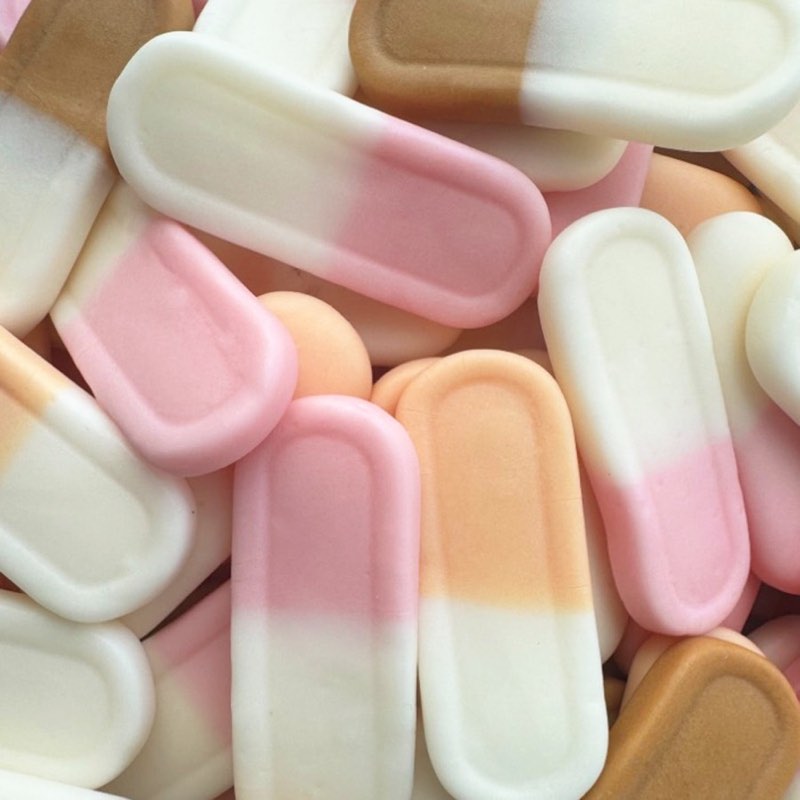
Let us get the facts straight before anything else. This is a foam sweet, listed in brown, running three flavours: cola, peach and strawberry. The entry size is 250 g at £5.49, and the range ladders up through 500 g, 750 g, 1 kg and 2 kg. It is in stock. Our supplier lists this line as vegan — that is their description of it and we are passing it on as given, so if the distinction matters to you, do check the manufacturer's packaging when it arrives rather than relying on a website.
The name is doing the describing, which is very much in the corner-shop habit — this is a sweet named after what it looks like rather than after a brand idea. No mascot, no story, no invented history. That directness is a good sign in confectionery generally. Products that need a narrative usually need it for a reason.
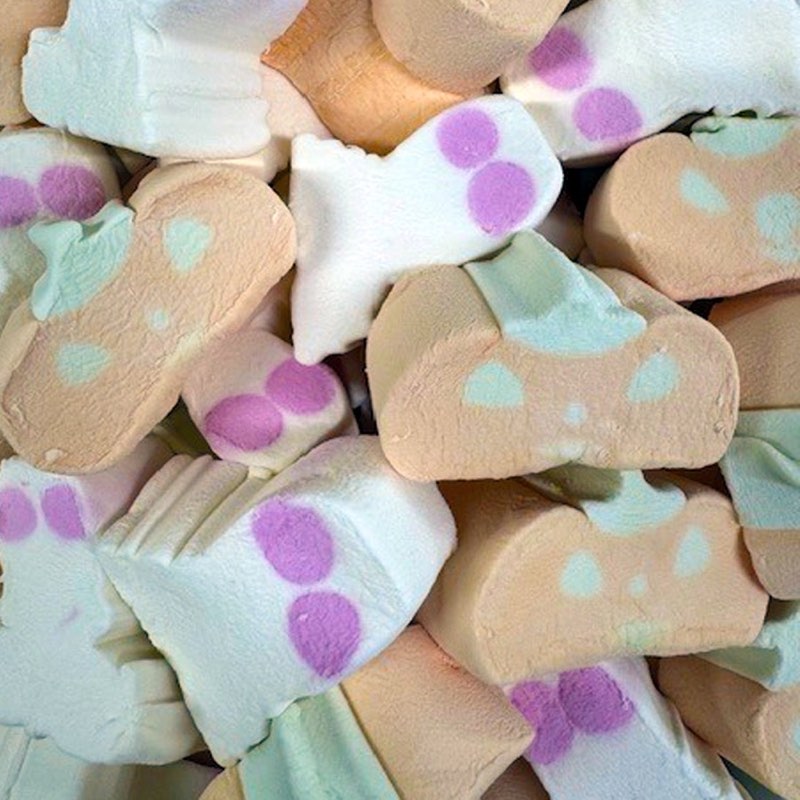
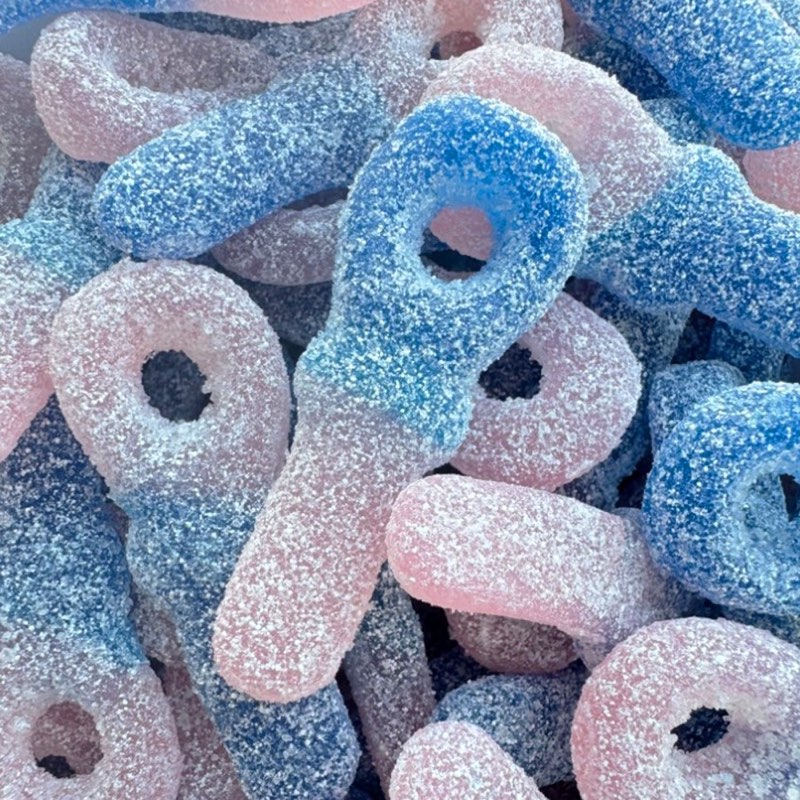
The first impression when you open a bag is softness, visible before you touch anything. Foam sits differently to jelly: it has a matte, slightly powdery-looking surface rather than a wet gloss, and pieces do not pack tightly, so 250 g fills more bag than you might expect. Pick one up and it gives under your fingers immediately and springs most of the way back. That give is the whole product in one gesture.
The three flavours are not, in a foam sweet, dramatically different to look at — foam carries colour in a softer, chalkier register than a jelly does, so the contrast between the three is gentler than it would be in a glossy gummy. In a bowl this reads as pleasant and muted rather than as a riot, which suits some tables and not others. If you want a bowl that shouts, this is not the sweet for it; if you want one that looks like it came out of a jar, it is exactly right.
How it eats, and how that differs from everything around it
Bite a foam sweet and there is essentially no resistance. It compresses rather than cuts, collapsing under the teeth in a way that is closer to eating air than to eating confectionery. There is no snap, no pull, no tension. For anybody used to gummies this is genuinely disorienting the first time, because the mouth braces for work that never arrives.
The flavour behaves accordingly. Because the piece is aerated, the surface area inside it is enormous, and flavour reaches the tongue almost instantly and across the whole of it rather than building from a point. There is no slow release, because there is nothing dense left to release slowly from. The entire arc — arrival, peak, fade — is over in something like five to eight seconds.
That short arc is the defining property of foam and the thing that determines every sensible use for it. A foam sweet cannot occupy you. It is not a long chew and it will never pace your eating the way a dense gummy does. What it can do is be pleasant repeatedly and without effort, which is a different and underrated quality. You can eat six of these in a conversation and not notice; you cannot do that with a giant bottle, and the difference is not about self-control, it is about physics.
The finish is clean and quick, with no coating left behind and no lingering. This is why foam works so well as a component in a mixed bowl rather than as the whole bowl: it resets the palate between heavier pieces instead of stacking on top of them. Eat a foam piece after something sour and the sourness genuinely does clear faster.
Two practical consequences follow from all of this. First, foam is the right texture for anybody who does not want to commit to chewing — small children, anybody with a sore jaw, anybody eating while talking. Second, foam disappears fastest on a shared table. If you put out a bowl of these next to a bowl of something dense, the foam will be gone first every time, and by a wide margin. Plan quantities accordingly; this is the most commonly underestimated item on a sweet table.
The three flavours
Cola. The most interesting of the three in this texture, because cola is an aromatic, slightly bitter, faintly spiced flavour and foam is the lightest possible vehicle for it. What you get is a much gentler cola than a fizzy bottle delivers — the shape of the flavour is there but the intensity is dialled well down, and there is none of the sharp prickle that defines the fizzy versions. People who find cola sweets too strong often find they like it in foam. Our cola flavour shelf runs to twenty-two lines and this sits at the mild end of it, which is a genuinely useful thing to know if you have written cola off.
Strawberry. The most natural fit for foam and, predictably, the one most people reach for. Confectionery strawberry is not really the fruit — it is its own long-established flavour, rounder and sweeter and less acidic than anything you would pick — and in a soft aerated sweet that roundness has nowhere sharp to catch on. The result is the gentlest of the three and the one small children go for without hesitation. It is also the broadest flavour category we carry after the general fruit shelf, with seventy-eight strawberry lines across the shop, so if this turns out to be your register there is a great deal more to explore.
Peach. The one that lifts the set out of the ordinary. Peach in confectionery has a slightly floral, perfumed quality that strawberry does not, and it finishes a little drier — there is a faint tartness at the back that gives the flavour an edge to stop on. In a three-flavour mix it does the job that a squeeze of lemon does in cooking: it stops everything tasting like one sweet note. It is also a rare flavour on British shelves. The peach shelf here holds just eight lines in total, against seventy-eight for strawberry, and that scarcity is exactly why finding peach inside a mix is more of a treat than finding another strawberry.
Taken together, the three are well chosen rather than arbitrary. You have one mild and familiar flavour, one aromatic and unusual flavour, and one that sits between them with a bit of perfume and a bit of tartness. That is a proper spread across a small set, and it is why a bag of this does not get boring at the 150 g mark the way a single-flavour bag of foam would.
Who should buy it
The clearest fit is anybody buying for young children. Soft texture, mild flavours, no sourness, nothing that requires a serious chew. It is also the easiest sweet on a table for a child to eat while doing something else, which at a party is the difference between a snack and an interruption.
The second fit is the household that wants a sweet in the evening but not an event. Because the eating arc is so short, three or four of these genuinely feels like having had something, in a way that three or four of a denser sweet does not. It is the low-commitment option on the shelf and there is no shame in that being what you want most evenings.
The third fit is anybody shopping on the vegan shelf, where the range is much narrower than on the general shelves — the vegan shelf holds thirty-seven lines against three hundred and fifty-six loose-sweet lines overall. When the choice is that much smaller, a line that comes in five sizes from 250 g to 2 kg is disproportionately useful, because it means you can buy at whatever scale you actually need rather than at the only scale on offer. Again, that categorisation comes from our supplier and the packaging is the place to confirm it.
The fourth is the pick-and-mix builder, and this is where foam earns most of its sales. A mix without a soft component is a hard mix to eat for long. One in four or one in five pieces being foam changes the whole experience of working through a bag, and most people who build their own mixes arrive at roughly that ratio by trial and error.
Who it is not for: anybody who wants intensity. There is no sour here, no fizz, no long chew, and no big flavour hit. If that is what you came for, the sharp end of the shop is a better place to start — Kingsway Fizzy Cherry Cola Bottles at £5.49 take the same cola idea in completely the opposite direction, and they cost exactly the same as the 250 g bag here, which makes the comparison a clean one.
The collector's angle: runs, seasons and novelties
Confectionery has a quiet collecting culture around it, and it exists for a structural reason: sweets change constantly, the runs are genuinely finite, and almost nobody is keeping a record. Lines appear, get reworked, change size, change format, and vanish, and there is no catalogue anywhere that tracks it. Where documentation is absent and turnover is high, collectors form. It happens with stamps, it happens with football programmes, and it happens with sweets.
The sweet collector tends to be interested in one of three things. Some collect formats — the tins, tubs, boxes and odd containers a line gets put into for a season and then never again. Some collect shapes, the individual moulded forms, which is the hardest discipline of the three because assortment contents are unlisted and change without notice. And some collect the record: what a range consisted of in a given year, what quietly left it, what appeared.
A line like this one occupies an unusual position in that world, because it is the opposite of collectible. It is evergreen, plainly named, sold in a ladder of ordinary sizes, and not tied to any season. Nobody is going to hunt for it in three years' time. And that is precisely what makes it valuable to a collection — it is the constant against which you notice the changes. If you want to know whether a seasonal foam item is actually different or just differently shaped, you need a standard to compare it with, and the standard is the everyday bag.
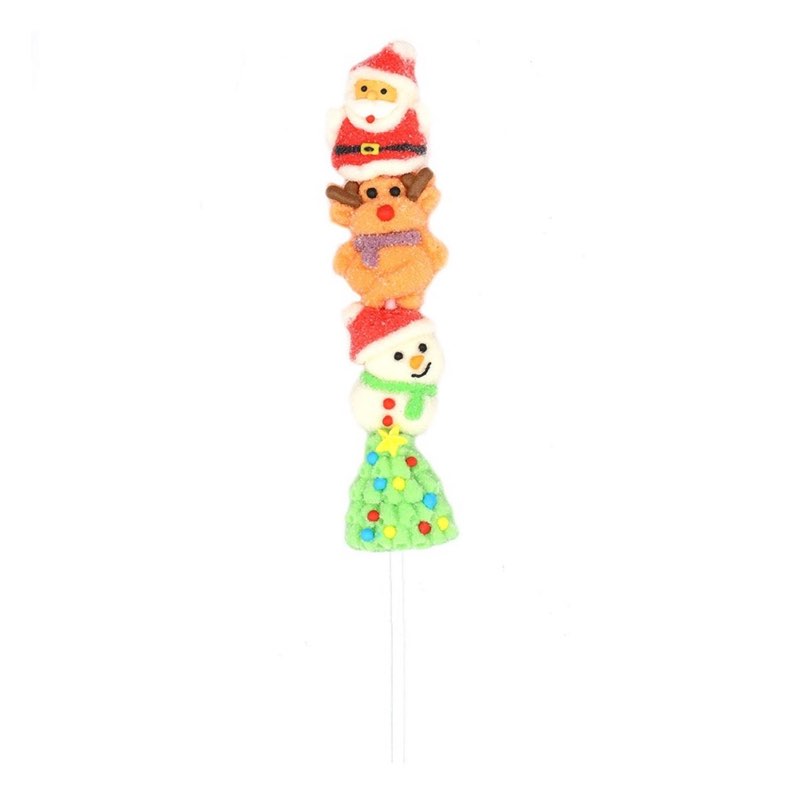
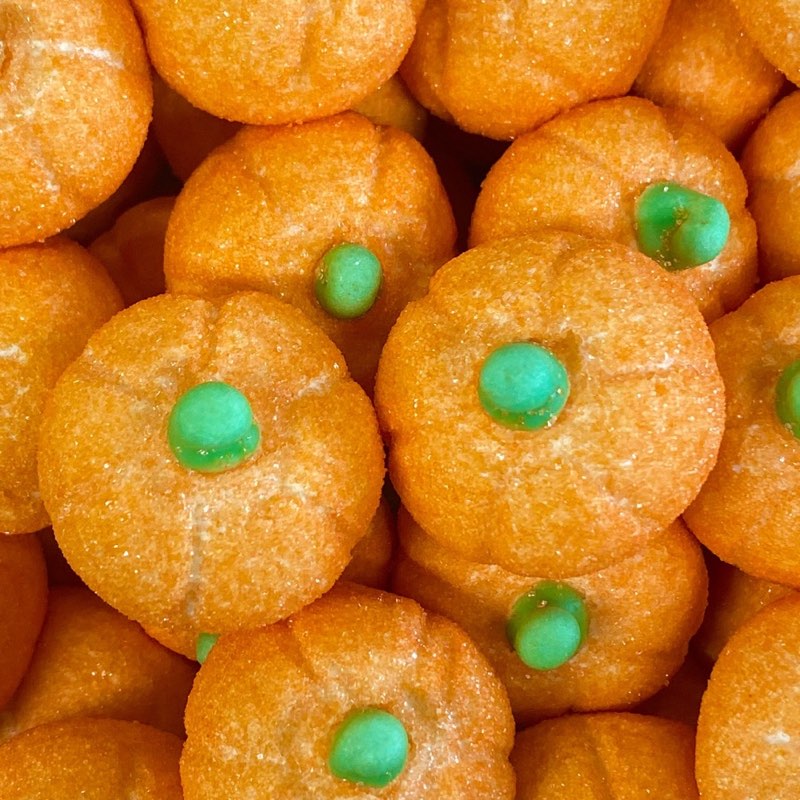
Seasonal shapes are where the real scarcity lives, and they are the most frustrating part of the hobby because the window is short and the stock does not get discounted at the end, it simply goes. Candy Realms Festive Mallow Stacker 45g at £1.50 is a good illustration of the type: a small seasonal item that exists for a few weeks, costs almost nothing, and is completely unobtainable out of season. The rule collectors learn in their first year is buy the seasonal thing on sight and buy the evergreen thing whenever you like.
Novelty formats are the third strand, and they behave differently again, because a novelty is bought for what it does rather than what it tastes of. The doing is usually a single event, shared, for the reaction. Jelly Belly Bean Boozled Jelly Beans Box 45g at £2.99 and Zed Candy Double Dares Jelly Beans Game 100g at £2.99 are both squarely in that category — products where the rules matter more than the flavour. They are terrible value as sweets and excellent value as an hour of a party, and it is a mistake to judge them on the first measure.
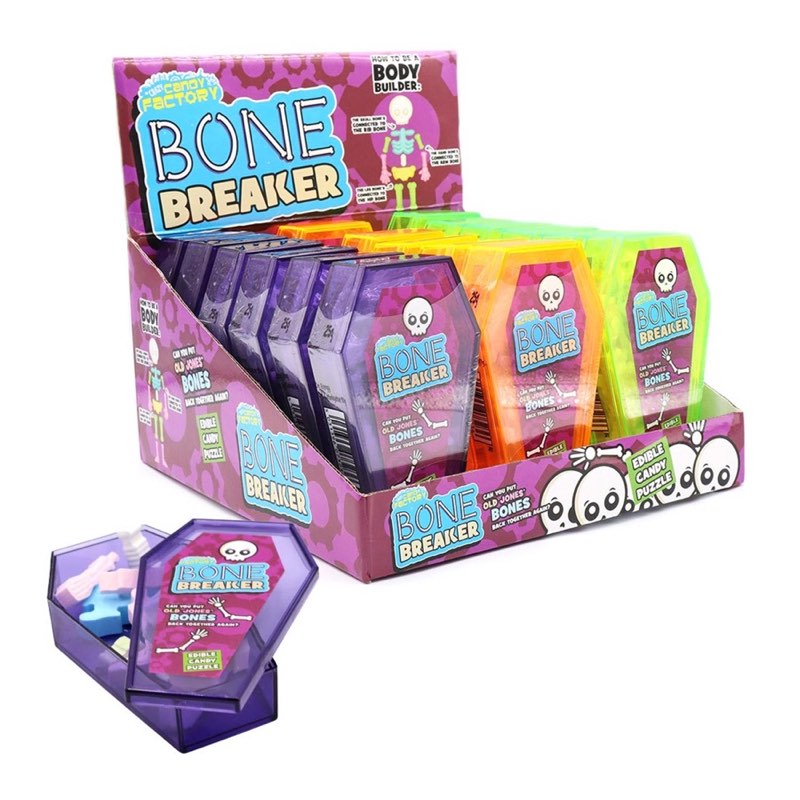
Shape novelty without a game attached is a fourth thing, and the sweet shop has always traded in it. Crazy Candy Factory Zombie Brain at £1.49 and Sweetzone Magic Mushroom Tub 805g at £7.99 sit at opposite ends of the same impulse — one is a pocket-money curiosity, the other is the same idea at catering scale. What both demonstrate is that a distinctive shape is worth real money to a shopper, which is why moulds get cut for things that would sell perfectly well as spheres.
There is a final, much more practical version of collecting that most people do without calling it that: mapping your own preferences. You buy variously for a year, you notice what you go back to, and you end up with a private index — this texture, that flavour family, this size of piece. A multi-size line like this one is a good instrument for that process, because once you have decided you like it, you can buy at a scale that reflects the decision instead of repeatedly buying the small bag. That is what the size ladder is really for.
Putting a mix together around it
Foam is a component rather than a centrepiece, so the question is not what to add to it but what to make it part of. The principle that works is contrast on three axes: texture, intensity and speed. Get those right and flavour variety looks after itself.
On texture, foam is at one extreme, so anything with a proper chew is a good partner. On intensity, this is mild, so something sharp gives the mix somewhere to go. On speed, foam is fast, so something that takes a while to eat slows the whole bag down and stops you finishing it in one sitting.
For the chew, Barratt Bumper Bananas at £5.49 are the natural partner — the same price as the small bag here, a completely different mouthfeel, and a shape large enough that you notice it in the bag rather than eating it by accident. For a large, striking piece that anchors a bowl, Swizzels Pigs Mugs Tub 576g at £8.99 gives you a substantial tub of something quite different in register.
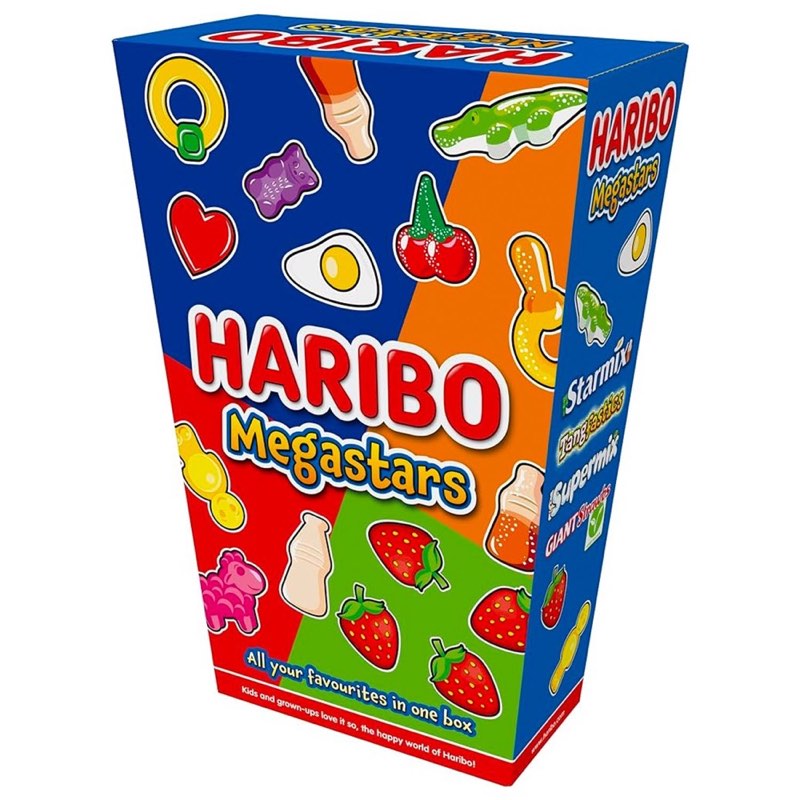
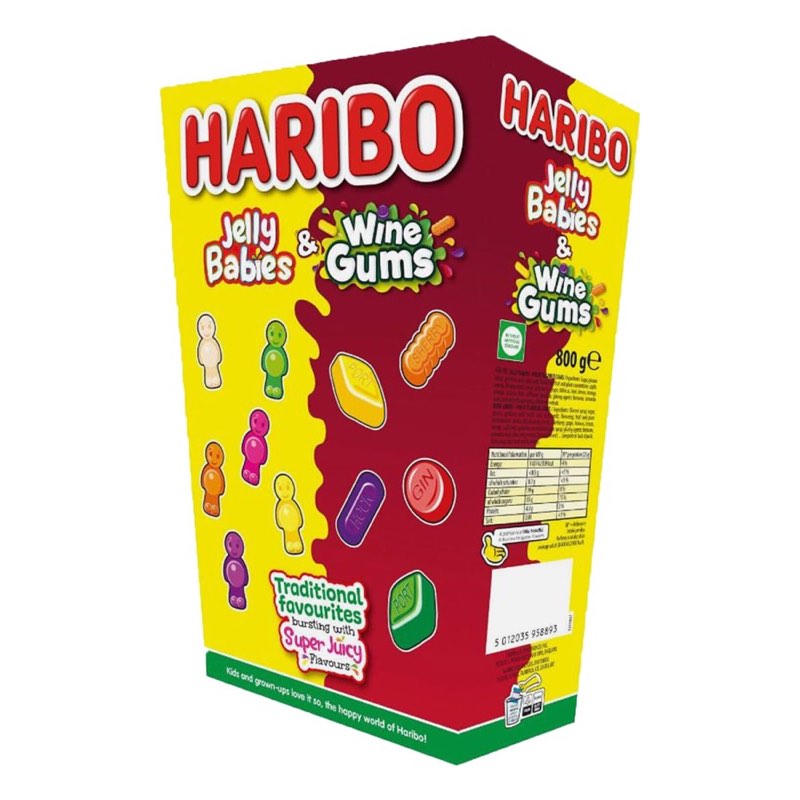
For breadth in a single purchase, a mixed box saves you assembling anything: Haribo Megastars Gift Box 800g at £6.99 covers five flavours across two textures and is one of the cheapest routes to a genuinely varied bowl on the site. Add a 250 g bag of this to that box and you have a spread that would have taken four separate purchases to put together otherwise.
For the item that makes a mix feel like somebody chose it, one unusual flavour pairing goes a long way. BUBS Wild Strawberry & Pomegranate Ovals at £7.50 do exactly that job — strawberry is familiar, pomegranate is not, and the combination reads as a deliberate choice rather than a default one. You need very little of it; a small bowl of something unexpected changes how the whole table is read.
If you would rather not buy whole bags at all and simply want to build your own bag from components, that is the better route for a first exploration, because it lets you discover what you like at twenty grams a time instead of two hundred and fifty. Come back and buy at size once you know.
Occasions it suits
Children's parties are the obvious one, and the specific advantage is that foam needs no supervision of the jaw — it is the easiest thing on a party table for a five-year-old to manage. It also bags up well: 250 g fills five 50 g party bags or ten 25 g ones, though for a party of any size you will want to be buying further up the size ladder.
Film nights and sofa evenings suit it in a different way. Foam is clean — nothing melts, nothing sheds, nothing needs wiping off a controller or a remote. The caveat is pace: because it eats so quickly, a bowl of only foam will be empty before the opening titles have finished. Mix it with something slower or portion it deliberately.
Long car journeys and days out are a genuinely good use, and an underrated one. Foam does not melt in the way chocolate does, it does not shatter, and it does not require both hands. A modest bag in the door of a car survives a week of weather that would ruin most other sweets.
For gifting, this works better as part of something than on its own. A 250 g bag is not a present by itself, but it is a good component in a hamper or a made-up selection, particularly if the person you are buying for shops the vegan shelf, where variety is harder to come by and a familiar staple is welcome. Pair it with one thing that has some theatre to it and the pair reads as thought-through.
For a stall, a club, a school fair or anything where you are serving a crowd, go straight to the top of the ladder. The 2 kg is the catering size and the only one of the five that makes sense for a table you are refilling all day.
Five sizes: what each one is actually for
This line runs from a 250 g bag to a 2 kg sack, and the prices are not a straight line, so it is worth understanding the shape of the ladder before you pick a rung.
| Size | Price | Per 100 g | Cost of the step up | Who it is for |
|---|---|---|---|---|
| 250 g | £5.49 | £2.20 | — | Trying it, or one household for a fortnight |
| 500 g | £9.99 | £2.00 | +£4.50 | A small gathering, or a regular habit |
| 750 g | £12.99 | £1.73 | +£3.00 | The best-value step on the whole ladder |
| 1 kg | £16.49 | £1.65 | +£3.50 | A party, or a month of a busy house |
| 2 kg | £28.99 | £1.45 | +£12.50 | Stalls, fairs, catering, a refillable jar |
The column that repays attention is the fourth one. Most size ladders get steadily better value as you climb, but this one does not climb smoothly — the 500 g to 750 g step is the cheapest 250 g you can buy anywhere on the ladder, at £3.00, and it is cheaper than the step below it, which costs £4.50 for the same increment. In plain terms: if you are already thinking about the 500 g, going to 750 g costs you three pounds and drops your unit price by 27p per 100 g. That is the single best decision available on this page.
Above that, the 1 kg costs £3.50 for its extra 250 g, which is still reasonable but no longer a bargain, and the jump to 2 kg is a different class of purchase entirely. At £28.99 you are paying £1.45 per 100 g, a third less than the small bag, but you are committing to a quantity that needs a reason behind it. Two kilos of foam is a very great deal of foam.
Now the portions, because grams are abstract and handfuls are not. On 25 g portions — a small evening handful — the 250 g bag gives you ten sittings, the 750 g gives you thirty, and the 2 kg gives you eighty. On 50 g portions, the size you would put in a party bag, those become five, fifteen and forty. A useful rule for a mixed party table is 40 to 50 g of sweets per child across everything on offer, so if foam is one of three or four items you are putting out, budget roughly 15 g a head of this specifically and buy accordingly.
One honest note on value. Foam is a light, bulky sweet, which means the per-gram price looks higher than a dense sweet's for the same-looking volume in a bowl. Compared by the bowlful rather than by the gram, this is better value than the table suggests. Compared by how long it occupies you, it is worse. Which comparison is the right one depends entirely on whether you are filling a table or filling an evening.
Keeping it in good condition
Foam is the most air-sensitive texture in the shop, and this is the one thing genuinely worth knowing before you buy in quantity. A foam sweet's entire appeal is the give, and the give comes from the aeration, and the aeration is exactly what the surrounding air slowly takes away. Left open, foam stiffens. It does not spoil and it does not become unpleasant, but the softness that made you buy it quietly leaves over a couple of weeks.
The fix is trivial and almost nobody does it: seal it properly the day it arrives. A lidded tub, a clip, or a bag with the air pressed out, kept in a cupboard. If you are buying at 1 kg or 2 kg, decant into two or three containers rather than one, and only open one at a time — that way the bulk of your purchase is still sealed while you work through the first portion.
Warmth is the second issue and affects foam less dramatically than it affects jellies, but a warm cupboard will make pieces compress and cling together under their own weight, particularly at the bottom of a large bag. Somewhere cool and dark, away from the oven and out of direct sun, is all that is needed. Not the fridge: cold and damp together are worse for foam than warmth is.
Damp is the third. A humid kitchen makes the surface of foam tacky, and tacky foam sticks to itself. Again, a sealed container is the whole answer, and the humid-kitchen problem is the main reason to decant rather than leaving a bag rolled over on a shelf.
Practically: open, decant, seal, cupboard. Done on day one it takes ninety seconds and the difference a month later is obvious. And do read the manufacturer's packaging when the bag arrives — the pack carries the definitive information on the product, and anyone in the house who needs to avoid something should be reading that rather than a website. Sweets are a treat rather than a staple food, and whole soft sweets are still a choking risk for young children, so they should be eaten with an adult present.
Where this sits on the site
Six shelves carry this product and each is a different way in. If texture is what you care about, browse all thirty-three foam lines — it is a small enough category to look at exhaustively in one sitting, which is not true of most of the shop, and if foam is your preference that is a genuinely efficient half hour.
If you shop by dietary listing, thirty-seven lines our suppliers list as vegan is the relevant shelf, and it is worth browsing whole for the same reason — it is short, and knowing all of it is more useful than searching it repeatedly.
By flavour, the three shelves this touches differ wildly in size, and that difference is informative in itself: strawberry is enormous, cola is moderate, and peach is a short shelf here with only eight lines on it. If peach turns out to be the flavour you love, you now know that it takes hunting and that finding it inside a mix is worth something.
For wider browsing, the loose-sweets aisle is where most of the shop lives, the candy and chocolate hub is the broadest category view, and jelly and gummy sweets is the obvious next shelf if you have decided you want the opposite texture to this one. Old-fashioned sweet-shop shapes is the place to go for the jar tradition described at the top of this page. And if you would rather scroll than filter, every sweet in the shop is on one page — for building a varied bowl that is often the better tool, because you spot gaps by seeing everything rather than by narrowing down.
Questions shoppers ask
Is it vegan?
Our supplier lists this line as vegan, and that is the basis on which it appears on our vegan shelf. We are passing on their categorisation rather than making our own assessment, so if this matters to you — and for most people asking the question it matters a great deal — please read the manufacturer's packaging when the bag arrives and treat that as the authoritative source. If anything on the pack does not match what you expected, get in touch before eating it rather than after.
What does a foam sweet actually taste like compared with a gummy?
Softer and shorter, in both senses. The texture collapses rather than resisting, so there is no chew to speak of, and the flavour arrives immediately and fades within a handful of seconds rather than building over half a minute. It is a lighter experience all round. People who find gummies too much work usually prefer foam immediately; people who like the jaw work of a dense sweet often find foam insubstantial. Neither reaction is wrong.
Which size should I buy first?
If you have never had it, the 250 g at £5.49. If you know you like foam and you are buying for a household, skip straight to the 750 g — it is the best-value rung on the ladder and the step up from 500 g costs only three pounds. The 1 kg and 2 kg are for parties, stalls and refillable jars rather than for ordinary shopping, and the 2 kg in particular needs a genuine plan behind it.
Are the three flavours mixed together in one bag?
Cola, peach and strawberry are the flavours listed for this line, so a bag covers that range rather than being sold as single flavours. We do not control or adjust the proportions, and we would rather not guess at a ratio, because it is not something we can verify bag by bag. If you want a guaranteed balance of specific flavours, building your own selection from the pick and mix is the way to get it.
Will it be too soft for older children?
Not too soft to enjoy, but possibly too mild to impress. Children from about eight upwards tend to want intensity — sour, fizzy, or a shape with some theatre to it — and a gentle foam sweet can read as a bit young to them. The straightforward fix is not to serve it alone: put it out alongside something sharp or something large, and it becomes the thing they eat between the things they show off about eating.
How long will an opened bag stay good?
Sealed properly, months. Left open, you will notice it stiffening within a fortnight. Foam is the most air-sensitive texture we sell, and the difference between a well-stored bag and a badly stored one is much more noticeable than it would be with a jelly. Decant into a lidded container on the day it arrives, keep it cool and dark, and the problem never comes up.
Does it work for a pick and mix?
Very well, and it is one of the components most worth including. A mix made entirely of chewy sweets is hard work to eat through; one soft component in every four or five pieces changes the whole experience of a bag. Most people who build their own mixes converge on roughly that ratio without being told to. If you are assembling for a party rather than for yourself, lean slightly heavier on the soft side than you would personally.
Can I mix sizes — a small bag of this and a larger one of something else?
Yes, and for most tables that is the right shape of order. The useful principle is that your soft, fast-eating items should be bought in larger quantities than your slow, chewy ones, because the soft ones always go first and by a wider margin than people expect. If you are buying 750 g of something dense, buy at least as much foam, not less.
Is it suitable for a young child's party bag?
It is a common choice for one, yes, mainly because the soft texture is easy for small children to manage. Two things to plan for. Whole soft sweets are still a choking risk for young children and should be eaten with an adult present. And because we cannot verify ingredient information for this line, anybody with an allergy among your guests should be working from the manufacturer's packaging, so keep the pack until the bags have been handed out.
Why is a light sweet more expensive per gram than a heavy one?
Because you are buying volume rather than density. Foam takes up far more room per gram than a dense gummy does, so the same weight fills a much bigger bowl. Compared by the bowlful this is better value than the per-gram figure suggests; compared by how long a piece lasts in your mouth, it is worse. Which measure matters depends on whether you are filling a table or filling an evening.
What is the nearest thing to it if I want something firmer?
Stay in the same flavour territory and change the texture. The cherry cola bottles take the cola idea into a fizzy, chewy register at the same £5.49 as the small bag here, and the bumper bananas give you a substantial chew for the same money again. Both are a complete contrast in the mouth while still being recognisably sweet-shop confectionery rather than something exotic.
Is it in stock?
Yes, at the time of writing, in all five sizes from 250 g at £5.49 up to 2 kg at £28.99. Evergreen lines like this one are generally more reliably available than seasonal items, which is part of what makes them a sensible backbone for a regular order — you can plan around them in a way you cannot plan around a limited run.
In short
A soft, three-flavour foam sweet in the plainest sweet-shop tradition: cola, peach and strawberry, listed by our supplier as vegan, from £5.49 for 250 g up to £28.99 for 2 kg. It is mild rather than intense and quick rather than long, which makes it the easiest thing on a table for small children and the most useful soft component in anybody's pick and mix. Buy the 250 g to find out whether you like it, the 750 g if you already know, and seal whatever you buy on the day it arrives.
More foam sweets
More strawberry sweets
More loose sweets sweets
Where this sits
Briquette appears on these shelves. Browse them, or jump to something nearby.
You might also like