Home / Loose Sweets / Candy Realms Festive Mallow Stacker 45g
Candy Realms · 100g
Read the full guide
Candy Realms Festive Mallow Stacker 45g
£1.50
✔ In stock — ready to ship
Fresh stock
Free over £20
Same-day dispatch
Secure checkout
There is a particular job in a pick-and-mix bag that almost nobody plans for and everybody misses when it is not there: the light thing. Every mix ends up heavy on chew and heavy on jelly, because those are the sweets people think of first, and the result is a bag where every piece asks roughly the same amount of work from your jaw. A mallow breaks that up. The Candy Realms Festive Mallow Stacker 45g is a £1.50 unit whose entire usefulness in a mix is that it is nothing like the things around it, and that is the right reason to put it in a bag.
Start with what else is going in. If you are building a mix for a family or a party rather than for yourself, the practical rule is four jobs: something chewy, something firm, something sharp, and something light. Get one of each and the bag stays interesting to the bottom. Miss one and people pick through it looking for the sweet they actually wanted.
The full guide to Candy Realms Festive Mallow Stacker 45g
5,332 words on how it eats, who it suits, how to serve it and what to put beside it.
Building a bag around a £1.50 stacker
For chew, Barratt Bumper Bananas at £5.49 is the classic answer and it happens to sit unusually well beside a mallow, because both are soft but they are soft in completely different ways — one is dense and clinging, the other is airy and quick. Put them next to each other and you notice the difference in a way you would not notice either alone. For firmness and a bit of resistance, Kingsway Crocodiles at the same £5.49 gives you a proper gummy bite and a long shape that stops a bag looking like a pile of identical lumps.
The sharp slot matters more in a mallow-containing mix than in most, because foam is the mildest thing you can put in a bag and it needs something to push against. Barnett's Mega Sour Apple Candy Bags 104g at £3.99 is the loudest option and works best when the bag is for older children or adults. If you want the contrast without the shock, Sweetzone Fizzy Rings Tub 800g at £7.99 gives you a fizzy edge in a much gentler register, and an 800 g tub is enough to keep supplying mixes for months rather than one afternoon.
Then the light slot, which is the one the stacker fills — and the one where it is worth knowing that foam is not a single texture either. BUBS Banana & Caramel Foam Sweets at £7.50 is a foam too, but a Scandinavian-style one with a different density and a much firmer set than a soft stacked mallow. Having both in a bag is not redundant; it is the same trick as having two chews. Vidal Foam Jelly Filled Seashells Tub 795g at £7.99 takes it further again by putting a jelly inside a foam, so one piece does two textures on its own.
If the mix is for a children's party, the useful additions are shapes children recognise on sight. Haribo Fried Eggs at £5.49 and Swizzels Pigs Mugs Tub 576g at £8.99 both do that, and a tub of the latter is sized for the sort of party where you are filling twenty bags rather than one. For an adult mix, Dals Chocolate Covered Bears at £7.49 brings chocolate into a bag of sugar sweets, which changes the whole character of a mix in one move.
You can assemble any of this through Pick & Mix, and the stacker's low price is what makes it an easy inclusion. At £1.50 it is not a line you have to justify — it is the kind of thing you add to an order because it costs less than the postage on a single item and it changes the texture of everything it sits with.
Getting it out of the packet
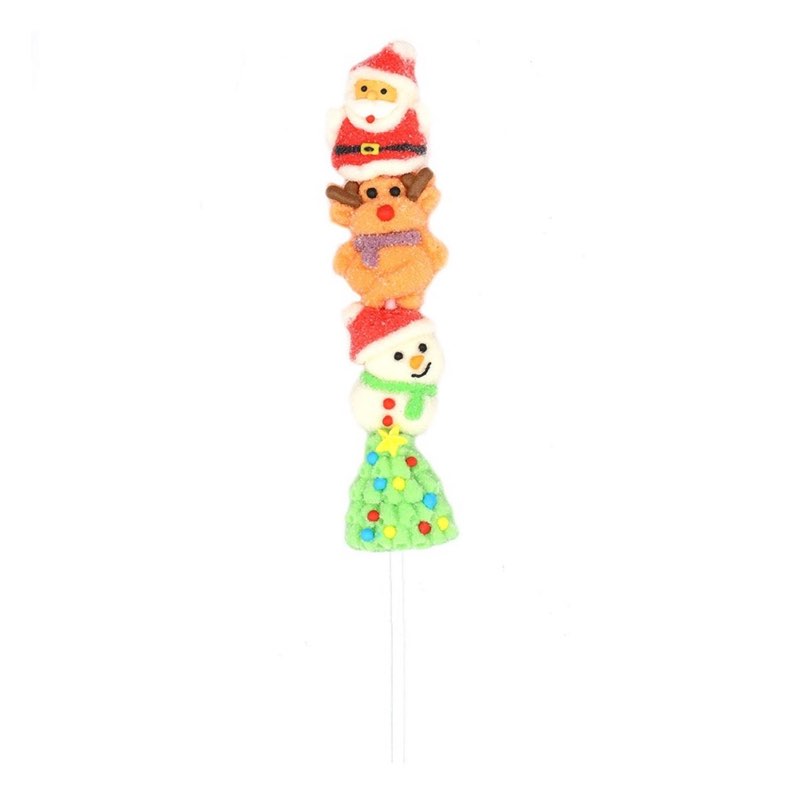
The name tells you most of what you need to know, and the rest is in the two facts we hold. It is a stacker, which is to say it is built in layers rather than moulded as a single lump — that is the shape language of the product and the reason it is called what it is. Our catalogue lists the colour as Multi Coloured, so expect more than one colour in the stack rather than a single-tone sweet, and it is listed under the foam sweet type rather than under jelly or gum.
We do not hold a flavour listing for this line, and we are not going to make one up. Some products on the site have a named flavour attached to them in our product data and some do not, and this is one of the ones that does not. If a precisely named flavour is what you are shopping for, that is a good reason to look at something else — but for a £1.50 mallow going into a mix, most people are buying the texture and the look rather than a specific taste, and the absence of a stated flavour matters a good deal less than it would on a £9 bag.
The festive in the name is the seasonal positioning, and it is the reason this appears on tables in December more than in June. That is worth factoring into how you buy it: seasonal lines tend to be around when they are around, so if you are planning a Christmas hamper or a set of stocking fillers, buying early is more sensible with a festive line than with a year-round one.
How a mallow actually eats
Pick one up and the first thing your fingers report is how little it weighs for its size. Foam is mostly air held in a set structure, so a mallow is always bigger than its mass suggests, and that mismatch between what your eyes expect and what your hand receives is a small part of why children like them. Press one and it compresses a long way, then springs most of the way back — not all the way, which is the difference between a mallow and a sponge.
The surface is soft and slightly powdery to the touch rather than glossy, which is normal for the format and which has a practical consequence in a mix: a mallow does not slide past other sweets in a bag the way a shiny jelly does. It sits where you put it and it takes on a little of whatever it is touching.
In the mouth it goes fast. A jelly asks for ten or fifteen seconds of chewing; a mallow collapses in three or four, going from a springy resistance to something soft and yielding almost immediately, and then dissolving rather than needing to be worked down. That speed is the defining quality of the format. It is why mallows feel light even when you have had several, and it is why they are the sweet people reach for last in a bag rather than first — the mouth treats them as a finisher.
Because a stacked mallow has layers, the collapse is not uniform. You feel the layers separate slightly under the first bite before the whole thing gives way, which is a more interesting eat than a single-piece mallow of the same size. It is a small detail and it is the entire argument for buying a stacker rather than a plain one.
The flavour, whatever is in it, arrives and leaves quickly, in line with the texture. Foams do not linger the way a chew does, and they do not coat the mouth. That makes them unusually good as a palate break between two stronger sweets, which is the practical point this page keeps returning to.
What foam does to the rest of the bag
If you build mixes regularly, the thing worth understanding about a mallow is that it is the one format in a pick-and-mix bag that actively interacts with its neighbours. Most sweets are self-contained: a jelly sits next to a chew for a week and neither changes. Foam is porous and lightly powdered, and that means it participates.
It takes on what is next to it
A mallow sitting against a sour-coated sweet will pick up some of that coating, and the coating will stay on it. This is not a defect and it is not a reason to avoid the combination — plenty of people build mixes deliberately so that the mallows pick up a little sourness from something like sour apple candy bags at £3.99 and end up as a milder version of the sharp sweet next to them. But it is a behaviour you should choose rather than discover. If you want the mallow to stay exactly as it started, keep it away from heavily coated sweets in the bag, or bag it separately and combine at the bowl.
The same goes for anything with a strong aroma. Liquorice and aniseed lines in particular will transfer their character to a foam sitting against them over a few days in a sealed bag. Again: useful if you want it, annoying if you do not.
It is the first thing to get crushed
Weight matters in a mixed bag, and foam is the lightest thing in it. If you fill a bag with the mallows at the bottom and a tub's worth of firm gummies on top, the mallows arrive compressed. The fix is the same one greengrocers use: heavy at the bottom, light on top. Put the crocodiles and the fizzy rings in first and the stackers in last, and everything comes out of the bag looking like it went in.
This is more of an issue with a stacked shape than with a round one, because layers compress unevenly and a squashed stacker looks squashed in a way a squashed sphere does not. If a mix is going into a party bag or a hamper where presentation counts, it is worth two seconds of thought about loading order.
It changes the pace of eating
Here is the effect that actually justifies putting a mallow in every mix you build. A bag of uniformly chewy sweets gets eaten steadily and then abandoned — the jaw gets tired before the bag is empty. Introduce a light, fast-dissolving item at roughly one piece in five and the rhythm changes: people alternate without noticing, the chew gets a break, and the bag gets finished. One in five is the ratio we would suggest as a starting point. Below one in ten the mallows disappear and you may as well not have bothered; above one in three the bag starts to feel insubstantial.
It gives the bag some volume
The last piece of the builder's view is purely visual. Because foam is light for its size, a handful of mallows fills a bag far more than the same weight of gummies, so a mix containing them looks more generous than an identical-weight mix without them. If you are filling party bags or making up a small gift and you want the bag to look full without the cost climbing, the stacker is the cheapest volume you can buy. A pound-fifty item that visibly fills a corner of a bag is doing more presentational work than most things at twice the money.
Put all four of those together and you get the practical conclusion: a mallow is not a flavour decision in a mix, it is a structural one. You are buying pace, volume and contrast. Once you start thinking about mixes that way, the £1.50 lines stop being afterthoughts and become the things that make the expensive lines work properly. There are 33 lines on the foam shelf if you want to go deeper into the format, and it repays a proper look — foams vary far more than people expect.
Giving it: hampers, letterboxes, teacher gifts and parcels
A £1.50 festive item is almost purpose-built for giving, and it is worth being specific about which kinds of giving it is good at, because the answer is not all of them.
Hampers want three tiers of item: something large that sets the structure, something medium that fills the body, and several small things that pack the gaps and stop everything rattling. The stacker is squarely in the third tier, and that tier is the one people under-buy. They spend the budget on one impressive item and then the basket looks half-empty. Two or three small festive lines at a pound or two each fix that for the price of a coffee. Build the structure with something like an 800 g tub of fizzy rings, fill the body with a couple of sharing bags, and pack the corners with stackers.
Letterbox treats are where this product is genuinely strong, and it is a rare thing to be able to say. It is small, it is light, it is cheap, and it is not fragile in the way chocolate is fragile in a cold or warm postal system. Three or four small items in a padded envelope, one of them festive, is a properly good thing to send someone in December, and the total cost stays sensible. If you are sending to a child, the Candy Realms Halloween Pumpkin Light Pop 11g at £1.49 is from the same brand and is the equivalent trick for the other end of the year — a novelty at pocket-money money that travels flat.
Teacher gifts and end-of-term giving benefit from the same logic but with a presentational twist. One small item on its own reads as an afterthought; five small items in a cellophane bag with a ribbon reads as a gift. The stacker is one of the five. Because it is festive and multi-coloured, it is also the one that makes the bag look like Christmas rather than like a handful of sweets, which is disproportionate value for £1.50.
Care parcels — for a student, for someone in hospital-adjacent circumstances, for a friend having a hard month — are about number of small pleasures rather than total spend. Six cheap things beat one expensive thing nearly every time, because each one is a separate moment. A parcel built from a £5.49 bag and four or five items in the pound-to-two-pound range will feel more generous than the same money spent on a single premium box. Briquette at £5.49 is a good anchor for that kind of parcel, and the stackers go around it.
Stockings and advent are the most obvious use of all and need the least explanation. A festive line at £1.50 is exactly the price point a stocking filler wants to be, and buying three or four of them costs less than one mid-sized gift. The only planning note is the seasonal one: buy them when you see them rather than in the third week of December.
What it is not good for as a gift
It is not a standalone present. Handing someone a single £1.50 packet as their gift is a joke that has to land perfectly to work, and it usually does not. It is a component. Treat it as one and it earns its place in almost any sweet gift you assemble; treat it as the gift itself and it will disappoint. If you want something that stands alone at a modest price, a full-sized sharing bag from our loose sweets range does that job far better.
Foam, and where it sits among the textures we stock
We do not list a flavour for this line, so instead of writing flavour notes we cannot support, it is more useful to talk about the format — because texture is what you are actually choosing when you buy a foam, and because the foam category is more varied than its name suggests.
At one end you have the soft, light, fast-collapsing mallows, which is where a stacker sits: high air content, quick dissolve, gentle. At the other end you have the denser Continental-style foams, which are firmer, chewier and closer to a marshmallow that has been left to set properly — the £7.50 BUBS foam bag is the reference point for that end of the shelf. In between sit the hybrids, where a foam is used as a container for something else, as in the 795 g seashells tub, which gives you a foam shell and a jelly centre in a single piece.
Knowing which end you like is more useful than knowing which flavour you like, because the textures do not substitute for one another. Someone who loves a soft mallow can find a dense foam faintly disappointing and vice versa. If you are new to the category, buying a cheap soft one and a bag of a denser one at the same time is a quicker way to find out than reading anything, this page included.
Against the rest of the shop, foam's role is contrast. The jelly and gummy aisle is where the resistance lives, Candy & Chocolate is where the richness and the hardness live, and foam is the format that makes both of those read more strongly by sitting next to them. A sweet table with no foam on it is a table where everything is competing at the same volume.
When to put it out
The obvious answer is Christmas, and the name is not being subtle about it. On a December table, small festive items do a specific job: they signal the season without anybody having to buy seasonal versions of everything. Two or three festive lines scattered among your normal sweets is enough to make a whole spread read as Christmas, and it is far cheaper than buying a festive version of every bowl.
School and nursery parties are the other natural home. A light, soft sweet at £1.50 a unit is easy to buy in quantity for party bags, and its low price means you can put one in every bag without the total getting away from you. Twenty bags with a stacker in each is £30, which is a sane line in a party budget.
Film nights and quiet evenings suit it for the texture reason rather than the festive one. A foam is the sweet you can eat several of without feeling like you have had a serious amount of confectionery, and it does not demand attention while you are watching something.
Office desks and staff rooms in December are the last obvious one. A bowl of small festive items on a shared desk is a low-cost, low-effort piece of goodwill, and mixing them through something more substantial from retro sweets gives you a bowl that covers every age group in an office.
Putting it out: bowls, boards and bags
Foam is the one format that is easy to serve badly, and the mistake is almost always the bowl. A deep bowl is designed for dense sweets — jellies and gummies sit in it, settle, and stay visible at the rim. Mallows do the opposite: they are light enough that the top layer gets taken and the rest sink into the space left behind, so within ten minutes a deep bowl of foam looks empty from above while still being two-thirds full. Use a shallow dish or a wide low bowl instead and the same quantity looks like twice as much all evening.
On a board, a stacked shape is worth exploiting rather than hiding. Because the pieces have flat-ish layered faces, they will stand rather than roll, which almost nothing else on a sweet table will do. Standing a row of them along the edge of a board gives the arrangement a height line, and height is the thing most home sweet tables lack. Roll-prone shapes go in bowls; things that stand go on the board. That single rule will improve any spread you lay out.
For party bags, the practical trick is to put the stacker in last and against the side of the bag where it is visible through the cellophane. It is the most colourful, most festive-looking item in most bags at this price, so it should be the one doing the advertising. Buried at the bottom under a tub's worth of gummies it does neither its visual job nor its textural one.
Temperature is worth one line here too. A foam served from a cold room eats firmer and slower than the same sweet at normal room temperature, where it collapses quickly and cleanly the way it is meant to. If a box has been in a cold hallway or a car boot, give it an hour indoors before you put it out — it is a small difference, but it is the difference between the texture the product is built around and a slightly muted version of it.
What £1.50 buys and how to think about quantity
At £1.50, this is an impulse-tier purchase, and the sensible way to evaluate it is not per gram but per use. One packet is one contribution to a mix, one corner of a hamper, one party bag, or one stocking filler. That is the unit that matters.
| What you are doing | How many to buy | Spend |
|---|---|---|
| Adding texture to one family mix | 1 | £1.50 |
| Packing the corners of a hamper | 2 to 3 | £3.00 to £4.50 |
| A letterbox parcel alongside other small items | 1 to 2 | £1.50 to £3.00 |
| One per bag for a party of twenty | 20 | £30.00 |
| Stocking fillers across a household | 3 to 5 | £4.50 to £7.50 |
Set against the rest of an order, the useful observation is how little it moves the total. Most of the sharing bags you would build a spread from sit at £5.49, and the tubs sit between £7.49 and £8.99 — so adding two or three stackers to an order is a rounding error against the bags, while noticeably changing what the finished spread looks like. That asymmetry is the whole commercial case for cheap seasonal lines, and it is why experienced mix-builders always have two or three of them in the basket.
The one caution on quantity is that a mix wants mallows at roughly one piece in five, so scale your buying to the size of the mix rather than to enthusiasm. Buying six packets for a single 500 g mix will give you a bag that is mostly air, and the more substantial sweets will be the ones left at the bottom.
Keeping foam in good condition
Foam has one enemy and it is not heat — it is air. Left open, a mallow dries from the outside in, and what was soft and springy becomes firm and slightly crusted at the surface within a couple of days. The fix is simply to keep it sealed: an airtight tub or a clip on the bag is enough, and it costs nothing.
Beyond that, the usual advice applies and applies a little more strongly than it does to jellies. Keep it somewhere cool, dry and out of direct sunlight, and keep it away from anything strongly aromatic, because a porous sweet will pick up the character of what it is stored with. If you keep a sweet cupboard with several lines from the whole shop in it, foams should have their own container rather than sharing with liquorice or with anything sour-coated.
Do not refrigerate foam. Cold makes it firm and slightly rubbery and takes away the quick collapse that is the point of the format, and unlike a jelly it does not fully recover when it warms back up. A cupboard is the right place, even in a warm week.
If a stacker has been squashed in transit or at the bottom of a bag, it will not come back to shape — foam does not fully rebound from a heavy crush. That is not a quality problem, it is just the nature of the material, and it is the reason for the loading advice above.
One size, and whether to buy more than one
There is a single version of this line: one size at £1.50, and it is in stock. So the only decision is quantity, and the table above is the honest answer to that.
If you are buying for one household mix, one is right. If you are buying for a hamper, two or three. If you are buying for a party, buy one per bag and do not overthink it. And if you are buying into the festive range more broadly, it is worth pairing with something from the same brand so the parcel has a consistent character — the £1.49 pumpkin light pop is the other Candy Realms novelty we stock, and while it belongs to a different season entirely, it tells you what kind of things this maker does: small, cheap, shaped for an occasion.
Finding it, and what sits near it
This line is listed on two shelves. It is part of all 356 loose lines, which is the broad category most of our sharing and mixing stock lives in, and it is on the foam shelf alongside 33 other foam products — that second one is the more useful of the two if you already know you like the texture and want to see the whole format in one place.
From those shelves, the routes onward are straightforward. Our build-your-own bags are where most people end up if they came here for a mix component. The broader full list of sweets is the right route if you are shopping by brand rather than by type.
Among the products nearby, the ones worth knowing by what they do: the crocodiles for a long gummy shape that breaks up a bag of round things; fried egg gummies for a shape children pick out on sight; a £5.49 bag of bumper bananas for a dense, clinging chew that contrasts hardest with a mallow; and the 576 g Swizzels tub when you need party-bag quantities rather than a single bag.
Questions we get asked
What flavour is it?
We do not hold a flavour listing for this line, so we do not state one. Our product data records it as a foam sweet in multiple colours and nothing more precise than that, and we would rather say so than guess. If a named flavour is important to you, there are plenty of lines on the site where it is listed, and this is not one of them.
Is it a marshmallow?
It is listed under our foam sweet type, which is the category that covers mallow-style sweets on this site. What that tells you in practice is the texture: light, airy, quick to collapse, and soft rather than chewy. That is the meaningful part of the answer, and it is the part that determines whether you will enjoy it.
Why is it called a stacker?
Because it is built in layers rather than moulded as a single piece — that is what the name is describing. In eating terms it means you feel the layers separate slightly under the first bite before the whole thing gives way, which is a more interesting mouthful than a plain mallow of the same size.
What colour will I get?
Our catalogue records this line as multi-coloured, so expect more than one colour in the stack rather than a single-tone sweet. We do not hold a listing of which specific colours are in it, so we will not promise any particular combination.
Is it suitable for vegetarians or vegans?
Our supplier has not given us a diet listing for this line, so we do not make one. We only state a diet tag where the supplier has provided it. If that matters to you, check the manufacturer's packaging when your order arrives, before anyone eats any of it.
I have an allergy — where do I check?
On the manufacturer's packaging, on arrival, before eating. We do not publish ingredient or allergen detail for this line on the site and we will not paraphrase it, because the pack that turns up with your order is the only version of that information worth relying on.
Is it safe for young children?
Sweets are a treat and should be treated as one. Whole gummies and small hard sweets are a choking risk for young children and children should be supervised while eating them. With a soft stacked mallow the sensible approach with a very young child is to break it down rather than hand it over whole.
Will it get squashed in the post?
Foam does not fully rebound from a heavy crush, so pack it accordingly: put it at the top of a parcel rather than under heavier items, and it travels perfectly well. In a padded envelope with a couple of other small items it is one of the better-behaved sweets you can post, because there is nothing in it to melt or shatter.
How many should I put in a pick-and-mix bag?
Roughly one piece in five is our suggested starting ratio. That is enough for the mallows to break up the chew and give the bag some volume, without the mix starting to feel insubstantial. Below one in ten they get lost among the heavier sweets; above one in three the bag stops feeling like value.
Does it need to go in the fridge?
No, and it should not. Cold makes foam firm and slightly rubbery, and it does not fully recover when it warms back up — unlike a jelly, which mostly does. A cool, dry cupboard away from sunlight is the right place, even in warm weather. The one thing that genuinely matters is keeping it sealed, because air dries it out faster than heat does.
Is it only available at Christmas?
It is a festive line, and seasonal lines tend to come and go with their season, so the practical advice is to buy it when you see it rather than assume it will be there in the third week of December. It shows as in stock at the time of writing, and the product page is the live answer to that question.
Can I buy it in a bigger pack?
There is one size only, at £1.50, so scaling up means ordering more of them. For most uses that is fine — you want two or three for a hamper, or one per bag for a party. If you want genuine bulk in a foam, the seashells tub and the BUBS bag are the two nearby lines that come in tub and sharing-bag quantities.
Can I use it for cooking or toasting?
We would not buy it for that. It is sold as a sweet to eat as it is, and we do not hold the product information that would let us tell you how it behaves under heat. If toasting is the plan, buy something that is sold and labelled for toasting rather than adapting a novelty line and hoping. As a sweet in a bowl or a bag it does exactly what it is meant to.
Does it work in a bag with chocolate sweets?
It works well in a bowl with them and less well sealed in a bag with them for days on end. Chocolate and foam are a good contrast to eat — one rich and slow, one light and quick — so something like the chocolate-covered bears alongside a handful of mallows makes a genuinely good two-item bowl. Stored together in a warm room for a week, though, a chocolate coating and a porous sweet are not ideal neighbours. Combine at the point of serving rather than at the point of storing.
Will one packet be enough for a family?
For a mix that the whole family is picking at, one packet is a contribution rather than a course — it is there to change the texture of the bag, not to be the bulk of it. If the mallows are the thing people specifically want rather than the thing that breaks up the chew, buy two or three, or move up to one of the tub-sized foam lines instead and use the stacker as the festive top note.
In short
The stacker is a structural buy rather than a flavour buy. At £1.50 it is the cheapest way to put a light, fast-collapsing texture into a mix that would otherwise be all chew, and the cheapest way to make a hamper or a party bag look full and look festive at the same time. Load it on top rather than underneath, keep it sealed and out of the fridge, aim for about one piece in five in a mix, and buy two or three rather than one if it is going into a gift. It is not a present on its own — but as one of five small things in a bag with a ribbon on it, it is doing more work than anything else at the price.
More foam sweets
More loose sweets sweets


Where this sits
Candy Realms Festive Mallow Stacker 45g appears on these shelves. Browse them, or jump to something nearby.
You might also like