Home / Loose Sweets / Zed Candy Mini Sweet Gift Hamper in Orange 177g
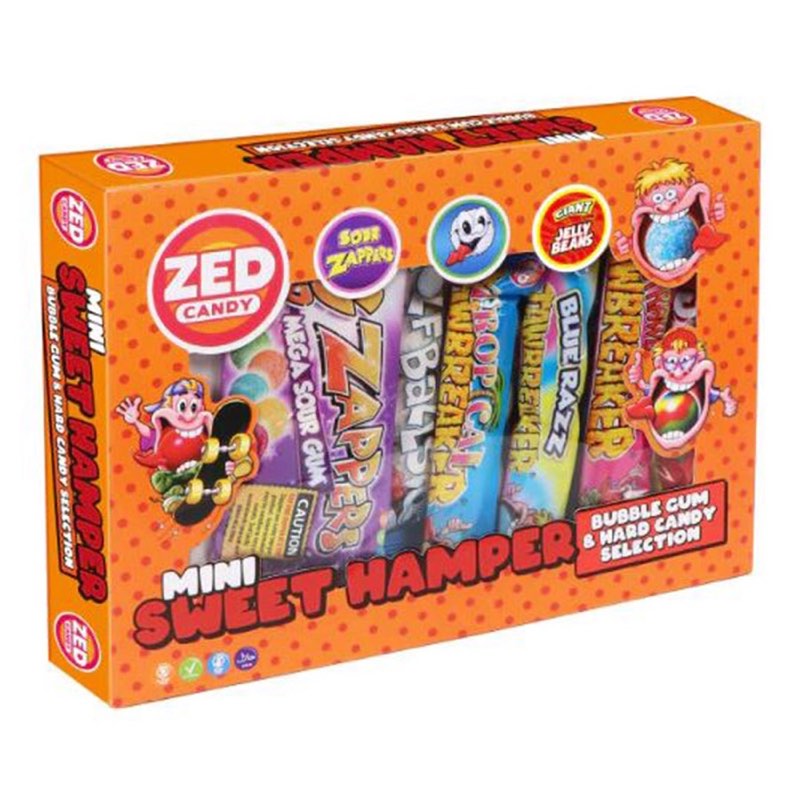
Zed Candy · 177g
Read the full guide
Zed Candy Mini Sweet Gift Hamper in Orange 177g
£2.99
✔ In stock — ready to ship
Fresh stock
Free over £20
Same-day dispatch
Secure checkout
Start with the number, because for a small item the number is the whole argument. The Zed Candy Mini Sweet Gift Hamper in Orange is £2.99 for 177 g. That works out at £1.69 per 100 g, which is the sort of figure you normally see on a large sharing bag rather than on something sold as a gift. Gift formats almost always carry a packaging premium — you pay for the box, the ribbon, the shape of the thing. This one does not, or not much, and that single fact explains why it turns up in so many shopping baskets next to much larger buys.
Put it against the nearest things on our shelves with a stated weight and the position is clear.
The full guide to Zed Candy Mini Sweet Gift Hamper in Orange 177g
5,046 words on how it eats, who it suits, how to serve it and what to put beside it.
Three pounds, and what it is actually buying
| Item | Weight | Price | Per 100 g |
|---|---|---|---|
| This mini gift hamper | 177 g | £2.99 | £1.69 |
| Hubba Bubba Mega Long Strawberry Bubblegum | 56 g | £1.59 | £2.84 |
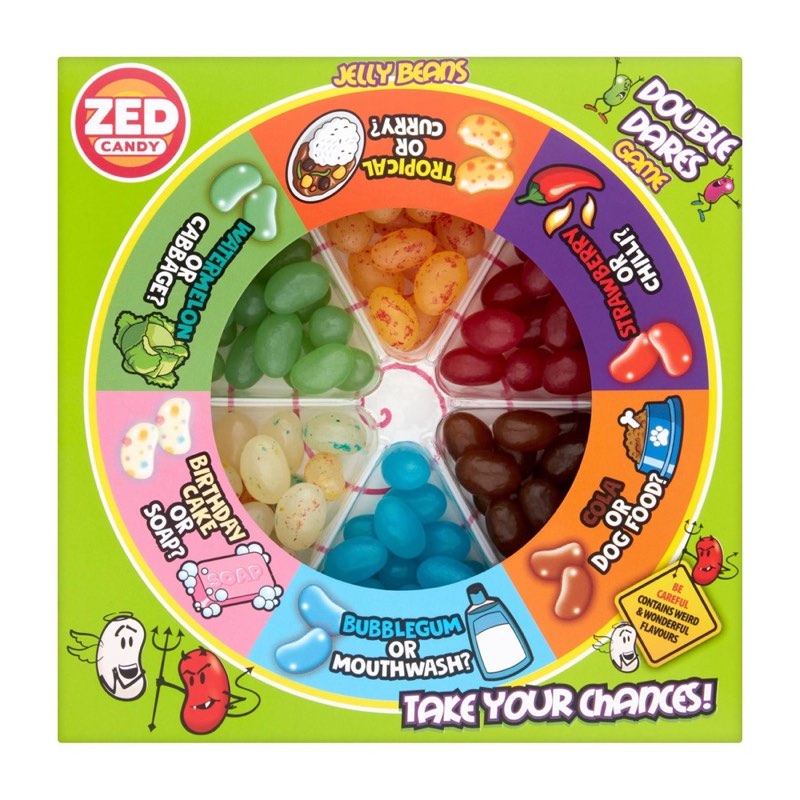
| Zed Candy Double Dares Jelly Beans Game | 100 g | £2.99 | £2.99 |
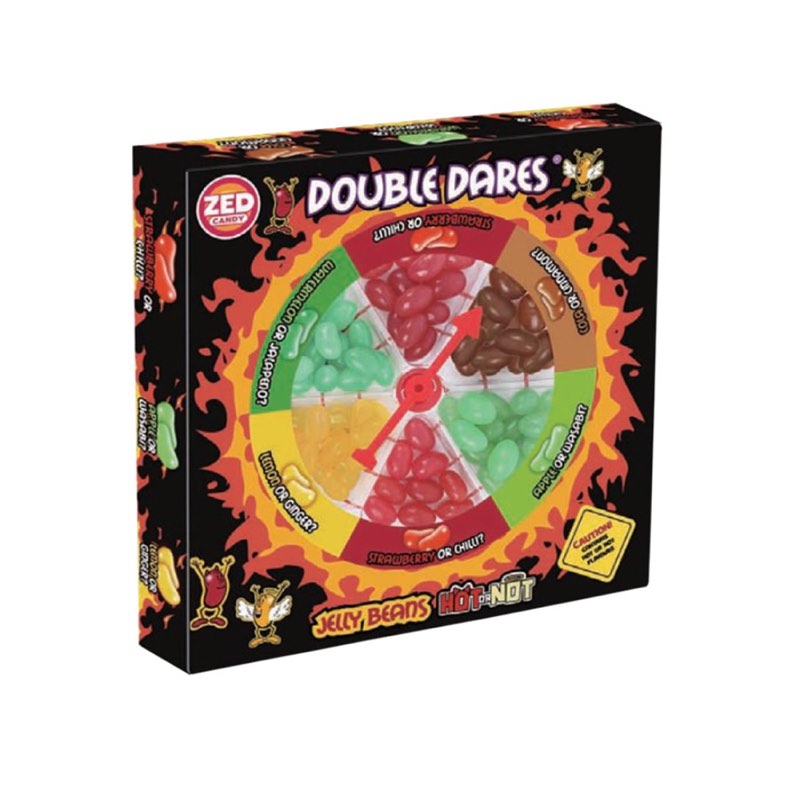
| Zed Candy Double Dares Hot or Not Jelly Bean Game | 100 g | £2.99 | £2.99 |
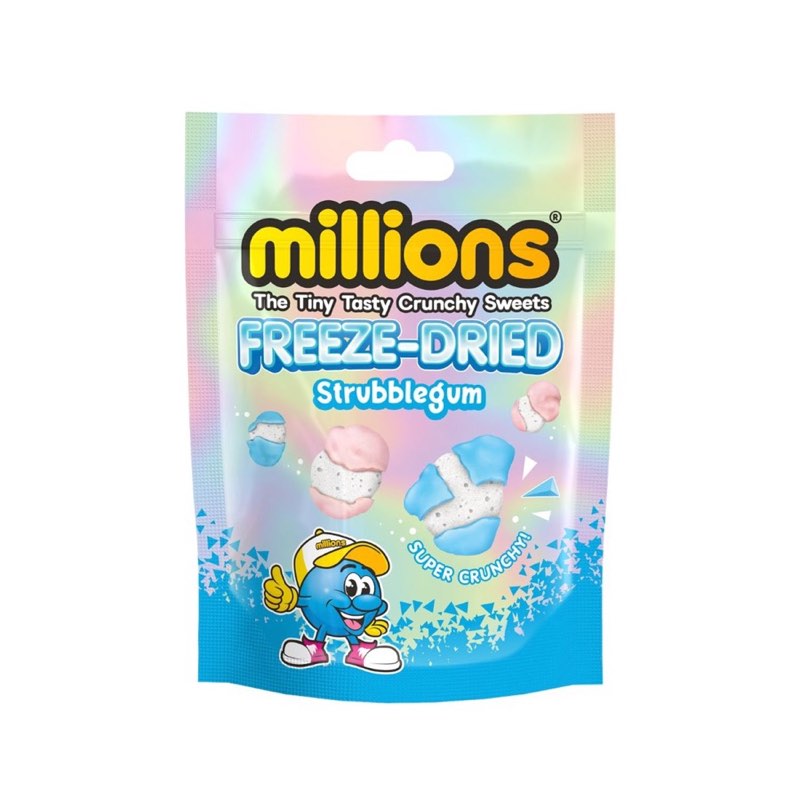
| Millions Freeze-Dried Strubblegum Pouch | 50 g | £2.49 | £4.98 |
Read across that table and the hamper is doing something unusual for its price bracket: it is the cheapest per gram of the small-format items around it, while being the one that looks most like a present. The two Zed Candy Double Dares jelly bean games at £2.99 cost exactly the same money for 77 g less, because what you are buying there is a game rather than a weight — a fair trade, but a different trade. The £2.49 freeze-dried Strubblegum pouch is nearly three times the price per gram, which is what a specialist process costs. The hamper is the volume buy of the group.
Cost per occasion, which is the number that actually decides things
Price per gram is for comparing. Price per occasion is for spending. At £2.99, this is a stocking item, a party-bag item, a small thank-you, a something-to-open on a day that did not need a big present. Those are all jobs where the budget is fixed in your head before you start looking — "about three pounds", "a fiver at most", "one each for eight children" — and where the relevant question is not what it costs per gram but whether it looks like enough for the money when it is handed over. A hamper shape does that work. A bag of the same weight does not, and that is the entire reason this format exists.
Buying in multiples: the sums for a group
Most people who buy one of these buy several, so here is the arithmetic laid out. Four is £11.96 and covers a small children's table. Six is £17.94. Eight is £23.92, which is roughly what a single large sharing tub costs and gives you eight separate things to hand to eight separate people instead of one thing to serve. Ten is £29.90. Twelve is £35.88 — at that point you are spending more than a big centrepiece would cost, so the question becomes whether individual presentation is worth the premium. Often it is, for a children's party where every guest goes home with something; often it is not, for an adult gathering where a single generous bowl reads better than twelve small boxes.
Where it stops being the sensible buy
Above about fifteen units, the per-head cost gets hard to defend against a pick-and-mix approach, where the same money buys a lot more weight and you split it yourself. Under four units, there is nothing to think about — it is three pounds. The awkward middle is eight to fifteen, and the deciding factor there is almost always whether the packaging is doing a job. If the sweets are going into paper party bags anyway, buy loose and save the difference. If the item is the gift, buy the hamper.
What 177 g looks like when it is in front of you
Small. That is the honest first thing to say, and it is not a criticism — the word "mini" is in the name and the listing is straight with you about the weight. 177 g is a comfortable two-handed object for a child and a one-handed object for an adult. It is a desk-drawer size rather than a table-centrepiece size. If your mental image was a wicker basket with a lid, adjust it down: this is the gift-hamper idea shrunk to something you could post, tuck into a bag, or line up eight of along a party table without needing a second table.
The listing records the colour as multi-coloured, and the name puts orange on the front of it. There is one photograph on the product page, which is worth a look before you order — for a small gift format, the proportions are the thing people most often get wrong in their heads, and a photograph settles it faster than a paragraph. The flavours recorded against it are bubblegum and strawberry, which tells you a good deal about the register it is pitched in: this is the bright, familiar, childhood end of the sweet shop rather than the grown-up traditional end.
What we are not going to do is tell you exactly which sweets are inside, piece by piece. We do not hold a verified contents list for this line, and inventing one would be worse than useless to somebody buying eight of them for a party. What we can be useful about is everything around it: what it costs, how it behaves on a table, who it suits, what to put beside it, and how it sits against the rest of the shelf.
A party planner's view: quantities, tables and what empties first
Anybody who has run more than two children's parties develops the same set of instincts, and they are worth writing down because they save money and they save the specific misery of a table that looks picked-over forty minutes in. Here is how a small individually-packaged item like this fits into that thinking.
The two-table principle
A party sweet spread wants two distinct zones, and the mistake is putting everything in one. Zone one is the grazing table: open containers, shared, refilled, meant to be dipped into all afternoon. Zone two is the take-home pile: sealed, individual, one per guest, and ideally not touched until people are leaving. A mini hamper belongs firmly in zone two. It is sealed, it is countable, and its value collapses if it gets opened at 2pm and grazed from — at which point you have paid gift-format money for a small amount of loose sweets.
Physically separate the two. Take-home items should not be within arm's reach of the grazing table, or they will migrate. The standard solution is a shelf, a windowsill, or a box by the door. This sounds like fussiness until you have watched twelve carefully bought gifts become a shared bowl in ninety seconds.
Quantities: the numbers that actually work
For take-home items, the rule is one per guest plus two. The two are for the sibling who came along, the child whose parent stayed, and the miscounted invitation — and if none of those happen, two spare gifts are the easiest problem in the world to have. Do not buy exactly the number on the guest list. It is the most common and most avoidable error in party planning.
For grazing, the arithmetic is different and depends on duration far more than headcount. A two-hour children's party needs roughly 40–60 g of loose sweets per child on the table; a four-hour adult gathering with food needs less per head than people expect, because the sweets compete with everything else. The useful trick is to buy grazing volume in one or two large items rather than many small ones, because refilling from a reserve is far easier than opening fourteen packets.
Timing: when things should appear
Sweets on the table from the first minute are sweets gone before the main event. Hold them. The sequence that works for a children's party is: nothing sweet on arrival, games, food, then the sweet table opens, then take-home bags at the door. For adults, the sweet things can arrive with or after the food and simply stay out. The one non-negotiable is that take-home items appear at the end, in the host's hands, given rather than taken. A hamper handed to someone at the door is a gift; the same hamper sitting on a side table for three hours is a bowl.
What runs out first, reliably
Three categories empty faster than anything else, every time. First, anything sour or fizzy — it gets tried by everyone out of curiosity even by people who do not like it. Second, anything chocolate, if the room is warm enough to make it appealing and cool enough to keep it solid. Third, anything in a shape that is fun to hold: shapes with a novelty to them get picked up, and picked-up sweets get eaten. BUBS Dizzy Bubblegum Skulls at £7.50 hit two of those three at once, which is why a bowl of them goes down faster than a bowl of anything sensible next to it.
What lasts longest is the traditional end of the shelf. A £16.99 jar of aniseed balls will still have aniseed balls in it at the end of a children's party and most of the way through an adult one, which makes it an excellent backbone item: it holds the table's volume up without disappearing in the first twenty minutes. Every well-planned spread needs one slow item and two fast ones.
The refill reserve
Buy roughly a third more grazing volume than you intend to put out, and keep the extra sealed and out of sight. A table that gets topped up once looks generous all afternoon; a table that was filled to the brim at the start looks ransacked by the middle. A £7.99 tub of Vidal jelly-filled strawberries or Barratt Jelly Spogs at £5.49 work well as reserve items precisely because they are bought by the tub or bag rather than by the piece — you can pour out half and keep the rest closed.
Labelling, and the question you will be asked
At any gathering with children in it, at least one parent will ask what is in something. Keep the manufacturer's packaging until the end of the party rather than binning it as you open things — it is the only reliable answer to that question, and "the box is on the side, have a look" is a far better response than a guess. This matters more for take-home gifts than for grazing, because the gift leaves your house and gets opened somewhere you are not. Anyone with allergies in the room should check the packaging themselves before eating, and that goes for what they take home too.
Who this suits
The clearest fit is the person buying several small things rather than one big thing: party-bag fillers, classroom end-of-term gifts, advent-style countdowns, the shelf of small presents people build up in November. It also suits the shopper who wants to give a child something to unwrap that is not a toy and is not a chocolate bar — the hamper shape has a little ceremony to it that a bag does not.
Second, it suits anyone testing a flavour direction cheaply. Bubblegum and strawberry are both flavours people have firm opinions about, and £2.99 is a low-cost way to find out whether a child is in the bubblegum camp before you commit to a 56 g Hubba Bubba Mega Long at £1.59 or a larger bag of something.
Third, it suits the small-gift emergency: the birthday you forgot, the leaver you did not know was leaving, the child who came to the door. Three pounds and a hamper shape solves that problem better than three pounds and anything else in the shop.
Who it does not suit: anybody trying to fill a grazing bowl. 177 g does not fill a bowl, and buying four of them to do so costs £11.96 for 708 g when the loose shelves would do the same weight for less and let you choose exactly what goes in. If the sweets are going in a bowl, buy them by the bag.
Where this lands on the sweet-to-sour spectrum, and how to build around it
Every sweet shop runs along a single invisible axis, and knowing where a product sits on it is more useful than knowing its flavour. At one end is plain sweetness — gentle, rounded, nothing to brace against. At the other is genuine mouth-puckering sourness, the kind that makes people pull a face and immediately hand one to a friend. Almost every decision about what to serve, what to mix and what to put next to what comes down to managing that axis.
The four zones, and what each is for
Plain sweet. Milk-bottle sweetness, creamy notes, soft fruit flavours. These are the backbone of any mix. They are what people eat six of without noticing, and a spread with nothing in this zone feels like hard work.
Bright fruit. Still sweet, but with enough tang to give the flavour an edge and a finish. This is the biggest zone in most shops and the one most branded lines live in. Skittles at £6.99 are the reference point for the zone — sweet first, with just enough fruit acidity to keep you reaching.
Fizzy. A coating that crackles and tingles rather than a flavour that sours. Fizz is a texture effect as much as a taste one, and it is the most reliable way to make a mix feel livelier without making it difficult. Kingsway Fizzy Strawberries at £5.49 sit exactly here: a familiar shape and a familiar flavour with a surface that changes the experience.
Properly sour. Deliberately challenging, usually short-lived, usually the thing people dare each other with. This zone is a seasoning, not an ingredient. A little makes the whole table more interesting; a lot makes it a chore.
Where this hamper sits
On the flavours we hold against it — bubblegum and strawberry — this belongs in the first two zones. Bubblegum is one of the plainest-sweet flavours in confectionery; strawberry is the friendliest of the bright fruits. Nothing in what we hold puts this at the sour end. That makes it an easy, unchallenging item, which is precisely what you want in a gift for a child you do not know well and precisely what you do not want as the only thing on an adult table.
Building a spread that moves along the axis
The best sweet tables are not uniformly anything. They give people somewhere gentle to start, something bright to keep going with, and one thing that makes them laugh. If this hamper is your gentle-and-bright item, the two things worth adding are a fizz and a jolt. Fizzy strawberries handle the first while staying in the same flavour family, which keeps the table coherent. For the jolt, a bowl of skull-shaped bubblegum sweets does the job and keeps the bubblegum thread running through the spread rather than dropping it.
The mistake to avoid is stacking the whole table at one end. Four plain-sweet items in a row is a monotonous spread no matter how good each one is individually, and four sour items is a table people take one from and walk away from. Aim for roughly three parts easy to one part demanding, and put the demanding thing where people have to reach slightly for it.
How the axis changes with age
Broadly, tolerance for sourness peaks somewhere in the middle of childhood and declines from there, while appreciation of traditional, aromatic and bitter flavours moves the other way. That is why a mixed-age gathering needs both ends stocked. If the guests are under ten, lean bright and fizzy. If the guests span three generations, put something traditional on the table for the oldest of them — an aniseed or a liquorice-adjacent item earns its place with a group that a room full of eight-year-olds would ignore entirely.
Bubblegum and strawberry: two flavour families, honestly described
Bubblegum
Bubblegum is a flavour that does not exist anywhere in nature and does not pretend to. It is its own thing — sweet, round, slightly floral, with a distinctive long finish that lingers after the sweet has gone. It is the most nostalgic flavour in the shop for a lot of people and the most divisive for others; there is very little middle ground. Its great practical virtue is that it is instantly recognisable to children, which is exactly what you want in a gift being opened by somebody you do not know.
It is worth knowing that bubblegum-flavoured sweets and actual bubblegum are different propositions. A bubblegum-flavoured sweet is eaten and gone; a chewing gum is a longer, quieter commitment. If the recipient wants the latter, the Mega Long strawberry bubblegum at £1.59 is the obvious pairing — and it happens to carry both of this hamper's flavours in one item. The full bubblegum shelf runs to fourteen lines, which is enough to find the format that suits rather than settling for the first one.
Strawberry
Strawberry in confectionery is a family rather than a single flavour, and the differences between its members are larger than people assume. There is the bright, sharp, almost boiled-sweet strawberry; the soft, creamy, milkshake-adjacent strawberry; and the jammy, deep, slightly cooked strawberry that tastes of preserve rather than fruit. They do not all go together, and a mix with three kinds of strawberry in it tastes muddled rather than rich.
Our strawberry shelf runs to 78 lines, which is the largest single flavour category we keep, and it is the best place to work out which of the three you actually like. Haribo Giant Strawbs at £5.49 are a good anchor for the soft end, the Vidal jelly-filled strawberries tub at £7.99 for the filled-and-jammy end, and the fizzy strawberries mentioned above for the bright end. Pick a lane, then stock it.
Why the two work together
Bubblegum and strawberry are a well-worn pairing for a reason: strawberry's fruit gives bubblegum's roundness an edge to push against, and bubblegum's long finish carries strawberry past the point where it would normally fade. They occupy adjacent rather than identical space, which is the definition of a good pairing. It is the same logic that makes the two flavours turn up together in so many single products.
What the supplier tells us about diet
This is one of the small number of lines where we have supplier dietary information, so it is worth stating precisely — and stating its limits. Our supplier lists this line as dairy free, gluten free and vegetarian. That is their categorisation, passed on as given, and it is why the product appears on three of our dietary shelves: the vegetarian shelf, which runs to 69 lines, the gluten free shelf with 54, and the dairy free shelf with 51.
Those three shelves are genuinely useful if you are shopping under a constraint, because they turn an unmanageable catalogue into a browsable one. But treat them as a filter for finding candidates, not as a final answer. The manufacturer's packaging that arrives with your order is the authority on what is in the product, and anybody with an allergy or a strict requirement should read it before eating rather than relying on a category page. We would rather tell you that plainly than let a shelf name do work it was not built for.
One thing we will not do is stretch what the supplier said. Vegetarian is not vegan, and we are not going to imply otherwise. If a page elsewhere on the internet tells you something about this line that we do not tell you here, the reason is that we do not hold it.
Occasions this genuinely fits
Party bags are the first and most obvious. A hamper shape beats a paper bag of loose sweets for perceived value at almost the same cost, and it means you are not standing at a kitchen table at eleven at night filling bags by hand.
End-of-term and end-of-club gifts are the second. When you need a dozen near-identical small things that will not embarrass anyone with their cost, £2.99 is close to the perfect price point — visibly a present, not extravagant enough to be awkward.
Stockings and countdowns are the third. A small sealed item with a bit of shape to it is exactly what a stocking wants, and its size means it does not swallow the whole stocking. If you are building a countdown or a hamper of small things, mix formats rather than repeating one: a couple of these, a £7.99 bag of Glisten Chocolate Mini Eggs split between days, and a game or two makes a better run of surprises than twenty-four identical packets.
Small thank-yous are the fourth, and possibly the best fit of all. The neighbour who took a parcel in, the colleague who covered a shift, the teenager who walked the dog. Three pounds, a hamper, done — and nobody has to work out what it means.
Where it does not fit: as a main birthday present for a child old enough to have expectations, or as the sweet element of a wedding or large adult gathering, where the format is too small to register on a long table and the flavours are pitched young. For those, buy by weight from the loose sweets range and present it yourself.
Keeping it in good condition
Cool, dry, dark, and sealed until it is given. That is the whole of it, and for a gift item the "until it is given" part is the one that matters most — a hamper that has been opened and taped shut again is not a gift any more.
Warmth is the main enemy. A sealed sweet item kept in a warm room or in direct sunlight will soften, and things that soften tend to stick to each other and to their wrappers. A cupboard away from the oven, a cool shelf, or any room that keeps a steady temperature will do; a car on a summer day or a windowsill will not. Do not use the fridge — the damp and the condensation when it comes back out do more harm than the heat you were avoiding.
If you are buying in November for December, which plenty of people do with items at this price, buy the multiples in one go and put the whole lot somewhere you will not see them daily. Check the dates on the manufacturer's packaging when they arrive so you know what window you are working in, and store them flat rather than stacked deep, so the ones at the bottom are not carrying the weight of the ones on top for six weeks.
One size, and the two nearest relatives
The listing offers one size at £2.99 and it is in stock, so there is no size decision to make here. The decision is between this and the neighbours, and the two Zed Candy items nearest it are both games rather than hampers.
- The Double Dares Jelly Beans Game, 100 g at £2.99 — same money, less weight, and what you are buying is the game format rather than the gram count. Better for a table of people who want something to do; worse if you simply want more sweets for your three pounds.
- The Double Dares Hot or Not Jelly Bean Game, 100 g at £2.99 — the other game in the pair, at the same price and weight. If you are buying for two children who will otherwise argue, buying one of each is the obvious move.
Against those two, this hamper is the better gift-shaped object and the better value by weight. Against the wider shelf, its competition is anything at a similar price that looks like a present: and there is not much of it, which is the honest reason to buy this one.
Finding it, and finding what goes with it
This sits on the loose sweets shelf, the largest section we keep at 356 lines, which is the right place to browse if you want to see everything that can be bought by weight rather than by box. Its flavour shelves are the fastest routes to its neighbours: bubblegum if you are following that thread, and strawberry if you are following the other one.
If you are shopping under a dietary constraint, start from the gluten free listings or the dairy free listings rather than from the flavour pages — it is a much shorter list to read and it saves you checking every product individually. For building your own selection by weight instead of buying boxed, the pick and mix range is where the pouches and jars live. The candy and chocolate section covers the boxed and branded side of the shop, and the full catalogue lists everything in one place when you would rather scan than filter.
Questions we get asked about small gift formats
How much is actually in it?
177 g, which is the figure on the listing. In practical terms that is a small hamper rather than a basket — a size you could post, or line several of up along a party table. It is meaningfully more than the 100 g Zed Candy games at the same price, and meaningfully less than any of the bags and tubs you would buy for a grazing bowl.
What sweets are inside?
We do not hold a verified piece-by-piece contents list for this line, so we are not going to print one. What the listing does record is the flavours — bubblegum and strawberry — and that it is multi-coloured. If you need to know exactly what is in it before it is eaten, the manufacturer's packaging that arrives with it is the place to look.
Is it suitable for vegetarians?
Our supplier lists this line as vegetarian, and that is why it appears on our vegetarian shelf. We pass that on as given rather than extending it — vegetarian is not the same as vegan, and we are not going to imply it is. As with anything, check the manufacturer's packaging on arrival before eating.
Is it gluten free and dairy free?
Our supplier lists this line as both gluten free and dairy free, which is why it is on those two shelves. That is the supplier's categorisation. If this is a medical requirement rather than a preference, read the packaging when it arrives rather than relying on a category listing — that is the only source with the detail you need.
How many should I buy for a party of twelve?
Fourteen, if they are take-home gifts: one per guest plus two spares for the sibling who comes along and the miscounted invitation. That is £41.86. If you want a sweet table to graze from as well, that is a separate purchase and should be bought by weight rather than by box — twelve hampers will not fill a bowl.
Can I put the contents into a pick and mix?
You can do what you like with them once they are yours, but it is an expensive way to fill a bowl. If the sweets are going loose into a shared container, buy loose in the first place: the pouches and jars in the build-your-own range give you far more weight per pound and let you choose exactly what goes in.
Is £2.99 good value for 177 g?
At £1.69 per 100 g, it is the cheapest per gram of the small formats around it — cheaper than the 100 g games at the same price, and well under half the per-gram cost of the freeze-dried pouch. For a gift-shaped item, that is genuinely unusual. Against large sharing bags bought by the kilo it will not win, but nothing in a gift format does.
Will children who do not like bubblegum still enjoy it?
Bubblegum is one of the more divisive flavours and the listing records it alongside strawberry, so a determined bubblegum-avoider may only want half of what is in front of them. If you know that about the recipient, a strawberry-led item is the safer gift — Giant Strawbs at £5.49 keep the flavour and drop the risk, though they are a bag rather than a gift shape.
Is it safe for young children?
Sweets are a treat, and small hard sweets and whole gummies are a choking risk for young children — they should be supervised while eating, whatever the format. That applies to a gift the same as anything else, and it is worth a word to the parent when you hand it over if the child is very young.
How long will it keep if I buy ahead?
Kept sealed, cool, dry and out of sunlight, buying ahead is entirely reasonable and is what most people do with items at this price. Check the dates on the manufacturer's packaging when it arrives so you know your window, and resist opening it "just to look" — an opened gift box is no longer a gift box.
What goes with it if I am building a bigger present?
Something with a different job. A game alongside a hamper works well because one is eaten and one is played; a chocolate item works because it changes the texture of the present entirely. A bag of chocolate mini eggs at £7.99 alongside one of these makes a two-part gift for around eleven pounds that looks like more thought than it took.
Is there a larger version of this hamper?
Not of this line — it is one size at £2.99. If you want the same gift feeling at a bigger scale, the route is to build it yourself from the loose range or buy a large jar or tub and present it, rather than looking for a bigger box of this. A £5.49 bag of jelly spogs or a £6.99 bag of Skittles both give you considerably more weight, but they arrive looking like sweets rather than like a present.
The short version
£2.99 for 177 g, one size, in stock, with bubblegum and strawberry recorded against it and a supplier listing of dairy free, gluten free and vegetarian. It is the cheapest per gram of the small formats around it while being the one that most looks like a gift, which is an unusual combination and the whole reason to buy it. Use it as a take-home rather than a grazing item, buy one more than you think you need, and if you want to fill a bowl instead, go and do that by weight on the loose shelves where the money goes further.
More from Zed Candy
More bubblegum sweets
More loose sweets sweets
Where this sits
Zed Candy Mini Sweet Gift Hamper in Orange 177g appears on these shelves. Browse them, or jump to something nearby.
You might also like