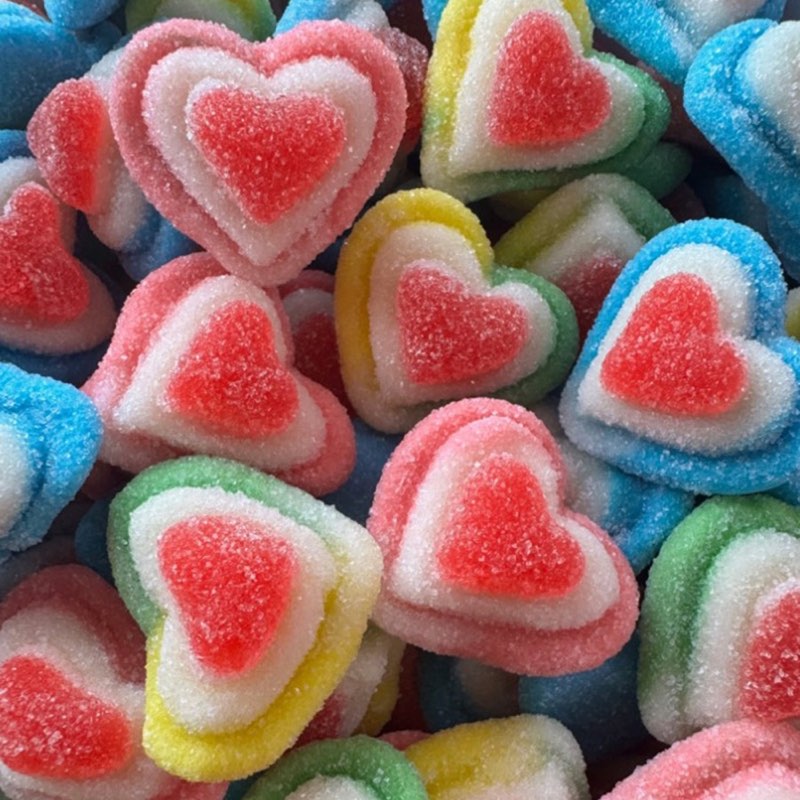
Home / Loose Sweets / Vidal 3D Triple Hearts
Vidal · 250g
Read the full guide
Vidal 3D Triple Hearts
£5.49
✔ In stock — ready to ship
Fresh stock
Free over £20
Same-day dispatch
Secure checkout
Most people build a mixed bag badly. They pick five things they like, tip them together, and end up with five things that all do the same job — usually five sweet, soft, fruit-flavoured items that blur into one another by the third handful. A good mix is built like a plate of food: one thing leads, two or three support, and one thing is there purely to break the pattern.
Vidal 3D Triple Hearts are a leader. At £5.49 for 250g they are a mid-weight, multi-coloured, fruit-flavoured sweet carrying both a fizzy and a jelly classification, which means they bring shape, colour and a tingle all at once. That combination is rare enough to build around: most sweets give you one of those three, and a lot give you none.
The full guide to Vidal 3D Triple Hearts
5,078 words on how it eats, who it suits, how to serve it and what to put beside it.
Start by deciding what job the hearts do in your bag
A four-part bag that works
Here is a structure you can repeat forever, swapping the components as the mood takes you.
- The leader (about 40% of the bag). A distinctive shape with a distinctive finish. Triple Hearts do this job. Anything you would point at if somebody asked what was in the bag belongs here.
- The filler (about 30%). Something plain, soft and reliable that nobody objects to. It is the bread of the sandwich. A classic gum or pastille does this work without drawing attention — Taveners Fruit Pastilles at £5.49 are as plain and dependable a filler as the loose shelves offer, and they cost the same per bag as the hearts do.
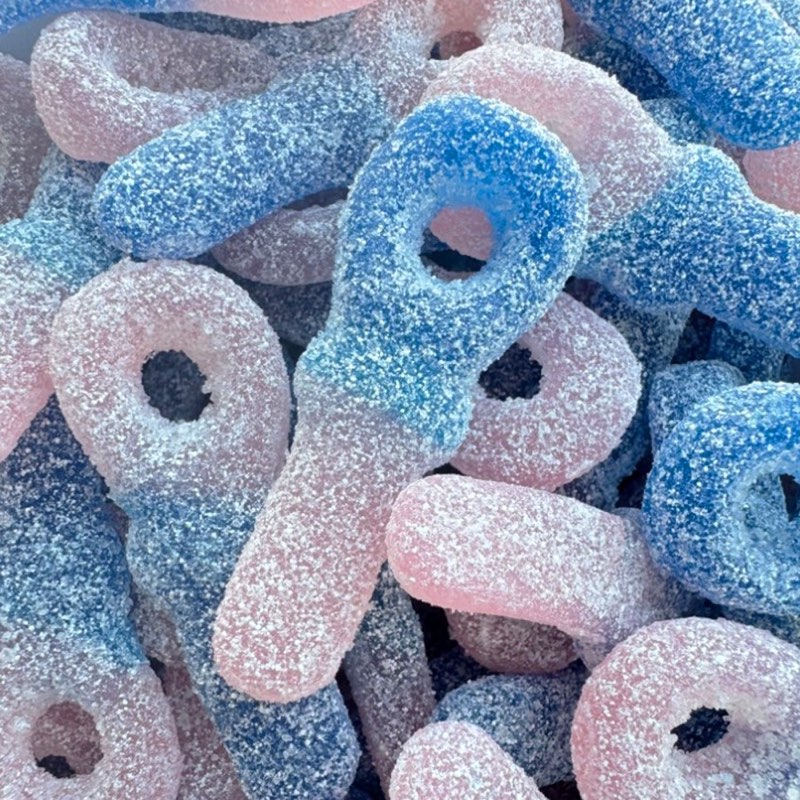
- The contrast (about 20%). A different texture entirely. If your leader is a jelly, your contrast should not be. A belt, a foam, a hard sweet, a chew — something that makes the mouth work differently. Vidal Strawberry Belts at £5.49 pull in exactly the opposite textural direction while staying in the same fruit register.
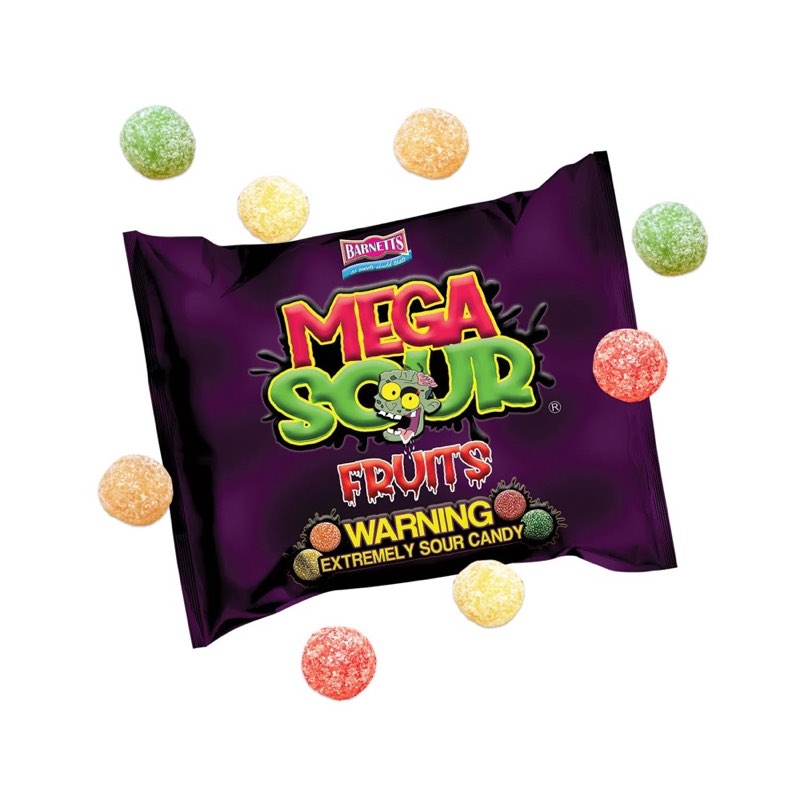
- The spike (about 10%). One genuinely sour item, in small quantity. It resets the palate and makes everything else taste brighter. Dulce Plus Sour Strawberry Rings at £5.49 do this neatly; Barnett's Mega Sour Fruits Candy Bags at £3.99 do it far more aggressively, and are for households that enjoy the challenge.
Run those proportions against a 1kg pouch and you get 400g of hearts, 300g of filler, 200g of contrast and 100g of spike. That is a bag that stays interesting to the bottom, which is the only real test of a mix.
Mixes for particular people
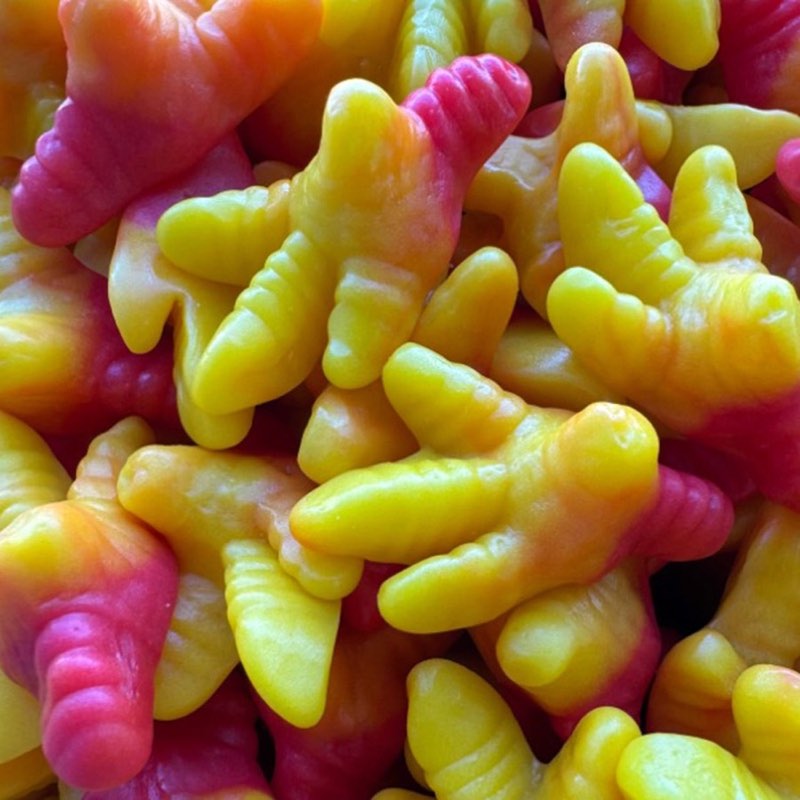
For a child who likes sweets to look like something. Lead with the hearts, because the shape is the point, and support with other recognisable shapes rather than with plain pieces. Haribo Friendship Rings at £8.99 keep the theme going; Vidal Chicken Feet at the same £5.49 are the comic version of the same idea, and the shape does all the talking.
For a mixed-age table. Keep the fizz at a moderate level and lean on volume. A bigger base and a smaller spike suits adults, who generally want two or three pieces at a time rather than a handful. The 800g Giant Jelly Baby Box at £11.99 makes an easy foundation for this, with the hearts scattered over the top for colour.
For somebody who specifically likes fizz. Double down. Pair the hearts with Sweetzone Fizzy Rings Tub at £7.99 and Fizzy Blue Raspberry Bites at £5.49 and you have a bag that tingles from start to finish. Browse everything fizzy we stock if you want to keep going in that direction — it is a properly deep shelf.
For a bag that has to survive a school bag or a handbag. Avoid anything that sticks together under pressure. Wrapped items earn their place here: Chupa Chups Soft & Chewy Fruity Flavour Mini Tubes at £1.49 and Shades by Niko The Originals Bag at £1.99 both come out of a bag in the same condition they went in.
If you would rather have the decision made for you, our pick and mix range holds pre-set pouches and jars where the balancing has already been done.
What you are actually buying
A 3D Triple Heart is a moulded jelly sweet in the shape of a heart, built with depth rather than flat-stamped — that is what the "3D" in the name is telling you — and made up in three parts, which is the "triple". The colour is listed as multi-coloured, so a scoop gives you a spread rather than a single shade, and the result in a bag or a jar is a mass of overlapping colour rather than a block of one.
They carry two type tags on our shelves at once: they sit in the jelly sweets section and also in the fizzy listings. That double classification is the most useful thing on this page, because it tells you what you are getting before you taste it. A jelly with fizz is a different proposition from either a plain jelly or a hard fizzy sweet: the fizz arrives on the outside and passes, and then a soft fruit jelly takes over underneath. It is a two-stage sweet, and it is why they hold attention longer than a plain gum does.
The base price is £5.49 for 250g, and the line runs all the way up to 2kg, which puts it in the small group of sweets you can buy either as a treat for one person or as the backbone of a party table without changing product.
The size in the hand
These are a proper mouthful rather than a nibble. A heart with genuine depth to it sits in the palm as an object — you can see the shape from across a table, which is exactly why they photograph well in a jar and why a shaped sweet gets noticed in a mixed bowl. Two or three make a handful. A 250g bag is therefore a real bag, not a token one, and it will not disappear in one sitting unless somebody decides it should.
Because the shape has height, they stack into a jar with visible structure instead of settling into a flat mass. That is a small thing that makes a large difference to how a display looks, and it is the reason shaped sweets earn their place on a sweet table even when plainer ones cost less per kilo.
How they eat
The fizz is the first thing you meet. It arrives on contact, sits on the tip and sides of the tongue, and lifts the fruit flavour with it — sourness always makes fruit read as brighter and fresher than it does on its own. That opening phase is short. Within a few seconds the tingle settles and you are into the jelly underneath, which is where the sweet does its main work.
A jelly of this size does not collapse immediately. It gives, then resists, then gives again, and that resistance is the reason shaped jellies are more satisfying than soft ones of the same flavour. There is something to chew. The flavour comes with the chewing rather than all at once, and it fades over ten or fifteen seconds afterwards rather than vanishing the moment you swallow.
Eating them well
Two pieces at a time is the right pace. Three is greedy and four means you are no longer tasting them. The fizz saturates quickly — that is the nature of sourness, it dulls with repetition — so if you eat a dozen in a row the tingle you noticed on the first one will be gone by the sixth. Leave a minute between rounds and it comes back.
For the same reason, these are better as part of a bag than on their own for a long evening. Alternate them with something plain and the fizz keeps resetting. That is the practical argument for a mix, and it is more convincing than the decorative one.
They are a treat, as all sweets are. Whole gummies of this size are a choking risk for young children, so supervise, and use judgement about who is ready for them.
Scoop, bag, twist: where a sweet like this belongs in British sweet-shop habit
There is a particular way of buying sweets in this country that has survived every change in retail, and it has nothing to do with brands. You point. Somebody scoops. The bag goes on the scale, comes off a little over, and nobody minds. That transaction — choosing by eye from an open display, buying by weight rather than by unit, mixing whatever you fancy — is the oldest form of sweet shopping there is, and it is the tradition this product belongs to.
Loose sweets are sold that way because the format rewards it. A wrapped bar is the same every time; a scoop is different every time, because you choose. The pleasure is partly in the choosing, which is why children take so long at the counter and why the shopkeeper never hurries them. A tray of shaped, multi-coloured jellies is precisely the kind of thing that makes a display worth looking at, and it is the reason shaped sweets have always held their place next to cheaper plain ones.
The corner shop
Every town has, or had, the shop where the sweets were kept at child height near the till and the jars were on a shelf behind. The economics of that shelf were unforgiving: small money, frequent visits, and an absolute intolerance for anything boring. What survived on it did so because it offered something a bar of chocolate could not — a shape worth commenting on, a colour worth showing your friend, a texture that lasted the walk home.
Shaped fizzy jellies are direct descendants of that shelf. They are cheap enough to be pocket money, interesting enough to be chosen over the familiar, and slow enough to eat that a small bag lasts. If you want to browse the whole of that tradition in one place, our loose sweets counter is the modern version of the shelf behind the till, and it runs to hundreds of lines.
The seaside sweet shop
The seaside version of the same shop works differently, and it is worth understanding the difference because it explains why some sweets look the way they do. A coastal sweet shop sells to people on a day out. They are not buying for the week; they are buying a souvenir that happens to be edible. So the displays are bigger, brighter and more theatrical: tall jars, deep trays, sweets in shapes and colours that make no attempt at subtlety, and a window designed to stop a family walking past.
That is where hearts, rings, belts, fried eggs, false teeth, dummies and every other novelty shape earn their keep. They are not trying to be sophisticated. They are trying to be picked. A multi-coloured heart with depth to it is a seaside-window sweet in the best sense — it reads from the pavement.
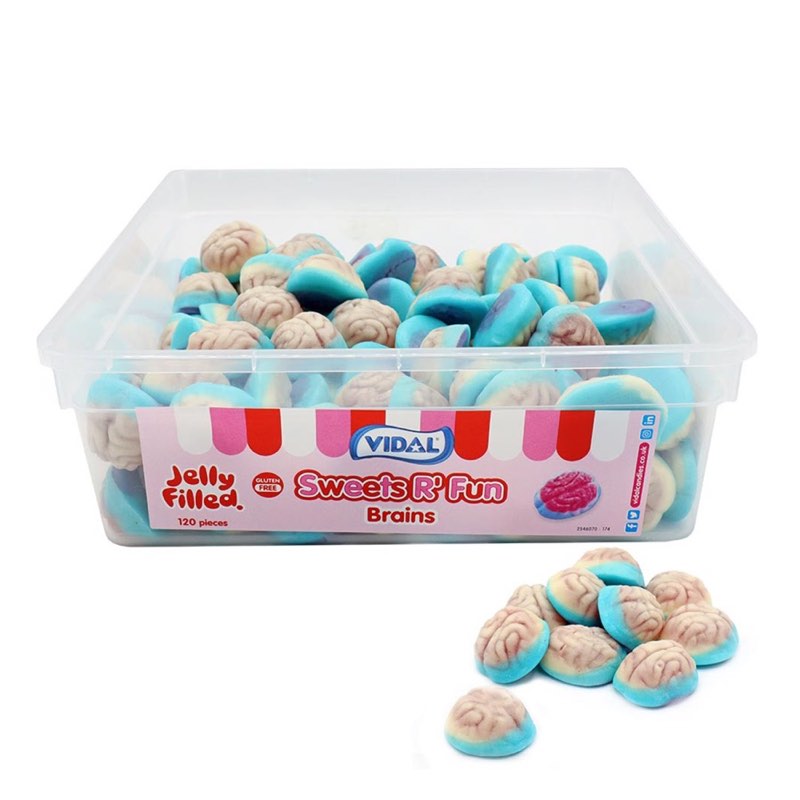
The rest of that family is well represented here. Vidal Jelly Filled Brains at £7.99 are pure novelty-window material, the sort of thing bought for the reaction as much as the flavour. Vidal Happy Smiles Tub, also £7.99, works the same trick with a friendlier face on it. And rainbow belts from the same maker at £5.49 are the long, flat, dramatic option that always ends up hanging out of a child's mouth in the family photograph.
Buying by weight, and why it still matters
The habit of buying sweets by weight rather than by pack does something no modern format has replaced: it lets you buy exactly as much as the occasion needs. A small bag for a walk. A bigger one for a car journey. A proper weight for a party. Nobody is forced up to the next pack size, and nobody ends up with three-quarters of something they did not want.
That is the logic behind offering this line from 250g right up to 2kg. It is the same sweet at every step; only the occasion changes. Older customers still think in quarters and half-pounds and will tell you exactly what a quarter looked like in a paper bag, and they are right that a paper bag of loose sweets has a charm no printed pouch has managed to copy.
The mixed bag as a British institution
Pick-and-mix is not a marketing invention. It is what happens when you give people an open display, a scoop and a scale, and it has been the default way of buying sweets in this country for as long as there have been sweet shops. The modern pouch is just the paper bag with a zip on it.
What the tradition teaches, and what is worth carrying into any bag you build, is that variety beats quantity. A quarter of six different things has always been more fun than a half of one thing. That instinct is correct, and it is why every section of the whole shop is worth a look before you commit to a single line, however much you like it.
Sweets as a present: hampers, letterboxes, staff rooms and parcels
Sweets make a better gift than their price suggests, for one simple reason: almost nobody buys themselves a proper quantity of nice sweets, so receiving them lands as a small luxury rather than as a commodity. The trick is in the presentation and the choosing, not in the spend.
Choosing a weight for a gift
The weight you pick signals the relationship, whether you mean it to or not.
- 250g (£5.49) — a thank-you, a card-plus-something, a small addition to a bigger present. Reads as thoughtful rather than significant.
- 500g (£9.99) — a standalone gift for one person. This is the most common gifting weight and it is usually the right one.
- 750g (£12.99) — a gift for a household rather than a person. Good for a family you are visiting.
- 1kg (£16.49) — a centrepiece. Put it in a jar and it becomes an object rather than a bag.
- 2kg (£28.99) — an office, a team, a classroom, a party. Not a personal gift; a communal one.
The mistake is buying 250g as a standalone present. It is a lovely amount of sweets and an awkward amount of gift. Go to 500g and it stops looking like an afterthought.
Teacher gifts and end-of-term
Staff rooms receive an enormous amount of chocolate and relatively little of anything else, which is the whole argument for bringing sweets instead. A jar or a decent-sized pouch of shaped jellies stands out simply by not being another box of truffles, and it has the practical advantage of being shareable without anyone having to cut it.
Hearts specifically carry a warmth that suits a thank-you. You do not need to explain the symbolism; it does the work for you. Pair them with something plainer so the gift has range — a tub of jelly filled strawberries in a £7.99 tub alongside a pouch of hearts makes a two-part present for well under twenty pounds that looks considerably more generous than it cost.
Letterbox treats and care parcels
Sending sweets to somebody who is away — at university, working a long contract, in hospital and allowed them, or simply having a rough month — is one of the most reliably welcome small gestures there is. A few practical notes from the point of view of getting them there in good order:
- Flat beats bulky. Belts and flat sweets post better than deep-moulded shapes if you are trying to get something through a letterbox. For a parcel rather than a letterbox, shape does not matter.
- Keep it cool in transit. Avoid sending anything chocolate-based in a warm week; jellies and fizzy sweets are far more tolerant of a hot van than chocolate is.
- Mix formats. A parcel of one thing is a bag. A parcel of four different things is a present. Add something wrapped for structure — Swizzels Sour Shooting Stars Gums Squashies at £1.29 are cheap enough to be the extra item that makes a parcel look full.
- Write the note first. The sweets are the envelope; the note is the gift. This is true and it costs nothing.
Building a hamper
A good sweet hamper has a shape to it: heavy and flat at the bottom, light and interesting on top, with colour visible from directly above because that is how it will be seen when opened. Jars and tubs make the base. Pouches fill the middle. Small wrapped items go on top and in the gaps.
Use colour deliberately. Multi-coloured items are your linking element — they pick up every other colour in the basket and stop the whole thing looking like a set of unrelated purchases. One or two dark or plain items give the eye somewhere to rest. And put at least one thing in that the recipient would never have bought for themselves, because that is the item they will mention when they thank you.
For a themed hamper — reds and pinks for an anniversary, mixed brights for a birthday, one colour family for a wedding table — start from fruit-flavoured sweets and filter by what suits the palette. It is a much faster route than scrolling the whole catalogue hoping to spot something that matches.
Fruit, and what "fruit" means on a mixed sweet
The flavour listing on this line is simply fruit, and that is more informative than it sounds. A sweet sold as fruit rather than as a single named flavour is telling you that the pleasure is in the variation: you are not meant to eat the same thing twice in a row. Single-flavour lines ask you to like one thing very much. Multi-flavour lines ask you to enjoy the change.
Practically, that has consequences for how you buy. A single-flavour bag is a safer gift for somebody whose tastes you know precisely, and a worse one for somebody whose tastes you do not. A fruit mix is almost impossible to get wrong for a group, because everyone finds a piece they prefer and quietly works towards it — which is, if you watch a bowl of mixed sweets for ten minutes, exactly what people do.
Within the fruit category, the sweets divide by register rather than by fruit. There is the bright, high, sharp end; the soft, round, orchard end; and the heavy tropical end. A general fruit mix usually spreads across at least two of those. If you want to explore the full width of it, the whole fruit flavour grouping is the largest single flavour category on the site by a wide margin.
What the fizz does to fruit
Acidity and fruit flavour are old partners. Sourness sharpens the perception of fruit and makes it read as fresher, which is why a fizzy fruit sweet tastes more vividly fruity than an identical sweet without the fizz. It also lengthens the experience: you get the tingle first, the fruit second, and a short clean finish where a plain sweet would simply stop.
That is the real reason to choose a fizzy jelly over a plain one — not because it is sour, but because it has a sequence. If you find plain jellies a little flat and proper sour sweets too aggressive, this is the middle ground, and it is a very comfortable place to sit.
Who buys these, and when
People making up party bags and favours. A heart shape is the most useful shape in confectionery, because it fits more occasions than any other: Valentine's, anniversaries, engagements, weddings, christenings, Mother's Day, a thank-you, a get-well. Almost every other novelty shape is locked to one event. Hearts work all year.
Wedding and event planners. The 2kg at £28.99 is the weight that makes sweet tables viable. It gives you enough of a single line to fill a large vessel properly, which is what a display needs — three or four generously filled jars always look better than eight half-empty ones.
Households with a fizz preference. Most families split into fizz people and non-fizz people, usually along lines nobody can explain. If your house leans fizzy, this is a good everyday line because it is fizzy without being a challenge, so it satisfies the fizz people without alienating everyone else.
Anyone buying a present at short notice. Colourful, shaped, recognisable, available in gift-appropriate weights. It solves the problem quickly.
Regulars stocking a jar at home. A kilo at £16.49 in a lidded jar on a kitchen shelf is a very civilised arrangement, and considerably cheaper per week than buying small bags repeatedly.
When to choose something else instead
If you need sweets that will sit out uncovered on a warm day, moulded jellies are not your best choice — anything wrapped will hold up better. If you are buying for somebody who dislikes sourness in any form, skip the fizzy tags entirely and look at the plain jelly and gum lines. And if you want maximum novelty value rather than maximum eatability, the odd-shaped end of the Vidal shelf will give you more of a reaction for the same money.
Occasions, in order of how well they suit
Valentine's and anniversaries. The obvious fit, and the one where a 500g pouch does more work than a card. A jar of hearts on a table says the thing without anybody having to write it down.
Weddings and engagement parties. Sweet tables have become a fixture, and hearts are the least contrived thing you can put on one. Two kilos fills a large vessel; add a scoop and small bags and it runs itself.
Children's birthdays. Bright, shaped, and substantial enough that a handful feels like a proper share. Mix them with other shapes rather than with plain pieces and the bowl stays interesting all afternoon.
Christenings, naming days and baby showers. Soft colours and a gentle shape suit these tables, and a fruit mix avoids the problem of choosing a theme colour that half the guests do not like.
Film nights and long evenings in. A 250g bag is about right for two people over a couple of hours, especially alongside something from the candy and chocolate shelf for contrast.
Fundraisers, fairs and stalls. Buy the 2kg, bag it down into small paper bags, and you have a stall product with a visible margin and no need for anything more complicated than a scoop.
Weights, prices and what each one is for
This line runs across five weights, and the price per kilo improves steadily as you go up. Here is the whole ladder.
| Size | Price | Roughly per kg | What it suits |
|---|---|---|---|
| 250g | £5.49 | about £21.96 | One or two people, a trial, an add-on to a bigger gift |
| 500g | £9.99 | about £19.98 | A standalone present, or a family's week |
| 750g | £12.99 | about £17.32 | A household, a small gathering, a hamper centre |
| 1kg | £16.49 | about £16.49 | A filled jar at home, a birthday table |
| 2kg | £28.99 | about £14.50 | Events, sweet tables, stalls, classrooms |
The interesting step is the one from 250g to 500g: you get twice the sweets for £4.50 more, which is the single best-value move on the ladder in proportional terms. After that the savings keep coming but more gently. Going all the way to 2kg saves you roughly a third per kilo against the smallest bag — worth having if you genuinely need the weight, and a waste if you do not, because sweets you do not eat are not a bargain at any price.
How much do you actually need?
Some working figures for planning, based on how shaped jellies tend to go at an event rather than on anything theoretical:
- A sweet table where this is one of six or seven lines: allow around 50g a head of this line specifically. Twenty guests, one kilo.
- A children's party where it is one of two or three things: allow 75–100g a head, because children return to shaped sweets more often than adults do.
- Party bags: 40–50g per bag is a generous share. A kilo fills about twenty bags.
- A jar at home: a kilo lasts a family of four two to three weeks if it is on the side rather than hidden. Hidden, considerably longer.
Keeping loose sweets in good condition
Loose sweets need a little more care than wrapped ones, because there is no individual wrapper doing the work for you. None of it is difficult.
Seal them. As soon as the bag arrives, either close the pouch properly or move the contents into an airtight tub or jar with a lid that actually seals. Air is what turns a soft jelly firm and a fizzy surface dull.
Keep them cool and out of the sun. Warmth softens jellies and encourages them to stick to each other; direct sunlight fades colour. A cupboard is ideal. A windowsill display jar looks lovely and will cost you a little colour over a few weeks — worth it for an event, not worth it for a permanent arrangement.
Keep them dry. Humidity is the enemy of anything with a fizzy finish, because the surface draws in moisture and the tingle goes flat. Do not store them near a kettle, a steaming pan or an open window in wet weather, and never in the fridge, where condensation on the way back to room temperature does real damage.
Do not mix early. If you are building a mixed bag or jar for an event, combine the components on the day rather than a week before. Different sweets have different surfaces, and left together for long enough the fizzy ones pass their moisture to the plain ones and everything ends up somewhere in the middle. Mixed on the day, each keeps its character.
When your order arrives, check the manufacturer's packaging before anyone eats anything, particularly if there is an allergy in the household. The pack is the authority on the product's contents, and it should be read rather than assumed.
Where to go next on the site
This line sits across five shelves, which is unusual, and each one leads somewhere different. The jelly sweets section and the fizzy listings are the type routes, and they are the ones to use if texture is what you are shopping for. The fruit shelf is the flavour route. The maker's own listings gather everything we carry from Vidal, which is the fastest way to build a coherent order around a maker you already like. And the loose sweets listings are the parent shelf for the whole scoop-and-weigh side of the shop.
Beyond that, two of the deepest brand shelves on the site are worth knowing about when you are filling a table: the Haribo shelf for the familiar shapes that everybody recognises, and Kingsway's own section for the traditional end of the loose range. Between those two and the Vidal listings you can assemble almost any mix you want without leaving the loose sweets side of the shop.
Common questions
How fizzy are they really?
They are classified as fizzy and as jelly, so expect a definite tingle on the first contact rather than a mild hint, followed by a soft fruit jelly underneath. That is a different thing from a mega-sour sweet, where the sourness is the entire product and the flavour is secondary. If you find proper sour sweets unpleasant but plain jellies boring, this sits comfortably between the two.
What flavours are in the bag?
The listing is a general fruit mix in multiple colours, so you will get a spread rather than one named flavour. We do not publish a piece-by-piece flavour breakdown, because the mix can vary between batches and we will not print something we cannot stand behind. The packaging that arrives with your order is the authority.
Can I get a bigger bag?
Yes. The line runs 250g, 500g, 750g, 1kg and 2kg, at £5.49, £9.99, £12.99, £16.49 and £28.99 respectively. The price per kilo improves at every step, with the biggest proportional gain coming when you move from the 250g to the 500g.
What is in them?
The ingredients, the nutrition information and the allergen declaration are printed on the manufacturer's packaging, and that is the only source we will point you to. We do not publish ingredient or allergen detail for individual lines, because we cannot verify it batch by batch, and on food a confident guess is worse than none. Please read the pack before eating.
Are they suitable for a particular diet?
We hold no dietary classification from our supplier for this line, so we are not able to tell you either way, and we will not guess. If a dietary requirement is important to you, check the packaging on arrival and do not rely on any description — including ours.
Will they stick together?
Loose jellies can stick if they get warm or damp, which is a storage question rather than a product fault. Keep them sealed, cool and away from steam and they stay separate. If a bag has been in a warm car for an hour, give it twenty minutes somewhere cool and a gentle shake and they will usually part again.
Do they work on a sweet table?
Very well. The shape has height, so they hold their structure in a jar instead of settling flat, and multi-coloured pieces link visually with everything else on the table. For a large vessel, buy the 2kg — three well-filled jars always look better than six half-filled ones.
Are they suitable for young children?
Whole gummies of this size are a choking risk for young children, so they need supervision, and the very young are better off without. Sweets are a treat; treat them as one and use your judgement about who is ready.
How long will they keep?
Follow the date on the packaging. Stored sealed, cool and dry, an unopened bag keeps well for the life printed on it. Once opened, move them into an airtight container and they will hold their texture and their fizz for weeks rather than days.
Can I mix them with other loose sweets in one order?
Yes, and it is the best way to buy. Choose two or three lines that do different jobs — a shaped leader, a plain filler, a textural contrast — and combine them at home on the day you need them rather than in advance, so each keeps its own character.
Are they in stock?
They are in stock as this page describes them, across all five weights. Stock changes, so the buy box on this page is always the authority rather than the copy.
The short version
A multi-coloured, fruit-flavoured jelly heart with a fizzy finish, from 250g at £5.49 up to 2kg at £28.99. It is one of the few lines in the shop that works equally well as a two-pound thank-you and as the anchor of a wedding sweet table, because the shape suits almost every occasion and the weights go where you need them. Buy the small bag to find out whether your household is a fizz household. If it is, buy the kilo next time and put it in a jar.
More from Vidal
More fizzy sweets

More fruit sweets

Where this sits
Vidal 3D Triple Hearts appears on these shelves. Browse them, or jump to something nearby.
You might also like