Home / Loose Sweets / Vidal Jelly Filled Brains
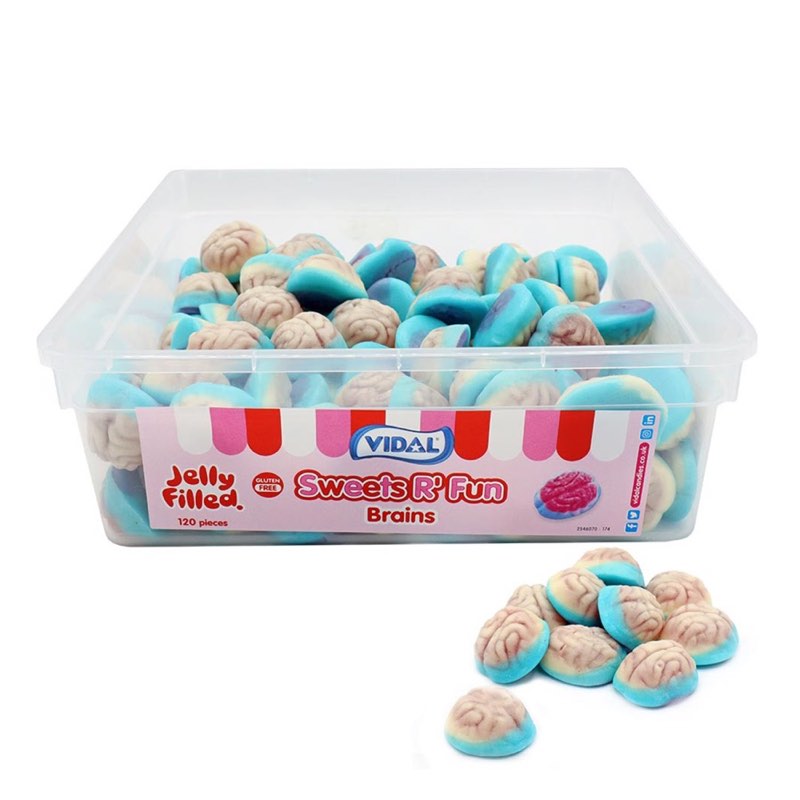
Vidal · 780g
Read the full guide
Vidal Jelly Filled Brains
£7.99
✔ In stock — ready to ship
Fresh stock
Free over £20
Same-day dispatch
Secure checkout
The sensible place to start with Vidal Jelly Filled Brains is the arithmetic, because at 780 grams this is a bulk purchase rather than a snack, and bulk purchases are decided on numbers before they are decided on taste.
£7.99 for 780g works out at £1.02 per 100g, or £10.24 a kilogram. That is the figure to carry around. Anything under about £1.20 per 100g is a proper bulk price in confectionery; anything over £2 is a single-serve price wearing a bigger bag. This sits comfortably in the first category, which is the entire reason to buy 780 grams of anything.
The full guide to Vidal Jelly Filled Brains
5,060 words on how it eats, who it suits, how to serve it and what to put beside it.
£7.99 for 780 grams, and what that actually covers
Translated into the portions people actually serve:
- 25g, a child's handful: about 26p. The tub does around thirty of them.
- 50g, an adult handful: about 51p, and roughly fifteen handfuls in total.
- 40g party bag: about 41p a bag, and 780g fills nineteen of them.
- 150g table bowl: £1.54 a bowl, with enough for five fills.
- A film night for four at 100g each: £4.10, and you still have 380g left.
Those numbers hold up well against most of what sits near this product on the shelf, and the comparisons are worth making explicitly rather than taking on trust.
Sweetzone Orange & Lemon Slices Tub 800g is the nearest thing to a like-for-like: also £7.99, for 800g rather than 780g, which is 99.9p per 100g. Twenty grams more sweets for the same money — a difference of about two pence in the pound, which is to say no difference at all. If you are choosing between the two, choose on shape and texture, not on price, because the price is the same in any way that matters.
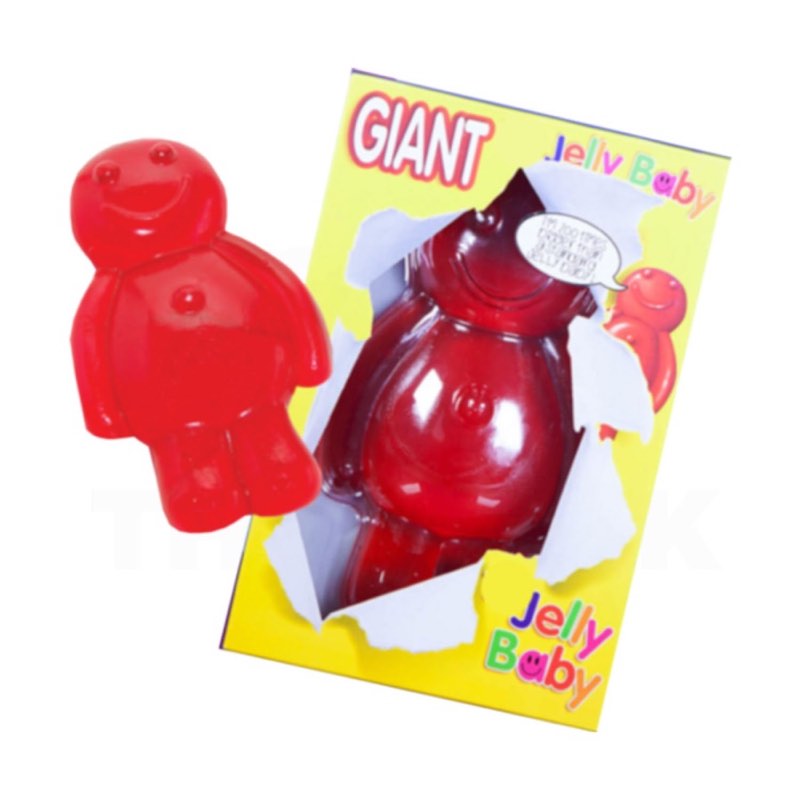
The Giant Jelly Baby Box 800g at £11.99 is £1.50 per 100g — about 47% more per gram than these brains. You are paying for size and for the box, and the colour is selected at random, which is part of the fun and part of the risk. It is a better gift and a worse bulk buy.
Haribo Friendship Rings 480g at £8.99 comes out at £1.87 per 100g, nearly double. That is normal for a branded bag of that size and it is not a criticism of it, but it tells you plainly what the 780g format is saving you.
And at the far end, Barnett's Mega Sour Fruits Candy Bags 104g at £3.99 is £3.84 per 100g — almost four times the price per gram. Nobody buys that as bulk; they buy it as an experience, and paying four times the rate for a small quantity of something intense is entirely rational. Just do not confuse the two kinds of purchase when you are filling a basket.
How long 780 grams lasts
The honest answer depends on whether the tub is visible. Out on a counter in a household of four, a week to ten days. Put away in a cupboard and brought out deliberately, six weeks to two months. As party stock, one tub covers a table of a dozen children for an afternoon with some left, or twenty party bags outright. As a weekly lunchbox item for one child, a couple of months.
The number that catches people out is the party one. Nineteen 40g bags sounds like plenty until you remember that party bags usually hold two or three different sweets, at which point you are using 15g of this per bag and one tub covers fifty bags. Work out the per-bag weight first, then decide how many tubs, and you will not end up with 600 grams of leftovers in February.
What arrives: a shape with a joke in it
A brain-shaped jelly is a novelty before it is a sweet, and there is no point pretending otherwise. The appeal starts with the fact that somebody made a sweet in the shape of a brain, and that it is a convincing enough brain to get a reaction the first time it is tipped into a bowl. If that is not appealing to you, this is not your tub and no amount of writing about texture will change that.
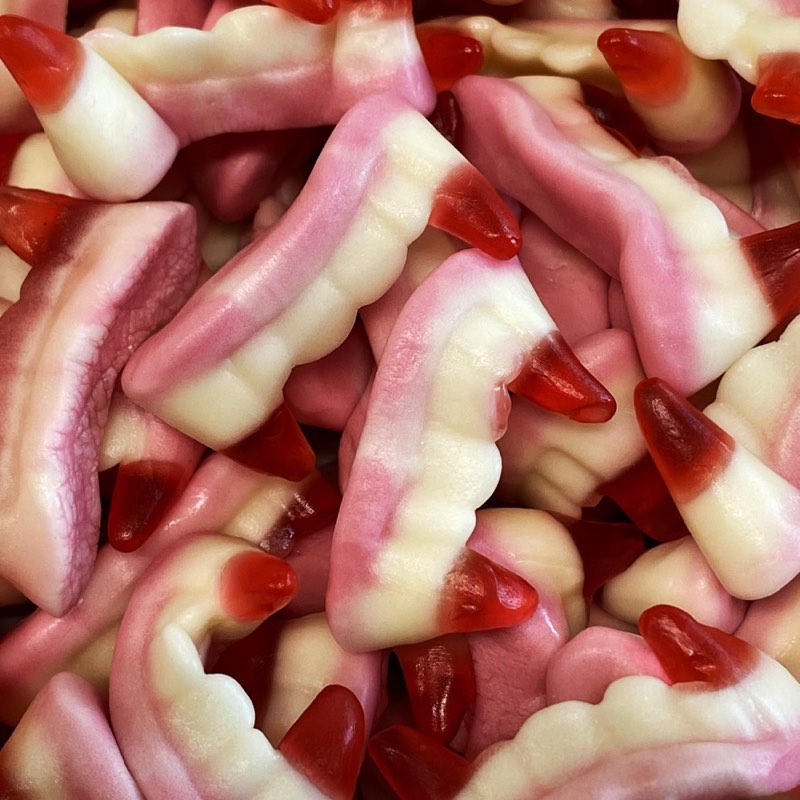
The shape is domed and lobed, with the grooves and folds moulded into the top surface, and it is a good deal larger in the hand than a standard gummy. This is a one-at-a-time sweet, not a handful-at-a-time sweet. We list the colour on our filter as blue, so if you are browsing the site by colour rather than by flavour, that is where these turn up.
The important structural fact is in the name: these are filled jellies. A jelly outer with a softer centre inside it. That construction is the difference between this and every plain gummy on the shelf, and it is what the next section is about, because it changes the eating in a way that surprises people who think a gummy is a gummy.
Two textures in one sweet, and why that is harder than it sounds
Most sweets are one texture all the way through. You bite, you chew, the mouthfeel is constant from the first second to the last, and the interest has to come from flavour alone. A filled jelly is not like that. It is built as two distinct textures held together, and getting them to coexist is a genuine piece of engineering.
Consider what a filled sweet has to achieve. The outer jelly has to be firm enough to hold a detailed moulded shape — in this case, a brain, which is about as demanding a shape as confectionery attempts, because it is all grooves and ridges and reads as mush if the definition is soft. At the same time, the inside has to stay markedly looser than the outside, or there is no contrast and the whole exercise is pointless. And those two things have to sit against each other for months without the soft part making the firm part soggy or the firm part drawing the softness out of the middle. A plain gummy has none of these problems. It is one thing, uniformly, and it will sit on a shelf happily.
What that means in your mouth is a bite in two stages. The first stage is the outer layer giving way. It resists briefly — a definite, elastic push back against the teeth — and then yields cleanly rather than tearing. That resistance is the part that makes a jelly satisfying rather than merely sweet, and it is entirely a function of the outer layer being firm.
The second stage arrives a fraction of a second later, when the centre releases. The sensation is of the sweet suddenly becoming softer in the middle of a bite it had already committed to, and it is genuinely surprising the first three or four times even when you know it is coming. The centre spreads across the tongue while the outer layer is still being chewed, so for a moment you have both textures at once — firm and elastic against soft and yielding — which is a combination you will not get from any single-texture sweet on the shelf.
The third stage is the chew-down, where the outer layer is doing the work alone and the mouthful firms up again. So the arc of one sweet goes firm, soft, firm — a shape, rather than a flat line. That is why filled jellies eat slower than their size suggests, and why one is more satisfying than two plain gummies of the same weight.
Temperature moves all of this around, more than people expect. A jelly at room temperature gives the intended contrast. A jelly that has been somewhere warm is softer throughout, the outer layer gives up too easily, and the two stages blur into one — the contrast is lost and the sweet reads as ordinary. A jelly straight from a cold room is firmer throughout, the resistance is sharper and more pleasing, but the centre is stiffer too and takes longer to release. If you want these at their best, room temperature in a cool room is the target, which is what a cupboard gives you and what a windowsill does not.
Size is doing structural work too. A filled sweet has to be big enough to have an inside. Below a certain size, the outer layer is most of the sweet and the centre is a token. That is why these are a large format and why you cannot get the same experience in a miniature — the geometry will not allow it. It is also why they are a slower, more deliberate sweet than the small shapes they sit next to in a mix, and why a young child should be supervised with them: whole gummies of this size are a choking risk for the very young, and cutting one in half is a reasonable habit at a children's table.
Compare it across our own shelves and the point makes itself. Taveners Fruit Pastilles at £5.49 are a dense, uniform, chewy mass, and everything interesting about them happens through flavour and through how long they take to work down. Swizzels Sour Shooting Stars Gums Squashies 100g at £1.29 go the other way: soft and yielding throughout, almost marshmallow-like in how little they resist. Barratt Fruit Salad Chews at £5.49 are a long, pulling chew that stays with you. Each is excellent and each is one texture. The filled brain is the one that changes halfway through, and if you have a bowl of all four on a table, that is the one people go back to describe.
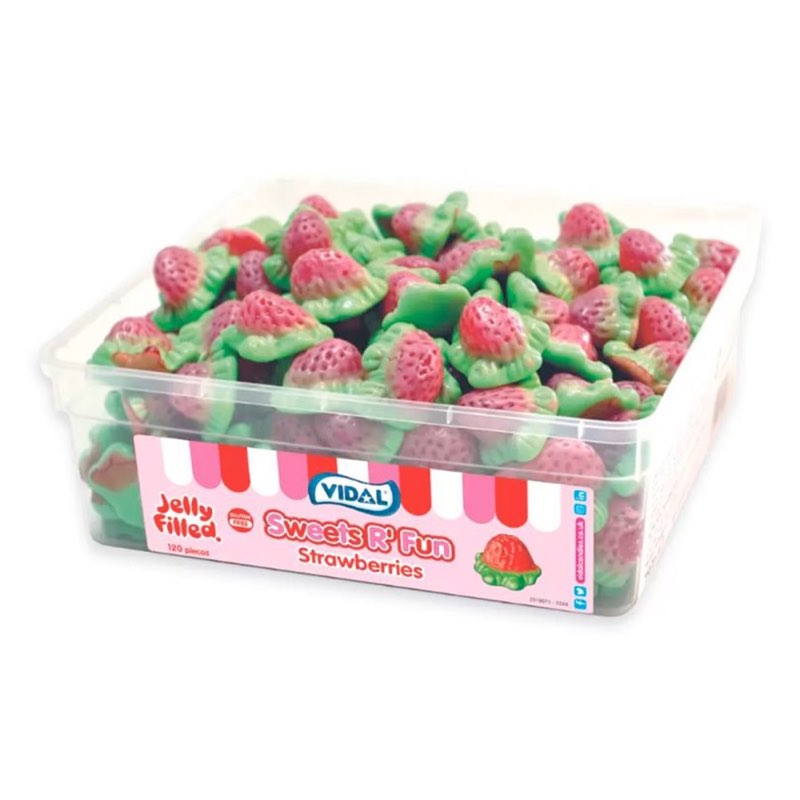
The closest thing we stock to it structurally is Vidal Jelly Filled Strawberries Tub at the same £7.99 — the same filled construction in a completely different shape and character. If you have decided you like what a filled jelly does and you want the effect without the novelty shape, that is the one to move to.
How it behaves next to other sweets in one bag
Buying a tub of one line and building a mix out of it is a different skill from buying a ready-made mix, and filled brains have a specific set of behaviours that a mix-builder needs to know about. Some of them are advantages and some are traps.
It is a big unit, so it sets the scale of the bag. Put three brains in a 100g pick-and-mix bag and they occupy a third of it. That is fine if you want them to be the feature, and a problem if you wanted eight lines represented. As a rough rule, treat one brain as equivalent to four or five small gummies when you are planning proportions. A 200g bag can carry three or four of them and still have room for variety; a 100g bag can carry two.
It is the piece people look for. Large novelty shapes get hunted. In a mixed bag, the brains will be eaten first and the small filler sweets will be eaten last, which means a mix that is 20% brains by weight will feel like it has run out of brains long before it has run out of sweets. If you want them to last through the bag, go heavier than feels right — 30% rather than 15%.
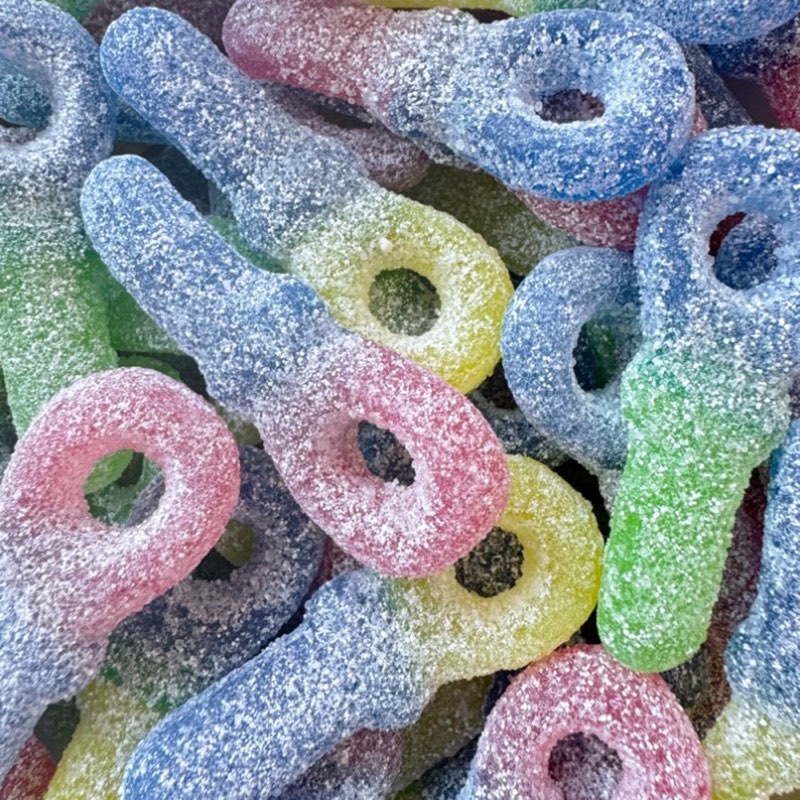
It does not shed colour or stickiness onto its neighbours. A firm-surfaced jelly sits in a bag without transferring, which is more than can be said for dusted sour sweets. This matters a lot. Anything coated in a sour dusting will spread that dusting across everything else in the bag, so a bag containing Dulce Plus Sour Strawberry Rings at £5.49 will taste faintly sharp all over within a day. Sometimes that is exactly what you want. If it is not, keep the dusted lines in their own bag and let the brains sit with the clean-surfaced ones.
It wants company that contrasts, not company that competes. Two large soft novelty shapes in one bag cancel each other out — neither is the surprise any more. The best bagmates for a filled jelly are things that behave differently in the mouth:
- Something with a genuine pull to it. Vidal Rainbow Belts at £5.49 are long and flat and eaten by stretching rather than by biting, which is about as far from a domed filled jelly as you can get while staying in the same family. Vidal Strawberry Belts at the same price do the same job in a single flavour.
- Something small and countable, to fill the gaps that big shapes leave. Shades by Niko The Originals Bag at £1.99 is cheap enough to add to any bag as the filler element, and small pieces settle into the spaces around large ones so the bag looks full rather than gappy.
- Something sharp, to reset the palate. A soft, sweet, filled jelly followed by something sour is the oldest and most effective one-two in a mix bag.
- Something firmer, so not every sweet gives way at the first bite. Kingsway Black & Raspberry Berries at £5.49 bring a denser chew and a darker flavour into a bag that would otherwise be entirely bright and soft.
It is the wrong sweet for a very small bag. If you are making 25g favours, a single brain is essentially the entire favour, and one sweet in a bag looks mean however good the sweet is. For favours under 50g, use small shapes and save the brains for the bigger bags.
It is the right sweet for a themed bag. This is where the novelty shape earns its keep in a mix. If you are building bags for an occasion that has a visual identity, a brain-shaped jelly does half the theming for you. Nothing else in a bag communicates as fast as a recognisable shape.
If you would rather have all this assembled for you by weight than buy four tubs and use a quarter of each, our pick and mix section is set up for exactly that, and it is usually both cheaper and less wasteful for a one-off event than buying whole tubs of everything.
Who buys a tub of brains
The Halloween host is the most obvious buyer, and a brain-shaped jelly does a job on that table that no amount of orange packaging does. It is the food and the decoration at the same time, and at £1.02 per 100g it is a cheap way to theme a whole table rather than a corner of it.
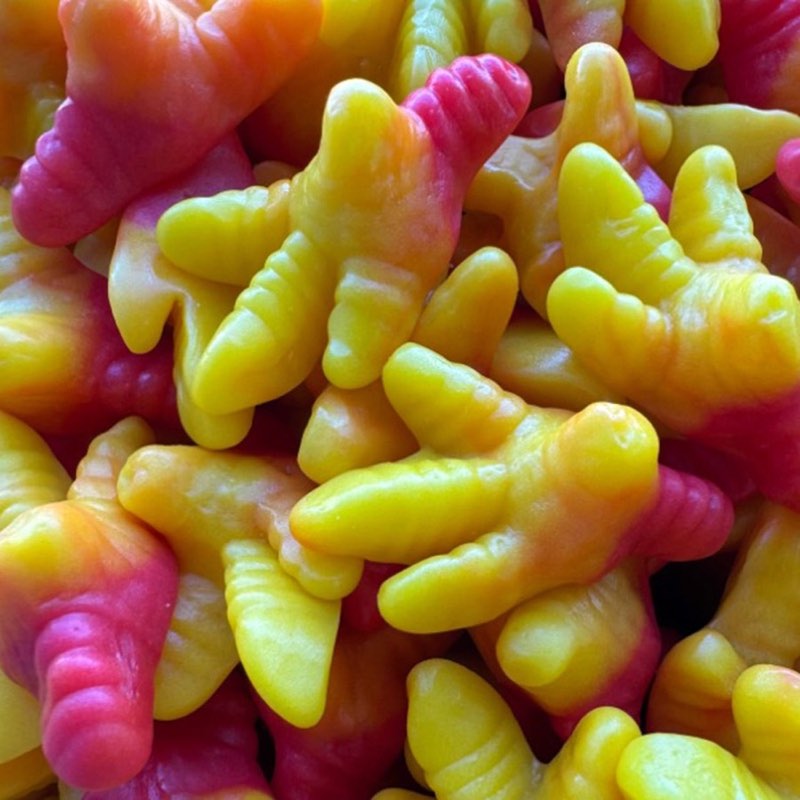
The parent of a child in the gross-is-brilliant phase is the second and possibly the largest group. There is a stretch of childhood, roughly six to eleven, in which the appeal of a sweet is directly proportional to how much an adult would rather not look at it. A tub of brains is unbeatable currency in that window. Vidal Chicken Feet at £5.49 are from exactly the same school and make a very good pairing for anyone leaning into it.
The party-bag filler is third, for the reasons set out above: one shape that does the theming, at a weight that covers nineteen bags on its own.
The texture seeker is fourth and is quietly the most loyal. Some people buy sweets for flavour and some buy them for what happens in the mouth, and the second group will pay attention to a filled construction in a way the first group never will. If you already know you prefer a sweet with something going on inside it, you do not need persuading.
The office prankster and the desk-tub keeper is fifth. A tub of brains on a shared desk is a conversation every time somebody new walks past, which is either the point or a reason to buy something else.
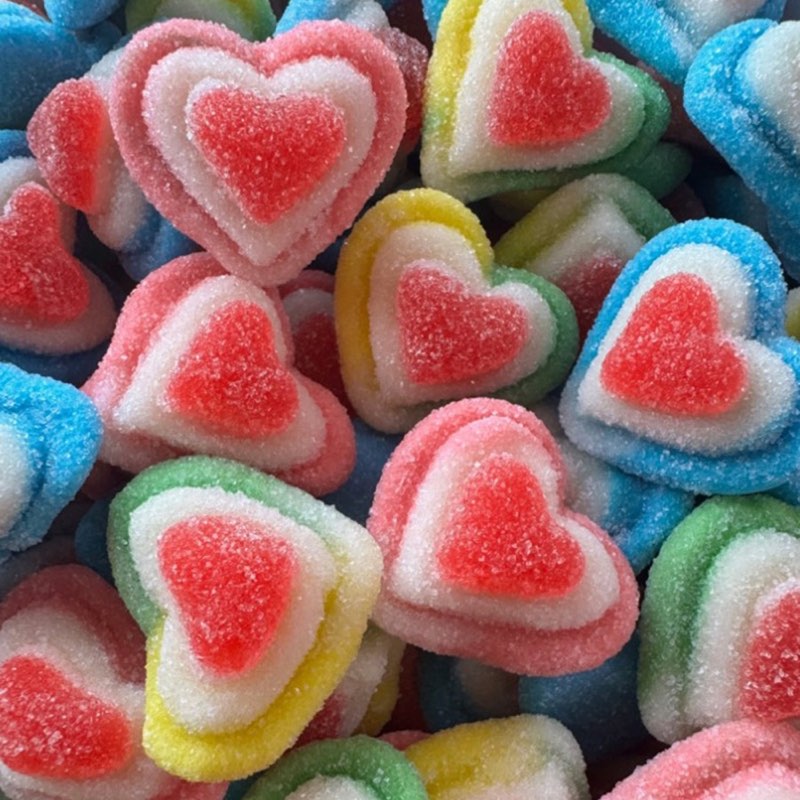
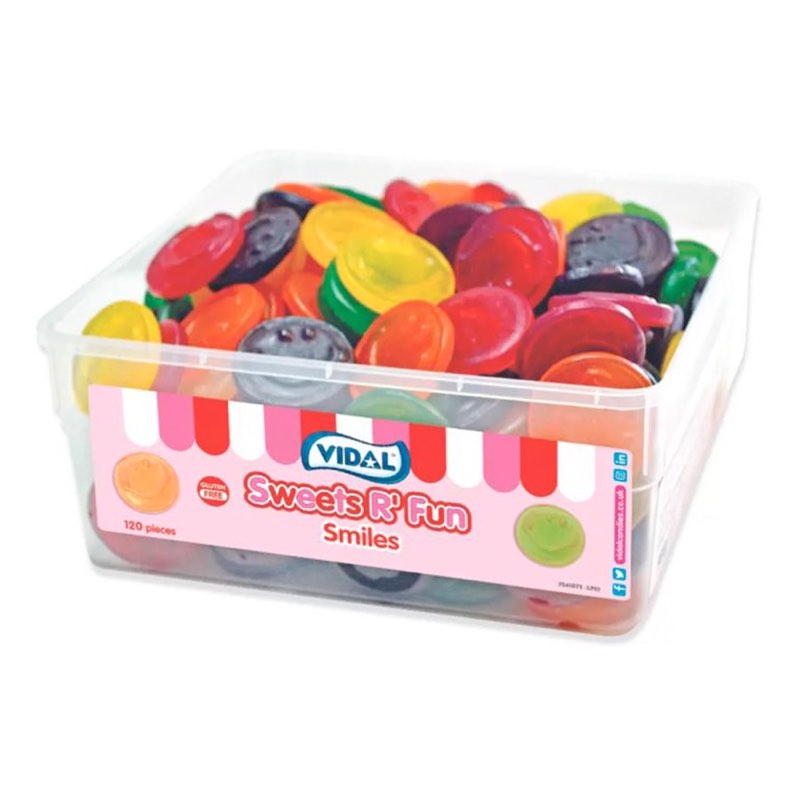
Who it is not for: anyone buying for a table of adults who want something elegant, and anyone who dislikes large soft sweets. If the size is the problem but the fruit character is what you want, Vidal Happy Smiles Tub at the same £7.99 is the friendlier-looking tub from the same maker, and Vidal 3D Triple Hearts at £5.49 give you a moulded three-dimensional shape without the horror-film association.
Fruit, as a flavour family
The flavour here is listed simply as fruit, and that generic label is more informative than it looks. A sweet described as fruit-flavoured rather than as a named single fruit is usually built to be broadly appealing rather than precisely identifiable — bright, sweet, recognisably fruity, and not asking you to decide whether it is convincing as any particular fruit. That is the correct design choice for a novelty shape, because a brain that tasted emphatically of one specific fruit would be a strange object indeed.
What that means in practice is that these sit easily alongside almost anything else fruit-flavoured without clashing, which is not true of more assertive flavours. It also means they are an easy sell to a crowd — there is no acquired taste to get past.
Our fruit flavour shelf runs to 161 lines, which makes it by far the largest flavour category we keep, and it splits into a few useful sub-groups. There is the bright and simple end, where these sit. There is the sharp end, where sourness is the main event and fruit is the carrier. There is the dark and deep end — berry flavours that are richer and less immediately sweet. And there is the citrus corner, which is the natural palate-cleanser of the group and the reason orange and lemon slices have never gone out of fashion.
If you are building a table rather than a single bowl, taking one line from each of those four sub-groups gives you a spread that feels varied without anything fighting. Two lines from the same sub-group is where tables start tasting samey.
Occasions this suits
Halloween, obviously. Bowls by the door, bags for trick-or-treaters, a table for a party. Nineteen 40g bags from one tub, and the shape means you do not need to buy anything themed on top.
Children's birthday parties, particularly for the age band described above. Put the brains out in a bowl of their own rather than mixed in — the reaction is the point and you lose it if they are buried.
Film nights, especially horror ones. A large, slow, two-stage sweet is exactly right for something you are watching over two hours, because it is not gone in a minute and it gives your hands something to do.
School and club fundraisers. A novelty shape sells better on a stall than a conventional one at the same price, and bagging 780 grams into small portions turns £7.99 of stock into a great deal more than £7.99 of takings.
Hampers and gift boxes, as the comic element. A hamper of respectable sweets with one bag of brains in it is a better-judged present than a hamper of entirely respectable sweets, because the joke tells the recipient you were thinking about them rather than about the hamper.
Sleepovers and half-term. A tub in the cupboard that gets brought out is one of the cheapest reliable pleasures available to a household with children in it, and 780 grams is enough to survive several outings.
Serving them so the shape does the work
A novelty sweet is worth more on a table than in a cupboard, and how you put it out decides whether anybody notices it at all. Three rules cover most of it.
Serve them alone, not mixed. This is the one that matters. A brain in a bowl of assorted gummies is just a big blue sweet; a bowl of nothing but brains is a talking point. If you have bought these for an occasion, give them their own vessel even if it is a small one, and mix the rest of your sweets together in a bigger bowl beside it. The contrast between the themed bowl and the general bowl is what makes the themed bowl land.
Serve them face up. The moulded detail is all on one surface, and tipped straight from the tub roughly half of them land upside down showing a plain underside. Thirty seconds spent turning them over doubles the visual effect for no money. It sounds fussy and it is the difference between a bowl that reads as decoration and a bowl that reads as sweets.
Give them a flat, plain background. A detailed shape disappears against a patterned dish and stands out against a plain white plate or a clear glass bowl. If the table is being photographed, which at a children's party it invariably is, plain crockery is doing you a favour.
Two smaller points worth knowing. Tongs or a spoon rather than hands is worth setting out, because a large soft sweet gets handled by several people before one gets taken, and nobody enjoys the twelfth brain in the bowl. And if you are laying them out well before guests arrive, cover the bowl — an hour uncovered in a warm room takes the edge off the outer layer, and the two-stage bite is the thing you are paying for.
Storing a filled jelly properly
Filled jellies need slightly more care than plain ones, because there are two textures to preserve and the whole appeal collapses if they converge.
Airtight, always. Air dries the outer surface and a dried jelly goes tough and dull. Once opened, transfer to a sealed container or clip the bag properly. This is the single most important thing on this list and the one most often skipped.
Cool, dark and steady. Warmth softens the outer layer, which is the layer doing the structural work, and once that goes soft the two-stage bite disappears and you are left with a large sweet mush. A cupboard away from the oven and out of direct sun is all it takes. Avoid the top of the fridge, which is warmer than people think.
Not in the fridge. Cold firms jellies up beyond the pleasant point and, worse, the condensation when they come back out makes the surfaces tacky, at which point they stick to each other. If they have been somewhere cold, give them an hour out before serving.
Not squashed. A filled sweet at the bottom of a heavy tub can deform, and a deformed brain has lost its only real visual joke. Store the container upright and do not stack heavy things on it.
If they stick together, ten minutes somewhere cold will firm them enough to separate by pulling rather than tearing. Do not twist — twisting a filled jelly splits the outer layer and lets the centre out.
Check the date on arrival and note it somewhere, because 780 grams is a quantity you will still be working through in two months' time. The same goes for anyone with an allergy in the house: the manufacturer's packaging arrives with the product and is where allergen information lives, so read it on arrival rather than relying on anything a shop page tells you. And sweets are a treat rather than food, which is the only other thing worth saying on the subject.
One size, and what to do if it is the wrong one
This line comes in a single size: 780 grams at £7.99. There is no smaller bag and no larger tub, so the choice is to buy 780 grams or to buy something else.
If 780g is too much, you have two reasonable routes. Buy a small quantity of large filled jellies through pick and mix to find out whether the format suits you before committing, or buy a smaller novelty line instead — the £1.99 bag mentioned earlier or the £1.29 Squashies are both under two pounds and will tell you something about what a household likes without leaving you with most of a tub.
If 780g is not enough, the practical move is a second line at a similar price per gram rather than a second tub of the same thing, because variety is worth more on a table than depth. The 800g orange and lemon slices at £7.99 are the obvious partner — same money, same weight bracket, completely different shape and flavour, so two tubs give you a full table rather than a lot of one thing.
Where these sit on the site
You will find these on four shelves. They are in loose sweets, our largest section at 356 lines and the home of everything sold by weight. They are on the Vidal brand page with the other eighteen lines we stock from them, which is the most useful page on the site if you have decided you get on with this maker's style. They are under jelly with 26 shelf-mates, which is where to browse if the texture rather than the shape is what you are after. And they are on the fruit flavour shelf mentioned above.
Looking wider, the Haribo range is the obvious place to go for the most universally recognised gummy shapes to sit alongside a more unusual one, and Kingsway's lines cover the traditional British end of the same territory. Candy and chocolate holds the wrapped and boxed formats if you want something that does not need decanting, and the full shop listing is there for browsing rather than filtering. The 356 lines sold by weight are worth a scroll in their own right if you are stocking up rather than shopping for one thing.
Questions worth asking before you buy 780 grams
How many brains are in a tub?
We sell by weight rather than by count and we will not guess at a number, because individual weights vary between batches and a wrong count is more annoying than no count. Plan by weight instead: 780 grams is around fifteen adult handfuls, nineteen 40g party bags, or five 150g table bowls. For party planning, decide your per-bag weight first and divide 780 by it.
What does "jelly filled" mean?
It describes the construction, not the recipe. There is a firmer jelly on the outside and a softer centre inside it, so the sweet changes texture partway through the bite rather than staying the same all the way down. That contrast is the whole point of the format. We do not publish what the centre is made of — the manufacturer's packaging that arrives with the tub is the place to look for anything of that kind.
Are they very sweet or are they sour?
Sweet. The flavour is listed as fruit and it is the bright, broadly appealing kind rather than anything sharp or acquired. If you want sour in the same bowl, add a dusted sour line alongside rather than expecting it from these — and be aware that a sour dusting travels onto everything else in a shared bag.
Will children actually eat them or just find them funny?
Both, in our experience of what sells. The shape is what gets them picked up and the two-stage texture is what gets them finished. If you are worried about waste at a party, put out one bowl rather than three and see how it goes; a tub of this size will not be embarrassed by a cautious first outing.
Can I use them in a pick and mix bag?
Yes, and they are one of the best novelty inclusions because they hold their shape and do not transfer colour or stickiness to the sweets around them. Remember they are large: treat one as equivalent to four or five small gummies when working out proportions, and go heavier than feels right, because these are the ones everybody picks out first.
How should I store them once the tub is open?
Sealed, cool, dark and upright. Air is what ruins a filled jelly — the outer layer dries, goes tough and stops giving the clean bite that makes the format worth buying. Do not keep them in the fridge, because cold makes them hard and the condensation afterwards makes them sticky. A cupboard away from the oven is all that is needed.
Are they all right for young children?
Whole gummies of this size are a choking risk for the very young and should be supervised, and cutting one in half for a small child is a sensible habit. Beyond that, sweets are a treat rather than food and we will not tell you anything more than that. Anyone with an allergy should read the manufacturer's packaging that arrives with the product before eating.
Do they melt or stick together in transit?
In warm weather they can soften and settle against each other. That is cosmetic. Let the tub come back to a normal temperature somewhere cool, and if they have knitted together, a short spell somewhere cold firms them enough to pull apart. Pull rather than twist — twisting splits the outer layer and lets the soft centre out, which is messy and loses you the contrast.
What else works on the same table?
Something long and stretchy, something small enough to fill the gaps, and something sharp to cut through. Belts cover the first, a cheap small-shape bag covers the second, and any sour line covers the third. Avoid putting two large novelty shapes out together — they compete for the same attention and neither one gets to be the surprise.
Is this the cheapest way to buy jellies here?
It is close to it but not quite the top of the list. At £1.02 per 100g it sits just behind the 800g tubs at £7.99, which work out a couple of pence cheaper per 100g. The gap is small enough to ignore. What you should not do is compare it against a 100g branded bag and conclude that all jellies cost that much — small formats routinely run at two to four times this rate per gram.
Do they come in other shapes or flavours?
Not this line, which is one size and one specification. The same filled construction in a different shape is available as the filled strawberries tub at £7.99, and the rest of the maker's range on their brand page covers belts, moulded shapes and tubs in various formats if what you liked was the style rather than the specific sweet.
In short
780 grams for £7.99 — £1.02 per 100g, which is a genuine bulk price — of a large, fruit-flavoured jelly built with a firmer outside and a softer centre, so the bite changes partway through instead of staying flat. The shape is a joke and a good one, which makes it unusually efficient party and Halloween stock. Keep it sealed and cool so the two textures stay two textures, treat one brain as four small sweets when you build a mix, and put them out in their own bowl the first time so the reaction is not wasted.
More from Vidal
More jelly sweets
More fruit sweets
Where this sits
Vidal Jelly Filled Brains appears on these shelves. Browse them, or jump to something nearby.
You might also like