Home / Loose Sweets / McAdam's England Football Chopped Rock Pouch 150g
Mcadams · 150g
Read the full guide
McAdam's England Football Chopped Rock Pouch 150g
£1.99
✔ In stock — ready to ship
Fresh stock
Free over £20
Same-day dispatch
Secure checkout
There is a category of purchase that exists entirely because something is happening on a specific afternoon. You are not restocking the cupboard. You are buying for a fixture. The McAdam's England Football Chopped Rock Pouch 150g, at £1.99, is built for exactly that kind of afternoon, and the occasions come first here because the occasions are the whole reason a themed pouch exists.
Before anything else, a plain statement, because it matters: this is a football-themed novelty sweet. We make no claim that it is officially licensed by, endorsed by, or associated with any national team, any football association, or the organisers of any tournament. The theme is a design printed on a pouch. Buy it because the theme is fun, not because you think it comes with a badge.
The full guide to McAdam's England Football Chopped Rock Pouch 150g
5,363 words on how it eats, who it suits, how to serve it and what to put beside it.
Match days, screen nights and the rest of the diary this pouch suits
With that said, the diary.
The big-screen afternoon. Somebody's front room, too many people on not enough sofa, a match that half the room cares about desperately and half is there for the company. This is where a themed pouch does something a better sweet at a higher price cannot: it makes the room look like it is having an occasion. Two or three pouches tipped into bowls costs less than a round of drinks and changes the tone of the whole thing.
The pub garden, the park, the driveway with a laptop on a chair. Outdoor watching has one hard constraint — nothing that melts, nothing that needs a plate. A boiled sweet is close to the most weather-proof confectionery there is. It does not soften in the sun the way a chew does or collapse the way chocolate does, and a pouch goes in a coat pocket without any ceremony.
School and club fixtures. Junior football on a Saturday morning is a fixture of British life and it involves a great deal of standing about in the cold. A pouch passed along a touchline is a well-established small kindness, and at under two pounds you can hand one to every parent there without thinking about it. The same goes for the end-of-season presentation, where a bag of themed sweets is a perfectly good filler alongside a trophy nobody is really looking at.
Party bags and prize buckets. A football-themed birthday needs about fifteen small things, all under two pounds, all recognisable without explanation. A 150g pouch is on the generous side for a party bag and can equally be split across several. For a lucky dip or a tombola with lots of small prizes, cheap themed items are what you want in volume.
The car and the long wait. Boiled sweets are the traditional journey sweet because each one takes a long time and nothing gets on the upholstery. A pouch lives in a glovebox for months without complaint.
Pocket money and the Saturday treat. At £1.99 this is genuinely within reach of a child buying for themselves, which is a smaller category than it used to be. There is something worth preserving about a sweet a child can afford outright.
And the tournament summer. Every couple of years the country does the whole thing again, and themed sweets appear in shops for a few weeks and then vanish. If that is the summer you are buying into, there is more to say about it below, because that pattern is the whole reason novelty confectionery works the way it does.
What is actually in the pouch
The listing is straightforward. One hundred and fifty grams, £1.99, one size, in stock. Our supplier lists the flavour as fruit, the sweet type as boiled, and the colour as red.
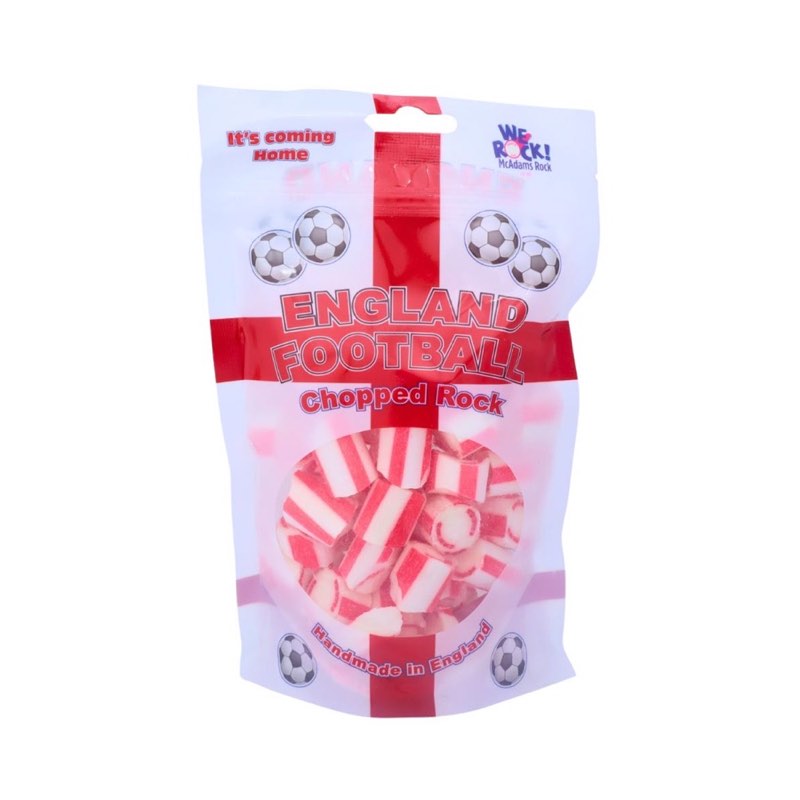
Chopped rock is rock sold in pieces rather than as a stick. Instead of a single long cylinder you get a pouch of short, irregular chunks, and that is a meaningfully different product from a shopper's point of view. A stick is one item for one person, eaten over a long time and awkward to share; chopped rock is a shareable format that goes into a bowl, gets handed round, and suits a group. The difference between the two is not the sweet — it is what you can do with it.
The red colour tag is doing the theme's work as much as the printing on the pouch is. Red reads as the strongest signal in confectionery — it is the colour that means berry, that means sweet, and in this context that means the kit. On a table, a red bowl among the rest is the one people go to first.
A note on the name before anyone reads too much into it: England here is the theme on the front, not a statement about where anything is made. We do not hold origin information for this line and we are not going to invent any.
And the standing points that apply to everything on these shelves, which matter a little more for this format than most. Sweets are a treat. Small hard sweets are a choking risk for young children, so keep an adult nearby if little ones are eating them, and think twice about a hard sweet for a child young enough to be running about with it in their mouth. If anyone eating from the bowl has an allergy, read the manufacturer's packaging on the pouch when it arrives, before anything is opened — that printed label is the authority and a product page is not.
The long burn: how a boiled sweet actually eats
Boiled is the slowest category in the shop, and understanding what that means changes how you buy it.
A gummy is over in seconds. A chew asks you to work for a minute or two. A boiled sweet asks nothing at all and then stays with you for a very long time — five minutes, ten, longer if you have the patience not to bite it. You are not eating it so much as carrying it. The flavour arrives almost at once, sits at a steady level throughout, and only drops away at the very end when there is nothing left.
Three consequences follow, and they are the practical case for the format.
It is the best value per minute in confectionery. Per gram, plenty of things are cheaper. Per minute of actually having a sweet on the go, almost nothing beats a boiled sweet. That is why they dominate the contexts where time is the problem — long drives, queues, cold touchlines, the last half hour of a match nobody is enjoying.
It suits talking. Unlike a chew, which occupies your jaw and briefly stops the conversation, a boiled sweet tucks into a cheek and gets out of the way. For a room full of people watching something and shouting at it, that is the right behaviour.
It rewards or punishes impatience. Everybody makes the same decision at some point: keep sucking, or crunch it. Crunching gets you a short burst of intensity and ends the sweet. There is no right answer, but it is worth knowing that a pouch bought to last an afternoon will not last an afternoon in the hands of a crunched.
The one real drawback is the edge. Boiled sweets get sharp as they wear down, and enough of them in one sitting will tell on the roof of your mouth. That is a natural brake on eating the whole pouch and, frankly, a useful one. If you want a format with no such brake, the jelly and gummy shelf is the opposite end of the spectrum.
Themed runs, seasonal shapes, and why collectors pay attention
Novelty confectionery runs on a calendar, and once you see the calendar you cannot unsee it. It is one of the few consumer categories where a substantial fraction of what is on sale in any given month will not exist in three months' time, and that scarcity creates a small, real, and slightly obsessive collecting culture.
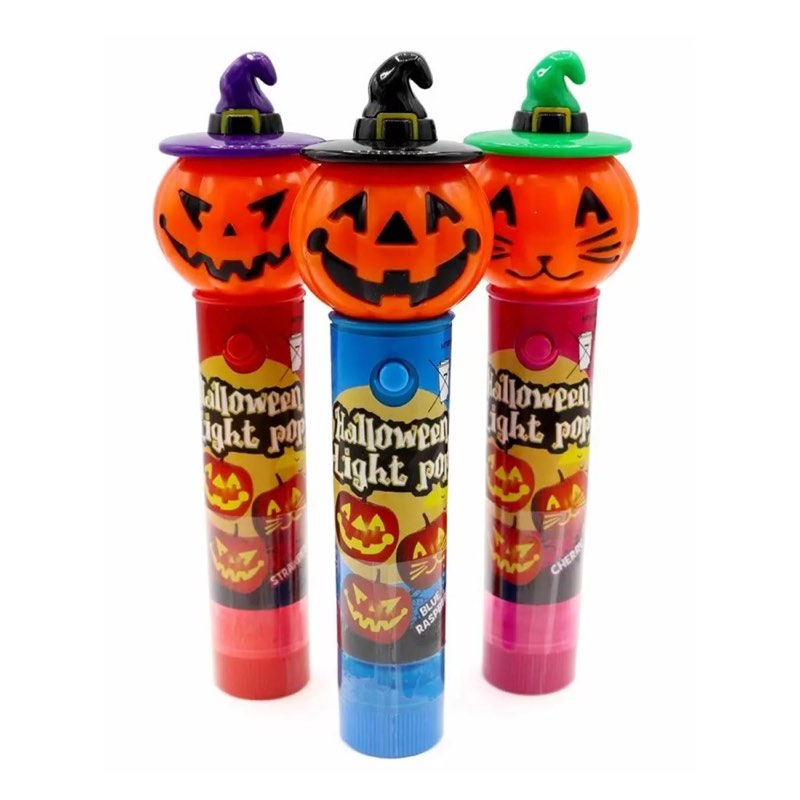
The sweet shop year has four fixed peaks — Easter, Halloween, Christmas and the summer — and each brings its own shapes, colours and formats which appear, sell, and are gone. The Candy Realms Halloween Pumpkin Light Pop, 11g at £1.49, is a perfect specimen of the type: tiny, seasonal, built around a gimmick rather than a flavour, and on the shelf for a few weeks a year. Nobody buys one of those for the sweet.
Sporting tournaments are the fifth peak, and the strangest, because unlike the other four they do not come round annually. A major tournament summer produces a rush of themed confectionery — flags, kits, ball shapes, team colours — which is designed, made, sold and discontinued inside a window of a few months. Then it is over, and the next one is two years away with different artwork. That is a shorter commercial life than almost any other food product has.
Which is what makes tournament-themed sweets interesting to the people who pay attention to this sort of thing. Four habits define that group.
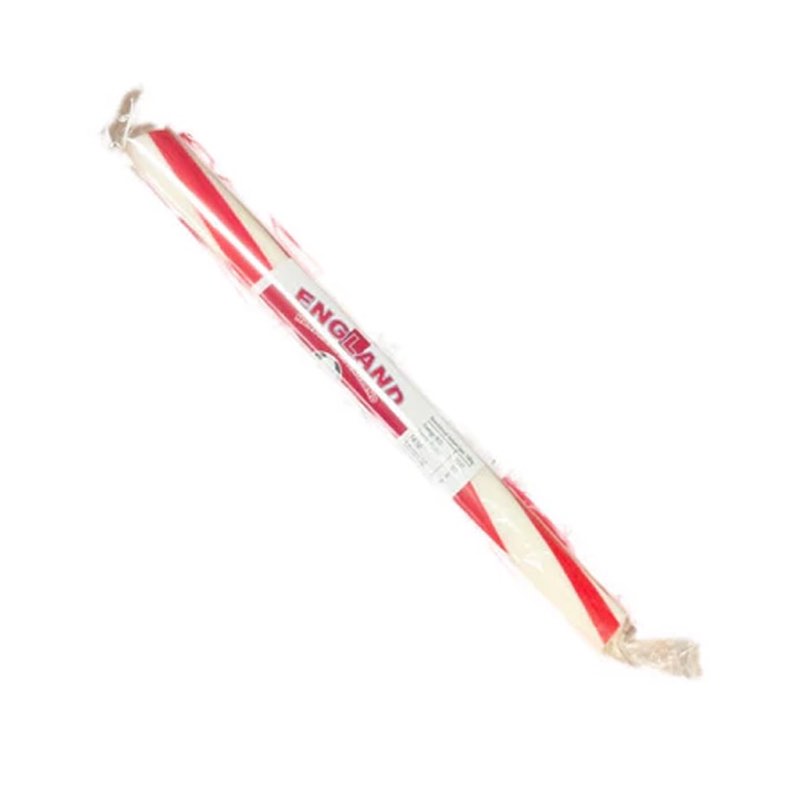
Collecting the set, not the flavour. Themed ranges usually appear in two or three formats at once, and the instinct of the collector is to have all of them rather than several of the best one. This range is a neat example: the pouch you are looking at, the rock stick at £1.49, and the wheel lollipop at £1.99. Three formats, one theme, £5.47 for the set. That is a very cheap complete collection by any standard.
Buying two and keeping one. The classic novelty-collector move — one to eat and one to keep intact, because the packaging is the artefact. It sounds daft until you consider that the packaging is the only part of a themed sweet that carries the theme at all.
Buying at the end of the run. Experienced collectors know that themed lines get marked down as the window closes and then disappear entirely, and they time accordingly. The risk is obvious: leave it too long and there is nothing left.
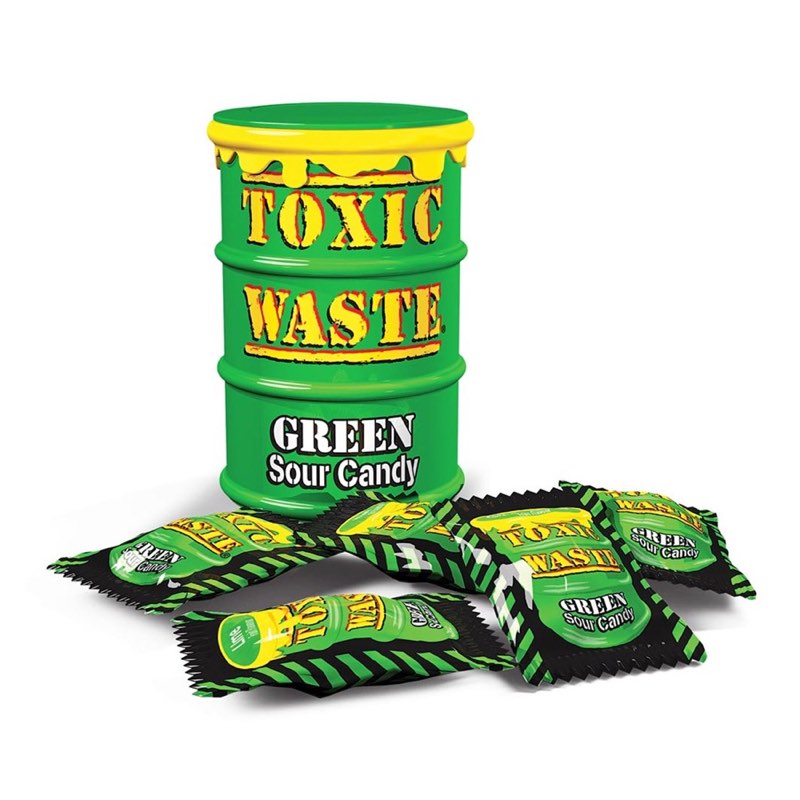
Collecting by format rather than by occasion. Some people collect novelty shapes generally — anything lollipop-shaped, anything that lights up, anything sold in a drum or a tub rather than a bag. The Toxic Waste Green Drum, 42g for £1.99, is a container-format collectable: the drum is the point, and the fact that it is a small drum is why it costs £1.99 for 42g. Warheads Blue Raspberry Cubes, 99g at £2.49, sit in the same corner of the shop — bought for the badge and the challenge as much as the sweet.
There is a sensible version of all this and a silly version. The sensible version is simply noticing that themed lines are temporary and buying them when you see them rather than assuming they will be there next month. The silly version involves a display cabinet. Most people are somewhere in between, and at £1.99 the cost of being slightly on the collector side of that line is not high.
One honest caveat: we cannot tell you how long any particular themed line will be listed, and we are not going to manufacture urgency by pretending otherwise. Themed stock behaves how themed stock behaves. If you want it for a specific date, buy it in time for that date.
Rock, the corner shop and the shop at the end of the pier
Rock occupies a particular place in British sweet-buying that has very little to do with how it tastes, and a pouch of chopped rock inherits all of it.
The seaside sweet shop has always worked to a different logic from the shop at home, because a large share of what it sells is bought as a souvenir rather than as food. That is why the traditional promenade shop is laid out as two businesses under one roof. At the back there is the loose wall — jars, scoops, bins, pick-and-mix, priced by weight, aimed squarely at the children who are actually on the trip and have been given coins. By the door there is the gift shelf — boxed, wrapped, printed and named things, priced per item, bought on the way out by adults who are thinking about the people at home.
Rock belongs to the second of those, and it is probably the purest example of it anywhere in British retail. A stick of rock is bought to be given. It is impractical to eat, awkward to carry, difficult to share, and lasts a very long time — every one of which is a disadvantage in a sweet and an advantage in a souvenir. What it does have is a name on it and a story attached, and that is the entire product.
Chopped rock is what happens when you take the gift-shelf product and move it to the back of the shop. Cut into pieces and put in a pouch, rock stops being a souvenir and becomes a sweet you can actually share out. It loses the theatre and gains a use. That is a genuinely sensible piece of product design, and it is why chopped rock sells year-round in places that have never seen a pier.
The other tradition feeding into this pouch is the loose-sweet counter, which is where the bulk of the old British sweet trade lived. Weighed out, bagged and sold by the quarter, chosen out loud while a queue formed behind you. Its direct descendant on this site is the loose sweets section, which runs to 356 products and is by a distance the largest shelf we keep. That counter is also where a great many of the survivors on our shelves come from — Swizzels Barley Sugar at £5.49 is about as close to a period piece as a boiled sweet gets, and Stockley's Chocolate Flavoured Limes, also £5.49, are another line that reads straight off a jar label from decades ago. The retro shelf collects the rest of that lineage.
The third strand is the pick-and-mix wall, which is the modern successor to the jar counter and works on the same principle — the customer assembles the assortment. Our pick and mix section is built on the same idea, and chopped rock is a good candidate for it precisely because it comes in bowl-ready pieces rather than in one lump.
And the fourth is the themed-novelty shelf by the till, which is where this particular pouch would sit in a physical shop: cheap, seasonal, brightly printed, bought on impulse by someone who came in for something else. That shelf has existed in British sweet shops for as long as anyone can remember, and it is entirely unbothered by the fact that the sweets on it are ordinary. The theme is the product.
Fruit in a boiled sweet, and why it is not the same as fruit anywhere else
Our listing gives the flavour simply as fruit, and it is worth understanding how the fruit family behaves specifically in a boiled sweet, because the format changes it considerably.
In a chew, fruit flavour builds slowly, peaks in the middle and fades out over a long tail. In a gummy, it arrives fast and is gone. In a boiled sweet, it arrives almost immediately and then holds flat for a very long time at a constant level. That plateau is the defining characteristic: you get the same intensity in minute six as in minute one, right up until the sweet is gone.
Two practical consequences. The first is that boiled fruit flavours are usually pitched slightly lower in intensity than the equivalent in a chew, because anything strong enough to be exciting for ten seconds becomes wearing over ten minutes. The second is that a boiled sweet cannot hide behind texture. A chew has something to do while the flavour is arriving; a boiled sweet has nothing but the flavour. That makes boiled the least forgiving format for a flavour to be built in, which is a decent reason to respect a good one.
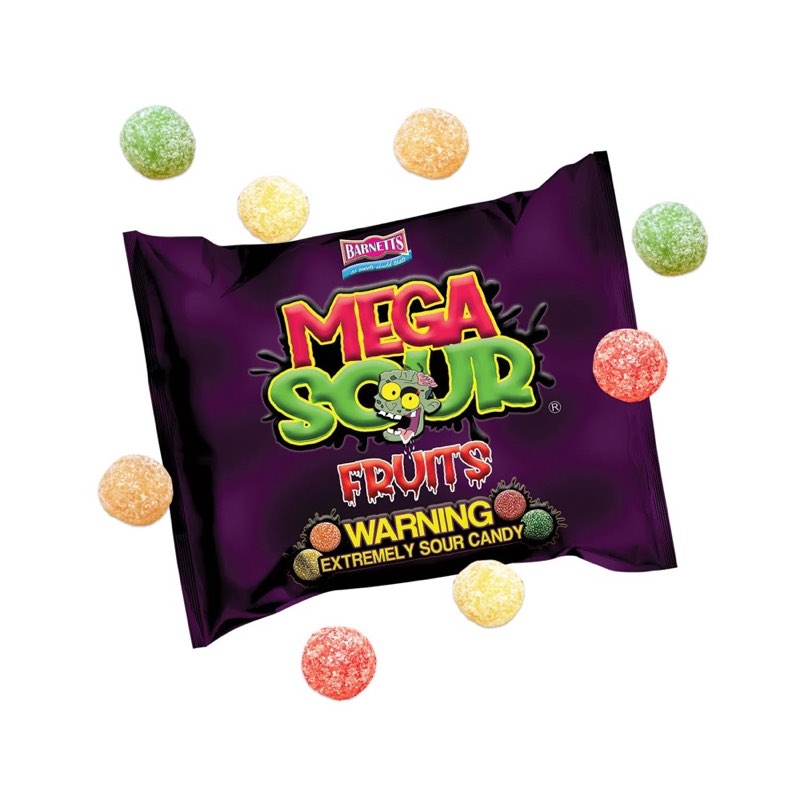
Across the wider fruit shelf — 161 products and the biggest flavour grouping we run — you can see the same note rendered in every direction. At the soft, garden-fruit end, Kingsway Vegan Garden Fruits at £5.49 are rounded and gentle, and our supplier lists that particular line as vegan, which is worth noting if that matters to you. At the chewy end, Barratt Fruit Salad Chews at £5.49 put fruit into the slow-release format. At the foam end, BUBS Banana and Caramel Foam Sweets at £7.50 show what happens when flavour is delivered almost instantly by a very light texture. At the lollipop end, Swizzels Fruity Pops at £5.49 put the same slow-dissolving idea on a stick, which changes the eating entirely — a lollipop is a one-at-a-time sweet where a pouch is a bowl. And at the deliberately punishing end, Barnett's Mega Sour Fruits, 104g at £3.99 take fruit and turn the acid up until it is a dare rather than a flavour.
Setting a mild boiled fruit next to a mega-sour one on the same table is one of the more entertaining things you can do at a party with teenagers in it, and it costs about six pounds.
What to put around it in a bowl
A 150g pouch is a component rather than a centrepiece, so the real question is what it goes with. Three principles, and then a worked example.
Do not put two boiled sweets in the same bowl. They compete for the same slot — the slow one you take when you are settling in — and one of them will be ignored. If you are putting out more than one bowl, make them different formats rather than different flavours of the same format.
Put something fast next to something slow. People choose unconsciously by how long they want to be occupied. A room with only slow sweets out will graze less than a room with both, because sometimes people want something they can finish before the restart.
Have one thing that is a talking point. For a themed afternoon this is easy — the theme is the talking point. For anything else, one novelty item does more for a table than a fourth bowl of something good.
A worked spread for a match-day room of eight to ten, built around this pouch. Two pouches of the chopped rock in one bowl as the long-haul option, about four pounds. A sour bag for the people who go straight for sour — the Warheads cubes at £2.49 are the reasonable end of that, the Barnett's at £3.99 the unreasonable end, and which you pick depends on the room. Something chewy as the middle ground, which the Barratt chews cover at £5.49. And a novelty item for the laugh, which at £1.99 the Toxic Waste drum handles cheaply.
That is roughly £14 and it covers four different eating speeds, which is what a spread is actually for. If you would rather put the same money into one thing, the wider candy and chocolate listing is where the larger sharing formats live.
If you are building an actual pick-and-mix bag rather than a table, chopped rock earns its place for a different reason: it is one of the few things in a mixed bag that survives being at the bottom of it. Soft sweets at the bottom of a pick-and-mix bag get squashed by everything above them. Boiled ones do not care.
Who a two-pound pouch is for
The host on a budget. Anybody putting on an afternoon for a group and wanting the table to look like an event without spending like one. Three pouches is six pounds and fills three bowls.
The themer. Somebody running a football-themed party, a sports day, a club presentation or a charity fixture, who needs things that are on-theme and cheap in volume.
The collector, in the mild sense described above — the person who picks up themed and seasonal lines when they see them because they know they will not be there in three months.
The slow-sweet preferrer. People who actively like boiled sweets are usually quite firm about it, and for them the long burn is the point rather than a compromise.
The glovebox keeper. A pouch of hard sweets in a car is a solved problem for journeys, and unlike anything soft it will still be fine in August.
It does not suit a few people. Anyone with recent dental work should avoid hard sweets generally. Anyone feeding very young children should think about the format itself rather than the flavour — hard sweets and small children need supervision, and for a party of four-year-olds a softer format is simply a better choice. And anyone who wants a lot of sweets for a large crowd will do better with a large bag or a tub than with multiple small pouches.
£1.99 for 150g, and how that compares
The pouch works out at £1.33 per 100g. That is genuinely cheap — one of the better figures on this page — and the reason is straightforward: hard sweets are a dense, simple format sold in a plain pouch, with none of the cost of a box, a tray or a gimmick.
| Product | Weight | Price | Per 100g |
|---|---|---|---|
| This chopped rock pouch | 150g | £1.99 | £1.33 |
| McAdams England World Cup Football Rock Stick | 72g | £1.49 | £2.07 |
| Warheads Blue Raspberry Cubes Bag | 99g | £2.49 | £2.52 |
| Barnett's Mega Sour Fruits Candy Bags | 104g | £3.99 | £3.84 |
| Toxic Waste Green Drum | 42g | £1.99 | £4.74 |
| Candy Realms Halloween Pumpkin Light Pop | 11g | £1.49 | £13.55 |
That last row is not a criticism of the light pop — it is the clearest possible illustration of what novelty costs. Nobody buying an 11g light-up lollipop is buying sweets by weight. They are buying an object. The same logic, in a much milder form, applies to the rock stick at £2.07 per 100g: a stick is a single-item novelty and costs accordingly, while a pouch of the same sweet chopped up is a third cheaper per gram because it is just sweets in a bag.
Per head. A comfortable handful of hard sweets is about 25g, which makes 150g roughly six servings. For a match-day room of six, one pouch is a bowl that lasts because the format is slow; for a room of twelve, buy two and expect them to go. We do not publish a piece count for this pouch and will not guess at one, so plan by weight rather than by pieces.
Per party bag. If you are splitting a pouch across bags, 150g divides into six 25g portions or ten 15g ones. At £1.99 that is between twenty and thirty-three pence of sweets per bag, which is a good use of a small budget when you have fifteen bags to fill and a pound each to fill them with.
Per hour. The unusual measure, but for this format the honest one. A boiled sweet occupies somebody for several minutes rather than several seconds, so a pouch spread over an afternoon goes a great deal further than the same weight of anything fast. Judged as entertainment for a group over ninety minutes, two pounds is not much.
Stopping hard sweets from becoming one hard sweet
Boiled sweets have exactly one enemy and it is moisture. Get that right and everything else follows.
Dry above all. Hard sweets draw damp from the air, and once the surface goes tacky the pieces will stick to each other and, given long enough, fuse into a single block. It is not spoilage and nothing is wrong with the sweets, but it is annoying and it is avoidable. Keep the pouch closed, and keep it out of the most humid room in the house, which is almost always the kitchen. The cupboard above the kettle is the worst storage spot in a British home for this product.
Not the fridge. A common instinct and the wrong one. Fridges are damp environments, and a pouch taken out of one will gather condensation as it warms up — which is exactly the problem you were trying to avoid.
Cool and out of the sun. Hard sweets handle warmth far better than chews or chocolate, which is why they work outdoors, but sustained heat and direct sunlight will still soften surfaces and fade printing. A cupboard is fine. A south-facing windowsill is not.
Once opened, decant or clip. If the pouch is not resealable, tip what you are not using into a jar with a lid. A screw-top jar is the traditional storage for hard sweets for a good reason: it is airtight and you can see what is in it.
If they have stuck, a firm tap on a hard surface usually separates them, and they are perfectly fine to eat. If they have properly fused, treat the block as a block and break it with something heavier — nothing is lost but the tidiness.
In the car, keep the pouch in the glovebox rather than on the parcel shelf. Hard sweets survive a car well, but not in direct sun through a rear window in July.
One size here, and the two other shapes in the range
This pouch is listed in a single size only — 150g at £1.99 — and it is in stock. The interesting choices are sideways rather than up or down, because the same theme is carried across three formats and each does a different job.
The pouch is the sharing format. Pieces, a bowl, a group, and the best price per gram of the three at £1.33 per 100g. This is what you buy if other people are going to eat it.
The 72g rock stick at £1.49 is the single-person souvenir format. One item, one recipient, a long time to get through it. It is the one to put in a party bag as the thing a child actually keeps, and the one to hand over as a small gift where a pouch would look like groceries. At £2.07 per 100g it costs more per gram, which is what you pay for a sweet that is also an object.
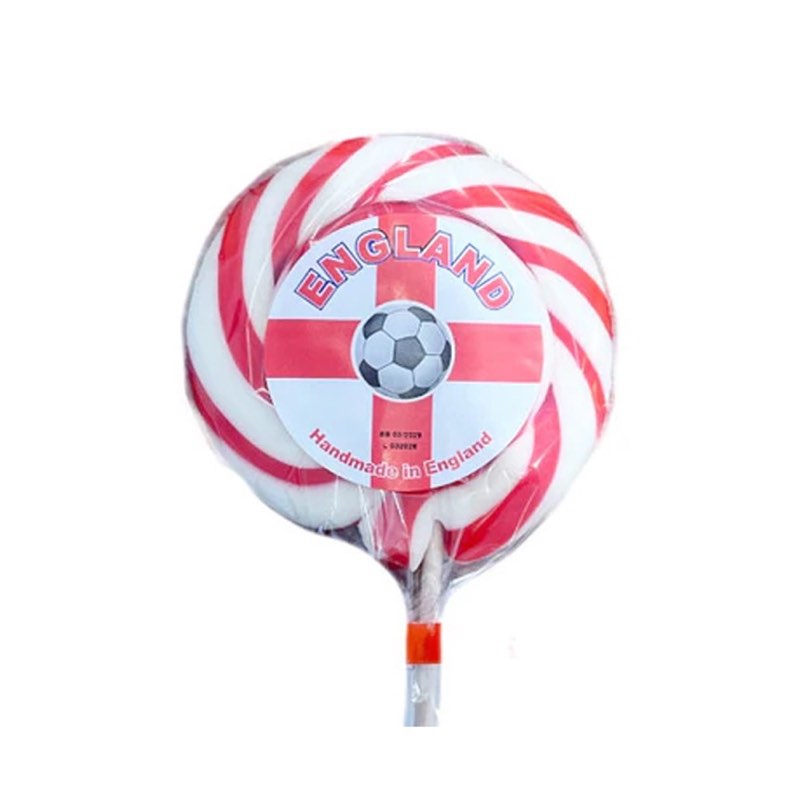
The shaped wheel lollipop, also £1.99, is the novelty format — a shaped lollipop bought for the shape. We do not hold a weight for it, so we cannot give you a per-gram figure and will not estimate one. It is the most visual of the three and the obvious choice for a prize, a party-bag centrepiece, or anybody who just wants the daft one.
Buying all three comes to £5.47, which is the whole themed range for less than a sandwich, and is the honest recommendation if you are buying for a themed occasion rather than for an appetite.
Where to find this and what sits beside it
This pouch appears on three shelves and each gives you a different way to shop.
The biggest is our largest shelf of all, 356 products deep, which is the bulk of our range and the right place to browse if you are filling bowls rather than buying one item. The boiled sweets shelf is a much tighter 30 products, small enough to read end to end, and it is the place to go if the slow format is specifically what you want — a genuinely useful shelf, because boiled sweets are easy to overlook when everything around them is brighter and faster. And the fruit flavour shelf, at 161 products, is where to compare fruit across every format we carry.
Beside those, four hubs are worth knowing. The pick and mix section is built on the same assemble-it-yourself logic as the old weigh-out counter. The candy and chocolate listing covers the larger sharing formats. The jelly and gummy shelf is the fast-format counterweight to everything on this page. The retro section collects the old-counter survivors. And the complete catalogue is where to start if you are building a whole spread and want to compare prices and weights side by side, which — as the table above shows — is where the real differences between sweets turn out to be.
The questions we get asked about themed sweets
Is this an official England or World Cup product?
We make no claim that it is. It is a football-themed novelty sweet, and the theme is a design on the pouch rather than evidence of any licence, endorsement or association with any national team, football association or tournament organiser. Buy it for the look of it on a table, which is what themed confectionery is for.
Is it made in England?
England in the name refers to the football theme, not to origin. We do not hold origin information for this line, so we do not make any claim about where it is produced.
What is chopped rock?
Rock sold in short pieces rather than as a single stick. The practical difference is that it goes in a bowl and gets shared, where a stick is one item for one person. It is the same category of sweet in a more useful shape.
What flavour is it?
Our listing gives the flavour as fruit and the colour as red, without breaking it down further, so that is as specific as we can honestly be. In a boiled sweet, fruit flavour arrives quickly and then holds at a steady level for as long as the sweet lasts, rather than building or fading the way it does in a chew.
How many pieces are in the pouch?
We do not publish a piece count for this line and we are not going to estimate one. Plan by weight instead: 150g is about six generous 25g handfuls, or ten smaller portions if you are splitting it across party bags.
Is £1.99 for 150g good value?
It is £1.33 per 100g, which is one of the cheaper figures on this page — well under half what a novelty-format sweet like a themed drum or a light-up lollipop costs per gram. Plain pouches of dense hard sweets are where the value is in confectionery, and this is a clear example.
How long does a piece last?
Several minutes if you let it dissolve, which is the longest of any format we stock. That makes boiled sweets unusually good value measured by time rather than by weight, and it is why they are the traditional choice for journeys, queues and cold touchlines.
Will it melt at an outdoor event?
No — hard sweets are about the most weather-resistant confectionery there is, which is exactly why they suit outdoor watching. What they do not like is damp, so keep the pouch closed rather than open on a wet table, and store it somewhere dry between uses.
Why have my sweets stuck together?
Hard sweets pick up moisture from the air, and a tacky surface makes pieces stick. It is not spoilage. Keep the pouch sealed, store it out of the kitchen, and do not put it in the fridge, which is the dampest place in the house. If they have already stuck, a firm tap usually separates them.
Is it suitable for young children?
Sweets are a treat, and small hard sweets are a choking risk for young children, so an adult should be present and a hard sweet is not the right choice for a child young enough to be running around with one in their mouth. For a party at that age, a softer format is the sensible pick.
How do I check the allergen information?
Read the manufacturer's packaging on the pouch when it arrives, before anybody eats from it. That label is the authority. We do not publish ingredient or allergen detail for this line on the website and it should not be relied on for that.
Will this still be available for the next tournament?
We cannot say, and we would rather admit that than invent a deadline. Themed lines come and go with their occasions and artwork changes between tournaments. If you want it for a particular date, order in time for that date rather than assuming it will be on the shelf later.
The short version
A hundred and fifty grams of red, fruit-flavoured chopped rock in a football-themed pouch at £1.99 — a sharing format, a slow one, and about as cheap per gram as sweets get on our shelves. It is bought for occasions rather than for the cupboard: a match on a screen, a cold touchline, a party bag, a glovebox before a long drive. The theme is a print on a pouch and nothing more than that, and we would rather say so than let anyone think they are buying a licence. What you are actually buying is a bowl's worth of sweets that will still be going at full time, for less than the price of a coffee.
More from Mcadams
More boiled sweets
More fruit sweets



Where this sits
McAdam's England Football Chopped Rock Pouch 150g appears on these shelves. Browse them, or jump to something nearby.
You might also like