Home / Pick & Mix / Create Your Own Chocolate Box (10 Bars)
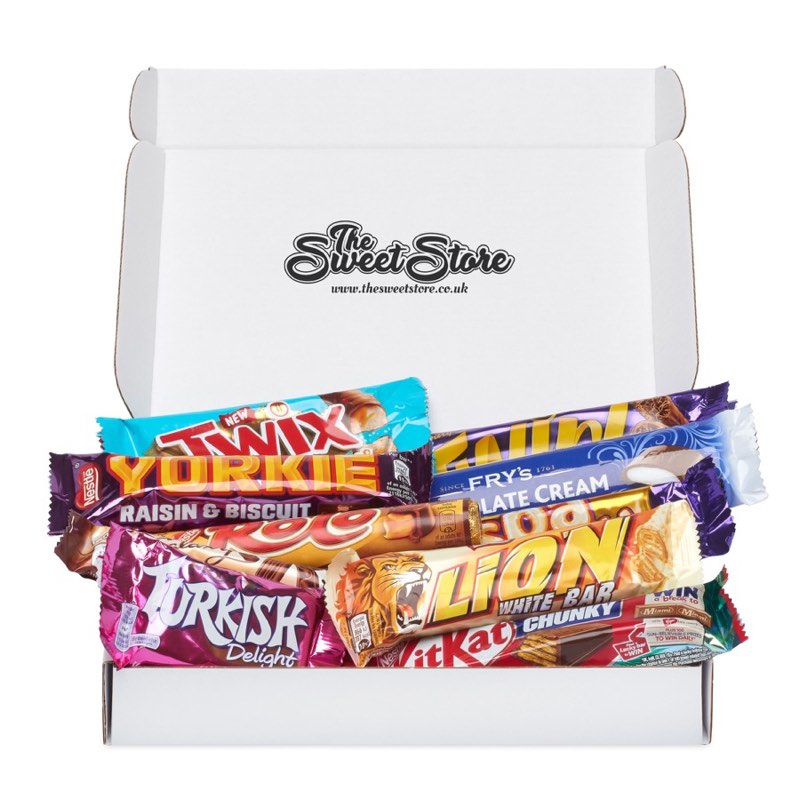
pick and mix · 3000g
Read the full guide
Create Your Own Chocolate Box (10 Bars)
£14.49
✔ In stock — ready to ship
Fresh stock
Free over £20
Same-day dispatch
Secure checkout
There is a particular size of occasion that most sweet shops are badly equipped for. It is bigger than a card and smaller than a hamper. It is the leaving do for someone you liked but did not work with every day. It is the thank-you to a neighbour who took three parcels in while you were away. It is the thing you hand over at the end of a weekend spent in somebody else's spare room. Too small a gesture reads as an afterthought. Too large a one reads as an obligation, and puts the recipient in the awkward position of owing you something back.
Ten bars is that middle size. It is enough to be obviously deliberate — nobody assembles ten bars by accident — and small enough that the person opening it does not feel managed. At £14.49 it sits at a price point people recognise as a real gift without it becoming a conversation. That combination is rarer than it sounds, and it is the single best reason to reach for this box rather than something larger.
The full guide to Create Your Own Chocolate Box (10 Bars)
6,226 words on how it eats, who it suits, how to serve it and what to put beside it.
The moments a ten-bar box is actually for
The occasions it covers well are the ones with a named person at the end of them. Birthdays where you know the individual rather than the crowd. A housewarming where the kitchen is still in boxes and a bottle of wine is the eleventh bottle of wine to arrive. Exam results, good or bad. The first week of a new job, sent to an office where you know they will share it and know they will not share all of it. Sympathy, which is a category most sweet shops ignore, but where a box of ten bars with no card-shop sentiment printed on it is often exactly right, because it asks nothing and says something.
It also covers the occasions where you are the host rather than the giver. A ten-bar box broken open onto a coffee table is a different object from a ten-bar box handed over sealed. As a host you are not giving a gift, you are stocking an evening, and ten bars is roughly one long evening for four to six people who are also eating other things. That dual life — closed gift or opened supply — runs through everything below, and it is worth deciding which one you are buying before you choose what goes in it.
Where it works less well: the very large party, the school fete table, the office of forty. For those you want depth rather than a curated shortlist, and the Create Your Own Chocolate Hamper (30 Bars) at £42.99 or the middle option of the Create Your Own Chocolate Mega Box (25 Bars) at £31.99 will serve you far better. Ten bars spread across forty people is a rumour, not a treat.
What you are actually ordering
The format is plain and worth stating without decoration. You are buying a box of ten chocolate bars, and you choose the ten. The listing carries one size only, priced at £14.49, and it is in stock. That is the whole mechanism. There is no subscription attached, no mystery element, no chance that a bar you did not ask for turns up because something ran short — you are not buying a surprise, you are buying a shortlist you wrote.
That matters more than it might seem, because the two common ways of buying chocolate as a gift both have a flaw this format avoids. A pre-made selection box is someone else's taste, and you can usually see at a glance which two bars the recipient will leave until last and then quietly not eat. A single premium bar is a lovely object but it is one object, and it is over in a sitting. A box you have filled yourself has neither problem. Every bar in it is there because you put it there, and if you know the person even slightly, that shows.
The listing records the box at 3,000g. Treat that as the shipping weight of the packed parcel rather than as a description of any one bar, and plan your carrying accordingly if you are collecting it or taking it on a train — this is a two-handed box, not a handbag box.
The box arrives as a box. That sounds obvious, and it is the point: there is no assembly, no wrapping stage where you discover you have run out of tape, no moment of arranging things into a basket at eleven at night before a morning you needed to leave early. If you want a gift that is finished when it arrives, this format is finished when it arrives. If you want to add to it, everything in the rest of this page tells you how.
First impression, weight and the opening
Pick it up and the first information you get is heft. Ten bars is a proper armful — not an awkward one, but enough that you carry it against your body rather than dangling it from a handle. That weight does a lot of the gift's work before anyone has seen inside. People read weight as generosity, fairly or not, and a box that pulls slightly on the arms lands better than a flat parcel of the same value.
The second thing you notice is that ten bars in a box make a sound. There is a shift and settle when you tilt it, the dry slide of wrappers against each other, and anyone who has ever been handed a box of chocolate as a child knows that sound and will guess what it is before they open it. If you are giving this to someone who enjoys the guessing, do not over-wrap it. The sound is half the fun.
Opening is where the format earns its keep. A sealed selection box opens onto a moulded tray and a fixed arrangement. A box you have filled opens onto ten separate decisions, laid next to each other, and the recipient reads them one at a time. You will usually watch them pick one up, turn it over, put it down and pick up another — which is a small, real pleasure that pre-made gifts do not produce. Ten is the right number for this. Five is a handful. Twenty-five is a supply cupboard and gets scanned rather than read.
Then there is the question of what happens next, and it is nearly always the same: one bar gets opened immediately and shared, and the other nine go somewhere. A cupboard, a drawer, the top of a fridge. That first bar is the one your choices will be judged on, so if there is an obvious crowd-pleaser in your ten, it is worth knowing it will probably be the one opened first.
Who this suits, and who should buy something else
This box suits people who know their recipient. That is the honest filter. If you can name two things the person likes and one thing they will not touch, you will build a better ten-bar box than any pre-made selection on the market. If you cannot — if this is a Secret Santa draw, a client you have met twice, a raffle prize — then you are guessing, and you would be better served by something with breadth. A broad assortment such as the Haribo International Hamper at £44.99 covers unknown tastes far more reliably than ten specific decisions do, precisely because it does not ask you to make them.
It suits households with divided loyalties. If one person in the house will only eat dark chocolate and another regards dark chocolate as a punishment, a box of ten lets you settle it with arithmetic instead of argument — some for each, and a couple of neutral bars in the middle that nobody has strong feelings about.
It suits the long-distance giver. Ten bars is a sendable quantity. It is a gift you can post the idea of, and it does not require the recipient to have a freezer, a large table, or thirty friends to help them finish it.
It suits people who ration. Some shoppers treat a chocolate box as ten weeks of Friday nights, one bar at a time, and for those people the curated ten is ideal because every single Friday is a bar they actually chose. The bigger builds — the thirty-bar hamper, the twenty-five-bar box — are for households who consume rather than ration, and there is no shame in either.
It suits anyone who has been burned by variety packs. If you have ever bought a large assorted box and found yourself, three weeks later, with four of the same unloved item and none of the good ones, this format is the direct answer to that experience.
Who should look elsewhere: anyone feeding a crowd, anyone who wants a mix of textures rather than bars alone, and anyone whose recipient prefers chewy and fruity to chocolate entirely. For that last group the Pick & Mix shelf is the better door, and there is plenty more on it than there is here.
Colour, arrangement, and the photograph somebody will take
Chocolate bars are, visually, a set of rectangles. That is a gift and a problem at the same time, and it is the single most useful thing to understand about how this box will look once it is out of its packaging.
It is a gift because rectangles tile. Ten bars laid flat in two rows of five, or in a fan with each one overlapping the last by two thirds, make a shape that reads as deliberate from across a room. Very little else in a sweet shop does this. Loose sweets pile, jars mound, pouches slump — all of which have their own charm, but none of which hold a line. If you are styling a table and you want one element with architecture in it, ten bars will give you that and nothing else on the shelf will.
It is a problem because a flat grid of rectangles in identical light is also how stock photography looks, and stock photography is not a compliment. The fix is height. Lean three or four bars upright against a jar, a book, a tin — anything with a straight edge — and lay the rest flat in front of them. You now have a foreground and a background, which is all any arrangement needs to stop looking like an inventory.
On colour: chocolate wrappers are, as a category, loud. Purples, reds, golds, deep blues, the occasional aggressive orange. If you have chosen ten different bars you have almost certainly chosen ten different colours, and they will fight unless you give them somewhere to sit. Two approaches work.
The first is grouping. Put like with like. All the warm wrappers on one side, all the cool ones on the other, and let the transition happen in the middle. This looks intentional even when it is not, and it photographs far better than an alternating pattern, which the eye reads as noise.
The second is neutral ground. Wood, slate, a plain cloth, a bare table. Anything patterned underneath ten patterned wrappers produces a picture that nobody can look at. If your table is patterned, lay a tea towel. This is not fussiness; it is the difference between a photograph that gets sent to the family group and one that gets deleted.
Lighting is the third lever and the one most people get wrong. Overhead kitchen lights bounce straight off foil and plastic film and produce a hard white blowout across the middle of every bar. Move the arrangement to a window, put the light behind and to one side of you, and the same ten bars suddenly read as ten objects rather than ten mirrors. If you are shooting for a shop window, a school fair table or a social post, that single change does more than any amount of rearranging.
For a jar, the rules invert. Bars do not fill a jar gracefully — they bridge, leave voids, and look sparse at half full. If a filled glass jar is the look you are after, you want small units, not bars, and you want something that pours. The Bond's Milk Chocolate Coins at £1.00 are the obvious companion here: coins tessellate in glass the way bars refuse to, and a handful of pounds' worth of them will fill the gaps around a standing bar so the jar reads as full rather than half empty. Used together — bars standing, coins poured in around the base — you get the height of a bar display and the density of a jar in one object.
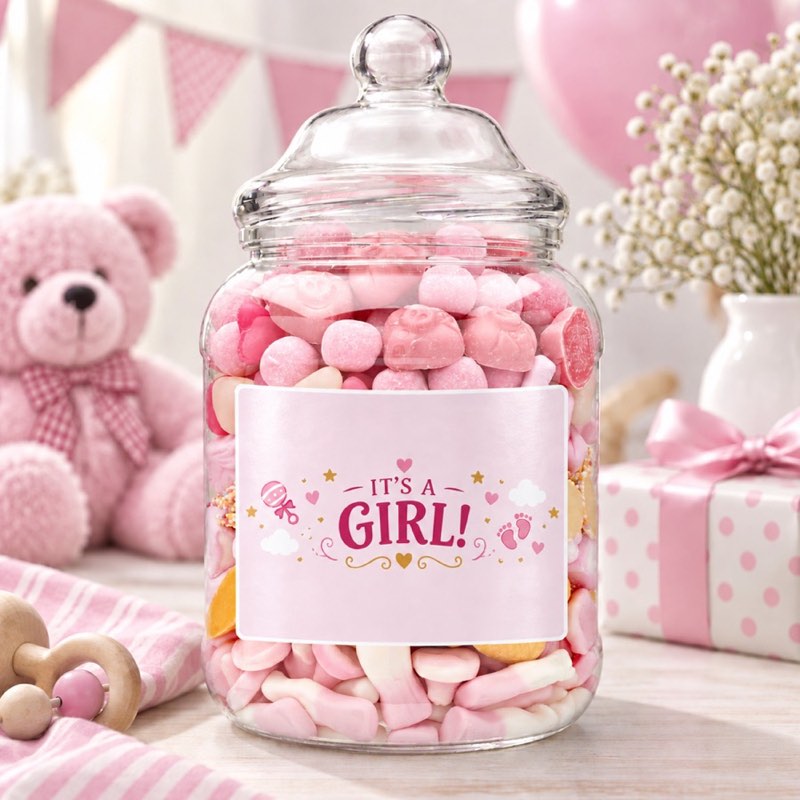
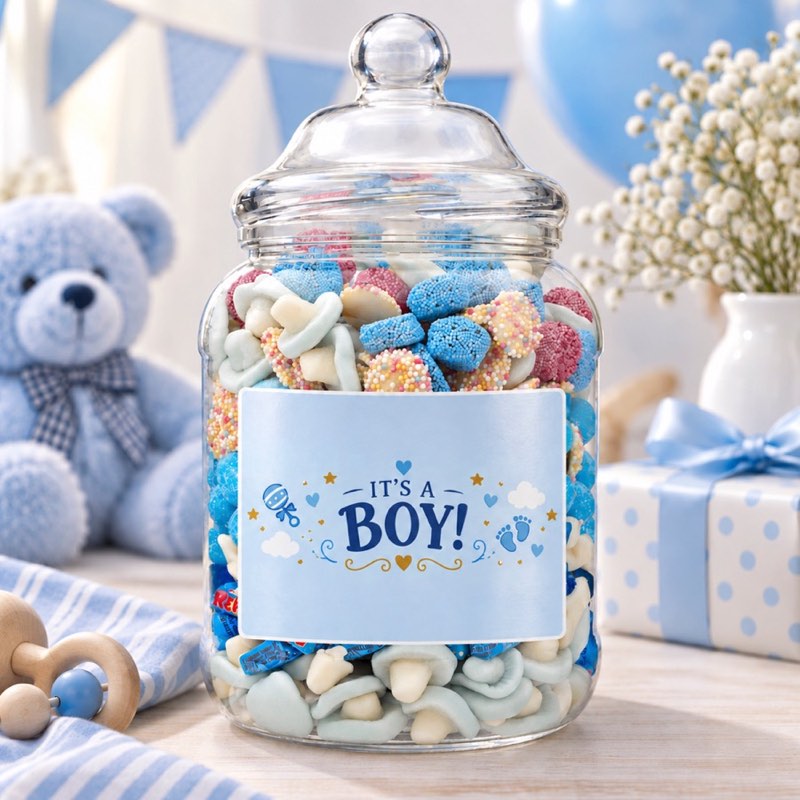
If the table is the real project and the chocolate is only part of it, the colour work gets easier the more formats you put on it. A jar of something bright next to a flat run of bars gives the eye two different things to do. Both the 'It's a girl' baby shower mega jar and the 'It's a boy' Pick & Mix Sweet Mega Jar, both £25.99, are built as centrepieces rather than as supply, and a ten-bar box laid in front of either gives the arrangement a base. The same trick works for a birthday table with the Happy Birthday Mega Sweet Jar holding the height and the bars holding the line.
One last presentation note, and it is the one people forget. Chocolate bars are printed objects, and printed objects have a right way up. If you are laying them out for anyone to look at, face them all the same direction. Ten bars all reading left to right look like a display. Nine reading left to right and one upside down looks like an accident, and the eye finds it immediately, every time.
Pacing a film night and surviving a long session on the sofa
Take the same ten bars, open the box, and put it where people can reach it while a film is on. You are now in a completely different situation from the gift, and it has its own rules.
The first is pacing. A film is roughly two hours. Ten bars among four people is two and a half each, and if you put all ten out at the start, they will be gone before the first act ends — not because anybody is greedy, but because an open box in the dark is a hand-level decision, not a considered one. People eat what is in front of them while they are watching something else. If you want the chocolate to last the film, put out four and keep six back. If you want it gone in twenty minutes and then forgotten, put out all ten. Both are legitimate plans; the mistake is not choosing.
The second is the break point. Bars have a natural advantage over almost everything else on a snack table here, because a bar can be stopped. You eat a piece, fold the wrapper over, and put it down. There is no such stopping point with a bowl of loose sweets, where the unit of consumption is a handful and the handful renews itself as long as the bowl is there. If you have ever finished a large bag of something during a film without deciding to, you already understand why the bar format behaves differently. For a long evening — a double bill, a three-hour director's cut, a session that will run to two in the morning — the box of bars is the better structure, because it lets people stop without leaving the room.
The third is mess, and this is where bars win outright. Chocolate in a wrapper stays in its wrapper until the moment it is eaten. Nothing is sticky, nothing is dusty, nothing leaves a residue on a controller, a keyboard, a remote or a light-coloured sofa. Anyone who has tried to keep a long gaming session supplied knows the real constraint is not appetite, it is hands. You need something you can eat one-handed, that does not coat your fingers, and that you can abandon halfway through without it going anywhere. A bar, folded over at the top, does all three. It waits on the desk until the round ends.
That said, a bar is a poor continuous snack. It is a punctuation snack — something you reach for between things, not something you graze on for four hours. If the evening is long and grazing is the mode, you want a second format alongside the bars, and you want it in a bowl. This is the argument for buying both, and the pouches make it cheap to do: a 500g mini pouch at £9.99 gives you ten fillings of loose sweets to graze from while the bars handle the milestones — the interval, the boss fight, the moment somebody gets up to make tea.
The fourth is shareability, and it is the one that changes what you should put in the box. A bar is divisible. Most of them break along a printed line, which means one bar can be two or three people's portion without anyone negotiating. If you are buying this box for a household rather than for a person, favour bars that break cleanly over bars that do not, because the whole social mechanism of a shared box depends on being able to hand somebody half of something. A box of ten unbreakable single-serve items among four people is four winners and a lot of waiting.
The fifth is the dark. This sounds trivial and is not. In a dark room, people identify what they are picking up by shape and by wrapper noise. If all ten of your bars are the same size and shape, nobody can tell them apart without turning on a light or opening the wrong one, which — for the person who was saving one specific bar — is a genuine small tragedy. Mixing the physical formats in your ten does more for a film night than mixing the flavours does.
And the sixth is the morning after. Whatever is left of an opened box is loose bars in a box, which means it is still perfectly good and still perfectly identifiable in a week's time. That is the quiet advantage of a wrapped format over an opened bag: leftovers survive. An opened bag of loose sweets has a shelf life measured in how long you can be bothered to clip it shut. Nine bars in a box are just nine bars in a box.
How to choose your ten without dithering
Ten open slots produce decision paralysis in a surprising number of people. The trick is to stop treating it as ten choices and start treating it as four decisions.
- Two certainties. Start with the two bars you already know the recipient reaches for. Not the ones you think they should like — the ones you have actually seen in their hand. These two do most of the emotional work of the gift, because they prove you were paying attention.
- Two safe middles. Pick two that almost anybody would accept. These are the bars that get shared, offered to a visitor, or eaten by whoever in the house did not get a say. Every box needs some currency in it.
- Four by contrast. Now deliberately spread. If the first four lean rich, go lighter here. If they lean plain, go for something with more going on. This is where you build the variation that stops the box feeling like one flavour bought ten times.
- Two risks. Finish with two you are not sure about. Something they have never mentioned, something unusual, something you would not buy for yourself. A box with no risk in it is competent and forgettable. The risks are what get talked about, and if one lands, you have learned something for next time.
Two further rules that save people from themselves. First, do not fill all ten with your own favourites. It is astonishingly easy to build a gift for yourself by accident, and the recipient can always tell. Second, if the box is for a household rather than a person, assign slots out loud in your head — three for him, three for her, two each for the children, two floating. Boxes built for households without that arithmetic tend to come out as one person's taste multiplied by ten.
If you are building for a recipient whose tastes run to dark rather than milk, or the other way round, let the ratio be obvious rather than diplomatic. A seven-to-three split in the right direction is a better gift than a five-five split that pleases nobody completely. Balance is a virtue in a party spread, not in a personal box.
Building a wider spread around the box
The ten-bar box is a strong component and a weak table on its own. Ten wrapped rectangles are not a spread; they are one element of one type. If the box is going onto a table where people will be standing around eating for a couple of hours, you want at least two more textures in play and ideally one thing that comes in a bowl.
The simplest way to get there is to add a pick-and-mix build in a size that matches your headcount. For four to six people alongside the bars, the 750g sharing pouch at £12.99 with fifteen fillings is about right and brings the total to a shade over £27. For a dozen, step up to the 1000g mega pouch with twenty fillings at £16.49. For a properly large room, the 2000g giant pouch and its forty fillings at £28.99 will carry the loose side of the table on its own while the bars handle the gifting side.
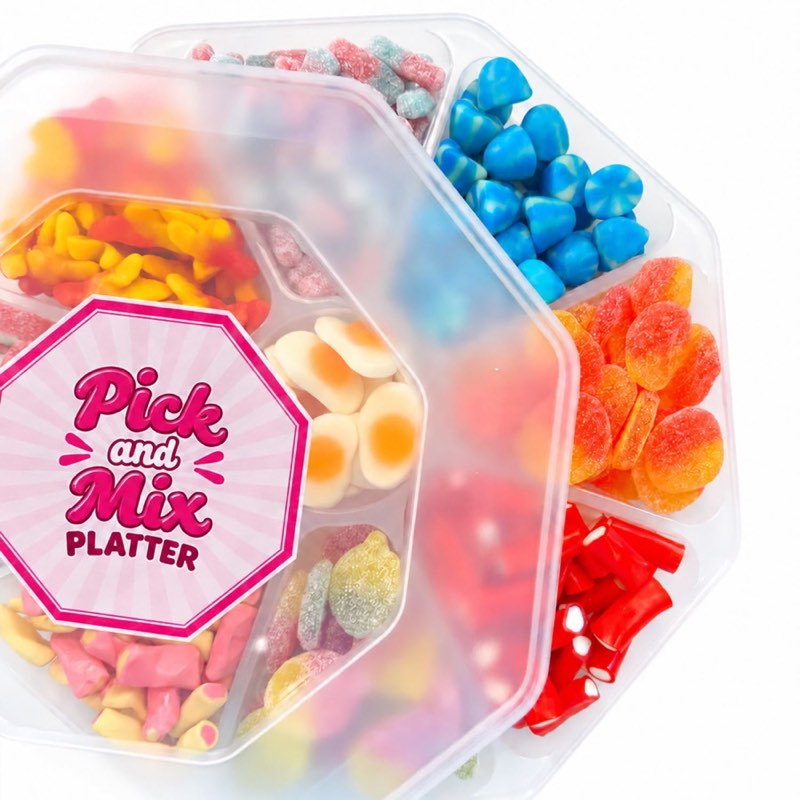
If what you want is a table that looks arranged rather than stocked, the Create Your Own Pick & Mix Platter at £24.99 is the natural partner, because a platter and a bar box do opposite visual jobs — one spreads low and wide, the other stacks and lines up. Put the platter in the middle and run the bars along one edge and the table has a shape.
For something with its own container that needs no styling at all, the Bon Bon Sweet Bucket at £18.99 arrives ready to sit on a surface and be dug into, which is useful when you are hosting alone and do not have a spare pair of hands for arranging. And where children are the main audience, small individually portioned items travel better than bars do — the £5.99 Haribo Fun-Size Treat Box is built for handing out one at a time rather than for laying out, which is exactly what you want at the door of a party rather than at the centre of it.
One combination worth calling out specifically: a ten-bar box plus the 250g snack pouch at £5.49 comes to just under £20 and makes a complete two-part gift — something to keep and something to open now. That structure is far better received than a single item at the same price, because the recipient gets an immediate moment as well as a cupboard full of later ones.
Gifting, hampers and the seasonal table
As a standalone gift the box needs nothing done to it. As a hamper component it needs a decision: is it the centre or the base?
As the centre, everything else in the hamper should be smaller and softer. Bars are the hardest, squarest, heaviest thing in most hampers, and if they are the headline they should be visible — stood up at the back, not buried under tissue paper. Pack around them, not over them.
As the base, the bars go flat at the bottom and become the floor that everything else sits on. This is structurally the right use of them: they are the only thing in a typical sweet hamper that can take weight without crushing, and a layer of bars stops the whole basket sagging into itself in transit. If you are assembling a hamper that has to survive a car boot, build it on bars.
For seasonal tables — Christmas afternoon, a christening tea, a long Easter lunch where nobody quite leaves — the ten-bar box behaves differently from loose sweets in one important way: it does not go stale on the table. A bowl of loose sweets left out for six hours is a bowl of loose sweets that has been sitting out for six hours. Wrapped bars are exactly as good at six in the evening as they were at noon, which makes them the right choice for the long, slow occasion where food is out all day. Put the loose things out late and the bars out early.
For teachers, coaches, tutors and anyone else thanked at the end of a term, the ten-bar box is a genuinely good end-of-year gift because it is shareable in a staffroom and personal enough not to read as generic. If you want to go further in that direction, the Best Teacher Ever Pick & Mix Sweet Mega Jar at £25.99 says the thing on the outside so you do not have to write it in a card.
A note on the giving itself: if you are handing this over in person, hand it over closed. The urge to say "I put this one in for you" while pointing at a specific bar is strong and should be resisted. Let them find it. That discovery is the part of the gift that a pre-made box cannot give them, and narrating it in advance spends it for nothing.
What £14.49 buys, and how to think about the per-bar maths
Ten bars for £14.49 is £1.45 a bar, rounded to the nearest penny. That is the only number you need, and it is worth holding onto because it makes every comparison on this page straightforward.
Against the larger build-your-own chocolate formats, the per-bar figures fall like this. The twenty-five-bar box at £31.99 works out at about £1.28 a bar. The thirty-bar hamper at £42.99 works out at about £1.43 a bar. So the middle size is the keenest per bar, the ten-bar box and the thirty-bar hamper are close to each other, and the ten-bar box is by some distance the smallest outlay. What you are buying with the £14.49 is not the lowest unit price; it is the right quantity. Buying thirty bars to save seventeen pence a bar, when you wanted ten, is not a saving.
Turn it into occasions instead and it reads better still. Ten bars is ten separate moments if you ration them, five shared evenings if you split them two ways, or one generous afternoon if you put the lot out. As a gift, £14.49 lands in the band where the recipient registers effort without registering expense — above the token, below the obligation. As a household buy, £1.45 a bar for something you chose beats an assortment where a third of the contents get left, however keen the headline price on that assortment looked.
A useful way to test whether this is the right size for you: count the people, then count the evenings. If people multiplied by evenings comes to more than ten, buy bigger. If it comes to ten or under, buy this and spend the difference on something from a different shelf, which will do more for the table than five more bars would.
There is also a cost-of-decision argument. Ten choices is a five-minute job. Twenty-five is a fifteen-minute job and thirty starts to feel like admin. If you are ordering at the end of a long day, the ten-bar box is the one you will actually finish ordering, and a completed order beats a better-value abandoned basket every time.
Keeping it well once it is home
Chocolate is fussier about storage than almost anything else in a sweet shop, and the two things that damage it are heat and swings in temperature.
Keep the box somewhere cool, dark and dry, away from radiators, hobs, sunny windowsills and the top of the fridge — which is warmer than most people think, because the motor is under there. A cupboard on an internal wall is better than a cupboard on an external one. A bedroom is usually better than a kitchen.
Do not put it in the fridge unless you have no choice. Fridge storage introduces the two problems it is meant to solve: condensation when the bars come back out, and a fridge's worth of borrowed smells, because chocolate picks up odours from anything strong sitting near it. If a hot spell leaves you no alternative, seal the bars in a bag or airtight box first, and let them come back to room temperature fully sealed before opening — that way any moisture settles on the outside of the bag rather than on the chocolate.
If bars do get warm and then cool again you may see a pale, chalky bloom on the surface. That is a cosmetic change caused by temperature, not a sign of anything wrong, and it is the main reason to keep the box steady rather than moving it between a cold car, a warm hall and a cool cupboard in a single afternoon.
Keep bars flat and stacked rather than standing on edge in a crowded cupboard, where a heavy tin can lean on them and snap the middle. If you have opened one, fold the wrapper down tightly and put it back in the box rather than loose in a drawer, where it will collect crumbs and take on the smell of whatever else lives in there.
Finally, always check the manufacturer's packaging on arrival before anyone eats anything — that is where the printed product information for each individual bar lives, and it is the only place to check it. Sweets and chocolate are a treat rather than everyday food, and small hard sweets and whole gummies are a choking risk for young children, who should be supervised while eating them.
One size here, and the rest of the build-your-own range
This listing has a single option — one size, £14.49 — so there is no variant decision to make within the product itself. The real choice is between this and the other build-your-own formats, and it comes down to two questions: bars or loose, and how many people.
| If you want | The format that fits | Price |
|---|---|---|
| A personal gift with ten deliberate choices | This ten-bar box | £14.49 |
| A household's chocolate supply for a month | The twenty-five-bar build | £31.99 |
| The largest bar format we list | The thirty-bar hamper | £42.99 |
| One person, one sitting, loose sweets | The 250g snack pouch | £5.49 |
| Two to three people, loose sweets | The 500g mini pouch | £9.99 |
| A small gathering, loose sweets | The 750g sharing pouch | £12.99 |
| A party, loose sweets | The 1000g mega pouch | £16.49 |
| A large event, loose sweets | The 2000g giant pouch | £28.99 |
Read across that table and the logic of the range is clear: the pouches scale by weight and the boxes scale by count. If your thinking is in people, use the pouches. If your thinking is in gifts, use the boxes. And if you want both — which most tables genuinely do — pair a box with a pouch one size smaller than you think you need, because the bars will absorb more of the appetite than you expect.
Finding your way around the rest of the shop
This box lives on the pick and mix category page, alongside the other build-it-yourself formats — thirty-one listings in total, which is where to start if you are comparing sizes rather than browsing for ideas. Everything chocolate-led, including the coins and the ready-made boxes, sits under Candy & Chocolate, and the by-weight side of the shop is gathered under Loose Sweets, which is the shelf to raid when you are filling bowls rather than boxes.
If you would rather see the whole range at once and work backwards from what catches your eye, the full shop lists everything we stock in one place. It is the faster route when you do not yet know whether you want bars, a jar, a pouch or a bucket, and it is the better starting point for a table you have not planned yet.
A practical browsing tip: decide the container first. Almost every mistake people make with a sweet order comes from buying the right amount in the wrong shape — two kilos of loose sweets when they needed something wrapped, or ten wrapped bars when they needed something to pour into bowls. Container first, quantity second, contents third, and the rest sorts itself out.
Questions we get asked about this box
Do I pick the bars, or are they chosen for me?
You pick them. That is the entire premise of the format — ten slots, all filled by you. It is the difference between this and a sealed selection box, where the contents are fixed and identical for everyone who buys one. If you would prefer not to choose, a ready-assembled option such as the Haribo hamper or one of the themed jars will suit you better, because with those the selection has already been made.
Is £14.49 the price for all ten, or per bar?
For all ten. £14.49 is the price of the complete box, which works out at roughly £1.45 a bar. There is one size on this listing and one price, so there is nothing further to add at checkout for the box itself.
Can I buy more than one?
Yes, and it is a sensible approach when you are giving to several people who want different things — two boxes of ten, built differently, is a more personal solution than one box of twenty-five split between them. If you are buying for several people who all like much the same things, the twenty-five-bar box is the cheaper route per bar.
Will it arrive already gift-wrapped?
It arrives as a box of ten bars. Treat the box itself as the presentation — it is a finished object and looks it — and add your own ribbon or card if the occasion calls for more. Most people hand it over as it comes.
How many people does a ten-bar box feed?
As a shared spread with other things on the table, comfortably four to six for an evening. As the only thing on offer, four people will get through it quickly, because bars break into pieces and pieces get taken more often than whole bars do. If you are feeding more than six, add a pouch rather than a second box — you will get more coverage per pound from loose sweets.
Is it suitable for a child's birthday party?
It works better as the prize or the take-home gift than as the party food. Ten bars split among a room of children is a small piece each and a lot of wrappers. For the party itself, individually portioned items from the fun-size format or a pick-and-mix pouch will go further and cause less negotiation.
How long will it keep?
Each bar carries its own date printed on its own packaging, and that is the one to go by — check it when the box arrives. Stored somewhere cool, dark and stable, wrapped chocolate is a patient thing, which is why a ten-bar box works as a cupboard reserve rather than something you need to get through quickly.
Can I send it directly to someone else?
Plenty of people use it that way, and the format suits it: it needs no assembly at the other end, it survives a parcel journey better than anything loose, and it does not require the recipient to have a table, bowls or a plan. Enter their address as the delivery address at checkout.
What is the difference between this and the mega box?
Count and intention. Ten bars is a gift you built for one person or one household; twenty-five is a supply you built for a group or a month. The per-bar price is slightly keener on the larger box, but the smaller one is the one you can hand over without the recipient feeling they have been given a delivery.
Is there anything that goes with it for a table rather than a gift?
Yes — something loose and something in a bowl. Bars hold a line and look good, but they do not graze well, and a table with only wrapped items on it feels formal. A pouch or a bucket alongside gives people something to pick at between bars, and the two formats together will outlast either on its own.
Do you list any allergen or ingredient information for the bars?
Not on this page. Every bar carries its own manufacturer's packaging with the full printed information on it, and that packaging is the only reliable source. Anyone with an allergy or intolerance in the house should check each individual wrapper on arrival, before anything is opened or eaten.
Can I mix bars and loose sweets in one order?
Yes. They are separate listings and go into the same basket, so a box of bars and a pick-and-mix pouch arrive together. That pairing — one wrapped format, one loose — is the most reliable two-item order on the site, and it covers both the gift and the table in a single delivery.
The short version
Ten bars, £14.49, all ten chosen by you. It is the right size for a gift with a person's name on it, the right shape for a table that needs a straight line in it, and the right structure for an evening you want to pace rather than demolish. Build it in four moves — two certainties, two safe middles, four contrasts, two risks — face all the wrappers the same way when you lay it out, keep it somewhere cool and steady, and check each bar's own packaging when it arrives. If you need more, step up through the twenty-five-bar build at £31.99; if you need something to pour into bowls instead, the pouches and the jars are a click away on the same shelf.
More pick & mix sweets
Where this sits
Create Your Own Chocolate Box (10 Bars) appears on these shelves. Browse them, or jump to something nearby.
You might also like