Home / Pick & Mix / Create Your Own Chocolate Hamper(30 Bars)
pick and mix · 3000g
Read the full guide
Create Your Own Chocolate Hamper(30 Bars)
£42.99
✔ In stock — ready to ship
Fresh stock
Free over £20
Same-day dispatch
Secure checkout
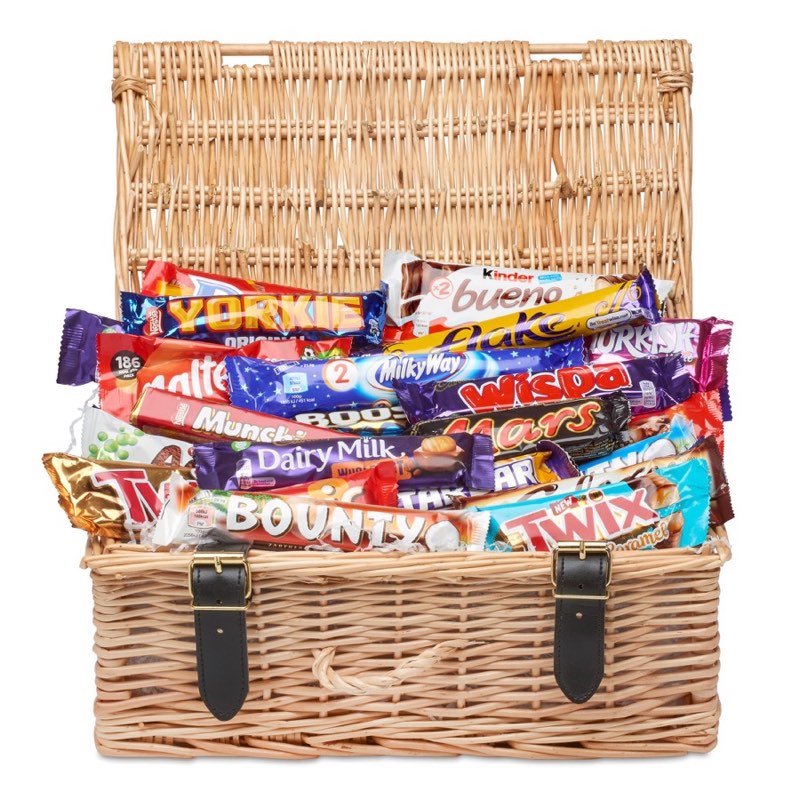
The first thing to understand about the Create Your Own Chocolate Hamper (30 Bars) is that it is not really a product in the way a bag of sweets is a product. It is a container and a decision. You choose thirty bars, we box them, and what turns up at your door is £42.99 and three kilograms of chocolate arranged exactly the way you asked for it. Nobody else's version of this box looks like yours. That is the whole point of it, and it is also the reason this page spends more time on planning than on describing.
Three kilograms is more chocolate than most people have handled at once. It is worth sitting with that number for a moment before you start choosing, because it changes what the box is for. A kilo of chocolate is a generous gift. Two kilos is a party. Three kilos is an event — a staff room stocked for a fortnight, a raffle table that does not run dry, a Christmas that covers every adult in the family with bars left over. If you have arrived here thinking of this as a large box of chocolate, recalibrate slightly: it is a small pallet of it.
The full guide to Create Your Own Chocolate Hamper(30 Bars)
5,819 words on how it eats, who it suits, how to serve it and what to put beside it.
Three kilos of chocolate, arranged thirty ways
Opening it: weight, sound and the first look
The box arrives heavier than your arms expect. Three kilograms is roughly the weight of a large bag of potatoes or a newborn, and because chocolate bars are flat and dense rather than bulky, the parcel is smaller and heavier than the equivalent volume of gummies would be. People routinely misjudge the lift. Take it with two hands from underneath rather than by the flap, especially if it has been left on a doorstep and the cardboard has taken any damp.
Set it down on a table before you open it, not on a worktop where it might slide. Cut the tape rather than tearing it — thirty bars packed tightly means the top layer sits close to the lid, and a knife dragged in enthusiasm can score wrappers. Nobody minds a scored wrapper on a bar they are eating tonight, but if any of these are going out as individual gifts, you want them pristine.
The first look is the part people tend to enjoy most, and it is a genuinely different experience from opening a mixed bag of sweets. A pick-and-mix pouch is a heap. A thirty-bar box is a grid. You see the wrappers arranged in rows, all the colours you chose sitting next to each other, and the effect is closer to opening a box of paints than a box of food. If you chose well, there is an immediate visual logic to it — a run of one colour family, a deliberate outlier, a couple of larger formats breaking up the rhythm. If you chose at random, it looks like a shelf, which is fine too, but it is a missed opportunity when the arranging costs nothing.
There is a practical consequence to the grid. Because everything is visible at once, whoever opens it makes a decision in the first three seconds about which bar they want. If this box is going to a household or an office, that first-glance moment is doing real work for you. Put the most interesting thing on top, not buried at the bottom under the safe choices.
How thirty bars actually eat, over days rather than minutes
A bag of sweets is consumed in a sitting or two. A thirty-bar box is consumed over days or weeks, and that changes the eating experience in ways worth planning for.
The first evening is the greedy one. Two or three bars get opened, usually the ones with the brightest wrappers, and they get shared around and picked at rather than eaten whole. Half-bars end up folded back into their wrappers on the arm of the sofa. This is normal and it is the most fun part, but it does mean the first night disproportionately eats your most exciting choices. If there is a bar in the box you specifically want to survive to Christmas Day or to a particular person, take it out and hide it before the box is opened. This is not a joke; it is the single most common regret people have with large chocolate boxes.
After that, the box settles into a rhythm. It becomes furniture. It sits on top of the fridge or on the shelf in the staff room and gets raided one bar at a time — the after-lunch bar, the bar that goes in a lunchbox, the bar handed to someone who had a rough morning. In this phase the box is at its best, because a single bar eaten deliberately on its own is a much better eating experience than the fourth bar eaten in a row on night one.
The last five bars are the interesting ones. Whatever is left at the end tells you something true about the people eating it, and it is worth noticing, because next time you order you can simply buy fewer of those and more of whatever vanished first. A thirty-bar box is an expensive but extremely accurate survey of what your household actually likes. Most people find at least one genuine surprise in the results.
Who this box is really for
There are four or five distinct buyers for a thirty-bar chocolate hamper, and they want quite different things from it.
The household stocker is buying against a season. Christmas, half term, the fortnight when the extended family is staying, the run-up to exams when there are teenagers in the house who need to be fed at eleven at night. The logic here is simple bulk: buying thirty bars once is less faff than buying three bars ten times, and it means the treat drawer is never empty at the exact moment you need it to be full. This buyer should choose broadly and safely, with a couple of bars they know each person in the house will pick.
The office or staff-room buyer is solving a social problem rather than a supply problem. A box on the table in a shared space is a gesture, and the gesture works better when nobody has to guess whether they are allowed one. Thirty bars across a team of ten is three each, which is enough for the box to last a week and not so much that it feels like an obligation. Choose widely here rather than deeply — one of many things beats six of one thing when you do not know everybody's taste.
The gift builder is buying the hamper as a single large present for one person or one family. At £42.99 this is a substantial gift, and it lands very differently from a boxed assortment of the same price, because everything in it was chosen by you rather than by a manufacturer. If you know the recipient's tastes, this is one of the most personal chocolate gifts available at any price. If you do not know their tastes, it is one of the riskiest, and you would be better served by something pre-composed like the Haribo International Hamper at £44.99, which lands in the same price bracket and takes the guesswork out of it.
The event buyer wants stock for a table: a raffle, a tombola, a school fair, a fundraiser, a sports club presentation night. Thirty individually wrapped units is thirty prizes, which is a very efficient way to fill a prize table. It also photographs well laid out in rows, which matters more than people admit for events that are being publicised.
And the splitter buys one box to break up into several smaller gifts — five people, six bars each, tied with ribbon. This is the best-value approach to Christmas gifting on the site if you have a long list of teachers, neighbours, coaches and postal workers to thank, and it is worth comparing against building the same thing from our Pick & Mix shelf instead, where 31 lines of loose sweets can be portioned into pouches rather than bars.
Who it is not for: anyone buying chocolate for one person to eat alone over a normal month. Three kilos is not a personal supply, it is a household supply, and a box of that size sitting in a one-person kitchen tends to produce guilt rather than pleasure. If that is you, the ten-bar Create Your Own Chocolate Box at £14.49 is the honest recommendation, and we would rather sell you the small one twice than the big one once.
The arithmetic: what £42.99 actually buys you
Value is the reason most people end up on this page rather than on a smaller one, so let us do the sums properly rather than gesturing at them.
Per bar. £42.99 divided by thirty bars is £1.43 a bar. That is the single most useful number on this page. Hold it against whatever you would pay for one bar bought singly at a till on your way home, and the case for the box makes itself or it does not — it depends entirely on what you would otherwise buy, and we are not going to pretend that every shopper is better off. If you habitually buy premium single bars, £1.43 is a clear saving. If you habitually buy the cheapest thing on the counter, it is not.
Per gram. Three kilograms for £42.99 works out at £1.43 per 100g, or £14.33 per kilogram. Per-kilo pricing is the honest way to compare chocolate across formats, and it is worth doing before you commit, because chocolate is sold in so many different unit sizes that per-unit prices tell you almost nothing.
Against the smaller builds. This is where it gets genuinely interesting, and where a shopkeeper being straight with you is more useful than a shopkeeper upselling you. The 25-bar Create Your Own Chocolate Mega Box is £31.99, which is £1.28 a bar. The ten-bar build at £14.49 is £1.45 a bar. This thirty-bar hamper at £42.99 is £1.43 a bar. So the twenty-five-bar box is, per bar, the keenest of the three. If your only criterion is cost per bar, buy that one and stop reading.
The reason people still buy the thirty is that thirty is a number that divides usefully and twenty-five often does not. Thirty splits into five sixes, six fives, ten threes, fifteen twos or three tens. Twenty-five splits into five fives and not much else. If you are dividing the box up — gift bags, prize tables, a week of packed lunches, a class list — the divisibility of thirty is worth more than the eighteen pence a bar you save by going smaller. If you are simply eating the box, it is not.
Per head. For catering, work in bars per person rather than in weight. One bar each is a gesture and covers thirty people. Two bars each is generous and covers fifteen. Three bars each is a genuine supply and covers ten — which is why thirty is such a natural number for a team or a class. For a gathering where chocolate is one element among several, budget one bar per adult and one and a half per child, and you will have some left, which is the position you want to be in.
Against loose sweets. Bars and loose sweets price very differently, and it is worth knowing which way round it falls before you choose. Our 2000g Giant Pouch with 40 fillings is £28.99 for two kilos, which is £14.50 per kilo — almost exactly the same per-kilo price as this box. So the decision between three kilos of bars and two kilos of loose sweets is not a value decision at all. It is a format decision: do you want thirty things people unwrap, or two kilos of things people scoop? Knowing that the money is equivalent frees you to choose on the format alone, which is how it should be.
The awkward truth about postage and breakage. Buying in one large box rather than in several small ones means one delivery rather than several, and it means the bars travel packed against each other rather than rattling loose. Both of those are quiet savings that never show up on a price-per-bar calculation but are real. Set against that, a single large parcel is a single point of failure — if it goes astray, all thirty bars go astray. For anything time-critical, order earlier than you think you need to.
Snap, melt and the physics of eating a bar
The second thing worth thinking about when you build a box is texture, because a thirty-bar selection chosen entirely on flavour will feel monotonous in a way that is hard to diagnose while you are eating it. Thirty bars that all behave the same way in the mouth is thirty bars that blur together. Thirty bars that behave differently stay interesting to the last one.
Start with snap. A firm bar breaks with a clean, audible crack and a flat fracture face. That sound is a genuine part of the eating experience and most people register it without noticing they have. A bar that snaps cleanly feels well made before it has touched your tongue, and it is the reason breaking a square off to hand to somebody is a small, satisfying ritual rather than a chore. Bars with inclusions through them fracture differently — the break wanders, catches and tears rather than cracking, and you get a rougher edge and a completely different sound. Neither is better. But a box with only clean-snapping bars in it and no rough-breaking ones has thrown away one of its two textures for no reason.
Then there is melt, which is the property that makes chocolate unlike almost anything else in the shop. Chocolate is solid in your hand and liquid in your mouth, and the crossing point sits close enough to body temperature that the change happens while you are eating rather than before or after. This is why chocolate rewards patience in a way that a boiled sweet does not. A square held on the tongue and allowed to go soft delivers its flavour slowly, in layers, and the finish lasts long after you have swallowed. The same square chewed and gone in four seconds delivers perhaps half of that. It is the cheapest upgrade available to you: eat one bar of your thirty slowly and deliberately and it will be worth more than two eaten quickly.
Melt is also why room temperature matters so much. Chocolate straight from the fridge is hard, brittle and quiet — the snap is sharper but the flavour arrives late and thin, because the melt is fighting a temperature deficit. The same bar at eighteen or twenty degrees is softer to break and much more generous in the mouth. If you have kept the box somewhere cool, take out tomorrow's bars tonight.
Chew is the third texture, and it comes from whatever is suspended in or layered through a bar rather than from the chocolate around it. A chewy layer changes the whole timing of the mouthful: the chocolate melts away first and leaves something behind that keeps working, which stretches the experience out and means the flavour finishes somewhere different from where it started. Bars built this way eat slowly whether or not you intend them to. In a box of thirty, two or three of them do a lot of work.
Crunch is the fourth, and it is the loudest. Anything crisp suspended in a soft matrix gives you contrast in a single bite — the yielding and the resisting at the same moment — and that contrast is the most reliably popular texture in confectionery. If you are choosing for children or for a mixed crowd whose tastes you do not know, weight your selection toward crunch. It is the safest bet in the box.
And then there is the aerated texture, which behaves oddly and delightfully: it feels light and almost fragile at first bite, collapses rather than fractures, and then melts faster than a solid bar because there is less of it per mouthful. People who say they do not like a lot of chocolate at once often mean they would prefer an aerated one, and a box aimed at adults benefits from having a couple in it.
The practical rule that falls out of all this: aim for at least three of those five textures across your thirty, and ideally four. Do not build a box that is thirty variations on one mouthfeel, however much you like that mouthfeel. The variety is what keeps people reaching back into the box in week two.
Planning the thirty: a method rather than a list
We are not going to tell you which bars to put in, because that is your half of the job and because what is available to choose from is shown on the product page itself rather than here. What we can give you is a method, and the method works whatever the shelf looks like on the day you order.
Split the thirty into four buckets before you start clicking. Fifteen safe, eight interesting, five personal, two experiments. Fill them in that order.
The fifteen safe are the bars you are confident every single person will happily eat. These are the workhorses. They are not the reason anyone gets excited, but they are the reason the box still has something acceptable in it on day nine. Half the box being safe sounds boring and is in fact what makes the other half work, because it removes the pressure on the interesting bars to also be the reliable ones.
The eight interesting are bars that most of the people eating will recognise but would not normally buy for themselves. This is the sweet spot of the whole box. It is the difference between a box that feels like a trip to the corner shop and a box that feels like a trip to a proper sweet shop, and it costs you nothing extra because every bar in the box costs the same £1.43 whether it is ordinary or unusual.
The five personal are targeted. If the box is going to a household, one bar for each person that you know is their bar. If it is going to an office, five bars aimed at the five people you know best. Named and targeted choices land far harder than their price suggests, and they are what makes a recipient say you thought about it.
The two experiments are the ones nobody has tried. Sometimes they are a hit and you order six of them next time. Sometimes they sit in the box until February. Either outcome is information, and two out of thirty is a cheap price for it.
Then check the box against three axes before you confirm. Texture: do you have at least three of snap, melt, chew, crunch and aerated? Colour: laid out flat, does the box look like a spread or a smudge? Format: are they all the same shape, or is there some variety in the silhouette? A box that passes all three reads as curated. A box that fails all three reads as a supermarket shelf that has been photographed badly.
Building a table around it
A thirty-bar box is a component, not a spread. Bars are the substantial, slow, unwrap-and-settle-in part of a table, and they want company that behaves differently — loose sweets to scoop, something sour to cut through, something small and countable for the children.
The most natural companion is a pick-and-mix pouch, because loose sweets fill bowls and bars do not. The 750g Sharing Pouch with 15 fillings at £12.99 is the right scale to sit alongside this box on a table for a dozen people — enough to fill three or four bowls without dominating. For a bigger room, the 1000g Mega Pouch with 20 fillings at £16.49 gives you twenty different sweets to spread across more bowls, and twenty lines is enough variety that nobody is stuck with a bowl of the one thing they do not like.
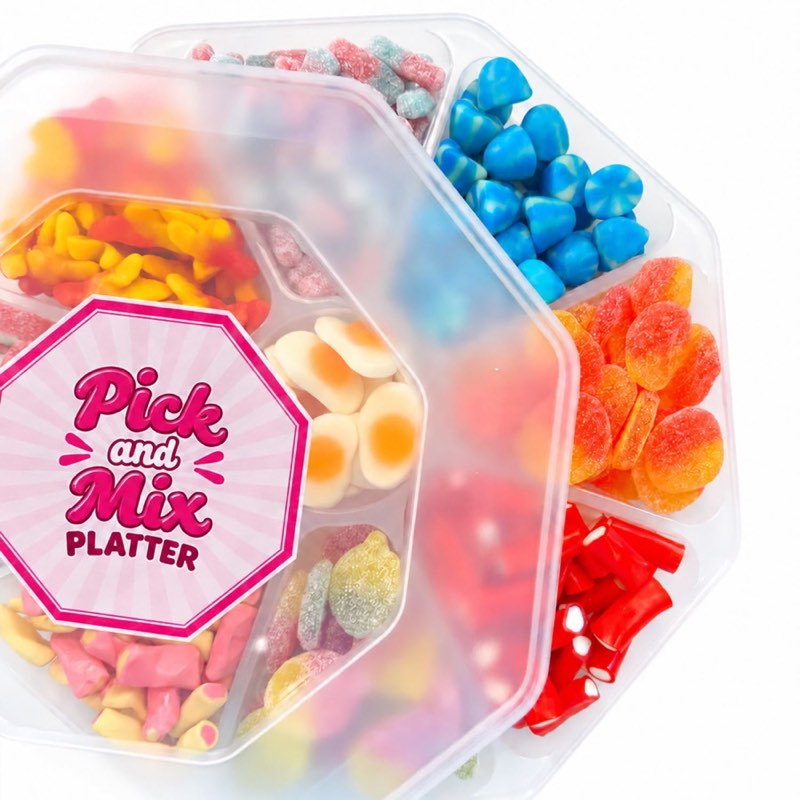
If the table is being laid out to be looked at as much as eaten from, the Create Your Own Pick & Mix Platter at £24.99 is the piece that does the visual work. Bars are flat and rectangular and photograph as a grid; a platter is round and sectioned and photographs as a centrepiece. Put the platter in the middle, run the bars along the edge, and the table has a shape.
For something to hand out rather than to serve, Bond's Milk Chocolate Coins at £1.00 are the cheapest way to give everybody something in their hand on arrival, and they are chocolate, so they sit comfortably alongside the box rather than competing with it. Buy several and scatter them.
If you want a second bulk item that is not chocolate at all, the Bon Bon Sweet Bucket at £18.99 covers the chewy end of the table in one purchase and comes in its own container, which saves you finding bowls. And for a children's table specifically, the Haribo Fun-Size Treat Box at £5.99 is the sensible add-on: individually portioned, instantly recognisable, and cheap enough to buy two of.
One line that applies to every one of these and to the box itself: sweets and chocolate are a treat rather than a meal, and if anyone eating from your table has an allergy, have them check the manufacturer's packaging on arrival before eating rather than relying on anything written here.
Occasions this box was made for
Christmas is the obvious one and the one this format suits best. A thirty-bar box bought in the first week of December covers stockings, the chocolate bowl on the coffee table, the thing you hand to visitors, and the emergency gift for the person who turns up with a present when you had not planned on one. Buying it once in December is meaningfully less stressful than making four small chocolate purchases across the month.
Office Christmas and end-of-year is the second. A box on the table in the last week of term or the last week before the shutdown is a low-key, unshowy gesture that reads well. It is also, at £42.99, an amount that a team lead or a small business can spend without a conversation about it.
Fundraisers, raffles and tombolas. Thirty individually wrapped prizes for £42.99 is £1.43 a prize, and every one of them is a prize people actually want, which is not true of most tombola tables. Pair it with a couple of jars as headline prizes — the Happy Birthday Mega Sweet Jar with 20 fillings at £25.99 makes a good top prize because a jar looks like a prize in a way a bar does not.
End of term, for teachers and coaches. Split into six-bar bundles this box makes five decent individual gifts at about £8.60 of chocolate each. If you would rather give one person one bigger thing, the Best Teacher Ever Pick & Mix Sweet Mega Jar at £25.99 is the purpose-built version of that gift and arrives already saying what it is for.
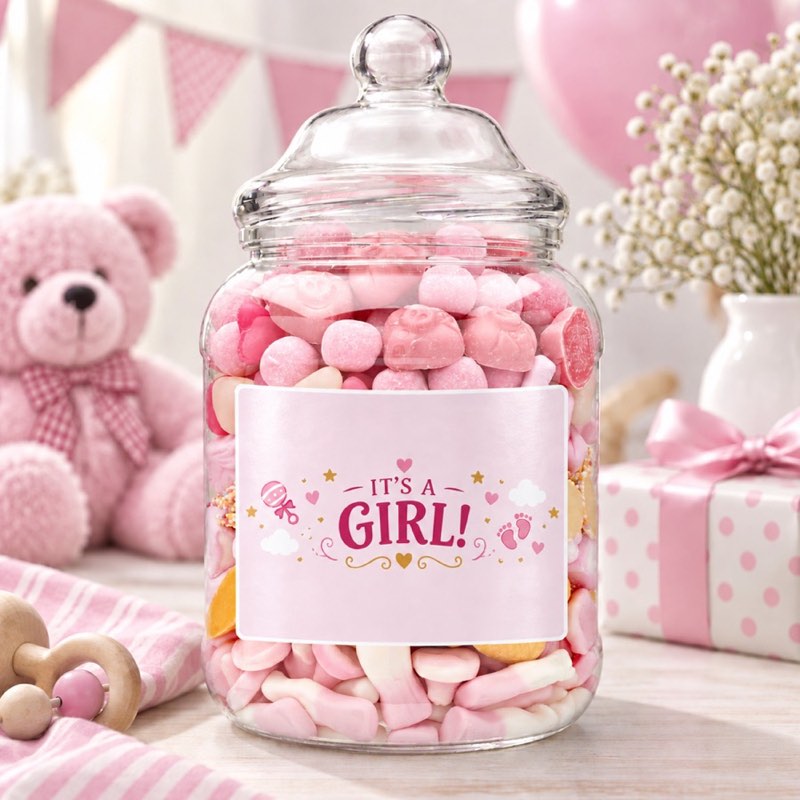
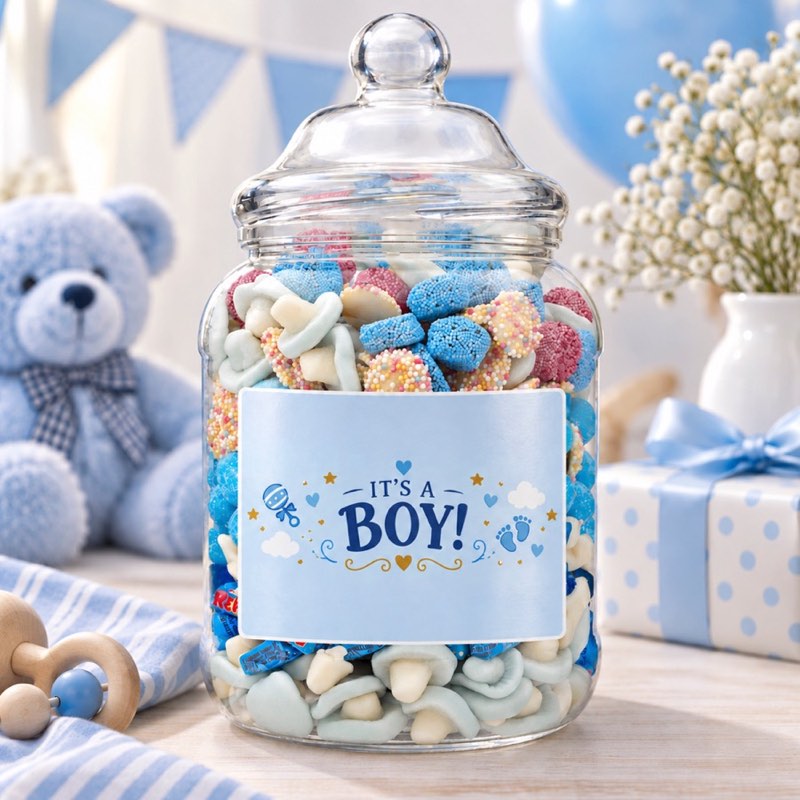
New babies and family gatherings. When a family is receiving visitors for weeks on end, a large box of chocolate in the kitchen is genuinely useful rather than merely nice, because it means they never have to think about what to offer anybody. If you want the gift to be explicitly about the baby rather than about chocolate, the 'It's a girl' Pick & Mix Sweet Mega Jar and the 'It's a boy' Pick & Mix Sweet Mega Jar, both £25.99, say it on the label.
Film nights, sleepovers and long weekends. Thirty bars is enough that nobody has to ration, which is the entire appeal to anybody under sixteen. Pair with something sharp and chewy from the pouches so the evening is not one long note of chocolate.
How to divide it without arguments
If the box is being split rather than eaten communally, decide the split before you open it. Once the lid is off, the good bars are gone and the division becomes a negotiation.
For equal shares, thirty is kind to you: six people get five each, five people get six each, ten get three each, fifteen get two each. Deal them out like cards rather than letting people choose in turn, or go round in a snake order — first pick goes last on the second round — which is the fairest way to split a mixed box and takes the sting out of going last.
For rationing over time, a box of thirty is about a month at one a day, or a fortnight in a household of two. Putting the box out of sight and bringing out three bars at a time is the difference between a box that lasts a month and a box that lasts nine days. There is no moral weight to either outcome, but people are usually happier with the first and surprised by the second.
For packed lunches, thirty bars is six weeks of one child's school week, or three weeks of two children's. That is the least glamorous use of this box and quite possibly the most economical, at £1.43 a day against anything bought at a shop counter.
Keeping three kilos in good condition
Chocolate is more sensitive to how it is kept than almost anything else we sell, and three kilograms of it is worth keeping properly.
Cool, dark, dry and steady is the whole instruction, and steady is the word people ignore. Chocolate that is warmed and cooled repeatedly develops a pale, dusty-looking bloom on the surface. Bloomed chocolate is not spoiled and it is perfectly fine to eat, but it looks unloved and it eats slightly duller, which matters if the bars are going out as gifts. The commonest cause is a box kept on top of a fridge or near a radiator, where the temperature swings all day.
Do not default to the fridge. A fridge is cold, which helps, but it is also damp and full of smells, and chocolate picks up both. If the weather genuinely demands it, seal the bars in an airtight box first and then bring them out several hours before eating so they come back to room temperature — cold chocolate keeps its flavour to itself. A cupboard on an outside wall, a hallway, or the floor of a wardrobe all beat a fridge.
Keep the bars in their wrappers until you want them. The wrapper is doing three jobs at once: keeping air off, keeping smells out, and keeping the bar clean. A half-eaten bar folded back into its own wrapper and clipped shut keeps for days. The same bar left open on a plate is stale and dull by tomorrow.
Keep the outer box. Three kilos of loose bars migrate all over a cupboard and get forgotten at the back. Kept in the box, they stay countable, which is the only way rationing ever works.
Check the dates as you unpack. With thirty items there will be a spread of dates. Sort them once, put the nearest at the front, and you will not find one at the back of the cupboard in March wondering about it.
Ten bars, twenty-five or thirty?
This hamper comes in one size at £42.99 — there is no variant to choose on this page. But it sits in a family of three builds, and picking the right one of the three is the real decision.
| Build | Price | Per bar | Best for |
|---|---|---|---|
| 10 bars | £14.49 | £1.45 | One household, one gift, or testing the format |
| 25 bars | £31.99 | £1.28 | Best price per bar; a family Christmas |
| 30 bars | £42.99 | £1.43 | Splitting into gifts, teams, prize tables |
Take the ten-bar build if you have never done this before, if the chocolate is for one or two people, or if you want to send several separate small gifts rather than one large one. Ordering three ten-bar boxes to three addresses is a completely legitimate use of the format and costs £43.47 — within fifty pence of this hamper — while arriving as three gifts rather than one.
Take the twenty-five if cost per bar is what you care about and the box is staying in one place. It is the keenest of the three and there is no reason to pay more for five bars you do not need.
Take this thirty-bar hamper when the number matters — when you are dividing the box between people, filling a prize table, covering a class, or stocking a room for a set number of weeks. Thirty divides; twenty-five mostly does not. That is what the extra eighteen pence a bar is buying, and if you are not using the divisibility, do not pay it.
And if what you actually want is volume of sweets rather than count of bars, step sideways entirely: the 500g Mini Pouch with 10 fillings at £9.99 and the 250g Snack Pouch with 5 fillings at £5.49 let you buy the same idea in much smaller, much cheaper units, and several small pouches make better individual gifts than a divided box ever will.
Where this sits on the site
This hamper lives on the build-your-own Pick & Mix category, which currently runs to 31 lines and is where everything you assemble yourself is gathered — the pouches, the jars, the platters and the chocolate boxes. If you are in a planning frame of mind, that is the shelf to browse, because seeing the formats next to each other is the fastest way to work out which size of which thing you actually want.
Next door to it, the loose sweets aisle is where the individual lines live — the things that go into a pouch rather than the pouch itself. If you are filling bowls around this box, start there. The candy and chocolate shelf collects the wrapped and boxed lines, which is the right place to look for the ready-made alternative if building your own turns out not to be what you want. And everything we stock sits in one place if you would rather scroll than navigate.
Questions people ask before they order
How many bars do I choose, and can I pick the same one more than once?
Thirty bars in total. Most people use some repetition — four of a reliable favourite and single copies of the rest is a very common shape — and repetition is a sensible tactic rather than a waste of the format. If a box is going to a household of four and everyone has a favourite, four copies of each of those plus fourteen mixed is a better box than thirty singles. The selection itself is made on the product page.
How heavy is the box?
Three kilograms, which is the figure we list for this hamper. That is the weight of the chocolate itself. It is a two-handed lift for most people and noticeably heavier than its size suggests, because bars pack densely. If it is being carried any distance, or if you are buying it as a gift to hand over in person, take a bag rather than planning to carry the box by the lid.
Is it cheaper than buying the bars individually?
At £1.43 a bar it is cheaper than most single-bar purchases made at a counter, but the honest answer depends on what you would otherwise buy and where. What we can say precisely is how it compares within our own range: the twenty-five-bar build works out at £1.28 a bar and the ten-bar build at £1.45, so this hamper sits between the two on price per bar and wins on divisibility rather than on cost.
Will it arrive damaged in warm weather?
Chocolate softens in the warmth, and in a genuine heatwave a parcel can arrive soft. If that happens, do not panic and do not throw it out — set the box somewhere cool and flat and let it firm up slowly rather than putting it straight in the fridge, which can leave a bloom on the surface. If it is high summer and the delivery address will be empty all day, have it sent somewhere it can be taken in promptly.
Can I have it delivered straight to the person I am giving it to?
Yes — enter their address at checkout. It is worth telling them it is coming, because a three-kilogram parcel is not something you want sitting on a doorstep in the sun, and because a large unexpected box tends to get left unopened by anybody who assumes it is not for them.
What do I do about people with allergies?
We do not publish ingredient or allergen information on this page and we would not want you relying on it if we did. Every bar arrives in its own manufacturer's packaging with that information printed on it, so anyone with an allergy should read the individual wrapper before eating. If you are buying for a group and you know there are allergies in it, plan for that person to check their own bars rather than assuming the box is safe.
How long will thirty bars last?
In a household of four with no particular restraint, about a fortnight. With the box kept out of sight and three bars brought out at a time, about a month. In an office of ten, usually a week. And as packed-lunch supply for one child, six school weeks. None of those is the right answer; they are just the four patterns we see people describe most often.
Can I use it as several gifts rather than one?
Yes, and it is one of the better ways to use it. Thirty splits into five bundles of six, six of five, ten of three or fifteen pairs. Six bars in a cellophane bag with a ribbon is a substantial-looking gift for roughly £8.60 of chocolate. Just decide the split before the box is opened, because the best bars do not survive an open box.
Is this the same as a pick and mix?
No. Pick and mix is loose sweets sold by weight and scooped into a pouch or a jar; this is whole bars, individually wrapped, chosen by unit. They serve different jobs on a table — bars get taken away and eaten, loose sweets get grazed from a bowl. Plenty of people buy one of each, and the per-kilo prices are close enough that the choice is about format rather than money.
What if I want more than thirty bars?
Order more than one box. There is no larger single build than this thirty-bar hamper, so two boxes is sixty bars at £85.98, which keeps the same £1.43 per bar. For very large events, two boxes plus a bulk pouch of loose sweets is the usual shape, because sixty identical-format items on one table starts to look like stock rather than a spread.
Can I put a message in with it?
Add any note you want the recipient to see at checkout rather than assuming it will be obvious from the parcel. A box of thirty bars arriving with no context is delightful but slightly baffling, and a line saying who it is from turns it from a delivery into a gift.
Before you start choosing
Three kilograms, thirty bars, £42.99, and one decision that is entirely yours. Split the thirty into safe, interesting, personal and experimental before you click anything; check it for texture, colour and format variety before you confirm; and hide one bar before the lid comes off. Do those four things and this is the most personal large chocolate gift on the site. Skip them and it is still three kilos of chocolate, which has never ruined anybody's week.
More pick & mix sweets
Where this sits
Create Your Own Chocolate Hamper(30 Bars) appears on these shelves. Browse them, or jump to something nearby.
You might also like