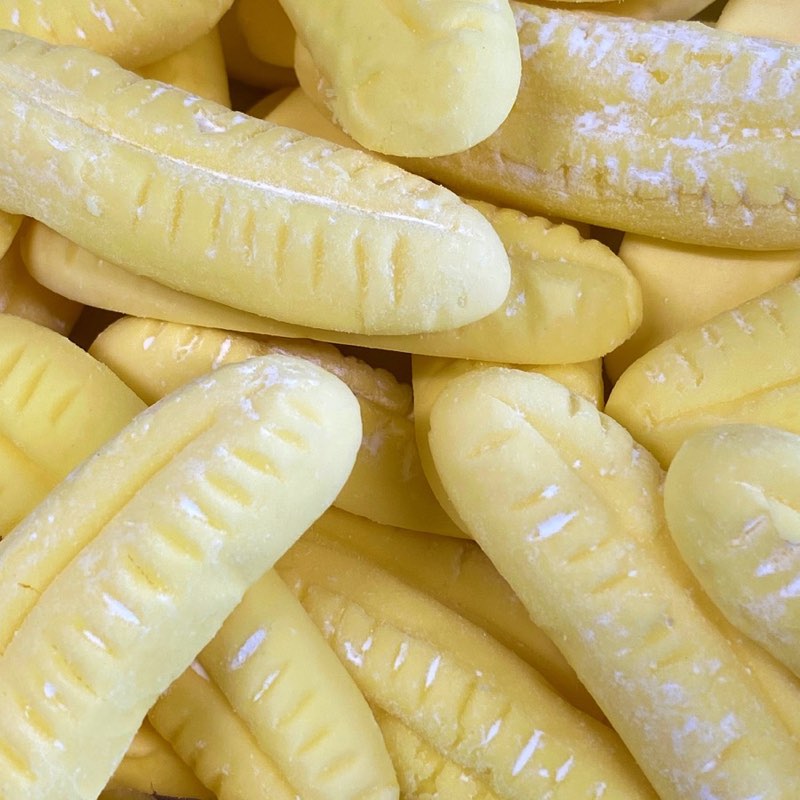
Home / Loose Sweets / Barratt Mini Foam Bananas
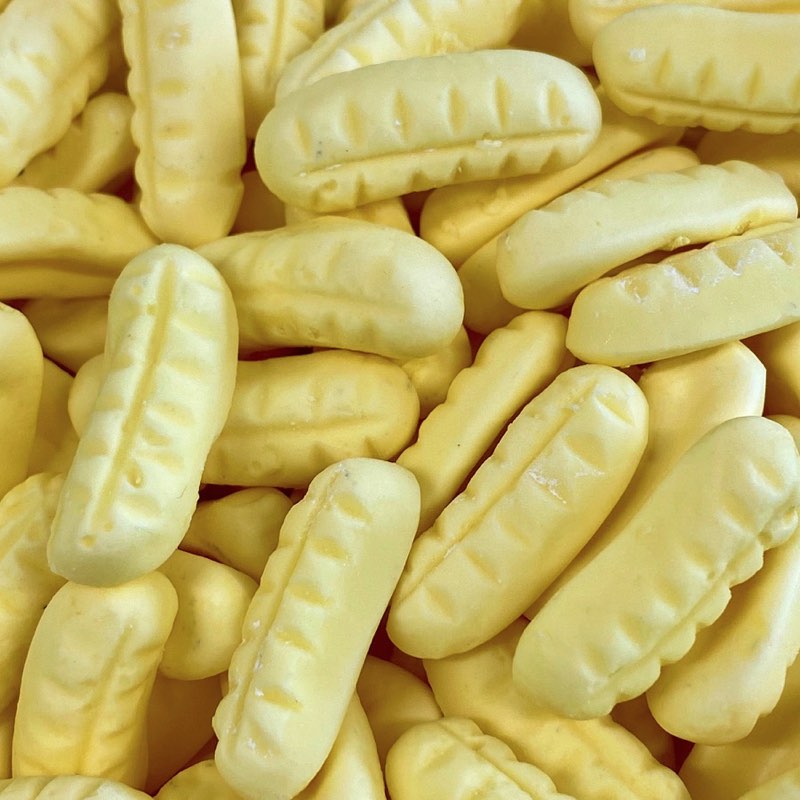
Barratt · 300g
Read the full guide
Barratt Mini Foam Bananas
£5.49
Currently out of stock
Fresh stock
Free over £20
Same-day dispatch
Secure checkout
A small sweet is bought and eaten in handfuls, so the useful unit of price is not the bag and not the piece — it is the handful. Barratt Mini Foam Bananas run 250g at £5.49, 500g at £9.99, 750g at £12.99, 1kg at £16.49 and 2kg at £28.99, and once you convert those into what a normal 30g portion actually costs, the decision more or less makes itself.
That is a well-behaved ladder. Every rung is cheaper per gram than the one below it, with no awkward step in the middle, and the gap between the top and the bottom is substantial: the 2kg rate is roughly two thirds of the 250g rate. Over a year of regular buying that difference is real money rather than a rounding error.
The full guide to Barratt Mini Foam Bananas
5,890 words on how it eats, who it suits, how to serve it and what to put beside it.
What a handful costs, and why that is the only figure that matters here
| Size | Price | Per 100g | A 30g handful |
|---|---|---|---|
| 250g | £5.49 | £2.20 | about 66p |
| 500g | £9.99 | £2.00 | about 60p |
| 750g | £12.99 | £1.73 | about 52p |
| 1kg | £16.49 | £1.65 | about 49p |
| 2kg | £28.99 | £1.45 | about 43p |
The interesting rung is the kilo at £16.49, which comes in at £1.65 per 100g. On many loose lines the kilo is the rung where the rate flattens out or briefly gets worse, because retail prices get rounded to figures that look sensible rather than figures that follow a curve. Here it does not — the kilo keeps the descent going and only the 2kg beats it meaningfully. If you are a regular buyer and the 2kg is more than you want open at once, the kilo is a genuinely efficient place to stop.
Now the part that matters more than the ladder: small sweets have no natural brake. This is the single most important thing to understand before you choose a size. A large sweet paces itself, because getting through one takes time and effort and your mouth notices. A small soft sweet does not. It is gone in seconds, it leaves no coating worth speaking of, and your hand is back in the bag before you have registered finishing the last one. Three or four disappear in the time it takes to think about one.
So calibrate the bag to your household's rate, not to the number of occasions you can imagine. Buy a 250g bag, treat it as a couple of sittings for two people, and see how long it actually lasts. The common mistake with minis is buying for the price per gram and discovering that the rate of consumption simply scaled up to meet the supply. A 2kg bag in a house of four does not last eight times as long as a 250g bag; it lasts perhaps three or four times as long, because a bigger bag makes everyone more relaxed about going back to it.
The counter-strategy, if you want the value and not the acceleration, is decanting. Buy the size that gives you the rate you want, then immediately split it into sealed portions and put all but one away. It sounds fussy. It works, and with a fast-eating sweet it is the difference between a kilo lasting a term and a kilo lasting a fortnight.
For portioning into bags, cones or favours, small pieces are far easier to work with than large ones, and this is where the format earns back what it lacks in drama. You can fill a cone to a precise weight without any awkward last piece that takes you fifty grams over. You can split a bag twelve ways and have every portion genuinely identical. And a scoop works cleanly — small pieces flow, where large pieces jam in the neck of a scoop and have to be arranged by hand. Anyone who has filled forty party bags will tell you this matters.
Rough planning figures: at 30g a head, 250g covers eight small portions, 500g covers sixteen, 750g covers twenty-five, the kilo covers thirty-three, and the 2kg covers sixty-six. For favour bags where the sweets are one element among several, 15g to 20g per bag is plenty, which roughly doubles all those numbers.
One important note before you plan around it: this line is currently out of stock. We would rather say so on the page than let you find out at the basket. It is worth reading on if you are weighing it up for later, and there are close alternatives set out further down — but if you need something in a bag this week, go to a line that is on the shelf now.
A small yellow thing you eat by the handful
Tip a few into your palm and the impression is of lightness before anything else. Aerated sweets weigh very little for their size, and at this scale the individual pieces feel almost like nothing at all — you can hold a dozen without your hand registering much. They move around in the palm. They make a faint dry rustle against each other rather than the click of a hard sweet or the dull shift of a dense jelly.
Yellow throughout, in the shape the name gives them, in the plain literal way the British sweet counter has always worked. There is nothing decorative here and nothing that needs explaining. That directness is exactly why the line sits on our retro shelf with eighty-eight other survivors of the same tradition.
The surface has a soft dry finish rather than a shine, which is characteristic of the whole aerated sweets category — thirty-three lines of it here, a small corner of the shop and a distinctive one. Press a piece and it gives immediately and comes back most of the way. It will not hold a dent for long unless it has been sitting compressed under weight.
What you cannot do with a piece this size is examine it. It is too small to have an inside and an outside as far as your mouth is concerned. That is not a criticism — it shapes the entire eating experience, and it is why these get eaten in multiples while larger foam sweets get eaten one at a time.
The handful, not the piece: how these actually eat
Nobody eats one of these. The unit of consumption is three or four, and every sensory characteristic follows from that.
Put a single piece in your mouth and very little happens in sequence. There is a brief moment of softness, one or two chews, and it is essentially gone — dissolving as much as breaking. There is no compression phase to dwell on, no tearing, no slow yield. A small aerated piece collapses almost as soon as it is under pressure, because there is not enough material to resist.
Put three in at once and something different happens. The flavour stacks. Instead of a single quiet banana note you get a fuller, rounder, warmer version of the same thing, arriving all at once rather than building. This is the real character of a mini format and it is not the same experience as a larger piece at all: it is banana as a wave rather than as an arc. The intensity is in your control, set by how many you take, which is a kind of dial that larger sweets simply do not offer.
There is a textural consequence of small scale that surprises people. The outer surface of a foam sets slightly firmer than the interior, and a small piece is proportionally much more surface than a large one. So minis read as a fraction firmer and drier than you might expect — less pillowy, a little more resilient, with a cleaner break. Several of them together give you a mouthful of many small resistances rather than one large soft mass, and the effect is closer to something crumbly than to something cushioned.
The fade is quick and clean. Nothing coats the mouth, nothing lingers on the sides of the tongue, and there is no acid to wear the palate down. This is why the format is so easy to keep eating, and it is the same property that makes it excellent for long, slow occasions — a film, a car journey, an afternoon at a desk — and slightly dangerous for anyone trying to ration.
One practical tip: cold changes these more than it changes most sweets. A chilled aerated piece firms up noticeably and the chew becomes more definite; warm, it goes softer and melts away faster still. If you want a handful to last more than a few seconds, keep the bag somewhere cool and serve them straight from it.
The collector's view: why small formats are the first thing to disappear
There is a way of reading a sweet shop that has nothing to do with appetite, and anybody who has ever tried to track down a sweet they remember from childhood already knows it. In this frame, a listing is not a product but an entry in a catalogue that is quietly changing all the time. Things arrive, things go, and almost none of it is announced.
This page is a live demonstration of the point, since the line is currently unavailable. That is not unusual and it is not necessarily permanent, but it illustrates the thing collectors understand and casual shoppers do not: availability is a state, not a property. The sweet you assume will be there next year is there because somebody keeps deciding to make it, and those decisions get revisited.
Within that, size variants are the most fragile things in the whole catalogue, and this is the genuinely useful insight. When a line contracts, the flavour usually survives — it is the formats that go. A maker rationalising a range keeps the version that sells the most and drops the others, which means unusual sizes, novelty scales and minority formats are always first out. You can watch this happen across confectionery if you pay attention: the flavour persists for decades while the shapes and sizes around it quietly change.
That is why a pair of sizes of the same sweet is, to a collector, far more interesting than two different flavours. The bumper-sized version of this line, also starting at £5.49 and the mini are the same idea at two scales, and each of them supports a kind of eating the other cannot. They are not substitutes for one another. If a range ever narrows to one of them, something real is lost, and the people who preferred the missing one are the ones who end up describing it to strangers on the internet for the next fifteen years.
Memory, it turns out, is size-specific in a way that catches people out. Ask somebody about a sweet they loved as a child and they will describe its scale before they describe its flavour — how many fitted in a paper bag, whether it was a one-at-a-time sweet or a handful sweet, whether it felt enormous. Get the flavour right and the size wrong and the memory does not land. This is why arguments about whether a sweet "is the same as it used to be" are so often really arguments about dimensions.
The other thing collectors track is the format of sale, which is a separate axis from size. Sweets come loose by weight, in tubs, in jars, in cartons, in gift boxes and in wrapped multipacks, and each of those is a different proposition. The aniseed balls sold in a sweet jar at £16.99 exist as much for the jar as for the contents — the container is the point, and it is the closest thing the modern shop has to the shelf behind the counter. The teeth and toothbrush tub at 576g for £8.99 is a novelty-shape line in a household format, which is an unusual combination worth noticing. And the jelly filled strawberries tub at £7.99 shows the same logic applied to a filled sweet.
Retro shelves are, in effect, archives — and this is the collector's argument for browsing one rather than searching it. A search only finds what you already know to ask for. The interesting things on a retro shelf are the lines you had forgotten existed, and you only meet them by scrolling. Barley sugar at £5.49 is exactly that kind of listing: a sweet that almost nobody sets out to buy and a reasonable number of people are delighted to find.
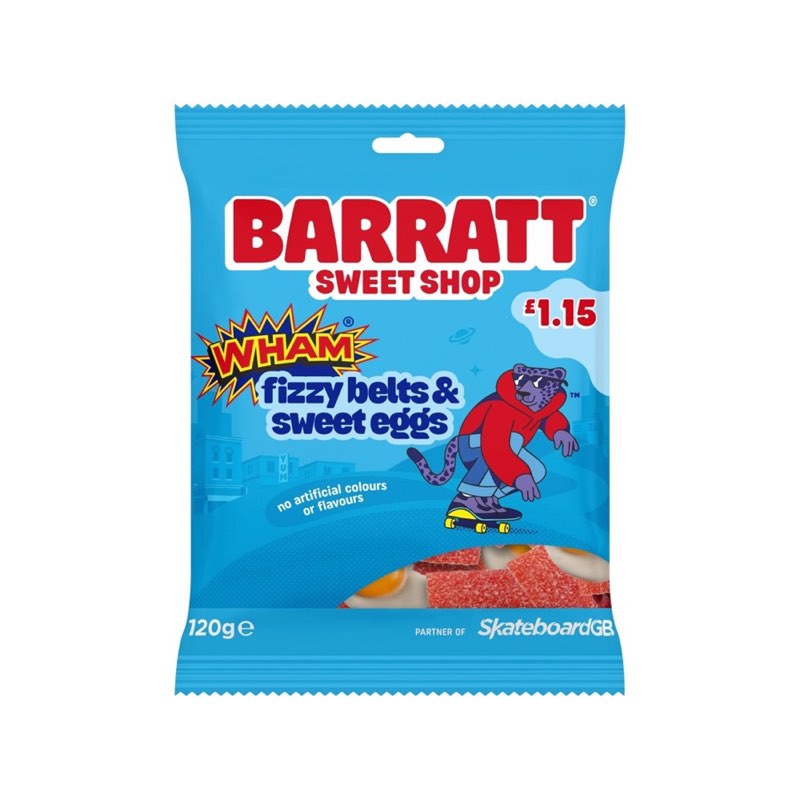
The practical advice that falls out of all this is unglamorous. If you find a size and format combination that genuinely suits your household, treat it as something to buy again rather than something to rediscover. Stock up modestly when it is there. And if you are testing a flavour for the first time, do it in the smallest, cheapest format available rather than committing to a large bag — the Wham fizzy belts and sweet eggs at £1.15 for 120g is the sort of low-stakes purchase that answers a question for the price of a newspaper.
And when something is out of stock, the honest collector's position is to note it, set a reminder, and buy something else in the meantime rather than waiting. There are near neighbours below.
The builder's view: what small pieces do to the inside of a bag
Building a good mixed bag is a problem of distribution as much as selection, and small sweets are the component that solves it. Large items sit in a bag; small ones travel through it. That difference determines what a mix feels like to eat.
Start with the most useful property: with small pieces, the proportions of your mix are expressed in every single handful. If a bag is a third minis, then roughly a third of what you pick up is minis, every time. With large items the proportions only express themselves across the whole bag — you might get two big pieces in one handful and none in the next three. A mix built entirely from large items is therefore lumpy by nature, and a mix with a good proportion of small ones is consistent. If you want everyone reaching in to get a fair representation of what you built, you need small pieces in there.
The second property is blending. Small sweets make multi-sweet mouthfuls possible, and a multi-sweet mouthful is a genuinely different thing from a sequence of single sweets. Flavours combine rather than follow. Two or three minis taken alongside something sharp give you a blended result that neither would produce alone. This is the only real way to get combination flavour out of a pick and mix, and it is why experienced builders always include at least one small mild component as a blending base. A mild banana is close to ideal for that job — it fills out the middle of a mouthful without arguing with anything.
The third is filling. Small pieces migrate into the gaps between large ones, which matters enormously for anything sold or displayed in a clear container. A jar of large sweets is mostly air, and it shows. Add minis and the gaps close, the jar looks full, and the whole display reads as more generous for very little extra outlay. The same principle applies to cones and to any bag where the presentation counts.
Now the drawback, because there is one and builders should plan for it. Small pieces sort themselves. Shake or carry a mixed bag and the small items work their way downwards through the gaps while the large ones rise, so by the time a bag reaches a party it will have a layer of minis at the bottom and the big items on top. The people who dive in first get one kind of bag and the people who get there last get another. Two fixes: either turn and fold the bag before serving rather than shaking it, or decant into a bowl and stir, which redistributes everything in about four seconds.
The related point is that minis are easy to avoid. Somebody who does not like banana will pick around a large piece reluctantly and fish out minis without a thought. That cuts both ways: it means a mild small component is low-risk to include, because nobody is forced to eat it, but it also means a flavour that half the room dislikes will end up as a residue at the bottom. Build accordingly — small components should be the ones with the broadest appeal.
On what to pair them with, contrast on the axes minis do not cover. They are soft, so bring something with resistance: fruit pastilles at £5.49 give you a firm, slow-yielding chew across several fruit flavours, and Skittles at £6.99 add a hard shell around a chewy centre, which is a two-stage texture nothing else in a soft bag provides.
They are mild, so bring something sharp: the sour twin cherries tub at 800g for £7.99 is the obvious high-contrast partner and gives you enough volume to salt a lot of bags with it. They are one flavour, so bring a different family altogether — happy cola bottles at £5.49 are the standard counterweight, and cola against banana is a pairing that has worked in mixed bags for as long as mixed bags have existed.
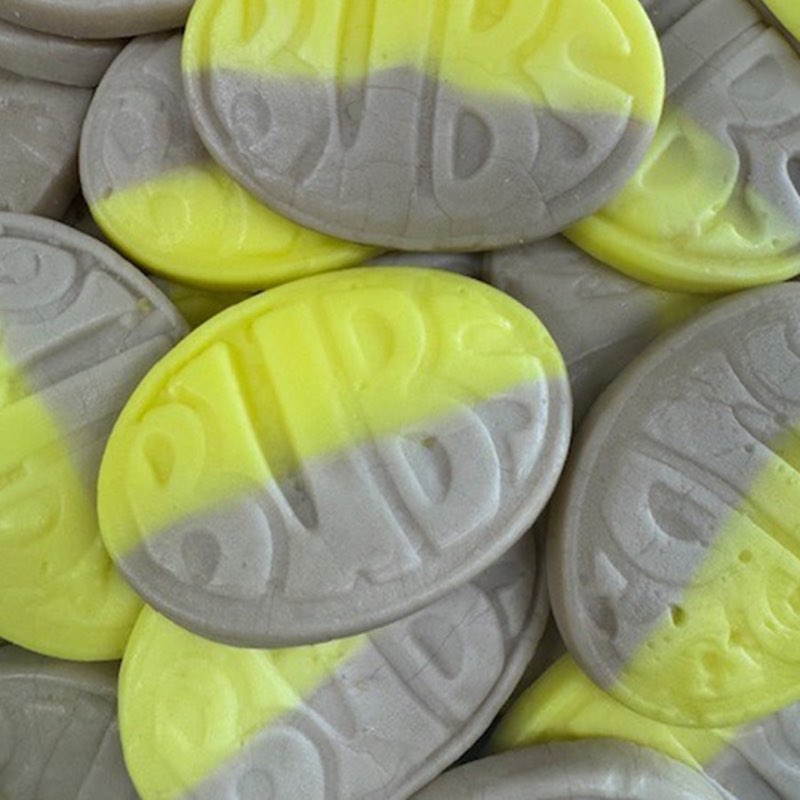
For a second soft element that is not the same soft element, the Kingsway mushrooms at £5.49 bring another shape-named classic into the bag, and the BUBS banana and caramel foam at £7.50 takes the aerated texture and layers a caramel note onto the banana — useful if you want the flavour to appear twice in a bag in two different registers.
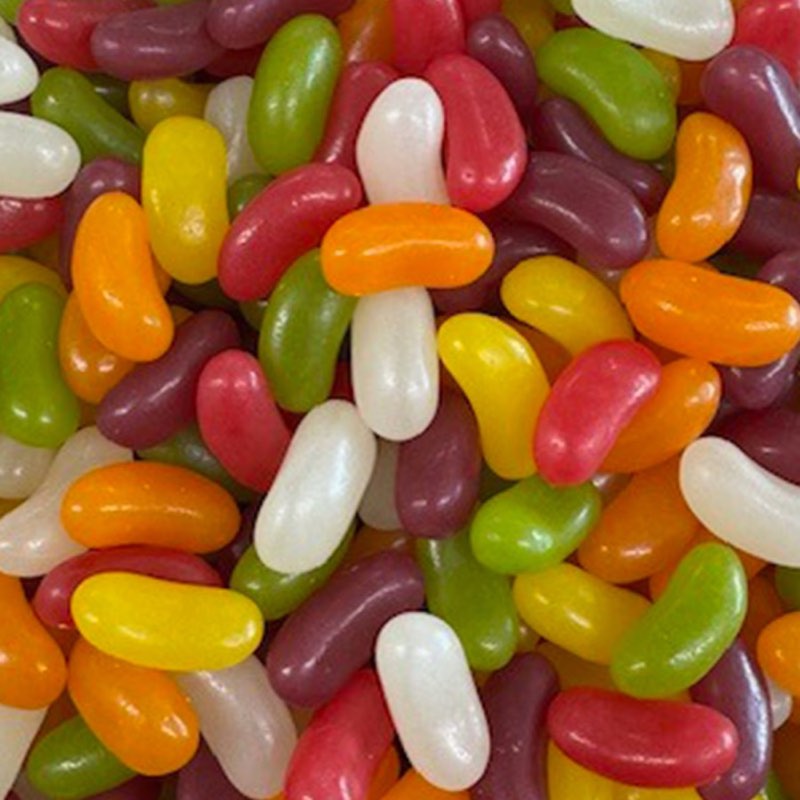
Two more from the same maker worth building in. Barratt's jelly beans at £5.49 are small, firm and multi-flavoured, which makes them the natural structural partner for a small soft item — same scale, opposite texture. The jelly spogs at £5.49 take the bag somewhere else entirely with a liquorice direction, and the non-dusty milk bottles at £5.49 add a creamy note without the mess that dusted sweets make in a bag that has to travel. If you want wrapped items in the mix so people can pocket something, a ten-pack of chew bars at £2.50 is the cheapest way to do it. Or skip the assembly entirely and use our pick and mix section, which exists so you can set the proportions yourself without buying six separate bags.
The builder's rule for small components, in one line: minis are the mortar, not the bricks. Choose them for mildness and broad appeal, include enough that every handful contains some, and stir before serving.
What the supplier tells us about this line
Our supplier lists this line as dairy free and gluten free. That is their description, passed on as given, and it is the only dietary information we hold on it — we have not tested it, and we do not make any claim beyond repeating what we were told.
If either of those matters to you, we keep shelves for both: the gluten free listing runs to fifty-four lines and the dairy free listing to fifty-one, and both are populated the same way, from supplier information rather than from anything we have verified ourselves.
Whatever a listing says, always read the manufacturer's packaging when the order arrives, and do that before anyone eats anything. The pack is the authoritative source, recipes and factory arrangements change, and nothing on this website replaces what is printed on the packaging. If there is an allergy in the household, treat the pack as the only thing that counts.
Banana in company
The useful question about banana is not whether it is a good flavour on its own — people have settled views on that — but how it behaves next to other things, because in a mini format it will almost always be next to other things.
It behaves extremely well. Banana is warm, rounded and completely without sharpness, and it occupies the lower middle of the flavour range where very little else in a sweet bag sits. Most confectionery flavours compete for the bright, high, fruity register; banana does not. That means it can be present in a mouthful without taking it over, which is exactly what you want from a component you will be eating three or four of at a time.
Against sharp fruit it functions as relief, softening the edges of anything sour without cancelling it. Against cola it is a straightforward complement, both being flavours that read as sweet-shop rather than as fruit. Against liquorice or aniseed it is a genuine contrast and the bag gets more interesting for it. The only combination that falls flat is banana against another creamy, rounded flavour, where you end up with a mouthful that has no shape at all.
It is worth being honest that banana is divisive in a way most flavours are not — it sits close enough to the real fruit to be judged against it, and it never wins that comparison. Taken on its own terms, as a confectionery flavour with its own history rather than an imitation of anything, it is one of the most comforting things on the shelf. Our banana shelf holds six lines, which is a small but persistent corner of the catalogue; small and persistent is exactly what you would expect from a flavour that a minority loves and the rest ignore.
At mini scale, the divisiveness matters less than it does at large scale, because the stakes per piece are lower. Somebody who is lukewarm on banana will happily eat a few in a mixed handful and never think about it. The same person handed a single large one has to commit. That is a real argument for the small format in any bag being shared with people whose preferences you do not know.
Who the small format suits
Grazers, first and most obviously. If your pattern with sweets is a few at a time over an evening rather than a single defined treat, small pieces fit that pattern and large ones fight it.
Mix builders, second. Anyone who assembles their own bags, fills jars, or puts together party favours needs small components for all the distribution reasons above, and a mild small component is the most useful of the lot.
People portioning for children, third. Small pieces let you give a sensible, countable amount that looks like a proper handful, and they divide evenly between several children without any argument about who got the bigger one. As with all confectionery, sweets are a treat, whole sweets are a choking risk for young children, and small children should be supervised while eating.
Anyone feeding a room, fourth. Small sweets go further socially: a bowl of them on a table serves more people more times than the same weight in large pieces, because everyone takes a few rather than taking one.
And people who prefer the flavour to the theatre. There is no novelty value in a mini — it is not funny, it does not get held up and compared, it is simply a small sweet that tastes of banana. For some buyers that is precisely the appeal.
Where a bowl of these earns its place
On a desk or in a staff room, this is close to the ideal format. Small, quick, no mess, nothing that needs two hands, and a clean finish that does not leave you wanting a drink. A bowl gets topped up rather than replaced, and the flow of people taking three at a time is exactly what the format is built for.
For party favours and cones, minis are the practical choice, and the reason is purely mechanical: you can hit a weight precisely, a scoop works properly, and nothing sticks out of the top of the cone at an awkward angle. If you are making forty bags, this is an hour saved.
For film nights and long journeys, the slow steady graze is the point, though the lack of a natural stopping point is worth planning around — decant a portion and put the bag away, or the bag will make the decision for you.
For sweet tables and jar displays, use them as the filler that makes everything look full rather than as the headline. Big pieces at the front for presence, minis in behind and between to close the gaps. A jar of nothing but small sweets can read as slightly dull, but a jar of large ones with no small ones reads as half empty.
For hampers, a loose bag is a component rather than a present, but small sweets decant beautifully into jars and small containers, which is how you turn a bag into something worth handing over. Pair with something in a different register — a dusted sweet, a chocolate item, something wrapped — and it looks considered.
And for the household that just wants sweets available, the honest answer is that a sealed jar of minis on a shelf is about as low-friction as confectionery gets.
Keeping small foam sweets from going dry
Aerated sweets dry out rather than going sticky, and small ones dry out fastest of all. The reason is the same geometry that makes them read firmer in the mouth: relative to their weight they have far more surface exposed to the air than a large piece does, so moisture leaves the structure quicker. A bag of minis left open loses condition noticeably sooner than a bag of large pieces in the same room.
So the seal is everything. An airtight jar or container is much better than a clip, and a clip is much better than folding the top over. If you have bought one of the larger sizes, split it on the day it arrives into portions you will get through in a week or two, and only ever open one at a time. This is the single highest-value habit for this particular format.
Keep them cool, dark and dry. Heat makes the structure soft and encourages pieces to settle into each other; light will dull the colour over time; damp is the one thing that will make the surface tacky. A cupboard away from the oven and the kettle is all that is needed, and a routine trip to the fridge is not recommended — the repeated swing between cold and room temperature is worse for the texture than simply leaving them at a steady temperature.
Watch for compaction, which is a specific problem with small pieces in a large bag. The weight of everything above presses the bottom layer together, and after a few weeks the lower portion can be noticeably denser than the top. Storing bags upright and unstacked prevents it, and giving a jar a gentle turn now and again keeps everything loose.
Always check the manufacturer's packaging on arrival for storage guidance and anything else you need to know before eating. The pack takes precedence over any general advice here.
Choosing a size, and what to do while it is unavailable
All five weights are the same sweet, so the choice is about rate and storage rather than about the product.
250g at £5.49 is the right first purchase and the right size for one or two people. About eight handfuls.
500g at £9.99 is the ordinary household bag and brings the rate to a round £2.00 per 100g.
750g at £12.99 is where the rate starts looking properly good at £1.73 per 100g, and it is roughly the right quantity for party favours for a class.
1kg at £16.49 is the efficient regular-buyer's size at £1.65 per 100g — thirty-three handfuls, and the rung where the ladder is at its most sensible. Decant it.
2kg at £28.99 is the best rate at around £1.45 per 100g and is genuinely event scale. Only buy it if you can seal and split it properly, because a 2kg bag opened repeatedly over months is a bag that will dry out long before it is finished.
On availability: this line is out of stock at present. If you want the same flavour in a soft format right now, the banana and caramel foam is the nearest thing on the shelf, and the bumper size of this same line is the other direction to look — same flavour and texture family at the opposite scale, and it starts at the same £5.49. If what you actually need is a small, mild, soft component for a mix, any of the small-format lines in the pick and mix section will do the structural job while you wait.
Shelves this sits on, and where they lead
Seven shelves hold this listing, which is more than most, and each one is a different way into the catalogue.
The loose sweets section is the biggest part of the shop at three hundred and fifty-six lines and the natural home for anyone who buys by weight. The Barratt shelf gathers eleven lines from this maker. The retro and foam shelves linked earlier cover the tradition and the texture respectively, and the banana shelf covers the flavour. The two supplier-led diet shelves are linked in their own section above.
Further out, the full catalogue is there for browsing without filters, the candy and chocolate listing covers everything that is not a fruit sweet, and the maker shelves for Kingsway lines and the Haribo range hold a great deal of the shape-named classic confectionery that sits alongside this one.
A suggestion for anyone building rather than buying a single thing: browse by texture first and flavour second. Most people do it the other way round and end up with a bag where everything eats the same.
Questions we get asked about the small size
How small are they?
Small enough that the unit of eating is a handful rather than a piece — you take three or four at a time without thinking about it. They are too small to have a meaningful inside and outside in the mouth; they compress and dissolve almost at once. If you want a sweet that takes time to get through, the bumper size of the same line is the one to look at instead.
Which size is the best buy?
The 2kg at roughly £1.45 per 100g, if you can store it properly. For most households the kilo at £16.49 is the better answer — £1.65 per 100g, around thirty-three handfuls, and a quantity you can realistically seal and get through before it loses condition. The ladder here is well behaved, so each step up genuinely saves money.
Are they gluten free and dairy free?
Our supplier lists this line as both, and we pass that on exactly as we received it. We hold no other dietary information about it and we make no claim of our own. Whatever any listing says, read the manufacturer's packaging when the order arrives and before anyone eats — the pack is the authoritative source, and it is the only thing to rely on if there is an allergy in the house.
Why is it out of stock, and will it come back?
We do not have a date to give you, and we would rather say that than guess. Stock on loose lines moves in an uneven pattern and availability changes without much notice. If you want this specific sweet, check back rather than planning an event around it; if you need something in a bag this week, look at the banana and caramel foam or the bumper size of the same line.
How many will I need for party bags?
Work in grams rather than pieces, which is far easier with a small sweet. Around 15g to 20g per favour bag if the sweets are one element among several, or 30g if they are the main event. That puts 750g at roughly forty favour bags at the lower rate, or twenty-five proper handfuls at the higher one. Small pieces also portion far more precisely than large ones, so you can hit those weights exactly.
Will they dry out?
Faster than almost anything else on the site if you leave the bag open, because small aerated pieces have a lot of surface area relative to their weight. Sealed properly in an airtight container, kept cool, dark and dry, they hold condition well. If you buy a large size, split it into smaller sealed portions straight away and open one at a time.
What makes these better in a pick and mix than large pieces?
Distribution. With small pieces, the proportions you built are present in every handful somebody takes, and you can get genuine multi-sweet mouthfuls where flavours blend rather than follow one another. Small pieces also fill the gaps between larger items, which makes a jar or a cone look properly full. Do stir or fold a mixed bag before serving, though, because small items sink through the gaps over time.
Do they taste different to the bigger version?
Same flavour, different delivery. A handful of minis gives you banana all at once, as a wave, with the intensity set by how many you take. A single large piece gives you the same flavour spread out over a long chew. Neither is stronger in any absolute sense; the small format simply puts the dial in your hand.
Are they suitable for young children?
They are easy to portion for children and they divide evenly between several without argument, which is the practical advantage. As with any confectionery, sweets are a treat, whole sweets present a choking risk for young children, and small children should be supervised while eating. Use your own judgement about the child, and check the pack on arrival if there is an allergy involved.
Can I mix them with other small sweets?
That is exactly what they are best at. Pair them with something small and firm — jelly beans are the obvious partner, matching the scale and opposing the texture — and add one sharp element so the bag has somewhere to go. A bag of nothing but small soft pieces is pleasant but flat; a bag of small pieces at three different firmness levels is a genuinely good mix.
Is a bigger bag always cheaper per gram here?
On this line, yes — every rung improves on the one below, from £2.20 per 100g at 250g down to about £1.45 at 2kg. That is not true of every loose line we sell, so it is worth checking the arithmetic on any product before assuming the biggest bag wins. Here it does, provided you can store it.
What is the cheapest way to try the flavour?
The 250g bag at £5.49 is the entry point on this line. If you want to spend less than that to find out whether banana suits you, look for it inside a mixed assortment instead — you get a few pieces among several flavours and it costs a fraction of a dedicated bag.
In short
This is the small-scale version of a retro aerated banana sweet, sold loose from 250g at £5.49 through to 2kg at £28.99, on a price ladder that gets cleanly better at every step. Small pieces eat in handfuls rather than one at a time, which means the flavour arrives all at once and the intensity is whatever you decide to pick up. Our supplier lists the line as dairy free and gluten free; check the packaging itself when it arrives.
Buy it as the mild, well-distributed component that makes a mixed bag consistent rather than lumpy, as the easiest thing in the shop to portion into favour bags precisely, or simply as a bowl of something soft to graze on. Seal it properly, split the big bags, and stir any mix before you serve it. It is out of stock at the moment — worth noting now rather than at the checkout — so if you have a date in the diary, buy something else for it and come back for this one.
More from Barratt
More retro sweets

More banana sweets
Where this sits
Barratt Mini Foam Bananas appears on these shelves. Browse them, or jump to something nearby.
You might also like