3D · 340g
Read the full guide
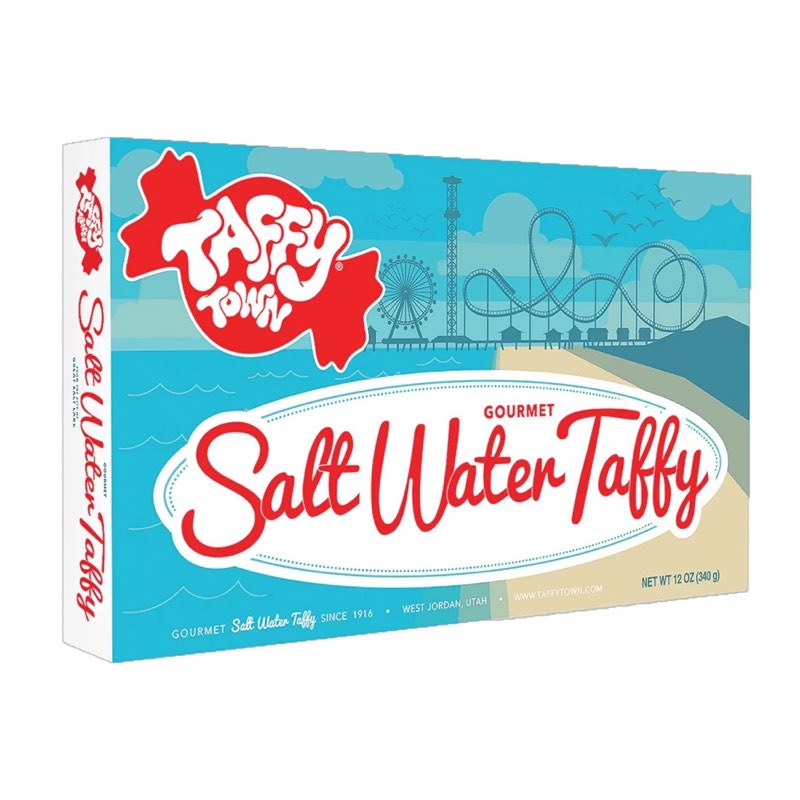
Taffy Town Gift Box Salt Water Taffy Boardwalk 340g
£9.49
✔ In stock — ready to ship
Fresh stock
Free over £20
Same-day dispatch
Secure checkout
The first thing a box of this kind does is give you a moment of survey. Three hundred and forty grams is enough that you are not looking at a row of pieces but at a filled space, and the instinct is always the same — you scan it before you take anything, deciding which one you want. That scanning moment is most of the pleasure of a boxed assortment, and it is the thing a bag cannot give you, because a bag has to be tipped out before you can see what is in it.
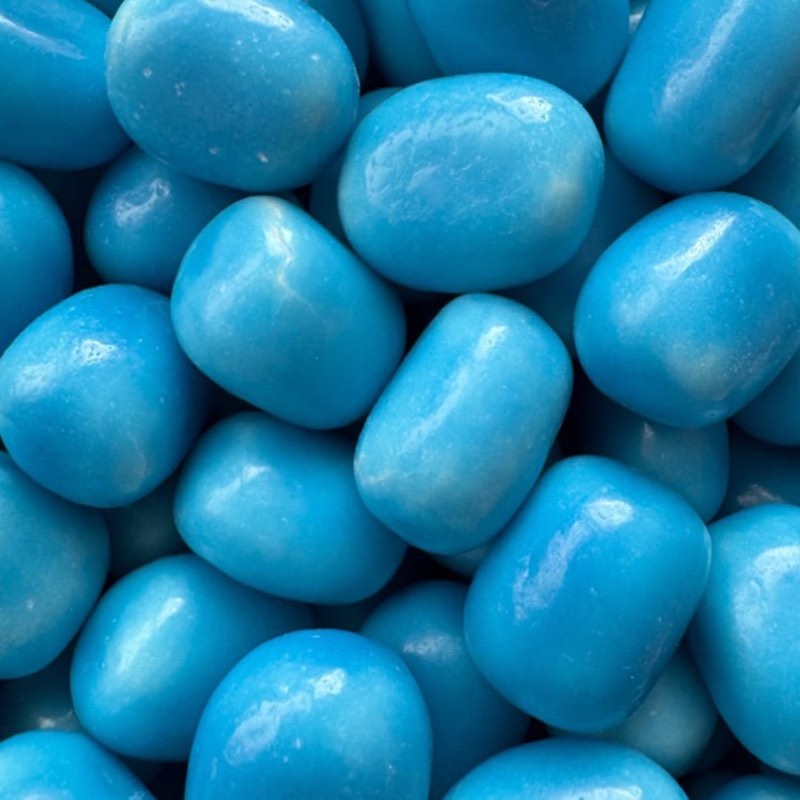
The Taffy Town Gift Box Salt Water Taffy Boardwalk 340g is listed at £9.49, in one size, and our supplier records its colour simply as blue. That single word sets the tone of the box more than anything else on the listing: a blue-led assortment reads as cool, marine and slightly unreal, and it is an unusual register for sweets, most of which cluster in the red-to-orange half of the spectrum. Set this box next to almost anything else on a table and it will be the thing people look at, because it is the wrong colour for food and exactly the right colour for confectionery.
The full guide to Taffy Town Gift Box Salt Water Taffy Boardwalk 340g
5,512 words on how it eats, who it suits, how to serve it and what to put beside it.
Lifting the lid: 340g of taffy, and what meets you
Pick a piece up and the second impression is weight-per-piece. Taffy sits denser in the hand than a gummy of the same size — there is no air in it, so a small piece has more substance than its dimensions suggest. That density is the first clue about how it is going to eat. Dense means slow.
The bite confirms it. There is initial resistance, a moment where the piece holds its shape against your teeth, and then it yields all at once and becomes pliable. From that point you are chewing rather than eating, and the piece stays with you. Depending on the size of the piece you are looking at something between forty seconds and a couple of minutes of active work, which is an extremely long time in confectionery terms. A jelly bean is finished in ten seconds. A boiled sweet takes longer but demands nothing of you. Taffy is the format that makes you participate.
The flavour arrives on a delay, and this is the part people misjudge. The first two or three seconds are mostly sweetness and texture — the flavour has not really started yet. It builds as the piece softens and warms, reaches full strength somewhere around the middle of the chew, and then holds there rather than spiking. When it finishes, it fades out over several seconds instead of stopping. That long tail is why taffy flavours feel rounder and less aggressive than the same flavour in a hard sweet, even when the intensity is identical.
The last sensory note is the jaw. Three or four pieces in succession is genuinely a bit of work, and most people naturally slow down after the third. This is not a criticism — it is the mechanism by which a 340g box lasts an evening rather than a sitting. If you want sweets you can eat absent-mindedly by the handful while watching something, this is the wrong texture and the jelly and gummy shelf is where you should be looking instead.
Four flavours listed, and how each one behaves
Our listing gives four flavour tags for this box: banana, strawberry, watermelon, and the general fruit tag that covers blended or unspecified fruit notes. That is a genuinely useful spread, and each of the three named ones behaves differently in a chew.
Strawberry is the anchor and the one most people reach for first. It is the most familiar flavour in British confectionery by a distance — our strawberry shelf alone runs to 78 products — and in a chew it comes across as soft and jammy rather than fresh and sharp, because the slow release flattens the acidic top of it. It is the safe piece in the box: nobody dislikes it, children go to it first, and it does the work of making an unfamiliar assortment feel approachable.
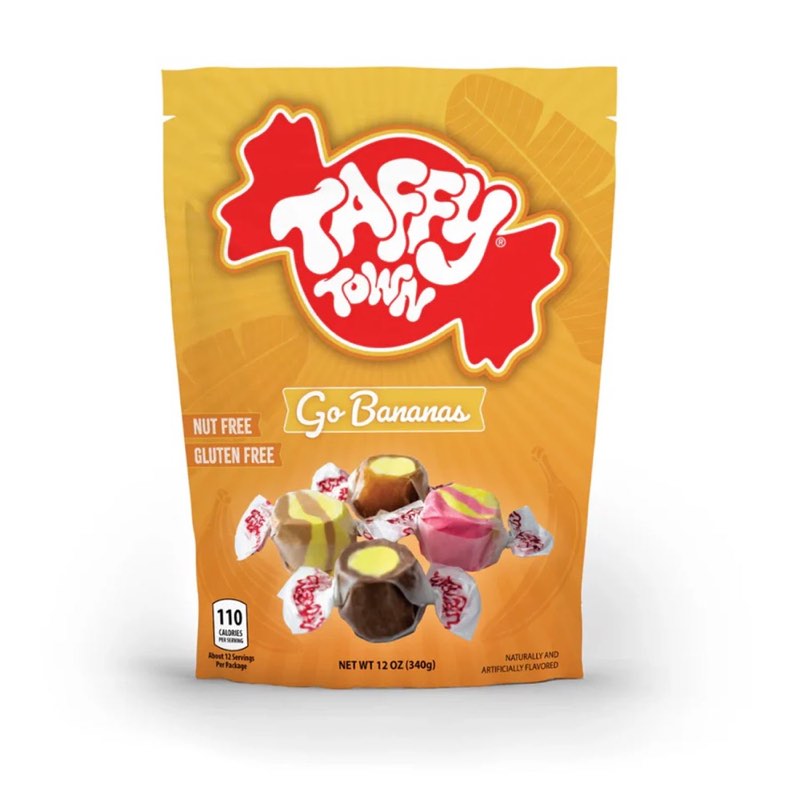
Banana is the divisive one, and it always is. Banana in confectionery is not an impression of the fruit so much as a flavour in its own right, with its own long history and its own dedicated following. People are either firmly in or firmly out, and the ones who are in are enthusiasts — the banana shelf runs to just 6 products here, which tells you how specialist it is. In a chew, banana does particularly well, because the format's slow build suits a flavour that can be overpowering when it arrives all at once. If banana is your thing, the Go Bananas pack at 340g for £7.49 is the same weight given over entirely to it.
Watermelon is the modern one and the most interesting of the four. It has no long history in British sweets — we list only 8 watermelon products across the whole shop — and it behaves differently from the other two because what it is imitating is mostly texture and coolness rather than a strong aroma. Watermelon in a sweet reads as light, watery and faintly green at the edges, and it functions as a palate-resetter in an assortment. It is the piece you take after two strawberries to start again.
The general fruit tag covers everything that is not one of the three named notes — blends, composites, and flavours that are not pitched as a specific fruit. Blends are the workhorse of assortments because they are hard to object to. Nobody has a strong opinion about a blend, which is precisely their function: they fill out a box without adding another flavour anybody might refuse.
Put those four together and you have a box with one crowd-pleaser, one specialist, one modern light note and a body of blends. That is a sensibly built assortment rather than a random one, and it is why a box like this works at a mixed table where a single-flavour pack would not.
How a recognisable flavour gets built in the first place
It is worth spending some time on this, because once you understand how confectionery flavour is constructed, you stop being disappointed that a strawberry sweet does not taste like a strawberry, and start noticing how well or badly it does the job it is actually trying to do.
The job is not imitation. A flavourist building a fruit note for a sweet is not trying to reproduce a piece of fruit; they are trying to build something that the eater will identify correctly within about a second and a half, from a very short list of cues. That is a completely different problem. A real strawberry is an enormously complex thing whose flavour shifts with ripeness, temperature and variety, and most of what makes it taste like a strawberry in the hand is aroma delivered through the back of the nose while you chew. A sweet has none of that complexity available to it and cannot rely on it. So the craft is about selecting a very small number of characteristic signals and making them unmistakable.
Three things carry most of the weight.
The characteristic note. Every well-known fruit flavour in confectionery has been reduced, over decades, to one or two signature impressions that people have learned to read as that fruit. Pear drop, banana sweet, cherry lozenge — these are recognisable to almost everybody in Britain, and almost none of them would be mistaken for the fruit itself if you tasted them blind alongside it. They are their own category of flavour now. That is not a failure; it is a shared language between confectioners and eaters that has taken a century to build, and a new flavour has to either use it or fight it.
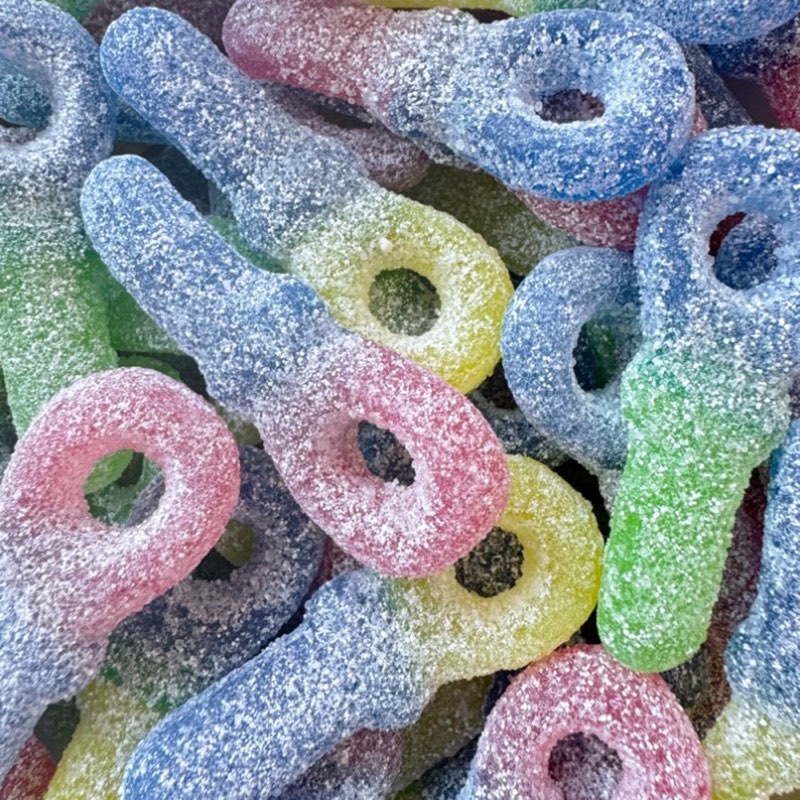
The acid balance. Sweetness alone reads as flat, and without a sour component a fruit flavour does not come across as fruit at all — it comes across as generic sugar with a smell. The amount and speed of the sour component is one of the main dials a confectioner turns, and it determines whether a flavour reads as fresh and sharp or as soft and cooked. Turn it up hard and you get the deliberately punishing end of the market; the Dulce Plus Sour Strawberry Rings at £5.49 show you what strawberry becomes when the acid is pushed forward, and it is a remarkably different sweet from a soft strawberry chew. Kingsway Fizzy Strawberries, also £5.49, sit at a middle setting — enough fizz to lift the flavour, not enough to make it a challenge.
The texture the flavour is carried in. This is the part people never think about and it may be the most important of the three. Exactly the same flavour, delivered in a hard sweet, a gummy, a foam and a chew, produces four quite different experiences, because texture controls the rate at which flavour reaches you and the rate is most of the perception. A hard sweet releases slowly at a low level for a long time. A gummy releases fast and stops. A foam releases almost instantly because it is mostly surface area — the BUBS Banana and Caramel Foam Sweets at £7.50 are the clearest demonstration we stock of what a foam does to a banana note, which is to make it arrive immediately and disappear quickly. A chew does the opposite: slow in, sustained, slow out.
That is why flavours are not simply portable between formats. A note that is perfectly judged as a hard sweet can be overwhelming as a foam and thin as a chew, and a good chew flavour is built knowing it has ninety seconds to work with rather than five.
There is a fourth factor, and it is the strangest one, because it happens before you taste anything at all.
Blue, and what a colour does before the flavour starts
Our listing gives the colour of this box as blue, and that is not a trivial detail. Colour is the first flavour cue anybody receives, and it arrives several seconds before the sweet is in anyone's mouth.
People do not taste colours, but they do predict from them, and prediction shapes perception. Present the identical flavour in a red piece and a green piece and a large number of people will describe them differently — the red one as berry, the green one as apple or lime — because the eye has already made a guess and the mouth is looking for confirmation. Confectioners have understood this for a very long time and design around it, which is why colours in sweets are rarely the colour the fruit actually is. They are the colour the eater expects that flavour to be, which is a different and more reliable target.
Blue is the interesting case, because there is essentially no common blue fruit. Blue in confectionery is almost pure convention: it has come to signal a family of cool, sharp, slightly artificial notes — raspberry in the blue register, bubblegum, mixed fruit slushes, anything marketed as cold or icy. It carries no expectation of a specific fruit, only of a mood. That makes it unusually free. A blue sweet can be almost any flavour at all and nobody feels misled, because nobody had a firm prediction to begin with.
It also does something specific on a table. Blue is rare in food generally, so a blue box reads as confectionery instantly and unmistakably — it cannot be mistaken for anything savoury, anything homemade, or anything you are supposed to eat sensibly. It signals treat at a hundred paces. And it sits well next to the colour families that dominate everything else on a sweet table, which are red, orange and yellow. If you are building a spread and everything on it is warm-toned, a blue item is the single most effective thing you can add to stop it looking like one dish.
The theme on the front works the same way. Boardwalk is the name and the artwork on the box, and it does the job good themed packaging does: it tells you the register — seaside, holiday, unserious — before you have read a word. It is not a statement about where anything is made, and we do not hold origin information for this line, so we do not make one. It is a picture on a lid, doing what pictures on lids have always done.
Which sweet counter you are remembering
Sweets carry memory more efficiently than almost any other category of thing you can buy, and it is worth understanding why, because it explains who buys boxes like this and for whom.
The reason is that most people's sweet preferences were set very early — somewhere between five and twelve — and then essentially stopped changing. Adults who will happily learn to like olives, coffee and blue cheese in their thirties will still, at fifty, want exactly the sweets they wanted at eight. Taste in confectionery is one of the few areas of adult life where nobody feels any obligation to develop. That means a sweet is a reasonably precise time-marker: tell somebody what they ate at the counter and you have placed their childhood within about a decade.
What is being remembered, though, is rarely the brand. Ask people about the sweets of their childhood and they describe the wrong things: the weight of the scoop, the smell of the shop, the amount you could get for what was in your pocket, the specific ritual of choosing. Texture survives memory much better than flavour does, and the ritual survives better than either. A chew is remembered as something that lasted all the way home. That is a memory about duration, not taste.
Three broad counters sit in living memory in this country, and they layer rather than replace each other.
There is the jar-and-scale counter, remembered by the oldest generation and by anybody who grew up near a shop that kept the tradition going. Glass jars, a quarter of whatever you pointed at, weighed in front of you and twisted into a paper bag. The defining experience is choosing out loud and watching the scale. The Kingsway shelf is where most of the survivors of that counter live on our site, and Barratt Fruit Salad Chews at £5.49 are close to a museum piece from it, chews being the category that counter sold hardest.
There is the penny tray, which belongs mainly to people who were children between the sixties and the nineties. Wrapped single chews by the till, bought one at a time with coppers, chosen slowly while a queue built behind you. The defining experience is arithmetic — working out how far your money went. A ten-pack of Drumstick Chew Bars at £2.50 is that tray in modern packaging, and the retro shelf is where we group the rest of its descendants.
And there is the pick-and-mix wall, which belongs to anybody who was a child from the late eighties onward. Plastic bins, a scoop, a bag you filled yourself, weighed at the till with the price unknown until the last moment. The defining experience is the gamble and the assembly — you built your own assortment and it was yours. Maoam Pinballs, 140g for £1.99, are a fixture of that era's memory, and a 70g bag of Jelly Belly's 20-flavour assorted mix at £2.40 is the same instinct in a modern bag: variety as the actual product.
Running alongside all three, and outliving them, is the holiday counter. Seaside and promenade sweet shops have always worked to a different logic from the shop at home, because half of what they sell is bought to be taken back to people who did not come. That is why the gift shelf by the door exists and why it is stacked with boxes and tins with pictures on them rather than bags. A themed box is a souvenir with a use, and the seaside shop invented that product long before anyone called it that.
Which is the honest answer to who a box like this is for. It is for the person who is not going to eat all of it themselves. And it is why the nostalgia in it is aimed slightly sideways — the buyer is usually remembering, and the recipient is usually just being handed sweets.
Who should have this, and when
The clearest fit is the giver. Somebody who needs a present in the sub-£10 band with more character than chocolates and more presence than a bag. The theme gives you something to say while handing it over, which is most of the work of a small gift.
Second is the flavour explorer — the person who reads the flavour list before the price. Four listed notes across one box, including one specialist flavour and one that barely exists elsewhere on our shelves, is a genuinely more interesting purchase than a single-flavour pack of something they already know they like.
Third is the slow eater. If you are the person who finds that a bag of gummies is gone before the film has got going, a chew is a structural solution to that rather than a matter of willpower.
Fourth is the table-builder. A blue, chewy, four-flavour box is an unusually useful item in a spread because it differs from most things on a sweet table along three axes at once — colour, texture and flavour direction — and difference is what makes a table keep working.
Who should buy something else: anybody feeding a large crowd cheaply, who wants bulk rather than presentation; anybody with recent dental work, for whom chews are simply the wrong category; and anybody buying for a person they know dislikes banana, because a quarter of the listed flavour range is not a rounding error.
The standing notes apply as they do to everything on these shelves. Sweets are a treat. Small hard sweets and whole chews are a choking risk for young children and want an adult present. And when the box arrives, read the manufacturer's packaging before anybody eats from it if there is any allergy in the room — the printed label is the authority, not a website.
Building a spread where this box is the odd one out
The most useful way to build around a blue chew box is to treat it as the contrast item rather than the centre, and to choose everything else for what it is not.
Match a flavour to draw a line across the table. Putting two versions of the same flavour out in different formats is the single best trick in sweet-table building, because it turns eating into comparing. Strawberry is the easiest to do it with: set the box next to Bolci's freeze-dried dark chocolate strawberry, 80g at £4.49 and you have the same fruit rendered as a soft slow chew and as a crisp chocolate-covered piece, which is a genuinely interesting thing to have on a table and costs under a fiver. Banana does it even better, because the differences are starker: the chew against the Crazy Jo Peelablezz Jumbo Banana Gummy, 136g for £2.99 puts a slow banana next to a novelty-format springy one, and children will work through both just to establish which they prefer.
Break up the texture. A table of all chews is heavy going. One fast format alongside it gives people a choice of pace, and they will alternate without thinking about it. Gummies and jellies are the obvious counterweight, and the bulk option is the practical one if you are feeding a lot of people — the Candy Realms Tutti Frutti Tubes Tub at £7.99 for 780g is more than twice this box's weight for fifty pence less and fills bowls at a rate nothing else here can match.
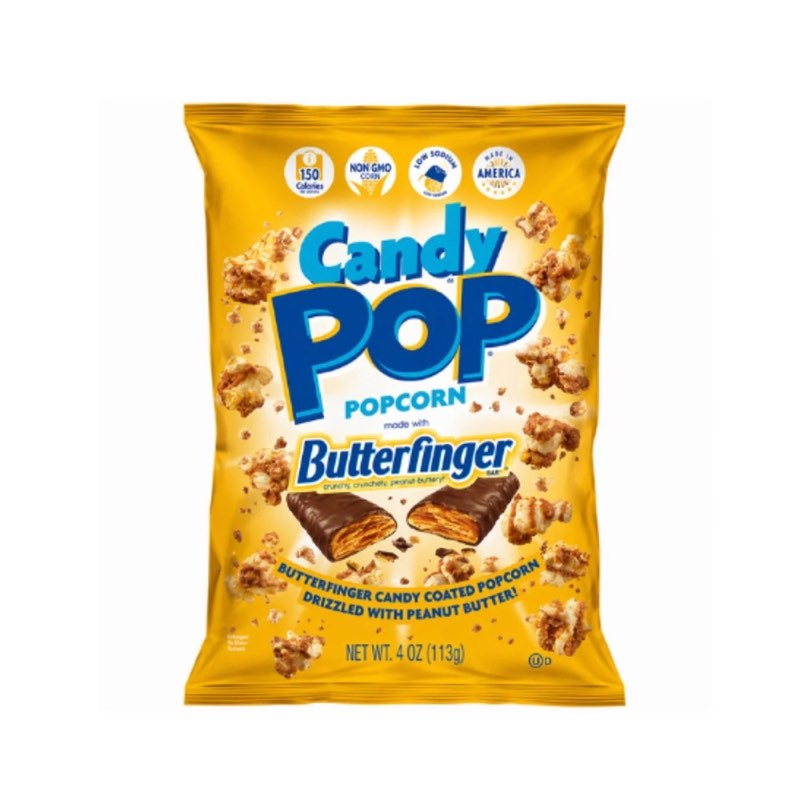
Put one savoury thing out. It resets palates and makes people return to the sweets rather than stopping. The Doughbrik's Extra Cheesy Wavers Crisps, 126g at £4.99, are the straightforward version. Candy Pop Butterfinger Popcorn at £4.49 straddles the line and is the cheapest way to fill a large bowl by volume.
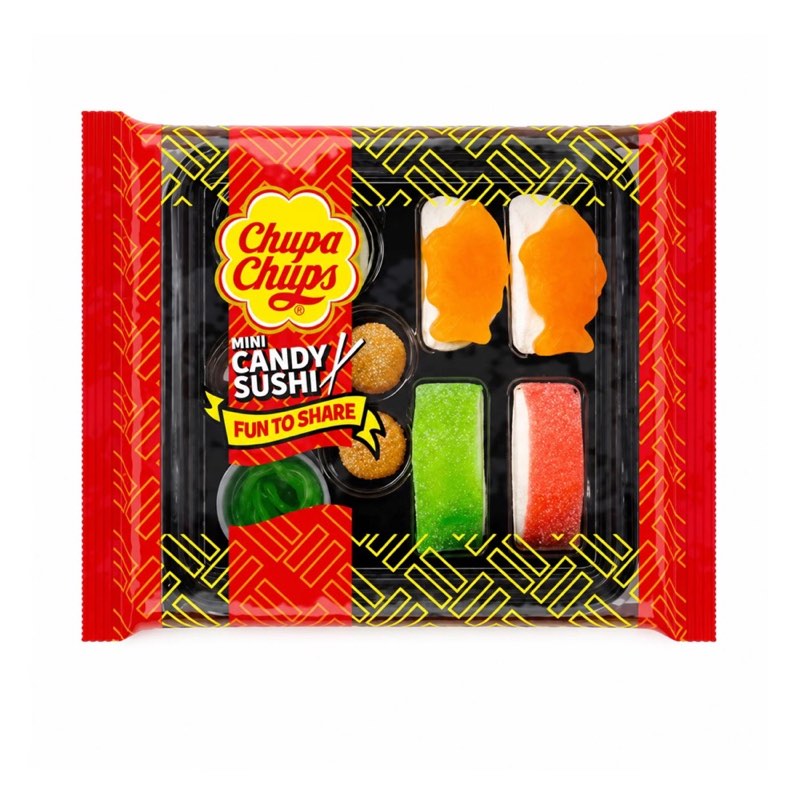
Include one thing that is a joke. The Chupa Chups Mini Candy Sushi Tray, 100g for £2.99, is the item people photograph, and a table wants one of those.
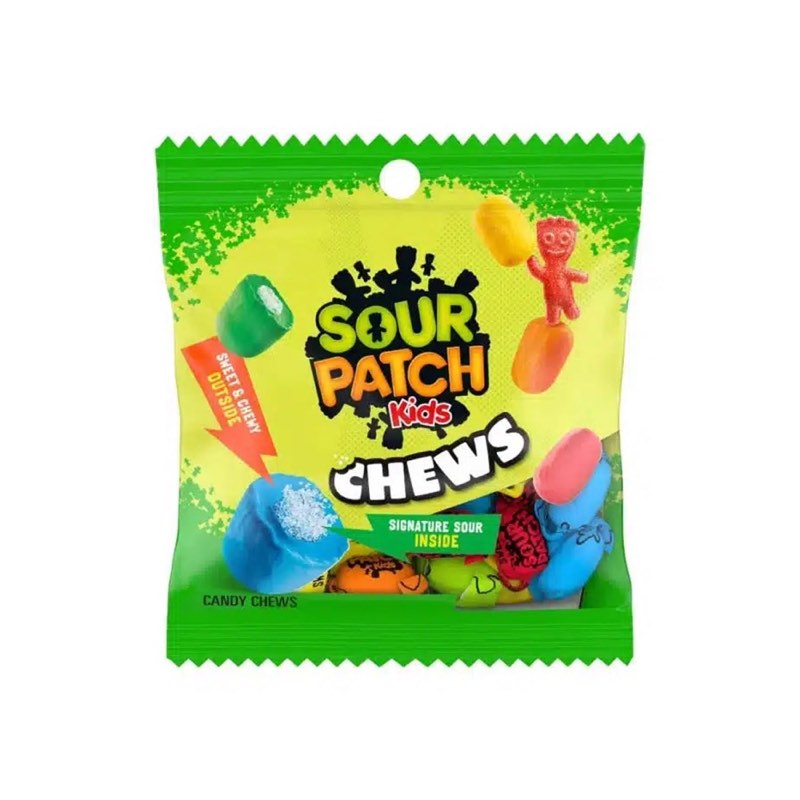
Add a sour note if there are teenagers. A 60g bag of Sour Patch Kids Chews at £2.79 is a small, cheap way to cover that preference without committing a whole bowl to it.
A full table of the box plus four of those comes to around £25 and will feed a room of fifteen comfortably alongside other food.
Occasions where a holiday-themed box earns its place
The seaside-adjacent theme steers this one, and it is worth using rather than ignoring.
Holiday send-offs and homecomings. Somebody going away, or somebody just back. A holiday-themed box works at both ends and is a nice piece of wit either way.
Summer tables. Garden gatherings, barbecues, long light evenings. Chocolate is unreliable outdoors from May onward; chews are far steadier, provided the box stays in the shade. And a blue item on a table outdoors looks summery in a way almost nothing else in confectionery does.
Rainy half-terms. The unglamorous one, and one of the most common. A box of four-flavour chews is an afternoon's occupation for children — sorting, comparing, trading, arguing about which is best — in a way a bag of one thing is not.
Long journeys. Chews are the classic travel sweet because they take a while and survive a bag. A box passed along a row of car seats buys a surprising amount of quiet.
Film nights. Four flavours means people can keep choosing rather than just consuming, and the slow chew means a box lasts a feature rather than a trailer.
Hampers and parcels. As a hamper anchor, a flat 340g box gives you something to build a basket against, and the blue lifts a basket that is otherwise all warm packaging colours. As a parcel item it is close to ideal — nothing melts, nothing needs a fridge, and a rigid box protects itself in transit.
Christmas. Slightly against expectation, an out-of-season holiday theme is a good Christmas gift, because everything else under the tree is red, green and gold. A blue box is the one that stands out on the pile.
Working out what 340g at £9.49 is actually worth to you
The base figure is £2.79 per 100g. Here is where that sits against the other things on this page.
| Product | Weight | Price | Per 100g |
|---|---|---|---|
| Candy Realms Tutti Frutti Tubes Tub | 780g | £7.99 | £1.02 |
| Maoam Pinballs Bag | 140g | £1.99 | £1.42 |
| Taffy Town Sassy Taffy | 340g | £7.49 | £2.20 |
| Crazy Jo Peelablezz Jumbo Banana Gummy | 136g | £2.99 | £2.20 |
| This gift box | 340g | £9.49 | £2.79 |
| Chupa Chups Mini Candy Sushi Tray | 100g | £2.99 | £2.99 |
| Jelly Belly 20 Assorted Flavour Mix | 70g | £2.40 | £3.43 |
| Candy Pop Butterfinger Popcorn | 113g | £4.49 | £3.97 |
| Sour Patch Kids Chews | 60g | £2.79 | £4.65 |
The honest reading of that: this box is in the middle. It is not a value purchase and it is not an expensive one. Bulk tubs beat it by a factor of nearly three on price per gram, and small or novelty formats cost half as much again or more. The two pounds between this and the bagged 340g line at £7.49 is the cost of the box and the theme, and whether that is money well spent depends entirely on whether anyone is going to see the packaging.
There is one adjustment worth making in taffy's favour, though, and it is not marketing. Because a chew occupies you for a minute or two rather than ten seconds, the effective value per minute of eating is much better than the price per gram suggests. Compare a bowl of this with a bowl of jelly beans at a film night and the taffy will still be going when the beans have gone. If you are buying to make something last rather than to feed a crowd, the format is doing work that the per-gram figure cannot show.
Portion planning. Adults grazing at a party with other food out take roughly 40–60g across an evening, so treat 340g as six to eight adult servings — one bowl among several for a party of fifteen, not the entire sweet offering. For children, count pieces rather than grams; because each one takes a while, a handful goes considerably further than it would with a faster sweet. For a household, two people taking about 30g each on three evenings a week will get close to a month out of it, and the lid is what makes that possible.
Keeping taffy in the condition you bought it in
Taffy has one failure mode and it is entirely preventable: warm pieces soften, settle against each other under their own weight, and set into a single mass. Nothing is spoiled by this, but a gift is ruined by it and portioning becomes impossible, so it is worth doing the simple things.
- Room temperature, in a cupboard. Cool and stable is what you want. The fridge is the wrong instinct — it is a damp environment, and condensation on the surface makes pieces tacky as they warm back up. The freezer is worse and makes them brittle.
- Away from heat sources. The top of the fridge, the shelf above a radiator, a sunny windowsill and the car are the four places people lose a box of chews. A car in July is the single worst place in Britain to leave this product.
- Flat, with nothing stacked on it. Pressure plus warmth is what welds pieces together. A box lying flat under nothing will be fine for months; a box stood upright under a stack of tins will not.
- Out of the kitchen if you are storing it a while. Kitchens are the most humid rooms in most houses. A hall cupboard or a bedroom shelf is drier, and has the advantage of being somewhere nobody looks if you have bought the box as a present weeks in advance.
- Lid on between sessions. The whole point of a box over a bag. If you are down to the last third and it is going to sit for a while, move the remainder to a sealed tub.
- If it has already stuck together, put it somewhere genuinely cool for an hour before trying to separate the pieces. Cold taffy comes apart cleanly; warm taffy tears.
One size, and the sensible alternatives above and below it
This comes in a single size — 340g at £9.49 — and it is in stock. There is no larger or smaller version of the same box, so the decision is between this and its neighbours.
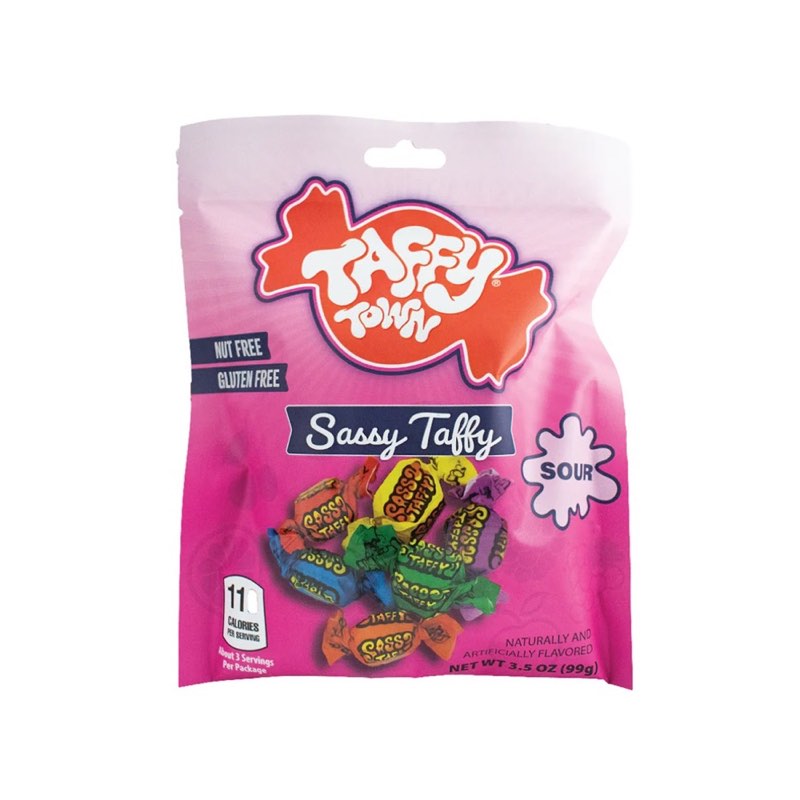
The same weight for less, without the box. Sassy Taffy at 340g for £7.49 is the direct comparison: identical weight, two pounds cheaper, bagged rather than boxed. If everything is going into bowls anyway, buy that and spend the difference on something savoury.
The same weight, one flavour. The Go Bananas pack at £7.49 is the choice if you already know which of the four flavours you want and would rather have 340g of it than a quarter of a box.
Much more, much cheaper, much less pretty. The 780g tub at £7.99 is the right answer for a large party and the wrong answer for a present.
Several small things instead of one big one. Three items at around £2.50–£3 each come to roughly the same money and give you three bowls rather than one. Better for hampers, parcels and children's parties; worse for handing to one person at a door.
Where it sits on the site, and what is nearby
This product appears on six shelves, which is more than almost anything else we list, and each is a different route in.
Its brand home is the 3D listing, 22 products deep — a mixed shelf covering sweets, popcorn and crisps rather than a single category, so it rewards browsing. The chewy shelf, at 78 products, is the one to use if texture is what you are shopping for. And the fruit flavour listing, 161 products strong, is the largest grouping on the site and the right place to start a broad comparison.
Then there are the three specific flavour shelves. The strawberry section at 78 products is deep enough to browse properly. The watermelon shelf at 8 and the banana shelf at 6 are small enough to read end to end in a minute, which makes them genuinely useful if one of those flavours is what you came for — you can see the entire range in one screen.
Next door, the Haribo shelf covers the gummy mainstream, Sweetzone carries much of the bagged party ground, and the full catalogue is where to begin if you are assembling a spread rather than hunting one item.
Questions worth having answered first
What exactly is in the box?
Our listing gives four flavour tags — banana, strawberry, watermelon and a general fruit tag — and records the colour as blue. It does not give a piece count or a breakdown of how much of each flavour is included, so we will not invent one. Treat it as an assortment weighted across those four directions.
Why does a strawberry sweet not taste like a strawberry?
Because it is not trying to. A confectionery flavour is built to be identified in about a second from a very small number of cues, which is a different problem from reproducing a piece of fruit. Over a century, certain impressions have become the agreed shorthand for certain fruits, and those are what a sweet aims at. Judge it on whether it hits the shorthand cleanly rather than on whether it resembles the fruit.
Is blue a flavour?
No, but it is a very strong expectation. Because there is no common blue fruit, blue in sweets signals a mood — cool, sharp, unmistakably a treat — rather than a specific fruit, which gives it unusual freedom. It also makes a box stand out on a table where nearly everything else is red, orange or yellow.
How long does one piece last?
Between roughly forty seconds and a couple of minutes of active chewing, depending on the size of the piece. That is very long by confectionery standards, and it is the main reason a box like this stretches across an evening rather than a sitting.
Is the Boardwalk theme telling me where it is from?
No. It is the name and the artwork on the box. We do not hold origin information for this line and make no claim about it, so take the theme as what it is — a picture that tells you the register before you have read anything.
Is £9.49 for 340g good value?
It comes to £2.79 per 100g, which is mid-table. Bulk tubs are around £1.02 per 100g and small novelty formats run from £3 to £4.65, so this sits between them. You are paying roughly two pounds over the equivalent bagged 340g line for the box and the theme.
Will it stick to my teeth?
Yes — that is what chewy means, and there is no version of this format that does not. It is a reason to avoid it after recent dental work and a reason to have a drink on the table next to the bowl.
Does it survive hot weather?
Better than chocolate, which is why it works on a summer table, but it does soften. Softened pieces settle into each other and can set as a block. Keep the box in the shade, out of the car, and flat with nothing on top of it, and an hour somewhere cool will separate anything that has stuck.
Can I post it?
It is one of the better sweets to send. Nothing melts into a mess, nothing needs refrigeration, and the rigid box protects its own contents. Use a box outer rather than a padded envelope so the corners arrive intact, and check the depth against the letterbox if nobody will be in.
Is it suitable for children?
Sweets are a treat, and small hard sweets and whole chews are a choking risk for young children, so an adult should be present. The four-flavour spread does make it a good children's box in one specific way — sorting and comparing is half the entertainment at that age.
How do I check for allergens?
Read the manufacturer's packaging on the box itself when it arrives, before anyone eats anything. That label is the authority. We do not publish ingredient or allergen detail for this line on the website and you should not rely on a product page for it.
What if the person I am buying for hates banana?
Then think twice, because banana is one of four listed flavours and it is the most polarising flavour in the box. Either pick a different assortment, or buy this and a single-flavour pack of something they definitely like, and let them trade the banana pieces to somebody who will be delighted with them.
Where that leaves it
A blue, boxed, 340g assortment of chews at £9.49, running across four listed flavour directions, in a format that makes every piece take a while. What it does better than almost anything else on our shelves is be different — different colour from the rest of a table, different pace from the rest of a bowl, different flavour spread from a single-note pack. That is worth more at a gathering, in a hamper or on a film night than a lower price per gram would be. If you want quantity, the bulk tub is the honest recommendation and it is not close. If you want the same sweets without paying for the lid, the bagged version saves you two pounds. But if you want something that looks like a present, lasts like a chew and gives four people four different opinions by the end of the evening, this is the one to pick up.
More from 3D
More chewy sweets
More fruit sweets
Where this sits
Taffy Town Gift Box Salt Water Taffy Boardwalk 340g appears on these shelves. Browse them, or jump to something nearby.
You might also like