Home / Loose Sweets / Uncle Joe's Mint Balls Tin 120g
Uncle Joe's · 120g
Read the full guide
Uncle Joe's Mint Balls Tin 120g
£4.99
✔ In stock — ready to ship
Fresh stock
Free over £20
Same-day dispatch
Secure checkout
Some sweets belong to an event and some belong to a habit. The Uncle Joe's Mint Balls Tin 120g is firmly in the second camp. It is not a party sweet and it does not want a bowl on a buffet table. It is the tin in the glovebox, the tin in the coat pocket on a cold walk, the tin in the desk drawer that gets opened at the point in the afternoon when concentration starts to slide. It gets opened one sweet at a time, usually by the same person, usually without much ceremony, and that is precisely the use it is built for.
The long car journey is the classic. A hard mint is one of the few sweets that genuinely suits driving — it occupies a long stretch of time from a single piece, it does not need a wrapper dealt with, it leaves nothing on your hands, and it does not require looking away from the road to eat. A tin in the door pocket is a considerably better arrangement than a bag on the passenger seat, because a tin does not spill when you go round a roundabout.
The full guide to Uncle Joe's Mint Balls Tin 120g
5,613 words on how it eats, who it suits, how to serve it and what to put beside it.
The times a tin like this comes down off the shelf
Winter walks are the other one. There is a sort of sweet that suits cold air, and a strong mint is the archetype. Something about the combination of a sharp cold day and a sharp cool sweet works in a way that a soft fruit chew never quite manages. The tin goes in a coat pocket, survives being sat on, and comes out at the top of the hill.
Then the quieter occasions. After a meal, when you want something to finish on but not a pudding. During a long meeting or a long train journey, where a sweet that lasts fifteen minutes is worth four that last three. On a bedside table for the person who likes one last thing before the light goes off. In a handbag as the reliable item that has been there for a month and is still perfectly good, which is a thing you cannot say about most sweets.
And the giving occasions, which the tin format makes easy. Something small for an older relative. A stocking item that is not chocolate. A thing to put in a hamper that is not sweet in the confectionery sense so much as sharp and traditional. At £4.99 for 120g it sits in the bracket where a single item can stand on its own as a small gift, which is not true at half the price.
What you find when the lid comes off
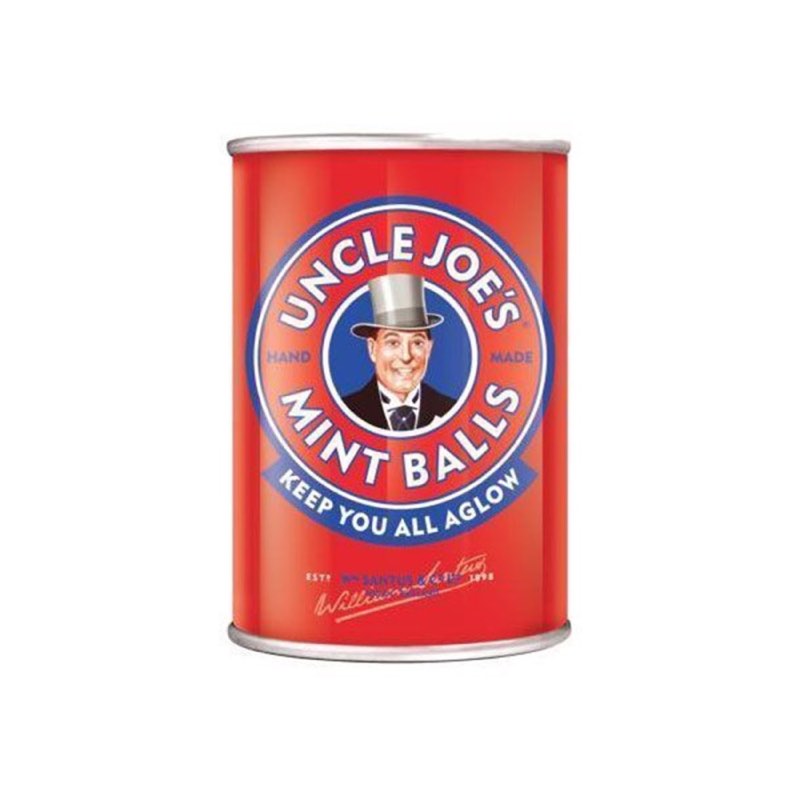
The tin first, because half the appeal of this product is the container. It is a proper metal tin with a lid that lifts off and presses back on, the sort of object that makes a specific small noise when you open it and another when you close it. It has heft. It rattles when you shake it, and the rattle is the sound of hard sweets against metal, which is one of the more satisfying noises in a sweet shop.
Inside, the sweets are listed simply as white, and they are boiled sweets — hard, dense, made to be sucked rather than chewed. Round, small enough that several sit in a cupped palm comfortably, and pale all the way through rather than coated in a different colour. There is a particular plainness to a white sweet that is worth noticing: in a shop full of brights, a tin of plain white spheres reads as serious, and that is a large part of why this line sits differently from everything around it on the shelf.
The surface has a slight matt quality rather than a high gloss, and the pieces are not identical — small variations in size and shape from piece to piece, which is normal for boiled sweets and is part of why a handful looks like sweets rather than like manufactured components.
Pick one up and the first thing you register is density. A boiled sweet of this size has real weight for its volume, which is the first clue to how long it is going to last. Hold it and it stays dry; there is no stickiness at room temperature, so you can take one out of the tin, put it in a pocket, and find it an hour later in the same condition. Again, that is a practical difference from almost anything soft, and it is why this is a pocket sweet.
Fifteen minutes from one sweet
Put one in and the first thing that happens is very little. That is not a criticism; it is the design. A boiled sweet starts slowly, and for the first few seconds you mostly register a hard, smooth object and a faint sweetness at the surface.
Then the mint arrives, and it arrives properly. It builds over ten or fifteen seconds from nothing to a clear, strong, cool mint that spreads across the whole mouth rather than sitting on one part of the tongue. Strong is the right word for it. This is not a delicate after-dinner mint, and anybody expecting something mild will find it more forward than that. The coolness is the characteristic mint sensation on the tongue and the breath, and it is the thing that makes a mint sweet feel different from a fruit one even when both are the same shape and hardness.
The middle stretch is where boiled sweets earn their place. Once the flavour has come up to strength it holds there, more or less steadily, for a long time. The sweet shrinks slowly, the surface becomes smoother, the edges round off, and the intensity stays broadly constant. You can easily get ten to fifteen minutes from one if you leave it alone, and the whole experience is a single long note rather than a sequence of events. That is the opposite of how a chew or a coated sweet works, and it is why the two categories suit completely different situations.
Towards the end the sweet gets thin, and this is the decision point every boiled-sweet eater knows: leave it to dissolve to nothing, or crunch the last of it. Crunching gives you a short burst of concentrated flavour and a quite loud noise, and it ends the whole thing about eight minutes early. Most people crunch. Some people consider crunching a boiled sweet a small moral failure. It is, genuinely, the only real technique question this product raises.
Afterwards, the finish lingers. A strong mint leaves the mouth feeling cool for a while after the sweet is gone, which is the main reason people reach for this type after a meal rather than before one. One practical note: it will affect how the next thing you eat or drink tastes, so it is a full stop rather than a companion. Do not put one in before a cup of tea and expect to enjoy the tea.
Tins, novelty shapes and the collector's eye
There is a whole way of looking at confectionery that has very little to do with eating it, and anybody who has ever kept an empty tin will recognise it. Sweets are one of the last everyday products where the packaging is designed to be kept, and the people who think this way — call them collectors, though most of them would not — buy according to a different set of criteria than the person buying something to eat this afternoon.
What makes a container keepable. Three things, mostly. It has to be a material that survives: metal and rigid card do, film and foil do not. It has to have a use afterwards, or at least a plausible one — a tin becomes a screw pot, a button tin, a place for guitar picks or fuses or spare keys, and this is the single most common afterlife of any sweet tin ever made. And it has to look like something. A plain, well-proportioned tin with a printed lid is the format that people keep without deciding to keep it, which is a stronger position than being deliberately collectable.
A 120g tin scores on all three. It is the right size to be useful — big enough to hold something, small enough to fit in a drawer — and the shape means it stacks. That is not a claim about value or rarity; it is an observation about why tins survive in kitchen drawers and film wrappers do not.
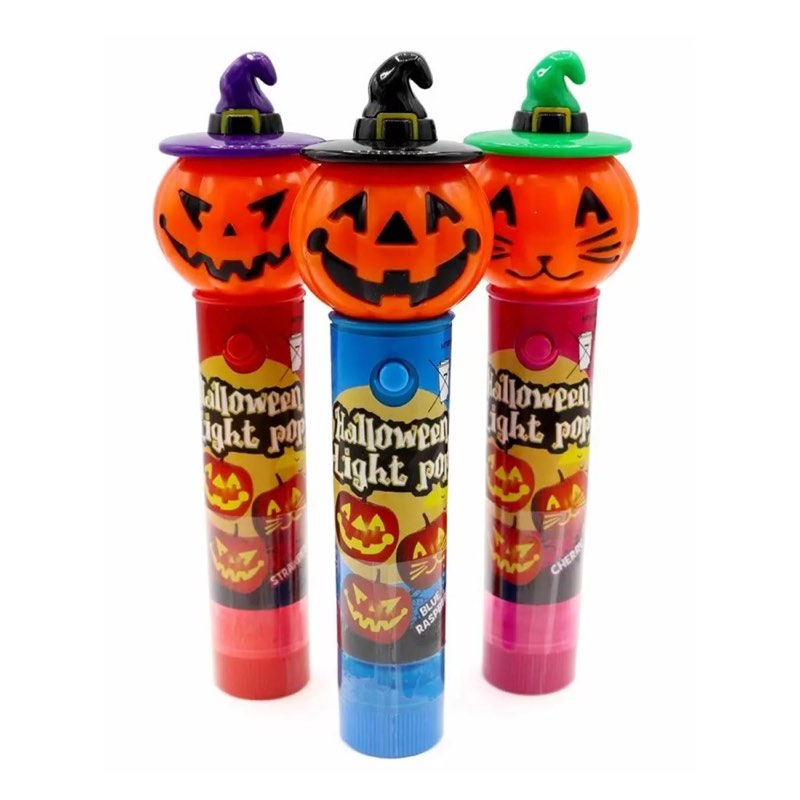
Seasonal shapes. The other half of the collector's view is the seasonal and novelty end of the shelf, which runs on a completely different logic. Those products are bought for the moment, the shape and the photograph, and they are gone by the middle of the following month. A Candy Realms Halloween Pumpkin Light Pop 11g at £1.49 is the perfect example: tiny, seasonal, novelty-shaped, and worth buying entirely because of what it looks like rather than what it weighs. Nobody keeps the packaging, but plenty of people remember the object.
Event and commemorative formats. A related category is the sweet made for an occasion rather than a season. McAdam's England Football Chopped Rock Pouch 150g at £1.99 is that idea in traditional form — rock, which is the most event-bound confectionery format there is, presented around a theme. Rock exists almost entirely because of where and when it is bought, which is a fascinating thing for a sweet to be true of, and it sits at the opposite end of the shelf from a plain white mint that is bought for use.
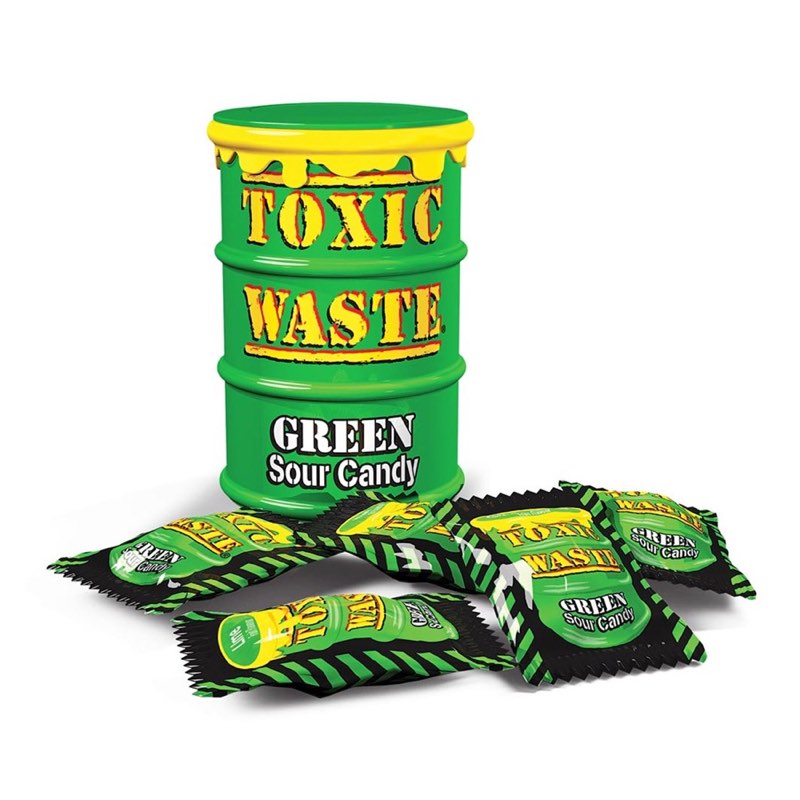
Novelty containers. Then there is the packaging-as-toy end, where the container is more of the product than the sweets are. A Toxic Waste Blue Sour Candy Drum 42g at £1.99 is a small drum-shaped container with a screw lid, and a fair proportion of the people who buy one are buying the drum. Swizzels Fruity Pops at £5.49 work on the stick format, which is the other classic shape-led idea — a sweet on a handle is a different social object from a sweet in a bag, whatever it tastes like.
What the collector's view teaches the ordinary shopper. Mostly this: think about the container as part of what you are buying, and be honest about which you are paying for. When you buy a tin, some of the £4.99 is the tin. That is a bad deal if you are buying sweets by the kilo for a party, and a good deal if the tin is going to spend a decade holding drawing pins. When you buy a themed pouch, you are buying the theme. Neither is a con; they are just different purchases, and the mistake is only ever comparing them on weight alone.
Buying to keep something. If you do want the tin for its own sake, buy it as a gift and let somebody else eat the sweets, or buy it for yourself and eat them slowly, which this particular type is suited to anyway. A tin of hard mints is one of very few sweets where taking two months over it is a completely normal way to proceed.
The corner shop, the seaside counter and the jar shelf
The second thing worth talking about is the world this style of sweet comes from, because it explains a lot about why a plain white boiled mint still sells in a shop full of bright imports.
The British sweet-buying tradition, as most people over a certain age experienced it, ran through two kinds of shop. The corner shop was the everyday one: a counter, a shelf of glass jars behind it, and a transaction that involved pointing and asking rather than picking things up yourself. You bought by weight, in small quantities, in a paper bag, and the sweets you bought were the ones that suited being sold that way — hard, dry, unwrapped, durable, and capable of sitting in a jar for weeks without deteriorating.
The seaside shop was the special-occasion version of the same thing, with the addition of rock, fudge, and formats made to be carried home as evidence of having been somewhere. The seaside sweet shop is where confectionery is most obviously a souvenir rather than a food, and where the packaging and the shape matter most.
Both of those traditions favoured the same sweet characteristics, and you can read those characteristics straight off this tin. Hard rather than soft, so it survives storage and handling. Strongly flavoured, because a sweet that lasts fifteen minutes needs enough flavour to stay interesting. Unwrapped, because unwrapped is what you sell by weight. Plain-coloured, because these formats came long before colour was the main selling point. That is the type, and it is why it looks so different from the bright multi-coloured things it now shares a shelf with.
The jar shelf is still the best way to understand the category, and it is essentially what the loose sweets counter on this site is — three hundred and fifty-odd lines sold by weight, most of them the kinds of sweets that used to live in jars. If you want to see the tradition whole rather than one tin of it, that is the page to browse, and it is worth doing slowly.
The neighbours in that tradition are the obvious ones. Kingsway Aniseed Balls at £5.49 are the same idea in a different flavour family — hard, round, long-lasting, strongly flavoured, divisive in exactly the way strong traditional sweets are. Swizzels Barley Sugar at £5.49 is the gentler end of the same shelf, the sweet that used to be handed to children on journeys. Royale Army & Navy at £5.99 belongs to the same plain, serious, strongly flavoured corner of the counter. And Taveners Mint Humbugs at £5.49 are the closest relative of all — mint, hard, traditional, but striped and chewier in the middle rather than uniform all the way through.
One more from that shelf worth knowing about: Stockley's Chocolate Flavoured Limes at £5.49, which represents the other classic corner-shop idea — a hard outer sweet with something different in the middle. It is a completely different eating experience from a uniform boiled ball, and having one of each on a shelf tells you most of what the traditional hard-sweet category can do.
What is genuinely interesting about this part of the shop is that it has not been replaced. The bright, soft, coated, imported end of confectionery has grown enormously, and the plain hard sweet has simply carried on alongside it, because it does a job nothing else does. Nothing in a modern sweet shop lasts fifteen minutes from one piece. If that is what you want, you end up on this shelf, and you end up with something white and hard and strongly flavoured, whatever year it is.
Mint, and what to expect from it
Mint is the flavour family that divides shoppers more cleanly than any other. There is very little middle ground — people either reach for mints constantly or avoid them entirely — and the reason is that mint does something the other families do not. Fruit flavours are pleasant and largely uncomplicated. Mint has a sensation attached to it, a coolness that registers in the mouth and on the breath, and that sensation is either the appeal or the problem.
Within mint there is still a range. There is the soft, sweet, creamy end, which is what most chocolate-and-mint combinations use. There is the sharper, more direct kind that appears in hard sweets like this one, where there is no cream or chocolate to soften it and the flavour arrives unaccompanied. And there is the herbal, more complicated end, which is rarer in confectionery. This tin is squarely in the middle category: direct, strong, and unaccompanied.
Practically, that has consequences for what you put it near. Mint dominates. On a shared table it will make everything eaten after it taste faintly of itself, and in a mixed bag it transfers — a mint sweet loose in a bag of soft fruit sweets will leave a mint note on all of them within a day or two. That is the single most useful thing to know about buying mint from a sweet counter, and it is the reason a tin is a sensible way to buy it: the tin keeps the mint to itself.
The flip side is that mint is the best palate-clearer in confectionery. After something rich, or at the end of a meal, or halfway through a long session of eating sweet things, one strong mint resets everything. If you are laying out a spread, a small dish of something strongly minty at the end of the table is a genuinely useful thing rather than just another bowl — it gives people a way to finish.
If you like this style and want to explore further, the rest of the boiled sweets shelf is the place to go, because hardness and flavour strength tend to travel together and most of the strong traditional flavours live there.
Who this tin suits
It suits people who want a sweet to last. That is the headline. If your reason for buying sweets is to have something for the next fifteen minutes rather than the next two, this format beats everything soft, and it is not a close contest.
It suits people who like a strong flavour and are not looking for something gentle. A plain hard mint does not ease you into anything.
It suits pockets, gloveboxes, drawers and handbags, because it is dry, contained and robust. The tin is the reason; a paper bag of the same sweets would be a worse purchase for exactly this use.
It suits gift-giving in the small, thoughtful bracket, and particularly for someone older or someone who has said at some point that they do not like modern sweets. A tin of traditional hard mints is a much more considered-looking present than its price suggests, and it is one of the few sweet gifts that does not read as being for a child.
It suits anyone building a traditional selection, where it plays the strong, plain, serious note that stops a shelf of retro sweets being entirely about nostalgia and colour.
It suits less well: young children, for whom small hard sweets are a choking risk and need supervision; anyone who dislikes mint, for whom no amount of quality will help; and anyone buying sweets for a party, where a slow-dissolving single-flavour hard sweet is the wrong tool entirely. For a party, go to the jelly and gummy shelf and buy something soft, colourful and quick.
Building a traditional selection around it
If you are putting together a spread of proper old-fashioned sweets — for a hamper, for a shop counter at home, for a relative's birthday, for a table at a family gathering — a tin of strong mints is the anchor rather than the centrepiece. Here is how to build outwards from it.
The second hard sweet, different flavour. Aniseed is the traditional counterpart to mint: equally strong, equally divisive, completely different in character. Having both means the two people at the table with strong opinions are each catered for.
The gentle hard sweet. Every traditional selection needs something mild for the people who find both mint and aniseed too much. Barley sugar at £5.49 is the classic answer, and it is the one that tends to get eaten by everybody regardless of what else is out.
Something with a centre. Uniform hard sweets all the way through get monotonous across a whole table, so include one line where something happens in the middle. The chocolate-flavoured limes cover that.
Something striped. Visually, a table of plain round sweets needs a pattern somewhere. Striped humbugs at £5.49 do that while staying in the same flavour family, so they work as a visual variation rather than a flavour clash.
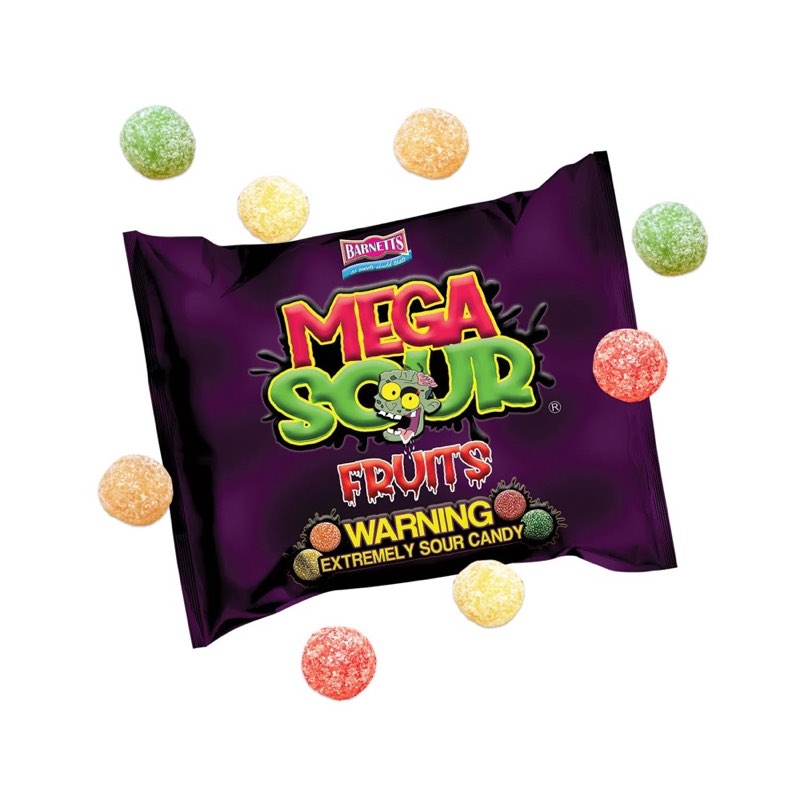
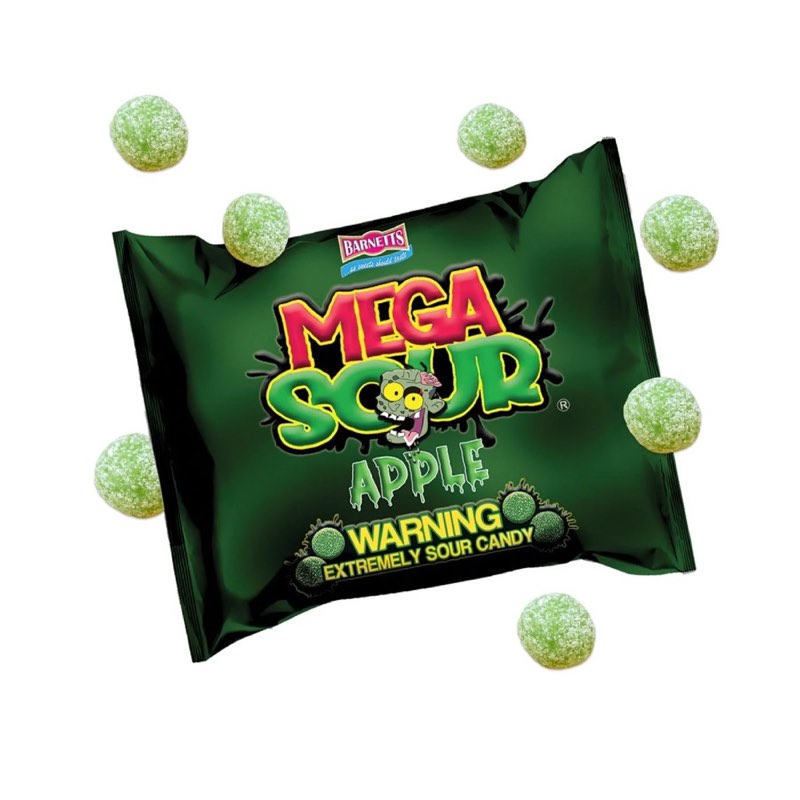
One modern intruder. This is optional and it is usually worth it. Putting one aggressively contemporary sweet on a traditional table gives the younger guests somewhere to go and gives everyone else something to be sceptical about. Barnett's Mega Sour Apple Candy Bags 104g at £3.99 does that job well, because sour is the one thing the traditional shelf genuinely does not offer.
If you would rather assemble that by weight than by tin and bag, pick and mix is the route, and it lets you take a small amount of six things instead of a large amount of two — which for a spread of strong traditional flavours is almost always the better call, since nobody wants a quarter of aniseed balls to themselves.
Gifting, hampers and the seasonal shelf
As a standalone small gift. This is the strongest use for the tin outside personal supply. £4.99 buys an object with weight, a lid, and a proper contents, and it does not look like a stocking filler bought in a hurry. For a colleague, a neighbour, a driver, a grandparent, a thank-you to someone who helped with something, it lands correctly.
In a hamper. A tin is a structural item — it stacks, it does not crush, and it can go at the bottom to brace everything above it. In a traditional hamper it is also the item that signals what kind of hamper it is, which matters when the rest of the contents are in bags. Put the tin where it can be seen when the lid comes off.
Christmas. The seasonal case for hard mints is straightforward: they are the sweet that suits a house full of rich food. A tin on a sideboard from mid-December onwards gets dipped into by everybody at some point, and unlike chocolate it does not need to be eaten within the week. The tin also sits happily in a stocking without being crushed by whatever goes in on top of it.
Travel gifts. If somebody you know is about to do a long drive, a long flight or a house move, a tin of hard mints is a more practical gift than it sounds and gets used rather than stored. The same applies to anyone spending long hours somewhere cold.
What not to do with it. Do not put it in a children's party bag — it is the wrong sweet for the age group and the wrong sweet for a bag that also contains soft things, since mint transfers. And do not bury it in a hamper under soft items, because the one thing a tin is good for is holding the shape of what is around it, and it can only do that from the bottom.
What 120g of hard mints actually amounts to
At £4.99 for 120g this is not the cheapest way to buy sweets by weight, and it would be dishonest to pretend otherwise. The useful comparison is not price per gram, though — it is price per minute, and on that measure a slow-dissolving hard sweet is one of the better-value things in the shop.
Work it through. A boiled sweet of this size takes somewhere around ten to fifteen minutes if you let it dissolve rather than crunching it. 120g of small hard sweets gives you a decent number of pieces, and at a quarter of an hour each, a single tin represents a great deal more occupied time than a 120g bag of soft chews, which would be gone in two sittings. If what you want from a sweet is duration — on a drive, at a desk, on a walk — this is the efficient purchase and the soft bag is the expensive one.
For a pocket or a drawer, one tin lasts most people weeks rather than days, because you do not eat hard mints in handfuls. Nobody has four in a row. That self-limiting quality is built into the format, and it is why a tin bought in October is often still going at Christmas.
For a household, one tin is a supply rather than a treat. If several people in the house like mints, buy two, because a shared tin of something people take one at a time empties at a quite different rate from a tin one person is using.
Against the bags on the same shelf: the traditional lines sold loose at around £5.49 give you more weight for slightly more money, and if you want quantity of hard sweets that is the better buy. What they do not give you is the tin, the seal, or the pocket-worthiness. Buy the bag for the cupboard and the tin for the coat.
One size is listed, so there is no large-or-small decision to make. The only genuine choice is how many, and the answer for most people is one, revisited later.
Keeping hard sweets in good condition
Boiled sweets have one classic failure mode, and everyone who has ever left a bag of them open knows it: they go sticky and fuse into a single mass. The cause is moisture in the air meeting a hard sugar surface, and the fix is entirely about keeping air and damp away from them.
A tin with a well-seated lid handles this better than almost any other format, which is one of the practical reasons the tin exists rather than being purely decorative. Press the lid on properly rather than resting it, and keep the tin somewhere cool and dry — a drawer, a cupboard, a shelf away from the kettle and the cooker. Kitchens are humid places and the worst spot in a kitchen is directly above anything that produces steam.
Avoid the fridge completely. It is the single most common mistake with hard sweets. A fridge is damp, and taking a cold tin out into a warm room puts condensation straight onto the surface of everything inside, which is exactly the thing you are trying to prevent.
Warm conditions are less damaging to a boiled sweet than they are to a chew — these do not melt in a pocket — but sustained heat plus humidity will soften the surfaces enough for pieces to tack together. If that happens, a sharp tap on the closed tin usually separates them again, and they are perfectly fine to eat; it is a texture inconvenience rather than a problem with the sweets.
In a car, the glovebox is better than the dashboard, for the obvious reason that direct sun through a windscreen makes the dashboard much hotter than the rest of the car. And as ever, the dates and storage guidance on the manufacturer's packaging are the authority on the specific tin you receive; everything here is general good practice for boiled sweets.
Afterwards: the empty tin
It deserves a short section of its own, because it is genuinely part of the value. An empty sweet tin has a long second life, and the ones this size are the most useful of the lot — small enough to fit in a drawer, deep enough to hold something, with a lid that stays on.
Common uses, in roughly the order people arrive at them: screws and picture hooks, buttons and safety pins, spare keys, batteries, guitar picks and plectrums, seeds, and loose change. In a workshop or a sewing box they are more useful than anything you could buy for the purpose, because the size is right and they cost nothing.
The washing point matters: rinse and dry it thoroughly before using it for anything, and dry it properly rather than leaving it to drain, since a metal tin left damp will mark. Once it is dry it will outlast most of what you put in it.
None of this is a reason to buy sweets you do not want. But if you are choosing between two similar purchases and one of them leaves you with a tin, that is a real if small thumb on the scale.
Where to find it and what is near it
On this site it sits on the boiled shelf, which is a focused list of around thirty lines and by far the best place to browse if hardness and duration are what you are shopping for. It is also on the loose sweets listing alongside everything else sold from the counter tradition.
Useful neighbouring routes: retro sweets covers the nostalgia end, which overlaps heavily with the traditional hard sweets but is organised around recognition rather than texture, so it turns up different things. Everything we sell loose is the biggest list on the site and the one that best reproduces the experience of a jar shelf. And the Candy & Chocolate shelf is where to go if the tin is one part of a gift and you need the boxed items to go with it.
For broader browsing, the full list of what we stock is there, though with a shop this size it pays to start from a type shelf rather than the top. If you are assembling rather than buying a single item, a mix of your own is the most efficient approach, and the retro shelf is the right companion page to have open while you do it.
Two specific neighbours worth a click if you like this style: a bag of aniseed balls at £5.49, which is the other great strong traditional flavour, and the 150g pouch of chopped rock at £1.99, which is the cheapest way to get a genuinely traditional hard sweet onto a table.
Questions people ask about this tin
How strong is the mint?
Strong and direct. There is no cream or chocolate softening it, so the mint arrives at full strength within ten or fifteen seconds and stays there for the life of the sweet. If you like a bold mint you will be happy; if you were expecting something mild and after-dinner in character, this is more forward than that.
How long does one sweet last?
Ten to fifteen minutes if you let it dissolve, which is what the format is built for. Crunching it cuts that to about a minute and gives you a short burst of concentrated flavour instead. Most people crunch the last quarter. That duration is the main practical argument for buying hard sweets over soft ones.
Is the tin resealable?
Yes — it is a metal tin with a lift-off lid that presses back on. That is a real advantage with boiled sweets, which go tacky when air and moisture get at them. Keep the lid properly seated and the tin somewhere cool and dry and the contents will stay separate and hard.
Why is it more expensive per gram than the bags?
Because you are also buying the tin. The bags on the traditional shelf give you more weight for your money; the tin gives you a sealed, pocketable, crush-proof container that keeps the mint away from everything else and lasts long after the sweets are gone. Buy the bag if you want quantity at home, and the tin if you want something to carry or to give.
Can you tell me what is in them?
We can tell you what the product listing tells us: a 120g tin of white boiled sweets at £4.99, in one size. We do not hold verified ingredient information for this line, so we will not describe what it is made from. The manufacturer's packaging that arrives with your order is the place to look for that.
Are they suitable for someone with an allergy?
We cannot tell you that, and we will not guess in either direction. We hold no verified allergen data for this line. If you or anyone eating them has an allergy or intolerance, read the manufacturer's packaging on arrival before eating any, and treat that pack as the only reliable answer.
Are they suitable for children?
Sweets are a treat rather than a food, and small hard sweets are a choking risk for young children, so little ones should be supervised. Beyond the safety point, a strong plain mint is a grown-up taste and most younger children would rather have something fruity — this is usually a sweet people grow into rather than start with.
Will they stick together in the tin?
Not if the lid is on and the tin is kept somewhere cool and dry. Hard sweets tack together when damp air reaches the surfaces, which is mainly a problem in humid kitchens and with containers left open. If a few do tack, a sharp tap on the closed tin usually separates them and there is nothing wrong with the sweets.
Should I keep them in the fridge?
No. A fridge is a damp environment and taking a cold tin into a warm room puts condensation directly onto the sweets, which is the fastest way to make hard sweets sticky. Cool, dry and dark is what you want — a drawer or a cupboard away from steam is ideal.
Is this a good gift for an older relative?
It is one of the better small gifts on the site for that, yes. A tin of strong traditional mints is unmistakably not a children's sweet, it lasts a long time rather than needing to be eaten quickly, and the tin makes it look like a chosen object rather than something grabbed at a till. Pair it with one other traditional line if you want it to read as a proper present.
What goes with it on a traditional sweet table?
Something equally strong but differently flavoured, something mild for the people who like neither, something with a centre so the textures are not all identical, and something striped so the table is not all plain spheres. Aniseed, barley sugar, chocolate-flavoured limes and humbugs cover all four, and they are all on the same shelf here.
Can I use the empty tin for anything?
Most people end up doing exactly that. This size suits screws, buttons, keys, batteries and anything else small that otherwise rolls around a drawer. Rinse and dry it thoroughly first, and dry it properly rather than leaving it wet, since metal tins mark if they are left to drain.
Last word
A plain, strong, long-lasting hard mint in a tin that will outlive its contents. It is the wrong sweet for a party and the right one for a glovebox, a coat pocket, a drawer at work or the end of a heavy meal, and it is one of the few things in the shop that gives you a quarter of an hour from a single piece. At £4.99 for 120g you are buying duration and a container rather than volume — if that is the trade you want, this is the tin to have.
More boiled sweets
More loose sweets sweets



Where this sits
Uncle Joe's Mint Balls Tin 120g appears on these shelves. Browse them, or jump to something nearby.
You might also like