
Home / Loose Sweets / Cantabile Black Americano Pouch 230ml
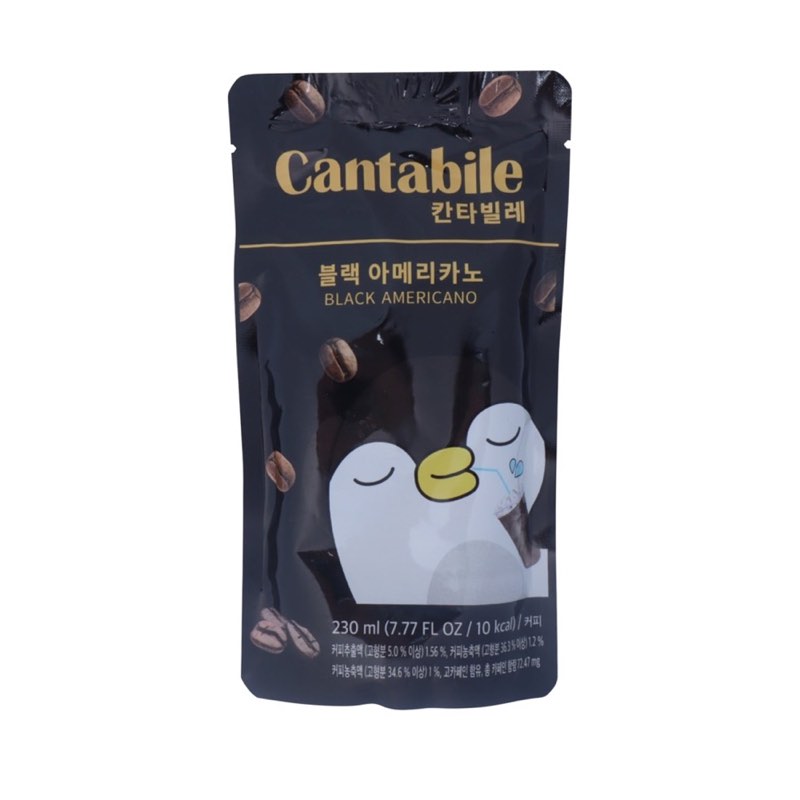
Cantabile · 230g
Read the full guide
Cantabile Black Americano Pouch 230ml
£1.49
✔ In stock — ready to ship
Fresh stock
Free over £20
Same-day dispatch
Secure checkout
Start with the arithmetic, because on this particular item the arithmetic is most of the argument. The Cantabile Black Americano Pouch is 230 ml and costs £1.49. That is one serving, in one sealed pouch, for the price of about half a coffee-shop coffee.
There is no clever framing needed. A 230 ml serving is a normal single drink — larger than a small takeaway cup, smaller than the enormous sizes that have crept in over the last decade. It is one sitting's worth. You open it, you drink it, there is nothing left over to store and nothing to wash. For a great many purchases that is exactly the right unit, and it is a unit the sweet counter does not usually offer.
The full guide to Cantabile Black Americano Pouch 230ml
5,085 words on how it eats, who it suits, how to serve it and what to put beside it.
What £1.49 buys, and how far 230 ml goes
Per millilitre it works out at roughly 65 p per 100 ml. Whether that reads as cheap or dear depends entirely on what you are comparing it with. Against a jar of anything you make at home, it is expensive, as every single-serve convenience format always is. Against buying the same drink over a counter in a paper cup, it is a fraction of the price. Against most of the other things in this shop that cost around a pound and a half, it is unusual in that it is a drink rather than something to chew, which means it is doing a completely different job in your basket.
Here is the part worth thinking about properly. Almost everything else on our shelves is bought by weight and consumed over time — you buy 500 g and it lasts a week. This is bought by the unit and consumed in one go. That changes how you should budget for it. You do not stock up on a drink pouch the way you stock up on sweets; you buy the number of occasions you expect to have. Four in a cupboard is four mornings, or four car journeys, or four afternoons at a desk. There is no partial serving and no waste, and for the shopper who hates opening something and not finishing it, that is worth real money.
The other value point is the packaging itself. A pouch holds its own shape, seals flat, weighs almost nothing and does not roll off a table. It fits in the side pocket of a bag where a bottle will not, and it does not clank against anything. Nobody buys a drink for its container, but the container is a large part of why this format exists at all, and at £1.49 you are paying for the convenience as much as for the contents.
Buying several versus buying one
One is a trial. If you have not had this before, buy one and find out — that is what a £1.49 item is for, and there is nothing to lose.
Buying four to six is the sensible restock if you know you like it, and the reason is behavioural rather than financial. A single pouch in a cupboard is a nice surprise you find once. Six in a cupboard becomes part of how your week runs: one goes in the bag on a Monday, one sits in the car, one lives in a desk drawer. The format only really pays off when it is available at the moment you want it, and that means having more than one.
Where it stops paying off is bulk for a crowd. If you are supplying drinks for a room of twenty, single-serve pouches are the expensive way to do it and something poured from a large container will always win on cost. Use these for individuals, not for gatherings — although as you will see further down, they do have a specific and rather good role on a table alongside sweets.
The pouch in your hand
It is smaller than the millilitre figure suggests, because a pouch is dense in a way a bottle is not — there is no neck, no cap, no wasted headroom, just the volume and a thin wall around it. It stands up on a flat surface and lies flat in a bag, which is a genuinely useful pair of properties and not one many containers manage.
There is one product image on the listing. What arrives looks like what you see, which we mention because single-serve drinks are a category where photography frequently flatters.
The obvious thing to say about a pouch on a sweet shop shelf is that it does not belong there, and that is precisely why it is interesting. It sits among jars and bags of chewy and jelly things, and it is the only item in its row you cannot put in a bowl. That oddness is not an accident, and the section below on formats gets into why shelves like ours end up carrying things like this.
How it drinks
A black americano is a long, dark coffee, and that is the shape of the drink you should expect from this pouch — not a small concentrated shot and not a milky, foamed thing. If you have a mental picture of a mug of black filter-style coffee rather than a tiny cup of something intense, that is the right picture.
The character of the style is low sweetness and a dark, roasted, faintly bitter edge, with a finish that clears rather than coats. Compared with essentially everything else in this shop, it sits at the opposite end of the taste spectrum: our shelves are built on sugar and brightness, and this is built on depth and dryness. That contrast is the entire reason it is worth having on the same shelf, and we will come back to it.
How it suits you will depend a great deal on what you are used to. If your habit is strong black coffee, this will read as a straightforward version of something familiar in an unfamiliar container. If your habit is a milky, sweetened drink, it will read as austere at first. Neither reaction is wrong and neither is permanent — black coffee is one of those things most people's taste moves towards over the years rather than away from.
On serving: whether you prefer it chilled from the fridge, at room temperature, or poured into a glass with ice is a matter of preference and of what the manufacturer's packaging advises. We are not going to tell you to heat a sealed pouch — follow what is printed on the pack, which is the only authority on how this particular product is meant to be served and stored. Pouring it into a proper glass or mug rather than drinking from the pouch does, in our experience of drinks generally, make almost anything taste better, because you get the aroma before the liquid. That is free advice and costs you one glass to wash.
Pouch, bottle, can or cup — what each format is actually good at
Single-serve drinks come in four or five containers and people tend to pick by habit rather than by fit. It is worth a minute of thought, because each container is good at something different and bad at something else, and the differences are larger than they look.
A bottle is the most forgiving. It reseals properly, you can drink half and come back to it, and it stands up anywhere. What it costs you is bulk — a bottle is mostly shoulders, neck and cap, and it takes up far more room in a bag than the liquid inside it justifies. It also rolls, which is why it always ends up under the passenger seat.
A can chills fastest and stacks best, which is why it dominates anywhere a fridge and a shelf are involved. Once it is open, though, it is committed: no reseal, no putting it in a bag half-drunk, and a dented one is a nuisance. Cans are for places you are staying, not places you are going.
A takeaway cup is the best drinking experience of the four, because a wide opening lets you smell what you are drinking, and aroma carries most of what people think of as flavour. Its weaknesses are obvious: it leaks, it must stay upright, it cannot go in a bag at all, and you have to buy it somewhere rather than keep it in a cupboard.
A flask wins on temperature and on cost per serving and loses on every other axis — you have to fill it, carry it, bring it home and wash it, and most people who buy one use it enthusiastically for a fortnight and then stop.
A pouch, which is what we are actually discussing, wins on packed volume and on weight. It carries almost no dead space, it lies flat, it does not roll, it has no cap to work loose and it is close to weightless when empty. Its weaknesses are that it does not reseal well and that drinking straight from it gives you no aroma at all. That is why the advice above is to use the pouch to get the drink somewhere and a glass to actually drink it, if a glass is available. When one is not, the pouch is still the format that made the drink possible at all, which is not nothing.
The short conclusion: buy a pouch for the bag, the car, the picnic and the lunchbox, and buy something wide-mouthed when you are sitting still somewhere with a sink.
Who buys this and when
The desk shopper, first. Anybody who works somewhere without a decent coffee machine, or who works from home and cannot face making a third pot, ends up wanting a single serving that requires no equipment. That is the core case.
The car and train shopper, second. A sealed pouch survives a bag in a way a takeaway cup does not, and it does not need to be held upright.
The curious shopper, third — the person who saw a coffee pouch on a sweet shop listing, thought that was slightly odd, and wanted to know what it was like. At £1.49 that curiosity is cheap to satisfy.
And the balancer, fourth, which is the one most people do not think of until it is suggested. If you are buying a large quantity of sweets, a dry dark drink is the single most useful thing you can put next to them. More on that below.
Why a coffee pouch ends up on a sweet counter
There is a whole category of shopper who buys confectionery the way other people buy records: for the format, the run, the shape and the fact that it will not be here forever. Understanding that mindset explains why a shelf like ours looks the way it does, and why an item like this is on it at all.
The three things a collector actually collects
The first is the limited run. Confectionery is unusual among consumer goods in how much of it is deliberately temporary. Lines appear, run for a season or a year, and vanish — sometimes because they did not sell, sometimes because they always were going to. For the collector, that impermanence is the appeal. A thing you can buy any time forever is not interesting; a thing that will be gone by spring is.
The second is the seasonal shape. An enormous proportion of the confectionery calendar is the same products in different silhouettes. Bulgari Pumpkin Mallows at £5.49 exist because autumn does, and Cadbury Dairy Milk Christmas Little Robins Chocolate Bag 77g at £2.49 exists because December does. A collector is not fooled by this and does not need to be. The shape is the product as far as they are concerned, and a pumpkin in October is a different object from the same thing in a round shape in June, regardless of what a sceptic says.
The third is the novelty format, and this is where our pouch lives. Format novelty means taking a familiar thing and putting it in an unfamiliar container or an unfamiliar shape — a drink in a pouch instead of a bottle, a gummy in the shape of something it has no business being, a sweet pretending to be a completely different food. Candy Paradise Juicy Grenade Gummies at £1.39 is a textbook case: the gummy is the easy part, the shape is the whole point. Briquette at £5.49 is another — a line whose name is doing at least half the work of making you look twice.
Why format novelty works
It works because of a small, reliable mental jolt. When you encounter something familiar in the wrong container, your brain does a fractional double-take before it catches up, and that half-second of surprise is genuinely pleasurable. It is the same mechanism behind every food that pretends to be another food, and it has been used by confectioners for well over a century in one form or another.
It also works commercially because it makes a thing memorable. There are a very large number of coffee products in the world and most of them are indistinguishable on a shelf. A pouch is not. Whether the format actually improves the experience is a separate question — for portability, it plainly does; for aroma, a wide-mouthed mug will always beat it — but memorability and improvement are not the same goal, and shops carry things for both reasons.
Which novelty formats stick, and which vanish
Watch a confectionery shelf over a few years and a pattern emerges. Some novelty formats appear, get talked about, and are gone within a season. Others arrive looking equally silly and are still there a decade later, having quietly become normal. The difference is almost always whether the format solves a problem as well as being funny.
Formats that stick tend to make something easier. Resealable bags stuck because people wanted to stop halfway. Individually wrapped pieces stuck because they made sharing hygienic and pockets viable. Flat, standing pouches stuck across an enormous range of products because they carry better than anything rigid. In each case the novelty got you to look, and the usefulness got you to buy it again.
Formats that vanish are the ones where the joke is the entire product. A shape that is awkward to eat, a container that is difficult to open, a presentation that looks wonderful in a photograph and is a nuisance in a hand — these sell once, to people who wanted the picture, and then stop. The confectionery aisle is littered with the remains of them, and a collector with any experience learns to tell the difference at a glance.
The useful test when you are looking at something unusual is simple: imagine buying it for the fourth time. If you can picture that easily, the format is solving something. If you cannot, you are buying a one-off, which is fine as long as you know that is what you are doing. By that test, the £1.39 grenade gummies are a shape novelty you might buy repeatedly because the gummy underneath is straightforward, while the pumpkin-shaped mallows are seasonal by design and are meant to be a once-a-year purchase. Neither is worse. They are answering different questions.
The trap in collecting, and how to avoid it
The trap is buying for the shelf rather than for the mouth. Every collector eventually accumulates a small graveyard of things bought because they were unusual and never opened because they were not actually appealing. The novelty was the purchase; the eating never happened. If you recognise yourself in that, the discipline is simple: buy one of the unusual thing and one of a thing you know you like, every time. The unusual one scratches the itch and the reliable one gets eaten.
The second trap is assuming scarcity where there is none. Not everything unusual is limited, and a product being odd does not mean it is going anywhere. Buy because you want it, not because you have persuaded yourself it is about to disappear.
What a collector's shelf actually looks like
In practice it is layered. There is a seasonal layer that rotates several times a year. There is a novelty-format layer of odd containers and wrong shapes, which is where this pouch and the grenade-shaped gummies both sit. There is a heritage layer of long-running lines kept because they are constants — Barratt Black Jack Chews at £5.49 and Barratt Jelly Babies at the same price are the sort of thing that anchors a collection precisely by never changing. And there is usually a regional layer of things from other traditions that have found their way onto a British shelf, such as BUBS Banana & Caramel Foam Sweets at £7.50, a foam-style sweet that arrived here from a confectionery culture that takes foam far more seriously than ours does.
If you want to browse with a collector's eye rather than a shopper's, the trick is to scan the full list of everything we carry for the items you cannot immediately categorise. Those are always the interesting ones. The things you can name at a glance will still be there next year.
Where a drink fits into a pick-and-mix session
This is the other half of why we stock it, and it is the more practical half.
A bag of mixed sweets has a problem that nobody talks about: palate fatigue. After twenty or thirty pieces, everything starts tasting the same. The sour ones stop being sour, the sweet ones stop registering as sweet, and you carry on eating out of momentum rather than enjoyment. It happens to everybody and it is the main reason people finish a large bag feeling slightly grim.
A dry, dark, low-sweetness drink is the most effective available fix. It strips the sugar coating off the tongue and resets the baseline, so the next sweet tastes like the first one did rather than the thirtieth. That is why coffee after a dessert has been standard practice in restaurants for as long as there have been restaurants, and the principle transfers directly to a bowl of sweets on a coffee table.
What to pair it with, specifically
It works best alongside the heavy, rich, low-pitched end of the shop — the fudges, tablets, toffees and caramels, where the sweetness is dense and accumulates fast. Buchanan's Butter Tablet Carton 150g at £3.49 is close to the maximum-richness end of what we sell, and it is exactly the sort of thing that goes from wonderful to overwhelming in about four pieces without something dry beside it. The same is true of Bristow's Traditional Salted Caramel Bon Bons at £5.49, although the salt in those does part of the resetting job on its own.
It also works well against chocolate formats generally — the candy and chocolate section is full of things that benefit from a dark drink alongside, for the same reason.
Where it works less well is against the sharply sour. Barnett's Mega Sour Apple Candy Bags 104g at £3.99 will fight a dark coffee rather than complement it, and the result is unpleasant in both directions. If your bag is built around sourness, drink water instead and save the coffee for afterwards. That is not a small point: a mismatched pairing actively ruins both things, and a lot of people conclude they dislike one of them when the real problem was the order.
Ordering a session properly
If you are putting out a proper spread and want to do this well, there is a sequence that works.
- Start with the bright and the sour, while your palate is fresh and can actually register acidity. This is when those mega sour apple bags at £3.99 are at their most effective and most fun.
- Move to the fruit jellies and chews in the middle. Jelly babies at £5.49 sit naturally here — mild enough not to clash with what came before, substantial enough to carry the middle of a session.
- Go to the rich and dark last: fudge, tablet, toffee, chocolate. These are the things that end a session because nothing tastes of much after them.
- Then the drink. Not during, not at the start — at the end, as the full stop.
If your session is long enough that you are going round twice, put the drink in the middle instead and treat it as half time. Either works. What does not work is sipping it continuously throughout, which just means everything tastes faintly of coffee including the things that should not.
The practical table version
On an actual table, a pouch has one clear advantage over a jug or a bottle: it is individual. Nobody has to pour, nobody has to find glasses, and it does not go flat or warm while people work through the bowls. Putting one pouch next to each place setting at a sweets-heavy gathering is a slightly unusual move and a genuinely effective one, especially at the rich end of things.
If you are building the bowls themselves, our pick and mix is the place to do it, and the loose sweets counter, 356 lines deep is where the weight comes from. The drink is the accent, not the centrepiece — but it is the accent that stops a table of sugar defeating everybody by nine o'clock.
Occasions it suits
The commute, in both directions. A sealed single serving that survives a bag and needs no cup is close to purpose-built for it.
The long drive, with the obvious caveat that anything you drink in a car should be opened when stationary and not while you are driving.
The desk afternoon, where the alternative is walking somewhere to buy the same thing for three times the price.
The hamper, where it earns its place by being the only non-sweet item — a hamper that is entirely sugar is harder to enjoy than one with something dry in it, and the contrast makes the sweet parts look better chosen.
The picnic and the packed lunch, where a pouch beats a bottle on weight and beats a flask on faff.
And the end of a meal at home, as the thing you have instead of making a pot for one person, which is a genuinely tedious task that a great many people avoid by simply going without.
Storing it sensibly
Keep it somewhere cool, dry and out of direct sunlight until you open it. A cupboard is fine. A sunny windowsill or a car parked in July is not, for any packaged drink.
Follow the storage and date instructions printed on the manufacturer's packaging. That is the authority on this product, not us, and it will tell you whether to refrigerate before or after opening and how soon to drink it once it is open. Where a manufacturer's instruction and a general rule of thumb disagree, follow the manufacturer.
As a general point for any single-serve drink: once opened, a pouch does not reseal well. Plan to finish it, or pour what you are not drinking into something with a lid. That is another argument for the 230 ml size — it is a quantity most people can comfortably finish at one sitting, which is precisely why the format exists at that volume.
Do not store it alongside anything strongly scented if the pouch has been opened, and do not decant it into a container that previously held something aromatic. Coffee picks up smells very efficiently.
If anyone drinking it has a food allergy or a dietary requirement, check the manufacturer's packaging on arrival and before drinking. We do not hold verified ingredient or dietary information for this line and we will not guess at it.
One size, and what that means for buying
This comes in one size — 230 ml at £1.49 — and there is no larger or smaller version, no multipack and no variant flavour. That makes the decision simple: the only question is how many.
Our suggestion is to treat it as a per-occasion purchase rather than a per-week one. Count the number of mornings, journeys or afternoons you actually want it for, and buy that many. Buying one to try is entirely reasonable and is what the price point is for. Buying half a dozen makes sense only once you know you want them, because there is no partial serving to fall back on if you decide it is not for you.
It is currently showing as in stock. Single-size lines with no variants tend to move in and out of availability more abruptly than lines with several sizes, so the listing page rather than this description is the thing to check if you are planning around it.
Finding it on the site
This one sits on the loose sweets aisle, which despite its name is our largest general section and carries a good deal that is not strictly loose or strictly sweet. That is where to look for it.
From there, the pick and mix pages are the natural next stop if you are building a session rather than buying a single item, and chocolate and candy lines are where the rich items that pair best with a dark drink are gathered. If you would rather not navigate by category at all, everything on the site in one listing is the fastest way to scan for the unusual items, which — as the collector's section above argues — are usually the ones worth finding.
Questions people ask before buying this
Is this a hot drink or a cold drink?
Follow the serving guidance on the manufacturer's packaging, which is the only reliable source on that for this particular product. As a general matter of preference, a black coffee style like this is drunk both ways by different people, and plenty of shoppers pour it over ice in summer and drink it as it comes in winter. What we can tell you for certain is the size and the price: 230 ml for £1.49.
How strong is it, and what is in it?
We do not hold verified composition data for this line, so we are not going to state anything about its contents, its strength or any effect it might have. Those questions are answered by the manufacturer's packaging and nowhere else. If any of that matters to you — and for plenty of shoppers it does — read the pack when it arrives before drinking.
Why is a coffee pouch on a sweet shop site?
Two reasons, both covered above. It is a novelty-format item, and novelty formats are a real part of what a modern confectionery shelf carries. And it is genuinely useful next to sweets — a dry, dark drink resets the palate between rich things better than anything else, which is why coffee has followed dessert for as long as dessert has existed.
Can I drink it straight from the pouch?
You can, and for a journey that is the whole point of the format. At home, pouring it into a glass or a mug is worth the washing up, because you get the aroma before the liquid and that changes the experience more than most people expect. The pouch is a transport solution rather than a drinking vessel.
Is it good value compared with a coffee shop?
Considerably cheaper per serving, yes. Compared with making a drink at home from a jar or a machine, it is dearer, as every single-serve convenience format is. What you are paying the difference for is a sealed, portable, no-equipment, no-washing-up serving that is available at the exact moment you want it, which is worth something in some situations and nothing in others.
What should I buy alongside it?
Something rich, because that is where it does its best work. A 150 g carton of butter tablet or the salted caramel bon bons at £5.49 are both the kind of dense, sweet thing that a dry drink keeps in check. Avoid pairing it with anything aggressively sour; that combination does neither item any favours.
Will children want it?
This is an adult drink in character — dark, dry and low in sweetness — and most children will not take to it. If you are buying for a child on a table full of sweets, a plain drink is a far better bet. That is a taste judgement rather than any kind of health or safety statement, and anything beyond taste is a matter for the packaging and for your own judgement as a parent.
Is the pouch resealable?
Treat it as a single-serving pack that you open and finish. If you cannot finish it, decant the remainder into something with a proper lid rather than relying on the pouch to hold. At 230 ml this is rarely an issue, because that is about one comfortable sitting for most people.
Does it come in other flavours or sizes?
Not on our shelves. This is a single line in a single size at £1.49, with no variants listed. If you want variety in your basket, the variety will have to come from what you put beside it rather than from this product.
Is it a limited edition?
We are not going to claim that, because we have no basis for it, and claimed scarcity is one of the least attractive things in retail. What is true is that unusual-format lines do tend to be less permanent on a shelf than long-running staples. If you like it, do not assume it will be here indefinitely — but equally, do not buy six on the strength of a rumour you read in a product description.
How does it travel in a bag?
Well. It is flat, it has no cap to work loose, it weighs little, and it will not roll around. It fits in side pockets that a bottle will not. That portability is the main practical reason this format exists and the main reason to choose it over a bottle for a commute or a walk.
What if I open it and do not like it?
Then you have spent £1.49 finding out, which is about the cheapest possible answer to a question like that. Black coffee is a taste a lot of people arrive at gradually rather than all at once, so it is worth trying again in a year even if it is not for you now.
The short version
A single 230 ml serving of a long black coffee, sealed in a flat pouch, for £1.49. It is the odd one out on a sweet counter and it is on the shelf for two good reasons: it is an interesting format in its own right, and it does something no sweet can do, which is clear your palate and let you keep tasting things properly. Buy one to try it, buy several if it becomes part of how your week runs, and put one next to the richest thing on your table the next time you lay out a spread. That last trick is worth the price of the pouch on its own.
More loose sweets sweets

Where this sits
Cantabile Black Americano Pouch 230ml appears on these shelves. Browse them, or jump to something nearby.
You might also like