Home / Loose Sweets / Haribo Giant Cola Bottles
Haribo · 250g
Read the full guide
Haribo Giant Cola Bottles
£5.49
✔ In stock — ready to ship
Fresh stock
Free over £20
Same-day dispatch
Secure checkout
Ask anyone who makes up their own bags regularly and they will tell you there are two kinds of sweet: the ones you build around and the ones you add. Haribo Giant Cola Bottles are firmly the first kind. They are the sweet a mix gets organised around rather than one of the things scattered through it, and understanding why makes the difference between a bag that works and a bag that is just several sweets in the same space.
Three things give a sweet anchor status. It has to be recognisable enough that everybody knows whether they want it. It has to have a flavour that does not blur into its neighbours. And it has to be physically large enough to be picked out of a mixed bag by hand without looking. A giant bottle meets all three, and the size is doing more work there than people credit — in a mixed bag, big pieces are findable, and findable pieces are the ones people actually eat first.
The full guide to Haribo Giant Cola Bottles
5,311 words on how it eats, who it suits, how to serve it and what to put beside it.
Building a pick and mix around cola bottles
The anchor, the contrast and the filler
A good mixed bag has a structure to it, and the structure is simpler than it sounds. You want one anchor, one or two contrasts, and a filler, and you want them in wildly unequal proportions.
The anchor is the sweet the bag is for. It takes the largest share, somewhere between a third and a half of the total weight, and it is the thing you would be disappointed to run out of. If you are reading this page, it is probably these.
The contrast is there to stop the anchor becoming monotonous. Contrast can be textural — something harder, chewier or lighter — or it can be a flavour going in an entirely different direction. It should be a smaller share, around a quarter, because contrast works by interruption and interruption stops working if it happens constantly.
The filler is the cheap volume that makes the bag feel generous and stops the good parts running out in ten minutes. It does not need to be exciting; it needs to be pleasant and plentiful. Most people skip this entirely and then wonder why their expensive mixed bag felt small. The loose sweets shelf, three hundred and fifty-six lines deep, exists mostly to solve this problem, and buying the filler well is the single biggest improvement most people can make to a mix.
Get those proportions right and a mixed bag has a shape. Get them wrong — four equal quarters of four interesting things — and you get the most common failure in pick and mix, which is a bag where everything competes and nothing stands out. Equal shares feel fair and taste like noise.
How a bottle behaves next to other shapes
Shape matters in a mixed bag in ways that are invisible until you have made a few. A bottle is elongated, flat-sided and firm, which means three practical things.
First, it does not pack tightly. Long flat shapes leave air between them, so a bag of bottles and small round sweets settles unevenly and the small things migrate to the bottom. If you are mixing a large bag, expect to shake it before serving, and expect the top third to look different from the bottom third.
Second, it is easy to find by touch. In a bag of assorted shapes, the large flat ones get pulled out first because your fingers recognise them. That is why an anchor should be a distinctive shape as well as a distinctive flavour — if people cannot find it, it stops being the anchor.
Third, it survives handling. Bottles are firm enough to keep their shape under the weight of other sweets, which is not true of everything. Softer, lighter formats get compressed at the bottom of a heavy bag, so the order you layer things in genuinely matters: firm shapes at the bottom, delicate ones on top. Fini Mini Mochis at £1.35 a bag are a good example of something to keep on top rather than underneath, since a soft cushioned piece under half a kilo of bottles is not the same sweet by the time it comes out.
Ratios that actually work
Here are three builds that hold up, all using a 250 g anchor as the unit.
The cola bag. 250 g of these as the anchor, then a second cola shape for variety within the theme, then a filler. Park Lane Sour Cola Rings at £5.49 are the obvious second, because a ring and a bottle are as different in shape as two cola sweets can be while staying on theme, and the sour edge provides the contrast so you do not need a third flavour at all. Kingsway Fizzy Cherry Cola Bottles, also £5.49, do the same job by shifting the flavour sideways rather than sharpening it — same silhouette, a fruit note laid over the cola.
The party bag. Anchor with bottles, contrast with something fruity and soft, fill with something cheap and familiar. Barratt Jelly Love Hearts at £5.49 are the right contrast here — a completely different flavour direction and a shape that reads as friendly rather than novelty, which matters on a children's table. This is the build that suits a large mixed bowl where you want everybody to find something they like.
The grown-up bag. Anchor with bottles, contrast with something properly traditional, and skip the filler because the bag is small and deliberate. Briquette at £5.49 is the sort of old-fashioned line that gives a modern gummy bag some weight behind it, and a mix of the two reads as considered rather than childish. This is the build for an adult gift or a shelf at home rather than a party.
What not to put in the same bag
Two rules, both learned the hard way.
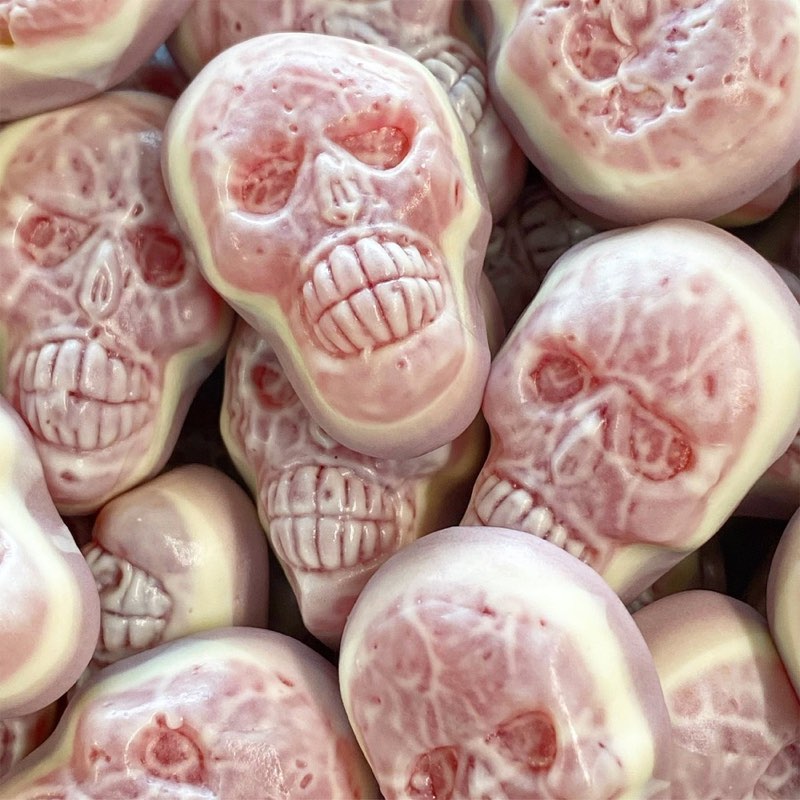
Do not mix very sour with very mild in the same bag unless you want the sour to win. Sourness scours the palate, and everything eaten in the ninety seconds after it tastes flattened. If you want both, bag them separately or accept that the sour item is now the anchor whether you intended it or not. BUBS Cool Cola Skulls at £7.50 are a good illustration — a cola sweet that will happily take over a bag it was meant to be a supporting part of.
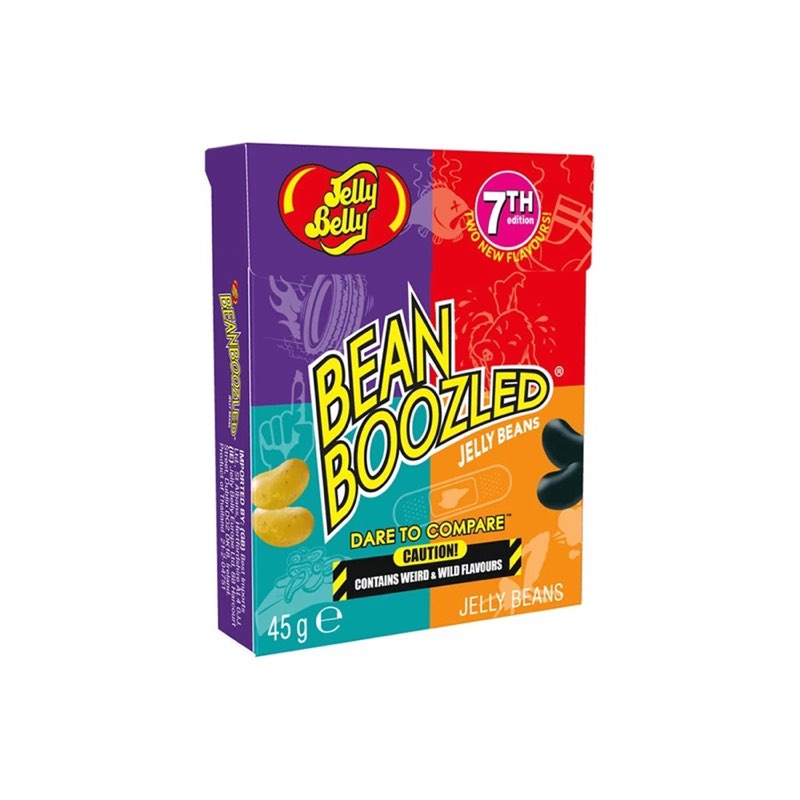
And do not mix wet with dry. Anything moist gives off moisture, anything dry takes it up, and in a sealed bag the transfer happens within hours. Gummies and anything crisp or powdery are a bad marriage in one container, however good they are side by side on a plate. A Bean Boozled box at £2.99 belongs beside a mixed bag as its own game rather than tipped into one, and the same goes for anything that comes in a box designed to be opened as an event.
If you would rather not assemble this yourself, our pick and mix section is set up to let you do exactly this by weight, which is nearly always cheaper than buying four separate bags and gives you control over the ratios rather than accepting whatever proportions a manufacturer chose.
The bottle in the hand
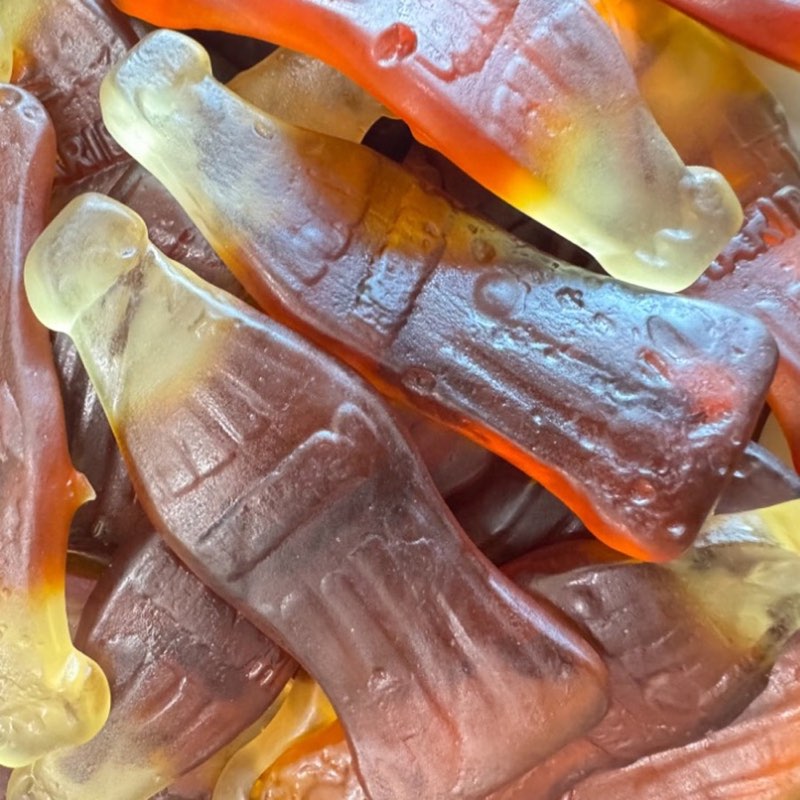
A giant bottle is a two-bite sweet, and that changes it more than the extra size suggests. A standard-sized cola bottle is a single piece you put in your mouth whole; a giant one you bite, look at, and finish. Those are different products psychologically, because the first is a handful item and the second is a considered one.
They are brown, which is worth saying because it makes them one of the few sweets on a mixed table that is not brightly coloured. In a bowl of primary colours the brown reads as almost serious, and there is a reason cola bottles turn up in adult mixes far more often than most gummy shapes do. On a table where everything else is loud, they are the quiet item.
The bottle shape is moulded with enough definition that the neck, shoulder and base are all distinct, and the flat sides give you something to hold. The firmness is the next thing you notice: this is a proper gummy with real resistance, not a soft chew. The first bite takes effort and gives a clean break rather than a squash, and the piece keeps its shape right up until the moment it gives way.
The flavour arrives in the chew rather than on contact. Cola is a slow-building note in gummy form — the first second is mostly sweetness and texture, and the cola itself emerges over the next few chews as the piece breaks down and warms. That is the opposite of a fizzy or a sour sweet, where everything happens instantly, and it is why cola bottles feel satisfying rather than exciting. They reward staying with them.
The finish is long. Cola leaves a distinct impression behind after the piece has gone, which is a large part of why people eat them in twos and threes rather than by the handful. The sweet is still with you when you reach for the next one, and that self-limiting quality makes a 250 g bag last considerably longer than 250 g of something that vanishes on contact.
The standard note that belongs on every page here: sweets are a treat rather than an everyday food. Small hard sweets and whole gummies are a choking risk for young children and should be eaten with an adult nearby, and a giant gummy is worth cutting up for a small child rather than handing over whole. Anyone with an allergy should read the manufacturer's packaging on arrival before eating — that pack is the only authority on its own contents.
Who buys the giant ones
There is a real difference between people who buy cola bottles and people who buy giant cola bottles, and it is not simply appetite.
The first group is the mix builder described above — somebody assembling a bag who needs a piece large enough to be findable among everything else. Standard bottles disappear into a mix; giant ones do not.
The second is the person buying for a jar or a bowl on display. Large pieces look better through glass and fill a container with fewer of them, and in a bowl on a counter a big distinctive shape reads as generous where small pieces read as ordinary. If the sweets are going to be seen as well as eaten, size is doing visual work.
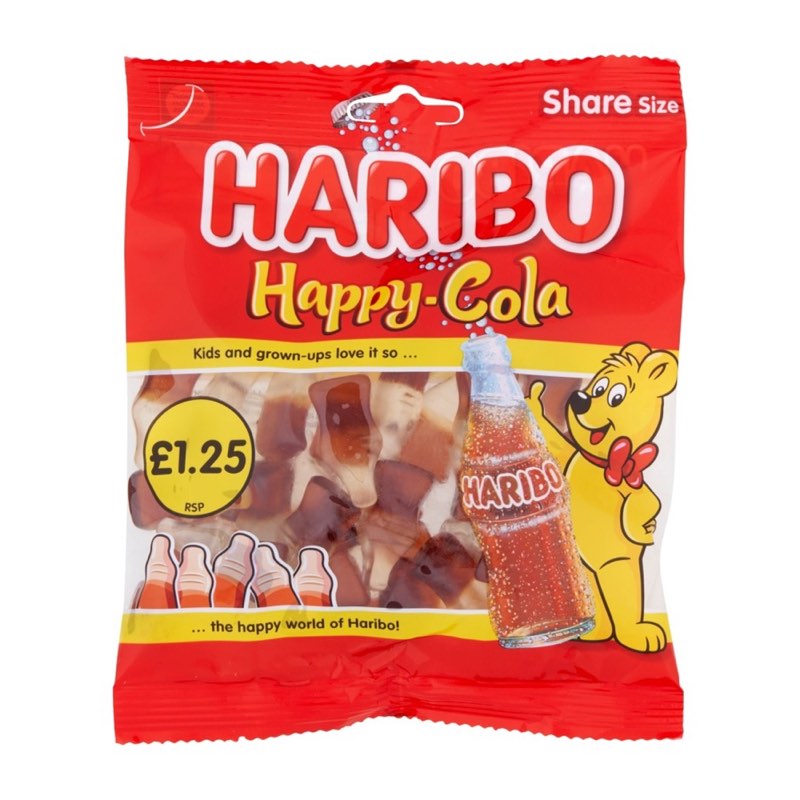
The third is the person who simply likes the longer eat. A giant bottle takes noticeably more chewing than a standard one and lasts proportionally longer, which suits anybody who wants a sweet to occupy a few minutes rather than a few seconds. Set against the 140 g Happy-Cola bag at £1.25, which is the small, pocketable, standard-size version of this idea, the difference is pace rather than flavour — and people tend to have a firm preference once they have tried both.
The fourth is the gift buyer, and that is a large enough group to deserve its own section below.
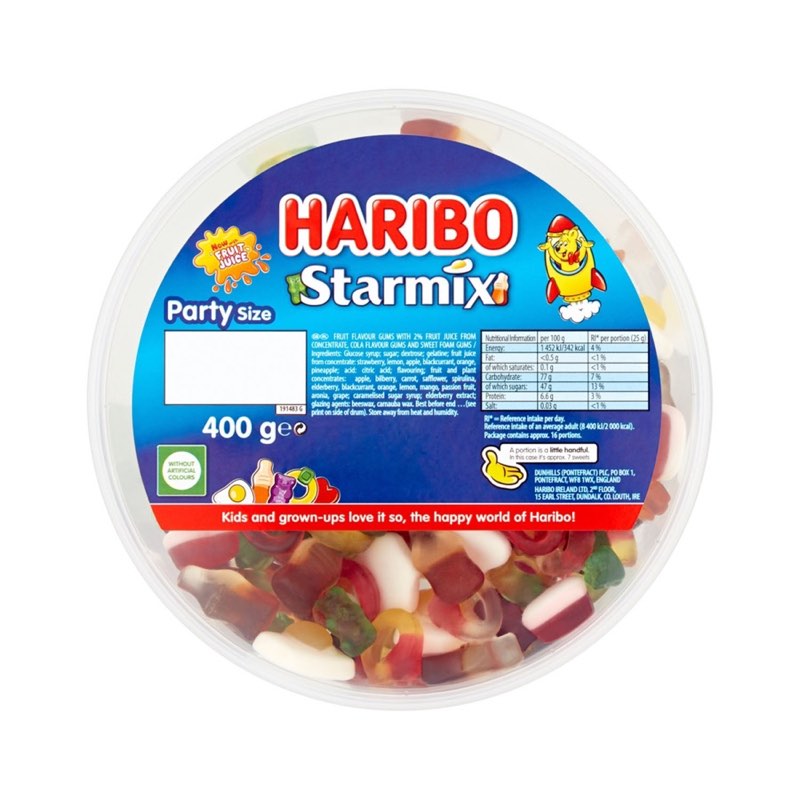
Who it does not suit: very young children, for whom a giant gummy is a large mouthful and worth halving. And anyone who wants variety in a single purchase — this is one flavour in one shape, and a whole kilogram of it is a commitment. If you want variety by default, the assorted tubs are a better structure, and the Starmix tub at £4.99 is the standard answer to that question for good reason.
Gifting: hampers, letterbox parcels, teacher gifts and care packages
Sweets are one of the most-given and least-thought-about gifts there is, which is exactly why a bit of thought makes them land well. The useful insight is that gift sweets are judged on three things the recipient notices immediately: whether it is obviously for them, whether it looks like enough, and whether it survived the journey. Everything below follows from those three.
Letterbox treats and the depth problem
Sending sweets through the post to a letterbox has one hard constraint that nobody thinks about until a parcel comes back: depth. A letterbox parcel has to be shallow, which rules out anything tall, rigid or boxed, and favours flat, flexible, weight-dense items. Gummies are close to ideal for this — they take up little space for their weight, they are not fragile, they do not melt in a way that matters, and a flat bag of them slides through where a box will not.
The 250 g size is the natural letterbox unit. It is enough to be a real gift and not so much that the parcel becomes unwieldy, and one flavour in one bag looks deliberate in a way that a handful of assorted things does not. If you want the parcel to feel more considered than a single bag, two 250 g bags of different things beat one 500 g bag of the same thing every time, because variety reads as effort.
The pairing to reach for is a second bottle in a different register. The standard Happy Cola Bottles at £5.49 alongside the giants makes a genuinely interesting two-bag parcel: the same flavour in two sizes, which invites a direct comparison and turns a gift of sweets into a small event rather than just food.
Teacher gifts, thank-yous and the end of term
Teacher gifts have a particular problem: they are given by many people at once, so anything ordinary arrives in quantity and anything perishable arrives in more quantity than can be dealt with. What works is something that keeps, something that can be shared out in a staff room, and something that does not look like it was bought in a panic at a service station.
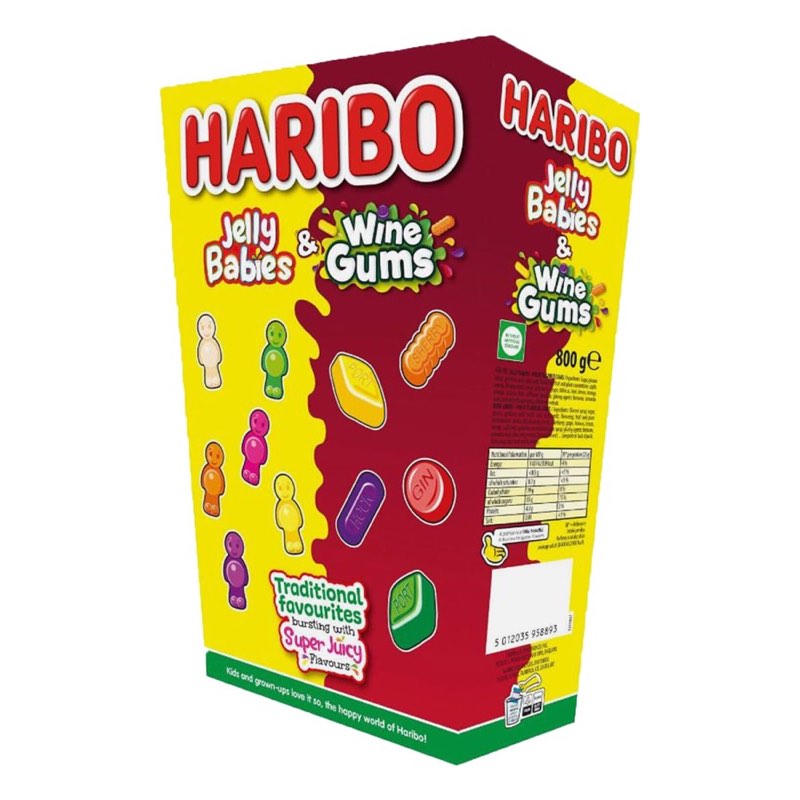
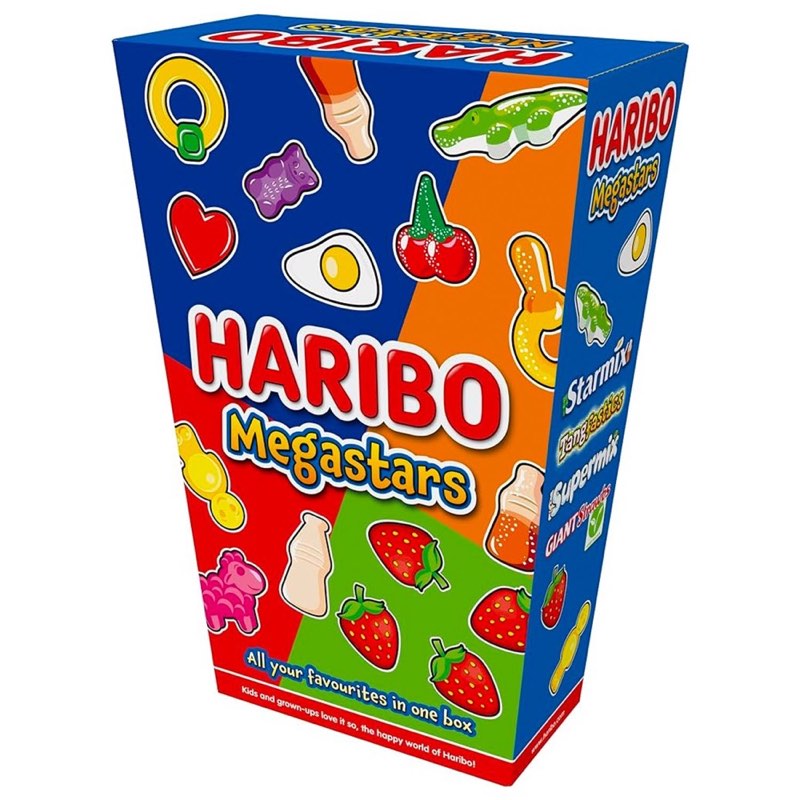
A boxed format solves all three at once, which is why gift boxes exist. The Megastars gift box at 800 g and £6.99 and the jelly babies and wine gums gift box at the same price are both built for this job — enough weight to be shared, a mixture rather than one flavour so a room full of people all find something, and packaging that presents rather than just contains. For a group gift, one box plus a card beats six separate small bags by a distance.
Where a single-flavour bag works better is a personal thank-you rather than a general one, and specifically when you know the person. Giving somebody a large bag of exactly the one sweet they always pick out is a considerably warmer gesture than giving them an assortment, because it demonstrates that you noticed. That is the whole gift, and it costs £5.49.
Care parcels for students, shift workers and anybody away from home
Care parcels follow different rules again. The recipient is usually short of money, short of space and short of anything nice, and the parcel is competing with a cupboard that contains very little. What matters is quantity, keeping quality and the absence of any requirement to prepare, cook or refrigerate.
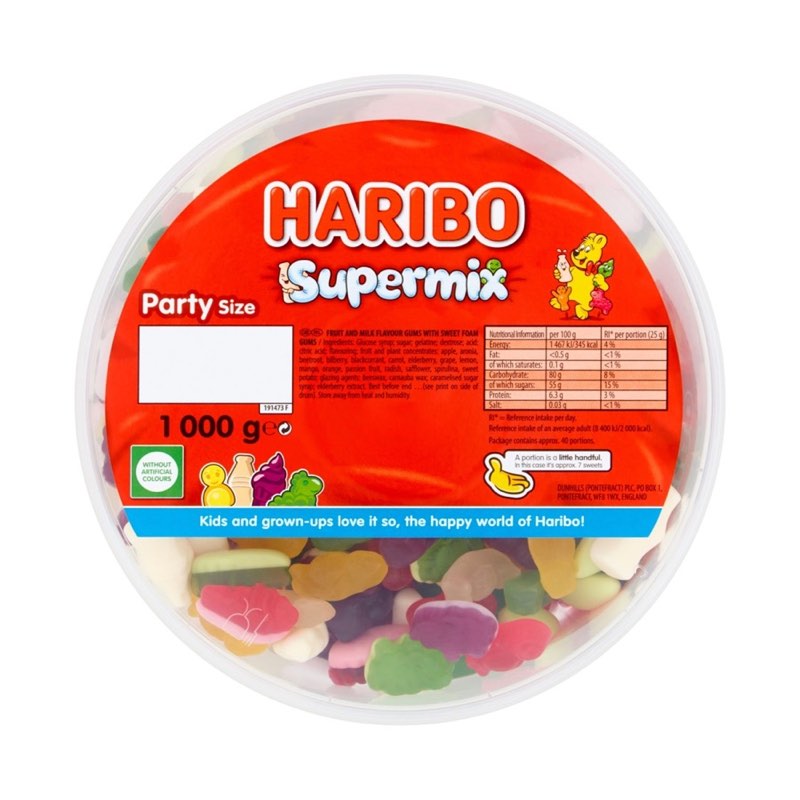
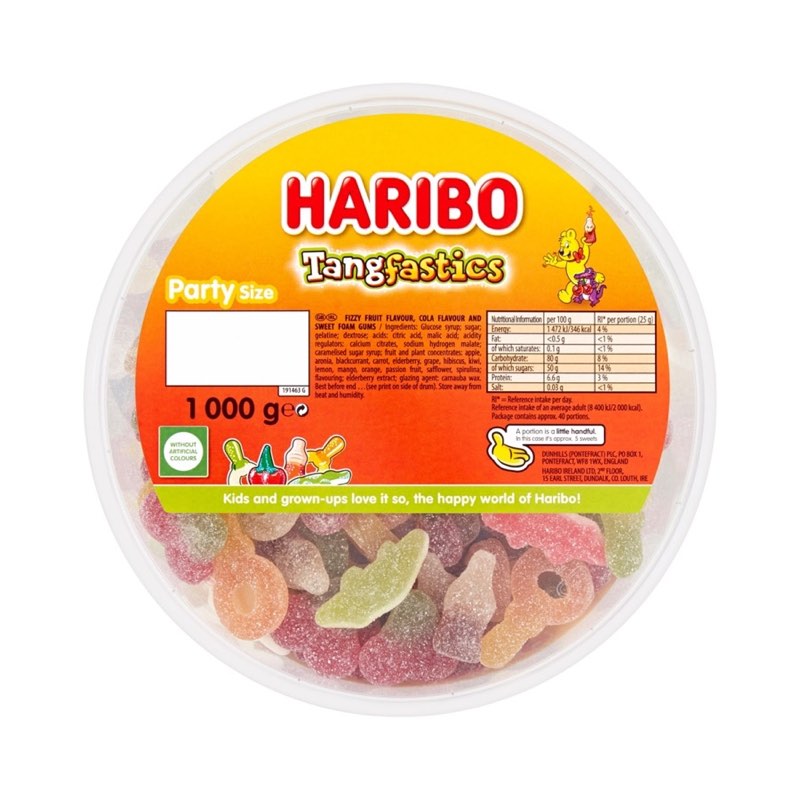
Larger formats are correct here in a way they are not for other kinds of gifting. A kilogram of one thing in a student house is not excessive, it is a supply, and it will be shared out whether the recipient plans to or not. The 1 kg Supermix tub at £11.99 and the 1 kg Tangfastics tub at the same price are the two obvious anchors for a parcel of this type, because a resealable tub survives a shared kitchen better than a bag does and because a kilogram at just under twelve pounds is honest value for somebody counting.
For shift workers the calculation is slightly different — what matters is something that can be eaten in small amounts over a long night without needing attention. A firm gummy with a long chew is well suited to that, and a resealable container beats an open bag every time.
Hampers and the composition problem
A hamper is judged on variety far more than on total value, which is why an expensive hamper of four things feels worse than a cheaper one of nine. The job of each item is to be different from the others, and the commonest mistake is buying several things from the same part of the shop.
A bag of cola bottles covers the familiar-gummy slot, which every hamper needs and which most people fill automatically. The slots people forget are the novelty, the traditional item and the thing nobody has seen before. The Fuji Candy DIY Handmade Ramen Kit at £2.99 fills the novelty slot better than almost anything at that price, because it is an activity as much as a sweet. The Crazy Jo Peelablezz jumbo banana gummy at £2.99 covers the large-single-object slot, which is the item people photograph. And something old-fashioned covers the slot that makes a hamper feel like a sweet shop rather than a supermarket aisle.
Presentation advice, briefly: put the largest flat item at the bottom, stand boxed items upright at the back, and put the odd-shaped novelty at the front where it is seen first. A hamper is read from the top down, and what somebody sees in the first second determines what they think of the whole thing.
Cola as a flavour family
Cola is one of the strangest flavours in confectionery when you think about it, because — like rhubarb and custard or pear drops — it refers to something that is itself a manufactured flavour rather than a natural one. It is a copy of a copy, and yet it is one of the most universally recognised tastes in the world. Nobody needs it explained.
What makes it useful in sweets is that it does not sit in the fruit family at all. On a table where everything else is strawberry, cherry, orange and apple, cola is the one thing that is categorically different, and that gives a mix somewhere to go. It is the reason cola shapes appear in almost every assorted bag ever sold: they are the break in the pattern.
The family divides mainly by what has been added to the cola rather than by the cola itself. Plain cola is the baseline, deep and slightly spiced in impression. Fizzy versions add a sharp coating that hits before the cola does, which changes the order of events entirely. Sour versions push that much harder and effectively make cola the finish rather than the main event. And cherry-cola hybrids lay a fruit note over the top, which softens the whole thing.
Our cola flavour shelf collects twenty-two lines across all of those, and it is one of the more rewarding shelves to browse in a single sitting because the variations are so clearly defined. If you like cola sweets generally, working down that shelf will tell you fairly quickly whether what you actually prefer is the plain version, the fizzy one or the sour one — and most people are surprised by the answer.
Within the Haribo range specifically, the differences are mainly about size and format rather than flavour direction, which makes them a clean comparison. Whole shelves elsewhere in the shop change the flavour; this brand changes the piece. Browsing the full Haribo listing — forty-three lines — is the fastest way to see how many ways one flavour gets presented.
Occasions and uses
Party tables. The reliable middle of any spread. Cola bottles are liked broadly rather than intensely, which is exactly what you want from a large bowl — nobody is thrilled and nobody is disappointed, and the bowl empties evenly. Buy a larger size than feels necessary; the bowl that empties evenly is the bowl that empties.
Film nights. Good, with one qualification. The long chew and long finish make these a slow snack, which suits a two-hour film far better than anything that disappears instantly. The qualification is that they are a chewy, slightly noisy eat, which some people mind and most do not.
Sweet jars and counters. Large distinctive shapes are what jars are for. A jar of small mixed pieces reads as clutter through glass; a jar of one large shape reads as a display. If the sweets are decoration as well as food, size matters more than variety.
Road trips and travel. Gummies are the best travelling sweets there are — they do not melt in a way that ruins anything, they do not crumble, and they do not need a wrapper per piece. A resealable container in a car beats an open bag, for obvious reasons.
Sharing at work. A bag on a desk is a social object, and a single flavour in a large size is the easiest thing to offer round because nobody has to choose. This is the specific case where one flavour beats an assortment.
Christmas and stockings. A 250 g bag is a well-judged stocking item — substantial enough to feel real, small enough not to dominate, and instantly recognisable to anyone of any age. For the larger family gift, the boxed formats are the better choice, since a box presents and a bag does not.
Sizes, and what each one is actually for
Five sizes are offered, and the price per kilogram improves substantially as you go up. Here is the whole picture in one place.
| Size | Price | Roughly per kg | What it suits |
|---|---|---|---|
| 250 g | £5.49 | about £21.96 | A gift, a stocking, a letterbox parcel, or the anchor in one mixed bag |
| 500 g | £9.99 | about £19.98 | A household bag, or a decent bowl on a small party table |
| 750 g | £12.99 | about £17.32 | A full jar, or a party where this is one of three or four bowls |
| 1 kg | £16.49 | £16.49 | A large party, a care parcel, or a household that gets through sweets steadily |
| 2 kg | £28.99 | about £14.50 | Events, large jars, or splitting between several people |
The honest guidance is that the jump from 250 g to 500 g is the one most people should make and the jump from 1 kg to 2 kg is the one most people should not. Going from 250 g to 500 g costs £4.50 more and improves your rate by about two pounds a kilo, which is worthwhile if there is any chance of wanting more. Going to 2 kg improves the rate again, but two kilograms of one flavour is a genuinely large quantity, and the risk is not that you waste it but that you get tired of it. A single-flavour product does not reward stockpiling the way an assortment does.
The other way to think about it: buy the size that matches the container it is going into. A jar takes what a jar takes. A party bowl refilled three times across an evening is roughly 750 g. A letterbox parcel is 250 g. Deciding by destination gives better answers than deciding by price per kilo, because the cheapest rate is only cheap if you actually use it.
All sizes are in stock, and the flavour and shape are identical across them — you are buying quantity, not a different product.
Storing them well
Gummies are among the easiest things in the shop to keep, which is one of the quiet reasons they are so widely bought. They are stable at room temperature, they do not melt in any dramatic way, and they will not go stale in the sense a crisp product does. The two things that do affect them are heat and air.
Heat softens them and makes them stick together. A bag left in a car in summer or on a sunny windowsill will arrive as a single mass rather than separate pieces. This is reversible — cooling them down firms them up again — but they will not fully separate once they have fused, so prevention is easier than cure. A cupboard at room temperature is all that is required.
Air dries them out slowly. An open bag left for weeks produces pieces with a tougher, more leathery surface and a chewier bite. Some people prefer this; most do not. Sealing the bag properly, or decanting into an airtight tub, keeps them in the condition they arrived in for a long time.
Do not refrigerate them. Cold makes gummies very firm and unpleasantly hard to bite, and taking them in and out of a fridge causes condensation on the surface, which makes them sticky. Room temperature is correct, and it is the one instruction that matters.
For bulk sizes, split the bag. Buying 1 kg and keeping the whole thing in one opened bag means the last third has been exposed to air for weeks by the time you get to it. Decant into two or three sealed containers at the start and open them one at a time, and the last of it will be as good as the first. This applies to any of the larger tub formats too — a resealable tub is better than a bag, but it is still better to draw from one container than to open all of them.
Where this sits on the site
You will find this on four shelves, each of which is a different way of shopping. It sits under loose sweets, which is the largest part of the shop and the place to browse when you are buying by weight rather than by brand. It is on the Jelly & Gummy shelf, ninety-six lines deep, which is the right shelf if texture is what you shop by — and a great many people do, without ever putting it that way. It appears under the cola flavour shelf, and on the Haribo brand page alongside the rest of the range.
Nearby shelves worth knowing: the Kingsway listing is the traditional British end of the gummy world, with bigger pieces and older shapes than most modern lines, and it is the natural second stop for anyone who likes a substantial chew. The candy and chocolate shelf goes in the other direction entirely, towards branded and imported lines, and it is where to go for the item that makes a hamper look varied.
For a broader browse, the full product listing shows everything at once, and building a bag by weight remains the best-value way to buy for a group. If you came here specifically because you like cola, the fastest route to something new is the flavour shelf rather than the brand page — brands are consistent, but the interesting differences between cola sweets happen between brands rather than within them.
Questions shoppers ask
How much bigger are the giant ones?
They are a larger format than the standard cola bottle — a piece you bite rather than one you put in whole. The practical effect is on pace and on findability: a giant bottle lasts noticeably longer per piece, and in a mixed bag it is easy to pick out by touch, which matters if this is the sweet you want to be able to find. If you prefer the smaller version, we stock that too.
What size should I buy?
Match the size to what it is going into. 250 g for a gift, a stocking or a letterbox parcel; 500 g for a household bag; 750 g for a jar or one bowl among several at a party; 1 kg for a large gathering or a care parcel; 2 kg for an event or for splitting between people. The rate improves as you go up, from about £22 a kilo at 250 g to about £14.50 at 2 kg, but two kilograms of a single flavour is a lot to work through.
Are these the same as the fizzy ones?
No. These are a plain cola gummy rather than a coated fizzy one, and the difference is in the order of events: a fizzy bottle gives you a sharp coating first and the cola afterwards, while these build the cola flavour through the chew. If the sharp opening is what you want, the fizzy cherry cola bottles on the cola shelf are the ones to look at instead.
Can I put them in a pick and mix?
They are close to the ideal pick and mix anchor — a large, findable shape with a flavour that does not blur into fruit sweets. The standard structure that works is roughly a third to a half anchor, a quarter contrast, and the rest cheap filler. Equal shares of several interesting things is the most common way a mixed bag goes wrong.
Do they melt in the post?
Not in the way chocolate does. In hot weather they soften and can stick together, which looks worse than it is — letting the bag cool down firms them up again, although pieces that have fused will not fully separate. Gummies are among the best sweets to post for exactly this reason, and a flat bag of them is well suited to a letterbox parcel.
Are they suitable for young children?
A giant gummy is a large mouthful, and whole gummies are a choking risk for young children, so it is sensible to cut them up and to keep an adult nearby. More generally, sweets are a treat rather than an everyday food. Anyone with an allergy should read the manufacturer's packaging on the bag when it arrives, before anything is eaten.
How long will they keep?
Check the date on the pack for the definitive answer. Practically, gummies are one of the most stable things we sell: kept sealed at room temperature and away from direct heat, they hold their condition for a long time. The main deterioration is drying out in an opened bag over weeks, which makes them tougher rather than unsafe. Decanting a large bag into two or three sealed tubs solves that.
Is a tub better than a bag?
For storage and for sharing, yes — a resealable tub keeps air out properly and stands on a shelf, and it is easier to offer round. For gifting and for posting, a bag is better, because it is flatter, lighter and takes up less room. If you are buying a kilogram for a household, the tub formats in the range are worth considering for that reason alone.
What is a good contrast to put beside them?
Something in a different flavour family and a different texture. A sour item provides the sharpest contrast but will dominate a bag if you use too much of it, so keep it to a quarter at most. A soft fruit gummy is the gentler option and works better on a children's table. What does not work is a second cola shape used as the contrast — it is variety without difference.
Why do cola sweets taste like cola when cola is not a fruit?
Because cola was always a constructed flavour rather than a natural one, so a sweet version is copying something that was itself built to be recognisable. That is why it is so consistent across makers and so instantly identifiable to almost everybody. It is also why it works so well in an assorted bag: it is the only common sweet flavour that is not competing with the fruits.
Do they go in a sweet jar well?
Very well. Large, distinct shapes are what jars are for — small mixed pieces read as clutter through glass while one bold shape reads as a display. A 750 g size fills an average jar convincingly. Fill to about four-fifths rather than to the brim, which looks fuller and leaves room for a scoop.
Is the flavour the same across all the sizes?
Yes. The sizes differ only in quantity and price — same shape, same flavour, same everything else. Buying a bigger bag is buying more, not buying different, so choose by how much you will use rather than expecting any change in the product itself.
The short of it
A firm, brown, two-bite gummy with a cola flavour that builds through the chew rather than announcing itself, sold from a 250 g bag at £5.49 up to 2 kg at £28.99. Its real strength is as an anchor: it is large enough to find in a mixed bag, distinct enough not to blur into fruit sweets, and liked broadly enough that a bowl of it empties evenly rather than being picked over. Build a mix around it with a quarter-share of contrast and a generous filler, buy the size that matches the jar, the bowl or the parcel it is going into, keep it sealed at room temperature, and split anything over half a kilo into separate containers so the last of it is as good as the first.
More from Haribo
More jelly & gummy sweets
More cola sweets
Where this sits
Haribo Giant Cola Bottles appears on these shelves. Browse them, or jump to something nearby.
You might also like