Home / Loose Sweets / Haribo Happy-Cola 140g
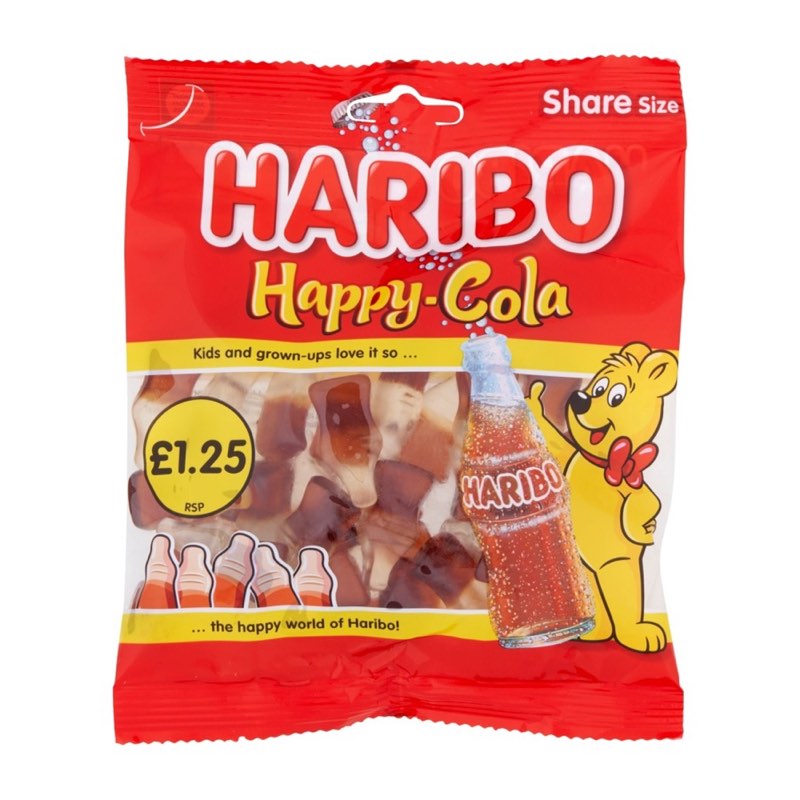
Haribo · 140g
Read the full guide
Haribo Happy-Cola 140g
£1.25
✔ In stock — ready to ship
Fresh stock
Free over £20
Same-day dispatch
Secure checkout
Small bags are where sweet shopping gets vague. People will agonise over a kilo tub and then drop three impulse bags into the basket without a glance at the weight, which is precisely backwards — the small end of the counter is where the price per 100 g varies most wildly, from under a pound to well over a tenner. So before anything else, here is Haribo Happy-Cola 140g in plain arithmetic.
The bag is 140 g and it costs £1.25. That is 89p per 100 g. Hold that number, because it is the surprise of this page: at under ninety pence per hundred grams, a small impulse bag is undercutting most of the big tubs on the site. The usual rule of confectionery — that buying bigger is always buying cheaper — does not hold here, and that is worth knowing before you talk yourself into a kilo of something you did not need.
The full guide to Haribo Happy-Cola 140g
5,537 words on how it eats, who it suits, how to serve it and what to put beside it.
What £1.25 buys, worked out properly
Where 89p per 100 g actually sits
Comparison is the only way to make a unit price mean anything, so here is this bag against a spread of things we stock, all worked from the price and weight on their own pages.
| Line | Weight | Price | Per 100 g |
|---|---|---|---|
| Happy-Cola bag | 140 g | £1.25 | 89p |
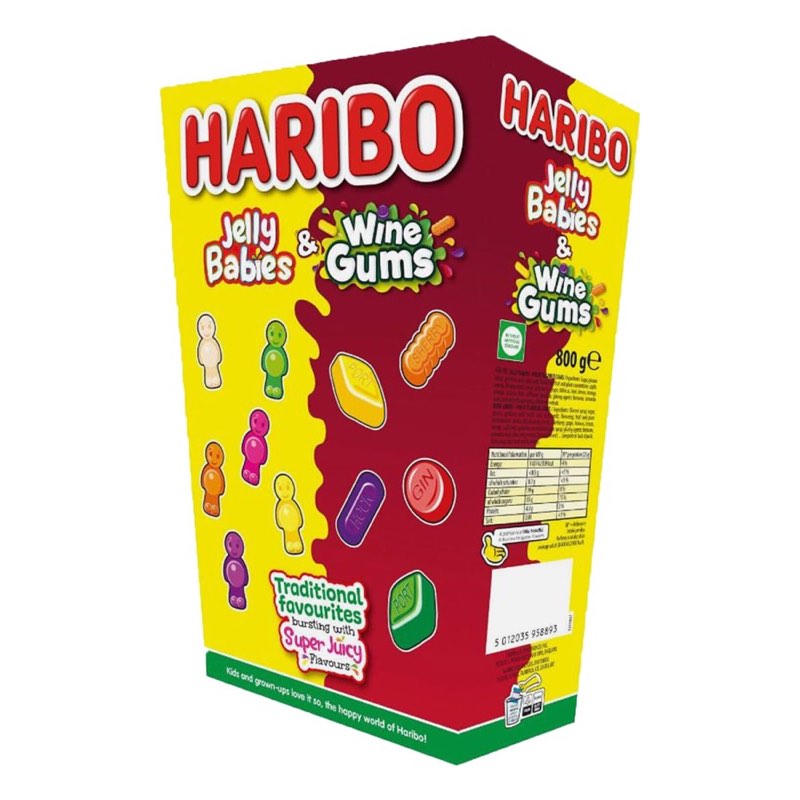
| Jelly babies and wine gum gift box | 800 g | £6.99 | 87p |
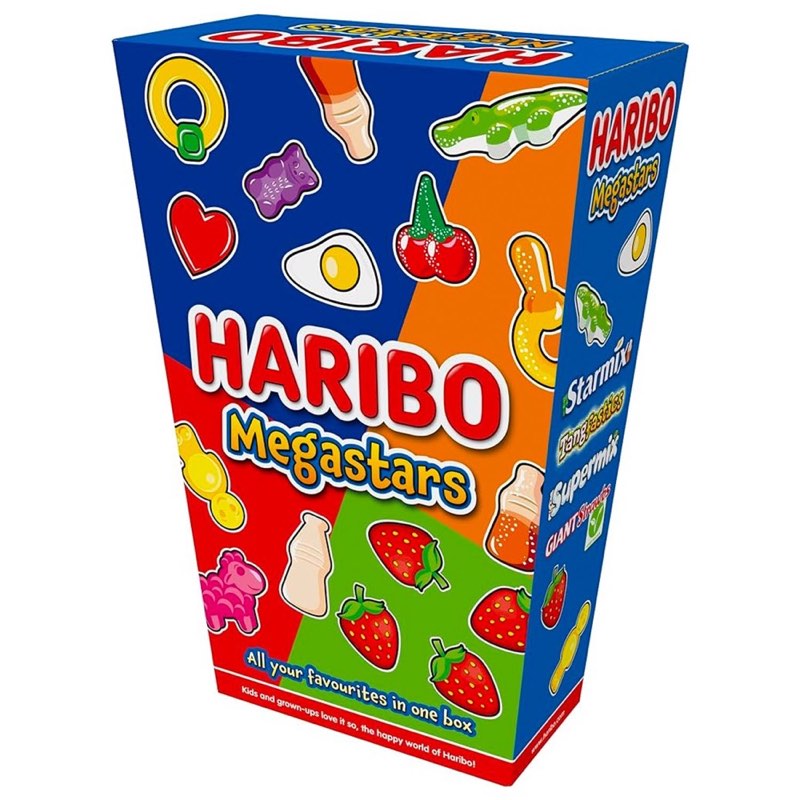
| Megastars gift box | 800 g | £6.99 | 87p |
| Millions mini jelly babies sour mix | 100 g | £1.00 | £1.00 |
| Supermix tub | 1 kg | £11.99 | £1.20 |
| Tangfastics tub | 1 kg | £11.99 | £1.20 |
| Jumbo peelable banana gummy | 136 g | £2.99 | £2.20 |
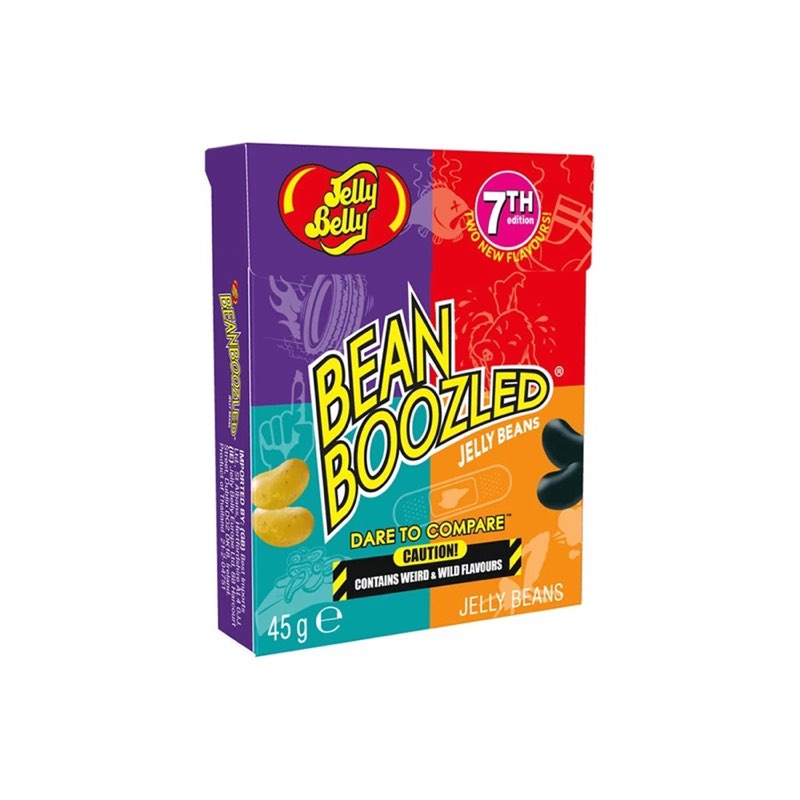
| Bean Boozled box | 45 g | £2.99 | £6.64 |
| DIY ramen kit box | 20 g | £2.99 | £14.95 |
Read the top and the bottom of that table together and the whole logic of a sweet counter falls out. At the top you are paying for sweets. At the bottom you are paying for an experience, a novelty or a gift object that happens to be edible, and the sweets are almost incidental. Neither is wrong — a DIY handmade ramen kit at £2.99 is not trying to be value for weight, it is trying to be twenty minutes of a rainy afternoon, and it succeeds at that. But you should know which purchase you are making.
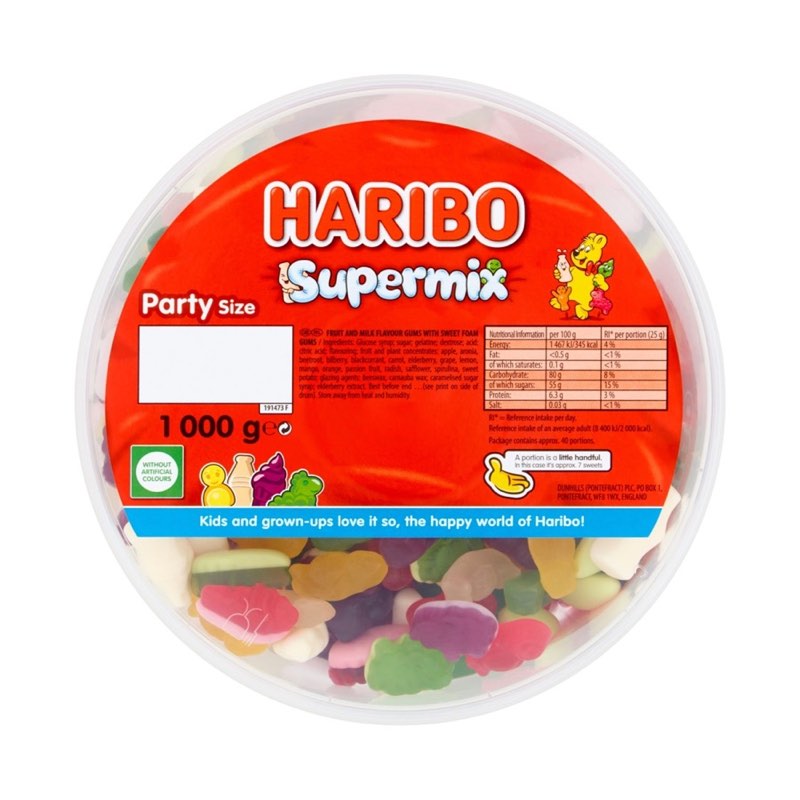
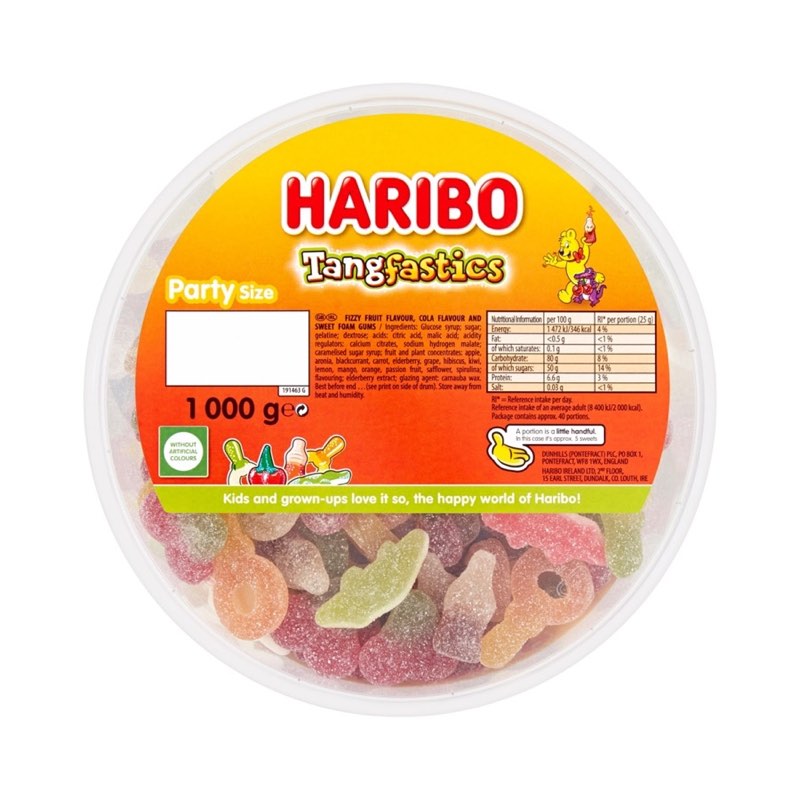
The genuinely useful finding is the one in the middle. The 1 kg Supermix tub at £11.99 and the 1 kg Tangfastics tub at £11.99 both come out at £1.20 per 100 g — a third more than this little bag. You buy those for the quantity, the variety and the container, not because they are cheaper per gram. Only the 800 g jelly babies and wine gum box at £6.99 and its stablemate the 800 g Megastars box, also £6.99, at 87p per 100 g, actually beat the small bag, and only by two pence.
Handfuls, portions and what 140 g looks like
Grams mean very little until you convert them into the shapes sweets are actually eaten in. Two reference portions cover almost every situation: 25 g is a small individual serving, the sort you tip into a dish beside a cup of tea; 50 g is a counter handful, the scoop that goes into a paper bag.
- 140 g is roughly five to six small portions at 25 g each.
- It is just under three counter handfuls at 50 g each.
- At 25 g a portion, each treat is costing you about 22p.
- At 50 g a handful, each handful is about 45p.
Twenty-two pence a sitting is the number to remember. For a single person who wants a small sweet thing a few evenings a week, this bag is most of a fortnight. For two people sharing in front of a film, it is one evening and no leftovers, which for a lot of households is exactly the point of buying a small bag rather than a tub.
Per guest, per party bag, per table
This is the size that solves the party-bag problem. If you are filling take-home bags for a children's party, one 140 g bag split across three children gives each of them a respectable 45 g or so, at about 42p a child. Split across four, it is 35 g each at 31p. Those are the sums that let you fill twenty party bags without the total creeping past what the whole party cost.
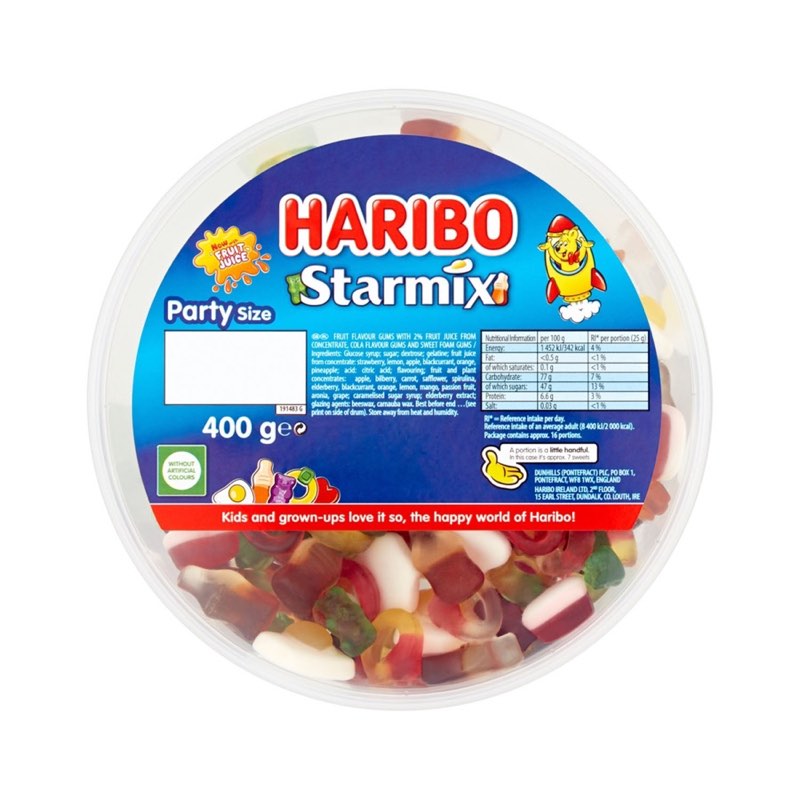
For a bowl on a table, 140 g is not a catering quantity and should not be treated as one — it is one line among several, or a top-up for something bigger. If you are serving twenty people from bowls, work at 40 to 50 g a head across all the sweets on the table and buy accordingly; this bag is then a single accent rather than the base. The base wants a tub, and the Starmix tub at £4.99 is the usual answer because a mixed tub covers more preferences than any single line can.
The small-bag strategy nobody talks about
Here is the practical conclusion of all this arithmetic. If your goal is variety at a fixed budget, small bags beat big tubs — and not by a little. Four different 140 g bags at £1.25 come to £5, and give you 560 g across four distinct flavours and textures. One kilo tub at £11.99 gives you more weight but a single product. For a family with four different opinions about sweets, or a party where you want the table to look busy, the small-bag route is both cheaper and better.
Where tubs win is sustained supply and presentation. If a jar on the kitchen counter needs refilling every week, or a stall needs stock, or you want something with a lid that will sit out for a month, weight in one container beats five bags every time. And if the sweets are a present, a box reads as a present in a way that a bag never quite does. That is the whole decision, and it has nothing to do with price per gram.
Opening the bag
A 140 g bag is a pocket object rather than a kitchen one. It is the size that goes into a coat on the way out of the door, sits in a glovebox, or gets handed across a car seat without ceremony. There is no lid to lose and no tub to find a cupboard for, and the whole thing can reasonably be finished in one sitting by two people, which is a meaningfully different proposition from anything you have to ration.
Inside is a gummy — the pack files this line under jelly and gummy, which is the firmest and springiest of the soft-sweet textures, and the flavour family is cola, which is one of the narrower flavour shelves we keep and one of the most fiercely defended. People who like cola sweets do not treat them as one option among many. They treat them as the option.
Tipping a portion out, the first thing you register is scale. Small gummies come out as a loose scatter rather than a few substantial lumps, which changes how they get eaten — you take several at once rather than one at a time, and the bag consequently moves faster than its weight suggests. That is worth knowing if you are budgeting a bag to last an evening: it will not, unless you decant a portion and put the rest away.
How it eats
A gummy of this kind has a characteristic sequence, and it is quite different from a chew or a jelly. The first bite meets genuine springiness — the piece pushes back, briefly, before it gives. That bounce is the defining property of the format and it is the reason gummies feel satisfying out of all proportion to their size. A soft jelly squashes. A proper gummy resists and then releases.
After the first bite the piece breaks down quickly rather than turning into a long-working mass. Three or four chews and it is gone, which is why gummies get eaten in multiples while chews get eaten singly. The flavour arrives fast and near the front of the mouth, peaks almost immediately, and fades within a few seconds of swallowing. It is an efficient, high-frequency sweet: lots of small hits rather than one long one.
Cola as a flavour behaves particularly well in this format. It is a composite rather than a single note — there is a sharpness at the front, a rounder sweetness behind it, and a faintly spiced, faintly citrus tail that is the part people actually recognise as "cola". That structure needs a couple of seconds to unfold, and a gummy's short eating cycle gives it exactly that long. In a hard sweet, cola tends to flatten out over a long suck; in a gummy, it arrives complete and leaves before it can tire you.
Eaten in threes and fours, which is how they are eaten, the effect compounds. The aftertaste of one piece is still present when the next arrives, so cola builds rather than resets. This is the opposite of a fruit assortment, where variety keeps the palate fresh, and it is why a cola bag is a commitment to a mood rather than a range. Ten minutes into a bag you are fully in cola territory, and either that is exactly what you came for or you should have bought a mix.
Temperature and freshness both matter more to a gummy than to a chew. At their best they are springy and distinct; left open for a week they toughen at the surface and lose the clean bounce. Cold firms them considerably, and a few people genuinely prefer them straight from a cold room for the extra resistance. Warm makes them softer and stickier and rather less interesting.
Who buys this one
Cola sweets have the most specific audience on the counter. There is a large group of people for whom cola is the only sweet flavour that matters, who will pick every cola piece out of a mixed bag and leave the rest, and who buy a single-flavour bag precisely so they do not have to do that. If you live with one of them, this is a straightforwardly correct purchase.
It is also the natural bag for anyone who wants a small sweet fix without a commitment. At £1.25 it is an impulse rather than a decision. Nobody has to think about whether they will get through 140 g, whether they have somewhere to store it, or whether it will still be good in three weeks. That low stake is a genuine feature — it is what lets people try a flavour family they are not sure about without any risk beyond a pound and a quarter.
Parents buying for party bags, school fêtes, reward jars and long car journeys are the other steady audience, for the arithmetic above. And gummy-format loyalists — people who like the bounce specifically, as against the fold of a chew or the crack of a boiled sweet — will find this one of the cheapest ways into the texture they prefer.
Who should look elsewhere: anyone buying for a group with mixed tastes, because a single-flavour bag divides a room, and cola divides it more sharply than most. Buy a mix for the table and a cola bag for the person who deserves it. And as with everything on a sweet counter, whole gummies are a choking risk for young children and want an adult sitting with them — sweets are a treat, and small children eating them should be supervised.
The collector's shelf: novelty, seasons and the case for a constant
There is a way of shopping for sweets that has nothing to do with hunger. Some people buy the counter the way others buy records — for the format, the shape, the box, the thing you have not seen before. Sweet shops have always known this, which is why so much of the range is built around novelty rather than flavour, and why the most interesting shelf in any sweet shop is the one full of things that will not be there next year.
Why a permanent line is the collector's baseline
A collector needs a control. If everything on your shelf is a limited run, a seasonal shape or an import you found once, you have no reference point — you cannot say whether the novelty is any good, only that it is novel. The permanent lines do that job. A bag like this one is the constant against which the odd and the temporary get measured, and that is a more valuable role than it sounds.
It works because it is unremarkable in the best sense: a standard bag, a standard texture, a standard flavour, at a price that does not make you think. When you taste something strange next to it, the strangeness is legible. Put two novelties side by side and all you learn is that they are different from each other.
Formats that exist because they are interesting
The novelty end of our range splits into rough families, and it is worth knowing them if this is how you shop. There is the build-it family, where the point is assembly — a boxed kit you make something out of is bought for the doing, and the 20 g of sweets at the end is the receipt rather than the purchase. There is the scale joke family, where an ordinary sweet is made absurdly large or small: a jumbo peelable banana gummy at £2.99 is one object where you would normally get a bagful, and the size is the entire idea.
There is the gamble family, built on not knowing what you are about to eat — a Bean Boozled box at £2.99 is the standard-bearer, and it gets bought to be played rather than eaten. And there is the import curiosity family, where the interest is in a texture or presentation that is unfamiliar here; a bag of mini mochis at £1.35 sits in that space, priced close enough to an ordinary bag that trying it costs nothing.
Shapes, and why the same flavour keeps being remoulded
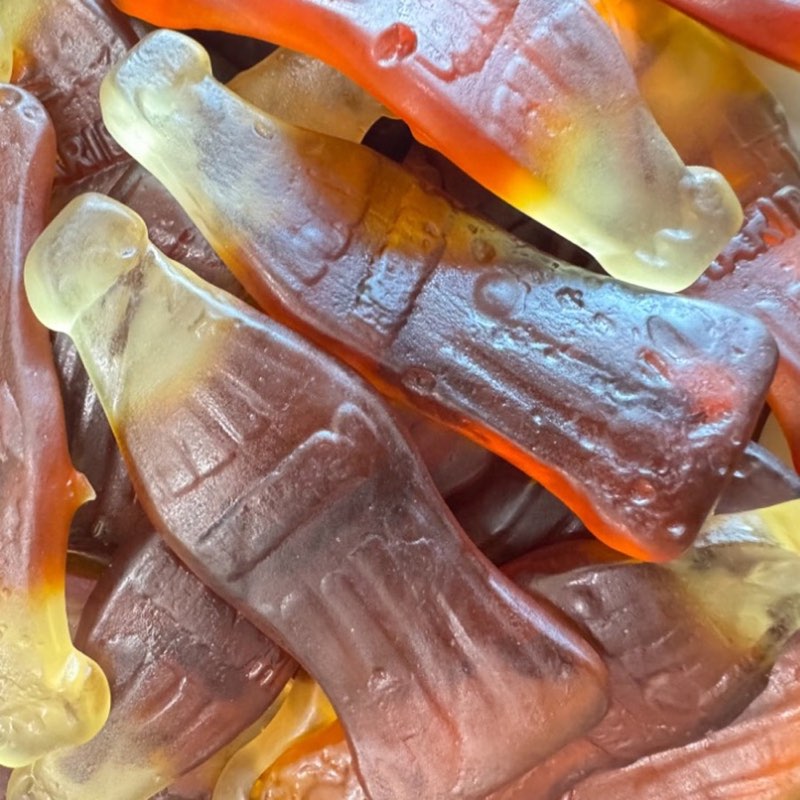
Cola is the clearest case study in the whole shop of one flavour appearing in a dozen forms. The same basic profile turns up as a bottle, a ring, a skull, a fizzy version, a sour version, a giant version. That is not laziness; it is the industry correctly identifying that shape changes the eating. A ring presents thin walls to the teeth and collapses fast. A thick moulded piece holds out. A coated piece delivers its sharpness before the gummy underneath even engages.
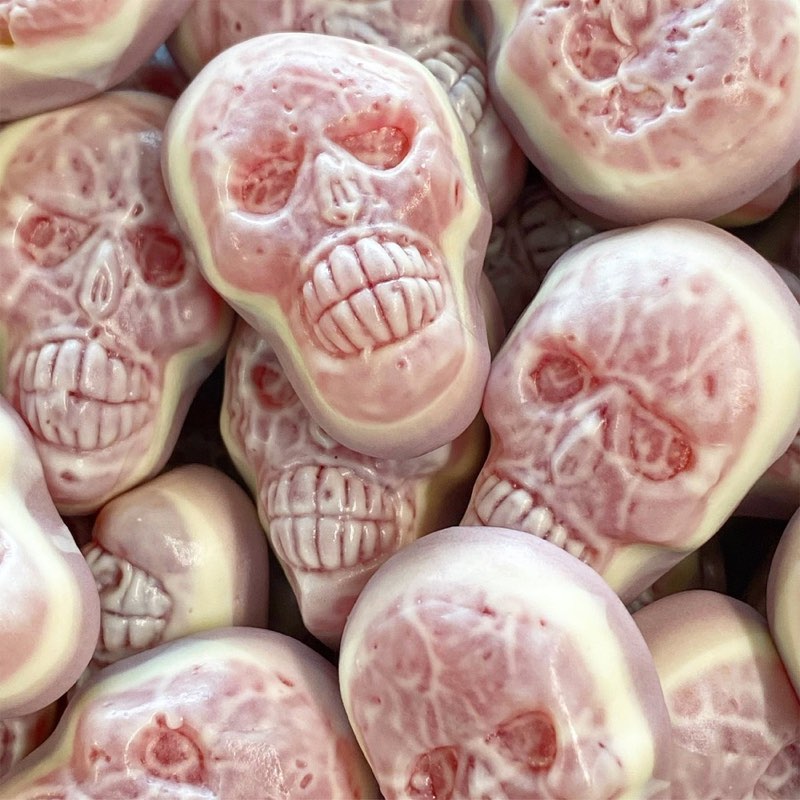
You can run that experiment for yourself across a handful of lines we carry. Giant cola bottles at £5.49 give you the same flavour family at several times the piece size, which slows the eating right down and lets the cola tail actually land. Sour cola rings, also £5.49 put a sharp coating in front of the flavour and a hollow shape behind it. Kingsway fizzy cherry cola bottles at £5.49 add a second fruit note and a fizz coating on top of the cola. And BUBS Cool Cola Skulls at £7.50 take it into Scandinavian territory with a completely different house style of gummy. Five cola sweets, five genuinely different experiences, and the small bag on this page is the plain reference version of all of them.
Seasonal buying, done sensibly
Seasonal shapes are the part of collecting that most often ends in waste, because they are bought on enthusiasm in October and found in a cupboard in March. The rule that works: buy seasonal lines for the season you are actually hosting, and buy permanent lines for the cupboard. A shaped novelty is worth its premium on the day it is thematically right and worth considerably less the week after. A plain bag of cola gummies is worth the same in every month of the year, which is precisely why it is the thing to keep stocked.
The same logic applies to the shapes that are romantic rather than seasonal. Jelly love hearts at £5.49 are perfect in February and slightly odd in August, and there is no harm in that as long as you buy them when they land right. Knowing which of your purchases are timing-dependent and which are not is most of what separates a well-stocked sweet cupboard from a cluttered one.
The gift tier
At the top of the collecting instinct sits the boxed sweet, which is bought to be given or to be displayed. The 800 g Megastars box and the 800 g jelly babies and wine gums box both sit at £6.99 and both do a job no bag can: they arrive looking like an occasion. As the table above showed, they are also quietly among the best value per 100 g we carry, which is an unusual combination — presentation usually costs more, not less.
If you are assembling a sweet gift with a collector's eye, the shape of it is simple. One boxed item as the visible piece. Two or three novelties as the talking points. And a plain bag or two underneath as the part that actually gets eaten. That last layer is where this one belongs, and it is the layer people are most grateful for a week later.
Cola: one flavour, held to a high standard
Cola occupies an odd position in confectionery. It is not a fruit, it is not a botanical anyone can name confidently, and it is not trying to taste like a food — it is a sweet flavour that tastes like a drink, and the reference point in every eater's head is a bottle rather than an orchard. That makes it uniquely easy to judge. Everybody knows what it should taste like, so everybody can tell immediately whether a cola sweet has got it right.
What a good one gets right is the structure. Sharp opening, sweet middle, aromatic tail — and the tail is the hard part. Plenty of cola sweets deliver the first two and then stop, which reads as generically sweet rather than as cola. The lingering, slightly spiced note at the end is what makes people who like cola sweets like them so much, and it is why they are so unforgiving about substitutes.
Cola is also a rare flavour in being almost entirely age-neutral. Fruit sweets skew young in the way they are sold and bought; cola does not. Adults who have not eaten a sweet in months will take a cola gummy, because the reference is a drink they have been having for forty years. If you are putting out a bowl at a gathering of grown-ups, a cola line does more work than its share of the table.
The flip side is that it does not blend. Cola in a mixed bag stays cola — it does not soften into the fruit lines around it, and a piece of it eaten after something raspberry will taste like an interruption. That is neither good nor bad; it just means cola wants to be its own compartment rather than part of the general population. Our cola flavour listing runs to a couple of dozen lines precisely because people shop for it as a category of its own.
Putting a mix together around it
Because cola is assertive and does not blend, the way you use it in a mix is different from how you would use a fruit line. Think of it as seasoning rather than base.
Proportions
Around one part cola to five parts everything else is a good working ratio for a mixed bowl. Enough that the cola eaters find plenty, not so much that it dominates the character of the whole bag. If you are building for a known cola enthusiast, obviously ignore that entirely and weight it the other way.
For the "everything else" that goes underneath, a mixed tub is the efficient route. The Starmix tub, £4.99 for a broad mix gives you several shapes and textures in one purchase and is the standard base for a home pick and mix. Step up to the 1 kg Supermix tub if the bowl is a fixture rather than a one-off, or to the 1 kg Tangfastics tub if the household leans sour — at £11.99 each they are the two sensible kilo-scale foundations.
Contrast worth having
Set against a springy small gummy, the useful contrasts are size and sharpness. For size, one or two big pieces in a bowl of small ones changes how people eat from it — a jumbo banana gummy sitting on top of a bowl of small gummies is both a joke and a genuinely different mouthful. For sharpness, a sour line resets the palate between cola pieces; a 100 g bag of mini sour jelly babies at £1.00 is the cheapest way to add that, and at a pound it costs less than the cola bag it is balancing.
For a completely different register, the loose shelves hold plenty that has nothing to do with gummies at all. Briquette at £5.49 is one of the traditional loose lines that sits at the standard £5.49 shelf price, and dropping something from the old-fashioned end of the counter into a modern gummy bowl is a reliable way to make the whole thing feel less like a supermarket multipack and more like a sweet shop.
Or buy the mix ready made
If you would rather not weigh anything out, our pick and mix range has the jars and pouches already assembled and balanced. The trade-off is control: a ready mix saves you the work and the guesswork, while building your own means you decide exactly how much cola is in it — which, given how strongly people feel about cola, is often the whole reason to do it yourself.
When a small bag is the right call
Different occasions want different sizes, and 140 g is the right answer more often than people expect.
The car. A single bag for a single journey, finished before you arrive, with no open packet rolling around afterwards. Small gummies are easy to hand back one at a time and do not melt on a warm seat the way chocolate does.
Party bags and prize tables. Split three or four ways, this is the backbone of a take-home bag at around 40p a child. Buy several, split them all at once on the kitchen table, and you will have twenty bags filled in ten minutes.
The office drawer. A tub in an office gets eaten by the office. A 140 g bag in a drawer is yours, lasts a week, and does not commit you to feeding anybody.
Stocking fillers and advent-style gifts. At £1.25 it is the right price point for the small slot in a larger gift, and it takes up almost no room. Pair it with something boxed from the candy and chocolate shelves and you have a present that looks considered without being expensive.
Testing a flavour. If you are not sure whether the cola shelf is for you — or whether it is for whoever you are buying for — this is the low-stakes way to find out before committing to a kilo of anything.
Film nights for two. Roughly three handfuls between two people over ninety minutes is about right, and there is something to be said for a bag that finishes when the film does rather than sitting half-open for a fortnight.
Keeping a gummy right
Gummies are more sensitive than chews and the difference shows within days of opening. Their whole appeal is the spring, and spring is the first thing to go.
Air is the main culprit. An open bag left on a counter dries at the surface, and dried gummies go from springy to leathery — still perfectly edible, noticeably less pleasant. The fix is trivial: clip the bag or tip the contents into a jar with a lid the moment it is opened. With 140 g you may well finish it in a sitting or two and never meet the problem, which is another quiet advantage of the small size.
Heat is the other. Warmth makes gummies slack and tacky, and pieces will press together if a bag spends a hot afternoon in a car. Cool and dark is all they ask. The fridge is not necessary and makes them hard rather than fresh, though some people like them that way on purpose — as a preference that is fine, as a storage strategy it introduces condensation when they come back out.
Keep the packaging until the bag is done, as with anything from the loose and bagged shelves, so the manufacturer's own information is there if anyone needs to check it before eating.
One size, and how to scale up from it
This line comes in a single size: 140 g at £1.25. There is no ladder to climb, which simplifies the decision to a yes or no — but it does raise the obvious follow-up question, which is what to do if 140 g is nowhere near enough.
The honest answer is to buy several. Four bags is 560 g for £5, which is less than the 800 g gift boxes and considerably less than a kilo tub, and it comes in four sealed portions rather than one opened one — a real advantage if the sweets are for different people, different days or different party bags. Multiple small bags also keep better than one big opened container, because only one of them is exposed to air at a time.
If you want weight in a single vessel, that is a different product rather than a bigger version of this one. The tubs and boxes on the Haribo brand page are where to look, and the choice among them is mostly about mix rather than size: Starmix for broad appeal at £4.99, Supermix or Tangfastics at £11.99 for a kilo of a defined character, and the two 800 g boxes at £6.99 when the container matters as much as the contents.
And if what you actually want is more cola rather than more sweets, the answer is to move sideways to a different cola format rather than up to a bigger bag. The giant cola bottles at £5.49 are the natural next step within the same brand, and the sour and fizzy cola lines from other makers are all on the same flavour shelf.
Finding it, and finding its neighbours
This bag appears on four shelves, and which one you arrive from says a lot about what you are really shopping for. From the loose sweets section, the largest listing we keep at over three hundred and fifty lines, you are shopping by bag and by weight. From the Haribo listing, with its forty-odd lines, you are shopping by maker, which is how most people who already know what they like actually browse.
From the jelly and gummy shelf — close to a hundred lines — you are shopping by texture, and that is the shelf to use if the bounce is what you are after and the flavour is negotiable. From the cola shelf, a much tighter listing of around twenty lines, you are shopping by flavour and the format is negotiable instead. Those two shelves are the useful pair: pick the one that matches whichever half of your preference is fixed.
Beyond that, the complete range is there for browsing rather than hunting, and it is worth a slow scroll if you are building an order rather than replacing something. The Kingsway brand page is a good one to know if you like the traditional British loose-shelf style, and it holds several cola lines of its own. And for anything boxed or chocolate to finish an order, the candy and chocolate listing is the place to end up.
The questions we get about this bag
Is £1.25 for 140 g actually good value?
Yes, and more than most people assume. It works out at 89p per 100 g, which undercuts both kilo tubs we carry from this brand at £1.20 per 100 g, and sits within two pence of the 800 g gift boxes at 87p. The lines it loses to on price are all bigger formats bought for other reasons — quantity, a lid, presentation. On pure cost per gram of sweets, a small bag like this one is at the good end of the counter, not the expensive end.
How many will I get in a bag?
We sell and describe this by weight rather than by count, so we would rather not guess at a piece number. Plan in grams instead: 140 g is about five to six 25 g portions, or just under three 50 g handfuls. If you are dividing it between children, three ways gives each of them around 45 g and four ways gives around 35 g, which are both respectable party-bag portions.
Is it sour or fizzy?
This is the plain version of the flavour rather than a sour or fizzy one — those are separate products. If you want an edge on your cola, the sour cola rings add a sharp coating and the fizzy cherry cola bottles add both a fizz coating and a second fruit note, both at £5.49 in larger loose bags. We are describing how these eat, not what is in them; the packaging carries that information.
Will one bag be enough for a film night?
For two people, about right — roughly three handfuls between you over a couple of hours, finishing when the film does. For three or more, buy two. For a room of six or more, this is an accent rather than the main event and you want a tub underneath it; a mixed tub plus a cola bag on the side covers a group far better than either on its own, because a single-flavour bag never satisfies a whole room.
Can children have these?
Sweets are a treat rather than everyday food, and whole gummies are a choking risk for young children, so they want an adult present and watching. Beyond that, suitability for any particular child is a judgement for whoever knows them. If allergies or intolerances are a consideration for anyone eating from the bag, read the manufacturer's packaging when your order arrives, before anyone starts.
Is there a bigger bag of this exact line?
Not on this product — 140 g at £1.25 is the only size we list it in. For more of the same flavour, move sideways rather than up: the larger cola bottles at £5.49 are the obvious step within the brand. For more sweets generally, buying several 140 g bags is cheaper per gram than a kilo tub and gives you sealed portions, which is usually the better answer unless you specifically want everything in one container.
Do gummies go stale once opened?
They dry rather than go stale in the usual sense, and the symptom is a loss of spring — the surface toughens and the bounce fades. A clip on the bag or a lidded jar prevents it completely. With a bag this size, most people finish it before it becomes an issue, which is one of the real advantages of buying small rather than buying big and opening it.
What else should I add for a party?
Something big, something sour and something that starts a conversation. A jumbo gummy covers the first, a pound's worth of mini sour jelly babies covers the second, and a box of Bean Boozled covers the third and will occupy a table of teenagers for an hour. Build the base from a mixed tub and use bags like this one as the flavour accents on top.
Is this a good gift on its own?
On its own, not really — a bag reads as a snack rather than a present. It is an excellent component of a gift, though: a stocking filler, a small slot in a hamper, or the layer underneath something boxed. If you want the whole thing to be the gift, one of the 800 g boxes at £6.99 does the presentation job properly and works out cheaper per 100 g than most of the range besides.
Which cola sweet should I try if I want something different?
Depends on what you want changed. For bigger pieces and a slower eat, the giant bottles. For sharpness, the sour rings. For fizz and a fruit twist, the cherry cola bottles. For a completely different national style of gummy — firmer, with a different character altogether — the £7.50 bag of BUBS Cool Cola Skulls are the Scandinavian route and the biggest departure from this bag on the whole cola shelf.
Is it in stock?
Yes at the time of writing. Small bagged lines like this one move quickly and we keep them stocked as standard. If it is ever showing as unavailable, the cola listing is the fastest way to find the nearest equivalent, and anything on it will scratch the same itch even if the format differs.
Worth having in the cupboard
Haribo Happy-Cola 140g is a small, cheap, single-minded bag that does one flavour properly and does not pretend to be anything else. At 89p per 100 g it is better value than most of the tubs it sits near, at £1.25 it is a purchase nobody has to think twice about, and at 140 g it is a size that gets finished rather than forgotten at the back of a shelf.
Buy one to find out whether cola is your flavour. Buy four if you already know it is, because four bags beat one tub on both price and flexibility. And keep one in the cupboard as the plain, reliable thing to measure the odder purchases against — every good sweet shelf needs a constant, and this is a cheap one.
More from Haribo
More jelly & gummy sweets
More cola sweets
Where this sits
Haribo Happy-Cola 140g appears on these shelves. Browse them, or jump to something nearby.
You might also like