Home / Loose Sweets / Hi-Chew Berry Mix Bag 80g
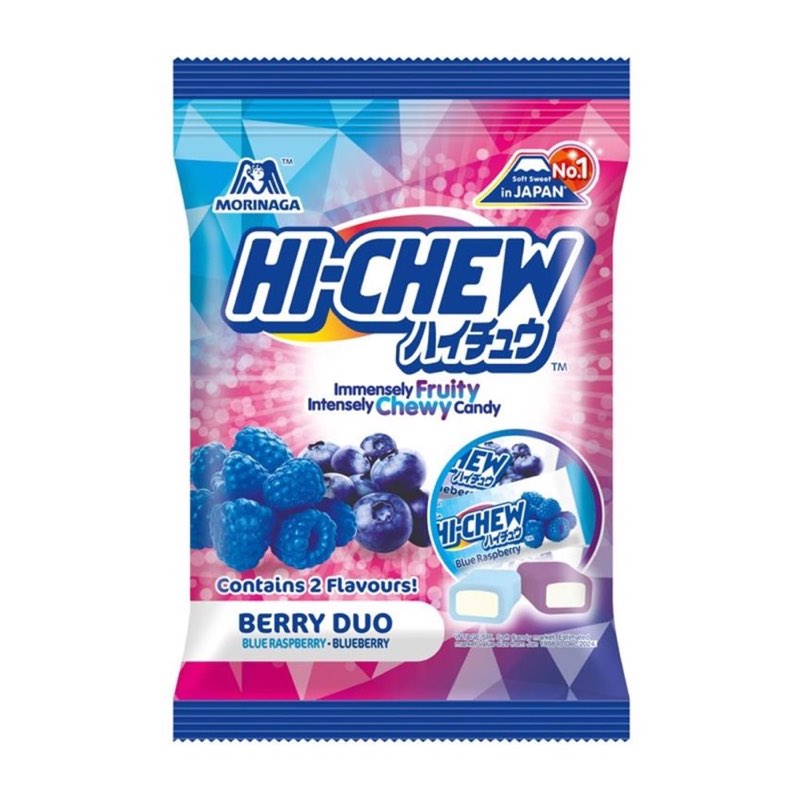
Hi-chew · 80g
Read the full guide
Hi-Chew Berry Mix Bag 80g
£1.99
✔ In stock — ready to ship
Fresh stock
Free over £20
Same-day dispatch
Secure checkout
Some sweets are bought because somebody wants an adventure. This is not one of those. The Hi-Chew Berry Mix Bag — 80g, £1.99, a mix of berry-flavoured chews — is bought by people who want a known quantity, and there is nothing second-rate about that. Most confectionery that gets eaten rather than admired is bought on exactly this basis.
The clearest group is the person catering for other people whose tastes they do not know. Party bags, a classroom treat, a coach trip, a hospital visit, a box for a family you have not met. In all of those, the interesting choice is the wrong choice. You want the thing that the largest number of people will simply eat without comment, and in British confectionery that means the berry end of the fruit spectrum. Red and pink fruit flavours are the ones nobody has to be talked into. If you are buying for an unknown crowd, this is a considerably safer bet than the Hi-Chew Tropical Mix Bag at the same £1.99, which is the more interesting bag but also the more divisive one.
The full guide to Hi-Chew Berry Mix Bag 80g
5,572 words on how it eats, who it suits, how to serve it and what to put beside it.
Who ends up buying the berry bag
The second group is the texture buyer. There are people who select sweets almost entirely on how they behave in the mouth and treat flavour as a secondary consideration — and for them, a chew is a category rather than a product. If that describes you, the thing to do is browse our chewy shelf as a whole rather than hunting flavour by flavour. Seventy-eight lines sorted by texture is a far more useful way to shop than seventy-eight lines sorted by fruit.
The third is the restocker. This is the bag that goes in the drawer, the glovebox, the bag pocket or the kitchen tin and gets replaced when it runs out. Restocking purchases are made on price, size and reliability rather than on novelty, and an 80g bag at under two pounds hits all three. It is small enough to buy without thinking and cheap enough to buy regularly.
The fourth is the person who wants their sweets to last. A chew takes real time to eat. If you find that a bag of anything soft disappears before you have registered eating it, the chew format imposes a pace that no amount of good intentions will. This is the single most practical reason to keep chews in the house rather than jellies, and it has nothing to do with flavour at all.
And the fifth is anyone assembling a mixed spread who needs a dependable middle. Every table needs one thing that everyone eats. Not the talking point, not the extravagance — the thing that gets finished. Berry chews are almost always that thing. The caution, as ever: whole chewy sweets are a choking risk for young children and should be supervised, so use judgement about age before handing the bag over.
What the listing tells you, and what it does not
We would rather be straight with you than guess. The listing for this bag gives us the name, the brand, the weight and the price. It tells us this is a berry mix and that the sweets are chews. What it does not do is break out the individual flavours inside the bag, and we are not going to invent a list to fill the gap.
So here is the honest position. It is a mix, which means more than one flavour. It sits in the berry family, which is what the name says. The precise line-up, and the ratio between flavours, is printed on the manufacturer's packaging, and that is the thing to read when the bag arrives — it is the authoritative source for the bag actually in your hand, and it will be more current than anything we could write here. If knowing the exact flavours before you order is important to you, a single-flavour line is a better purchase than any mix bag.
What we can tell you with complete confidence is how the format eats, what it costs per gram, what it does on a table, what to put with it and how to store it. That is most of what actually matters when you are deciding whether to buy something, and it happens to be the part of the job that the listing does support. The rest of this page sticks to it.
On scale: 80g is a share-around quantity rather than a bowl-filling one. It is twice the weight of the pocket packs that crowd the impulse shelf and a small fraction of anything sold by the tub. In practice it is the size that gets finished — big enough to be worth opening, small enough that it does not end up stale at the back of a cupboard. There is one size at £1.99 and no multipack in this listing, so the only quantity decision is how many bags.
What actually makes a chew a chew
Texture in confectionery is engineering, not decoration. Every sweet on our shelves is a deliberate mechanical object, designed to fail in a particular way when you bite it, and the differences between the main categories are differences in physics rather than differences in flavour. It is worth walking through them, because once you can name what a texture is doing, you can predict how a sweet will eat before you buy it — and you can build a far better mixed selection.
Start with the four basic ways a sweet can come apart in your mouth.
Fracture. A hard sweet behaves like a brittle solid. It holds its shape completely, resisting until the force exceeds what it can take, and then it fails all at once into sharp-edged fragments. There is no middle ground — it is whole, then it is pieces. This is why hard sweets are either sucked slowly or bitten decisively, with very little in between, and why they are the category we most often warn about with small children.
Dissolution. Some sweets are designed to disappear rather than break. Powders, fizzy coatings and thin shells work by dissolving on contact, which is why their flavour arrives instantly and then falls off a cliff. Anything that fizzes is working this way; the sensation is a surface reaction, and surfaces are finite, which is why fizz never lasts.
Elastic recovery. This is the gummy and jelly family. Press one and it springs back. Bite one and it resists, deforms, and then tears rather than crumbling. The defining feature is that a jelly wants to return to its original shape and fights you the whole way. That fight is enjoyable in short bursts and tiring over a long one, which is why people eat jellies in handfuls and then stop abruptly. The springy end of our range lives on the shelf of jellies and gummies, and it is the texture that contrasts most usefully with a chew on a shared table.
Plastic flow. This is toffee and fudge territory. A plastic material deforms and stays deformed — it does not spring back. Push it and it moves; keep pushing and it flows. Toffee is the extreme case: it will pull into a thread, stick to whatever it touches, and gradually reshape itself around your teeth. The Buchanan's Highland Toffee carton at £3.49 is the clearest example of pure plastic behaviour we stock, and putting a piece of it next to a chew is the single best way to feel the difference between plastic flow and what a chew actually does.
Because what a chew does is sit precisely between elastic recovery and plastic flow, and that is the whole engineering problem.
A chew has to resist enough to be worth chewing — if it gives way immediately it is just a soft sweet and the format has no point. But it must not spring back like a jelly, or your jaw does all the work and the piece never breaks down. And it must not flow like a toffee, or it goes sticky, glues itself to your teeth and stops being pleasant within twenty seconds. The target is a material that deforms under pressure, holds some of that deformation, recovers a little, and slowly loses cohesion over the course of a minute or two. That narrow window is what confectioners are aiming at, and it is much harder to hit than either extreme.
Three variables govern where a chew lands in that window, and all three are worth knowing as a shopper.
The first is temperature, and it is the master variable. Every chewy material gets softer as it warms and stiffer as it cools, and the range over which this happens is small enough that ordinary room conditions move a chew noticeably. The same sweet from a cold car and from a warm pocket is, functionally, two different products: one stubborn and slow to release flavour, the other yielding and quick. This is not a fault and it is not a quality issue — it is the nature of the material. It does, however, mean that anyone who has dismissed chews as "too hard" may simply have been eating them cold.
The second is moisture, and it works slowly. A chew that has been sitting in open air loses moisture from the outside in, and as it does, the surface stiffens while the centre stays soft. That is why a chew from a bag left open for a fortnight has a slightly leathery bite that a fresh one does not. It is also why sealing the bag matters more for chews than for hard sweets, which have very little moisture to lose in the first place.
The third is the shape and size of the piece. A small piece breaks down faster than a large one, and a thin piece faster than a thick one, simply because your teeth can reach more of it at once. This is why a chew bar and a chew cube from the same family eat quite differently — the bar has to be folded and compressed before it can be broken down, which adds a phase to the eating. Drumstick Chew Bars in a ten pack at £2.50 demonstrate the bar version of the format nicely, and Barratt Black Jack Chews at £5.49 show the small-piece version. They belong to the same texture family and eat on completely different timescales.
There is a fifth texture worth naming because it is so often confused with chew: aerated. Mallows and their relatives get their character from air rather than from resistance. They compress dramatically, offer almost no fight, and collapse rather than breaking down. Gray's Traditional Teacakes at £6.49 are in that family, and they are about as far from a chew as a soft sweet can be — which is precisely why the two sit so well together in a selection.
Why does any of this matter for a £1.99 bag? Because texture, not flavour, is what determines how long a sweet occupies you, how many you eat, and whether a table full of confectionery feels varied or monotonous. A spread with five flavours and one texture is boring. A spread with two flavours and four textures is interesting. If you take one practical thing from this section, make it that.
The bite, chew by chew
Knowing the mechanics, here is what actually happens when you eat one of these.
The first bite meets real resistance. The piece does not shear cleanly — it compresses under the teeth and only then starts to give. That initial firmness is the part people either love or find off-putting, and it is almost entirely temperature-dependent. From a cool cupboard it is pronounced; from a warm room it is gentle.
Chews two through about six are the working phase. The piece stops being a single firm object and becomes a pliable mass that stretches slightly and folds back on itself. This is where a chew is at its most satisfying, and it is also where the flavour is at its fullest, because flavour release in a chew is driven by surface area and warmth — both of which are increasing rapidly at this point.
The berry register comes through here rather than at the start. Berry flavours in confectionery sit high and bright: they arrive quickly once released, they have a slight sharpness at the top, and they read as clean rather than rich. In a slow-release chew that brightness is stretched out over a longer window than it would occupy in, say, a hard sweet, which softens it a little and makes it easier to eat several in a row without palate fatigue. A mix means more than one of those bright notes in the bag, so there is genuine variation from piece to piece rather than a single flavour repeated.
Then comes the tail, which is longer than people expect. The piece loses cohesion, the fruit note thins, and what remains is a gentle sweetness that persists for a while after the sweet itself has gone. This is the phase that makes chews good value in the most literal sense: the experience outlasts the object.
Eaten one after another, the pieces stay interesting for longer than a single-flavour bag would, because each new flavour resets your attention slightly. Eaten with a gap — one now, one in an hour — each piece lands fresh. The format suits both patterns, which is more than can be said for most confectionery.
Berry flavours and the British sweet counter
It is worth being clear about categories here. The berry family in British confectionery broadly covers the red and pink fruit register, and it is by a wide margin the most-used flavour territory in the country's sweet shops. Which specific flavours this particular mix uses is printed on the manufacturer's packaging rather than in our listing, so treat what follows as background on the family rather than a description of the bag's contents.
What makes berry flavours dominant is not that they are the most interesting. It is that they are the most agreed-upon. Almost everyone has a stable, positive mental reference for them, formed early and rarely revised. A sweet that lands in that territory does not need to persuade anybody of anything — it just needs to be competent. That is a huge commercial advantage and it is why every sweet counter in Britain is disproportionately red.
The second thing about berry flavours is that they carry a natural brightness. They read as sharper than they are, even without any added sourness, because their characteristic notes sit high. That brightness is what makes berry a good partner for rich, dark or creamy things. It is why berry sits so comfortably next to caramel — Bristow's Traditional Salted Caramel Bon Bons at £5.49 are the pairing we suggest most often — and why berry sweets and chocolate end up in the same box so reliably.
The third is that berry flavours combine well with non-fruit ideas, which is why so much of the counter is built from berry-plus-something. Haribo Cherry Cola at £5.49 is a good illustration: a red-fruit note set against a cola note, where neither would be as interesting on its own. That combining habit is also how you get novelty ranges like the Jelly Belly Bean Boozled box at £2.99 for 45g, which relies on your confident expectations about familiar fruit flavours in order to subvert them — a game that only works because red fruit is so thoroughly known.
The practical takeaway: a berry chew is the least surprising thing you can put on a table, and that is exactly why it is the thing you should put on a table. Save the surprises for one item, not five.
The arithmetic: per gram, per piece, per guest
Sweets are one of the few things people buy regularly without ever doing the maths, and the maths is genuinely useful — not because you should be stingy, but because small bags and big tubs are solving completely different problems and the price tag does not make that obvious.
Start with the base figure. This bag is £1.99 for 80g. That works out at £2.49 per 100g, or a shade under £24.88 per kilo. Hold that number, because it is the yardstick for everything below.
| Line | Weight | Price | Cost per 100g |
|---|---|---|---|
| This berry chew bag | 80g | £1.99 | about £2.49 |
| Jelly Belly Bean Boozled box | 45g | £2.99 | about £6.64 |
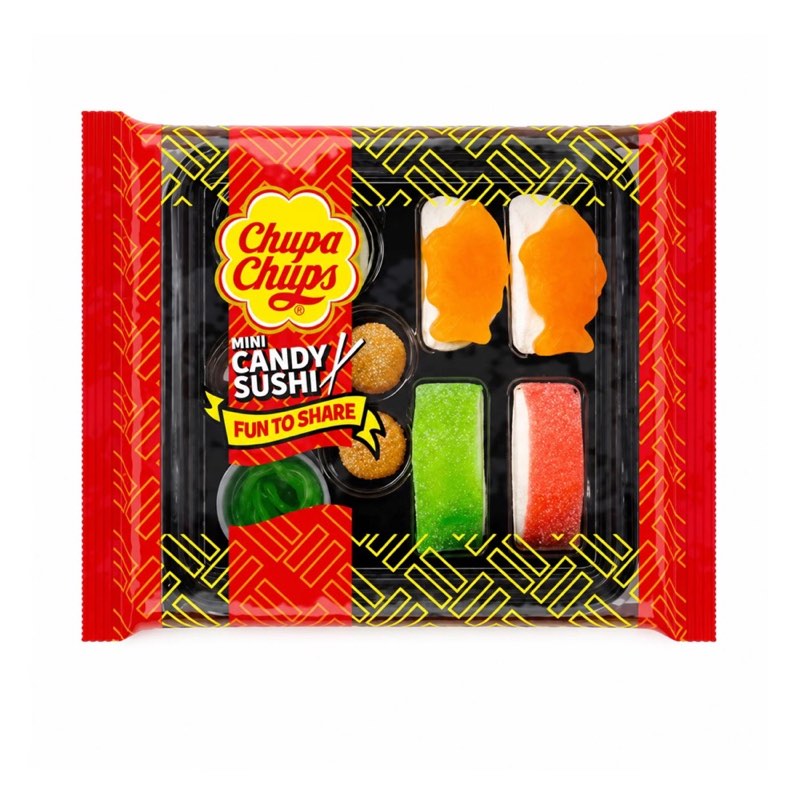
| Chupa Chups Mini Candy Sushi tray | 100g | £2.99 | £2.99 |
| Buchanan's Highland Toffee carton | 150g | £3.49 | about £2.33 |
| Candy Realms Tutti Frutti Tubes tub | 780g | £7.99 | about £1.02 |
Read that table and the shape of the confectionery market becomes obvious immediately. The 780g tutti frutti tub at £7.99 is less than half the cost per 100g of this bag, and roughly a sixth of the cost per 100g of a novelty box. If your only concern is getting sugar onto a table, bulk wins by a distance and it is not a close contest.
But cost per 100g is only the right metric when weight is the thing you need. It is the wrong metric in at least four common situations.
When you need portability. A 780g tub does not go in a coat pocket. A small bag does. Paying £2.49 per 100g instead of £1.02 is the price of a sweet that travels, and for most people most of the time, that premium is entirely rational.
When you need the purchase to stop. A tub is a standing invitation. A small bag has a natural end. If you would rather not have three-quarters of a kilo of sweets in the house, buying small is not poor value — it is the whole point.
When you need variety rather than volume. Two bags at £1.99 — this one and its 80g stablemate in the tropical direction — give you two flavour directions for under four pounds. Half a kilo of one thing gives you one. For a hamper, a party bag or a gift, variety is the product and weight is irrelevant.
When the format does the work. The candy sushi tray at £2.99 for 100g costs more per gram than this bag, and it is still a sensible purchase, because you are buying a presented item that needs no bowl and no arranging. Presentation is a real thing to pay for.
Now the per-piece and per-guest maths, which is what you actually need for catering. We do not publish a piece count for this bag, and we will not guess at one — piece weights vary and a made-up figure is worse than none. So work in grams per head instead, which is how caterers do it anyway.
Useful rules of thumb: for a party bag alongside other items, 15–25g of one sweet per child is plenty, which makes an 80g bag roughly three to five bags' worth of this component. For a grazing table where guests help themselves across several bowls, plan on 40–60g per adult across the whole spread, of which this bag would be one contributing element rather than the bulk. For two people sharing over an evening, 80g is comfortable. For one person rationing, it is a week of one or two a day.
The counting-based comparison is worth one line as well: a ten pack of chew bars at £2.50 works out at 25p a bar, which is the easiest per-head sum in the shop when you know exactly how many children you are feeding. Where an exact count matters more than an exact weight, a counted pack beats a weighed bag every time.
The last piece of arithmetic is the one nobody does: cost per minute. A chew occupies a minute or more; a small jelly occupies seconds. On that basis a slow sweet is dramatically better value than its per-gram figure suggests, and it is the honest reason a modest bag of chews outlasts a much larger bag of something softer. If value means "how long did this purchase actually last", the chew is one of the best-value formats on the shelf.
Putting a selection together around it
The berry chew's role in a mixed selection is the dependable one. It is the item people eat without deliberating, which means you should build everything else around the assumption that this will get finished.
Given that, the useful additions are the things it cannot do.
It cannot provide bulk. For that, go by weight — the loose sweets range is where the volume lives, and a single scooped line will outweigh several small bags for less money. If you would rather set the proportions yourself rather than take a manufacturer's ratio, our pick and mix section is built for that job and is the right tool for any table where you care about the balance of the selection.
It cannot provide richness. Berry against caramel, toffee or chocolate is a reliable pairing, and any of the three transforms a table of fruit sweets into something that feels like a proper spread. The candy and chocolate shelf covers the chocolate side of that.
It cannot provide theatre. Every good table has one item people pick up and comment on. A novelty box or an unusual format does that job, and one is enough — two novelties on the same table cancel each other out.
It cannot provide a contrasting mouthfeel, which after the texture section above should be the first thing you reach for. Something aerated, something springy, or something that fractures. Any of those three next to a chew makes both taste more interesting than either does alone.
And it cannot provide the traditional register. If the spread is for a mixed-age group, something from the retro shelf earns its place purely on recognition. Green & Red Candy Poles at £5.49 are a good choice for that slot — a pole format is a completely different physical object from a small chew, and it adds height to a table, which is a presentational trick worth knowing.
Occasions this bag is right for
Party bags and classroom treats. This is the bag's strongest use. Familiar flavours, a format that divides easily, and a price that does not spiral when you are filling twenty bags. Supervision matters with younger children, but for school-age parties this is about as uncontroversial a choice as confectionery offers.
Long journeys. A chew is the right sweet for a car or a train because it is slow, quiet and clean. Nothing melts over your hands, nothing needs a bowl and nothing shatters into a seat. Eighty grams is the right amount for a journey rather than a holiday.
The household tin. Every house that keeps sweets has a default. The default should be something everybody eats, which rules out anything too sour, too rich or too unusual. A berry chew bag is a textbook default, and at under two pounds it is easy to replace without thinking about it.
Mixed hampers. Small bags are the connective tissue of a good hamper. Putting this next to the tropical bag from the same line gives you a matched pair at the same 80g size and the same price — two obviously related items rather than two unrelated ones, which reads as deliberate rather than assembled at random.
Film nights. Slow sweets suit long films for obvious reasons. Put something fast alongside it so there is a choice of pace, and keep the total quantity modest — a film night is two hours, not an afternoon.
Everyday. The least glamorous occasion and by far the most common. A bag in a drawer, one piece at a time, replaced when empty. Most confectionery that actually gets eaten is bought for this.
Looking after an open bag
Chews ask very little, but the two things that spoil them are both easy to avoid.
Warmth softens the material until pieces lose their shape and press together in the bag. Left long enough in a hot car or on a sunny shelf, pieces can cling to one another. That is a nuisance rather than a problem, but separating them afterwards is never completely successful, so prevention is worth the small effort. A cupboard at normal room temperature is all that is needed. If a bag has already gone soft, twenty minutes somewhere cool will bring the firmness back.
Open air dries a chew from the outside in, stiffening the surface and shortening the flavour release. This happens over weeks rather than days, so it only matters if you are a slow eater. Fold the top of the bag over tightly and clip it, or tip what is left into a small airtight tub, and the issue goes away entirely.
Two things that are not worth doing: refrigerating by default, which makes chews stiff and slow rather than fresher; and freezing, which changes the texture substantially and is not an improvement unless you specifically want an extremely firm sweet.
Keep the bag flat rather than crushed at the bottom of a rucksack, out of direct sunlight, and away from anything strongly scented, since soft sweets pick up smells from their surroundings more readily than hard ones do.
And the standard notes, which apply to everything we sell: follow the date and storage guidance printed on the manufacturer's packaging, which is the authoritative source for the bag you have received. Sweets are a treat rather than an everyday food. Whole chewy sweets and small hard sweets are a choking risk for young children and should be supervised. If anyone eating them has an allergy, check the manufacturer's packaging on arrival before eating.
Berry or tropical, and how many bags
The listing offers one size at £1.99, so there is no format decision to make. The two real questions are which of the two bags in this line to buy, and how many.
Take the berry bag when the audience is broad or unknown, when you are catering for children, when you want the reliable item on a table, or when you are restocking a household supply that has to please several people. Familiarity is the feature here, and it is worth more than novelty in all of those situations.
Take the tropical mix instead when you are buying for yourself, for an adult who says they have gone off sweets, or for a table that already has plenty of red fruit on it and needs a change of direction. It is the more distinctive of the two and the more likely to be remembered.
Take both when you want variety for very little money. Two 80g bags at £1.99 each give you two clearly different fruit registers in the same texture, which is an unusually clean comparison and a genuinely useful pairing on any table where people have different tastes.
On quantity: one bag for a household, two if you are sharing regularly, three or more only if you are filling party bags or building a hamper. There is no bulk discount to chase in this listing, so buy what you will use.
Where it sits in the shop
This bag is filed by texture rather than by flavour, which tells you something about how we think it is best shopped. It lives on the chewy sweets shelf alongside traditional chews, chew bars, and the newer imported formats, and that shelf is the fastest route to everything that eats like this regardless of what flavour it claims on the front.
It also appears in the loose sweets section, which is the largest part of the site at over three hundred and fifty lines and the natural place to browse when you are stocking up rather than buying a single item.
From there, the shelves worth knowing are the build-your-own pick and mix area for assembling a selection by hand, the jelly and gummy shelf for the springy texture that contrasts with a chew, the retro range for the traditional sweetshop lines, and candy and chocolate when a spread needs something richer than fruit. If you would rather just look at everything without a filter, the complete shop listing is the place to start.
Questions shoppers ask about this bag
Which berry flavours are in the mix?
Our listing does not break the individual flavours out, and we will not guess. What we can confirm is that it is a berry-flavoured mix, so there is more than one flavour in the bag, and that the pieces are chews. The specific line-up is printed on the manufacturer's packaging, which is the right place to check and will be accurate for the bag you have actually received. If you need to know the exact flavours before ordering, a single-flavour line is a better fit than a mix.
Is the ratio of flavours the same in every bag?
No, and no mix bag can promise that. Mixes are filled by weight rather than counted by flavour, so the proportions will vary from bag to bag. Most of the time the variation is small enough that nobody notices; occasionally a bag leans heavily one way. If having an even split matters — for party bags where each child gets the same thing, say — buy two bags and combine them, which evens out the odds considerably.
How many pieces will I get?
We do not publish a piece count, because individual piece weights vary and an invented number would be worse than no number. Work in grams instead: the bag is 80g. As a guide, that is three to five party bags' worth as one component among several, an evening for two people sharing, or about a week of one or two a day for one person.
Is it sour?
No. Berry flavours read as bright and can seem slightly sharp at the top of the flavour, but this is a plain fruit chew rather than a sour sweet, and the chew format does not lend itself to sour coatings — there is no exposed surface to carry one and nothing dissolving to release it. If you want a genuine pucker, look for coated or powdered sweets instead.
Are chews harder work than jellies?
They are slower, which is not quite the same thing. A jelly springs back and fights you, then tears; a chew compresses, gradually loses cohesion and breaks down over a minute or two. Most people find the chew less tiring over a long session because it stops resisting after the first few bites, while a jelly keeps resisting to the end. It also means one chew lasts a great deal longer than one jelly.
Why do they seem harder some days than others?
Temperature. Chewy material stiffens as it cools and softens as it warms, across a range narrow enough that ordinary room conditions move it noticeably. A bag from a cold car will feel firm and release flavour slowly; the same bag after an hour indoors will be quite different. Hold a piece in your hand for a minute if you want it softer. Nothing has gone wrong with the sweets.
Is this good value compared with a big tub?
Per gram, no. At £1.99 for 80g this works out at about £2.49 per 100g, while a large tub can come in nearer £1 per 100g. But you are not buying the same thing. A bag is portable, it has a natural stopping point, and it gives you variety for very little outlay. If the job is filling bowls for a party, buy by weight. If the job is a drawer, a glovebox or a party bag, buy the bag and do not feel short-changed.
Can I use these in a pick-and-mix selection?
Yes, and they fill the dependable slot that home-made selections often miss — the item everybody eats. You would tip them in rather than scooping them, and because chews are drier on the surface than most jellies, they sit alongside other sweets without making the selection sticky. Our pick and mix range covers the rest of the components, and lets you set the ratios rather than accept somebody else's.
Do they stick together?
They can if the bag gets warm, because softened pieces pressed against each other will cling. Storing the bag somewhere cool and keeping it flat rather than crushed prevents it almost entirely. Pieces that have already softened can be firmed up with a short spell somewhere cool, though once they have genuinely fused they will not separate perfectly again.
Are they suitable for young children?
Sweets are a treat rather than an everyday food, and whole chewy pieces are a choking risk for young children, so supervision is sensible and you should use judgement about age. Anyone in the household with an allergy should check the manufacturer's packaging on arrival before eating — that packaging carries the definitive information for the specific bag you have.
What is the single best thing to buy alongside it?
Something with a different texture. Flavour variety is easy and most people over-buy it; texture variety is what actually makes a selection feel generous. Something aerated, something springy or something that fractures will all do more for a table than a second fruit flavour would. If you only add one thing, make it a textural opposite rather than a flavour cousin.
How long will an opened bag keep?
Longer than you would think, provided it is sealed and kept cool. Chews toughen slowly as they lose moisture rather than spoiling quickly, so the change is gradual and the sweet stays perfectly pleasant for a good while. Fold the bag over and clip it or decant into a small airtight tub. As always, the date printed on the manufacturer's packaging is the figure to go by.
To sum up
The dependable bag. Familiar fruit flavours in the slowest-eating format on the shelf, at a price that makes it an easy thing to keep in stock rather than an occasional treat. It is engineered to sit between the spring of a jelly and the pull of a toffee, and that middle ground is why a chew lasts as long as it does. Buy it for party bags, for the car, for the drawer, or for the one thing on a table that you know will get finished — and pick up the tropical version too if you want the same texture pointed in a different direction.
More chewy sweets
More loose sweets sweets
Where this sits
Hi-Chew Berry Mix Bag 80g appears on these shelves. Browse them, or jump to something nearby.
You might also like