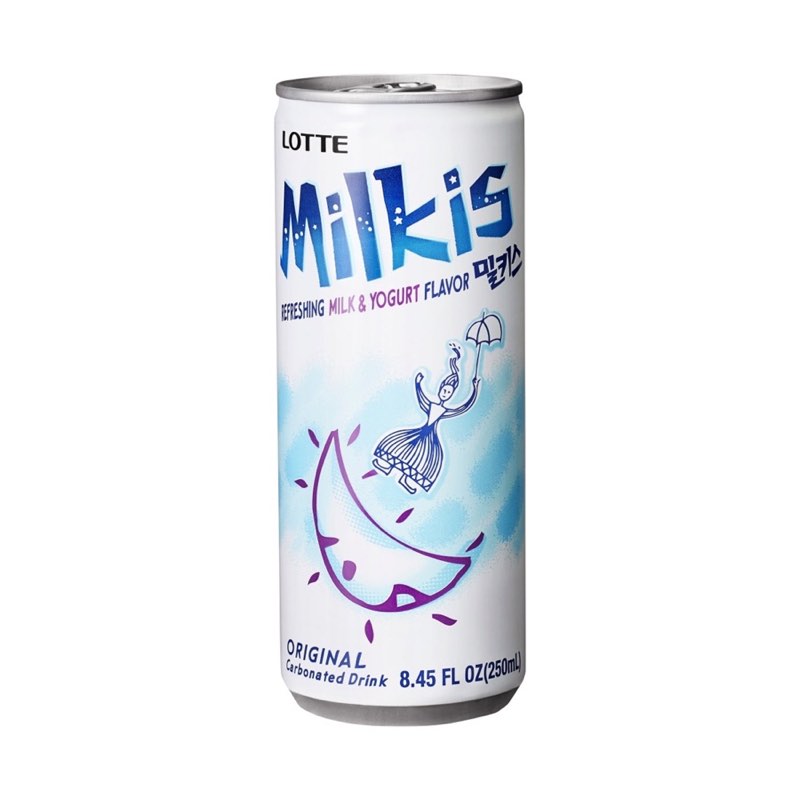
Home / Loose Sweets / Milkis Refreshing Milk & Yogurt Original Korean Cream Soda 250ml
Milkis · 250g
Read the full guide
Milkis Refreshing Milk & Yogurt Original Korean Cream Soda 250ml
£1.99
✔ In stock — ready to ship
Fresh stock
Free over £20
Same-day dispatch
Secure checkout
Start where the shopper starts: with the drink in your hand and no expectations beyond the name printed on it. Milkis Refreshing Milk & Yogurt Original Korean Cream Soda 250ml is a soft drink, it is £1.99, and it comes in a single 250ml serve. That is the whole transaction. What happens after you open it is the part worth writing about, because this is not a soft drink that behaves like the ones most British shoppers grew up reaching for.
The first thing that registers is not flavour at all. It is texture. A cream soda, by the logic of its own category name, is a soda that has been built to feel softer than a straight fizzy pop, and this one leans hard into that softness. The carbonation is present, but it arrives fine and close-packed rather than sharp and gassy. It does not sting the back of the throat the way a hard lemonade does. It fills the mouth more than it attacks it. If you have only ever drunk cola and orange fizz, the sensation is genuinely unfamiliar for the first two or three swallows, and then it stops being unfamiliar and starts being the point.
The full guide to Milkis Refreshing Milk & Yogurt Original Korean Cream Soda 250ml
5,257 words on how it eats, who it suits, how to serve it and what to put beside it.
The first mouthful, described honestly
Then the flavour lands. The flavour we list for this one is milk, and that is exactly what it reads as — a milk note, rounded and mild, sitting on top of the fizz rather than underneath it. The name puts milk and yogurt forward as a flavour description, and the yogurt half of that description does real work: there is a faint cultured tang, the kind of gentle sourness you get at the very edge of a plain set yogurt, and it keeps the milk note from going flat or cloying. Sweetness is there, plainly, but it is not the loud sugar hit of a boiled sweet or a cola. It reads more like the sweetness in a milk bottle sweet than the sweetness in a fizzy cherry drink.
The finish is short and clean, which surprises people. A milk-flavoured drink sounds like it ought to coat the mouth and stay there. This one does not. The fizz lifts the flavour off the tongue within a few seconds and leaves very little behind — a trace of the cultured note, a memory of sweetness, and that is it. The practical consequence is that you can drink the whole 250ml without the last third feeling like work, which is not true of every sweet soft drink at this size.
Temperature changes it more than it changes most drinks. Cold, the tang is forward and the sweetness sits back; the whole thing reads crisper and the fizz feels finer. At room temperature the milk note broadens, the sweetness comes up, and the drink turns noticeably softer and more dessert-like. Neither is wrong. If you are serving this to someone who is suspicious of the concept, serve it properly cold — the cold version is the easier introduction by some distance.
Poured into a glass rather than drunk straight from the 250ml pack, it behaves differently again. The head that forms is fine and short-lived, and the drink loses a little of its close-packed feel as it sits. Pour it and drink it; do not pour it and leave it on the side while you finish something else. A drink built around delicate fizz is a drink that rewards being drunk promptly.
What you are actually buying
One 250ml serve of a soft drink, priced at £1.99, currently in stock, sold in one size only. There is no multipack option on this listing and no larger format hiding behind a dropdown — what you see is the whole range for this particular line. That simplicity is worth stating plainly, because a lot of drinks listings are a maze of sizes and this one is not.
Two words in the name deserve clarification, because shoppers reasonably ask. Cream soda describes the style of drink, not an ingredient list — it is a naming convention for a soft, rounded, sweet fizzy drink, and it is used here the way it is used on countless other labels. Korean cream soda is the product's own name as it is sold, and we treat it as a name rather than as a statement about where anything was made; we do not hold verified origin data for this line and we are not going to invent any. If origin matters to you, the manufacturer's own packaging is the authority, and it will be in your hands when the order arrives.
Similarly, "Milk & Yogurt" on this listing is a flavour description. It tells you what the drink is meant to taste of. It is not a recipe, and we do not publish an ingredient breakdown for it. If you have an allergy or an intolerance of any kind, read the manufacturer's packaging before you drink it — that label is complete and current in a way that no shop description can be.
Who this is for, and when to reach for it
The clearest audience is the shopper who has already worked their way through the obvious soft drinks and wants something that does not taste like the last six things they bought. This is a genuinely different flavour experience rather than a small variation on an existing one, and that is rarer than it sounds. Most "new" soft drinks are a familiar shape in a new colour. This is a different shape.
It also suits the person building a mixed order who wants one thing on it that nobody at the table will have tried. A £1.99 drink is a low-stakes bet. If the room loves it, you have found something. If the room finds it strange, you have spent under two pounds discovering that, and there will be somebody who finishes it out of sheer curiosity.
There is a third audience worth naming: people who find most fizzy drinks too aggressive. If sharp carbonation and hard acidity are the reason you have drifted away from soft drinks, the softer fizz and the mild, rounded flavour here are a reasonable route back in. It is a sweet drink and we are not going to pretend otherwise, but it is not a sharp one.
When to reach for it: alongside something salty, alongside something very sour, at the end of a meal instead of a pudding, or as the one interesting item on a drinks tray of otherwise predictable cans. It is not a drink for washing down a big plate of food — it is too distinctive to disappear into the background — but it is very good as a small event in its own right.
Where a milk soda sits on the sour-to-sweet spectrum, and how to build around it
Every sweet counter and every drinks chiller can be laid out along a single line running from bracingly sour at one end to flatly sweet at the other, and almost every buying mistake people make is a mistake about position on that line. They put three sour things next to each other and wonder why the third one tasted of nothing. They build a box of pure sweetness and wonder why nobody got past two pieces. Position on the spectrum is the most useful single thing to think about when you are assembling anything — a pick and mix, a party table, a film-night spread, a hamper.
This drink sits in an unusual place on that line. It is clearly on the sweet half, but it is not at the far end, because the cultured tang pulls it back toward the middle. Call it sweet with a hinge. That hinge is what makes it so useful next to other things, because it can face in either direction depending on what you put beside it.
Put it next to something genuinely sour and it becomes the relief. This is the classic move and it works because sourness is fatiguing in a way sweetness is not — your mouth can only take so many hits of acid before it stops registering them, and a soft, rounded, faintly tangy drink resets the palate faster than water does. If you are working through Barnett's Mega Sour Apple Candy Bags 104g at £3.99, which is about as far toward the sour end as our shelves go, this is the thing you want within arm's reach. The pairing is not subtle and it is not meant to be: one is an assault, the other is the recovery.
Turn it the other way and put it next to something rich and sweet, and the hinge works in reverse — the tang starts to read as a cut rather than as a softener. Against the deep dairy sweetness of a Buchanan's Butter Tablet Carton 150g at £3.49, the drink stops feeling sweet at all and starts feeling like the acid line in the pairing. The same happens next to Bristow's Traditional Salted Caramel Bon Bons at £5.49, where the salt in the caramel gives the drink's tang something to push against. This is why a single item can look like it belongs in two different places on a spread: the spectrum is relative, and everything moves depending on its neighbours.
The failure mode to avoid is putting it next to something that occupies exactly the same position. Two mild, sweet, dairy-leaning things side by side cancel each other out — neither gets to be the interesting one. That is the only reason to be careful about serving this with the milk-flavoured sweets we stock rather than automatically pairing them. They are cousins, not contrasts, and a spread made entirely of cousins is a boring spread.
A practical way to use the spectrum when you are ordering: pick one item from each third of the line and let them do different jobs. One sour anchor, one middle item, one rich sweet item. This drink is an excellent middle item because it is a drink — it occupies the middle position without taking up a slot in the sweets themselves, which means you can be bolder with the sweets on either side of it. A table with a hard sour at one end, this in the middle, and something like BUBS Banana & Caramel Foam Sweets at £7.50 at the soft end has real range across it, and every item gets to be distinct.
The spectrum also explains pacing. Sour things are front-loaded: they hit hard, fade fast, and invite you straight back for another. Sweet things are back-loaded: they build, and they build to a point where you stop. A drink sitting in the middle interrupts both patterns, which is exactly what you want at hour two of an evening when everybody has stopped tasting anything. Something at Loose Sweets prices will keep a bowl going; something like this keeps the mouths that are eating from it working properly.
Which era of the counter this belongs to
British sweet counters have gone through recognisable eras, and you can usually place a product on that timeline within a second or two of looking at it. There is the weighed-out era — glass jars, a scoop, a paper bag, the shopkeeper's wrist doing the arithmetic. There is the pre-bagged era that followed it. There is the sour boom, when heat and acid arrived and half the shelf turned neon. And then there is the era we are in now, which has no single flavour signature at all and is instead defined by the fact that the counter went international.
This drink belongs to that last era completely. It is not a revival of anything and it does not pretend to be. Twenty years ago a British sweet shop's drinks section was cola, lemonade, orange, maybe a dandelion and burdock for the traditionalists. The idea that a shopper would walk in and deliberately buy a milk-flavoured cream soda because they had seen one online would have made no sense. Now it is one of the most ordinary requests we get, and the reason is a genuine generational shift in how people find out what to try.
That shift matters for how you think about the product. Older generations came to sweets through proximity — you ate what your local shop stocked, and your taste was shaped by a hundred-yard radius. Younger shoppers come to sweets through discovery — they see something, they want to know what it tastes like, and geography is not really part of the decision any more. The result is a counter where a boiled sweet from another century and a soft drink nobody had heard of five years ago sit on the same order, and neither looks out of place, because they got there by different routes and both routes are legitimate.
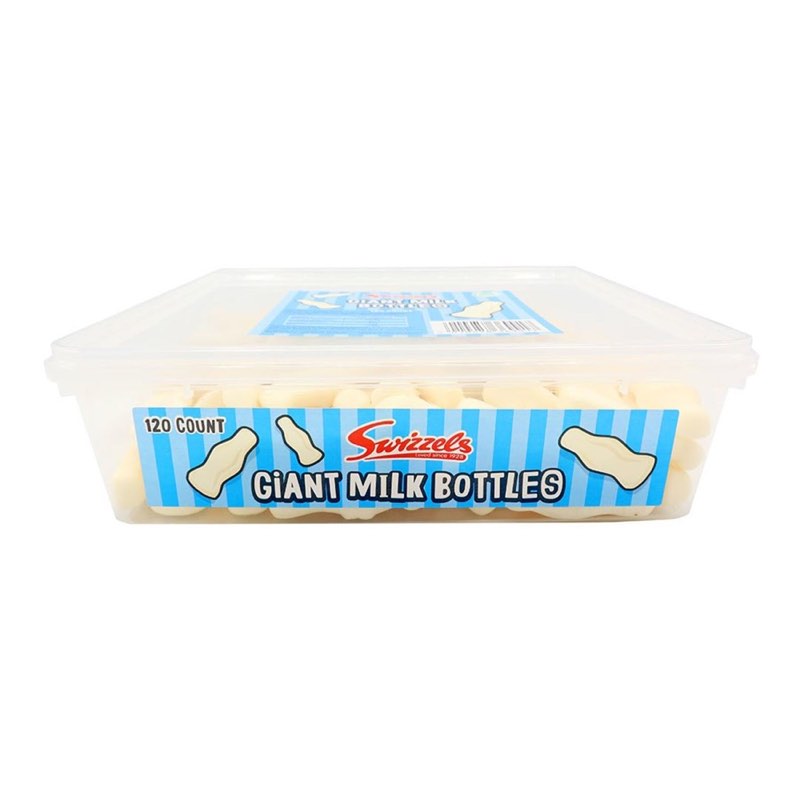
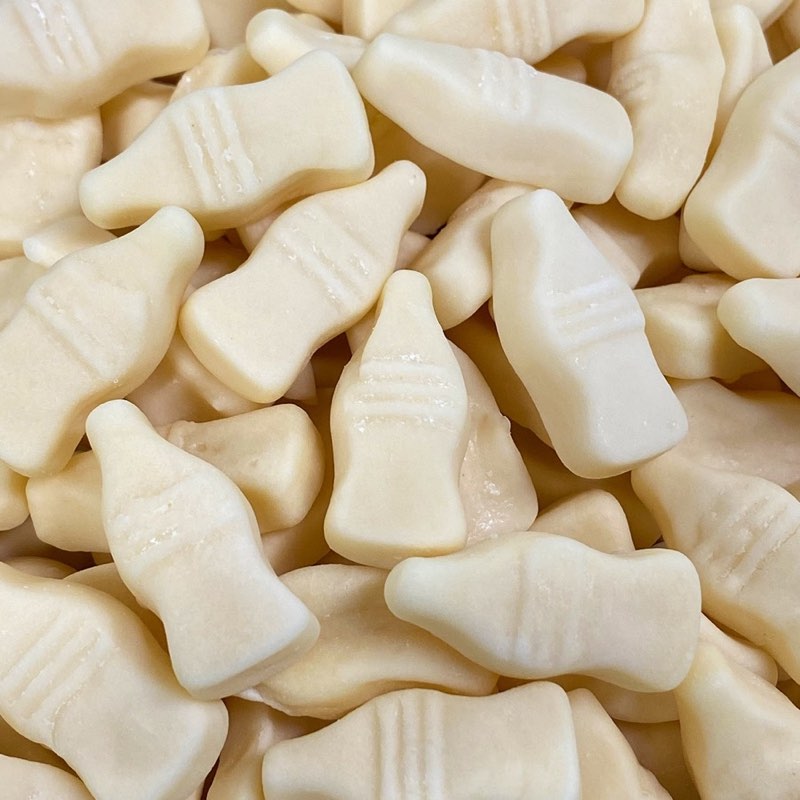
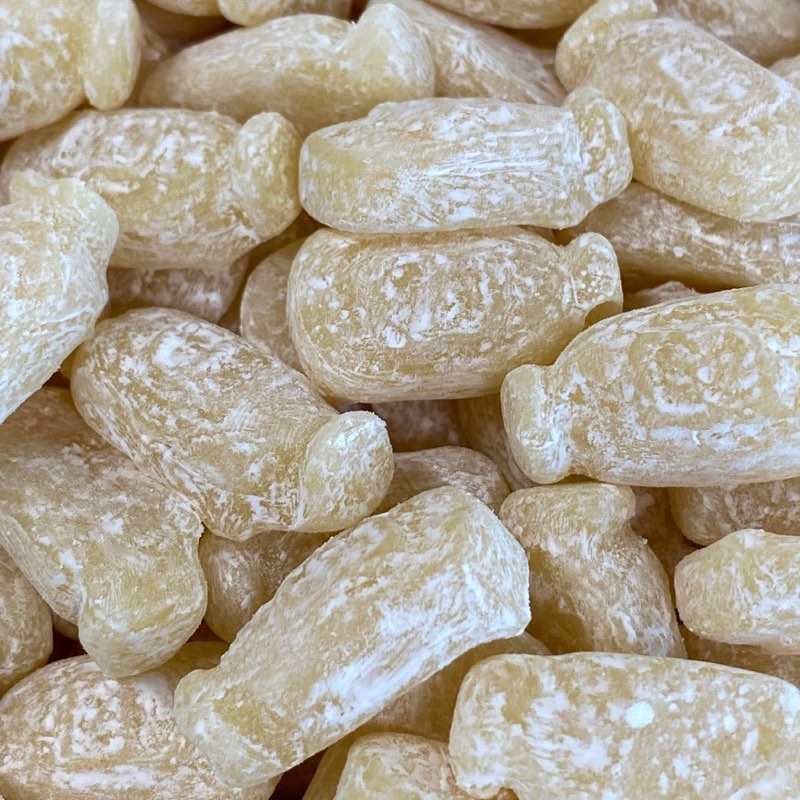
Where the nostalgia actually lives with this one is in the flavour family rather than the product. Milk-flavoured confectionery has a long and entirely British history, and anybody over thirty in this country has a memory attached to it. The chewy milk bottle is one of the most durable shapes on the counter — it survived every era listed above without changing much at all. We still sell it in two forms: the dusted, softer Barratt Milk Bottle Gums Dusty at £5.49, and the larger, chewier Swizzels Giant Milk Bottles Tub at £9.99. Hand somebody one of those and they will tell you a story about a specific shop. Hand them this drink and they will tell you where they first saw it online. Same flavour family, two completely different kinds of memory.
That contrast is worth exploiting deliberately if you are putting together something for a mixed-age group. Buy the old thing and the new thing in the same flavour family and put them next to each other. It gives the room something to talk about that is not small talk, and it does something more useful than either item does alone: it shows the older guests that the new stuff is not arbitrary, and it shows the younger ones that their discovery has ancestors. The Barratt Jelly Babies at £5.49 do the same job from a different direction — a shape so old it is practically furniture, sitting happily next to an import somebody found this year.
There is one more generational note. Drinks used to be the boring part of a sweet order — the thing you added at the end because somebody would be thirsty. They are now, for a lot of shoppers, the interesting part, and the sweets are the safe base. That inversion is recent and it is real, and it is why a 250ml soft drink gets a page this long. It is not an afterthought on the order any more. Quite often it is the reason for the order.
The milk flavour family, and what else lives in it
Milk as a flavour is a strange and specific thing, and it is worth separating from the actual dairy it is named after. As a confectionery and soft-drink flavour it means: rounded, low-acid, gently sweet, with a soft edge rather than a bright one. It is closer in character to vanilla than to anything fruity, and it behaves like a background colour — it makes whatever sits next to it look more vivid.
That makes the milk family unusually forgiving. Fruit flavours compete with each other; two strong fruits in one mouthful is usually a mess. Milk flavours do not compete, they underlay. This is why milk bottles have survived a century of pick and mix without ever being anyone's single favourite sweet — they are the flavour that makes the bag work rather than the flavour you choose the bag for.
Our milk flavour shelf is small and deliberately so; there are six lines on it, and they are all doing roughly the version of the job described above. If you like this drink specifically because of the soft, rounded quality rather than because it is fizzy, that shelf is the right place to browse next, and the two milk bottle lines above are the obvious starting points.
The tang is the part that does not belong to the traditional milk family at all. A cultured note — that faint sourness at the edge — is a modern addition to the flavour, and it is the single thing that makes this drink read as contemporary rather than as a liquid version of a sweet from 1970. If you want to taste what milk flavour is like without that tang for comparison, the milk bottle sweets are the control sample. Try them in the same sitting and the difference is obvious immediately.
Building an order around it
A single 250ml drink is rarely the whole order, so here is how to build outward from it sensibly rather than just adding things you already like.
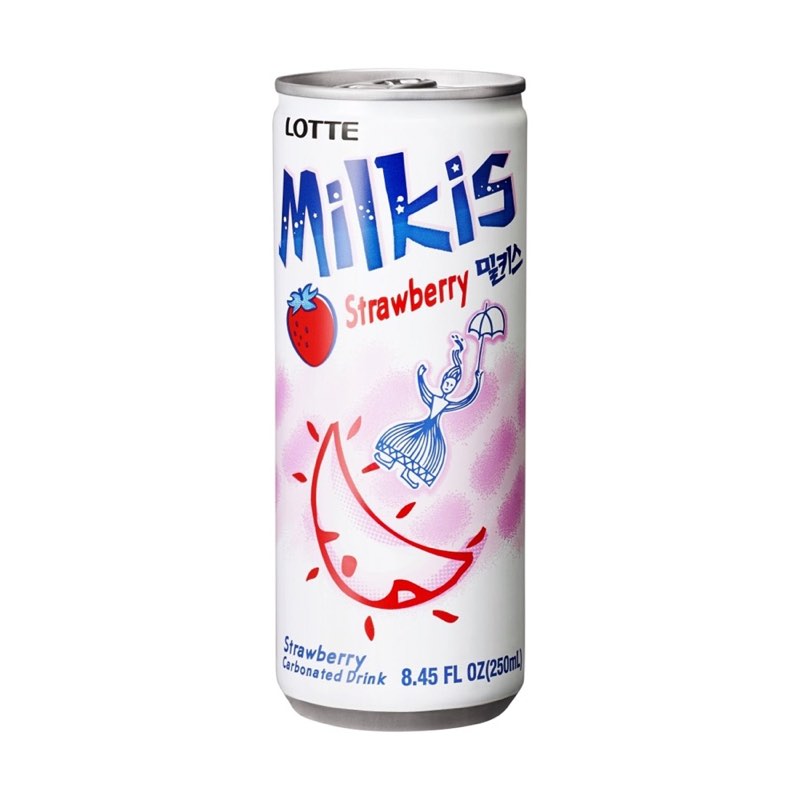
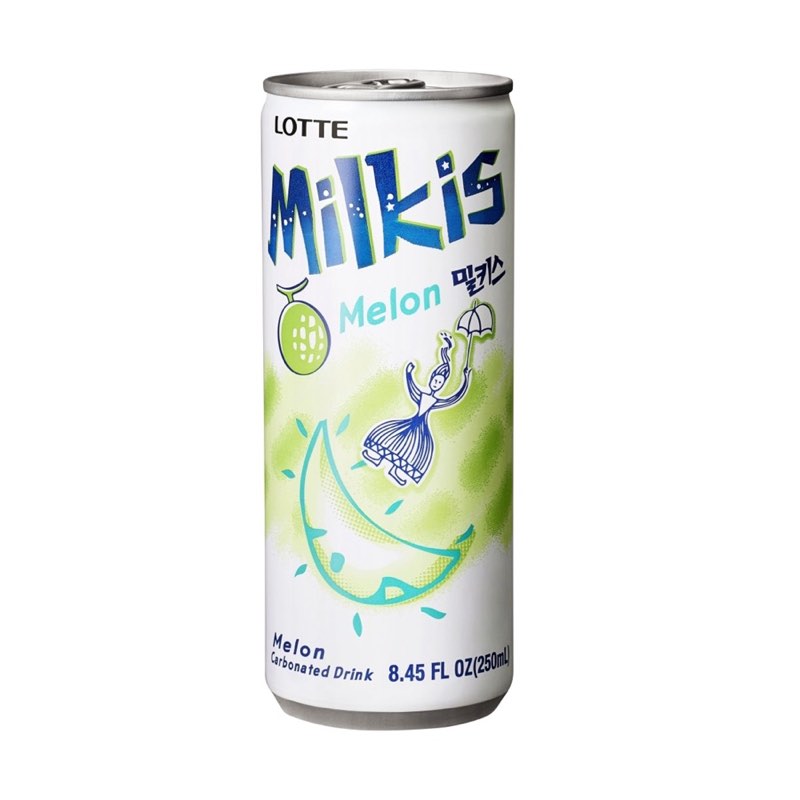
The simplest expansion is sideways into the rest of the line. There are two other Milkis flavours on the site at exactly the same £1.99: Milkis Strawberry Korean Cream Soda 250ml and Milkis Melon Korean Cream Soda 250ml. Buying all three at once costs £5.97 and turns a single purchase into a tasting, which is a far better use of six pounds than three of the same thing. The original is the baseline; the other two tell you how the house style behaves when a fruit note is laid over it. If you are only going to add one, take the melon, also £1.99, because melon against a milk base is the bigger departure of the two and therefore the more informative second can.
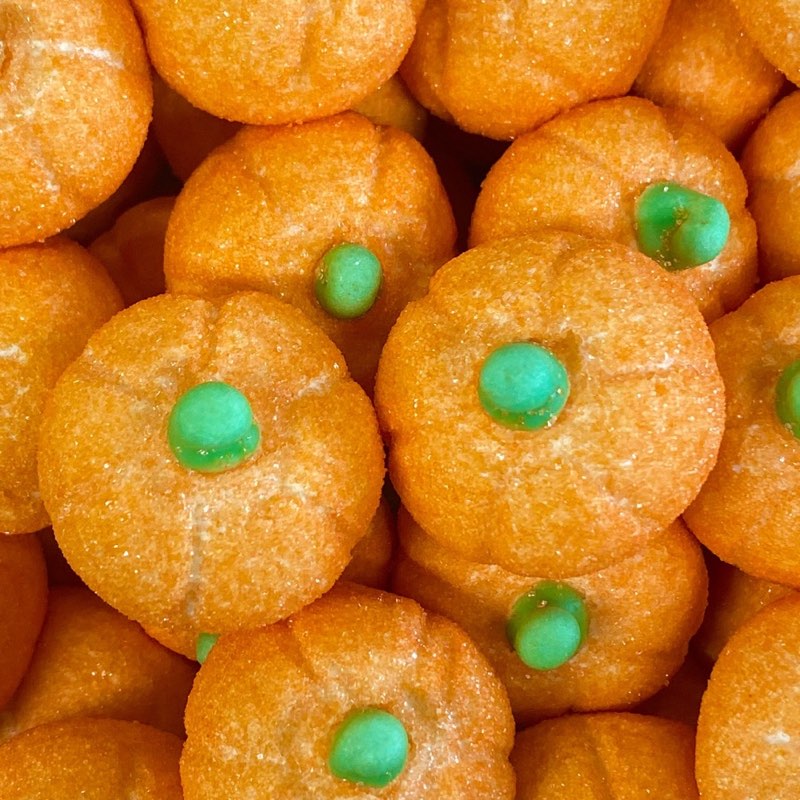
The second expansion is into contrast, using the spectrum logic set out above. One hard sour item earns its place on almost any order, and a bag of sour apple at £3.99 is the cheapest way to get real acid onto the table. If you would rather have the contrast come from texture than from acid, Briquette at £5.49 pulls the spread toward a firmer, older-fashioned kind of eating, and Bulgari Pumpkin Mallows at £5.49 pulls it toward soft and pillowy. Pick one direction; do not pick both and everything else as well, or the table turns to mush.
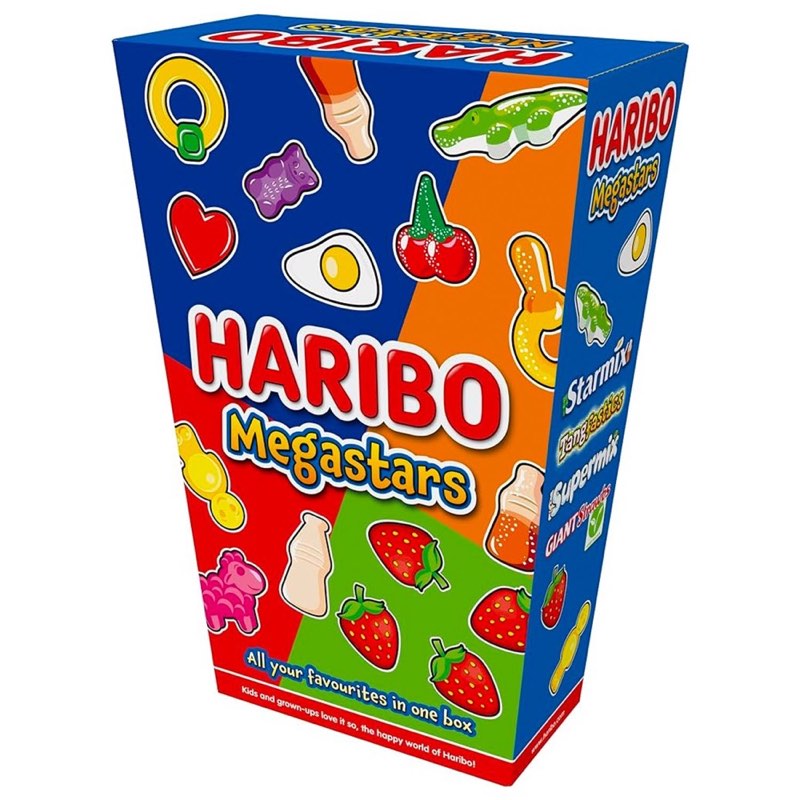
The third expansion is the volume item. Every spread needs one thing that people can keep taking from without thinking, and that job wants a box rather than a bag. The Haribo Megastars Gift Box 800g at £6.99 is the straightforward answer — 800g is genuinely a lot of sweets, and it is the item that stops the interesting things from being eaten out in the first twenty minutes. Let the drinks and the small bags be the talking points and let the big box do the heavy lifting.
If you would rather assemble your own rather than buy formats, our Pick & Mix section is built for exactly that, and the whole range of sweets is browsable in one list if you prefer to scroll than to filter.
Occasions this actually suits
Not every product belongs at every event, and a small, distinctive, slightly odd drink belongs at some very specific ones.
The tasting. This is its strongest occasion by a distance. Three or four unusual drinks, small glasses, everybody tries everything, everybody argues. At £1.99 a unit you can build a six-drink tasting for around twelve pounds, and the conversation it generates is worth more than the drinks are. Do the original first, before anything fruit-led, because it is the baseline the others are variations on.
The film night. A drink that does not crunch, does not crumble and does not need a bowl is a good film-night citizen. Pour it into glasses before the film starts rather than opening things halfway through the second act. Pair it with something quiet to eat — soft sweets rather than anything hard or wrapped.
The hamper or gift box. Small, unusual and inexpensive is the exact profile of a good hamper filler. A single 250ml drink tucked among sweets reads as thoughtful in a way that a fourth bag of gummies does not, and it gives the recipient something to open first. If you are building a box around it, mix formats deliberately: something to unwrap, something to pour, something to share.
The office or classroom oddity table. Anywhere a group of people will stand around and try things, this earns a spot. It is cheap enough to buy several, distinctive enough to provoke opinions, and mild enough that nobody is going to be genuinely unhappy with what is in their glass.
End of a meal. Cold, in a small glass, instead of a pudding. It is sweet, it is short, and it finishes cleanly. This works better than it sounds and it is the use most people never think of.
Where it does not belong: a large party where drinks get poured into plastic cups and forgotten. Delicate fizz and a distinctive flavour are wasted in that setting, and you will spend more per head than a large bottle of something ordinary would cost. Save this for the occasions where people will actually notice what they are drinking.
Portioning, price and what £1.99 buys
The arithmetic here is simple, which is a pleasant change. One purchase is £1.99 for 250ml. That works out at just under 0.8p per millilitre, and as a single-serve drink it is one portion for one person — there is no meaningful way to divide it that does not feel stingy.
Where portioning gets interesting is in the tasting use. Poured into small tasting glasses at roughly 60ml each, one 250ml serve gives you four tastes. That turns £1.99 into four servings of about 50p each, which is the cheapest way to let a room try something. Three flavours poured this way — all three of ours are £1.99 — gives twelve tastes for £5.97, or four people getting a full flight of three for about £1.50 a head. For a shared experience rather than a drink, that is genuinely good value and it is the buying pattern we would actually recommend.
As a straight drink for one person, £1.99 is a mid-range price for a single-serve soft drink and you are paying for distinctiveness rather than for volume. That is a fair trade if distinctiveness is what you want and a poor one if you are thirsty and want a lot of liquid cheaply. Be honest with yourself about which of those you are doing before you add four to the basket.
Compared against the sweets it will sit next to, it is at the affordable end. Most of our bagged lines run £5.49 and the larger boxes run into seven pounds and up, so adding a couple of drinks to a sweets order changes the total very little while changing the character of the order quite a lot. That is usually the right way to think about it: not as a drink purchase, but as the cheapest interesting thing you can add to an order you were making anyway.
Storing it sensibly
Keep it somewhere cool, dark and stable until you want it. Cupboard, not windowsill. The two enemies of any sweet fizzy drink are heat and light, and both of them will dull the flavour before they do anything more dramatic.
Chill it properly before serving — several hours in a fridge rather than twenty minutes, because a drink that is merely cool tastes noticeably sweeter and flabbier than one that is properly cold. If you are in a hurry, ice and water in a bowl will chill a 250ml serve far faster than a freezer will, and it will not risk the freezing that a forgotten drink in a freezer compartment can produce.
Do not freeze it deliberately. Carbonated liquid expands when it freezes and the results are messy at best.
Once opened, drink it. This is a single-serve format with delicate fizz and there is no good way to store half of it. If you genuinely need to pause, cover it and put it back in the fridge, and accept that what you come back to will be softer and flatter than what you left.
Check the date on the manufacturer's packaging when the order arrives and store accordingly. Our shelf description is not a substitute for the printed date, and the printed date is the one that matters.
Sizes, variants and what else the range offers
This listing has one size and one price: 250ml at £1.99. There is no larger format, no multipack and no variant selection to make, so the only decision in front of you is how many to buy.
The range decision is a different question. Three flavours exist on our site, all at £1.99, all at 250ml. Here is how to choose between them if you are only taking one:
- Take the original — this one — if you want to understand what the house style actually is before you judge it. The milk-and-yogurt flavour is the baseline and everything else is a variation on it.
- Take the strawberry at the same £1.99 if you are buying for somebody cautious, or for children. A familiar fruit note laid over the soft base is the easiest first encounter of the three, and strawberry is the least likely flavour on the shelf to be refused outright.
- Take the melon if you already know you like the format and you want the one that will surprise you. It is the furthest from anything a British shopper has a reference point for.
If you are buying for a group with mixed tastes, buy all three. £5.97 for the full set is the least awkward way to satisfy everybody and it removes the argument about which one to get.
Finding this and its neighbours on the site
This sits on the loose sweets counter, which is by far our largest section at over three hundred and fifty lines, and on the milk flavour listing, which is one of the smallest at six. Those two shelves are the direct routes back to it and to the things most closely related to it.
From there, the useful moves outward are: Candy & Chocolate if you want the chocolate side of the shop rather than the sugar side; the fruit flavour shelf if you want to move away from the dairy end of the flavour map entirely; and everything we file under strawberry, which is the natural next stop if the strawberry version of this drink is the one that appeals.
For building rather than browsing, build-your-own bags is where the mix-assembly tools live, and the whole shop in one list is there when you want to scroll everything without deciding on a category first. Between those two you can get from this page to anything else we stock in a click or two.
Questions we get asked about this one
Does it actually taste of milk?
It tastes of the flavour we list for it, which is milk — meaning soft, rounded and low-acid rather than fruity or sharp. Whether that reads to you as "milk" in the literal sense depends on what you are expecting. It is not like drinking milk. It is like a fizzy drink built around a milk note, with a gentle cultured tang running underneath it. Most people who try it describe it as closer to a milk bottle sweet in liquid form than to anything in a fridge.
Is it very fizzy?
It is fizzy in a soft, fine way rather than a sharp one. Cream soda as a style is built around that softer carbonation, and this follows the style. If aggressive fizz is what puts you off soft drinks, this is a much gentler proposition than a standard lemonade or cola. If you actively want a drink that bites, this is not it.
How sweet is it compared with a normal fizzy drink?
It is a sweet drink — we are not going to pretend otherwise — but the sweetness reads as rounder and less pointed than a cola or a sharp fruit fizz, partly because of the tang and partly because of the softer carbonation. It is more like the sweetness of a soft chewy sweet than the sweetness of a boiled one. Serve it properly cold and it reads less sweet again.
Will children like it?
Some will and some will not, and the deciding factor is usually how adventurous they already are rather than anything about the drink. It is mild, it is sweet and there is nothing challenging in it, so the barrier is novelty rather than taste. If you are buying for a cautious child, the strawberry version of the same drink is the safer first attempt. At £1.99 a unit, finding out is cheap.
What does it go with?
Sour things, salty things, and rich sweet things — anything that gives the tang something to work against. It is least interesting next to other mild, sweet, dairy-leaning items, because then nothing contrasts with anything. The single best pairing on our shelves is something genuinely sour; a hard sour apple bag and this drink is a pairing that makes both items better.
Can I use it in a float or a mixed drink?
Yes, and the float works well because the format is already soft and creamy in character. Pour it over a scoop of something frozen in a tall glass and let it foam. Be aware that you will lose most of the delicate carbonation in the process, so do this with your second one rather than your first — taste it straight before you turn it into a dessert.
Is this a drink or a sweet?
It is a soft drink, sold in a sweet shop, which is exactly the odd corner it occupies. We stock it because it sits in the same flavour world as several of our confectionery lines and because shoppers who like milk-flavoured sweets tend to be curious about it. Treat it as the drinks slot on a sweets order rather than as a replacement for any of the sweets.
How many should I buy?
For one person trying it out, one. For a household, three — one of each flavour, £5.97, and nobody has to be talked into the one that was bought. For a tasting with friends, three flavours poured into small glasses will give twelve tastes, which covers four people comfortably. Buying four of the same flavour before you have tried one is the only genuinely wrong answer here.
Does it need to be kept cold?
It does not need refrigeration to be stored — a cool, dark cupboard is fine — but it is considerably better cold than warm, more so than most soft drinks. The cold version tastes crisper and the tang is more defined. Give it several hours in a fridge rather than a quick chill if you can.
What about allergies and ingredients?
We do not publish ingredient, nutrition or allergen information for this line, because we do not hold verified data for it and guessing would be worse than saying nothing. The manufacturer's own packaging carries all of that and it arrives with your order. If anybody drinking it has an allergy or an intolerance, read that label first, before anybody opens anything.
Is it in stock, and is the price the whole price?
It is in stock as listed, and £1.99 is the price for the one size available. There is no variant to select and no hidden size upgrade. If the stock position changes, the listing will show it.
I liked this. What should I try next?
Stay in the range and try the other two flavours first — they are the most direct comparison you can make. After that, move into the milk-flavoured sweets, where the chewy milk bottle formats give you the same flavour family in an entirely different texture. If it was the cultured tang rather than the milk note that appealed, go the other way instead and look at the sour end of the shelves, because what you liked was the acid.
In short
A £1.99, 250ml soft drink with a soft fizz, a mild milk flavour and a faint cultured tang that keeps it from being flat or cloying. It drinks quickly and finishes cleanly, it is much better cold than warm, and it earns its place on an order less as a drink than as the interesting thing that makes everything around it more interesting. Buy one to find out. Buy three if you want the argument about which is best.
More from Milkis
More milk sweets
More loose sweets sweets


Where this sits
Milkis Refreshing Milk & Yogurt Original Korean Cream Soda 250ml appears on these shelves. Browse them, or jump to something nearby.
You might also like