Home / Loose Sweets / Milkis Strawberry Korean Cream Soda 250ml
Milkis · 250g
Read the full guide
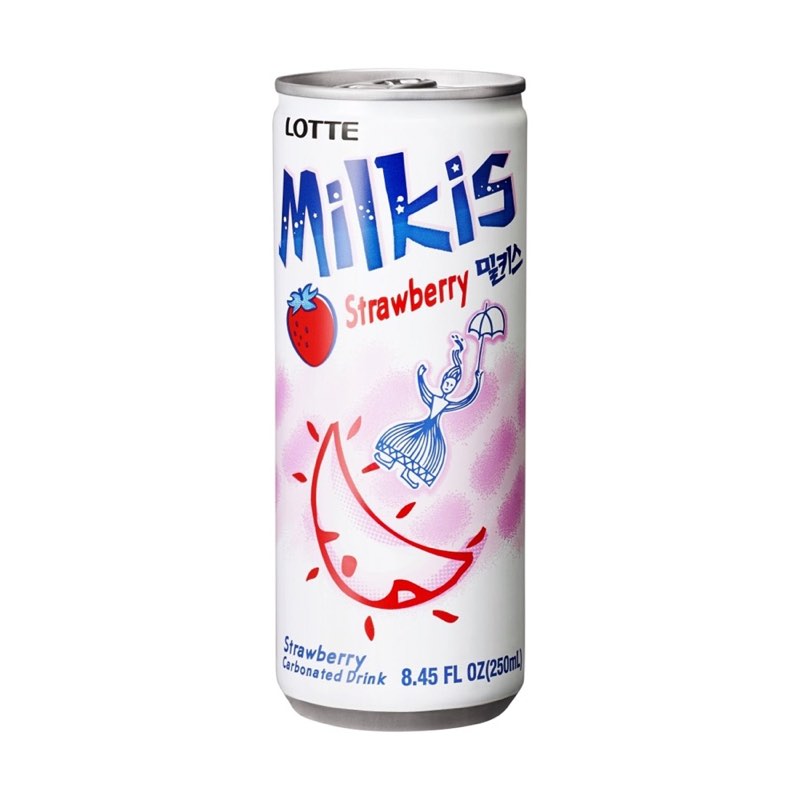
Milkis Strawberry Korean Cream Soda 250ml
£1.99
✔ In stock — ready to ship
Fresh stock
Free over £20
Same-day dispatch
Secure checkout
Most people decide about a drink in about two seconds, so let us start with the part that actually settles it. This is 250ml at £1.99. That is a single serving, it is priced like a single serving, and it is not pretending to be anything else.
Work it through and the figure is about 80p per 100ml. Compared with a large bottle of anything from a supermarket aisle, that is not cheap, and we are not going to argue otherwise — buying liquid in small formats never is. Compared with what you would pay for a single interesting drink anywhere that serves drinks, it is very reasonable indeed, and compared with the rest of the two-pound shelf in a sweet shop it sits exactly where you would expect.
The full guide to Milkis Strawberry Korean Cream Soda 250ml
5,211 words on how it eats, who it suits, how to serve it and what to put beside it.
£1.99 for 250ml — doing the sums first
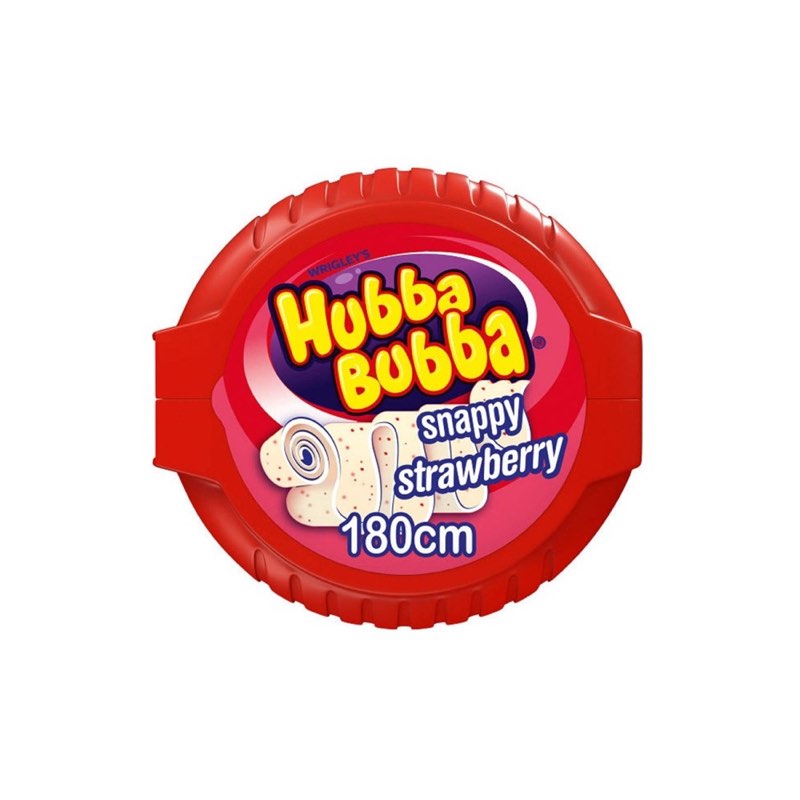
That comparison is the useful one, because it is the real decision most people are making. At around this price you are choosing between a drink and a small sweet. The Fini Mini Mochis bag at £1.35 is cheaper and lasts longer. Hubba Bubba Mega Long Strawberry Bubblegum at £1.59 lasts longer still, for obvious reasons. The Crazy Candy Factory Zombie Brain at £1.49 is the cheapest novelty on that shelf. Against all three, a 250ml drink is the shortest-lived purchase on the list — you will finish it in a few minutes, and then it is gone.
So why buy it? Because a drink does something no sweet does. It goes with everything else on the table rather than competing with it, it resets your mouth between sweets, and it is the one item in a spread that everybody takes without deliberating. If you are putting food in front of people, the drinks are not the fun part of the budget but they are the part that makes the rest work.
For portioning, treat it as one glass. Two hundred and fifty millilitres fills a standard tumbler with a little room for ice, or two small glasses if you are serving it alongside other things and want people to have a taste rather than a full measure. For a table of six who are also drinking something else, three of these poured out and shared will go round perfectly well. For one person, it is exactly one sitting.
There is one size at £1.99 in this listing and no multipack, so buying more simply means buying more of the same. The only real spending decision is whether to buy three of this flavour or one each of the three in the range, which we come back to below.
What turns up, and the first impression
This is a cream soda in a 250ml format, and the two flavours on file for it are strawberry and milk. That pairing is the entire character of the thing, and it is worth understanding before you open it, because it sets expectations correctly in a way that the word "soda" on its own does not.
A cream soda is a different animal from a fruit fizzy drink. A standard fruit soda is bright, thin and sharp — it works by contrast, with acidity cutting against sweetness and carbonation carrying both. A cream soda works by roundness instead. The creamy note softens the edges, the carbonation feels finer and less aggressive, and the whole drink sits lower and broader on the palate. If you come to it expecting the snap of a lemonade you will find it gentle; if you come expecting something rounded and soft, it delivers precisely that.
Add strawberry to that and you get a very specific combination. Strawberry is the most familiar sweet-shop fruit in Britain, and the version that works best against a creamy base is the round, jammy, confected kind rather than the sharp fresh-fruit kind. Set against a milk note, strawberry stops reading as a fruit flavour and starts reading as a dessert idea — the same way strawberries and cream is a single thing in most people's heads rather than two things next to each other.
On pouring, the first thing you notice is that the carbonation behaves differently from a clear soda. The head is softer, it settles more slowly, and the liquid looks opaque rather than translucent, which changes everything about how it works visually — a subject we give proper space to below, because it is genuinely the most interesting thing about serving this drink.
The 250ml format means it is a single-serve rather than something you open and put back in the fridge. Plan accordingly: this is a drink you open when you intend to drink it, not a bottle you top up from across an afternoon.
How it actually drinks
The first mouthful is carbonation and sweetness arriving together, with the strawberry note slightly ahead of everything else. Fruit notes are volatile and they reach you first; that is simply how flavour works in a cold fizzy liquid.
The middle is where the creamy side asserts itself. As the fizz subsides in your mouth, the rounder, softer note comes forward and the drink changes character noticeably between the front and the back of a single sip. This is the part that distinguishes a cream soda from a fruit soda, and it is the reason people who find fizzy drinks too sharp often get on well with this style. There is no acidic bite cutting at the back of the throat.
The finish is long and soft. A fruit soda finishes clean and leaves you wanting the next mouthful quickly; this finishes slowly and does not push you onward in the same way. In practice that means a 250ml serving lasts longer than the same volume of a sharper drink would, and it also means it goes better with food, because it is not constantly resetting your palate.
Temperature matters enormously and more than with most drinks. Properly chilled, the carbonation is tight and the sweetness is restrained. As it warms, the fizz goes flabby and the sweetness comes forward until the drink feels heavier than it should. This is a drink to serve genuinely cold, from the fridge rather than from a cool cupboard, and to pour into a chilled glass if you are being careful about it. Over ice it dilutes gently as it goes, which for a sweet drink is not a bad thing at all.
Carbonation level is worth a note too. Cream sodas generally carry a softer, finer bead than a lemonade or a cola — less of a sting, more of a texture. If you are someone who finds heavily carbonated drinks uncomfortable, this style is usually the easier one.
Colour, glassware and a drinks table that looks like something
Here is where a small drink earns far more than its price, and it is the part most people never think about. An opaque pink liquid is one of the most visually useful things you can put on a table, and it behaves completely differently from both a clear drink and a solid sweet.
Start with the basic problem of a sweet table: everything on it is small, everything is at the same height, and everything is matte. Bowls of sweets, however carefully chosen, read as a flat field of colour from any distance. What fixes that is height and shine, and a poured drink supplies both at once. A filled glass is tall, it catches light, and it has a surface. One glass on a table of bowls does more visually than three extra bowls would.
Opacity is the second advantage and the more interesting one. A clear drink takes its colour from what is behind it and changes appearance depending on the light and the background — which is lovely in sunshine and dull indoors. An opaque drink holds its own colour regardless. It reads as a solid block of soft pink whatever you put behind it, which makes it far more reliable as a piece of table styling. It also means it photographs consistently, which a clear drink genuinely does not.
On glassware, the guidance is simple and worth following. Opaque pink looks best in plain, straight-sided glass — a tumbler or a highball. Cut glass and heavy patterns fight with it, because the drink is already providing the visual interest and the glass does not need to. Tall and narrow makes the colour look more intense; short and wide makes it look softer. Neither is wrong; pick based on whether you want the drink to be a feature or a background element.
Ice changes the look as much as the temperature. Clear cubes in an opaque pink liquid create a very particular effect — the cubes read as pale shapes suspended in colour rather than as transparent objects, and the drink looks considerably more finished than it does poured neat. If you are serving this to guests rather than drinking it yourself, ice is worth the small effort.
A float is the obvious extension and the one to reach for if you want a centrepiece rather than a drink. A scoop of something pale on top of an opaque pink soda gives you a two-tone glass with a foam line between the layers, and it turns a £1.99 purchase into something people photograph. Two of these makes two proper floats; there is no need to buy anything larger.
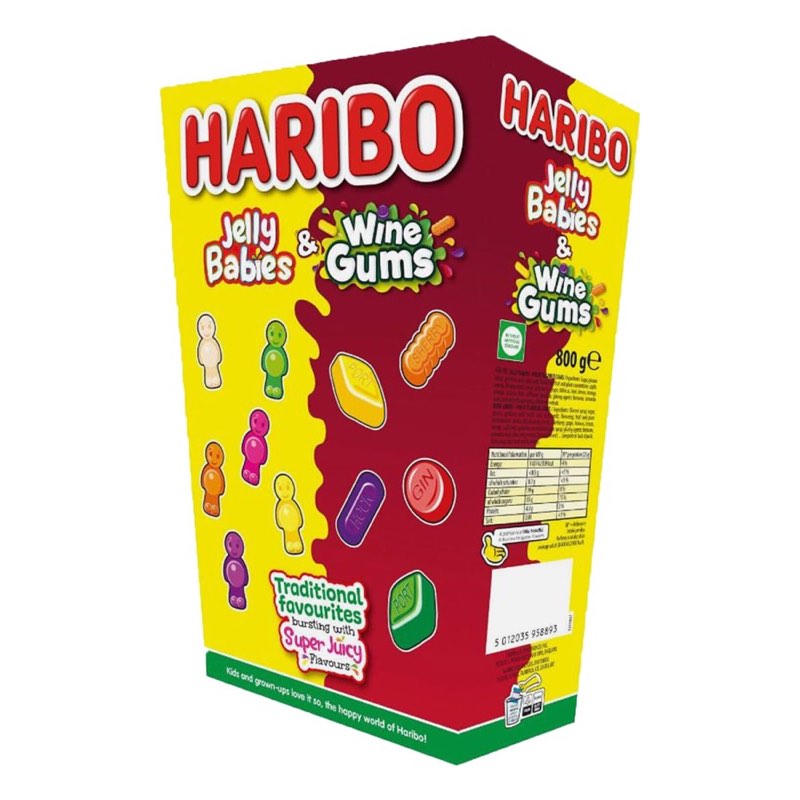
On a table with sweets, the colour pairing to aim for is contrast rather than match. Soft pink against dark colours is striking; soft pink against other soft pinks is muddy. So if you are putting a strawberry-coloured drink out, keep the bowls around it either much darker or much paler. A bowl of Barratt Milk Bottle Gums Dusty at £5.49 beside it is the exception worth making, because those are pale and matte where the drink is saturated and glossy, and the flavour families rhyme without the colours clashing. Something with real colour variety such as the Haribo Megastars gift box at £6.99 for 800g works on a completely different principle — that is your multicoloured field, and a single-colour drink is what gives the eye somewhere to rest.
Filling a jar is where a drink cannot compete, and we say so plainly. If your project is glassware full of sweets, buy by weight. But there is a version of this that does work: a large jug of this poured over ice, with the bottles or cans out of sight, looks far more considered than individual servings dotted about, and for a small gathering that is the single easiest upgrade to a drinks table. Three or four of these make a jug.
For photographing, side light rather than overhead, a plain background, and pour just before you shoot — the head on a cream soda settles quickly and a flat-topped glass is much less interesting than a freshly poured one. Condensation on the outside of the glass reads as cold and is worth waiting thirty seconds for.
Where it sits on the sour-to-sweet scale, and how to build around it
Every sweet table has a balance problem, and almost nobody plans for it. The problem is that sweetness accumulates. The first sweet thing tastes sweet; the fifth tastes cloying, not because it is sweeter but because your palate has stopped resetting. Sourness is the standard fix, and understanding where each item sits on that scale is how you stop a spread becoming unpleasant an hour in.
Picture a scale from one to ten, where one is round and creamy with no acidity at all, and ten is an aggressive sour coating that makes people pull faces.
This drink sits at the very bottom of that scale — a one or a two. That is not a criticism; it is the defining feature of the cream soda style. The creamy note actively suppresses the perception of sharpness, and the strawberry is the rounded confectionery kind rather than the tart fresh kind. There is essentially no pucker here at all.
Most fruit sweets sit in the middle, around a four or five: enough brightness to feel fruity, not enough to sting. Fizzy and sour-coated lines sit at seven and above, and dedicated sour novelties go higher still.
Knowing that, the rule for building around this drink is straightforward: it cannot do any resetting work, so something else has to. If your whole table is at the low end of the scale — creamy drinks, soft chews, mallows, chocolate — people will eat enthusiastically for ten minutes and then stop, and nobody will be able to tell you why.
The sharp counterweight is the single most valuable thing you can add. Dulce Plus Sour Strawberry Rings at £5.49 are our standard recommendation for this exact job, and the pairing is deliberate: they stay in the same strawberry flavour family, so the table still feels coherent, while sitting at the opposite end of the sour scale. One bowl of those next to this drink does more for the balance of a spread than three more bowls of mild things would.
The complicating counterweight is the other approach. Instead of adding acidity, you add complexity — a flavour with more going on at the edges, which gives the palate something different to work on. BUBS Wild Strawberry & Pomegranate Ovals at £7.50 do this well, pairing the same fruit direction with something darker so it reads as less straightforwardly sweet.
The neutral counterweight is the third and the most overlooked: something plain and low-flavour that gives people a break entirely. Traditional sweetshop lines are good at this. The Briquette at £5.49 and Hannah's Animals at £5.49 both belong to that steady, unflashy part of the range, and a table needs at least one item that is not trying to be memorable.
And the palate-clearing counterweight is a drink, which is exactly why this one belongs on the table in the first place even though it sits at the bottom of the scale. Liquid does something solid sweets cannot: it physically rinses. A creamy soda is less effective at that than a sharp one, but it still beats no drink at all, and it is far better company for rich items than a sharp drink would be.
A well-built table therefore has one thing near the bottom of the scale, one near the top, two or three in the middle, and something to drink. If you take nothing else from this page, take that shape.
Strawberry and milk as a flavour pairing
These are the two flavours on file for this drink, and they are an unusually well-matched pair with a long history in confectionery generally.
Strawberry is the workhorse of the British sweet counter. It appears across every format there is, and our strawberry flavour shelf runs to seventy-eight lines, which gives you some idea of its dominance. What varies between them is not really the fruit but the treatment: sharp versus round, fresh versus jammy, alone versus paired. In a creamy context the round, jammy treatment is always the right one, because a sharp strawberry fights a creamy note instead of joining it.
Milk as a flavour is a much smaller category and a more interesting one. Our milk flavour shelf carries just six lines, which makes it one of the shortest on the site and worth knowing about if the creamy register appeals to you. What a milk note does in confectionery is act as a softener and a carrier — it rounds off sharp edges, it extends the finish, and it makes other flavours read as richer than they would alone. It rarely leads; it almost always supports.
Put the two together and you get the effect the whole drink is built on: the fruit provides recognition and brightness, the creamy note provides body and length. Neither would be as good alone. A pure strawberry soda would be thinner and sharper; a plain cream soda would be rounder but less immediate.
The same logic explains why milk-and-fruit pairings turn up so consistently in solid confectionery too. The milk bottle gums mentioned earlier are the classic British example of the creamy register in a sweet, and putting a bowl of those beside this drink gives you the same flavour idea in two completely different physical forms, which is a more interesting pairing than two things that merely taste similar.
Who buys a single-serve soda from a sweet shop
Four groups, mostly.
There is the person buying it as part of a treat rather than as a drink. A single-serve soda alongside a couple of small sweets is a self-contained treat at around four or five pounds, and it feels more like an occasion than either half would alone. This is the most common reason it ends up in a basket.
There is the person who dislikes sharp fizzy drinks. A significant number of people find standard fizzy drinks unpleasantly acidic, and creamy sodas are the usual refuge. If that is you, this style is worth trying on those grounds alone.
There is the host. One or two of these on a table, poured out properly, is a cheap way to make a spread look like it was planned. Hosting well is mostly about a small number of considered touches rather than a large amount of spending, and a poured drink is one of the cheapest considered touches there is.
And there is the collector of the unfamiliar — the person who buys the thing they have not tried, on principle. At £1.99 that is an easy habit to maintain, and this range gives you three goes at it.
Matching it with what else is on the table
Because this drink is round and low in sharpness, it pairs by contrast rather than by similarity for almost everything except the creamy family.
With chewy and soft sweets, it is a natural fit. Soft textures and a soft drink do not compete, and the drink helps rinse away the lingering sweetness that chews leave behind.
With sour lines, it is an excellent partner precisely because of the contrast. A sour sweet followed by a mouthful of something creamy is one of the more satisfying sequences available on a sweet table, and it is the reason we keep recommending a sour item alongside.
With chocolate, be careful. Rich and creamy on both sides is heavy going, and a creamy soda does not cut chocolate the way a sharp drink does. If chocolate is a major part of your spread, shop the candy and chocolate section by all means, but put a sharper drink next to it and save this one for the fruit end of the table.
With novelty and activity items, it works well because it asks nothing of the drinker. The Fuji Candy DIY Handmade Ferris Wheel Kit at £2.99 is the kind of item that occupies children for a while, and something to drink alongside a fiddly activity is more welcome than another thing to eat.
With a build-your-own selection, it is the finishing touch rather than a component. Assemble the sweets from the pick and mix range, where you control the proportions, then add a drink per person. That is a better structure for a party than buying more kinds of sweet.
For the bulk of any table, the loose sweets section remains the place to shop — over three hundred and fifty lines and far better value by weight than anything sold in a small format. And if you want to browse by fruit character rather than by a single named flavour, the general fruit shelf is the broader view.
Occasions where a small drink pulls its weight
Children's parties. Single-serve means no measuring, no arguments about who got more, and no half-finished bottles going flat. One per child, poured into their own glass, is simpler than a large bottle and looks better on the table.
Film nights and evenings in. A drink alongside sweets is more satisfying than sweets alone, and a soft, low-acid drink suits a long sit better than something sharp that you want to keep drinking.
Gifts and hampers. A drink in a gift box is an unusual and welcome inclusion, because almost nobody thinks to put one in. Setting it alongside the plain original version of the range and the melon one at the same £1.99 makes a small drinks trio that reads as deliberate. It does add weight to a hamper, so pack it at the bottom.
A small treat for yourself. The most honest occasion. Two pounds, one glass, fifteen minutes. There is nothing wrong with buying something simply because you fancy it.
Summer tables. Over ice, in a jug, this is a better warm-weather offering than most things on a sweet counter, and it is the only item in a sweet shop that genuinely improves with ice.
Floats and made-up drinks. If you want one showpiece on a table without doing any real work, this is how you get it. Tall glass, ice, something pale floated on top, served immediately.
Serving it properly, and keeping it
Unopened, keep it somewhere cool and out of direct sunlight, and it needs nothing else from you. A cupboard is fine; the fridge is better if you have the space, because a drink you have to chill from room temperature is a drink you end up not bothering with.
Chill it thoroughly before serving. This is the one instruction that genuinely changes the result. A properly cold cream soda has tight carbonation and restrained sweetness; a lukewarm one is flat-feeling and cloying. Several hours in a fridge, or twenty minutes in ice water if you are in a hurry.
Pour it rather than drinking it from the pack if there is any chance of it being looked at. The whole visual argument above depends on the drink being visible, and an opaque pink liquid in a plain glass is far more appealing than the same liquid out of sight.
Pour gently down the side of a tilted glass to keep the carbonation, or pour straight down the middle if you want a head on it for appearance. Both are legitimate — it depends whether you care more about fizz or about looks.
Once opened, drink it. This is a 250ml single serve and there is no useful way to keep it — carbonation goes within hours regardless of how you store it, and a flat cream soda is a sad thing. If you want to serve half now and half later, pour both glasses at once and keep the second in the fridge rather than trying to keep the pack sealed.
Do not freeze it. Freezing a carbonated drink in a sealed container is a bad idea for straightforward physical reasons, and the texture afterwards is poor in any case.
As with everything we sell, check the manufacturer's packaging on arrival for the date and storage guidance, which is the authoritative source for the item you have actually received. If anyone drinking it has an allergy, check that packaging before drinking. And treats are treats — that applies to sweet drinks as much as to sweets.
Choosing between the three in the range
There is one size at £1.99, so the choice is flavour rather than format, and the three options are genuinely different propositions rather than three shades of the same thing.
This strawberry version is the most immediately familiar and the easiest sell to almost anybody. Strawberry against a creamy base is a combination most people already have a positive reference for, which makes it the safe choice for a party, for children, or for anyone you are introducing to the style for the first time.
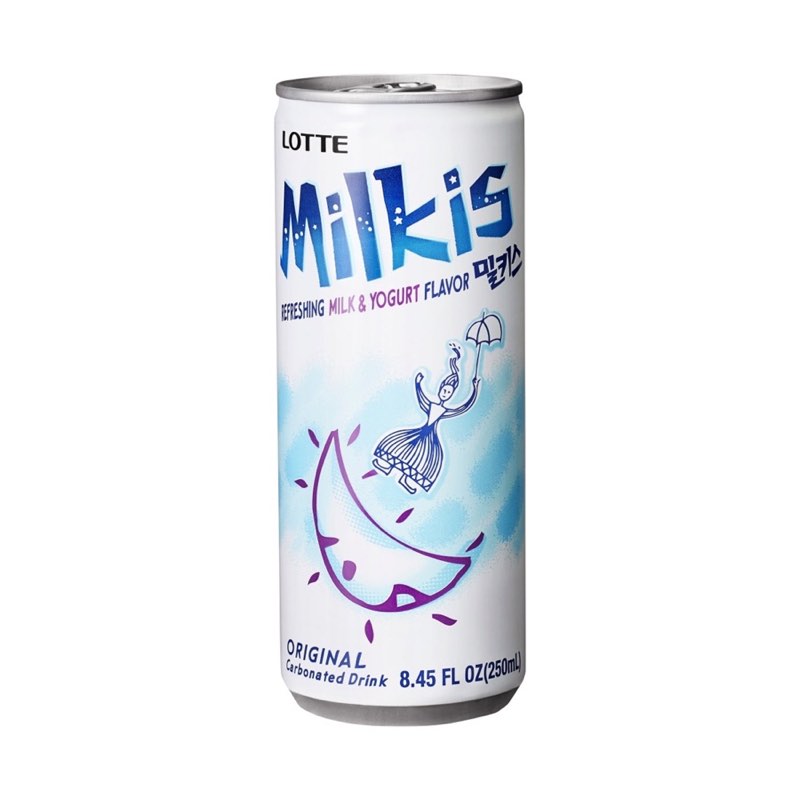
The Milkis Refreshing Milk & Yogurt Original Korean Cream Soda 250ml, also £1.99, is the original of the range and the one to buy if you want the creamy register without a fruit flavour sitting on top of it. It is the plainest of the three and, for that reason, the most interesting to taste first if you are trying to understand what the style actually is.
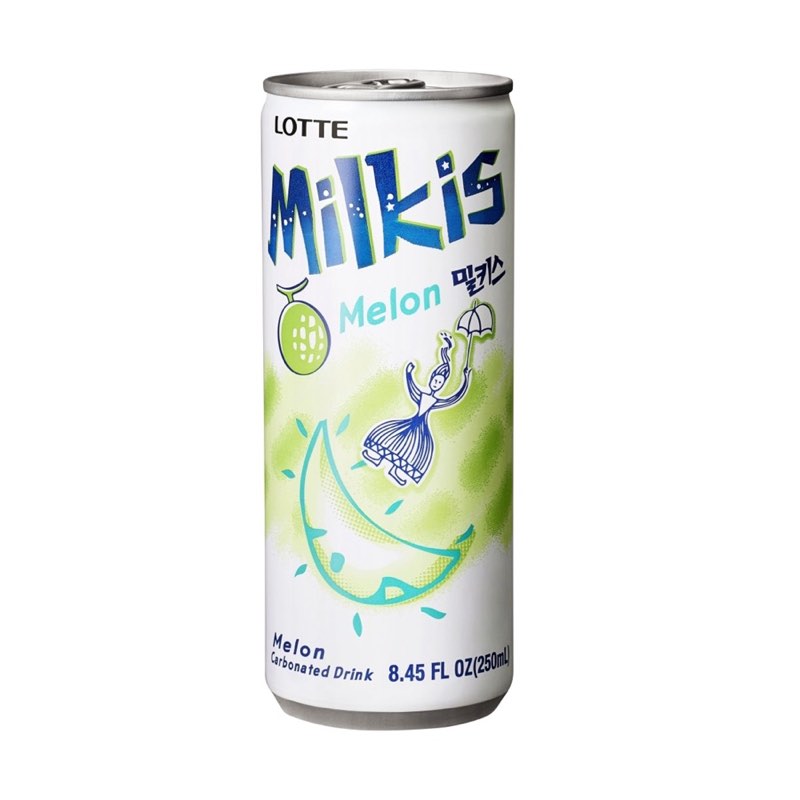
The Milkis Melon Korean Cream Soda 250ml at the same price takes the fruit in a completely different direction. Melon is a softer, greener, less assertive fruit note than strawberry, and against a creamy base it produces something noticeably more delicate. It is the one to pick if strawberry feels too obvious, and the one that tends to divide opinion most.
For a tasting, buy all three. Just under six pounds gives you the plain version and two fruit directions, and pouring small measures of each side by side is the clearest way to understand what the fruit is actually doing to the base. For a party where you only want one, take this strawberry version — it is the one fewest people will leave unfinished.
Finding it on the site
This is filed in three places, which between them cover the three ways people look for it.
By fruit, it appears on our shelf of strawberry-flavoured lines, which is one of the largest flavour categories we run and the right place to browse if you are matching a colour or a flavour theme across a whole table.
By creamy character, it sits on the short milk flavour shelf — six lines in total, which makes it quick to read end to end and genuinely useful if the creamy register is what you are shopping for rather than a coincidence.
It also appears in the main loose sweets listing, which is the biggest section on the site and where most browsing starts.
The neighbouring shelves worth a look are the wider fruit flavour category for everything fruit-led regardless of the specific fruit, pick and mix for assembling a selection by hand, and candy and chocolate for the richer end of a spread. To browse the whole range with no filter at all, the full shop is the place to go.
Questions we get about this drink
What does a cream soda actually taste like?
Rounder and softer than a standard fizzy drink. The creamy note takes the sharp edge off the carbonation and extends the finish, so instead of a sharp hit that clears quickly you get a broad, gentle sweetness that lingers. With strawberry on top of that, the overall impression is closer to a dessert idea than to a fruit soda. If you find ordinary fizzy drinks too acidic, this style is usually much easier going.
Is it very fizzy?
Cream sodas generally carry a finer, softer carbonation than a cola or a lemonade — more texture than sting. It is definitely a fizzy drink, but not an aggressive one. Serving it properly cold keeps the bubbles tight; letting it warm up makes the carbonation feel flabby and the sweetness more prominent, which is the main way people end up disappointed by a drink like this.
How many servings is 250ml?
One, comfortably. It fills a standard tumbler with room for ice, or stretches to two small glasses if you are offering people a taste alongside other drinks. For a gathering, work on one per person if it is the main drink, or one between two if there is something else on the table as well.
Should I drink it straight or over ice?
Either works, and it depends what you want. Straight from the fridge keeps the flavour at full strength and the carbonation tightest. Over ice, it dilutes gently as you drink, which softens the sweetness and makes it easier to take your time over — and it looks considerably better in a glass. For serving to guests, ice. For drinking yourself, whichever you prefer.
Can I make a float with it?
Yes, and it is the best use of it if you want a showpiece. A tall glass, the drink poured over ice, and a scoop of something pale floated on top gives you a layered glass with a foam line through the middle. Serve it immediately — floats do not wait. Two of these make two generous floats, so there is no need to buy a larger format.
What sweets go best with it?
Sour things, mainly. Because the drink sits right at the bottom of the sour-to-sweet scale, a sharp sweet next to it gives the table the contrast it needs, and staying within the same fruit family keeps everything feeling coherent. Beyond that, soft and chewy sweets pair happily with it, while heavy chocolate is the one combination we would avoid — both are rich and neither cuts the other.
Can I keep it once it is open?
Not really. It is a 250ml single serve and carbonated drinks go flat within hours of opening no matter how carefully you reseal them. If you want to spread it across an evening, pour two glasses at once and keep the second one in the fridge. Otherwise, open it when you intend to drink it.
Does it need to be refrigerated before opening?
It does not need to be, but it very much should be. Temperature makes more difference to this drink than to most — cold, it is balanced and the fizz is crisp; warm, it is heavy and oversweet. Keep it somewhere cool and out of sunlight until you want it, then give it several hours in a fridge, or twenty minutes in ice water if you are pressed.
Is this suitable for children?
It is a sweet fizzy drink, so treat it the way you would treat any other treat — as an occasional thing rather than an everyday one, and in a portion that suits the child. A 250ml serving split into two small glasses is plenty for most children alongside a few sweets. Anyone with an allergy in the household should check the manufacturer's packaging on arrival before drinking.
How does the strawberry compare with the other flavours?
Strawberry is the most familiar and the most broadly liked, which makes it the right choice for a group. The original has no fruit flavour on top of the creamy base, so it is the plainest and the most useful if you want to understand the style itself. The melon version is the most delicate and the most divisive. All three are £1.99 for 250ml, so trying the set is an inexpensive exercise.
Is it worth buying a drink from a sweet shop at all?
If you are buying by the litre for the week, no — supermarkets exist for that and we would not pretend otherwise. If you are buying a single interesting thing to go with a treat, to put on a table, or to try because you have not had it before, then a single-serve format at under two pounds is exactly the right way to do it. The value here is in the occasion rather than in the volume.
What should I put with it for a party table?
One sharp item, one bulk item and one thing that looks good. The sharp item does the palate resetting, the bulk item stops the table emptying, and the good-looking item is what people notice. Work out the bulk by weight from the loose range rather than buying several small packs, then let a poured drink or two do the presentational work — it is the cheapest way to make a table look finished.
Worth knowing
A soft, round, low-acid drink in a single-serve size, priced so that putting one on a table is an easy decision. It is the item that makes everything else on a sweet table work better — it rinses, it adds height and shine, and it goes with almost anything except heavy chocolate. Serve it very cold, pour it into a plain glass, and put something sharp next to it. And if you like the style, the other two in the range are the obvious next purchases at the same price.
More from Milkis
More strawberry sweets
More loose sweets sweets
Where this sits
Milkis Strawberry Korean Cream Soda 250ml appears on these shelves. Browse them, or jump to something nearby.
You might also like