
Home / Loose Sweets / Oreo Sandwich Biscuits with Grape & Peach Flavoured Cream Filling 97g
Oreo · 97g
Read the full guide
Oreo Sandwich Biscuits with Grape & Peach Flavoured Cream Filling 97g
£2.29
✔ In stock — ready to ship
Fresh stock
Free over £20
Same-day dispatch
Secure checkout
Most people arrive at this pack already holding something else. It is rarely the whole shop — it is the interesting item that goes with four other things, and the question is what those four things should be. So let us start there rather than at the usual place.
The Oreo Sandwich Biscuits with Grape & Peach Flavoured Cream Filling is a 97 g pack at £2.29, and structurally it is a sandwich biscuit with a flavoured cream filling, which means it behaves in a mix like nothing else on our shelves. It is firm where most of our stock is soft. It is dry where most of our stock is not. And it carries two fruit flavours in a format that is not itself a fruit sweet. Those three facts are the whole basis of how to build around it.
The full guide to Oreo Sandwich Biscuits with Grape & Peach Flavoured Cream Filling 97g
5,231 words on how it eats, who it suits, how to serve it and what to put beside it.
Building a bag, a board or a bowl around it
The four-part build
A good mixed spread has four jobs in it, and if you fill all four you will not go wrong.
- The structural item. Something with bite and shape that does not squash, spread or stick to its neighbours. That is this pack's role. A sandwich biscuit sits in a bowl or on a board looking deliberate, stays where you put it, and gives the arrangement some architecture.
- The soft item. Something yielding to contrast against it. BUBS Banana & Caramel Foam Sweets at £7.50 are a good answer because foam is about as far from a firm biscuit as confectionery gets, and the contrast registers instantly.
- The sharp item. Something with real acidity to reset the palate. Kingsway Fizzy Peaches at £5.49 is the natural pick here because it shares one of the two flavours in this pack while sitting in a completely different place on the sour scale — it is the single most instructive pairing in this whole list and the section below explains why.
- The rich item. Something dense and low-pitched to end on. Bristow's Traditional Salted Caramel Bon Bons at £5.49 do that job, and the salt gives the spread a savoury corner it would otherwise lack.
Four items, four textures, four jobs, and you have a table that holds people's interest for an evening rather than twenty minutes.
What not to put next to it
Two mistakes are worth naming because they are both common.
The first is surrounding it with other fruit flavours at the same pitch. A bowl of grape sweets, peach sweets and a grape-and-peach biscuit sounds coherent and eats as a blur, because nothing has anything to push against. Matching flavours across items is a much weaker organising idea than contrasting textures, and it is the error most people make when they first start building spreads deliberately.
The second is putting a dry biscuit directly against anything sticky. Loose chews and anything sugar-coated will shed onto a biscuit surface, and a biscuit that has picked up a film of sugar from its neighbours is unpleasant to pick up. Barratt Black Jack Chews at £5.49 are excellent and belong in their own bowl, not touching this. Keep dry things with dry things and wrapped things with wrapped things, and everything stays as it should be.
The lazy version
If you want one companion rather than four, make it something fizzy and sour. That single pairing does more for a spread than any other, because it covers the two extremes of the sweet-and-sour spectrum with two items instead of five. Start at the loose sweets counter, which runs to 356 lines, and take whatever is sourest.
If you are building an actual pick-and-mix bag
One caveat. This is a sealed pack of biscuits rather than a loose weighed item, so it does not literally go into a mixed bag — it goes beside one. That is a distinction worth making because a biscuit in a bag of loose sweets will break, and broken biscuit dust through a bag of gummies spoils both. Build the bag from our pick and mix and let this pack ride alongside it, opened separately.
The pack itself
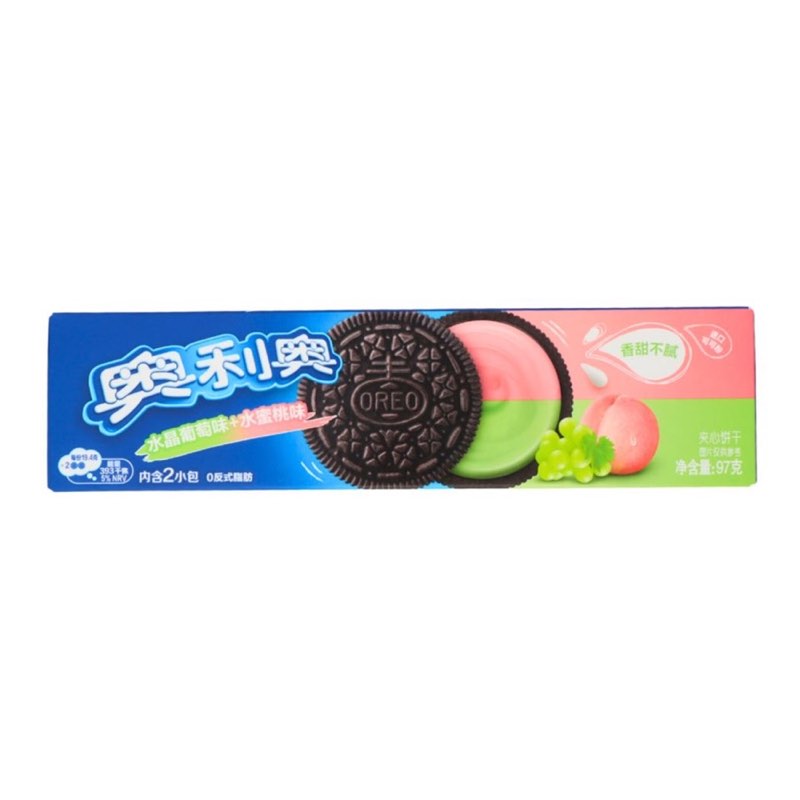
97 g in a sealed pack, one size only, £2.29. There is a single product image on the listing and it is worth actually looking at it, for reasons that will become clear in the presentation section — what the filling looks like is a real part of this product and the photograph is the place to see it.
The format is the familiar sandwich construction: two biscuit halves with a flavoured cream filling between them. That is all standard. What is not standard is what is in the middle — this is not a plain filling and not a single-flavour one, but a grape and peach pairing, which is an unusual combination to find in a biscuit anywhere and the reason most people pick it up.
The pack is a convenient size. Not a family pack, not a single serving — 97 g is the in-between weight that suits two people over a couple of sittings, or one person over several. It fits in a bag, does not need decanting, and reseals reasonably if you clip it.
The eating of it
A sandwich biscuit has a very particular sequence and it is worth describing properly, because it is completely different from the sequence of a sweet.
The first thing is the snap. You get a clean, firm break rather than a crumble, and the sound is part of the experience whether or not you notice it consciously. Anyone who has eaten a stale sandwich biscuit knows exactly how much of the pleasure lives in that first hard break — a soft one is a disappointment out of all proportion to what has actually changed.
Then a moment of dryness. The biscuit halves arrive first and the filling arrives slightly behind them, which is a deliberate piece of construction: you register texture before flavour rather than both at once. That small delay is why sandwich biscuits feel more interesting than the sum of their parts.
Then the filling, and here the two named flavours do something rather clever by arriving at different speeds. Peach is a soft, round, slightly perfumed flavour that comes up gently and spreads. Grape is sharper-edged, more immediate and considerably more assertive, with the particular candied character that grape always has in confectionery. Grape tends to lead and peach tends to follow and stay, and the result is a flavour that changes across the length of a single biscuit rather than sitting still.
The finish is where the format shows its hand. The biscuit part absorbs and carries, so the fruit note does not clear as fast as it would from a gummy — it lingers, softened, for a good while after you have swallowed. Whether that is a virtue depends on the flavour. For a fruit note as distinctive as grape, it means one biscuit stays with you, which is one of the reasons people eat fewer of these in a sitting than they expect to.
Sweetness is substantial but not extreme, and it is carried mostly by the filling rather than the shells. The dryness of the biscuit works against the sweetness of the middle, which is the fundamental balancing act of the entire sandwich-biscuit category and the reason it has survived every fashion since it was invented.
The sour-to-sweet spectrum, and where this sits on it
Almost every decision in a sweet shop is really a decision about where on one line you want to be. At one end is pure acidity that makes your jaw ache. At the other is dense sweetness with no sharpness at all. Everything we sell is somewhere on that line, and knowing where a thing sits is more useful than knowing what flavour it is.
The five bands
Band one: punishing. Deliberately extreme sourness, bought partly as a challenge. Barnett's Mega Sour Apple Candy Bags 104g at £3.99 sit here. Sweets in this band are not really about flavour at all — the acidity is so dominant that whatever fruit is nominally involved is more of a label than an experience. They exist to be survived and then enjoyed once the first wave has passed.
Band two: properly sour. Real acidity that registers clearly, but as a flavour rather than an assault. This is where most fizzy fruit sweets live, and it is the most useful band in the shop because it is the one that resets your palate without wrecking it. The fizzy peaches mentioned earlier belong here.
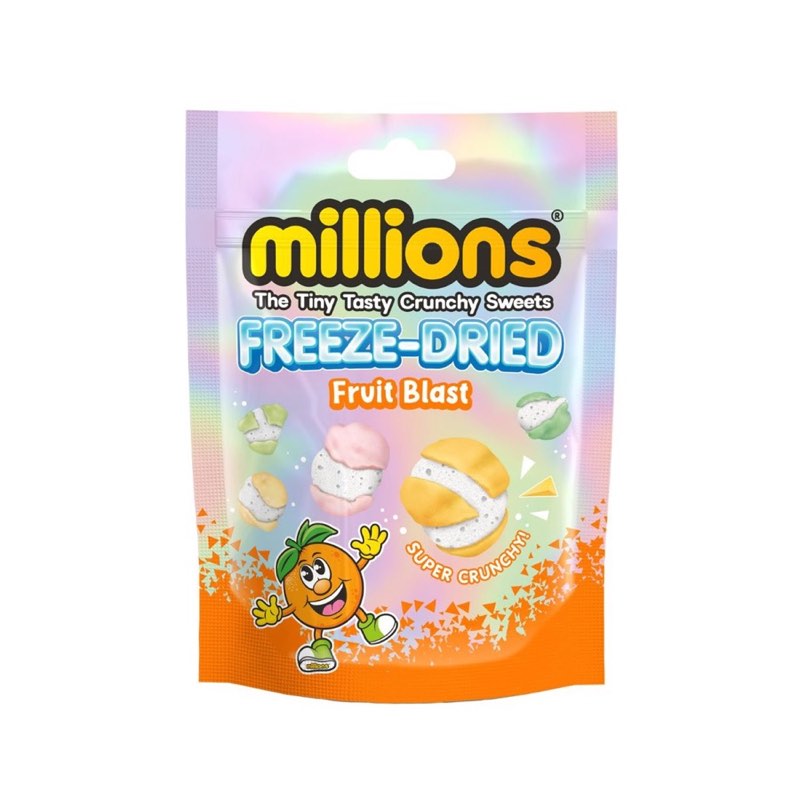
Band three: tart. A noticeable edge without anything you would call sour. Fruit flavours with their natural sharpness intact. Millions Freeze-Dried Fruit Blast Pouch 50g at £2.49 works in this territory, as do a great many of the fruit-forward lines gathered on our fruit flavour shelf.
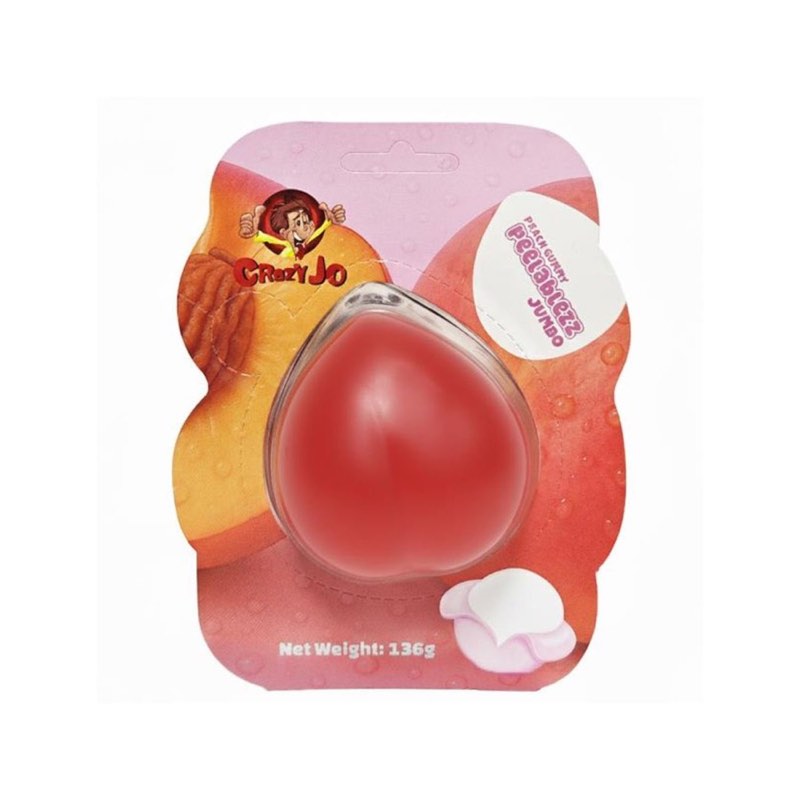
Band four: sweet with a fruit character. Fruit flavours where the sweetness is clearly in charge and the fruit is providing identity rather than sharpness. This pack is here. So is Mike & Ike Jolly Joes Theatre Box 120g at £2.25, and so is Crazy Jo Peelablezz Jumbo Grape Gummy 136g at £2.99 — which is a particularly instructive comparison, because it takes the same grape flavour and puts it in a completely different band-four format.
Band five: rich and unsharp. Fudge, toffee, tablet, caramel, chocolate. No acidity at all, sweetness carried by depth. Briquette at £5.49 and the salted caramel bon bons already mentioned live down here, along with most of the candy and chocolate section.
Why band four is the hardest to get right
Bands one and five are easy to design for, because they have an obvious target: maximum sourness, or maximum richness. Band four has no such target. It has to be sweet enough to be a treat and fruity enough to be identifiable, without acidity to do the work of making the flavour vivid. Take the sharpness away from a fruit flavour and you remove the thing that usually carries its identity, so everything else has to work harder.
Pairing two fruits, as this pack does, is one of the standard solutions to that problem. A single mild fruit in band four risks tasting like generic sweetness; two fruits that arrive at different speeds give you a sequence to notice, and a sequence is far more memorable than a flavour. Grape is the identifier here — it is instantly recognisable and nothing else tastes like it — and peach is the body, filling out the middle and rounding the finish. Reverse the roles and you would have a much vaguer biscuit.
How to build across the spectrum
The practical rule is to span at least three bands in any spread and never to sit entirely in one. A table that is all band four is pleasant and forgettable. A table with something from band two, something from band four and something from band five gives people somewhere to move, and they will eat more happily and for longer.
Order matters as much as selection. Sour first while your palate can register it, sweet-fruity in the middle, rich last. Going the other way round means the sour band arrives after your mouth has been coated in sugar and tastes twice as aggressive as it should, which is how people end up deciding they dislike sour sweets when the real problem was sequencing.
There is one more use for the spectrum, which is diagnosing a disappointing bag. If a mix is not working, it is almost always because everything in it is in the same band. Fix that before you change anything else.
Colour, presentation, and how this behaves on a table
Here is a part of buying sweets that people take seriously in practice and almost never discuss: what it looks like. Nobody arranges a bowl at random, and anyone who has put together a table for a party has made a dozen visual decisions without calling them that. It is worth making them deliberately.
The photograph is the specification
Before anything else: look at the product image on the listing. Flavoured fillings vary a great deal in how they present, and we are not going to describe a shade we have not verified — the photograph is the honest source and it is right there. If the visual matters to your table, spend ten seconds on it before you buy rather than guessing from the flavour name.
That is more important with this pack than with most, because fruit-flavoured fillings are exactly the category where people form an expectation from the words and are surprised by the object. Grape and peach both carry strong colour associations in most people's heads, and associations are not facts.
What colour does on a table
Three things, and they are worth separating.
First, navigation. People choose from a bowl with their eyes long before they taste anything, and colour is how they tell items apart at a glance. A table where four bowls look similar gets grazed unevenly, because guests cannot tell what they are choosing between and default to whatever is nearest. Contrast between bowls is not decoration — it is signposting.
Second, expectation setting. Confectionery has an established colour vocabulary that everybody understands without being taught: certain shades signal certain fruits, and a mismatch between what something looks like and what it tastes of is genuinely disorienting. Confectioners know this and use it. It is also why an unusual-looking item on a table gets picked up and examined rather than simply eaten, which brings people into conversation with the food.
Third, weight. Some colours look generous in bulk and some look sparse. Pale items in a deep bowl look like there is less than there is; dark items look denser than they are. If you are trying to make a modest spread look abundant, that is worth knowing.
Styling a table, practically
A few rules that hold up.
- Vary height, not just contents. Everything at one level reads as flat no matter how good it is. Use a cake stand, a tall jar, a shallow plate. Biscuits in particular are one of the few confectionery items you can stack or fan, and a fanned row of sandwich biscuits is one of the easiest good-looking things you can do with five seconds and no skill.
- Odd numbers of vessels. Three or five bowls look composed; four looks like a grid. This is an old rule from every visual discipline and it works here too.
- Leave gaps. A crowded table looks anxious. Space between bowls makes each one look more considered.
- One hero. Pick one item to be the centre and let everything else support it. A table with five heroes has none.
- Keep the wrapped things together. Mixed wrapped and unwrapped items on the same plate always look untidy, however good the components. A theatre box at £2.25 is a boxed item and reads best presented as a box rather than tipped out among loose things.
Filling a jar
Sweet jars are a decorating decision as much as a storage one, and there are two schools. The layered jar puts bands of different items on top of one another and looks striking until somebody digs into it, at which point it looks like an archaeological site. The single-line jar holds one thing, looks calm, and stays looking right all evening.
Our advice is to run single-line jars and let the variety come from having several. It is far more robust to actual use, and it means guests can see what they are taking. A row of three jars from the loose counter in graded shades, with a biscuit pack fanned on a plate beside them, is a better-looking table than any amount of elaborate mixing.
Biscuits themselves are not a jar item, incidentally. They break under their own weight in a deep vessel and the bottom layer turns to crumb. Plate or stand, always.
How it photographs
If you are putting a table on a phone camera — and most people now do — three things make more difference than anything else.
Light from the side rather than overhead. Overhead light flattens everything and puts your own shadow across the shot. A window to one side does more for a photograph of food than any filter.
Get lower than you think. Shooting straight down works for flat arrangements and nothing else. A low angle gives you height and depth and makes a modest spread look substantial.
Show the construction. With a sandwich biscuit, the interesting photograph is the one where you can see the filling — one biscuit turned on its side, or split, among a row of whole ones. A plate of identical round biscuits face-up is the dullest possible version of the same subject, and it throws away the one visual feature that makes this pack different from a plain one.
Grape and peach as flavour families
These two flavours have unusually different reputations and it is worth knowing both.
Grape is a confectionery flavour with a strong identity and a divided audience. It is immediately recognisable, it does not resemble the fruit it is named after very closely, and it has an intensity that fruits like pear or apple simply do not have. People who like it tend to seek it out specifically; people who do not tend to avoid anything containing it. There is not much middle ground. There are only four lines on our grape shelf, which tells you something about how specialist a taste it is on a British counter — that jumbo grape gummy at £2.99 is the other main way to get it here, in a peelable format about as far from a biscuit as you can get.
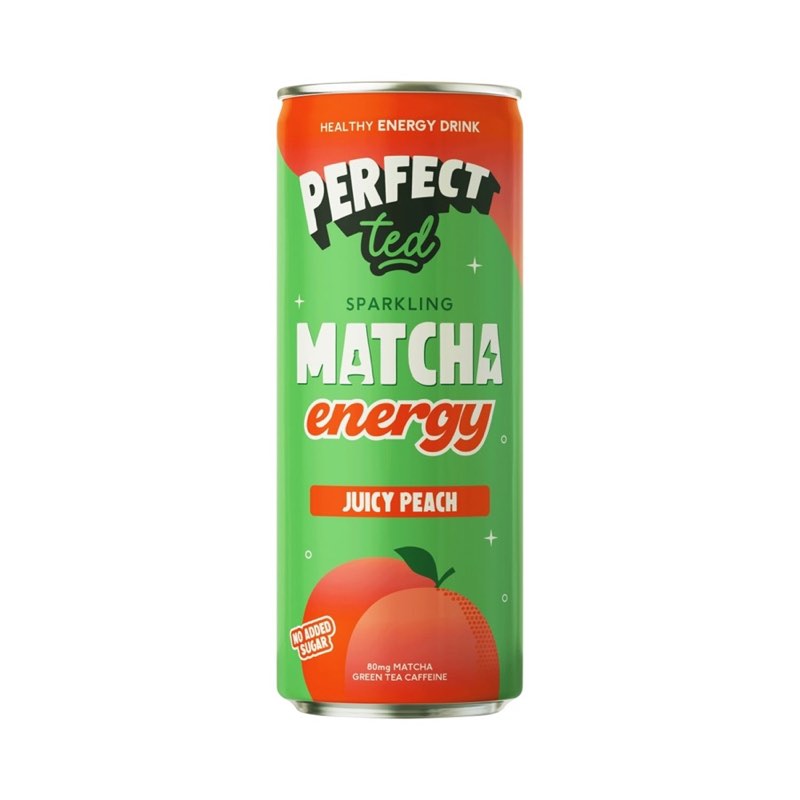
Peach is the opposite in every way. It is soft, rounded, faintly floral and almost universally liked. It is one of the few fruit flavours that reads as gentle rather than bright, which makes it enormously useful as a partner — it fills out the bottom of a flavour without competing at the top. Our peach shelf runs to eight lines, twice the grape count, which is about the ratio you would expect. Those eight cover a wide spread of the spectrum, from the properly fizzy to Perfect Ted Sparkling Matcha Energy Juicy Peach Can 250ml at £1.99, which carries a peach note in a sparkling canned drink rather than anything you chew.
Put together, as they are here, they cover each other's weaknesses. Grape supplies the identity that peach lacks; peach supplies the roundness that grape lacks. It is a genuinely sensible pairing rather than a random one, and it is more interesting than either flavour on its own would have been in this format.
If you want to explore adjacent territory, the strawberry shelf is the other big soft-fruit section and the natural next stop for anyone who likes the peach half of this more than the grape half.
Who this is for
The flavour collector, first — the shopper who has worked through the standard range of a familiar brand and now wants the versions they have not seen. That is a large and growing group and this pack exists for them.
The grape enthusiast, second. Grape is hard to find in a biscuit anywhere, and if it is a flavour you actively like, this is one of the few places it turns up in this format.
The tea-and-biscuit household, third, wanting something that is recognisably a biscuit rather than a sweet but is not the same biscuit as last week.
The table builder, fourth, for all the structural reasons set out at the top.
And the sharer, fifth: 97 g is a good two-person weight, and a sandwich biscuit is one of the easiest things in the world to offer somebody without ceremony.
Occasions
The afternoon break is the everyday one, and it is what most of these packs are actually used for — two biscuits with something hot, mid-afternoon, and the pack goes back in the cupboard.
The tasting session is the deliberate one, and it is the best use of this line. Buy two or three of the unusual flavours in the range, put a couple of each on a plate, and let people compare. It is a genuinely enjoyable thing to do at the end of a meal and it costs under seven pounds for three packs. Having the Blueberry & Raspberry version at £2.29 alongside this one gives you two fruit fillings pulling in different directions — berry sharpness against grape and peach — and the difference is far more striking on a plate side by side than either is alone.
The gift-adjacent occasion: unusual flavours of familiar things make good small presents, because the recognition and the surprise arrive together.
The lunchbox and the desk drawer, because it is sealed, sturdy and does not melt.
The travel snack, with the one caveat that biscuits break. Keep the pack flat and near the top of the bag rather than at the bottom under everything else.
The seasonal table, where a fruit-filled biscuit is a useful lighter element among heavier items, and where it plates far better than anything loose and sticky.
What 97 g at £2.29 gets you
£2.29 for 97 g works out at roughly £2.36 per 100 g. That sits in the middle of our range — dearer than buying loose sweets by weight in quantity, cheaper per gram than most of the small novelty packs, and about what you would expect for a branded sealed pack of this size.
What is genuinely good about the weight is that it is the right unit for how people actually eat biscuits. Nobody eats 97 g of sandwich biscuits in one go, and nobody wants a 400 g pack of an unusual flavour they have not tried. Two people having a couple each is a comfortable dent and leaves the pack useful for another day or two. One person rationing them gets most of a week.
On comparison within the range: every flavour in this line is £2.29 at 97 g, so choosing between them is a pure flavour decision with no value calculation attached. The only exception is the Brown Sugar Pancake Cocoa pack at 157 g, which is the same £2.29 for substantially more weight — if raw value per gram is what you are after, that is the obvious pick in the range, and it is worth saying so plainly even though it is not this page's product.
Set against the rest of your basket, a biscuit pack is a good use of a couple of pounds precisely because it does not compete with anything else you are buying. Another bag of gummies alongside three bags of gummies adds very little. A firm, dry, fruit-filled biscuit alongside them adds a whole category.
Keeping an opened pack worth eating
Biscuits have one enemy and it is moisture. Air is what turns a crisp snap into a soft bend, and once that has happened there is no fixing it at home.
So: clip the pack, or tip the remainder into an airtight tin. Do this on the day you open it, not on the day you notice a problem — the softening is gradual and by the time it is obvious you have already lost several biscuits' worth of quality.
Keep them out of the fridge. A fridge is a damp environment and biscuits soften faster in one than in a cupboard. This is one of the most common storage mistakes in any kitchen and it is done with the best intentions.
Store them flat and near the top of a cupboard rather than under heavier items. Sandwich biscuits are strong vertically and weak under pressure from the side, and a pack crushed under a bag of flour will be a pack of halves.
Keep them away from strong smells. A cream filling picks up odours from a cupboard readily, and fruit flavours are more vulnerable to that than deeper ones.
Follow the date and storage guidance on the manufacturer's packaging — that is the authority, not this page. If anybody eating them has an allergy, check that packaging on arrival and before eating; we do not hold verified ingredient or allergen information for this line and will not guess at it. And the standing note across the shop: sweets and treats are exactly that, and small pieces should be supervised around young children.
One size here, several flavours next door
This comes in one size only: 97 g at £2.29. No large pack, no multipack, no variants. The decision is purely which flavour you want, and there are three other directions to go in.
| Pack | Filling character | Weight | Price |
|---|---|---|---|
| Grape & Peach | Distinctive fruit identity, rounded finish | 97 g | £2.29 |
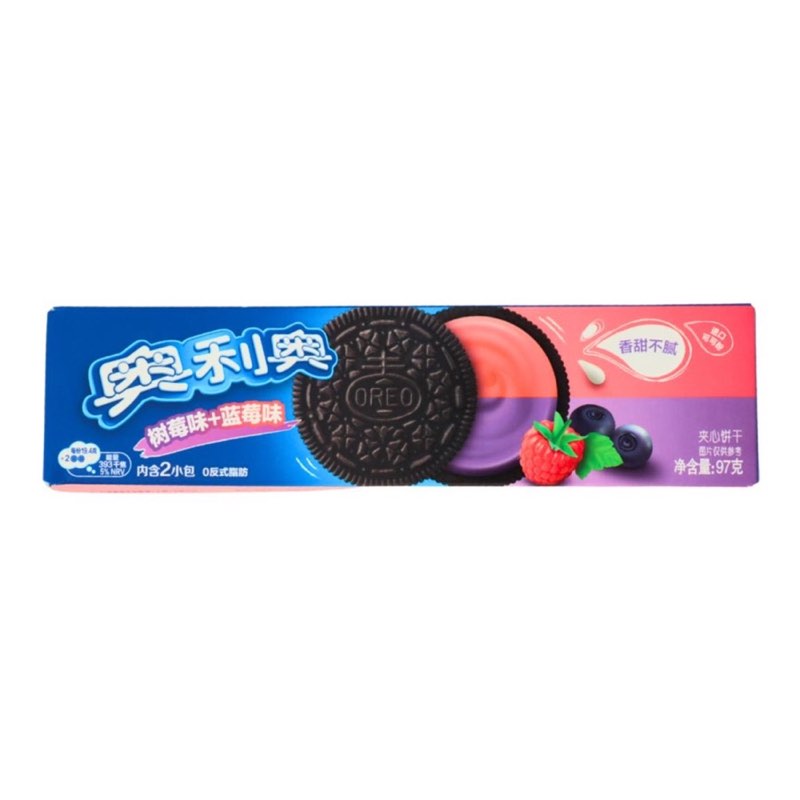
| Blueberry & Raspberry | Berry-led, sharper in character | 97 g | £2.29 |
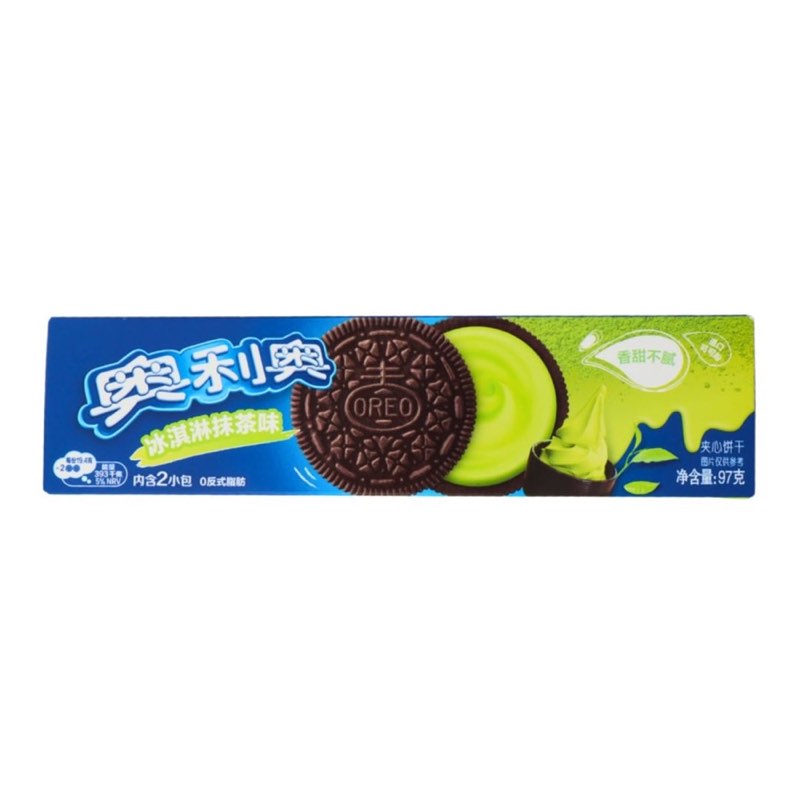
| Matcha | Not a fruit flavour at all — the outlier of the set | 97 g | £2.29 |
| BTS Brown Sugar Pancake Cocoa | Warm and dessert-like rather than fruity | 157 g | £2.29 |
If you are buying one and want the most distinctive, take this one — grape is the least common flavour of the four and the hardest to find elsewhere. If you are buying one and want the safest, take the berry pack. If you want the biggest departure from a standard sandwich biscuit, the matcha filling at £2.29 is the outlier and the one that starts the most arguments. If you want the most biscuit for the money, the 157 g pack wins on arithmetic.
Buying two? Take this and the berry-filled pack. They are both fruit fillings and they are far enough apart to be genuinely worth comparing, which is not true of every pairing in the range.
Where to find it and what is near it
On the site this sits on three shelves: the loose sweets section, which is our largest at 356 lines; the peach flavour shelf at eight lines; and the grape shelf at four. The two flavour shelves are small enough to read completely, which makes them unusually efficient places to browse if a specific fruit is what you are after.
Nearby and worth a look: the pick and mix pages for building a bag to sit beside this; the general fruit flavour listing for everything fruit-led in one place; candy and chocolate for the rich end that finishes a spread; and the full catalogue of everything we stock if you would rather scroll than navigate by shelf.
Things shoppers ask us about this pack
Is it very fruity, or mostly sweet?
Both, in that order of prominence: the sweetness is in charge and the fruit provides the identity. It sits in what we described above as band four of the sour-to-sweet spectrum — clearly fruit-flavoured, with no real acidity. If you want a sharp fruit hit, this is not it and something fizzy will serve you better. If you want fruit character in a dry, firm biscuit format, this is exactly it.
How many biscuits are in a pack?
We do not publish a piece count, because we would rather state only what we can stand behind. The pack weight is 97 g, which in practice is a comfortable two-person share across a couple of sittings or one person's supply for several days. If an exact count matters for a table plan, the manufacturer's packaging will be definitive when it arrives.
Does the grape flavour dominate?
It leads, which is not quite the same thing. Grape arrives first and is the more assertive of the two — it is a flavour that announces itself — while peach fills in underneath and stays for the finish. If you dislike grape flavour generally, you will notice it here and this is probably the wrong pack for you. If you are neutral on it, the peach half softens it considerably compared with a grape sweet.
Is this the same as the standard version?
It is the same sandwich-biscuit format with a different filling. The construction is familiar; the grape and peach filling is what makes it a different product. That is the whole proposition of flavoured variants, and it is why they are worth buying — the format does the reassuring and the filling does the surprising.
Will children like it?
Usually, with one reservation. The format is entirely familiar to children and the sweetness level is squarely in the comfortable range. Grape is the variable — some children love it and some find it odd. If you are buying for a child you do not know well, the berry version is the safer choice of the two fruit packs.
Is it suitable for any particular diet?
Our supplier has given us no dietary tags for this line, so we cannot say and will not speculate. Check the manufacturer's packaging when it arrives if a dietary requirement or an allergy is involved. That applies to every line where we have no verified information, and we would rather say so than offer a guess that somebody relies on.
What colour is the filling?
Look at the product image on the listing — that is the honest answer, and it is better than any description we could write, because we do not hold verified colour information for this line and are not going to invent one. If the appearance matters for a table or a photograph, the picture is right there and takes a second to check.
Can I use these in a dessert rather than eating them as they are?
They behave like any firm sandwich biscuit does, so the usual uses apply — crumbled over something soft, stood up around the edge of a bowl, or used whole as a base layer. The fruit filling means they will carry their flavour into whatever you put them with, which is worth thinking about: fruit fillings go well with soft creamy things and less well with anything already strongly flavoured.
How long does a pack stay crisp once opened?
Clipped or decanted into an airtight tin, several days without much change. Left open in a cupboard, you will notice softening within a day or two. The biscuit is the part that suffers, not the filling, and softening is a quality problem rather than a safety one — the date on the manufacturer's pack is what governs the latter.
Is it better with tea or coffee?
A matter of taste, but there is a principle worth knowing. A dark, dry drink flattens fruit flavours, so a strong coffee will mute the grape and peach considerably. A lighter tea leaves them intact. If the fruit filling is the reason you bought the pack, pair accordingly — and if you want the biscuit to be the quiet partner to a strong drink, the reverse is true.
Is there a bigger pack of this flavour?
No. This flavour is sold in one size only, 97 g at £2.29. If you want more weight for the same money within the range, the 157 g pack is the one to look at, though it is a completely different flavour direction.
Is it in stock?
Yes, this one is currently listed as in stock at £2.29. Flavoured variants of familiar lines do come and go more than core products, so treat the listing page rather than this description as the live answer on availability.
To finish
A firm, dry sandwich biscuit with an unusual two-fruit filling, for £2.29 a 97 g pack. It sits in the sweet-with-fruit-character band rather than anywhere near sour, it holds its shape and its place on a plate better than almost anything else we sell, and the grape half of the filling makes it genuinely hard to find an equivalent for. Buy it as the structural item on a table, as the interesting half of a two-pack tasting, or simply because grape in a biscuit is not something you come across often. Then look at the picture before you plan the table around it, which is advice we give on this pack more than most.
More from Oreo
More peach sweets
More loose sweets sweets



Where this sits
Oreo Sandwich Biscuits with Grape & Peach Flavoured Cream Filling 97g appears on these shelves. Browse them, or jump to something nearby.
You might also like