Home / Loose Sweets / Oreo Sandwich Biscuits with Blueberry & Raspberry Flavoured Cream Filling 97g
Oreo · 97g
Read the full guide
Oreo Sandwich Biscuits with Blueberry & Raspberry Flavoured Cream Filling 97g
£2.29
✔ In stock — ready to ship
Fresh stock
Free over £20
Same-day dispatch
Secure checkout
The old way of buying sweets was to stand in front of a wall of jars and assemble a bag. You did not think about it in terms of categories or balance; you just knew, by long practice, which four or five things went together. That instinct is still the most useful skill in a sweet shop, and it is worth setting out what it actually consists of — with the Oreo Sandwich Biscuits with Blueberry & Raspberry Flavoured Cream Filling, a 97 g pack at £2.29, as the fixed point.
A biscuit does not go in the bag, of course. Put a sandwich biscuit in with loose gummies and you will arrive home with crumb through everything. It rides alongside, opened separately, as the thing on the plate while the bag is on the sofa. Here are three assemblies that work.
The full guide to Oreo Sandwich Biscuits with Blueberry & Raspberry Flavoured Cream Filling 97g
5,010 words on how it eats, who it suits, how to serve it and what to put beside it.
Three bags this belongs beside
The berry bag
Lean into the flavour rather than away from it and build a whole berry session. Start with Millions Freeze-Dried Berrylicious Pouch 50g at £2.49, which gives you an intense, dry, concentrated version of the same flavour family in a completely different texture. Add Sweetzone Blue Raspberry Pencils Tub at £10.99 if you are feeding a crowd — a tub is a serious quantity and blue raspberry is the loudest, most confectionery-forward reading of the berry idea there is. Then Kingsway Black & Raspberry Berries at £5.49 for a darker, more traditional take on the same territory.
Four items, one flavour family, four textures — crisp biscuit, freeze-dried crunch, soft pencil, firm jelly. This is the one build where matching flavours works, and it works because the textures do all the contrasting for you.
The contrast bag
The opposite approach, and the safer one if you are feeding people with different tastes. Keep the biscuit as the mild, familiar anchor and surround it with things that are nothing like it. Barnett's Mega Sour Apple Candy Bags 104g at £3.99 covers the extreme sour corner. Barratt Black Jack Chews at £5.49 covers the dark, aniseed-adjacent, long-chew corner that nothing else touches. Briquette at £5.49 covers the rich end. Nobody at the table will run out of somewhere to go.
The odd bag
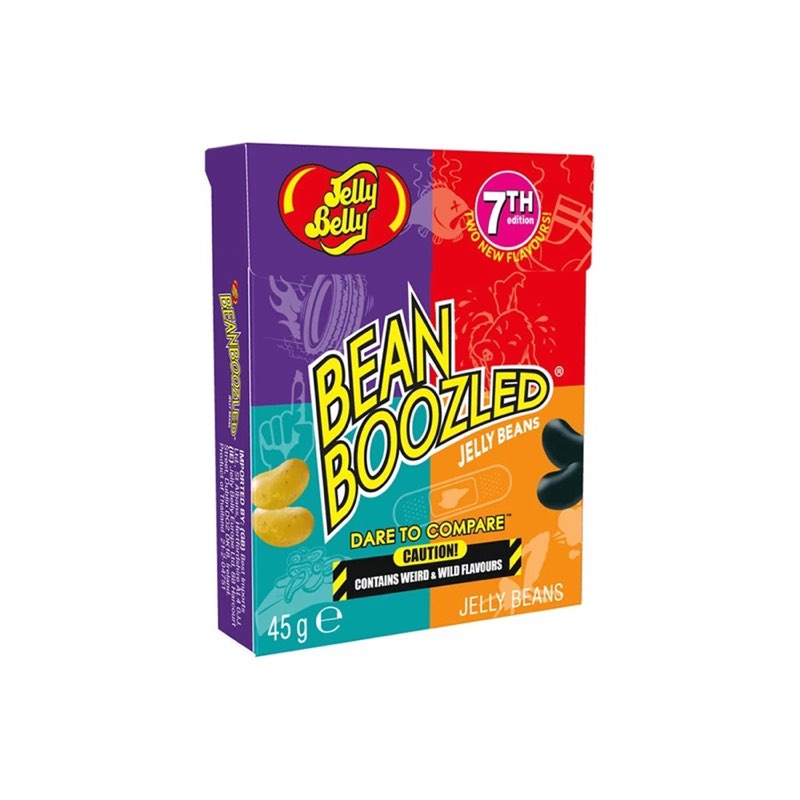
For a group that enjoys a game more than a snack. Jelly Belly Bean Boozled Jelly Beans Box 45g at £2.99 is the centrepiece — a box built entirely around not knowing what you are about to eat — and the biscuit is what people go back to afterwards to get their mouth back to normal. That is a genuine and underrated role: when one item on a table is deliberately unpleasant, everything else needs to be reliably pleasant, and a familiar biscuit is about as reliable as it gets.
For any of these, build the loose element from our pick and mix or scoop it by weight off the loose sweets counter, which runs to 356 separate lines and is the deepest part of the shop.
What arrives
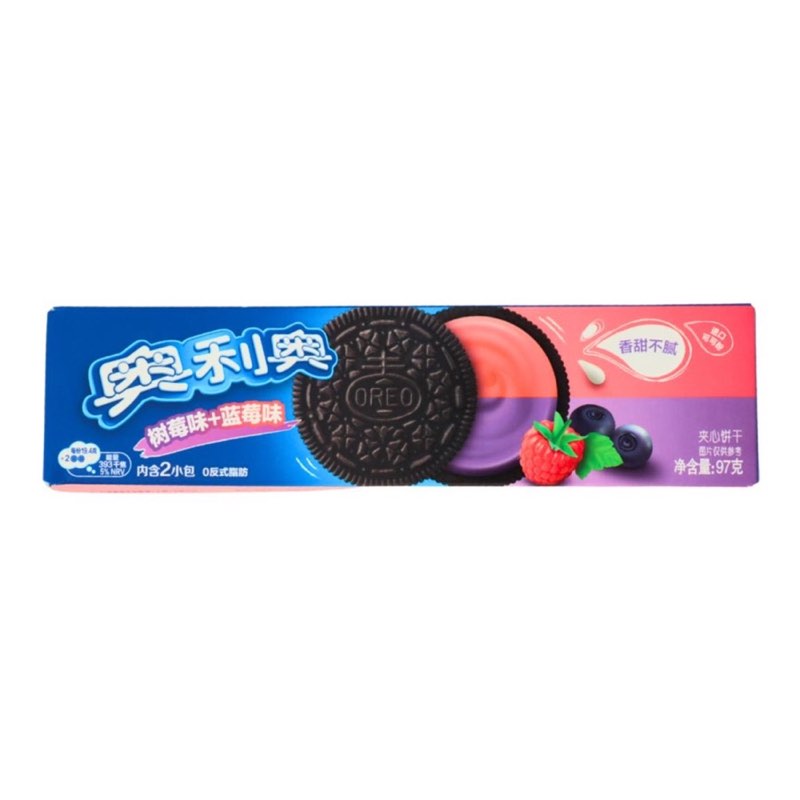
A sealed 97 g pack, one size, £2.29, with a single photograph on the listing. The construction is the standard sandwich one — two biscuit halves with a flavoured cream between them — and the variable, as always with this range, is entirely in the middle.
Here the middle is a blueberry and raspberry filling, which is a berry pairing rather than a single flavour. That matters. A single-berry filling has to carry everything on one note; a pairing can split the work between a sharp element and a deep one, which is exactly what this does.
Ninety-seven grams is a well-judged weight for a flavour you have not tried. It is enough to form a proper opinion, enough to share with somebody, and not so much that a pack you turn out to dislike sits in a cupboard for a month reproaching you.
Biting into it
The sequence is: snap, dryness, then fruit — and the fruit arrives with noticeably more edge than most fillings do.
The snap comes first and it should be clean and audible. A sandwich biscuit that bends rather than breaks has already failed, and a great deal of the satisfaction in the format is loaded into that first half-second. Sealed packs hold this well, which is one of the practical arguments for a wrapped biscuit over a loose one.
Then a brief dry moment as the biscuit halves reach you ahead of the filling. It is a fraction of a second but it structures everything that follows — you get texture, then flavour, in sequence rather than together.
Then the berries. Raspberry leads, and it leads sharply. Raspberry is one of the few fruit flavours that carries a genuine tart edge even in confectionery form, and that edge is the first thing you notice — brighter and more acidic than you might expect from a cream filling. It is high-pitched, immediate and quite vivid. Blueberry comes in behind it, deeper and rounder, with a darker character that sits lower and lasts longer. The two do not blur into a general "berry"; you can follow them separately if you pay attention, which is the mark of a pairing that has been thought about.
The finish is the interesting part. The biscuit carries and softens the tartness, so what would be quite sharp on its own arrives moderated — you get the brightness without the pucker. That is the whole trick of putting an acidic fruit into a cream filling in a dry biscuit, and it is why berry works so much better in this format than it does in, say, a soft chew, where there is nothing to buffer it.
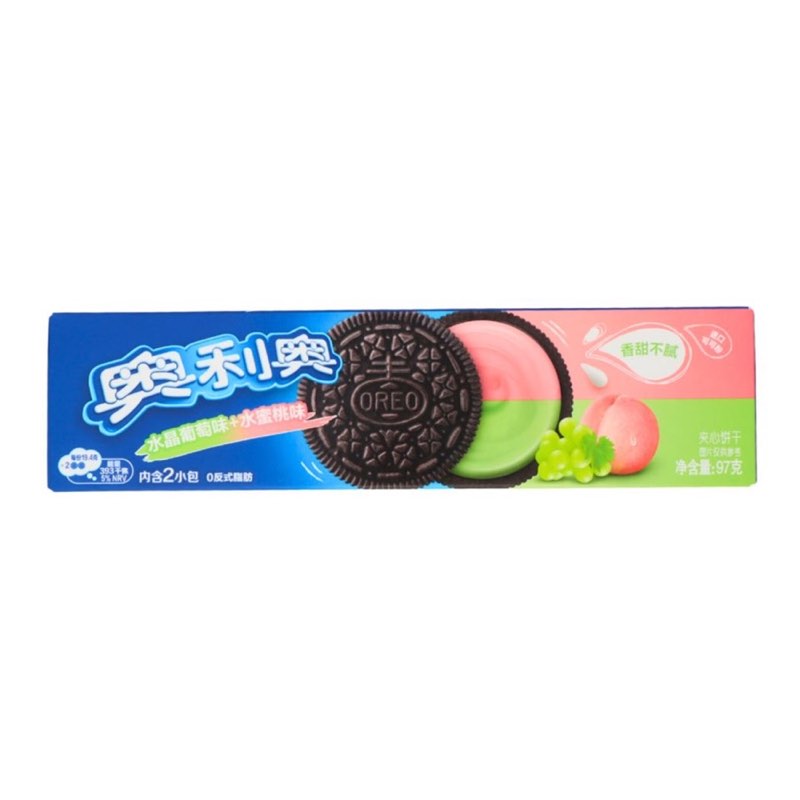
Against its own siblings the difference is easy to feel. Set beside the Grape & Peach filling at £2.29, this one is markedly sharper and less perfumed — grape and peach are rounded and candied where blueberry and raspberry are tart and fresher-tasting. If you have tried that pack and found it a touch sweet, this is the correction.
Corner shops, seaside shops, and what a sweet counter is for
It is worth understanding the tradition this pack is sitting in, because a branded biscuit in a sealed pack is a very recent kind of object to find in a sweet shop, and the shops themselves are much older than that.
The corner shop model
The British corner shop was never primarily a sweet shop. It was a general shop with a sweet counter in it, usually near the till, usually at child height, and that placement is the whole story. Sweets were what you bought with the change, on the way to or from somewhere else. The counter was stocked for small money and quick decisions: single pieces, penny lines, things you could buy with whatever was in your pocket without any planning at all.
That shaped an entire category of product. Confectionery built for corner shops had to be cheap per unit, sold individually, and visible from below. Lollies, single chews, small wrapped pieces. Swizzels Drumstick Lollies at £5.49 are direct descendants of that world — a lolly is the perfect corner-shop object, because it is a single item, easily priced, and it lasts long enough on the walk home to feel like value.
The corner shop also taught a whole generation how to shop: you chose from a limited selection, you chose quickly, and you learned your own taste by trial rather than by reading anything. There was no browsing and no comparison. You knew what you liked because you had tried the fifteen things that were available.
The seaside model
The seaside sweet shop is a completely different animal and it is built on a different psychology entirely. Nobody goes to a seaside sweet shop because they need sweets. They go because they are on holiday, and buying sweets is part of the day rather than an errand.
That changes the stock. A seaside shop sells by weight and by spectacle: big jars, big quantities, things that look extraordinary in a window, and formats that exist mainly to be remarkable. Length is a seaside idea — anything absurdly long belongs to that tradition, which is why pencils and poles and giant versions of ordinary sweets thrive there. A tub of blue raspberry pencils is a seaside object through and through, and the enormous tub format is itself part of the appeal.
The seaside shop also invented the modern pick and mix experience as most people understand it: a wall of options, a scoop, a bag, and the small anxiety of deciding when to stop. That is a fundamentally different transaction from the corner shop's quick change-in-pocket purchase, and it produces a different kind of shopper — one who assembles rather than chooses.
What happened to both
Both traditions have thinned out considerably, for reasons that have nothing to do with anybody losing interest in sweets. Corner shops declined as shopping patterns changed. Seaside shops follow the fortunes of seaside towns. What replaced them was the supermarket aisle, which is efficient and enormous and carries perhaps two hundred lines chosen almost entirely on volume.
The interesting consequence is what fell out. The supermarket model is very good at the things that sell in tens of thousands and very bad at everything else. Unusual imports, small runs, regional lines, odd formats and anything with a narrow audience simply stopped having anywhere to be sold. That is a real loss and it is the gap that a shop like this one exists to fill — our full catalogue carries a great many lines that would never survive a supermarket shelf review, and that is the point of it rather than an accident.
Where a branded biscuit sits in that history
Awkwardly, and interestingly. A sealed pack of branded biscuits is not a corner-shop object — too expensive for change, too large for a single purchase. It is not a seaside object either — nothing about it is spectacular and it does not sell by weight.
What it actually represents is a fourth model, which is the import-and-variant shelf. Its logic is neither cheapness nor spectacle but difference: the appeal is that this is a version of something universally known which you have not seen before. That is a modern idea and it only works in a world where the base product is already familiar everywhere. A berry-filled sandwich biscuit is interesting precisely because the plain one is not.
This is why the same shelf that carries a berry biscuit also carries things like Fini Mini Mochis Berries Bag at £1.35 and BUBS Raspberry Liquorice Skulls at £7.50. All three are doing the same job in different ways: taking a familiar flavour idea and presenting it in a format or a combination that a British shopper has not grown up with. The mochi is a texture from elsewhere; the liquorice-and-raspberry pairing is a flavour convention from elsewhere; the biscuit is a familiar object with an unfamiliar middle.
What has been kept, and what is worth keeping
The good things about both old models are worth holding on to deliberately, because they do not survive on their own.
From the corner shop: the idea that a sweet should be an affordable, low-stakes decision. Nothing on this page costs enough to think hard about, and that is as it should be. A treat that requires deliberation has stopped being a treat.
From the seaside shop: the idea that choosing is half the pleasure. Assembling a bag from forty options is genuinely more enjoyable than picking one thing off a shelf, and it is why the pick-and-mix format has outlived the towns it came from. The loose counter is our version of that wall of jars, and it is meant to be browsed slowly rather than searched.
Giving it rather than eating it
A surprising amount of confectionery is bought to be handed to somebody else, and sealed packs in this size are one of the most useful gifting formats there is. It is worth taking seriously, because a well-chosen small gift lands better than a badly chosen large one.
Why this size works for giving
Three reasons. It is sealed, which matters enormously for anything you hand to somebody — loose sweets in a bag suggest handling, and a factory-sealed pack does not. It is inexpensive without looking cheap at £2.29, which is the narrow band where a gift reads as thoughtful rather than either stingy or awkwardly generous. And it is unusual, which is what actually makes a small gift memorable. Nobody remembers a standard bar of anything. People do remember being given a flavour they had never heard of.
Letterbox treats
The flat-pack gift that goes through a door without anybody having to be in is a genuinely useful thing to be able to send, and biscuit packs are close to ideal for it — flat, light, sturdy enough to survive handling, and sealed. The one caution is that biscuits break under pressure, so anything posted needs to be packed so it cannot be squeezed. Flat and rigid, not padded and squashy.
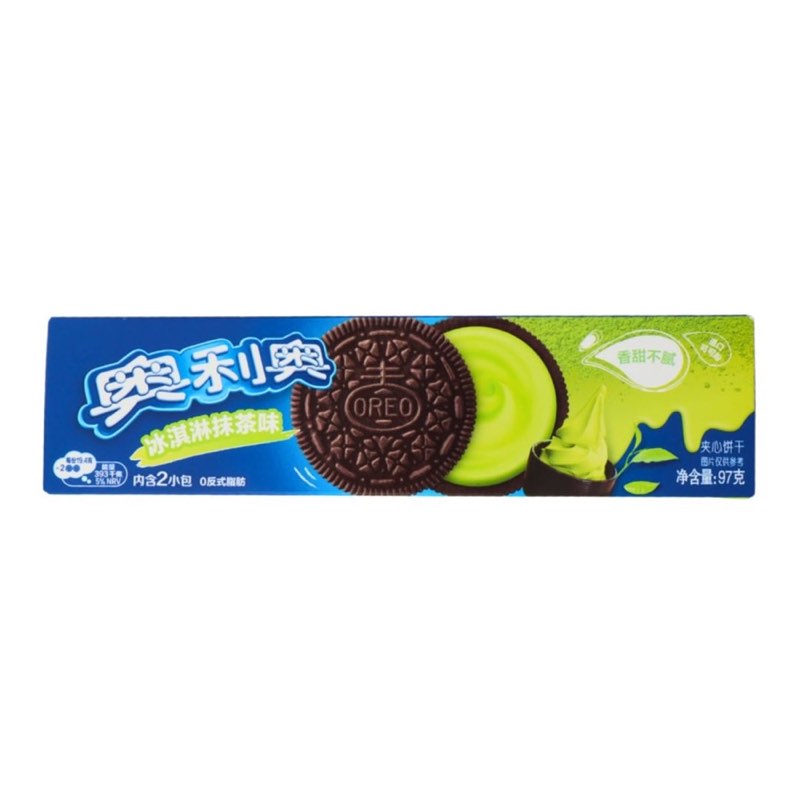
A good letterbox set is two or three contrasting packs rather than one of anything. Take this and the matcha-filled pack at £2.29 and you have two flavours that could not be further apart in a single flat parcel, which is a much better gift than two of the same thing.
Teacher gifts, and the end-of-term problem
Anybody who has bought an end-of-term gift knows the difficulty: it must be small, it must not be personal, it must not look like you spent nothing, and the recipient will receive a great many of them at once. That last point is the one people forget. The thirtieth identical box is not a gift, it is a logistics problem for somebody.
Something unusual solves that by being the one item in the pile that is not like the others. A berry-filled version of a biscuit everybody knows is exactly the right level of interesting — recognisable enough not to be strange, different enough to stand out. And at £2.29 it is squarely in the appropriate price band, which for this kind of gift is a feature rather than a compromise.
One practical note on gifts for anybody you do not know well: dietary requirements and allergies are real and common. We hold no verified dietary or allergen information for this line, so we cannot tell you whether it suits anybody's particular needs. If you are giving food to someone whose requirements you do not know, give it sealed so they can read the manufacturer's packaging themselves and make their own decision. That is the correct and respectful way to do it, and sealed packs make it easy.
Hampers
Hampers succeed or fail on structure, not on total spend. The common mistake is buying five expensive things of roughly the same kind, which produces something that cost a lot and looks monotonous.
What a hamper needs is variety of form: something boxed, something bagged, something in a jar or tub, something flat. A flat biscuit pack is the piece most hampers are missing, because it fills the awkward space at the side and gives the eye somewhere flat to rest among all the round things.
A workable hamper spine: one flat item, which is this. One bulk item by weight from the loose counter. One tub or jar, where something like the pencils tub earns its place by sheer presence. One rich, dark item — the candy and chocolate section is where to find that. And one novelty that starts a conversation, which is what the Bean Boozled box at £2.99 is for. That is five items, five forms, and it will look considered at almost any budget.
Care parcels
Parcels sent to students, to people working away, to anyone in hospital or recovering, or simply to somebody having a hard month follow slightly different rules. The governing principle is that everything should keep, everything should be openable without equipment, and nothing should need refrigerating.
Sealed biscuit packs meet all three. So does most of the shop, which is one of the quiet virtues of confectionery as a thing to send. The other rule for care parcels is to send several small things rather than one big thing — the pleasure is in opening and in choosing, and a parcel of six small items is a better week than a parcel with one large item in it.
Avoid anything that needs to be shared to be enjoyed, and avoid anything that requires a plate, a knife or a fridge. Include at least one thing the recipient will recognise instantly and at least one thing they will not. That combination — a familiar object with an unfamiliar flavour in it — is why variant packs like this one are such reliable parcel material.
The honest limits of it as a gift
It is not a main present and should not be asked to be one. It is an addition, a stocking item, a thank-you, a thing alongside a card. Treat it as the whole gift for a significant occasion and it will underdeliver, because 97 g of biscuits is 97 g of biscuits however interesting the filling. Used as what it is, it is one of the best two-pound gifts available.
Berries as a flavour family
Raspberry is the workhorse of British confectionery fruit flavours and one of the most versatile. It has a tart edge that survives being sweetened, which most fruit flavours do not — sweeten a pear or a peach and the character softens away, but raspberry keeps its sharpness. That makes it useful anywhere a flavour needs to stay identifiable against a lot of sugar. There are 16 lines on our raspberry shelf, which is one of the largest single-flavour shelves we have and a fair reflection of how much work the flavour does.
It also pairs unusually well. Raspberry against liquorice is a combination that British shoppers often find odd and that has a long history elsewhere — those raspberry liquorice skulls are worth trying precisely because the pairing is so counterintuitive. Raspberry against darker berries, as here, is the more comfortable version of the same instinct.
Blueberry is the quieter partner. In confectionery it reads as deeper, rounder and slightly wine-like, without much acidity of its own. On its own it tends to be a bit vague, which is why it very rarely appears alone and very often appears as the second name on a pack. Its job is to give a sharp partner somewhere to land.
The wider berry family across the shop runs from the very sharp to the very soft. The strawberry shelf holds the softest and most universally liked end of it, and the general fruit listing is the place to browse the whole span at once. The freeze-dried berry pouch at £2.49 is the most concentrated berry expression we carry, and tasting it next to this biscuit is a quick education in what a format does to a flavour: the same family, one intense and dry, one buffered and creamy.
Who should buy this one
Anyone who found the grape-and-peach version too sweet, first. This is the sharper sibling and it is the natural next step.
Raspberry people, second — and there are a lot of them, as sixteen shelf lines suggest. If raspberry is a flavour you look for, a raspberry-led biscuit filling is not something you come across often.
Gift buyers, third, for every reason set out above.
Tea drinkers, fourth. A tart fruit filling works particularly well against a plain hot drink, where the sharpness has somewhere to go. It is a better tea biscuit than a sweeter filling would be.
And anyone building a berry-themed anything — a table, a hamper, a party — who needs a firm, dry element among a lot of soft ones.
Everyday occasions
The mid-afternoon two, with something hot, which is what the majority of these packs are actually used for and there is no need to dress it up.
The side-by-side tasting, which is the most enjoyable use: two or three flavours from the range on one plate, opened at the same time, and an argument about which is best. Three packs comes to under seven pounds and makes a better end to a dinner than most puddings do.
The packed lunch, where a sealed flat pack survives being carried and needs no container.
The long journey, with the standing caveat that biscuits break — pack flat and near the top.
The quiet evening, where a couple of biscuits is the right size of treat and a whole bag of anything is not.
And the cupboard standby, for the moment somebody calls in unexpectedly and you would rather not offer them nothing. A pack of something slightly unusual is a better answer than a plain one, and it starts a conversation into the bargain.
The arithmetic on 97 g
£2.29 for 97 g is about £2.36 per 100 g. That is mid-range for us: dearer than buying loose by weight in any quantity, considerably cheaper per gram than the small novelty packs, and ordinary for a sealed branded pack of this size.
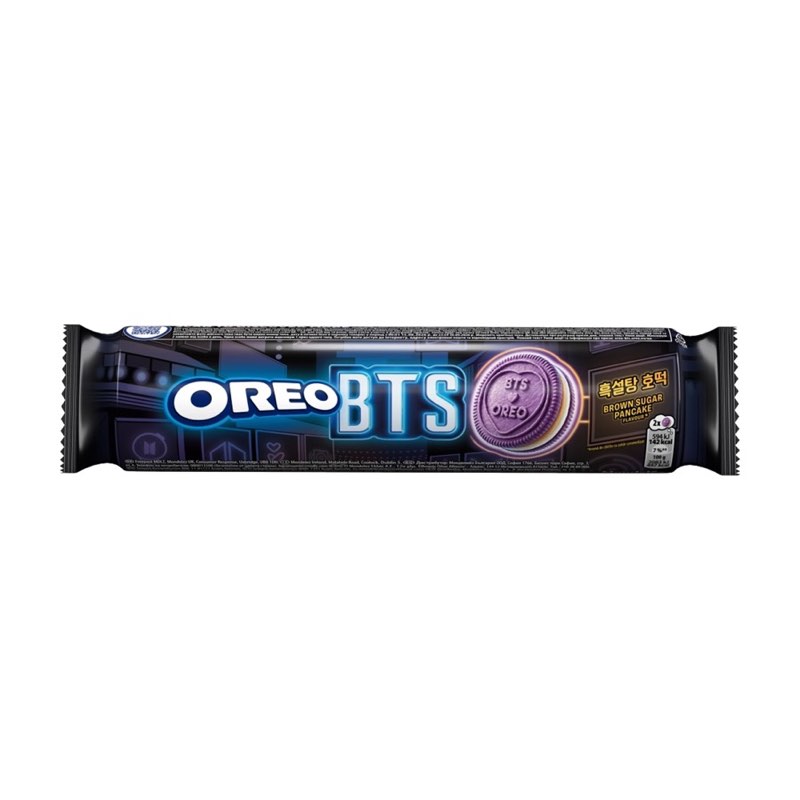
The more useful comparison is within the range itself, where every 97 g flavour is the same £2.29, so choosing between fillings costs you nothing either way. The one outlier is the 157 g Brown Sugar Pancake Cocoa pack, which is also £2.29 for roughly 60 per cent more weight. If your priority is quantity per pound, that one wins outright, and we would rather point that out than pretend otherwise — it is a different flavour direction entirely, but the maths is the maths.
On how far a pack goes: two people having two each makes a modest dent and leaves plenty for another sitting or two. One person rationing them has most of a week. Nobody sensibly eats a 97 g pack at once, which means the effective cost per occasion is well under a pound, and that is the figure that actually matters for something you keep in a cupboard.
Against a bought coffee-shop biscuit, a whole pack costs about what one biscuit does over a counter. That comparison is a little unfair in both directions, but it is the one most shoppers are making in their heads, and on that basis a sealed pack of an unusual flavour is straightforwardly good value.
Keeping the snap
Everything that matters about storing biscuits comes down to keeping air away from them, because air carries moisture and moisture is what turns a crisp biscuit into a bendy one.
Clip the pack the moment you open it, or tip the rest into a tin with a proper seal. Do it on day one rather than when you notice a problem, because by then several biscuits' worth of quality has already gone and it does not come back.
Do not use the fridge. A fridge is a humid place and biscuits soften faster in one than in a dry cupboard. This is the single most common well-intentioned storage mistake there is.
Store flat and store high. Sandwich biscuits are strong end-on and weak under weight from above, and a pack at the bottom of a cupboard under tins will be a pack of broken halves. This matters even more if you are posting them.
Keep them away from anything strongly scented. A cream filling takes on cupboard smells readily and a fruit flavour shows it sooner than a deep one would.
Follow the date and storage instructions on the manufacturer's packaging, which is the authority rather than anything written here. If anyone eating them has an allergy, check that packaging on arrival and before eating — we hold no verified ingredient or allergen data for this line and will not guess. And as across the whole shop: treats are treats, and small pieces need supervision around young children.
One size, four directions
There is one size of this pack — 97 g at £2.29 — with no multipack and no variants, so the only choice is which filling.
| Pack | Character of the filling | Pick it if | Weight / price |
|---|---|---|---|
| Blueberry & Raspberry | Tart, bright, berry-led with a deeper second note | You want sharpness and freshness | 97 g / £2.29 |
| Grape & Peach | Candied and rounded, more perfumed | You want the most distinctive fruit identity | 97 g / £2.29 |
| Matcha | Not fruit at all — the outlier of the set | You want the biggest departure | 97 g / £2.29 |
| BTS Brown Sugar Pancake Cocoa | Warm and dessert-like | You want the most weight per pound | 157 g / £2.29 |
Buying one: this is the safest of the two fruit packs and the one most people will simply enjoy without having to acquire a taste for anything.
Buying two: take this and the grape and peach pack, because two fruit fillings pulling in opposite directions makes a far better comparison than a fruit and a non-fruit.
Buying three for a tasting: add the matcha version and open them in that order — berry, grape and peach, then matcha. The outlier last, always, because it resets everything after it.
Where to find it
This one sits on two shelves: the loose sweets section, our largest at 356 lines, and the raspberry flavour shelf at 16. That second one is the more useful of the two if berry is what you are after, since it gathers every raspberry-led line we carry in one place.
Worth a look nearby: everything fruit-flavoured in one listing, which is the broadest way to browse this territory; the pick and mix pages for building the bag that sits beside it; chocolate and candy lines for the rich end of a spread; and every line we stock, listed together when you want to scan rather than navigate.
What people ask before they buy it
Is it sharp or sweet?
Sweet overall, with a genuinely noticeable tart edge — more than most cream fillings have. Raspberry keeps its sharpness even when sweetened, and that is what gives this pack its character. The biscuit buffers it, so you get brightness rather than anything that makes you wince. If you like fruit flavours with an edge, this is the pick of the range.
Which berry comes through more?
Raspberry leads and is the more assertive of the two. Blueberry sits underneath, deeper and rounder, and stays a little longer on the finish. They do not blend into a general berry note — you can follow both separately, which is what makes a two-fruit filling more interesting than a single one.
How does it compare with the grape and peach version?
Sharper, fresher and less candied. That pack is rounder and more perfumed, with grape giving it a very distinctive identity. This one is the more straightforwardly likeable of the two and the better choice for a mixed group. Both are 97 g at £2.29, so there is nothing to weigh up but taste.
Is it a good gift?
For the small-gift job, yes, and unusually so. It is sealed, flat, inexpensive without reading as cheap, and different enough to be remembered. It works for end-of-term gifts, letterbox parcels, hamper filling and care packages. It is not a main present, and it will disappoint if asked to be one.
Can I post it?
Yes, with one precaution: pack it so it cannot be compressed. Biscuits survive being carried and do not survive being squashed. Flat and rigid beats padded and soft. Being sealed also means the recipient can check the manufacturer's packaging themselves, which is the right way to send food to anybody whose dietary needs you do not know.
How many are in the pack?
We do not publish a count, because we prefer to state only what we can verify. The weight is 97 g. In practical terms that is a comfortable share for two people across a couple of sittings, or one person's supply for the better part of a week.
Is it suitable for vegetarians, vegans or anyone with an allergy?
We have no dietary tags from our supplier for this line, so we cannot say either way and will not guess at something people rely on. Check the manufacturer's packaging on arrival and before eating. If you are giving it to somebody else, give it sealed so they can check it themselves.
Will children like it?
Generally yes — berry flavours are among the most universally liked, the format is entirely familiar, and there is nothing acquired about it. Of the fruit packs in this range, this is the one to choose if you are buying for a child whose tastes you do not know.
What drink goes with it?
Plain tea is the natural partner, because it leaves the tartness intact and gives it something dry to work against. A strong dark coffee will flatten the berry notes considerably — fine if you want the biscuit to be the quiet partner, less good if the filling is the reason you bought it. Something cold and plain works well too.
Does it break easily in a bag?
Like any sandwich biscuit, it will if you put weight on it. Keep the pack flat and near the top of a bag rather than underneath everything else and it travels perfectly well. This is worth remembering for lunchboxes and journeys, where the damage is usually done by other items rather than by movement.
Can I use them in a pudding?
They behave like any firm sandwich biscuit — crumbled over something soft, stood around the edge of a bowl, or used as a base layer. The tart berry filling carries into whatever you put it with, which works nicely against plain creamy things and less well against anything already strongly flavoured.
Is it in stock?
Yes, this pack is currently listed as in stock at £2.29. Flavour variants move in and out of availability faster than core lines, so treat the product listing rather than this page as the live position before planning anything around it.
The last word
A crisp, dry sandwich biscuit with a bright, genuinely tart berry filling, at £2.29 for 97 g. Of the four fillings in this range it is the easiest to like and the one that goes furthest with the widest range of people, which makes it the obvious pick for a gift, a shared plate or a first try. It sits in a long tradition of shops selling people small, cheap, interesting things they had not planned to buy — and a familiar biscuit with an unfamiliar middle is about as good an example of that tradition as the modern shelf produces.
More from Oreo
More raspberry sweets

More loose sweets sweets


Where this sits
Oreo Sandwich Biscuits with Blueberry & Raspberry Flavoured Cream Filling 97g appears on these shelves. Browse them, or jump to something nearby.
You might also like