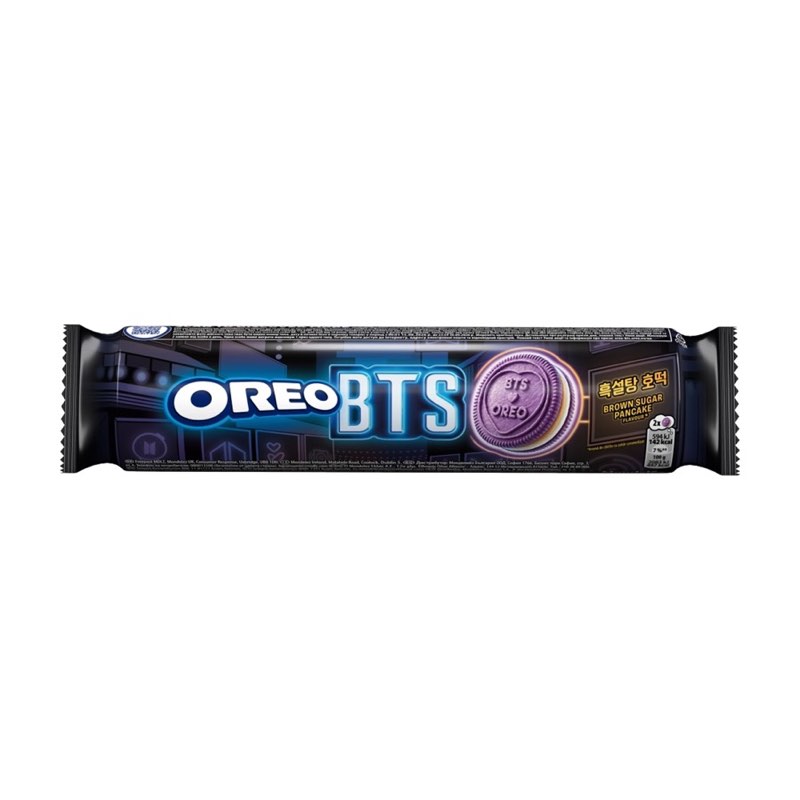
Home / Loose Sweets / Oreo BTS Brown Sugar Pancake Cocoa Sandwich Biscuit Pack 157g
Oreo · 157g
Read the full guide
Oreo BTS Brown Sugar Pancake Cocoa Sandwich Biscuit Pack 157g
£2.29
✔ In stock — ready to ship
Fresh stock
Free over £20
Same-day dispatch
Secure checkout
Start with the arithmetic, because on a pack this size the arithmetic is the argument. The Oreo BTS Brown Sugar Pancake Cocoa Sandwich Biscuit Pack is 157 g for £2.29. Divide one into the other and you are paying £1.46 per 100 g. That number is worth sitting with for a second, because it is quietly one of the better rates on the shelf for anything that arrives in a printed pack rather than scooped out of a tub.
Put it next to its own family and the point sharpens. The three sibling packs we stock all sit at the same £2.29, but they are 97 g rather than 157 g, which puts them at roughly £2.36 per 100 g. Same money, sixty grams less biscuit. If you are buying purely on weight for your pound, this is the one in the family that wins, and it is not close. Sixty grams is not a rounding error on a pack this size — it is the difference between a pack that gets shared out at a table and a pack that gets finished by one person on a train.
The full guide to Oreo BTS Brown Sugar Pancake Cocoa Sandwich Biscuit Pack 157g
5,761 words on how it eats, who it suits, how to serve it and what to put beside it.
What £2.29 and 157 grams actually buys you
| Pack | Weight | Price | Price per 100 g |
|---|---|---|---|
| This pack — brown sugar pancake cocoa | 157 g | £2.29 | £1.46 |
| Matcha flavoured cream filling | 97 g | £2.29 | £2.36 |
| Grape & peach flavoured cream filling | 97 g | £2.29 | £2.36 |
| Blueberry & raspberry flavoured cream filling | 97 g | £2.29 | £2.36 |
Now widen it out to the rest of the shop, because £1.46 per 100 g is not just good within the Oreo family, it holds up against the wider shelf. A 104 g bag of Barnett's Mega Sour Apple Candy Bags 104g is £3.99, which is £3.84 per 100 g — nearly three times the rate, though you are buying an entirely different kind of intensity there, and nobody buys extreme sours by the kilo. The 150 g carton of Buchanan's Butter Tablet Carton 150g at £3.49 works out at about £2.33 per 100 g. A 77 g bag of Cadbury Dairy Milk Christmas Little Robins Chocolate Bag 77g at £2.49 lands near £3.23. Against that company, a 157 g biscuit pack under two pounds fifty is the sensible line on the list.
Portioning is where those figures turn into something you can plan with. Treat a sandwich biscuit pack the way you would treat any biscuit tin: two or three at a sitting for one person, four or five if it is going out on a plate with tea. On that basis a 157 g pack is comfortably a week of small evening treats for one, a couple of evenings for two people who are enjoying themselves, or a single round for a table of four with a few left in the packet for whoever goes back. It is not a party quantity and it does not pretend to be. It is a household pack, or a one-person pack with restraint, and the price reflects that honestly.
If you are buying for a group rather than a shelf, the maths to do is packs-per-head, not grams-per-head. Two packs will cover a table of six generously with biscuits left over; three will cover ten if there is something else sweet on the table beside them. At £2.29 each, three packs is £6.87 — less than one standard bag of most of our loose lines, several of which sit at £5.49 for a bag. That comparison matters when you are building a spread: the biscuits are the affordable body of the table and the loose sweets are the expensive colour on top of it.
One last piece of value thinking before we leave the numbers. Because this pack is a printed, sealed unit rather than a weighed-out bag, what you are also buying is portability and presentability. A 157 g pack goes into a hamper, a rucksack or a letterbox parcel exactly as it is. Weighed-out sweets need decanting, tying and labelling before they can do the same job. That is not a cost you see on the price tag, but it is a real one, and it is a large part of why packs like this one earn their place on a shop that otherwise sells a great deal by the scoop.
The pack in your hand
What arrives is a flat, rectangular printed pack with a printed weight of 157 g on it, and the first useful thing to say about it is that it is bigger in the hand than the 97 g siblings in an obvious, physical way — longer rather than thicker, the way biscuit packs grow. It has the familiar slight give of a biscuit pack rather than the rustle of a sweet bag. Pick it up and you can feel the stack shift very slightly inside, which tells you what you are dealing with: discs standing in a row, not a loose jumble.
The name on the front is doing several jobs at once, and it is worth reading it properly rather than skimming it, because everything we can honestly tell you about this product comes from that name and from the pack in front of you. It is an Oreo line. It is a sandwich biscuit — two discs with a layer of cream between them. The cocoa biscuit and the brown sugar pancake flavour direction are both declared on the front. And it carries the BTS name as part of the product title. We stock it as our supplier lists it, and you will see the artwork for yourself when it lands; we would rather describe what we can stand behind than dress up the parts we cannot.
The format itself is the least surprising thing about it and the most reassuring. A sandwich biscuit is one of the few confectionery shapes that is genuinely the same in the hand everywhere in the world: a round disc you can hold between finger and thumb, thin enough to snap, thick enough to twist. You already know how to eat it before you have opened the pack, which is a strange advantage for a flavour that most people will not have tried before. The novelty is in the flavour direction and the edition; the handling is completely familiar.
Eating one, from the first snap
The sequence is the same as every sandwich biscuit you have ever eaten, and half the pleasure is that the sequence is a ritual. Take one out. Feel the weight — light for its diameter, which is what tells your hand it is going to snap rather than bend. Twist, if you are a twister, and the two halves come apart with the cream clinging to one side more than the other. Scrape, if you are a scraper. Dunk, if you are a dunker, and be quick about it, because a thin biscuit disc has a short window between pleasantly softened and collapsing into the mug.
Eaten whole, the first thing that happens is the snap — a clean, brittle break rather than a crumble, with the cream layer giving a fraction of a second later than the discs either side of it. That tiny staggering of textures is the whole trick of a sandwich biscuit, and it is why the format has outlived nearly every other biscuit fashion. Crisp, then soft, then crisp again, all inside one bite.
The flavour arrives in the order the name sets out. The cocoa side of it comes first and comes from the biscuit, dry and roasty and slightly bitter at the edges the way cocoa flavour usually reads, which is what keeps a sweet filling from feeling flat. The brown sugar pancake direction is in the cream, and it arrives half a beat behind — rounder, warmer, more caramel-adjacent than fruit-adjacent, with that syrupy, breakfast-table register the name is reaching for. The two do not fight. Cocoa and caramel-toned sweetness is one of the oldest reliable pairings in confectionery, and the pack is trading on exactly that familiarity while putting an unfamiliar name on the front of it.
The fade is short and clean, which is a genuine virtue and an underrated one. Biscuit crumb clears the mouth quickly. You are not left with a coating on the teeth or a flavour that lingers into the next thing you drink, which is why biscuits and hot drinks work together and why a very sticky sweet and a cup of tea do not. It also means the second biscuit tastes like the first. Lines that build up on the palate get duller with each piece; this one does not, which is both the appeal and the hazard of a 157 g pack.
Why this is the pack we reach for when something has to be posted
There is a category of shopping that has nothing to do with what you fancy eating and everything to do with what will survive a journey and land well at the other end. Gifting, hampers, care parcels, the box you put together for someone at university, the thing you leave in a staffroom. Most of our shop is not built for that job. This pack is, and it is worth being specific about why.
The first reason is the shape. Flat and rectangular is the single most useful geometry in gifting. It lies in the bottom of a hamper without wasting the corners. It slides down the side of a shoebox parcel to stop the contents rattling. Crucially, at 157 g it is light enough not to push a small parcel into an awkward postage bracket on its own, and flat enough that in a padded envelope it has a real chance of going through a standard letterbox rather than coming back as a card through the door. Anyone who has posted sweets knows that a tub or a jar turns a simple parcel into an errand at the counter. A flat biscuit pack does not.
The second reason is that it is sealed and printed. A gift does not want decanting. When you weigh out loose sweets for someone you take on a small obligation — a bag, a tie, a label, and an unspoken question about what exactly is in it. A sealed manufacturer's pack answers all of that on its own front, and it means the person receiving it can read the packaging themselves before they eat anything, which is exactly how it should work. We would always rather a gifted sweet arrived with its own packaging intact so the recipient can check it, especially if there is any allergy in the house.
The third reason is tone, and this is the part people underestimate. A gift has to be the right size of gesture. A £2.29 biscuit pack is small enough that nobody feels they owe you anything, which is precisely what you want for a teacher at the end of term, a neighbour who took a parcel in, a colleague who covered a shift, or the nurse on a ward who will have been given three tins of shortbread already. It is a thank-you, not a debt. And because the flavour direction is unfamiliar, it reads as thoughtful rather than dutiful — you found something, rather than grabbing something.
Hampers, letterbox parcels and the end-of-term problem
Let us get practical about building things around it, because the gifting job changes shape depending on what it is going into.
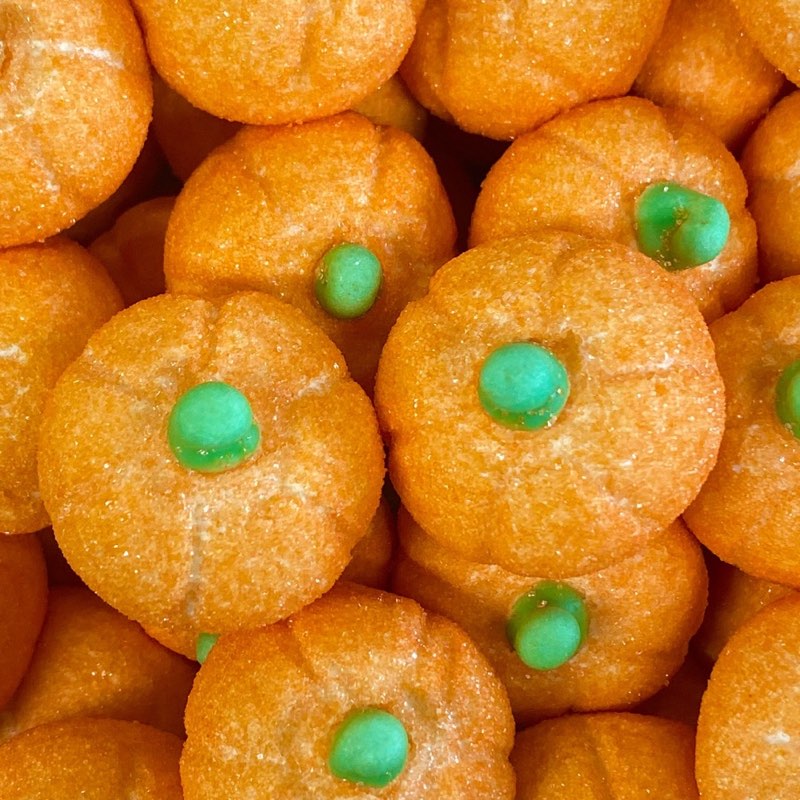
A hamper. The rule of a good hamper is contrast of format, not of flavour. You want something flat, something in a tub or carton, something in a bag, and something small and bright to fill the gaps. This pack is your flat item. For the carton, the 150 g butter tablet in a boxed carton at £3.49 sits beautifully in a hamper because it is rigid and stacks. For the bag, something with visible colour through it earns its place — Bulgari Pumpkin Mallows are soft, seasonal and read well through a window. And for the gap-filler, a £1.39 bag of juicy grenade gummies costs almost nothing and stops everything sliding around in transit.
A letterbox parcel. Here everything must be flat, and the list gets short fast. This pack, plus one or two of its 97 g siblings, is very close to an ideal letterbox trio: three flavour directions, three printed packs, all flat, all £2.29, total £6.87. Add Barratt Black Jack Chews if you know the person has a taste for aniseed and old-fashioned chews, and you have a parcel with both novelty and nostalgia in it.
End of term. The perennial problem with teacher gifts is that thirty families all buy the same three things. A pack with a flavour direction nobody in the staffroom has tried yet solves that without spending more. Two packs and a card is a completely respectable gesture and comes in under a fiver. If you want a second item that will get opened and shared rather than taken home, Bristow's Traditional Salted Caramel Bon Bons at £5.49 is the kind of bag that ends up in the middle of a table.
A care parcel. Students, people working away, someone recovering at home. The thinking here is different again: you want things that keep, things that do not need a fridge or a plate, and things that can be eaten one at a time over a fortnight rather than demolished in one evening. A sealed biscuit pack is ideal on all three counts. Pair it with something chewy that lasts — Barratt Jelly Babies at £5.49 is the classic long-haul bag — and something with a sharp edge to it so the parcel is not all one note, which is where a bag of mega sour apple sweets does real work.
Christmas and seasonal tables. If the parcel is going out in December, the seasonal printed packs pull more weight than they should for the money. The Christmas robins chocolate bag at £2.49 is a small, obviously festive item that makes the whole parcel read as seasonal even when most of what is in it is not.
One caution worth stating plainly on any gift of sweets: if you are posting to a household you do not know well, let the packaging speak for itself and let them check it on arrival before anyone eats anything. We do not publish ingredient or allergen detail for this line, because we do not hold verified data for it, and the manufacturer's own packaging is the only thing that should be trusted on that question.
A biscuit in a bag of sweets: the mix-builder's view
Most people who shop a sweet shop are, consciously or not, building a mix. Not always a literal pick and mix bag — sometimes it is a bowl, a film-night tray, a tub that lives on the side. The question that matters is not "do I like this?" but "what does this do in company?" A sandwich biscuit is an unusual answer to that question, and understanding why makes it much more useful.
The first thing a biscuit does in a mix is provide dry texture, and almost nothing else on a sweet shelf does. Run through a typical mix: gummies are wet and bouncy, chews are dense and adhesive, foams are soft and yielding, hard sweets are glassy and slow, chocolate is smooth and melting. Every one of those is, in mouthfeel terms, either wet or coating. A crisp dry crumb is the missing register. It is the same reason a cheeseboard gets a cracker. The biscuit resets the mouth between things.
The second thing it does is slow the eating down, which in a shared bowl is a feature rather than a fault. Gummies and chews disappear because they are one-bite items that ask nothing of you. A sandwich biscuit is a two- or three-bite item with a ritual attached, and people take longer over it. Put a biscuit item in a mixed bowl at a party and the bowl lasts noticeably longer, because the biscuits pace everyone.
The third thing, and this is the one mix-builders get wrong, is that a biscuit is structurally fragile in company. It cannot go at the bottom of a bag under half a kilo of gums, and it should not go in a bag with anything sticky, because sugar dust and syrupy surfaces are exactly what turn a crisp disc soft. If you are combining, keep the biscuits in their own pack and open them alongside the mix rather than tipping them in. On a tray, give them their own plate or their own corner. This is the one line where "mix it all together" is genuinely bad advice.
So how do you build around it? Think in contrasts of four. You want the biscuit for dry crispness. You want something bouncy and fruity against it — a bag of jelly babies for the soft, fruity middle is the most reliable choice there is, and at £5.49 it stretches across a whole spread. You want something with an edge, because a mix with no sharpness anywhere gets sleepy after twenty minutes; mega sour apple bags are the obvious lever and you need far less of them than you think. And you want one thing that is soft and melting, where BUBS Banana & Caramel Foam Sweets at £7.50 pull double duty, because their caramel side sits very naturally next to the brown sugar direction in this pack.
There is a fifth slot in a really good spread, which is the divisive item — the thing one person at the table loves and two people pull a face at, because that argument is half the fun of a shared bowl. Aniseed chews from the Black Jack bag are the traditional choice for that role. Briquette at £5.49 is another one that splits a room down the middle. Neither belongs in large quantities; both belong in small ones.
What this pack does not do in a mix is carry a flavour theme. Its flavour is specific and slightly unusual, which is a virtue on its own and a complication in a themed bowl. If your mix has a theme — all fruit, all sour, all retro — this pack sits outside it, and it is better served next to the mix than inside it. Put it on the table as its own thing and let people come back to it.
Brown sugar, pancake, cocoa: what the name is promising
Three flavour ideas are declared on the front of this pack, and they are each worth understanding as a family, because knowing the family tells you whether you will get on with the specific.
Cocoa as a flavour family is not the same as chocolate as a confectionery format, and confusing the two is why people are sometimes surprised by biscuits like this. Cocoa flavour is dry, roasty and faintly bitter. It has none of the melting, fatty smoothness of a chocolate bar, and it is not trying to. In a sandwich biscuit, the cocoa side exists to give the sweet filling something to push against. Without it the whole thing would read as sugary and one-dimensional; with it, the sweetness has a floor under it.
Brown sugar is the caramel end of the sweet spectrum rather than the sherbet end. Where a white-sugar sweetness reads clean and slightly sharp, a brown sugar note reads warm, treacly and a bit rounded, with a molasses edge in the background. It is the flavour direction that fudge, tablet, toffee and butterscotch all live in, which is why the same people tend to like all of them. If you enjoy the caramel side of our shelves — the sort of thing you find in a bag of salted caramel bon bons — this is a flavour direction you are already fluent in.
Pancake is the most interesting of the three, because it is not really a flavour at all, it is a scene. Confectioners use it as shorthand for a cluster of things your memory already associates: a syrupy sweetness, a soft doughy warmth, a breakfast-table context. It works because nobody has to be taught it. The moment you read "pancake" on a pack you know roughly what register the sweetness is going to sit in, and the flavour only has to meet that expectation rather than build it from scratch. It is the same mechanism that lets a sweet be called "cola" or "candyfloss" and have everyone agree what that means.
Put the three together and you get a flavour built on a very old and very safe axis — something dry and roasty against something warm and syrupy — dressed in a name that is neither old nor safe. That combination is deliberate, and it is a large part of why unfamiliar limited flavours in a familiar format sell as well as they do. The risk is all in the name; the eating experience is anchored.
Building a spread that has this at the centre of it
If you are putting together a table rather than buying one pack, there is a shape that works and it is worth laying out in full.
Start with the biscuits as the anchor — the thing people go back to, the thing that costs least per gram, the thing that gives the table a centre. Two or three packs depending on numbers. Because you are spending so little there, you have room to be generous elsewhere.
Add one expensive, interesting thing that you would not buy for yourself. Foams are a good choice for this role because they look substantial and feel unusual in the mouth; a bag of banana and caramel foams earns its keep on a table where everything else is familiar. This item exists to be remarked upon, not to be finished.
Add two crowd-pleasers that will do the heavy lifting: something fruity and soft, something chewy and nostalgic. A bag of jelly babies for the safe middle ground and a bag of chews cover almost everyone in a room.
Add one small sharp thing, kept in a small dish so it does not dominate. Sour sweets are a seasoning on a table, not a course.
Finally, add one seasonal or novelty item so the spread looks considered rather than assembled. In winter that is easy — a bag of festive chocolate shapes does the whole job. Out of season, soft pumpkin-shaped mallows read as autumnal without needing any other decoration on the table.
That is five items, two of which are cheap, and it will cover a room. If you want to go further, browse the whole sweet shop and pick by format rather than flavour — one crisp, one chewy, one soft, one hard, one sour — because a table with five textures on it always eats better than a table with five flavours and one texture.
Occasions this suits
Film nights. The quiet advantage of a biscuit at a film night is that it is not noisy in a bag and does not need a bowl. A pack open on the arm of a sofa is a genuinely low-friction snack. The short flavour fade also means it does not fight whatever you are drinking.
Tea and coffee. This is the most natural home for the pack. Cocoa and a caramel-toned sweetness against hot tea is a pairing so established it barely needs arguing for, and the biscuit's clean finish is what makes it work rather than clash. Coffee, if anything, suits it better still, because the roasty side of the cocoa direction and the roasty side of coffee are the same idea meeting itself.
Packed lunches and desk drawers. A sealed pack that you can take two from and close again is the most practical possible format for the drawer at work. Compare that with an open bag of anything sticky and the case makes itself.
Travel. Flat packs survive bags. This is the item that goes in the side pocket for a long train journey, and it is the one thing on this page where being a biscuit rather than a sweet is an unambiguous advantage.
Gifting in small denominations. Covered above at length, but worth restating as an occasion in its own right: secret santa, a raffle prize, a small thank-you, the bottom layer of a birthday parcel where the real present has already been bought.
Children's parties. Fine as part of a table, but not the centre of one. Children at a party want colour and chew, not biscuit. Save it for the adults in the kitchen, who will be grateful, and give the children the pick and mix instead.
Keeping it in good condition
Everything that can go wrong with a biscuit goes wrong through air and damp, so both remedies are about closure rather than temperature.
Keep it sealed until you want it, which sounds obvious but is the main rule. Once opened, the crispness starts degrading, slowly in a dry house and faster in a steamy kitchen. A clip on the pack, or the pack tipped into a tub with a lid, buys you a great deal — the difference between a pack that is still good next week and one that has gone soft by Thursday.
Store it in a cupboard, cool and dry and out of direct sunlight. Do not put it near the kettle, the hob or a window that gets the afternoon sun, and do not store it next to anything strongly scented. Biscuit crumb takes on smells readily, and a pack kept next to coffee or spices will start tasting of its neighbours.
Do not refrigerate it. Cold biscuit is dull biscuit, the cream layer firms up and loses its softness against the disc, and worse, taking it out again brings condensation onto the surface, which is precisely the damp you were trying to avoid. A cupboard shelf is better in every respect.
Keep it flat and keep it off the bottom of the shopping bag. Discs standing on edge in a row are strong; the same discs lying under a tin are not. Most of the breakage that happens to biscuit packs happens between the counter and the cupboard, not in the cupboard.
And as with every sealed line we sell, treat the manufacturer's packaging as the authority on the product once it arrives. Check it before anyone eats anything, particularly if there is an allergy in the household.
One size, and why that is a mercy
This line comes in a single size: one pack, 157 g, £2.29. There is no small, no sharing bag and no tub, and there is nothing to work out. That simplicity is genuinely useful on a page like this — the only decision left is how many packs you want, and the answer is usually one more than you first thought.
Where the real choosing happens is across the family rather than within this line. The three siblings are all 97 g at the same £2.29, which means the flavour choice and the value choice are separate decisions. If you want the most biscuit for your money, this is the pack. If you want a different flavour direction, you pay a little more per gram for it, and that is a perfectly reasonable trade to make.
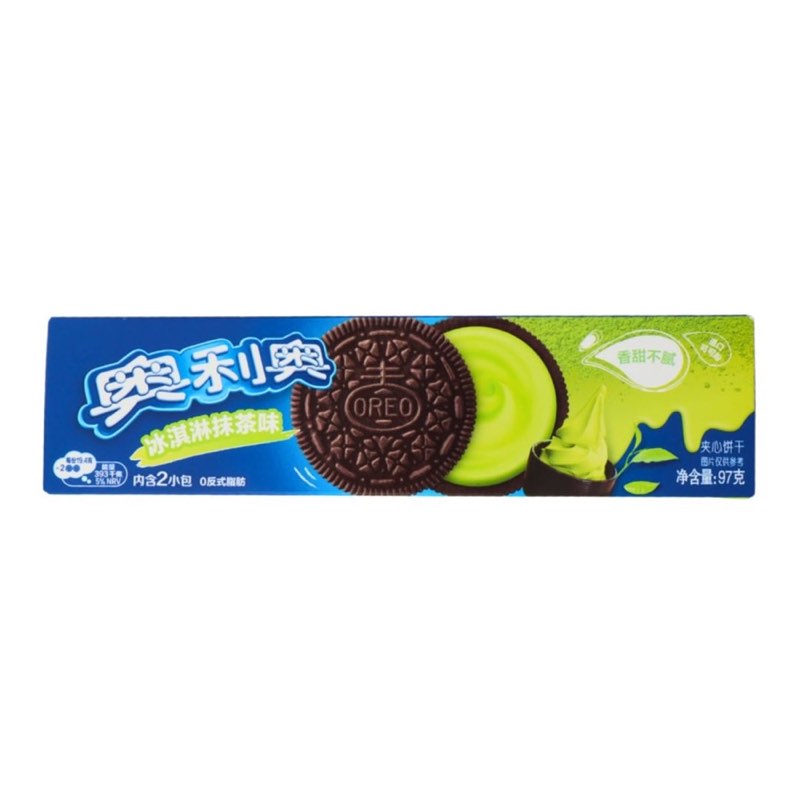
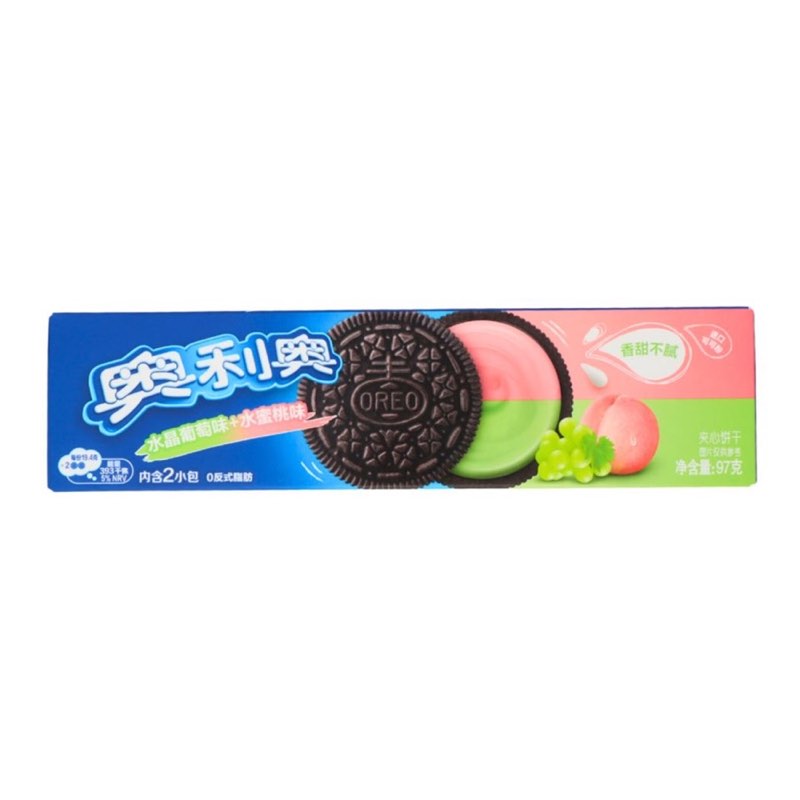
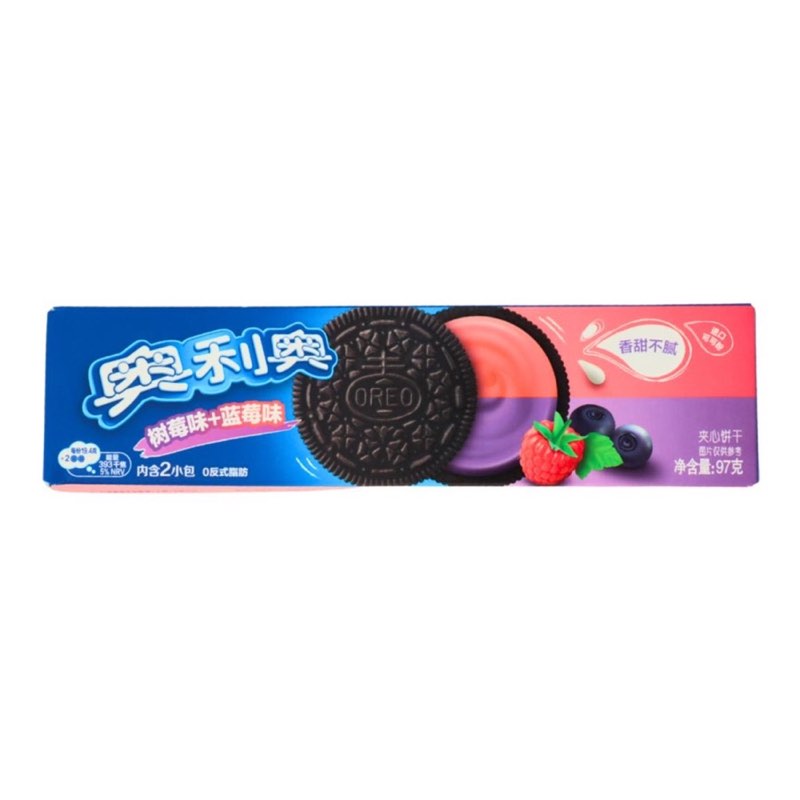
The obvious move, if you are curious rather than committed, is to buy this one for the weight and one sibling for the contrast. Oreo Sandwich Biscuits with Matcha Flavoured Cream Filling 97g is the sharpest contrast available, because it pulls in a completely different direction from anything caramel-toned. If you would rather stay in fruit, the grape and peach filled pack and the blueberry and raspberry filled pack are the two to choose between, both at £2.29, both 97 g. Two packs and you have a tasting; three and you have a proper side-by-side for a table.
Where this sits on the site
You will find this pack on our Loose Sweets shelf, which is by some distance our biggest at 356 lines, and which is where most of the interesting individual packs and bags end up alongside the weighed-out lines. It is worth browsing on its own terms rather than only searching it, because the range of formats sitting next to each other there is the fastest way to find something you did not know we stocked.
From there, the three neighbouring shelves are the ones to know. Candy & Chocolate is where the bars, boxes and chocolate-forward packs live, and it is the natural next step if the cocoa side of this pack is what appealed. Our build-your-own mix pages are where to go if you want to assemble a bag by weight rather than buy by pack, and they are the right place to start if you are catering rather than snacking. And the full catalogue of everything we stock is the place to browse when you have no particular target and want to be surprised, which is how most of our best-selling combinations get discovered in the first place.
If you came in via a flavour idea rather than a brand, the quickest route to the rest of the shop is sideways through the nearby packs on this page. The Briquette bag at £5.49, the Black Jack chews at the same price and the juicy grenade gummies at £1.39 are three very different price points and three very different eating experiences, and between them they will tell you quite quickly what kind of shopper you are.
Questions we get asked about this pack
Why does the name say BTS?
It is part of the product title as our supplier lists it — Oreo BTS Brown Sugar Pancake Cocoa Sandwich Biscuit Pack 157g — and it is printed on the pack. We do not hold verified detail about the edition beyond that, so we are not going to invent any. What we can tell you is what is on this page: it is a 157 g pack at £2.29, it is a cocoa sandwich biscuit with a brown sugar pancake flavour direction, and it is in stock in one size. The pack itself will tell you the rest when it arrives.
How many biscuits are in a pack?
We do not state a piece count, because we do not hold a verified one for this line and we would rather say so than guess at a number you might be relying on. What we can be precise about is the weight: 157 g, printed on the pack. If you are planning for a group, plan in packs — one pack is a comfortable round for a table of four with a few left over.
Is this bigger than the other Oreo packs you sell?
Yes, and noticeably. This one is 157 g. The matcha, grape and peach, and blueberry and raspberry packs are each 97 g. All four are £2.29, so this pack works out at about £1.46 per 100 g against roughly £2.36 per 100 g for the others. If weight for money is the deciding factor, this is the one in the family to buy.
What does it actually taste like?
It is built on a familiar axis: the dry, slightly bitter roastiness that cocoa flavour brings from the biscuit side, against a warm, caramel-toned, syrupy sweetness from the cream. The brown sugar direction sits nearer fudge and butterscotch than it does anything fruity. The pancake part of the name is doing scene-setting work — it tells you the sweetness is in the breakfast-syrup register rather than the sherbet one. The finish is short and clean.
Can you tell me what is in it?
No, and we would rather be straight about why. We do not hold verified ingredient, nutrition or allergen data for this line, so we do not publish any. The manufacturer's own packaging is the authority. Check it on arrival before eating, and take particular care if anyone eating has an allergy.
Will it survive being posted?
Better than most things we sell. It is flat, sealed, light and rigid enough to travel if it is packed sensibly — meaning upright or flat, not at the bottom under something heavy. That is precisely why we recommend it for hampers, letterbox parcels and care packages over jars, tubs or anything weighed out into a bag.
Does it go in a pick and mix bag?
We would not, and the reason is texture rather than rules. A crisp biscuit stored against gummies, chews or anything with a sugar coating will go soft, and it will crush under the weight. Keep it in its own pack and serve it beside the mix. If you want to build a weighed bag, start from the pick and mix range and treat this as the thing on the plate next to it.
Is it suitable for a children's party?
It works on a table but it will not be the star of one. Children at parties reach for colour and chew first, and biscuit tends to get left until the bright things have gone. Put it out by all means, but buy the volume in something chewier. As with all sweets, this is a treat rather than an everyday food, and small children should be supervised while eating.
How long will an open pack stay good?
That depends almost entirely on how well you close it. Sealed and in a cupboard, it keeps as you would expect of a biscuit pack. Opened and left open in a warm, steamy kitchen, the crispness starts going within a day or two. Clip the pack or tip it into a lidded tub and you will barely notice the difference for a week.
Is it in stock, and is there a bigger version?
It is in stock at the time of writing, at £2.29, and it comes in one size only — 157 g. There is no larger pack in this line. If you need more, the answer is more packs rather than a bigger one, and at this price per 100 g that is not a painful way to scale up.
What else would you put with it in a small gift?
For a flat parcel, one or two of the 97 g siblings. For a hamper with room in it, something rigid like a boxed tablet carton and something soft and colourful like a bag of pumpkin mallows. If you want a seasonal note without buying a whole seasonal range, a small bag of festive chocolate robins at £2.49 does the job on its own.
I have never had this flavour. Is it a safe first try?
Safer than the name suggests. The format is completely familiar and the flavour sits on an axis — roasty against caramel-sweet — that almost everyone already likes in some other form. If you enjoy fudge, tablet, toffee or butterscotch, you will recognise where this is heading. If you want something genuinely unfamiliar instead, the matcha-filled pack in the same family is the braver purchase.
In short
A 157 g sandwich biscuit pack at £2.29 that quietly offers the best weight-for-money in its family, in a format that travels, posts and gifts better than almost anything else on our shelves. The flavour is more familiar than the name implies — roasty cocoa against a warm, caramel-toned sweetness — and the clean finish means the second biscuit tastes as good as the first. Buy one to find out; buy two if it is going in a parcel, because you will want to keep one back.
More from Oreo
More loose sweets sweets


Where this sits
Oreo BTS Brown Sugar Pancake Cocoa Sandwich Biscuit Pack 157g appears on these shelves. Browse them, or jump to something nearby.
You might also like