Home / Loose Sweets / Chupa Chups Advent Calendar 210g
Swizzels · 210g
Read the full guide
Chupa Chups Advent Calendar 210g
£8.99
✔ In stock — ready to ship
Fresh stock
Free over £20
Same-day dispatch
Secure checkout
Advent calendars sort themselves into two camps, and picking the wrong camp is the reason so many of them end up half-opened on a shelf by the eighteenth. One camp is the chocolate calendar: quiet, uniform, a small brown square a day, gone in a second, essentially the same experience twenty-four times over. The other is the sweet shop calendar, where the point is that you do not know what is coming and each day is a different small thing. Chupa Chups Advent Calendar 210g at £8.99 belongs firmly in the second camp, and that tells you almost everything about whether it is for you.
The clearest fit is a household with children old enough to have opinions. Once a child has reached the age where they can name a favourite sweet, a uniform chocolate calendar stops being interesting around the first week, because there is no information in it. A sweet calendar restores the small daily question — what is it today? — which is the actual engine of the format. The sweet itself matters far less than the not-knowing, and any parent who has watched a child run downstairs in December knows that the running is the product.
The full guide to Chupa Chups Advent Calendar 210g
6,327 words on how it eats, who it suits, how to serve it and what to put beside it.
The household this calendar suits
The second fit is the adult who wants the ritual without the chocolate. This is a larger group than people admit. Plenty of households have a chocolate calendar for the children and nothing for the grown-ups, and plenty of adults would rather have a small sweet with a cup of tea than another square of chocolate on top of a month already saturated with it. A sweet-based countdown gives you the December routine without adding to the chocolate pile that is already accumulating on the kitchen table.
The third fit is the office, the classroom or the shared house. A calendar that lives in a communal space and gets opened by whoever is first in is a genuinely good bit of low-effort seasonal infrastructure. It costs £8.99 once, it needs no organising, no rota, no collection, and it gives a shared room a small daily event for a month. Very little else does that for under a tenner.
The fourth is the gift-giver working in the £8–£10 band, which is one of the most awkward price brackets in December. It is too much for a token and not enough for a present, and most things in it are either flimsy or forgettable. A calendar solves the bracket neatly because it is self-evidently a whole thing, it has an obvious start date, and it keeps the giver in mind for a month rather than for an evening.
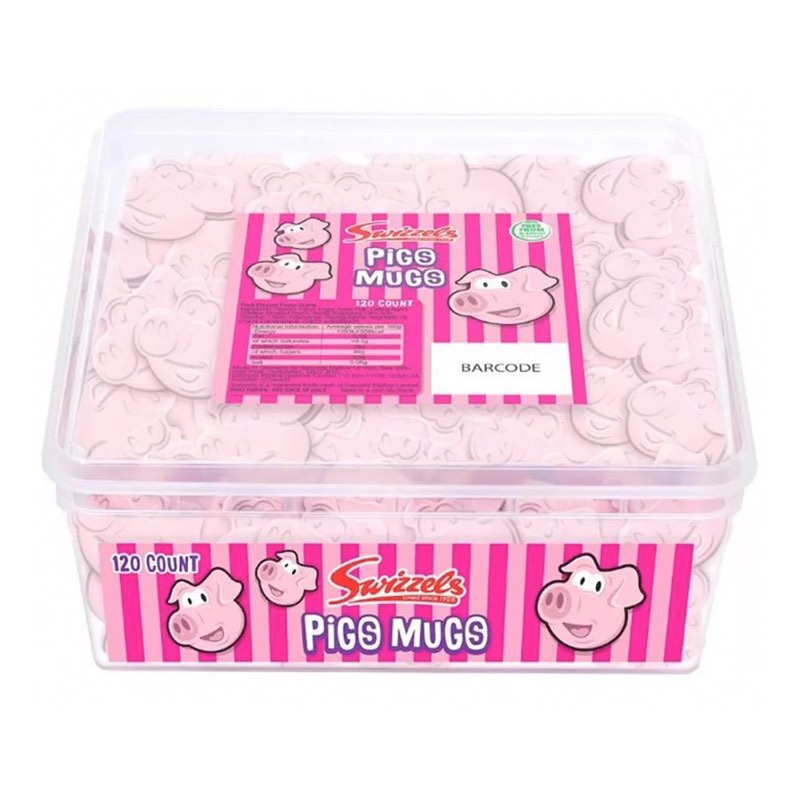
Who it is not for: anyone who wants a single large treat. At 210 g this is a month of very small moments rather than one substantial one. If the person you are buying for would rather have one good sit-down with a bowl of sweets than twenty-odd brief ones, a tub is the better purchase — something like the Swizzels Pigs Mugs Tub 576g at £8.99 gives you nearly three times the weight at exactly the same price, with the trade-off that it is all available at once and therefore usually gone before December is.
What you are actually buying: an object that lives in a room for a month
It is worth being clear-eyed about what an advent calendar is. You are not primarily buying 210 g of sweets. If sweets by weight were the objective, £8.99 buys a great deal more of them elsewhere in the shop and you would not have to wait until the twenty-fourth to finish them. What you are buying is a structure: a month with a shape, a daily appointment, and a physical object that sits in the room announcing how far through December you are.
That framing changes how you judge it. The right questions are not "how much sweet is in there" but "where will it live", "who will open it", "does it look like something I want on my kitchen wall for four weeks", and "will the ritual survive to the end". Those are presentation and behaviour questions, and they are the ones this page is going to spend most of its time on.
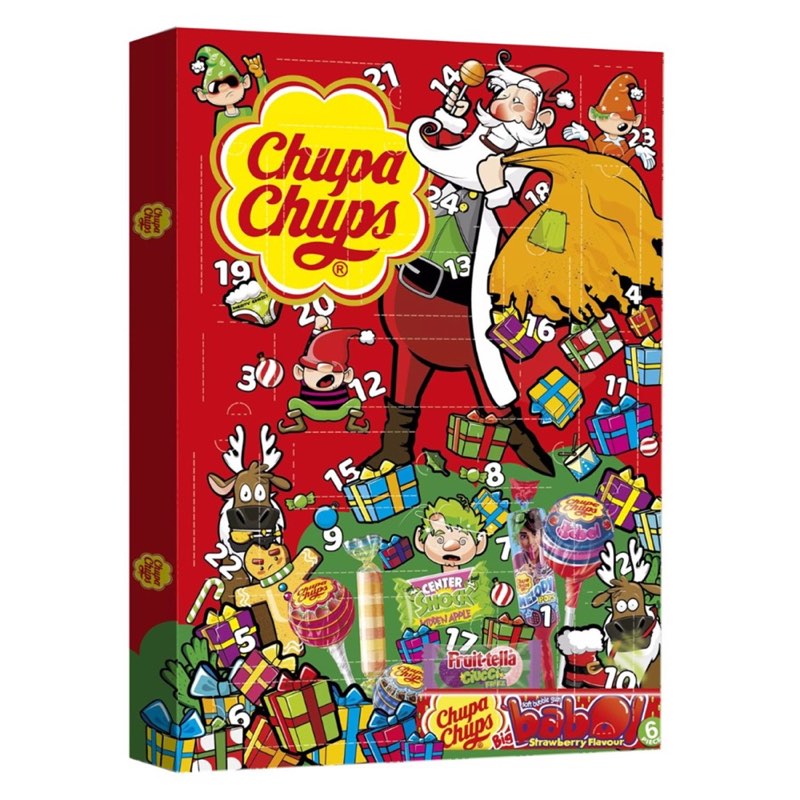
Physically, it is a card calendar with a printed front and a door for each day of the countdown. It is designed to be looked at repeatedly, which is a much harder design brief than a box that gets opened once. A box has to survive being picked up in a shop. A calendar has to survive four weeks of being looked at in your own kitchen, where familiarity does its worst and anything fussy starts to grate by the tenth.
In the hand it is light for its size, as all calendars are, because most of its volume is air and card. That lightness is worth knowing if you are posting one: it is cheap to send but wants stiff backing, because a bent calendar is a spoiled one and card creases permanently. If you are sending one to a student, a grandchild or a friend, put it flat between two pieces of board rather than trusting a padded envelope on its own.
The daily moment, and what it is like
The sensory experience of a calendar is oddly divided between the object and the sweet, and the object gets more of your attention than you would expect. There is the small search for today's number, which is deliberately made slightly difficult by every calendar ever printed. There is the push of a thumb against perforated card and the particular soft tear of it giving way — a sound that essentially everyone in Britain associates with December and nothing else. There is the brief look inside before anything is taken out.
Then there is the sweet itself, and here honesty matters more than colour. What is behind each door is what it is, and we do not list the contents of the days on this page — the pack you receive is the authority on what is inside it. What we can talk about usefully is the shape of the experience, which is the same across every sweet-based calendar: one small item, eaten immediately, on its own, without a drink, usually standing up in a kitchen before the day has properly started.
That context does a lot to the eating. A single sweet taken alone on an empty palate is tasted far more attentively than the fifth sweet out of a bag in front of a film. There is nothing before it and nothing after it, so whatever the flavour is, it arrives clean and it registers properly. This is genuinely why calendar sweets often seem better than the identical sweet from a bag — not sentiment, just an uncrowded palate and a moment of attention.
The flavour then fades on whatever curve the format dictates. A hard sweet will hold your attention for several minutes and carry you into the morning. A soft one will be over in seconds and finished before you have got your coat on. Both are fine; they just suit different households. A family with a school run generally wants the quick one. An adult with a cup of tea generally wants the slow one.
The one consistent disappointment in any calendar, and it is worth naming, is the day when what is behind the door is not the thing you wanted. That is not a fault. A variety format only works if it contains things you would not have chosen, because a calendar of nothing but your favourite is just a bag of your favourite with extra card. The mild letdown of a day you did not want is the price of the surprise on the day you did, and children work this out faster than adults do.
Colour, position and the long look: living with a calendar for four weeks
Most writing about advent calendars stops at the contents. The more useful subject is where the thing goes and what it does to the room, because that is what you are committing to for a month.
Position first, because it decides whether the ritual survives. A calendar hung somewhere you pass but do not stop — a hallway wall, the back of a door — gets forgotten around the eighth, and by the fifteenth someone is opening four doors at once to catch up. A calendar placed where the household already stops every morning — beside the kettle, next to the toaster, on the end of the kitchen counter, propped against the fruit bowl — gets opened daily without anyone having to remember. Build the ritual on top of an existing habit and it runs itself. That is the single most useful thing anyone can tell you about advent calendars and almost nobody does.
Standing or hanging changes the whole object. Hung flat on a wall, a calendar reads as a picture and becomes part of the room's decoration. Stood on a surface, it reads as a box and takes up counter space that is at a premium in December. Hanging is almost always the better choice if you have a nail or a hook available, and it also protects the card from the inevitable spillages and steam of a working kitchen. If you are standing it, keep it well back from the kettle: steam softens card and the doors stop closing properly, which ruins the look of the unopened half.
Colour and the December palette. A sweet shop calendar is a bright object, and bright is doing something specific in a room that is otherwise full of deep reds, greens and golds. It is the pop. A run of traditional decorations with a single high-colour item in the middle of it looks lively; the same run without it looks like a catalogue. If your decorations are restrained — greenery, candles, plain glass — a bright calendar is the element that stops the room feeling like a shop display. If your decorations are already loud, hang it slightly apart from them rather than in the middle, so it has room to be itself.
The calendar is the only decoration that changes. This is its best and most underrated visual property. Everything else in a December room looks identical on the first and the twentieth. A calendar visibly progresses: the grid of closed doors becomes a scatter of open ones, and the room tells you where you are in the month at a glance. Lean into that rather than tidying it away. Do not flatten the opened doors back down, and do not hide the open side — the half-consumed grid is the point, and it is what makes the object worth looking at for four weeks instead of one.
Photographing it. If you are taking pictures through December — a family message, a card, a shared album — the calendar is one of the easiest things in the house to photograph well, because it is flat, bright and has an obvious focal point. Two rules. Shoot it in daylight near a window rather than under overhead kitchen lighting, which flattens the printed colour and puts a hard shine across the card. And shoot it at an angle rather than straight on, so the opened doors catch some shadow and stand off the surface; square-on it reads as a photograph of packaging, and at fifteen or twenty degrees it reads as a photograph of a thing in a house.
If you are building a display rather than decorating a home. A calendar on a shop counter, a stall or a school table works best as the tall element in a group of three heights, with something in a tub at mid-height and something loose and low at the front. Tubs are ideal for the middle tier because they hold a shape and they show their contents — the Swizzels Giant Milk Bottles Tub at £9.99 and the Swizzels Teeth N Toothbrush Tub 576g at £8.99 both do this, and both sit in the same price band as the calendar so the group reads as a set rather than as a jumble.
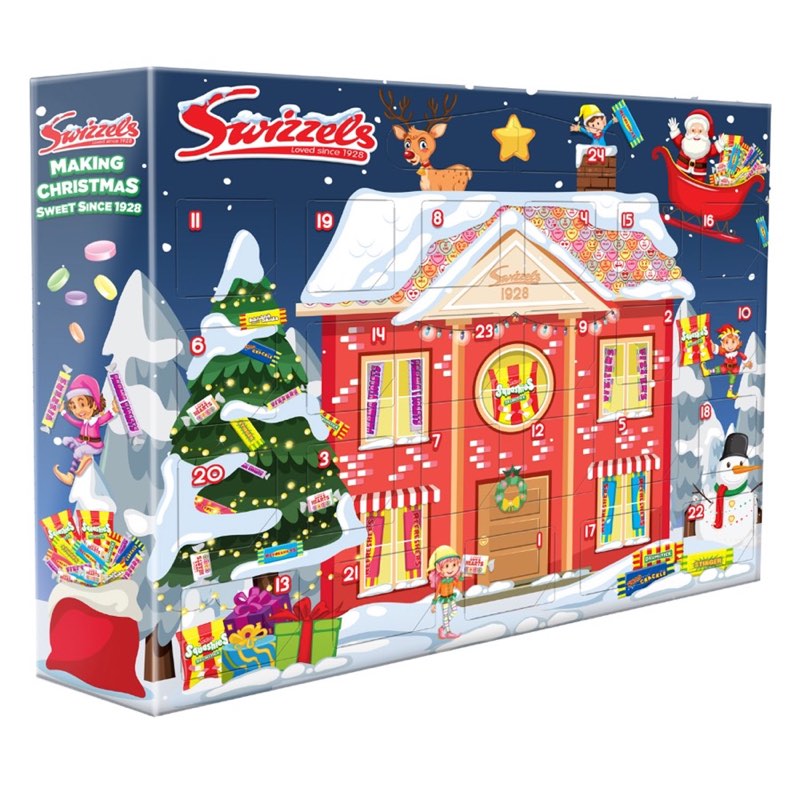
Two calendars in one room. Common in houses with more than one child, and worth thinking about visually as well as diplomatically. Two identical calendars side by side look like stock. Two different calendars at the same price look like a considered pair, and they give the household twice as much to talk about, because the two are not opening the same thing. Since we stock the Swizzels Sweet Shop Advent Calendar 220g at the same £8.99, pairing the two is the obvious move — same outlay, twice the variety across the room, and no argument about who got the better one because they are not comparable.
Afterwards. An emptied calendar is a surprisingly decent piece of card, and in households with small children the empty grid gets a second life as something to draw on or cut up. That is not a selling point, but it is a reason not to bin it on the twenty-fifth without asking.
How a set of flavours is designed to be told apart
Single-flavour sweets are a relatively easy design problem. Variety formats — a mixed bag, a tub of assorted pieces, a calendar with a different day behind every door — are a much harder one, and the craft involved is worth understanding because it explains a great deal about why some mixed sweets satisfy and others irritate.
The problem is this. A confectioner building a set is not designing flavours one at a time; they are designing differences. Every item in the set has to be identifiable in about a second, by a child, at any temperature, without a label, and — critically — it has to be identifiable as not the other things in the same set. A flavour that would be perfectly good on its own can fail completely inside a mix because it sits too close to its neighbour and neither one reads cleanly.
That is why variety sets tend to be built from a small number of widely spaced families rather than from a broad sweep of similar ones. You will rarely find a set with three different red berries in it, because most people cannot reliably separate them and the set would read as "three red ones". You will very often find a set that puts a citrus note, a berry note, a tropical note and a cola or confectionery note together, because those four sit far enough apart that nobody has to concentrate.
The second design tool is the sweet-to-sharp axis, which is the fastest way to create daylight between two otherwise similar flavours. Take the same fruit idea, push the sharpness up, and it becomes an obviously distinct experience with a different audience. That is the entire relationship between a standard fruit sweet and its sour counterpart, and you can taste the gap directly by putting Swizzels Squashies Love Hearts Mixed Fruit Flavour 120g at £1.25 next to Swizzels Sour Shooting Stars Gums Squashies 100g at £1.29. Similar formats, similar prices, and the sharpness dial turned to two different settings — which is why a good mixed selection will usually include both registers rather than choosing one.
The third tool is texture, and it does more heavy lifting than flavour ever gets credit for. Two items with an identical flavour design will be experienced as unrelated products if one is a hard sweet and the other is a soft chew, because texture controls how fast the flavour is released and therefore how intense it seems and how long it lasts. A hard sweet trickles for minutes and reads as mild. A chew dumps everything in the first two seconds and reads as strong. A foam or a mallow sits somewhere odd in the middle and reads as light no matter what you put in it. A well-built variety set varies texture deliberately across the days so that the experience changes even when the flavour families repeat. You can feel the size of that effect by comparing the long, slow chew of Barratt Black Jack Chews at £5.49 with the soft collapse of BUBS Banana & Caramel Foam Sweets at £7.50 — both £5–£8 bags, and about as far apart as two sweets can get in the mouth.
The fourth tool is the eye, and it is more decisive than most people believe. Colour primes the palate before anything is tasted, and when the visual cue is removed people identify flavours far less reliably than they expect to. Shape does the same job more slowly: a bottle, a heart, a star, a familiar figure all set an expectation that the flavour then confirms half a second later. This is why shape is not decoration in a variety format — it is part of the identification system, and a set of differently shaped pieces is easier to tell apart than a set of identically shaped ones even when the flavours are the same.
The fifth, and the most interesting, is the confectionery flavour — the note that does not imitate any fruit at all and instead tastes of a remembered sweet. Cola, pear drop, aniseed, blackjack, milk bottle, butter tablet: these have no external referent, and their entire identity is inherited from decades of other sweets that tasted like that. They are self-referential, and they are the most reliable items in any mixed set precisely because nothing in nature competes with them. A shopper can debate whether a strawberry sweet tastes like a strawberry. Nobody debates whether a cola bottle tastes like a cola bottle.
Put all five tools together and you can read any variety format the way a confectioner does: how many families, how widely spaced, how much texture variation, how much visual differentiation, and how much of the set is imitative versus self-referential. Do that once and mixed bags stop being random. The whole of Candy & Chocolate starts looking like a set of deliberate decisions rather than a wall of packets.
The flavour families a December countdown draws on
We do not publish a day-by-day contents list for this calendar, and we are not going to guess at one. What is useful instead is a map of the families that a British sweet countdown tends to move between, so that you know the territory rather than the itinerary.
Citrus is the sharpest widely-liked family and the one that cuts through a December palate saturated with chocolate and rich food. It is the family most likely to be the surprise highlight of a month, because it is the one that tastes least like everything else around it at that time of year.
Berry is the broad, friendly middle of fruit confectionery — strawberry and raspberry ideas that are instantly recognisable and almost universally accepted. It is the safest family and therefore the most common, which is exactly why a set that leans on it too hard feels monotonous by the third week.
Tropical is the family that does the most work in a mixed format, because it covers a lot of ground that nothing else covers and it reads as a treat rather than as a default. Its weakness is that individual tropical notes are less reliably identified than citrus or berry, which is why they tend to appear in sets rather than on their own.
Sour is a register rather than a family, applied on top of fruit. It divides households sharply: the people who love it really love it. If your household has a sour enthusiast, a calendar alone will not satisfy them and you should have a bag in reserve — Barnett's Mega Sour Apple Candy Bags 104g at £3.99 is the sort of thing that keeps that person happy for the whole month.
Creamy and dairy notes — milk bottle, butter, toffee, caramel — are the warm end of the shop and the one that sits most naturally with a cold month and a hot drink. Buchanan's Butter Tablet Carton 150g at £3.49 and Bristow's Traditional Salted Caramel Bon Bons at £5.49 are both squarely in it, and both are the kind of thing an adult reaches for in the evening rather than a child in the morning.
The traditional British confectionery notes — aniseed, liquorice, blackcurrant-and-liquorice, pear drop, mint — are the family that splits generations. These are the flavours grandparents recognise instantly and children have to learn. A mixed format is actually the best possible way to introduce them, because one unexpected day costs nothing and occasionally converts someone for life. Briquette at £5.49 and the wider selection on the Kingsway shelf are where that part of the shop lives.
Mallow and foam sit apart from all of the above, because they are textures pretending to be a family. They read as light and airy regardless of flavour, which makes them an easy win in a variety set and a poor choice if you want something to last. Bulgari Pumpkin Mallows at £5.49 are a good demonstration of how much the texture dominates whatever flavour is layered onto it.
What to have in the cupboard alongside it
A calendar is one small sweet a day, which is by design not enough for anybody. Every household that runs one ends up with a backup, and it is better to choose the backup deliberately than to raid a tin of chocolates on the fourth.
The family bag for evenings. Something that everybody eats, in a bag large enough to share, kept somewhere obvious. Barratt Jelly Babies at £5.49 are the archetype here: broad appeal, a familiar shape, and enough in a bag to go round a sofa without running out halfway through a film.
The chocolate element the calendar does not provide. If your calendar is a sweet one, the household will still want chocolate at some point in December, and it is worth having a small, cheap, seasonal option rather than opening something large. The Cadbury Dairy Milk Christmas Little Robins Chocolate Bag 77g at £2.49 is about the right size for that — small enough to be a top-up, festive enough to earn its place on the table.
The lolly, for the long afternoon. A lollipop is the most time-efficient sweet in the shop: it occupies a child for a quarter of an hour rather than a quarter of a minute, which on a wet December afternoon is worth more than the sweet is. Swizzels Double Lollies at £5.49 do that job and sit in the same brand family as the calendar.
The grown-up tin. Something in a register children are less interested in, kept somewhere they are less likely to look. The traditional and creamy families above are the natural home for this.
If you would rather build the backup as a mix of small amounts than as two or three full bags, our Pick & Mix counter is the efficient way to do it — a hundred grams each of five things costs less than five bags and gives a household far more to argue about.
Occasions beyond the obvious one
The main event: December at home. Hung by the kettle on the thirtieth of November, opened before school, finished on Christmas Eve. This is what the format is for and it does not need improving on.
The shared workspace. One calendar, one wall, whoever is first in opens it. It costs under a tenner, needs no organisation, and gives a shared room a daily thirty-second event for a month.
The posted gift. Light, flat and cheap to send, which makes it one of the better things to post to a student, a grandchild or a friend at a distance. Send it in the last week of November so it arrives in time to start on the first, and back it with stiff card so it does not arrive bent.
The classroom or the club. A calendar at the front of a room gives a group a shared countdown without anyone eating anything they should not — one opener a day, chosen by rota, is a small piece of structure that most teachers and group leaders will recognise as useful.
The £8–£10 gift you have to buy eight of. Awkward bracket, well solved. A calendar looks like a complete thing at a price where most alternatives look like a token, and it keeps giving for a month.
The second calendar for an adult. Increasingly common and entirely sensible. A household where the children have calendars and the adults have none produces a predictable amount of quiet raiding. Two calendars removes the problem for under twenty pounds.
What £8.99 works out at, and how it compares
The plain numbers first: 210 g for £8.99, which is around £4.28 per 100 g. If you spread the price across a countdown that runs to Christmas Eve, you are spending somewhere in the region of 37p a day for the month.
| Line | Price | Weight | Per 100 g | What it is for |
|---|---|---|---|---|
| Chupa Chups Advent Calendar | £8.99 | 210 g | ≈ £4.28 | A daily ritual through December |
| Swizzels Sweet Shop Advent Calendar | £8.99 | 220 g | ≈ £4.09 | The same job, a different set of days |
| Swizzels Pigs Mugs Tub | £8.99 | 576 g | ≈ £1.56 | Weight, all at once |
| Swizzels Teeth N Toothbrush Tub | £8.99 | 576 g | ≈ £1.56 | Weight, with a shape story |
| Swizzels Giant Milk Bottles Tub | £9.99 | — | — | A single-flavour tub to share |
That table is the honest case and the honest caveat in one place. At the same £8.99, a tub gives you nearly three times the weight of sweets. If your metric is grams per pound, the calendar loses by a wide margin and there is no arguing with it.
But grams per pound is the wrong metric for this purchase, and the table shows why. The tub gives you 576 g in one go, which in most households means it is substantially gone within a fortnight and provides no structure at all. The calendar gives you less sweet and a month of daily moments, and the thing you are actually buying — the ritual, the anticipation, the reason a child gets out of bed — does not appear in a weight column. At 37p a day, an advent calendar is one of the cheapest sources of a small daily event that a household can buy.
The fair comparison, therefore, is not calendar against tub. It is calendar against calendar. There the two sit at the same £8.99, with the 220 g option being fractionally better on weight, and the real decision being which set of days suits the person opening them.
One more piece of arithmetic worth having: if you are buying three or four calendars for a household or a class, you are at £27–£36, which is the point at which it is worth asking whether one calendar plus a shared tub would serve the room better. For a family of four, one calendar each is the right answer because the ritual is personal. For a classroom of thirty, one calendar plus sweets sold loose by weight is a far better use of the same money.
Looking after it through the month
A calendar has a longer working life than almost anything else in the shop — it has to survive being handled every day for four weeks — so a little care goes further than usual.
Keep it out of the steam. The most common way a calendar is spoiled is being propped next to a kettle. Steam softens card, the doors swell and stop sitting flush, and by the middle of the month the unopened half looks as untidy as the opened half. Hang it on a wall, or stand it at the far end of the counter.
Out of direct sun and off the radiator shelf. Warmth is bad for anything sweet, and a calendar is thin card with very little insulation. A sunny windowsill in a heated room is the worst place in the house for it, however good it looks there.
Flat, and not squashed. Before December starts, it needs to be stored flat with nothing on top of it. Card creases permanently, and a creased calendar cannot be given as a gift. If you are buying in November for a gift, put it somewhere it cannot be leaned on.
Away from strong smells. Sweets pick up the smell of their surroundings over weeks, and a calendar sits open to the air a little more each day. Keep it away from cooking, cleaning products and scented candles.
If a door gets opened early. It happens in every house with children and it is not worth a row. Close it back down, and if the tear has gone too far, a small piece of tape on the inside will hold it. The visual integrity of the grid is most of what makes the object work, so it is worth two seconds of repair.
Choosing between the two calendars we stock
This listing comes in one option only — one size, 210 g, £8.99, currently in stock — so the choice is not within the line but between lines. We run a second calendar at the same price, and the comparison is straightforward.
Both are sweet-based countdowns in the same price band, and both are shelved with us under Swizzels. The 220 g option carries ten more grams for the same money, which is a rounding error rather than a reason. The real difference is the character of the days inside, and therefore the person you are buying for.
Our practical advice: if you are buying one calendar for one person, pick on the front of the pack, because the person opening it will look at that front more than a hundred times over the month and will barely register the per-100 g figure once. If you are buying two for the same household, buy one of each rather than two of the same, because the whole value of a calendar in a shared room is that the two openers have something different to compare. And if you are buying for someone who does not really like surprises, honestly, buy them a tub instead — the 220 g sweet shop calendar and this one both rely on the not-knowing, and that is a feature people either enjoy or tolerate.
Where it sits on the site
You will find this calendar on the Swizzels brand shelf, which runs to a dozen lines and is the quickest route to the tubs, the squashies and the lollies that sit alongside it, and on our Loose Sweets shelf, which is the biggest section we run and the right place to start if you are buying for weight rather than for occasion.
The hubs are the fastest way to widen the search. A bag you fill yourself is the right tool when you want several things in small quantities rather than one thing in bulk — which is exactly the situation most people are in once they have bought the calendar and realised they need a backup. The Haribo shelf is the obvious next stop for gummy and jelly formats. And the full shop lists everything we carry if you would rather scan than filter.
A suggestion for December browsing specifically: shop the calendar first and the backup second, in that order, and buy the backup at the same time. Every year, a lot of people buy the calendar in November, discover in the first week that one sweet a day was never going to be enough for the household, and then pay for a second delivery. Add a bag or two to the same order and you have saved yourself the trip. If you do not know what to add, browse everything on the site and pick one thing from a family nobody in the house has tried — the calendar has already put everyone in the mood for a surprise.
Common questions
What is in each day?
We do not list a day-by-day breakdown on this page, and we would rather say so plainly than guess. The pack you receive is the authority on exactly what is inside it, and it is worth reading when it arrives, particularly if anyone in the household needs to check the manufacturer's information before eating. What we can tell you is the format: a printed card calendar with a door for each day of the countdown, 210 g in total, at £8.99.
Is it better value than a tub of sweets?
No, if you measure in grams per pound — and we will not pretend otherwise. At the same £8.99 you can buy a tub with nearly three times the weight. What a tub cannot do is give a household a small daily event for a month. A tub is opened once and is usually well down within a fortnight. Spread across a December countdown, this works out around 37p a day, which is the figure to judge it on if the ritual is what you are buying.
How does it compare with the other advent calendar you stock?
They sit at the same price, £8.99, with the other option carrying 220 g against 210 g here — a difference small enough to ignore. Both are sweet-based countdowns rather than chocolate ones, and both are shelved with us under the same brand. The meaningful difference is the character of the days inside and the front of the pack, which the person opening it will look at daily for a month. If you are buying two for one household, buy one of each.
Where should I put it so it actually gets opened?
Somewhere the household already stops every morning: beside the kettle, next to the toaster, at the end of the kitchen counter. Calendars hung in hallways and on the backs of doors get forgotten around the eighth, and then somebody opens four at once to catch up. Attach the ritual to an existing habit and it looks after itself. One caveat — keep it back from the kettle itself, because steam softens card and the doors stop sitting flush.
Can I post it as a gift?
Yes, and it is one of the better things to post because it is light and flat. Two practical notes. Send it in the last week of November so it arrives in time to start on the first — a calendar that turns up on the fifth has lost part of its point. And back it with stiff card rather than trusting a padded envelope alone, because printed card creases permanently and a bent calendar cannot really be given as a present.
Is it suitable for young children?
Sweets are a treat rather than everyday food, and a calendar is a good way of keeping that to a set daily amount. Small hard sweets and whole gummies are a choking risk for young children and should be eaten with an adult nearby. If anyone in the household has an allergy, check the manufacturer's own packaging when the calendar arrives and before anything is eaten — the printed pack is the authority on the product, and a shop listing is not a substitute for it.
One sweet a day is not going to be enough. What else should I get?
Everybody discovers this in the first week, so buy the backup with the calendar rather than paying for a second delivery. A shareable family bag for evenings, one small chocolate item since a sweet calendar does not provide any, and ideally a lollipop or two, which occupy a child for fifteen minutes rather than fifteen seconds. If you would rather have variety than volume, a mixed bag built at the pick and mix counter goes further than two full bags of one thing.
How should I store it before December starts?
Flat, cool, dark, with nothing stacked on top of it, and away from radiators, sunny windowsills, cooking smells and scented candles. Card creases permanently and sweets take on surrounding smells over weeks. If you are buying it in November as a gift, the main risk is not that it will spoil but that it will get leaned on — find it somewhere it cannot be squashed and leave it there.
What if someone opens the wrong door?
It happens in most households and it is not worth an argument. Push the door closed again, and if the perforation has torn too far to hold, a small piece of tape on the inside will keep it shut. It is worth the two seconds, because the appearance of the unopened grid is a large part of what makes the object work as a decoration for the rest of the month.
Do adults actually use these?
Increasingly, yes, and the reason is straightforward: December delivers a great deal of chocolate and comparatively few small moments of anticipation. A sweet countdown gives you the daily ritual without adding to the chocolate pile. It is also a sensible way to head off the quiet raiding that happens in houses where the children have calendars and the adults have none — two calendars costs under twenty pounds and removes the problem entirely.
Does it work in an office or a classroom?
Very well, because it needs no organisation. One calendar on a wall, one opener a day, whoever is first in or whoever is next on the rota. For under a tenner a shared room gets a daily thirty-second event for a month with no rota to manage and nothing to collect. For a large group, one calendar as the shared ritual plus something bought loose by weight for actually feeding people is a better use of the budget than a calendar each.
Is it in stock?
The listing is currently showing as in stock in its single size. Calendars are the most time-sensitive thing we sell, since one that arrives on the fifth has lost part of what it is for, so order with a few days in hand rather than at the end of November. If you need several — one per child, one per desk — check the listing again just before you finalise the count rather than assuming the quantity will still be there.
In short
Buy this for the shape it gives a month rather than for the sweets in it. On weight alone it loses to a tub and we have shown you the numbers; on what it actually does — a small daily event, a countdown you can see from across the kitchen, a reason for someone to come downstairs — there is very little at £8.99 that competes. Hang it where the household already stops each morning, buy the backup bag at the same time, and let the open doors accumulate rather than tidying them away. The half-emptied grid on the twentieth of December is the best-looking thing the calendar ever does.
More from Swizzels


More loose sweets sweets




Where this sits
Chupa Chups Advent Calendar 210g appears on these shelves. Browse them, or jump to something nearby.
You might also like