Home / Loose Sweets / Kingsway Fried Eggs
Kingsway · 250g
Read the full guide
Kingsway Fried Eggs
£5.49
✔ In stock — ready to ship
Fresh stock
Free over £20
Same-day dispatch
Secure checkout
Most people arrive at Kingsway Fried Eggs while putting a selection together rather than while shopping for one bag of one sweet, so it makes sense to start with the job they do in a mix. It is a specific job, it is not the obvious one, and understanding it will change what else you buy.
Fried eggs are a shape sweet. That sounds trivial and it is not. In a bowl of mixed confectionery, roughly three-quarters of what you are likely to put in is geometric — rings, bottles, bears, beans, cubes, belts. Shape sweets are the ones that are pictures of something, and they work on a completely different register. People pick them up, look at them, show them to somebody and then eat them. That pause is the whole value, and a mix with no shape sweets in it has no pauses in it at all.
The full guide to Kingsway Fried Eggs
5,545 words on how it eats, who it suits, how to serve it and what to put beside it.
Start here if you are building a mix: what fried eggs do in a bag
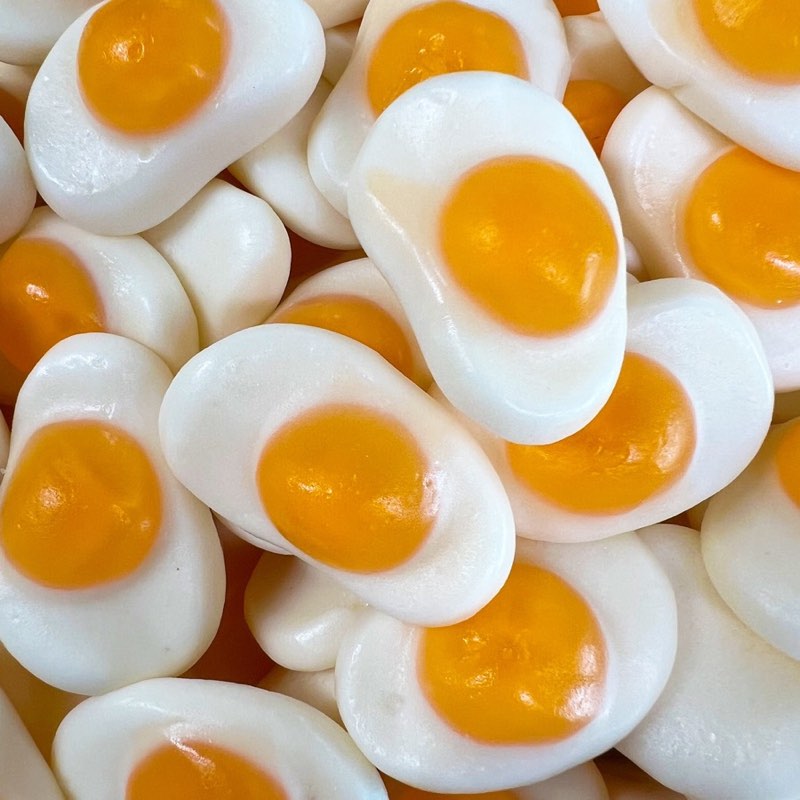
The second thing they do is break up the colour field. We do not publish a colour for this line and we would rather not guess at one, but the form itself is the point: a fried egg sweet is a two-part shape, a defined centre sitting inside a wider, softer-edged outer. That internal division reads across a bowl in a way that a single-tone ring or bean never does. Even at a glance, from across a table, you can see which ones are the eggs. In a mix built for a table rather than a pocket, that legibility is worth a lot.
Third, and most practically: at £5.49 for 250g they sit on the standard loose-sweet rung, which means you can build an entire mix of things at the same price and do the arithmetic in your head. That is not a small convenience when you are buying six or eight lines. A surprising number of our counter lines share that exact figure, and it makes putting together a balanced selection a matter of choosing by character rather than by budget.
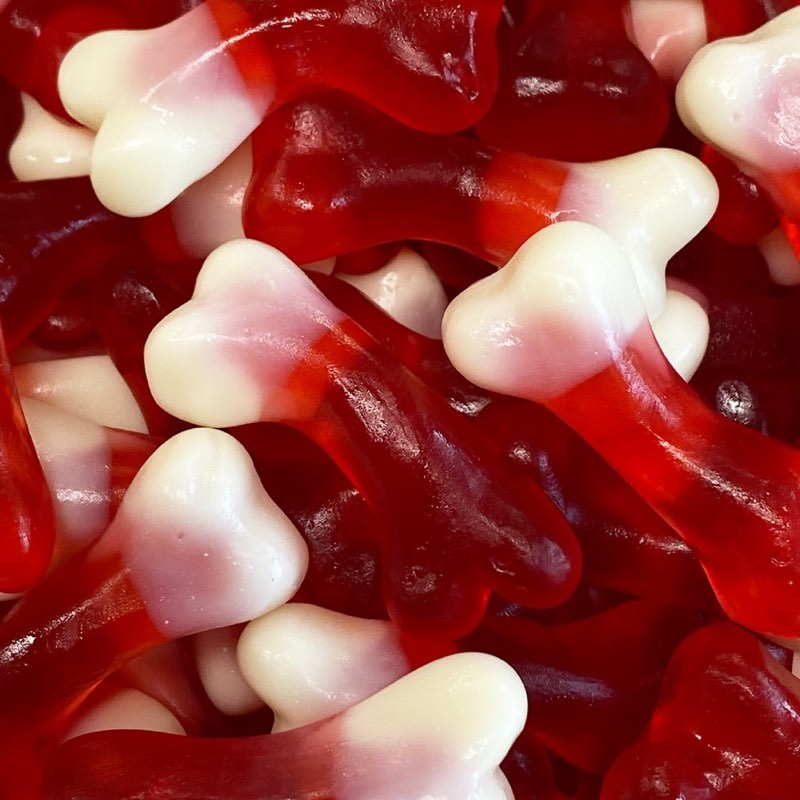
So, a mix that works. Take the eggs as your shape sweet. Add a second shape sweet with a different subject, because two shapes are interesting and one shape is a novelty — Gummy Bones at £5.49 are the natural partner here, another Kingsway line at the same price, another picture of a thing, and a completely different silhouette in the bowl. Then add a geometric for bulk: Haribo Friendship Rings at £5.49 give you rings, which are the most efficient shape for filling gaps between irregular pieces. Then a texture that is not a jelly at all, so the bowl is not one long chew — Swizzels Barley Sugar at £5.49 brings a hard boiled sweet in, and hard boiled sweets slow a bowl down, which is a useful thing to be able to do.
That is four lines, a kilo of sweets, £21.96, and four genuinely different eating experiences. If you want a fifth, make it a belt or a strip, because long sweets look wrong in a bowl in a way that is quite funny and children go for them first — Vidal Rainbow Belts, also £5.49, are the version we would reach for. If you want a sixth, make it sour, because a mix with nothing sharp in it gets tiring around the twentieth piece.
The mistake to avoid is building a mix entirely out of soft fruit jellies. It is the easiest mix to build, because most of the counter is soft fruit jellies, and it is the least satisfying to eat. Every piece rewards you in the same way and at the same speed. Two soft jellies is plenty; the other four slots should be doing something else. If you are working straight from a list, our pick and mix section is laid out for exactly this kind of shopping, and the fuller loose sweets counter runs to three hundred and fifty-six lines, which is more than enough to build a mix where nothing repeats itself.
The sweet itself, in the hand and in the mouth
Tip a few out and the first impression is of something slightly larger and flatter than you expected. These are not bite-sized in the way a jelly bean is bite-sized. A fried egg sweet has spread — it is a disc rather than a lump, with an irregular outline, and the piece sits across the pad of your finger rather than on the tip of it. That flatness is a design consequence of what the shape is imitating, and it affects the eating more than you would think.
The centre is the structural event. A fried egg sweet is built as a defined round middle set into a wider surround, and the two parts do not have identical density — the middle has a bit more body to it, the surround a bit more give. You register that difference the moment you bite. It is a small thing and it is exactly why this shape has survived for as long as it has: a sweet with two textures in one piece is doing more work than a sweet with one.
The chew is the classic counter-jelly chew, which is to say firm on first contact, yielding after a second or two, and then genuinely chewy rather than soft. It is not the springy bounce of a modern gummy bear and it is not the short, tender bite of a pastille. It sits between them. You get four or five proper chews out of a piece before it is done, which is the right number — enough to feel like something happened, not so many that you are still working on it while the conversation has moved on.
Flavour arrives on the second chew rather than the first. This is normal for a firm jelly and it is worth knowing, because people who bite once and swallow think these are mild and they are not. The fruit note comes up as the piece breaks down and then holds steady through the rest of the chew, fading gently rather than cutting off. Total event, about fifteen seconds. That is a long sweet by modern standards.
Eaten one at a time, the two-part structure is the story. Eaten by the handful — which is how most people actually eat them — the pieces press together and you get a bigger, softer, longer chew that is a different and also good experience. Children almost always eat them one at a time, because they are looking at them. Adults almost always eat them three at a time, because they are not.
Our supplier lists this line as gluten free, which we pass on because we have it from them and because it is the sort of thing people need to know before they buy. We would still ask you to check the manufacturer's packaging when it arrives — that is the only source with the current, full information, and it is what we would tell any customer about anything on the site. If gluten is the thing that governs your shopping, the gluten free shelf gathers fifty-four lines that our suppliers have given us the same tag for.
A corner-shop sweet, and what that actually means
There is a category of British confectionery that never really existed in supermarkets and does not really exist in branded packets either. It lived in jars behind a counter, in trays under a sloping glass front, in a paper bag weighed out by somebody who knew your name or at least your face. Fried eggs are squarely in that category, and so is most of what sits alongside them on the Kingsway shelf, seventy-five lines of it.
The economics that made the shape
Shape sweets like this exist because of how they were sold. When sweets are sold loose by weight from an open display, the buying decision is made by looking, usually by a child, usually at eye level, usually in about four seconds. Under those conditions a sweet that is a recognisable picture of something has an enormous advantage over a sweet that is a coloured lump. The child does not know what it tastes like. The child knows it looks like a fried egg, and that is funny, and that is enough.
That selection pressure produced a whole vocabulary of shapes over the best part of a century — food shapes, animal shapes, object shapes, body-part shapes. Almost all of them are things a child would recognise instantly from everyday life rather than anything exotic. The fried egg belongs to the food-shape family, which is the largest and the oldest of the lot, and which runs on a joke that never stops being funny to a seven-year-old: this sweet is pretending to be dinner.
That joke is why the format persists in a market that has otherwise standardised heavily. A branded bagged sweet has to work through packaging, advertising and shelf position. A loose sweet has to work through its own appearance and nothing else. The result is that loose confectionery has kept a kind of visual inventiveness that the packet aisle largely lost, and it is why the retro shelf, eighty-nine lines strong, still reads as more interesting than a supermarket sweet aisle four times the size.
The seaside version of the same shop
The coastal sweet shop is a variant of the corner shop with the volume turned up, and it deserves its own paragraph because it is where most British adults formed their sweet preferences. The formula is well established: a long wall of jars, everything visible, everything weighed, and a strong bias towards sweets that look like something, because holiday buying is even more impulsive than ordinary buying and the browse is a large part of the pleasure.
What the seaside shop understood, and what supermarkets never have, is that the selection is the product. Nobody goes into a shop like that to buy one specific sweet. They go in to choose, and choosing is the entertainment. That is why the jars are at eye level, why the bags are paper, why the scoop is theatrical, and why the shop is designed to slow you down. A mix bought from a wall of jars feels different to the same sweets bought in bags from a shelf, even when the sweets are identical.
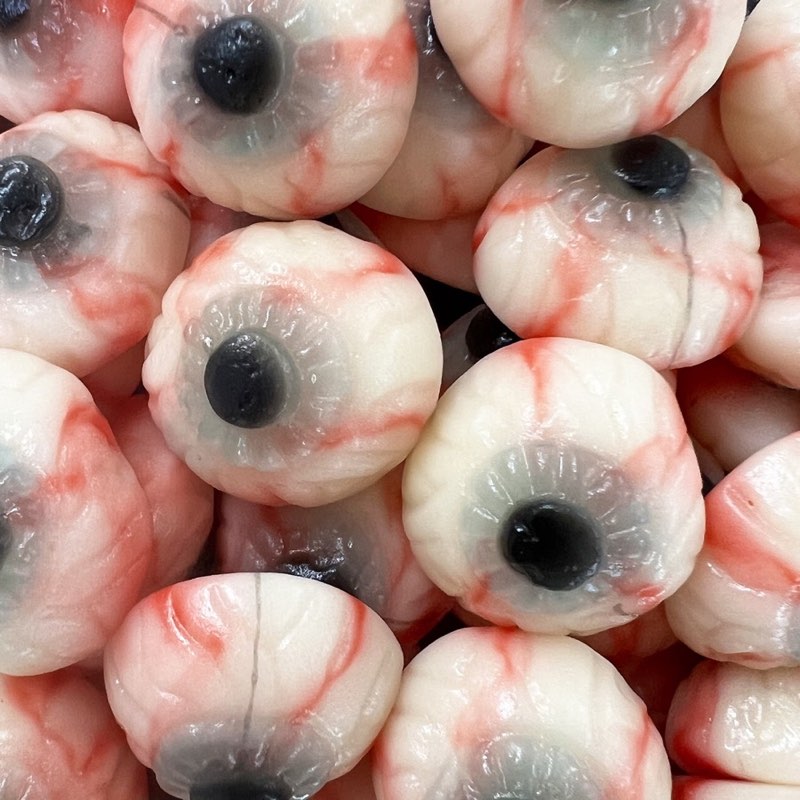
Our version of that wall is necessarily a screen rather than a set of jars, and we lose something in the translation — you cannot see the scale, you cannot smell the shop, you cannot change your mind halfway through a scoop. What we can do is keep the range wide enough that browsing is still worth doing, and keep the lines that the jar tradition produced rather than only the ones the supermarket buyer would pick. That is the reason the Kingsway shelf here carries sweets shaped like bones, eyeballs and witches' heads alongside the ordinary ones. Jelly Eyeballs at £5.49 would never survive a supermarket range review. Behind a counter, they have been earning their jar for decades.
Weighing out, and the culture of the quarter
Loose sweets used to be sold in quarters — a quarter of a pound, about 113 grams — and the unit outlived the imperial system by decades because it was the right size for what people actually wanted. A quarter is a bag you finish. Two quarters is a bag you share. The measure was human before it was metric.
Our 250g entry size is, not coincidentally, about two quarters, and it is the size that still fits the way people use loose sweets. It is one generous paper bag's worth. If you are buying a single line to try, that is the size to take, and at £5.49 it is priced as a trial rather than as a commitment. Almost everything across the counter tradition sits at that same figure here: Taveners Fruit Pastilles, Barratt Jelly Babies and Barratt Jelly Love Hearts are all £5.49 at 250g, which means a four-line trial across the whole tradition costs under twenty-two pounds and tells you exactly where your own taste sits.
The shapes that came after
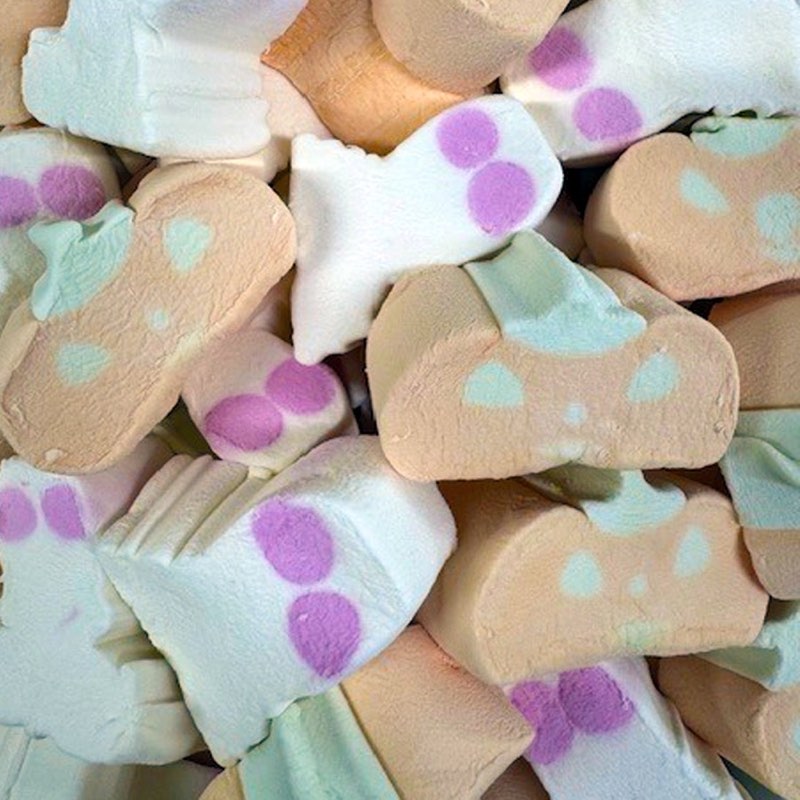
The shape tradition did not stop with food. Once the principle was established — a sweet that is a picture of something sells itself — it extended into every category a child finds funny, and the seasonal shapes are the most commercially durable of those. Witches Heads at £5.49 and Pumpkin & Ghost Marshmallows, also £5.49 are the modern descendants of the same idea, made for one table one night a year and following exactly the rule that produced the fried egg in the first place.
The other direction the tradition went is the interactive sweet — confectionery that does something rather than only depicting something. Kingsway Vegan Fizzy Tongue Painting Dummies at £5.49 are named for their effect rather than their flavour, and the bubblegum version at the same price does the same trick in a different register. Those sit at the far end of a line that starts with a sweet shaped like breakfast. It is all the same instinct: give the buyer something to notice before they taste anything.
Internationally, the equivalent instinct produces the novelty kit — sweets you assemble rather than simply eat. Fuji Candy's DIY ramen kit at £2.99 is the clearest example we stock, and putting it next to a fried egg on a table makes a genuinely interesting point about how two sweet cultures arrived at the same idea — food that is a joke about food — by entirely different routes.
Giving them away: hampers, parcels and small thank-yous
A 250g bag of loose sweets is one of the more useful gift objects in a sweet shop, and shape sweets are the best of the loose lines for it. The reason is that a gift has to communicate something in the first second of being seen, and a sweet that is a recognisable picture does that where a bag of assorted jellies does not.
The nostalgia gift, and how not to overdo it
The single most common reason someone buys a bag of counter sweets as a present is that the recipient will recognise them. This is a good instinct and it is easy to overplay. A hamper made entirely of retro lines reads as a theme rather than a gift, and themes are impersonal — the recipient can tell you bought a category rather than a set of things.
The better structure is two or three counter sweets that the person will genuinely recognise, plus one or two things they will not. The recognisable items do the emotional work; the unfamiliar ones stop the whole thing feeling like a museum. Jelly Babies and Fruit Pastilles are the safest recognisable picks we have. For the unfamiliar slot, the Crazy Jo Peelablezz jumbo banana gummy at £2.99 is a good shock — it is a large single novelty rather than a bag of small pieces — and Fini Mini Mochis at £1.35 add a texture that nobody over forty grew up with.
Posting them
Loose jellies are among the best sweets to put in the post, and it is worth saying why, because people worry about it unnecessarily. They are robust. They do not shatter, they do not melt at ordinary temperatures, they do not powder, and a bag of them can be sat on by a parcel handler without any meaningful harm. If you are sending sweets to a student, a friend or somebody abroad, this format is the reliable core of the parcel.
The one real risk is heat, and specifically heat plus pressure — a bag of jellies left in a hot van for two days can fuse into a single mass. It is still edible and it is still perfectly good, but it arrives as a block rather than as sweets, which is not the gift you intended. In summer, a smaller bag posted quickly beats a large bag posted slowly. In winter, this is close to indestructible.
For a posted parcel, weight is what costs you money, so think about the ratio of interest to grams. A 250g bag is the sensible unit; 500g of one sweet in a parcel is a lot of one sweet and pushes your postage band up for no gain in variety. Three 250g bags of different things is a better parcel than one 750g bag of the same thing, at similar weight and similar cost.
Teacher gifts, hosts and the small obligation
Where a shape sweet really earns its place is the gift that has to be modest but not thoughtless. An end-of-term present, a thank-you to someone who fed the cat, a thing you hand over at a doorway. A bag of sweets shaped like fried eggs is an unusually good answer to this because it is cheap enough to be received comfortably, familiar enough to be understood instantly, and odd enough to be worth a sentence of conversation.
If you are buying a run of these — a set of thank-yous, a whole class of teaching assistants — vary the shapes rather than the quantities. Six identical bags look like a bulk order, because they are one. Two bags of eggs, two of bones and two of eyeballs cost exactly the same, look considered, and let you match the sweet to the person a little. That is the whole trick and it takes no extra effort.
Hampers and the sweet-shop shelf
In a mixed food hamper — the kind with a jar of something, a box of biscuits and a bottle — sweets play the role of the light, obvious, immediately-openable item. Everything else in a hamper requires a decision. Sweets do not. That means they should be near the top and they should be recognisable at a glance.
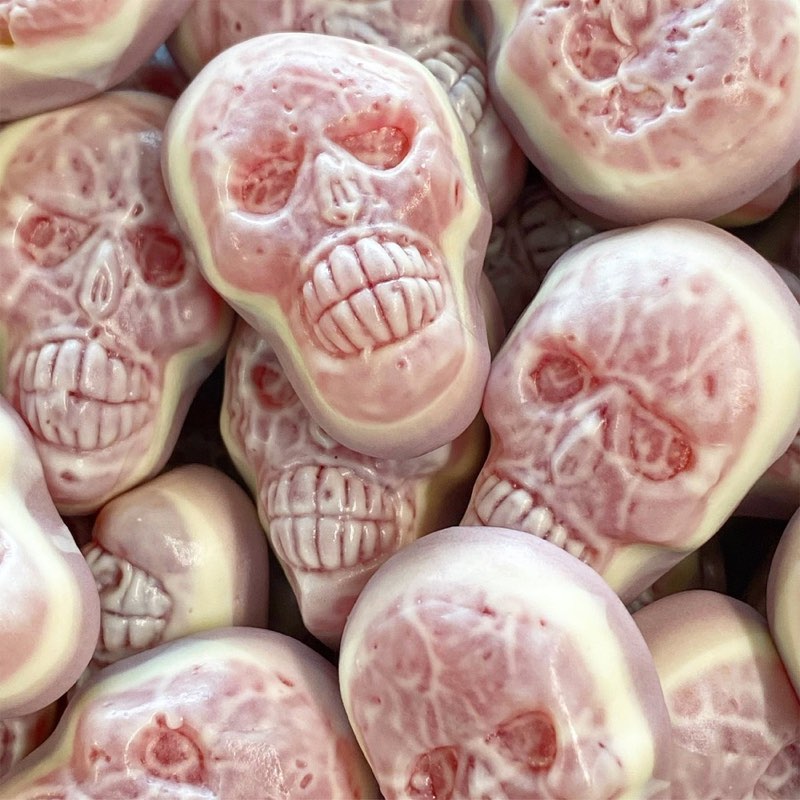
For a hamper that is all confectionery, aim for range across format rather than flavour: something to chew, something to suck, something sour, something soft, something with a shape. The eggs take the shape slot. BUBS Big Sour Skulls at £7.50 take the sour slot and, usefully, are also a shape sweet, so they earn two places at once. Barley sugar takes the sucking slot. Between those three you have covered most of what a confectionery hamper needs, and browsing the candy and chocolate hub will fill in whatever is left.
Fruit, and what that means on a counter jelly
"Fruit" on a loose jelly is a family rather than a single note, and the family has a particular character that is worth describing because it is not the same as the fruit flavour you get in a modern branded gummy. Counter-tradition fruit flavour is rounder, softer at the edges, and less literal. It is not trying to convince you that you are eating a specific named fruit; it is giving you a general, pleasant fruitiness that sits comfortably under a firm chew.
That is a legitimate and deliberate style, not a shortcoming, and it is why these sweets are so easy to eat a lot of. A very literal, very sharp fruit flavour is thrilling for six pieces and tiring by the twentieth. A rounder one is still enjoyable at the bottom of the bag. Sweets designed to be sold by the quarter and eaten over an afternoon were built for the long run rather than the first impression, and you can taste that intention.
Because the flavour is not shouting, the texture does more of the work here than it would in a sour or a fizzy line. That is the key to enjoying them properly: eat them slowly enough to get the chew, and the flavour has time to come up. Eaten fast, they are pleasant and unremarkable. Eaten at the right pace they are the reason people still buy counter jellies.
If you like the fruit register and want to see its full range, the fruit flavour shelf runs to a hundred and sixty-one lines and covers everything from these rounded counter jellies through to sharp modern gummies. The nearest neighbours in eating character are the pastilles and the jelly babies, both firm, both fruit, both from the same tradition; the furthest away, while staying in the same flavour family, are the sour skulls, which take fruit and put an acid edge on the front of it.
Occasions where the shape earns its keep
Children's parties are the obvious one and the strongest. Shape sweets are the ones that get commented on at a party table, and a bowl of them lasts about as long as it takes for somebody to notice. If you are filling party bags rather than bowls, they are equally good, because a party bag needs one item that is visibly different from the standard chocolate-and-lolly contents.
Breakfast-themed anything is the obvious specialist use and it is worth mentioning because people genuinely do it: brunch parties, birthday breakfasts, the morning of a wedding, a "breakfast for dinner" night. A bowl of egg-shaped sweets on a table where everything else is actually breakfast is a good, cheap joke that takes no effort.
Film nights and long evenings suit them for a different reason, which is duration. A firm chew is slow, and a slow sweet is the right sweet for two hours in front of something. A bowl of these plus a bowl of something crisp covers a film properly. Put the belts out too if there are teenagers involved.
Then there is the office tin, the classroom reward jar, the front-of-shop bowl and every other application where sweets are being handed out one or two at a time over weeks. Loose jellies are ideal for this because they keep well, they do not need wrapping to stay decent in a tin, and a kilo lasts a very long time at two pieces a go. If that is your use, buy up the ladder rather than at 250g.
The five sizes and what each one is for
This is sold across five weights, and unlike some ladders the rate genuinely improves at every step, which makes the decision straightforward: buy the biggest size you will actually get through.
| Size | Price | Roughly per 100g | Best for |
|---|---|---|---|
| 250g | £5.49 | £2.20 | Trying them, one bag in a mix, a small gift |
| 500g | £9.99 | £2.00 | A household, a film night, a hamper centrepiece |
| 750g | £12.99 | £1.73 | A party bowl, a classroom, a small event |
| 1kg | £16.49 | £1.65 | Party bags, a sweet table, an office tin |
| 2kg | £28.99 | £1.45 | A sweet cart, a large event, a whole year of a reward jar |
Read the third column down and it falls cleanly: £2.20, £2.00, £1.73, £1.65, £1.45. There is no awkward rung on this ladder — every step up saves you money per gram, and the biggest single jump in value is between 500g and 750g, where the rate drops by 27p per 100g for only five pounds more spend. If you are hesitating between two adjacent sizes, that is the pair where going up is most clearly worth it.
The two-kilo is the cheapest rate by a distance, at £1.45 per 100g against £2.20 at the entry size — you are paying two-thirds the rate for eight times the quantity. But it is a genuinely large amount of sweets and it should only be bought for a real use. Two kilos of firm jellies is somewhere around a thousand pieces depending on size, which is a wedding, a school fete, a sweet cart or a very committed office.
For portioning, the useful unit is the handful, which is roughly 40g for an adult and about 25g for a child. That gives you six adult handfuls from a 250g bag, or ten child-sized ones. For a party bag, 30g is a reasonable allocation of one sweet type, which makes a kilo enough for thirty-three party bags — comfortably a whole class with spares, for £16.49, or about 50p of this particular sweet per bag.
For a table where these are one of five or six bowls, work on 50g a head across the whole spread and split it between the bowls. Twelve people means about 600g of sweets in total, so 750g of a single line is too much for that job and 250g is about right as one component. People consistently overbuy for sweet tables, and the reason is that a table looks empty until it is stocked far beyond what anyone will eat. Fill smaller bowls and refill them.
One comparison worth making on value: at £5.49 for 250g this is exactly the same money as most of the counter lines we have mentioned, so choosing between them is purely a question of what you want to eat, not of what things cost. Where the prices genuinely differ is at the edges of the range — the sour skulls at £7.50 are a premium on the sour treatment, and the mochis at £1.35 are a small-format trial rather than a counter weight. Everything in the middle is the same £5.49, and we would rather you chose on character.
Keeping a big bag in good order
Jellies are forgiving, which is one of the quiet reasons they have outlasted more delicate formats, but they are not indestructible and there are two things that will spoil them.
The first is heat. Warm jellies soften, and soft jellies stick to each other. Once a bag has fused it will not really come apart again, and while the sweets are fine to eat, you now have a block. A cool cupboard solves this entirely. If a bag has arrived on a hot day and feels soft, leave it somewhere cool for an hour before opening it, and do not put it in the fridge to speed that up — cold jellies go unpleasantly hard and then sweat when they come back out.
The second is air. An open bag of jellies left out will dry at the surface, and the pieces go from a proper chew to something tough and leathery. It is not dangerous and it is not even bad exactly, but it is not what you paid for. Seal the bag, or decant into a tub or a jar with a lid. If you have bought a kilo or two kilos, split it down into smaller sealed containers immediately and only open one at a time, rather than working through one enormous bag over a month.
Stored cool, dark and sealed, a large bag stays in excellent condition for a long while, which is exactly why this size ladder goes up to two kilos in the first place. Loose jellies were designed for a jar on a counter that might take weeks to empty, and they behave accordingly.
Where they sit on the site
We file these in six places, which is more than most lines get, and each is a useful route in. They are on the loose sweets counter, which is the broadest of the six and the right place to browse if you are building a mix by weight. They are on the Kingsway shelf with seventy-four other lines from the same maker. They are on the jelly and gummy shelf, ninety-six lines, which is where to go if texture is your organising principle. They are on the retro shelf, on the gluten free shelf, and on the fruit flavour shelf.
The two shelves worth actually browsing rather than just noting are Kingsway and retro, because they overlap heavily and between them they contain almost the whole counter tradition we carry. If what you like is the idea of sweets that came out of a jar rather than out of a marketing department, those two shelves are the shop within the shop.
If you came here from a modern branded gummy and want to go back that way, everything we carry from Haribo is a short step and the Friendship Rings are the overlap point — a branded line priced on the loose-sweet rung. And if you would rather ignore our categories entirely and just look at the whole shop in one go, that is a perfectly good way to shop and quite a lot of people do it.
Common questions
What do they taste of?
Fruit, in the rounded counter-jelly style rather than a single named fruit. The flavour comes up on the second or third chew rather than immediately, holds through the middle of the piece, and fades rather than stopping. If you are used to sharp modern gummies you will find these gentler; if you are used to traditional counter sweets you will find them exactly where you expect them.
Are they hard or soft?
Firm. They start with real resistance, give after a second, and then chew properly for four or five bites. They are not the soft, springy texture of a modern bear, and they are not a tender pastille either. The middle of the piece and the outer part have slightly different densities, which is the most interesting thing about eating one slowly.
Are they gluten free?
Our supplier lists this line as gluten free, and we pass that on exactly as we have it. We would still ask you to check the manufacturer's packaging on arrival before eating, because that is the only fully current source and we would say the same about any product here. If you want to browse only lines our suppliers have given us that tag for, the gluten free shelf collects them.
Which size should I buy?
Buy the largest size you will genuinely finish, because the rate improves at every rung with no awkward step. 250g to try or to put in a mix, 500g for a household, 750g for a party bowl, 1kg for party bags or an office tin, 2kg only if you are running an event. Two kilos is a lot of sweets and it is a poor bargain if half of it sits in a cupboard.
Will they stick together?
They can, if they get warm — jellies soften and then fuse under their own weight. Keep them somewhere cool and it will not happen. If a bag has arrived soft on a hot day, let it cool naturally rather than refrigerating it. A fused bag is still perfectly good to eat, it is just less convenient than a bag of separate pieces.
Can I put them in a pick and mix?
That is one of the two things they are best at. In a mix they are the shape sweet — the piece people notice and pick up — and they work best alongside a geometric sweet for bulk, something hard for pace, and something sour for contrast. Do not build a mix entirely from soft fruit jellies; two is plenty and the rest of the bowl should be doing something different.
Are they suitable for a children's party?
Yes, and they are one of the better choices for one, because the shape does work that flavour cannot. For a party, plan on about 30g of any one sweet per bag or per child, which makes the kilo enough for a full class. Do supervise younger children while they eat: whole gummies are a choking risk for the very young, and that applies to any sweet of this size and firmness.
How long do they keep?
A long time if they are sealed and kept cool and dark, which is why we can sell them in two-kilo bags without hesitation. The thing that ages them is open air — an unsealed bag dries at the surface and the pieces turn tough. If you buy a large size, split it into smaller sealed tubs straight away and only open one at a time.
Do they contain anything I should know about?
We do not publish ingredient information for our loose lines, because we do not hold verified data for them and we would rather say so than guess. Check the manufacturer's packaging when your order arrives and before anybody eats anything, every time — particularly if there are allergies in the house. That is the only source we would rely on ourselves.
Are they the same as jelly babies or pastilles?
Same tradition, same price, different eating. Jelly babies are softer and more yielding; pastilles are tenderer still and break rather than chew. These are firmer than both and have the two-part structure that neither of the others has. If you like one you will probably like all three, which is why buying a 250g bag of each is a sensible way to find your preference.
Is there a bigger saving in buying two kilos?
Yes — £1.45 per 100g against £2.20 at 250g, which is the best rate on the ladder by a clear margin. Whether it is a saving for you depends entirely on whether you will use it. Two kilos is event quantity: a sweet cart, a fete, a wedding table. For a household it is too much, and 750g at £1.73 per 100g is the size that balances rate against realism.
What goes with them on a table?
Something crisp or hard to change the pace, something sour to reset the palate, and one more shape sweet so the bowl has two jokes in it rather than one. Barley sugar, sour skulls and gummy bones between them cover all three, and the four bowls together give you a table where nothing repeats itself.
The short version
A firm, fruit-flavoured counter jelly in the oldest shape tradition British sweet shops have, at £5.49 for 250g and getting steadily better value up to two kilos. Buy them as the shape sweet in a mix, as the recognisable thing in a gift, or as a bowl on a table where everything else is a coloured lump. They chew properly, they keep well, they post well, and they make people smile before they taste anything — which is what the shape was invented to do.
More from Kingsway
More jelly & gummy sweets
More fruit sweets
Where this sits
Kingsway Fried Eggs appears on these shelves. Browse them, or jump to something nearby.
You might also like